
Spending a Day with the Maasai: What Actually Happens
The strongest programmes leave room for introductions, walking, food, livestock, craft, questions and rest, while local hosts decide what belongs in the day.

Spending a day with the Maasai should not mean watching a longer version of a one-hour village performance. A thoughtful full day gives a named community time to introduce the place, walk, talk, prepare food, discuss livestock or beadwork, and leave unscripted space between activities. The precise day must come from the hosts, because no single timetable represents Maasai life across Kenya.
| A strong full day has | A weak full day has |
|---|---|
| Named community and local lead | Vague “tribe visit” wording |
| Actual host time shown | Six-hour label hiding five hours of driving |
| A few meaningful themes | A rushed catalogue of demonstrations |
| Optional photography and shopping | Pressure to pose or buy |
Start with the honest answer
A full day can include introductions, a landscape or homestead walk, food, livestock, beadwork and conversation. It may include none of those in exactly that order. Daily work, weather, host availability and local boundaries should shape the programme. Ask for the named community and a flexible outline, not a promise that every household will perform the same list.
| Confirm first | Why |
|---|---|
| Community name | Identifies the hosts |
| Actual contact time | Separates travel from experience |
| Programme lead | Shows who controls the day |
| Complete fee | Prevents awkward charges |
Separate the advertised duration from the visit
One current Nairobi day-tour listing gives a six-to-eight-hour duration while also describing roughly two and a half hours of driving each way. A reviewer said it was “about 3 hrs each way for a 1-2 hr visit.” Read the original review and demand a time breakdown.
Choose a named community
“Spend a day with the Maasai” is not a location. The programme could be near Nairobi, Amboseli, the Mara, Maji Moto or another community. Ask who is hosting, where the day happens and whether the site is residential, a community centre or a visitor boma.
Ask who designed the day
Local leadership means residents choose the schedule, speakers, private spaces, photography rules and payments. It is not proved because local people appear in the programme. Ask whether hosts can change an activity when work, weather or family needs intervene.
Choose the route before the timetable
A day from Nairobi may spend much of its time on the road. A day from a Mara or Amboseli lodge may compete with game drives and gate hours. A day from Maji Moto can begin closer to hosts. Map the exact pickup, road and community before choosing activities.
Compare Mara and Amboseli options fairly
The Mara versus Amboseli village-visit guide explains that neither region is automatically more authentic. For a full day, choose the place with the strongest named programme and enough free time.
Use Maji Moto when a stay can support the day
The Maji Moto and Loita Hills guide shows why two nights create a true middle day. Travellers can walk, eat, rest and talk without a same-day return to Nairobi.
Build the day around three anchors
Choose three substantial anchors, such as a walk, shared meal and beadwork conversation. Add introductions, breaks and closing time around them. A day with ten headline activities often gives each only a few minutes.
Begin with introductions, not cameras
Learn names, the programme and the spaces that remain private. Ask how the community prefers to describe itself. Keep cameras away until hosts explain consent. The first minutes establish whether the day is a meeting or a photo opportunity.
Ask the host what matters today
Weather, livestock, school, market days, ceremonies and family commitments can change the programme. A useful opening question is, “What would you most like us to understand today?” It lets hosts set emphasis instead of answering a foreign checklist.

Walk with a local guide
Walking shifts attention from staged objects to landscape, work and current decisions. Ask for distance, surface, shade and local access. A guide can explain grazing, water, plants and wildlife without turning private homes into an open museum.
| Walk detail | Confirm |
|---|---|
| Distance | Kilometres or hours |
| Terrain | Dust, mud, rock or grass |
| Guide | Named local lead |
| Wildlife | Safety response |
| Private land | Permission and route |
Match the walk to the group
Children, older travellers and people with limited mobility may prefer a short loop and seated conversation. Keen walkers may want several hours. Split the group if needed rather than forcing everyone into one pace.
Put livestock in the present tense
Cattle, sheep and goats can open discussion about wealth, food, markets, veterinary care, drought, grazing and wildlife conflict. Ask how things work in this community now. Do not treat animals as props or expect milking at an hour chosen only for tourists.
| Livestock theme | Open question |
|---|---|
| Water | How does the dry season change the day? |
| Markets | Where are animals bought and sold? |
| Health | How is veterinary care arranged? |
| Wildlife | What costs come with coexistence? |
Follow work rather than staging it
If a herd is leaving, stand clear. If no animal needs milking, accept that. A host may demonstrate a skill in a visitor setting, but the programme should say so honestly. Participation requires permission and supervision.
Understand what a goat-milking review can and cannot prove
A 2025 reviewer listed “Making beads, herding goats, milking them and cooking traditional food” among the day’s activities. That exact account describes one programme. It does not guarantee that animals or household work will be available on another date. Read the review in context.
Make food a shared learning moment
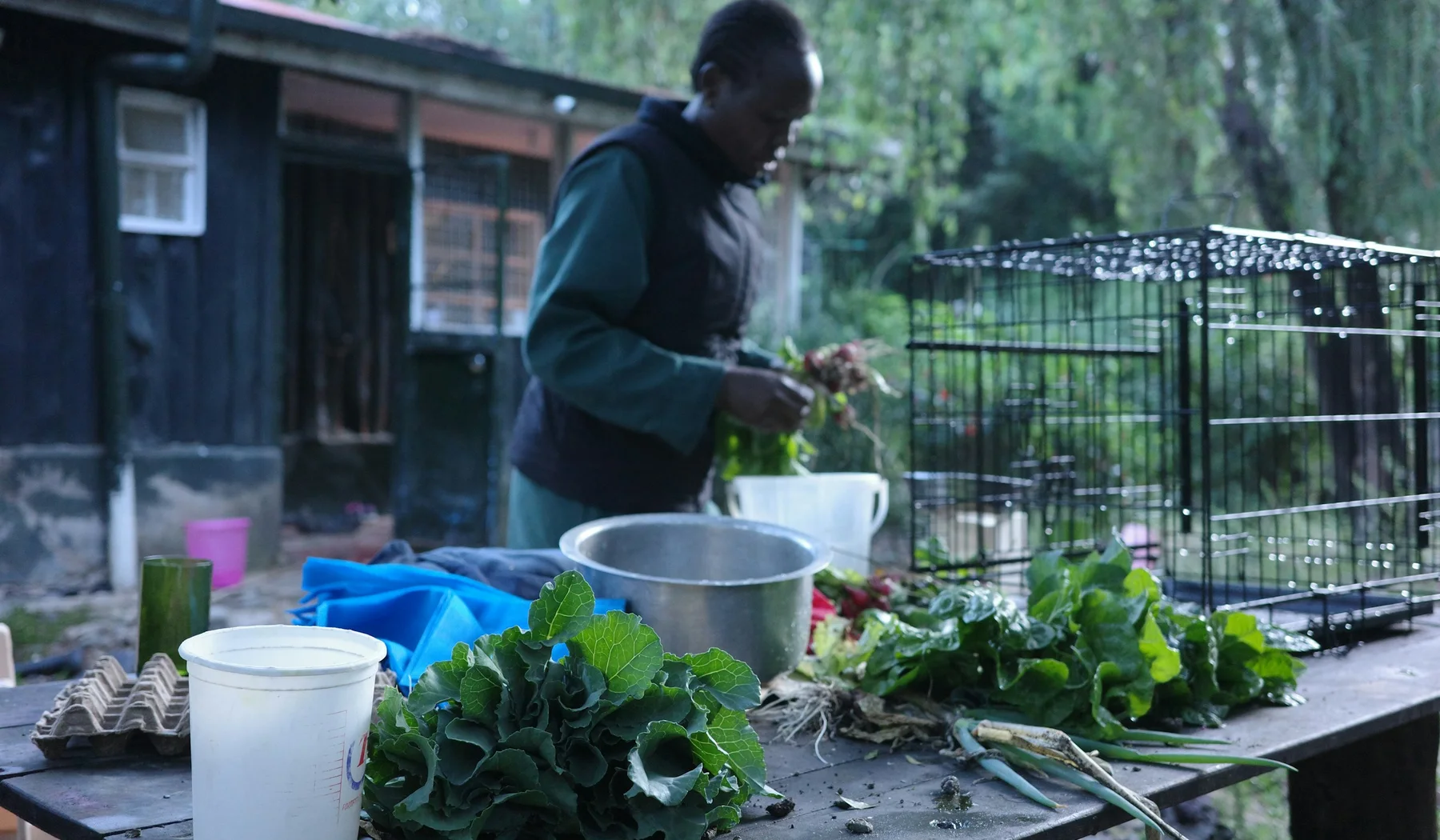
Food works best when hosts choose what to prepare and how guests participate. Confirm lunch, water, dietary needs and hygiene. One current commercial listing excludes lunch despite a six-to-eight-hour duration, so never infer that “full day” means fed.
| Food detail | Confirm |
|---|---|
| Lunch | Included or bring your own |
| Water | Quantity and refill |
| Allergies | Ingredients and cross-contact |
| Participation | Invitation and safe tasks |
Ask what the meal means here
Ugali may appear in day programmes, but no single meal represents all Maasai households or every occasion. Ask whether the menu is everyday food, visitor-friendly, ceremonial or simply what is available. Avoid describing any dish as timeless tribal cuisine.
Keep animal slaughter entirely optional
Some longer cultural programmes may include an animal meal or bush-camp practice. This requires explicit advance disclosure. Travellers must be free to decline watching or eating, and hosts must be free not to stage it. Dietary alternatives and child suitability should be settled before booking.
Give beadwork enough time
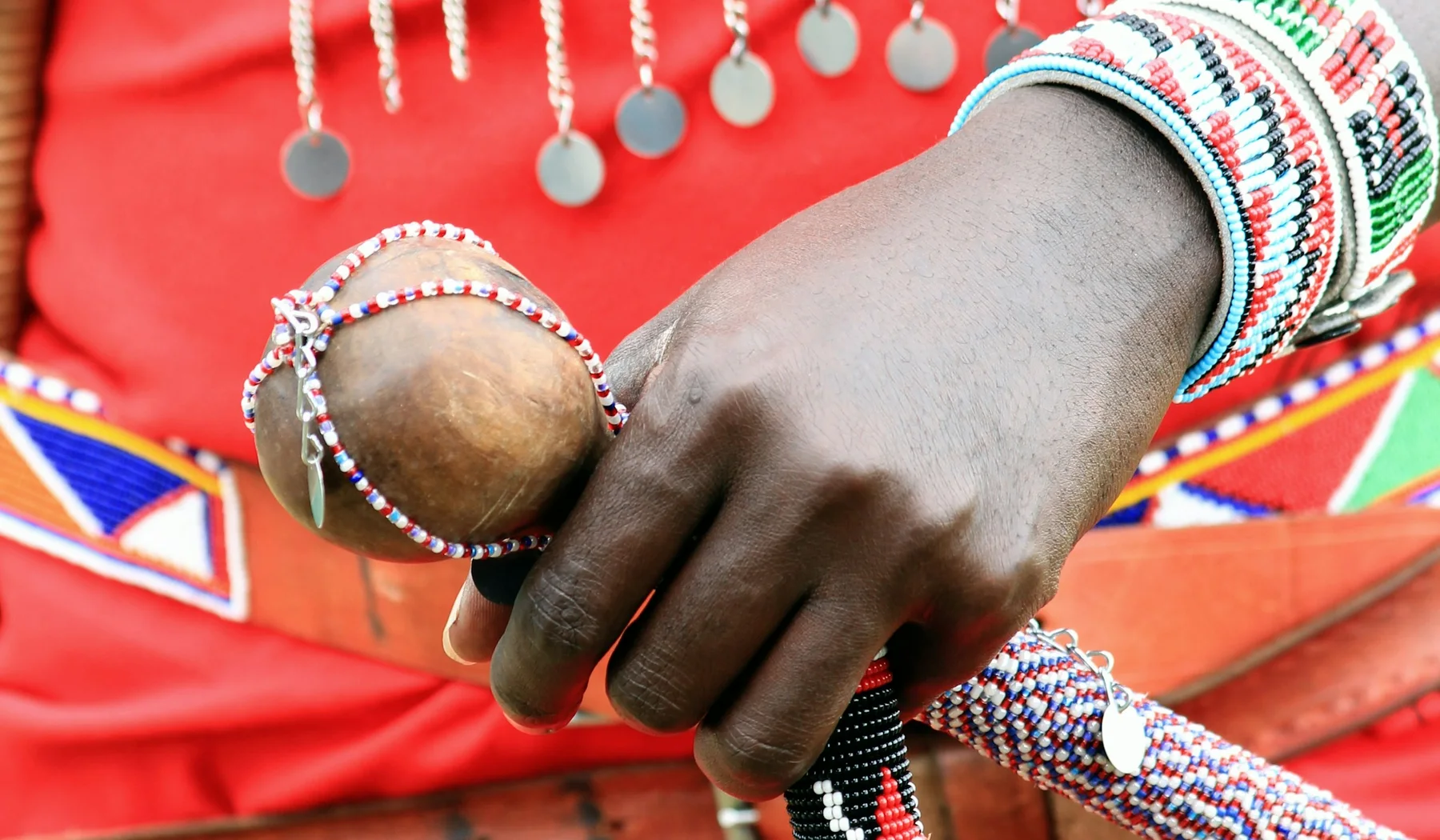
Beadwork is not merely the shop at the end. A maker can explain materials, design, learning, labour, price and how markets change. A short hands-on activity should recognise skill rather than imply mastery after twenty minutes.
| Beadwork moment | Ask |
|---|---|
| Demonstration | Who made and teaches it? |
| Participation | Which step is suitable for visitors? |
| Meaning | Does this design have a local explanation? |
| Sale | Who sets and receives the price? |
Let the maker lead the explanation
Online colour charts often claim one universal meaning for each bead colour. Real designs vary by place, maker, age and purpose. Use the beadwork, clothing, food, cattle and daily life guide as background, then listen locally.
Keep the craft market optional
Shopping can support makers directly, but obligation spoils trust. Ask before arrival whether a market is part of the day, how prices work and whether guests may leave without buying.
Pay fairly without performing generosity
Agree price and currency. Negotiate only where invited, and do not turn a small difference into a contest. Keep purchases separate from tips and donations. The guide to tipping, gifts, photography and beadwork explains each payment.
Ask how women benefit
Research on cultural-boma tourism near Amboseli examines women’s participation and opportunity. Do not assume that a craft table proves control. Ask who sets prices, receives money, leads sessions and participates in decisions.
Treat a house as a private place
A host may invite visitors into a house to discuss construction, cooking or family space. An invitation to one room is not permission to open, touch or photograph everything. Read the guide to manyatta, boma, homestead and village terms before describing the place.
Do not make modern objects a disappointment
Metal roofs, solar panels, phones, school uniforms and motorcycles are part of contemporary life. A programme does not become less Maasai because people choose useful technology. Ask how change is experienced rather than searching for a scene without modernity.
Discuss education without invading a school
A full day may include education as a topic without entering a classroom. If a school visit is offered, ask who approved it, whether lessons continue and what photography policy applies. Donations must not purchase access.
Keep children out of the tourism script
Local children are not an activity. Do not ask them to sing, pose or receive sweets. Visiting children can interact only within a programme that protects everyone’s safety and consent.
Learn greetings with humility
A few words in Maa can open the day warmly. Use the Maa phrases guide to prepare, then ask your host for local pronunciation. Maa varies, and nobody needs to reward a traveller for memorising a phrase.
| Aim | Approach |
|---|---|
| Greet | Listen and repeat |
| Thank | Ask for the local form |
| Learn a name | Confirm pronunciation |
| Record language | Obtain speaker consent |
Ask what a song or dance means
Songs may be welcomes, age-set material, church music, visitor presentations or social enjoyment. Ask who normally performs the piece and why it appears today. Do not label every movement ancient.
Understand adumu without demanding it
The adumu jumping-dance guide explains its association with age-set performance and the simplification created by tourism. If hosts include it, listen to their context. Never ask individuals to jump again for a better photograph.
Make fire demonstrations safe and honest
Fire-making may be a skill demonstration or visitor activity. Ask whether it reflects current daily use, teaching or both. Follow instructions, keep children back and ensure the fire is extinguished.
Ask about land in this named place
Land tenure, grazing and conservancy agreements differ across Maasai areas. One host cannot speak for every community. Ask how land is held and used here, what has changed and how tourism fits.
Discuss wildlife coexistence without romance
Wildlife can bring tourism revenue while also causing livestock loss, danger or restrictions. Listen to both sides. Do not insist on a conservation success story because your safari depends on wildlife.
Let the host decline sensitive topics
Marriage, initiation, religion, age sets, income and family structure can be private. Ask whether a theme is welcome, accept a general answer and move on when someone says no.
Ask open, local questions
Avoid asking one person to represent every Maasai community in Kenya and Tanzania. Tie questions to the place and the speaker.
Leave unstructured time
Conversation often deepens after the formal explanation, during a walk, meal or rest. Protect pauses. A full day does not need constant entertainment.
Do not demand access to ordinary work
Daily life belongs to residents, not the itinerary. A full-day programme may explain work without interrupting it. Ask before joining, touching tools or following someone away from the visitor area.
Plan photography at the welcome
Separate landscapes, adults, children, interiors, songs and commercial use. One group permission does not replace individual consent.
Keep professional cameras visible and discussed
One current day-tour listing discourages professional cameras to reduce commercialisation. Whether or not another community uses that rule, explain your equipment and intended use before arrival. A phone can be just as intrusive as a large camera.
Read positive reviews for design clues
One traveller wrote, “There was no pressure or artificial feeling,” while another said, “The entire experience felt genuine and interactive.” Both comments appear on the same day-tour review page. They are personal reactions, but they point to choice, conversation and unhurried hosting.
| Review clue | Seek |
|---|---|
| No pressure | Optional shopping and participation |
| Interactive | Questions and shared tasks |
| Genuine | Accurate description and agency |
| Welcoming | Prepared hosts, not surprise arrival |
Read “beautiful day” with context
A March 2026 reviewer described “Really a beautiful day” and listed meal preparation, goat milking, jewellery, song and dance. The wording may have been translated, and it describes one product. Use the source page to form questions rather than copying its promises.
Notice the drive in reviews
A 2025 guest wrote, “The long drive was comfortable.” That is praise for the guide and vehicle, but it confirms that transport occupies a major share of some days. Read the original page and decide whether the contact time justifies the road time.
Treat “beyond expectation” as personal
A May 2025 reviewer ended, “Beyond expectation.” It is an exact individual response, not an outcome anyone can guarantee. The booking should promise a named host, timetable, fee and boundaries. Read the review in context.
Use long-form accounts carefully
An independent Maji Moto writer recorded, “In the morning we walked back to camp, for a fantastic breakfast, and spent the rest of that day learning to make beaded jewellery, milking goats, and chilling with wildlife books.” Read the full account and note that it followed an overnight bush experience, not a generic day tour.
Keep first-person claims in first person
The same writer said, “everything about the next two days at Maji Moto felt genuine.” That is her assessment. Quote it as opinion and never turn it into NLS declaring who is genuine. See the original narrative.
Verify price rather than copying it
Transport, group size, meals and programme change the cost. Request one dated total that names the community and recipient. Use the visit-cost guide to compare like with like. Place the final amount inside the Kenya safari cost guide so a private transfer, extra vehicle day or missed lodge meal is not hidden behind a small entry fee.
Ask where the fee goes
Payment may support a household, hosts, guides, women’s group, community fund or outside seller. A clear answer should identify the recipient without vague claims that “the community benefits.”
| Fee question | Answer needed |
|---|---|
| Who collects? | Named person or organisation |
| Who is paid? | Hosts and service providers |
| How distributed? | Stated method |
| What is extra? | Voluntary spending |
Keep donations out of the sales pitch
Some listings suggest bringing food or school supplies. Confirm an actual need through a named programme. Gifts should not be used to secure photographs or affection.
| Instead of | Do |
|---|---|
| Handing snacks to children | Ask for an approved needs list |
| Cash in a crowd | Use a transparent channel |
| Photographing a donation | Protect dignity |
| Assuming need | Ask the community |
Plan a family day around energy
Long drives plus heat and a full programme can exhaust children. Tell the organiser ages and attention span. Keep toilets, shade, food and an early exit available. Use the Kenya safari with children guide to coordinate car seats, medication, food and rest across the wider route.
Plan accessibility before departure
Uneven paths and narrow thresholds may limit access. Ask for a level meeting area, seating and alternative explanations rather than expecting a private home to be altered.
Carry practical clothing
Closed shoes, sun protection, water and a light rain layer work in most outdoor programmes. Dress respectfully without turning local clothing into a costume.
Ask before wearing borrowed clothing
A host may invite visitors to try a shuka or jewellery. Ask what the item means and whether photographs are welcome. Do not use it for comedy or claim a ceremonial role.
Build a Nairobi full-day timetable
Start early, count the complete drive, protect several hours with hosts and return before fatigue turns the day into endurance. Do not hide a two-hour visit inside an eight-hour label.
Build a lodge-based full day
From a Mara or Amboseli lodge, use a day without a long game drive. Confirm gate, vehicle and travel time. The Mara guide and Amboseli guide help place the day correctly.
Keep one activity removable
Weather, host work or group fatigue can change the day. Decide which activity can be dropped without reducing respect or value. Flexibility is stronger than forcing the schedule.
Compare a full day with an overnight
A full day suits travellers without another night. An overnight adds evening, morning and unstructured time. Read the overnight community-stay guide before choosing.
Use red flags to pause
An unnamed community, compulsory photographs, surprise fees, forced shopping or promises of an untouched tribe deserve scrutiny. A day centred on children’s performance is another warning.
Use green flags to book
Strong programmes name hosts, state contact time, explain payment, welcome questions and protect consent. They can also say no or change an activity.
Send one complete booking brief
Include date, pickup, group, ages, mobility, dietary needs, interests, photography and budget. Ask for the community name, host, timetable, fee and cancellation terms in reply.
Decide how much interpretation the day needs
Direct conversation is ideal when hosts and guests share a language, but interpretation can make a much wider range of voices available. Ask whether the interpreter belongs to the community, works for the tour operator or is your safari guide. Keep questions addressed to the host rather than turning toward the interpreter as though the speaker has disappeared. Allow time for each answer to travel through two languages, and check whether a complicated idea has been shortened into a simpler tourism phrase.
Interpretation also affects consent. A person should understand where a photograph or story will appear, not merely hear that a visitor wants a picture. When children, health, religion, land rights or family history arise, the interpreter needs both language skill and discretion. If a speaker chooses not to answer, do not ask the interpreter to persuade them.
Plan shade, water and toilets as part of respect
Comfort is not separate from cultural quality. A dehydrated visitor stops listening, a child who needs a toilet becomes distressed and an older traveller left standing in direct sun cannot participate fully. Ask where the group can sit, how much drinking water is supplied, whether guests should use facilities before departure and what happens if rain arrives. These questions also prevent the host from improvising resources that were never included in the fee.
Carry your own refillable water unless the organiser confirms safe supply. Take personal rubbish away. Do not assume a private household toilet is available to visitors. If facilities are simple, describe them accurately to the group before travel so that nobody reacts with surprise or disrespect on arrival.
Make market day a local event, not a spectacle
A livestock or town market may add insight into trade, prices, transport and social life, but it is a working event. One reviewer praised visiting a Monday market, yet the experience belongs to buyers, sellers and animals rather than to tourists. Confirm that the host recommends the visit, use a small group and keep cameras away until permission is clear. Do not block livestock lanes or bargain over animals for entertainment.
Market timing can also dominate the route. Ask when activity is strongest, how long to stay and where the vehicle can wait. If the programme cannot manage consent in a crowded public setting, learn about the market through conversation instead. Missing a market is better than turning people’s work into an uncontrolled photo stop.
Give the closing conversation real time
Do not let the day end with a hurried payment beside a running vehicle. Sit down, ask what visitors misunderstood, thank each host and confirm any promised photographs or follow-up. This is also the moment to settle the agreed fee, optional craft purchases and tip as separate transactions. If an organiser asks for feedback, comment on timing, clarity and respect rather than rating whether people appeared authentic.
A good closing can reveal what the community wants future guests to know. It can also correct names, captions and facts before they travel online. Write those corrections down. If you plan to send photographs, use a real contact and a manageable promise. Never say you will print hundreds of images or fund a project unless you can actually do it.
Review the day without stereotyping people
An online review can help future travellers, but it can also spread broad claims from one encounter. Name the programme, date, host format, actual contact time and what worked. If shopping felt pressured, describe the specific sequence. If the day felt warm and personal, credit the hosts without declaring that you found the “real Maasai.” Avoid publishing private family information or photographs that were not approved for public use.
Separate operator problems from community conduct. A late driver, vague itinerary or hidden booking fee may belong to the seller, not the hosts. Likewise, a traveller’s expectation of unrestricted photography is not evidence that a community was unfriendly. Specific reviews are fairer and more useful than cultural verdicts.
Build follow-up into responsible travel
If the community shares a public project, newsletter, craft cooperative or official social page, ask whether travellers may stay connected. Follow the approved channel rather than messaging individual children or collecting private numbers. A future donation should use the named system, and a future booking should again confirm the programme rather than assuming personal friendship grants access.
Follow-up can be simple. Send promised photographs, correct an inaccurate caption, recommend the named programme honestly and keep private stories private. This turns a one-day encounter into accountable behaviour without pretending the traveller has become part of the community after a few hours.
Keep this final checklist
Before deposit, answer each line. Spending a day with the Maasai should be a specific agreement with specific hosts, not a generic promise.
Sources and further reading
Programme details and reviews describe named products and individual experiences. They do not create a universal Maasai day. Academic and ecosystem sources provide context for local participation and tourism planning.
| Source | Used for |
|---|---|
| Maji Moto Cultural Camp | Current named activity examples |
| Independent Maji Moto narrative | Exact first-person sequence and reflections |
| Responsible-visit account | Longer-stay perspective |
| Family account | Child and family perspective |
| Cultural-boma research | Women’s participation questions |
| Amboseli planning context | Cultural-tourism governance context |
| Day-tour reviews | Exact travel-time and activity excerpts |
Plan a full Maasai community day
Share route, date, group, interests, walking ability, dietary needs and any listing already offered.