
Maasai Beadwork, Clothing, Food, Cattle, and Daily Life
See how beadwork, clothing, food, livestock, paid work, education and conservation connect, and where the familiar tourist story leaves too much out.

Maasai beadwork catches the eye first. Then come the red checked cloth, cattle, songs and a collection of tidy explanations that safari visitors hear again and again. Some are rooted in real practice. Others flatten many communities, generations and individual lives into one tourist script.
This guide stays with the detail. It follows the maker behind the necklace, the work behind a herd, the decisions behind a meal and the difference between ceremonial dress, ordinary clothing and something arranged for visitors.
| Look beyond | Ask instead |
|---|---|
| “What does every colour mean?” | Who made this piece and for what purpose? |
| “Do Maasai always wear red?” | What do people wear here and when? |
| “Do they live only on milk and blood?” | What do families eat today? |
| “Are cattle just wealth?” | Who manages milk, grazing, sales and care? |
Start with the short answer
Beadwork, shuka cloth, cattle and pastoral food traditions are important parts of Maasai history and identity, but none operates as a universal costume or unchanging lifestyle. Designs vary, clothes change with occasion, food responds to markets and climate, and livelihoods may combine herding, business, education, tourism, farming and professional work.
| Familiar image | More complete picture |
|---|---|
| Beaded collar | Maker, materials, design and occasion |
| Red shuka | One visible clothing choice among many |
| Cattle herd | Labour, land, water, food and finance |
| Village scene | Home, business, school and changing life |
Use “Maasai culture” in the plural-minded way
Maasai communities stretch across regions of Kenya and Tanzania and include different sections, local histories and economic conditions. A practice described in Kajiado may not look identical in Narok, Loita or northern Tanzania. Speak about a named place and person whenever possible.
Begin with a person, not a symbol
A beaded necklace does not exist to illustrate a visitor's idea of Africa. Someone chose the colours, threaded the beads, finished the edges, transported it and decided whether to wear, gift or sell it. Ask the maker's name before asking for a code.

Look at making before decoding colour
The Smithsonian's account of Kenyan beadwork includes Susan Naserian Nketoria, a Maasai maker from Kajiado, describing beading as work learned from her mother and often done with other women. That testimony gives colour meaning a human setting: makers talk, choose patterns and work around other responsibilities.
| Making detail | Why it matters |
|---|---|
| Learned from relatives | Knowledge transmission |
| Done with other women | Social and collaborative work |
| Fits around other chores | Time has opportunity cost |
| Colours are selected | Design is deliberate |
See beadwork as skilled labour
Small seed beads require patience, a consistent pattern, strong tension and careful finishing. Large collars, belts, sandals and decorated objects may take many hours. A low price can hide unpaid design and selling time as well as the threading itself.
Understand how materials changed
Beadwork traditions are not invalid because materials entered through trade. Glass beads, commercial thread, wire, cloth and new colour ranges have been adopted, tested and made local. Culture includes selection and invention. It is not a purity test based on whether every material came from the immediate landscape.
Notice that making can be communal
The Smithsonian profile describes women working together, talking and deciding on patterns. A cooperative may also divide design, quality control, finishing, bookkeeping and sales. The finished piece can therefore carry both individual skill and a group system.
Ask how long a piece took
Time is easier to understand than an abstract claim that beadwork is “intricate”. Ask for an estimate, then consider the materials and selling costs. Do not turn the answer into an argument for a discount.
Let makers explain design decisions
Geometric repetition, balance, colour contrast, size and movement all shape a piece. The National Museums of Kenya notes that combinations can distinguish groups, but no visitor should assume they can identify a person's section or status from one bracelet bought at a market.
Reject the universal colour chart
Travel graphics often claim red always means bravery, white purity, blue sky and green land. A maker may recognise some associations and reject others. Meaning can depend on community, period, occasion and the combination of colours. Present a named explanation as that person's explanation.
Use Susan’s colour explanation as one grounded example
In the Smithsonian account, Susan associated white with milk, red with blood, black with skin and orange with generosity. That is valuable because the speaker and Kajiado context are named. It should not be expanded into an anonymous nine-colour law for every maker.
Read colour and pattern together
A single blue bead tells little. Its position, neighbouring colours, width, repetition and the type of object may matter. The wearer may also choose a piece simply because they like it. Ask whether the design carries a formal meaning, local identity, memory, fashion choice or sale preference.
Understand age and status without profiling
Museum and community sources note that beadwork can relate to age, marriage or social position. That does not give a visitor permission to infer someone's marital status from jewellery or ask intimate questions. Let the host explain generally unless the wearer chooses to discuss their own piece.
Recognise ceremony without requesting one
Some beadwork is made or worn for weddings, age-set events, blessings and other important occasions. A tourist visit does not create a ceremony on demand. If hosts demonstrate an item, ask whether it is ordinary dress, ceremonial dress or a teaching example.
Distinguish personal wear from visitor merchandise
A bracelet designed for travellers can still be real skilled Maasai beadwork. “Made for sale” is not the opposite of authentic. The honest questions are who made it, whether the design is fairly represented, how it is priced and who benefits.
Appreciate contemporary design
Makers create new colourways, bags, dog collars, homeware and fashion pieces for changing markets. Innovation does not dilute identity. It can be a deliberate business and artistic choice. Ask which parts of a design are inherited, adapted or newly invented.
See why cooperatives matter
The Maa Beadwork initiative says it began at the request of women who were not benefiting sufficiently from conservancy income that largely reached men. This shows why a bead purchase can connect to wider questions of gender, land payments and household income.
Look for maker-led organisations
The Inyonyori Women Marketing Co-operative says Maasai women established it in 2022 to build financial opportunity through bead products and accessories. A visitor can ask how membership works, who sets prices and whether the maker receives payment directly or through the cooperative.
| Organisation question | What it reveals |
|---|---|
| Who owns it? | Governance |
| Who sets prices? | Maker power |
| When are makers paid? | Cash flow |
| What costs are deducted? | Transparency |
Understand that “community shop” needs detail
A sign can say community without explaining the payment path. Ask whether stock is consigned, bought wholesale or sold on behalf of named makers. None of those models is automatically wrong, but visitors deserve accurate information.
Price beadwork by more than bead count
Size matters, but so do design, skill, materials, finishing, durability, transport and retail margin. Compare pieces of similar type and quality. Do not assume a remote maker should charge less because the surroundings look informal.
Avoid the race for the cheapest souvenir
A traveller may celebrate paying less than another visitor, while the maker sees a day's labour bargained away. Set a budget, ask the price and decide respectfully. Bargaining may be expected in some markets, but it should not become a contest over a small difference.
Buy fairly without needing a perfect label
Fairness is easier to evaluate through a named maker, transparent price and clear payment than through the word “authentic”. Ask who made the item and who receives the money. The guide to Maasai village visit cost keeps crafts separate from entry, tips and donations.
Respect design ownership
Photographing a pattern and copying it for a commercial collection can remove the design from the people who developed it. A brand or designer should arrange collaboration, attribution, consent and payment. Buying one necklace does not transfer intellectual property.
| Use | Permission level |
|---|---|
| Wear purchased piece | Ordinary ownership |
| Post personal photo | Credit maker if agreed |
| Copy pattern for sale | Design agreement |
| Use in brand campaign | Commercial permission and fee |
Ask before photographing the maker
A product purchase does not include a portrait. Ask separately, explain where the image will go and accept no. The planned guide to tipping, gifts, photography and buying beadwork will help visitors separate consent from payment.
Give beadwork as a gift with context
If you buy for someone at home, keep the maker's name, cooperative and any explanation they chose to share. Do not invent a colour meaning to make the gift sound mystical. The real story of labour and design is enough.
| Gift detail | Record |
|---|---|
| Maker or group | Name |
| Place | Community or market |
| Materials | What the seller explained |
| Meaning | Only if specifically given |
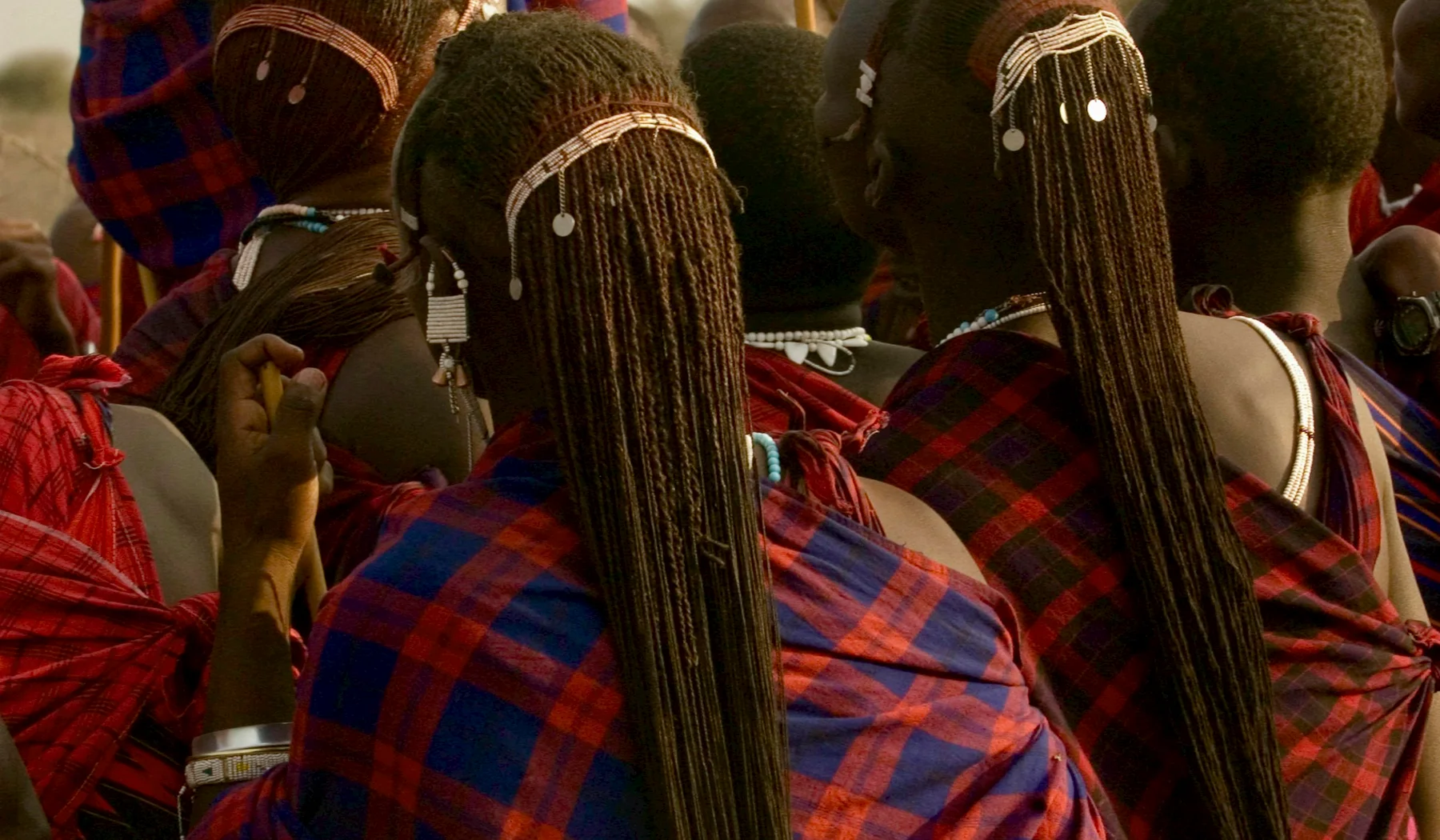
Understand the shuka without freezing it in time
The checked or striped wrap commonly called a shuka is one of the most recognisable forms of Maasai dress. It uses commercially produced cloth and has changed through trade and fashion. That history does not make it less meaningful today.
| Shuka fact | Caution |
|---|---|
| Often checked or striped | Not one required pattern |
| Frequently red | Not always red |
| Worn as a wrap | Style varies |
| Commercial fabric | Locally adopted and used |
Question the claim that everyone wears red
Red is highly visible in safari photography and may carry valued associations, but people wear blue, purple, black, checked combinations and ordinary contemporary clothes. Dress depends on person, age, work, weather, ceremony and choice.
Avoid the Scottish-tartan shortcut
Popular stories often claim the shuka came directly from Scottish missionaries. Textile histories are more complex, involving regional trade, imported cloth, colonial markets and local adoption. Unless a reliable source supports a specific route, describe what is visible and let specialists handle the contested origin story.
Separate daily, ceremonial and visitor dress
The same person may wear work clothes in the morning, a shuka for warmth, formal clothing at church and elaborate beadwork at a ceremony. A community visit may include dress selected because it communicates identity clearly to guests. Ask what you are seeing.
Recognise that men also wear beadwork
Women are central makers in many communities, while people of different genders wear beadwork in varying forms. Avoid turning production and use into rigid rules without a local source. Ask who made and who wears the particular item.
| Question | Why |
|---|---|
| Who made this? | Production |
| Who wears it here? | Local use |
| Is it tied to an occasion? | Context |
| Has that changed? | Contemporary variation |
Dress respectfully without dressing up as someone else
Visitors need sun protection, comfortable walking clothes and modesty suitable to the host setting. You do not need a costume. If a host offers a cloth or beadwork piece for a specific activity, ask how to wear it and return it carefully.
Do not read identity from hair or jewellery
Hairstyles and adornment can relate to fashion, age, ceremony and personal choice. A photograph is not a reliable identification chart. Avoid asking intimate questions based on appearance and never touch hair or jewellery without invitation.

See cattle as livelihood, not scenery
Cattle can provide milk, cash, savings, social value and a way to transfer resources, but every herd also requires grazing, water, health care, labour and risk. A photograph of cows at a water point shows only one moment in that system.
| Herd function | Work behind it |
|---|---|
| Milk | Milking, hygiene and allocation |
| Sale income | Market timing and transport |
| Breeding | Selection and care |
| Social value | Family and community decisions |
| Savings | Drought and disease risk |
Understand grazing units and milking units
Recent research with Maasai pastoralists in Kenya distinguishes grazing units, where cattle may be pooled for herding, from milking units managed around household milk. This matters because “the owner of the herd” does not describe every person who makes livestock decisions.
See women’s livestock knowledge
The same study highlights highly gendered work and argues that women's roles in livestock production deserve more attention. Milking, food distribution, calf care and household decisions are not secondary to the visible work of herding cattle across open land.
See herding as skilled environmental work
Herders read pasture, water, livestock condition, weather, disease risk and wildlife presence. Route decisions change through the year. Calling a walk with cattle “wandering” misses the knowledge and responsibility involved.
Follow water through the day
Water shapes livestock routes, household work and wildlife encounters. In dry periods, the distance and waiting time at a water point can increase. A visitor should not block access, crowd animals or turn essential watering into a photo set.
Understand mobility as adaptation
Pastoral mobility responds to changing grass and water. It is not evidence that people have no home or boundaries. Movement can be constrained by private land, roads, protected areas, farms and settlement growth, making access more complex than a simple seasonal map.
See land fragmentation behind the postcard
Subdivision and fencing can reduce the connected grazing areas that herds need. Tourism and conservancies may create income and protect open space, but benefits, leases and access are not identical everywhere. The Kenya parks and conservancies guide helps visitors distinguish institutions.
Keep conservation and pastoralism in the same conversation
Wildlife and livestock share landscapes, water and sometimes disease risk. Conservancy models can pay landowners and support habitat, while rules can also create tensions over access and benefit. Avoid the lazy claim that people and wildlife either live in perfect harmony or permanent conflict.
Understand livestock markets
Cattle are not only kept for ceremony or milk. Families may sell animals for school fees, food, health care, investment or drought response. Market prices, animal condition, transport and timing affect the result. A “number of cows equals wealth” calculation ignores debts, costs and decision-making.
| Sale decision | Consider |
|---|---|
| Animal condition | Price and welfare |
| Market access | Transport cost |
| Household need | Timing |
| Herd recovery | Future production |
Notice goats, sheep and other livestock
The tourist story focuses on cattle, but many pastoral households manage goats and sheep as well. Different species use pasture differently, reproduce at different rates and meet different food or market needs. Ask about the whole herd.
Start food with history, then ask about today
Milk, meat and blood have historical importance in Maasai food systems, as the McGill Indigenous nutrition case study records. Contemporary diets are more varied and differ by household, location, wealth, season, market access and personal preference. The historical list is not a menu that every family eats daily.
Treat milk as food and household resource
Milk can be consumed fresh or prepared in different ways, allocated among family members and sometimes sold. Quantity changes with rainfall, feed, animal health and stage of lactation. Women's management of milking deserves attention.
Do not present meat as an everyday feast
Meat may be important while still being occasional. Animals have productive and economic value alive, so slaughter is not a casual daily event in every household. Ask about occasion, species and local practice rather than announcing a universal diet.
Stop using blood as a shock detail
Blood is the detail most likely to be repeated for effect. It has particular historical and cultural contexts, not a place in every meal or visitor programme. Do not ask hosts to demonstrate blood collection for entertainment. If the topic arises, let them describe present practice.
Include grains, vegetables and purchased foods
Households may eat maize meal, rice, beans, vegetables, tea, sugar and other foods available through markets or cultivation. The exact mix changes. Treating these foods as outside Maasai life creates a false museum boundary around people who participate in the wider Kenyan economy.
See horticulture as choice and adaptation
FAO has documented horticulture projects with Kenyan Maasai pastoralists responding to drought and nutrition needs. Crop adoption does not mean culture disappeared. It shows households evaluating risk, food security and land conditions.
Ask about food security without blame
Drought, livestock loss, market prices, land access and household income can affect food availability. Avoid implying that tradition itself causes hunger or that one tourism project solves everything. Ask which pressures residents identify.
Treat tea as part of contemporary daily life
Tea with milk and sugar can be a common part of hospitality, but do not promise it or interpret every cup as a ceremony. If offered, ask about dietary needs and accept the host's serving arrangements. A visitor meal should be planned and paid for when it requires ingredients and labour.
Price a shared meal honestly
A cooking activity or lunch uses ingredients, water, fuel, time and cleaning. It should not be assumed inside a village entry fee. The guide to Maasai village visit cost separates meals from entry and guiding.
Do not ask for “traditional food” without detail
That phrase can pressure hosts to perform an old recipe or animal practice they do not use for visitors. Ask what the community offers, who prepares it and whether guests and hosts eat together. Contemporary food is still local life.
See daily life as many overlapping schedules
Herding, milking, school, wage work, shopping, meetings, beadwork, cooking, water collection and phone calls can all appear in one household. No two family members have the same day. A visit should not block essential work.
Avoid turning women into a chore list
Research documents gendered responsibilities, but women are not simply the people who fetch, cook and bead. They may manage milk, lead cooperatives, negotiate sales, hold professional jobs, organise community programmes and make household decisions. Ask people about their work rather than assigning it.
Avoid turning men into herders and warriors
Men may herd, trade livestock, guide, farm, study, teach, run businesses or work in towns. The safari label “warrior” erases age, profession and individuality. Use names and current roles.
Keep children out of the performance economy
Children have school, play, family responsibilities and privacy. They are not automatic dancers, language teachers or photo subjects. The Kenya safari with children guide helps visiting families approach community time at a suitable pace.
See knowledge inside ordinary chores
Research in southern Kenya on firewood collection shows how girls can acquire detailed ethnobotanical knowledge during daily tasks. The lesson is not that visitors should follow children with cameras. It is that work carries environmental learning often invisible to outsiders.
Include school and professional ambition
Education can change daily schedules and future options without cancelling cultural identity. Young people may want to combine community ties with medicine, teaching, conservation, technology, business or tourism. Do not ask a student whether school will make them “leave tradition”.
Notice phones, solar power and motorbikes
Technology is part of contemporary rural life. Mobile money, messaging, weather information, market prices, solar charging and transport can connect households and businesses. A phone in a photograph does not spoil authenticity.
Let religion and personal belief be contemporary
Maasai individuals may follow Indigenous belief, Christianity, combinations of practice or personal interpretations. Do not assume a ceremony or prayer represents everyone. Ask only when the host makes the topic part of the visit.
Understand homes through local terms
Travel pages often blur manyatta, boma, homestead and village. The planned guide to Maasai manyatta, boma, homestead and village will show why the terms need location and context. Ask what residents call the place.
Fit the visit to the Mara route
The Masai Mara safari guide helps locate gates, conservancies and lodges. Choose a named community that fits the route and confirm who hosts. Do not ask a driver to improvise a random stop because red clothing appears beside the road.
Fit the visit to the Amboseli route
The Amboseli safari guide helps place lodges, gates and transfers. Kajiado communities have their own programmes and business models. Ask whether the visit centres beadwork, homestead interpretation, school support or a broader conversation.
Compare Mara and Amboseli without ranking culture
The guide to Mara versus Amboseli village visits will compare logistics, not decide which community is more “authentic”. Choose based on ownership, host quality, route, time and the learning you want.
Use a longer stay for deeper learning
The planned Maji Moto and Loita Hills guide and overnight cultural stay guide will help visitors compare hosts, comfort and activities. More time can support a maker conversation or guided walk, but only if household boundaries remain clear.
Learn a few Maa words, then keep listening
The Maa language phrases guide gives a small, sourced greeting set. Use language to open conversation, not prove expertise. A host's name is more valuable than a rehearsed speech.
Keep Adumu in context
The Adumu jumping dance guide separates movement, singing, age-set context and tourist performance. Do not treat dance as the summary of men's daily life or request repeated jumps for individual photos.
Ask before photographing daily work
Milking, herding, cooking and beadwork may look educational to a visitor but remain someone's labour and home life. Ask the person, explain the use and do not interrupt. Commercial work needs written arrangements.
Send a detailed community-visit brief
Name the route, group, child ages, time, mobility needs and main interest. Ask for the community, host, programme, itemised price, photography rules and craft-selling arrangement. The guide to spending a day with the Maasai will help turn those details into a realistic schedule.
Keep this myth-check table
The quickest way to improve a cultural visit is to replace one-line claims with a named source or question.
The practical answer
Maasai beadwork is art, labour, identity and business. Clothing can carry history and personal style. Cattle connect food, finance, land, work and social life. Meals and routines change with place, season and household. The most respectful visitor keeps asking who, where, when and according to whom.
Sources and further reading
This guide combines maker testimony, museum collections, community organisations and research on pastoralism, nutrition and daily work. Each source describes a particular place, project or study population. None is treated as a rule for every Maasai person.
| Source | Used for |
|---|---|
| National Museums of Kenya | Clothing, crafts and regional design context |
| Smithsonian beadwork account | Named Kajiado maker testimony |
| Maa Beadwork | Cooperative origins and gendered conservancy income context |
| Inyonyori cooperative | Maker organisation and market purpose |
| McGill Indigenous nutrition case study | Historical food-system context |
| Gendered livestock research | Grazing and milking units |
| Ethnobotanical knowledge research | Knowledge learned through daily tasks |
| FAO horticulture report | Food and climate adaptation |
Plan a community-led experience
Share route, dates, group and whether you are most interested in artisans, pastoralism, food, daily work or a longer stay.