
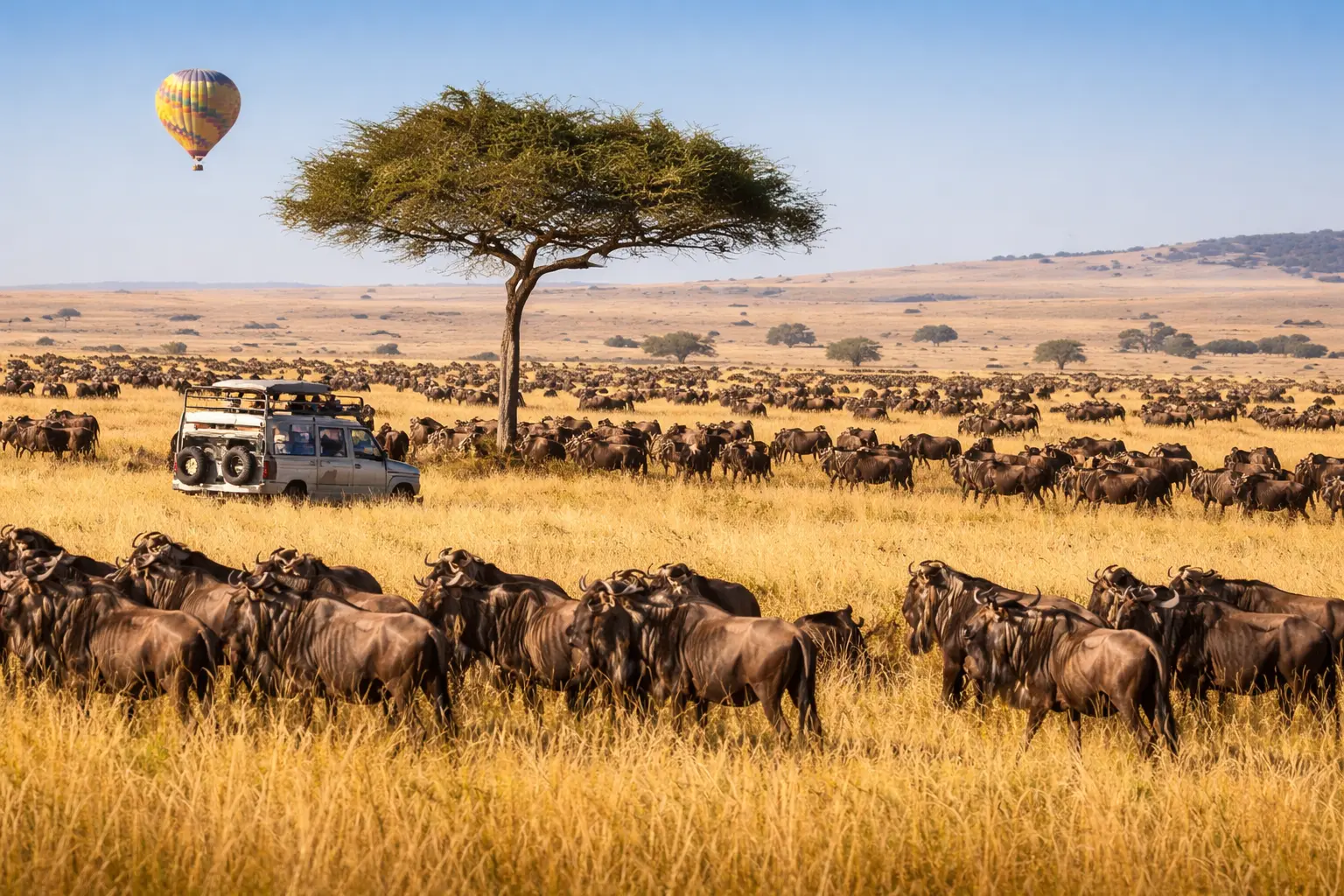
At first light, the Mara is quieter than its reputation. The grass is silver with dew, a hyena is still trotting home, and your guide is reading the road for tracks that were not there yesterday. The Masai Mara rewards people who give it time and choose their base carefully. This guide helps you decide where to stay, how long to go, when to travel and what kind of safari day you actually want.
- Reserve, Mara Triangle and conservancies explained
- Best time for a Masai Mara safari
- How to choose Masai Mara lodges and camps
- Nairobi to the Mara: drive or fly?
- A practical three-night first-visit plan
- What changes the cost of a Mara safari
- Masai Mara sectors, gates and airstrips map
- Watch an independent Mara journey
- Traveller experiences
- Frequently asked questions
Why the Mara rewards careful planning
One ecosystem, different rules
The national reserve and community conservancies are connected landscapes, but activities, vehicle density and access rules can differ.
Wildlife beyond migration
Resident predators, elephants, giraffes, plains game and prolific birdlife make the Mara relevant throughout the year.
Location controls your day
A cheaper camp far from the area you want to explore may cost hours in transfers and repeated gate journeys.
Road and fly-in both work
Driving adds scenery and flexibility. Flying protects time and can make a short safari feel substantially longer.
Every comfort level exists
Options range from practical tented camps to intimate conservancy properties and high-end lodges with private vehicles.
Custom routes matter
The Mara can stand alone or pair with Lake Nakuru, Amboseli, Samburu, Laikipia, the coast or northern Tanzania.
Reserve, Mara Triangle and conservancies explained
The Masai Mara National Reserve is administered in sectors, with the Mara River creating a natural reference point and the Mara Triangle lying to the west. Beyond the reserve are community conservancies that protect habitat while supporting landowner communities. Wildlife moves across these boundaries, so the quality of a visit depends on season, habitat and guiding rather than a line on a map.
The reserve usually offers the broadest freedom to range across public game-drive roads and can be the logical choice for first visits and river-focused migration plans. Conservancies commonly limit bed numbers and vehicles, and some permit activities that are restricted in the reserve, such as guided walks, night drives or carefully controlled off-road viewing. Exact rules vary by conservancy and camp.
| Choice | Often best for | Main advantage | Question to ask |
|---|---|---|---|
| National reserve | First visits, broad game drives, river sectors | Direct access to classic reserve landscapes | Is the lodge inside, at a gate or farther away? |
| Mara Triangle | Scenery, western river sector, quieter circuits at times | Distinct road network and escarpment backdrop | Will your itinerary require crossing to other sectors? |
| Community conservancy | Privacy, varied activities, repeat visitors | Lower bed density and controlled use | Are reserve visits included or charged separately? |
| Split stay | Photographers and longer visits | Two habitats and two styles of safari | Does the transfer add enough value to justify packing? |
Best time for a Masai Mara safari
There is no single month when the Mara becomes “good.” The ecosystem supports resident wildlife all year. Drier months can make roads easier and concentrate animals around permanent water. Greener periods bring dramatic skies, fewer vehicles in many areas, breeding activity and excellent birding, although rain can change road conditions.
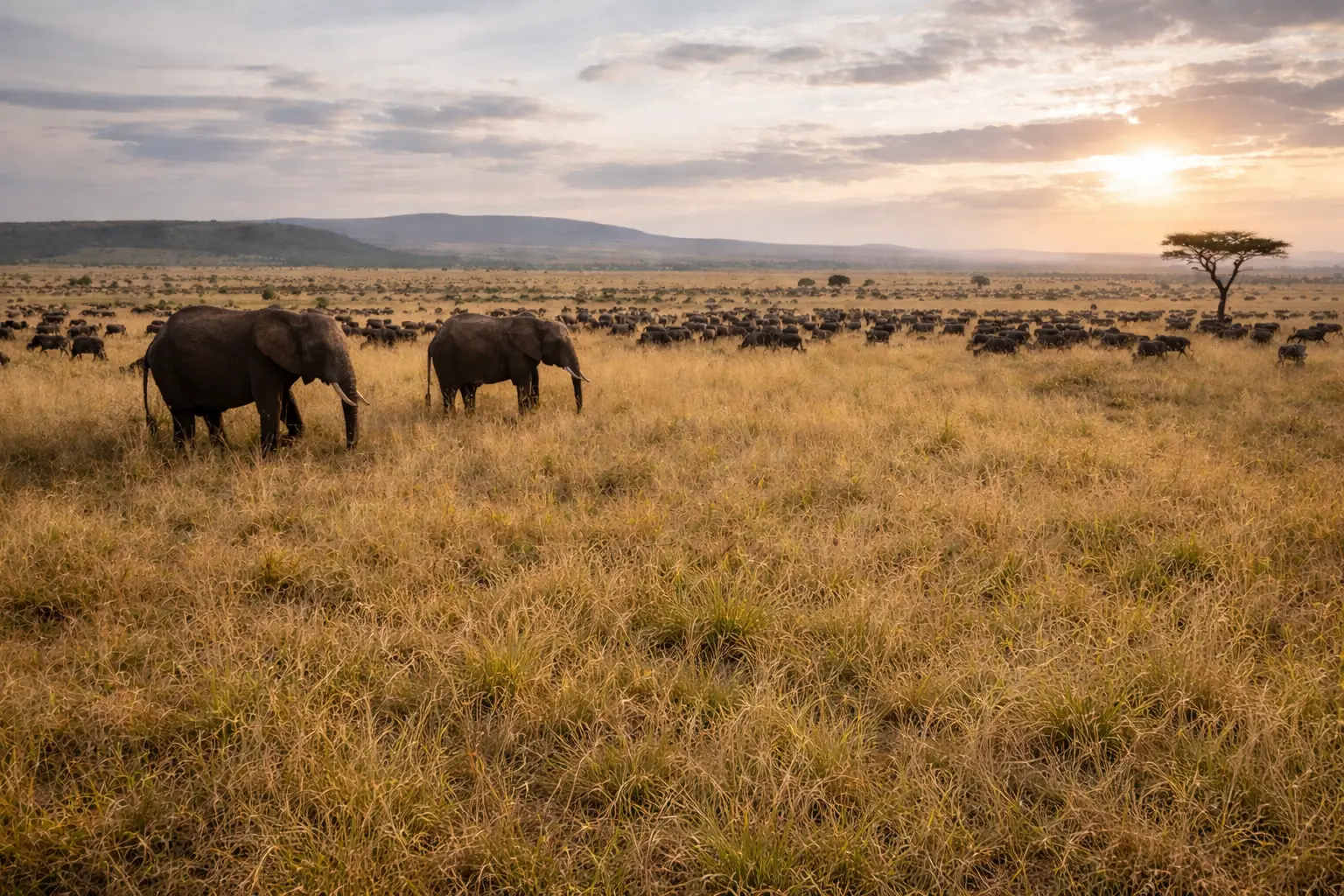
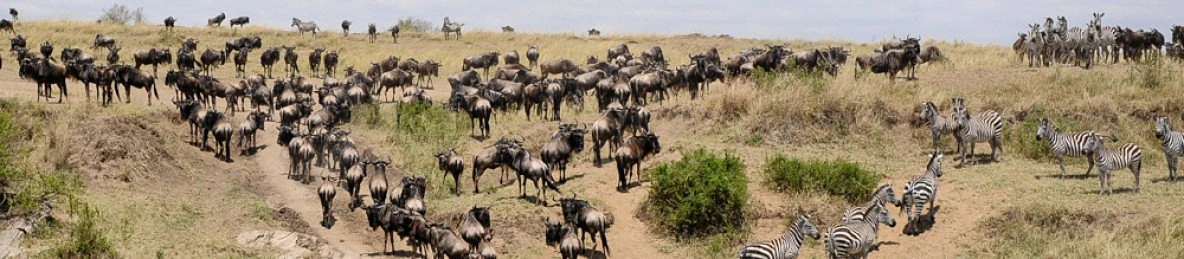
The famous migration is a moving ecological event, not a fixed appointment. Wildebeest and zebra enter and leave different parts of the ecosystem in response to grazing and rainfall. River crossings may happen repeatedly, pause for days or take place beyond reach of a particular camp. A responsible itinerary improves opportunity through time and location but never promises a crossing.
| Period | Typical character | Advantages | Trade-offs |
|---|---|---|---|
| January to March | Often warm with resident wildlife and calving in parts of the ecosystem | Good predator interest, clearer value outside peak | Local rain patterns vary |
| April to May | Long-rain period | Green scenery, birding, lighter traffic | Some camps close; roads may be slow |
| June | Transition toward drier conditions | Pleasant temperatures and building wildlife concentrations | Migration location remains variable |
| July to October | Popular dry-season and migration window | High wildlife interest and river-sector opportunity | Peak pricing and vehicle pressure |
| November to December | Short rains and refreshed landscapes | Photography, young grass and fewer visitors | Showers and local road changes |

How to choose Masai Mara lodges and camps
Start with geography, then decide on style. Inside-reserve lodges can give early access to wildlife circuits without a gate crossing. Gate-area properties may offer value but differ greatly in transfer time. Conservancy camps can feel more exclusive and may bundle activities or local conservancy fees.
Luxury is not only a large room. It can mean a private vehicle, an experienced photographic guide, fewer tents, flexible meal times, a quiet location, reliable power, strong water pressure or a direct airstrip transfer. Families should ask about age restrictions, room layout, pool supervision, meal flexibility and whether children may join shared drives. Travellers with limited mobility should ask about stairs, distances and vehicle access before paying a deposit.
The right shortlist may include a camp or lodge that does not appear in a standard package. Dates, budget, mobility, atmosphere and the wildlife sectors you care about should decide the property, not the other way around.
Nairobi to the Mara: drive or fly?
A road safari normally leaves Nairobi early and crosses the Rift Valley before the final approach on local roads. It costs less for many parties, keeps the same vehicle and guide, and connects naturally with Lake Nakuru or Naivasha. The trade-off is a long transfer and the chance that the first and last days contain limited wildlife time.
Scheduled flights leave Wilson Airport for multiple Mara airstrips. The published flying time to the first stop can be under an hour, but routing may include several airstrips and your camp still needs a transfer. Baggage limits are lower than on international flights, and Wilson Airport is separate from JKIA. A fly-in plan therefore needs realistic connection time.
| Factor | Drive safari | Fly-in safari |
|---|---|---|
| Usable safari time | Lower on arrival and departure days | Usually higher |
| Luggage | More forgiving | Strict light-aircraft limits |
| Scenery | Rift Valley and overland context | Aerial landscape |
| Vehicle | Same safari vehicle from Nairobi | Camp vehicle after landing |
| Best fit | Multi-park route, families, value | Short stay, honeymoon, premium pace |
A practical three-night first-visit plan
Day 1: arrive, settle in and take an afternoon drive if timing permits. Avoid advertising this as a “full day” when most of it is transport. Day 2: protect a complete wildlife day, either with morning and afternoon drives or a picnic-supported longer circuit. Day 3: explore a different habitat or take a focused activity such as a balloon flight, conservancy walk or cultural visit if it fits the location. Day 4: use the morning well, then depart without an unnecessarily early transfer.
Two nights can work for a concise introduction, especially when flying. Four or five nights suit photographers, migration-focused travellers and guests who want to divide time between reserve and conservancy. The extra nights are valuable only when the plan avoids repeating the same short circuit without purpose.
What changes the cost of a Mara safari
The largest cost drivers are travel season, park or conservancy access, accommodation, transport mode, private versus shared vehicle, group size and extras such as a balloon safari. Published package prices are difficult to compare unless the same items are included.
Ask whether the quote includes every park day, arrival and departure transfers, internal flights, vehicle exclusivity, drinks, laundry, medical evacuation cover and staff gratuities. A low room rate outside the reserve can be offset by additional gate fees or long daily transfers. A premium camp with an included vehicle and activities can sometimes be better value than it first appears.
| Cost driver | Lower-cost approach | Higher-cost approach | Why it matters |
|---|---|---|---|
| Transport | Road from Nairobi | Scheduled or charter flight | Changes both price and usable time |
| Vehicle | Shared departure | Private luxury 4×4 | Controls flexibility and privacy |
| Season | Green or shoulder period | Peak migration period | Affects rooms and access demand |
| Accommodation | Larger lodge or practical camp | Small luxury camp or suite | Service level and inclusions differ |
| Activities | Game drives only | Balloon, walks, private meals | Usually priced separately |
Masai Mara safari guide to the choices that shape every day
The reserve, Triangle and conservancies are connected but not interchangeable. Use these decisions to turn a general Mara interest into a route that protects wildlife time.
Why location, not luxury alone, determines the Mara day
A tented camp can be beautifully furnished and still be the wrong choice if every morning begins with a long gate transfer. Start with the wildlife landscape you want to read: open reserve plains, the Mara River, a western sector, or a community conservancy. Then test the lodge against that map. Ask how the vehicle reaches the game-drive area, whether the reserve fee is included, and whether a conservancy stay allows the activities that make the extra cost worthwhile.
For a first visit, one well-located base is usually more valuable than changing camps every night. A longer stay can justify a split only when the second location changes the habitat or access. The same logic applies to a balloon flight, village visit or private meal: choose the experience deliberately, then protect enough full wildlife time around it.
Compare real lodges, camps and conservancies
The words “Masai Mara lodge” cover very different locations and operating models. Use these examples to see how geography changes the day, then confirm the exact room, board basis, access fees and vehicle arrangement for your dates.
| Property or area | Position and style | Usually suits | Planning question |
|---|---|---|---|
| Mara Sopa Lodge | Eastern Mara near the Oloolaimutia/Sekenani approach; established full-service lodge. | Families and travellers wanting conventional lodge facilities. | How early can the vehicle reach the reserve and are entry fees included? |
| PrideInn Mara Camp | Talek River area near the eastern reserve approach; tented-camp atmosphere. | Travellers wanting a practical base with a softer camp feel. | Confirm the exact gate, river-side room category and shared/private vehicle. |
| Sentrim Mara Camp | Ololaimutiek/Sekenani side; mid-range tented camp. | Value-focused road safaris and first-time visitors. | Price the daily transfer time as well as the room. |
| Enkorok Mara Camp | Siana Conservancy on the eastern side; conservancy setting. | Guests who value a quieter base and community-conservancy activities. | Which conservancy activities and reserve visits are included? |
| Sarova Mara Game Camp | Inside the reserve near the Sekenani side; large, established luxury camp. | Guests who want reserve access and broad facilities. | Ask how the camp balances group size with private-vehicle requests. |
| Mara Serena Safari Lodge | Mara Triangle in the western reserve; lodge on a high viewpoint. | Scenery, western-sector drives and guests who prefer a permanent lodge. | Will your route stay in the Triangle or cross to the eastern reserve? |
| Emaiyan Luxury Camp / Zebra Plains Mara | Private conservancy or border setting, with a smaller luxury-camp feel. | Couples, photographers and travellers seeking privacy. | Confirm conservancy levies, night drives, walks and reserve access. |
| Angama Mara, Little Governors’, Fairmont, Olare Mara Kempinski, Mahali Mzuri and Cottar’s 1920s | Distinct luxury or ultra-luxury examples in the Triangle, reserve edge and private conservancies. | Honeymoons, milestone trips and guests prioritising service or exclusivity. | Compare location, private vehicle cost, airstrip transfer and included activities rather than brand alone. |
For a fair comparison, group properties into three choices: inside-reserve stays minimise gate friction; conservancy stays can offer lower density and extra activities; and gate-area stays can improve value but may add transfer time. A well-priced camp in the right sector often creates more safari time than a more expensive property on the wrong side of the ecosystem.
A three-night road plan and a four-night fly-in plan
Road, three nights: leave Nairobi early, stop at a Rift Valley viewpoint, continue to the Mara and take an honest afternoon drive if arrival permits. Spend the next two days on full morning-and-afternoon circuits, with one day focused on the river or open plains and one on the camp’s best nearby habitat. On departure morning, take a short drive only if the transfer schedule allows it. This is a stronger plan than calling a long Nairobi transfer a game-drive day.
Fly-in, four nights: connect from Wilson Airport to the camp’s named airstrip, settle in and take a late drive. Use two complete days for wildlife, then reserve a fourth night for a balloon flight, conservancy walk, cultural visit or a second sector. Scheduled flights may stop at several airstrips, and baggage is normally soft-sided, so the quote should name the airstrip and allowance.
Start with the Mara from Nairobi options if you want a road itinerary, or compare a fly-in Masai Mara safari when every hour matters. If you already love a particular property, share its name through the contact page and build the route around it.
How the Mara changes by sector
The eastern reserve approaches around Sekenani and Oloolaimutia can be practical for road arrivals and classic open-plains circuits. The Mara Triangle offers a different road network and escarpment perspective. Northern conservancies such as Mara North, Naboisho and Olare Motorogi change the feel again, with lower bed density and activities governed by community agreements. These are not interchangeable labels. A camp’s exact airstrip and gate often matter more than its advertised star level.
Ask for a simple map with the camp, nearest gate, airstrip, daily driving area and any separate conservation levy marked. This prevents a common mismatch: a traveller books a beautiful camp because of its photographs, then discovers that the preferred river sector requires a long transfer every day. The best route begins with the traveller’s priorities and then chooses the camp, not the other way round.
Reserve or conservancy
Choose public-reserve access for broad circuits and river focus, or a conservancy for lower bed density and additional activities.
Sector and lodge location
Ask for the exact gate, airstrip and driving area. A beautiful camp can be inefficient if it sits far from your priority sector.
Two, three or four nights
Two nights is a focused introduction; three is a stronger baseline; four or more gives photographers and migration planners a buffer.
Road or fly-in
Road adds the Rift Valley and multi-park flexibility. Flying protects time when the Mara is the main purpose.
Vehicle and guiding
A private vehicle gives control over pace, sightings and children’s needs. Confirm whether a camp vehicle is shared.
Reserve fees and extras
List every entry day, conservancy charge, balloon flight, cultural visit and transfer before comparing prices.
Watch an independent Masai Mara safari journey
A personal travel film cannot predict your sightings, but it can show something a brochure rarely captures: how much of a Mara day is spent reading the plains, waiting quietly and letting a sighting unfold. This independent honeymoon vlog follows real travellers through their wildlife safari rather than presenting a sales itinerary.
Notice the changing light, the distance between sightings and how the vehicle becomes part of the experience. If you would rather photograph patiently than rush between radio calls, say so when your safari is planned.
What travellers say after the trip
These public comments are personal experiences, not guarantees. They are useful because they reveal the details that glossy descriptions often leave out.
“I spent 3 nights and 4 days in Masai Mara, and 3 nights and 4 days in Nairobi.”
A July traveller describing how they divided a first Kenya trip.
“Personally I was happy with 3 nights in the Masai Mara and would not have wanted to spend another day in a jeep.”
A traveller explaining why three nights felt right, while suggesting a walk or another activity for longer stays.
“Masai Mara was by far the most beautiful park we visited during our holiday!”
A public attraction review that captures the emotional pull of the landscape.
Masai Mara National Reserve FAQs
How many days should I spend in the Masai Mara National Reserve?
Three nights is the most useful starting point for a first visit because it usually protects two full wildlife days. Two nights is possible; four or more suits photography, migration focus or a split stay.
Is the Maasai Mara the same as the Masai Mara?
Yes. Both spellings refer to the same wider destination. “Maasai” follows the community name; “Masai Mara” remains common in travel searches and established place names.
Is a conservancy better than the reserve?
Neither is universally better. The reserve offers classic public-reserve access; conservancies often offer lower density and additional activities. Many longer trips combine both.
Can I see the Big Five?
All five species occur in the wider ecosystem, but sightings are never guaranteed. Rhino can be especially difficult compared with buffalo, lion, elephant and leopard.
Do I need a fly-in safari?
No. Driving is practical and good value, especially on a multi-park route. Flying is most valuable when time is short or comfort is the priority.
Can this Mara safari be fully customised?
Yes. Duration, route, lodge, vehicle, flights and extensions can all be shaped around the travellers and their dates.
Which Masai Mara lodges are inside the reserve?
Examples include Sarova Mara Game Camp and Mara Serena Safari Lodge, but the exact boundaries, access roads and room availability should be confirmed for your dates.
Which conservancy camps can I compare?
Examples include Enkorok in Siana and properties associated with Mara North, Olare Motorogi, Naboisho and Olderkesi. Ask which conservancy fee and reserve access are included.
Should I change camps during a three-night safari?
Usually not. One well-located base protects wildlife time. Split only when the second location gives a genuinely different habitat or activity.
Can a luxury lodge be poor value?
Yes, if its location creates long daily transfers or if the quote excludes a private vehicle and access fees. Compare usable safari time and inclusions.