
Maasai Mara Village Visits vs Amboseli Village Visits
Both regions can offer thoughtful community encounters. The difference comes from the named programme, who runs it, how long you stay and how it fits the safari around it.

Maasai Mara village visits vs Amboseli village visits is not a contest between two communities. It is a planning decision. The best choice is the named programme that fits your route, gives local hosts control, explains the complete cost and leaves enough time for a real conversation.
| Choose by | Do not choose by |
|---|---|
| Named community and host | A vague promise of the “most authentic village” |
| Programme ownership | Which destination sounds more famous |
| Actual time with residents | Number of staged activities |
| Transparent fee and boundaries | Pressure to shop or photograph |
Start with the honest comparison
Both the Mara and Amboseli are home to Maasai communities, but neither label tells you how a particular visit works. A locally led half day in either region can be more rewarding than a rushed roadside stop in the other. First compare route, host, duration and programme. Only then compare landscape and convenience.
| Question | Why it matters |
|---|---|
| Who is hosting? | Identifies the people behind the programme |
| Who receives the fee? | Tests financial transparency |
| How long are we together? | Reveals whether conversation is possible |
| What is optional? | Protects choice around shopping and photographs |
Use your safari route as the first filter
If your itinerary visits only one of the two regions, forcing a detour to the other makes little sense. A Mara visit belongs beside a Mara stay. An Amboseli visit belongs beside an Amboseli stay or road transfer. When the itinerary includes both, place the encounter where the named programme is stronger and the day has more breathing room.
Know what the destination label cannot tell you
“Mara village visit” and “Amboseli village visit” are search phrases, not quality standards. Within one region, programmes can differ in ownership, group size, language, timing, payment and privacy. Ask for the community name and visit format before accepting a destination-wide description.

Fit a Mara visit around the Mara day
Mara game drives can begin early, run into the afternoon or stretch across the day when wildlife is far from camp. Reserve gates, conservancy boundaries and lodge location affect driving time. A community visit is calmer on an arrival afternoon, departure morning or deliberately shortened game-drive day than when squeezed between distant sightings and sunset.
| Mara timing | Likely experience |
|---|---|
| After a long full-day drive | Tired, late and easily rushed |
| On a planned half day | More time for questions |
| Near the lodge or conservancy | Less transfer time |
| During migration traffic | Allow extra road margin |
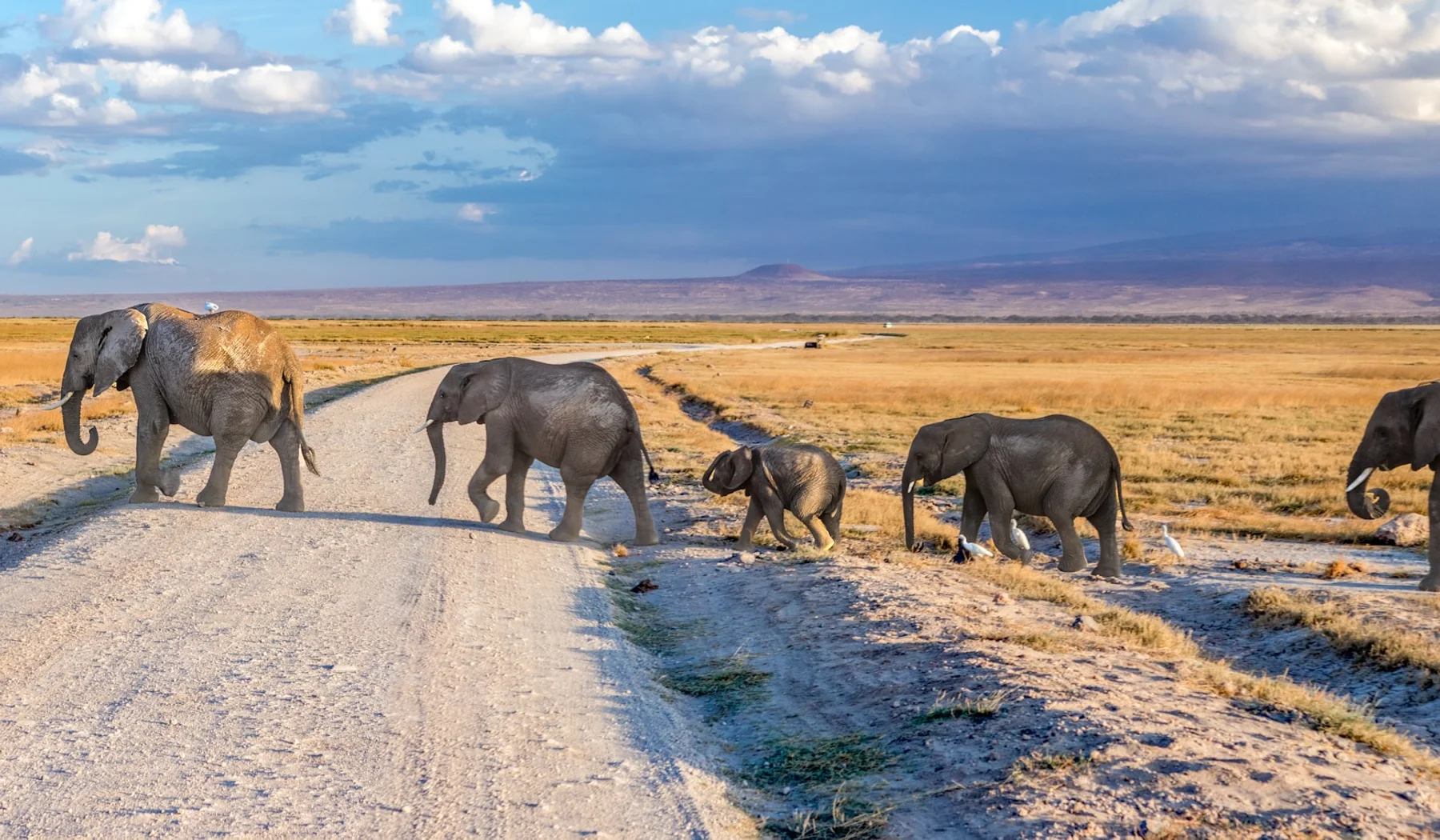
Fit an Amboseli visit around the road and park day
Amboseli often appears early or late in a road itinerary from Nairobi, Tsavo or the coast. Arrival time can move with traffic, road stops and weather. Do not promise a community a precise afternoon visit if the transfer leaves no margin. A planned lodge day or a clearly timed stop outside peak game-drive hours usually works better.
| Amboseli timing | Planning point |
|---|---|
| Nairobi transfer day | Keep arrival estimate realistic |
| Full park day | Protect morning and evening wildlife time |
| Lodge afternoon | Check distance to the named community |
| Departure toward Tsavo | Confirm road and meeting-point logic |
Compare driving time, not map distance
A nearby dot can still require a gate exit, rough road, security coordination or community guide pickup. Ask for the travel time from your exact lodge at the hour you plan to go. The answer matters more than a straight-line distance on a map.
Compare fly-in and drive-in itineraries differently
Fly-in guests may have fewer unscheduled hours because airstrip transfers are tied to flight times and shared game drives. Drive-in guests control the vehicle more easily, but long road days cause fatigue. In both cases, add the visit as a named itinerary item rather than an undefined stop “if time allows.”

Choose people and programme before scenery
The Mara’s grasslands and Amboseli’s Kilimanjaro backdrop are powerful visual settings, but scenery does not make a cultural encounter deeper. A host who can choose the programme, decline photographs, answer difficult questions and explain how fees work is more important than the mountain or wildlife visible behind the visit.
| Attractive backdrop | More important evidence |
|---|---|
| Kilimanjaro view | Named local hosts |
| Mara plains | Meaningful contact time |
| Wildlife nearby | Clear safety and boundaries |
| Photogenic homestead | Resident consent |
Ask for the community name before booking
“A Maasai village” is not enough. Request the community, group, cultural centre or conservancy partner’s name. A name lets you understand location, governance and programme history. It also prevents last-minute substitution with whichever roadside stop is most convenient for the operator.
Ask who owns the programme
Local ownership can mean the community designs the visit, appoints guides, sets fees, controls private areas and decides how revenue is used. It is not proved merely because local people perform during the visit. Research on cultural boma tourism in the Amboseli region shows why women’s participation, work and benefit deserve specific attention.
Ask who receives the money
A transparent visit can explain whether the fee goes to a household, women’s group, youth group, guide, community fund or combined programme. Do not assume that paying a driver or booking platform means the hosts have been paid fairly. Request one complete price and the payment recipient.
Understand the Mara governance context
Parts of the wider Mara ecosystem include community conservancies formed through agreements with landowners and tourism partners. Mara Siana and Naboisho describe community or landowner relationships in their public material. That context can support local employment and conservation, but it does not automatically describe every cultural visit offered near the reserve.
Understand the Amboseli governance context
The Amboseli ecosystem extends beyond the national park across community land and wildlife corridors. Its management planning recognises cultural tourism and the need for coordination. Academic work on indigenous ecotourism in the region also examines local control and benefit. Use this context to ask better questions, not to assume every roadside offer follows the same model.
Do not rank communities by authenticity
People are not exhibits competing for a traveller’s approval. A family using a mobile phone, school uniform, solar panel or metal roof is no less Maasai than a family using older materials. Compare the honesty, agency and depth of the visitor programme, not whether residents match a tourist image.
Separate a home from a visitor venue
Some visits enter a residential homestead. Others use a cultural centre, demonstration boma or purpose-built visitor area. Neither format is automatically dishonest. The important point is accurate description. A purpose-built venue may protect household privacy, while a home visit requires especially careful consent and group management.
Learn the terms without policing your host
Manyatta, boma, homestead and village are often used loosely in tourism. Our guide to Maasai manyatta, boma, homestead and village explains the distinctions. Ask residents what they call the place, then follow their usage rather than correcting them with a glossary.
Compare actual contact time
A two-hour excursion can contain forty minutes of driving, waiting and shopping. Ask how many minutes are spent with hosts and how much is available for questions. Duration on a booking page is not the same as human contact.
Treat one hour as an introduction
An hour may be enough for introductions, one discussion and a short walk through the visitor area. It is not enough to understand Maasai history, pastoralism, education, gender, land, conservation and contemporary life. Describe it honestly as an introduction.
Use a half day for conversation
A half day creates room for a welcome, guided walk, focused discussion, shared activity and unhurried craft browsing. It also lets the programme pause for translation, children, weather or livestock movement. Ask whether the time is genuinely with the community or partly filled by transport.
Choose a full day when learning matters
A full day can connect several themes without turning the visit into a checklist. It may include walking, food, beadwork, livestock discussion or a community project selected by hosts. The slower pace matters more than the number of activities.
Consider an overnight stay for a different rhythm
An overnight programme is not simply a longer village tour. Accommodation, meals, sanitation, privacy, host time and evening activity must all be clear. Our guide to staying overnight in a Maasai village or cultural camp helps separate a respectful hosted stay from an improvised sleepover.
| Overnight question | Confirm before travel |
|---|---|
| Where do guests sleep? | Guest camp, homestay or lodge |
| Who hosts after dark? | Named team and contact |
| What is private? | Household and guest boundaries |
| What is included? | Meals, walks, transport and bedding |
Look beyond the park edge for deeper options
If cultural depth is a major reason for travel, do not limit the search to add-ons beside famous parks. A dedicated programme in Maji Moto or the Loita Hills may suit a full day or overnight plan. Read the Maji Moto cultural stay and Loita Hills guide before deciding.
Compare group size
One family and a coach group cannot have the same conversation. Ask the maximum number of visitors, whether other groups join and how many local hosts are present. Smaller groups usually make questions, translation and consent easier.
Ask whether the programme changes for your group
A family with young children, a school group, photographers and travellers researching pastoralism need different pacing and boundaries. A thoughtful host can shape the visit without inventing a show. Share interests in advance and ask what residents are comfortable discussing.
Plan for children without turning local children into attractions
Children may enjoy livestock, bead colours, songs or simple Maa greetings, but visiting children should not be encouraged to photograph or touch local children without permission. The Kenya safari with children guide covers wider family logistics.
Ask about language and interpretation
Hosts may speak Maa, Kiswahili, English or several languages. Interpretation affects both accuracy and intimacy. Ask who translates, whether questions go directly to residents and whether the guide adds answers that hosts did not give.
| Language arrangement | Check |
|---|---|
| Host speaks your language | Allow direct conversation |
| Local interpreter | Ask how they are connected to the programme |
| Safari guide translates | Keep the host at the centre |
| Several languages | Build extra time |
Learn a few Maa phrases with humility
A greeting can show care, but Maa varies by speaker and place. Use our guide to Maa phrases for respectful visitors as preparation, then ask your host for pronunciation and local usage. A phrase is an opening, not a performance.
Ask what the welcome means
Songs, lines, handshakes or spoken introductions can have different meanings in different programmes. Do not assume every welcome is an ancient ceremony. Ask whether it is a visitor greeting, a community song, a church song, a school song or another form chosen for the occasion.
Understand adumu without demanding it
Adumu is commonly associated with Eunoto and age-set performance, though tourism often presents it as a general “jumping dance.” Read the adumu guide before visiting. Do not request that someone jump for a photograph outside the programme they chose.
Compare activities by meaning, not count
A list of ten demonstrations can feel thinner than one careful conversation. Ask why an activity is included, who leads it and whether visitors participate or observe. The goal is understanding, not collecting proof that every brochure item happened.
Put livestock in the present tense
Cattle, sheep and goats remain culturally and economically important, but households combine pastoralism with education, employment, trade, conservation and other work. Ask about today’s grazing, drought, veterinary care, markets and land pressures rather than treating livestock as a timeless symbol.
Ask about land differently in the Mara and Amboseli
Land tenure, conservancy agreements, settlement and grazing vary within both ecosystems. A host in a Mara conservancy and a host on community land near Amboseli may face different arrangements, but broad regional claims can mislead. Ask how land works in that named place.
Ask about wildlife coexistence without romanticising it
Living near lions, elephants and other wildlife can bring tourism income as well as crop damage, livestock loss, danger and restrictions. Give hosts room to describe trade-offs. Do not insist that conservation must feel positive because your safari depends on wildlife.
Compare the craft experience before you arrive
Crafts can create direct income, especially for women, and they can carry design, age, identity and market stories. The problem is not a market. The problem is surprise, pressure or unclear pricing. Our beadwork, clothing, food, cattle and daily life guide gives useful background.
Keep shopping optional
Travellers reviewing an Amboseli visit have described the experience as interesting while also feeling that souvenir buying became central. That does not describe every programme, but it shows why the market should be explained before arrival.
“The rest of the visit was based on the almost obligatory purchase of handmade souvenirs”
A traveller describing one Amboseli visit.
Read “no pressure” as a programme-design clue
A reviewer of a different Maasai experience wrote, “There was no pressure or artificial feeling.” That review concerns a Nairobi day programme, not Mara or Amboseli, so it cannot rank the two regions. It does show what travellers notice when hosts allow conversation and choice. See the source review.
Use “genuine and interactive” carefully
The same listing includes the exact comment, “The entire experience felt genuine and interactive.” It is one traveller’s response to one programme, not proof of objective authenticity. Use it to identify design features worth seeking: interaction, time, direct hosting and an absence of coercion. Read it on the original review page.
Treat online prices as examples, not promises
One Amboseli reviewer wrote, “The price of the tour is $20 per person.” Another wrote, “Our entrance fee was $25 per person.” These are accounts of particular visits and times, not a current tariff. Read the Amboseli reviews, then request a dated written price for your named programme.
Compare Mara price reports with the same caution
A reviewer of one Mara stay wrote, “The entrance fee for the village is about $20/person.” That is useful evidence that entry can be charged separately, but it is not a universal Mara price. See the original Mara review and ask for the total cost of your own visit.
Notice what travellers say about craft prices
One Mara reviewer called the market “one of the best (cheapest) places in Kenya/ Tanzania for souvenirs.” That is a personal comparison, not a verified price survey. Read the review in context, browse because you want to, and pay a price that feels fair to both maker and buyer.
Hold mixed reviews together
One Amboseli traveller wrote that “the visit to the Maasai village was basically very interesting,” then criticised the sales emphasis. Both parts matter. A visit can be informative and still contain pressure. Read the complete review context and use it to request a clearer programme.
Request one complete written price
The quote should state the named community, group size, duration, transfer, host activities and any separate conservation or access fee. It should also say whether tips and purchases are voluntary. This is not bureaucracy. It prevents awkward negotiation at someone’s home.
| Quote line | Required detail |
|---|---|
| Visit fee | Amount, currency and basis |
| Transport | Vehicle, distance and waiting |
| Activities | Included programme |
| Optional spending | Crafts, tips and donations |
Keep tips, gifts and donations separate
A fee pays for the agreed visit. A tip recognises service. A craft purchase buys an item. A donation supports a stated purpose. Mixing them creates pressure and makes benefit impossible to understand. Use the detailed guide to tipping, gifts, photography and buying beadwork before carrying cash.
| Payment | Decide separately |
|---|---|
| Visit fee | Required and quoted |
| Tip | Voluntary, after service |
| Craft | Voluntary purchase |
| Donation | Purpose and recipient confirmed |
Avoid handing out sweets or money at random
Unplanned gifts can create competition, undermine hosts and expose children to unsafe interactions. Ask the programme what is useful. A school, women’s group or community fund may have a transparent process, but no traveller should arrive expecting access because they brought donations.
Agree photography before the first camera appears
Consent is easier when discussed during the welcome. Ask whether landscapes, buildings, activities, adults and children have different rules. A person who agreed to one portrait has not agreed to continuous video or commercial advertising.
Keep your phone away during introductions
Meeting through a screen changes the tone before anyone has spoken. Listen to names, learn the boundaries and understand the programme first. Photograph later, after permission. This applies equally in the Mara and Amboseli.
Do not use children as portrait subjects
Children cannot become a visitor attraction because they are nearby. Guardian permission, programme safeguarding and the child’s own willingness all matter. Avoid gifts or poses offered in exchange for an image.
Ask before recording song, dance or story
Video captures voices, names and cultural material as well as faces. Confirm whether recording is allowed and whether the material can be shared publicly. Some moments may be offered for participation but not publication.
Plan accessibility before leaving the lodge
Paths may be uneven, dusty, muddy or narrow. Seating, shade and toilets vary. Ask whether a traveller with limited mobility can meet hosts in a level visitor area without requiring entry into a private house.
| Access need | Ask for |
|---|---|
| Limited walking | Distance and surface |
| Wheelchair | Width, steps and firm ground |
| Heat sensitivity | Shade and visit hour |
| Hearing | Quiet conversation and interpreter position |
Prepare for dust, heat and rain
Mara weather and Amboseli weather differ by season and day, but open community areas can expose visitors to sun, wind, dust or sudden rain in both places. Carry water, a hat, closed shoes and a light layer without dressing as though residents are a staged expedition.
Ask about toilets and handwashing
Do not assume a short visit needs no facilities, especially with children or older travellers. Ask what is available, whether guests should use lodge facilities first and where handwashing fits around food or crafts.
Follow livestock safety instructions
Animals move through working spaces. Cattle can crowd gates, goats may approach bags and dogs may guard a homestead. Stand where the host directs, keep children close and never feed or touch an animal without permission.
Ask whether food is part of the programme
Tea or a meal can support a longer exchange, but it must be planned. Confirm who prepares it, dietary needs, water, timing and whether guests are observing, learning or sharing. Do not demand a “traditional meal” without knowing what hosts want to offer.
Avoid turning poverty into the story
Visitors sometimes read housing materials, water access or clothing through a single lens of lack. Ask how people describe their priorities, skills, work and change. Do not publish images with captions that invent hardship or ask a host to perform gratitude for a purchase.
Ask about education without treating school as a display
Education may be an important topic, but a school visit requires school permission, safeguarding and an educational purpose beyond tourists taking photographs. A community guide can discuss schooling without interrupting a class.
Ask about women’s participation directly
Beadwork sales do not automatically prove women control revenue or programme decisions. Ask whether women set prices, manage the group, speak during visits and decide how earnings are used. Amboseli cultural-boma research is especially useful for understanding why participation and benefit need to be examined rather than assumed.
Ask about young people without expecting performance
Young adults may guide, study, herd, work in lodges, run businesses or move between town and rural home. Invite conversation about these choices if the programme includes it. Do not frame education or urban work as abandoning culture.
Ask how the programme handles private questions
Marriage, age sets, initiation, religion, income and family structure can be sensitive. Hosts may choose to explain general principles without discussing personal lives. Accept that boundary without suggesting the visit is less genuine.
Prepare thoughtful questions
Good questions are local, open and connected to what the host has chosen to show. They invite explanation without demanding that one person represent all Maasai people in Kenya and Tanzania.
Let the host say “not here”
A good programme allows residents to decline a topic, room, portrait or activity. Treat a boundary as evidence of agency, not poor service. The same principle applies in a private conservancy, roadside centre or family homestead.
Compare Mara and Amboseli family logistics
Mara itineraries often involve longer wildlife drives and may leave children tired before an afternoon visit. Amboseli road arrivals can have the same effect after hours from Nairobi. The better region is the one where the child arrives rested and the programme is designed for families.
Compare photography logistics
Mara and Amboseli both offer strong landscape photography, but a cultural visit is not an extension of a wildlife shoot. Put away long lenses during conversation, avoid photographing from the vehicle and agree portrait time explicitly.
Compare the likely sales moment
Markets can appear near the end of visits in either region. Ask about the arrangement in advance. If you want to buy, protect enough time to meet makers and compare items. If you do not want to shop, say so politely before the visit rather than walking through a market in visible discomfort.
Compare conservation stories locally
Mara hosts may discuss conservancies, reserve tourism and land leasing. Amboseli hosts may discuss wildlife corridors, community land and elephant movement. These are useful regional themes, but the speaker’s own experience and named local arrangement should lead.
Compare what a conservancy link can add
A visit connected to a conservancy may make local guides, governance or community projects easier to identify. It may also be just one activity sold by a camp. Ask how the cultural programme relates to the conservancy rather than assuming the name guarantees ownership.
Compare access from your exact accommodation
The broad destination is less useful than your lodge’s position. A western Mara lodge, eastern conservancy camp and property outside Sekenani face different routes. Amboseli properties north, east or outside the park also differ. Send the exact accommodation when requesting a plan.
Do not sacrifice the visit to an overloaded itinerary
A morning drive, transfer, lunch, school visit, village visit, sundowner and night drive cannot all be meaningful in one afternoon. Remove something. A shorter list gives both travellers and hosts the courtesy of time.
Build the Mara version of a balanced day
Start with an early game drive, return for breakfast and rest, then visit a nearby named community after lunch. Keep the late afternoon free or use it only if return timing is reliable. This structure is an example, not a universal schedule.
Build the Amboseli version of a balanced day
Use an early park drive while wildlife and mountain visibility may be favourable, return for breakfast and rest, then meet a named community in the afternoon. On a transfer day, schedule the visit only after a realistic arrival window.
Use arrival day only when timing is stable
Flights can change and road transfers can run late. If the community has gathered hosts for a private visit, uncertainty is disrespectful and costly. Give the organiser a firm cancellation and delay plan.
Use departure day only with a clear endpoint
Departure-day visits can work when the community lies on the route and the programme has a fixed duration. They fail when shopping, photographs or transport extend without margin. Work backward from the flight, gate or next lodge check-in.
Choose one excellent visit if your route includes both parks
Two similar one-hour stops may repeat the same tourism script while taking time from deeper learning. One well-researched half day can be better. Choose two only when the programmes are genuinely different and both communities benefit.
Choose Mara when the strongest named programme is there
The Mara is a practical choice when your itinerary already includes the area, a trusted named community is close to your accommodation and the schedule allows unhurried time. It is not better because the Mara is internationally famous.
Choose Amboseli when the strongest named programme is there
Amboseli is a practical choice when the road or lodge plan passes a named community programme, local ownership is clear and the visit has its own time. It is not better merely because Kilimanjaro makes a dramatic backdrop.
Choose neither when the details remain vague
It is reasonable to decline both offers. A cultural visit should not be added merely because safari tradition expects one. Use the time for a named programme elsewhere, a locally guided walk, community conservancy discussion or a longer stay that can be verified.
Ask the same questions of both regions
Comparisons become fair only when both organisers answer the same brief. Do not compare a bare per-person entry fee with a half-day including transfers and meals. The Maasai village visit cost guide provides a fuller cost framework.
Create a one-page booking brief
Put route, accommodation, group, ages, mobility, interests, visit depth, photography use and budget in one message. Ask the organiser to reply with the named host, meeting point, timing, programme and complete price.
Ask for a named local contact
A local contact can confirm delays, meeting points and programme changes. This need not expose a private number publicly. The operator can manage communication while still identifying who leads the visit.
Confirm cancellation and delay terms
Hosts may prepare, travel or pause other work for a booking. Travellers also need protection when weather, flights or road problems intervene. Agree what happens if either side cancels, the group arrives late or activities change.
Check whether the visit supports a project without demanding one
Some programmes contribute to education, water, health, conservation or women’s enterprise. Ask for the project name and mechanism if that claim influences your choice. A community visit can still be worthwhile when the fee simply pays hosts fairly for their time and knowledge.
Keep independent reviews in perspective
Reviews reveal friction that sales pages omit, but they are individual accounts. Prices change, guides change and travellers bring different expectations. Use exact comments to form questions, then verify the current named programme.
Look for detail in a review
The most useful review names the place, date, duration, fee, host, activities and what the writer liked or disliked. A one-word rating cannot explain whether the issue was the community programme, outside seller, driver, booking platform or traveller expectation.
Look for independent video with care
An independent vlogger can show route, pacing and physical setting, while a community or lodge video can explain its own programme. Check the publication date, disclose sponsorship and avoid competitor sales channels. A video still cannot grant permission for you to photograph the same people.
Notice whether a video centres the hosts
Count who speaks. A useful video lets residents explain the place rather than using them as silent background. It also avoids secretly filmed children, exaggerated poverty narratives and “untouched tribe” language.
Build internal links before publication
This comparison sits inside a wider learning path. Readers can move from destination choice to cost, terminology, language, activities, crafts, overnight stays and conduct. Planned links make each future article useful as soon as it publishes.
Connect the visit to the destination guide
Use the Masai Mara safari guide or Amboseli safari guide to understand lodge areas, driving, seasons and park planning. Then place the community visit in the part of the route where it can breathe.
Place the visit inside the total safari budget
The visit fee is only one line. Transfer time may use a private vehicle, while a deeper stay may add accommodation or meals. Use the Kenya safari cost guide to see the whole trip, then keep the community payment clearly itemised.
Decide with a simple scorecard
Score each named programme from zero to two on route fit, local ownership, host time, fee clarity, optional shopping, photography consent, family suitability and cancellation terms. Do not score “authenticity.” The stronger practical score is usually the better choice.
Use red flags to slow down
Marketing that promises an “untouched tribe,” guarantees photographs of children, hides the community name or adds an unexplained cash fee deserves scrutiny. A guide discouraging questions or insisting on purchases is another warning.
Use green flags to choose confidently
Strong programmes name hosts, explain ownership, state the full price, describe visit depth, protect private areas and make participation optional. They welcome informed questions and are willing to say when an activity is unavailable.
Make the final Mara or Amboseli choice
Choose the Mara programme if it is named, transparent, locally led and better placed in your Mara schedule. Choose the Amboseli programme when it meets those tests and fits your Amboseli route more naturally. Choose a dedicated cultural stay when neither short add-on offers the depth you want.
The useful answer to Maasai Mara village visits vs Amboseli village visits is therefore personal and practical: choose the strongest named programme on the route that gives it enough time.
Keep this ten-question checklist
Before paying, answer every line. If the organiser cannot answer, ask for time rather than making assumptions at the homestead.
Sources and further reading
This guide draws on ecosystem planning, academic research, community and conservancy material, and exact short excerpts from individual traveller reviews. Reviews describe one person’s experience and are not universal verdicts.
| Source | Used for |
|---|---|
| Amboseli Ecosystem Management Plan | Ecosystem and cultural-tourism planning context |
| Indigenous ecotourism in the Amboseli region | Local control and ecotourism context |
| Maasai women and cultural boma tourism | Women’s participation and benefit questions |
| Mara Siana community empowerment | Mara community-conservancy context |
| Mara Naboisho | Landowner and conservancy governance context |
| Amboseli traveller reviews | Exact fee, interest and pressure excerpts |
| Mara traveller reviews | Exact fee and craft-market excerpts |
| Independent experience-design contrast | Exact no-pressure and interactive excerpts |
Compare Mara and Amboseli community visits
Share your itinerary, dates, group, desired depth and any listing already offered to you.