
Ethical Wildlife Viewing and Off-Road Driving Rules
Know who manages the land, stay within its rules, read behaviour before distance and choose a guide who protects the animal’s space even when the perfect photograph is one metre away.

- Begin with the land manager
- Know the difference between a rule and etiquette
- Read the animal not just the distance
- Give cheetahs room to hunt and parent
- Protect rhino locations
- Stay seated when the guide asks
- Treat cigarette ends as litter and fire risk
- Stay on designated roads where off-road driving is prohibited
- Share crowded sightings fairly
- Do not assume night drives are allowed
- Use a longer lens before asking for proximity
- Do not follow a violating vehicle
- Read traveller concern as a warning
- Remember the whole wildlife community
- Choose parks by viewing style
A leopard steps onto the road, pauses beside the vehicle and disappears into grass. That can be an astonishingly close sighting without anyone chasing it. The difference is choice: the animal chose the distance, the guide kept the route open, and the guests stayed still.
Ethical wildlife viewing and off-road driving rules are often reduced to one argument about proximity. The real subject is broader. It includes the authority managing the land, the condition of the soil, the number of vehicles, noise, food, lights, photographs and the animal's freedom to feed, hunt, rest, parent or leave.
| Before the first drive | What to establish |
|---|---|
| Land | Park, reserve, triangle or conservancy |
| Authority | Current published rule and ranger instructions |
| Vehicle | Private or shared, guide and reporting channel |
| Wildlife | Priority species without guaranteed sightings |
| Guest conduct | Noise, food, waste, movement and photography |
Begin with the land manager
A national park, county reserve and private conservancy can sit inside one safari route while following different operating rules. Ethical driving begins by naming the authority for the ground beneath the tyres.
Put the park, reserve or conservancy beside every game drive. A general promise about Kenya cannot replace the rule for that exact land unit.
Identify the land unit before the drive
The greater Mara is an ecosystem, not one set of tourism permissions. The National Reserve, Mara Triangle and neighbouring conservancies must be treated as distinct places even when wildlife crosses freely between them.
Use the Masai Mara safari guide and the detailed Mara etiquette guide to map the drive correctly.
Read the current KWS park rules
KWS publishes rules for national parks, including prohibitions on feeding wildlife and off-road driving. Those rules are not optional because an animal stands beyond the track.
The itinerary should identify KWS-managed stops such as Nairobi National Park and confirm the current park guidance before arrival.
Read the reserve rules separately
The Masai Mara National Reserve publishes its own safety and operating rules, including an off-road prohibition. A guide cannot borrow a conservancy permission and use it inside the reserve.
Ask where the vehicle will cross a boundary and how the driver knows which rule applies on each side.
Read each conservancy code
A private conservancy may permit controlled off-road access, night drives or walking under its own plan. Permission remains conditional and can be narrower near sensitive habitat, wet ground or young animals.
Compare the future Naboisho Conservancy guide and Olare Motorogi guide without assuming their rules are identical.
Treat signs and ranger instructions as live rules
Road closures, wet conditions, fire, breeding sites or maintenance can change access on the day. A printed itinerary does not override a barrier or a ranger.
A responsible guide adapts the drive and explains why, rather than treating every closure as an obstacle to defeat.
Know the difference between a rule and etiquette
A rule sets the enforceable floor. Etiquette asks whether the animal still has choice, whether another vehicle can see, and whether the habitat can absorb the visit.
The best guide follows both. Legal distance can still be intrusive when a mother, den, hunt or crowded sighting needs more space.
Do not buy an off-road guarantee
No proposal should sell off-road access as if it were a product delivered on demand. Even where controlled access is possible, the guide must consider soil, vegetation, other vehicles and the animal.
Choose a conservancy for its whole experience, not for a promise to drive wherever a photograph seems possible.
Understand why roads protect habitat
Repeated tyre lines compact soil, crush plants and create new tracks that invite more vehicles. The damage is hardest to see from inside the first vehicle.
Staying on the formed network distributes tourism through routes designed for use and protects the feeding and cover that wildlife needs.
Understand wet-season damage
Wet soil records every heavy vehicle. Ruts deepen, grass roots tear and a shortcut can become a permanent scar. The Mara flooding guide adds seasonal context.
An ethical guide avoids fragile ground even where a broad permission exists and accepts a more distant view.
Leave no new tyre line
A visible pair of tracks can look like permission, but it may be the mark of the first violation. Following it multiplies the damage.
Use established roads or the specifically controlled access directed by the land manager. A guide should never justify a route only by saying another vehicle used it.
Do not confuse four-wheel drive with permission
A capable Land Cruiser can cross difficult ground, but engineering ability says nothing about conservation authority. The vehicle's job is safe travel within the rule.
Route discipline is part of good guiding, not a limitation that a powerful vehicle should overcome.
Read the animal not just the distance
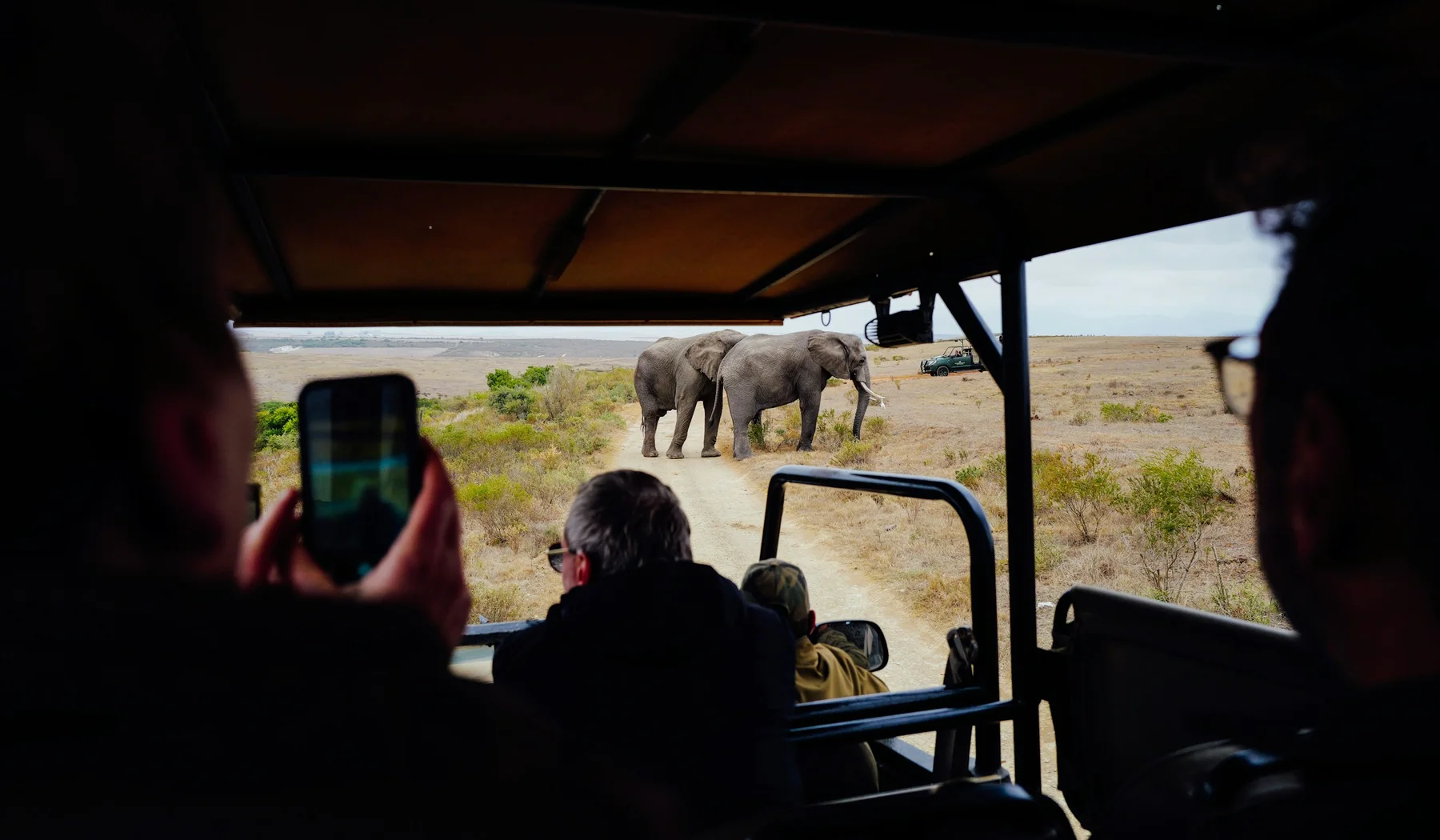
A published minimum distance is a boundary, not a target. An elephant that turns, bunches its family or raises its head may need more room than the number suggests.
Watch posture, direction, feeding and the open route. If the animal changes normal behaviour because of the vehicle, create space.
Give elephants the whole road
Elephants often use tracks because walking is easier. Stop far enough back to reverse, avoid placing a second vehicle behind them and never squeeze between adults and calves.
The Amboseli guide can help plan patient elephant-centred viewing with enough mornings rather than one pressured encounter.
Never divide a family group
A calf that appears alone may be moving toward adults hidden by grass or bush. Driving through the gap can separate or alarm the group.
Wait, scan widely and let the guide read the herd. The apparent empty space may be the family's path.
Give cheetahs room to hunt and parent
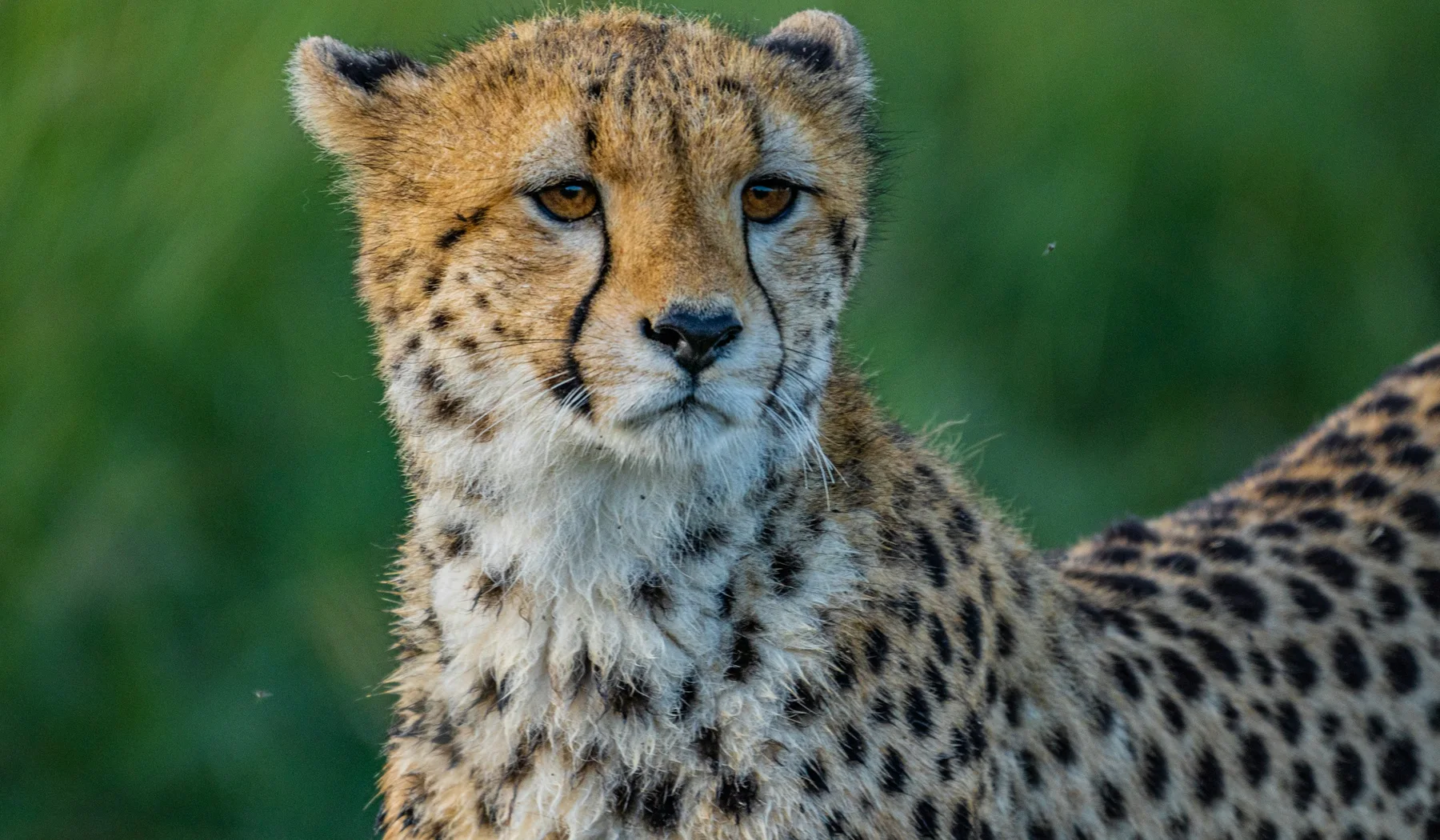
A cheetah may tolerate a vehicle while still losing a hunting line, exposing cubs or spending energy moving a den. Calm appearance does not prove absence of impact.
Keep likely prey routes open, avoid surrounding the cat and leave dens unpublicised. A long lens is safer than a closer engine.
Protect lions at a kill
Vehicles clustered around a carcass can block pride members, scavengers and the animal's view of danger. Noise and repositioning also consume the rest that cats need.
Take a fair turn, keep a broad exit and leave before the scene becomes a ring of metal.
Give leopards a way down
A leopard in a tree may need to descend, move a kill or reach cubs. Parking under every possible route traps the animal above the crowd.
Leave quiet space around the trunk and likely landing side. The photograph is not more important than the cat's movement.
Protect rhino locations
Precise live locations can aid harassment or worse. Guides and guests should follow the conservancy's security advice and avoid publishing identifiable coordinates.
The Ol Pejeta guide can frame a rhino-focused visit without turning sensitive wildlife into a live map pin.
Respect birds at nests
A vehicle parked under a nest can expose it to predators, heat or repeated disturbance. Playback and close approach can pull adults away from eggs or chicks.
Watch from a distance, limit time and avoid sharing exact nest locations for sensitive species.
Do not interrupt a hunt
Racing ahead, blocking prey or forming a wall around a predator changes the event the guests came to witness. It can cost the animal a meal.
Hold position, keep escape routes open and accept that the hunt may vanish into cover without a photograph.
Let animals approach on their terms
Wildlife sometimes walks toward a stationary vehicle. Stay quiet and inside as instructed, avoid sudden movement and do not start the engine until the path is clear.
An animal choosing proximity is different from a vehicle forcing it. The guide should always retain a safe retreat.
Keep the engine quiet when possible
An idling engine adds noise, heat and vibration. Switching off can improve observation and reduce pressure when safety and vehicle conditions allow.
The guide decides when an engine must remain ready, especially around elephants, buffalo, difficult terrain or a crowded track.
Never provoke a camera look
Whistling, clapping, banging panels, playing calls or tossing objects turns natural behaviour into a performance. The resulting photograph records disturbance.
A good wildlife image comes from light, patience and anticipation. Read the Kenya photography safari page for a slower approach.
Stay seated when the guide asks
Standing suddenly or leaning outside changes the vehicle's outline and can alarm animals. It can also create a serious safety risk for the guest.
Follow the guide's briefing even when another vehicle appears casual. Familiar-looking animals remain wild.
Keep voices low
Excitement is natural, but shouting travels far across open ground. It can disturb wildlife and spoil the sighting for everyone else.
Speak softly, prepare children before the drive and save celebration for the moment the vehicle has moved away.
Silence phone sounds
Ringtones, shutter simulations and notification tones add needless noise. A real camera can also be set to a quieter mode where suitable.
Prepare devices before the first sighting, not while an animal is watching the vehicle.
Secure food completely
A snack held outside the vehicle can attract birds or monkeys even when it is not deliberately offered. Food association changes behaviour and creates conflict.
Eat only where permitted, keep containers closed and never throw leftovers into the bush.
Never feed wildlife
Feeding is prohibited in KWS park rules and is poor practice everywhere. It makes animals approach vehicles, alters diets and can lead to aggression or removal.
A close photograph obtained with food is not a wildlife encounter. It is trained behaviour with a future cost.
Carry every piece of waste out
Tissues, bottle caps and fruit peel are still waste. Wind can carry small items far from a picnic site or vehicle.
Use a sealed bag in the vehicle and check the ground before leaving every authorised stop.
Treat cigarette ends as litter and fire risk
A cigarette end can persist, poison or ignite dry vegetation. Smoking can also disturb other guests and may be restricted to designated areas.
Follow the property's and land manager's rules, then extinguish and remove waste completely.
Use toilets only where permitted
Leaving the vehicle in open country risks people and wildlife, while informal stops create litter and damage.
Plan with gates, picnic sites and lodge facilities. Tell the guide early rather than waiting for an emergency.

Stay on designated roads where off-road driving is prohibited
In KWS parks and the Masai Mara National Reserve, the current published rule is clear. A lion beyond the road does not create an exception for a better angle.
Choose time and optics instead. The best first Kenya park guide helps match expectations to each viewing style.
Use controlled off-road access sparingly
Where a conservancy permits it, the guide should choose the shortest low-impact line, avoid wet or fragile ground and return without creating a network of tracks.
Permission is a responsibility. It should reduce crowding and improve interpretation, not start a race.
Never chase an animal cross-country
Following at speed forces energy expenditure and can separate groups or disrupt hunts. A guide should predict movement from a respectful position rather than pursue the animal.
If the subject leaves, let it leave. Another sighting is a better outcome than prolonged pressure.
Do not block the crossing point
At rivers and road crossings, vehicles can form walls along both banks. Animals may bunch, retreat or choose a more dangerous line.
Use the future migration crossing guide and accept that patient distance protects the event.
Share crowded sightings fairly
One vehicle does not own a lion because it arrived first, and a late vehicle should not push through the group. Guides can coordinate turns and leave after guests have observed the behaviour.
Good etiquette protects sightlines without circling the animal or blocking the road.
Leave when pressure grows
The guide can improve a poor scene simply by departing. A quieter bird, landscape or track may become the most memorable moment of the drive.
Crowd avoidance belongs in route design, especially in popular Mara sectors and peak months.
Avoid radio races
Guide radios help share information and safety alerts, but an excited call can send many vehicles to one animal. Responsible teams limit sensitive details and judge whether a new arrival will add pressure.
Guests should never demand that the driver race because another guide reported a cat.
Keep speeds appropriate
Speed reduces reaction time, raises dust and increases collision risk. It also turns every radio message into pressure on the guide.
Follow posted limits and slow further near wildlife, people, poor visibility and rough ground.
Control dust around animals and people
Accelerating past a resting animal, walker, village or another open vehicle covers them in dust. The impact is avoidable.
Slow early, leave distance and wait for the air to clear before passing.
Use headlights responsibly
Night drives offered in authorised areas need trained guides and controlled lights. Beams should not blind, chase or hold an animal for prolonged viewing.
The animal's movement and the land manager's night-drive code determine when the light moves or switches off.
Do not assume night drives are allowed
A conservancy activity cannot be transferred into a national park or reserve. Gate hours and land rules still apply.
The proposal should name the area and operator for every night drive, rather than listing it as a generic Kenya extra.
Treat spotlight colour as one small detail
A filter alone does not make a night drive ethical. Duration, distance, species, direction of light and the animal's reaction matter more.
Choose a guide who reads behaviour and can abandon the sighting.
Protect nocturnal rest and hunting
Repeated light and engines can change a nocturnal animal's route or expose it to predators. Small animals deserve the same care as famous cats.
Limit time, avoid surrounding and let the darkness return.
Keep drones grounded without permission
A drone can disturb birds and mammals, invade privacy and breach protected-area and aviation rules. Owning a registered aircraft does not grant launch permission.
Obtain every required approval in advance or leave it packed. A guide cannot authorise what the regulator controls.
Delay sensitive social posts
Posting a rhino, den, nest or kill with a live location can bring more vehicles or expose wildlife to security risk.
Remove precise metadata and publish later when advised by guides or conservation teams.
Do not stage photographs
Asking a guide to move closer, herd an animal, bait a bird or change its behaviour creates a false image and a real impact.
Tell the story of the conditions honestly. Distance and patience are part of the photograph.
Use a longer lens before asking for proximity
A crop cannot replace field craft, but it can prevent a needless approach. Binoculars also give every passenger a close view without moving the vehicle.
The Mara photography guide covers gear, settings and light alongside ethical positioning.
Give photographers enough time
A rushed itinerary encourages a chase for one clean frame. Several drives in one area allow the guide to wait for natural movement and return under different light.
Fewer parks and longer stays can be the most ethical photography upgrade.
Choose the vehicle for the interest
A private vehicle helps a specialist group wait at birds or leave a crowd, but it never grants closer distance or wider permissions.
Shared vehicles work well when guests agree on pace and the guide protects the rules.
Brief children before the first drive
Children can understand simple rules: quiet voices, hands inside, no food for animals and always listen to the guide. A clear briefing removes constant correction.
Family planning should include toilets, snacks and realistic drive length so discomfort does not pressure the guide to stop in unsafe places.
Make mobility needs part of safety
A traveller who cannot climb quickly or sit for long needs planned stops and the right vehicle. Improvised exits in open habitat are not the answer.
Discuss mobility with the planner before choosing remote activities and vehicle designs.
Self-drivers need the same discipline
Independence does not weaken protected-area rules. Self-drivers should use maps, stay on permitted roads, keep gate times and ask rangers about current closures.
Read the future self-drive Mara guide and road-conditions guide before deciding.
Do not follow a violating vehicle
A self-driver may assume a tour vehicle knows a legal shortcut. It may simply be breaking the rule.
Use the map, signs and ranger instructions rather than copying another driver.
Know when not to stop
Stopping on a blind rise, narrow bridge or an elephant's exit creates danger even if the animal is visible.
The guide should position for traffic, terrain and retreat as well as the view.
Leave picnic wildlife alone
Baboons, monkeys and birds around picnic sites learn quickly from careless food. Close doors, secure bags and do not encourage photographs with snacks.
Report aggressive food-conditioned animals to rangers rather than feeding them to move away.
Respect people as part of the landscape
Driving through settlements, homesteads or work areas calls for slower speed, consent for photographs and ordinary courtesy. Wildlife ethics do not excuse poor behaviour toward residents.
Community land is not an empty backdrop for tourism.
Ask how the guide handles pressure
A useful pre-booking question is what happens when a guest asks to drive closer or off-road where it is prohibited. The answer should show confidence, explanation and escalation.
Choose the person who can say no without turning the drive into an argument.
Look for guide knowledge beyond sightings
A guide who explains tracks, habitat, weather and animal decisions does not need to manufacture constant proximity.
Interpretation turns a distant or quiet sighting into a richer encounter.
Read traveller concern as a warning
One independent traveller wrote, “I'm concerned that that driving off-road on the savannah in the very wet conditions where soil is disturbed and plants uprooted is damaging the environment.”
The full review connects a guest's enjoyment with a legitimate question about visible impact.
Hold conservation and tourism together
The same traveller added that it was “probably better for tourism income to support wildlife conservation and provide local employment.” Ethical safari is not about rejecting tourism.
It is about directing money and behaviour toward wildlife, habitat and communities without treating access as unlimited.
Listen when crowding changes the mood
A first-person Mara account says, “The whole thing felt more like a crowded whale-watching trip than a quiet moment in the wild.”
Read the full independent account and use it to plan sectors, timing and the willingness to leave a crowd.
Notice what people do inside the crowd
The same writer observed, “People stood up to get a better view.” Small guest choices can add movement and pressure when many vehicles are already present.
A calm briefing and patient guide protect both safety and the atmosphere.
Use vehicle limits as context
A Kenya traveller wrote, “With multiple camps in the region and a limit of five jeeps per sighting, the sightings felt a bit busier compared to the other camps.”
The full traveller review shows why a number should be read beside bed density, guide coordination and personal expectations.
Do not assume busier means ruined
That review continues, “but it did not detract from our experience or our ability to view the wildlife.” Honest planning leaves room for different preferences.
The goal is not to promise solitude everywhere, but to explain the viewing system and offer choices.
Remember the whole wildlife community
The traveller said, “Our main goal for safari was seeing wildlife and we saw plenty.” They also mentioned “dozens of mammal species” alongside birds, reptiles and insects.
A broad interest reduces pressure to surround one famous cat and makes a quieter drive rewarding.
Understand why experts explain the rules
Wildlife photographers Jonathan and Angela Scott argue for explaining the reason behind “Don't do this, don't drive off-road, don't drive too close to the animals.”
Their safari-etiquette interview links proximity at a cheetah den to a mother moving and potentially losing cubs.
Report serious violations safely
Do not start a roadside confrontation that creates danger. Record time, place, vehicle identification and the observable action without inventing motive.
Give the information to the relevant ranger, land manager or operator and retain the original evidence.
Distinguish disagreement from violation
Two guides can choose different viewing distances while both remain legal and attentive. A report should describe facts, not punish a guide for failing to deliver a guest's preferred angle.
Rules, animal behaviour and safety provide the test.
Reward patient guiding
Tell the operator when a guide left a crowded sighting, protected a crossing or refused to provoke an animal. Positive feedback helps the business value the behaviour guests want repeated.
Tips and reviews can praise knowledge, restraint and respect, not only the species count.
Put ethics into the safari proposal
The proposal can name land units, private or shared vehicles, specialist guiding and activities. It should never promise rule-breaking access or guaranteed wildlife.
Use the future park-fee guide to understand how conservation charges fit the route.
Choose parks by viewing style
The Mara, Amboseli, Tsavo, Samburu and Laikipia do not feel identical. Habitat, road networks and animal distribution change the way sightings develop.
Compare Tsavo, Samburu and other guides before assuming closer is better.
Choose quiet time where possible
Shoulder and green seasons can reduce vehicle pressure, but weather and road conditions add trade-offs. A quiet month is not permission to leave roads or approach closer.
Plan enough nights for different conditions rather than trying to force one drive to deliver everything.
Choose conservancies for more than off-road access
Conservancies can offer limited beds, community leases, walks and night drives as well as controlled vehicle policies. The whole model matters.
Ask about vehicle caps, guide training, land payments and how rules are enforced.
Keep wild behaviour as the measure
The most valuable moment may be an elephant feeding, a cheetah scanning or a bird returning to its nest without reacting to the vehicle.
If the subject continues its own day, the guide has created space for a real encounter.
Take home the right story
The strongest safari story is not how close the vehicle pushed. It is how the group waited, understood and left the animal free.
That is the practical heart of ethical wildlife viewing and off-road driving rules in Kenya.
Sources and further reading
| Source | What it supports |
|---|---|
| KWS park rules | Official feeding and off-road prohibitions |
| KWS Nairobi National Park | Current park-specific distance and off-road guidance |
| Masai Mara National Reserve rules | Reserve safety, speed and off-road rules |
| Mara management plan | Management context for vehicle pressure and habitat |
| Greater Mara ecosystem plan | Road-network and enforcement context |
| Independent traveller review | Exact concern about wet-season off-road damage |
| Independent Mara account | Exact first-person crowding observations |
| Kenya traveller review | Exact comments on vehicle limits and wider wildlife |
| Jonathan and Angela Scott interview | Direct expert explanation of why proximity can harm cheetah cubs |
Plan an ethical Kenya safari
Share dates, route, parks, reserves, conservancies, group, vehicle choice and photography priorities.