
Masai Mara Game-Drive Rules and Wildlife Etiquette
Understand the rules, read the animal, protect habitat, share crowded sightings fairly and choose a guide who can wait, explain and say no.
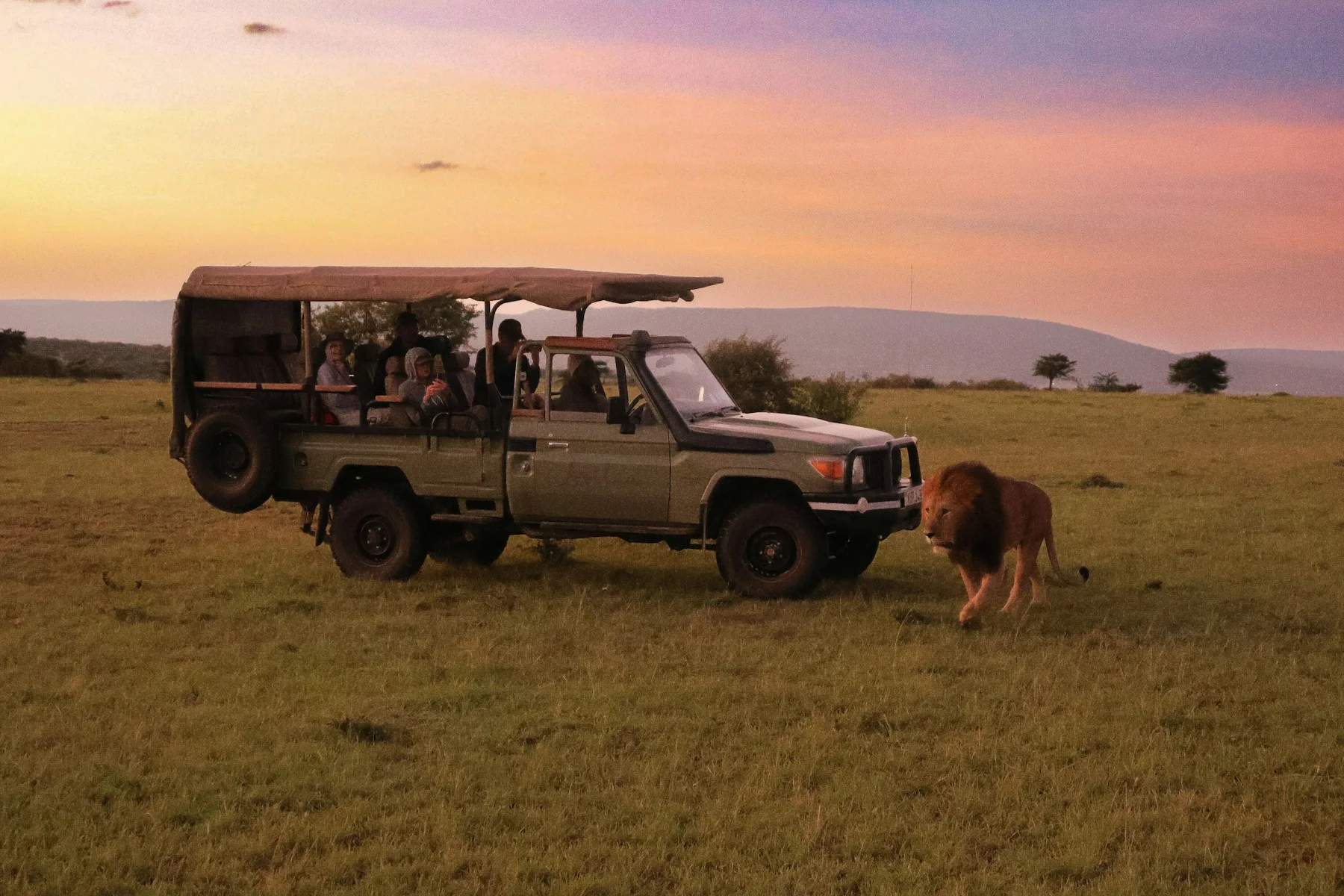
- Rules and etiquette are related, not identical
- The land unit matters
- The Mara Triangle
- The Narok side of the Reserve
- Private conservancies
- Crossing a boundary changes rules
- Current signs override memory
- A rule-source table
- Speed limits are ceilings
- Why speed harms the safari
- Speed near a sighting
- Speed around people
- Wildlife has the right of way
- Never split a family group
- Do not block an escape route
- Do not park on the animal’s path
- The animal approaching you is different
- Distance is not one universal number
- Use binoculars instead of the accelerator
- Read the first change in behaviour
- Animal signals are contextual
- Signs that the vehicle should leave
- Elephants need family space
- A mock charge is not entertainment
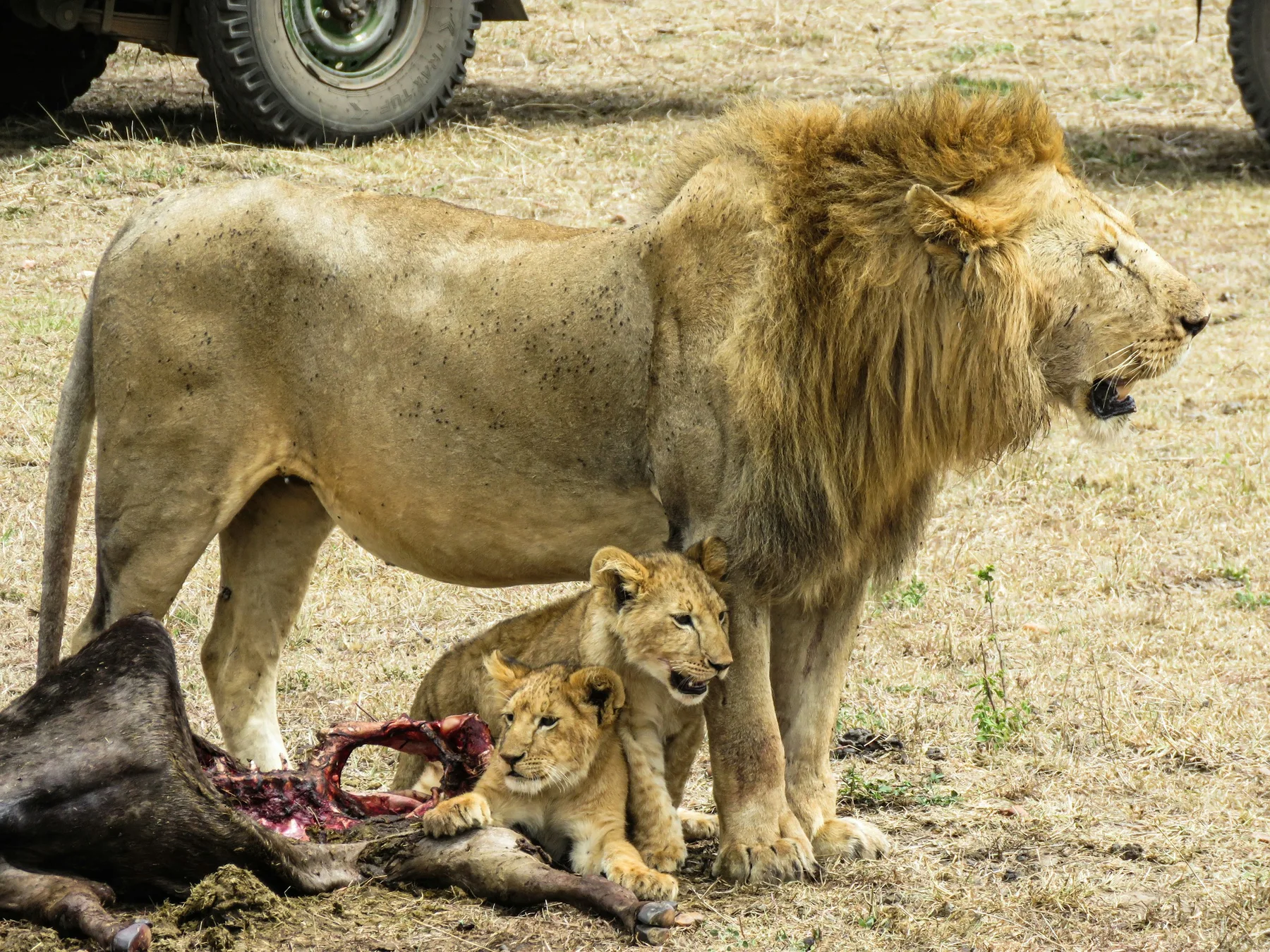
- Lions at rest
- Lions hunting
- Lion cubs
- Cheetahs on vehicles
- Cheetahs hunting
- Leopards in trees
- A leopard on a kill
- Hyenas at dens
- Rhinos
- Hippos
- Crocodiles and river edges
- Wildebeest crossings
- Bird nests
- Nocturnal animals
- Species etiquette at a glance
- Quiet means normal conversation, not silence forever
- Do not call animals
- Do not clap or bang the vehicle
- Horns are for safety
- Phones and music
- Door slamming
- Standing and sudden movement
- Children in the vehicle
- Never shame a child in the moment
- Shared vehicles need a briefing
- Noise and movement table
- Feeding wildlife is never a kindness
- Do not leave fruit peel
- Picnic food stays with people
- Water is not bait
- Litter includes tiny objects
- Cigarettes and fire
- Food and waste table
- Stay in the vehicle unless permitted
- A picnic site is not a playground
- Toilet stops
- Do not climb the vehicle roof
- Seat belts and moving vehicles
- Do not open doors without instruction
- Camp paths are wildlife space too
- Safety table
- Off-road driving is not one Mara-wide entitlement
- High-use zones
- Low-use zones
- River zones
- Wet ground
- Closed tracks
- Cut-grass tracks
- Why parallel tracks are destructive
- Self-drive responsibility
- Road and weather responsibility
- Track-use decision table
- Busy sightings need a queue, not a ring
- Take your turn
- Do not double-park the animal
- Give small vehicles a view
- Do not race the radio
- Leave a distressed sighting
- Patience is not possession
- Photography at a crowd
- Crowd etiquette table
- Ethical photography begins before the shutter
- No baiting
- No wake-up photograph
- No chase photograph
- No den disclosure
- Flash and artificial light
- Drones
- Editing cannot repair disturbance
- Photographer ethics table
- The guide must be able to say no
- Ask about discipline before booking
- Ask about guide training
- Ask about private vehicles carefully
- Ask about spotters and guiding roles
- Ask how violations are reported
- Booking questions table
- What to do when your guide gets too close
- What to do when another vehicle breaks a rule
- Photograph evidence safely
- Report to the correct manager
- Keep the complaint factual
- Distinguish disagreement from danger
- Follow up without publishing a mob
- Incident record table
- Traveller voice: feeding changed a shared drive
- Traveller voice: crowding can surround an animal
- Traveller voice: modern lenses reduce the excuse
- Traveller voice: patience without pressure
- Traveller voice: personal space
- Traveller voice: non-threatening positioning
- Traveller voice: a photographer’s patience
- Traveller voice: do not impose a specialist pace
- Traveller voice: space can still exist in a busy season
- Traveller voice: guides balance shared requests
- What reviews can reveal
- What reviews cannot certify
- A traveller pledge
- Common mistake: mistaking closeness for quality
- Common mistake: asking the animal to perform
- Common mistake: copying another vehicle
- Common mistake: treating conservancy access as unlimited
- Common mistake: confronting beside wildlife
- Common mistake: dropping “small” litter
- Common mistake: sharing live den locations
- Common mistake: bribing for a rule break
- Common mistake: blaming the guide for a quiet drive
- Common mistake: treating the rules as someone else’s job
- How to prepare in ten steps
- Final recommendation
- Frequently asked questions
A lioness lifts her head. One vehicle stops. Another arrives and takes the open side. A third noses forward, then a fourth. Within minutes, the animal that was resting has engines on three sides and a blocked path on the fourth. Every traveller may believe they are only one vehicle. The lioness experiences the whole circle.
Masai Mara game-drive rules and wildlife etiquette begin with that change of perspective. The aim is not to get as close as the guide can physically drive. It is to watch wild animals remain wild, leave the habitat intact and keep people safe. Formal rules create the minimum. Good etiquette goes further by asking what the animal needs, what other visitors deserve and whether a photograph is worth changing a behaviour.
Use the Masai Mara safari guide to understand the ecosystem and land units. The National Reserve, Mara Triangle and private conservancies do not operate under one universal off-road, night-drive or viewing rule. Current signs, rangers and the relevant land manager always come first.
The companion Masai Mara game-drive guide helps choose full-day, split and private-vehicle formats. This page deals with how every one of those drives should be conducted.
Rules and etiquette are related, not identical
A rule can state a speed, zone or permitted activity. Etiquette governs the space inside those limits. A vehicle may be legally positioned and still be noisy, crowd another guest’s view or stay after an animal begins showing discomfort.
| Layer | Question | Example |
|---|---|---|
| Law or formal rule | Is the action permitted? | Whether off-road driving is allowed in this zone |
| Ranger or land-manager direction | What applies right now? | A track is closed after rain |
| Guide judgement | Is it safe and responsible? | Leaving before a herd crosses the road |
| Wildlife etiquette | Does the animal retain choice? | Keeping an escape route open |
| Visitor courtesy | Can others share the experience? | Taking a turn at a busy sighting |
The land unit matters
Ask whether the drive is in the Narok side of the National Reserve, the Mara Triangle or a named private conservancy. The answer changes permitted activities, route, vehicle density and reporting authority.
The Mara Triangle
The Mara Conservancy driving guidance is the clearest primary source for Triangle visitors. It sets speed guidance, wildlife right of way and zone-specific off-road rules, and explains how closed tracks are marked.
The Narok side of the Reserve
Reserve rules and ranger instructions apply. Do not assume that a practice seen in a video, conservancy or another sector is permitted here.
Private conservancies
Some conservancies allow controlled off-road approaches and night drives under their management plans. This is not permission to chase wildlife, invent tracks or ignore vehicle limits.
Crossing a boundary changes rules
A guide may move from conservancy to Reserve or between management areas during one day. Ask when the rule set changes. A guest should not pressure the guide to continue an activity beyond that boundary.
Current signs override memory
A route that was open last season can be closed for erosion, fire, wildlife sensitivity or repair. A rock or log barrier in the Triangle can indicate a closed track. Do not move it.
A rule-source table
| Situation | First authority | Useful supporting source |
|---|---|---|
| Road or track closure | Ranger, gate or land manager | Current conservancy or Reserve update |
| Speed | Posted sign and current area rule | Mara Conservancy guidance in the Triangle |
| Off-road access | Relevant land-unit rule and ranger | Camp briefing |
| Night drive | Conservancy management and guide | Camp activity description |
| Busy sighting | Ranger and area viewing rule | Guide judgement |
| Suspected violation | Relevant ranger or management office | Time, location, vehicle details and safe evidence |
Speed limits are ceilings
The Mara Conservancy publishes 50 kilometres per hour on graded roads and 30 on other tracks in the Triangle. Wildlife, dust, visibility, water, pedestrians and livestock often require much slower driving.
Why speed harms the safari
Fast vehicles miss tracks, birds and subtle behaviour. They throw dust into sightings, erode roads and leave less time to respond when an animal steps out.
Speed near a sighting
Approach slowly and stop before the animal needs to react. Do not accelerate away while another vehicle is photographing through the dust.
Speed around people
Slow near gates, camps, staff, villages, livestock and walking areas. Tourism does not have priority over local safety.
Wildlife has the right of way
The Triangle guidance instructs drivers to stop for animals on the road and pass slowly, with distance, when necessary. The animal chooses whether and where to cross.
Never split a family group
Do not drive between an elephant calf and adults, across a line of wildebeest or through a pride. Wait until the group’s movement is clear.
Do not block an escape route
Predators and prey both need open space. A semicircle of vehicles can become a trap when the remaining gap closes.
Do not park on the animal’s path
A skilled guide predicts movement and positions at an angle that allows choice. If the animal changes direction because of the vehicle, the position may already be intrusive.
The animal approaching you is different
Stay still, quiet and inside the vehicle. Do not reach out, lean over, start the engine abruptly or reposition for a selfie. Let it pass.
Distance is not one universal number
Formal minimums vary by zone and activity. Species, age, behaviour, vehicle number, terrain and visibility also matter. A nervous elephant herd can need more space than a resting lion familiar with vehicles.
Use binoculars instead of the accelerator
Good optics and a longer lens create detail without forcing the vehicle closer. Distance often reveals behaviour that disappears under pressure.
Read the first change in behaviour
An alert stare, repeated glance, ear position, tail movement, head lift, interrupted feeding or change of route can show that the vehicle has become relevant. The guide should respond before alarm escalates.
Animal signals are contextual
No single ear flap or yawn proves stress. Guides interpret the whole scene. Travellers should avoid diagnosing from one gesture and support the conservative decision.
Signs that the vehicle should leave
| Observation | Possible meaning | Responsible response |
|---|---|---|
| Animal repeatedly watches vehicles | Attention pulled from normal behaviour | Increase distance or leave |
| Herd bunches around young | Protective concern | Stop approaching and open space |
| Predator abandons rest or stalk | Disturbance or changed opportunity | Withdraw without following |
| Animal changes route around vehicles | Path is obstructed | Clear the line immediately |
| Vehicles form a ring | Escape corridor closing | One or more vehicles leave |
| Dust obscures the subject | Too much traffic or speed | Slow, wait or leave |

Elephants need family space
Calves may be hidden in grass or between adults. Never insert the vehicle into a herd. If elephants approach from both sides, stop and follow the guide’s instructions.
A mock charge is not entertainment
Do not clap, laugh loudly or encourage the driver to provoke another reaction. The encounter shows that distance or behaviour needs to change.
Lions at rest
Leave room for shade, movement and access to cubs or a kill. Engines, doors and voices can interrupt rest that matters in the heat.
Lions hunting
Do not race ahead, block prey, reveal the predator with a crowd or place the vehicle on the likely chase line. A hunt is not a staged performance.
Lion cubs
Keep the route between cubs and adults open. Do not crowd a den or repeatedly return if the mother is uneasy.
Cheetahs on vehicles
Occasionally a cheetah may climb onto a vehicle for height. Guests should remain still and follow the guide. Drivers must never position or encourage the animal to climb.
Cheetahs hunting
The approach path and prey’s field of view matter. Too many vehicles can expose the cheetah, fragment the chase or block escape.
Leopards in trees
Do not park under the branch, block the descent or crowd a hidden cub site. A dangling tail is not an invitation to move beneath it.
A leopard on a kill
Give enough distance for feeding and vigilance. Do not use noise to make the animal lift its head for a photograph.
Hyenas at dens
Dens are sensitive places. Stay on permitted routes, keep distance and avoid surrounding an entrance. Cubs need to enter and leave without a wall of vehicles.
Rhinos
Follow the guide’s and ranger’s specific instructions. Location sensitivity and anti-poaching concerns may limit radio discussion, route or photography detail.
Hippos
Never stand between a hippo and water. Leave the vehicle only at designated or guide-approved places and do not approach riverbanks casually.
Crocodiles and river edges
Banks can collapse and crocodiles can be difficult to see. Respect barriers, ranger guidance and designated viewpoints.
Wildebeest crossings
Do not block entry, exit or approach paths. Vehicle position can stop a herd, compress animals or create panic. The river-crossing guide explains why waiting responsibly matters.
Bird nests
Do not ask the guide to push into vegetation or remain when parents hesitate to return. Nest location should not be broadcast carelessly.
Nocturnal animals
On permitted night drives, use light under the guide’s control. Avoid prolonged glare, especially on small mammals, hunting predators and sensitive eyes.
Species etiquette at a glance
| Wildlife | Protect | Avoid |
|---|---|---|
| Elephant family | Calf access and movement corridor | Driving into the herd |
| Lion pride | Shade, cubs, kill and escape routes | Ringing or provoking the pride |
| Cheetah | Hunting path and field of view | Racing alongside or attracting it to a vehicle |
| Leopard | Tree descent, cub site and cover | Parking under the branch |
| Hyena | Den entrance and social space | Crowding cubs |
| Hippo | Route to water and safe bank distance | Standing between animal and river |
| Migrating herd | Approach and exit lanes | Blocking a crossing |
| Nesting bird | Parent access and nest secrecy | Flushing or broadcasting location |
Quiet means normal conversation, not silence forever
Guides need to explain and guests need to ask questions. Lower voices when close to wildlife, during a hunt, near a den or when the animal is alert.
Do not call animals
No kissing sounds, prey calls, recorded voices or imitations to make an animal look up or approach. The resulting photograph documents disturbance.
Do not clap or bang the vehicle
Noise used to wake a lion or turn an elephant’s head changes the behaviour for entertainment.
Horns are for safety
Do not use a horn to move wildlife for a better angle. Emergency use and guide judgement are different from impatience.
Phones and music
Silence alerts, wear headphones in transit and never play music at a sighting. A video call beside a resting pride affects every nearby vehicle.
Door slamming
Close doors and hatches gently. Prepare equipment before the vehicle reaches the animal.
Standing and sudden movement
Stay within the vehicle profile and move slowly. Follow the guide’s rule on standing because vehicle design and animal proximity differ.
Children in the vehicle
Explain before the drive that quiet becomes important near animals. Bring soft activities for transit, schedule shorter outings and use a private vehicle when early return may be necessary. The Kenya safari with children guide covers the wider family plan.
Never shame a child in the moment
If a child becomes distressed or loud, create distance and leave. Wildlife welfare and family dignity both improve when the guide resets the scene.
Shared vehicles need a briefing
Agree on voice, species interests, photography, time at sightings and meal or toilet needs before departure. Conflict near an animal is avoidable.
Noise and movement table
| Moment | Helpful behaviour | Harmful behaviour |
|---|---|---|
| Approaching a sighting | Prepare camera and lower voice | Searching loudly through bags |
| Animal looks toward vehicle | Pause and assess | Calling to make it face the camera |
| Hunt begins | Stay still and follow guide | Starting engine to race ahead |
| Child becomes restless | Leave quietly | Arguing beside the animal |
| Vehicle needs to depart | Move slowly and manage dust | Revving or cutting through the sighting |
| Guide asks for silence | Follow immediately | Debating the instruction in place |
Feeding wildlife is never a kindness
Food changes natural foraging, creates vehicle association and can make animals persistent or aggressive. A jackal does not need a bread roll from the lodge.
Do not leave fruit peel
Biodegradable does not mean native, harmless or invisible. Carry every scrap out.
Picnic food stays with people
Keep containers closed, eat at permitted places and watch bold birds or monkeys without feeding them.
Water is not bait
Do not pour water to attract birds or mammals for a photograph. Water provision is a land-management decision.
Litter includes tiny objects
Bottle caps, tissues, wipes, cigarette ends, lens-cleaning packets and cable ties all count. The vehicle should carry a secure waste bag.
Cigarettes and fire
Smoke only where explicitly permitted, extinguish completely and carry the waste. Dry grass can turn one careless ember into a landscape fire.
Food and waste table
| Item | Correct action | Why |
|---|---|---|
| Packed-lunch scraps | Seal and return to camp | Prevents habituation and litter |
| Fruit peel | Carry out | It is still introduced waste |
| Tissue or wet wipe | Bag securely | It does not disappear responsibly |
| Cigarette end | Extinguish and remove | Fire, toxins and litter risk |
| Spilled drink | Clean where practical | Reduces attraction and mess |
| Broken equipment | Account for every piece | Sharp plastic or metal can injure wildlife |
Stay in the vehicle unless permitted
Leaving the vehicle is restricted to designated or guide-approved situations. Open grass can hide predators, snakes, holes and unstable ground.
Travellers with limited mobility should confirm vehicle boarding, seating, permitted toilet stops and emergency movement before arrival using the accessible Kenya safari guide.
A picnic site is not a playground
Remain within the permitted area, supervise children and scan before moving. Do not wander to a river or tree for a photograph.
Toilet stops
Tell the guide early. They will choose a legal, private and safer solution where possible. Carry out paper and wipes as directed.
Do not climb the vehicle roof
Use only designed seating and viewing positions. Improvised height changes the vehicle profile and creates fall risk.
Seat belts and moving vehicles
Use the available restraint where required and sit when the guide asks. Standing on a rough track can cause serious injury.
Do not open doors without instruction
An open door changes the vehicle profile and can place a limb close to wildlife. Follow the guide.
Camp paths are wildlife space too
Use escorts after dark where required. Do not walk between room and lounge because the distance looks short.
Safety table
| Situation | Traveller action | Guide or staff role |
|---|---|---|
| Wildlife approaches vehicle | Stay still and quiet | Assess, position and instruct |
| Toilet need | Ask early | Choose permitted safe response |
| Animal in camp | Remain in room or escorted area | Manage movement and communicate |
| Storm or flood | Follow route change | Use current road and authority information |
| Vehicle issue | Stay where instructed | Secure scene and call support |
| Medical concern | Speak immediately | Activate camp and assistance plan |
Off-road driving is not one Mara-wide entitlement
In the Triangle, the official guidance distinguishes high-use zones, where off-road driving is prohibited, from low-use zones with limited conditions for approaching confirmed big cats. Other land units have different rules.
High-use zones
These areas carry heavy visitor pressure. Staying on the road protects grass and reduces the web of vehicle scars.
Low-use zones
Limited off-road access may be permitted under current rules and for specific sightings. The guide should take the shortest route, respect distance and return along the same line where required.
River zones
Riverbanks, crossing approaches and sensitive ground need special protection. Never assume an off-road allowance applies beside the river.
Wet ground
Even where off-road use is normally possible, saturated soil can make it irresponsible or prohibited. Ruts remain after the photograph is forgotten.
Closed tracks
Do not follow another vehicle through a barrier. The first violation does not create permission for the second.
Cut-grass tracks
These are managed tracks, not invitations to drive anywhere the grass looks short. Follow the marked line.
Why parallel tracks are destructive
Drivers avoiding one puddle create multiple new scars, compact soil and widen erosion. Use the established route or turn back.
Self-drive responsibility
Read the self-drive guide before entering. The driver must know zones, boundaries, signs, speed, recovery and reporting, not merely operate a 4×4.
Road and weather responsibility
Use the road and gate guide and the flooding guide. A closed or flooded route is not an off-road challenge.
Track-use decision table
| Ground or sign | Meaning | Response |
|---|---|---|
| Normal open track | Managed route available | Stay on it and control speed |
| Rock or log barrier | Track closed | Turn back |
| High-use-zone sign | Greater vehicle pressure | No off-road driving |
| Low-use-zone designation | Limited rules may apply | Follow current guide and manager rule |
| Saturated or deeply rutted ground | High damage and recovery risk | Use main route or leave area |
| Unmarked grass beside traffic jam | Not automatically a road | Do not create a shortcut |
Busy sightings need a queue, not a ring
The secondary Mara rules summary states that in the Triangle, when more than five vehicles wait, viewing time is restricted to 10 minutes and waiting vehicles stay 100 metres away. Confirm current ranger instructions on the day.
Take your turn
Approach only when space opens, use the allotted time and leave cleanly. A private vehicle buys scheduling control, not priority over others.
Do not double-park the animal
Leave a path for both wildlife and departing vehicles. A second row creates pressure without improving most views.
Give small vehicles a view
Tall vehicles should not permanently block lower vans. Guides can communicate and rotate positions.
Do not race the radio
A rare sighting reported over radio can produce dangerous speed and crowding. A guide who declines the chase may be protecting the animal and the quality of the drive.
Leave a distressed sighting
If drivers jostle, guests shout or the animal is boxed in, ask your guide to leave. Your departure can encourage others and gives the guide freedom to find a better experience.
Patience is not possession
Waiting first does not entitle one vehicle to block everyone indefinitely. Follow current limits and share the line of sight.
Photography at a crowd
Use a longer lens, wait for a clean angle and accept another vehicle in the story. Removing the context is not worth adding pressure.
Crowd etiquette table
| Problem | Better choice | Reader benefit |
|---|---|---|
| More vehicles than space | Wait at the required distance | Calmer sighting and fair turn |
| One vehicle blocks movement | Reposition or leave | Animal keeps an exit corridor |
| Radio chase begins | Slow down and reassess | Avoids dangerous arrival and dust |
| Guest asks to push closer | Guide explains distance and refuses | Protects guide, animal and group |
| Sighting becomes chaotic | Leave for another habitat | Safari returns to observation |
| Limited viewing time | Prepare before entering | Less fumbling and fairer rotation |
Ethical photography begins before the shutter
Lens choice, vehicle position and patience determine whether the photograph costs the animal anything. The Masai Mara photography guide covers equipment and light in depth.
No baiting
Food, water, sound and scent must not be used to produce a subject or pose.
No wake-up photograph
A sleeping lion with closed eyes is the scene. Do not manufacture eye contact.
No chase photograph
Do not drive alongside a running animal to create motion. Movement caused by the vehicle is disturbance, not behaviour.
No den disclosure
Avoid sharing precise locations of dens, nests, rhinos or other sensitive wildlife publicly. Delay geotags and follow guide advice.
Flash and artificial light
Use only where the activity and guide permit it. At night, light should be controlled, brief and directed according to the land unit’s protocol.
Drones
Do not launch a drone because the landscape looks empty. Protected-area, aviation, privacy and wildlife rules apply, and disturbance extends far beyond the operator.
Editing cannot repair disturbance
A perfect crop hides the ring of vehicles but not the behaviour they changed. Judge the making of the image, not only its final frame.
Photographer ethics table
| Desired image | Ethical method | Unacceptable shortcut |
|---|---|---|
| Animal looking at camera | Wait for natural glance | Call, clap or bang vehicle |
| Low angle | Use terrain and vehicle design | Leave vehicle without permission |
| Running predator | Photograph natural movement | Chase alongside |
| Clean background | Wait or change lens | Block other vehicles or animal path |
| Nocturnal subject | Guide-controlled permitted light | Prolonged direct glare |
| Den or cubs | Keep distance and location discreet | Publish precise coordinates |
The guide must be able to say no
Choose an operator whose guides can refuse a guest request without losing support or tips. Ethical policy is weak if customer pressure always wins.
Ask about discipline before booking
Request the written driving code, land-unit rules, reporting process and how a guide handles a crowded sighting.
Ask about guide training
Training should cover wildlife behaviour, safety, ecology, first aid, rules, communication and vehicle handling. A warm personality is valuable but not sufficient.
Ask about private vehicles carefully
A private vehicle helps photographers and families align priorities. It does not buy closer access or rule exceptions.
Ask about spotters and guiding roles
One person may drive and guide; some camps use a separate spotter. Understand who watches the road, reads wildlife and communicates with guests.
Ask how violations are reported
A serious business should know which ranger or land manager receives evidence and should protect guests from confronting another driver directly.
Booking questions table
| Ask before paying | Strong answer includes |
|---|---|
| Which land units will we drive? | Named Reserve, Triangle or conservancy areas |
| What code governs guides? | Written rules and current land-manager authority |
| Can guests request off-road driving? | Only within exact permitted conditions, never on demand |
| How are crowded sightings handled? | Waiting, rotation, distance and willingness to leave |
| Can the guide refuse us? | Clear management backing for safety and ethics |
| How are complaints handled? | Vehicle, time, location, ranger and internal review |
| Is a private vehicle more permissive? | No, only more flexible within the rules |
What to do when your guide gets too close
Ask calmly for more distance: “Could we give the animal more room?” A clear request helps without starting an argument beside wildlife.
What to do when another vehicle breaks a rule
Do not confront the driver in a way that creates danger. Record the time, place, vehicle identification and behaviour if safe, then tell your guide or a ranger.
Photograph evidence safely
Document the vehicle and context, not only the animal. Do not stand, lean out or reveal sensitive wildlife locations publicly.
Report to the correct manager
Triangle incidents go to Mara Conservancy rangers or its reporting channel. Other Reserve or conservancy incidents belong to their relevant management. Ask at the gate when unsure.
Keep the complaint factual
State what happened, where, when, for how long and which vehicle was involved. Avoid guesses about motive or identity.
Distinguish disagreement from danger
A guide choosing a different angle is not necessarily unethical. Report observable acts such as feeding, chasing, leaving a permitted route, blocking or ignoring ranger instruction.
Follow up without publishing a mob
Give the manager a chance to investigate. Public accusations can misidentify a vehicle or expose a sensitive location.
Incident record table
| Field | Record |
|---|---|
| Date and local time | |
| Land unit and nearest landmark | |
| Vehicle registration or identifying number | |
| Operator or camp marking | |
| Observable action | |
| Animal and context | |
| Photo or video held privately | |
| Ranger or manager notified | |
| Response received |
Traveller voice: feeding changed a shared drive
One guest described vehicle mates “trying to entice a nearby jackal with it” after bringing bread rolls. Feeding affects wildlife and everyone sharing the vehicle.
Traveller voice: crowding can surround an animal
The same discussion recalled “20 safari vehicles SURROUNDING the lions”. The capital letters capture frustration, not a current vehicle count.
Traveller voice: modern lenses reduce the excuse
That traveller concluded “there is no need to encroach on the animals on view”. Binoculars and longer lenses make distance easier.
Traveller voice: patience without pressure
A Mara North guest valued that there was “never any pressure to move on quickly after any sighting”. Patience works when it does not monopolise a crowded scene.
Traveller voice: personal space
The same review praised an approach “very respectful of its personal space”. That is a useful quality to ask about before booking.
Traveller voice: non-threatening positioning
The guide was also described as “being non threatening”. The animal’s unchanged behaviour is the better photograph.
Traveller voice: a photographer’s patience
One private-vehicle user said, “I am someone who will sit for an hour or more in search of a photo”.
Traveller voice: do not impose a specialist pace
That person recognised “it would be selfish of me to expect other guests to fit in”. A private vehicle solved a social problem, not a rules problem.
Traveller voice: space can still exist in a busy season
A Reserve reviewer found “there was enough space and time to see and photograph the animals properly”. Good positioning and rotation can preserve quality.
Traveller voice: guides balance shared requests
A discussion noted, “Guides will always try to balance everyone’s requests equally”. A pre-drive briefing makes that balance easier.
What reviews can reveal
They show how guides handle pressure, whether vehicle mates respect rules and how patience or crowding feels. They generate booking questions.
What reviews cannot certify
They cannot prove current training, land rules or the full context of one photograph. Verify the operator’s present code and the manager responsible.
A traveller pledge
- I will follow current signs, rangers and guide instructions.
- I will not ask to chase, bait, call or crowd wildlife.
- I will give animals the road and an open escape route.
- I will keep food, waste and noise under control.
- I will accept a missed photograph when the ethical choice is to leave.
- I will respect other vehicles’ turns and views.
- I will not publish sensitive locations carelessly.
- I will report serious violations factually and safely.
Common mistake: mistaking closeness for quality
Distance can reveal relationships, movement and habitat. A frame filled with fur is not automatically a better safari.
Common mistake: asking the animal to perform
Wildlife owes no eye contact, roar, hunt or crossing. Observation replaces direction.
Common mistake: copying another vehicle
The other driver may be in a different zone or breaking a rule. Follow your guide and current signs.
Common mistake: treating conservancy access as unlimited
Controlled off-road or night driving still has boundaries, guide judgement and animal welfare.
Common mistake: confronting beside wildlife
Arguments add noise and danger. Record safely, leave and report.
Common mistake: dropping “small” litter
A tissue, peel or bottle cap is still waste. Carry it out.
Common mistake: sharing live den locations
Geotags can create pressure long after the original vehicle leaves.
Common mistake: bribing for a rule break
A tip does not buy closer access. Reward the guide who says no.
Common mistake: blaming the guide for a quiet drive
Wildlife is not scheduled. Pressure to produce can drive poor decisions.
Common mistake: treating the rules as someone else’s job
Travellers create demand. The request made from the back seat can protect or damage the Mara.
How to prepare in ten steps
- Identify every land unit in the itinerary.
- Read the current code for those areas.
- Ask how guides handle crowds and guest pressure.
- Decide whether specialist interests need a private vehicle.
- Brief children and shared-vehicle guests before departure.
- Carry binoculars, suitable lenses and secure waste bags.
- Let the guide control distance, route and light.
- Leave when wildlife or traffic pressure grows.
- Record serious violations safely and factually.
- Reward patient, respectful guiding in feedback and tips.
Final recommendation
Treat Masai Mara game-drive rules and wildlife etiquette as part of the safari, not a restriction around it. The reward is richer behaviour, calmer sightings, safer roads and a landscape that does not bear a new track for every photograph. Choose a guide who can wait, explain and say no. Then support that decision from the back seat, even when the animal walks away before the perfect frame.
Frequently asked questions
Can safari vehicles drive off-road in the Masai Mara?
Rules vary by land unit and zone. The Triangle restricts off-road use by high-use and low-use designation. Private conservancies have their own controlled rules.
How close can a vehicle get to wildlife?
Current area rules and guide judgement apply. Terrain, species, behaviour and vehicle numbers may require more distance than a formal minimum.
Can I ask a guide to make a lion look at the camera?
No. Calling, clapping, banging or provoking an animal changes behaviour for entertainment.
Are night drives allowed in the National Reserve?
Normal night drives are not a Reserve activity. Some private conservancies offer them under their own rules.
Can I leave the safari vehicle?
Only at designated or guide-approved places and when instructed. Open ground and riverbanks can hide serious danger.
Can I feed birds or jackals on safari?
No. Feeding changes natural behaviour, creates vehicle association and can lead to aggression or management problems.
What should I do at a crowded sighting?
Wait at the required distance, take a fair turn, keep an exit route open and leave if pressure grows.
How do I report a rule violation?
Record time, place, vehicle identification and observable action safely, then report to the relevant ranger or land manager.
Are drones allowed over the Masai Mara?
Do not launch one without all protected-area, aviation and other required permissions. Wildlife disturbance and privacy rules apply.
Should I geotag wildlife photographs?
Avoid live or precise locations for dens, nests, rhinos and sensitive wildlife. Follow guide and conservation advice.
Is a private vehicle allowed to get closer?
No. A private vehicle gives schedule and interest control within the same rules, not greater permission.
What is the most important etiquette rule?
Keep the animal’s path and choice open. If the vehicle changes normal behaviour, create more space.
Sources and further reading
The primary operational reference is the Mara Conservancy driving and game-drive guidance, supported by its monthly management archive. A secondary Mara rules summary provides viewing and reporting context that must be checked against current ranger instructions. Traveller quotations are linked to their individual review or discussion pages and describe personal experiences rather than universal current practice.
Let us compare the guide, vehicle and land rules
Share camps, dates, land units, vehicle arrangement and specialist interests. We will turn responsible guiding into concrete booking questions.