
Olare Motorogi Conservancy Guide
Understand the landowner and grazing model, compare every current partner camp, then plan night drives, walking, reserve days, flights and the right number of nights.
- What Olare Motorogi is
- What it is not
- The name carries two histories
- Olare Orok
- Motorogi
- Why old maps still separate them
- Olare Motorogi at a glance
- How large is Olare Motorogi?
- The ecosystem-plan sum
- The honest size statement
- Why figures differ
- Where the conservancy lies
- Direct reserve connection
- It is not the Mara River
- Exact camp location matters
- The map questions to ask
- Olare Motorogi compared with nearby areas
- The 2006 origin
- More owners joined the combined landscape
- Why landowner counts vary
- Land was individually titled
- The landholding company
- The management company
- Olpurkel Ltd
- Board representation
- Equal seats do not end every tension
- Lease payments
- Bed-night value
- Community employment
- Training
- The Maa Trust
- Community visit ethics
- Governance questions
- Managed grazing
- The gazetted plan
- The plan period has ended
- Planned access
- Grazing is not random entry
- Traditional knowledge
- Core wildlife refuge
- Drought pressure
- Tourism has obligations
- Livestock and wildlife table
- The landscape
- Open plains
- Riverine cover
- Olare Orok River
- Motorogi plains
- Hills and ridges
- Wet-season soil
- Dry-season dust
- Wildlife reputation
- Lions
- Pride history
- Lion cubs
- Leopards
- Leopard trees
- Cheetahs
- Hyenas
- Elephants
- Buffalo
- Zebras
- Wildebeest
- Topi
- Giraffes
- Birds
- Raptors
- Smaller mammals
- No rhino promise
- Wildlife table
- The main migration
- Not every herd reaches every camp
- River crossings
- Reserve access advantage
- Drive time still matters
- Main herds versus residents
- Migration-season crowd contrast
- More nights improve odds
- Read the migration guide
- Migration planning table
- Day game drives
- Dawn
- Afternoon
- Full-day drives
- Off-road access
- Sighting limits
- Radio discipline
- Sitting quietly
- Night drives
- Red-filtered light
- Guided walks
- Walking safety
- Age and fitness
- Sundowners
- Bush meals
- Balloon flights
- Cultural visits
- Activity comparison
- Where to stay in Olare Motorogi
- The five current partner camps
- Why an old camp list can mislead
- Camp comparison at a glance
- The best camp is not a universal answer
- Location inside the conservancy matters
- Kicheche Bush Olare
- What Kicheche feels like
- The camp setting
- Room style at Kicheche
- Family arrangements at Kicheche
- Meals at Kicheche
- Guiding at Kicheche
- Vehicle arrangement at Kicheche
- Photography at Kicheche
- Walking from Kicheche
- Kicheche for honeymooners
- Kicheche for first-time visitors
- What guests notice at Kicheche
- Wildlife experience from Kicheche
- Choose Kicheche Bush Olare if
- Look elsewhere if
- Porini Lion Camp
- What Porini Lion feels like
- The Porini setting
- Room style at Porini Lion
- Comfort versus decoration
- Guiding at Porini Lion
- Vehicle sharing at Porini Lion
- Combining Olare Motorogi and Ol Kinyei
- Walking and night drives from Porini
- Porini Lion for families
- Porini Lion for honeymooners
- Choose Porini Lion if
- Look elsewhere if
- Mara Plains Camp
- What Mara Plains feels like
- Suite scale at Mara Plains
- The private residence
- Mara Plains for honeymooners
- Mara Plains for photographers
- Vehicle use at Mara Plains
- Guiding at Mara Plains
- Dining at Mara Plains
- Wellness at Mara Plains
- Children at Mara Plains
- Choose Mara Plains if
- Look elsewhere if
- Olare Mara Kempinski
- What Kempinski feels like
- Room style at Kempinski
- The honeymoon suite question
- The swimming pool
- Dining at Kempinski
- Spa and wellness
- Guiding at Kempinski
- Kempinski for families
- Kempinski for honeymooners
- Choose Olare Mara Kempinski if
- Look elsewhere if
- Mahali Mzuri
- What Mahali Mzuri feels like
- The ridge setting
- Room style at Mahali Mzuri
- The main area
- Mahali Mzuri for couples
- Mahali Mzuri for families
- Exclusive use
- Guiding at Mahali Mzuri
- Wellness and downtime
- Choose Mahali Mzuri if
- Look elsewhere if
- A practical camp decision table
- Room rate is only one comparison
- Vehicle policy can outweigh the room
- Guide continuity can outweigh the logo
- Camp scale changes the social experience
- Use exact room names
- Use exact price inclusions
- Flying to Olare Motorogi
- There is no single airport for every camp
- Olare Orok airstrip
- Motorogi-side access
- Wilson Airport departure
- International connection time
- An overnight in Nairobi
- Flight duration
- Airstrip transfer
- Baggage limits
- Excess baggage
- Flying with children
- Flying for photographers
- Flying versus driving
- Driving from Nairobi
- Do not plan by distance alone
- A private safari vehicle
- The conservancy vehicle rule
- Road condition in rain
- Night arrival
- Combining Olare Motorogi with the reserve
- A reserve day is not automatically included
- Why visit the reserve
- Why stay in the conservancy
- The Mara River misconception
- Main migration timing
- A full-day reserve visit
- Two short reserve drives
- Read the reserve guide
- Read the river-crossing guide
- Combining conservancies
- Olare Motorogi and Naboisho
- Read the Naboisho guide
- Olare Motorogi and Ol Kinyei
- Read the Ol Kinyei guide
- Olare Motorogi and Mara North
- Read the Mara North guide
- Conservancy comparison
- Best time to visit Olare Motorogi
- January
- February
- March
- April
- May
- June
- July
- August
- September
- October
- November
- December
- Season table
- Green season is not empty season
- Dry season is not a guarantee
- Shoulder months
- Camp closure matters
- Photography by season
- Read the seasonal comparison
- Weather packing
- What an Olare Motorogi safari costs
- Accommodation rate
- Single supplement
- Child rate
- Conservancy fee
- National reserve fee
- Game drives
- Private vehicle
- Flights
- Road transfer
- Meals
- Drinks
- Laundry
- Walking
- Night drive
- Balloon safari
- Cultural visit
- Medical evacuation
- Tips
- Quote comparison table
- Why this guide does not freeze a live price
- Payment currency
- Payment beneficiary
- Cancellation terms
- How many nights are enough?
- Two nights
- Three nights
- Four nights
- Five nights
- A one-night stay
- Three-night rhythm
- Four-night rhythm with the reserve
- Olare Motorogi for first-time safari travellers
- What first-time visitors need
- Olare Motorogi for repeat visitors
- Olare Motorogi for families
- Unfenced camp safety
- Family tent layout
- Private vehicle for families
- Child seats
- Walking with children
- Ballooning with children
- Family downtime
- Olare Motorogi for honeymoon trips
- Choose the camp by your shared style
- Private vehicle for a honeymoon
- One slow afternoon
- Private dining
- Celebration details
- Read the honeymoon guide
- Olare Motorogi for solo travellers
- Olare Motorogi for photographers
- Secure a row
- Ask about roof and door openings
- Bring a beanbag
- Lens range
- Dust protection
- Battery and storage
- Ethical positioning
- Read the photography guide
- Read the night-drive guide
- Read the walking guide
- What independent traveller accounts reveal
- Ethics can influence camp choice
- Warmth matters
- Wildlife abundance is a pattern, not a promise
- Guide knowledge changes a drive
- Camp atmosphere is personal
- Exact location still matters
- How to read reviews well
- What reviews cannot prove
- Questions prompted by reviews
- Packing for Olare Motorogi
- Morning layer
- Neutral clothing
- Rain protection
- Footwear
- Sun protection
- Insect protection
- Refillable bottle
- Binoculars
- Power adaptor
- Cash
- Common mistake: treating Olare Motorogi as the reserve
- Common mistake: choosing only by wildlife claims
- Common mistake: assuming every camp feels alike
- Common mistake: ignoring managed grazing
- Common mistake: expecting a river crossing outside camp
- Common mistake: booking two nights plus a reserve day
- Common mistake: assuming luxury means private vehicle
- Common mistake: comparing headline rates
- Common mistake: bringing a hard suitcase
- Common mistake: over-scheduling a honeymoon
- Common mistake: forcing children into adult drives
- Common mistake: using an old camp list
- Booking checklist
- Frequently asked questions
- Is Olare Motorogi part of the Masai Mara National Reserve?
- Why does the name combine Olare and Motorogi?
- How large is Olare Motorogi?
- Who owns the land?
- Who manages the conservancy?
- Is livestock allowed?
- Which camps are in Olare Motorogi?
- Can day visitors enter?
- Are night drives allowed?
- Are walking safaris available?
- Is off-road driving allowed?
- Can guests visit the national reserve?
- Does the Great Migration enter Olare Motorogi?
- What is the best month?
- Which airstrip serves the conservancy?
- How many nights should I stay?
- Is Olare Motorogi suitable for children?
- Is it good for a honeymoon?
- Do I need a private vehicle?
- Can I combine it with another conservancy?
- Is a balloon safari possible?
- Final perspective
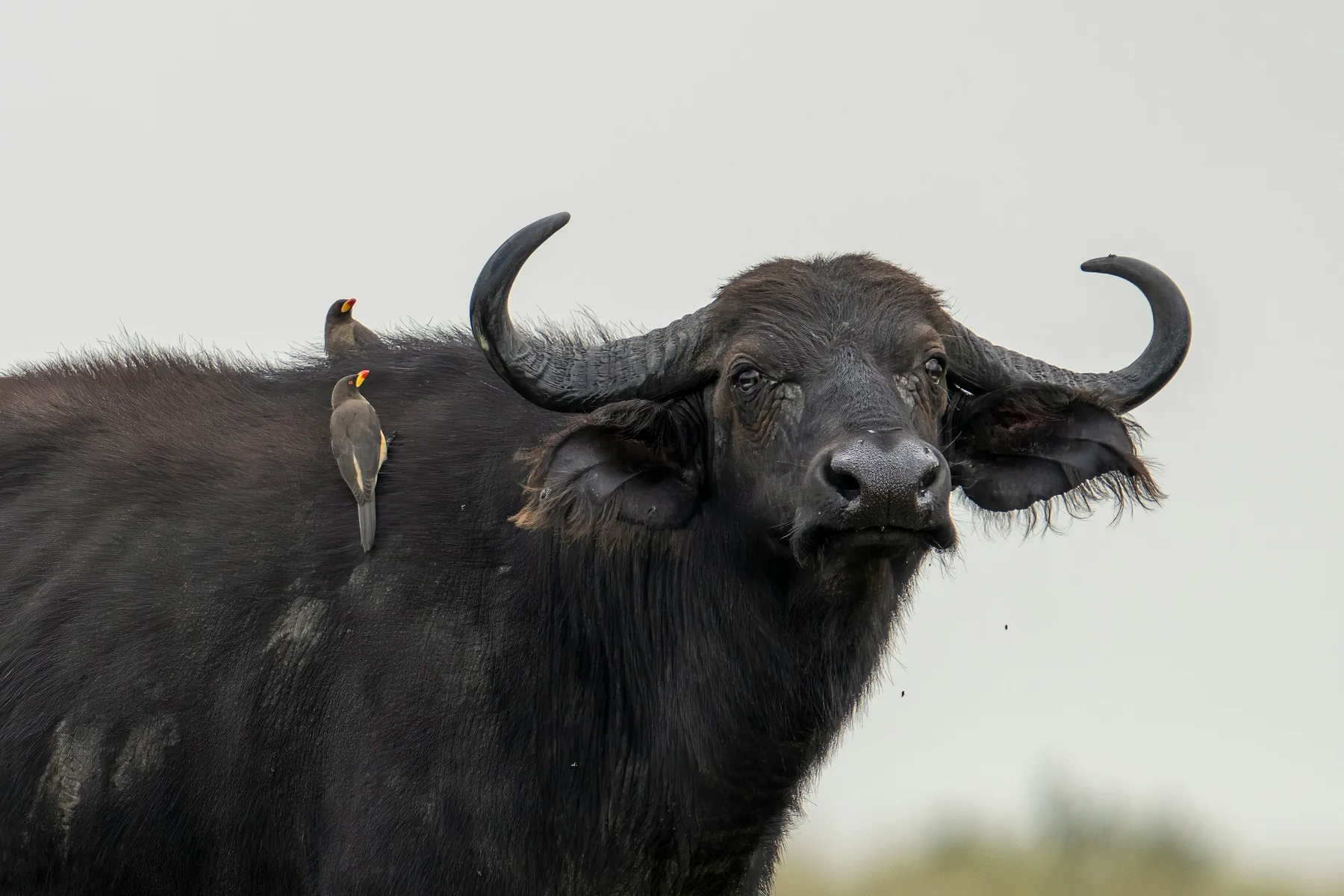
The buffalo is watching the oxpeckers more than us. Two birds step along its back, pause near a tick and lift their red-tipped bills into the morning. Beyond the animal, the grass runs towards a low ridge. There is no lodge fence in the picture and no national-reserve gate on the road behind us. This is community land kept open through leases, tourism and carefully managed pastoral access.
Olare Motorogi is often introduced as big-cat country, and that is true as far as reputations go. Lions, leopards and cheetahs are a major part of its safari story. Yet the place makes more sense when you look past the cats. It is a combined conservancy formed from Olare Orok and Motorogi lands, owned by hundreds of Maasai landowners, managed through a partnership with five tourism operators and connected directly to the Masai Mara National Reserve.
This Olare Motorogi Conservancy guide explains how that structure changes a stay. It compares all five current partner camps, then covers managed grazing, wildlife, migration, night drives, walking, off-road rules, reserve access, airstrips, roads, seasons, families, honeymoon trips, photography, reviews and the complete cost questions.
What Olare Motorogi is
Olare Motorogi is a community-owned wildlife conservancy on the northern edge of the Masai Mara National Reserve. It combines the former Olare Orok and Motorogi conservancies into one managed landscape.
What it is not
It is not a privately owned lodge estate, not part of the national reserve, not a public day-drive area and not one hotel brand.
The name carries two histories
Olare Orok formed first in 2006. Motorogi land was added later, and the adjacent units became Olare Motorogi Conservancy.
Olare Orok
The original conservancy bordered the reserve and established the first tourism and landowner partnership in this part of the Mara.
Motorogi
The northern addition extended habitat, grazing management and wildlife movement into a larger contiguous area.
Why old maps still separate them
Some research, ecosystem plans and airstrip references continue to show Olare Orok and Motorogi separately. That can be correct for data collection even though tourism management treats them together.
Olare Motorogi at a glance
| Feature | What it means for a traveller |
|---|---|
| Formed from Olare Orok and Motorogi | One tourism conservancy with two historical land units |
| Approximately 33,386 acres in the current MMWCA directory | Large enough for varied habitats and internal drive distances |
| More than 300 landowners in the conservancy account | Community ownership underpins the tourism model |
| Five current partner camps | A focused choice from guiding-led bush camp to polished luxury |
| Direct reserve boundary | Reserve visits can be practical from the right camp |
| Managed grazing | Pastoral use remains part of the landscape under planned access |
| Controlled tourism density | Fewer vehicles than busy public reserve sectors |
| Night drives and walks | Activities offered under conservancy rather than reserve rules |
How large is Olare Motorogi?
Current sources use several figures. MMWCA lists about 33,386 acres. The conservancy website rounds the area to 35,000 acres. The Greater Mara ecosystem plan separately estimates Motorogi at 47 square kilometres and Olare Orok at 92 square kilometres.
The ecosystem-plan sum
Together, 139 square kilometres equals roughly 34,350 acres. That sits between the two current rounded tourism figures.
The honest size statement
Describe the combined conservancy as roughly 33,000 to 35,000 acres, while retaining exact source figures when discussing management data.
Why figures differ
Surveys, active leases, planning boundaries, rounding and document dates can change the total. A current map matters more than false precision.
Where the conservancy lies
Olare Motorogi borders the national reserve to the south and connects with other community lands to the north and east.
Direct reserve connection
Wildlife can move across the unfenced boundary. Guest vehicles require the correct reserve entry and fee arrangement.
It is not the Mara River
The conservancy is well positioned for certain reserve sectors, but the famous Mara River crossing sites are not beside every camp.
Exact camp location matters
Five camps share one conservancy but differ in distance to reserve access, airstrips, rivers, plains and each other.
The map questions to ask
Request the camp pin, nearest airstrip, reserve-entry route, usual game-drive area and transfer time to any planned crossing region.
Olare Motorogi compared with nearby areas
| Land unit | Management | Strong travel reason | Important limit |
|---|---|---|---|
| Olare Motorogi | Community conservancy with five tourism partners | Predator habitat, controlled access and reserve connection | High-end orientation and no sighting guarantees |
| Naboisho | Larger community conservancy with nine partners | Broad camp choice, resident wildlife, walks and night drives | Main migration does not pass through as its core event |
| Ol Kinyei | Pioneer community conservancy with three current stays | Loita herds, intimate access and Naboisho connection | Farther from many river-crossing areas |
| Mara North | Very large community conservancy with multiple access zones | Wide habitat and camp range | Internal distances can be substantial |
| National reserve | Public reserve managed in two sections | Main migration, rivers and greatest scale | Peak-area vehicle pressure and stricter activity rules |
The 2006 origin
The conservancy site describes May 2006 as the landmark formation date for Olare Orok, beginning with an agreement involving 277 Maasai landowners.
More owners joined the combined landscape
Current sources describe more than 300 landowners across Olare Motorogi. MMWCA uses 288 in one current summary, while the conservancy site says over 300.
Why landowner counts vary
Membership, inherited parcels, active leases and reporting date can change the number. The key fact is that ownership remains widely distributed.
Land was individually titled
Each landowner holds a parcel rather than the tourism operators collectively owning the entire conservancy.
The landholding company
The official conservancy account says owners lease parcels into a landholding company owned by the landowners as a group.
The management company
The contiguous area is then contracted to conservancy management, separating ownership from daily operations.
Olpurkel Ltd
The conservancy says Olpurkel Ltd manages the area as a not-for-profit company.
Board representation
The model is described as equal representation from landowners and tourism partners, with Maa Trust representation.
Equal seats do not end every tension
Good governance still depends on information access, transparent payments, elections, grievance handling and trust.
Lease payments
Tourism partners pay for the right to operate camps and access conserved land. The payment is a commercial land-use agreement, not a donation.
Bed-night value
Guest occupancy can also support fees and employment. Ask how the current agreement balances fixed income with tourism performance.
Community employment
Guides, rangers, camp staff, managers, maintenance workers and suppliers can earn from the tourism model.
Training
Professional guide qualifications, hospitality skills and conservation monitoring strengthen value beyond one season's wages.
The Maa Trust
The Maa Trust works with local communities on development and benefit programmes. Camp donations should be evaluated through current project reporting.
Community visit ethics
A village experience should involve consent, clear payment, photography rules and a host community that shapes the visit.
Governance questions
| Ask | Why it matters |
|---|---|
| How many active landowners are in the current lease? | Published totals differ by date and definition |
| Who represents owners on the board? | Equal representation needs a real selection process |
| How are lease rates reviewed? | Conservation must compete with other land uses |
| How are grievances handled? | Trust requires a route beyond camp management |
| How does grazing access work? | Pastoral livelihoods remain part of the model |
| What local roles are held at senior level? | Employment quality matters, not only staff numbers |
Managed grazing
Olare Motorogi does not present itself as a cattle-free landscape. Its official history describes reduction and management of livestock in core conservation areas.
The gazetted plan
The 2018 to 2023 management-plan summary includes a dedicated Livestock Management Programme.
The plan period has ended
The gazetted framework remains useful context, but current grazing rules should be checked against any renewed management plan.
Planned access
The plan supports landowners and community members through access to managed grazing areas while protecting tourism and wildlife values.
Grazing is not random entry
Timing, zones, herd size, grass condition and drought response need coordinated decisions.
Traditional knowledge
The conservancy compares holistic management with older Maasai systems in which elders decided which pasture rested and which was used.
Core wildlife refuge
Predator breeding and daytime refuge areas may be kept free of livestock to reduce disturbance and conflict.
Drought pressure
When grass fails outside, excluding neighbouring cattle can become socially and practically difficult. Flexible but transparent rules matter.
Tourism has obligations
Visitors should not react to every cow as a conservation failure. A community conservancy exists within a pastoral homeland.
Livestock and wildlife table
| Management need | Wildlife value | Community value |
|---|---|---|
| Rested pasture | Grass recovery and breeding cover | Future dry-season forage |
| Controlled grazing windows | Reduces constant disturbance | Keeps pastoral access within the agreement |
| Livestock-free refuge | Protects dens and daytime predator habitat | Can reduce conflict when clearly mapped |
| Herd-health support | Reduces disease risk and losses | Improves household resilience |
| Predator-response system | Prevents retaliatory killing | Addresses real livestock losses |
The landscape
Olare Motorogi combines rolling grassland, Motorogi plains, hills, escarpment edges, streams, rivers, seasonal drainage and acacia woodland.
Open plains
Shorter grass can favour cheetahs, gazelles, topi and wide photographic backgrounds.
Riverine cover
Wooded waterways support leopards, elephants, birds and shade. Dense vegetation requires patient tracking.
Olare Orok River
The river system is an important landscape feature and part of several camp settings. Water level and access change seasonally.
Motorogi plains
These northern grasslands extend the conservancy beyond the original Olare Orok core and offer broad wildlife movement.
Hills and ridges
Elevated positions help guides scan, watch weather and frame sunsets without driving directly into a sighting.
Wet-season soil
Black-cotton sections can become difficult. Off-road permission does not make a vehicle immune to mud or ecological damage.
Dry-season dust
Dust changes visibility, camera care and animal concentration. Carry protection and avoid following too closely.

Wildlife reputation
The conservancy describes one of Africa's high concentrations of big cats. Treat that as a conservation and tourism claim, not a personal guarantee.
Lions
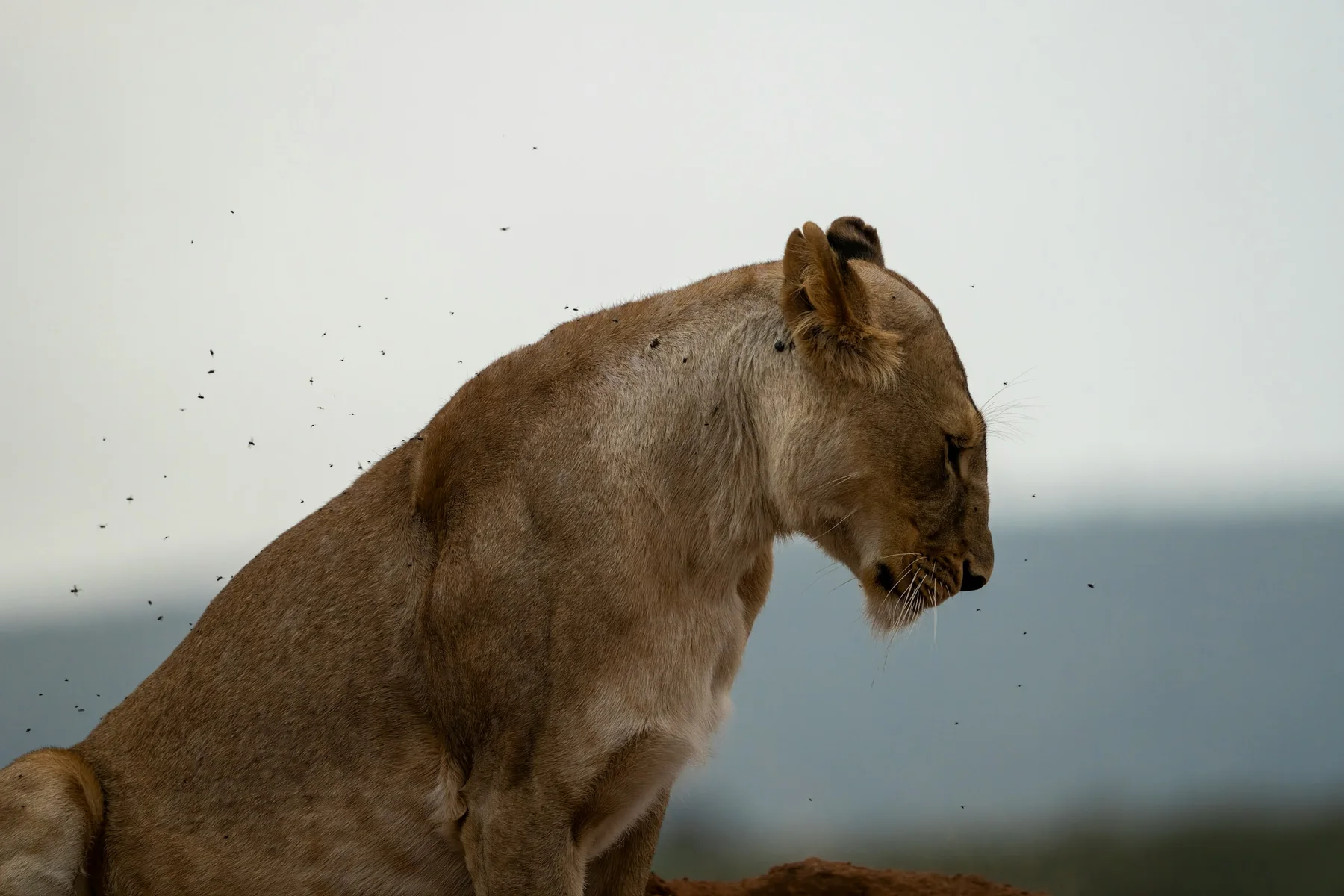
Multiple prides and male coalitions use the landscape. Composition and territories change constantly.
Pride history
Named prides help guides explain relationships, but old maps and documentaries should never be sold as current inventory.
Lion cubs
Cubs attract vehicles and require strict limits. Den locations should not be pressured or publicised carelessly.
Leopards
Riverine woodland and drainage cover support leopard territories. Individuals cross into the reserve and neighbouring land.
Leopard trees
Fig trees and other strong branches can hold kills or resting cats. Do not crowd the base or block descent routes.
Cheetahs
Open ground suits cheetah scanning and hunting. Grass height and lion pressure affect where they spend time.
Hyenas
Spotted hyenas hunt, scavenge, den and communicate across large clan territories. Night drives can reveal a different rhythm.
Elephants
Family groups use river, woodland and plains. Vehicles should never separate calves from adults or block a crossing route.
Buffalo
Buffalo are important grazers and formidable animals on foot. Oxpeckers show one of the ecosystem's many smaller relationships.
Zebras
Zebra herds graze, nurse, fight and call alarms. Their behaviour often tells a guide what predators are doing.
Wildebeest
Resident animals remain year-round, while main migration herds may enter the wider northern reserve and conservancies seasonally.
Topi
Topi stand on termite mounds and ridges, defend territories and signal danger. Their social system deserves time.
Giraffes
Acacia habitat supports giraffes and provides strong wide-angle compositions. Give browsing animals room to cross tracks.
Birds
The conservancy reports more than 300 species and a rich raptor list. Specialist birding deserves a guide who enjoys calls and habitat.
Raptors
Eagles, vultures, buzzards, kites and falcons reveal thermals, kills and ecosystem health.
Smaller mammals
Jackals, mongooses, bat-eared foxes, aardwolves, servals and genets add depth, particularly at dawn and night.
No rhino promise
Do not choose Olare Motorogi for a guaranteed rhino. Add Ol Pejeta, Lewa or another rhino-focused area if the species is essential.
Wildlife table
| Interest | Why the conservancy can fit | Honest limit |
|---|---|---|
| Lions | Several prides and controlled tourism | Pride territories change |
| Leopards | Riverine habitat and known individuals | Secretive cats may disappear |
| Cheetahs | Open plains and lower vehicle density | Lion pressure and grass alter use |
| Elephants | Connected Mara habitat | Herds cross boundaries |
| Birds | Diverse habitat and raptors | Request a specialist guide |
| Nocturnal wildlife | Night-drive permission | Rare sightings remain rare |
The main migration
Olare Motorogi forms part of the northern Mara dispersal and migration landscape. Herd presence depends on rain, grass and wider movement.
Not every herd reaches every camp
The migration spreads over a vast ecosystem. A photograph of wildebeest beside one camp does not create a date-specific promise.
River crossings
The best-known crossings occur on the Mara River inside the national reserve and Triangle. Olare Motorogi is not itself a crossing-site conservancy.
Reserve access advantage
Some camps are positioned for practical reserve days, making river-focused planning easier than from more easterly conservancies.
Drive time still matters
The camp's exact location, gate, track condition and chosen river area determine whether a crossing wait is realistic.
Main herds versus residents
Resident wildebeest and zebras support predators outside peak migration. The conservancy remains a wildlife destination all year.
Migration-season crowd contrast
The reserve river can be extremely busy while the conservancy remains controlled. A split day may provide both spectacle and calm.
More nights improve odds
Four or five nights create room for a reserve day without abandoning conservancy wildlife and activities.
Read the migration guide
The migration season versus green season guide compares wildlife, light, roads and visitor density.
Migration planning table
| Goal | Olare Motorogi role | Plan honestly |
|---|---|---|
| Resident predators | Strong year-round reason to stay | Do not wait only for herds |
| Main migration plains | Seasonal movement may enter wider area | Follow current guide reports |
| Mara River crossing | Reserve day from suitable camp | No crossing guarantee |
| Quiet photography | Conservancy drives away from river pressure | Book private or low-occupancy vehicle |
Day game drives
Morning and afternoon drives follow wildlife within a controlled-access landscape.
Dawn
Cool air, predator movement and soft light reward early departure.
Afternoon
Resting animals become active as heat drops. The drive may flow into sundowner and night viewing.
Full-day drives
A packed day can explore more of Olare Motorogi or enter the reserve. Specify the land unit, fees and meal plan.
Off-road access
Controlled off-track positioning may be allowed for selected sightings. It is never a licence to create new tracks across wet soil.
Sighting limits
Conservancy codes should limit vehicles and protect animal escape routes. Ask the guide how the current rule works.
Radio discipline
Not every cat should trigger a rush. Guides can protect sightings by sharing information carefully.
Sitting quietly
The best behaviour often emerges after engines stop and passengers settle.
Night drives
Participating camps offer night drives under conservancy rules, revealing hyenas, nocturnal mammals and predator movement.
Red-filtered light
Some camps use red filters to reduce glare. Light should still be brief and sensitive.
Guided walks
Walks focus on tracks, plants, birds, insects and awareness rather than approaching dangerous animals.
Walking safety
Ask who leads, whether an armed ranger joins, what training applies and how emergencies are communicated.
Age and fitness
Each camp sets current rules. A short nature walk and a long bush walk are different products.
Sundowners
Viewpoint drinks can be memorable when glass, litter, noise and return timing are controlled.
Bush meals
Breakfasts and picnics extend game viewing. Confirm toilets, hygiene, allergies and weather backup.
Balloon flights
Camps can arrange transfers to licensed launch sites. Weather, minimum ages and total morning time matter.
Cultural visits
Choose invited, fairly compensated encounters where hosts control photography and storytelling.
Activity comparison
| Activity | Olare Motorogi | National reserve | Confirm |
|---|---|---|---|
| Day drives | Yes through partner camps | Yes under reserve entry | Private or shared vehicle |
| Night drives | Yes under conservancy rules | Not ordinarily permitted | Duration and light policy |
| Walks | Camp dependent | Not a standard visitor activity | Guide, age and route |
| Off-track positioning | Controlled under conservancy code | Restricted by reserve zones | Ground and wildlife conditions |
| Reserve day | Separate entry | Core reserve activity | Gate, fee and drive time |
Where to stay in Olare Motorogi
Five partner camps currently give guests access to Olare Motorogi. They share the same conservancy but not the same atmosphere. A small canvas camp with communal meals feels very different from a suite with a private plunge pool, even when both vehicles find the same pride of lions.
The five current partner camps
The conservancy lists Kicheche Bush Olare, Porini Lion Camp, Mara Plains Camp, Olare Mara Kempinski and Mahali Mzuri. These are the properties to compare when the conservancy itself is the priority.
Why an old camp list can mislead
Camps change names, operators and access agreements. A property described in an old article may no longer be a current partner. Confirm the exact camp and its current conservancy access before paying.
Camp comparison at a glance
| Camp | Broad character | Accommodation feel | Often suits | Ask before booking |
|---|---|---|---|---|
| Kicheche Bush Olare | Small, guiding-led tented camp | Traditional canvas with an intimate communal rhythm | Keen game viewers and photographers | Vehicle occupancy, family tent arrangement and private vehicle cost |
| Porini Lion Camp | Low-impact tented camp beside seasonal river habitat | Simple, comfortable canvas rather than resort styling | Travellers who value guiding and long drives | Tent category, Ol Kinyei combination and current inclusions |
| Mara Plains Camp | High-design, low-room-count luxury | Large suites, generous private space and polished service | Honeymoons, celebrations and luxury photography trips | Suite type, private vehicle terms and aircraft baggage rules |
| Olare Mara Kempinski | Full-service luxury camp | Large tents, formal facilities and a swimming pool | Guests wanting safari with hotel-style comfort | Exact room position, child policy and vehicle arrangements |
| Mahali Mzuri | Contemporary ridge-top luxury | Distinctive tented suites and dramatic views | Couples, design-conscious guests and exclusive-use groups | Seasonal operating details, family configuration and reserve-day plan |
The best camp is not a universal answer
Choose by guide quality, vehicle sharing, room style, location, accessibility, meal rhythm and budget. A famous name cannot compensate for a mismatch between the way you like to travel and the way the camp operates.
Location inside the conservancy matters
Two camps in the same conservancy can begin a morning in different wildlife areas. Ask where the camp sits in relation to river lines, open plains, neighbouring boundaries and the reserve gate used for a full-day visit.
Kicheche Bush Olare
Kicheche Bush Olare is built around a small-camp safari rhythm. Canvas rooms, shared meals and long game drives keep the attention on the landscape rather than on resort facilities.
What Kicheche feels like
The tone is informal but serious about wildlife. Guests commonly meet at the vehicle before sunrise, stay out while a sighting develops and return when the day rather than a rigid clock suggests it.
The camp setting
The camp sits in acacia and riverine habitat within Olare Motorogi. Its unfenced character means wildlife can pass nearby, so guests are escorted after dark.
Room style at Kicheche
The tents are traditional safari rooms with proper beds, private bathrooms and verandas. They are comfortable, but the product is not trying to imitate an urban hotel suite.
Family arrangements at Kicheche
Families should request the precise tent configuration and minimum ages. An extra bed in one tent, a family unit and two separate tents have different supervision implications in an unfenced camp.
Meals at Kicheche
Communal dining often creates an easy exchange between guests, guides and hosts. Private dining may be possible, but it should be requested rather than assumed.
Guiding at Kicheche
Guiding is one of the main reasons to choose the camp. A strong guide reads tracks, animal behaviour, weather, light and other vehicles instead of racing through a species checklist.
Vehicle arrangement at Kicheche
Ask how many guests normally share, whether a photographic row is guaranteed and what a private vehicle costs. A low room count does not automatically mean a private row.
Photography at Kicheche
Longer sighting time, knowledgeable positioning and a small camp can suit photographers. Bring a beanbag and confirm whether the vehicle has suitable camera rests and charging.
Walking from Kicheche
Guided walking may be available under current camp and conservancy rules. Confirm length, age limits, ranger arrangements and whether it is a short nature walk or a longer bush walk.
Kicheche for honeymooners
It works for couples who find romance in quiet drives, canvas, stars and conversation around a fire. Couples who want a private pool and large spa-style suite may prefer another property.
Kicheche for first-time visitors
The camp can be an excellent first safari when the traveller wants to learn. Its most important luxury is often unhurried interpretation rather than a long facilities list.
What guests notice at Kicheche
One traveller wrote, “What drew us to Kicheche was their ethics, values, and adventure driven approach.” Another said the team “made us feel like family.” Those comments describe values and warmth, but they do not replace checking the room and vehicle arrangement that you need.
Wildlife experience from Kicheche
A guest described “an abundance of wildlife and excellent game drives,” while another praised a guide who “knew the conservancy like the back of his hand”. These are individual experiences, not wildlife guarantees, but they show why guide continuity matters.
Choose Kicheche Bush Olare if
Choose it when guiding, flexible drives, a small camp and an uncomplicated canvas atmosphere matter more than resort facilities.
Look elsewhere if
Look elsewhere if a private plunge pool, extensive spa menu, formal restaurant choices or a large suite are essential to your holiday.
Porini Lion Camp
Porini Lion Camp follows a low-impact tented model. It places the safari experience, community-conservancy setting and wildlife access ahead of ornamental luxury.
What Porini Lion feels like
Expect canvas, close contact with camp staff, communal spaces and a schedule built around morning and afternoon wildlife activity.
The Porini setting
The camp occupies riverine habitat in Olare Motorogi. Trees and seasonal watercourses bring shade and animal movement, while the open plains remain accessible on drives.
Room style at Porini Lion
The tents provide beds, private bathrooms and safari essentials. Compare categories carefully because family, premium or newly configured rooms can differ from the classic tent remembered in an older review.
Comfort versus decoration
Porini is often chosen by travellers who want comfort without a heavy resort footprint. If design theatre is part of the celebration, Mara Plains, Mahali Mzuri or Kempinski may be closer to the brief.
Guiding at Porini Lion
Ask whether the vehicle uses a guide and spotter team, how long drives normally last and whether the same guide stays with you. Continuity helps a guide understand your interests.
Vehicle sharing at Porini Lion
Confirm the normal maximum, private vehicle supplement and child rules. Guests who photograph or dislike compromise should settle this before arrival.
Combining Olare Motorogi and Ol Kinyei
Porini operates properties in both conservancies. A split stay can reveal different land-management models and habitats, but it must add enough nights to justify packing and transferring.
Walking and night drives from Porini
These are core conservancy advantages, subject to weather, guide availability and rules. Ask whether they are included, how frequently they operate and how children are handled.
Porini Lion for families
The small-camp environment can be engaging for curious older children. Confirm ages for shared drives, walks and tent occupation, plus whether a private vehicle is compulsory.
Porini Lion for honeymooners
Choose it for authentic canvas atmosphere, strong guiding and evenings under the sky. Request a well-positioned tent, private dining and a private vehicle if seclusion matters.
Choose Porini Lion if
Choose it when conservation access, wildlife time and an unfussy tented experience are the priorities.
Look elsewhere if
Look elsewhere when your definition of luxury depends on a private pool, large indoor lounge, extensive wellness facilities or highly formal service.
Mara Plains Camp
Mara Plains is a small luxury camp associated with Great Plains Conservation. It combines a low room count with large suites, detailed interiors and a strong photographic identity.
What Mara Plains feels like
The camp aims for privacy and theatre without separating guests from the bush. Canvas walls, decks and finely finished interiors frame the view rather than hiding it.
Suite scale at Mara Plains
Suites are substantially larger than classic safari tents. Confirm the current category, bed configuration, deck, plunge-pool arrangement and whether every feature shown in a gallery belongs to the room you are buying.
The private residence
The residence or villa-style option can suit a family or friends wanting private living space, staff and a dedicated safari rhythm. Occupancy, child arrangements and private vehicle terms need a written quote.
Mara Plains for honeymooners
Privacy, room scale, design and attentive service make it a natural celebration choice. Tell the camp whether quiet, photography, private dining or a special activity matters most.
Mara Plains for photographers
Great Plains has built a strong photography reputation. Ask what camera equipment is currently supplied, whether it is shared, which lenses are included, how files are handled and what vehicle configuration applies.
Vehicle use at Mara Plains
Luxury does not always mean a private vehicle. Confirm whether the rate includes one, whether it depends on suite category and what the maximum shared occupancy is.
Guiding at Mara Plains
High-end rooms only work when the field experience matches. Ask for a guide whose interests fit yours, especially for birds, behaviour, photography or a first safari.
Dining at Mara Plains
Meals may move between the main area, deck and bush settings. Dietary requirements should be sent in advance, especially where air logistics limit last-minute supplies.
Wellness at Mara Plains
Treatments and in-room comfort can make midday valuable rather than empty. Confirm which services require advance booking and whether a therapist is resident.
Children at Mara Plains
Minimum ages, family suite use and private vehicle requirements can change. The riverine, unfenced setting also requires close supervision and escorts after dark.
Choose Mara Plains if
Choose it when a very small camp, a large suite, polished service and photography support justify a premium rate.
Look elsewhere if
Look elsewhere if you prefer a simple campfire atmosphere, communal meals and spending nearly every waking hour outside your room.
Olare Mara Kempinski
Olare Mara Kempinski brings a recognisable luxury-hotel service style into a tented conservancy setting. It is useful for travellers who want wildlife access without giving up a broad facilities list.
What Kempinski feels like
The experience is more formal and facility-rich than a classic small bush camp. Large tents, structured service and a swimming pool can make it easier for guests who want substantial downtime comfort.
Room style at Kempinski
The tents are large and furnished as luxury rooms. Ask for the exact category, view, distance from the main area and whether the images shown represent that category.
The honeymoon suite question
Do not book only from a romantic label. Check privacy, deck orientation, bath or shower arrangement, outdoor space and how far the tent is from staff and common areas.
The swimming pool
A pool is valuable in warm afternoons, particularly for families and guests staying four nights. Ask whether it is heated, supervised or subject to seasonal maintenance.
Dining at Kempinski
Hotel-trained service may suit travellers who like more structured meals and private arrangements. Share dietary needs early and ask what is included in drinks.
Spa and wellness
Wellness options can balance early starts. Confirm current treatments, therapist schedule and whether bookings should be made before arrival.
Guiding at Kempinski
The brand name does not answer the field questions. Confirm vehicle capacity, guide continuity, drive duration, private vehicle supplement and whether a spotter joins.
Kempinski for families
Room size and pool access can work well, but age rules, tent proximity and private vehicle requirements remain essential. Unfenced wildlife means the camp is not a conventional resort playground.
Kempinski for honeymooners
It suits couples who want recognisable service rituals, large accommodation and a strong in-camp comfort level alongside game drives.
Choose Olare Mara Kempinski if
Choose it when full-service luxury, substantial tents and familiar hotel standards are central to the trip.
Look elsewhere if
Look elsewhere if you want a tiny camp, informal host interaction and a safari dominated by long, flexible field days.
Mahali Mzuri
Mahali Mzuri is Virgin Limited Edition's contemporary camp on a ridge in Olare Motorogi. Its sculptural tented suites and open views give it a distinct identity.
What Mahali Mzuri feels like
The design is bold and modern. The camp feels more like a private retreat suspended above the landscape than a traditional low-slung canvas camp.
The ridge setting
Elevated views are a major part of the experience. They also mean paths, stairs or gradients may matter for mobility, so ask before confirming.
Room style at Mahali Mzuri
Tented suites combine a large bedroom, bathroom and viewing deck. Confirm family configuration, privacy and walking distance to the main area.
The main area
Shared lounges, dining spaces and the pool make midday comfortable. A beautiful common area is most valuable when the itinerary leaves time to use it.
Mahali Mzuri for couples
The setting, suite privacy and service suit honeymoons and anniversaries. Ask for private meals, a well-positioned suite and an unhurried day rather than filling every hour.
Mahali Mzuri for families
Families need the current child policy, room arrangement and vehicle rules. A dramatic ridge and unfenced paths require supervision.
Exclusive use
Buyout arrangements can give a multigenerational group control over meals, guides and daily pace. Confirm which staff, vehicles and spaces become exclusive.
Guiding at Mahali Mzuri
Ask the same hard questions as at every luxury camp: guide continuity, maximum passengers, private vehicle basis, drive duration and approach to crowded sightings.
Wellness and downtime
The pool, room and treatments can make Mahali Mzuri a good four-night stay rather than a two-night dash. Confirm the current wellness menu and advance-booking needs.
Choose Mahali Mzuri if
Choose it when contemporary design, views, privacy and polished service matter as much as the wildlife programme.
Look elsewhere if
Look elsewhere if you want traditional canvas simplicity, a flatter camp or the most guide-centred product at the lowest possible luxury price.
A practical camp decision table
| Your priority | Strong starting point | Why | Still confirm |
|---|---|---|---|
| Small, guiding-led camp | Kicheche Bush Olare | Intimate scale and field emphasis | Shared vehicle and family arrangement |
| Low-impact classic canvas | Porini Lion | Unfussy camp and conservancy focus | Current tent category and inclusions |
| Large-suite photographic luxury | Mara Plains | Very low room count and photography identity | Private vehicle and equipment terms |
| Hotel-style facilities | Olare Mara Kempinski | Pool, large tents and formal service | Guide continuity and room position |
| Contemporary design and views | Mahali Mzuri | Ridge setting and distinctive suites | Mobility, child policy and vehicle use |
Room rate is only one comparison
Add conservancy fees, reserve entry, flights, transfers, drinks, private vehicle, laundry, tips and medical evacuation. A lower room rate can become the more expensive safari after necessary extras.
Vehicle policy can outweigh the room
Six guests with different interests share every sighting decision. A private vehicle can be more valuable than a larger bathroom for a photographer, family or couple seeking quiet.
Guide continuity can outweigh the logo
A guide who learns your pace and interests over four days can transform the safari. Ask whether transfers, reserve days and walks use the same person.
Camp scale changes the social experience
Small camps encourage communal stories and host contact. Larger or more private products allow greater anonymity. Neither is inherently better.
Use exact room names
Never compare “a tent” at one camp with “a suite” at another. Put the precise category, occupancy, bed type and private facilities into the table.
Use exact price inclusions
Compare the same dates, number of nights, transfer method, reserve day, vehicle basis and fee assumptions. Otherwise two totals are not comparable.
Flying to Olare Motorogi
Scheduled light aircraft connect Nairobi with Mara airstrips. The correct airstrip depends on the camp, flight operator, routing and current strip status.
This Olare Motorogi Conservancy guide treats the flight as part of the safari rather than a footnote because the wrong airport connection or baggage assumption can spoil the first day.
There is no single airport for every camp
Do not accept “Mara airstrip” as sufficient detail. Ask for the named strip, landing time, expected camp transfer and the number of intermediate stops.
Olare Orok airstrip
Olare Orok is commonly used by camps in the conservancy. Current airline schedules and camp transfer arrangements must be matched to your property.
Motorogi-side access
A camp may use another convenient strip depending on position and operations. The nearest point on a map is not always the strip served by the booked flight.
Wilson Airport departure
Most scheduled safari flights leave Nairobi's Wilson Airport rather than Jomo Kenyatta International Airport. The airports are on different sides of the city.
International connection time
Allow for immigration, baggage, traffic, airport check-in and disruption. A tight same-day transfer after a long-haul arrival can create avoidable risk.
An overnight in Nairobi
A first night in Nairobi is sensible after a late arrival or when the safari flight leaves early. It also gives delayed luggage time to catch up.
Flight duration
The airborne time is often around an hour, but intermediate airstrip stops make the total variable. Use the confirmed itinerary rather than a generic headline duration.
Airstrip transfer
The transfer is often a game drive, not a sealed-road taxi. A short map distance can take longer when wildlife, tracks or seasonal water slow the vehicle.
The Masai Mara airstrips and flight guide explains Wilson Airport connections, multi-stop sectors, baggage and camp transfers in more detail.
Baggage limits
Light aircraft usually require soft-sided bags and strict weight limits. Confirm the allowance for the exact airline and aircraft, including hand luggage and camera equipment.
Excess baggage
Pre-purchased excess, a freight seat or luggage storage in Nairobi may solve a heavy packing problem. Do not arrive assuming a hard suitcase can be accommodated.
Flying with children
Check infant seating, child restraint options, minimum ages and whether the airline needs an exact passenger weight. Noise protection can help young children.
Flying for photographers
Long lenses and two camera bodies can consume the allowance. Ask about a freight seat before travel and keep irreplaceable equipment with you.
Flying versus driving
| Factor | Fly | Drive |
|---|---|---|
| Time | Faster in most itineraries | Full travel day from Nairobi |
| View | Aerial landscape | Ground-level towns, farms and escarpment |
| Baggage | Strict soft-bag limits | More flexible, subject to vehicle space |
| Comfort | Small aircraft and transfers | Long road hours and rough final tracks |
| Cost | Higher flight fare | Can be economical for several travellers |
| Vehicle continuity | Camp vehicle begins at airstrip | Same private vehicle may remain throughout |
Driving from Nairobi
The road journey crosses the Rift Valley and Narok before leaving the main surfaced route for Mara access tracks. Traffic, construction, rain and the exact camp determine timing.
Do not plan by distance alone
The last section can be slow even when the remaining kilometres look small. Build the day around a realistic arrival rather than a sunset drive promise.
A private safari vehicle
Driving can work well when the same guide and vehicle continue through a longer Kenya circuit. Confirm whether that vehicle may conduct drives inside the conservancy or hands over to a camp vehicle.
The conservancy vehicle rule
Controlled tourism only works if access is limited. An outside vehicle may need prior permission, guide arrangements and fees, or may not be permitted for game drives.
Road condition in rain
Black-cotton soil can become slippery and deeply rutted. Skilled local drivers, recovery equipment and route knowledge matter more than an optimistic journey estimate.
Use the Masai Mara road conditions and gate guide to plan the Nairobi route, seasonal track risk and the correct reserve approach.
Night arrival
Avoid planning a late road arrival. Wildlife, unlit tracks and rain make the final approach harder, and you lose the landscape orientation that should begin a stay.
Combining Olare Motorogi with the reserve
Olare Motorogi borders the national reserve, making a full-day reserve visit practical from many camps. It is still a separate protected area with separate fees and rules.
A reserve day is not automatically included
Ask whether the quote includes reserve entry, vehicle, guide, picnic and the relevant fee basis for your travel date.
Why visit the reserve
The reserve adds the Mara River, public-road landscapes and locations associated with the main migration. It also helps a first-time visitor understand how conservancy and reserve experiences differ.
Why stay in the conservancy
Return for night drives, walks, controlled vehicle numbers and the quiet of a partner-only landscape. These are not ordinary reserve activities.
The Mara River misconception
Olare Motorogi is not a river-crossing grandstand. Reaching likely crossing areas can require a long reserve drive, and no departure time guarantees an event.
Main migration timing
Serengeti herds usually enter the wider Mara ecosystem during the dry-season migration period, but rain determines actual movement. Resident wildlife remains when the herds are elsewhere.
A full-day reserve visit
Leaving early with breakfast or lunch packed creates enough time for distant sectors. Confirm bathroom stops, food, water and return timing.
Two short reserve drives
Short visits can waste time at gates and duplicate fees. One well-planned full day is often more coherent than repeatedly crossing the boundary.
Read the reserve guide
The Masai Mara safari guide explains reserve sectors, migration geography, gates, lodges and route planning.
Read the river-crossing guide
Use the Great Migration river-crossing guide to understand why patience, location and uncertainty matter.
Combining conservancies
Olare Motorogi can be paired with Naboisho, Ol Kinyei or Mara North. A split should add a meaningfully different camp or landscape rather than only another checkout.
Olare Motorogi and Naboisho
Naboisho offers a wider selection of camp styles and a large community-conservancy landscape. Olare Motorogi has direct reserve adjacency and five highly distinct partner camps.
Read the Naboisho guide
The Naboisho Conservancy guide compares its camps, activities and access.
Olare Motorogi and Ol Kinyei
Ol Kinyei has a smaller accommodation set and an official history of livestock exclusion. Olare Motorogi uses managed grazing and offers a broader luxury range.
Read the Ol Kinyei guide
The Ol Kinyei Conservancy guide explains its zoning, camps and Loita migration story.
Olare Motorogi and Mara North
Mara North is larger and has many partner camps spread across varied terrain. A combination can work for travellers wanting two conservancy characters.
Read the Mara North guide
The Mara North Conservancy guide helps compare location, camps and access.
Conservancy comparison
| Area | Broad character | Accommodation range | Useful combination reason |
|---|---|---|---|
| Olare Motorogi | Managed grazing, big-cat reputation and reserve boundary | Five camps from classic canvas to high luxury | Strong single-base access to conservancy and reserve |
| Naboisho | Large conservancy and varied habitat | Broad range of partner camps | Different camp style and extensive internal driving |
| Ol Kinyei | Pioneer model and smaller tourism footprint | Three current Porini choices | Contrast in grazing policy and atmosphere |
| Mara North | Large northern conservancy | Many camps and lodges | New terrain and northern ecosystem perspective |
Best time to visit Olare Motorogi
There is no month when the conservancy stops being a wildlife landscape. The best time depends on migration expectations, weather tolerance, photography, price and how much company you enjoy.
January
Warm days and green habitat can produce clear skies, young animals and attractive photography. Rain remains possible.
February
Conditions may become drier, concentrating some wildlife around water while grasses remain more colourful than in late dry season.
March
Heat and building rain can bring dramatic skies. Some camps or routes may adjust as the long-rain period approaches.
April
Long rains can transform tracks and vegetation. Visitor numbers may fall, but some properties close or operate reduced schedules.
May
The landscape is often lush and waterlogged sections may challenge access. Verify whether the chosen camp, flight and activity are operating.
June
Rain can ease, mornings cool and grasses begin to dry. This can be an attractive transition before peak migration demand.
July
Dry-season conditions and migration anticipation increase demand. Book early and do not assume the main herds have reached a particular sector.
August
This is a busy migration month across the wider Mara. Olare Motorogi still offers resident wildlife and controlled access, while reserve days can be crowded.
September
Dry conditions and migration movement can continue. Dust increases and popular reserve locations attract many vehicles.
October
Herds may still be in the ecosystem early in the month, but return timing varies. Short rains can begin and refresh the plains.
November
Short rains bring green growth, dramatic skies and lower demand. Track conditions and local storms are variable.
December
The green season can offer colourful landscapes, resident predators and festive demand. Holiday dates require early booking.
Season table
| Period | Landscape | Wildlife emphasis | Travel tradeoff |
|---|---|---|---|
| January to March | Green to drying | Resident predators, plains game and young animals | Heat and uncertain rain |
| April to May | Lush long-rain period | Resident wildlife and dramatic skies | Closures, mud and access changes |
| June | Cooling transition | Strong resident viewing | Main migration timing uncertain |
| July to October | Drier peak season | Resident wildlife plus possible migration movement | High rates and busy reserve sectors |
| November to December | Short-rain green season | Birds, new grass and resident wildlife | Local storms and festive demand |
Green season is not empty season
Lions, leopards, cheetahs, elephants, giraffes and resident antelope do not disappear when migrant wildebeest leave. Green-season sightings can be excellent.
Dry season is not a guarantee
Migration herds follow rain and grass, predators move, and river crossings cannot be scheduled. Peak pricing buys seasonal probability, not a performance.
Shoulder months
June and November can balance wildlife, colour and lower visitor pressure. Weather variability is the price of that balance.
Camp closure matters
Some camps close for maintenance or difficult rain periods. Confirm exact operating dates before building international flights around a shoulder-season stay.
Photography by season
Green months bring saturated colour and clouds. Dry months bring dust, lower grass and golden tones. Decide which visual story you want.
Read the seasonal comparison
The migration season versus green season guide compares light, wildlife patterns, crowds and value.
Weather packing
Mornings can be cold even after a hot afternoon. Pack layers, rain protection, sun protection and closed shoes rather than trusting a monthly average.
What an Olare Motorogi safari costs
There is no honest single price for the conservancy. Five camps span classic canvas to private-residence luxury, while season, occupancy, flights, fees and vehicle choices change the total.
Accommodation rate
Ask for the exact room or tent category, number of adults and children, meal basis and whether the amount is per person, per room or per residence.
Single supplement
Solo travellers may pay a supplement, especially in peak season. Some dates waive it, so compare the exact departure rather than assuming a universal rule.
Child rate
Child pricing depends on age, room sharing, private vehicle requirements and season. Send dates of birth, not only “two children”.
Conservancy fee
The conservation fee supports access and land management. Confirm whether it is included, its age basis and the number of charged nights or days.
National reserve fee
A reserve visit normally adds a separate entry fee. The amount and charging basis can change, so it must be itemised for the intended date.
Game drives
Shared game drives are commonly included for resident guests. The quote should state vehicle capacity and whether arrival or departure transfers replace a drive.
Private vehicle
A private vehicle is usually an additional daily cost unless included by a suite or exclusive-use arrangement. Families and photographers should price it from the start.
Flights
Nairobi to Mara flights, taxes and airstrip transfers may be bundled or separate. Confirm both directions, baggage terms and the named airports.
Road transfer
A road quote should name the vehicle, guide, pickup, travel day, conservancy access and whether that same vehicle conducts game drives.
Meals
Full board normally covers meals, but bush breakfasts, picnics or private dinners may have conditions. Ask how an early flight affects the first or final meal.
Drinks
House drinks, premium wines, champagne and cellar selections are not the same category. Check what is included at each camp.
Laundry
Laundry is often included at higher rate levels but may exclude underwear for cultural reasons. Same-day service is not guaranteed in rain.
Walking
The walk may be included, complimentary but subject to availability, or separately charged. Confirm before building it into the itinerary.
Night drive
Ask whether every shared afternoon drive can continue after dark or whether a separate night drive is scheduled.
Balloon safari
Ballooning adds the flight, road transfer, breakfast and a long early morning. Confirm launch location, cancellation terms and minimum age.
Cultural visit
A meaningful visit should have transparent community payment and consent. Ask what the fee supports and whether craft purchases are optional.
Medical evacuation
Emergency evacuation membership is not full travel insurance. Confirm coverage area, insurer requirements, pre-existing conditions and hospital payment arrangements.
Tips
Guides and camp staff are usually tipped separately. Ask for a current guideline, then treat it as guidance rather than a mandatory service charge unless stated.
Quote comparison table
| Line | Quote A | Quote B | Question to settle |
|---|---|---|---|
| Exact camp and room | Same category and occupancy? | ||
| Nights and season | Same dates and rate season? | ||
| Conservancy fees | Included for every guest? | ||
| Reserve visit | Entry, picnic and vehicle included? | ||
| Vehicle basis | Shared maximum or private? | ||
| Flights | Both directions, taxes and transfers? | ||
| Drinks and laundry | Same inclusion level? | ||
| Activities | Walk, night drive and bush meals? | ||
| Cancellation | Same deadlines and penalties? |
Why this guide does not freeze a live price
Rates and statutory fees change, while a residence, family tent and classic double cannot be reduced to one meaningful number. A dated, itemised quote is safer than a price copied without its assumptions.
Payment currency
Ask which currency governs the contract, which exchange rate applies and whether card or transfer charges are added.
Payment beneficiary
Verify the legal recipient and bank details through a second channel before transferring. Treat any last-minute account change as a fraud warning.
Cancellation terms
Read deposit, balance, cancellation, postponement and no-show rules. Travel insurance should be active from the first non-refundable payment.
How many nights are enough?
Three nights is a strong starting point when staying only in the conservancy. Four nights gives the safari room to breathe and makes a reserve day less disruptive.
Two nights
Two nights usually means one afternoon, one full day and one morning around travel. It is a taste, not an in-depth conservancy stay.
Three nights
Three nights allow several drives, a possible night drive or walk and enough time to follow changing wildlife rather than chasing everything immediately.
Four nights
Four nights suit a reserve day, photography, honeymoon downtime or families who need a gentler pace.
Five nights
Five nights work when the camp itself is part of the holiday, when guiding continuity matters or when you want weather resilience.
A one-night stay
Avoid it unless it solves a flight connection. Packing, briefing and transfers consume too much of the experience.
Three-night rhythm
| Day | Morning | Afternoon and evening |
|---|---|---|
| Arrival | Fly or drive to camp | Settle, game drive and optional night return |
| Full day | Sunrise drive or walk | Rest, afternoon drive and sundowner |
| Full day | Conservancy drive | Longer wildlife session or special meal |
| Departure | Short drive if flight time permits | Transfer onward |
Four-night rhythm with the reserve
| Day | Plan | Why it works |
|---|---|---|
| 1 | Arrival and first conservancy drive | Orientation without pressure |
| 2 | Full Olare Motorogi day | Learn resident territories |
| 3 | Full-day reserve visit | Reach river and reserve habitats |
| 4 | Walk, slow morning and evening drive | Recover and use conservancy privileges |
| 5 | Departure | Avoid another compressed activity list |
Olare Motorogi for first-time safari travellers
The conservancy is a strong introduction because it combines resident wildlife, controlled access and the option of a reserve day.
What first-time visitors need
Choose a guide who explains behaviour and ecology, not only names. Leave enough nights to learn how sightings develop.
Olare Motorogi for repeat visitors
Repeat travellers can focus on one pride, a leopard territory, birds, walking or photography instead of repeating a Big Five checklist.
Olare Motorogi for families
The right camp can work extremely well, but room layout, private vehicle, meal flexibility and safety matter more than a generic family-friendly label.
Unfenced camp safety
Children must understand escorts, tent rules and quiet behaviour near wildlife. Parents remain responsible even when staff are attentive.
Family tent layout
Request a diagram or exact description. “Family tent” may mean connected bedrooms, one large room or separate units linked by a deck.
Private vehicle for families
It allows snack stops, shorter drives, toilet breaks and age-appropriate interpretation without inconveniencing other guests.
Child seats
Safari vehicles may not carry the restraint you use at home. Request the exact seat and installation before arrival.
Walking with children
Minimum ages and route decisions reflect real risk. Never pressure a camp to waive them.
Ballooning with children
Height, age and ability to follow landing instructions can determine eligibility. Confirm with the licensed operator.
Family downtime
A pool, larger room or short nature activity can matter on a four-night stay. Do not schedule children from before sunrise to after dinner every day.
Olare Motorogi for honeymoon trips
The conservancy can deliver privacy, big-cat viewing and beautiful camps, but the honeymoon should be designed around the couple rather than a generic room decoration.
Choose the camp by your shared style
Kicheche and Porini suit couples who love classic camp atmosphere. Mara Plains, Kempinski and Mahali Mzuri offer more suite scale and facility-led luxury.
Private vehicle for a honeymoon
It protects quiet, timing and shared decisions. It can be more romantic than a larger suite if wildlife is the reason for travelling.
One slow afternoon
Plan at least one meal, treatment, swim or private hour without another departure. A honeymoon should not feel like a training schedule.
Private dining
Request a real plan and weather backup. A lantern table is meaningful when service remains warm and relaxed, not when it is only staged for a photograph.
Celebration details
Tell the planner what you actually enjoy. Champagne, cake, photography, massage and a quiet breakfast do not suit every couple equally.
Read the honeymoon guide
The Masai Mara honeymoon safari explains camp choice, privacy, pacing and celebration planning.
Olare Motorogi for solo travellers
Small camps and communal meals can be sociable without forcing constant company. Check single supplements, shared vehicles and private dining options.
Olare Motorogi for photographers
Controlled vehicle access and resident predators are valuable, but vehicle design and guide skill determine whether that promise reaches the camera.
Secure a row
A dedicated row gives access to both sides and room for equipment. Confirm it in writing or book a private vehicle.
Ask about roof and door openings
Vehicle designs differ. A low side opening, removable door or roof hatch changes lens angle and stability.
Bring a beanbag
A beanbag often works better than a tripod in a vehicle. Ask whether the camp supplies one and what filling is available.
Lens range
A long lens helps with portraits, while a 70–200 mm range captures habitat and close animals. A wider lens records camp and sky.
Dust protection
Carry covers, a blower and sealed bags. Change lenses in the camp or protected vehicle rather than in blowing dust.
Battery and storage
Confirm charging hours, plug type and power availability. Bring duplicate cards and a backup plan that does not depend on fast internet.
Ethical positioning
No image justifies blocking an animal, surrounding a hunt, crowding cubs or pressuring a guide to ignore rules.
Read the photography guide
The Masai Mara photography guide covers vehicle selection, lenses, light and field etiquette.
Read the night-drive guide
The Masai Mara night game drives guide explains where they are permitted and how responsible lighting works.
Read the walking guide
The walking safaris in the Greater Mara guide explains formats, safety and camp questions.
What independent traveller accounts reveal
Reviews are most useful when they expose the texture of a stay: guide patience, camp warmth, vehicle crowding, food rhythm and whether the location matched expectations. They are not a substitute for current operating facts.
Ethics can influence camp choice
A Kicheche guest wrote, “What drew us to Kicheche was their ethics, values, and adventure driven approach.” That is a useful prompt to ask every camp how its lease, employment and wildlife rules work.
Guiding also comes through strongly in independent camp comparisons. One traveller discussing Olare Motorogi felt that “kicheche gives up nothing on guiding.” It is a short comment, but it points to the part of a safari that matters every time the vehicle leaves camp: whether the guide can read the land, explain what is happening and let a sighting unfold without turning it into a race.
Warmth matters
Another guest said the Kicheche team “made us feel like family.” Personal service can define a small camp, though every stay depends on the people and circumstances present at the time.
Wildlife abundance is a pattern, not a promise
One traveller reported “an abundance of wildlife and excellent game drives.” A separate luxury-safari discussion described seeing “two lionesses with small cubs, 3 leopards, a group of elephants bathing in a river” during a short stay. These accounts show possibility, not a daily inventory.
Guide knowledge changes a drive
A guest wrote that guide Benjamin “knew the conservancy like the back of his hand”. Local knowledge becomes visible in how a guide reads tracks, chooses a route and waits instead of rushing.
Camp atmosphere is personal
One independent discussion described a Mara camp style as “much more laid back than some camps”. The same informality can feel welcoming to one guest and insufficiently formal to another.
Exact location still matters
A conservancy discussion offered a useful warning: “the right camp and its exact location matter just as much as the conservancy name.” This is why a camp map belongs in the booking conversation.
How to read reviews well
| Review detail | Useful inference | What still needs confirmation |
|---|---|---|
| Guide named and behaviour described | Evidence of a specific guiding experience | Whether that guide is available |
| Vehicle occupancy stated | Shows actual comfort on that trip | Current camp maximum and private supplement |
| Room number or category named | Makes comfort comments interpretable | Whether the category has changed |
| Month and weather described | Gives seasonal context | Future rainfall cannot be predicted |
| Wildlife list given | Shows what one party encountered | No species can be guaranteed |
| Transfer and gate named | Reveals real logistics | Current route and airstrip |
What reviews cannot prove
A single glowing or angry account cannot establish average service, current management, animal density or future weather. Look for repeated, specific patterns and then verify present facts.
Questions prompted by reviews
Ask about the guide, vehicle, room, camp location, operating month and activity conditions behind the account. Those details turn an emotional rating into planning evidence.
Packing for Olare Motorogi
Pack for cold starts, warm afternoons, dust, rain and small-aircraft restrictions. Soft layers are more useful than a single heavy safari costume.
Morning layer
A fleece or light insulated jacket helps in an open vehicle before sunrise. Gloves and a scarf can be welcome in the coldest months.
Neutral clothing
Muted colours are practical for walks and dusty drives. Expensive specialist clothing is not required.
Rain protection
A lightweight shell, dry bag and camera cover protect against sudden showers. Camp ponchos may not fit every person or pack.
Footwear
Closed comfortable shoes suit camp paths and short walks. Heavy hiking boots are unnecessary unless the itinerary includes long walking.
Sun protection
Use a hat, sunglasses and high-factor sunscreen. The cool morning wind can hide strong equatorial sun.
Insect protection
Bring repellent and follow current medical advice for malaria prevention. Mosquito nets do not protect a guest sitting outside at dusk.
Refillable bottle
Use the camp's safe drinking-water system and minimise single-use plastic. Confirm whether an insulated bottle is supplied.
Binoculars
One pair per person is ideal. Sharing means the bird or behaviour has often moved before the second person sees it.
Power adaptor
Kenya uses Type G plugs. Camps may provide universal outlets, but a compact adaptor remains useful.
Cash
Carry clean notes for tips and small purchases, while following the camp's security guidance. Do not depend on an ATM in the conservancy.
Common mistake: treating Olare Motorogi as the reserve
It is a community conservancy outside the national reserve. Fees, access, walking and night-drive rules are different.
Common mistake: choosing only by wildlife claims
Predators move and no camp owns them. Choose a strong guide, suitable vehicle and enough nights.
Common mistake: assuming every camp feels alike
The five partners range from classic canvas to highly designed luxury. Compare the actual room and social rhythm.
Common mistake: ignoring managed grazing
Livestock is part of this community landscape under planned arrangements. It should be understood as management, not automatically treated as tourism failure.
Common mistake: expecting a river crossing outside camp
Likely crossing areas require a reserve journey, patience and luck. No lodge location can guarantee the event.
Common mistake: booking two nights plus a reserve day
That leaves very little time to experience the conservancy privileges that justified the camp choice.
Common mistake: assuming luxury means private vehicle
Always verify. A premium suite can still be sold with shared drives.
Common mistake: comparing headline rates
Room category, fees, transfers, drinks and vehicle use must be aligned before totals mean anything.
Common mistake: bringing a hard suitcase
Light aircraft may reject it even when its weight is acceptable. Use a soft-sided bag within the confirmed allowance.
Common mistake: over-scheduling a honeymoon
Leave room for the suite, a long lunch, a private moment and an unplanned sighting.
Common mistake: forcing children into adult drives
Shorter drives and a private vehicle can protect curiosity. Exhaustion does not create a better safari education.
Common mistake: using an old camp list
Partner arrangements change. Use the conservancy's current list and confirm access for the booked dates.
Booking checklist
- Name the exact camp and room category.
- Confirm that the camp is a current Olare Motorogi partner.
- Record adult and child ages.
- Name the airstrip and expected transfer time.
- Confirm soft-bag weight and camera allowance.
- State shared vehicle capacity or private vehicle terms.
- Itemise conservancy and reserve fees.
- Decide whether a full-day reserve visit is included.
- Confirm walks, night drives and balloon arrangements.
- Check child and mobility rules.
- Record meals, drinks, laundry and dietary needs.
- Verify cancellation, payment and insurance terms.
- Request room and camp-location maps.
- Check medical and emergency arrangements.
- Add every verbal promise to the written itinerary.
Frequently asked questions
Is Olare Motorogi part of the Masai Mara National Reserve?
No. It is a community-owned conservancy in the Greater Mara ecosystem. The national reserve is a separate protected area with separate fees and rules.
Why does the name combine Olare and Motorogi?
The present conservancy combines land historically organised as Olare Orok and Motorogi. The combined management identity is Olare Motorogi.
How large is Olare Motorogi?
Current sources use different survey bases. MMWCA lists about 33,386 acres, the conservancy rounds the area to 35,000 acres, and the ecosystem plan's component figures total about 34,350 acres.
Who owns the land?
Participating Maasai landowners retain ownership and lease conservation use through the conservancy model.
Who manages the conservancy?
Olpurkel Ltd operates as the not-for-profit management organisation with landowner and tourism representation in governance.
Is livestock allowed?
Managed grazing is part of the conservancy system. Timing and zones are controlled to balance pastoral livelihoods, habitat and tourism.
Which camps are in Olare Motorogi?
The current partner list is Kicheche Bush Olare, Porini Lion Camp, Mara Plains Camp, Olare Mara Kempinski and Mahali Mzuri.
Can day visitors enter?
Access is controlled through partner camps and authorised arrangements. Do not assume a public day-drive ticket is available.
Are night drives allowed?
Yes, participating camps can operate night drives under conservancy rules and conditions.
Are walking safaris available?
Guided walking is available through participating properties, subject to camp rules, ages, weather and guide availability.
Is off-road driving allowed?
Controlled off-track positioning may be permitted under conservancy rules when ground and wildlife conditions allow. It is not unlimited freedom.
Can guests visit the national reserve?
Yes. A full-day visit can be arranged with separate reserve fees and logistics.
Does the Great Migration enter Olare Motorogi?
Migratory animals can move through the wider ecosystem, but timing varies with rain and grass. River crossings occur in reserve locations, not at every conservancy camp.
What is the best month?
July to October attracts migration demand, while green and shoulder seasons offer resident wildlife, colour and often lower pressure. The best choice depends on priorities.
Which airstrip serves the conservancy?
Olare Orok is commonly used, but the correct strip must be matched to the selected camp and current flight schedule.
How many nights should I stay?
Three nights is a useful minimum. Four is stronger when adding a reserve day or wanting a slower honeymoon, family or photography itinerary.
Is Olare Motorogi suitable for children?
Yes at the right camp, with age rules, room configuration, private vehicle and unfenced-camp safety confirmed in advance.
Is it good for a honeymoon?
Yes. The camp range covers intimate classic canvas and high-design luxury, allowing the trip to match the couple's preferred style.
Do I need a private vehicle?
Not always. It is especially valuable for photographers, families, honeymoon privacy and travellers with specialised interests.
Can I combine it with another conservancy?
Yes. Naboisho, Ol Kinyei and Mara North can add different landscapes or camp styles, provided the stay is long enough to justify moving.
Is a balloon safari possible?
Yes through licensed operators and camp transfers. Weather, launch location, age and cancellation conditions apply.
Final perspective
Olare Motorogi is compelling because it is a lived community landscape, not because it promises a lion on demand. Landowners, managed grazing, tourism partners and wildlife share the same broader system. For a guest, that produces night drives, walking, controlled vehicle access and five camps with remarkably different personalities.
Choose the camp as carefully as the conservancy. Decide whether your luxury is a patient guide, a private row, a large suite, a pool, communal conversation or complete seclusion. Then give the landscape enough time. The most memorable hour may begin with no radio call at all, only a guide noticing that every impala is looking in the same direction.
Sources and further reading
- Olare Motorogi Conservancy official website
- Olare Motorogi conservancy facts
- Olare Motorogi landowner information
- Current Olare Motorogi partner camps
- Kenya Gazette management-plan notice
- Maasai Mara Wildlife Conservancies Association directory
- Greater Maasai Mara Ecosystem Management Plan
- Kicheche Bush Olare official page
- Porini Lion Camp official page
- Mara Plains Camp official page
- Olare Mara Kempinski official page
- Mahali Mzuri official page
- Kicheche Bush Olare traveller reviews
- Independent conservancy versus reserve discussion
- Independent Olare Motorogi camp discussion
- Independent Greater Mara luxury-camp discussion
Let us build your Olare Motorogi stay
Share dates, guests, room needs, wildlife interests, vehicle preference, walks, night drives, reserve plans, transport and budget. We will compare every current partner camp.