
Masai Mara Flooding: Seasons, Flood-Prone Areas, Camp Location and Travel Planning
Separate ordinary showers and muddy tracks from a real flood event, then choose accommodation, transport and travel margins that can adapt safely.
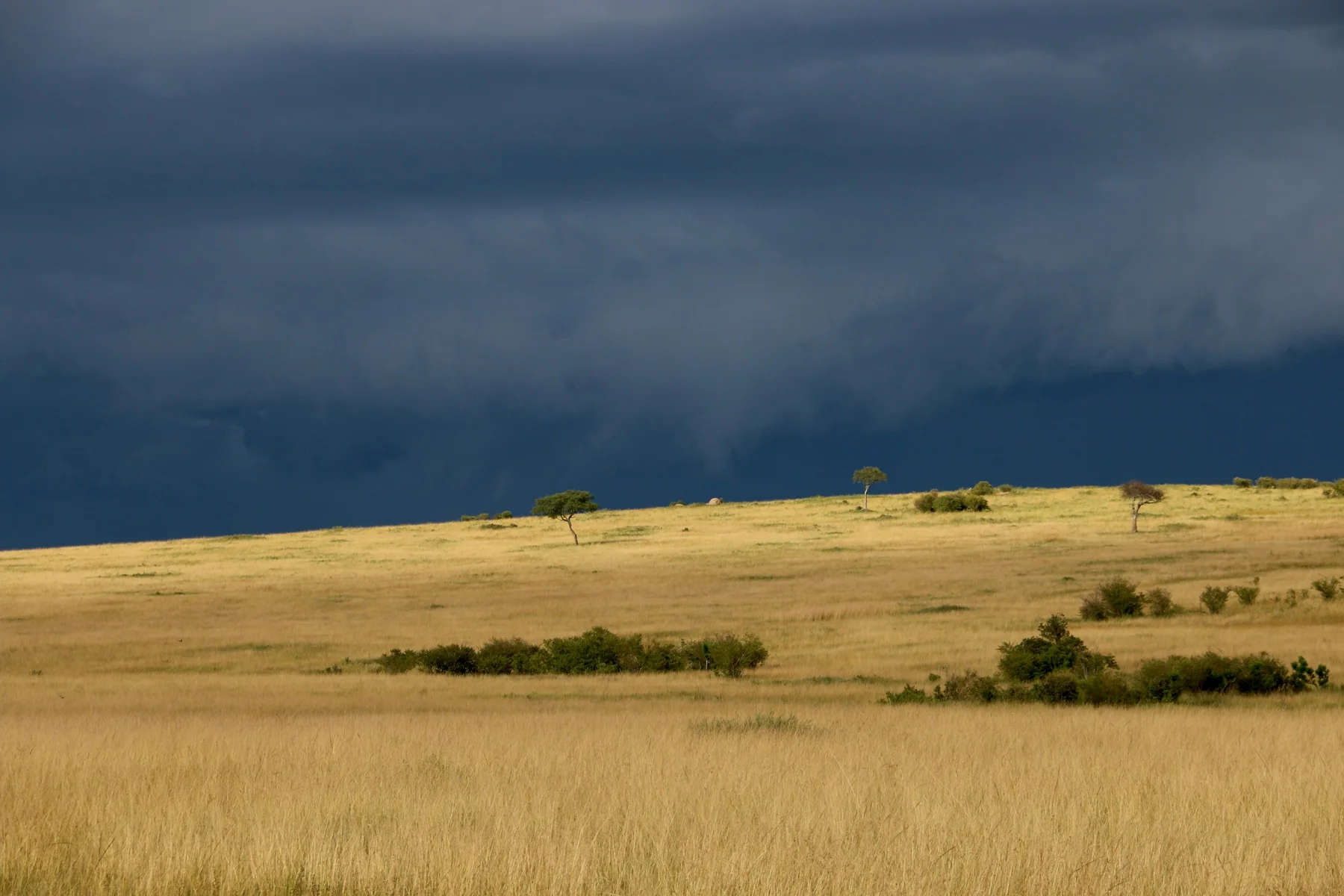
- Normal rain, difficult roads and flooding are different conditions
- The question is not simply whether it is raining
- Flood risk is local
- Flood risk is also connected
- What happened on 1 May 2024
- Why the 2024 event belongs in a planning guide
- What the 2024 event does not prove
- The months before the May 2024 flood
- The wider six-month context
- The March 2026 infrastructure lesson
- The February 2026 safety lesson
- Never drive into a flooded crossing
- January 2024 also showed how activities can stop
- A documented event timeline
- Weather history is not a forecast
- A seasonal forecast is not a travel-day promise
- Use three forecast horizons
- The long rains
- The short rains
- Rain can fall outside the usual seasons
- Why rain differs across the Greater Mara
- The Mara River
- The Talek River
- The Sand River and seasonal streams
- Black-cotton soil
- Why off-road shortcuts make flooding worse
- Riverbank is a view, not a safety certificate
- Ask for the exact room zone
- Ask about measured high-water evidence
- Ask about the evacuation route
- Ask about communications
- Ask about backup power and water
- Ask whether the camp closes seasonally
- Camp-location questions that produce useful answers
- The nearest airstrip is only one part of a fly-in plan
- Ask about the primary and alternative airstrip
- Protect the Wilson connection
- Charter is not a magic answer
- Road arrival needs route-specific planning
- Gate choice can change
- A longer route may be the safer route
- Do not start a wet-season road transfer too late
- Fly-in versus road during wet conditions
- Vehicle type matters
- A 4×4 does not make floodwater safe
- Recovery equipment is for recoverable situations
- Self-driving raises the risk burden
- When not to self-drive
- Why a guide may abandon a sighting
- Full-day game drives need a wet-weather rethink
- Morning and afternoon drives can be more resilient
- The route should follow the ground, not the species list
- Green season still has excellent wildlife
- Rain can improve photography
- Rain can also make photography difficult
- Keep camera protection simple
- Wildlife behaviour around storms
- River animals and high water
- Do not promise a river crossing
- Family planning needs shorter decision loops
- Ask where children wait during a weather pause
- Pack for one full day without luggage
- Mobility planning starts with surfaces
- Ask for wet-weather transfer detail
- Medical planning during isolation
- Older travellers may value camp position over room luxury
- Insurance must cover the actual risks
- “Bad weather” is not always an insured event
- Keep evidence
- Supplier terms matter alongside insurance
- Compare the contract, not the promise
- Build geographic redundancy
- Build time redundancy
- Build supplier communication
- Keep the final night simple
- A wet-season packing table
- Laundry may not dry quickly
- Footwear needs grip and a backup pair
- Umbrellas have limits
- Protect documents offline
- Electricity and charging
- Food and water during a long detour
- What to check 14 days before travel
- What to check 72 hours before travel
- What to check on departure morning
- A three-stage confirmation table
- During an active flood warning
- If the camp says it is safe
- If the camp offers relocation
- If the road is closed but flights operate
- If flights stop but the road is open
- If neither route is available
- If you are already in camp
- A practical go-bag
- Do not film from a dangerous place
- Respect community impacts
- Traveller voice: rain does not automatically ruin game viewing
- Traveller voice: black-cotton mud is memorable
- Traveller voice: low season has devoted fans
- Traveller voice: tolerance must be honest
- Traveller voice: a vehicle choice changed the experience
- Traveller voice: green conditions can be beautiful
- Traveller voice: a flooded bridge changed the route
- Traveller voice: hospitality still mattered
- Traveller voice: repairs should be visible and specific
- Traveller voice: river location can involve a rough approach
- What reviews can tell you
- What reviews cannot confirm
- Camp comparison worksheet
- Choose the camp before choosing the cheapest flight
- Choose transparency over absolute reassurance
- Choose a room for the real traveller
- Choose one non-negotiable wildlife goal
- Choose fewer transfers
- Choose the right season for your tolerance
- The decision table by traveller type
- Ten questions before paying a deposit
- Ten questions during an active event
- Common mistake: asking only whether the park is open
- Common mistake: treating fly-in as flood-proof
- Common mistake: demanding certainty months ahead
- Common mistake: cancelling from one dramatic video
- Common mistake: trusting a generic monthly rainfall number
- Common mistake: booking two camps with one access weakness
- Common mistake: protecting the safari but not the flight home
- Common mistake: choosing the river view automatically
- Common mistake: assuming a cheaper month means the same product
- Common mistake: pushing the driver to follow another vehicle
- Common mistake: ignoring community conditions
- How to book in ten steps
- Final recommendation
- Frequently asked questions
The first raindrops can be a gift. Dust settles. The grass smells alive. Elephants turn dark and glossy, and a brooding sky gives the plains a scale that no blue-sky photograph quite captures. Then a hard storm can change the practical map. A shallow drift fills, black-cotton soil loses its grip and a bridge that linked two parts of the ecosystem becomes the day’s most important fact.
That is why Masai Mara flooding needs a more useful answer than either “avoid the rains” or “it only rains for an hour.” Most wet-season trips continue, often with beautiful wildlife and few vehicles. Severe local floods are different. They can damage riverside camps, close crossings, disrupt airstrips and turn a short transfer into a long detour. The risk depends on the exact date, catchment, camp site, access route and alternatives available.
Begin with the Masai Mara safari guide if you are still choosing a sector, then return here to test the exact camp and journey against wet-weather risk.
Normal rain, difficult roads and flooding are different conditions
Rain may add nothing more than a shower on the roof. Saturated tracks can limit where vehicles travel without threatening camp. River flooding can cut a bridge or enter accommodation. Flash flooding can arrive quickly from rain that fell elsewhere in the catchment. Each condition needs a different response.
| Condition | What a traveller may notice | Main operational effect | Best response |
|---|---|---|---|
| Passing shower | Wet grass, brief low visibility | Drive may pause or roof sides may close | Carry protection and let the guide adjust |
| Saturated soil | Slippery tracks, deep ruts, standing water | Routes narrow and journey times grow | Use a capable 4×4 and accept detours |
| High river | Faster, wider, debris-filled water | Crossings and low bridges may close | Never cross without authority and guide clearance |
| Local flood | Water over roads, camp paths or structures | Evacuation, relocation or access loss | Follow the camp emergency plan |
| Regional emergency | Several bridges, roads or properties affected | Flights, transfers and itineraries may be reorganised | Use current official and operator updates |
The question is not simply whether it is raining
The useful question is whether rainfall has changed access, accommodation safety or the ability to move without damaging people, vehicles and habitat. A sunny morning can follow a night that left a road impassable. A dry camp can still be isolated by a damaged bridge.
Flood risk is local
The Greater Mara is a connected landscape, not one flat field. The Mara River, Talek River, Sand River, seasonal streams, escarpment runoff, low floodplains and black-cotton soils respond differently. One sector may operate normally while another needs detours.
Flood risk is also connected
A property on higher ground can depend on a low bridge. A fly-in camp can depend on an airstrip transfer. A conservancy can be dry while the road from Narok is difficult. Map the whole arrival chain, not only the room.
What happened on 1 May 2024
The Mara Conservancy May 2024 report records an extraordinary Talek River flood. Water reached the gate house and crossed the bridge before the bridge was washed away. At least 20 camps and lodges along the river suffered considerable damage, and at least 40 people were rescued.
Why the 2024 event belongs in a planning guide
It proves that severe flooding is not a theoretical inconvenience. It also shows why “the Mara is open” is not a complete answer. A traveller needs the status of the exact property, access route, bridge and room block.
What the 2024 event does not prove
It does not prove that every riverside camp is unsafe, that every April or May will flood, or that a repaired property has the same risk today. Historical events should prompt specific questions, not permanent labels.
The months before the May 2024 flood
The April 2024 Mara Conservancy report recorded 300 millimetres of rain in the Triangle that month, continuing rain, impassable sections and a Talek River flood on 30 April. The May disaster followed prolonged saturation, not one ordinary shower in isolation.
The wider six-month context
The May report described six months of constant, at times very heavy, rain and serious damage to roads. That sequence matters. Ground and river response depend on what has already fallen, not only today’s forecast icon.
The March 2026 infrastructure lesson
The Mara Conservancy March 2026 report documented severe storms, exceptionally high river levels, damaged bridges, destroyed drifts, flooded facilities and a Triangle cut off for days. Some approaches were repaired quickly; other works required substantial time and money.
The February 2026 safety lesson
The February 2026 report recorded more than 200 millimetres of rain in the month and a fatal incident involving a vehicle washed from a bridge. The reader-facing lesson is blunt: no itinerary, photograph or sunk payment justifies entering moving water.
Never drive into a flooded crossing
Depth is difficult to judge. The road surface may be gone. Current can move a heavy vehicle, and debris can strike it. A guide or driver should turn back when the crossing is not officially and visibly safe.
January 2024 also showed how activities can stop
The January 2024 report described extensive waterlogging, submerged vehicles at a flooded crossing and a suspension of balloon flights. A weather-sensitive activity must never be treated as guaranteed.
A documented event timeline
| Period | Documented condition | Travel-planning lesson |
|---|---|---|
| January 2024 | Very wet Triangle, flooded crossings, balloon suspension | Activities and secondary tracks can stop before a major river disaster |
| April 2024 | Sustained rain, waterlogged road, Talek flooding | Watch cumulative saturation and access, not only a daily shower |
| 1 May 2024 | Talek bridge loss, camp damage and rescues | Riverside site, bridge dependency and evacuation planning matter |
| June 2024 | Rains eased and repairs progressed | Conditions can recover, but verify each route and property |
| February 2026 | Early long rains and dangerous river conditions | Do not assume historical month labels predict a safe crossing |
| March 2026 | Major bridge, drift, culvert and road damage | A whole sector can be cut off even when a camp remains intact |
Weather history is not a forecast
“April is wet” describes a broad tendency. It cannot tell you whether rain will fall at your camp, whether it will last 20 minutes or several hours, or whether a river is rising upstream. Climate helps choose a season. Current observations and forecasts manage a trip.
A seasonal forecast is not a travel-day promise
The Narok County March to May 2026 forecast expected normal to above-normal rainfall with April as the peak. That statement described probabilities across a season and county. It could not confirm the weather or road at one camp on one date.
Use three forecast horizons
Start with the seasonal outlook when choosing broad dates. Check the official weekly Narok forecast near departure. Then use camp and authority observations for the exact road, river, airstrip and activity status.
| Horizon | What it can help answer | What it cannot settle |
|---|---|---|
| Seasonal outlook | Broad wetness tendency and likely peak period | A particular day, bridge or camp |
| Seven-day forecast | Near-term rain pattern and warning level | Exact local runoff and road damage |
| Daily forecast | Storm timing and short-term preparation | Unreported bridge or track condition |
| Camp report | Room, path, airstrip transfer and local access | Conditions in every other sector |
| Reserve or conservancy update | Gate, bridge, road and management status | A private property’s room-level plan |
The long rains
March, April and May are commonly described as the long-rains season, with April often the wettest part. Onset, intensity and end vary. Rain can begin earlier, continue later or arrive in concentrated storms separated by clear days.
The short rains
October through December often brings a second rainy period. These months are not automatically flood-free or flood-prone. Some years remain modest; others produce heavy storms and road damage.
Rain can fall outside the usual seasons
January, February, June and migration months can receive meaningful rain. The Mara Conservancy archives contain several examples of unusual or sustained conditions. Build resilience into any itinerary rather than assuming one month is immune.
Why rain differs across the Greater Mara
Topography, storm track, previous rainfall, vegetation and catchment condition shape runoff. Heavy rain on the escarpment or upstream can raise water elsewhere. A camp’s dry sky is not proof that its river will stay low.
The Mara River
The Mara is a major river with bridges and roads that connect sectors. High water can affect crossings, low approaches, riverside paths and access between the Triangle and eastern areas. It is not a feature to improvise around.
The Talek River
Talek is both an important river and a settlement and accommodation corridor. The May 2024 damage shows why exact setback, elevation, room location, bank protection, escape route and bridge dependence should be discussed for a riverside booking.
The Sand River and seasonal streams
Smaller channels can rise quickly or cut tracks after intense rain. A line that looks harmless on a map may be the only route between a gate, camp and wildlife area.
Black-cotton soil
Some Mara soils become exceptionally slippery and adhesive when saturated. Tyres lose lateral grip, ruts deepen and vehicles can slide even on apparently flat ground. The solution is not speed. It is route discipline, capable equipment and local judgement.
Why off-road shortcuts make flooding worse
Driving around puddles widens tracks and damages grass. Repeated detours create braided scars that channel more water and take longer to recover. A responsible guide accepts a missed sighting rather than cutting a new line through saturated habitat.
Riverbank is a view, not a safety certificate
A riverbank property may sit well above recorded high-water levels with engineered drainage and multiple exits. Another may place some tents on lower ground. The marketing phrase alone reveals almost nothing.
Ask for the exact room zone
“We are on high ground” is incomplete if your assigned tent sits in a different block. Ask whether every guest room is at similar elevation, which units are closest to water and whether room allocation changes in wet conditions.
Ask about measured high-water evidence
A useful property answer explains what occurred during recent severe events, which areas were affected, what was rebuilt or moved and how the response plan changed. It need not disclose sensitive engineering detail to be specific.
Ask about the evacuation route
Find out whether the route remains on high ground, whether it needs a bridge or drift, where guests assemble and who makes the decision. Travellers should follow staff, carry essentials and leave early when instructed.
Ask about communications
Remote camps should have more than guest Wi-Fi. Ask how teams communicate when mobile data fails, how they receive river and road updates and how Nairobi support reaches families.
Ask about backup power and water
Heavy weather can interrupt solar charging, pumps or treatment systems. A resilient camp has safe drinking water, lighting, communications, medical supplies and a plan for guests who cannot move immediately.
Ask whether the camp closes seasonally
Closure is not evidence of failure. Some small or mobile camps use the wet months for maintenance or avoid fragile sites. Confirm operating dates before building flights around a property.
Camp-location questions that produce useful answers
| Ask this | Listen for | Weak answer |
|---|---|---|
| What happened at this exact property in May 2024 and the latest severe rain? | Room zones, paths, access and improvements | “The Mara is always fine” |
| Which river, bridge, drift or culvert does arrival depend on? | Named dependencies and alternatives | “Our driver knows the road” |
| Is my assigned room in the same risk zone as the main area? | Specific room-block logic | “All tents have a river view” |
| What triggers relocation or evacuation? | Authority, threshold, assembly and transport | “We decide if it gets bad” |
| What is the weather cancellation term? | Written refund, credit or relocation rule | “We will work something out” |
| Who pays for a changed flight or extra night? | Clear responsibility and insurance boundary | No written answer |
The nearest airstrip is only one part of a fly-in plan
Flying avoids the Nairobi-to-Mara road, but it does not remove local weather and access. The flight may be delayed or cancelled, the airstrip may be unsuitable, and the camp vehicle still needs a safe route from strip to property.
Ask about the primary and alternative airstrip
Use the Masai Mara airstrips and flight guide to understand the chain. Ask which strip the camp uses in normal conditions, which alternative it can use and how long each transfer takes when roads are wet.
Protect the Wilson connection
A bush-flight delay can affect a Wilson-to-JKIA transfer and international departure. Do not place the last available Mara flight against a tight long-haul check-in during unsettled weather.
Charter is not a magic answer
A charter still needs safe flying weather, a serviceable airstrip and legal operations. It may provide timing flexibility, but it cannot override a pilot’s decision.
Road arrival needs route-specific planning
The best access depends on the exact camp and sector. The Mara Triangle driving guidance distinguishes Sekenani and Aitong approaches for different locations. Ask for the current route, not a generic gate name saved months earlier.
Gate choice can change
A damaged bridge or saturated section may make the normal gate impractical. Link the booking to the Mara road conditions and gate guide and reconfirm the route on departure morning.
A longer route may be the safer route
Detours can add hours. That is frustrating, but safer than testing a flooded shortcut. Build daylight and comfort margin into transfer days.
Do not start a wet-season road transfer too late
Darkness hides washouts, water depth, livestock and pedestrians. An early departure gives the driver time to slow down, reroute or stop before the destination.
Fly-in versus road during wet conditions
| Factor | Fly-in | Road transfer |
|---|---|---|
| Nairobi travel time | Usually shorter when operations run normally | Longer and sensitive to highway and local-road conditions |
| Baggage | Strict limits and soft-bag rules | More flexible in a private vehicle |
| Weather disruption | Flight delay, circuit change or cancellation | Mud, washout, bridge closure or detour |
| Local access | Still needs strip-to-camp road | Continuous vehicle can reroute with local information |
| Medical or mobility comfort | Less driving but aircraft boarding can be difficult | Longer sitting but equipment flexibility is greater |
| Best resilience | Alternative strip and generous onward margin | Capable 4×4, daylight, driver and alternative route |
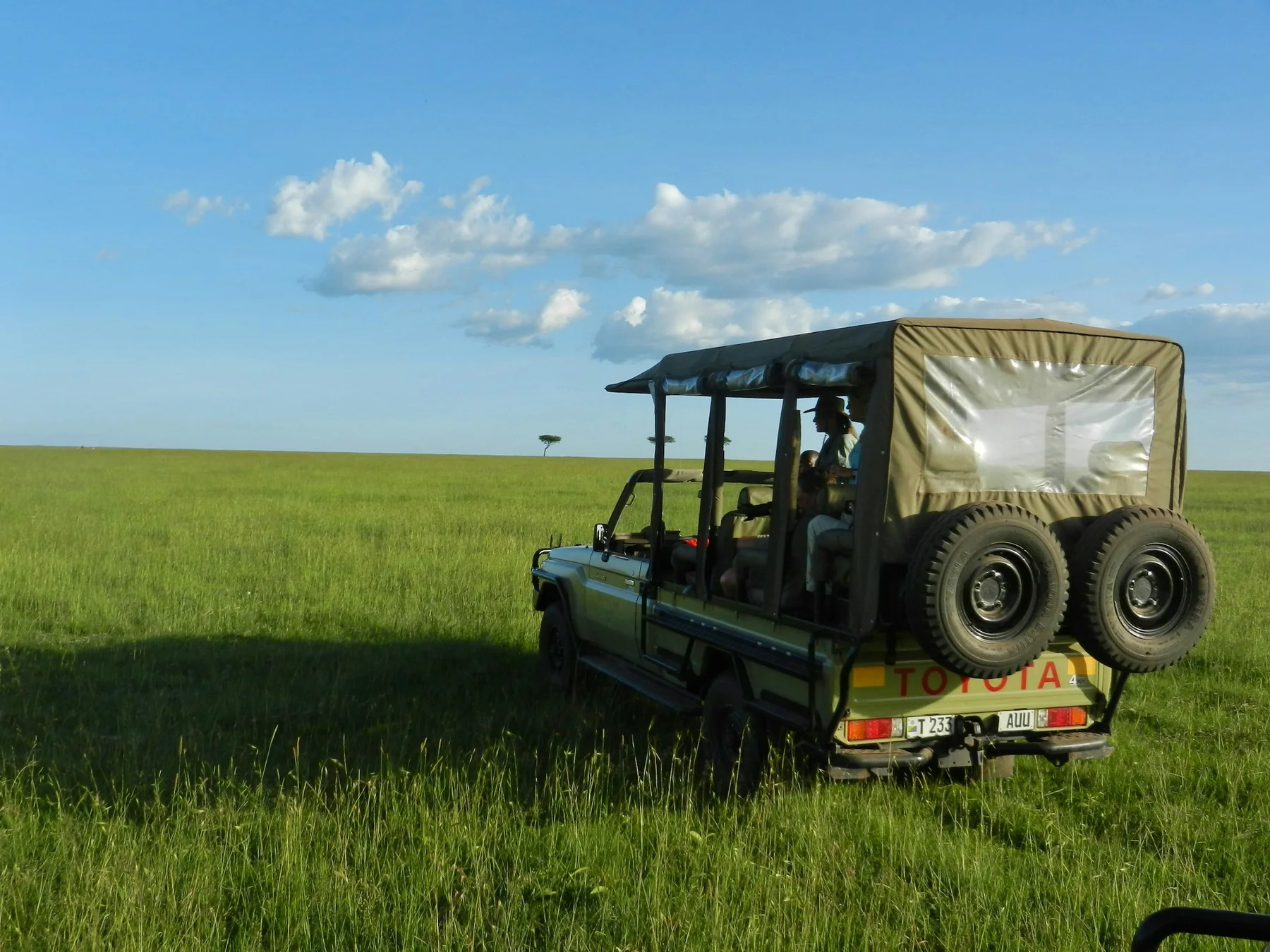
Vehicle type matters
A proper safari 4×4 with suitable tyres, recovery points, communications and a maintained drivetrain is the baseline. A raised roof improves viewing; reliable side protection helps in hard rain.
A 4×4 does not make floodwater safe
Four-wheel drive improves traction on some surfaces. It does not reveal a washed-out bridge, prevent a lateral current or create ground beneath a submerged tyre.
Recovery equipment is for recoverable situations
Traction boards, tow straps and a shovel can help in mud when trained drivers judge recovery safe. They are not permission to enter deep water or damage habitat.
Self-driving raises the risk burden
Read the self-drive Masai Mara guide before treating the wet season as an adventure. Local route knowledge, communications, recovery experience and authority updates matter more than confidence.
When not to self-drive
Do not self-drive during an active flood warning, when a route depends on a water crossing, after dark, without reliable communications or when the rental contract excludes the roads and recovery involved.
Why a guide may abandon a sighting
Storms can turn a return route quickly. A guide who leaves early, refuses a crossing or chooses a main road is protecting the group. Do not pressure them to follow another vehicle.
Full-day game drives need a wet-weather rethink
A full day provides range and flexibility, but it also spends longer away from camp and may cross more drainage lines. The Masai Mara game-drive guide helps compare it with separate morning and afternoon drives.
Morning and afternoon drives can be more resilient
Shorter drives allow a fresh check before each departure and make it easier to skip one period of hard rain. They may sacrifice distance but protect comfort and decision quality.
The route should follow the ground, not the species list
If a leopard is reported across a swollen stream, it is not your sighting that day. Good guiding finds wildlife in the safe area available.
Green season still has excellent wildlife
Resident predators, elephants, giraffes, plains game and birds do not disappear because it rains. Visibility, distribution and routes change. The migration season versus green season guide sets realistic expectations.
Rain can improve photography
Clean air, dramatic clouds, reflections, saturated colour and textured wet coats can be beautiful. One traveller described how “the light when the dust is washed out of the air is incredible for photography”.
Rain can also make photography difficult
Plastic side curtains can reduce visibility, autofocus may struggle and changing lenses invites water and dust. The Masai Mara photography guide covers body protection, cloths, beanbags and shooting from the vehicle.
Keep camera protection simple
Use a rain cover, dry bag or sealed pouch that can be reached without leaving the vehicle. Carry several absorbent cloths. Keep batteries and cards in separate waterproof pouches.
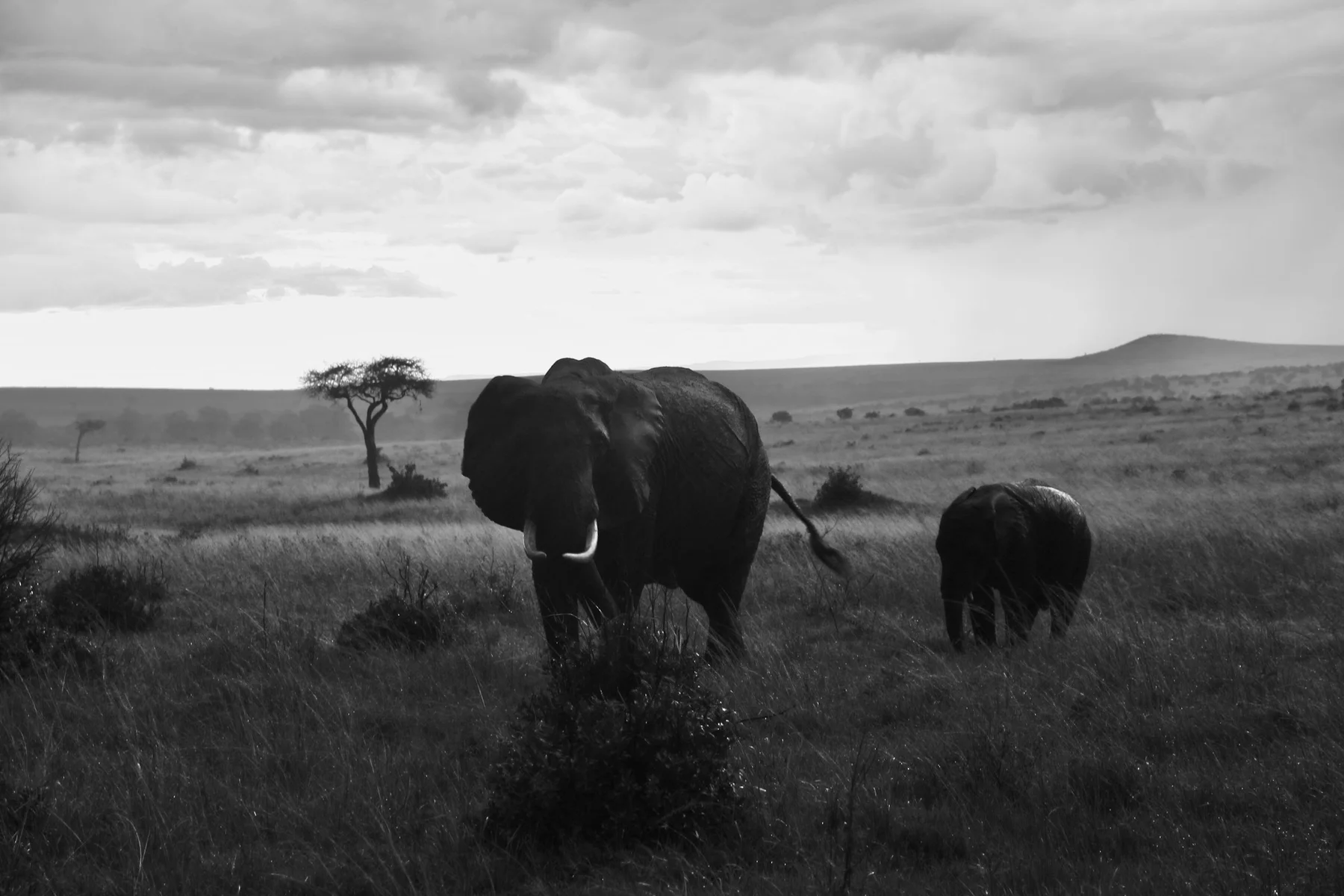
Wildlife behaviour around storms
Animals may seek shelter, remain active in cool air or move after rain. There is no guaranteed “rain behaviour.” Follow the guide’s observation instead of a checklist.
River animals and high water
Hippos, crocodiles and riverbanks are especially poor places for improvisation. High, fast water can move debris and reshape edges. Stay where the guide directs.
Do not promise a river crossing
Migration crossings are unpredictable in normal weather and dangerous water does not make them a responsible spectacle to chase. Use the Great Migration river-crossing guide for the wider planning context.
Family planning needs shorter decision loops
Children can enjoy puddles and storms, but long detours, wet clothes and delayed meals wear them down quickly. Choose a camp with flexible activities, indoor common space, early meals and a clear medical plan.
Ask where children wait during a weather pause
A family room is more useful when it has safe access to dining and shelter without a long exposed path. Ask about railings, slippery decks, river edges and staff escort after dark.
Pack for one full day without luggage
Keep medicines, warm layers, dry socks, snacks, documents and child essentials in hand luggage. Flight or road changes can separate travellers from checked bags.
Mobility planning starts with surfaces
Wet decking, muddy paths, vehicle steps and temporary airstrip changes can be harder than the room itself. The accessible Kenya safari guide gives a framework for asking about the whole movement chain.
Ask for wet-weather transfer detail
Does the accessible room require an outdoor slope? Can a vehicle reach the entrance? Is a ramp stable when wet? Can staff safely handle a mobility aid at an alternative airstrip?
Medical planning during isolation
Ask who holds first-aid responsibility, how evacuation is requested, which air or road options operate in poor weather and what the insurer requires before arranging private assistance.
Older travellers may value camp position over room luxury
A shorter, level route between room, lounge and vehicle can matter more than an outdoor bath. Compare daily movement under rain, not the brochure’s dry-weather view.
Insurance must cover the actual risks
Read cancellation, curtailment, weather disruption, missed connection, emergency evacuation and supplier-failure terms. A policy that excludes known events after a warning is issued may not help a late purchaser.
“Bad weather” is not always an insured event
Some policies require the carrier or accommodation to cancel. Choosing not to travel because the forecast feels uncomfortable may not qualify. Ask the insurer in writing.
Keep evidence
Save formal cancellation notices, airline messages, camp emails, receipts and the reason for extra transport. Claims are easier when the timeline is documented.
Supplier terms matter alongside insurance
Ask what happens if the camp is safe but inaccessible, if an alternative camp is offered, if the flight operates to another strip or if a bridge closure shortens the stay.
Compare the contract, not the promise
| Scenario | Ask the camp or operator | Ask the insurer |
|---|---|---|
| Camp closes before travel | Refund, credit or relocation? | Is supplier cancellation covered? |
| Flight is cancelled | Who rebooks and pays for the extra night? | Is weather delay covered? |
| Road detour misses a flight | Who controlled the transfer timing? | Is a missed connection covered? |
| Alternative camp is offered | Can you decline, and on what terms? | Does declining affect the claim? |
| Trip is curtailed | Which unused services are refunded? | What evidence proves curtailment? |
| Medical evacuation is needed | Who contacts assistance first? | Which provider and approval are required? |
Build geographic redundancy
Two camps that rely on the same bridge are not two independent options. A resilient itinerary may combine sectors with different access or keep a Nairobi buffer rather than forcing a connection.
Build time redundancy
Place the Mara before a flexible beach stay rather than immediately before a long-haul departure. A spare Nairobi night can be less glamorous and far more valuable.
Build supplier communication
The driver, camp and airline should hold the same names, contact details and onward plan. During disruption, fragmented bookings are harder to reorganise.
Keep the final night simple
If an international flight is expensive or irreplaceable, spend the last night within a sensible transfer of the departure airport. Weather margins belong in the itinerary, not only in the terms and conditions.
A wet-season packing table
| Item | Why it earns space | Avoid |
|---|---|---|
| Lightweight waterproof shell | Works on drives and transfers | Heavy coat that stays damp |
| Warm mid-layer | Storms and open vehicles can feel cold | Assuming equatorial means hot all day |
| Quick-dry trousers | Recover faster after a wet transfer | Jeans as the only option |
| Two pairs of closed shoes | One can dry while the other is worn | Brand-new white trainers |
| Dry bags or zip pouches | Protect medicines, electronics and papers | Loose plastic that can blow away |
| Lens cover and cloths | Keep photography practical | Changing lenses in hard rain |
| Small torch or headlamp | Helps in power interruptions and wet paths | Relying on a phone battery |
| Personal medicine reserve | Covers a delay or relocation | Packing essential medicine in checked luggage |
Laundry may not dry quickly
A wet-season traveller noted that “many of the clothes we laundered never fully dried”. Quick-dry fabrics and enough socks are more useful than a large fashion wardrobe.
Footwear needs grip and a backup pair
Closed shoes with a stable sole suit muddy paths and airstrips. Put wet shoes where they can breathe, not sealed inside a bag for days.
Umbrellas have limits
They help between tent and lounge but can be awkward in wind and around vehicles. A hooded shell leaves both hands free.
Protect documents offline
Save passports, insurance, tickets, emergency contacts, camp numbers and the itinerary on each adult’s phone and on paper. Do not depend on cloud access.
Electricity and charging
Carry a permitted power bank and charge whenever power is available. Aircraft battery rules apply, so keep lithium power banks in hand luggage.
Food and water during a long detour
Ask the driver to carry safe water and a simple snack. A two-hour transfer can become much longer after a bridge or road change.
What to check 14 days before travel
Confirm the property is operating, the chosen room block is available, the normal route and airstrip are serviceable, and insurance contacts are saved. Review the latest official seasonal and weekly information.
What to check 72 hours before travel
Ask for a current, not templated, update on rain, river, bridge, road and strip. Confirm the driver and airline have the final plan.
What to check on departure morning
Ask whether the route changed overnight, whether the destination accepted arrivals and whether any warning affects the drive or flight. Leave early enough to adapt.
A three-stage confirmation table
| Time | Property | Transport | Traveller |
|---|---|---|---|
| Two weeks out | Operating status and wet-weather plan | Route and alternative strip | Insurance and packing |
| Seventy-two hours out | Exact room and access update | Flight, driver and bridge status | Documents and Nairobi margin |
| Departure morning | Overnight changes | Final route and contact chain | Water, medicine and charged phone |
During an active flood warning
Stop using annual weather articles as decision tools. Follow the Kenya Meteorological Department, county and protected-area updates, the exact property and the carrier. Ask for written status and the decision deadline.
If the camp says it is safe
Ask what “safe” covers: accommodation, airport or road access, activities, power, water and evacuation. A specific answer is more useful than reassurance.
If the camp offers relocation
Request the exact alternative, room type, land area, transport plan, price difference and cancellation choice. Relocation can be sensible without being automatically equivalent.
If the road is closed but flights operate
Check whether the local airstrip transfer is open and whether baggage and passenger names meet airline rules. Do not book a flight only to discover the final road is unavailable.
If flights stop but the road is open
Ask for daylight travel time, vehicle type, driver rest, safe route and the effect on onward connections. A very long transfer may justify an intermediate night.
If neither route is available
Do not pressure a supplier to improvise. Use the written relocation, refund or insurance process. Safety decisions can be disappointing and correct at the same time.
If you are already in camp
Follow staff instructions, keep shoes and a small go-bag ready, charge devices and avoid riverbanks. Tell staff about medicine, mobility, pregnancy or children who need help early.
A practical go-bag
Carry passport, phone, charger, medicine, water, warm layer, rain shell, glasses, child essentials and one dry set of clothing. Keep it light enough to manage quickly.
Do not film from a dangerous place
Floodwater attracts attention. Stay away from banks, bridges, culverts and moving water. A video is never worth distracting staff or blocking an evacuation route.
Respect community impacts
Floods affect residents, livestock, schools, bridges and livelihoods beyond tourism. Do not demand scarce vehicles or supplies for a non-essential excursion when communities are responding to an emergency.
Traveller voice: rain does not automatically ruin game viewing
One repeat visitor wrote that “the rain did not spoil our enjoyment or game viewing”. That is a real experience, not a guarantee that all wet periods are mild.
Traveller voice: black-cotton mud is memorable
The same traveller recalled “skidding around on ‘black cotton’”. Their trip continued, but the phrase explains why vehicle and guide matter.
Traveller voice: low season has devoted fans
Another repeat safari traveller said “I do personally prefer the lower season in the Masai Mara”. Fewer vehicles and green landscapes can outweigh rain for some people.
Traveller voice: tolerance must be honest
That reviewer was “happy to take the rain on the chin”. Travellers who dislike uncertainty, mud or route changes may choose differently.
Traveller voice: a vehicle choice changed the experience
A rainy-season visitor reported that their van “got stuck several times”. A capable 4×4 and an experienced driver remain practical, not decorative.
Traveller voice: green conditions can be beautiful
A recent April discussion described how “the bush is also delightfully green”. The tradeoff is accepting that access and weather remain uncertain.
Traveller voice: a flooded bridge changed the route
A Mara River Camp guest wrote, “we were forced to change sides following a flooded bridge”. Their experience shows how one bridge can reorganise a day.
Traveller voice: hospitality still mattered
The same review said “the camp welcomed us warmly”. A strong team can care well for guests without controlling the weather.
Traveller voice: repairs should be visible and specific
A Fig Tree Camp guest observed that “the bridge has been replaced with a stronger structure”. Ask what has changed since the latest event rather than assuming nothing did.
Traveller voice: river location can involve a rough approach
A Mara Crossing Camp review described the entrance road as “very rutted”. One review cannot define current conditions, but it can prompt a transfer question.
What reviews can tell you
They reveal how rain felt, whether communication worked, how detours affected people and which comforts mattered. They are useful for building questions.
What reviews cannot confirm
They cannot certify current engineering, room allocation, river level, road status or emergency readiness. A review written after one season may describe a structure that has since changed.
Camp comparison worksheet
| Field | Camp A | Camp B | Camp C |
|---|---|---|---|
| Exact land unit and coordinates | |||
| River or drainage nearby | |||
| Room block and elevation explanation | |||
| Normal gate and route | |||
| Bridge, drift or culvert dependencies | |||
| Primary and alternative airstrip | |||
| Recent severe-event history | |||
| Changes made after that event | |||
| Relocation and refund terms | |||
| Evacuation and communication plan |
Choose the camp before choosing the cheapest flight
The property determines the useful strip, route and sector. Booking transport first can create a long wet-weather transfer or a connection the camp cannot support.
Choose transparency over absolute reassurance
A good answer admits uncertainty, names alternatives and explains decision authority. “It never floods here” is less credible than a calm account of thresholds and routes.
Choose a room for the real traveller
Honeymooners may value privacy, families value easy movement and older guests value stable surfaces. Wet-season room selection should match people, not only river views.
Choose one non-negotiable wildlife goal
If access narrows, tell the guide whether your priority is cats, birds, landscape or photography. Flexibility around everything else produces a better day.
Choose fewer transfers
Every camp change adds packing, road, bridge, strip and timing dependencies. Four nights in one well-chosen area can be more satisfying than racing through three.
Choose the right season for your tolerance
The Masai Mara in April and May guide explores the low-season tradeoff in detail. Beautiful green conditions do not suit every traveller.
The decision table by traveller type
| Traveller | Wet-season Mara can suit when | Consider another period when |
|---|---|---|
| Repeat safari guest | Flexibility and uncrowded viewing matter | A fixed species or route is essential |
| First-time visitor | Budget and timing are fixed, with a resilient plan | This is a once-only trip with no tolerance for disruption |
| Photographer | Storm light and few vehicles appeal | Equipment cannot be protected |
| Family | Camp is compact and schedule flexible | Children struggle with long detours and wet waiting |
| Limited mobility | Full movement chain is verified | Paths, aircraft or alternative transport are unsuitable |
| Honeymoon | Privacy and green scenery matter | Every celebration detail must happen at a fixed time and site |
| Self-driver | Advanced local experience and current support exist | Flood warnings, crossings or weak communications apply |
Ten questions before paying a deposit
- What happened at this exact property during its latest severe flood?
- Which room area will we occupy?
- Which river, bridge, drift or culvert does arrival depend on?
- What is the alternative road and airstrip?
- Who decides to close, relocate or evacuate?
- What written weather and access terms apply?
- Who pays for changed transport and extra nights?
- How are medical and mobility needs handled during disruption?
- Which official updates does the camp monitor?
- When will we receive the final pre-departure check?
Ten questions during an active event
- Is the property accepting arrivals today?
- Is my assigned room block operating?
- Is the primary road open end to end?
- Are all necessary bridges and drifts open?
- Is the airstrip operating and reachable from camp?
- What changed overnight?
- What alternative is confirmed, not merely possible?
- What is the decision deadline?
- What refund, credit or relocation term applies?
- Which authority or operational source supports the answer?
Common mistake: asking only whether the park is open
A protected area can be open while one gate, bridge, track, airstrip or camp is inaccessible. Ask about the exact chain.
Common mistake: treating fly-in as flood-proof
The aircraft solves only the long approach. Local transfer, strip surface and flying weather remain.
Common mistake: demanding certainty months ahead
No responsible planner can promise a bridge status for next April. They can choose resilient geography, explain terms and schedule checkpoints.
Common mistake: cancelling from one dramatic video
Confirm location and date. Footage from Talek may not describe Mara North, and footage from a past year may be circulating as current.
Common mistake: trusting a generic monthly rainfall number
Averages hide storm intensity, spatial variation and cumulative saturation. Use them for context, not a go-or-no-go decision.
Common mistake: booking two camps with one access weakness
If both properties rely on the same low crossing, the itinerary has no real redundancy.
Common mistake: protecting the safari but not the flight home
The most expensive consequence may be a missed international departure. Add a buffer where it matters.
Common mistake: choosing the river view automatically
Ask about height, setback, room block, path and alternative. A beautiful view is only one dimension of the room.
Common mistake: assuming a cheaper month means the same product
Some camps close, activities alter and routes narrow. Compare what actually operates, not only the nightly rate.
Common mistake: pushing the driver to follow another vehicle
Different vehicles, tyres, loads and local knowledge produce different limits. Your driver is responsible for your group.
Common mistake: ignoring community conditions
An access road may pass homes and livestock affected by the same flood. Slow down, respect closures and accept that tourism is not the only priority.
How to book in ten steps
- Choose the exact camp and room style.
- Map the gate, road, bridge, airstrip and transfer chain.
- Ask for severe-weather history and changes made.
- Read weather, relocation and refund terms.
- Choose transport with an alternative.
- Protect the final international connection.
- Buy suitable insurance before a known event.
- Pack medicine, documents and waterproof protection in hand luggage.
- Complete 14-day, 72-hour and morning checks.
- Follow current official and local decisions without pressuring staff.
Final recommendation
Do not remove the wet season from consideration simply because Masai Mara flooding is possible. Do not book casually because someone says rain is always brief. Choose a camp whose location and team can explain their access, room zones, recent experience and alternatives. Use a capable driver, protect the flight home and keep the wildlife plan flexible. Then the rain can remain part of the landscape instead of becoming a surprise hidden inside the itinerary.
Frequently asked questions
Does the Masai Mara flood every rainy season?
No. Rainfall and impact vary across years and locations. Muddy roads are more common than destructive flooding, but severe local events have occurred and must be planned for.
Which months have the greatest rain risk?
March to May are commonly the long rains, often peaking in April, and October to December bring short rains. Significant rain can also occur outside those windows.
Is April a bad time to visit the Masai Mara?
Not automatically. April can offer green scenery, resident wildlife, lower demand and fewer vehicles. It also brings a higher chance of rain, mud, closures and route changes.
Are riverside camps unsafe?
The phrase “riverside” is not enough to judge. Ask about exact elevation, setback, room zone, historic high water, drainage, access and evacuation routes.
Is flying safer than driving during the rains?
Flying avoids much of the road from Nairobi, but weather, airstrip condition and the local camp transfer still matter. Compare both complete chains.
Can a 4×4 drive through floodwater?
A 4×4 must not enter water that has not been confirmed safe. Current, missing road surface and hidden depth can defeat any vehicle.
Will game drives be cancelled if it rains?
Light or ordinary rain may not stop a drive. Severe storms, unsafe tracks, high water or authority restrictions can change or cancel it.
What should I ask a camp before booking?
Ask about the exact room zone, recent severe events, bridge and route dependencies, alternative airstrip, emergency plan and written weather terms.
What should I pack for a wet-season safari?
Bring a light waterproof shell, warm layer, quick-dry clothing, two pairs of closed shoes, dry bags, camera protection, torch and medicine in hand luggage.
Does travel insurance cover flooding?
Coverage varies. Check weather disruption, supplier cancellation, missed connection, curtailment and evacuation terms before a warning becomes a known event.
Can floods occur when it is not raining at camp?
Yes. Rain upstream or on an escarpment can raise a river or damage access away from the property.
Where should I get current information?
Use the Kenya Meteorological Department, reserve or conservancy updates, the exact property, the carrier and the driver responsible for the route.
Sources and further reading
Official event and infrastructure evidence comes from the Mara Conservancy monthly archive, including May 2024, April 2024, January 2024, February 2026 and March 2026. Weather context comes from the Kenya Meteorological Department and its Narok County seasonal forecast. Traveller quotations are linked to the individual review or forum pages and describe personal experiences, not current operational guarantees.
Let us test the exact camp, route and alternatives
Share dates, camp, room, transport, travellers, mobility or medical needs and onward flights. We will build the questions and margins around the actual itinerary.