
Best Kenya Park for First-Time Safari Travellers
Start with the wildlife moment you care about most, then choose a route that leaves time to watch rather than spending the safari racing between famous names.

For many travellers, the Masai Mara is the strongest all-round first safari core. It combines open plains, varied resident wildlife and strong big-cat interest. That does not make it the best answer for everyone. Amboseli can be better for elephant-centred viewing, Samburu for northern specialists, Tsavo for a coast-bound wilderness route, and Ol Pejeta, Nakuru or Nairobi for a rhino-focused plan.
| If your first priority is | Start by comparing |
|---|---|
| Classic plains and cats | Masai Mara |
| Elephants and southern scenery | Amboseli |
| Northern specialists | Samburu |
| Rhino focus | Ol Pejeta, Nakuru, Nairobi |
| Scale and coast connection | Tsavo |
The best Kenya park for first-time safari travellers is therefore not a trophy. It is the place that matches the trip and receives enough nights.
Choose Masai Mara when its core story matches
A first park should answer the strongest reason for travelling. classic open plains, big-cat interest and a broad first-safari wildlife mix. That is a better basis than collecting a famous name. Write the desired moment in one sentence, then test whether the park gives it several realistic opportunities. Read the Masai Mara guide before choosing the lodge or sector.
Accept the main Masai Mara trade-off
Every excellent wildlife area asks for a compromise. For Masai Mara, popular sectors can become busy and the road transfer is substantial. Knowing that before payment prevents a normal condition from feeling like failure and helps the planner add time, choose a better location or select another park. Read the Masai Mara guide before choosing the lodge or sector.
Give Masai Mara enough nights
Arrival and departure days are partial wildlife days. For Masai Mara, plan three nights at minimum, four or five for different sectors and slower observation. More time does not guarantee a sighting, but it creates different mornings, weather, guides’ decisions and animal behaviour instead of one hurried roll of the dice. Read the Masai Mara guide before choosing the lodge or sector.
Make the Masai Mara route logical
Door-to-door travel matters more than the distance on a small map. fly or drive from Nairobi, then avoid pairing it with a distant park on a very short trip. Count hotel checkout, road or air transfer, luggage, gate formalities and the first useful drive before calling a day a safari day. Read the Masai Mara guide before choosing the lodge or sector.
Read the Masai Mara habitat before chasing a list
The viewing style begins with grassland, river, woodland and adjoining conservancies. Open country makes some animals easier to find; woodland and scrub reward tracks, alarm calls and patience. Ask the guide how habitat will shape the drive rather than demanding a fixed sequence. Read the Masai Mara guide before choosing the lodge or sector.
Set realistic Masai Mara wildlife hopes
A strong Masai Mara wish list includes lions, cheetahs, elephants, giraffes, hippos and abundant plains game. These are possibilities, never contractual sightings. Rank three priorities, enjoy behaviour and smaller species, and refuse itineraries that sell wild animals as guaranteed appointments. Read the Masai Mara guide before choosing the lodge or sector.
Match Masai Mara to the month
The park does not become good or bad on one date. In Masai Mara, resident wildlife matters all year; migration timing and location still vary. Ask for current access, water and vegetation conditions shortly before travel, while keeping the itinerary useful in more than one weather scenario. Read the Masai Mara guide before choosing the lodge or sector.
Plan Masai Mara for a family
For children and multigenerational groups, use a private vehicle, well-located family room and midday rest. A park with fewer famous headlines can become the better family choice when it reduces motion sickness, early packing, hunger and long waits without a toilet. Read the Masai Mara guide before choosing the lodge or sector.
Photograph Masai Mara with time
The strongest photographic reasons are several dawns, patient cat sightings and a guide who positions without crowding. A private vehicle, ethical distance and repeat drives usually improve images more than adding a second park. The animal’s space comes before a clean angle. Read the Masai Mara guide before choosing the lodge or sector.
Price Masai Mara as a complete stay
Compare reserve or conservancy fees, vehicle, lodge location and possible flights. A cheap room far from the useful gate or sector can cost wildlife time. Request one itemised total and read the future park-fee guide before comparing routes. Read the Masai Mara guide before choosing the lodge or sector.
Choose Amboseli when its core story matches
A first park should answer the strongest reason for travelling. elephants, wetlands and wide southern Kenya views. That is a better basis than collecting a famous name. Write the desired moment in one sentence, then test whether the park gives it several realistic opportunities. Read the Amboseli guide before choosing the lodge or sector.
Accept the main Amboseli trade-off
Every excellent wildlife area asks for a compromise. For Amboseli, Kilimanjaro may remain behind cloud and the compact road network can concentrate vehicles. Knowing that before payment prevents a normal condition from feeling like failure and helps the planner add time, choose a better location or select another park. Read the Amboseli guide before choosing the lodge or sector.
Give Amboseli enough nights
Arrival and departure days are partial wildlife days. For Amboseli, plan two or three nights, with more than one morning for mountain and elephant conditions. More time does not guarantee a sighting, but it creates different mornings, weather, guides’ decisions and animal behaviour instead of one hurried roll of the dice. Read the Amboseli guide before choosing the lodge or sector.
Make the Amboseli route logical
Door-to-door travel matters more than the distance on a small map. works from Nairobi and links logically toward Tsavo or the Tanzania border. Count hotel checkout, road or air transfer, luggage, gate formalities and the first useful drive before calling a day a safari day. Read the Amboseli guide before choosing the lodge or sector.
Read the Amboseli habitat before chasing a list
The viewing style begins with seasonal lake bed, open plains, acacia woodland and permanent wetlands. Open country makes some animals easier to find; woodland and scrub reward tracks, alarm calls and patience. Ask the guide how habitat will shape the drive rather than demanding a fixed sequence. Read the Amboseli guide before choosing the lodge or sector.
Set realistic Amboseli wildlife hopes
A strong Amboseli wish list includes elephant families, buffalo, giraffe, zebra, birds and possible predators. These are possibilities, never contractual sightings. Rank three priorities, enjoy behaviour and smaller species, and refuse itineraries that sell wild animals as guaranteed appointments. Read the Amboseli guide before choosing the lodge or sector.
Match Amboseli to the month
The park does not become good or bad on one date. In Amboseli, dust, water and road conditions shift; mountain visibility is never guaranteed. Ask for current access, water and vegetation conditions shortly before travel, while keeping the itinerary useful in more than one weather scenario. Read the Amboseli guide before choosing the lodge or sector.
Plan Amboseli for a family
For children and multigenerational groups, use shorter internal drives and a lodge with shade, pool and flexible meals. A park with fewer famous headlines can become the better family choice when it reduces motion sickness, early packing, hunger and long waits without a toilet. Read the Amboseli guide before choosing the lodge or sector.
Photograph Amboseli with time
The strongest photographic reasons are low-angle elephant behaviour, wetland birds and optional mountain scale. A private vehicle, ethical distance and repeat drives usually improve images more than adding a second park. The animal’s space comes before a clean angle. Read the Amboseli guide before choosing the lodge or sector.
Price Amboseli as a complete stay
Compare park fees, lodge position, private vehicle and road or air transfer. A cheap room far from the useful gate or sector can cost wildlife time. Request one itemised total and read the future park-fee guide before comparing routes. Read the Amboseli guide before choosing the lodge or sector.
Choose Tsavo East and West when its core story matches
A first park should answer the strongest reason for travelling. scale, red earth, elephants and a Nairobi-to-coast journey. That is a better basis than collecting a famous name. Write the desired moment in one sentence, then test whether the park gives it several realistic opportunities. Read the Tsavo East and West guide before choosing the lodge or sector.
Accept the main Tsavo East and West trade-off
Every excellent wildlife area asks for a compromise. For Tsavo East and West, wildlife can be dispersed and Tsavo East and West are not one small stop. Knowing that before payment prevents a normal condition from feeling like failure and helps the planner add time, choose a better location or select another park. Read the Tsavo East and West guide before choosing the lodge or sector.
Give Tsavo East and West enough nights
Arrival and departure days are partial wildlife days. For Tsavo East and West, plan at least three nights when combining both sides, longer for an unhurried wilderness route. More time does not guarantee a sighting, but it creates different mornings, weather, guides’ decisions and animal behaviour instead of one hurried roll of the dice. Read the Tsavo East and West guide before choosing the lodge or sector.
Make the Tsavo East and West route logical
Door-to-door travel matters more than the distance on a small map. pairs naturally with Mombasa, Diani or Watamu rather than a rushed northern detour. Count hotel checkout, road or air transfer, luggage, gate formalities and the first useful drive before calling a day a safari day. Read the Tsavo East and West guide before choosing the lodge or sector.
Read the Tsavo East and West habitat before chasing a list
The viewing style begins with open red-earth plains in the east and hills, lava and denser country in the west. Open country makes some animals easier to find; woodland and scrub reward tracks, alarm calls and patience. Ask the guide how habitat will shape the drive rather than demanding a fixed sequence. Read the Tsavo East and West guide before choosing the lodge or sector.
Set realistic Tsavo East and West wildlife hopes
A strong Tsavo East and West wish list includes elephants, buffalo, giraffes, antelope, predators and rich birdlife. These are possibilities, never contractual sightings. Rank three priorities, enjoy behaviour and smaller species, and refuse itineraries that sell wild animals as guaranteed appointments. Read the Tsavo East and West guide before choosing the lodge or sector.
Match Tsavo East and West to the month
The park does not become good or bad on one date. In Tsavo East and West, heat, rain and water distribution influence both roads and where animals gather. Ask for current access, water and vegetation conditions shortly before travel, while keeping the itinerary useful in more than one weather scenario. Read the Tsavo East and West guide before choosing the lodge or sector.
Plan Tsavo East and West for a family
For children and multigenerational groups, use a sensible coast-bound route, limited relocation and breaks during the hottest hours. A park with fewer famous headlines can become the better family choice when it reduces motion sickness, early packing, hunger and long waits without a toilet. Read the Tsavo East and West guide before choosing the lodge or sector.
Photograph Tsavo East and West with time
The strongest photographic reasons are red dust, broad environmental frames and patient searching rather than constant close action. A private vehicle, ethical distance and repeat drives usually improve images more than adding a second park. The animal’s space comes before a clean angle. Read the Tsavo East and West guide before choosing the lodge or sector.
Price Tsavo East and West as a complete stay
Compare two park areas, longer driving, lodge location and coast transfer design. A cheap room far from the useful gate or sector can cost wildlife time. Request one itemised total and read the future park-fee guide before comparing routes. Read the Tsavo East and West guide before choosing the lodge or sector.
Choose Samburu when its core story matches
A first park should answer the strongest reason for travelling. northern specialists, dry-country scenery and the Ewaso Ngiro river. That is a better basis than collecting a famous name. Write the desired moment in one sentence, then test whether the park gives it several realistic opportunities. Read the Samburu guide before choosing the lodge or sector.
Accept the main Samburu trade-off
Every excellent wildlife area asks for a compromise. For Samburu, it sits north of Nairobi and should not be forced into a short southern circuit. Knowing that before payment prevents a normal condition from feeling like failure and helps the planner add time, choose a better location or select another park. Read the Samburu guide before choosing the lodge or sector.
Give Samburu enough nights
Arrival and departure days are partial wildlife days. For Samburu, plan three nights, ideally paired with Laikipia or Ol Pejeta. More time does not guarantee a sighting, but it creates different mornings, weather, guides’ decisions and animal behaviour instead of one hurried roll of the dice. Read the Samburu guide before choosing the lodge or sector.
Make the Samburu route logical
Door-to-door travel matters more than the distance on a small map. drive north through central Kenya or fly, then continue through a coherent northern circuit. Count hotel checkout, road or air transfer, luggage, gate formalities and the first useful drive before calling a day a safari day. Read the Samburu guide before choosing the lodge or sector.
Read the Samburu habitat before chasing a list
The viewing style begins with arid scrub, rocky ridges and riverine woodland. Open country makes some animals easier to find; woodland and scrub reward tracks, alarm calls and patience. Ask the guide how habitat will shape the drive rather than demanding a fixed sequence. Read the Samburu guide before choosing the lodge or sector.
Set realistic Samburu wildlife hopes
A strong Samburu wish list includes reticulated giraffe, Grevy’s zebra, gerenuk, beisa oryx, elephants and predators. These are possibilities, never contractual sightings. Rank three priorities, enjoy behaviour and smaller species, and refuse itineraries that sell wild animals as guaranteed appointments. Read the Samburu guide before choosing the lodge or sector.
Match Samburu to the month
The park does not become good or bad on one date. In Samburu, river flow, heat and rain change animal concentration and road conditions. Ask for current access, water and vegetation conditions shortly before travel, while keeping the itinerary useful in more than one weather scenario. Read the Samburu guide before choosing the lodge or sector.
Plan Samburu for a family
For children and multigenerational groups, use a pool, shaded camp and drives built around heat and attention spans. A park with fewer famous headlines can become the better family choice when it reduces motion sickness, early packing, hunger and long waits without a toilet. Read the Samburu guide before choosing the lodge or sector.
Photograph Samburu with time
The strongest photographic reasons are graphic thorn trees, special species, elephants by the river and strong dry-country light. A private vehicle, ethical distance and repeat drives usually improve images more than adding a second park. The animal’s space comes before a clean angle. Read the Samburu guide before choosing the lodge or sector.
Price Samburu as a complete stay
Compare longer northern transfer, reserve fees, air option and smaller-camp inventory. A cheap room far from the useful gate or sector can cost wildlife time. Request one itemised total and read the future park-fee guide before comparing routes. Read the Samburu guide before choosing the lodge or sector.
Choose Lake Nakuru when its core story matches
A first park should answer the strongest reason for travelling. a compact Rift Valley stop with rhino interest, woodland and lake views. That is a better basis than collecting a famous name. Write the desired moment in one sentence, then test whether the park gives it several realistic opportunities. Read the Lake Nakuru guide before choosing the lodge or sector.
Accept the main Lake Nakuru trade-off
Every excellent wildlife area asks for a compromise. For Lake Nakuru, flamingo numbers and lake conditions change, and one rushed night can add more packing than depth. Knowing that before payment prevents a normal condition from feeling like failure and helps the planner add time, choose a better location or select another park. Read the Lake Nakuru guide before choosing the lodge or sector.
Give Lake Nakuru enough nights
Arrival and departure days are partial wildlife days. For Lake Nakuru, plan one or two nights within a logical road circuit. More time does not guarantee a sighting, but it creates different mornings, weather, guides’ decisions and animal behaviour instead of one hurried roll of the dice. Read the Lake Nakuru guide before choosing the lodge or sector.
Make the Lake Nakuru route logical
Door-to-door travel matters more than the distance on a small map. fits between Nairobi, Naivasha and the western route toward the Mara. Count hotel checkout, road or air transfer, luggage, gate formalities and the first useful drive before calling a day a safari day. Read the Lake Nakuru guide before choosing the lodge or sector.
Read the Lake Nakuru habitat before chasing a list
The viewing style begins with alkaline lake edge, woodland, grassland and escarpment. Open country makes some animals easier to find; woodland and scrub reward tracks, alarm calls and patience. Ask the guide how habitat will shape the drive rather than demanding a fixed sequence. Read the Lake Nakuru guide before choosing the lodge or sector.
Set realistic Lake Nakuru wildlife hopes
A strong Lake Nakuru wish list includes rhinos, Rothschild’s giraffes, buffalo, birds and occasional predators. These are possibilities, never contractual sightings. Rank three priorities, enjoy behaviour and smaller species, and refuse itineraries that sell wild animals as guaranteed appointments. Read the Lake Nakuru guide before choosing the lodge or sector.
Match Lake Nakuru to the month
The park does not become good or bad on one date. In Lake Nakuru, water level and food availability influence birds and accessible shoreline. Ask for current access, water and vegetation conditions shortly before travel, while keeping the itinerary useful in more than one weather scenario. Read the Lake Nakuru guide before choosing the lodge or sector.
Plan Lake Nakuru for a family
For children and multigenerational groups, use manageable drive loops, a nearby lodge and no promise based on old flamingo photographs. A park with fewer famous headlines can become the better family choice when it reduces motion sickness, early packing, hunger and long waits without a toilet. Read the Lake Nakuru guide before choosing the lodge or sector.
Photograph Lake Nakuru with time
The strongest photographic reasons are rhino habitat, woodland wildlife, escarpment and changing lake colour. A private vehicle, ethical distance and repeat drives usually improve images more than adding a second park. The animal’s space comes before a clean angle. Read the Lake Nakuru guide before choosing the lodge or sector.
Price Lake Nakuru as a complete stay
Compare park fee, an additional hotel night and whether the stop genuinely saves or adds road time. A cheap room far from the useful gate or sector can cost wildlife time. Request one itemised total and read the future park-fee guide before comparing routes. Read the Lake Nakuru guide before choosing the lodge or sector.
Choose Ol Pejeta when its core story matches
A first park should answer the strongest reason for travelling. rhinos, conservation learning and a central Kenya route. That is a better basis than collecting a famous name. Write the desired moment in one sentence, then test whether the park gives it several realistic opportunities. Read the Ol Pejeta guide before choosing the lodge or sector.
Accept the main Ol Pejeta trade-off
Every excellent wildlife area asks for a compromise. For Ol Pejeta, it feels like a managed conservancy experience rather than the Mara’s immense plains. Knowing that before payment prevents a normal condition from feeling like failure and helps the planner add time, choose a better location or select another park. Read the Ol Pejeta guide before choosing the lodge or sector.
Give Ol Pejeta enough nights
Arrival and departure days are partial wildlife days. For Ol Pejeta, plan two nights, or three when activities and Laikipia landscape matter. More time does not guarantee a sighting, but it creates different mornings, weather, guides’ decisions and animal behaviour instead of one hurried roll of the dice. Read the Ol Pejeta guide before choosing the lodge or sector.
Make the Ol Pejeta route logical
Door-to-door travel matters more than the distance on a small map. pairs naturally with Mount Kenya, Solio, Laikipia or Samburu. Count hotel checkout, road or air transfer, luggage, gate formalities and the first useful drive before calling a day a safari day. Read the Ol Pejeta guide before choosing the lodge or sector.
Read the Ol Pejeta habitat before chasing a list
The viewing style begins with grassland, bush and views toward Mount Kenya. Open country makes some animals easier to find; woodland and scrub reward tracks, alarm calls and patience. Ask the guide how habitat will shape the drive rather than demanding a fixed sequence. Read the Ol Pejeta guide before choosing the lodge or sector.
Set realistic Ol Pejeta wildlife hopes
A strong Ol Pejeta wish list includes black and white rhinos, elephants, lions, plains game and conservation-focused encounters. These are possibilities, never contractual sightings. Rank three priorities, enjoy behaviour and smaller species, and refuse itineraries that sell wild animals as guaranteed appointments. Read the Ol Pejeta guide before choosing the lodge or sector.
Match Ol Pejeta to the month
The park does not become good or bad on one date. In Ol Pejeta, green and dry periods change roads and vegetation, while activities require current confirmation. Ask for current access, water and vegetation conditions shortly before travel, while keeping the itinerary useful in more than one weather scenario. Read the Ol Pejeta guide before choosing the lodge or sector.
Plan Ol Pejeta for a family
For children and multigenerational groups, use conservation interpretation, flexible drives and age checks for specialist activities. A park with fewer famous headlines can become the better family choice when it reduces motion sickness, early packing, hunger and long waits without a toilet. Read the Ol Pejeta guide before choosing the lodge or sector.
Photograph Ol Pejeta with time
The strongest photographic reasons are rhinos in habitat, broad conservation stories and Mount Kenya when visible. A private vehicle, ethical distance and repeat drives usually improve images more than adding a second park. The animal’s space comes before a clean angle. Read the Ol Pejeta guide before choosing the lodge or sector.
Price Ol Pejeta as a complete stay
Compare conservancy fee, activities, accommodation and private or shared vehicle rules. A cheap room far from the useful gate or sector can cost wildlife time. Request one itemised total and read the future park-fee guide before comparing routes. Read the Ol Pejeta guide before choosing the lodge or sector.
Choose Nairobi National Park when its core story matches
A first park should answer the strongest reason for travelling. a real first game drive beside the capital, especially with limited time. That is a better basis than collecting a famous name. Write the desired moment in one sentence, then test whether the park gives it several realistic opportunities. Read the Nairobi National Park guide before choosing the lodge or sector.
Accept the main Nairobi National Park trade-off
Every excellent wildlife area asks for a compromise. For Nairobi National Park, the city skyline and infrastructure remain visible and it rarely replaces a multi-night ecosystem. Knowing that before payment prevents a normal condition from feeling like failure and helps the planner add time, choose a better location or select another park. Read the Nairobi National Park guide before choosing the lodge or sector.
Give Nairobi National Park enough nights
Arrival and departure days are partial wildlife days. For Nairobi National Park, plan a half or full day from Nairobi rather than a separate safari relocation. More time does not guarantee a sighting, but it creates different mornings, weather, guides’ decisions and animal behaviour instead of one hurried roll of the dice. Read the Nairobi National Park guide before choosing the lodge or sector.
Make the Nairobi National Park route logical
Door-to-door travel matters more than the distance on a small map. use it after an arrival night, before a late flight or beside a city programme. Count hotel checkout, road or air transfer, luggage, gate formalities and the first useful drive before calling a day a safari day. Read the Nairobi National Park guide before choosing the lodge or sector.
Read the Nairobi National Park habitat before chasing a list
The viewing style begins with open grassland, seasonal river and scattered woodland at the city edge. Open country makes some animals easier to find; woodland and scrub reward tracks, alarm calls and patience. Ask the guide how habitat will shape the drive rather than demanding a fixed sequence. Read the Nairobi National Park guide before choosing the lodge or sector.
Set realistic Nairobi National Park wildlife hopes
A strong Nairobi National Park wish list includes rhinos, lions, giraffes, buffalo, antelope and prolific birds, with no elephants resident. These are possibilities, never contractual sightings. Rank three priorities, enjoy behaviour and smaller species, and refuse itineraries that sell wild animals as guaranteed appointments. Read the Nairobi National Park guide before choosing the lodge or sector.
Match Nairobi National Park to the month
The park does not become good or bad on one date. In Nairobi National Park, weather affects roads and vegetation; traffic outside the gate affects the timetable. Ask for current access, water and vegetation conditions shortly before travel, while keeping the itinerary useful in more than one weather scenario. Read the Nairobi National Park guide before choosing the lodge or sector.
Plan Nairobi National Park for a family
For children and multigenerational groups, use short access, a private vehicle, toilets planned and no same-day long transfer afterward. A park with fewer famous headlines can become the better family choice when it reduces motion sickness, early packing, hunger and long waits without a toilet. Read the Nairobi National Park guide before choosing the lodge or sector.
Photograph Nairobi National Park with time
The strongest photographic reasons are wildlife against open country with an unusual city context. A private vehicle, ethical distance and repeat drives usually improve images more than adding a second park. The animal’s space comes before a clean angle. Read the Nairobi National Park guide before choosing the lodge or sector.
Price Nairobi National Park as a complete stay
Compare vehicle, entry, hotel location and airport or city traffic time. A cheap room far from the useful gate or sector can cost wildlife time. Request one itemised total and read the future park-fee guide before comparing routes. Read the Nairobi National Park guide before choosing the lodge or sector.
Compare the parks in one decision table
No table replaces a route, but this one prevents the most common mismatch. Choose the row that sounds like the trip you want, then give that area the nights shown in its detailed guide.
| Park or area | Strongest first-trip fit | Main trade-off |
|---|---|---|
| Masai Mara | Broad classic safari and cats | Busy popular sectors |
| Amboseli | Elephants and open southern views | Mountain cloud and compact roads |
| Tsavo | Scale and coast link | More searching |
| Samburu | Northern specialists | Longer northern transfer |
| Lake Nakuru | Compact rhino and lake stop | Variable lake and bird conditions |
| Ol Pejeta | Rhino and conservation focus | Conservancy rather than vast-plain feel |
| Nairobi National Park | Short accessible first drive | City remains visible |
Listen to real first-safari opinions without copying the route
One traveller wrote that the Mara was “the best park for a first time safari”. Another warned that “Trying to visit every park in one trip” leaves you inside the vehicle. A recent discussion called the Mara “the classic savanna landscapes” many people imagine, while another traveller said three different Kenyan parks “were all incredible!” Read the original discussions on park choice, overpacked routes, a Kenya safari without the Mara and Kenya or Tanzania for a first safari. Each is one person’s experience.
Use an independent reporter’s drive as a clue
An Associated Press reporter described seeing elephants, lions, giraffes, zebras and a leopard glimpse within two hours in Amboseli. The same report said a 100-mile journey “could take most of the day.” Read the original AP feature. The sightings are not a promise, and the road observation is exactly why route time must be counted honestly.
Compare driving and flying
Driving gives landscape context, continuous guide service and value for a logical circuit. Flying protects time on a short Mara or northern itinerary. Compare door-to-door hours, baggage, airstrip transfers, road conditions, carbon, mobility and total cost in the fly-in versus drive-in guide.
Protect wildlife ethics on the first trip
A close lion beside a vehicle is memorable only when the driver respects space and other guests. Do not reward speeding, crowding, blocking movement or off-road driving where it is prohibited. Read the planned ethical wildlife viewing guide and ask how the operator handles crowded sightings.
Plan children around pace, not park fame
For families, fewer properties, a private vehicle and predictable meals often matter more than choosing the most famous park. Share ages, bed setup, toilet needs and motion sensitivity. The Kenya safari with children guide helps translate the park list into a workable day.
Count the full budget
Park choice affects fees, vehicle days, flights, lodge scarcity and single supplements. Compare the same dates, room basis and inclusions, then read the Kenya safari cost guide. Never publish an unstable fee from memory. Ask for a current itemised quote.
Keep the final choice simple
Choose one core park, add one contrasting area only when the geography and nights work, and remove anything that turns three nights into one full day. For many first travellers that means the Mara alone, the Mara with Amboseli, a northern Samburu and Ol Pejeta circuit, or Tsavo on the way to the coast. The Mara and Amboseli combined safari shows one possible structure, not a fixed answer.

Choose Amboseli for elephant-centred viewing
Amboseli earns a first-safari place when the traveller wants to spend real time with elephant families rather than simply tick an elephant sighting. Plan more than one morning and treat Kilimanjaro as a possible bonus rather than a guaranteed backdrop.
| Protect | Why |
|---|---|
| Several drive windows | Elephant movement changes |
| Wetland distance | Behaviour matters more than closeness |
| Mountain uncertainty | Cloud is normal |
| Ethical vehicle space | Families need room to move |
Choose Samburu for dry-country specialists
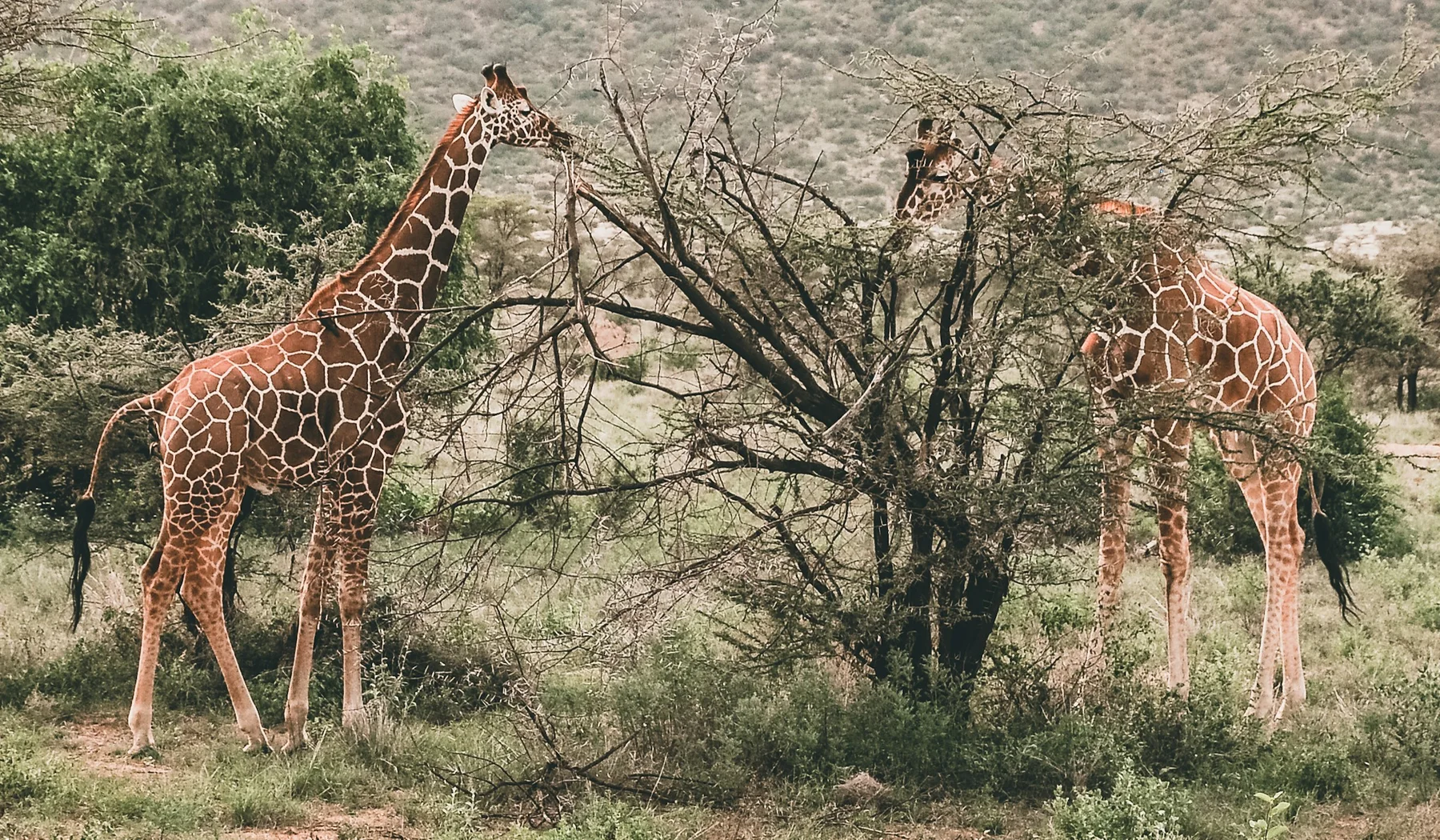
Samburu gives the first trip a distinct northern identity through reticulated giraffe, Grevy's zebra, gerenuk and arid river country. It works best when the route also includes Laikipia or Ol Pejeta, not when squeezed between distant southern parks.
| Protect | Why |
|---|---|
| Three nights | Justifies the northern journey |
| River time | Wildlife gathers around water |
| Midday rest | Heat shapes the day |
| Local guiding | Specialist species need context |

Choose Tsavo for scale and a coast route
Tsavo is a compelling first safari when the journey continues to Kenya's coast or when the traveller values space as much as sighting density. East and West have different landscapes, so name the gates, lodge and driving plan rather than selling them as one quick stop.
| Protect | Why |
|---|---|
| Route continuity | Avoids backtracking |
| Search time | Animals can be dispersed |
| Exact park side | East and West differ |
| Landscape interest | The journey is part of the safari |
Sources and further reading
Use official park and reserve information for access rules, then read independent traveller accounts for the small details that shape a day on safari. Before paying a deposit, confirm the entry fees, road conditions and seasonal wildlife patterns for your exact travel dates.
Once the best Kenya park for first-time safari travellers is clear, use the Kenya safari booking lead-time guide to secure the right sector and room instead of settling for a distant substitute.
| Source | Use |
|---|---|
| Kenya Wildlife Service | National park rules and current notices |
| Masai Mara Reserve | Reserve planning context |
| Tourism Research Institute | Kenya visitor research context |
| Associated Press Kenya safari feature | Independent route and wildlife account |
Plan a first Kenya safari
Share the exact travel dates, safari nights, arrival and departure points, travellers, budget and top wildlife hopes.