
Ol Pejeta Conservancy: Complete Visitor Guide
Ol Pejeta rewards travellers who look beyond the famous stops. Give the conservancy two or three nights and its wildlife, habitats and conservation story begin to connect.
- Ol Pejeta Conservancy at a glance
- What kind of place is Ol Pejeta?
- The 90,000-acre landscape is not one habitat
- Why Ol Pejeta belongs on a Kenya safari
- Rhino viewing is the headline, not a guarantee
- Black rhino and white rhino are not colour labels
- Najin and Fatu, the last two northern white rhinos
- A necessary update about Baraka
- Sweetwaters Chimpanzee Sanctuary
- The chimpanzee visit can close or change
- Lions, cheetahs, leopards and hyenas
- Elephants and the wider Laikipia landscape
- Birds deserve a slower drive
- Ol Pejeta is also a working cattle conservancy
- What standard entry includes
- Current 2026 entry fees in plain language
- The single-entry policy changes accommodation decisions
- Bookable experiences beyond the standard game drive
- Lion tracking is conservation work with a visitor seat
- Night game drives change the species list
- Dog tracking reveals the security story
- A day visitor’s realistic itinerary
- One day, two nights or three nights?
- A two-night Ol Pejeta itinerary
- A three-night itinerary for photographers and families
- Staying inside Ol Pejeta
- The Stables needs its own transport plan
- Pelican House is a group decision
- Staying outside near Nanyuki
- Getting to Ol Pejeta by road
- Flying to Nanyuki
- Road or air decision table
- Best time to visit Ol Pejeta
- What recent travellers noticed
- Families with children
- Honeymoons and celebrations
- Travellers with limited mobility
- Photographers should choose location and vehicle together
- Combining Ol Pejeta and Solio
- Combining Ol Pejeta and Lewa
- Combining Ol Pejeta and Samburu
- Combining Ol Pejeta and the Masai Mara
- The booking checklist
- Give Ol Pejeta time to tell the whole story
Mount Kenya is often the first thing to disappear. It can be clear at dawn, bright enough to make every traveller in the vehicle reach for a camera, then gone behind cloud before breakfast. Ol Pejeta has the same habit of changing character. One moment the road crosses open grassland crowded with zebra and buffalo. The next it slips into whistling-thorn bush where a black rhino can vanish a few metres from the track.
That variety is the reason to stay longer than a rushed afternoon. Ol Pejeta is famous for rhinos, the last two northern white rhinos and Kenya's only chimpanzee sanctuary, but it is also a 90,000-acre working conservancy with lions, elephants, cattle, riverine woodland, marshes and a surprising number of ways to spend a day.
This guide explains how Ol Pejeta Conservancy actually works, including its wildlife, conservation experiences, current entry system, accommodation areas, road and flight access, family and accessibility questions, and the differences between a day visit and a proper stay.
Ol Pejeta Conservancy at a glance
| Planning point | Useful answer | Why it matters |
|---|---|---|
| Location | Laikipia County, west of Mount Kenya and near Nanyuki | Easy to combine with Aberdare, Solio, Samburu and wider Laikipia |
| Size | About 90,000 acres | The conservancy is too large to treat as one small attraction |
| Nairobi access | About 220 kilometres and roughly four hours by road in ordinary conditions | Traffic, stops and the exact gate change the journey |
| Air access | Scheduled safari flights to Nanyuki, then a road transfer | The flight does not land at every lodge |
| Published visitor hours | Daily, 07:00 to 19:00 | Booked night activities follow separate rules |
| Headline wildlife | Black and white rhinos, lions, elephants, buffalo, leopard, cheetah and plains game | It is a complete safari destination, not only a rhino stop |
| Signature conservation visits | Northern white rhinos and Sweetwaters Chimpanzee Sanctuary | Timings and advance booking matter |
| Ideal stay | Two or three nights | One day is possible but busy |
| Best vehicle | Private 4×4 with a knowledgeable guide | Weather, distance and activity timing reward flexibility |
What kind of place is Ol Pejeta?
Ol Pejeta is a private, not-for-profit wildlife conservancy rather than a national park. Wildlife protection, tourism, livestock and community programmes share the same wider landscape. That working model is visible. A safari can pass cattle managed as part of the grassland system, security infrastructure protecting rhinos and research teams gathering information.
| National park expectation | Ol Pejeta reality |
|---|---|
| Government-managed protected area | Privately managed not-for-profit conservancy |
| Wildlife tourism is the main visible land use | Wildlife, livestock, conservation science and tourism overlap |
| Entry alone defines the visit | Entry, accommodation and optional activities shape the day |
| Standard daytime game drive | Day drives plus bookable conservation and night experiences |
| Wilderness measured by the absence of infrastructure | Conservation work is deliberately visible |
Some travellers love that proximity to the conservation work. Others prefer the looser, less managed feeling of Samburu or Meru. Neither reaction is wrong. Ol Pejeta is strongest when it is chosen for what it is rather than made to imitate a national park.
The 90,000-acre landscape is not one habitat
Ol Pejeta's wildlife and habitats overview describes grassland, open bush, dense bush, riverine habitat and swamp or marsh. The mix helps explain why one game drive can feel open and easy while the next becomes a slow search through thicket.
| Habitat | What may draw the eye | Planning effect |
|---|---|---|
| Open grassland | White rhinos, zebra, hartebeest and grazing herds | Long sightlines and strong photography |
| Open whistling-thorn bush | Black rhino, giraffe, elephant and predators | Slow scanning matters |
| Dense bush | Leopard, browsing rhino and smaller mammals | Sightings can be brief |
| Riverine woodland | Elephants, birds and shade-seeking animals | Useful in the warmer part of the day |
| Marsh and swamp | Waterbirds, buffalo and changing seasonal colour | Roads can soften after rain |
The conservancy reports that wildlife and livestock graze the same wider land. This is part of Ol Pejeta's integrated model, not evidence that the safari vehicle has accidentally left the reserve.
Why Ol Pejeta belongs on a Kenya safari
Ol Pejeta adds three things that are difficult to combine elsewhere: a large population of eastern black rhinos, direct access to conservation stories and a location that connects Nairobi with northern Kenya. It can anchor a first safari or add depth between larger parks.
| Traveller priority | What Ol Pejeta contributes |
|---|---|
| First safari | Big Five potential and comparatively strong rhino viewing |
| Conservation interest | Ranger, rhino, chimpanzee and predator-monitoring stories |
| Family safari | Shorter road access than many remote parks and structured learning |
| Photography | Mount Kenya, open grassland, rhinos and varied habitat |
| Northern circuit | Natural bridge to Solio, Lewa, Samburu and Meru |
| Short Kenya trip | Works in two nights from Nairobi without a long bush flight |
Rhino viewing is the headline, not a guarantee
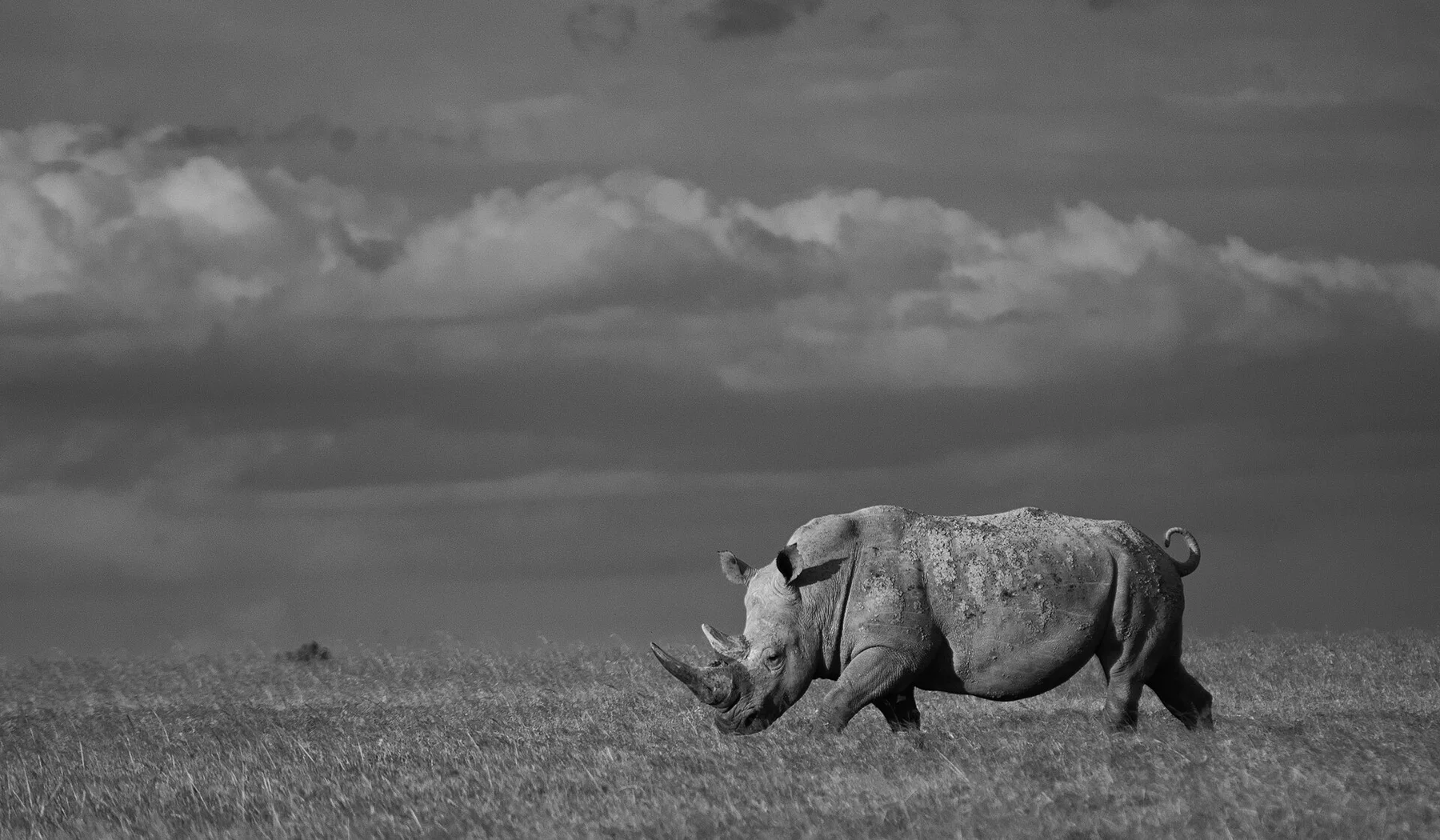
Ol Pejeta protects eastern black rhinos, southern white rhinos and the final two northern white rhinos. The current official rhino page says the conservancy holds more than 165 eastern black rhinos, while a July 2026 conservation technology update reports 190. The figure can change through births and translocations, so the important point for a visitor is the scale of the programme rather than a frozen count.
| Rhino | How it lives | What helps a sighting |
|---|---|---|
| Eastern black rhino | Browser, often solitary and comfortable in thicker bush | Patient scanning and an experienced guide |
| Southern white rhino | Grazer, often found in more open country | Open plains and cooler hours |
| Northern white rhino | Najin and Fatu live under close protection | A pre-booked dedicated encounter |
No ethical guide promises a specific wild rhino. Ol Pejeta's population makes sightings likely, but vegetation, weather and the animal's movement still decide the moment.
Black rhino and white rhino are not colour labels
Both are grey. White rhinos have a broad, square lip adapted to grazing, while black rhinos have a hooked lip for browsing. White rhinos are often easier to see in the open. Black rhinos can stand surprisingly close inside bush and remain invisible until an ear moves.
| Field mark | White rhino | Black rhino |
|---|---|---|
| Lip | Wide and square | Pointed and hooked |
| Feeding | Mostly grasses | Leaves, shoots and shrubs |
| Usual visibility | Often in open country | Frequently in bush or broken habitat |
| Social pattern | Can be seen in small groups | Often more solitary |
| Guide's search style | Scan plains and short grass | Watch bush edges, tracks and fresh sign |
Najin and Fatu, the last two northern white rhinos
Najin and Fatu are the last two known northern white rhinos. Both are female, which means the subspecies cannot recover through natural breeding. Scientists working with stored genetic material and assisted reproduction are trying to create a future beyond those two animals.
Meeting them is an optional, timed experience, not something to squeeze between the gate and the chimpanzees. The official experiences page explains that revenue from the encounter supports the conservation effort.
| Before booking | Why it matters |
|---|---|
| Confirm the operating time | The visit follows the animals' care routine |
| Book in advance | Space is limited and demand can be high |
| Ask about age and mobility rules | The experience may involve specific vehicle or walking arrangements |
| Carry a quiet, respectful mindset | This is a conservation story, not a staged photograph |
| Keep the rest of the day flexible | Animal welfare can change an activity |
The dedicated northern white rhino and chimpanzee sanctuary guide goes deeper into the science, ethics and visiting plan.
A necessary update about Baraka
Older guidebooks, lodge descriptions and traveller reviews often recommend meeting Baraka, Ol Pejeta's blind black rhino. Baraka died on 16 August 2026 at the age of 31. The conservancy's tribute to Baraka describes his long life and role in conservation education.
Do not build a current itinerary around a Baraka visit. His story still belongs in Ol Pejeta's history, but a respectful guide must separate that history from experiences available today.
Sweetwaters Chimpanzee Sanctuary
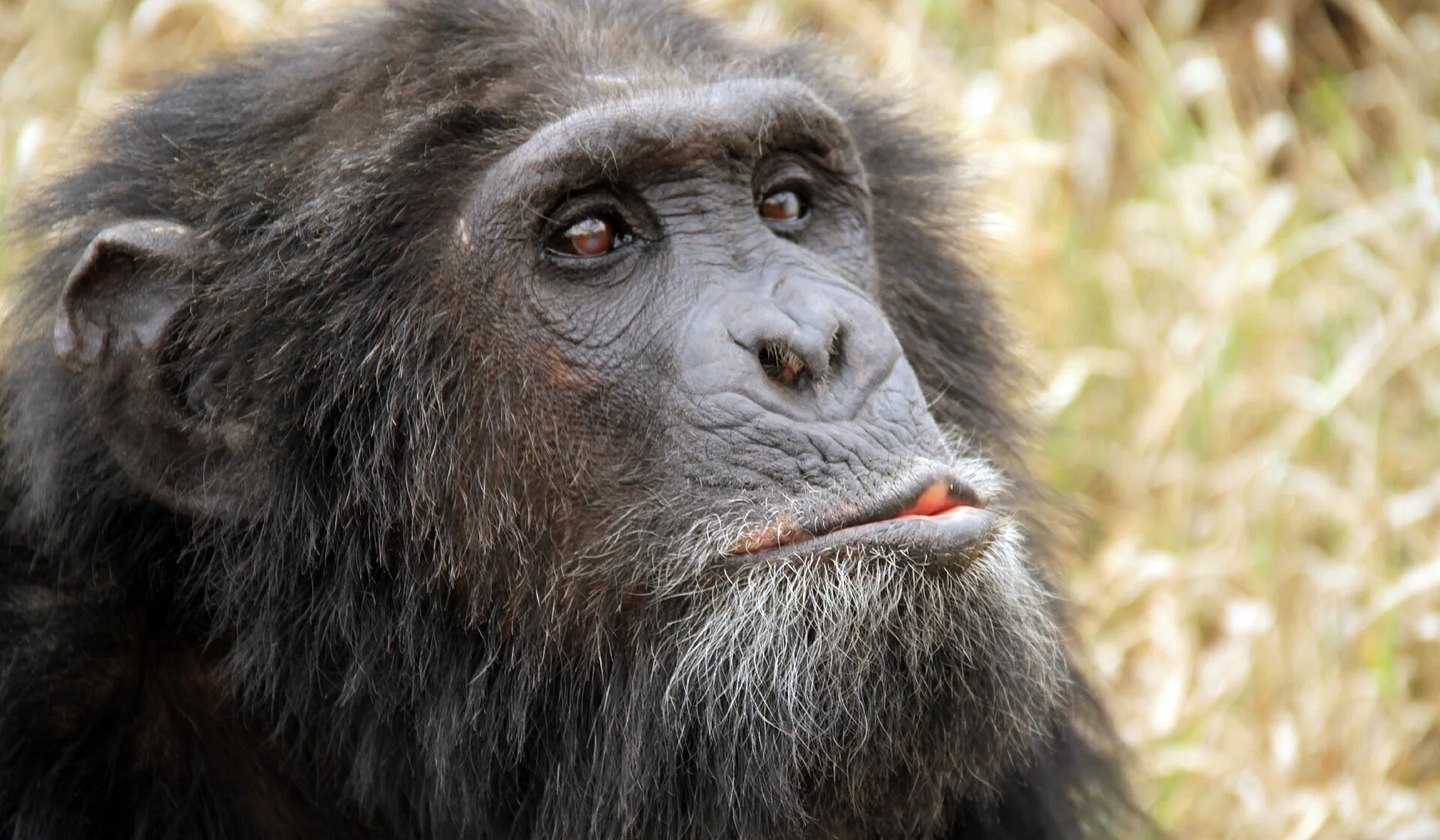
Chimpanzees are not native to Kenya. The Sweetwaters sanctuary provides long-term care for rescued chimpanzees, many of which came from illegal trade or traumatic conditions. It was established through cooperation between Ol Pejeta, Kenya Wildlife Service and the Jane Goodall Institute.
The official visitor information gives two daily viewing windows, 08:30 to 12:30 and 14:00 to 16:30. Standard sanctuary viewing is included with conservancy entry, while behind-the-scenes experiences require separate booking.
| Visit choice | What it offers | Planning note |
|---|---|---|
| Standard viewing | Visitor centre, viewing platforms and the chimpanzees' stories | Fit it inside the published opening windows |
| Feeding-time visit | Better chance of seeing active chimps near the viewing area | Ask for current keeper guidance |
| Behind the scenes | Deeper look at care and sanctuary operations | Book separately and follow animal-welfare limits |
| Adoption support | Continued connection after the trip | Voluntary and separate from entry |
The Ewaso Nyiro River separates large natural enclosures. Visitors do not walk among the chimpanzees or touch them.
The chimpanzee visit can close or change
Animal welfare and infrastructure take priority over tourism. Ol Pejeta's annual reporting records a period when damaged fencing forced the chimpanzee facility to close to visitors. That history is useful because it explains why an activity should never be treated as unconditional.
| If the sanctuary changes on the day | Better response |
|---|---|
| Temporary closure | Use the time for a longer game drive or another booked conservation activity |
| Chimps remain distant | Listen to the keeper and learn the individual stories |
| Heavy rain alters access | Follow the conservancy's route guidance |
| A behind-the-scenes session is unavailable | Keep the standard included visit and protect the rest of the safari |
Lions, cheetahs, leopards and hyenas
Ol Pejeta reports high predator densities. Lions are the most visible of the large carnivores, while cheetahs favour open country and leopards remain much harder to predict. Spotted hyenas, black-backed jackals, caracals and bat-eared foxes add variety.
| Predator | Best planning approach |
|---|---|
| Lion | Early or late drive, with time to follow fresh tracks and guide reports |
| Cheetah | Scan open plains and grassland edges |
| Leopard | Slow through riverine woodland and dense bush, without promises |
| Spotted hyena | Dawn, dusk and night activity can help |
| Bat-eared fox | Open areas, especially in cooler light |
A sighting network between guides can improve chances, but a queue of vehicles is not a licence to block an animal. Choose a guide who values behaviour and space rather than only a close photograph.

Elephants and the wider Laikipia landscape
Ol Pejeta uses specialised fencing that protects rhinos while allowing some wide-ranging species, including elephants and wild dogs, to move between neighbouring landscapes. That connectivity matters because Laikipia works as an ecosystem rather than a collection of isolated tourism plots.
| Species or group | Why it adds depth |
|---|---|
| Elephant | Movement reveals the connection between conservancies |
| Buffalo | Often seen in herds and around water or grassland |
| Grevy's zebra | A northern Kenya specialist and conservation priority |
| Jackson's hartebeest | Distinctive highland antelope |
| Giraffe | Common across several habitat types |
| Wild dog | Possible but never predictable |
Birds deserve a slower drive
The variety of marsh, grassland, bush and riverine habitat makes Ol Pejeta useful for birders. Raptors, bustards, waterbirds, weavers and smaller acacia specialists can fill the hours between headline mammals.
| Birder's choice | Better result |
|---|---|
| Private vehicle | Stop without rushing another guest |
| Guide who enjoys birds | Calls and habitat become part of the search |
| Binoculars for each traveller | Fewer missed details and less equipment sharing |
| Midday wetland time | Keeps the day productive when predators rest |
| Longer lens plus beanbag | Stable photographs without leaving the vehicle |
Ol Pejeta is also a working cattle conservancy
Cattle are managed inside the broader land-use system. Their presence can surprise travellers expecting an empty postcard landscape, but it is part of a model designed to make conservation economically and ecologically sustainable.
| What a traveller may see | What it means |
|---|---|
| Managed cattle herds | Planned grazing, not a failed wildlife area |
| Fences and security points | Rhino protection infrastructure |
| Researchers or ranger vehicles | Active monitoring and conservation work |
| Tourism camps in different zones | Several ways to experience the same large conservancy |
One independent visitor wrote that Ol Pejeta “Lacked the sense of wilderness we so enjoyed at Samburu.” That is a fair personal response, and the full SafariBookings review page provides context. Travellers who want a less visibly managed landscape may prefer to combine Ol Pejeta with Samburu or Meru rather than ask Ol Pejeta to be both.
What standard entry includes
Current official visitor information includes daytime game driving and standard Sweetwaters Chimpanzee Sanctuary access with the entry ticket. The published game-drive day runs from 07:00 to 19:00. Optional conservation experiences, accommodation and vehicle entry are separate.
| Included or separate | Typical item |
|---|---|
| Included with conservation entry | Daytime access and ordinary game driving |
| Included with conservation entry | Standard chimpanzee sanctuary viewing during operating windows |
| Separate vehicle charge | Visitor or safari vehicle entry |
| Separate activity | Northern white rhino encounter |
| Separate activity | Lion tracking, night drive, dog tracking or behind-the-scenes chimpanzees |
| Separate booking | Accommodation, camping, meals and private guide |
The Ol Pejeta entry fees and activities guide keeps the detailed tariff and activity comparison in one updateable place.
Current 2026 entry fees in plain language
For 2026, Ol Pejeta lists a non-resident adult entry ticket at USD 110 and a non-resident child ticket at USD 55. East African citizen and resident rates use Kenya shillings, with separate student definitions and documentation requirements. Vehicle charges apply as well.
| Traveller | 2026 listed conservation entry | Important note |
|---|---|---|
| Non-resident adult | USD 110 | Per entry under the current single-entry policy |
| Non-resident child, age 3 to 11 | USD 55 | Children under 3 enter free under the current tariff |
| East African resident adult | KES 3,500 | Carry valid residency proof |
| East African citizen adult | KES 2,000 | Carry accepted citizenship identification |
| Vehicle up to 6 seats | KES 1,000 | Separate from visitor entry |
Fees can change when a new tariff is issued. Use the official current entry page for the travel date rather than an old screenshot.
The single-entry policy changes accommodation decisions
Ol Pejeta's current ticket is valid for one entry. If a guest exits and later returns, a new entry fee is required. This matters most to travellers sleeping outside the conservancy who imagine morning and afternoon visits with lunch at the hotel between them.
| Accommodation plan | Effect of single entry |
|---|---|
| Camp inside Ol Pejeta | Remain within the conservancy between activities |
| Hotel outside near Nanyuki | Plan one continuous day or pay for re-entry |
| Outside lodge with one full-day visit | Carry lunch and use the time efficiently |
| Outside lodge with a night drive | Confirm how daytime entry, exit and night activity are charged |
| Multi-night inside stay | Check how conservation fees are calculated for each night |
This is one of the strongest reasons to compare the total cost of an inside camp with the apparently cheaper room outside.
Bookable experiences beyond the standard game drive
Ol Pejeta's current experiences list includes the northern white rhino encounter, lion tracking, all-day guided drives, night drives, behind-the-scenes chimpanzee visits and dog tracking. Availability, minimum participant numbers, ages and welfare conditions differ.
| Experience | Best for | What to verify |
|---|---|---|
| Northern white rhinos | Conservation-minded first-time visitors | Time, group size and mobility requirements |
| Lion tracking | Travellers interested in field research | Morning or afternoon slot and minimum participants |
| Night game drive | Guests staying inside or with a carefully planned late exit | Approved guide, vehicle and warm layers |
| Behind the scenes with chimps | Repeat visitors and primate enthusiasts | Welfare restrictions and current operating status |
| Dog tracking | Families with older children and security-programme interest | Age, physical activity and clothing |
| Guided bush or bird walk | Travellers who want a slower view of habitat | Fitness, weather and armed ranger requirements |
Do not book every available experience. Two carefully chosen activities leave room for wildlife that cannot be scheduled.
Lion tracking is conservation work with a visitor seat
Selected lions carry radio collars that help Ol Pejeta's ecological monitoring. During the activity, visitors join the search, learn how the team identifies animals and contribute observations. It is not a guaranteed close lion sighting.
| Expect | Do not expect |
|---|---|
| Radio-assisted search for a collared individual | A lion positioned for photography |
| Explanation of pride structure and monitoring | Permission to leave the vehicle near lions |
| A scheduled morning or afternoon session | Control over the lion's location |
| Conservation context | A replacement for an ordinary game drive |
The older official activity page lists daily windows of 06:30 to 08:30 and 15:30 to 17:30, with a two-person minimum. Confirm the current slot when booking because operations can change.
Night game drives change the species list
After dark, bat-eared foxes, zorillas, aardvark, hyenas and hunting predators become possible. None is guaranteed. The value is the change in sound, temperature and behaviour.
| Night-drive detail | Planning response |
|---|---|
| Only accredited Ol Pejeta staff may lead | Book through the conservancy or an inside camp |
| Private vehicles cannot drive unaccompanied at night | Use the approved vehicle and guide |
| Temperatures can fall sharply | Carry a warm layer, hat and closed shoes |
| Two published evening slots | Match dinner and children's bedtime to the confirmed slot |
| Outside accommodation | Check single-entry and late-exit implications before booking |
Dog tracking reveals the security story
The K9 unit helps rangers track scents and protect wildlife. The visitor activity turns that work into an interactive exercise, often allowing participants to hide before the bloodhounds follow the trail.
| Good fit | Less suitable without adaptation |
|---|---|
| Active family with older children | Traveller who is uncomfortable around large dogs |
| Repeat safari visitor | Person with limited mobility unless the route is modified |
| Conservation-security interest | Very tight itinerary with no weather margin |
Ask what clothing, running or walking is involved. A dog-tracking experience should not be sold as a passive demonstration if the current format is active.
A day visitor’s realistic itinerary
A day can cover the chimpanzee sanctuary, a broad game drive and one pre-booked activity. It cannot cover every experience without spending the whole visit watching the clock.
| Time | A workable day |
|---|---|
| 07:00 | Enter and use the cool hours for an unhurried game drive |
| 08:30 to 10:30 | Chimpanzee sanctuary during the morning window |
| Late morning | Continue through eastern wildlife areas or a booked experience |
| 12:30 to 14:00 | Picnic or pre-arranged lunch inside the conservancy |
| Afternoon | Rhino-focused drive, habitat change and one planned stop |
| Before 19:00 | Exit unless a separately approved night activity changes the plan |
The order should change with the chosen gate, activity time, weather and current animal movement. A fixed minute-by-minute itinerary is less useful than a guide who understands the day's priorities.
One day, two nights or three nights?
| Time available | What it can achieve | Main compromise |
|---|---|---|
| One day | Chimpanzees, general game drive and perhaps one booked experience | Busy, little weather margin |
| One night | Afternoon and morning game drives | Long road journeys can consume both sides |
| Two nights | Two strong game-drive periods, chimps and one or two activities | Requires choosing rather than collecting every experience |
| Three nights | Deeper wildlife search, slower photography and conservation activities | Higher conservation and accommodation cost |
For a first safari, two nights are usually enough. Three nights suit photographers, families who need a slower rhythm and travellers who want lion tracking or a night drive without sacrificing ordinary game viewing.
A two-night Ol Pejeta itinerary
| Day | Suggested rhythm |
|---|---|
| Day 1 | Leave Nairobi early or fly to Nanyuki, arrive for lunch, take a gentle afternoon game drive |
| Day 2 | Dawn game drive or lion tracking, breakfast, chimpanzee sanctuary, quiet midday, late drive or northern white rhino encounter |
| Day 3 | Final sunrise drive, breakfast and continue to Solio, Samburu or Nairobi |
If the lodge lies outside the conservancy, keep Day 2 as one continuous entry. If the lodge is inside, return for lunch and rest without crossing the gate.
A three-night itinerary for photographers and families
| Day | Suggested rhythm |
|---|---|
| Day 1 | Arrival, settle in and short first drive |
| Day 2 | Early wildlife drive, chimpanzee sanctuary and flexible afternoon |
| Day 3 | Selected conservation activity, slow habitat drive and night experience if suitable |
| Day 4 | Mount Kenya light, breakfast and onward journey |
The extra night creates recovery time. Children can use the pool or lodge grounds, photographers can return to promising areas, and rain does not erase the only planned game drive.
Staying inside Ol Pejeta
Inside accommodation ranges from simple rooms and self-catering houses to intimate tented camps and high-end properties. Location matters because the conservancy is large. A camp in a quiet western zone offers a different rhythm from a larger property near popular visitor attractions.
| Property | Character | Often suits |
|---|---|---|
| Sweetwaters Serena Camp | Large, established tented camp with Mount Kenya views and broad facilities | Families, first safari and travellers wanting a pool |
| Ol Pejeta Bush Camp | Intimate tented safari camp with strong guiding focus | Couples and traditional safari rhythm |
| Kicheche Laikipia Camp | Small camp in a quieter wilderness zone with a waterhole | Photographers and guests prioritising seclusion |
| Porini Rhino Camp | Small camp in a secluded valley | Low-impact safari style and repeat visitors |
| Sanctuary Tambarare | Ten-tent luxury camp with polished service | Honeymoons and luxury stays |
| River Camp | Contemporary luxury beside the river landscape | Couples and travellers seeking design and comfort |
| The Stables | Simple budget accommodation without a game-drive vehicle | Independent travellers arriving with transport |
| Pelican House | Private self-catering or catered house near Pelican Dam | Families and groups wanting their own space |
The conservancy's current tourism partner page is the best starting point for active partner properties. The dedicated where to stay in Ol Pejeta guide will compare exact location, room style, vehicle policy and realistic total cost.
The Stables needs its own transport plan
The Stables is valuable because it opens Ol Pejeta to travellers who do not need a luxury tent. Its official page is also clear that no game-drive vehicle is provided. Guests must arrive with a vehicle or arrange transport separately.
| Before booking The Stables | Confirm |
|---|---|
| Safari vehicle | Who drives each game drive and activity transfer |
| Meals | Current meal plan and serving times |
| Room type | Private or shared facilities and exact occupancy |
| Night drive | Dinner timing and approved activity vehicle |
| Luggage | Space in the safari vehicle and secure room storage |
A low room rate can become poor value if transport is added badly. Compare the complete stay.
Pelican House is a group decision
Pelican House overlooks Pelican Dam and works as a private house for families or friends. It can be self-catered or catered. The attraction is privacy and control over the day, but groceries, chef arrangements, housekeeping and safari transport must be settled before arrival.
| Group question | Why it matters |
|---|---|
| Who buys food? | Nanyuki is easier than improvising after entry |
| Is a chef booked? | Self-catering and catered stays create different responsibilities |
| How many vehicles? | The house can sleep a group larger than one safari vehicle |
| Who plans activities? | Private accommodation does not automatically reserve experiences |
| Are children safe near the dam and fire? | Supervision remains a family responsibility |
Staying outside near Nanyuki
Nanyuki offers hotels, restaurants, shops and easy access to its airstrip. Outside accommodation can cost less or suit a wider Mount Kenya itinerary. The trade-off is the gate journey and single-entry policy.
| Outside-stay advantage | Corresponding cost |
|---|---|
| More room-price choices | Daily transfer time |
| Restaurants and town services | Less dawn wildlife time |
| Convenient airstrip access | Entry and re-entry planning |
| Useful before Mount Kenya | A full Ol Pejeta day still needs a 4×4 |
If Ol Pejeta is the main reason for the trip, compare two nights inside with a cheaper outside room plus vehicle, entry and lost time. The inside option may be stronger than the room rate suggests.
Getting to Ol Pejeta by road
The conservancy's current plan-your-visit page places Ol Pejeta about 220 kilometres from Nairobi and gives an approximate four-hour drive. The usual road passes Thika, Karatina and Nanyuki. Rongai Gate is the common Nanyuki-side entrance, while Serat Gate can serve western approaches.
| Road section | Planning note |
|---|---|
| Nairobi to Thika | Leave early to avoid commuter traffic |
| Thika to Karatina | Main highway through central Kenya farming country |
| Karatina to Nanyuki | Highland traffic and possible Mount Kenya views |
| Nanyuki to Rongai Gate | Final approach, partly graded dirt under older official guidance |
| Nyahururu or Rumuruti side | Confirm whether Serat Gate suits the property |
Use the Nairobi to Laikipia road and flight guide when Ol Pejeta is part of a larger conservancy circuit.
Flying to Nanyuki
Scheduled safari flights normally leave Wilson Airport in Nairobi and land at Nanyuki Airstrip. A lodge vehicle then completes the journey. The transfer is short compared with the full road from Nairobi, but it still needs to be included.
| Flight-day element | Confirm |
|---|---|
| Nairobi airport | Wilson, not JKIA |
| Baggage | Airline weight, dimensions and soft-bag rules |
| Nanyuki pickup | Property vehicle, meeting contact and cost |
| Gate | Which entrance serves the camp |
| First activity | Realistic after landing and transfer |
| Onward flight | Whether the next destination connects directly or through stops |
Flying is strongest for a short high-end stay or an onward air circuit. Driving is often stronger for families, heavy camera equipment and a route continuing to Solio or Aberdare.
Road or air decision table
| Factor | Road from Nairobi | Flight to Nanyuki |
|---|---|---|
| Door-to-door time | Roughly four to five hours in ordinary conditions | Nairobi transfer, check-in, flight and ground pickup |
| Luggage | Flexible within vehicle capacity | Strict small-aircraft limit |
| Family equipment | Easier to carry | Must be approved and counted |
| Scenic value | Central highlands and roadside context | Aerial view and shorter public road sector |
| Onward Solio or Aberdare | Excellent | May require hiring a vehicle after arrival |
| Onward Masai Mara | Long by road | Air connection can save time |
| Mobility | One continuous vehicle | More boarding stages and aircraft steps |

Best time to visit Ol Pejeta
Ol Pejeta is open year-round. Dry periods can make roads easier and concentrate wildlife near water. Green seasons bring dramatic skies, softer light, young animals and stronger birding, but some tracks become muddy.
| Season pattern | Strength | Trade-off |
|---|---|---|
| January to February | Often drier, clear mornings and good road access | Dust and warm afternoons |
| March to May | Green landscape, dramatic cloud and fewer visitors | Rain and difficult tracks |
| June to October | Cool dry-season mornings and reliable road conditions | Popular travel months and higher demand |
| November to December | Fresh grass, birds and changing skies | Short rains can alter internal routes |
Kenya's weather does not follow a perfect calendar. Choose a 4×4 and protect flexible time rather than expecting a month name to guarantee road conditions.
What recent travellers noticed
A January 2026 visitor called Ol Pejeta “The most dense out of the parks we went to for wildlife especially rhinos.” The same SafariBookings review collection also includes the contrasting view that it lacked Samburu's wilderness feeling. Together they describe Ol Pejeta accurately: wildlife-rich, conservation-focused and visibly managed.
On Tripadvisor, a family visitor described muddy routes after early rain and said the terrain was “worth considering” when choosing a guide and vehicle. Another traveller concluded, “You will simply love your time in Ol Pejeta.” Read the full Tripadvisor reviews because the best review for planning is not always the most enthusiastic one.
| Review theme | Practical lesson |
|---|---|
| Dense wildlife and many rhinos | Give the drive time to move between habitats |
| Managed-conservancy atmosphere | Combine with Samburu or Meru for contrast |
| Mud after rain | Use an experienced guide and capable 4×4 |
| Strong conservation encounters | Book the chosen activity before arrival |
Families with children
Ol Pejeta's structured activities and comparatively easy access make it a strong family destination. The day still needs to be paced around meals, toilets, vehicle time and age rules.
| Family need | Better plan |
|---|---|
| Young child | Two shorter drives and lodge rest rather than one twelve-hour day |
| Curious school-age child | Chimpanzee sanctuary and one interactive conservation activity |
| Teenager | Dog tracking, lion tracking or photography challenge if age permits |
| Child seat | Confirm the exact seat and installation before Nairobi pickup |
| Pool time | Choose inside accommodation with suitable facilities and supervision |
Do not assume every activity accepts every age. Ask before paying.
Honeymoons and celebrations
Ol Pejeta can feel romantic when the itinerary creates quiet. Choose a small camp, private vehicle and two or three nights. A checklist of attractions is less memorable than dawn under Mount Kenya, an unhurried rhino sighting and dinner without a watch.
| Honeymoon choice | Stronger option |
|---|---|
| Camp style | Small intimate camp or private house with good guiding |
| Vehicle | Private for flexible stops and photography |
| Stay length | At least two nights |
| Activities | One meaningful conservation visit, not every available extra |
| Route | Fly for a short stay or drive through Solio and Laikipia for a longer story |
Travellers with limited mobility
Ol Pejeta can be adapted, but the word accessible is not enough. Vehicle height, aircraft steps, camp paths, bathroom layout and the exact activity route must be checked separately.
| Stage | Detail to verify |
|---|---|
| Safari vehicle | Step height, doorway, seat support and roof viewing |
| Chimpanzee sanctuary | Surface, distance, ramps and viewing-platform access |
| Northern white rhino visit | Vehicle exit, walking and ground conditions |
| Camp | Path material, slope, room threshold and shower |
| Nanyuki flight | Aircraft type, boarding support and mobility equipment |
| Emergency plan | Medical support and evacuation cover |
Use the accessible Kenya safaris guide to build a written checklist before choosing the property.
Photographers should choose location and vehicle together
Mount Kenya can be clear for minutes and hidden for the rest of the day. Rhino photography can require a low, clean angle, while birding rewards a window seat and quiet stops. A shared vehicle can make all three difficult.
| Photography goal | Useful choice |
|---|---|
| Mount Kenya landscape | Dawn drive with a wide lens ready |
| Black rhino | Patient guide, long lens and bush-edge scanning |
| White rhino in habitat | Open plains and room for wider framing |
| Predator behaviour | Private vehicle and time, not a sighting checklist |
| Birds | Beanbag, binoculars and guide with birding interest |
| Night photography | Confirm flash and spotlight rules before the drive |
Combining Ol Pejeta and Solio
The two reserves are close enough for one road circuit but different enough to justify both. Solio is quieter and heavily associated with concentrated rhino viewing. Ol Pejeta offers a broader menu of conservation activities and a larger accommodation range.
| Choose both when | Choose one when |
|---|---|
| Rhino conservation is central to the trip | Northern Kenya has only two nights available |
| The traveller wants Solio's quiet and Ol Pejeta's activities | The Masai Mara or Samburu needs more time |
| The route already passes through Naro Moru and Nanyuki | Repetition would reduce destination contrast |
Read the Solio complete visitor guide and Ol Pejeta versus Solio guide before treating them as interchangeable rhino stops.
Combining Ol Pejeta and Lewa
Lewa often feels more exclusive and landscape-led, with fewer properties and a strong private-conservancy rhythm. Ol Pejeta offers more structured activities, price ranges and direct conservation visits.
| Priority | Often points to Ol Pejeta | Often points to Lewa |
|---|---|---|
| Northern white rhinos and chimpanzees | Yes | No |
| Wide accommodation range | Yes | More limited and generally premium |
| Quiet exclusivity | Depends on zone and camp | Strong |
| Structured bookable activities | Extensive | Property-led experience |
| First short Laikipia visit | Easy to understand | Best when budget supports the stay |
The full Ol Pejeta versus Lewa comparison will help choose by experience rather than reputation.
Combining Ol Pejeta and Samburu
This is one of Kenya's strongest short northern circuits. Ol Pejeta provides rhinos and conservation stories. Samburu adds dry-country scenery, the Ewaso Nyiro River and northern species such as reticulated giraffe, Grevy's zebra and gerenuk.
| Suggested order | Why it works |
|---|---|
| Nairobi, Ol Pejeta, Samburu | Gradual move from highland grassland into arid north |
| Samburu, Ol Pejeta, Nairobi | Wildlife contrast followed by an easier final road |
| Fly Samburu, road to Ol Pejeta | Saves one long road sector while keeping the landscape transition |
Use the Samburu safari guide to give the river reserve at least two or three nights.
Combining Ol Pejeta and the Masai Mara
The Masai Mara adds open plains, large predator territories and migration-season drama. The road between the two is long, so flight connections or a night around Nairobi or Naivasha may be better than forcing a single transfer.
| Connection | Strength | Trade-off |
|---|---|---|
| Safari flight | Protects time | Baggage limits and possible stops |
| Road through Naivasha or Nakuru | Adds Rift Valley context | Needs a night or a very long day |
| Road through Nairobi | Simple vehicle logistics | Traffic and repetition |
Read the Masai Mara safari guide before reducing the Mara to a two-night add-on.
The booking checklist
| Confirm in writing | Why it matters |
|---|---|
| Exact accommodation and location | Inside and outside stays work differently |
| Conservation fees and number of entries | The single-entry policy changes cost |
| Vehicle and guide | Some accommodation does not include game-drive transport |
| Activity dates and times | Space and animal welfare can alter availability |
| Chimpanzee sanctuary plan | Morning and afternoon windows apply |
| Nanyuki or road transfer | Door-to-door timing prevents a lost first day |
| Baggage and child equipment | Safari aircraft and vehicles have different limits |
| Mobility arrangements | Each vehicle, path and room needs specific confirmation |
| Onward destination | Determines whether the vehicle stays with the trip |
| Cancellation terms | Conservation activities and accommodation may have separate rules |
Give Ol Pejeta time to tell the whole story
Ol Pejeta is easiest to misunderstand when it is treated as a collection of famous stops. The chimpanzees, Najin and Fatu, a lion-tracking session and a black rhino sighting can all be meaningful, but the conservancy becomes richer when the spaces between them are allowed to matter.
Stay long enough to notice how Mount Kenya changes, how cattle and wildlife share the grasslands, how a black rhino disappears into whistling thorn and how much work sits behind a quiet wildlife sighting. Two or three nights turn Ol Pejeta Conservancy from a busy attraction into a safari with a conservation story.
Plan your Ol Pejeta safari
Share the dates, travellers, preferred pace, accommodation style, activities and destinations before or after Ol Pejeta. We will design the complete route.