
Ol Kinyei Conservancy Guide
Understand the landowner model, compare both small camps and the private cottages, then plan walks, night drives, Naboisho access and reserve days honestly.
- What Ol Kinyei is
- What Ol Kinyei is not
- The name belongs to a landscape
- It is not Naboisho Conservancy
- It is not Mara Ripoi
- It is not the reserve’s eastern sector
- Why the distinction changes a trip
- Ol Kinyei at a glance
- How large is Ol Kinyei?
- Why the figures differ
- The honest way to state the size
- It began smaller
- Growth was not one event
- Where Ol Kinyei lies
- Wildlife does not see the lease map
- The map a guest needs
- Ol Kinyei compared with nearby land units
- The 2005 conservation story
- Subdivision changed the Mara edge
- Leasing created another land-use option
- The land was not donated
- The operator did not buy the community
- Landowner representation matters
- Tourism risk matters too
- Conservation needs financial resilience
- Employment is one benefit
- Skills are another benefit
- Procurement matters
- Cultural visits need consent
- Questions about community benefit
- The IUCN Green List status
- What Green List does mean
- What Green List does not mean
- Governance is part of conservation quality
- Design matters
- Outcomes matter
- The official management plan
- The plan period has ended
- Natural resource management
- Tourism development and management
- Community engagement and management
- Conservancy operations
- The three official zones
- Conservation and Tourism Development Zone
- Wildlife Breeding Areas and Corridors Zone
- Community Transit Corridor
- Livestock rule in the plan
- Why the livestock distinction matters
- Exclusion has trade-offs
- Habitat recovery
- Habitat is not static
- The landscape
- Open plains
- Rolling hills
- Woodland
- Springs and streams
- Wet-season ground
- Dry-season ground
- Ol Kinyei wildlife
- A species list is not a promise
- Lions
- Lion viewing ethics
- Lion identities
- Cheetahs
- Cheetah hunts
- Leopards
- Hyenas
- Elephants
- Buffalo
- Giraffes
- Topi
- Wildebeest
- Zebras
- Gazelles
- Eland
- Smaller antelope
- Nocturnal mammals
- Birds
- Birding pace
- Wildlife reality table
- The Loita wildebeest migration
- A separate population story
- Early-year calving
- Calving is not guaranteed on camp dates
- Predators respond
- The main Serengeti migration
- Do not merge the two migrations
- Reserve day trips in peak migration
- Naboisho access and migration
- Migration comparison
- Day game drives
- Early morning
- Late afternoon
- Full-day drives
- Vehicle density
- Off-road viewing
- Track discipline
- Sitting in silence
- Night drives
- Red filters
- What night drives reveal
- Night-drive safety
- Night-drive photography
- Guided walking
- Walking is not a shortened game drive
- Walking guide qualifications
- Age limits
- Mobility
- Official walking video
- Sundowners
- Bush breakfast
- Picnic lunch
- Cultural visit
- Activity comparison
- Who can enter Ol Kinyei?
- Why access is limited
- Limited access is not ownership of wildlife
- Day visitors
- Naboisho access
- Access is partner-specific
- Why Naboisho access adds value
- Why Naboisho access needs time
- Reserve access
- When a reserve day is worthwhile
- When a reserve day is unnecessary
- Three current accommodation choices
- Why that list matters
- Porini Mara Camp
- Camp scale
- Room character
- Water and power
- Dining
- Best fit
- Possible mismatch
- Porini Cheetah Camp
- Camp setting
- The wildlife impression
- Vehicle solitude
- Guiding impression
- Small-camp feeling
- Wildlife around tents
- Food and hosting
- Family accommodation
- Best fit
- Possible mismatch
- Ol Kinyei Safari Cottages
- Cottage configuration
- Private common space
- Private chef and hosts
- Electricity
- Indoor and outdoor showers
- Group value
- Couples in a cottage
- Official walkthrough video
- Best fit
- Possible mismatch
- Accommodation comparison
- Camp names can change
- No camp should be reduced to price
- Game-drive vehicles
- Shared vehicle
- Private vehicle
- Private vehicle fee
- Photography vehicle
- Guide continuity
- Tracker role
- Passenger compatibility
- What independent travellers say
- Access from Nairobi by air
- One airstrip, two names
- Airstrip transfer
- Flight stops
- Luggage
- Delays
- Access from Nairobi by road
- Road vehicle
- Final approach
- Road arrival benefit
- Road arrival drawback
- Fly-in benefit
- Fly-in drawback
- Transport comparison
- Read the access guides
- Seasons in Ol Kinyei
- January and February
- March
- April and May
- June
- July and August
- September and October
- November
- December
- Green season
- Dry season
- Season table
- Best time is a personal answer
- Ol Kinyei for a first safari
- What first-time visitors may miss
- Ol Kinyei for repeat visitors
- Ol Kinyei for families
- Private space
- Child age rules
- Unfenced safety
- Child seats
- Food
- Medical planning
- Ol Kinyei for honeymoon trips
- Camp versus cottage romance
- Private vehicle
- Private dining
- Slow afternoon
- Ol Kinyei for solo travellers
- Hosted meals
- Ol Kinyei for photographers
- Private row
- Low angle
- Beanbag
- Lens range
- Dust control
- Night photography
- Walking photography
- Traveller photography experience
- Read the photography guide
- What an Ol Kinyei price should include
- Accommodation
- Meals
- Drinks
- Conservancy fees
- Naboisho fees
- Reserve fees
- Shared game drives
- Private vehicle
- Airstrip transfers
- Nairobi flights
- Road transfers
- Night drive
- Walk
- Bush meals and sundowners
- Village visit
- Laundry
- Evacuation membership
- Tips
- Price comparison table
- Why this guide does not publish a single live price
- How to compare two quotes
- Cancellation policy
- Currency
- Payment security
- Ol Kinyei versus Naboisho
- Access difference
- Activity similarity
- Camp-choice difference
- Migration difference
- Which should you choose?
- Read the Naboisho guide
- Ol Kinyei versus Olare Motorogi
- Price and style
- River access
- Ol Kinyei versus Mara North
- Camp choice
- Driving scale
- Read the Mara North guide
- Ol Kinyei versus the national reserve
- Vehicle pressure
- Off-road and night rules
- Walking
- Migration
- Best combination
- Conservancy comparison table
- How many nights in Ol Kinyei?
- Two nights
- Three nights
- Four nights
- Five nights
- Reserve day minimum
- One-night stay
- Sample three-night rhythm
- Sample five-night rhythm
- Packing for Ol Kinyei
- Morning cold
- Midday sun
- Rain
- Walking shoes
- Colour
- Insects
- Power
- Binoculars
- Refillable bottle
- What travellers actually reveal
- Solitude is repeated
- Respectful positioning is repeated
- Camp scale is visible
- Neighbouring access is valued
- Reviews do not settle everything
- Common mistake: calling Ol Kinyei a private reserve
- Common mistake: expecting the main migration in January
- Common mistake: assuming Naboisho access forever
- Common mistake: booking two nights and a reserve day
- Common mistake: ignoring the shared vehicle
- Common mistake: choosing cottages for a couple without pricing occupancy
- Common mistake: demanding off-road access
- Common mistake: treating a walk as guaranteed
- Common mistake: forgetting reserve fees
- Common mistake: believing every wildlife claim
- How to choose an Ol Kinyei property
- Choose Porini Mara if
- Choose Porini Cheetah if
- Choose the Safari Cottages if
- Choose a private vehicle if
- Add the reserve if
- Add another conservancy if
- Booking checklist
- Frequently asked questions
- Is Ol Kinyei part of the Masai Mara National Reserve?
- How large is Ol Kinyei?
- When was Ol Kinyei established?
- Who owns Ol Kinyei?
- Is Ol Kinyei on the IUCN Green List?
- Can anyone visit for the day?
- Which camps are in Ol Kinyei?
- Can Ol Kinyei guests enter Naboisho?
- Can guests visit the Masai Mara reserve?
- Are night drives allowed?
- Are walking safaris allowed?
- Is off-road driving allowed?
- Does the Great Migration pass through Ol Kinyei?
- What is the best time to visit?
- Which airstrip serves Ol Kinyei?
- How many nights are enough?
- Is Ol Kinyei good for children?
- Is Ol Kinyei good for honeymooners?
- Is a private vehicle necessary?
- Final perspective
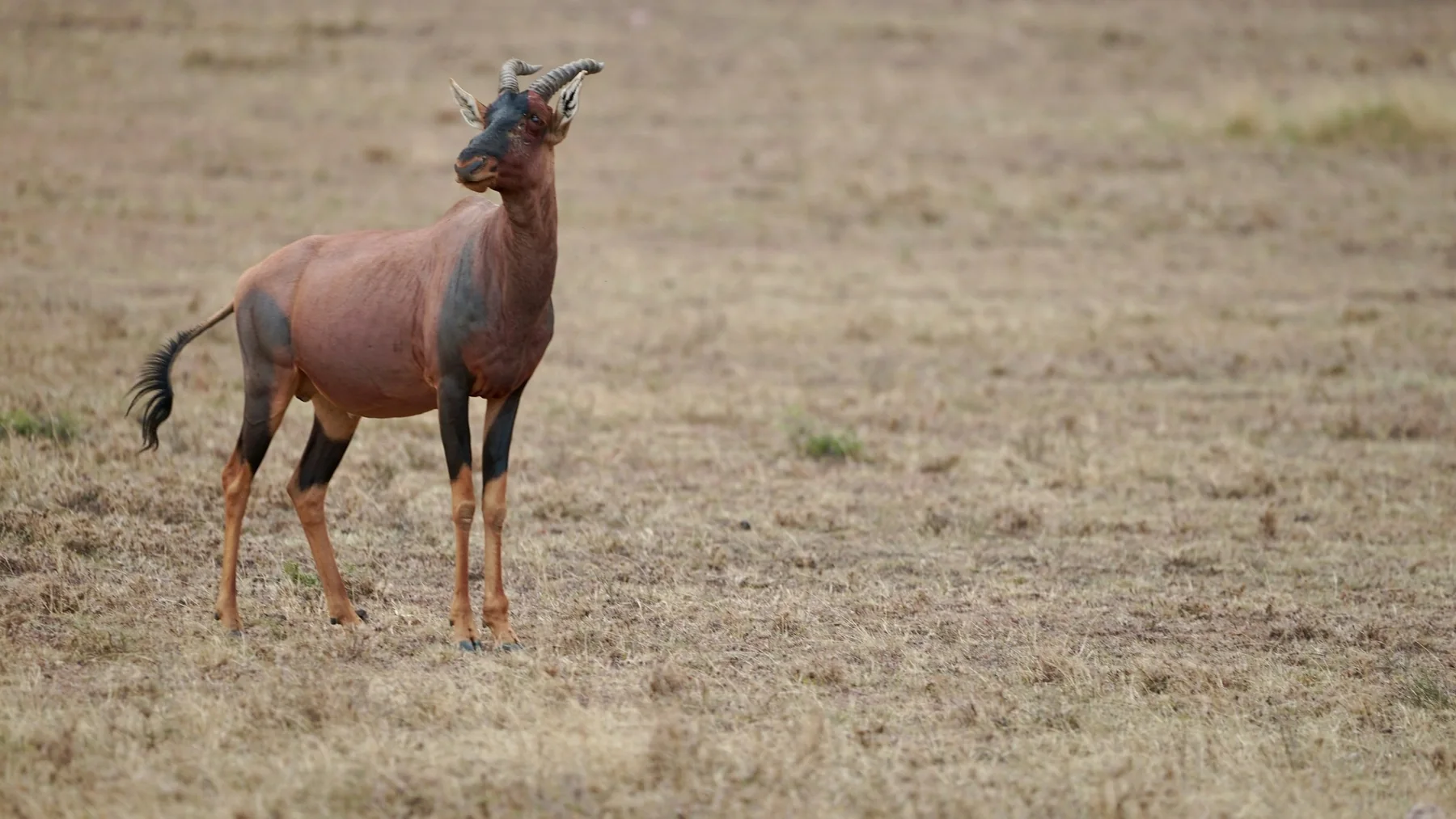
The first animal in the morning is not always a lion. Sometimes it is a topi standing alone on a pale ridge, neck stretched, listening into the wind. Your guide stops the vehicle without a radio call or another car in sight. The antelope keeps watch. Farther down the slope, a zebra barks once and a line of giraffes moves between the acacias. The landscape feels quiet, but nothing in it is still.
That is the scale on which Ol Kinyei works best. It is not a gate into the Masai Mara National Reserve, not a public day-drive area and not a generic label for any camp east of the reserve. Ol Kinyei is a community-owned conservancy in the Greater Mara ecosystem. It began in 2005 as a partnership between Maasai landowners and a tourism operator, then expanded as more land was leased for wildlife habitat.
This Ol Kinyei Conservancy guide explains what the model means on an actual safari. It covers wildlife, the Loita wildebeest movement, walking, night drives, current camps, cottages, flights, road access, Naboisho access, reserve visits, seasons, families, honeymoon trips, photography and the questions worth asking before you book.
What Ol Kinyei is
Ol Kinyei is protected community land within the Greater Mara ecosystem, north and east of the national reserve. Individual Maasai landowners lease participating parcels into a shared conservation and tourism arrangement.
What Ol Kinyei is not
It is not part of the Masai Mara National Reserve, not a national park, not a hotel and not an open public attraction.
The name belongs to a landscape
Ol Kinyei Conservancy is the whole protected area. Porini Mara Camp, Porini Cheetah Camp and Ol Kinyei Safari Cottages are accommodation properties within it.
It is not Naboisho Conservancy
Naboisho borders or connects with Ol Kinyei, but it is separately managed community land with its own partners and access rules.
It is not Mara Ripoi
Mara Ripoi is another community conservancy east of the reserve. Some itineraries and partner vehicles may combine land units, but the names should not be merged.
It is not the reserve’s eastern sector
The national reserve has public gates and official visitor rules. Ol Kinyei operates through a limited partner model outside that boundary.
Why the distinction changes a trip
Land status determines who can enter, where night drives or walks may happen, which conservation fee applies and how long a reserve day trip takes.
Ol Kinyei at a glance
| Feature | What it means for a traveller |
|---|---|
| Established in 2005 | One of the pioneer community-conservancy models in the Mara |
| Community-owned leased land | Tourism supports land payments and local employment rather than buying the land from owners |
| Current operator description of 18,700 acres | A substantial but more compact landscape than Naboisho or Mara North |
| Three current accommodation choices | Two small camps and a cottage product under the Porini operation |
| Controlled vehicle access | Fewer tourism vehicles than public high-use reserve areas |
| Night drives and guided walks | Activities not normally permitted inside the national reserve |
| Loita wildebeest movement | An early-year regional migration story, distinct from the main Serengeti herds |
| Naboisho access for current Porini guests | Useful wider habitat access, but tied to the present partner arrangement |
How large is Ol Kinyei?
Current Porini material describes the conservancy as 18,700 acres, or about 75.7 square kilometres. The Greater Maasai Mara Ecosystem Management Plan lists an estimate of 66 square kilometres.
Why the figures differ
Conservancy boundaries expand, lease parcels change and documents use different survey dates or definitions. An exact modern boundary map is more useful than forcing every published number to match.
The honest way to state the size
Use 18,700 acres when describing the current operator-reported tourism landscape, and note that the ecosystem plan records a 66-square-kilometre estimate.
It began smaller
The conservation operator says Ol Kinyei began with about 8,000 acres and later expanded. The IUCN case study describes an initial lease of roughly 5,000 acres before subsequent growth.
Growth was not one event
Different figures can represent the first signed parcels, an early operational area and later expansion. They tell a sequence rather than proving one source wrong.
Where Ol Kinyei lies
The conservancy sits between the national reserve and the wider Loita Plains dispersal landscape. That position gives it importance beyond the animals visible from a game-drive vehicle.
Wildlife does not see the lease map
Elephants, predators and plains game move across conservancy lines, community land and the reserve according to water, grass, breeding and disturbance.
The map a guest needs
Ask for the camp pin, nearest airstrip, road approach, boundary with Naboisho and realistic drive time to the national reserve.
Ol Kinyei compared with nearby land units
| Land unit | Status | Main visitor character | Important boundary fact |
|---|---|---|---|
| Ol Kinyei | Community conservancy | Controlled access, walking, night drives and three current accommodation choices | Not part of the national reserve |
| Naboisho | Larger community conservancy | More partner camps and varied camp styles | Day trips are not generally open; partner stay required |
| Mara Ripoi | Community conservancy | Eastern ecosystem access and emerging tourism | Separate fees and management apply |
| Central Mara (Narok) | National reserve section | Public reserve game drives and migration routes | No ordinary night drives or guided walks |
| Mara Triangle | Western reserve section | Western river and escarpment landscapes | Managed by Mara Conservancy on behalf of the county |
The 2005 conservation story
Ol Kinyei emerged when land subdivision threatened to break a larger pastoral and wildlife landscape into smaller plots, farms, settlements and fences.
Subdivision changed the Mara edge
Traditional group ranches were divided into private parcels. Ownership gave families assets, but piecemeal fencing and cultivation also threatened wildlife movement.
Leasing created another land-use option
Participating owners kept title while leasing conservation use. The model aimed to make open wildlife habitat economically competitive with other uses.
The land was not donated
Calling the conservancy a gift to tourism erases landowner rights. Lease payments are part of the agreement, not charity.
The operator did not buy the community
A tourism partner manages camps and contributes payments, but the community ownership and governance story must remain visible.
Landowner representation matters
Shared governance depends on who speaks for owners, how decisions are recorded, how grievances are handled and whether benefits are distributed transparently.
Tourism risk matters too
When travel collapses, lease income and employment can be threatened. The pandemic exposed how dependent many conservancies are on guest revenue.
Conservation needs financial resilience
Long-term health requires diversified income, reserve funds, credible contracts and community trust, not only full tents in peak season.
Employment is one benefit
Guides, camp staff, rangers, maintenance teams and managers can earn livelihoods from the conserved landscape.
Skills are another benefit
Guide training, hospitality management, language skills and conservation monitoring can create value beyond one job.
Procurement matters
Food, crafts, transport and services can support local enterprises when purchasing is deliberate and fair.
Cultural visits need consent
A village experience should be invited, respectful and clear about payments, photography and purchases. Maasai families are not part of a wildlife display.
Questions about community benefit
| Question | What a useful answer should contain |
|---|---|
| Who owns the land? | A clear description of participating landowners and lease structure |
| How are payments calculated? | Acreage, bed-night or other transparent basis without exposing private personal data |
| Who sits in governance? | Landowner and tourism representation with decision procedures |
| How are grievances handled? | A real mechanism and response route |
| How many staff are local? | Current roles and training, not a vague slogan |
| What happens in a tourism downturn? | Evidence of contingency and lease continuity planning |
The IUCN Green List status
Ol Kinyei achieved IUCN Green List status in 2018. The standard evaluates governance, design and planning, management effectiveness and conservation outcomes.
What Green List does mean
It signals that the site went through an international assessment against a structured conservation standard.
What Green List does not mean
It does not make every tourism claim automatically correct or freeze the conservancy in a perfect state. Standards require continued evidence and improvement.
Governance is part of conservation quality
The IUCN account highlights shared decision-making, benefit distribution and accountability, not only wildlife numbers.
Design matters
A conservancy should protect meaningful habitat, corridors and ecological processes rather than creating an isolated tourism island.
Outcomes matter
Wildlife return, vegetation recovery, reduced disturbance and community value must be demonstrated over time.
The official management plan
Kenya's 2019 Gazette notice summarised the Ol Kinyei Management Plan for 2018 to 2023. It established zoning and four management programmes.
The plan period has ended
The old plan remains useful historical and legal context, but present operations should be checked against any renewed or replacement management framework.
Natural resource management
This programme addresses wildlife, habitat, water, ecological monitoring and threats.
Tourism development and management
This programme controls accommodation, visitor use, activities and tourism impact.
Community engagement and management
This programme focuses on benefits, participation and relationships with landowners and neighbours.
Conservancy operations
This programme covers staff, infrastructure, security, finance and daily management.
The three official zones
The gazetted summary names a Conservation and Tourism Development Zone, Wildlife Breeding Areas and Corridors Zone, and Community Transit Corridor.
Conservation and Tourism Development Zone
This is the part designed to support compatible visitor use while protecting the landscape.
Wildlife Breeding Areas and Corridors Zone
These areas prioritise breeding habitat and movement. Vehicle decisions should reflect that sensitivity.
Community Transit Corridor
The zone recognises that neighbouring people need legitimate movement through a lived landscape.
Livestock rule in the plan
The gazetted summary states that livestock grazing is not allowed in the conservancy. That distinguishes Ol Kinyei from conservancies using planned rotational grazing.
Why the livestock distinction matters
Do not generalise one Mara conservancy model to all others. Naboisho's managed grazing story is different from Ol Kinyei's gazetted livestock exclusion.
Exclusion has trade-offs
Keeping cattle out can protect tourism and wildlife habitat, while also placing pressure on grazing land outside. Fair leases and community negotiation are therefore essential.
Habitat recovery
Reducing settlement, cultivation and grazing within the leased area can allow grass, woody cover and wildlife confidence to recover.
Habitat is not static
Fire, rainfall, herbivores, erosion and woody change continue to reshape the conservancy. “Pristine” should not imply untouched land.
The landscape
Ol Kinyei combines open savannah, rolling hills, drainage lines, springs, streams, woodland and riverine cover.
Open plains
These support topi, gazelles, zebras, wildebeest and cheetahs. Visibility changes with grass height.
Rolling hills
Ridges offer long views and sundowner settings. They also affect radio and animal visibility.
Woodland
Acacia and denser cover create shade, browsing and leopard habitat. A wooded drive can feel slower and more intimate than an open-plain search.
Springs and streams
Water supports wildlife concentration, riverine plants and dry-season resilience. Guests should ask how camp water use protects these systems.
Wet-season ground
Black-cotton soil and low crossings can become difficult after rain. Controlled access does not eliminate mud.
Dry-season ground
Dust, shorter grass and pressure around remaining water alter both photography and animal distribution.
Ol Kinyei wildlife
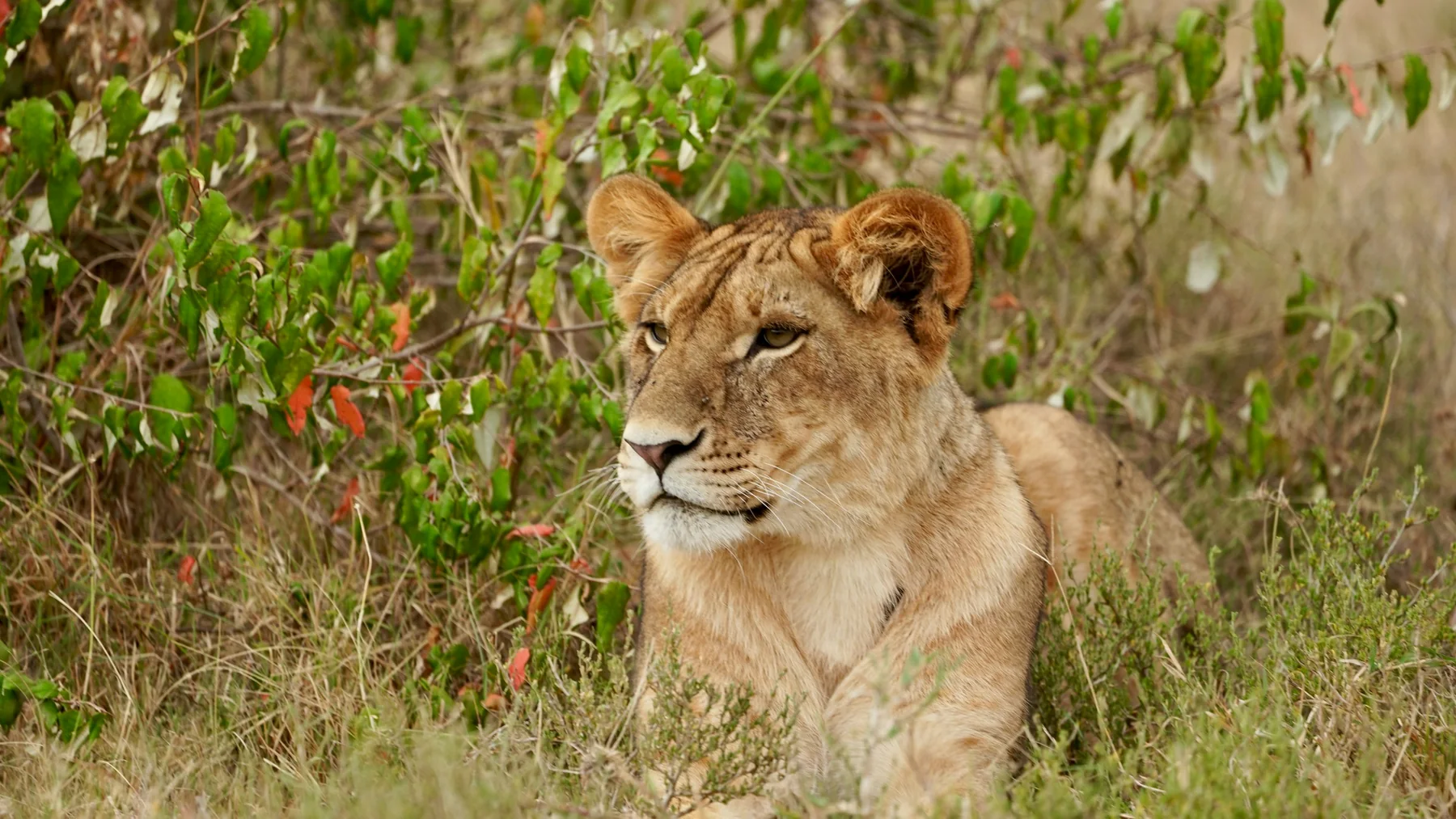
The conservancy lies within a species-rich ecosystem and supports resident predators, elephants, giraffes, buffalo, plains game, smaller mammals and extensive birdlife.
A species list is not a promise
Recording an animal does not mean every guest will see it. Wide-ranging and secretive species may be absent for long periods.

Lions
Ol Kinyei has a strong reputation for resident lion activity. Pride composition and territories change through births, deaths, dispersal and competition.
Lion viewing ethics
Keep an escape route open, limit the number of vehicles and leave if cubs, feeding or hunting behaviour is altered.
Lion identities
Guides may know individual animals by whisker spots, scars or pride history. Those stories are valuable when they do not become guarantees.
Cheetahs
Open ground and prey can support cheetahs. Mothers with cubs need careful vehicle spacing and quiet observation.
Cheetah hunts
Do not race parallel to a chase or block prey. The guide should choose a position before movement becomes intense.
Leopards
Woodland, drainage lines and riverine cover offer leopard habitat. Patient tracking and alarm calls matter more than a promise in a brochure.
Hyenas
Spotted hyenas are skilled hunters and social animals. Night drives can reveal movement and calls that a daytime drive misses.
Elephants
The IUCN account identifies Ol Kinyei as part of important elephant connectivity. Family groups require space, especially around calves and water.
Buffalo
Buffalo use grassland, thicket and water areas. Solitary bulls can be difficult to see in cover and deserve extra caution on foot.
Giraffes
Giraffes browse acacias and move widely across the landscape. Their presence often reveals how woodland and open grass connect.
Topi
Topi use raised ground as lookout points. They are a defining Mara animal, not a lesser sighting between cats.
Wildebeest
Resident and regionally moving wildebeest use Ol Kinyei. Their story includes the Loita Plains population as well as the wider Mara ecosystem.
Zebras
Zebra calls can alert guides to predators. Their grazing and herd movement shape the landscape throughout the year.
Gazelles
Thomson's and Grant's gazelles occupy different niches and offer fascinating territorial, courtship and predator-avoidance behaviour.
Eland
Eland are large but often wary. A quiet, distant view can last longer than a close approach.
Smaller antelope
Impala, dik-dik, reedbuck and other species reward habitat knowledge. Ask why each animal is standing where it is.
Nocturnal mammals
Servals, genets, spring hares, porcupines, bat-eared foxes and aardwolves are among the possibilities after dark. They are never guaranteed.
Birds
Grassland, woodland and wet areas support raptors, vultures, bustards, rollers, hornbills, larks, lapwings and seasonal migrants.
Birding pace
A good birding drive stops for calls and small movements. It should not be squeezed between big-cat searches.
Wildlife reality table
| Interest | Why Ol Kinyei can suit it | Honest limit |
|---|---|---|
| Resident predators | Controlled access and varied habitat | Territories and sightings change |
| Elephants | Connected dispersal landscape | Herds move beyond the boundary |
| Plains game | Grassland and Loita movement | Density changes with rain and grass |
| Nocturnal wildlife | Night drives under conservancy rules | Rare animals remain rare |
| Birds | Multiple habitats and lower driving pressure | Specialist guide should be requested |
| Photography | Fewer vehicles and possible off-track positioning | Light, behaviour and ethics still decide the result |
The Loita wildebeest migration
Ol Kinyei lies in the range of a regional wildebeest movement associated with the Loita Plains. It should not be marketed as if the entire Serengeti migration arrives in January.
A separate population story
Loita wildebeest move within the Greater Mara and Loita landscape in response to grass, water and breeding needs.
Early-year calving
Current local tourism material describes Ol Kinyei as an important northern calving area, often around January and February. Timing varies with rain.
Calving is not guaranteed on camp dates
Herds can spread beyond the conservancy. A wet or dry year changes distribution and visibility.
Predators respond
Young wildebeest attract lions, cheetahs and hyenas. Responsible viewing avoids surrounding vulnerable animals.
The main Serengeti migration
The much larger Serengeti herds usually draw attention to the national reserve and river systems later in the year. Ol Kinyei is not the closest base for every Mara River crossing.
Do not merge the two migrations
“Migration” without a population, season and place is too vague. Ask which herds the camp means.
Reserve day trips in peak migration
Guests may choose a full-day drive into the national reserve, paying current reserve fees. The drive is substantial and should be planned for a clear reason.
Naboisho access and migration
The current Porini arrangement provides access to neighbouring Naboisho, which broadens habitats. Naboisho itself says the main migration does not pass through as its core experience.
Migration comparison
| Event | Typical relationship to Ol Kinyei | Planning approach |
|---|---|---|
| Loita wildebeest movement | Regional movement can use Ol Kinyei and nearby plains | Consider early-year travel and allow weather flexibility |
| Loita calving | Possible concentration of mothers and young | Do not promise exact dates or numbers |
| Serengeti-Mara migration | Main herds focus farther south and west at different times | Add a reserve or western Mara base when crossings are central |
| Resident wildebeest | Present outside migration windows | Enjoy behaviour without chasing herd scale |
Day game drives
Morning and afternoon drives form the core safari. Controlled access lets guides choose sightings without the same volume of public vehicles.
Early morning
Cool air, predator movement and soft light make dawn valuable. Departures should still follow guest comfort and conservancy rules.
Late afternoon
Animals become active as heat falls. The drive can continue into a night-drive transition if the camp and conditions permit.
Full-day drives
A packed day may explore Ol Kinyei, Naboisho or the national reserve depending on access. The land unit and fees must be stated before departure.
Vehicle density
Current operator material describes a very low vehicle-to-acre ratio. The practical question is how many camp vehicles can join one sighting and whether outside vehicles have access.
Off-road viewing
Limited off-track positioning may be allowed under conservancy rules. It is not unrestricted driving across fragile grass or wet soil.
Track discipline
Guides should avoid repeated shortcuts, erosion, dens, wet ground and sensitive breeding areas.
Sitting in silence
One independent traveller described a “Night and day difference in terms of crowds, off road and ability to sit in silence.” Silence is a guide choice as much as an access rule.
Night drives
Ol Kinyei camps offer guided night drives under conservancy rules, using red-filtered light according to current operator practice.
Red filters
Red light can reduce glare and disturbance compared with bright white beams. It does not excuse prolonged spotlighting.
What night drives reveal
Hyenas, hares, genets, servals, porcupines, owls and predator movement become possible. Some nights are quiet.
Night-drive safety
Guests remain seated, keep limbs inside and follow the guide. Warm layers and a camera with strong low-light performance help.
Night-drive photography
Flash can disturb animals and spoil the atmosphere. Ask the guide and camp policy before using any artificial light.
Guided walking
Walks shift attention from distance to tracks, plants, insects, birds, wind and animal signs.
Walking is not a shortened game drive
The goal is not to approach lions on foot. Guides choose routes and group size according to risk, weather and guest ability.
Walking guide qualifications
Ask who leads, what professional training applies, whether an armed ranger accompanies the group and what emergency communication is carried.
Age limits
Child participation depends on current camp policy, route and guide judgment. Confirm before booking.
Mobility
Describe balance, pace, joint and terrain needs honestly. A short interpretive walk may be adapted, while a longer bush walk may not.
Official walking video
The camp operator's Ol Kinyei walking-safari video shows the pace and guide interpretation. It is an official promotional video, not an independent review.
Sundowners
A drink at a viewpoint can be lovely when waste, glass, vehicle positioning and the return drive are managed responsibly.
Bush breakfast
Breakfast outside changes the morning rhythm and can extend a drive. Ask about weather backup, toilets, handwashing and dietary needs.
Picnic lunch
A packed lunch allows a longer route into Naboisho or the reserve. Food storage and litter control matter.
Cultural visit
The most meaningful visit includes conversation, consent and transparent payment. Ask who owns the experience and how photography is handled.
Activity comparison
| Activity | Ol Kinyei | National reserve | Confirm before booking |
|---|---|---|---|
| Day game drive | Yes through current partner camps | Yes with reserve entry | Vehicle use and land access |
| Night drive | Yes under conservancy rules | Not an ordinary visitor activity | Duration, light policy and age |
| Guided walk | Yes through participating camps | Not a standard visitor activity | Guide, route and safety |
| Controlled off-track viewing | Possible under conservancy rules | Restricted by reserve zones | Current code and ground conditions |
| Sundowner or bush meal | Offered in suitable areas | Site and rule dependent | Inclusion and weather backup |
| Balloon flight | Usually arranged in the wider Mara | Permitted under concessions | Transfer, launch site and total morning |
Who can enter Ol Kinyei?
Current tourism access is tied to the Porini camps and cottages. It is not a public drive-through conservancy where any reserve vehicle buys a gate ticket.
Why access is limited
Restricting tourism vehicles supports the low-density model and links guest revenue to the land lease and management system.
Limited access is not ownership of wildlife
Animals remain wild and move across boundaries. Exclusivity refers to tourism access, not to the animals themselves.
Day visitors
Do not assume an outside camp can arrange a casual day trip. Access needs a current partner agreement and should be confirmed in writing.
Naboisho access
Current Porini information says Ol Kinyei guests can also drive in Naboisho because the operator contributes to land leases there.
Access is partner-specific
The benefit belongs to the current operating arrangement. It should not be described as an automatic right attached to any Ol Kinyei booking forever.
Why Naboisho access adds value
Naboisho is much larger and offers different plains, ridges, rivers and predator territories. It broadens a multi-night stay without changing camp.
Why Naboisho access needs time
Driving into another conservancy still takes time. Ask how many hours are realistic from the chosen camp and whether a full day is preferable.
Reserve access
The Masai Mara National Reserve is separate. A visit normally requires an additional entry fee and a substantial drive.
When a reserve day is worthwhile
It can add major migration herds, Mara River reaches or a different landscape. It works best as a deliberate full day.
When a reserve day is unnecessary
On a short stay focused on resident predators, walking and night drives, remaining in Ol Kinyei and Naboisho can be more rewarding.
Three current accommodation choices
Current official tourism material lists Porini Mara Camp, Porini Cheetah Camp and Ol Kinyei Safari Cottages. No other accommodation is currently presented as operating inside the conservancy.
Why that list matters
Many websites repeat older camp names or call nearby properties “Ol Kinyei”. A current guest needs the actual property and access agreement.
Porini Mara Camp
Porini Mara is the original small camp associated with the conservancy model. It uses a traditional tented style under acacia trees.
Camp scale
Current material describes six guest tents. That creates a maximum of roughly twelve guests in standard double occupancy before any family arrangement.
Room character
Expect canvas, simple bush comfort, en-suite facilities and a strong connection to outside sounds rather than sealed resort architecture.
Water and power
Traditional camps may use bucket showers, solar power and scheduled service. Confirm current hot-water, charging and 24-hour electricity arrangements.
Dining
Meals are usually shared or hosted, with bush breakfasts and sundowners integrated into drives. Private dining should be requested rather than assumed.
Best fit
Porini Mara suits guests who value small scale, guiding, wildlife and conservation context above polished resort facilities.
Possible mismatch
Travellers who need air-conditioning, a pool, a large spa or completely sealed rooms may prefer another camp style.
Porini Cheetah Camp
Porini Cheetah is another six-tent camp in Ol Kinyei, known for hands-on hosting and an especially small, wildlife-focused atmosphere.
Camp setting
The tents sit in an unfenced wildlife landscape. Guests may see plains game near camp and must use escorts after dark.
The wildlife impression
A June 2026 guest wrote, “The wildlife density is insane.” That is a vivid personal experience, not a future sighting guarantee.
Vehicle solitude
The same traveller reported, “99% of the time we were the only vehicle at a sighting.” The value lies in the access model, although exact vehicle numbers vary by day.
Guiding impression
That review adds, “They always managed to get the best angle for us for viewing and photos while also being respectful of the wildlife.” Position and restraint belong together.
Small-camp feeling
Another guest described it as “quite a small camp tucked away amongst so much wildlife.” That helps a traveller picture atmosphere better than a star rating.
Wildlife around tents
The same guest wrote, “We regularly saw zebra happily roaming near the tents.” Unfenced wildlife is exciting and the reason escort rules matter.
Food and hosting
Recent reviews repeatedly praise food, dietary care and hosts who share wildlife knowledge at dinner. Guests wanting privacy should ask how communal meals work.
Family accommodation
Current room configurations can change. Request an exact floor plan, bed arrangement, distance between tents and night escort plan.
Best fit
Porini Cheetah suits keen wildlife watchers, photographers, couples and guests who enjoy a hosted, sociable small camp.
Possible mismatch
It may not suit someone who wants a large lodge, extensive facilities, guaranteed private dining or a silent sealed room.
Ol Kinyei Safari Cottages
The cottages offer a different product: multi-bedroom private houses with a living area, private staff and greater indoor space.
Cottage configuration
Current property material describes four bedrooms within each stand-alone cottage, making it suitable for families or friends travelling together.
Private common space
A lounge, deck and dining area let the group relax without sharing every meal with other guests.
Private chef and hosts
Current packages describe dedicated staff for the cottage. Confirm exactly which services and drinks are included.
Electricity
The cottages promote 24-hour electricity, which can be valuable for cameras, medical devices and family logistics.
Indoor and outdoor showers
Rooms are described with both. Mobility, privacy, temperature and water pressure should still be discussed.
Group value
For six or eight people, a cottage can create privacy and flexible meals that separate hotel rooms cannot match. Compare total trip cost rather than per-room headlines.
Couples in a cottage
A cottage can feel exceptionally private, but a couple may pay for more space and staff than needed. Ask whether smaller occupancy rates apply.
Official walkthrough video
The Ol Kinyei Safari Cottages video shows rooms, lounge, deck and setting. It was made by the property operator, so use it for layout rather than as an independent review.
Best fit
The cottages suit multigenerational families, friend groups, private dining, guests needing more power and travellers who want a house rather than a tent.
Possible mismatch
Solo travellers and couples seeking the social atmosphere of a small tented camp may prefer Porini Mara or Cheetah.
Accommodation comparison
| Choice | Core style | Strong fit | Question to resolve |
|---|---|---|---|
| Porini Mara Camp | Small traditional tented camp | Classic bush atmosphere and conservation story | Exact tent, power, shower and vehicle policy |
| Porini Cheetah Camp | Six-tent hosted wildlife camp | Photographers, couples and sociable wildlife enthusiasts | Meal style, family setup and private vehicle availability |
| Ol Kinyei Safari Cottages | Private four-bedroom cottage | Families, groups and private living | Minimum occupancy, dedicated staff and total cost |
Camp names can change
Rebranding, seasonal operations and room additions happen. The booking should carry the exact current property name and cancellation terms.
No camp should be reduced to price
Room style, vehicle access, guide, host atmosphere, electricity and privacy differ enough that the lowest figure may not be the best fit.
Game-drive vehicles
The current camps use open-sided 4×4 safari vehicles for local drives. These provide excellent viewing but less protection from dust, wind and rain than a closed road vehicle.
Shared vehicle
Camp packages often use shared drives. Ask the maximum number of guests, rows and whether every person has an unobstructed side.
Private vehicle
This is especially useful for photographers, families, honeymooners, mobility needs and specialist birding.
Private vehicle fee
The amount can change by season and camp. Request it in the same currency and tax basis as the accommodation quote.
Photography vehicle
Some configurations offer fold-down sides, low angles or specialised mounts. Confirm the exact vehicle rather than relying on a category name.
Guide continuity
Ask whether the same guide stays with you and whether an inter-camp move changes guides.
Tracker role
Some drives include a separate spotter or Maasai tracker. Clarify seating and responsibilities.
Passenger compatibility
Shared drives work best when guests want similar departure times, species and photography pace. Camps cannot always predict compatibility.
What independent travellers say
One recent discussion called Porini Cheetah “great for sightings and the Masai guides are very good.” That is a helpful theme to investigate through guide and vehicle questions.
Access from Nairobi by air
Scheduled safari flights from Wilson Airport commonly use Ol Seki, also called Naboisho Airstrip, for this part of the ecosystem.
One airstrip, two names
Ol Seki and Naboisho may appear interchangeably. Use the code and wording on the operating airline's ticket.
Airstrip transfer
The drive to camp can become a game drive. Confirm duration, whether it is shared and whether other camps are served first.
Flight stops
Scheduled aircraft may call at multiple Mara strips. The published departure is not always a nonstop flight.
Luggage
Small aircraft normally require soft bags and strict weight limits. Camera gear, medical devices and child equipment need advance approval.
Delays
Weather, runway condition and aircraft routing can change times. Avoid a tight same-day international connection.
Access from Nairobi by road
A road safari uses Narok and eastern Mara approaches before reaching conservancy tracks. Time varies with traffic, weather and the final surface.
Road vehicle
A capable 4×4 with recovery equipment is essential in wet conditions. A minivan may not provide the same clearance or traction.
Final approach
The last section can be rough even when the main highway is good. Recent camp advice matters more than an old online drive time.
Road arrival benefit
You keep one vehicle and guide from Nairobi when the itinerary is designed that way, which can make multi-park travel cohesive.
Road arrival drawback
The journey consumes much of a day and can be tiring. Children and guests with back pain need realistic stops.
Fly-in benefit
Flying protects wildlife time on a short trip and avoids the longest rough-road section.
Fly-in drawback
It adds cost, luggage limits and reliance on a schedule. Local drives may be shared unless a private vehicle is booked.
Transport comparison
| Question | Road | Fly-in |
|---|---|---|
| Time | Long and variable | Shorter airborne time plus transfers |
| Luggage | More flexible | Strict soft-bag and weight limits |
| Vehicle | Often one closed 4×4 throughout | Camp open-sided vehicle after landing |
| Multi-park logic | Good for a connected circuit | Good for distant park combinations |
| Comfort risk | Rough final road | Small aircraft and possible stops |
| Photography gear | Easier to carry | Must be approved within limits |
Read the access guides
Use the Masai Mara airstrips guide and road conditions guide to plan the wider transfer.
Seasons in Ol Kinyei
Resident wildlife makes the conservancy relevant throughout the year, while rain, grass and regional herd movement change the character.
January and February
Warm days, regional Loita wildebeest movement and possible calving make the early year interesting. Rainfall decides where herds concentrate.
March
The landscape can remain green as long-rain probability increases. Fewer visitors and dramatic skies may reward flexible travellers.
April and May
Long rains can bring lush grass, mud, route changes and camp maintenance closures. Confirm whether every property operates.
June
Cooler mornings and drying ground begin a transition. Resident predators remain central while herd reports change.
July and August
Peak international demand focuses on the wider Mara. Ol Kinyei retains controlled access, although camps and air seats can be full.
September and October
Dry conditions and strong general game viewing can continue. Dust and heat rise as the season advances.
November
Short rains may refresh grass and bring dramatic clouds. Timing is unpredictable.
December
Holiday demand, green scenery and regional wildlife movement can overlap. Book private cottages and family rooms early.
Green season
Fresh colour, birds, low vehicle pressure and storm light suit photographers who accept wet-track uncertainty.
Dry season
Shorter grass, firmer tracks and water concentration can aid sightings. The landscape may be dusty and camps more expensive.
Season table
| Period | Main appeal | Main planning risk |
|---|---|---|
| January to February | Loita herds, possible calving and resident predators | Herd distribution follows rainfall |
| March to May | Green landscape, birds and fewer guests | Mud, road access and closures |
| June | Transition, cool mornings and changing grass | Migration expectations may be premature |
| July to October | Peak Mara travel and dry-season visibility | High demand and wider ecosystem crowds |
| November to December | Short-rain colour and holiday travel | Uncertain showers and festive availability |
Best time is a personal answer
Choose January for Loita movement, green season for atmosphere, or dry months for firmer access. No month guarantees a predator or migration event.
Ol Kinyei for a first safari
The low vehicle density and varied activities create a gentle introduction. A reserve day can add scale if enough nights are available.
What first-time visitors may miss
The Mara River and largest migration herds are not on the doorstep. If those are essential, combine areas rather than forcing long daily drives.
Ol Kinyei for repeat visitors
Walking, night drives and individual animal stories offer depth after a previous reserve safari.
Ol Kinyei for families
The cottages are a strong multi-bedroom option, while small camps can suit older wildlife-focused children.
Private space
A cottage lets children rest, eat early and use common rooms without affecting other guests.
Child age rules
Walks, shared vehicles, night drives and some camps may have minimum ages. Obtain current written policies.
Unfenced safety
Children never walk alone. Ask how escorts, room spacing and emergency contact work after dark.
Child seats
Safari vehicles do not automatically carry age-appropriate restraints. Request the real solution.
Food
Remote kitchens can handle many diets with notice. Explain allergies, severity and cross-contamination needs.
Medical planning
Seek personal travel-health advice. A local evacuation membership is not comprehensive insurance.
Ol Kinyei for honeymoon trips
Small camps, private drives, silent sightings and sundowners can feel genuinely intimate.
Camp versus cottage romance
A tent brings night sounds and shared hosting. A cottage brings space and privacy. Choose the feeling, not the highest category.
Private vehicle
This is often the most meaningful honeymoon upgrade because it controls every drive.
Private dining
Ask where it happens, how weather is handled and whether other guests remain nearby.
Slow afternoon
Leave time to sit on the deck, sleep and listen. A honeymoon should not become a species checklist.
Ol Kinyei for solo travellers
Small communal camps can be welcoming and shared drives reduce costs. Single supplements and vehicle pairing still need checking.
Hosted meals
Solo guests may enjoy conversation with hosts and other travellers. A private cottage can feel isolated unless that is the goal.
Ol Kinyei for photographers
Low vehicle density, controlled positioning and resident predators are strong advantages.
Private row
One photographer per row allows movement between sides. A shared bench can become frustrating at fast action.
Low angle
Fold-down sides or open vehicles can place the lens closer to eye level. Never compromise safety.
Beanbag
A beanbag is faster and more stable than a tripod in most vehicles. Confirm whether the camp supplies one.
Lens range
A 100 to 500 mm zoom covers much wildlife, while 24 to 70 mm shows habitat, camp and people with consent.
Dust control
Use two bodies if possible, avoid unnecessary lens changes and carry a blower and cloth.
Night photography
Fast lenses and high ISO help, but animal welfare and the guide's light policy come first.
Walking photography
Carry one manageable lens and keep hands free. The walk is about awareness, not equipment changes.
Traveller photography experience
The independent review praising guides who found a strong angle “while also being respectful of the wildlife” captures the standard to request.
Read the photography guide
The Masai Mara photography guide covers settings, light, vehicle design and ethics.
What an Ol Kinyei price should include
Conservancy stays are usually quoted per person with accommodation, meals, drinks, activities and fees bundled to varying degrees. Never compare only the headline room number.
Accommodation
Confirm exact tent or cottage, occupancy, bed setup and whether a single supplement applies.
Meals
Full board often includes three meals and bush options. Arrival and departure timing can change which meals are served.
Drinks
House drinks may be included while premium bottles are excluded. Ask for the current list.
Conservancy fees
The Ol Kinyei fee should be identified clearly even when bundled. It helps fund land leases and management.
Naboisho fees
Current partner access may include Naboisho fees in some packages. Confirm the exact nights, land access and any limits.
Reserve fees
Masai Mara National Reserve entry is additional for a reserve day unless explicitly included. Current rates can change by season, age and residency.
Shared game drives
The base package commonly includes shared drives. Request passenger maximum and seating.
Private vehicle
Price this separately if it is not included. Ask whether the fee is per vehicle or per person.
Airstrip transfers
Ol Seki pickup and drop-off may be included with camp accommodation. Verify late, private or alternative-strip transfers.
Nairobi flights
These are often separate even when a package illustration shows a fly-in itinerary. Confirm taxes, luggage and change rules.
Road transfers
An overland vehicle and guide may be separate from camp rates. Check where the camp vehicle takes over.
Night drive
It may be included within an afternoon drive or listed separately. Clarify duration and whether it runs every night.
Walk
Ask whether a short interpretive walk is included and whether a longer private walk costs more.
Bush meals and sundowners
These may be part of the standard activity plan or subject to weather and minimum stays.
Village visit
Confirm transport, community payment, craft purchases and photography etiquette.
Laundry
Some camps include laundry with cultural limitations on certain garments. The cottages may handle it differently.
Evacuation membership
Local air-evacuation cover may be included. It does not replace medical, cancellation and repatriation insurance.
Tips
Guide and staff gratuities are generally separate and discretionary. Ask for current guidance without treating it as a compulsory tax.
Price comparison table
| Cost line | Must be shown | Why it changes value |
|---|---|---|
| Room | Exact camp, tent or cottage and occupancy | Products range from traditional tent to private four-bedroom house |
| Conservancy access | Ol Kinyei and any Naboisho fee | Determines the land available for drives |
| Reserve visit | Entry fee, vehicle and meal plan | Can add a substantial separate day cost |
| Vehicle | Shared seats or private use | Controls pace, photography and family flexibility |
| Transport | Road or flight plus airstrip transfer | Major difference in time and luggage |
| Activities | Walk, night drive, sundowner and bush meal | Package inclusions vary |
| Insurance | Local evacuation or full policy | They are not equivalent |
Why this guide does not publish a single live price
Season, residency, occupancy, exchange rate, private vehicle and transport can change the total. A static figure would soon mislead the reader.
How to compare two quotes
Put both on the same dates, currency, room type, transport, vehicle arrangement, fees and cancellation basis. The cheaper line should remain cheaper after every missing element is added.
Cancellation policy
Read deposit dates, non-refundable periods, flight rules, medical changes and name substitutions before paying.
Currency
Ask which currency controls the contract and what rate applies if paying in another currency.
Payment security
Use the named business account and verify any beneficiary change through an independently confirmed contact.
Ol Kinyei versus Naboisho
Naboisho is much larger, has more partner camps and a wider accommodation range. Ol Kinyei is smaller and currently tied to three Porini choices.
Access difference
Both restrict ordinary day visits through partner arrangements. Current Porini guests may access both because the operator participates in each.
Activity similarity
Both can offer night drives, walks and controlled off-road viewing through participating camps.
Camp-choice difference
Naboisho ranges from simple tents to design-led villas across multiple operators. Ol Kinyei offers a more concentrated operating model.
Migration difference
Ol Kinyei highlights the early-year Loita movement. Naboisho says the main Serengeti migration does not pass through as its core event.
Which should you choose?
Choose the exact camp first. A preferred room, host style, vehicle and guide can outweigh the conservancy label.
Read the Naboisho guide
The Naboisho Conservancy guide compares every current tourism partner and clarifies day access.
Ol Kinyei versus Olare Motorogi
Olare Motorogi lies closer to major reserve river areas and has several high-end camps. It is widely known for big-cat viewing and strict tourism density.
Price and style
Olare Motorogi includes some of the Mara's most expensive camps. Ol Kinyei's traditional camps may feel simpler, while its cottages create a private group product.
River access
Olare Motorogi can be better positioned for some reserve and river plans. Ol Kinyei suits regional Loita movement, Naboisho access and eastern ecosystem depth.
Ol Kinyei versus Mara North
Mara North is far larger, has more camps and offers varied river, hill and plain habitats.
Camp choice
Mara North supports a broad mix of properties and access zones. Ol Kinyei's current choice is simpler to understand but less varied.
Driving scale
Mara North can require long internal drives. Ol Kinyei is more compact, with Naboisho extending the available landscape under current arrangements.
Read the Mara North guide
Use the Mara North Conservancy guide to compare access zones and camps.
Ol Kinyei versus the national reserve
The reserve offers the greatest public scale, famous river crossings and a much larger road network. Ol Kinyei offers controlled access and activities the reserve does not normally permit.
Vehicle pressure
Reserve sightings can draw many vehicles in peak areas. Ol Kinyei restricts tourism access through its camp model.
Off-road and night rules
The reserve uses zoning and prohibits night drives. Ol Kinyei allows controlled off-track viewing and guided night drives under conservancy rules.
Walking
Walking is part of the Ol Kinyei experience at participating camps, not a standard reserve activity.
Migration
The reserve is central to the main Serengeti-Mara migration. Ol Kinyei has its own Loita movement and resident-wildlife value.
Best combination
Three or four nights in Ol Kinyei plus three nights in a reserve or river-focused area creates contrast without daily commuting.
Conservancy comparison table
| Question | Ol Kinyei | Naboisho | Olare Motorogi | National reserve |
|---|---|---|---|---|
| Current camp range | Three Porini choices | Nine current tourism partners | Several mostly high-end camps | Many lodges and camps inside and outside |
| Day access | Partner-camp guests | Partner-camp guests | Partner-camp guests | Public entry under reserve rules |
| Night drives | Yes through camps | Yes through camps | Yes through camps | No ordinary visitor night drives |
| Walking | Yes through camps | Yes through camps | Camp dependent | Not a standard visitor activity |
| Main migration role | Loita movement, main herds require wider planning | Resident wildlife, main herds outside core | Access to northern and reserve movement | Central migration and river-crossing landscape |
| Accommodation character | Small camps and private cottages | Broad range | Strong luxury emphasis | Broadest range and density |
How many nights in Ol Kinyei?
Three nights is a strong minimum. Four or five gives the activities and neighbouring access enough room.
Two nights
You may fit two mornings, one afternoon, one night drive and a short walk, but arrival and departure reduce flexibility.
Three nights
This allows two full wildlife days and a balanced mix of drives, walk and night activity.
Four nights
You can add a Naboisho day or a slow afternoon without sacrificing resident-wildlife time.
Five nights
Photographers, families and early-year migration travellers gain flexibility for weather and animal movement.
Reserve day minimum
If a full reserve visit is important, use at least four nights or combine with a reserve base.
One-night stay
Avoid it unless it is an operational stop within a longer partner-camp circuit. The transfer consumes too much of the experience.
Sample three-night rhythm
| Day | Morning | Afternoon and evening |
|---|---|---|
| Arrival | Fly or drive to camp | Settle in, game drive, sundowner and optional night-drive finish |
| Full day 1 | Dawn drive and bush breakfast | Rest, late drive and nocturnal wildlife search |
| Full day 2 | Guided walk and relaxed breakfast | Longer Ol Kinyei or Naboisho game drive |
| Departure | Short dawn activity if timing allows | Airstrip or road transfer |
Sample five-night rhythm
| Day | Focus |
|---|---|
| 1 | Arrival, orientation and short drive |
| 2 | Resident predators and landscape |
| 3 | Naboisho full day under current access arrangement |
| 4 | Walk, camp time, sundowner and night drive |
| 5 | Flexible day for Loita herds, photography or reserve visit |
| 6 | Final dawn and departure |
Packing for Ol Kinyei
Soft layers, neutral clothing, sun protection, rain protection and closed walking shoes cover most needs.
Morning cold
Open vehicles feel colder than the forecast. Pack a fleece, light down layer or windproof shell.
Midday sun
Use a hat, sunglasses and high-protection sunscreen. Long sleeves protect skin without relying only on lotion.
Rain
Carry a waterproof shell and dry bags. Camp ponchos may not protect camera equipment.
Walking shoes
Choose closed, broken-in shoes with grip. Heavy hiking boots are not always necessary for a short bush walk.
Colour
Neutral earth tones work well on foot. Avoid camouflage patterns that may be restricted or misunderstood.
Insects
Bring repellent and cover arms and ankles at dusk. Follow current medical advice for malaria prevention.
Power
Ask what plugs, charging hours and battery limits apply. Carry a safe power bank within airline rules.
Binoculars
One pair per person improves birds, distant behaviour and walking. Camps may lend them, but fit and quality vary.
Refillable bottle
Use camp-filtered water where provided and avoid unnecessary single-use plastic.
What travellers actually reveal
The strongest reviews describe access, silence, guide behaviour, room feeling and vehicle experience. Those details can be tested before booking.
Solitude is repeated
“99% of the time we were the only vehicle at a sighting.” gives a concrete impression, while still representing one stay.
Respectful positioning is repeated
The praise for guides who found angles while respecting wildlife suggests that photography and ethics can reinforce each other.
Camp scale is visible
“It is quite a small camp tucked away amongst so much wildlife.” helps a guest decide whether intimacy or facilities matter more.
Neighbouring access is valued
An independent traveller reported, “we were able to drive in Naboisho (next door) because Porini has camps in both conservancies.” Confirm that this remains included for the booked property and dates.
Reviews do not settle everything
The same camp can feel different with another guide, season, tent or vehicle group. Use reviews to generate questions.
Common mistake: calling Ol Kinyei a private reserve
It is a community conservancy. The phrase “private safari experience” describes controlled tourism, not private ownership of the land by a lodge.
Common mistake: expecting the main migration in January
Early-year Loita wildebeest are a separate regional story. The great Serengeti herds follow another seasonal cycle.
Common mistake: assuming Naboisho access forever
Current access follows partner and lease arrangements. Verify it in the package.
Common mistake: booking two nights and a reserve day
The reserve trip can consume the only full day, leaving little time for the conservancy activities that justified the booking.
Common mistake: ignoring the shared vehicle
A small camp still puts guests together unless private use is arranged.
Common mistake: choosing cottages for a couple without pricing occupancy
Private space can be wonderful and financially inefficient. Compare the whole cost.
Common mistake: demanding off-road access
Permission is controlled and conditional. Soil, vegetation, breeding animals and vehicle limits take priority.
Common mistake: treating a walk as guaranteed
Weather, animal presence, guide availability, age and fitness can change the plan.
Common mistake: forgetting reserve fees
A package that includes conservancy drives may not include a national reserve day.
Common mistake: believing every wildlife claim
Resident pride histories and species lists are context, not inventory. Animals move and populations change.
How to choose an Ol Kinyei property
Start with group shape and desired camp atmosphere, then compare vehicle, guide, power and privacy.
Choose Porini Mara if
You want a traditional small tented camp, a close-to-nature atmosphere and a direct link to the original conservancy story.
Choose Porini Cheetah if
You value intensive wildlife hosting, a six-tent social camp and strong recent guide feedback.
Choose the Safari Cottages if
You have a family or friend group, need multiple bedrooms, want private common space or prefer 24-hour power.
Choose a private vehicle if
Photography, children, honeymoon privacy, mobility or specialist interests need a personal schedule.
Add the reserve if
Main migration herds, river systems or reserve scale are essential and the trip has enough nights.
Add another conservancy if
You want a different accommodation brand, terrain or land-management model rather than repeating a similar camp.
Booking checklist
| Confirm | Exact detail required |
|---|---|
| Property | Current name, exact room and operating dates |
| Land access | Ol Kinyei, Naboisho and reserve terms |
| Vehicle | Shared capacity, private cost and photography setup |
| Guide | Language, specialist interest and continuity |
| Flight | Airline, strip, stops, luggage and transfer |
| Road | Vehicle, duration, final surface and wet-weather plan |
| Activities | Walk, night drive, sundowner and bush meal |
| Fees | Conservancy, reserve, child and residency categories |
| Family | Room connection, age limits, escorts and child seat |
| Health | Diet, mobility, insurance and evacuation arrangements |
Frequently asked questions
Is Ol Kinyei part of the Masai Mara National Reserve?
No. It is a separately managed community conservancy within the Greater Mara ecosystem.
How large is Ol Kinyei?
Current operator material describes 18,700 acres, while the Greater Mara ecosystem plan records a 66-square-kilometre estimate. The figures reflect different dates or boundary methods.
When was Ol Kinyei established?
The conservancy partnership began in 2005 and expanded over subsequent years.
Who owns Ol Kinyei?
The land remains owned by participating Maasai landowners who lease conservation use through the conservancy arrangement.
Is Ol Kinyei on the IUCN Green List?
Yes. It achieved Green List status in 2018 for governance, planning, management and conservation outcomes.
Can anyone visit for the day?
Tourism access is currently tied to the participating Porini camps and cottages. Do not assume ordinary public day entry.
Which camps are in Ol Kinyei?
Current official material lists Porini Mara Camp, Porini Cheetah Camp and Ol Kinyei Safari Cottages.
Can Ol Kinyei guests enter Naboisho?
Current Porini packages describe Naboisho access through the operator's partner arrangement. Confirm it for the exact camp and dates.
Can guests visit the Masai Mara reserve?
Yes, usually as a full-day drive with additional reserve fees. It is not a quick gate hop.
Are night drives allowed?
Yes through the current camps under conservancy rules, with red-filtered light used according to operator policy.
Are walking safaris allowed?
Yes through participating camps with qualified guides, subject to age, weather, wildlife and safety.
Is off-road driving allowed?
Controlled off-track positioning may be permitted, but it is not unrestricted driving and should protect wet ground, vegetation and animals.
Does the Great Migration pass through Ol Kinyei?
The conservancy is important to the regional Loita wildebeest movement. The main Serengeti-Mara herds and river crossings require wider reserve planning.
What is the best time to visit?
January and February can bring Loita herd and calving interest, green season offers colour and birds, and dry months offer firmer tracks and strong resident wildlife viewing.
Which airstrip serves Ol Kinyei?
Ol Seki, also called Naboisho Airstrip, commonly serves the current camps. Confirm the exact ticket and transfer.
How many nights are enough?
Three nights is a useful minimum. Four or five allows Naboisho access, walking, night drives, photography and weather flexibility.
Is Ol Kinyei good for children?
It can be, especially in the private cottages. Confirm child ages, room layout, shared-drive rules, escorts and walking limits.
Is Ol Kinyei good for honeymooners?
Yes for couples who value small camps, quiet sightings and private vehicle time. Choose room and meal privacy carefully.
Is a private vehicle necessary?
No, but it adds substantial control for photography, families, specialist interests and honeymoon trips.
Final perspective
Ol Kinyei is most compelling when you understand what the conservancy protects and what the stay makes possible. Its value is not that a lion is guaranteed behind the next acacia. It is that a small number of vehicles can stop, wait and let the animal decide what happens next.
The landowner lease model, IUCN Green List story, Loita wildebeest movement, walking, night drives and neighbouring Naboisho access give the landscape depth. The current accommodation choice is unusually clear: two small tented camps and private four-bedroom cottages. The right one depends on whether you want classic canvas, hosted wildlife intensity or a private house for your group.
Use this Ol Kinyei Conservancy guide to choose that fit, then give the place enough nights. A quiet topi on a ridge, a lion calling after dark and tracks examined on foot may become the memories that outlast the checklist.
Sources and further reading
- Ol Kinyei Management Plan Gazette Notice
- Greater Maasai Mara Ecosystem Management Plan 2023-2032
- IUCN Ol Kinyei case study
- Current Ol Kinyei Conservancy accommodation information
- Masai Mara Safari Guide
- Migration season versus green season
- Walking safaris in the Greater Mara
- Masai Mara night game drives
Let us build your Ol Kinyei stay
Share dates, guests, room or cottage needs, wildlife interests, vehicle preference, walks, night drives, Naboisho or reserve plans and budget. We will compare the complete trip.