
Mara Ripoi Conservancy Guide
Compare the real camps, understand the changing figures, and decide whether this quiet eastern corridor fits your Mara safari.
- The short answer
- Mara Ripoi at a glance
- The central decision
- What Mara Ripoi is
- What it is not
- Where it sits
- Why the corridor matters
- The 24,500-acre figure
- Why you will also see 22,000 acres
- The 2,200-landowner figure
- Why numbers change
- The camp-count problem
- A source hierarchy
- The gazetted management plan
- Community land does not become hotel land
- Tourism partners
- Lease duration
- Women and leadership
- Ranger work
- Livestock and wildlife
- Human-wildlife conflict
- The conservation test
- Low density in practice
- Outside-vehicle access
- Private vehicle versus private conservancy
- Shared drives at Porini
- Private drives at Lalashe
- Which vehicle model fits you
- Why the cheapest nightly rate is not the answer
- The complete comparison table
- How many nights
- Two nights
- Three nights
- Four nights
- Five nights
- A three-night rhythm
- A five-night rhythm
- Reserve access
- When a Reserve day is worth it
- When to stay in the Reserve instead
- Split stay logic
- Mara Ripoi versus Siana
- Mara Ripoi versus Naboisho
- Mara Ripoi versus Mara North
- Mara Ripoi versus the Triangle
- Area comparison
- January to March
- April
- May
- June
- July to October
- November
- December
- Season table
- Green season is not second best
- Getting there by air
- Wilson Airport
- Jomo Kenyatta departure claim
- Ol Seki transfer
- Luggage
- Multi-stop flights
- Flying from another park
- Driving from Nairobi
- The last section
- Self-driving
- Road or air
- Families at Porini
- Families at Lalashe
- A private vehicle for children
- Family learning
- Honeymoons
- Solo travellers
- Photographers
- Limited mobility
- Food
- Water and showers
- Electricity
- Wi-Fi and signal
- Camp safety
- Traveller voice: wildlife
- Traveller voice: expectations
- Traveller voice: value
- Traveller voice: simple comfort
- Traveller voice: food
- Traveller voice: the long Reserve day
- Traveller voice: Lalashe privacy
- Traveller voice: immediate wildlife
- Traveller voice: no competition
- Traveller voice: Maasai knowledge
- How to read those reviews
- Common mistake: treating the newest figure as timeless
- Common mistake: comparing room rates
- Common mistake: booking a crossing from Ripoi
- Common mistake: filling all four days
- Common mistake: assuming access to neighbours
- Common mistake: hiding physical needs
- Booking checklist
- The final decision
- Frequently asked questions
- Where is Mara Ripoi?
- How large is it?
- How many landowners participate?
- Which camps are there?
- Is it part of the Reserve?
- Are drives private?
- Can I take a night drive?
- Can I walk?
- Which airstrip is used?
- How long should I stay?
- Will I see the migration?
- Which camp suits a family?
- Open plains
- Ripole River
- Leleshwa woodland
- Hills and views
- Wildlife movement
- Elephants
- Giraffes
- Lions
- Cheetahs
- Leopards
- Hyenas
- Buffalo
- Zebras and wildebeest
- Birds
- Wildlife by habitat
- Great Migration expectations
- A Reserve day for migration
- Crossing reality
- Day game drives
- Night drives
- What night may reveal
- Guided walks
- Bird walks
- Sundowners
- Bush breakfast and lunch
- Cultural visit
- Balloon flight
- Activity table
- Porini Giraffe Camp
- Porini room style
- Porini guest count
- Porini child policy
- Porini seasonal closure
- Porini food and drinks
- Porini shared vehicle
- Porini camp feeling
- Lalashe Mara Ripoi
- Lalashe room style
- Lalashe family villa
- Lalashe private vehicle
- Lalashe conservation contribution
- Independent Lalashe video
- What the video shows well
- Camp comparison
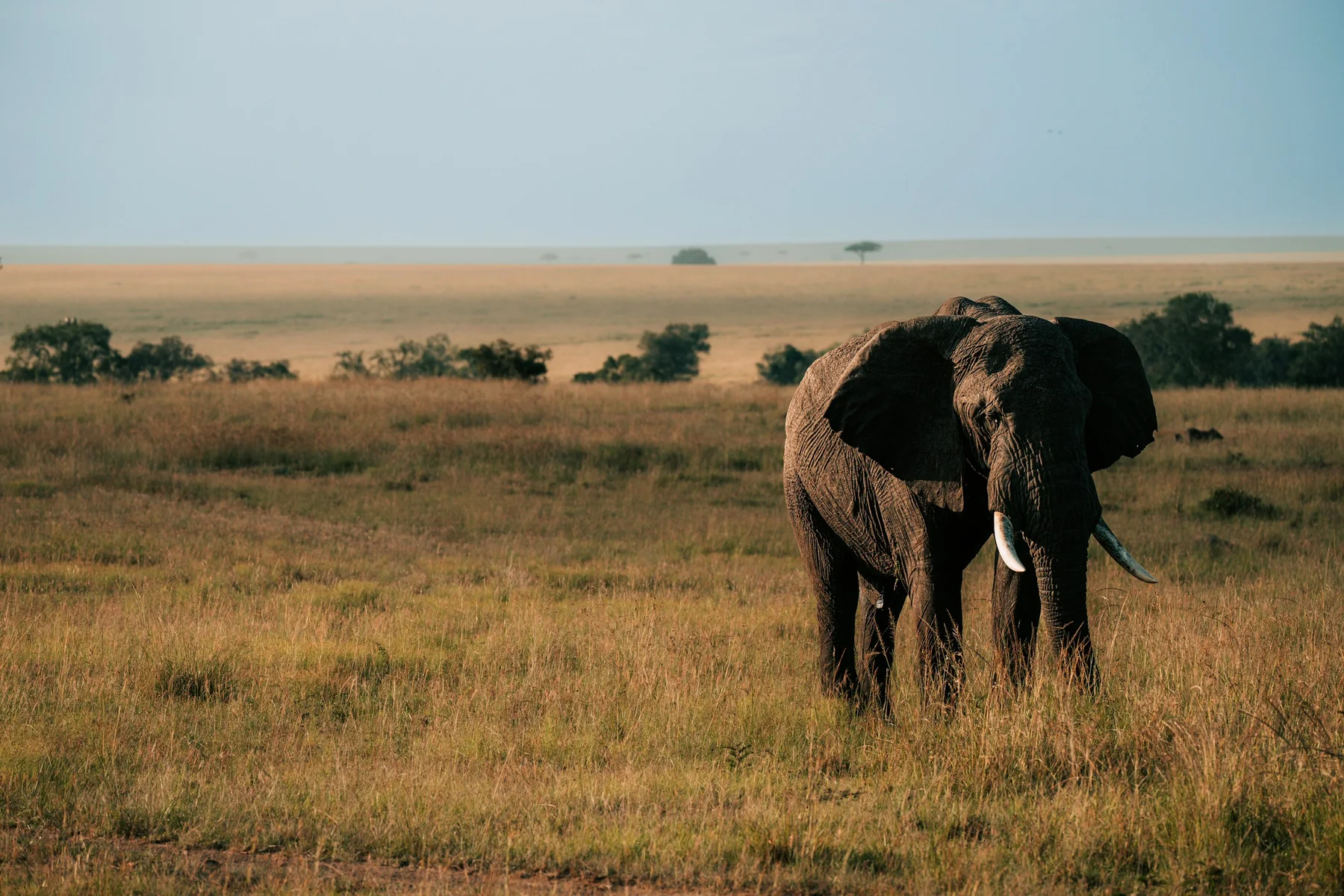
The first elephant appears beyond a line of leleshwa, moving east through grass that has caught the morning light. Your guide does not turn toward a gate. There is no gate in the animal’s mind. Siana, Ripoi, the National Reserve and the river corridors are human names laid across one living system.
Mara Ripoi matters because land outside the Reserve must remain open if wildlife is to keep moving. It is also a young tourism destination, which means its quieter drives come with questions. Current sources disagree about its exact acreage, landowner total and even the number of operating camps.
This Mara Ripoi Conservancy guide does not hide those differences. It explains the strongest current figures, compares the two best-documented camps, maps the activities and access, and helps you decide whether a newer eastern conservancy gives your trip more value than a familiar name elsewhere.
The short answer
Choose Mara Ripoi for low-density wildlife viewing, community-leased habitat, night drives, walks and a camp experience that can feel more private than the National Reserve. Compare carefully if river crossings are the main goal, you expect a long-established conservancy infrastructure, or you have not confirmed the exact camp’s vehicle and Reserve policy.
Mara Ripoi at a glance
| Question | Best current answer |
|---|---|
| What is it? | A community-land wildlife conservancy in the eastern Greater Mara |
| Current association area | 24,500 acres |
| Current association landowners | 2,200 |
| Association tourism partners | Two camps |
| Best-documented camps | Porini Giraffe Camp and Lalashe Mara Ripoi |
| Main habitats | Ripole River, woodland, hills and open plains |
| Activities | Day and night drives, walks, birding, cultural time and sundowners, varying by camp |
| Main flight access | Ol Seki Airstrip for the documented camps |
| Best stay | Three to five nights |
| Migration | Possible seasonal herds, no crossing guarantee |
The central decision
Mara Ripoi is strongest for a traveller who values privacy, newer conservation space and the story of wildlife corridors. It is weaker for somebody choosing only from a famous checklist or assuming every private conservancy has the same rules, density and cat sightings.
Use this Mara Ripoi Conservancy guide beside the broader Masai Mara safari guide so one quiet conservancy still fits the Reserve and complete Kenya route.
What Mara Ripoi is
It is a conservancy formed from community-owned land on the eastern side of the Mara ecosystem. Tourism partners help fund leases and management while wildlife retains movement space outside the National Reserve.
What it is not
It is not a sector of the Masai Mara National Reserve, a guaranteed Big Five enclave or a permanent migration river stage. It also should not be confused with Mara Siana Conservancy, though the two adjoin and support connected habitat.
Where it sits
Camp sources place Mara Ripoi beside Siana and near the Reserve, with the Ripole River providing a corridor toward Ol Kinyei. Its eastern position affects the airstrip, Reserve route and which other conservancy can combine naturally.
Why the corridor matters
Elephants, giraffes, predators and grazers do not live only inside gazetted boundaries. Open land between protected areas allows feeding, dispersal, breeding and seasonal response to rain. A conservancy can be valuable even when its wildlife density changes through the year.
The 24,500-acre figure
The Maasai Mara Wildlife Conservancies Association currently states that Mara Ripoi covers 24,500 acres. This is the best conservancy-wide public figure because it comes from the umbrella association rather than one camp’s sales page.
Why you will also see 22,000 acres
Porini’s current material describes a 22,000-acre conservancy. Lalashe uses more than 20,000 acres. These may reflect different dates, leased cores or rounding. They should not be silently merged into one false precision.
The 2,200-landowner figure
MMWCA currently describes a partnership with 2,200 landowners. Porini refers to about 1,600 individuals in a 25-year lease arrangement, while Lalashe says more than 2,000. Use the association figure for today and keep the older scopes visible.
Why numbers change
Leased parcels can expand, lapse or be recorded in different programme zones. A camp may describe the core it uses while an association describes a wider conservancy. Responsible writing dates the source instead of accusing one figure of being invented.
The camp-count problem
MMWCA currently says two tourism camps. Porini material says three small camps, while Lalashe pages have referred to three or four. The safe decision is to verify current member camps for the travel dates and compare the two with strong present documentation.
A source hierarchy
| Question | Strongest source | Why |
|---|---|---|
| Conservancy-wide area | MMWCA profile | Umbrella association scope |
| Management programmes | Gazetted 2025-2035 plan | Formal legal publication |
| Current room count | Camp fact sheet | Property-specific and dated |
| Vehicle inclusion | Exact package or camp terms | Can vary by booking basis |
| Traveller experience | Linked independent review | Useful but subjective |
| Current wildlife | Guide and field report | Animals move |
The gazetted management plan
Kenya’s September 2025 Gazette includes the Mara Ripoi Conservancy Management Plan 2025-2035. Its vision is a beacon of wildlife conservation and sustainable livelihoods, and its programme structure gives the conservancy a more formal framework than a tourism brochure alone.
Community land does not become hotel land
The lease model is designed to retain local ownership while paying for conservation use. Ask how the fee reaches landowners, how agreements are governed and how residents participate in decisions.
Tourism partners
Camps contribute through lease commitments, guest fees, employment and conservation operations. The quality of that partnership matters more than a generic “eco” label.
Lease duration
Porini describes a 25-year lease arrangement for its founding context. Long terms can support planning and habitat continuity, but the exact agreements and participating parcels belong to conservancy governance, not a guest-room promise.
Women and leadership
An independent Guardian report profiled women challenging all-male land leadership and included a woman driver-guide working with Gamewatchers in Mara Ripoi. The story widens “community benefit” beyond landowner numbers.
Ranger work
Rangers need vehicles, communication, training and a clear management mandate. Ask whether the camp explains patrols, conflict reporting and habitat work rather than only pointing to a uniform at the gate.
Livestock and wildlife
Community conservancies remain connected to pastoral livelihoods. Grazing management, drought and conflict can affect habitat. Do not demand a people-free fantasy, but do expect a credible plan for forage, bomas and wildlife movement.
Human-wildlife conflict
Elephants can damage crops, and predators can take livestock. A corridor that benefits wildlife can also carry risk for neighbouring families. Conservation must respond to those costs if it expects long-term local support.
The conservation test
| Claim | Reader’s follow-up |
|---|---|
| Community owned | Who holds land and signs leases? |
| Low density | How many camps, beds and vehicles are current? |
| Corridor | Which adjoining areas remain connected? |
| Local benefit | Which fees, jobs and governance roles reach residents? |
| Wildlife recovery | What monitoring supports the claim? |
| Responsible tourism | Which drive, walk and night rules apply? |
Low density in practice
Low density means fewer permitted camps and outside vehicles, but not a private appointment with every animal. Your own camp’s vehicle count and guiding policy still determine how quiet a sighting feels.
Outside-vehicle access
Porini says the conservancy is off-limits to outside tourist vehicles. Confirm this with the booked camp and conservancy because access arrangements can change and neighbouring properties may hold specific rights.
Private vehicle versus private conservancy
A private conservancy controls who enters the land. A private vehicle means the guide and vehicle serve only your party. Those are separate benefits and separate price lines.
Shared drives at Porini
Porini Giraffe lists shared day and night game drives in open-sided 4x4s. Ask the maximum number of guests, seat rotation, private-vehicle supplement and child rule before assuming an empty conservancy equals an empty vehicle.
Private drives at Lalashe
Lalashe says guests on its game package receive a guaranteed private vehicle with a qualified guide. Confirm that this applies to the exact rate plan, party size and every drive, including a Reserve day.
Which vehicle model fits you
| Traveller | Better fit |
|---|---|
| Couple who enjoys meeting others | Small shared vehicle may give good value |
| Serious photographer | Private vehicle for time and angles |
| Family with young children | Private vehicle for flexible returns |
| Birder | Private vehicle for small stops |
| First safari with broad interests | Either, if shared occupancy is low |
| Honeymoon seeking privacy | Private game package |
Why the cheapest nightly rate is not the answer
One camp may include a private vehicle, drinks and fees while another starts with shared drives. Build the complete stay before judging value.
The complete comparison table
| Cost line | Confirm for both camps |
|---|---|
| Accommodation | Exact tent, suite or villa |
| Occupancy | Sharing, single and child basis |
| Vehicle | Private or shared and maximum guests |
| Conservancy | Daily fee and calendar-day rule |
| Reserve | Entry, vehicle and guide cost |
| Airstrip | Ol Seki transfer and other-strip supplement |
| Activities | Night drive, walk, village and balloon |
| Drinks | Included list and premium exclusions |
| Laundry | Inclusion and restrictions |
| Cancellation | Camp, flight and seasonal terms |
How many nights
Three nights are a useful minimum. Four provide room for a walk and night drive. Five work for photographers, families or a Reserve day without sacrificing the conservancy’s quieter rhythm.
Two nights
Two nights give one full day. They work if Ripoi is paired with another Mara area and the itinerary resists adding every optional activity.
Three nights
Three nights allow several ordinary drives, one night drive and a short walk. This is the first stay length at which the camp feels like more than a stop.
Four nights
Four nights suit most first-time guests. One afternoon can remain unscheduled, and a weather change does not erase the only walk or sundowner.
Five nights
Five nights support a full Reserve day, specialist photography or family pacing. Ask whether staying in one camp or splitting with the Reserve creates more value.
A three-night rhythm
| Day | Morning | Afternoon and night |
|---|---|---|
| Arrival | Ol Seki transfer | Conservancy drive and early dinner |
| Full day 1 | Dawn drive and bush breakfast | Rest, drive and sundowner |
| Full day 2 | Guided walk plus drive | Evening and night drive |
| Departure | Drive to airstrip | Onward flight |
A five-night rhythm
Use two dawns for Ripoi, one full day for the Reserve if it adds a clear goal, one morning for walking and one flexible dawn. This protects the conservancy from becoming only a bedroom outside the Reserve.
Reserve access
The National Reserve lies close in ecosystem terms but a day still involves roads, fees and a management boundary. Ask which gate, how long it takes without stops and whether the camp vehicle remains with you.
When a Reserve day is worth it
It earns its length for migration river geography, a first-time overview or habitat not currently productive near camp. It is less useful when Ripoi wildlife is strong and the only reason is fear of missing the “real Mara.”
When to stay in the Reserve instead
Stay inside or beside the target Reserve sector if river crossings dominate the trip, if you have only two nights, or if repeated access to Musiara, Talek or the Triangle matters more than night drives and walks.
Split stay logic
Three nights in Ripoi plus two or three in the right Reserve sector can work well. The split should change geography and activities, not only linen and menu.
Mara Ripoi versus Siana
Ripoi and Siana are adjoining eastern conservation areas with different governance and tourism partners. Use the planned Mara Siana Conservancy guide to compare the larger Siana landowner structure and camp choices.
Mara Ripoi versus Naboisho
Naboisho is older and more established in the market, with a wider known camp set. Ripoi can feel newer and quieter, but current rules, game density and vehicle access need more property-specific verification. Read the planned Naboisho guide.
Mara Ripoi versus Mara North
Mara North is larger, north-western and has a longer tourism history. Ripoi lies east and connects naturally with Siana and Ol Kinyei. The Mara North guide compares its camp map and five-vehicle sighting code.
Mara Ripoi versus the Triangle
The Triangle is a western sector of the National Reserve, not a community conservancy. It suits western river geography and different management. The planned Mara Triangle vs Talek vs Sekenani guide will make the sector choice practical.
Area comparison
| Area | Strongest reason | Main question |
|---|---|---|
| Mara Ripoi | Newer low-density eastern corridor | Current camp and access facts |
| Siana | Large eastern community landscape | Which camp and core area? |
| Naboisho | Established conservancy activity model | Camp position and Reserve time |
| Mara North | Northern habitat and broader camp choice | Distance to crossing priorities |
| National Reserve | Public Reserve geography and migration sites | Crowding and activity limits |
January to March
Dryer conditions can shorten grass and concentrate wildlife near reliable water. Daytime heat, dust and patchy grazing still vary by year.
April
Long rains can turn tracks muddy and vegetation green. A quieter camp can feel deeply private, but flight, road and walk plans need flexibility.
May
Porini’s 2026 sheet says it closes in May. Other properties may apply different dates. The Mara in April and May guide explains why a low rate must be checked against actual operation.
June
June can bring fresh grass and transition toward drier high season. Migration herds may not yet be near the target area, so resident wildlife remains the reason to visit.
July to October
These are popular Kenya migration months. Ripoi may host seasonal movement, while a Reserve day addresses river interests. Camp and private-vehicle availability should be booked early.
November
Short rains can refresh the landscape and change roads quickly. Green grass and dramatic clouds are attractive for photography, while weather flexibility remains useful.
December
Resident wildlife and holiday travel shape the month. Festive pricing and cancellation terms need early attention. Large herd location remains rain-dependent.
Season table
| Period | Ripoi strength | Compromise | Best plan |
|---|---|---|---|
| Jan-Mar | Visibility and resident wildlife | Heat and dust | Long mornings |
| Apr-May | Green, quiet and dramatic | Closures and wet roads | Confirm exact camp dates |
| Jun | Fresh transition | Herd uncertainty | Book for resident wildlife |
| Jul-Oct | Possible migration plus low density | Demand and higher rates | Reserve early |
| Nov-Dec | Green renewal and birds | Showers and festive demand | Flexible schedule |
Green season is not second best
Green season can offer young animals, birds, lower guest numbers and beautiful light. The migration versus green season guide compares the real trade.
Getting there by air
Ol Seki Airstrip is the principal documented access point for Porini Giraffe and serves this eastern Mara area. The camp should name the meeting vehicle and transfer duration.
Wilson Airport
Many domestic safari flights use Nairobi Wilson Airport. An international arrival at Jomo Kenyatta needs a road transfer, baggage handling and adequate connection time.
Jomo Kenyatta departure claim
One current fact sheet mentions scheduled service from Jomo Kenyatta or Wilson. Verify the airline and date because most Mara schedules have traditionally centred on Wilson and service patterns can change.
Ol Seki transfer
Porini describes a short transfer in current material, while traveller accounts call it roughly an hour with wildlife viewing. The difference may reflect route, stops and conditions. Put a range rather than a hard promise in the itinerary.
Luggage
Light aircraft use strict weight and soft-bag rules. Confirm the actual carrier, aircraft and allowance, especially for camera equipment, children or mobility devices.
Multi-stop flights
A “one-hour” Mara flight can land at several airstrips before Ol Seki. Ask whether the service is direct, but accept that routings can change operationally.
Flying from another park
Connections from Amboseli, Lewa, Nanyuki or the coast may operate through Nairobi or selected routings. The Masai Mara airstrip guide will detail the choices.
Driving from Nairobi
Current Porini material estimates roughly four to five hours by 4×4, but Nairobi traffic, road condition and camp track can extend that. Avoid a tight arrival activity after a long road day.
The last section
Rain affects the final tracks more than the paved highway. Use an experienced safari driver and appropriate vehicle rather than a city taxi following a map pin.
Self-driving
Do not assume private conservancy access allows independent entry. Obtain written permission, route, fees, guide requirements and arrival contact before considering self-drive.
Road or air
| Factor | Road | Air |
|---|---|---|
| Cost | Often lower for a group | Higher per person |
| Time | Much of a day | Shorter, plus airport transfers |
| Luggage | More flexible | Strict |
| Experience | Overland landscape | Aerial view and possible stops |
| Reliability | Traffic and wet roads | Weather and operating schedule |
| Best for | Budget and overland route | Short safari or distant combination |
Families at Porini
Children over eight are welcome under the current fact sheet. Confirm tent sharing, escort rules, shared vehicle and whether walks and night drives use a higher age.
Families at Lalashe
The family villa and private vehicle can create a stronger family fit. Ask about bedroom connection, pool or deck supervision, flexible meals and young-child activity restrictions.
A private vehicle for children
Children tire, need bathroom breaks and may love birds more than lions. A private vehicle protects everyone’s pace and prevents a family from disrupting strangers.
Family learning
Tracks, corridor maps, Maasai knowledge and the difference between Reserve and conservancy can turn the stay into more than a species checklist. Use the Kenya safari with children guide for health and pacing.
Honeymoons
Lalashe’s large suites and private vehicle suit privacy, while Porini’s smaller camp can feel intimate and social. Decide whether romance means private meals and space or a simple campfire and shared stories.
Solo travellers
Porini’s shared model may offer better solo value and company. Lalashe’s private vehicle can create a high single cost. Ask for the actual single and vehicle basis.
Photographers
A private vehicle gives time, low angles and subject choice. Shared drives can still work if occupancy is small and interests align. Use the planned Masai Mara photography guide for equipment and light.
Limited mobility
Ask for the path surface, tent steps, shower access, toilet height, distance to dining and vehicle entry. “Tented” says nothing precise about accessibility. Use the accessible safari guide to build the question set.
Food
Remote camps plan supplies in advance. Share allergies, cross-contamination needs and religious or vegan requirements before arrival. Confirm bush-meal handling too.
Water and showers
Porini uses safari showers filled on request, while Lalashe offers a more permanent luxury design. Neither is inherently better. Choose the comfort system you will enjoy and understand.
Electricity
Confirm charging location, power hours, socket type and whether high-draw equipment such as a hair dryer is allowed. Porini’s fact sheet says no hair dryers.
Wi-Fi and signal
Connectivity varies. Ask where it works and whether a satellite or radio system supports emergencies. A beautiful “digital detox” is not useful if somebody needs medical contact.
Camp safety
Wildlife can pass through unfenced camps. Follow escort rules after dark, do not keep food in the tent and do not walk to an animal for a photograph.
Traveller voice: wildlife
A Porini Giraffe guest said the conservancy was “teeming with wildlife in large numbers”. That is one excellent stay, not a permanent count.
Traveller voice: expectations
Another wrote that the experience “exceeded all expectations” after five nights. The length gave more opportunity than a rushed two-night stop.
Traveller voice: value
One reviewer declared “WORTH EVERY PENNY”. Treat it as a personal verdict and still compare the complete rate.
Traveller voice: simple comfort
A guest noted “The tent was smaller than the other camps”. That honest detail helps a reader choose Porini for experience rather than suite scale.
Traveller voice: food
The same review called the food “exceptional”. Dietary fit still needs advance confirmation.
Traveller voice: the long Reserve day
One guest described the Reserve outing as “a long day of driving”, even though the migration and leopard made it worthwhile for them.
Traveller voice: Lalashe privacy
A Lalashe guest said they “rarely saw another vehicle”. Private guiding and controlled access can make that quiet feel personal.
Traveller voice: immediate wildlife
Another wrote, “The wildlife we saw within minutes of this lodge was 10/10”. Wildlife can move away the next day, so choose the camp for more than arrival luck.
Traveller voice: no competition
The same guest remembered “no competing for the best viewing spots”. That is the low-density benefit travellers can reasonably seek.
Traveller voice: Maasai knowledge
A Porini reviewer said the local staff “grew up herding livestock in the area”. Local ecological knowledge should be valued as expertise, not decoration.
How to read those reviews
Separate wildlife luck, camp design, vehicle policy, guide skill and conservancy management. A perfect service review cannot settle acreage, and a slow wildlife day cannot disprove corridor value.
Common mistake: treating the newest figure as timeless
The conservancy is evolving. Put source and date beside acreage, landowners and camp count so future changes can be updated cleanly.
Common mistake: comparing room rates
Lalashe’s private vehicle and larger suite cannot be compared directly with Porini’s shared-drive camp basis. Build the same inclusions on both sides.
Common mistake: booking a crossing from Ripoi
Mara Ripoi is not beside every river-crossing approach. A Reserve day adds possibility, not certainty.
Common mistake: filling all four days
A walk, night drive, village, balloon and Reserve day can erase ordinary conservancy drives. Keep time for the area you chose.
Common mistake: assuming access to neighbours
Porini guests may have particular arrangements with Ol Kinyei, but do not generalise one camp’s rights to every Ripoi booking. Put each access area in writing.
Common mistake: hiding physical needs
Tell the camp about mobility, diet, medication and child needs before booking. A remote camp cannot redesign a tent after arrival.
Booking checklist
| Confirm | Why |
|---|---|
| Current conservancy member | Access can change |
| Exact room | Camp styles differ greatly |
| Vehicle basis | Main value difference |
| Daily fees | Needed for complete price |
| Reserve plan | Long day and extra fees |
| Ol Seki transfer | Protects flight connection |
| Activities | Availability and age rules |
| May closure | Porini currently closes |
| Children | Tent, vehicle and walk limits |
| Access needs | Paths, shower and vehicle |
| Cancellation | Camp and flight rules |
The final decision
Choose Porini Giraffe if a small traditional camp, shared-drive value, river woodland and a social atmosphere appeal. Choose Lalashe if a larger suite, private vehicle and family or honeymoon privacy justify the premium.
Choose Mara Ripoi itself when protecting an eastern movement corridor and experiencing a newer, low-density conservancy feels meaningful even without a famous river landmark. Then stay long enough to see more than the sales photograph.
Frequently asked questions
Where is Mara Ripoi?
It lies in the eastern Greater Mara beside Siana and near the National Reserve, with the Ripole River connecting habitat toward Ol Kinyei.
How large is it?
MMWCA currently states 24,500 acres. Camp sources often use 20,000 to 22,000 acres, likely reflecting date, scope or rounding.
How many landowners participate?
MMWCA currently states 2,200. Camp sources use figures from about 1,600 to more than 2,000, so the source date matters.
Which camps are there?
Porini Giraffe and Lalashe Mara Ripoi are the two best-documented current options. Verify the full current member list before travel.
Is it part of the Reserve?
No. It is a community conservancy outside the Reserve. A Reserve day uses separate entry and fees.
Are drives private?
Lalashe advertises private vehicles on its game package. Porini documents shared drives. Confirm the exact booking basis.
Can I take a night drive?
The documented camps offer night drives. Ask about filters, timing, children and wildlife ethics.
Can I walk?
Yes, guided nature walks are offered. Confirm leader, ranger, age, distance and terrain.
Which airstrip is used?
Ol Seki is the main documented strip. Put the meeting vehicle and transfer time in the itinerary.
How long should I stay?
Three nights are a useful minimum. Four or five support a walk, night drive and possible Reserve day.
Will I see the migration?
Seasonal herds may use the eastern ecosystem, but Ripoi is not a crossing guarantee. Plan Reserve access if the river is central.
Which camp suits a family?
Lalashe’s family villa and private vehicle can work well. Porini welcomes children over eight under its current fact sheet. Compare complete price and activity rules.

Open plains
Open grassland supports zebras, wildebeest, gazelles, giraffes, cheetahs and hunting visibility. Grass height changes with season and management, so photography backgrounds and animal distribution are not constant.
Ripole River
The seasonal or semi-seasonal river line creates woodland, shade and movement through the conservancy. Porini Giraffe is set along this river, which shapes its camp atmosphere and birdlife.
Leleshwa woodland
African wild sage and yellow-barked acacias give parts of Ripoi a more enclosed texture than a pure open-plain image suggests. Woodland can hold elephants, giraffes, birds and hidden predators.
Hills and views
Camp descriptions also refer to hills and wide plains. Elevated viewpoints can suit sundowners, while valleys and river lines create different drive routes.
Wildlife movement
Animals can move through Siana, the Reserve and toward Ol Kinyei along connected habitat. One productive drive does not prove permanent density, and one quiet afternoon does not prove the conservancy is empty.
Elephants
Lalashe says Ripoi and neighbouring Siana host an important share of the Mara ecosystem’s elephants. Treat the percentage on a camp page as a claim needing monitoring context, but the corridor role itself is a strong reason to protect the eastern landscape.
Giraffes
Porini chose “Giraffe Camp” because Maasai giraffes are prominent in the area. Guests report giraffes around camp, but a name is not a sighting warranty.
Lions
Lions use conservancy and Reserve habitat according to prey, pride territory and conflict pressure. Guides may know resident groups, yet every identity and location should be current and dated.

Cheetahs
Open plains can support cheetahs, including coalitions remembered by guides and guests. Do not turn an old group name into a future guarantee.
Leopards
Woodland and riverine cover can suit leopards. They remain elusive, and a Reserve day should not be sold as the automatic answer if one is not found in Ripoi.
Hyenas
Hyenas are important predators and scavengers. Night drives may reveal vocal and social behaviour that a daytime Big Five focus misses.
Buffalo
Buffalo may use water, grass and wooded shade. Old bulls can be hard to see in cover, which matters during walks as well as drives.
Zebras and wildebeest
Resident animals remain when the largest migration herds are elsewhere. Seasonal herd pulses depend on rain and grass across the connected ecosystem.
Birds
Riverine forest, woodland and plains support different bird communities. Porini specifically offers bird walks, which can make Ripoi appealing beyond mammals.
Wildlife by habitat
| Habitat | Likely stories | Best approach |
|---|---|---|
| Open plains | Cheetahs, grazers and raptors | Slow vehicle and long sight lines |
| Ripole River | Birds, elephants and tracks | Patient dawn observation |
| Woodland | Giraffes, leopards and browsers | Quiet scanning |
| Hills | Vistas and moving herds | Landscape photography |
| Camp edge | Giraffes, zebras and nocturnal sounds | Follow escort rules |
Great Migration expectations
Mara Ripoi can receive seasonal wildebeest and zebra and protects dispersal habitat, but it is not a primary Mara River crossing base. Book for resident wildlife and quiet activities first.
A Reserve day for migration
During July to September, some Porini packages have included a Reserve day, but package inclusions change. Confirm the exact season, entry fee, vehicle, route and length.
Crossing reality
Even after driving to the Reserve, no guide can schedule a crossing. Herds may graze for hours, turn away or cross elsewhere. Use the river-crossing guide to set honest expectations.
Day game drives
Morning and afternoon drives explore the conservancy’s varied habitat. A full day is more useful for the Reserve or a distant adjoining area than for chasing a longer species list inside Ripoi.
The planned Masai Mara game-drive guide compares full-day and split-drive rhythms, private and shared vehicles, food, fatigue and changing light.
Night drives
Night drives are a key difference from the National Reserve. Confirm spotlight filters, return time, child age, group size and how the guide protects hunting animals.
What night may reveal
Hyenas, jackals, hares, genets, owls and nocturnal insects can appear. A night drive is about changed senses and behaviour, not a leopard guarantee. The Masai Mara night-drive guide explains the wider rules.
Guided walks
Both documented camp models promote walks. Ask who leads, whether an armed ranger accompanies, the terrain, duration and minimum age. A nature walk is not a predator approach.
Bird walks
A focused bird walk can stay close to camp and still reveal calls, tracks, plants and insects. It often suits guests who want time outside a vehicle without a strenuous distance.
Sundowners
Sundowners use the conservancy’s hills and open horizon. A responsible setup removes every item, uses a safe site and does not turn the plains into a party venue.
Bush breakfast and lunch
Porini lists picnic breakfasts and bush lunches. Ask how dietary restrictions, shade, toilets and waste are handled. The meal should support a long drive rather than consume the whole wildlife window.
Cultural visit
Porini offers a Maasai village visit and local-school connection. Ask about consent, fees, photography, timing and who benefits. Community is not a performance added between game drives.
Balloon flight
The 2025 pickup sheet lists a very early collection from Porini Giraffe. Read the hot-air balloon guide before adding a long pre-dawn transfer to a short stay.
Activity table
| Activity | Porini Giraffe documentation | Lalashe documentation | Verify |
|---|---|---|---|
| Day drives | Shared included basis | Private on game package | Exact rate plan |
| Night drive | Listed | Listed as conservancy benefit | Rules and duration |
| Walk | Nature and bird walks | Walking safaris promoted | Guide and age |
| Reserve day | Package-dependent | Arranged by camp | Fee and travel time |
| Cultural visit | Village and school options | Maasai connection | Payment and consent |
| Balloon | Optional extra | Arrange on request | Pickup and complete cost |
Porini Giraffe Camp
Porini Giraffe is an eight-tent camp along the Ripole River in leleshwa and yellow-barked acacia woodland. Its identity is intimate and traditional rather than a large permanent lodge.
Porini room style
The current fact sheet lists king or twin beds, desk, charging points, private veranda, ensuite flushing toilet and safari shower. The shower and compact tent style should be understood as part of the experience, not hidden behind “luxury.”
Porini guest count
Eight tents create a stated maximum of 16 guests plus children. Small camp size does not automatically mean two guests per vehicle, so check the drive policy separately.
Porini child policy
The 2026 fact sheet says children over eight are welcome. Confirm sharing arrangements, private-vehicle requirements and whether each activity uses the same minimum age.
Porini seasonal closure
The same sheet says the camp is open year-round but closes in May for the long rains. That makes “year-round” shorthand, so verify exact arrival and reopening dates.
Porini food and drinks
Packages commonly include full board and selected drinks. Ask for the current beverage list, dietary plan and whether premium drinks or Reserve-day meals cost extra.
Porini shared vehicle
Shared drives can offer good value and sociability. They can also frustrate photographers or families with a different pace. Obtain the seat count and private supplement.
Porini camp feeling
Traveller accounts mention animal sounds, communal meals, bucket-style shower arrangements and time around the fire. One guest called the setting “beautiful”, with animals wandering through from time to time.
Lalashe Mara Ripoi
Lalashe describes five luxury tented suites and one family villa. Its stronger design and guaranteed private vehicle place it in a different price and comfort conversation from Porini.
Lalashe room style
The suites are marketed as large, permanent-feeling tented spaces. Compare bathroom, deck, power, view, cooling and distance to the main area rather than assuming every suite is identical.
Lalashe family villa
The family villa can solve space and privacy for parents and children. Confirm bedroom connection, bathroom arrangement, child occupancy, pool or deck safety and night escorts.
Lalashe private vehicle
The guaranteed private vehicle on the game package is a meaningful inclusion. It should be priced beside Porini’s shared basis rather than comparing room rates alone.
Lalashe conservation contribution
Lalashe says it pays annual leases and an additional US$25 per guest per night to landowners. Treat the figure as a current camp claim and confirm whether it is included in the guest rate.
Independent Lalashe video
Independent travel vlogger Dave Mani published a detailed Lalashe Mara Ripoi walkthrough covering the tent, meals, walk, wildlife and final review. The video description includes affiliate links and a safari-business referral, so use the visual evidence while recognising the commercial relationship.
What the video shows well
The video gives a clearer sense of suite scale, camp spaces, zebras near the property, a quiet bush walk and weather affecting a sundowner. It is more useful for physical feel than for proving year-round wildlife density.
Camp comparison
| Factor | Porini Giraffe | Lalashe Mara Ripoi |
|---|---|---|
| Scale | Eight guest tents | Five suites plus family villa |
| Style | Traditional intimate tented camp | Larger premium luxury tents |
| Drives | Shared basis documented | Private on game package |
| Bathroom | Flushing toilet and safari shower | Confirm exact suite fixtures |
| Children | Over eight in 2026 fact sheet | Family villa, confirm activity ages |
| Best for | Value, simple bush style, social camp | Privacy, families, honeymoon and space |
| Main question | Vehicle occupancy | Complete package and fee basis |
Tell us which Ripoi experience suits your trip
Share dates, party, room style, vehicle privacy, activity interests, Reserve goals and budget. We will verify current camp access, fees, closure dates and transfer logistics.