
Masai Mara Airstrips and Flight Guide: Choose the Right Strip, Airline and Connection
Match the exact camp to the right strip, understand Wilson and multi-stop circuits, pack within the real allowance and protect every onward connection.

- The four decisions in the right order
- What this Masai Mara airstrips and flight guide covers
- Why there are so many airstrips
- A flight to the Mara is often a circuit
- The practical airstrip map
- Main airstrips at a glance
- Serena Airstrip
- Who Serena Airstrip suits
- Serena arrival experience
- Kichwa Tembo Airstrip
- Who Kichwa Tembo suits
- Kichwa Tembo versus Serena
- Musiara Airstrip
- Who Musiara suits
- Musiara ground transfer
- Ol Kiombo Airstrip
- Who Ol Kiombo suits
- Ol Kiombo and Talek
- Keekorok Airstrip
- Who Keekorok suits
- Keekorok and Sekenani
- Mara North Airstrip
- Who Mara North Airstrip suits
- Mara North in wet weather
- Ngerende Airstrip
- Who Ngerende suits
- Olare Airstrip
- Who Olare suits
- Ol Seki and Naboisho Airstrip
- Who Ol Seki suits
- Siana Airstrip
- Who Siana suits
- Airstrip confirmation worksheet
- Angama Airstrip
- Smaller and private strips
- Airstrip selection table by safari area
- Wilson Airport is not JKIA
- The Nairobi transfer is part of the itinerary
- Same-day international arrival to Mara
- Same-day Mara return to international departure
- Wilson check-in
- Bush-airstrip check-in
- Identity and documents
- Airline terminals at Wilson
- What happens after check-in
- What the flight feels like
- Multi-airstrip stops
- Why printed times vary
- A traveller’s useful description
- Direct does not always mean nonstop
- Aircraft changes
- Weather decisions
- Airstrip condition
- Wildlife on the runway
- Camp pickup
- The airstrip transfer is not a taxi ride
- Arrival-day game drive
- Departure-day game drive
- AirKenya in brief
- Safarilink in brief
- Mombasa Air Safari in brief
- Other scheduled and charter operators
- Airline comparison framework
- There is no universal best airline
- A positive service example
- A varied punctuality example
- A practical route-choice example
- The core baggage rule
- Total means total
- Why soft bags matter
- Wheels and frames
- Hard-shell cases
- Camera equipment
- Lithium batteries
- Drones
- Binoculars
- Medical equipment
- Mobility aids
- Children and infant baggage
- Laundry as a luggage strategy
- Coast-extension luggage
- Baggage strategy by trip type
- Wilson baggage storage
- Excess baggage
- A traveller on weighing
- Another traveller on strictness
- Baggage checklist
- Road versus flight
- Time comparison
- Cost comparison
- Group-size economics
- Comfort comparison
- Environmental comparison
- Road and flight decision table
- Private charter
- When charter makes sense
- Charter to JKIA
- Helicopter transfer
- Mara to Serengeti is not one simple flight
- Migori and Tarime sequence
- Seasonal operation to Serengeti
- Serengeti documents
- Mara to the coast
- Mara to Diani
- Mara to Lamu or Malindi
- Mara to Amboseli
- Mara to Samburu
- Mara to Laikipia
- Mara to Entebbe
- Connection-protection table
- Connections within the Mara
- When an inter-camp flight helps
- When the road transfer is better
- Photography from the aircraft
- Choosing a seat
- Motion sickness
- Fear of small aircraft
- Noise and hearing
- Clothing for the flight
- Food and water
- Toilets
- Pregnancy
- Older travellers
- Families with young children
- Emergency evacuation
- Travel insurance
- Ten questions for the camp
- Ten questions for the airline
- Ten questions for a charter quote
- Common mistake: booking the flight before the camp
- Common mistake: searching only “Masai Mara”
- Common mistake: ignoring the ground transfer
- Common mistake: connecting JKIA and Wilson too tightly
- Common mistake: treating 15 kilograms as checked baggage
- Common mistake: bringing a rigid suitcase
- Common mistake: assuming a direct flight is nonstop
- Common mistake: promising an afternoon game drive
- Common mistake: reading one delay review as a verdict
- Common mistake: booking separate tickets without a recovery plan
- A smooth arrival itinerary
- A same-day arrival itinerary
- A smooth departure itinerary
- A coast connection itinerary
- A Serengeti connection itinerary
- A family itinerary
- A photographer itinerary
- A limited-mobility itinerary
- Flight-planning checklist
- How to book in ten steps
- Final recommendation
- Frequently asked questions
The little aircraft drops toward a red runway, the grass opens below and a line of safari vehicles waits beside the windsock. It feels wonderfully simple from the window. The complicated part happened earlier, when somebody matched one camp to one airstrip, chose a flight that could serve that strip, kept the luggage within the aircraft limit and left enough time between Wilson Airport and the rest of the journey. Get that chain right and flying into the Mara feels like the safari has already begun. Get one link wrong and the saved road hours return as an unnecessary transfer across the ecosystem.
The four decisions in the right order
The useful order is camp, airstrip, airline, time. Reversing it creates trouble. A cheap ticket to Keekorok is not a bargain if the camp expects a pickup at Kichwa Tembo. “Masai Mara” on a booking engine describes a network, not one terminal.
| Step | Decide | Why it comes here |
|---|---|---|
| 1 | Exact camp or lodge | Its position determines sensible airstrips |
| 2 | Named airstrip | The camp knows the normal pickup and access route |
| 3 | Airline or charter | Not every service calls at every strip on every departure |
| 4 | Flight time | Must fit Nairobi, camp and onward-connection margins |
What this Masai Mara airstrips and flight guide covers
This guide maps the main Reserve and conservancy strips, explains the Wilson Airport routine, compares scheduled and charter flights, unpacks the 15-kilogram safari baggage rule and builds safe connections to JKIA, the coast, Serengeti, Laikipia, Samburu and Amboseli. For the broader destination context, start with the Masai Mara safari guide.
Why there are so many airstrips
The Greater Mara is large, rivers and protected-area boundaries shape road access, and camps are spread across the National Reserve and community conservancies. Several small strips keep ground transfers local. The network is a strength only when the arrival point matches the bed.
A flight to the Mara is often a circuit
Scheduled aircraft collect and drop passengers at the strips needed that day. Your aircraft may touch one, two or more Mara airstrips before yours. The route can change according to bookings, weather, strip condition and operations. A one-hour destination label is not always one hour from takeoff to your vehicle.
The practical airstrip map
Use the Greater Maasai Mara ecosystem map to see airstrips against rivers, gates, camps, roads and conservancy boundaries. Then ask the camp to confirm the current pickup strip. A map is orientation. The camp’s operational confirmation is the booking instruction.
Main airstrips at a glance
| Airstrip | Broad area | Often considered for | Verify before booking |
|---|---|---|---|
| Serena | Mara Triangle | Mara Serena and selected western operations | Current airline call and camp pickup |
| Kichwa Tembo | Western Mara | Kichwa Tembo, Bateleur, Angama and other western stays | Which western properties use it on your date |
| Musiara | Northern Reserve | Governors’ camps and northern Mara River area | Camp assignment and bridge route |
| Ol Kiombo | Central Reserve | Central camps, Talek-side and Reserve properties | Exact camp transfer and stop sequence |
| Keekorok | Southeast/central Reserve | Keekorok, Sand River, Sekenani and eastern stays | Whether Siana or another strip is closer |
| Mara North | Mara North Conservancy | Member and nearby northern camps | Camp traversing and transfer route |
| Ngerende | Northern ecosystem | Lemek and northern properties | Current scheduled service |
| Olare | Olare Motorogi area | Camps in Olare Motorogi and nearby | Strip condition and airline name used |
| Ol Seki / Naboisho | Naboisho area | Naboisho and southeastern conservancy camps | Exact property assignment |
| Siana | Eastern ecosystem | Siana-side camps | Whether Keekorok is the operating alternative |
Serena Airstrip
Serena sits inside the Mara Triangle and is the obvious reference point for Mara Serena Safari Lodge. Mara Conservancy identifies Serena as a place where private-aircraft landing fees can be paid. A scheduled passenger should still follow the airline and camp instructions rather than assuming every western service stops there.
Who Serena Airstrip suits
It suits travellers whose camp can meet there without a long cross-sector drive, especially inside the Triangle. It can also appear in a multi-strip circuit. The question is not whether Serena is a “good” airstrip. It is whether it is the correct one for the selected property.
Serena arrival experience
The transfer can begin as a game drive because the strip sits in protected wildlife country. That does not make arrival time predictable to the minute. Animals, road conditions, luggage handling and another aircraft movement can all affect the departure from the strip.
Kichwa Tembo Airstrip
Kichwa Tembo serves the western side below the Oloololo Escarpment. AirKenya’s Mara destination page associates it with properties including Kichwa Tembo, Bateleur, Angama Mara, Sanctuary Olonana, Mara Siria, Mara West and other western stays. Treat the list as a planning reference and obtain a current camp confirmation.
Who Kichwa Tembo suits
It often suits western outside-Reserve and escarpment properties that use the Triangle for game drives. It can prevent an unnecessary drive from an eastern strip. The transfer still varies from one camp to another, particularly between the river, escarpment and Oloololo approaches.
Kichwa Tembo versus Serena
Both serve western Mara travel, but they are not interchangeable. Serena is inside the Triangle. Kichwa Tembo lies on the western side near a different cluster of properties. Ask which strip the camp’s vehicle is scheduled to meet and whether a change creates an extra protected-area fee or river crossing.
Musiara Airstrip
Musiara serves the northern Reserve and the Governors’ camp area. AirKenya lists Little Governors’, Main Governors’, Il Moran, Ngare Serian, Serian and other northern camps among the properties associated with the strip. Some assignments depend on season, road and camp arrangement.
Who Musiara suits
It is strong for northern Reserve and Mara River access when the chosen camp normally uses it. During migration season, proximity can protect time near northern crossing areas. It does not guarantee herds, crossings or a direct flight.
Musiara ground transfer
Some camp transfers involve a river crossing by boat or a particular vehicle arrangement. Ask the camp to describe the complete sequence from aircraft door to reception, especially for children, reduced mobility, heavy camera gear or rain.
Ol Kiombo Airstrip
Ol Kiombo is a major central Reserve strip and serves a wide range of camps around central Mara, Talek and nearby areas. Its broad usefulness also means an itinerary must name the exact camp. “Ol Kiombo area” can still include quite different transfer routes.
Who Ol Kiombo suits
It often suits travellers staying in the central Reserve or at well-positioned Talek-side properties. It can be a practical migration-season arrival for central access. The Mara Triangle vs Talek vs Sekenani guide explains why central position and exact boundary side both matter.
Ol Kiombo and Talek
Ol Kiombo can be more useful than choosing an airstrip by the word Talek alone. Ask which bridge and track the transfer uses, whether the camp sits inside or outside the gate and how wet weather changes the route.
Keekorok Airstrip
Keekorok serves the southeast and central-eastern Reserve. AirKenya associates it with Keekorok Lodge, Sand River, Sala’s Camp, Sarova Mara, Cottar’s 1920s, Sekenani-area stays, Entumoto and other eastern or southern properties. The range shows why one strip name does not equal one short transfer.
Who Keekorok suits
It often suits camps near Keekorok, the Sekenani side, Sand River and parts of the eastern ecosystem. It can be a practical strip for Mara Siana when the camp confirms it. Some eastern properties may use Siana instead.
Keekorok and Sekenani
Sekenani is a gate and town, not an airstrip booking answer. A Sekenani-area camp may recommend Keekorok, Siana or another operating strip. Use its current pickup instruction, not a map guess.
Mara North Airstrip
Mara North Airstrip sits in Mara North Conservancy and serves a cluster of northern camps. AirKenya’s list includes Elephant Pepper, Karen Blixen, Kicheche Mara, Offbeat Mara, Richard’s Camp, Saruni and others. The Mara North Conservancy guide explains the land and camp pattern around it.
Who Mara North Airstrip suits
It is the natural starting point for many Mara North stays. A landing inside or close to the conservancy can turn the pickup into a game drive and reduce public-road time. Confirm whether the camp uses Mara North or Ngerende on the chosen flight.
Mara North in wet weather
Bush strips can become soft or temporarily unsuitable after heavy rain. An airline may change the arrival strip for safety. The camp and airline then coordinate the alternative transfer. Leave flexibility rather than insisting on the original map pin.
Ngerende Airstrip
Ngerende serves parts of the northern ecosystem and Lemek-side properties. AirKenya associates it with House in the Wild, Fairmont Mara Safari Club, Ngerende Island Lodge and nearby stays. Service patterns can be more limited than the busiest Reserve strips.
Who Ngerende suits
It suits a camp that specifically names Ngerende and has a planned pickup. A flight search may not show it on every departure. If the strip is unavailable, ask which alternative the camp uses and how much road time it adds.
Olare Airstrip
Olare serves the Olare Motorogi area and nearby high-end camps. AirKenya’s property examples include Mara Plains, Mahali Mzuri, Olare Mara Kempinski, Porini Lion and Kicheche Bush. Names and camp partnerships change, so confirm directly.
Who Olare suits
It suits travellers staying in Olare Motorogi or at a camp that deliberately uses it. It can protect conservancy drive time and reduce a transfer from Ol Kiombo or Mara North. Strip condition after heavy rain can affect operations.
Ol Seki and Naboisho Airstrip
Ol Seki, often called the Naboisho airstrip in planning conversations, serves Mara Naboisho and nearby southeastern conservancy camps. The exact naming shown by an airline can differ, so match the airline selection to the camp’s written instruction.
Who Ol Seki suits
It suits Naboisho Conservancy stays and some nearby properties. The advantage is not merely a shorter transfer. Arrival begins within a low-density conservancy landscape with its own access rules.
Siana Airstrip
Siana serves the eastern ecosystem and appears on AirKenya’s Mara strip list. It can suit properties in or near Siana, while other camps use Keekorok. The route depends on the exact camp, seasonal surface and airline operation.
Who Siana suits
It suits a camp that confirms a Siana pickup and wants to avoid a longer road transfer from Keekorok. Scheduled frequency may differ. Ask what happens if the flight consolidates passengers at another strip.
Airstrip confirmation worksheet
| Field | What a complete answer looks like |
|---|---|
| Camp | Full property name, not a brand collection |
| Primary strip | Exact spelling used by the airline |
| Alternative strip | Named wet-weather or operating fallback |
| Transfer | Normal time range and road type |
| Boundary | Reserve, conservancy or public road crossed |
| Fees | Included or payable during transfer |
| Pickup | Camp vehicle, shared or private |
| Contact | Camp operations number monitored that day |
Angama Airstrip
Angama has an airfield serving its western escarpment setting and may appear in selected scheduled or charter operations. Do not assume every western traveller can book it. The property and carrier determine availability and permissions.
Smaller and private strips
The ecosystem includes other camp, conservancy and private strips. Their operational status, approvals and scheduled service can change. A beautiful pin on a map is not evidence that a public scheduled flight will land there.
Airstrip selection table by safari area
| Safari area | First strips to ask about | Common alternative question |
|---|---|---|
| Mara Triangle interior | Serena | Would Kichwa Tembo create a longer transfer? |
| Western escarpment and Oloololo side | Kichwa Tembo, Angama | Does Serena require crossing or extra fees? |
| Northern Reserve | Musiara | Would Ol Kiombo or Kichwa Tembo be used operationally? |
| Central Reserve and Talek | Ol Kiombo | Is Keekorok closer to the exact camp? |
| Southeast Reserve and Sekenani | Keekorok | Does the property use Siana? |
| Mara North Conservancy | Mara North | Does the camp sometimes use Ngerende? |
| Lemek and northern ecosystem | Ngerende, Mara North | Which strip has scheduled service that day? |
| Olare Motorogi | Olare | Is Ol Kiombo the wet-weather alternative? |
| Naboisho | Ol Seki / Naboisho | Which name appears in the airline system? |
| Siana | Siana, Keekorok | What is the full transfer for each? |
Wilson Airport is not JKIA
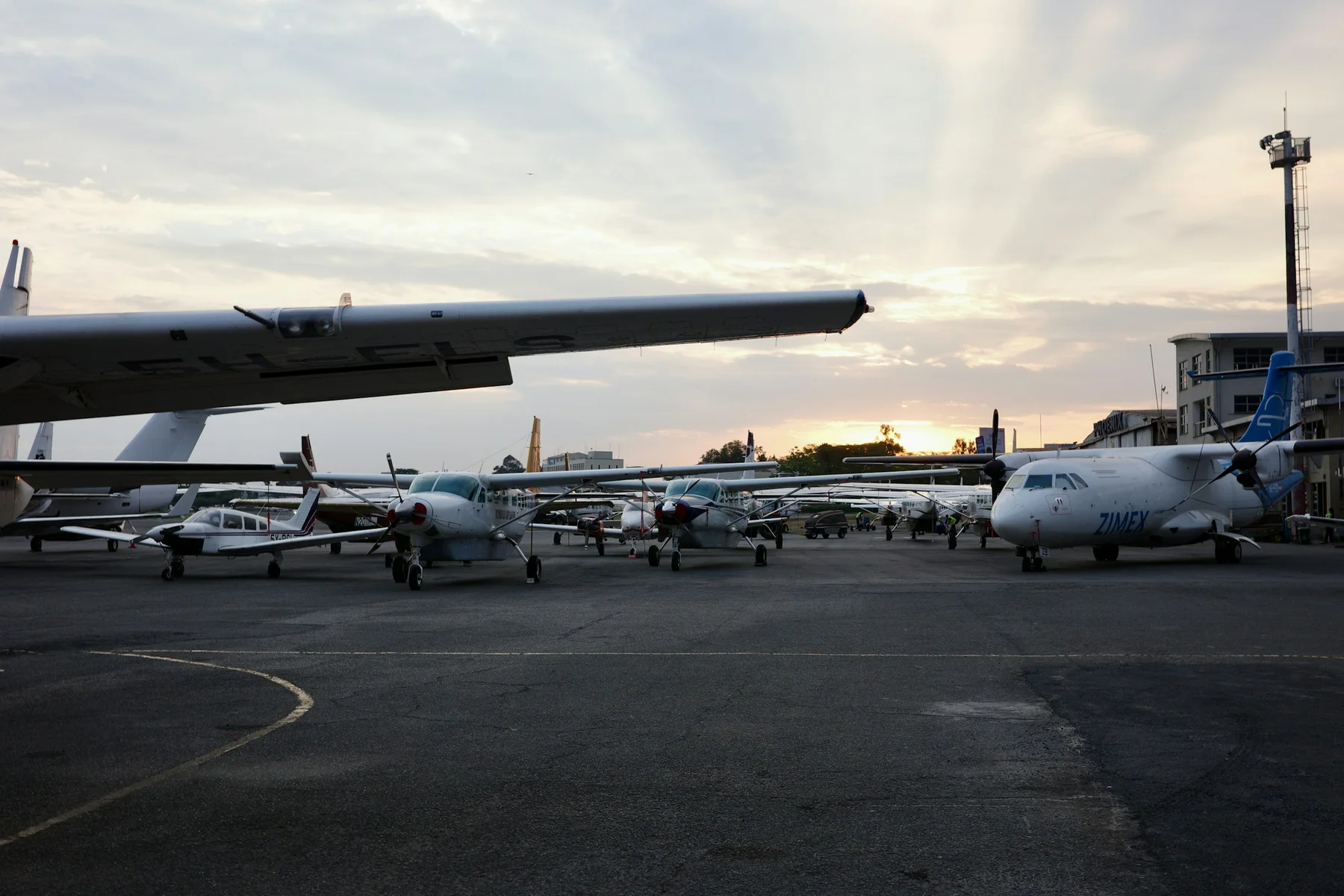
Most scheduled safari flights leave from Wilson Airport, south of central Nairobi. Most international flights use Jomo Kenyatta International Airport, or JKIA, on the city’s eastern side. They are separate airports connected by unpredictable urban traffic.
The Nairobi transfer is part of the itinerary
Landing at JKIA does not mean you are ready to board at Wilson. You must clear immigration, collect baggage, pass customs, meet the driver, cross the city, find the airline terminal and check in. Build a real buffer, not the fastest map estimate.
Same-day international arrival to Mara
A same-day connection can work when the long-haul arrival is early and the Mara flight is late enough. It becomes fragile when the international flight is delayed, immigration is slow or traffic thickens. An overnight in Nairobi may protect an expensive safari and a tired traveller.
Same-day Mara return to international departure
Do not build a tight Wilson to JKIA connection around the scheduled Mara arrival. Bush flights can make multiple stops, weather can intervene and Nairobi traffic can change quickly. A later international flight or Nairobi overnight is safer.
Wilson check-in
AirKenya’s 2026 timetable requires check-in 60 minutes before departure at Wilson. Safarilink’s terms also set a 60-minute check-in at Wilson. Check the current ticket because terminal, carrier and security instructions can change.
Bush-airstrip check-in
AirKenya states 30 minutes before departure at bush airstrips. Safarilink also uses 30 minutes at locations outside its named major airports. Camp vehicles plan around an approximate aircraft arrival because the day’s circuit can move.
Identity and documents
Carry the passport or photographic identity document used for the booking. Regional connections may also require visas, yellow-fever documentation and immigration formalities. Keep originals in hand luggage, protected from dust and rain.
Airline terminals at Wilson
Safari airlines may use their own check-in areas or lounges. A driver must know the operating carrier, not merely “Wilson.” Codeshares, substitute aircraft and interline arrangements can change where assistance is needed.
What happens after check-in
Bags are weighed, documents checked and passengers wait for boarding. The aircraft may be a Cessna Caravan, Dash 8 or another approved type depending on load and operation. Seating may be allocated by crew for weight and balance.
What the flight feels like
Small aircraft are noisier and more intimate than an airliner. Views can be superb. Cabin temperature, vibration and motion vary. Earplugs, a light layer and motion-sickness planning help sensitive travellers.
One traveller who had used several Wilson carriers described the sectors as “all on time and lovely flights”. Enjoy that possibility while keeping enough margin for the day when weather or routing changes it.
Multi-airstrip stops
The aircraft can land, unload a few passengers, take on others and continue. This is normal safari aviation. The number and sequence may not be final until operations know the day’s bookings.
Why printed times vary
AirKenya says arrival and pickup times can vary with multiple-airstrip routing. Safarilink recommends checking operations because some routes can vary by up to 40 minutes. Weather, passengers, strip condition and safety decisions can add more uncertainty.
A traveller’s useful description
One frequent flyer wrote that Mara times should be seen as “about this time” because aircraft follow the airstrips required that day. That phrase is not a licence for careless scheduling. It is a reason to protect connections.
Direct does not always mean nonstop
A ticket from Wilson to the Masai Mara can be a direct service while still making intermediate Mara stops. Ask whether the published arrival is a broad destination time or the expected time at the named airstrip.
Aircraft changes
Airlines may change aircraft for payload, maintenance, weather or operational reasons. The baggage allowance and space limit remain important. Never pack on the assumption that a larger aircraft seen in a schedule or photo will operate your sector.
Weather decisions
Pilots and operations may delay, reroute or cancel for safety. Low cloud, thunderstorms, strong wind, visibility and runway surface all matter. A delayed game drive is inconvenient. Pressuring a flight to operate is never appropriate.
Airstrip condition
Rain can make a strip slippery or soft. Wildlife can also occupy the runway. Camp and airstrip teams inspect and clear the area, while pilots retain operational authority. A safe diversion is a successful decision, not a service failure.
Wildlife on the runway
Bush airstrips are part of the landscape. Animals may cross or graze nearby. Stay with camp staff, keep children close and never wander down the runway for a photograph. Aircraft propellers and moving vehicles create additional hazards.
Camp pickup
Your camp normally sends a guide and vehicle to meet the flight. Give it the ticket details and reconfirm any airline change. If a booking agent issues the flight separately, make sure the camp receives the exact strip and expected time.
The airstrip transfer is not a taxi ride
The transfer may become the first game drive. Wildlife has priority, roads can be slow and another guest may share the vehicle. Ask whether the transfer is private, how long the normal range is and whether park or conservancy fees apply.
Arrival-day game drive
An early flight can preserve lunch and an afternoon drive. A later flight can arrive close to sunset. Do not advertise a full game drive unless the schedule, transfer, check-in and protected-area hours actually support it.
Departure-day game drive
An afternoon flight can leave room for a morning drive and lunch. A morning departure may require leaving camp early. The guide should know the airstrip check-in and the aircraft’s approximate circuit time.
AirKenya in brief
AirKenya operates scheduled safari services from Wilson and publishes a detailed annual timetable. Its 2026 document includes Masai Mara connections, check-in rules, minimum-passenger notes and the Migori/Tarime link toward Serengeti. Choose it when its strip and timing fit the itinerary.
Safarilink in brief
Safarilink publishes multiple daily Wilson to Mara patterns and says it stops at eight major airstrips passengers require. Its terms explain baggage, check-in, routing changes and connection guarantees within its own network. Choose it when its exact service fits the camp and onward route.
Mombasa Air Safari in brief
Mombasa Air Safari is another established operator on safari and coastal routes. Its usefulness depends on the travel date, strip and coast connection. Confirm the current timetable and baggage policy directly rather than applying another airline’s rules.
Other scheduled and charter operators
Additional licensed operators and charter companies serve Wilson and Mara strips. A lower fare is not enough. Verify regulatory status, operating carrier, baggage, cancellation terms, airstrip permission, insurance and who provides support if the schedule changes.
Airline comparison framework
| Compare | Why it matters |
|---|---|
| Correct named strip | Avoids a long or impossible camp pickup |
| Departure time | Protects international and camp connections |
| Stop pattern | Affects actual arrival range |
| Baggage rule | Cameras and coast luggage can exceed it |
| Change and cancellation terms | Safari dates may move |
| Own-network connection policy | Determines assistance when a first flight delays |
| Seasonal service | Some inter-camp or regional links pause |
| Operating carrier | Aircraft and terminal may differ |
There is no universal best airline
Traveller experiences vary by day, route and weather. One visitor said, “I would struggle to choose between them”. Another experienced one late sector and several punctual ones. Choose the robust itinerary, not a sweeping forum verdict.
A positive service example
After a medical problem complicated a connection, one traveller wrote that staff were “super helpful getting us and luggage transferred”. It is encouraging, but personal assistance on one day cannot replace a safe connection buffer.
A varied punctuality example
One traveller reported, “all were on time” except one bush flight. Their trip shows why a single airline label cannot predict every sector.
A practical route-choice example
An experienced flyer recommended choosing “the flight that suits your timings”. Add one refinement: it must also suit the correct airstrip and the connection margin.
The core baggage rule
AirKenya’s policy states a 15-kilogram allowance in soft-sided bags. Safarilink’s terms state 15 kilograms total for most safari routes, including hand baggage and cameras, with published dimensions. The exact ticket governs your flight.
Total means total
Do not treat 15 kilograms as a checked-bag allowance plus a separate camera bag. Safarilink expressly includes hand luggage and cameras. AirKenya’s current policy should be read in full for the booked service.
Why soft bags matter
Small aircraft holds have irregular shapes and limited volume. A soft duffel can fit around structure where a hard shell cannot. Safarilink explains this in its FAQ. Soft does not mean flimsy. Use strong zips, durable fabric and a rain-resistant cover.
Wheels and frames
A soft wheeled bag may be accepted when it meets dimensions and can flex. A rigid frame can still be a problem. A recent traveller wrote, “The key metric is weight”, but the airline’s dimensions and construction rule still come first.
Hard-shell cases
Do not rely on stories of another passenger whose small hard case was accepted. Aircraft, load and staff discretion vary. If the airline asks for soft-sided baggage, follow the instruction and store the hard case in Nairobi.
Camera equipment
Camera bodies, lenses, binoculars, batteries and laptop weight add quickly. Keep fragile equipment with you as instructed, but include it in the allowance. Ask about a freight seat or pre-purchased excess when a professional kit cannot fit safely.
Lithium batteries
Carry spare lithium batteries in hand luggage with terminals protected, following the airline’s current dangerous-goods rule. Do not place loose spares in checked baggage. Capacity limits can apply, so confirm large drone or power-station batteries in advance.
Drones
Drone import, registration, aviation and protected-area permissions are separate from baggage allowance. Do not fly a drone in the Mara without every required approval. Wildlife disturbance and privacy remain concerns even when equipment is technically carried.
Binoculars
One shared pair is rarely enough for a couple who both enjoy wildlife. Compact binoculars can save weight. Pack them where they are accessible after landing because the transfer may encounter wildlife immediately.
Medical equipment
Declare oxygen, mobility batteries, needles, cold-chain medication or other special equipment before ticketing. The carrier needs specifications, and the camp needs a ground-handling plan. Do not arrive at Wilson hoping an unannounced item will fit.
Mobility aids
Small aircraft have steps, narrow doors and limited cabin movement. Ask about boarding assistance, wheelchair dimensions, lifting limits, seat transfer and airstrip surface. The accessible Kenya safaris guide helps define the questions.
Children and infant baggage
Safarilink’s terms state that infants do not receive a baggage allowance. Child fare and baggage rules vary by carrier. Bring the required age and identity documents, request child-restraint guidance and make sure formula or medication remains accessible.
Laundry as a luggage strategy
Many safari camps offer laundry, sometimes excluding undergarments for cultural or operational reasons. Three light outfits, layers and repeat wear can be more useful than a large case. Confirm turnaround and what the camp will wash.
Coast-extension luggage
A two-week Kenya trip often carries more than a Mara aircraft wants. Split the luggage. Leave the beach case securely in Nairobi, fly with a safari duffel, then swap before the coast. This works best when the itinerary returns through Wilson.
Baggage strategy by trip type
| Trip | Practical strategy | Detail to confirm |
|---|---|---|
| Mara only | One compliant soft duffel per traveller | Total weight includes cameras |
| Mara then coast via Wilson | Store beach case and swap | Storage hours and terminal |
| Mara direct to coast | Pack one bag for both | Coast-route allowance |
| Professional photography | Pre-buy excess or freight seat | Confirmed kilograms, not discretionary space |
| Family with infant | Divide essentials across adult allowances | Infant allowance and child equipment |
| Mobility equipment | Send specifications before ticketing | Battery, dimensions and handling |
| Long East Africa circuit | Arrange repeated laundry and storage | Each carrier’s different policy |
Wilson baggage storage
Safarilink’s FAQ states that it has a complimentary secure store at its Wilson office. Other airlines may offer storage under their own terms. Confirm opening hours, claim process, liability and whether your return uses the same terminal.
Excess baggage
Safarilink allows pre-purchased excess bundles and, on eligible fares, a freight seat for confirmed extra weight. Last-minute excess is subject to space and captain discretion. AirKenya also publishes an excess-baggage policy. Pre-arrangement is safer than airport negotiation.
A traveller on weighing
One passenger recalled, “all luggage was weighed at the same time”. Family averaging may occur, but do not assume it. Pack each person within the ticket rule where possible.
Another traveller on strictness
A recent visitor said, “They will weigh your bag and hand bag/camera bag”. The lesson is simple: weigh the complete set at home.
Baggage checklist
| Item | Action before travel |
|---|---|
| Safari duffel | Confirm soft construction and dimensions |
| Total weight | Include handbag, camera bag and cameras |
| Camera kit | Pre-arrange excess or freight seat if needed |
| Hard suitcase | Arrange secure Nairobi storage |
| Batteries | Check cabin carriage and protect terminals |
| Medication | Keep accessible with prescription documents |
| Mobility aid | Send dimensions, weight and battery type |
| Child items | Check infant and child allowance |
| Coast bag | Plan storage and later handover |
| Rain protection | Use liners or waterproof covers |
Road versus flight
Flying saves many road hours and can be easier on a short safari. Driving offers changing landscapes, continuous luggage capacity and a guide/vehicle from Nairobi. The choice depends on time, budget, group size, route and whether the road itself connects other parks. Use the Masai Mara road conditions and gate guide before comparing the road option.
Time comparison
The airborne sector is often around an hour, but total flight travel includes Wilson transfer, check-in, possible stops and the camp drive. A road safari begins at the hotel and continues in one vehicle. Compare door to room, not takeoff to landing.
Cost comparison
Flight tickets are only part of fly-in cost. Add Nairobi transfers, airstrip transfer, camp vehicle and any baggage purchase. Road cost depends on vehicle, guide, fuel, days and group size. See Kenya safari cost for a whole-trip framework.
Group-size economics
A private road vehicle becomes more economical per person as the group fills. Individual flight seats scale per traveller. A couple on a short luxury trip may value time more. A family or small group may prefer the private road vehicle and luggage space.
Comfort comparison
Flying avoids a long road but introduces small-aircraft noise, motion, steps and baggage limits. Driving introduces hours of sitting, road vibration and dust. Travellers with back pain, anxiety, motion sensitivity or mobility needs should compare the specific vehicle and aircraft experience.
Environmental comparison
Both modes have impacts. The answer is not a simple moral label. Longer stays, efficient routing, shared flights, well-filled vehicles and conservation-supporting camps can improve the value created per journey.
Road and flight decision table
| Traveller | Flying often suits | Road often suits |
|---|---|---|
| Two-night Mara stay | Protects scarce safari time | Only if part of a nearby route |
| Family with much luggage | When storage and baggage are solved | More luggage flexibility |
| Photographer with heavy kit | Freight seat or charter may work | Private vehicle carries equipment easily |
| First Kenya circuit | Useful between distant regions | Reveals the country between parks |
| Mobility constraints | If boarding and transfers are pre-planned | If long sitting is manageable and vehicle adapted |
| Four to six guests | Charter may become competitive | Private road vehicle often strong value |
Private charter
A charter chooses departure time and can fly point to point, subject to permissions, daylight, weather and aircraft availability. It may solve luggage, group or remote-strip needs. It costs more than a scheduled seat unless divided across a suitable group.
When charter makes sense
Consider it for a family or group, an itinerary that misses scheduled circuits, professional camera equipment, an urgent private connection or a camp served by a less frequent strip. Ask for aircraft type, payload, taxes, landing fees, waiting terms and cancellation policy.
Charter to JKIA
Some charter aircraft and operators may use JKIA under specific arrangements, while many safari flights use Wilson. Never assume. Airport permission, slot, ground handling and cost must be written into the quotation.
Helicopter transfer
Helicopters can reach locations fixed-wing aircraft cannot and create scenic routes, but they require appropriate landing permissions, payload planning and specialist cost. They are not a casual workaround for a poor itinerary.
Mara to Serengeti is not one simple flight
Kenya and Tanzania require an international border process. Scheduled connections commonly combine a Mara flight to Migori, a road transfer across the border to Tarime and a Tanzania flight onward. Passports, visas and yellow-fever rules matter.
Migori and Tarime sequence
AirKenya’s 2026 timetable describes the Migori/Tarime connection and states that AirKenya provides the road transfer and ground handling on its linked service. Confirm the operating partners, dates, minimum passengers and exact Serengeti strip.
Seasonal operation to Serengeti
The 2026 AirKenya timetable says the Migori/Tarime service does not operate from 1 April to 20 May and requires a higher minimum in part of November and December. This is a dated rule. Check the live schedule for the actual year of travel.
Serengeti documents
Carry passport, required visas, yellow-fever certificate and any immigration forms. Obtain visas in advance where recommended. A missing document can break the coordinated connection and create costs that the airline does not cover.
Mara to the coast
Selected services connect the Mara with Diani, Mombasa or other coastal airports, sometimes directly and sometimes via Wilson. A direct coastal service can save a Nairobi transfer. Confirm season, operating days, baggage and intermediate stops.
Mara to Diani
Diani flights use Ukunda Airstrip. Compare a direct or coordinated service with Mara to Wilson plus a later coastal flight. If changing airlines at Wilson, build margin even when the terminals are nearby.
Mara to Lamu or Malindi
Connections may run via Wilson or another coastal hub. The ticket should state whether bags are checked through and whether the connection is protected. A self-built connection between separate carriers carries more risk.
Mara to Amboseli
Some schedules allow a same-day connection, often through Wilson. Direct seasonal or charter options may exist. Compare the total circuit time with a road or overnight plan. The Kenya safari flights guide can hold future network detail.
Mara to Samburu
AirKenya’s 2026 notes describe Mara and Samburu links that may route via Wilson in low season. Safarilink also publishes connections within its network. Do not promise a direct bush-to-bush flight until the date and strip are confirmed.
Mara to Laikipia
Seasonal services may connect the Mara with Nanyuki, Lewa, Loisaba or other Laikipia points. Outside those periods, routing through Wilson is common. The camp pair and date determine the sensible plan.
Mara to Entebbe
Regional services and partner connections change seasonally. Immigration, health documents and minimum passenger rules apply. Use the operating airline’s current timetable, not a blog schedule copied from a previous year.
Connection-protection table
| Connection | Main risk | Safer planning choice |
|---|---|---|
| JKIA arrival to Wilson Mara flight | Immigration and traffic | Long buffer or Nairobi night |
| Mara flight to JKIA international departure | Multi-stop delay and traffic | Late flight or Nairobi night |
| Mara to coast on separate tickets | Missed Wilson connection | Same-airline protected link or large margin |
| Mara to Serengeti | Border documents and partner timing | Coordinated through-ticket and documents ready |
| Mara to Samburu or Laikipia | Seasonal routing | Confirm direct versus Wilson routing |
| Camp-to-camp within Mara | Limited booking window and aircraft circuit | Road transfer unless flight is confirmed |
Connections within the Mara
Safarilink’s FAQ says transfers between Mara airstrips can only be booked within 24 hours of travel, depend on the planned routing and are charged at the current Nairobi to Mara single-ticket rate. A road game transfer is often more useful.
When an inter-camp flight helps
It may help when camps sit at opposite ends of the ecosystem, road condition is poor or mobility makes a long drive difficult. It may hurt when it consumes game-drive time, adds waiting and lands far from the second camp.
When the road transfer is better
A vehicle transfer lets the guide connect habitats and can become a full wildlife day. It carries luggage without another check-in. Choose it when the road is safe, time is available and the route adds experience.
Photography from the aircraft
Window views can be lovely, but seating and reflections are unpredictable. Keep the camera compact, disable flash and follow crew instructions. Never block exits or unfasten a belt for a photograph. The Masai Mara photography guide covers field preparation.
Choosing a seat
Crew may assign seats for weight and balance. A preferred side cannot be guaranteed. Ask politely, then accept the safety decision. The most important view comes after landing.
Motion sickness
Discuss suitable medication with a clinician before travel and test it if possible. Eat lightly, look toward the horizon and keep an airsickness bag accessible. Tell the crew if you feel unwell.
Fear of small aircraft
Ask what aircraft is normally used, but understand it can change. Learn the boarding routine, use breathing techniques and tell the crew discreetly. A private road transfer is a valid alternative if anxiety would dominate the day.
Noise and hearing
Carry simple earplugs or noise-reducing headphones permitted by the crew. Protect children’s hearing appropriately. Listen during the safety briefing and remove anything that prevents hearing instructions when asked.
Clothing for the flight
Wear layers, closed shoes and comfortable trousers. Airstrips can be dusty, muddy or cool. A light rain shell belongs in accessible hand luggage, not at the bottom of a stored duffel.
Food and water
Carry a small permitted water bottle and any essential snack, especially for children or medical needs. Liquids and food must follow security and carrier rules. Bush strips have limited or no passenger facilities.
Toilets
Small aircraft generally do not have passenger toilets. Use facilities before boarding at Wilson or camp. A circuit with multiple stops can take longer than the advertised destination time.
Pregnancy
Obtain medical advice and check the airline’s pregnancy policy before booking. Consider small-aircraft access, camp remoteness, evacuation cover, malaria advice and the uneven game-drive environment together.
Older travellers
Age alone is not the issue. Steps, cabin access, transfer vehicle height, heat and waiting may matter. Provide assistance needs in writing and confirm who helps at Wilson and at the bush strip.
Families with young children
Prepare children for noise and close seating. Keep them beside an adult on the airstrip, pack familiar snacks and protect ears. Confirm minimum ages, child fares, infant baggage and seating directly with the airline.
Emergency evacuation
Flying Doctors membership or suitable evacuation insurance is different from a scheduled safari ticket. Confirm geographic coverage, medical approval process and onward hospital costs. The camp should know the emergency contact.
Travel insurance
Choose cover for missed connections, delays, baggage, medical evacuation and safari activities. Read whether separate tickets and weather disruption are covered. Keep policy and assistance numbers offline.
Ten questions for the camp
- Which exact airstrip should we book?
- Which alternatives are used after heavy rain?
- Is the airstrip transfer included?
- Is it private or shared?
- What is the normal transfer range?
- Does it cross a fee boundary?
- Who meets us and how are they identified?
- What flight details must we send?
- What time will we leave camp for departure?
- Can the transfer support mobility or child needs?
Ten questions for the airline
- Does this departure serve the named strip?
- Is the arrival time specific to that strip?
- How many stops are currently expected?
- What is the total baggage allowance?
- What bag dimensions and construction apply?
- How is camera equipment counted?
- Can excess be bought in advance?
- Which terminal and check-in time apply?
- Is the onward connection guaranteed?
- What happens if the strip becomes unusable?
Ten questions for a charter quote
- Which aircraft and operator will fly?
- What passenger and baggage payload applies?
- Are landing and handling fees included?
- Which airstrip permissions are confirmed?
- Is waiting time charged?
- What are weather cancellation terms?
- Can the flight use Wilson or JKIA?
- What daylight limits apply?
- Is ground transfer included?
- What substitute aircraft may be used?
Common mistake: booking the flight before the camp
The ticket may land on the wrong side of the ecosystem. Fix it by getting the camp’s current written airstrip recommendation before ticketing.
Common mistake: searching only “Masai Mara”
The result may show a generic destination code or timetable. Continue until the booking names the actual strip or the airline confirms how it assigns strips.
Common mistake: ignoring the ground transfer
A forty-five-minute flight followed by a two-hour transfer is not the expected quick arrival. Compare the full door-to-camp journey.
Common mistake: connecting JKIA and Wilson too tightly
They are different airports. Immigration, baggage, customs and traffic sit between them. A short map line is not a connection plan.
Common mistake: treating 15 kilograms as checked baggage
For many safari services, the allowance includes hand luggage and cameras. Weigh everything together and follow the booked carrier’s policy.
Common mistake: bringing a rigid suitcase
The aircraft hold may not accept it even when its weight is low. Use a compliant soft bag and store the hard case in Nairobi.
Common mistake: assuming a direct flight is nonstop
Mara services often operate as circuits. Another airstrip stop is normal and can alter the arrival range.
Common mistake: promising an afternoon game drive
The promise fails when the flight runs later, makes several stops or lands far from camp. Describe the afternoon as timing-dependent.
Common mistake: reading one delay review as a verdict
Weather and circuit operations affect all carriers. Compare the current service and build margin. One traveller who flew several operators called them “all much of a muchness”.
Common mistake: booking separate tickets without a recovery plan
If the first airline does not guarantee the second, a missed connection can become your cost. Use a protected connection, a large buffer or an overnight.
A smooth arrival itinerary
Arrive at JKIA the previous evening, sleep in Nairobi, transfer to Wilson with time to spare, check in with compliant baggage, fly to the camp-nominated strip and meet the guide. The afternoon remains available without depending on a perfect long-haul connection.
A same-day arrival itinerary
Use an early international arrival and a later Mara flight, with a private airport transfer and a contingency plan. If the international sector slips beyond the safe margin, know whether the Mara ticket can be changed and where you will stay.
A smooth departure itinerary
Take a Mara flight that reaches Wilson with generous time before the JKIA flight, or stay overnight in Nairobi. Ask the driver to monitor traffic and choose the airport route dynamically.
A coast connection itinerary
Use a direct Mara to coast service where it fits, or build a protected same-airline connection through Wilson. Store or swap luggage only when collection hours and terminals are compatible.
A Serengeti connection itinerary
Use a coordinated Mara to Migori, road to Tarime and Tanzania flight sequence. Secure visas and health documents in advance. Keep the receiving camp informed of the final Serengeti strip and any delay.
A family itinerary
Choose an afternoon flight after a calm Nairobi night, keep a small child bag within the total allowance and have the camp meet the nearest strip with a private vehicle. Avoid stacking international arrival, cross-city transfer and bush flight into one exhausted day.
A photographer itinerary
Choose the correct strip, pre-purchase confirmed camera weight, store non-safari luggage and arrange a vehicle that can carry equipment safely. Do not gamble the kit on discretionary excess space.
A limited-mobility itinerary
Send measurements and assistance needs before ticketing, confirm steps and lifting, choose the shortest camp transfer and have both airline and camp name the responsible staff at each handover.
Flight-planning checklist
| Stage | Confirm |
|---|---|
| Camp | Exact property, dates and protected-area location |
| Airstrip | Written camp recommendation and alternative |
| Ticket | Operating airline, date, strip and fare terms |
| Baggage | Total weight, dimensions, soft bag and excess |
| Wilson | Terminal, reporting time and driver pickup |
| Mara | Camp vehicle, guide name and transfer inclusion |
| Onward | Protected connection or safe buffer |
| Documents | Passport, visas, health and ticket copies |
| Support | Airline operations, camp and emergency contacts |
| Contingency | Weather, missed flight and overnight plan |
How to book in ten steps
- Choose the exact camp.
- Ask the camp to name the airstrip in writing.
- Check airlines serving that strip on the date.
- Compare the complete circuit and fare terms.
- Protect the Wilson and onward connection.
- Confirm baggage, cameras and special equipment.
- Book the flight with exact passenger names.
- Send the ticket to the camp.
- Reconfirm pickup and approximate timing before travel.
- Carry all contacts and documents offline.
Final recommendation
The best Mara flight is not automatically the earliest, cheapest or shortest one on screen. It is the service that lands at the right strip, leaves enough connection time, carries the required baggage and hands you directly to the camp that is expecting you. Use this Masai Mara airstrips and flight guide to build that chain, then reconfirm it for the actual travel date.
Frequently asked questions
Which airport do Masai Mara flights leave from in Nairobi?
Most scheduled safari flights leave from Wilson Airport. Most international flights use JKIA. They are separate airports, so allow time for immigration, baggage and traffic between them.
How long is the flight from Wilson to the Masai Mara?
The broad scheduled sector is often around an hour, but the actual trip can include multiple Mara airstrip stops. Add Wilson check-in and the camp’s ground transfer.
Which Masai Mara airstrip should I book?
Ask the exact camp or safari operator to name it in writing. The nearest-looking strip may not have the right scheduled service, road or protected-area access.
How many airstrips are in the Masai Mara?
There are several major Reserve and conservancy airstrips plus smaller private strips. Airlines serve different sets. The useful number is the one or two that serve your chosen camp.
Is the baggage limit really 15 kilograms?
AirKenya and Safarilink publish a 15-kilogram allowance for standard safari services. Safarilink includes hand luggage and cameras. The ticketed carrier’s current policy is final.
Can I bring a wheeled bag?
A soft-sided wheeled bag may be accepted when it meets dimensions and can flex. A rigid frame or hard shell can be refused. Confirm with the carrier.
Can I pay for extra baggage?
Some airlines sell excess bundles or a freight seat, subject to fare and aircraft rules. Arrange it before travel. Last-minute excess may be left behind if payload or space is limited.
Can I store luggage at Wilson Airport?
Safarilink states that it offers complimentary secure storage at its Wilson office. Confirm the current process, liability, hours and whether your return uses the same terminal.
Will the camp meet me at the airstrip?
Normally yes, when it has your correct ticket details. Confirm whether the transfer is included, private or shared and how the guide will identify you.
Are Mara flights always on time?
No airline can guarantee exact bush-circuit timing. Weather, strip condition, passenger routing and safety decisions can alter it. Build generous onward margins.
Can I fly directly from the Mara to Serengeti?
The common scheduled connection uses a flight to Migori, road transfer across the border to Tarime and another flight in Tanzania. It requires documents and coordinated operators.
Is flying better than driving to the Mara?
Flying protects time on a short trip. Driving offers luggage flexibility, a continuous private vehicle and a view of Kenya between destinations. Compare door-to-camp time, total cost and traveller needs.
Sources and further reading
Current operational foundations come from the dated AirKenya 2026 timetable, AirKenya Mara airstrip list, AirKenya baggage policy, Safarilink Mara schedule, Safarilink terms, Safarilink FAQs, Mara Conservancy flying information and the Greater Mara map. Flight schedules, strip conditions and assignments can change, so the booked airline and camp must confirm the travel date.
Let us connect the right strip to the whole itinerary
Share camp, dates, travellers, baggage, camera equipment, international flights, mobility needs and the next destination. We will compare scheduled, road and charter solutions.