
Walking Safaris in the Greater Mara
Learn where walking is authorised, compare short nature walks with long routes and fly camps, then assess guides, safety, fitness, ages, seasons and camp access.
- What a Greater Mara walking safari is
- What it is not
- The word “walk” hides several products
- The six useful formats
- A camp stroll
- A cultural walk
- A river walk
- A short bush walk
- A long bush walk
- A walking transfer
- Fly camping
- Luxury varies in a fly camp
- Why people choose to walk
- Scale changes immediately
- Tracks become biographies
- Dung becomes data
- Plants stop being background
- Birds organise the soundscape
- Insects take their proper size
- Smell becomes part of navigation
- Wind becomes a safety tool
- Silence has a purpose
- Conversation still belongs
- What you may see
- What you should not demand
- Big cats on foot
- Elephants on foot
- Buffalo on foot
- Hippos on foot
- Snakes
- Ticks and insects
- The real wildlife reward
- Traveller perspective
- Less ground is part of the bargain
- No predators can still be a successful walk
- Where walking is allowed
- The Masai Mara National Reserve
- The reserve management plan
- The Mara Triangle
- A riverbank photo stop is not permission
- Camps inside the reserve
- Community conservancies
- Conservancy does not mean public access
- Rules change at the boundary
- Current permission matters
- The landowner dimension
- Grazing is not an intrusion by default
- Respect community movement
- Ask before photographing people
- Land-status comparison
- Read the reserve guide
- Naboisho Conservancy
- Naboisho Camp
- What to confirm at Naboisho Camp
- Kicheche Valley
- Short versus expedition at Kicheche
- Naboisho terrain
- Naboisho wildlife
- Naboisho access
- Read the Naboisho guide
- Olare Motorogi Conservancy
- The Seketa Valley stage
- Olare Motorogi walking questions
- Managed grazing context
- Read the Olare Motorogi guide
- Ol Kinyei Conservancy
- What guests noticed in Ol Kinyei
- The Ol Kinyei difference
- Read the Ol Kinyei guide
- Olderkesi Conservancy
- Cottar’s walking style
- The reserve boundary at Olderkesi
- Olderkesi landscape
- Read the Olderkesi guide
- Mara North Conservancy
- Property-specific walking
- River risk in Mara North
- Traveller account from Mara North
- Fitness adaptation
- Read the Mara North guide
- Nashulai Conservancy
- Why the format label matters at Nashulai
- Traveller account from Nashulai
- Loita Hills connection
- Siana and eastern community areas
- Lemek and other conservancies
- Walking-area comparison
- Who should lead the walk
- The KPSGA framework
- Bronze level
- Silver level
- Gold level
- Certification is voluntary
- Local knowledge
- Walking-specific training
- First-aid currency
- Communication
- The armed ranger
- Who carries the rifle
- Position in the group
- Guide and ranger roles
- A spotter or tracker
- Group size
- Private walk
- Guide-question table
- The safety briefing
- Stop signal
- Stay together
- No running
- No crouching without instruction
- No food loose in pockets
- Phones on silent
- Camera straps
- Tell the guide about limitations
- The route is not a promise
- Vehicle backup
- Medical plan
- Weather cancellation
- Fire
- Night walking
- Unfenced camp escorts
- Safety-layer table
- Dangerous-game honesty
- “Safe” needs a complete sentence
- Firearm expectations
- Insurance wording
- What a good walk feels like
- The first ten minutes
- A good pace
- Interpretation has layers
- The guide does not perform certainty
- Waiting matters
- Detours are part of the story
- Rest is not failure
- The return changes the vehicle
- Different view of the Mara
- Choosing the right duration
- One hour
- Ninety minutes
- Two to three hours
- Four to five hours
- Full day
- Overnight expedition
- Start with one short walk
- Do not schedule it after arrival
- Do not schedule it before a tight flight
- Duration comparison
- Fly camping in detail
- Why it is called fly camping
- The sleeping tent
- The bed
- The toilet
- The shower
- Meals
- Drinks
- Power
- Lighting
- Camp perimeter
- Night sounds
- Weather shelter
- Luggage
- Support vehicle
- Minimum stay
- Minimum age
- Private operation
- Fly-camp checklist
- Kicheche Walking Wilderness
- Why the route is attractive
- Who it suits
- Who should pause
- Naboisho fly camping
- Expedition versus add-on
- Fitness for a Mara walk
- Distance is not the whole test
- Pace
- Balance
- Knees
- Back
- Heat tolerance
- Anxiety
- Mobility limitations
- Hearing limitations
- Visual limitations
- Pregnancy
- Medical conditions
- A practical self-check
- Children on walking safaris
- No universal minimum age
- Give the exact age
- Attention span
- Private guide
- Parent responsibility
- Teenagers
- Fly camp with children
- Family safety questions
- Honeymoon walking safari
- Private pace
- Fly-camp romance
- Build in recovery
- Solo travellers
- Older travellers
- Photographers on foot
- One camera body
- No tripod assumption
- Wide storytelling
- Photographing guides
- Wildlife distance
- Read the photography guide
- Best time for walking safaris in the Greater Mara
- January
- February
- March
- April
- May
- June
- July
- August
- September
- October
- November
- December
- Dry-season advantages
- Dry-season tradeoffs
- Green-season advantages
- Green-season tradeoffs
- Season comparison
- Migration season
- Green season
- Time of day
- Walking and night drives
- Flying to a walking base
- Dawn start
- Midday
- Sunset
- Packing for a Mara walk
- Closed shoes
- Socks
- Long trousers
- Neutral colour
- Quiet fabric
- Layer
- Hat
- Rain shell
- Water
- Daypack
- Binoculars
- Sunscreen
- Repellent
- Medication
- Head torch
- Walking-packing table
- What a walk costs
- Included camp walk
- Separate activity fee
- Private guide supplement
- Armed ranger fee
- Fly-camp supplement
- Conservancy fee
- Transfers
- Accommodation nights
- Drinks and laundry
- Tips
- Price-comparison table
- Weather cancellation terms
- Guest cancellation
- Insurance
- What independent accounts tell us
- Learning is repeated
- Plants are remembered
- Feeling surrounded
- Fear can ease through formation
- Fitness can be adapted
- Community land changes perspective
- Reviews can mislead too
- A review-reading table
- Read the evidence roundup
- Common mistake: assuming the reserve allows walking
- Common mistake: booking the word, not the format
- Common mistake: chasing big cats
- Common mistake: treating the rifle as a guarantee
- Common mistake: hiding a medical issue
- Common mistake: wearing new boots
- Common mistake: carrying the vehicle camera kit
- Common mistake: forgetting water
- Common mistake: overestimating children
- Common mistake: calling a cultural walk a wildlife safari
- Common mistake: assuming every conservancy camp walks
- Common mistake: ignoring the return plan
- Common mistake: forcing a weather departure
- Booking checklist
- Frequently asked questions
- Can I walk inside the Masai Mara National Reserve?
- Where are walking safaris available?
- Is an armed ranger always present?
- What qualification should the guide have?
- Will I see lions on foot?
- How fit must I be?
- What is the minimum age?
- What should I wear?
- How long is a typical walk?
- What is fly camping?
- Is fly camping comfortable?
- Which season is best?
- Can I take photographs?
- Can walking replace game drives?
- How much does it cost?
- Is it suitable for a honeymoon?
- Final perspective
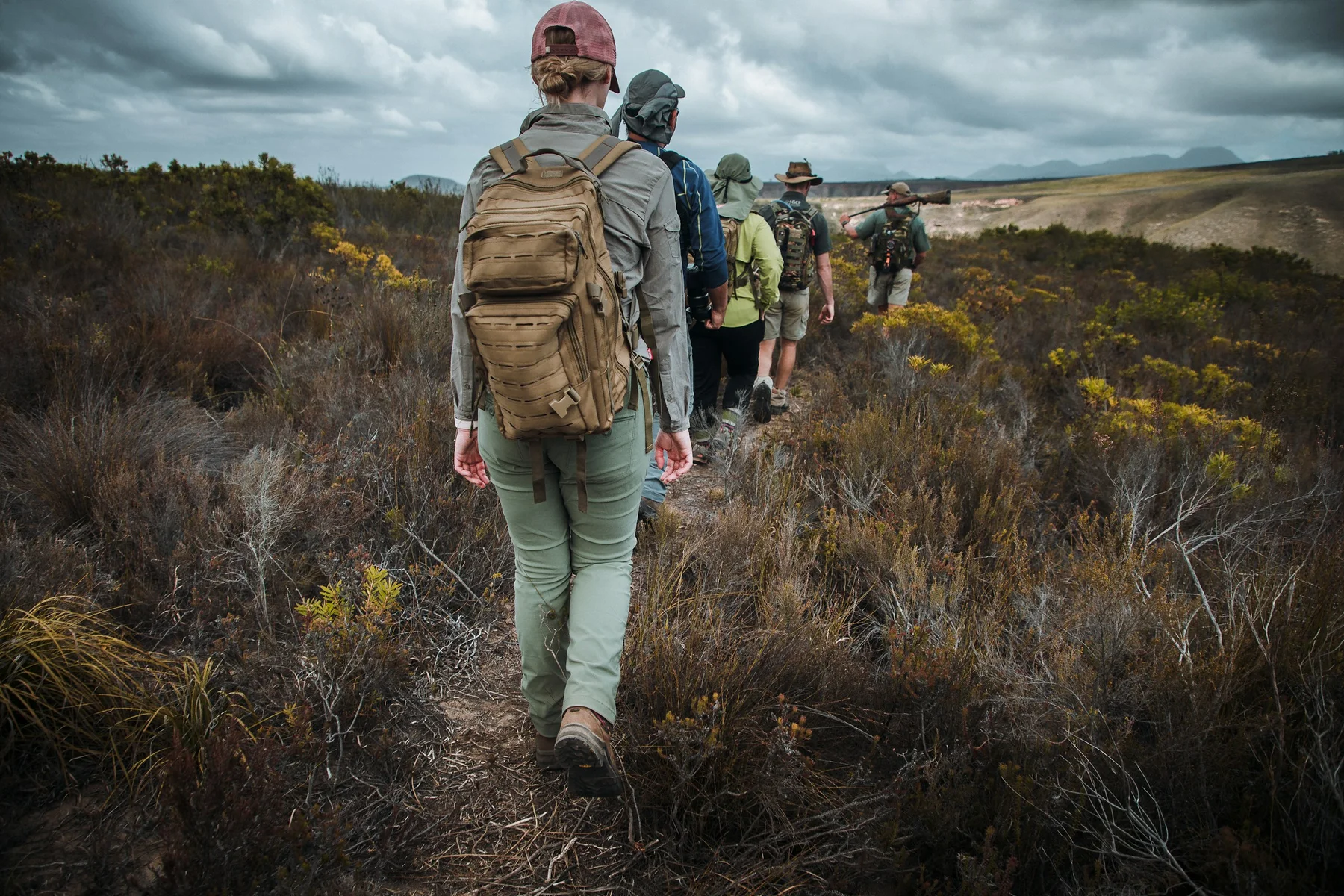
The guide raises one hand and the little procession stops. Five minutes earlier, the plain had seemed almost empty. Now there is a fresh hoof mark pressed into damp soil, a strand of coarse hair on an acacia thorn and a row of oxpecker calls moving through the trees. Somewhere ahead, buffalo have passed.
Nobody creeps closer for a photograph. The guide checks the wind, speaks quietly to the ranger and turns the group onto a wider arc. That decision is the walk. It is not a failed attempt to reach the buffalo. It is the moment when distance, scent, sound and judgement become visible in a way they rarely do from a vehicle.
Walking safaris in the Greater Mara can be a one-hour nature walk near camp, a half-day across open conservancy land, a four-to-five-hour stage between camps or an overnight fly-camping journey. They are usually offered in community conservancies outside the Masai Mara National Reserve, through properties with permission, trained guides and local safety arrangements. The formats are not interchangeable.
This guide explains where walking is possible, where ordinary visitors should remain in a vehicle, what a good safety briefing contains, how to assess a guide, what animals and signs you may encounter, which camps currently advertise walks, how children and fitness are handled, what fly camping feels like, what to wear and which questions expose a vague promise before it reaches your itinerary.
What a Greater Mara walking safari is
A walking safari is a guided journey on foot through wildlife habitat under the rules of the land manager. It has a planned route or decision framework, safety formation, emergency communication and trained leadership.
What it is not
It is not an unguided hike, a stroll beside a lodge, a village tour, a photo stop outside a vehicle or permission to approach an animal.
The word “walk” hides several products
A quotation may use “nature walk”, “bush walk”, “walking safari” and “fly camping” as though they mean the same thing. They do not.
The six useful formats
| Format | Typical shape | Main value | Main question |
|---|---|---|---|
| Camp nature walk | Short loop near the property | Tracks, plants, birds and orientation | Is it inside active big-game habitat? |
| Bush walk | One to three hours in conservancy habitat | Immersion and interpretation | Who leads and who carries protection? |
| Half-day walk | Several hours with a rest or bush breakfast | More terrain and ecological story | Fitness, heat and vehicle backup |
| Full-day walk | Long stage with meals and support | Journey and landscape scale | Distance, water and exit plan |
| Walking transfer | Point-to-point between camps or land units | A real sense of movement | Luggage, boundaries and support vehicle |
| Fly-camp expedition | Walk plus one or more mobile-camp nights | Dusk, night and dawn in remote country | Toilet, washing, weather and emergency plan |
A camp stroll
Some properties call an escorted walk between the tent and a viewpoint a nature walk. It can be pleasant, but it should not be sold as a full wildlife walking safari.
A cultural walk
A host-led visit through community land can focus on homesteads, livestock, plants, history and present-day life. It requires invitation and consent, and it should not be confused with tracking dangerous game.
A river walk
Walking near a river carries particular risk from hippos, crocodiles, buffalo, thick cover and steep banks. The phrase sounds gentle, so ask exactly where and how it operates.
A short bush walk
This is often the best introduction. An hour or two gives time for tracks, dung, plants and bird calls without turning the activity into an endurance test.
A long bush walk
Four or five hours changes the mental rhythm. Heat, feet, water and attention become part of the experience, and the route must remain flexible around wildlife.
A walking transfer
You leave one camp on foot and arrive at another or at a fly camp. Luggage travels separately, while the group carries water and essentials.
Fly camping
The name refers to a lightweight mobile camp, not an aircraft. Accommodation may include dome tents or bedrolls, camp beds, bucket showers, simple toilets and a compact kitchen.
Luxury varies in a fly camp
One operator may provide hot showers and a staffed dining setup. Another may offer a bedroll under mosquito netting. Request photographs and a facilities list for the exact mobile camp.
Why people choose to walk
Vehicles are exceptional viewing platforms, but they carry guests over the clues that make the ecosystem intelligible. Walking slows the story until small evidence becomes important.
Scale changes immediately
A giraffe at 200 metres feels different when there is no metal door beneath your elbow. The distance is respectful, yet the animal and the plain feel larger.
Tracks become biographies
A guide can read direction, pace, age and interaction from spoor. A lion print is less interesting as a trophy than as one sentence in a night-long movement.
Dung becomes data
Texture, moisture, seeds, insects and tracks around dung reveal diet, timing and who investigated after the animal left.
Plants stop being background
Acacias carry browsing lines, nests, thorns, galls and old damage. Grasses reveal soil, grazing pressure, rain and fire.
Birds organise the soundscape
Alarm calls, contact calls and sudden silence tell a guide where attention should move. Walking makes listening unavoidable.
Insects take their proper size
Termites, beetles, ants and spiders drive soil, decomposition and food webs. They are rarely visible from a moving vehicle.
Smell becomes part of navigation
Wild basil, crushed grass, damp earth, elephant dung and an old carcass locate events before the eye does.
Wind becomes a safety tool
The guide watches direction and strength because animals may smell people before seeing them. A changing wind can alter the route.
Silence has a purpose
Quiet is not theatre. It improves listening, reduces surprise and lets instructions travel clearly through the group.
Conversation still belongs
A good walk is not a military exercise. Questions are welcome when the guide chooses a safe place to stop and gather everyone.
What you may see
Possible sightings include giraffes, zebras, antelope, warthogs, elephants at a safe distance, buffalo signs, birds, reptiles and smaller mammals. Every route and day differs.
What you should not demand
Do not ask to approach lions, leopards, cheetahs, elephants, buffalo, hippos or rhinos for excitement. The guide's avoidance decision is evidence of quality.

Big cats on foot
Predators usually avoid people, but encounters demand calm, group cohesion and expert judgement. The objective is never to close distance deliberately.
Elephants on foot
Wind, visibility, calves, herd mood and escape space matter. Dense cover can make an apparently distant elephant a serious problem.
Buffalo on foot
Buffalo can be difficult to see in vegetation and dangerous when surprised. Fresh sign may cause a route change rather than a tracking demonstration.
Hippos on foot
Hippos can move far from water at night and use paths between grazing and rivers. Never stand between an animal and water.
Snakes
Most snakes avoid people. Closed shoes, attention and a guide who does not put hands blindly into holes are sensible controls.
Ticks and insects
Long trousers, repellent and a post-walk tick check are more useful than fear. Discuss allergies and medication before departure.
The real wildlife reward
Often it is a giraffe watching from a ridge, a dung beetle working, a hornbill calling or the realisation that a leopard passed the path before dawn.
Traveller perspective
One Kicheche guest wrote that on foot “you get a wonderful experience and see so many things and learn so much that is lost when travelling in a vehicle”. That captures the shift in attention better than a promised species list.
Less ground is part of the bargain
Another walker said, “because you cover less ground you might not have the same experience.” They meant the number of large animals may be lower than on a drive. The walk offers a different experience, not a better game drive.
No predators can still be a successful walk
The same account stated, “We saw quite a bit of game (no predators) on our walk and we felt surrounded by animals”. A safe, absorbing walk does not require a close cat sighting.
Where walking is allowed
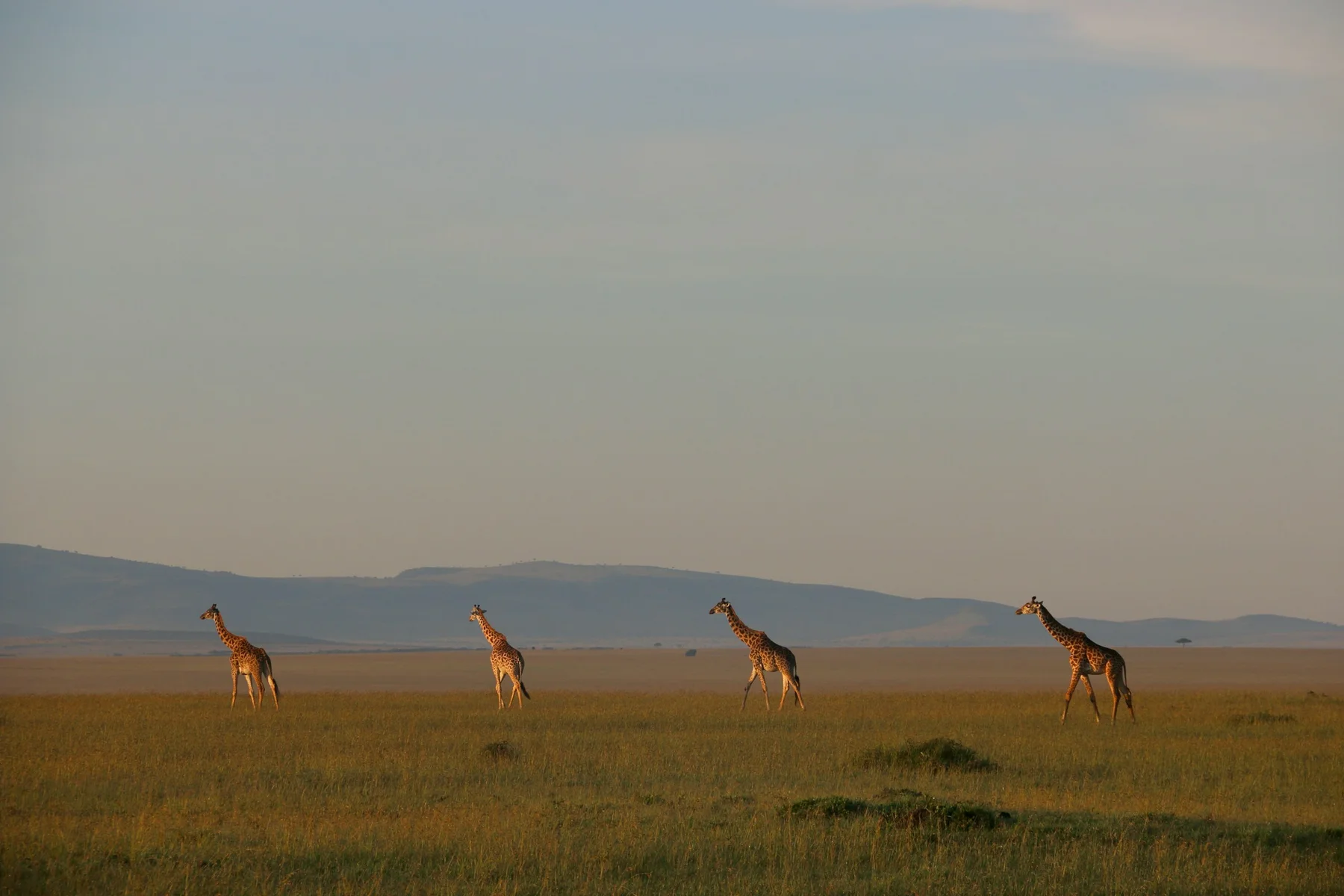
The Greater Mara is a mosaic of county reserve, community conservancies, private parcels, settlements, grazing areas and wildlife corridors. Permission changes at boundaries.
The Masai Mara National Reserve
Ordinary tourism in the reserve is vehicle-based. Visitors should remain in the vehicle except at authorised facilities, picnic locations or under express reserve arrangements.
The reserve management plan
The 2020 to 2029 management plan sets gates, zones, vehicle conduct and visitor rules. It does not create a general right for guests to leave a vehicle and walk through wildlife habitat.
The Mara Triangle
Mara Conservancy manages the western reserve sector. Its rules prioritise visitor and animal safety, and its filming guidance states that going on foot requires prior permission and ranger accompaniment.
A riverbank photo stop is not permission
If another vehicle has passengers standing beside the Mara River, that does not establish that the location or act is authorised. Follow your guide and ranger.
Camps inside the reserve
A lodge may offer an escorted stroll within its immediate grounds or another authorised activity. That does not make the wider reserve open to walking safaris.
Community conservancies
Conservancies can designate walking through management plans and tourism agreements. Access normally comes through current partner camps or licensed arrangements.
Conservancy does not mean public access
Many conservancies do not sell a day ticket to any outside vehicle or guide. Book through a property with present permission.
Rules change at the boundary
A guide may walk in Naboisho and then load guests into a vehicle before entering the reserve. The ecological landscape continues, but legal authority changes.
Current permission matters
Old brochures and reviews cannot guarantee that a trail, camp or partner agreement still operates. Confirm for the exact travel dates.
The landowner dimension
Walking crosses land that remains connected to Maasai ownership, livelihoods and governance. Guests are present under an agreement, not in an empty wilderness.
Grazing is not an intrusion by default
Some conservancies use planned livestock grazing. A walking route may reveal cattle, herders and wildlife sharing a managed landscape.
Respect community movement
People walking to homes, schools, water or livestock have legitimate priority. They are not scenery for an uninvited photograph.
Ask before photographing people
Consent belongs to the person, not to the guide or camera owner. This matters on village visits, cultural walks and encounters along a route.
Land-status comparison
| Area type | Ordinary visitor walking | Who authorises it | Planning implication |
|---|---|---|---|
| Masai Mara National Reserve | Not a general visitor activity | Reserve management and rangers for exceptions | Remain in vehicle unless explicitly directed |
| Mara Triangle | Not a general visitor activity | Mara Conservancy management and rangers | Do not treat a photo stop as a walk |
| Community conservancy | Often possible through partners | Conservancy and authorised camp or operator | Confirm exact property, route and guide |
| Camp grounds | Escorted movement may be possible | Camp management | Unfenced wildlife rules still apply |
| Community or village land | Invitation-based cultural or nature walk | Landholders and hosts | Consent, payment and photography terms matter |
Read the reserve guide
The Masai Mara safari guide explains reserve sectors, conservancies and how their rules differ.
Naboisho Conservancy
Naboisho is one of the best-established Greater Mara bases for walking. Several partner camps offer short walks, and selected operators arrange longer routes or fly camping.
Naboisho Camp
Asilia currently lists walking safaris among the stay inclusions at Naboisho Camp and describes fly camping as an advance-booked extra with conditions.
What to confirm at Naboisho Camp
Ask about walk length, minimum age, guide, armed ranger, group size, season and whether the walk is included or must be reserved.
Kicheche Valley
Kicheche uses its Naboisho base for guided walks and for a longer Walking Wilderness itinerary that connects Naboisho with Olare Motorogi.
Short versus expedition at Kicheche
The current walking page distinguishes short escorted walks from overnight wild camping. Do not assume the fly-camp format is included in an ordinary stay.
Naboisho terrain
Open plains, drainage lines, ridges and wooded sections allow routes to change with wildlife and weather. The walking guide chooses safe ground, not a fixed tourist trail.
Naboisho wildlife
The conservancy holds resident predators, elephants, buffalo and plains game. Their presence increases the need for qualified leadership rather than guaranteeing an encounter.
Naboisho access
Day access is controlled through partners. A traveller staying outside should not expect to book a last-minute independent walk through the gate.
Read the Naboisho guide
The Naboisho Conservancy guide compares its camps, wildlife, access and activities.
Olare Motorogi Conservancy
Kicheche Bush Olare currently advertises guided walking, and Kicheche's longer route crosses from Naboisho through fly-camp country into Olare Motorogi.
The Seketa Valley stage
The current Kicheche itinerary describes a four-to-five-hour morning through the Seketa Valley before arrival at Bush Olare. Conditions and routing remain guide decisions.
Olare Motorogi walking questions
Confirm whether the selected camp itself operates walks. Five partner camps share the conservancy, but their activity formats and age rules can differ.
Managed grazing context
Olare Motorogi uses planned grazing. A strong guide can explain how grass, cattle, landowner income and wildlife are managed together.
Read the Olare Motorogi guide
The Olare Motorogi Conservancy guide covers all five camps, grazing, wildlife and access.
Ol Kinyei Conservancy
Porini properties have long offered escorted nature walks under conservancy arrangements. The exact route, duration and guide team should be confirmed.
What guests noticed in Ol Kinyei
One reviewer wrote, “The sun downer, breakfast in the bush, the nature walk…all so special!” Another said, “Loved doing a guided nature walk and learning about the plants of the area.” Both emphasise variety and interpretation rather than a dangerous-game chase.
The Ol Kinyei difference
Its official management history has treated core wildlife areas differently from conservancies using planned grazing. A walk can make those land-management choices visible.
Read the Ol Kinyei guide
The Ol Kinyei Conservancy guide explains its camps, zoning and activity model.
Olderkesi Conservancy
Cottar's operates walking experiences from its Olderkesi setting southeast of the reserve. This is community conservancy country with a different geography and tourism history from the northern Mara conservancies.
Cottar’s walking style
Current activity material presents guided walks among a broader programme that can include drives and community experiences. Ask whether the walk is short, long, private or shared.
The reserve boundary at Olderkesi
Being close to the national reserve does not merge the rules. A walk must remain on authorised conservancy or community land unless a specific reserve permission applies.
Olderkesi landscape
Ridges, woodland and open country can make the experience feel more like a journey than a loop around camp. Terrain and animal positions determine the route.
Read the Olderkesi guide
The Olderkesi Conservancy guide provides land, camp and access context for this part of the ecosystem.
Mara North Conservancy
Some Mara North properties offer walks, but the conservancy name alone is not a guarantee. Camp location, operating partner and guide team matter.
Property-specific walking
One camp may lead a short river-focused nature walk while another does not operate walking at all. Ask for the current activity sheet from the booked property.
River risk in Mara North
The Mara River looks like a natural walking route, but hippos, crocodiles, buffalo and thick vegetation require conservative planning and ranger knowledge.
Traveller account from Mara North
A Royal Mara reviewer wrote, “There is no need to be frightened-there are armed Masai guards in front of your group as well as in the rear.” That describes one property's formation at one time, not a rule for every camp.
Fitness adaptation
The same account said “there are also daily walking safaris which are tailored to the group’s level of fitness”. Ask how that tailoring works in distance, pace, terrain and vehicle backup.
Read the Mara North guide
The Mara North Conservancy guide helps compare its camps and areas before you ask which one walks.
Nashulai Conservancy
Nashulai offers community-led conservation and cultural context. Walking may combine wildlife habitat, forest, community land and local stories rather than imitate a classic armed big-game expedition.
Why the format label matters at Nashulai
A forest walk to see colobus monkeys, a village visit and a savannah wildlife walk need different guides, permissions and expectations.
Traveller account from Nashulai
One visitor wrote, “Getting to walk on the land instead of only seeing it from a car was an unbeatable experience!” The value they describe is connection to land, not a close predator encounter.
Loita Hills connection
Another account described a chance to “walk in the forest and see colobus monkeys”. That is a distinct highland-forest experience and should not be marketed as though it takes place on the open Mara plains.
Siana and eastern community areas
Nature hikes and community walks are available through selected partners in the eastern ecosystem. Verify land authority, exact habitat and whether large wildlife is present.
Lemek and other conservancies
MMWCA lists activities by conservancy, but camp partnerships and actual operations change. Use the directory as a starting point, not a booking guarantee.
Walking-area comparison
| Area | Walking character | Current starting point | Important caution |
|---|---|---|---|
| Naboisho | Short walks, longer routes and fly camping through selected camps | Naboisho Camp or Kicheche Valley | Controlled partner access |
| Olare Motorogi | Camp walks and cross-conservancy expedition | Kicheche Bush Olare and participating partners | Not every camp offers the same format |
| Ol Kinyei | Guided nature and bush walks through Porini | Current Porini property | Confirm Naboisho access separately |
| Olderkesi | Conservancy walking with Cottar's | Cottar's activity desk | Reserve boundary remains legally distinct |
| Mara North | Property-specific nature or bush walks | Current camp activity sheet | River and big-game routes need careful control |
| Nashulai and community areas | Community, forest and nature walks | Inviting local host or authorised partner | Do not blur cultural and big-game formats |
Who should lead the walk
The lead guide must combine natural history, animal behaviour, route judgement, communication and emergency leadership. A warm personality alone is not enough.
The KPSGA framework
The Kenya Professional Safari Guides Association certifies Bronze, Silver and Gold levels through examinations and experience requirements.
Bronze level
Bronze covers broad guiding knowledge, including wildlife, plants, ecology, culture and first aid. It is an entry professional standard, not a specialist walking qualification by itself.
Silver level
Silver requires additional years and more advanced assessment. Kicheche states that its walks are led by Silver-rated guides and accompanied by an armed ranger.
Gold level
Gold is the highest KPSGA tier and involves advanced field assessment. The badge is valuable evidence, but current walking competence and local knowledge still matter.
Certification is voluntary
KPSGA provides a recognised Kenyan framework, but its website describes certification as voluntary. Ask about the complete training profile rather than treating one badge as the only possible evidence.
Local knowledge
A guide who walks the same conservancy regularly knows drainage lines, animal routines, wind behaviour, safe observation points and community movement.
Walking-specific training
Ask about dangerous-game approach, scenario training, firearm competence where relevant, first aid, navigation and emergency drills.
First-aid currency
A certificate from many years ago does not answer the question. Ask when the guide last refreshed first aid and what kit is carried.
Communication
The team should carry a working radio or satellite option suited to the area, know camp channels and have a route check-in plan.
The armed ranger
Many Greater Mara walks use an armed ranger. The firearm is a final safety layer, not a device for creating closer sightings.
Who carries the rifle
The armed person should be authorised, trained and practised. A rifle carried for appearance without competence can increase risk.
Position in the group
Formation varies by terrain and team. The lead usually sets route and pace, guests stay together, and another staff member may close the group.
Guide and ranger roles
The guide may focus on interpretation and decisions while the ranger concentrates on security and local conditions. In some operations, one highly qualified person carries both responsibilities.
A spotter or tracker
Local trackers add exceptional reading of spoor and animal movement. Their contribution should be introduced and respected, not rendered invisible.
Group size
Smaller groups communicate and turn more easily. Ask for the maximum and whether another couple can be added after booking.
Private walk
A private walk suits photographers, families, nervous first-timers and guests with a specialised interest. It still follows the guide's safety decisions.
Guide-question table
| Ask | A useful answer contains | Weak answer |
|---|---|---|
| Who leads? | Name, role, qualification and local experience | “One of our staff” |
| Is a ranger present? | Current policy and named responsibility | “Usually” |
| What first aid is carried? | Kit, trained person and refresh date | “Camp is nearby” |
| How do you communicate? | Radio or satellite method and check-ins | “Phones work” |
| What is the maximum group? | Exact number and private option | “Small groups” |
| What happens if wildlife blocks the route? | Turnaround, detour and vehicle plan | “The guide knows” |
| What is the minimum age? | Exact rule for this format | “Children are welcome” |
The safety briefing
A proper briefing explains formation, voice level, hand signals, what to do if the group stops, and why nobody leaves the line to take a photograph.
Stop signal
Every guest should recognise it instantly. Continuing two steps after the guide stops can turn a controlled observation into a surprise.
Stay together
The group should move as one visible unit. Wildlife often interprets a compact group differently from a person breaking away.
No running
Running can trigger pursuit, separate the group and increase panic. Follow the guide even when the instruction feels counterintuitive.
No crouching without instruction
A person dropping suddenly for a low photograph changes shape and visibility. Ask before changing position.
No food loose in pockets
Carry snacks only as directed and never feed wildlife. Smell and litter create problems beyond the walk.
Phones on silent
An alarm or ringtone can startle animals and obscure instructions. Airplane mode also protects the experience.
Camera straps
Secure equipment so it does not swing, drop or require you to leave formation. One light camera is often better than a full vehicle kit.
Tell the guide about limitations
Knee pain, asthma, allergies, pregnancy, hearing difficulty, anxiety and medication affect route and emergency planning. Privacy matters, but concealment does not improve safety.
The route is not a promise
A professional guide may shorten, change or cancel because of elephants, buffalo, rain, fire, wind or community activity. Flexibility is a safety feature.
Vehicle backup
Long walks should have a clear extraction plan. Ask how a vehicle reaches the route and how long it could take.
Medical plan
Know who gives first aid, where the nearest suitable clinic is, how evacuation is activated and what insurance information the camp needs.
Weather cancellation
Lightning, extreme heat, flooded drainage or poor visibility can make walking unwise. Ask how an alternative activity is handled.
Fire
Dry grass can carry fire rapidly. Guides should know burn areas, wind and escape ground.
Night walking
Ordinary guest walking after dark is not the same as a night drive. Camps usually escort guests between tents, but an expedition night walk needs explicit specialised arrangements.
Unfenced camp escorts
Always call for the escort after dark. The short path to dinner can cross an elephant, hippo or buffalo route.
Safety-layer table
| Layer | Purpose | Traveller check |
|---|---|---|
| Land permission | Ensures route is authorised | Named conservancy and partner |
| Qualified guide | Leads decisions and interpretation | Qualification and local experience |
| Armed ranger policy | Final protection where operation uses one | Who, authority and role |
| Briefing and formation | Prevents avoidable group errors | Signals understood before departure |
| Radio and check-ins | Connects walk to camp support | Working method and schedule |
| First aid | Manages immediate injury or illness | Kit and trained person |
| Vehicle extraction | Provides route exit when needed | Access points and likely response |
| Insurance and evacuation | Supports serious medical response | Membership and policy compatibility |
Dangerous-game honesty
No operator can remove all risk from walking in wildlife habitat. Quality lies in reducing exposure, reading conditions and refusing unnecessary drama.
“Safe” needs a complete sentence
The useful question is not “Is it safe?” Ask what hazards exist, which controls are in place and what residual risk remains.
Firearm expectations
Guests should not treat the rifle as a promise that every encounter can be solved. Avoidance and early detection are the primary protections.
Insurance wording
Check that the policy covers guided walking safari activities and medical evacuation. Some policies exclude adventure activities or require licensed providers.
What a good walk feels like
It begins slowly. The guide does not march into the grass while guests adjust cameras. Everyone understands the plan before the vehicle leaves.
The first ten minutes
The team listens, checks wind and settles into pace. Excitement becomes attention rather than chatter.
A good pace
It is steady enough to travel but slow enough to notice. The guide stops in shade or open ground where the group can gather safely.
Interpretation has layers
The same termite mound can lead to soil, ventilation, aardvarks, birds, grass growth and why predators use elevation.
The guide does not perform certainty
Tracks can be ambiguous. A trustworthy guide explains evidence and doubt instead of inventing a dramatic animal.
Waiting matters
A distant giraffe may move calmly when the group waits. Pushing forward often turns observation into disturbance.
Detours are part of the story
Fresh buffalo sign, an elephant herd or a shifting wind may change the route. The detour reveals judgement.
Rest is not failure
Water, shade and foot checks preserve attention. A tired group makes mistakes and stops listening.
The return changes the vehicle
After a walk, guests often notice more from the seat: alarm calls, tracks crossing the road and the shape of drainage lines.
Different view of the Mara
A Kicheche guest called it a “Very enjoyable walk to give a differing view of the Mara.” That is a fair promise. It is another way of reading the landscape, not a contest with a drive.
Choosing the right duration
The best first walk is usually shorter than an enthusiastic traveller imagines. Attention, temperature and unfamiliar terrain are more demanding than the distance suggests.
One hour
An hour works for tracks, plants and camp orientation. It is suitable when mobility, age or schedule rules out a longer route.
Ninety minutes
This is a useful introductory format. There is time to settle, interpret several habitats and return before heat builds.
Two to three hours
A longer morning can reach open ground, drainage or a viewpoint while remaining accessible to moderately fit guests.
Four to five hours
This becomes a genuine half-day journey. Feet, water, breakfast, sun and vehicle backup need planning.
Full day
A full day should have shade, meals, water resupply and flexible extraction. It is not simply a half-day route walked twice.
Overnight expedition
The walk is only part of the experience. Arrival at a mobile camp, sunset, nocturnal sound and the dawn departure create the larger arc.
Start with one short walk
If you are unsure, book a conservancy camp that can offer a short walk during a normal stay. You can choose a longer format after learning how your body and nerves respond.
Do not schedule it after arrival
A delayed flight, travel fatigue and unfamiliar heat make the first afternoon a poor time for an ambitious walk.
Do not schedule it before a tight flight
Wildlife detours and weather can delay return. Leave a buffer before the airstrip transfer.
Duration comparison
| Duration | Often suits | Likely emphasis | Main limit |
|---|---|---|---|
| 45 to 75 minutes | Families, first-timers and mobility-limited guests | Camp ecology and easy spoor | Small route and fewer habitats |
| 90 minutes to 3 hours | Most active adults | Tracks, birds, plants and distant game | Heat and attention |
| 4 to 5 hours | Fit walkers wanting a journey | Multiple habitats and bush meal | Feet, water and weather |
| Full day | Experienced walkers | Landscape scale and point-to-point travel | Logistics and fatigue |
| Overnight | Adventurous guests with enough nights | Dusk, night, dawn and remote camp | Comfort, weather and cost |
Fly camping in detail
Fly camping strips the safari down without necessarily stripping away care. The quality lies in route, safety, food, bedding and atmosphere rather than marble or electricity.
Why it is called fly camping
The term comes from lightweight camp traditions, not from flying to the site. Guests normally walk or drive to it.
The sleeping tent
Ask whether it is an enclosed dome, a netted bedroll, a canvas tent or an open platform. Photographs should show the exact setup.
The bed
A camp bed and mattress feel different from a bedroll on the ground. State back, knee and mobility needs before booking.
The toilet
Facilities may be a private portable toilet, a screened long-drop or a shared arrangement. “Bush bathroom” is too vague.
The shower
A hot bucket shower can be surprisingly comfortable. Confirm privacy, water availability and whether it operates for a one-night stop.
Meals
Simple does not mean careless. Food storage, handwashing, allergies and safe water remain important in a mobile camp.
Drinks
Ask which drinks are carried and how cold items are managed. Weight and resupply limit the cellar.
Power
There may be no charging at the fly camp. Arrive with batteries full and carry a power bank only if the operator permits it.
Lighting
Lanterns and head torches should use low, careful light. Bright beams disturb wildlife and night vision.
Camp perimeter
The team chooses a defensible site with visibility and known animal routes. Guests must follow escort rules after dark.
Night sounds
Lions, hyenas, nightjars and grazing animals can sound extremely close. Ask how to call staff without leaving the tent.
Weather shelter
The camp needs a plan for heavy rain, lightning and wind. Romance does not waterproof bedding.
Luggage
Main bags normally transfer separately. Carry water, sun protection, camera, medicine and one warm layer in a light daypack.
Support vehicle
Some routes use discreet vehicle support for supplies and emergencies. That does not diminish the walk when the arrangement is transparent.
Minimum stay
Naboisho Camp currently requires a minimum stay for its fly-camping add-on. Other operations set their own conditions.
Minimum age
Asilia's current material specifies an age threshold for fly camping. Treat it as one operator's rule, not a Greater Mara universal.
Private operation
Long walks and fly camps often require a minimum number or private booking. Confirm whether another party can join.
Fly-camp checklist
| Detail | Confirm |
|---|---|
| Route | Start, finish, hours, terrain and boundaries |
| Leadership | Lead guide, ranger, tracker and support team |
| Sleep | Tent type, bed, linen and insect protection |
| Bathroom | Toilet, shower, privacy and water |
| Food | Meals, allergies, drinking water and hygiene |
| Weather | Rain shelter, cancellation and alternative |
| Communication | Radio or satellite method and check-ins |
| Emergency | Vehicle access, first aid and evacuation |
| Luggage | What guests carry and what transfers |
| Power | Charging, lights and battery plan |
Kicheche Walking Wilderness
Kicheche's current five-night product connects Naboisho and Olare Motorogi with a private fly camp and walks of roughly four to five hours.
Why the route is attractive
It creates a real transition between conservancies rather than a circular camp activity. Guests see habitat and land use change underfoot.
Who it suits
It suits active travellers who value guiding and simple mobile comfort, and who still want permanent-camp nights and game drives around the walking stages.
Who should pause
Guests with serious joint problems, a strong aversion to basic bathrooms or anxiety about sleeping in wildlife habitat should request full details before committing.
Naboisho fly camping
Asilia presents fly camping as a bookable extension from Naboisho Camp. Current dates, minimum stay, age and supplement must be confirmed.
Expedition versus add-on
Kicheche's route is a structured multi-day itinerary. A Naboisho fly-camp night can be an add-on within one camp stay. Compare the actual experience, not only the word.
Fitness for a Mara walk
You do not need to be an athlete for a short walk. You do need enough balance, stamina and attention for uneven ground without a handrail.
Distance is not the whole test
Heat, altitude, grass, mud, thorns and long periods of standing can make six kilometres feel harder than a paved city walk.
Pace
Wildlife walking is usually measured and stop-start. Fast hikers may find restraint more difficult than exertion.
Balance
Termite holes, stones and hidden ruts require foot placement. Tell the guide about vertigo or instability.
Knees
Downhill ridges and stepping into dry channels can matter more than flat distance. Poles may be unsuitable in some wildlife contexts, so ask.
Back
Use a light pack and let the support team carry nonessential weight. A heavy camera bag can spoil posture and awareness.
Heat tolerance
Most walks begin early because midday sun raises dehydration and fatigue. A guest who struggles in heat should choose a short dawn route.
Anxiety
Tell the guide before departure. A private short walk, clear formation and no deliberate big-game tracking can make the experience comfortable.
Mobility limitations
A lodge-ground nature walk may be adapted. A point-to-point bush walk rarely has a smooth surface, so request honest terrain detail.
Hearing limitations
The guide can agree visual signals and group position. Hearing aids should be protected from dust and moisture.
Visual limitations
High-contrast assistance and a private pace may be possible, but the operator must assess terrain and risk rather than promise accessibility loosely.
Pregnancy
Discuss the activity with a medical professional and the operator. Heat, evacuation time and uneven ground matter even on a gentle route.
Medical conditions
Asthma, diabetes, heart conditions and severe allergies need a medication, communication and emergency plan.
A practical self-check
| Question | If yes | Planning response |
|---|---|---|
| Can I walk two hours on uneven ground? | Short or medium walk may suit | Start early and keep pack light |
| Do I need frequent seated rests? | Possible on selected route | Request known rest points and vehicle backup |
| Do I have knee or balance issues? | Terrain may be limiting | Ask for surface, gradient and private pace |
| Do I become anxious near wildlife? | Still possible | Private briefing and avoidance-focused route |
| Can I manage a basic toilet? | Fly camp may suit | Request exact facility image |
| Do I need powered medical equipment? | Mobile camp may not suit | Confirm electricity and backup |
Children on walking safaris
Age rules exist because children vary in judgement, stamina and ability to follow instructions under stress. A camp's refusal is a safety decision.
No universal minimum age
Each conservancy and operator sets rules by route and risk. A camp nature walk may accept a younger child than a fly-camp expedition.
Give the exact age
“Family of four” is not enough. Share dates of birth and walking experience.
Attention span
A sixty-minute clue-finding walk can be more rewarding than forcing a child through four hours of adult interpretation.
Private guide
A private walk lets the guide adapt pace, questions and turnaround without affecting other guests.
Parent responsibility
Parents must reinforce instructions and avoid encouraging a child to step away for a photograph.
Teenagers
An engaged teenager can thrive on a longer walk, especially when given binoculars, a track notebook or a bird challenge.
Fly camp with children
Check minimum age, tent layout, toilet, escorts, food and whether a parent and child can leave early if necessary.
Family safety questions
| Question | Why it matters |
|---|---|
| What is the minimum age for this exact route? | General camp policy may differ from walk policy |
| Is the walk private? | Shared group cannot always adapt |
| How far is vehicle support? | Children can tire suddenly |
| How are toilets handled? | Privacy and hygiene need a real answer |
| What happens if the child cannot continue? | Turnaround must be practical |
| Does the child understand the briefing language? | Safety instructions must be immediate |
Honeymoon walking safari
A private dawn walk can feel more intimate than another staged dinner. It gives the couple a shared story that is not built around decoration.
Private pace
Choose a private guide if one partner walks faster, photographs more or feels more anxious.
Fly-camp romance
Stars and canvas can be exceptional, but romance disappears when bathroom expectations were never discussed. Ask practical questions without embarrassment.
Build in recovery
Follow a long walk with lunch, a shower and a quiet afternoon rather than another compulsory departure.
Solo travellers
Walking can be sociable because the group shares attention. Confirm single supplements for private expeditions and whether a shared departure is guaranteed.
Older travellers
Age alone is not the deciding factor. Balance, heat, terrain and confidence matter more than the passport number.
Photographers on foot
Walking photography rewards wider views, tracks, plants, guides and atmosphere. It is not the best format for carrying multiple long lenses.
One camera body
A light body and versatile lens reduce noise, weight and distraction. Secure it across the body.
No tripod assumption
Tripods alter formation and take time to deploy. Ask whether a monopod or small support is acceptable.
Wide storytelling
Photograph scale, hands reading spoor, grass height and the line of walkers rather than trying to fill the frame with distant animals.
Photographing guides
Ask permission and credit people by name when appropriate. Do not turn local expertise into anonymous costume.
Wildlife distance
Never pressure the team to approach for a stronger image. A long lens does not change the animal's comfort boundary.
Read the photography guide
The Masai Mara photography guide covers equipment, ethics, light and vehicle planning.
Best time for walking safaris in the Greater Mara
Walking is possible in many months, but heat, rain, grass height, camp operation and animal distribution affect the format.
January
Green conditions, warm days and possible showers favour early starts. Young animals and birds add interpretation.
February
Routes may be drier while the landscape retains colour. Midday heat makes water and timing important.
March
Building rain can create dramatic mornings and slippery ground. Confirm camp operation as the long rains approach.
April
Heavy rain, tall grass and difficult access can limit walking. Some camps close, and visibility in vegetation may affect routes.
May
Lush habitat is beautiful but wet ground and closures remain possible. A walk should never be promised without an operating check.
June
Cooler mornings and drying tracks can create excellent walking before peak demand. Grass may still be high in places.
July
Drying conditions and cold dawns favour layered clothing. Migration demand raises camp occupancy, so private walks need early booking.
August
Dry weather is common, but popular camps are busy. Conservancy walking can provide a welcome counterpoint to crowded reserve drives.
September
Dry ground, dust and warmer days suit early walks. Water and sun protection remain essential.
October
Heat can build before short rains. Storms may alter tracks and animal positions quickly.
November
New grass, birds and dramatic skies reward walkers. Local rain and lightning require flexible timing.
December
Green-season colour and festive demand combine. Book early and retain weather flexibility.
Dry-season advantages
Shorter grass can improve visibility, tracks may be easier to follow and rain disruption is often lower.
Dry-season tradeoffs
Dust, cold dawns, heat later in the day and higher camp prices can affect comfort.
Green-season advantages
Flowers, insects, birds, fresh tracks and dramatic clouds make interpretation rich. Fewer visitors can create quieter stays.
Green-season tradeoffs
Tall grass reduces visibility, black-cotton soil becomes difficult and some camps suspend operations.
Season comparison
| Period | Walking character | Strength | Watch |
|---|---|---|---|
| January to March | Warm green to drying | Birds, young animals and plants | Heat and showers |
| April to May | Wet and lush | Tracks, flowers and quiet | Closures, mud and visibility |
| June | Cool transition | Comfortable mornings | Variable grass height |
| July to October | Drier peak period | Firm routes and broader visibility | Dust, cold dawns and high demand |
| November to December | Short-rain green season | Colour and fresh ecological signs | Storms and festive occupancy |
Migration season
Main wildebeest movement can add tracks and distant herds, but it also increases traffic and accommodation demand. Walking should not chase crossings.
Green season
The migration season versus green season guide helps compare wildlife, weather, colour and value.
Time of day
Early morning is usually best for temperature, tracks and animal activity. Late-afternoon walks may work near camp when return occurs before dark.
Walking and night drives
Conservancy camps can combine a dawn walk with an evening drive after dark, but both demand alertness. The Masai Mara night game drives guide explains where night driving is permitted and how responsible lighting works.
Flying to a walking base
The correct Mara airstrip depends on the camp and conservancy, not on the walking route's marketing name. Use the Masai Mara airstrips and flight guide to check Wilson Airport, baggage, intermediate stops and camp transfers.
Dawn start
Cold air and low light require a layer. The guide may wait for enough visibility before entering thick habitat.
Midday
Heat and reduced animal movement make long midday walks less attractive. A shaded botany or camp walk can still work.
Sunset
Golden light is beautiful, but the team needs enough time to return before dark and avoid animals moving toward water.
Packing for a Mara walk
Carry less than you think. Every swinging bottle, loose strap and unnecessary lens competes with balance and listening.
Closed shoes
Comfortable broken-in trail shoes protect against thorns and uneven ground. Heavy boots are not necessary for most short routes.
Socks
Choose breathable socks that do not bunch. Carry blister treatment on a longer walk.
Long trousers
They reduce scratches, sun and insect exposure. Tuck or gaiter only if the guide recommends it.
Neutral colour
Olive, tan, grey and muted clothing reduce visual contrast. Camouflage clothing can create legal or cultural complications and is unnecessary.
Quiet fabric
Avoid clothing that swishes loudly with every step. Sound matters when listening for wildlife and instructions.
Layer
A light fleece or jacket helps at dawn and packs away later. Avoid tying loose garments around the waist where they snag.
Hat
Use a secure brim that does not blow away. A chin strap should not dangle.
Rain shell
A compact quiet shell protects against showers and wind. Bright plastic ponchos can flap and restrict movement.
Water
Carry the amount directed by the operator in a secure bottle or hydration system. Do not ration because you packed too little.
Daypack
Use a small fitted pack with no loose straps. Ask whether the support team provides water and first-aid carriage.
Binoculars
Compact binoculars add birds and distant animals without demanding closer approach. Secure them with a comfortable strap.
Sunscreen
Apply before departure and carry a small refill. Hands and ears burn easily.
Repellent
Use a product suited to your medical advice and clothing. Avoid spraying near other guests or sensitive equipment during the briefing.
Medication
Carry essential personal medication on your body, not in luggage transferred to the next camp.
Head torch
It belongs in the fly-camp bag, with spare power. Use it only as staff direct.
Walking-packing table
| Bring | Why | Leave or minimise |
|---|---|---|
| Broken-in closed shoes | Thorns and uneven ground | New heavy boots |
| Long neutral trousers | Sun, insects and scratches | Bright or noisy fabric |
| Light layer | Cold dawn | Bulky coat |
| Secure water bottle | Hydration | Loose disposable bottle |
| Small daypack | Hands-free movement | Large camera backpack |
| Compact binoculars | Distant observation | Multiple heavy lenses |
| Personal medication | Immediate access | Medicine in transferred luggage |
| Quiet rain shell | Weather change | Flapping poncho |
What a walk costs
There is no single Greater Mara walking price. A short included nature walk and a private five-night expedition have different staff, permits, camps and support.
Included camp walk
Some camps include a short walk in the room rate. It may still require advance reservation and depend on guide availability.
Separate activity fee
Other properties charge by person, group or departure. Ask whether conservancy access and ranger cost are included.
Private guide supplement
A private walk may add a guide or vehicle fee. It can be worthwhile for families, photographers and specialised interests.
Armed ranger fee
The ranger may be included or itemised. A low quote that omits required safety staff is not a saving.
Fly-camp supplement
This covers mobile tents, staff, food, equipment movement and route support. Compare exact facilities and number of nights.
Conservancy fee
Resident camp rates may already include or separately list the conservancy bed-night fee. A walking itinerary crossing boundaries may involve more than one area.
Transfers
Airstrip, camp-to-trail and extraction vehicles may be included. Name every transfer.
Accommodation nights
A walking package may combine permanent-camp and fly-camp nights. Confirm which room rate applies when the permanent tent is unoccupied.
Drinks and laundry
Fly-camp inclusions may differ from the main camp. Ask rather than carrying resort assumptions into a mobile setup.
Tips
The lead guide, ranger, tracker and mobile-camp staff may be separate teams. Request a current tipping guideline without treating it as a hidden compulsory fee.
Price-comparison table
| Cost line | Option A | Option B | Confirm |
|---|---|---|---|
| Walk format | Short, half-day, full-day or overnight | ||
| Private or shared | Maximum group size | ||
| Guide and ranger | Both included and qualified | ||
| Conservancy access | Every boundary and night | ||
| Mobile camp | Tent, bed, toilet and shower | ||
| Food and drinks | Exact mobile-camp inclusions | ||
| Transfers and support | Start, finish and extraction | ||
| Accommodation | Permanent and mobile nights | ||
| Cancellation | Weather and guest cancellation |
Weather cancellation terms
Ask whether the walk is rescheduled, replaced or refunded when the guide cancels for safety. Do not pressure the team to depart because the fee is non-refundable.
Guest cancellation
Foot pain or nerves may not trigger a refund. A short introductory walk before an expensive expedition can reduce this risk.
Insurance
The policy should cover the activity, medical treatment, evacuation and trip cancellation. Emergency transport membership does not replace insurance.
What independent accounts tell us
The strongest reviews describe what changed in the traveller's attention, not how many dangerous animals came close.
In an independent discussion about walking just outside the reserve, one contributor who had already done it offered a wonderfully direct verdict: “Yes, I've done this – fantastic fun.” The same discussion quickly turns to boots, uneven ground, dust and listening to the guide. That mixture of delight and practical caution is a far more useful expectation than any promise of a dramatic animal encounter.
Learning is repeated
The Kicheche response says walkers “see so many things and learn so much that is lost when travelling in a vehicle”. This is the most reliable benefit to expect.
Plants are remembered
An Ol Kinyei visitor specifically praised “learning about the plants of the area.” That detail suggests the guide moved beyond a large-mammal checklist.
Feeling surrounded
One traveller wrote that they “felt surrounded by animals” even though they saw no predators. Distance and lack of a vehicle can make ordinary plains game feel newly present.
Fear can ease through formation
The Mara North account explains that armed staff walked at the front and rear. Clear roles can help a nervous guest, though the exact team must be verified at each property.
Fitness can be adapted
The same review says the walks were tailored to fitness. Ask for concrete examples, such as duration, terrain, rest and pickup, rather than relying on the phrase.
Community land changes perspective
The Nashulai comment called walking on the land “an unbeatable experience”. It points to connection with place and ownership, not only animal viewing.
Reviews can mislead too
A guest may call any time outside the vehicle a walking safari. Read the route, duration, land and staff details before comparing experiences.
A review-reading table
| Review detail | What it reveals | What it cannot prove |
|---|---|---|
| Named guide and qualification | Specific leadership experience | Who will lead your walk |
| Route and conservancy named | Land and habitat context | Current permission |
| Duration stated | Physical scale | Difficulty on another day |
| Ranger and formation described | Safety practice on that departure | Universal camp policy |
| Exact month given | Weather context | Future conditions |
| Facilities shown | Mobile-camp comfort then | Current setup |
Read the evidence roundup
The traveller review roundup for the Masai Mara will compare recurring themes across seasons, camps and trip styles.
Common mistake: assuming the reserve allows walking
Ordinary visitors should remain in vehicles except at authorised places or under explicit management and ranger arrangements.
Common mistake: booking the word, not the format
Ask whether it is a camp stroll, wildlife bush walk, cultural walk, long trail or fly-camp expedition.
Common mistake: chasing big cats
A responsible guide avoids close predator encounters on foot. Interpretation and safe distance are the point.
Common mistake: treating the rifle as a guarantee
The primary safety system is permission, knowledge, early detection, route choice and disciplined formation.
Common mistake: hiding a medical issue
The guide needs enough information to choose terrain and respond. Discuss privacy with the camp before departure.
Common mistake: wearing new boots
Blisters can end a long route. Use tested shoes and socks.
Common mistake: carrying the vehicle camera kit
Heavy equipment reduces balance and awareness. Choose one versatile setup.
Common mistake: forgetting water
Heat and dry air dehydrate quickly. Follow the operator's carrying plan.
Common mistake: overestimating children
Curiosity can vanish after an hour in the sun. Choose a route that ends while the child still wants more.
Common mistake: calling a cultural walk a wildlife safari
Both can be valuable, but consent, leadership, hazards and learning goals differ.
Common mistake: assuming every conservancy camp walks
Availability is property-specific. Confirm current activity, guide and land access.
Common mistake: ignoring the return plan
Wildlife, weather or fatigue may block the planned route. Ask how the group exits.
Common mistake: forcing a weather departure
The guide must be able to cancel for lightning, mud, heat, fire or visibility without guest pressure.
Booking checklist
- Name the exact conservancy and land manager.
- Name the camp or authorised walking operator.
- Define short walk, long walk, transfer or fly camp.
- Record duration, distance, terrain and expected pace.
- Name the lead guide and qualification.
- Confirm armed-ranger or protection policy.
- Confirm group maximum and private option.
- State every traveller's age and medical limitation.
- Confirm minimum age for the exact format.
- Record communication, first aid and vehicle backup.
- Check weather cancellation and alternative activity.
- Itemise conservancy, guide, ranger and camp fees.
- Request current fly-camp photographs and facilities.
- Confirm water, meals, luggage and charging.
- Check insurance wording for guided walking.
- Add every promise to the written itinerary.
Frequently asked questions
Can I walk inside the Masai Mara National Reserve?
Ordinary tourism is vehicle-based. Do not get out or arrange an independent walk. Any exception requires express reserve authority and ranger control.
Where are walking safaris available?
Selected partner camps in Naboisho, Olare Motorogi, Ol Kinyei, Olderkesi, Mara North and other community areas offer authorised formats.
Is an armed ranger always present?
Policies differ. Many big-game walks use an armed ranger, while a controlled camp or cultural nature walk may use another arrangement. Confirm the exact team.
What qualification should the guide have?
Ask for KPSGA level, walking-specific training, local experience, first-aid currency, dangerous-game practice and emergency communication.
Will I see lions on foot?
Possibly at a safe distance by chance, but a responsible walk does not seek a close lion encounter and no sighting is guaranteed.
How fit must I be?
A short nature walk suits many guests with basic mobility. Long and overnight routes need stamina for uneven ground, heat and several hours on foot.
What is the minimum age?
There is no single Greater Mara rule. It varies by camp, route, wildlife risk and fly-camp format.
What should I wear?
Broken-in closed shoes, long muted trousers, a quiet layer, hat and sun protection are a strong base.
How long is a typical walk?
Formats range from about an hour to four or five hours. Full-day and overnight expeditions are separately planned products.
What is fly camping?
It is a lightweight mobile bush camp reached as part of a walking or expedition itinerary. It does not mean flying to camp.
Is fly camping comfortable?
It can include a camp bed, proper meals, simple toilet and hot bucket shower, but facilities vary. Request current photographs and specifications.
Which season is best?
Dry months often give firmer ground and visibility. Green months add plants, birds and tracks but can bring mud, tall grass and closures.
Can I take photographs?
Yes when the guide permits, but equipment should be light and secure. Never break formation or pressure the group to approach wildlife.
Can walking replace game drives?
Usually it complements them. Drives cover more ground and reach distant wildlife, while walks reveal smaller ecological detail and scale.
How much does it cost?
Some short camp walks are included. Private long walks and fly camps add guides, rangers, mobile accommodation, support and access fees.
Is it suitable for a honeymoon?
Yes. A private dawn walk or one fly-camp night can be deeply memorable when comfort and safety expectations are matched honestly.
Final perspective
The finest Mara walk does not end with a boast about how close the group came to a lion. It ends with a new way of seeing. The tyre track beside camp now crosses an older hyena print. The impala snort heard from a vehicle has direction and urgency. A line of giraffes on the horizon is no longer decoration. It is a group that has already seen you and is deciding what you mean.
Choose the land and operator carefully. Ask who leads, who authorises the route, how the group communicates and what happens when animals change the plan. Then leave room for the walk to be small. A beetle, a feather and a safe detour around buffalo can tell a more honest story of the Greater Mara than any manufactured close encounter.
Sources and further reading
- Masai Mara National Reserve Management Plan 2020 to 2029
- Mara Triangle park rules
- Mara Triangle filming and on-foot permissions
- MMWCA conservancy directory
- MMWCA interactive conservancy map
- Kenya Professional Safari Guides Association
- KPSGA certification levels
- KPSGA code of conduct
- Kicheche guided bush walks
- Kicheche Walking Wilderness itinerary
- Naboisho Camp walking and fly-camping information
- Asilia walking-safari guidance
- Cottar's activities in Olderkesi
- Kicheche Bush Olare walking discussion
- Ol Kinyei independent reviews
- Nashulai independent reviews
- Royal Mara independent reviews
Let us plan your Greater Mara walk
Share dates, guests, ages, fitness, medical or mobility needs, camp style, walk duration, fly-camp interest, wildlife comfort and budget. We will verify the current land, guide and safety arrangements.