
Masai Mara Night Game Drives: Where They Are Allowed and What the Darkness Changes
Choose the right land unit and camp, understand the spotlight rules and go for sound, behaviour and atmosphere rather than a promised predator hunt.
- First, locate the night drive on the map
- The national reserve is not a night-drive area
- The Mara Triangle follows protected-area rules too
- Conservancy does not automatically mean night drive
- Private land is not rule-free land
- A simple geography table
- Mara North gives one of the clearest published rules
- Naboisho is a common night-drive choice
- Olare Motorogi can pair day and night wildlife viewing
- Ol Kinyei can offer the activity through resident camps
- Mara North, Naboisho, Olare Motorogi and Ol Kinyei are not one product
- A booking table for the main options
- What a genuine night drive is
- What a night drive is not
- Sundowner plus drive
- Dinner first, drive later
- The short extension
- The dedicated drive
- A typical rhythm, not a promise
- Darkness shrinks the landscape
- Sound becomes part of the sighting
- Smell becomes information
- Eyeshine helps, but it is not a species label
- A stopped engine is sometimes the best tool
- What the spotlight reveals
- Red light is not invisible to wildlife
- White light has limited uses
- Phone torches stay off
- Flash photography is usually the wrong choice
- Lions after dark
- A hunting predator changes the rules
- Cubs require extra restraint
- Leopards after dark
- Cheetahs are not the night-drive promise
- Hyenas after dark
- Aardwolf and striped hyena
- Bat-eared foxes
- African wild cat
- Genets and civets
- Honey badger
- Aardvark
- Porcupines
- Bushbabies
- Hippos on land
- Hares, rodents and the smaller night
- Owls and nightjars
- Species expectations table
- What travellers actually remember
- A different safari
- When very little appears
- The rare surprise
- The value of variety
- The briefest recommendation
- A memorable animal moment
- Lions and sound
- A dramatic but unrepeatable encounter
- Why some travellers choose a conservancy
- The independent forum view
- The emotional response
- The reviews agree on one thing
- What reviews cannot tell you
- Choose the camp before choosing the activity
- Ask whether it is routine or occasional
- Ask whether it is included
- Ask who controls the light
- Ask how many guests share the vehicle
- Ask about the latest return
- Ask about roads and weather
- Camp comparison checklist
- Masai Mara night game drives with children
- Confirm the camp’s minimum age
- Consider the whole day
- Use a private vehicle for flexibility
- Give children a listening mission
- Never lower safety standards for reassurance
- Accessibility and comfort
- The cold can surprise you
- Dust and insects
- Motion sickness
- Toilet planning
- Comfort table
- Photography after dark
- Start with realistic equipment
- Use shutter speed for behaviour
- Aperture and focus
- Expect colour problems
- Protect night vision
- No flash means no flash
- Phone photography
- Photography settings starting points
- Ethics are the product
- Never ask the guide to break the code
- Do not crowd a sighting
- Do not block movement
- Do not use calls or bait
- Let the guide end the sighting
- Report serious misconduct carefully
- Is a night drive worth it?
- Strong fit
- Weaker fit
- One night or several?
- Full moon and dark moon
- Dry season and wet season
- Night drive versus longer day drive
- Build the itinerary around geography
- Do not change camps every night
- Pair with a reserve stay carefully
- Pair with a private vehicle
- Pair with a slower evening
- Sample three-night rhythm
- Questions to send before paying
- Ask for the exact rate basis
- Ask what happens if it rains
- Ask what happens if one guest wants to return
- Ask about the guide
- Ask for a code, not a promise
- Final booking brief
- The best night drive may be the quietest one
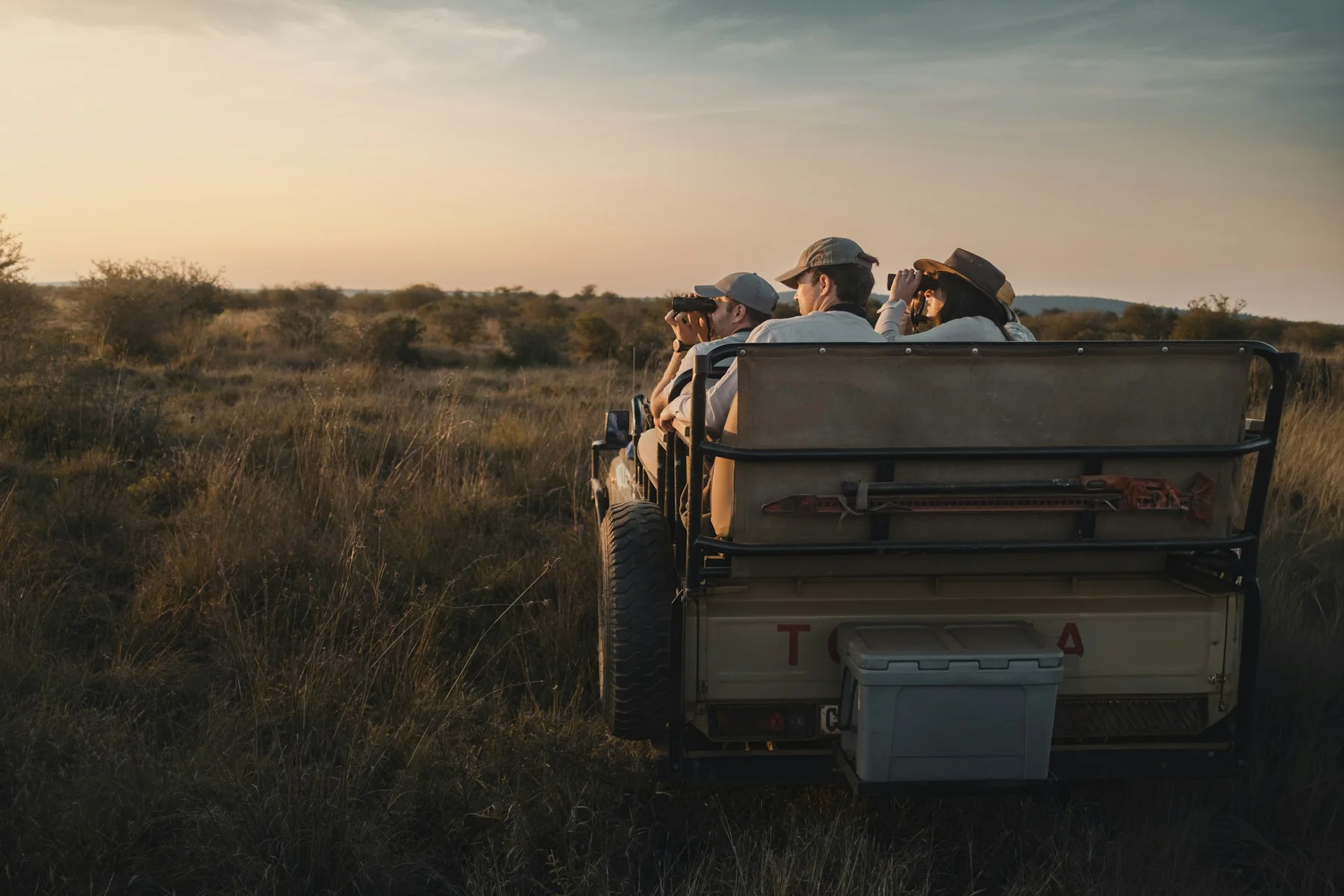
The last stripe of orange has almost gone when the vehicle turns away from the sundowner spot. Daylight safari teaches the eye to scan a whole plain. Darkness takes that skill away. Now the world arrives in fragments: a hare in the track, the white flash of a tail, a pair of eyes low in the grass, then the soft pad of something that disappears before anyone names it.
That change is the real appeal of Masai Mara night game drives. They are not simply ordinary game drives held later. They happen under different rules, reveal different behaviour and demand far more restraint from the guide. They are also not available everywhere. The main Masai Mara National Reserve does not permit night game drives. The experience belongs to particular conservancies and private areas where the land manager allows it and where a participating camp can operate it correctly.
The most important booking decision therefore comes before the spotlight is switched on. Choose the right geography, then the right camp, then confirm the activity for the exact dates. A lodge can be marketed as “in the Mara” while sitting inside the reserve, outside a conservancy or a long transfer from the night-drive area. Those positions are not interchangeable.
First, locate the night drive on the map
The phrase “Masai Mara” can describe the national reserve, the Mara Triangle, surrounding conservancies and the wider ecosystem. Only some of those places allow tourist vehicles to remain out after dark. Start with the Masai Mara safari guide if those boundaries are still blurry.
The national reserve is not a night-drive area
Inside the main reserve, visitors and vehicles must follow reserve opening and closing rules. A late return to an internal lodge is not permission to turn the journey into a spotlight safari. The safe assumption is no night game drive inside the reserve unless the managing authority publishes a specific change.
The Mara Triangle follows protected-area rules too
The Triangle is a managed part of the national reserve, not a private conservancy. Its road discipline, closing times and wildlife rules should not be confused with the more flexible activities offered on some community-conservancy land.
Conservancy does not automatically mean night drive
Conservancies have their own management plans, tourism partners and zones. One may allow night drives only in designated areas. Another may limit the time, number of vehicles, light or access. A camp may decide not to offer the activity even where the land manager permits it.
Private land is not rule-free land
“Private” should never mean chasing animals across grass with a white beam. Landowners, conservancies and responsible camps use rules because wildlife still pays the cost of poor behaviour. Ask for the code of conduct rather than treating fewer restrictions as the selling point.
A simple geography table
| Where you sleep or drive | Night drive assumption | What to confirm |
|---|---|---|
| Main Masai Mara National Reserve | Not permitted | Reserve hours and return route |
| Mara Triangle | Not a night-drive activity | Triangle closing and lodge access rules |
| Established conservancy | May be permitted in controlled areas | Current conservancy code and camp participation |
| Private parcel outside a conservancy | Never assume | Landowner authority, guiding standard and wildlife code |
| Community land without a tourism agreement | Not a legitimate tourist invitation | Do not arrange an informal drive |
| Camp transfer after dark | Transport, not automatically a night drive | Whether spotlight viewing is authorised |
Mara North gives one of the clearest published rules
The Mara North Conservancy game-drive code says night drives may take place only in designated areas, red filters must be used and vehicles must return to camp by 10 pm. It also gives precise instructions when predators are hunting.
Naboisho is a common night-drive choice
Several camps in Naboisho advertise night drives as part of the stay. That makes the conservancy a strong option for travellers who want after-dark activity, but the camp, vehicle arrangement, child policy and nightly programme still need confirmation.
Olare Motorogi can pair day and night wildlife viewing
Camps in Olare Motorogi commonly describe evening drives that continue after sundowners. The appeal is not only the extra hour. It is the chance to compare the same ecosystem before and after the light changes.
Ol Kinyei can offer the activity through resident camps
Some Ol Kinyei camps include or arrange night drives. Access is usually tied to staying with an authorised tourism partner rather than arriving independently at dusk and asking to enter.
Mara North, Naboisho, Olare Motorogi and Ol Kinyei are not one product
They differ in size, habitat, density, camp style, access and rules. Choose a conservancy for the full stay, not only for a two-hour activity. Read the Mara North Conservancy guide and Naboisho Conservancy guide before comparing camps.
A booking table for the main options
| Area | Why it enters the shortlist | The question that matters |
|---|---|---|
| Mara North | Published code specifically addresses night drives | Is your camp in the participating area, and what is the current return time? |
| Naboisho | Several resident camps operate night viewing | Is it included, shared and suitable for your children? |
| Olare Motorogi | Strong resident wildlife and established tourism partners | Does the evening drive routinely continue after dark? |
| Ol Kinyei | Low-density conservancy model with resident camps | Is the drive included for resident guests only? |
| Siana and eastern private areas | Some properties may offer night viewing | Which exact land unit authorises it? |
| Other Greater Mara conservancies | Rules and maturity vary | What written code applies for your dates? |
What a genuine night drive is
A genuine night drive is a planned wildlife activity led by an authorised guide on land where it is permitted. It has a briefing, a defined route or zone, appropriate lighting, an agreed return time and a guide prepared to leave a sighting when animal welfare requires it.
What a night drive is not
It is not racing home late from the reserve. It is not a driver shining a torch beside a public road. It is not leaving camp without the land manager’s permission. It is not baiting, calling, surrounding or pushing animals into the open.
Sundowner plus drive
Many programmes leave camp in the late afternoon, watch the day soften, stop for a sundowner and continue after dark. This transition is valuable because the guide can read tracks and animal positions before visibility disappears.
Dinner first, drive later
Some camps offer a later departure after dinner. It can work well for enthusiastic repeat safari travellers, but it may conflict with camp quiet hours, children’s routines and the next dawn departure. Ask how often the option actually runs.
The short extension
An evening drive may continue for only a short period after sunset on the way back to camp. That can still be worthwhile. It should be described honestly, rather than sold as a separate two-hour nocturnal expedition.
The dedicated drive
A dedicated night drive allocates more time to slow searching, listening and small nocturnal species. It needs a camp schedule, guide and vehicle arrangement that do not force everyone to rush dinner or miss the following morning.
A typical rhythm, not a promise
| Stage | What may happen | What can change it |
|---|---|---|
| Late afternoon | Ordinary game viewing in usable light | Wildlife, rain and guest interests |
| Sunset | Stop in an approved open site | Wind, animals nearby and conservancy rules |
| Dusk | Lights prepared and briefing repeated | Visibility and route position |
| Early darkness | Slow search along approved routes | Sensitive sightings and road condition |
| Mid-drive | Pause, listen and scan | Other vehicles and animal response |
| Return | Reach camp before the local cutoff | Distance, weather and wildlife on the track |
Darkness shrinks the landscape
At noon, a giraffe can be a shape a kilometre away. At night, the visible world may be only the width of a filtered beam. This is why patience matters more than distance covered. A hurried vehicle sees flashes. A calm vehicle begins to understand sound, movement and habitat.
Sound becomes part of the sighting
Lions calling across the plain, hyenas whooping, a nightjar beside the track and grass moving without a visible body can be the strongest moments. A guide who knows when to switch off the engine gives the night room to speak.
Smell becomes information
Warm grass, damp soil, a nearby carcass or the musk around a marking site may reach the vehicle before an animal appears. Guides do not use smell as a theatrical trick. They combine it with tracks, calls, wind and knowledge of the area.
Eyeshine helps, but it is not a species label
The colour and height of reflected eyes can help a trained observer narrow the possibilities. Distance, angle and light change the effect. Guests should wait for a clear identification rather than turning every glint into a leopard.
A stopped engine is sometimes the best tool
When the vehicle goes quiet, mechanical vibration and radio chatter disappear. Ten motionless minutes may reveal more than ten kilometres of driving. That stillness is a central part of a good night drive.
What the spotlight reveals
A spotlight reveals only a small part of the animal and its surroundings. Red filters are used in places such as Mara North to reduce glare and disturbance. The beam should move carefully, avoid direct prolonged exposure and follow local rules.
Red light is not invisible to wildlife
Filtered light is a mitigation, not magic. Animals can still notice vehicles, voices and beams. Ethical guiding depends on distance, duration and behaviour, not the colour of the lamp alone.
White light has limited uses
A guide may need ordinary vehicle lights for safe driving or a brief identification, depending on rules. Guests should never demand a brighter beam for a photograph when the guide has chosen to reduce light.
Phone torches stay off
An unannounced phone torch can hit an animal’s face or ruin the guide’s controlled lighting. Keep it away unless the guide asks for it inside the vehicle. Screen brightness should also be lowered.
Flash photography is usually the wrong choice
Flash can disturb wildlife, blind other guests and flatten the atmosphere. Many camps prohibit it. Modern cameras can record low light, but a grainy honest image is better than changing the encounter for everyone.

Lions after dark
Lions may rest, travel, call, feed or hunt after sunset. A night drive can reveal their social communication and movement, but no camp can schedule a hunt. The most responsible guides become more conservative when stalking begins.
A hunting predator changes the rules
Mara North’s published code says lights should be switched off when a predator stalks prey because illumination could give either side an unfair advantage. Very short indirect bursts may be used only to understand the status of the hunt.
Cubs require extra restraint
Young animals can be sensitive to vehicles and light. Mara North limits night viewing of cubs to those four months or older. Other conservancies may use different rules, so the guide must know the local code.
Leopards after dark
Leopards are often described as a night-drive prize, yet a leopard is never guaranteed. Thick vegetation, terrain and the animal’s choice matter. A fleeting tail or call may be the entire encounter, and that can still be special.
Cheetahs are not the night-drive promise
Cheetahs are largely associated with daylight hunting and open-country visibility. A resting cheetah at dusk should not be pushed into movement for a longer viewing. Build the drive around nocturnal behaviour rather than a Big Cat checklist.

Hyenas after dark
Spotted hyenas may travel, call, feed or interact around lions. They are complex social predators, not comic scavengers. Watch the direction of attention, spacing and calls rather than waiting only for conflict.
Aardwolf and striped hyena
These are exciting but uncommon sightings. Habitat, season and luck decide. Aardwolves feed heavily on termites and can be missed even when present. Never choose a camp because a sales page implies a reliable nightly appearance.
Bat-eared foxes
Bat-eared foxes may forage for insects in suitable open habitat. Their large ears and low profile can appear briefly at the edge of a beam. Quiet observation is more useful than driving directly toward them.
African wild cat
An African wild cat can look surprisingly like a domestic cat at first glance. Leg markings, proportions and behaviour help identification. Hybridisation complicates appearance, so cautious language is better than a confident guess.
Genets and civets
Small nocturnal carnivores may be seen moving through woodland, grass or camp edges. They can vanish in seconds. They are a reward for broad curiosity, not animals a guide should chase.
Honey badger
The honey badger’s reputation makes it a frequent wish-list animal. It is not a routine sighting. Treat any encounter as luck, and be suspicious of an itinerary that lists it as though the drive were visiting a zoo enclosure.
Aardvark
Aardvark is among the most desired and least predictable night sightings. Fresh digging and tracks may be all the evidence. A camp with one memorable sighting cannot promise another on your stay.
Porcupines
Porcupines are sometimes seen crossing tracks or feeding. A spotlight can make the quills stand out dramatically, but the guide should give the animal space and a clear route away.
Bushbabies
Bushbabies may be found in wooded areas through eye shine, calls and quick leaps. Seeing one clearly takes patience. A strong guide explains habitat and behaviour instead of sweeping every tree with light for long periods.
Hippos on land
Hippos leave water to graze, often after dark. A vehicle must not block the route back to water or place itself between an animal and safety. The encounter can be dangerous if approached casually.
Hares, rodents and the smaller night
Hares, springhares where present, rodents, insects and frogs make up much of the after-dark ecology. Travellers who value only predators can miss the web of life that the drive is best placed to reveal.
Owls and nightjars
Birding does not stop at sunset. Nightjars may sit on warm tracks, while owls call from trees or hunt over grass. Identification should rely on voice, shape and behaviour as well as a brief view.
Species expectations table
| Wildlife interest | Possible night-drive value | Honest expectation |
|---|---|---|
| Lions and hyenas | Calls, travel, feeding and social behaviour | A hunt is never promised |
| Leopard | Movement and territorial behaviour | Often absent or seen briefly |
| Small carnivores | Genet, civet, wild cat or mongoose possibilities | Identification can be difficult |
| Insect eaters | Bat-eared fox or aardwolf possibilities | Habitat and luck matter |
| Aardvark and honey badger | Exceptional surprise | Do not book around either species |
| Hippo | Grazing away from water | Give escape routes and distance |
| Birds | Owls, coursers and nightjars depending on habitat | Specialist guiding improves value |
| Insects and frogs | Strong ecological story after rain | Some guests need help appreciating it |
What travellers actually remember
Reviews are useful when they describe the texture of an experience, not when they become a species guarantee. The quotations below are short, exact and linked to their original pages.
A different safari
One Naboisho guest called a night drive “a unique and exciting experience”. The value was difference, not a fixed list.
When very little appears
A Mara North guest wrote, “We didn’t see too much”, then still described the drive as incredibly special. That is the healthiest expectation.
The rare surprise
The same review mentioned “the ever elusive aardwolf”. It was luck, not evidence of a nightly pattern.
The value of variety
A Kicheche guest said the night drive was “a nice way of mixing it up” alongside day drives and walking.
The briefest recommendation
An Encounter Mara guest wrote, “Try a night drive”, calling it a different experience.
A memorable animal moment
One Offbeat Ndoto review recalled, “N’doto the leopard was casually wandering past the camp entrance”. The moment happened after the drive and shows why the whole night matters.
Lions and sound
A Naboisho reviewer remembered lions “roaring across to each other”. Sound, not only sight, carried the experience.
A dramatic but unrepeatable encounter
Another guest called a carcass encounter “the highlight of our entire safari”. A future guest may have a quiet drive instead.
Why some travellers choose a conservancy
A Porini Cheetah Camp guest valued “the ability to do night game drives” alongside fewer vehicles.
The independent forum view
One traveller remembered “bush babies jumping in the low brush”. It is a good reminder to watch for small life.
The emotional response
A Royal Mara guest called the night drive “an amazing experience”. The same account involved lions, but the animal cannot be pre-booked.
The reviews agree on one thing
The darkness changes the scale of safari. Some guests see drama, some see one rare animal and some see little. The guide, atmosphere and willingness to enjoy uncertainty determine whether the drive feels worthwhile.
What reviews cannot tell you
A review may be years old, translated, season-specific or written under former management. It cannot confirm tonight’s permission, inclusion, vehicle setup or child policy. Use it for lived texture, then verify operations directly.
Choose the camp before choosing the activity
A superb two-hour night drive cannot rescue a poorly located four-night stay. Compare the camp’s daytime habitat, guiding, room, food, access and conservancy contribution first. Night viewing is one layer of the itinerary.
Ask whether it is routine or occasional
Some camps naturally extend evening drives after sundowners. Others arrange a dedicated outing only on request, only on certain nights or only when a conservancy ranger is available. “Offered” does not mean “departs every evening.”
Ask whether it is included
The activity may be included in a game package, charged separately, bundled only for resident guests or excluded from a room-only rate. Request a written answer for adults and children without relying on a generic “all activities” phrase.
Ask who controls the light
A dedicated spotter can let the driver concentrate on the track. In other vehicles, the guide may handle both. The important questions are training, red filters, discipline and the ability to stop lighting when animals show stress.
Ask how many guests share the vehicle
Night viewing is harder from a crowded middle seat. A private vehicle improves quiet, positioning and the freedom to wait, but it may cost more. Couples should not assume privacy from a luxury camp label.
Ask about the latest return
The conservancy cutoff is a hard operational question. In Mara North, the published code requires return by 10 pm. A camp may set an earlier time. Dinner, wake-up and staff welfare all sit around that decision.
Ask about roads and weather
Rain can make some routes unsafe even when the activity remains permitted. The guide may shorten the drive or use firmer ground. Read the Masai Mara road conditions and gate guide when planning wet months.
Camp comparison checklist
| Question | Strong answer | Warning sign |
|---|---|---|
| Exact land unit | Names the conservancy and permitted zone | “Somewhere around the Mara” |
| Current authority | Refers to conservancy code and resident guide | “Private land means anything goes” |
| Light | Red-filtered and guide controlled where required | Guests encouraged to use torches and flash |
| Timing | Clear departure, duration and return cutoff | No answer until arrival |
| Vehicle | Seats, cover and spotter explained | Capacity hidden |
| Children | Age, seat and quiet expectations stated | Every age accepted without discussion |
| Inclusion | Written into the rate or supplement | “Probably included” |
| Cancellation | Weather and safety process explained | Pressure to drive in unsafe conditions |
Masai Mara night game drives with children
Children vary more than age bands suggest. A quiet wildlife-focused ten-year-old may love the sound and mystery. A younger child who needs movement, bright visibility or an early bedtime may find two dark hours frustrating.
Confirm the camp’s minimum age
Some camps set age limits for shared activities, while others decide case by case or require a private vehicle. Get the answer before paying, especially when the night drive is a major reason for choosing the camp.
Consider the whole day
A dawn drive, midday heat, afternoon outing and late return can be too much. One memorable night drive is better than an exhausted child on every activity. The Kenya safari with children guide helps build a sustainable rhythm.
Use a private vehicle for flexibility
A private vehicle lets the family return when someone becomes cold, frightened or tired. It also avoids disturbing guests who want a longer silent session.
Give children a listening mission
Ask them to count different calls, notice eye height or sketch shapes later. Do not turn the experience into a species competition. Curiosity survives quiet nights better than a checklist.
Never lower safety standards for reassurance
Children stay seated, limbs inside and voices low. No one gets out to “prove” an animal is far away. The guide’s instruction is final.
Accessibility and comfort
Night drives can involve rough tracks, prolonged sitting, low visibility and colder temperatures. Travellers with limited mobility need the exact boarding method, seat support, toilet plan and emergency route, not a generic accessibility label.
The cold can surprise you
An open vehicle loses heat quickly after sunset. Wind on the return amplifies it. A warm layer, hat and camp blanket can matter even after a hot afternoon.
Dust and insects
Dry-season dust can irritate eyes and airways. After rain, insects may gather near lights. Glasses, a light scarf and suitable repellent can improve comfort without changing the experience.
Motion sickness
Searching often involves slow, uneven movement and frequent turns rather than a straight drive. Sit where the horizon is easiest to sense before darkness and discuss medication with a clinician in advance.
Toilet planning
There may be no safe place to leave the vehicle. Use camp facilities before departure and tell the guide about medical needs discreetly. Do not assume a bush stop is possible after dark.
Comfort table
| Need | Plan before departure | Why it matters at night |
|---|---|---|
| Warmth | Layer, hat and blanket | Temperature falls and wind increases |
| Mobility | Step, handhold and suitable seat | Boarding is harder in poor light |
| Vision | Correct glasses and clear expectations | Only part of the scene is illuminated |
| Hearing | Sit near the guide | Sound carries much of the interpretation |
| Medication | Keep essential doses in a small bag | Returning early may take time |
| Toilet | Use camp facilities and discuss needs | Leaving the vehicle may be unsafe |
| Anxiety | Agree on a return signal | Darkness can feel intense |
Photography after dark
Night-drive photography is difficult and should remain secondary to wildlife welfare. The vehicle moves, animals move and the light is weak. Accept missed frames before asking the guide to hold a beam longer.
Start with realistic equipment
A camera with good high-ISO performance and a fast telephoto lens helps. Image stabilisation can assist with static subjects, but it cannot freeze movement by itself. A beanbag may work if the vehicle rail and seating allow it.
Use shutter speed for behaviour
Choose a shutter speed fast enough for the animal’s movement, then raise ISO rather than accepting blur you did not intend. Slow shutters can create expressive images, but they are a creative decision, not a rescue for every scene.
Aperture and focus
Open apertures gather light but reduce depth of field. Single-point or small-zone autofocus may lock more reliably than a wide automatic area. Focus on the near eye when the angle permits.
Expect colour problems
Red-filtered or mixed light changes skin, grass and fur colour. Shoot RAW if possible and correct cautiously. Do not remove all warmth and turn the night into artificial daylight.
Protect night vision
A bright rear screen distracts other guests. Lower the display, turn off image review and shield the screen. Better still, take fewer frames and watch more.
No flash means no flash
Respect the guide and camp rule even if a camera manual says the flash range is short. The purpose is not only exposure. It is preventing surprise, glare and disturbance.
Phone photography
Phones struggle with distant moving animals in low light. Night mode may create a useful still scene when the vehicle is stopped. A short audio recording of calls, made with permission, can hold the memory better than a smeared zoom image.
Photography settings starting points
| Situation | Starting idea | Watch for |
|---|---|---|
| Static animal in filtered light | Wide aperture, high ISO, supported camera | Eye focus and vehicle vibration |
| Walking animal | Faster shutter, Auto ISO ceiling raised | Motion blur and missed focus |
| Silhouette at dusk | Expose for the sky, reduce compensation | Crushed subject detail may be intentional |
| Camp or vehicle atmosphere | Wider lens, slower shutter when stopped | Faces, consent and bright screens |
| Stars from camp | Tripod outside only where staff permit | Never leave the tent unescorted |
| Phone image | Night mode while stationary | Digital zoom destroys detail |
The full Masai Mara photography guide covers daytime gear, dust protection, beanbags and private vehicle choices too.
Ethics are the product
A responsible night drive protects the behaviour it came to observe. That means distance, quiet, short light exposure and leaving when an animal becomes alert, changes direction or abandons what it was doing.
Never ask the guide to break the code
Guests sometimes pressure guides for a closer position, brighter light or longer hunt view. The game-drive rules and wildlife etiquette guide explains why the answer should be no.
Do not crowd a sighting
The fact that darkness hides other vehicles does not remove their impact. Guides should communicate, queue and leave space. A rare animal is not a reason to form a wall of headlights.
Do not block movement
Predators, prey and hippos need open routes. The vehicle should not become a barrier between an animal and cover, young, water or escape.
Do not use calls or bait
Playback, artificial animal calls, food and bait manipulate wildlife and can expose animals to risk. A quiet night is an acceptable outcome.
Let the guide end the sighting
Animal posture and behaviour matter more than a guest’s unfinished photograph. A guide who switches off the light or drives away is protecting the encounter, not reducing its value.
Report serious misconduct carefully
Record the vehicle, camp, time and location after the event without escalating in the field. Raise it with camp management and the conservancy. Do not publish a claim before facts are clear.
Is a night drive worth it?
It is worth it for travellers who enjoy atmosphere, small species, calls and uncertainty. It may disappoint someone expecting a guaranteed predator hunt or studio-quality photographs.
Strong fit
Repeat safari travellers, naturalists, curious families with older children, birders and guests spending at least three nights in a conservancy often gain the most. The drive adds a new ecological chapter rather than stealing the only dawn outing.
Weaker fit
Very young children, guests with severe night anxiety, travellers exhausted by long transfers and photographers unwilling to accept low light may prefer a quiet camp evening.
One night or several?
One well-run drive is enough for many itineraries. A second can feel completely different because weather, moon, route and animals change. Do not schedule every evening before learning how the first affects sleep.
Full moon and dark moon
A bright moon can reveal landscape and silhouettes but may change animal activity. A dark night strengthens the spotlight effect and stars. Neither guarantees better sightings.
Dry season and wet season
Dry tracks can expand route choice and dust. Rain can bring frogs, insects and fresh scent while restricting roads. The migration season versus green season guide compares the broader trip tradeoffs.
Night drive versus longer day drive
| Choose the night drive when | Choose more daylight when |
|---|---|
| Nocturnal ecology is a genuine interest | This is a first short safari with daylight priorities |
| The camp operates it routinely and ethically | The camp would arrange it awkwardly or at high extra cost |
| You can rest before the next dawn | Fatigue is already shaping the trip |
| The family can sit quietly | Young children need movement and visibility |
| Low-light uncertainty sounds exciting | A clear photography brief matters most |
| You are staying in a conservancy anyway | Moving camps only for the activity weakens the route |
Build the itinerary around geography
If the reserve is essential for river crossings or a particular sector, split the stay between reserve and conservancy rather than expecting one property to provide every activity. Two well-chosen bases can combine daylight access and night viewing.
Do not change camps every night
Moving daily sacrifices dawns, rest and guide continuity. A minimum of three nights at one conservancy camp often gives the itinerary enough space for a night drive, a long morning and a weather change.
Pair with a reserve stay carefully
A conservancy stay can include a reserve visit in some itineraries, but entry fees, travel time and seasonal congestion matter. Compare the actual route rather than drawing a short line on a map.
Pair with a private vehicle
Private use is especially valuable for photographers, families and guests with accessibility needs. Confirm whether the same vehicle serves day and night drives and whether exclusivity is charged per day or per activity.
Pair with a slower evening
The night after a dawn balloon flight or long road transfer may be the wrong one. The hot-air balloon guide helps place early starts without exhausting the trip.
Sample three-night rhythm
| Day | Morning | Afternoon and evening | Why it works |
|---|---|---|---|
| Arrival | Transfer and settle | Gentle drive and early dinner | No pressure after travel |
| Full day one | Long morning drive | Rest, sundowner and first night drive | Energy is protected before darkness |
| Full day two | Later breakfast or shorter dawn | Focused afternoon drive | Recovery and daylight depth |
| Departure | Final game drive | Airstrip or road transfer | Night activity does not threaten connection |
Questions to send before paying
Ask for the exact conservancy, whether night drives are permitted now, whether the camp runs them on your dates, the usual format, latest return, vehicle capacity, private vehicle supplement, age rule, lighting policy, weather cancellation, inclusion and guide arrangement.
Ask for the exact rate basis
Do not rely on a price copied from an old review. Ask whether the activity is part of full-board game-package rates or an extra, whether conservancy fees are already included and whether a private vehicle changes the amount.
Ask what happens if it rains
A safe cancellation should not become an argument at camp. Understand whether the activity moves to another night, is replaced, credited or simply remains an unused included option.
Ask what happens if one guest wants to return
In a shared vehicle, the group may need to stay together. Families and travellers with medical needs should arrange privacy or agree on a shorter duration.
Ask about the guide
Night guiding needs specific skills: safe driving with reduced visibility, careful light use, sound identification, restraint around predators and confident explanation when nothing dramatic appears.
Ask for a code, not a promise
A camp that shares the conservancy’s wildlife code offers more confidence than one promising leopard, aardvark and hunting lions in the same message.
Final booking brief
| Put in the request | Why it changes the answer |
|---|---|
| Exact travel dates | Camp operations and weather vary |
| Number and ages | Child and vehicle rules apply |
| Camp shortlist | Geography decides permission |
| Shared or private vehicle | Flexibility and cost change |
| Photography level | Seating and lighting expectations differ |
| Mobility or medical needs | Boarding and return planning matter |
| Daytime priorities | The night drive must fit the whole safari |
| Budget basis | Included activity and supplement differ |
The best night drive may be the quietest one
There may be no hunt. The leopard may remain hidden. The aardvark may never appear. Then the guide stops the engine, turns off the light and asks everyone to listen. Hyenas answer one another across the dark. Hooves move somewhere beyond the grass. The Milky Way hangs above a landscape that felt familiar in daylight and now seems immeasurably larger.
That is not an unsuccessful drive. It is the reason to go after dark.
Let us match the night drive to the whole safari
Share dates, camp ideas, ages, vehicle needs, photography interests and daytime priorities. We will compare the right conservancy and camp arrangement.