
Masai Mara Game Drives: Full Day vs Morning and Afternoon Drives
Choose full-day, split or hybrid drives by camp geography, range, light, stamina, meals, toilets, vehicle policy and the real purpose of each outing.

- The decision in one table
- A full day is a format, not a fixed clock
- Split drives are not always short
- The hybrid day
- Why camp location changes everything
- Inside the Reserve
- Outside a gate
- In a private conservancy
- Mara North
- Naboisho
- Siana and the eastern side
- The Mara Triangle
- Talek and Sekenani
- Narok sector
- Camp-to-gate time belongs in the quote
- Range matters more than raw duration
- Dawn is valuable, not magical
- What a first-light drive feels like
- Predator activity at dawn
- Herbivores at dawn
- Morning birding
- Sunrise photography
- The breakfast decision
- Field breakfast
- Breakfast back at camp
- A morning drive can become a long drive
- Midday is not empty
- Why midday can be productive
- Why midday can feel long
- Midday photography
- Lunch in the field
- Lunch at camp
- Picnic etiquette
- Toilet reality on a full day
- Hydration without misery
- The afternoon reset
- Late-afternoon movement
- Sunset is not worth breaking the rules
- Sundowners and drive time
- Night drives are a different activity
- Morning versus afternoon at a glance
- Full-day strength: reach
- Full-day strength: patience
- Full-day strength: continuity
- Full-day strength: flexibility
- Full-day strength: fewer gate journeys
- Full-day strength: migration range
- Full-day weakness: fatigue
- Full-day weakness: heat
- Full-day weakness: food compromise
- Full-day weakness: toilet planning
- Full-day weakness: no private control
- Full-day weakness: one weather window
- Split-drive strength: prime hours twice
- Split-drive strength: recovery
- Split-drive strength: two decisions
- Split-drive strength: better meals
- Split-drive strength: lodge experience
- Split-drive weakness: repeated transit
- Split-drive weakness: lost late morning
- Split-drive weakness: less distant range
- Split-drive weakness: shared schedule
- Full day versus split drives by outcome
- The private-vehicle question
- When private is worth the cost
- Shared vehicle does not mean poor safari
- Ask how many guests share
- Ask who decides the drive format
- Ask about guide continuity
- Ask about guide specialism
- Vehicle comparison
- Vehicle rules protect the experience
- Speed is not safari productivity
- Off-road access has limits
- Closed tracks are closed for a reason
- Give animals the road
- Do not surround predators
- Radio reports need judgement
- A checklist is the wrong scorecard
- Migration season
- Green season
- Dry season
- April and May
- Rainy-day format
- Hot-day format
- Cold or windy morning
- Balloon morning
- Arrival day
- Departure day
- Three-night itinerary
- Four-night itinerary
- Five-night itinerary
- Split-stay itinerary
- A sample rhythm table
- Families with young children
- Teenagers
- Older travellers
- Limited mobility
- Back, neck or hip pain
- Pregnancy
- Medical diets
- Photographers
- Birders
- Honeymooners
- First-time safari travellers
- Repeat safari travellers
- The people-first decision table
- Traveller voice: full-day range
- Traveller voice: the sightings they would have missed
- Traveller voice: going deeper
- Traveller voice: midday should not be dismissed
- Traveller voice: morning preference
- Traveller voice: avoid the breakfast return
- Traveller voice: early air and light
- Traveller voice: photography at dawn
- Traveller voice: split drives can be fully used
- Traveller voice: midday can belong to the holiday
- What traveller accounts are good for
- What traveller accounts cannot promise
- Questions for a full day
- Questions for split drives
- Quote comparison table
- Translate itinerary wording before you compare it
- The daily briefing card
- Common mistake: counting drives without counting access
- Common mistake: assuming full day starts at dawn
- Common mistake: assuming all-day means private
- Common mistake: choosing by predator myths
- Common mistake: sacrificing every midday
- Common mistake: booking the cheapest outside camp
- Common mistake: promising the river
- Common mistake: ignoring toilet needs
- Common mistake: demanding off-road access
- Common mistake: filling every day identically
- How to choose in ten steps
- Final recommendation
- Frequently asked questions
At 6:20 in the morning, the Mara can feel as if the day has not decided what it will become. The grass is silver, the air is cool and a lion that will spend noon flat beneath a croton bush may still be walking. By lunchtime the same plain is bright, wide and quiet. Yet a cheetah can stand, elephants may cross a ridge and a leopard can climb down at exactly the hour a timetable says wildlife should be asleep.
That is the puzzle behind Masai Mara game drives. A full day gives range, patience and freedom from the road back to camp. Separate morning and afternoon drives protect the most comfortable hours and give the travellers a real break. Neither format is automatically better. The right rhythm depends on where you sleep, how far the target area lies, whether the vehicle is private, the season, the people in it and how much uncertainty they enjoy.
Begin with the Masai Mara safari guide if the sectors are still unfamiliar. The map beneath the itinerary matters more than the number of hours written beside “game drive.”
The decision in one table
| Question | Full-day drive is stronger when | Split drives are stronger when |
|---|---|---|
| Where is the camp? | The desired sector is far away | Good habitat begins close to camp |
| What is the wildlife aim? | Range, patience or one distant area matters | Dawn and dusk behaviour matter most |
| Who is travelling? | Everyone enjoys long vehicle days | Children, older guests or mixed interests need rest |
| Is the vehicle private? | Timing and stops belong to your group | Shared schedule already fixes departures |
| What is the season? | Migration or access makes a long route useful | Heat, rain or road condition favours shorter loops |
| What is the trip length? | One day can widen a multi-night stay | A short stay needs reliable prime-time outings |
A full day is a format, not a fixed clock
Some full days leave before sunrise with breakfast and lunch. Others begin after breakfast and return before evening. A “full day” may be six hours or nearly the whole legal driving day. Ask for the actual departure, return, meal and gate plan.
Split drives are not always short
A morning outing can continue through a field breakfast. An afternoon drive can leave early and return around closing time. Two drives may add up to more useful time than one nominal full day.
The hybrid day
Leave at first light, carry breakfast, return late morning, rest through the warmest hours and go out again in the afternoon. This protects dawn and dusk while avoiding two separate returns for meals.
Why camp location changes everything
A two-hour drive from a camp beside strong habitat covers more ground than a two-hour drive that spends 45 minutes reaching a gate. The booking should state the property’s exact land unit, nearest gate, normal game-drive area and transfer time.
Inside the Reserve
A camp inside the National Reserve can start viewing without a daily gate approach, but its location may favour one sector over another. Being “inside” does not mean every part of the Reserve is close.
Outside a gate
A property near Talek, Sekenani, Ololaimutiek or Oloololo may enter quickly when queues, roads and opening arrangements work well. A property farther from the gate can lose prime light to the access journey.
In a private conservancy
A conservancy camp usually drives primarily on its own land and may offer activities not available in the Reserve. A Reserve day trip can be valuable, but it must justify the transfer, fees and time away from the conservancy.
Mara North
A well-placed camp can spend most days exploring the conservancy and reserve a longer day for the National Reserve or another sector. The Mara North Conservancy guide explains the geography and access questions.
Naboisho
Naboisho’s controlled tourism model can make local morning and afternoon drives rewarding without chasing distance. Read the Naboisho Conservancy guide before assuming the Reserve must fill every day.
Siana and the eastern side
The Mara Siana Conservancy guide helps place eastern camps relative to Sekenani and Reserve routes. A full day may make sense when the aim lies deep in the Reserve.
The Mara Triangle
The Triangle’s roads, escarpment, river and open plains reward both local split drives and long loops. The exact answer depends on whether the camp is near Oloololo, within the Triangle or beyond its boundary.
Talek and Sekenani
These gateways serve many accommodation options, but “near the gate” needs a measured transfer. The Mara Triangle vs Talek vs Sekenani comparison helps turn a vague address into driving time.
Narok sector
The Narok sector guide maps the broader Reserve side and the practical difference between staying near one entry and trying to reach another.
Camp-to-gate time belongs in the quote
Ask for the normal dry-weather and wet-weather transfer. Then ask whether that time counts as a game drive or merely as access. A beautiful distant lodge may still suit, but the tradeoff should be visible.
Range matters more than raw duration
| Camp position | Two-hour drive may provide | Full day may add |
|---|---|---|
| Strong habitat at the doorstep | Several quality sightings with little transit | Patience and a wider ecological picture |
| Outside a busy gate | Access plus a short inner loop | Enough time to move beyond the entrance zone |
| Conservancy far from target Reserve sector | Excellent local viewing | A deliberate Reserve excursion |
| Western escarpment or Triangle edge | Local plains, river or escarpment | A larger Triangle circuit or eastern connection |
| Remote low-density area | Quiet local exploration | More habitats without racing back for lunch |
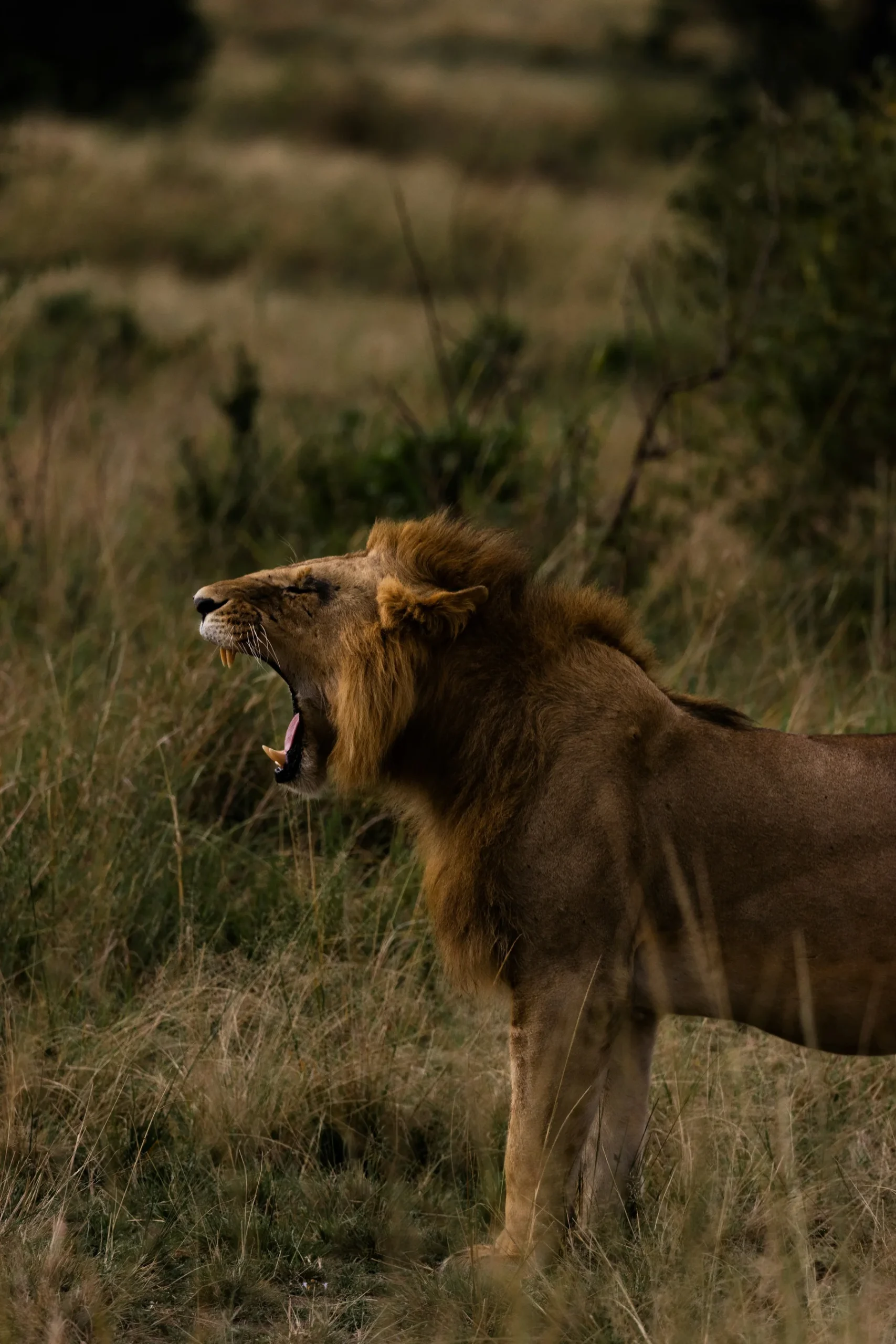
Dawn is valuable, not magical
Cool air and soft light can make animals more active and photography more forgiving. Dawn can also be quiet. The guide still needs tracks, calls, weather and judgement.
What a first-light drive feels like
Departure may happen before breakfast. The vehicle is cold, blankets matter and conversation stays low. This is the hour for listening as much as scanning.
Predator activity at dawn
Lions and hyenas may still be moving after the night. Cheetahs can use early light before heat increases. Leopards follow their own rhythms. None is guaranteed.
Herbivores at dawn
Giraffes, elephants, antelope and zebra can be active throughout the day, but low light, long shadows and cool air change how the scene feels and photographs.
Morning birding
Calls are conspicuous and many birds feed actively. Tell the guide before departure if birds matter, so the vehicle does not race past every small shape toward a big-cat report.
Sunrise photography
Exposure changes rapidly. A private vehicle makes it easier to position carefully and wait for an animal to enter the light without pressure from other guests.
The breakfast decision
Returning to camp for breakfast creates a clean break but can use the latter part of the morning. A packed breakfast keeps the drive moving. A full bush setup adds atmosphere and logistics.
Field breakfast
A guide should choose a safe, permitted place that does not disturb wildlife or block a track. Food quality, hygiene, allergies, waste and toilets matter more than linen.
Breakfast back at camp
This is often better for families, medical diets, older travellers and anyone who needs a warm washroom. It also creates time to rest before the afternoon.
A morning drive can become a long drive
If a meaningful sighting develops, a private group may choose to remain out and eat later. Shared vehicles need agreement and camp coordination.

Midday is not empty
Many animals rest, but the ecosystem does not switch off. Elephants drink, raptors use thermals, hippos shift, cheetahs scan and a predator may move when opportunity appears.
Why midday can be productive
Fewer vehicles may remain in the field. A patient guide can revisit a known resting area or continue toward a habitat too distant for a short loop.
Why midday can feel long
Light is hard, heat builds, people tire and a sleeping lion can remain a sleeping lion for hours. The day needs landscape, birds, behaviour and conversation, not a checklist of dramatic moments.
Midday photography
Use high-key scenes, silhouettes, dust, wide habitat and behaviour rather than fighting overhead light in every frame. Cloud cover can change the calculation completely.
Lunch in the field
A packed lunch prevents a long return, but it should be safe, varied and suited to dietary needs. Ask how rubbish is collected and where the stop is permitted.
Lunch at camp
A proper meal, toilet, shower, nap and battery charge can transform the afternoon. Split drives are not less serious when rest makes the travellers more observant.
Picnic etiquette
Do not feed birds, leave scraps, walk toward wildlife or treat an open site as a private restaurant. The guide chooses the safe place and ends the stop if conditions change.
Toilet reality on a full day
Facilities are limited and their cleanliness varies. A discreet bush stop may not be legal or safe everywhere. Ask before departure, especially for children, pregnancy, mobility needs or medical conditions.
Hydration without misery
Drink steadily rather than avoiding water to reduce toilet stops. Dehydration worsens headache and fatigue. Ask the guide to plan known facilities.
The afternoon reset
After rest, the vehicle carries clean lenses, charged batteries and people who can listen again. This is a real advantage of split drives.
Late-afternoon movement
Temperature falls and long shadows return. Predators may stir, herbivores shift and birds settle. The last legal hour can be beautiful without producing a dramatic sighting.
Sunset is not worth breaking the rules
The guide must leave enough time to return under the area’s rules. Do not demand one more photograph when the vehicle needs to move.
Sundowners and drive time
A sundowner can be a lovely pause, but it uses the same light that wildlife photographers value. The Mara bush breakfast and sundowner guide helps decide when the stop earns its place.
Night drives are a different activity
The National Reserve does not simply turn an afternoon drive into a night drive. Some private conservancies offer guided night drives under their own rules. Read the Masai Mara night-drive guide.
Morning versus afternoon at a glance
| Factor | Morning | Afternoon |
|---|---|---|
| Temperature | Cool, sometimes cold | Warm at first, cooling later |
| Light | Blue hour to warm low sun | Harder early, golden near sunset |
| Energy | Early start tests sleep | Rested guests may engage more |
| Wildlife | Some nocturnal activity may continue | Animals may stir after heat |
| Meals | Breakfast timing needs a decision | Dinner usually follows return |
| Weather | Mist or overnight rain may affect tracks | Convective storms may develop |
| Best use | Tracking, cool-hour behaviour, photography | Revisits, golden light, sunset route |
Full-day strength: reach
A long day can cross habitats and reach the river or a distant sector without turning around almost immediately. This matters most when the camp is far from the day’s purpose.
Full-day strength: patience
The group can remain with a cheetah watching prey, elephants approaching water or a leopard resting in a tree. Patience still needs ethical distance and other vehicles’ space.
Full-day strength: continuity
Tracks, calls and animal movement form a story across hours. Returning to camp can break that thread.
Full-day strength: flexibility
A good guide can change direction after a radio update, weather shift or road closure without worrying about a fixed lunch table.
Full-day strength: fewer gate journeys
For an outside property, staying in the Reserve may avoid a second gate approach. Ask how fees and permitted re-entry work for the exact ticket and date.
Full-day strength: migration range
Herd position changes. A full day can make a distant area reachable, but no amount of time guarantees a river crossing. Use the Great Migration river-crossing guide.
Full-day weakness: fatigue
Ten hours of bumps, dust and concentration can make the last beautiful hour feel like an obligation. More time is not more value when people stop noticing.
Full-day weakness: heat
Midday can be hot, particularly in an open vehicle. Shade, airflow, water, clothing and route choice matter.
Full-day weakness: food compromise
Packed meals can be excellent or repetitive. Complex allergies may be easier at camp. Ask to see a realistic menu plan.
Full-day weakness: toilet planning
The need is personal and non-negotiable. Do not accept vague reassurance if facilities determine whether someone can enjoy the day.
Full-day weakness: no private control
A shared full day can trap incompatible priorities in one vehicle. One guest wants birds, another wants the river and a child needs camp by 2 pm.
Full-day weakness: one weather window
Hard rain or poor roads can affect the entire outing. Split drives allow a fresh decision for each period. The Masai Mara flooding guide explains the wider risk.
Split-drive strength: prime hours twice
Morning and afternoon outings place the group in low light and cooler temperatures on the same day. This is especially valuable for photography and heat-sensitive travellers.
Split-drive strength: recovery
Guests can eat, shower, sleep, stretch, charge equipment and review images. The second drive begins with attention rather than endurance.
Split-drive strength: two decisions
The guide can use morning sightings, weather and fresh reports to design the afternoon. A sick child or tired adult can skip one drive without losing the whole day.
Split-drive strength: better meals
Camp kitchens can manage allergies and preferences more reliably than a picnic box, especially over several days.
Split-drive strength: lodge experience
Beautiful camps are part of the holiday. A pool, spa, reading deck or conversation with staff has value when it is chosen rather than forced.
Split-drive weakness: repeated transit
If the gate or habitat is far, the group drives the same access road four times. That can erase the benefit of rest.
Split-drive weakness: lost late morning
Returning for a fixed breakfast may leave an active sighting too early. A field breakfast can solve this.
Split-drive weakness: less distant range
The vehicle may never reach a remote river, border, Triangle sector or conservancy edge without a purposeful full day.
Split-drive weakness: shared schedule
Camp departure times may be fixed. The group may not get the dawn start imagined from the itinerary wording.
Full day versus split drives by outcome
| Priority | Better starting format | Reason | Important condition |
|---|---|---|---|
| First-light photography | Split or dawn-plus-breakfast | Protects early light without forcing all-day endurance | Camp close to habitat |
| Distant river sector | Full day | Travel time earns a longer stay | Current herd and route justify it |
| Family with young children | Split | Food, toilet and nap flexibility | Short gate or habitat access |
| Serious birding | Either | Birding works all day across habitats | Private guide and realistic pace |
| Honeymoon balance | Split plus one long day | Leaves private camp time | Vehicle policy is flexible |
| First safari, three nights | Hybrid | Shows two rhythms | Do not over-schedule arrival day |
| Repeat visitor | Full day or specialist split | Can follow a narrow interest | Guide understands the aim |
| Limited mobility | Split or tailored hybrid | Reduces continuous vehicle time | Whole transfer and toilet chain verified |
The private-vehicle question
A private vehicle gives the group control over departure, species priorities, stops, meals and return. It does not give permission to ignore park rules or disturb wildlife.
When private is worth the cost
It is especially useful for photographers, families, birders, mobility needs, honeymoon privacy, strict diets and anyone planning a full day.
Shared vehicle does not mean poor safari
A good camp matches guests thoughtfully and a skilled guide manages interests. The risk is not sharing. It is unclear policy and incompatible expectations.
Ask how many guests share
Vehicle seat count is not the same as viewing comfort. Ask how many rows, whether every guest has a side, how roof positions work and where equipment sits.
Ask who decides the drive format
Some packages assume shared morning and afternoon drives. A full day may require every guest’s agreement, a private vehicle supplement or advance notice.
Ask about guide continuity
The same guide learns the group’s interests, mobility and previous sightings. A changing guide can still be excellent, but information should pass between shifts.
Ask about guide specialism
Birding, photography, children and research interests benefit from the right guide. A title alone is less useful than experience and communication style.
Vehicle comparison
| Feature | Why it matters on a short drive | Why it matters on a full day |
|---|---|---|
| Window or open side for each guest | Reduces jostling at a sighting | Prevents hours of poor viewing position |
| Raised roof | Flexible standing angles | Shade and posture need thought |
| Side canvas or windows | Rain and dust protection | Ventilation and visibility over many hours |
| Charging | Useful for phones | Important for cameras and long days |
| Fridge or cool box | Optional comfort | Food, water and medication may depend on it |
| Step and handhold | Easier boarding | Repeated entry and toilet stops need safety |
| Seat cushioning | Short-term comfort | Back and hip comfort become decisive |
| Radio | Helps the guide understand activity | Must not turn the day into a high-speed chase |
Vehicle rules protect the experience
The Mara Conservancy driving guidance states a 50 kilometre-per-hour limit on graded roads and 30 on other tracks in the Triangle, with wildlife given the right of way. Current signs and ranger direction are final.
Speed is not safari productivity
Fast driving misses tracks, birds and behaviour while disturbing wildlife and guests. Range should come from route planning and time, not speed.
Off-road access has limits
Rules differ by land unit and zone. In the Triangle, the official guidance distinguishes high-use and low-use zones and limits permitted approaches. The game-drive rules and wildlife etiquette guide should be read before travel.
Closed tracks are closed for a reason
Rocks, logs or signs may mark damaged or recovering ground. A sighting does not create permission to enter.
Give animals the road
Stop, keep distance and let wildlife choose its path. A long day gives enough time to wait without crowding.
Do not surround predators
Vehicle numbers and angle can block movement or hunts. A responsible guide leaves when the scene is crowded or the animal shows stress.
Radio reports need judgement
The radio can reveal a rare sighting far away. The guide should weigh distance, crowding, habitat and the group’s priorities before moving.
A checklist is the wrong scorecard
Seeing the Big Five by lunch can still be a shallow drive. Watching elephant family decisions for an hour can be the memory of the trip.
Migration season
Herd location, congestion and river access can make one full day worthwhile. It can also create hours of waiting for a crossing that never happens.
Green season
Resident wildlife, birds, young animals, dramatic skies and fewer vehicles can reward local split drives. Wet roads may limit range. Compare the tradeoff in the migration versus green-season guide.
Dry season
Water and grazing influence animal distribution, dust rises and popular sightings can become busy. A full day helps explore beyond the obvious cluster when the route allows.
April and May
The Masai Mara in April and May guide explains closures, rain, value and green scenery. Shorter drives may adapt better to storms, while one long clear day can be exceptional.
Rainy-day format
Keep the vehicle close to reliable tracks, protect equipment and be willing to split the day. Do not plan a distant crossing when current access is uncertain.
Hot-day format
Use dawn and late afternoon, with a real midday rest. If a full day is necessary, seek varied habitats and shaded picnic time.
Cold or windy morning
Layer clothing, use blankets and avoid placing a cold-sensitive traveller in the most exposed seat. Comfort affects observation.
Balloon morning
A balloon flight, landing breakfast and transfer already fill much of the morning. Do not automatically add an immediate full-day drive. The Mara balloon guide helps build the day.
Arrival day
Road and bush-flight arrival times are variable. Treat the first afternoon drive as a welcome opportunity, not a guaranteed full sector exploration.
Departure day
A short morning outing only works when camp, airstrip, gate and checkout timing align. Protect the flight connection using the Mara airstrip guide.
Three-night itinerary
Use the arrival afternoon, one purposeful full day and one dawn-plus-afternoon split day if transport permits. This gives range and prime-hour repetition.
Four-night itinerary
Two split days, one full day and flexible arrival or departure viewing give a balanced rhythm. Switch the full day according to weather and wildlife information.
Five-night itinerary
Add a slow specialist drive, conservancy activity or rest period. More nights should produce depth, not five identical dawn-to-dusk marathons.
Split-stay itinerary
Let each camp serve its local area. Do not spend the middle of every day driving back toward the sector left yesterday.
A sample rhythm table
| Day | Morning | Midday | Afternoon | Purpose |
|---|---|---|---|---|
| Arrival | Travel | Check-in and rest | Local orientation drive | Learn the immediate area |
| Day 2 | Dawn drive and field breakfast | Return, lunch and rest | Late drive | Protect prime light twice |
| Day 3 | Early departure | Picnic in distant sector | Return by closing time | Range and patience |
| Day 4 | Slow specialist drive | Camp time | Flexible revisit | Follow interest, not checklist |
| Departure | Optional short drive | Transfer | Onward journey | Protect connection |
Families with young children
Split drives usually win because meals, toilets, naps and attention can reset. A private vehicle allows one parent and child to return without ending everyone’s drive.
Teenagers
Some teenagers love the long search; others disengage. Give them binoculars, a field guide, photography role or species notebook without turning the drive into homework.
Older travellers
Vehicle suspension, seat, steps and uninterrupted sitting matter. A six-hour drive can be harder than two three-hour drives even when total time is equal.
Limited mobility
Confirm boarding height, handholds, seating, toilet route and whether a wheelchair or walking aid fits securely. Use the accessible safari guide to map the whole chain.
Back, neck or hip pain
Request the smoothest seat position, additional cushion and regular safe stops. A private tailored schedule may add more value than a premium room category.
Pregnancy
Discuss travel with a qualified clinician, then tell the safari planner early. Bumpy roads, heat, toilet access, malaria prevention and emergency reach need individual advice.
Medical diets
Split drives make kitchen control easier. For a full day, confirm ingredients, cross-contact, cold chain, medicine storage and emergency snacks in writing.
Photographers
A private vehicle, one person per row, beanbag support and guide who understands angle and light often matter more than total hours. The Masai Mara photography guide covers the detailed setup.
Birders
Birding rewards slow movement throughout the day. A full day can cross habitats, while split drives can focus on dawn calls and late activity. Guide knowledge decides more than format.
Honeymooners
Not every honeymoon wants maximum vehicle time. Mix private prime-hour drives, one long exploration and enough camp time for the trip to feel shared rather than scheduled.
First-time safari travellers
Start with a split day before committing to a full one. Learn how the body handles dust, bumps, early starts and toilets.
Repeat safari travellers
A full day can follow one narrow theme: elephant families, raptors, a known leopard range, grassland ecology or a remote sector. Depth replaces the species race.
The people-first decision table
| Need | Strong starting plan | Useful adjustment |
|---|---|---|
| Child nap and early meal | Split drives | Private vehicle and nearby habitat |
| Serious photography | Dawn-plus-full or private split | One photographer per row |
| Limited mobility | Tailored split | Verified vehicle and toilet chain |
| Complex diet | Split | Chef-prepared field meal if full day is essential |
| Short honeymoon | Split plus one private long day | Protect unstructured camp time |
| Repeat birding trip | Specialist full day | Change habitats slowly |
| Low tolerance for bumps | Short local loops | Choose camp position before room style |
Traveller voice: full-day range
One visitor advised, “Definitely get a full day drive”, then explained that it reached areas too distant for short outings.
Traveller voice: the sightings they would have missed
The same guest saw “quite a few things that we would have missed” on morning-and-evening-only drives. That was one itinerary, not a universal formula.
Traveller voice: going deeper
They also valued that “you’ll get a lot deeper into the park”. Camp position decides whether that extra range is needed.
Traveller voice: midday should not be dismissed
Their conclusion was, “don’t dismiss what you can see during the daytime”. It is a good correction to rigid wildlife clocks.
Traveller voice: morning preference
Another repeat traveller wrote, “I prefer morning drives to afternoon drives”. Preference is part of the plan, not a fact to impose on everyone.
Traveller voice: avoid the breakfast return
That guest felt “Going back to camp seems to me like a waste of good game viewing time”. A field breakfast is the practical middle ground.
Traveller voice: early air and light
A photographer described how “The air is crisp with less dust” at first light.
Traveller voice: photography at dawn
The same comment said “the photography is the best”. Cloud, subject and skill still shape the result.
Traveller voice: split drives can be fully used
A Bateleur guest said they “took full advantage of the daily morning and afternoon game drives”. Returning to camp did not make their safari superficial.
Traveller voice: midday can belong to the holiday
A JW Marriott guest booked a “midday massage between our morning and afternoon game drive”. That balance is valid when it suits the traveller.
What traveller accounts are good for
They reveal fatigue, excitement, field meals, range and the emotional difference between continuous and split days. Use them to recognise preferences.
What traveller accounts cannot promise
They cannot predict your animals, route, guide, weather, vehicle mates or current rules. The same format can feel completely different from another camp.
Questions for a full day
- What time do we actually leave and return?
- Which sector or purpose justifies the long day?
- Is the vehicle private?
- Where do we eat breakfast and lunch?
- Which toilets can we use?
- How much water and shade are carried?
- Can someone return early if unwell?
- How are allergies and medicine stored?
- What happens in rain or road closure?
- Are all fees and vehicle hours included?
Questions for split drives
- What are the real departure times?
- How long is camp-to-gate or camp-to-habitat transit?
- Can breakfast travel with us?
- Can a drive extend for a meaningful sighting?
- Is the same guide assigned afternoon?
- Is the vehicle shared with new guests?
- When does the afternoon drive leave?
- Can children or tired guests skip one drive?
- Are conservancy and Reserve drives both included?
- What changes during rain or migration season?
Quote comparison table
| Field | Proposal A | Proposal B |
|---|---|---|
| Exact camp and sector | ||
| Vehicle private or shared | ||
| Maximum guests and rows | ||
| Morning departure | ||
| Field breakfast option | ||
| Full-day allowance | ||
| Picnic and dietary plan | ||
| Reserve and conservancy fees | ||
| Guide continuity | ||
| Rain and road alternative |
Translate itinerary wording before you compare it
Safari proposals often use the same phrase for different days. Ask the planner to replace labels with the operational detail below.
| Proposal wording | What it may mean | What to request in writing |
|---|---|---|
| “Morning game drive” | A quick pre-breakfast loop or several hours with breakfast | Departure, return, meal location and gate time |
| “Afternoon game drive” | A short post-tea outing or a long drive beginning after lunch | Vehicle departure, closing-time plan and sundowner use |
| “Full-day game drive” | Anything from a six-hour excursion to dawn-to-closing | Actual clock, target area, meals, toilets and early-return option |
| “Unlimited game drives” | Drives within camp schedule, not necessarily a private vehicle | Number, duration, sharing and land-unit limits |
| “Flexible timings” | Flexibility subject to other guests and operations | Who makes the decision and whether private use is required |
| “Reserve game drive included” | Entry may be included, but vehicle or transfer may not be | Fees, gate, hours, vehicle and packed meals |
The daily briefing card
Before each meaningful drive, the guide and group should agree on the purpose, limits and alternatives. This takes two minutes and prevents hours of incompatible expectations.
| Briefing point | Example of a useful answer |
|---|---|
| Today’s purpose | Follow the eastern grasslands slowly, with birds and cheetah habitat as priorities |
| Current conditions | Rain made one black-cotton track unsuitable, so the route stays on the main network |
| Meal and toilet plan | Field breakfast at the approved picnic area, then a known facility before midday |
| Return limit | Back by early afternoon for the child’s rest, unless the family agrees otherwise |
| Sighting ethics | Leave a crowded cat sighting and avoid blocking movement |
| Alternative | If the target sector is busy, explore the quieter drainage lines near camp |
The guide remains responsible for safety, wildlife distance, permitted roads and protected-area rules. The briefing creates shared priorities, not a customer veto over professional judgement.
Common mistake: counting drives without counting access
Four drives can include four gate approaches. Put actual habitat time beside the schedule.
Common mistake: assuming full day starts at dawn
Ask for the clock. A 9 am to 4 pm outing is different from dawn to closing.
Common mistake: assuming all-day means private
A shared all-day vehicle may require unanimous agreement. Confirm before paying.
Common mistake: choosing by predator myths
Predators can move or rest at any time. Dawn and dusk improve certain chances, not certainty.
Common mistake: sacrificing every midday
Camp time can make a long trip sustainable. Rest is not wasted safari when it protects attention.
Common mistake: booking the cheapest outside camp
A lower room rate can add gate transit, fees and vehicle hours. Compare the complete day.
Common mistake: promising the river
A long drive can reach a river, not summon a crossing. Keep expectations honest.
Common mistake: ignoring toilet needs
Embarrassment should not control the plan. Ask directly and privately before the first long day.
Common mistake: demanding off-road access
The rules protect wildlife and habitat. A private vehicle does not buy an exception.
Common mistake: filling every day identically
Use the previous drive to shape the next. A good itinerary learns.
How to choose in ten steps
- Choose the exact camp and game-drive land unit.
- Measure gate and habitat access.
- State wildlife, photography and rest priorities.
- Decide whether a private vehicle is necessary.
- Check the actual departure and return times.
- Plan breakfast, lunch, water and toilets.
- Match the day to children, mobility and medical needs.
- Place one purposeful full day only where it adds range or patience.
- Protect dawn and dusk on the remaining days.
- Let current weather, roads and wildlife information change the plan.
Final recommendation
For a first three-to-five-night visit, plan most Masai Mara game drives as dawn or morning outings plus late-afternoon drives, with field breakfast where it protects good wildlife time. Add one full day when a distant sector, migration position or specialist interest gives it a clear purpose. Book a private vehicle when timing, photography, children, mobility or diet require control. The best schedule is not the one with the most hours. It is the one that keeps the vehicle in the right habitat while the people inside are still curious.
Frequently asked questions
Is a full-day Masai Mara game drive worth it?
It can be when it reaches a distant sector, avoids repeated gate transit or allows patient observation. It is less useful when everyone becomes exhausted or good habitat is beside camp.
What time do Masai Mara game drives start?
Times vary by camp, land unit, season and current rules. Many morning drives begin around first light, but the exact departure must be confirmed.
Are morning or afternoon game drives better?
Morning offers cool air and early light. Afternoon builds toward cooler conditions and sunset. A multi-night stay should normally include both.
Do animals disappear at midday?
No. Some rest, but elephants, birds, herbivores and predators can still move or interact. Midday is often quieter, not empty.
What do you eat on a full-day game drive?
Camps normally provide packed breakfast, lunch or both. Confirm the menu, dietary handling, water, waste and picnic location.
Are there toilets during a full-day drive?
Facilities are limited and depend on the route. Ask which permitted stops are available and whether they suit mobility or medical needs.
Do I need a private vehicle?
Not always. It is particularly valuable for photographers, families, birders, full-day drives, mobility needs and travellers with strict schedules.
Can children do a full-day drive?
Some can, but split drives usually offer easier meals, toilets, naps and early returns. Age alone does not predict stamina.
Can a full-day drive guarantee a river crossing?
No. It provides time and range. Migration herds and crossings remain unpredictable.
Are night drives included in afternoon drives?
No. Night drives are separate activities allowed in some private conservancies under their rules, not a normal extension inside the National Reserve.
What should I wear on a game drive?
Use neutral layers, a warm outer layer for dawn, sun protection and closed shoes. Carry rain protection in unsettled weather.
How many game-drive days do I need?
Three nights provide two meaningful full safari days plus arrival and departure opportunities. Four or five nights allow a better mix of formats and rest.
Sources and further reading
Operational and etiquette context comes from the Mara Conservancy driving and game-drive guidance. Format examples are compared with the Masai Mara game-drive overview, while exact inclusions and times must be confirmed for the chosen property and land unit. Traveller quotations are linked to the individual discussion or review pages and describe personal experiences, not promised outcomes.
Let us build the drive day around real geography
Share camp, dates, travellers, interests, vehicle preference and pace. We will compare useful habitat time, prime light, range and comfort.