
Mara Siana Conservancy Guide
Understand the community leases, compare Entumoto with Ososian, and decide how Siana and the National Reserve should share your safari time.
- The short answer
- Mara Siana at a glance
- Who should choose Siana
- Who should compare harder
- The key planning question
- What Mara Siana is
- What it is not
- Where it sits
- Why eastern access matters
- The 35,322-acre total
- The 7,185.9-acre core
- The 28,136-acre corridors
- How the arithmetic fits
- Why the distinction matters
- The landowner leases
- The landowners’ trust
- The beginning in 2014
- The earlier conservancy
- Settlement and schooling
- Overgrazing
- Land subdivision
- Why lease income matters
- The formal management plan
- The conservation claim test
- Rangers
- Education programmes
- Community projects
- Human-wildlife conflict
- Why “community” is not one opinion
- Landscape
- The Sekenani Valley
- Hills
- Black-acacia woodland
- Wetlands and water
- Open grass
- Elephants
- Lions
- Leopards
- Cheetahs
- African wild dogs
- Buffalo
- Giraffes
- Hyenas
- Smaller predators
- Birds
- Wildlife by habitat
- Day game drives
- Morning drives
- Afternoon drives
- Full-day Reserve drives
- Private and shared vehicles
- The game-drive checklist
- Walking safaris
- Hill walk
- Nature walk
- Walking safety
- Night drives
- Night-drive ethics
- Bush meals
- Sundowners
- Cultural and school visits
- Balloon flights
- Activity comparison
- Where to stay
- Entumoto Safari Camp
- Entumoto location
- Entumoto tents
- Entumoto family tent
- Entumoto atmosphere
- Entumoto full board
- Entumoto all-inclusive
- Entumoto 2026 conservancy fee
- Entumoto Reserve fee caution
- Entumoto traveller voice
- Entumoto three-night value
- Ososian Mara Lodge
- Ososian suites
- Ososian air conditioning
- Ososian terraces
- Ososian pool
- Ososian night drives
- Ososian extras
- Entumoto versus Ososian
- The vehicle question
- The accommodation-only trap
- The complete price table
- How many nights
- Two nights
- Three nights
- Four nights
- Five nights
- A three-night rhythm
- A five-night rhythm
- Reserve access
- Sekenani Gate
- Oloolaimutia Gate
- A Reserve day
- When to stay in the Reserve
- When Siana is enough
- Siana versus Sekenani
- Siana versus Mara Ripoi
- Siana versus Mara North
- Siana versus Naboisho
- Siana versus the Triangle
- Area comparison
- Migration
- River crossings
- Resident wildlife
- January to March
- April and May
- June
- July to October
- November and December
- Season table
- Migration season versus green season
- Flying to Siana
- Keekorok Airstrip
- Wilson Airport
- Luggage
- Multi-stop flights
- The airstrip guide
- Driving from Nairobi
- Narok
- The final track
- Self-driving
- Road versus air
- Families
- Children at Entumoto
- Children at Ososian
- Family vehicle
- Learning
- Honeymoons
- Photography
- Limited mobility
- Food and allergies
- Connectivity
- Camp safety
- Traveller voice: people
- Traveller voice: magic
- Traveller voice: camp design
- Traveller voice: immersion
- Traveller voice: guiding
- Traveller voice: the staff
- Traveller voice: nothing negative
- Traveller voice: four nights
- How to use reviews
- Common mistake: using total acres as drive acres
- Common mistake: booking full board without safari
- Common mistake: treating Siana as Sekenani
- Common mistake: chasing the crossing
- Common mistake: moving camps unnecessarily
- Common mistake: skipping camp time
- Booking checklist
- The final verdict
- Frequently asked questions
- Where is Mara Siana?
- How large is it?
- How many landowners participate?
- Which camps are official partners?
- Is Siana inside the Reserve?
- How close is Sekenani Gate?
- Can I walk?
- Are night drives available?
- Which airstrip is used?
- How many nights are enough?
- Is Siana good for migration?
- Which camp suits a family?
From the eastern hills, the Reserve looks like one uninterrupted sweep of grass. Down in the valley, the human map is more complicated. One parcel belongs to one family, the next to another. A wildlife corridor exists only if enough people agree that elephants, lions and wildebeest should still be able to pass.
On 31 March 2014, several hundred landowners gathered under a tree in the Sekenani Valley and signed their intent to lease individual plots into a renewed conservancy. The landscape now protects 35,322 acres through a core and wider corridors involving 1,951 landowner families.
This Mara Siana Conservancy guide explains how those figures fit together, how Entumoto and Ososian offer very different stays, when to cross into the National Reserve and what a reader should verify before calling Siana “private Mara.”
The short answer
Mara Siana suits travellers who want a community conservancy on the Reserve’s eastern border, hill and valley scenery, controlled tourism, walking and relatively easy Sekenani access. Compare carefully if a river crossing is the only goal or if the quote does not say whether you are buying accommodation alone or a complete guided safari.
Mara Siana at a glance
| Question | Current official answer |
|---|---|
| What is it? | Community-led conservancy on leased Maasai land |
| Founded | 31 March 2014 in its current form |
| Total protected area | 35,322 acres |
| Main core | 7,185.9 acres |
| Wider corridors | 28,136 acres |
| Landowner families | 1,951 |
| Tourism partners | Entumoto and Ososian |
| Reserve access | Eastern border, with Sekenani nearby |
| Main air access | Keekorok Airstrip according to official visitor guidance |
| Best minimum stay | Three nights |
Who should choose Siana
Choose it if you value quiet conservancy drives, walking, local guide knowledge, eastern Reserve access and a visible landowner partnership. It works especially well when the camp itself is part of the holiday rather than only a place to sleep between long Reserve drives.
Who should compare harder
Compare harder if you need a very specific migration sector every dawn, expect every activity in a room-only rate, or assume “Siana” always means the same game-drive core. The corridor is much larger than the tourism core.
The key planning question
Ask which land your booked camp can actually drive, how many vehicles use it, and which Reserve gate it uses. A 35,322-acre conservation story and a daily guest route are related, but they are not identical.
Use this Mara Siana Conservancy guide beside the broader Masai Mara safari guide so the eastern corridor, Reserve sectors and complete Kenya route remain connected.
What Mara Siana is
Mara Siana is a community conservancy on the eastern border of the Masai Mara National Reserve. Individual families lease land for conservation under a 25-year structure, while partner camps support the core through tourism payments.
What it is not
It is not the National Reserve, a fenced estate or a single privately owned ranch. It is also not the same as Mara Ripoi, though connected eastern landscapes make both relevant to wildlife movement.
Where it sits
Siana lies around the Sekenani Valley and eastern Reserve boundary. Entumoto says it sits between Oloolaimutia and Sekenani gates, with Sekenani about a 30-minute game drive from camp under normal conditions.
Why eastern access matters
Sekenani is the most familiar eastern Reserve entrance and connects naturally with road arrivals from Narok. It does not make Musiara, the Mara Triangle or every river-crossing point close.
The 35,322-acre total
The current Mara Siana Conservancy site states that 35,322 acres are protected. The total combines a smaller main core with a much larger set of wildlife-corridor areas.
The 7,185.9-acre core
The core involves 1,060 landowner families whose payments are linked to tourism partners Entumoto and Ososian. This is the area most directly connected with the conservancy’s low-density tourism model.
The 28,136-acre corridors
The wider corridor areas involve another 891 families. Corridors matter because animals need movement space beyond the core, but access and management may differ from the land immediately around the camps.
How the arithmetic fits
| Zone | Acres | Landowner families | Visitor meaning |
|---|---|---|---|
| Main core | 7,185.9 | 1,060 | Primary tourism-supported conservation area |
| Wildlife corridors | 28,136 | 891 | Wider movement and connectivity landscape |
| Total | 35,322, rounded | 1,951 | Full protected network |
Why the distinction matters
A guest should not assume 35,322 acres of unrestricted game driving. A conservation corridor may be protected for movement while tourism uses a defined network. Ask what the camp accesses on an ordinary morning.
The landowner leases
The conservancy states that 1,951 families lease land under 25-year agreements. Lease length creates a basis for planning, but the real measure is dependable payment, fair governance and habitat condition across drought and tourism cycles.
The landowners’ trust
The official story describes a democratic federation with yearly meetings and village representatives forming a landowner committee. Governance is central because a corridor built from private parcels depends on continuing consent.
The beginning in 2014
The first section was initially called Entumoto Conservancy. Landowners met in Sekenani Valley and signed their intention to protect connected plots rather than subdivide the whole valley for settlement.
The earlier conservancy
Siana had an earlier conservation arrangement after hunting was banned in Kenya, but the official account says it failed through mismanagement. The current model should be understood as a rebuilding, not the first time anyone valued the land.
Settlement and schooling
The conservancy’s history connects changing land use with permanent settlement, school attendance and subdivision. This should not become a story that blames education or families. The policy challenge is how livelihoods and wildlife share finite land.
Overgrazing
The official history says permanent grazing and growing livestock numbers contributed to severe pressure. Grazing remains part of Maasai life, so the solution is management and incentives, not pretending cattle can disappear.
Land subdivision
Subdivision can turn one open group landscape into many individually fenced plots. Even when each decision is rational for a family, the combined effect can close an elephant or wildebeest route.
Why lease income matters
A lease pays for keeping land open. Tourism also creates jobs, bed-night income and support for local programmes. The benefit needs to be visible and dependable if conservation is to compete with settlement and other land uses.
The formal management plan
The Kenya Gazette includes the Mara Siana Conservancy Management Plan 2018-2028. A gazetted plan gives governance, ecology and tourism a formal reference beyond camp marketing.
The conservation claim test
| Claim | Evidence to seek |
|---|---|
| Families receive benefit | Lease and bed-night payment explanation |
| Corridor remains open | Maps, monitoring and fence management |
| Wildlife is protected | Rangers and incident reporting |
| Tourism is limited | Two partner camps and controlled access |
| Grazing is managed | Current land-use practice |
| Governance is local | Trust, yearly meetings and representatives |
Rangers
Tourism revenue helps fund ranger patrols, wildlife monitoring and conflict response. Ask how many rangers work the area, how incidents are reported and how corridor zones are covered.
Education programmes
The conservancy describes environmental education on conflict, poaching, climate, pollution and waste. Education is most credible when local schools shape the programme rather than receiving a one-day tourist lecture.
Community projects
Lease payments, employment and education are different benefits. A good camp should explain which organisation funds what and avoid implying that one guest night solves every community need.
Human-wildlife conflict
Elephants can damage crops and predators can kill livestock. A corridor increases ecological opportunity and can increase household risk. Conservation needs reporting, prevention and fair response.
Why “community” is not one opinion
There are 1,951 families, not one voice. Land size, village, age, gender and livelihood shape priorities. A democratic trust cannot remove disagreement, but it can give disagreement a structure.
Landscape
Siana combines valley grassland, hills, black-acacia woodland, wet areas and Reserve-edge habitat. The variety explains why one camp’s hill view and another lodge’s valley setting can feel like different destinations.
The Sekenani Valley
The valley is central to the founding story and wildlife corridor. From higher ground, its connection with the Reserve becomes easier to see than on a boundary map.
Hills
Entumoto uses an elevated, secluded setting with broad views. Hills create walking routes, cooler perspectives and a camp atmosphere different from a flat open-plain lodge.
Black-acacia woodland
Ososian describes black-acacia woodland among the conservancy habitats. Woodland provides cover and browse, but it also makes some wildlife harder to see than on short grass.
Wetlands and water
Seasonal wet areas attract birds and herbivores while changing road conditions. The exact state depends on rain, not a permanent brochure photograph.
Open grass
Open areas support grazers, hunting visibility and long landscape views. Grass height responds to rain, wildlife and livestock management.
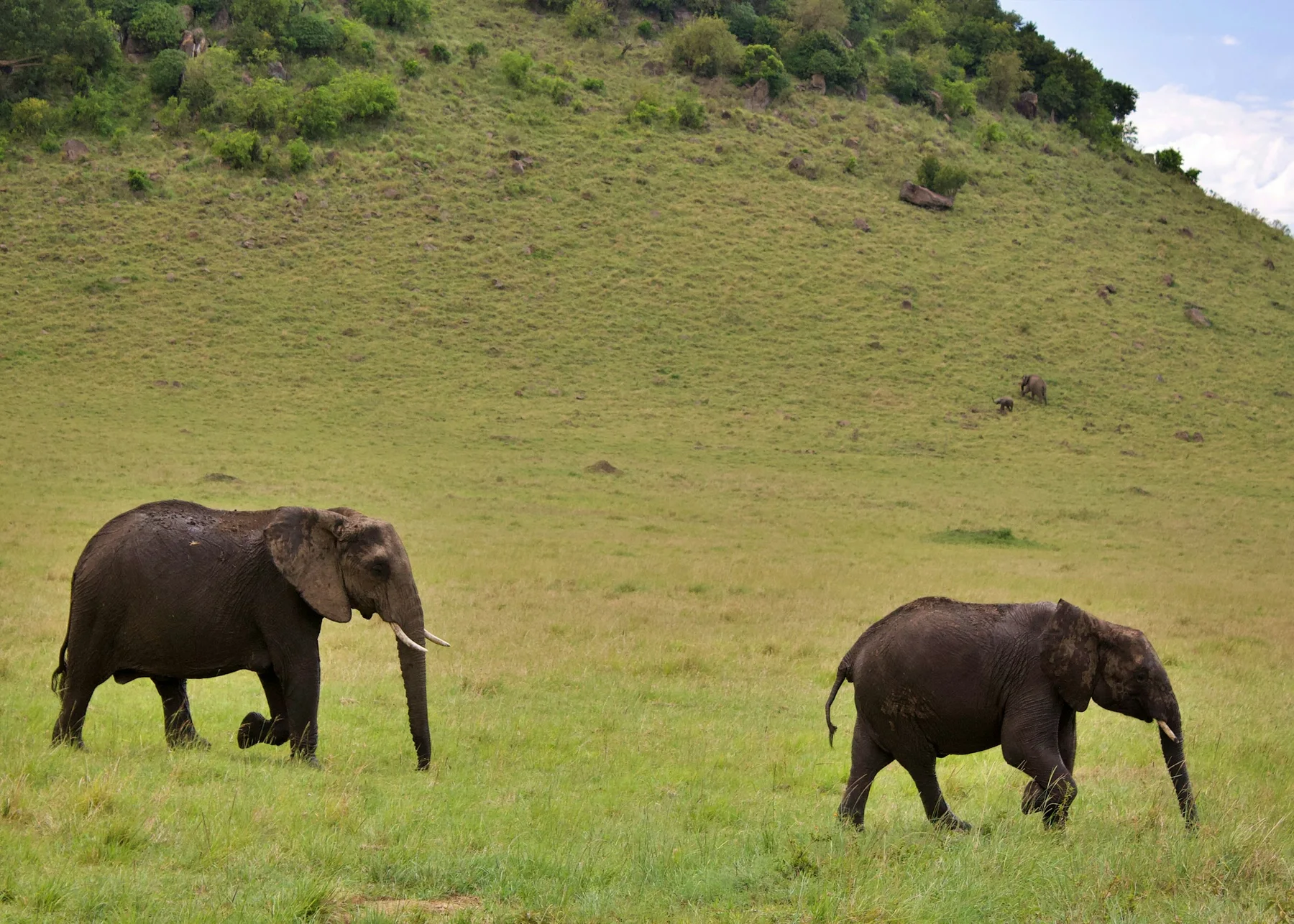
Elephants
Siana is important elephant habitat and a movement route. A verified Entumoto guest wrote, “I will never forget watching the elephants at the watering hole”. That memory is personal, while the corridor value is the wider reason it was possible.
Lions
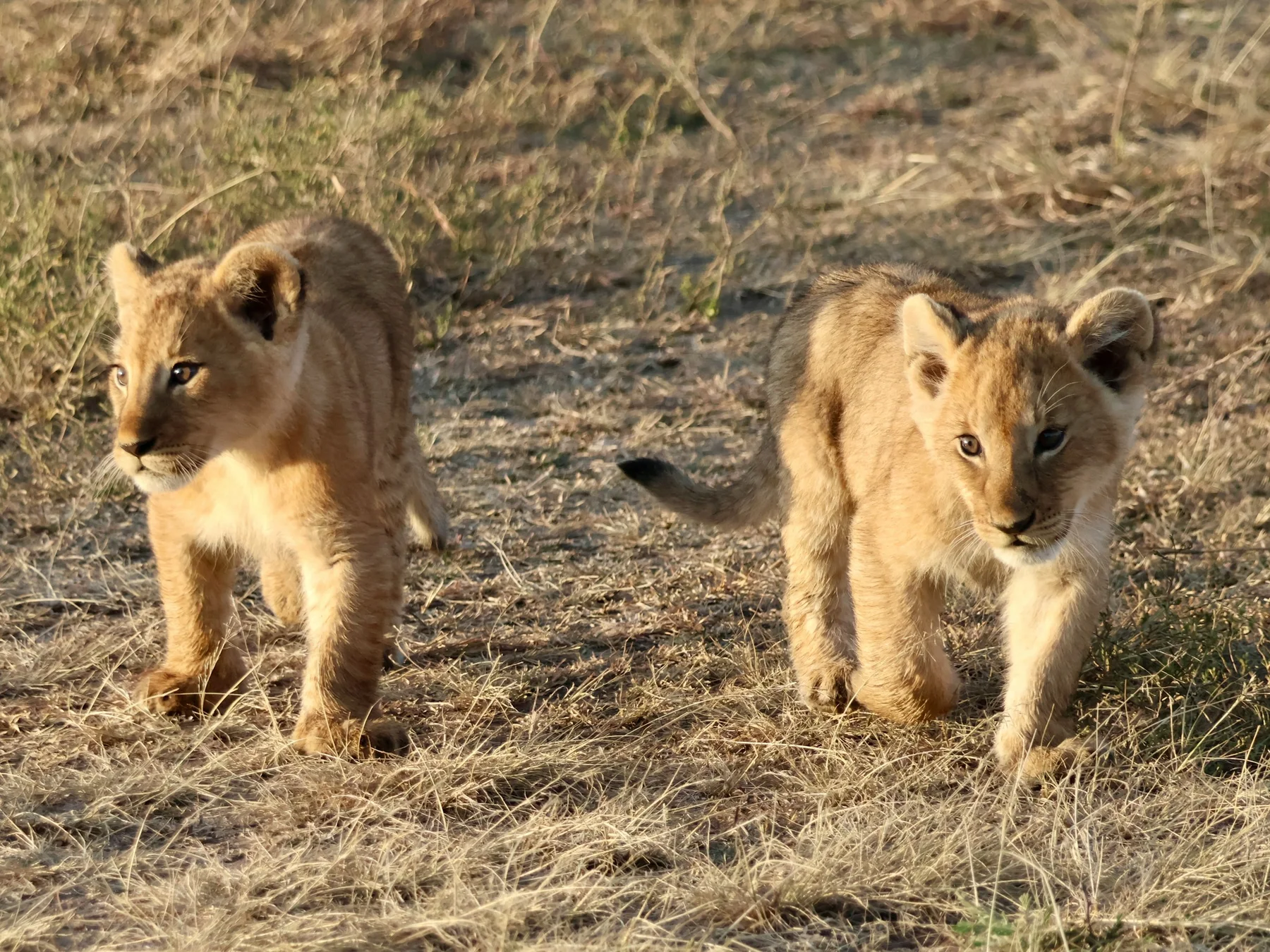
Lions use the conservancy, Reserve and neighbouring land according to prey and territory. Young cubs are a sign of breeding, not permission for vehicles to crowd a den.
Leopards
Woodland and drainage can suit leopards. They remain elusive, and no Siana camp should promise a sighting because one review reports it.
Cheetahs
Open ground can support cheetahs, but grass height and prey distribution change. A private vehicle helps patient viewing; it cannot create a hunt.
African wild dogs
Ososian lists African wild dog among notable wildlife. Packs range widely and can disappear from an area for long periods, so treat any sighting as exceptional rather than expected.
Buffalo
Buffalo use grass, water and cover. They can be difficult to notice in bush, which makes guide discipline essential during walks.
Giraffes
Masai giraffes move through woodland and open country. Their browsing patterns reveal habitat health more thoughtfully than another quick Big Five chase.
Hyenas
Spotted hyenas hunt, scavenge and maintain complex clans. Evening and night drives can add social and acoustic behaviour to the story.
Smaller predators
Jackals, servals, mongooses and genets reward slower guiding. They are often the best reason to take a conservancy night drive.
Birds
Hills, wetlands, woodland and open plains create varied birding. Ososian highlights the rare Verreaux’s eagle, but a species mention is not a guaranteed daily sighting.
Wildlife by habitat
| Habitat | Likely stories | Best method |
|---|---|---|
| Valley grassland | Grazers, cheetahs and raptors | Slow game drive |
| Hills | Views, tracks and woodland edge | Guided walk |
| Black acacia | Elephants, giraffes and birds | Quiet scanning |
| Wet areas | Waterbirds and drinking animals | Patient dawn stop |
| Reserve edge | Movement between management areas | Map-aware guiding |
| Camp water | Opportunistic wildlife | Safe observation from camp |
Day game drives
Game drives can explore Siana or cross into the Reserve under the booked package. Ask whether the vehicle, guide and conservation fees are included, especially with accommodation-only rates.
The planned Masai Mara game-drive guide compares full-day and split-drive rhythms, private and shared vehicles, food, fatigue and changing light.
Morning drives
Dawn offers cool air, tracks, predator movement and low-angle light. A camp near productive conservancy habitat can begin viewing before reaching the Reserve gate.
Afternoon drives
Late drives use golden light and can continue toward a sundowner. Keep the return flexible enough for a good sighting without turning dinner into a rigid deadline.
Full-day Reserve drives
A full day can reach farther Reserve habitats and migration areas. It should include food, water, entry, realistic gate time and the stamina of every passenger.
Private and shared vehicles
The room rate does not tell you vehicle occupancy. Ask whether the vehicle is private, the maximum guest count, child requirements and what a private supplement costs.
The game-drive checklist
| Ask | Why |
|---|---|
| Which area will we drive today? | Core, corridor and Reserve differ |
| Is the vehicle private? | Controls time and subject choice |
| How many guests share? | Affects window and camera space |
| Is Reserve entry included? | Can be a major extra |
| Can we stay out for breakfast? | Protects dawn viewing |
| What are off-road rules? | Conservancy does not mean unlimited access |
Walking safaris
Entumoto documents hill walks and nature walks led by Maasai guides and askaris. A walk focuses on tracks, plants, wind and smaller life rather than approaching predators.
Hill walk
An uphill route rewards views but requires fitness, stable footwear and heat planning. Ask for elevation, time and whether a vehicle can collect a tired guest.
Nature walk
A shorter nature walk may stay closer to camp and suit guests interested in medicinal plants, spoor and birds. Minimum age and terrain still need confirmation.
Walking safety
Ask who leads, whether a ranger accompanies, group size, communication, current wildlife and the turn-back plan. “Maasai guide” should be accompanied by a defined safety role and qualification.
Night drives
Ososian documents day and night game drives. Confirm which Siana zone is used, the spotlight method, return time and whether the activity is included.
Night-drive ethics
Good night guiding uses filtered, indirect light and avoids affecting a hunt or young animal. Read the Masai Mara night-drive guide before assuming after-dark access is automatically responsible.
Bush meals
Entumoto offers bush breakfasts and lunches for longer outings. Confirm dietary needs, shade, toilets and site cleanup.
Sundowners
Siana’s hills create strong sunset viewpoints. A good sundowner remains small, quiet and removable, with no litter or wildlife pressure.
Cultural and school visits
Entumoto guests mention visiting the Siana Secondary School for Girls. A visit should follow the school’s schedule and safeguarding rules, with consent before photography and a clear benefit beyond guest entertainment.
Balloon flights
A balloon requires a separate launch transfer, early pickup and complete fee comparison. Use the hot-air balloon guide before adding it to a three-night stay.
Activity comparison
| Activity | Strongest value | Main check |
|---|---|---|
| Conservancy game drive | Quiet habitat and local guiding | Vehicle basis |
| Reserve day | Broader geography and migration sites | Fee and drive length |
| Hill walk | Views and landscape understanding | Fitness and safety |
| Nature walk | Tracks, plants and small life | Age and terrain |
| Night drive | Nocturnal species | Current ethical rules |
| Bush meal | Time in the field | Diet and site impact |
| School or community visit | Human context | Consent and benefit |
Where to stay
Mara Siana’s official partner camps are Entumoto Safari Camp and Ososian Mara Lodge. The choice is not a simple luxury ladder. They offer different architecture, atmosphere, power, views and ways of packaging the safari.
Entumoto Safari Camp
Entumoto is a private tented camp in a quiet hill and valley setting. Its appeal lies in traditional safari atmosphere, local guiding, views, walking and a relatively direct route to Sekenani Gate.
Entumoto location
The camp describes itself between Oloolaimutia and Sekenani gates and about a 30-minute game drive from Sekenani. Treat that as a normal estimate, not a guarantee after rain or wildlife stops.
Entumoto tents
Entumoto offers tented accommodation, including family arrangements shown in its current material. Confirm the exact category, bedroom connection, bathroom, terrace, power and distance to common areas.
Entumoto family tent
Family tents can join two ensuite bedrooms through a living space, but layouts and inventory should be confirmed for the selected dates. An internal connection is different from two tents reached outdoors.
Entumoto atmosphere
The camp is unfenced, with guards and required escorts after dark. One reviewer said they “felt like part of the extended family”, capturing a hosted camp atmosphere rather than anonymous hotel service.
Entumoto full board
Full board includes accommodation and meals, but Entumoto warns that guests need their own car and guide or pay separately for camp safari activities. This is a crucial distinction that should never be buried below the room rate.
Entumoto all-inclusive
The camp’s all-inclusive option adds guided drives, walks, bush meals, sundowners and bar access under its current description. Ask which drinks, fees, Reserve entries, massages and transfers remain outside.
Entumoto 2026 conservancy fee
The camp’s current 2026 rate page lists a separate conservancy fee of US$116 per adult per night and US$58 per child under 18. These are dated property figures and should be reconfirmed before payment.
Entumoto Reserve fee caution
The same page still displays 2025 Reserve rates, even though it is labelled with 2026 accommodation rates. That is exactly why a live itemised quote and current authority fee are stronger than copying every number on one page.
Entumoto traveller voice
A verified guest called it “A very special place that is made that way by the people”. People, guiding and hospitality are part of camp value, not soft extras.
Entumoto three-night value
One guest wrote “Magical four days (3 nights) from start to finish”. Three nights gave them time for sundowners, a long drive, hiking and a school visit without every activity collapsing into one day.
Ososian Mara Lodge
Ososian is a more permanent luxury lodge in a Siana valley, with large air-conditioned suites, private lounges, expansive bathrooms, terraces, pool and additional indoor amenities.
Ososian suites
Current lodge information describes a separate lounge, king or twin bedroom, wardrobe, desk, bathtub, walk-in rain shower, twin basins and separate toilet. Verify suite count, view, occupancy and family configuration.
Ososian air conditioning
Air conditioning can matter for heat, sleep or medical comfort. It also marks a different energy and infrastructure profile from a traditional tented camp, which some guests prefer and others do not need.
Ososian terraces
Private terraces face the conservancy landscape. Ask about privacy between suites, railings, wildlife visibility and child supervision.
Ososian pool
An infinity pool creates midday value on a longer stay. Families should ask about fencing, lifeguard absence and supervision rather than treating the pool as child care.
Ososian night drives
The lodge documents night drives, walking safaris and photography-focused drives with silver-certified Maasai guides. Confirm the current schedule and whether a private vehicle is required.
Ososian extras
The library, telescope, boutique and pool support guests who want a lodge day. These amenities can justify five nights more than they justify replacing field time on a first two-night safari.
Entumoto versus Ososian
| Factor | Entumoto | Ososian |
|---|---|---|
| Style | Private tented camp | Permanent luxury lodge |
| Setting | Secluded hillside and valley | Serene valley with suite views |
| Room feel | Canvas safari intimacy | Air-conditioned suite and lounge |
| Bathroom | Confirm by tent category | Bath, rain shower and twin basins listed |
| Activities | Drives, walks, bush meals, sundowners | Drives, night drives, walks, photography |
| Midday | Pool and camp areas, verify current | Infinity pool, library and telescope |
| Best for | Traditional hosted safari | Space, climate control and lodge amenities |
| Main booking issue | Full board versus all-inclusive | Package, vehicle and family configuration |
The vehicle question
Neither architecture nor room rate tells you whether drives are private. Ask the maximum shared occupancy, private supplement, guide qualification, photography setup and whether the same vehicle enters the Reserve.
The accommodation-only trap
Entumoto openly says full-board guests may need to provide a car and guide. Any Siana quote should identify accommodation, meals, vehicle, guide, activities, conservancy fee, Reserve fee and airstrip transfer on separate lines.
The complete price table
| Line | Ask for |
|---|---|
| Room | Exact tent or suite category |
| Meals | Full board or all-inclusive |
| Vehicle | Private or shared and guest limit |
| Guide | Camp guide or external guide |
| Conservancy | Adult and child nightly fee |
| Reserve | Current entry by date and residency |
| Activities | Walk, night drive, school and balloon |
| Drinks | Included list and premium exclusions |
| Transfer | Keekorok or road arrival |
| Cancellation | Camp, flight and fee rules |
How many nights
Three nights are a useful minimum. Four allow more conservancy time and a Reserve day. Five suit a family, photographer or traveller who wants to enjoy the camp rather than leave before breakfast every morning.
Two nights
Two nights give one full day. Choose either the conservancy or Reserve as the focus and avoid adding walk, school visit, balloon and full-day drive together.
Three nights
Three nights support several Siana drives, a walk and one longer outing. This is the first length at which the landowner story and landscape can become more than an introduction.
Four nights
Four nights provide weather flexibility, one quiet afternoon and a Reserve day without sacrificing every Siana dawn.
Five nights
Five nights work for slow photography, families and use of Ososian or Entumoto’s midday amenities. Compare staying put with splitting into a Reserve camp.
A three-night rhythm
| Day | Morning | Afternoon and evening |
|---|---|---|
| Arrival | Keekorok transfer | Conservancy drive and early night |
| Full day 1 | Dawn drive and bush breakfast | Rest, walk and sundowner |
| Full day 2 | Longer Siana or Reserve drive | Flexible return or night drive |
| Departure | Final drive to airstrip | Onward flight |
A five-night rhythm
Use two dawns inside Siana, one full Reserve day, one walk morning and one flexible sunrise. Keep a midday for the camp and one evening for nocturnal activity.
Reserve access
Siana’s eastern border makes Sekenani practical, especially from Entumoto. Practical does not mean every Reserve sector is close. Mara River and Triangle priorities still require route planning.
Sekenani Gate
Sekenani is the best-known eastern gate and a natural entry for the Narok road. Queue, ticket process and internal Reserve roads can affect timing.
Oloolaimutia Gate
Oloolaimutia lies farther south-east and may suit some routes or camps. The correct gate depends on the property and target sector, not whichever name a driver knows best.
A Reserve day
Use a Reserve day for Talek plains, migration geography or a broad first-time experience. Take food and water and decide whether the group is comfortable with a long vehicle day.
When to stay in the Reserve
If river crossings are the central goal and the trip has only two or three nights, a correctly placed Reserve camp may be stronger than commuting from Siana each dawn.
When Siana is enough
If you value walks, hill views, quiet resident wildlife and camp time, Siana can carry the safari. A good guide should not treat the Reserve as automatically superior.
Siana versus Sekenani
Sekenani is a gate and settlement area; Siana is a conservancy landscape. A lodge may advertise “Sekenani” for access while operating under a different land arrangement. Map the exact property.
Siana versus Mara Ripoi
Mara Ripoi adjoins the eastern system and has different tourism partners and newer management. The Mara Ripoi guide explains its changing acreage and camp figures.
Siana versus Mara North
Mara North lies north-west, is larger and has a longer, broader camp market. The Mara North guide compares its member map and explicit sighting code.
Siana versus Naboisho
Naboisho lies to the north-east and is another established community conservancy with a wider known camp set. The planned Naboisho guide will compare access, activities and wildlife.
Siana versus the Triangle
The Triangle is the western side of the National Reserve across the Mara River. It offers different river and escarpment geography but not the same lease model. Use the planned Mara Triangle vs Talek vs Sekenani guide.
Area comparison
| Area | Best reason | Main compromise |
|---|---|---|
| Mara Siana | Eastern corridor, hills and two partner camps | Target Reserve sites may be distant |
| Mara Ripoi | Newer low-density eastern experience | Current camp facts need verification |
| Naboisho | Established conservancy activities | Different Reserve access |
| Mara North | Northern habitat and choice | Long from eastern arrival |
| Reserve east | Broad public geography | Seasonal vehicle density |
| Mara Triangle | Western river and escarpment | Transfer across ecosystem |

Migration
Large herds can move through parts of the eastern ecosystem when rain and grass align. Ososian refers to an exceptional recent wildebeest movement, but one year’s event does not become an annual schedule.
River crossings
Siana is not beside the famous northern Mara River approaches. A Reserve day may reach crossing areas, but the drive and animal behaviour make certainty impossible.
Resident wildlife
Elephants, giraffes, lions, hyenas, buffalo and plains game are the year-round foundation. Choose Siana for the landscape and resident ecology, then welcome migration animals if they arrive.
January to March
Dryer conditions can shorten grass and concentrate animals around water. Heat, dust and forage still vary with the previous rains.
April and May
Long rains bring green hills, fewer guests and challenging tracks. Camp operation and walking conditions need exact confirmation. Read the Mara in April and May guide.
June
June can feel fresh and transitional. Migration herds may still be south or moving toward Kenya, so do not book a crossing promise.
July to October
These are popular Kenya migration months. Siana can offer lower-density habitat while a Reserve day covers broader migration geography. Rates and private vehicles need early booking.
November and December
Short rains refresh the hills, increase bird activity and change road conditions. Festive dates are busy even when herds are elsewhere.
Season table
| Period | Siana strength | Watch for |
|---|---|---|
| Jan-Mar | Visibility and water-based movement | Heat and dry grass |
| Apr-May | Green hills and privacy | Mud, closures and rain |
| June | Fresh transition | Herd uncertainty |
| Jul-Oct | Migration possibility plus Reserve access | Demand and longer river routes |
| Nov-Dec | Clouds, birds and green return | Showers and holiday rates |
Migration season versus green season
The migration versus green season guide compares colour, light, rain, price and animal behaviour without declaring one universally better.
Flying to Siana
The official visitor page recommends a domestic flight from Nairobi Wilson Airport to Keekorok Airstrip, followed by a camp transfer.
Keekorok Airstrip
Entumoto describes about a 40-minute transfer that begins as a game drive. Time depends on road, stops, weather and the property, so do not apply Entumoto’s estimate automatically to Ososian.
Wilson Airport
Wilson is separate from Jomo Kenyatta International Airport. International arrivals need a road transfer and adequate connection time.
Luggage
Light aircraft use strict weight and soft-bag limits. Confirm the actual airline and aircraft, especially with cameras, children or mobility equipment.
Multi-stop flights
A short Mara flight may land at other strips. Ask whether the service is direct but accept that operations can change the sequence.
The airstrip guide
The planned Masai Mara airstrips and flight guide will connect Wilson, Keekorok, luggage, transfers and onward parks.
Driving from Nairobi
Official Siana and Entumoto pages estimate about 240 kilometres and three to four hours on a largely good route. Nairobi traffic, stops and the final track can make the journey longer.
Narok
Narok is a practical fuel, food and bathroom stop. Plan it rather than choosing an unknown roadside halt with luggage visible.
The final track
Rain changes the last section quickly. Use a 4×4 and experienced driver. A city taxi and optimistic map time are not a safari transfer plan.
Self-driving
Controlled conservancy access and camp packages make independent driving different from a public gate. Obtain written access, route, guide and fee information first.
Road versus air
| Factor | Road | Air |
|---|---|---|
| Cost | Often lower for groups | Higher per traveller |
| Time | Half to most of a day | Short flight plus airport time |
| Luggage | Flexible | Restricted |
| View | Rift and towns | Aerial landscape |
| Risk | Traffic and wet tracks | Weather and flight changes |
| Best for | Overland itinerary | Short safari or distant park pair |
Families
Siana can suit families through private guiding, family tents or large suites. Exact room connection, pool safety, walking age and vehicle policy matter more than a “family friendly” label.
Children at Entumoto
Ask for family-tent layout, private vehicle, walking minimum age, escort rules and flexible meals. An unfenced camp requires children to understand boundaries.
Children at Ososian
Large suites and air conditioning can improve comfort, while the pool requires constant supervision. Confirm whether family units connect and which activities accept younger guests.
Family vehicle
A private vehicle lets a child return early, spend time on giraffes or take a bathroom break without changing another guest’s drive. It may be a required supplement.
Learning
The corridor map, tracks, land leases and local guides make conservation tangible. The Kenya safari with children guide covers sleep, meals, health and drive length.
Honeymoons
Entumoto offers hosted tented intimacy and views; Ososian offers larger private suites and permanent comforts. Ask about vehicle privacy and dining because romance should continue outside the room.
Photography
Private guiding, passenger count, sun direction and time with a subject matter more than suite category. Use the planned Masai Mara photography guide.
Limited mobility
Hill paths at Entumoto and large lodge spaces at Ososian create different access questions. Ask about steps, gradients, shower entry, room distance and vehicle boarding. Use the accessible Kenya safari guide.
Food and allergies
Send dietary and cross-contamination needs before arrival. Ask whether bush meals and packed Reserve lunches can meet the same standard as the lodge kitchen.
Connectivity
Wi-Fi and signal vary. Ososian’s desk and lodge facilities may suit a working stay, but reliable connectivity still needs confirmation.
Camp safety
Entumoto is unfenced and requires escorts after dark. Ososian also sits in wildlife country. Do not store food in rooms or walk toward animals.
Traveller voice: people
A verified guest called Entumoto “A very special place that is made that way by the people”. That is a specific stay, not a substitute for comparing logistics.
Traveller voice: magic
Another verified guest wrote simply, “A magical place!”. Their remembered elephant waterhole gives the emotion a concrete reason.
Traveller voice: camp design
One 2026 review said “The camp itself is a dream”, then wished for more nights to spend time there. A packed itinerary can erase the value of an excellent camp.
Traveller voice: immersion
A six-night guest described the environment as “peaceful, wild, and perfectly immersed in nature”. Longer stays often reveal atmosphere more reliably than two-night reviews.
Traveller voice: guiding
One reviewer called a guide’s knowledge “extraordinary” and connected it with animals, culture and humour. Guiding belongs in the value comparison beside the room.
Traveller voice: the staff
The same guest concluded “the staff made our stay magical”. Hospitality shapes memory but does not remove the need to verify vehicle and fee inclusions.
Traveller voice: nothing negative
A verified 2026 guest put “NOTHING” in the negative field and “EVERYTHING” in the positive field. That is enthusiastic but too broad to help with camp selection, which is why concrete details carry more weight.
Traveller voice: four nights
The verified solo guest who watched elephants stayed four nights. Their experience supports the value of time, but no duration guarantees the same animals.
How to use reviews
Separate guide, camp design, service, wildlife luck, vehicle, season and geography. Reviews answer “How did this stay feel?” Primary sources answer acreage, leases and current policy.
Common mistake: using total acres as drive acres
The 35,322-acre network includes core and corridor areas. Ask exactly where guests drive instead of presenting the total as unrestricted access.
Common mistake: booking full board without safari
At Entumoto, full board may require your own guide and vehicle. Compare the all-inclusive safari basis before celebrating a lower rate.
Common mistake: treating Siana as Sekenani
One is a conservancy and the other a gateway area. The exact camp and land access decide the experience.
Common mistake: chasing the crossing
Siana is eastern Reserve-border habitat, not a river-crossing camp. Add a correctly planned Reserve day or stay near the target sector.
Common mistake: moving camps unnecessarily
Four nights at the right Siana camp may provide more depth than two nights there and two in another eastern camp with similar access.
Common mistake: skipping camp time
Hill views, pool, walking and hosted meals are part of the value. If every day leaves before dawn and returns after dark, select a simpler room or slow the plan.
Booking checklist
| Confirm | Record |
|---|---|
| Property | Entumoto or Ososian and exact room |
| Package | Full board or guided all-inclusive |
| Vehicle | Private or maximum shared guests |
| Conservancy | Current nightly adult and child fee |
| Reserve | Current authority fee and included days |
| Airstrip | Keekorok flight and transfer |
| Activities | Walk, night drive and cultural visit |
| Children | Room, pool, escort and age rules |
| Access | Steps, gradients and vehicle entry |
| Cancellation | Camp, flight and fee terms |
The final verdict
Mara Siana is a corridor made from agreements. Its 35,322 acres only remain connected because 1,951 families, two tourism partners and conservation organisations keep making the model work.
Choose Entumoto for tented intimacy, hills, hosted atmosphere and a clear walking identity. Choose Ososian for large air-conditioned suites, permanent lodge amenities and documented night and photography activities. Choose Siana itself when you want the eastern Mara to be more than a gate on the way to the Reserve.
Frequently asked questions
Where is Mara Siana?
It lies on the eastern border of the Masai Mara National Reserve around the Sekenani Valley.
How large is it?
The official total is 35,322 acres, comprising a 7,185.9-acre core and 28,136 acres of corridors.
How many landowners participate?
The conservancy states 1,951 landowner families under 25-year leases.
Which camps are official partners?
Entumoto Safari Camp and Ososian Mara Lodge.
Is Siana inside the Reserve?
No. It adjoins the Reserve and uses separate conservancy governance, fees and activities.
How close is Sekenani Gate?
Entumoto estimates about 30 minutes from its camp in normal conditions. Other properties and conditions differ.
Can I walk?
Yes, partner camps document guided walks. Confirm leader, ranger, terrain, distance and age.
Are night drives available?
Ososian documents them. Confirm current area, spotlight practice, duration and inclusion.
Which airstrip is used?
Official visitor guidance recommends Keekorok Airstrip from Wilson Airport.
How many nights are enough?
Three are a useful minimum. Four or five allow both conservancy and Reserve time.
Is Siana good for migration?
Seasonal herds can use the eastern ecosystem, but river crossings are not guaranteed and may be far away.
Which camp suits a family?
Compare Entumoto’s family tents and traditional atmosphere with Ososian’s large suites, air conditioning and pool, plus each vehicle policy.
Tell us how you want Mara Siana to feel
Share dates, party, room style, vehicle privacy, activity interests, mobility, Reserve goals and budget. We will verify current fees, inclusions, airstrip and access.