
Narok Sector of the Masai Mara Guide
Choose between Sekenani, Keekorok, Talek, Olkiombo, Musiara, Oloolaimutia and Sand River with a clear picture of access, wildlife and trade-offs.
- First, understand the three different maps
- The administrative map
- The official zoning map
- The informal safari map
- One place can carry all three labels
- The distinction in one table
- What the Narok sector really is
- It is not Narok town
- It is not one gate
- It is not one landscape
- It is not the Mara Triangle
- It is not a conservancy
- It is not an accommodation category
- Why the name causes trouble online
- The location question that matters
- Central Mara and the Mara Triangle
- The river is the main divider
- The western side is not automatically reachable quickly
- A day in the Triangle can still work
- Staying in both sections
- When a split stay is too much
- Narok versus Triangle comparison
- The four official management zones
- High Use Zone
- What High Use does not mean
- Low Use Zone
- What Low Use does not mean
- Mara River Ecological Zone
- Why the river zone needs stricter behaviour
- MMNR Buffer Zone
- The buffer is not extra reserve land
- Zone summary
- Why visitor density matters
- The figures are management signals
- Crowds are uneven
- Camp concentration changes the morning
- Great sightings still happen in busy areas
- A private vehicle changes the equation
- A shared vehicle can still be excellent
- Sekenani area
- The Sekenani gate advantage
- “Near Sekenani” can still mean a rough approach
- Settlement and livestock are part of the approach
- Sekenani landscape
- Sekenani for first-time visitors
- Sekenani for short safaris
- Sekenani for migration travel
- Sekenani accommodation examples
- Keekorok area
- Why Keekorok feels established
- The Keekorok wildlife landscape
- Keekorok is not a guarantee
- Keekorok for fly-in travel
- Keekorok for families
- Talek area
- Talek’s central appeal
- Talek gate proximity
- Wildlife does not stop at the gate
- Talek village
- Talek bridge and traffic
- Talek accommodation examples
- Talek for value
- Talek for photographers
- Talek for honeymoon trips
- Olkiombo area
- Why Olkiombo is useful
- Olkiombo Airstrip
- Olkiombo camp examples
- Inside-reserve advantage
- Olkiombo crowd pattern
- Olkiombo for short fly-in stays
- Musiara area
- Musiara Marsh
- Musiara’s predator reputation
- Musiara Gate
- Musiara Airstrip
- Musiara accommodation examples
- The Little Governors crossing
- Musiara for migration months
- Musiara for green season
- Musiara for photographers
- Oloolaimutia area
- The southeast character
- Oloolaimutia Gate
- Oloolaimutia for budget planning
- Oloolaimutia for migration planning
- Oloolaimutia accommodation examples
- Sand River area
- Sand River Gate
- Sand River landscape
- Sand River for migration movements
- Sand River accommodation examples
- Why that distinction matters
- The Mara River corridor
- A river view is not a crossing guarantee
- River access from the Narok side
- Riverbank etiquette
- Hippos and crocodiles
- Riverine forest
- Central area comparison
- Choosing by wildlife interest
- Lions
- Leopards
- Cheetahs
- Elephants
- Rhinos
- Hyenas
- Plains game
- Birds
- Famous individual animals
- The best wildlife question
- Migration in the Narok section
- There is no fixed migration timetable
- Early movement from the south
- Central plains phase
- Mara River crossings
- Return movement
- Resident wildebeest
- Plan nights, not promises
- Migration-area planning table
- Dry season in the Narok section
- Dry does not mean dust everywhere
- Peak season advantages
- Peak season trade-offs
- Short rains
- January and February
- Long rains
- Green-season advantages
- Green-season trade-offs
- Flooding is local
- Season comparison
- Road arrival from Nairobi
- The final road matters most
- Sekenani road approach
- Talek road approach
- Musiara road approach
- Oloolaimutia road approach
- Sand River road approach
- Road vehicle choice
- Pop-up roof versus open-sided vehicle
- Night arrival is a poor plan
- Gate choice starts with the camp
- Sekenani Gate
- Talek Gate
- Musiara Gate
- Oloolaimutia Gate
- Sand River Gate
- Enoompuai access
- Oloololo Gate
- Gate planning checklist
- Read the full gate guide
- Flying into the Narok section
- Olkiombo Airstrip
- Keekorok Airstrip
- Musiara Airstrip
- Serena Airstrip
- Kichwa Tembo Airstrip
- Scheduled flights are not private charters
- Luggage limits matter
- Weather disruptions happen
- Airstrip pickup is part of the safari
- Read the airstrip guide
- Road versus fly-in comparison
- Reserve driving rules
- Speed limits
- No racing to a radio call
- Off-road restrictions
- Big-cat exceptions are not a promise
- Stay on existing tracks
- Night driving is not permitted
- Walking is not a standard reserve activity
- Horseback safaris are not permitted in the reserve
- Evening movement
- No surrounding animals
- No blocking hunts
- No feeding wildlife
- No litter
- Drone use
- Responsible sighting behaviour
- Full-day game drives
- Full-day advantages
- Full-day trade-offs
- Split game drives
- Split-drive advantages
- Split-drive trade-offs
- Which pattern suits Talek
- Which pattern suits Musiara
- Which pattern suits Sekenani
- Which pattern suits children
- The complete drive comparison
- Accommodation inside the reserve
- Inside-reserve fee treatment
- Inside-reserve safety
- Accommodation outside the reserve
- Outside-reserve drive time
- Outside-reserve activity options
- Buffer-zone development
- Camp size
- Permanent lodge
- Tented camp
- Mobile or seasonal camp
- Room location inside a camp
- Family rooms
- Honeymoon rooms
- Accessible rooms
- Representative accommodation geography
- This is not a complete lodge list
- How to compare camps honestly
- Price alone hides location
- Privacy alone hides wildlife time
- Guiding is a core product
- Vehicle seat matters
- Narok section for families
- Choose location before facilities
- Age limits
- Private vehicle for families
- Child seats
- Unfenced camp awareness
- Malaria and health planning
- Food needs
- Screen time and charging
- Family pace
- Narok section for honeymoon safaris
- Choose a quiet room position
- Book a private vehicle
- Build one slow afternoon
- Private dining
- Balloon morning
- Combine beach and bush
- Narok section for photographers
- Private row
- Beanbag support
- Long lens
- Two camera bodies
- Dawn light
- Midday light
- Backlight
- River photography
- Rain photography
- Ethical den photography
- Read the photography guide
- Narok section for birders
- Musiara for wetland birds
- Open plains birds
- Vulture watching
- Bird guide request
- Narok section for repeat visitors
- Stay longer in one area
- Add a conservancy
- Change season
- How many nights to spend
- Two nights
- Three nights
- Four nights
- Five nights
- Split stay length
- Narok-side itinerary examples
- What to include in the quote
- Reserve fees
- Conservancy fees
- Vehicle costs
- Flight costs
- Drinks
- Laundry
- Tips
- Medical and evacuation cover
- Cancellation terms
- Cost comparison table
- What travellers say about location
- Gate minutes can transform a short stay
- Rough-road time belongs in the decision
- Central does not mean quiet
- Reviews need context
- Reviews are not wildlife forecasts
- Common planning mistake: choosing only by gate
- Common planning mistake: choosing only by river distance
- Common planning mistake: ignoring camp boundary position
- Common planning mistake: expecting conservancy activities
- Common planning mistake: trusting a tiny map
- Common planning mistake: too few nights
- Common planning mistake: shared vehicle surprise
- Common planning mistake: headline animal fixation
- Common planning mistake: copying an old itinerary
- Common planning mistake: treating Maasai communities as an attraction
- Conservation pressure in Central Mara
- Vehicle concentration
- Track proliferation
- Riverbank damage
- Accommodation capacity
- Development outside the reserve
- Water pressure
- Waste management
- Guide working conditions
- Community value
- Guest choices matter
- How to choose the right Narok-side base
- Step 1: name the wildlife goal
- Step 2: choose road or flight
- Step 3: choose inside or outside
- Step 4: choose the informal area
- Step 5: compare exact camps
- Step 6: check the official zone context
- Step 7: confirm live access
- Step 8: plan enough nights
- Step 9: build internal variety
- Step 10: price the whole experience
- Decision table
- Frequently asked questions
- Is the Narok sector part of the Masai Mara National Reserve?
- Is Central Mara the same as Talek?
- Is the Narok sector the same as the Mara Triangle?
- Which is better, Narok side or Mara Triangle?
- Which gate is best for the Narok side?
- Is Talek inside the reserve?
- Can I drive off-road in Central Mara?
- Are night drives allowed?
- Are walking safaris allowed?
- Can I visit the Mara Triangle from Talek?
- Where should I stay for river crossings?
- Where should I stay for a short road safari?
- Where should I stay for a fly-in safari?
- Is Musiara in the Mara Triangle?
- Is Keekorok inside the reserve?
- Is Sand River a Kenya-Tanzania border crossing?
- How many nights do I need?
- What is the best month?
- Will I see the Big Five?
- Should I book a private vehicle?
- What should I ask before paying?
- Final perspective
The lioness walked out of the long grass just after sunrise, crossed the track without hurrying and disappeared into a shallow drainage line. We were east of the Mara River, somewhere between Olkiombo and the open plains around Talek. Most travellers would simply say they were in the Masai Mara. A lodge brochure might call it the Talek sector. A guide might call it Central Mara. The official management plan calls it the Central Mara (Narok) section.
All three descriptions can point towards the same broad side of the reserve, but they do not mean the same thing. That is where trip planning becomes confusing. “Narok sector” is often used as if it were one compact wildlife-viewing area with one gate and one character. It is actually the vast eastern and central portion of the Masai Mara National Reserve managed directly by Narok County. It contains several very different safari areas, formal visitor-use zones, gates, airstrips, rivers, marshes and accommodation clusters.
This Narok sector of the Masai Mara guide untangles that geography. It explains the difference between an administrative section, an official management zone and an informal safari area. It then helps you choose between Sekenani, Keekorok, Talek, Olkiombo, Musiara, Oloolaimutia, Sand River and the Mara River corridor without pretending that wildlife respects tourism labels.
First, understand the three different maps
The same stretch of grassland can sit inside three overlapping descriptions. One tells you who manages it, another tells your guide what is allowed, and the third helps a traveller picture where a camp is.
The administrative map
The reserve has two main administrative sections. Central Mara (Narok) is managed directly by Narok County. The Mara Triangle, west of the Mara River, is managed by the Mara Conservancy on behalf of the county.
The official zoning map
The reserve management plan divides the whole reserve into High Use, Low Use, Mara River Ecological and MMNR Buffer zones. These are the categories that shape visitor use and conservation prescriptions.
The informal safari map
Travellers, camps and guides use names such as Talek, Sekenani, Musiara, Olkiombo and Keekorok. These names are useful for accommodation and drive planning, but they are not a substitute for the official zone map.
One place can carry all three labels
A camp may be in the Central Mara (Narok) administrative section, near the informal Talek area and close to a boundary between official visitor-use zones. None of those statements cancels the others.
The distinction in one table
| Term | What it answers | Example | Why a traveller should care |
|---|---|---|---|
| Section | Who manages this side of the reserve? | Central Mara (Narok) | Entry administration, infrastructure and the broad east versus west distinction |
| Zone | What use and protection rules apply here? | Mara River Ecological Zone | Off-road restrictions, environmental protection and visitor pressure |
| Informal area or sector | Where will I stay and begin most drives? | Talek or Musiara | Gate choice, first-hour game viewing, transfer time and landscape character |
| Ecosystem | How do wildlife and water move beyond reserve lines? | Greater Mara ecosystem | Conservancies, migration corridors and why the reserve is not an island |
What the Narok sector really is
“Narok sector” is convenient travel language, not the formal title used by the current reserve management plan. The plan uses Central Mara (Narok), and this guide follows that wording whenever administration matters.
It is not Narok town
Narok town is the county capital and a common road stop on the journey from Nairobi. The Narok-managed reserve section lies much farther south. Booking a hotel in Narok town does not put you at a Masai Mara gate.
It is not one gate
Sekenani, Talek, Musiara, Oloolaimutia, Sand River and other access points serve different approaches. A quote that says only “Narok sector” has not yet told you how much time you may spend on the final road or reaching a preferred wildlife area.
It is not one landscape
The section includes open plains, seasonal streams, riverine forest, marsh country, rolling grasslands, busy central tracks and quieter southern reaches. A single adjective such as “central” hides too much.
It is not the Mara Triangle
The Mara Triangle is the western part of the same national reserve. The Mara River is the major physical divider, and the management arrangement differs. Both sides share the reserve's ecological story.
It is not a conservancy
Community conservancies such as Naboisho and Mara North lie outside the national reserve and operate separate access and activity rules. A reserve ticket does not automatically grant conservancy entry, and a conservancy stay does not erase reserve fees.
It is not an accommodation category
The Narok-managed side contains simple camps, large lodges, classic tented camps, family rooms and high-end properties. The section name says nothing by itself about price, room style or exclusivity.
Why the name causes trouble online
Maps, booking sites and hotel descriptions use “Masai Mara”, “Maasai Mara”, “Narok”, “Talek”, “Sekenani” and “reserve” inconsistently. Some properties outside the boundary still market themselves as being in the Mara. That can be commercially understandable and operationally important.
The location question that matters
Ask for the camp pin, the nearest gate, whether it is inside or outside the reserve, and which area the included drives normally cover. Those four answers reveal more than a broad destination label.
Central Mara and the Mara Triangle
The current management plan treats the reserve as one ecological and visitor destination while recognising the two administrative sections. Its aim is closer coordination, shared standards and less confusion.
The river is the main divider
The Mara River runs through the reserve and separates much of the Narok-managed side from the Triangle. Crossings between the two are possible through road connections and bridges, but they take time.
The western side is not automatically reachable quickly
A traveller based at Talek may look close to the Triangle on a small map. Actual driving follows tracks, river crossings and gate arrangements. A forum contributor put it plainly: “It is quite a drive to reach either of the gates for the Triangle.”
A day in the Triangle can still work
It can be worthwhile for scenery, the western escarpment, wildlife or a river-focused day. It works best as a deliberate full-day plan, not as an assumed ten-minute hop from every Narok-side camp.
Staying in both sections
A split stay can be valuable when the trip is long enough. It reduces repeated cross-reserve driving and lets mornings begin in two distinct landscapes.
When a split stay is too much
On a two or three-night safari, changing camp may consume time without adding enough depth. A well-positioned single base with a private vehicle can be better.
Narok versus Triangle comparison
| Planning question | Central Mara (Narok) | Mara Triangle |
|---|---|---|
| Broad position | East and central side of the Mara River | Western side of the Mara River |
| Management | Narok County | Mara Conservancy on behalf of the county |
| Main access examples | Sekenani, Talek, Musiara, Oloolaimutia, Sand River | Oloololo and road connections across the reserve |
| Accommodation geography | Many inside and outside-reserve clusters | Fewer camps within the Triangle, with more options outside the western boundary |
| Visitor pattern | Can be busy around central camps, cats and river events | Often praised for managed road systems and lower densities, but popular sightings can still draw vehicles |
| Best reason to choose | Range of sectors, central wildlife areas and broad camp choice | Western scenery, Triangle access and a different driving rhythm |
The four official management zones
The management plan establishes four zone categories across both administrative sections. The labels are not marketing grades. They are tools for protecting habitats and managing visitor pressure.
High Use Zone
This includes areas already used by many visitors. The management emphasis is on actively improving the wildlife-viewing experience, infrastructure and visitor flow while reducing damage caused by heavy use.
What High Use does not mean
It does not mean that every sighting will be crowded or that wildlife quality is poor. It means management expects substantial visitor use and plans accordingly.
Low Use Zone
These areas have historically received fewer visitors. Environmental protection, lower density and a stronger sense of exploration are central aims.
What Low Use does not mean
It is not an off-road free-for-all. Lower use increases the need to protect fragile ground and avoid creating new tracks.
Mara River Ecological Zone
This zone protects the river, riverine forest, crossing points, rhino breeding areas and other sensitive features. It carries a primary ecological protection role while still accommodating carefully managed tourism.
Why the river zone needs stricter behaviour
Vehicles concentrate near crossings and predators. Repeated off-road movement compacts soil, damages vegetation and disturbs animals already under pressure.
MMNR Buffer Zone
The plan describes a two-kilometre strip around most of the reserve boundary, excluding the international border with Serengeti. Crucially, the buffer is generally outside the reserve.
The buffer is not extra reserve land
Calling a property “in the buffer” does not mean it is inside the national reserve. Confirm boundary position, gate time and the local land-management arrangement.
Zone summary
| Official zone | Main purpose | Traveller implication |
|---|---|---|
| High Use | Manage popular visitor areas proactively | Expect maintained routes and possible congestion around headline sightings |
| Low Use | Protect lower-density areas | Drives may feel quieter, but access and route choices remain controlled |
| Mara River Ecological | Protect the river and sensitive habitats | Strict track discipline and patient crossing etiquette matter |
| MMNR Buffer | Influence development around the boundary | Check whether accommodation is outside and how gate access works |
Why visitor density matters
The official plan estimated that high-season visitor density in Central Mara historically exceeded two visitors per square kilometre and could reach three in peak places or periods. It identifies roughly one to 1.2 visitors per square kilometre as an optimal reserve target.
The figures are management signals
They are not a live crowd counter for your travel date. They explain why road design, visitor rules, accommodation controls and river-crossing management matter.
Crowds are uneven
A quiet plain can sit fifteen minutes from a cluster of vehicles. Radio calls, famous cats, migration events and road condition can concentrate people quickly.
Camp concentration changes the morning
Talek, Sekenani and central areas have many camps inside and outside the reserve. One traveller observed, “Both areas have numerous camps nearby which means many vehicles out game viewing.” That is useful context, not a verdict against either area.
Great sightings still happen in busy areas
The same discussion adds, “Either location can still be the base for great game sightings.” Camp position affects access, but guide judgment and animal movement remain decisive.
A private vehicle changes the equation
With a private vehicle, you can leave a congested sighting, stay with overlooked behaviour, begin early and choose a full day without negotiating with other guests.
A shared vehicle can still be excellent
Good camps group compatible guests and manage expectations. Ask about maximum passengers, row seating, departure times and how full-day requests are handled.
Sekenani area
Sekenani is the best-known eastern approach and an important orientation point for road arrivals from Narok. The surrounding accommodation spreads across reserve-edge land and areas farther from the gate.
The Sekenani gate advantage
For many road itineraries, it is a logical entry into the eastern reserve. Staying close can reduce the gap between leaving camp and beginning an official reserve drive.
“Near Sekenani” can still mean a rough approach
One hotel reviewer wrote, “It does take 20 mins on a rough road to drive to/from Sekenani gate.” That illustrates why the exact pin matters more than the area label.
Settlement and livestock are part of the approach
The same reviewer noted, “There are a lot of cattle and people along the way.” Outside-reserve roads pass through lived landscapes, not an empty prelude to wildlife.
Sekenani landscape
The eastern approach opens towards rolling plains and bush. It can produce strong general game viewing without requiring every day to focus on the Mara River.
Sekenani for first-time visitors
It works when a traveller wants road-access convenience, broad camp choice and a classic reserve base. The exact camp can matter more than the gate name.
Sekenani for short safaris
On a two-night road trip, a camp close to the gate can protect precious hours. A property twenty or thirty minutes away may still be worthwhile if its setting and price compensate.
Sekenani for migration travel
It is not automatically the best river-crossing base. Herds may use eastern plains at some stages, but crossing access requires a longer drive than from some central or river-oriented camps.
Sekenani accommodation examples
The wider area includes camps and lodges inside and outside the boundary. Sekenani Camp and several reserve-edge properties use the name. Confirm current operation, exact boundary position and drive inclusions rather than treating this as a complete or permanent list.
Keekorok area
Keekorok sits inside the eastern-central reserve and has long been associated with one of the Mara's historic lodge locations. It is farther into the reserve than many outside-gate camps.
Why Keekorok feels established
The lodge, airstrip and surrounding road network have served visitors for decades. That can suit travellers who prefer permanent facilities and an inside-reserve base.
The Keekorok wildlife landscape
Open grassland, woodland edges and seasonal water features support resident herbivores and predators. A lodge guest described the feeling as “raw, real, and incredibly special.”
Keekorok is not a guarantee
Being inside the reserve reduces gate repetition, but animals still move. A famous lodge location cannot promise a lion outside the room or a particular migration pattern.
Keekorok for fly-in travel
Keekorok Airstrip can be useful for properties in the eastern-central area. The camp should match the airstrip to the real transfer, not simply book the most familiar Mara code.
Keekorok for families
Permanent facilities, a central base and shorter daily transfers can help. Check room configuration, pool rules, meal flexibility, fences, night escort policy and child age limits.
Talek area
Talek lies along the northern reserve edge and is one of the most active safari gateways. The Talek River, bridge, village, camps and access roads make it a practical but busy hub.
Talek’s central appeal
A forum contributor summarised the attraction in three words: “Talek is more centrally located.” It offers access towards Olkiombo, central plains and several river systems.
Talek gate proximity
Some camps are genuinely minutes away. One guest wrote that “the camp is located at the gate of the reserve so we arrived within minutes.” That is a real operational advantage on short stays.
Wildlife does not stop at the gate
The same reviewer said “wildlife is literally at your doorstep.” Animals move through reserve-edge land, but guests must follow camp safety instructions outside the formal boundary.
Talek village
Talek is a living community with homes, shops, traffic and tourism businesses. Some travellers enjoy that connection and convenience. Others want a more isolated bush setting.
Talek bridge and traffic
The river crossing can shape routes between camps and reserve tracks. Rain, road works and vehicle concentration can make short map distances feel longer.
Talek accommodation examples
The broader Talek and central corridor includes Talek Bush Camp, Fig Tree Camp, Mara Simba Lodge, Ilkeliani Camp and other properties. Exact positions vary widely. Some are outside the gate, some lie inside the reserve, and some are better described as Olkiombo or central Mara.
Talek for value
The large range of camps can create more price choice than secluded conservancy areas. Compare the full day cost, not only the room rate, because gate fees, vehicle arrangements and drive hours can differ.
Talek for photographers
Central access and predator country can be excellent. A private vehicle, experienced guide, low passenger count and ethical sighting behaviour often matter more than choosing the most expensive tent.
Talek for honeymoon trips
Choose carefully. A small camp with privacy and attentive hosting can feel romantic, while a roadside or village-adjacent property may feel lively rather than secluded. Neither is inherently wrong.
Olkiombo area
Olkiombo lies in the central reserve and is closely associated with an airstrip, the Talek River system and a concentration of well-known tented camps.
Why Olkiombo is useful
It offers central access for game drives and fly-in transfers. Travellers focused on wildlife time often value beginning inside the reserve rather than crossing a gate every morning.
Olkiombo Airstrip
Scheduled safari flights frequently use Olkiombo, but the name on a ticket is not enough. Confirm the actual transfer time to the camp and whether other properties are served on the same run.
Olkiombo camp examples
Mara Intrepids, Mara Explorer and nearby central camps are commonly associated with this area. Fig Tree and other Talek River properties may also appear in central-Mara searches. Verify exact current position and operating status.
Inside-reserve advantage
Guests can start a dawn drive without first clearing a public gate. The trade-off is that park fees usually apply for every relevant night or entry period under the current fee structure.
Olkiombo crowd pattern
Central wildlife areas can attract vehicles from multiple accommodation clusters. A flexible guide should read the radio, avoid joining every rush and use quieter periods well.
Olkiombo for short fly-in stays
It can be an efficient choice for two or three nights when the airstrip transfer is short. Flight timings still use part of arrival and departure days, so compare the real activity schedule.
Musiara area
Musiara lies on the northwestern side of the Narok-managed section, east of the Mara River and north of many central plains. Marsh, riverine vegetation and open grassland create a distinct wildlife setting.
Musiara Marsh
The marsh and surrounding grasslands can support elephants, buffalo, plains game, birds and predators. Water levels and grass height change the experience through the year.
Musiara’s predator reputation
The area has a long association with lion and other predator sightings. Pride ranges shift, individuals die or disperse, and no historic reputation should become a present-day promise.
Musiara Gate
The gate serves the northern approach to this part of the reserve. Road conditions outside and inside can change quickly after heavy rain.
Musiara Airstrip
It is the logical flight point for several northwestern Narok-side camps. Confirm pickup time and whether a different strip is used during maintenance or weather disruption.
Musiara accommodation examples
Governors' Camp, Little Governors' Camp and Il Moran are closely linked with the Musiara area. Their exact room styles, river crossings, airstrip transfers and seasonal arrangements differ.
The Little Governors crossing
Access can involve a small river crossing and walk depending on the route and current operation. Guests with mobility concerns should request the complete transfer sequence before booking.
Musiara for migration months
The northwestern location can be useful for certain Mara River reaches and northern plains, but no camp can guarantee where or when a herd will cross.
Musiara for green season
Marsh colour, birdlife, dramatic skies and resident animals can be excellent. Wet tracks may change routes, and some low areas become difficult.
Musiara for photographers
Marsh edges create clean backgrounds and animal reflections when conditions align. Long lenses help protect distance, while a beanbag often works better than a tall tripod in a vehicle.
Oloolaimutia area
Oloolaimutia serves the southeastern reserve approach and a cluster of camps outside the boundary. It is sometimes spelled in different ways on maps and booking sites.
The southeast character
This side can feel removed from the busiest central river corridor. It provides access to southern and eastern plains, with the final experience shaped heavily by exact camp position.
Oloolaimutia Gate
The gate is useful for road arrivals and camps in the southeast. A camp several kilometres outside still adds daily gate time.
Oloolaimutia for budget planning
Outside-gate camps may offer competitive room rates. Add reserve entry, vehicle, transfers and the time cost of entering and leaving before comparing value.
Oloolaimutia for migration planning
The southeast can be interesting when herds move through southern or eastern grasslands, yet it is not the closest base for every famous crossing point.
Oloolaimutia accommodation examples
Numerous camps use the gate or village name. Their standards range widely. Request recent room photographs, exact coordinates, generator hours, water arrangements, meal plan and vehicle details.
Sand River area
The southern Narok-side reserve near the Tanzanian border feels different from the busy northern gates. It connects ecologically with Serengeti and includes lower-use landscapes.
Sand River Gate
This border-side access point has not always operated like a routine international crossing for tourists. Verify current operation, permits and route legality before building any Kenya-Tanzania road transfer around it.
Sand River landscape
Open southern plains, seasonal watercourses and the international ecosystem boundary can produce a strong sense of space. Lower use does not mean empty or rule-free.
Sand River for migration movements
Herds can enter or leave the Mara ecosystem through southern areas as seasons change. The exact timing and route are driven by rainfall and grass, not a calendar promise.
Sand River accommodation examples
Sand River Masai Mara is one well-known camp in the southern reserve. Cottar's 1920s Camp is in the wider Olderkesi conservancy landscape outside the reserve, so it should not be presented as a Narok-section property.
Why that distinction matters
Both can be relevant to a southern itinerary, but entry fees, activities, land management and daily routes differ. A beautiful map illustration can hide those operational differences.
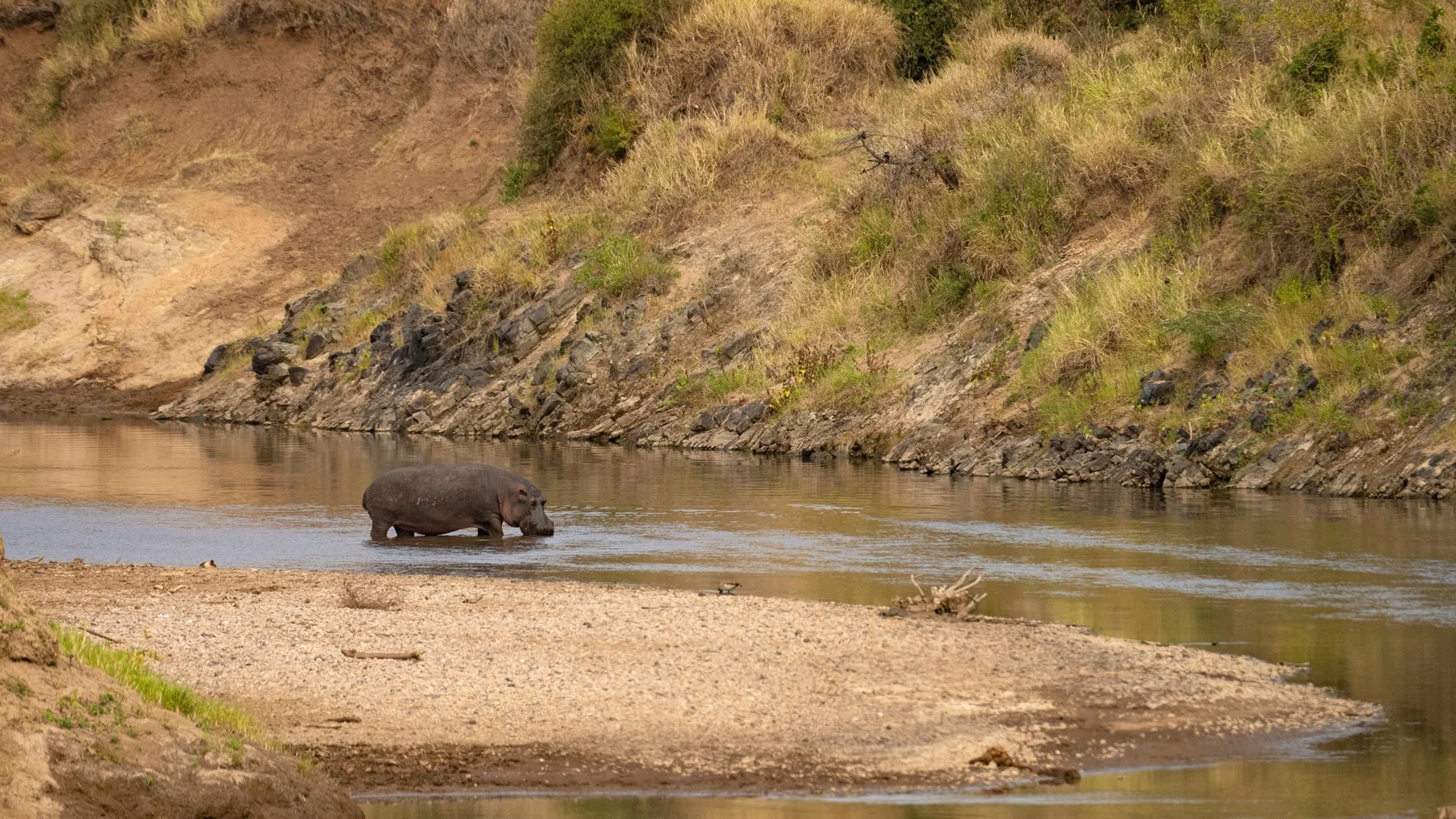
The Mara River corridor
The Mara River is the reserve's ecological spine, a dry-season water source and the setting for famous migration crossings. It is also a sensitive, pressured habitat.
A river view is not a crossing guarantee
Wildebeest can gather, turn away, cross elsewhere or wait for hours. The only honest plan is to allocate enough time and enjoy the whole ecosystem.
River access from the Narok side
Musiara and central Narok camps can reach different eastern river approaches. Drive times vary with camp position, chosen crossing area, track condition and wildlife stops.
Riverbank etiquette
Vehicles should keep routes open, avoid blocking animals, follow guide instructions and respect the ecological-zone restrictions. A photograph is never worth forcing a herd or damaging the bank.
Hippos and crocodiles
The river matters year-round, not only during migration. Hippos, crocodiles, waterbirds and riverine forest create a rich wildlife corridor.
Riverine forest
The darker vegetation along waterways supports birds, primates and secretive mammals. Slow driving and listening often reveal more than racing between crossing points.
Central area comparison
| Area | Best practical reason to consider it | Main question before booking |
|---|---|---|
| Sekenani | Logical eastern road access and broad camp choice | How far is the camp from the gate on the actual road? |
| Keekorok | Established inside-reserve base and air access | Does the lodge style suit the trip, and which drives are included? |
| Talek | Central position, many camp categories and gate convenience | Is the camp inside or outside, and how busy is its immediate setting? |
| Olkiombo | Central fly-in access and inside-reserve camps | What is the exact airstrip transfer and vehicle-sharing policy? |
| Musiara | Marsh, northern river access and established camps | Which river areas are realistic from this camp in the chosen season? |
| Oloolaimutia | Southeastern access and possible value options | What daily gate time and entry cost should be added? |
| Sand River | Southern landscapes and ecosystem connection | Is the proposed gate and cross-border route currently permitted? |
Choosing by wildlife interest
Every area holds general wildlife, but habitat and seasonal movement affect probability. Choose a broad landscape and good guiding system rather than asking a camp to guarantee one animal.
Lions
Central plains, marsh edges and river systems can all support lions. Pride territories change, so recent guide knowledge matters more than an old celebrity-lion map.
Leopards
Riverine cover and drainage lines are useful habitat. Leopards are secretive, and one excellent sighting can happen in any of several sectors.
Cheetahs
Open plains give cheetahs room to scan and hunt. Grass height, cub-rearing and prey distribution change where guides look.
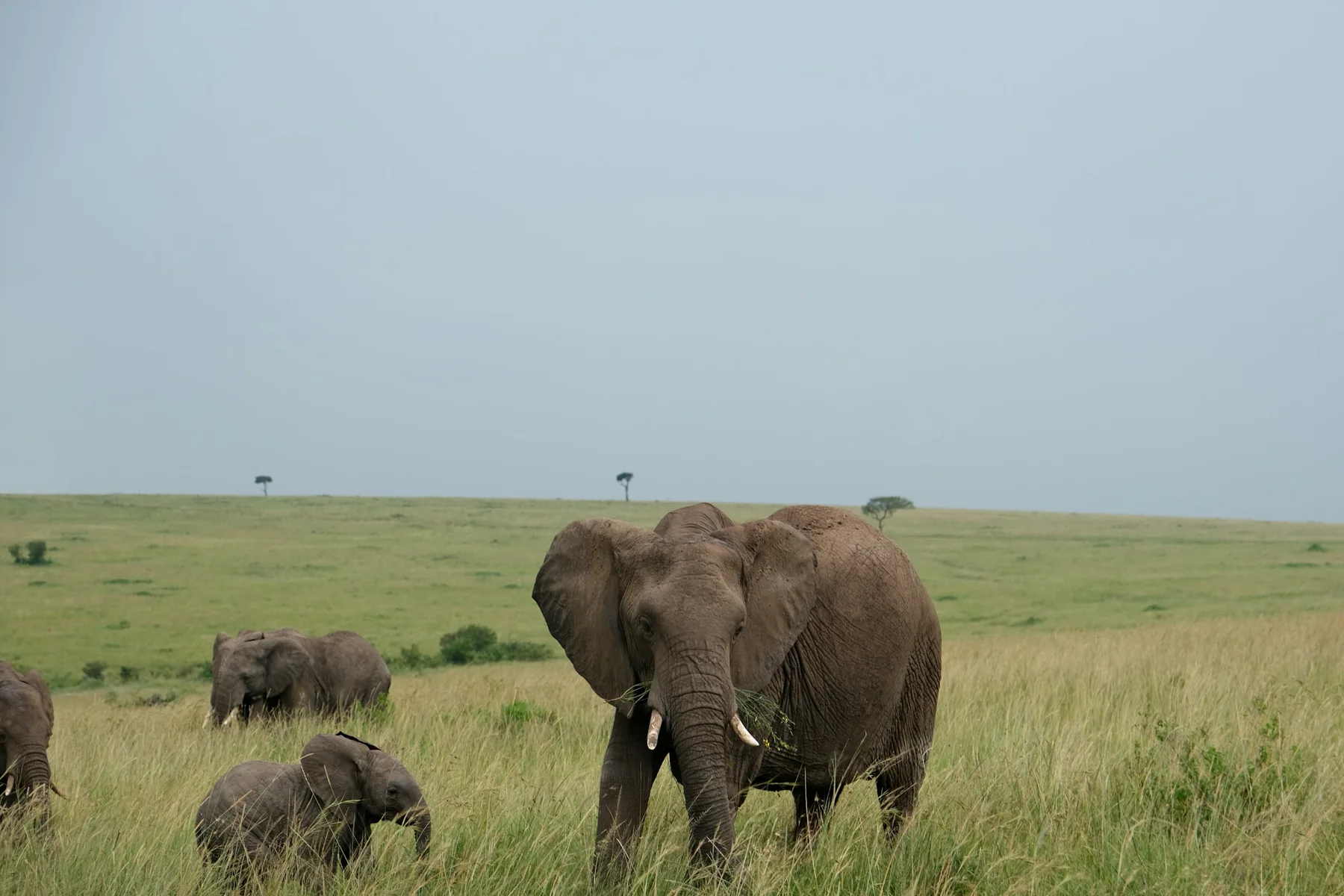
Elephants
Musiara marsh country, river systems, woodland and open plains can all produce elephant encounters. Give family groups space and never close their route.
Rhinos
Black rhinos are highly protected and not a sighting to plan around casually. Guides and reserve staff may restrict information for security.
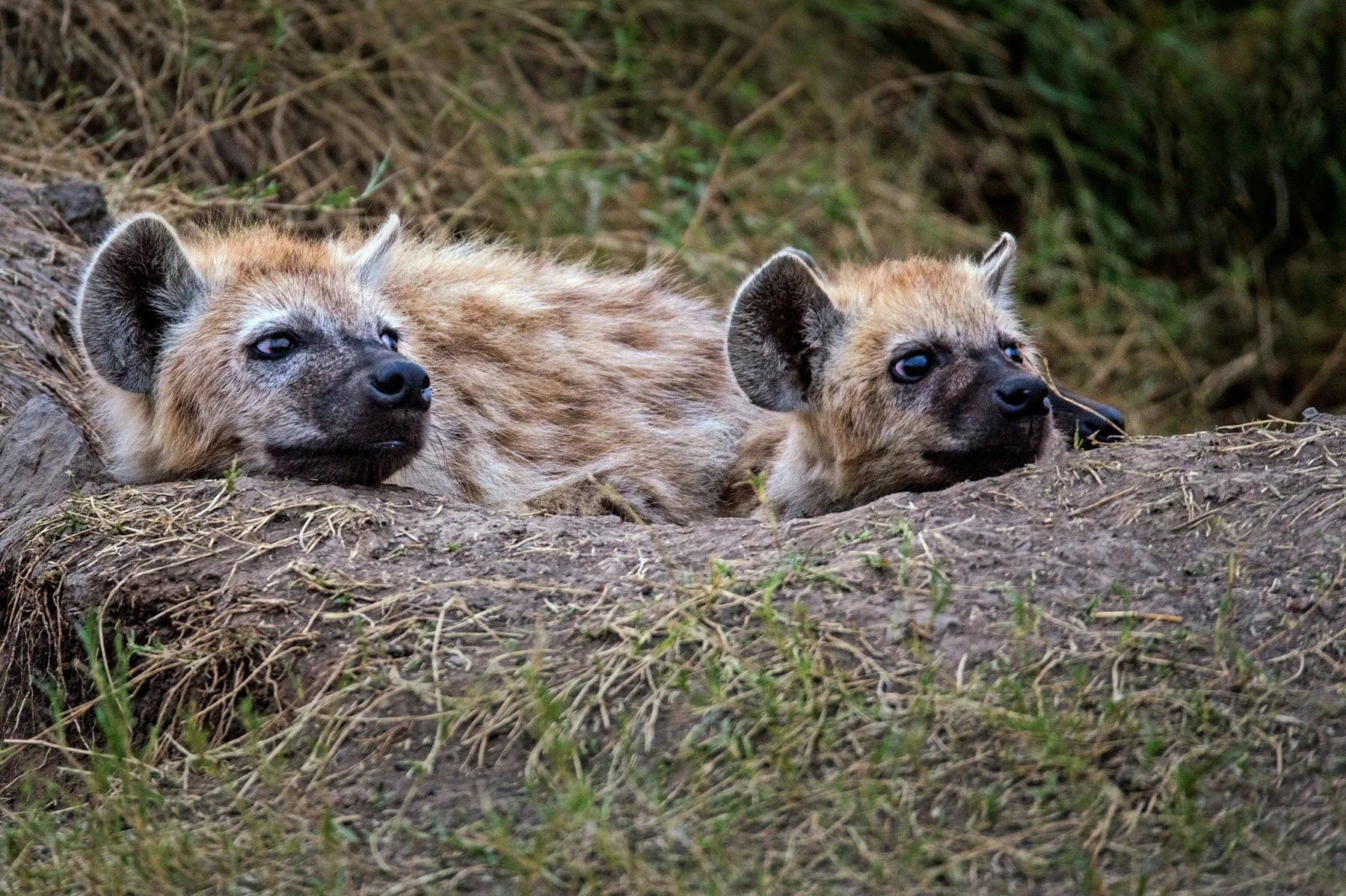
Hyenas
Spotted hyenas are central Mara residents with complex clans and den sites. A den should be visited quietly, briefly and at a distance that does not alter behaviour.
Plains game
Topi, zebra, wildebeest, gazelles, hartebeest, impala and eland create the everyday richness of the reserve. They are not scenery between predators.
Birds
Secretary birds, bustards, raptors, vultures, lapwings, rollers and wetland species reward patient observation. Green season adds migrants, breeding behaviour and dramatic colour.
Famous individual animals
Stories about Scarface, Marsh Pride lions or other known animals can deepen connection, but an ethical guide explains history without selling the possibility of seeing an individual that may have moved or died.
The best wildlife question
Ask what habitats and animal behaviours are likely in the chosen month. That produces a more useful answer than asking which gate has the Big Five.
Migration in the Narok section
The section participates fully in the wider Serengeti-Mara migration system. Herds may use southern approaches, central plains, river corridors and northern exits at different stages.
There is no fixed migration timetable
Rainfall and fresh grass drive movement. Historical patterns help planning, but they do not create an appointment.
Early movement from the south
When conditions draw herds north from Serengeti, southern and southeastern reaches may see movement before famous northern crossing areas become active.
Central plains phase
Large groups can spread across the reserve rather than forming one continuous mass. Predator activity, grazing and dust may make the wider spectacle as interesting as a river event.
Mara River crossings
The river becomes a focus when herds gather near crossing points. Waiting can take hours, and some days produce no crossing at the place a vehicle chooses.
Return movement
Herds may move back across rivers or south through the ecosystem as rain patterns change. “Return crossing season” remains a probability window, not a guarantee.
Resident wildebeest
Not every wildebeest belongs to the long-distance migration. Resident and locally moving animals remain part of the Mara outside peak months.
Plan nights, not promises
More nights improve the chance of seeing varied behaviour and adapting to movement. They also reduce the temptation to race across the reserve after every radio report.
Migration-area planning table
| Travel goal | Narok-side planning approach | Important limit |
|---|---|---|
| Southern herd arrivals | Consider Sand River, southeast and central access | Rain can change direction and timing |
| Central plains herds | Talek, Olkiombo, Keekorok and mobile full-day routes can work | Herds spread widely |
| Mara River crossings | Musiara or central river-oriented access can reduce some drive time | No camp guarantees a crossing |
| Resident predators | Choose strong guiding and enough nights in any suitable area | Territories and sightings change |
| Green-season behaviour | Prioritise landscape, birds, young animals and flexible routes | Some tracks become difficult |
Dry season in the Narok section
From roughly June into October, grass often becomes shorter, water more important and wildlife easier to see in some habitats. Peak migration travel can also bring the greatest visitor pressure.
Dry does not mean dust everywhere
Marshes, rivers and local rain create variation. One sector can look pale while another remains green.
Peak season advantages
Roads are often firmer, visibility can be strong and migration possibilities draw guides with intense current knowledge. Early booking gives a better choice of rooms and private vehicles.
Peak season trade-offs
Rates, air seats and vehicle density rise. Famous sightings can become crowded, especially when many guides receive the same radio call.
Short rains
Around November and December, showers can refresh grass and change wildlife distribution. The rains are variable, and long sunny periods remain possible.
January and February
These months can bring warm days, dramatic skies and resident wildlife. Calving by some plains species creates predator interest, although this is not the Serengeti wildebeest calving season.
Long rains
March through May usually carries the greater rain risk. The Masai Mara in April and May guide explains how lower demand, lush scenery and difficult tracks can arrive together.
Green-season advantages
Fresh landscapes, birdlife, soft light and lower visitor numbers can be wonderful. Photographers often gain colour and atmosphere that the dry season cannot offer.
Green-season trade-offs
Black-cotton soil can become slick, streams rise and an apparently short route may close. Vehicle quality and guide judgment become particularly important.
Flooding is local
Flood risk varies between riverbanks, marsh edges, low crossings, approach roads and camp sites. Read the Masai Mara flooding guide before choosing a low-lying camp.
Season comparison
| Period | Likely character | Narok-side planning priority |
|---|---|---|
| January to February | Warm, often relatively dry, resident wildlife | Shade, water, afternoon pacing and honest wildlife expectations |
| March to May | Long-rain risk, green scenery, fewer visitors | 4×4 quality, flexible routes, camp access and closure dates |
| June | Drying landscape and cooler mornings | Layers, early starts and changing herd reports |
| July to October | Migration possibilities and peak demand | Exact area, enough nights, private vehicle and crowd-aware guiding |
| November to December | Short-rain variability and renewed grass | Flexible luggage, road checks and broad wildlife interests |
Road arrival from Nairobi
The drive normally passes through Narok town before branching towards different Mara approaches. Traffic, road works, weather and the final unpaved section make fixed journey-time promises unreliable.
The final road matters most
A smooth highway for much of the day can end with a rough, slow approach. Ask for the last reliable road-condition report from the camp, not a generic distance estimate.
Sekenani road approach
This is one of the most familiar routes for road safaris. Conditions beyond Narok and near the reserve vary with maintenance and rain.
Talek road approach
Talek may be reached through routes that differ by operator and conditions. The bridge, village traffic and feeder tracks influence the final timing.
Musiara road approach
The northern route can become challenging in wet weather. It should be chosen because it serves the selected camp, not because a map draws a shorter line.
Oloolaimutia road approach
The southeastern route suits nearby properties. The camp should confirm the preferred junction and pickup arrangement.
Sand River road approach
Southern tracks cover large distances and may not suit a rushed road transfer. Fuel, daylight and reserve closing rules all matter.
Road vehicle choice
A proper safari 4×4 offers clearance, traction and recovery ability that becomes critical in rain. A roof hatch, charging points, seat spacing and window access affect comfort during long days.
Pop-up roof versus open-sided vehicle
Road safaris often use closed 4x4s with pop-up roofs because they travel public highways. Fly-in camps may use open-sided vehicles inside the ecosystem. Weather protection, dust and photography angles differ.
Night arrival is a poor plan
Reserve activities and movement are restricted by operating hours. Build enough margin to arrive in daylight and avoid pressuring a driver to rush.
Gate choice starts with the camp
The right gate is normally the one that serves the exact accommodation and road route. Choosing a famous gate first can create unnecessary backtracking.
Sekenani Gate
Best known for eastern road access and many nearby camps. Confirm whether the room is inside the reserve, at the boundary or farther outside.
Talek Gate
Useful for Talek and central-northern camps. Its central position can be attractive, but village and bridge conditions affect movement.
Musiara Gate
Serves northwestern Narok-side camps and marsh country. Wet-weather access deserves careful checking.
Oloolaimutia Gate
Serves southeastern properties and routes. Spellings vary online, so match the pin rather than relying on search text.
Sand River Gate
Relevant to the southern reserve and international border area. Never assume it functions as an ordinary tourist border crossing.
Enoompuai access
The official management plan lists Enoompuai among public gates, but present operation can change. Confirm directly before using it in a route.
Oloololo Gate
This gate is associated with the Mara Triangle and western escarpment side, not an eastern Narok-side base. It may still matter on a cross-reserve itinerary.
Gate planning checklist
| Question | Why it matters |
|---|---|
| Which gate is used on arrival? | Determines the final road and reserve entry sequence |
| Is the camp inside the reserve? | Changes daily gate crossings and fee treatment |
| How many minutes from room to gate? | Protects wildlife-viewing time on short stays |
| Is the route reliable after rain? | Prevents optimistic transfers over black-cotton soil |
| Does the same gate work on departure? | An onward flight or park may require a different exit |
| Are permits and payment arranged? | Avoids delays at entry |
Read the full gate guide
The Masai Mara road conditions and gate guide compares approaches in more detail and explains why live conditions outrank old drive-time claims.
Flying into the Narok section
Safari flights can turn a long road day into a short transfer, but “fly to the Mara” still requires an exact airstrip.
Olkiombo Airstrip
Olkiombo is central and serves several inside-reserve camps. Shared flight routings and multiple camp pickups can extend the total transfer.
Keekorok Airstrip
Keekorok serves the eastern-central reserve. It can be efficient for nearby properties and inefficient for a camp on the opposite side.
Musiara Airstrip
Musiara serves the northwestern Narok side. It is the natural match for several established camps around the marsh and river systems.
Serena Airstrip
Mara Serena Airstrip lies in the Triangle and normally serves the western side. Do not select it for an eastern camp only because it appears on a flight list.
Kichwa Tembo Airstrip
This is also associated with the western side outside or near Triangle access. Match it to the actual property.
Scheduled flights are not private charters
Aircraft may stop at more than one Mara strip. Departure times can change as the operator builds the day's route.
Luggage limits matter
Small aircraft commonly require soft bags and weight limits. Confirm the operating airline's current allowance, camera-equipment treatment and storage option in Nairobi.
Weather disruptions happen
Low cloud, storms, wet strips or operational changes can delay or reroute flights. Keep onward international connections generous.
Airstrip pickup is part of the safari
A short transfer may become a game drive, but it still needs a vehicle and guide. Confirm whether it is private, shared and included.
Read the airstrip guide
The Masai Mara airstrips and flight guide helps match each strip to camp location rather than to a broad destination name.
Road versus fly-in comparison
| Question | Road safari | Fly-in safari |
|---|---|---|
| Best advantage | Continuous private vehicle and flexible overland route | Saves long transfer time |
| Main drawback | Long, sometimes rough approach | Luggage limits and shared flight schedule |
| Vehicle style | Often closed 4×4 with pop-up roof | Often open-sided camp vehicle |
| Camp choice | Follows road and gate practicality | Follows airstrip and pickup practicality |
| Multi-park trip | Good for logical circuits | Good for distant combinations |
| Cost driver | Vehicle days, fuel and guide | Flights plus camp vehicle arrangements |
Reserve driving rules
The current management plan sets out a framework designed to protect wildlife, habitats and the visitor experience. Your guide is responsible for following the live rules and ranger direction.
Speed limits
The plan specifies a maximum of 50 km/h on graded roads and 30 km/h on other roads. Wildlife, dust, visibility and road condition often require much slower driving.
No racing to a radio call
A distant sighting is not an emergency. Speeding endangers animals, visitors and other guides.
Off-road restrictions
Off-road driving is not permitted in High Use and Mara River Ecological zones. Other limited provisions in the plan do not create a general right to drive anywhere.
Big-cat exceptions are not a promise
The plan discusses limited off-road access for big-cat viewing outside the river zone and subject to management prescriptions. The guide must still follow current ranger instructions and ground conditions.
Stay on existing tracks
Track discipline protects grass, soil and drainage. One shortcut repeated by many vehicles becomes erosion.
Night driving is not permitted
The reserve plan does not allow visitor night drives. Book a neighbouring conservancy if a guided nocturnal activity is important.
Walking is not a standard reserve activity
The plan restricts reserve visitor activities mainly to game viewing and sightseeing balloon flights. Guided walking is offered in some community conservancies under separate rules.
Horseback safaris are not permitted in the reserve
Some wider Mara properties offer riding outside the reserve. The land unit and operating standards must be clear.
Evening movement
The plan requires visitors staying outside the reserve to leave by 19:00 and visitors staying inside to return to accommodation by then. Current gate direction takes priority.
No surrounding animals
Guides should keep escape routes open, limit crowding and leave when an animal shows stress.
No blocking hunts
Predators and prey need space. Vehicles should not create a wall, reveal a concealed hunter or drive into an animal's line.
No feeding wildlife
Feeding changes behaviour and creates dangerous associations between vehicles, people and food.
No litter
Food wrappers, bottles and cigarette ends harm wildlife and make a protected landscape feel neglected.
Drone use
Do not launch a drone without explicit legal and reserve authorisation. Wildlife disturbance, aviation and privacy rules all apply.
Responsible sighting behaviour
The Masai Mara game-drive rules and wildlife etiquette guide turns these principles into practical choices for guests and guides.
Full-day game drives
A full day can reach farther sectors, wait out animal movement and reduce repeated travel between camp and sightings.
Full-day advantages
You can carry breakfast or lunch, follow a slow story and avoid the pressure to return for a fixed midday meal.
Full-day trade-offs
Ten hours in a vehicle can be tiring. Toilet access, shade, food storage, children and mobility need planning.
Split game drives
Morning and afternoon drives create a long midday rest. They work well when camp is inside the reserve or close to the gate.
Split-drive advantages
Guests can sleep, swim, edit photographs or enjoy camp. Dawn and late light remain available.
Split-drive trade-offs
A distant wildlife area may be impractical, and outside-gate camps repeat entry travel.
Which pattern suits Talek
Gate-adjacent Talek camps can make split drives practical. A more distant outside property may gain from a packed full day.
Which pattern suits Musiara
Inside or near-area camps can use split drives well for marsh and northwestern wildlife. A river-focused day may still be longer.
Which pattern suits Sekenani
The answer depends on exact gate distance. Do not assume every camp carrying the Sekenani label is equally close.
Which pattern suits children
Shorter drives and midday rest often help younger travellers. Older children with strong wildlife interest may prefer a full day with a picnic.
The complete drive comparison
Read full-day versus morning and afternoon Masai Mara game drives before locking the meal and vehicle plan.
Accommodation inside the reserve
The greatest operational advantage is beginning a drive without first passing through a public gate. The camp also sits within an active wildlife landscape.
Inside-reserve fee treatment
Reserve fees are normally a significant part of the trip. The exact charging basis can change, so the quote must show dates, nights and current official rules clearly.
Inside-reserve safety
Many camps are unfenced. Guests follow escort instructions after dark and never walk alone because an animal was not visible a moment earlier.
Accommodation outside the reserve
Outside properties can offer value, cultural context, different activities and easier local access. Their daily reserve experience depends on gate distance and entry arrangements.
Outside-reserve drive time
Five kilometres on a rough local road can take longer than expected. Ask for normal dry and wet-weather times.
Outside-reserve activity options
Some properties may arrange walks, village visits or night activities on their own land. Confirm legal permission, guide qualifications and whether the experience is genuinely local rather than staged.
Buffer-zone development
The reserve plan recognises that many visitors originate from the surrounding two-kilometre buffer while development control there has historically been weaker. Responsible location and waste management matter.
Camp size
A large lodge can offer pools, family facilities and predictable operations. A small camp can offer personal hosting and fewer guests. Neither automatically delivers better guiding.
Permanent lodge
Solid walls, extensive public areas and year-round infrastructure may suit families, older travellers and guests nervous about tented accommodation.
Tented camp
Canvas brings sound and airflow closer to the landscape. “Tented” ranges from simple beds and bucket showers to large suites with private pools.
Mobile or seasonal camp
A mobile camp may follow seasonal wildlife or create a light footprint. Confirm bathroom design, charging, communication, medical plans and exact operating dates.
Room location inside a camp
Distance from the main area, river exposure, generator noise, family proximity and walking difficulty can matter as much as the camp brand.
Family rooms
Ask whether children share one structure, connect through an internal door or sleep in a separate tent. An unfenced gap is not a connecting room.
Honeymoon rooms
Privacy, outdoor space, bed comfort and a beautiful setting matter, but so do practical details such as bathroom privacy, hot water, insects and vehicle sharing.
Accessible rooms
Request step counts, path surface, shower design, toilet height, vehicle access and evacuation procedure. “Ground floor” is not a complete accessibility answer.
Representative accommodation geography
| Broad area | Representative properties or styles | Location point to verify |
|---|---|---|
| Sekenani | Sekenani Camp and numerous reserve-edge camps | Exact gate distance and boundary position |
| Keekorok | Muthu Keekorok Lodge and eastern-central options | Inside-reserve location and airstrip transfer |
| Talek | Talek Bush Camp, Fig Tree, Mara Simba, Ilkeliani and many smaller camps | Village, river, gate and inside versus outside position |
| Olkiombo | Mara Intrepids, Mara Explorer and central tented camps | Airstrip transfer, river position and vehicle density |
| Musiara | Governors', Little Governors' and Il Moran | Marsh access, river crossing and airstrip sequence |
| Oloolaimutia | Many southeastern camps across price levels | Road condition, gate distance and current standards |
| Sand River | Sand River Masai Mara and southern reserve options | Border-side access and seasonal route practicality |
This is not a complete lodge list
Properties open, close, rebrand and move between marketing categories. A current accommodation audit belongs in a dedicated lodge directory, while this guide explains geography.
How to compare camps honestly
Compare exact room, location, game-drive vehicle, passenger count, reserve fees, transfers, meal plan, drinks, laundry, child rules and cancellation terms for the same dates.
Price alone hides location
A lower room rate outside the gate can become less attractive after entry fees and vehicle costs. A high-priced camp may still use a shared vehicle unless private use is specified.
Privacy alone hides wildlife time
A beautiful room far from the preferred game-drive area may require long transfers. Decide whether the trip is primarily about camp, wildlife or a balance.
Guiding is a core product
Ask about guide qualification, years in the Mara, photography knowledge, language, ethics and whether the same guide stays with you.
Vehicle seat matters
Window access, roof height, suspension and the number of guests per row shape every drive. “Guaranteed window seat” should be defined.
Narok section for families
The variety of large lodges, family tents and short airstrip transfers can make this side practical for multigenerational travel.
Choose location before facilities
A pool is useful, but not if daily gate travel leaves children exhausted. Balance midday entertainment with first-hour access.
Age limits
Balloon flights, walks on neighbouring land, bush meals and shared drives may have age rules. Obtain the current policy for every booked activity.
Private vehicle for families
It allows toilet stops, shorter drives, snack breaks and a return to camp when attention fades.
Child seats
Safari vehicles do not automatically carry age-appropriate restraints. Request the exact seat solution and bring a compatible device if advised.
Unfenced camp awareness
Children must understand escort rules. Ask whether rooms are connected and how staff respond if a child wakes at night.
Malaria and health planning
Seek personalised medical advice well before travel. Camps cannot replace a clinician, and prevention includes clothing, repellent and room protection.
Food needs
Communicate allergies with severity and cross-contamination needs, not only a dietary label. Remote kitchens need notice.
Screen time and charging
Some camps limit power hours or provide charging centrally. Download entertainment and bring safe power banks for downtime.
Family pace
One excellent drive, a relaxed lunch and time watching animals from camp can be more memorable than a checklist marathon.
Narok section for honeymoon safaris
Romance here comes from privacy, unhurried wildlife time and thoughtful hosting, not from sprinkling petals on a generic itinerary.
Choose a quiet room position
Ask about distance from the lounge, staff paths, family tents, generators and neighbouring camps.
Book a private vehicle
It gives the couple control over photography, sightings, sunrise and return time. It also avoids spending every drive with strangers.
Build one slow afternoon
A honeymoon should include time to enjoy the room, deck, pool or river view. Do not schedule every hour.
Private dining
Bush breakfasts, sundowners and private dinners can feel special when the setting, weather backup and dietary needs are considered. See the Mara bush dining guide.
Balloon morning
A balloon flight can add a dramatic shared experience. The Masai Mara hot-air balloon guide explains launch logistics, weather and value.
Combine beach and bush
Flights through Nairobi or coastal connections can pair the Mara with Diani, Watamu or Zanzibar. Keep transfer days realistic.
Narok section for photographers
Central wildlife access, varied habitats and multiple airstrips make it a strong base, but photography quality depends on vehicle design and guide patience.
Private row
One photographer per row is ideal for moving between sides and keeping equipment ready. Two compatible photographers can still work well.
Beanbag support
A beanbag on a window or roof rail is stable and fast. Confirm whether the camp provides one and whether filling material can fly domestically.
Long lens
Distance protects wildlife and often improves natural behaviour. A zoom in the 100 to 500 mm range is flexible, while a wider lens tells the habitat story.
Two camera bodies
They reduce lens changes in dust and let one body carry a wide view. Weight limits on safari flights must be planned.
Dawn light
Leave before sunrise when rules and camp operation allow. Position for light and background rather than racing directly at an animal.
Midday light
Harsh light can still reveal dust, interaction and graphic shapes. Exposure control matters more than abandoning the drive.
Backlight
Rim-lit grass, breath and dust create atmosphere. Ask the guide to move only when it can be done without disturbing the animal.
River photography
Crossings are chaotic. A wider frame can show scale, while a long lens isolates emotion. Never demand a position that blocks the herd.
Rain photography
Storm light and wet fur can be extraordinary. Carry camera covers, dry bags, cloths and a plan for drying equipment at camp.
Ethical den photography
Hyena, lion and cheetah young need space. Limit time, noise and vehicle movement around dens.
Read the photography guide
The Masai Mara photography guide covers settings, lenses, light and vehicle setup in detail.
Narok section for birders
Open grassland, marsh, riverine forest, woodland and seasonal pools create a broad habitat mix.
Musiara for wetland birds
Marsh edges can reward slow observation of herons, egrets, storks, crakes and raptors.
Open plains birds
Bustards, secretary birds, lapwings, coursers and larks make central and southern plains productive.
Vulture watching
Learn flight shapes and feeding order. Vultures provide conservation insight far beyond a carcass photograph.
Bird guide request
Not every excellent mammal guide is an expert birder. Ask for a guide who enjoys identification, calls and patient stops.
Narok section for repeat visitors
Repeat guests can choose a narrower subarea, slower drives and seasonal interests rather than trying to cover the whole reserve again.
Stay longer in one area
Four or five nights reveal weather, territories and daily rhythms that a two-night circuit misses.
Add a conservancy
Pairing the reserve with Naboisho Conservancy or Mara North Conservancy adds night drives, walks and a different land-management model.
Change season
A green-season return can feel like a different destination from a dry migration visit. Read migration season versus green season before defaulting to the same month.
How many nights to spend
Two nights is a taste, three is a practical minimum, and four or five allows weather, full-day exploration and slower observation.
Two nights
Choose a camp with very short gate or airstrip transfer and avoid a sector-crossing wish list.
Three nights
You gain two full wildlife days and room for one longer route. This is a strong first-safari minimum.
Four nights
There is time for varied drive patterns, a balloon flight or a slower afternoon without sacrificing wildlife.
Five nights
The guide can respond to movement, weather and crowd patterns. Photographers and migration-focused travellers benefit most.
Split stay length
Allow at least three nights per base when possible. One-night camp changes turn the Mara into a transfer exercise.
Narok-side itinerary examples
| Trip length | Sensible shape | Avoid |
|---|---|---|
| 2 nights | One well-positioned camp, private vehicle if budget allows | Crossing the reserve for every headline sighting |
| 3 nights | One base with one optional full day | Changing camp after the first night |
| 4 nights | One base or a carefully planned two-area split | Choosing areas only by lodge brand |
| 5 nights | Two complementary bases or one deep stay | Treating every day as a crossing chase |
| 6 or more nights | Reserve plus conservancy, or Narok plus Triangle | Repeating long transfer routes unnecessarily |
What to include in the quote
A useful quote should name the property, room category, meal basis, drinks, reserve fees, vehicle arrangement, flights or road transfers, airstrip pickup and optional activities.
Reserve fees
These can be substantial and are date-sensitive. They should appear clearly, with child ages and residency category correctly applied.
Conservancy fees
They apply only if the itinerary includes a conservancy stay or access arrangement. Do not confuse them with reserve entry.
Vehicle costs
Private use may be included, compulsory or additional depending on camp and booking style.
Flight costs
Check taxes, luggage allowance, transfer, route and whether the fare is changeable.
Drinks
“All inclusive” may exclude premium labels, cellar wines or certain activities. Ask what the camp actually includes.
Laundry
Some camps include it, while cultural or water constraints may limit particular garments. Pack with the policy in mind.
Tips
Gratuities are normally discretionary and separate. Ask for current guidance, then reward service according to experience.
Medical and evacuation cover
Some camps include a local evacuation membership, which is not the same as comprehensive travel insurance.
Cancellation terms
Migration-season deposits can be strict. Read the timeline, force-majeure wording and name-change policy before payment.
Cost comparison table
| Cost line | What to confirm | Common misunderstanding |
|---|---|---|
| Room | Exact category and occupancy | “Tent” describes a huge range of comfort |
| Reserve fee | Dates, nights, age and residency | It may not be buried inside the room rate |
| Vehicle | Private or shared, passenger maximum | A luxury camp does not guarantee a private vehicle |
| Transfer | Gate, airstrip and road sequence | “Included transfer” may cover only a nearby strip |
| Activity | Drive hours, balloon, meal or cultural visit | Optional experiences are not automatically included |
| Insurance | Evacuation membership versus full cover | Local evacuation is not trip cancellation insurance |
What travellers say about location
The most useful reviews describe time, road, gate and camp setting rather than offering only praise.
Gate minutes can transform a short stay
“the camp is located at the gate of the reserve so we arrived within minutes” tells a future guest exactly what the location changed.
Rough-road time belongs in the decision
“It does take 20 mins on a rough road to drive to/from Sekenani gate” is equally useful because twenty minutes happens twice on a split-drive day.
Central does not mean quiet
“Because of the number camps in this area sightings could be crowded.” captures the trade-off around camp clusters without claiming that every drive is congested.
Reviews need context
A road report from a dry month may be irrelevant after a storm. A camp can renovate or change management. Use traveller detail to form questions, then verify current facts.
Reviews are not wildlife forecasts
One guest's lion-filled stay does not guarantee the next week. Look for repeated comments about guide quality, location and operations, which are more controllable.
Common planning mistake: choosing only by gate
Two camps using the same gate name may sit on opposite roads with different transfer times and wildlife access.
Common planning mistake: choosing only by river distance
The migration is a moving system. A river camp can be wonderful outside crossing weeks, but the river label does not create an event.
Common planning mistake: ignoring camp boundary position
Inside and outside options can both be good. The mistake is failing to price entry time and fees.
Common planning mistake: expecting conservancy activities
Night drives and walking are not normal reserve activities. Add an appropriate conservancy rather than pressuring a reserve camp to bend rules.
Common planning mistake: trusting a tiny map
Straight-line distance ignores rivers, bridges, gates, track condition and protected zones.
Common planning mistake: too few nights
An arrival afternoon and departure morning do not equal three full safari days.
Common planning mistake: shared vehicle surprise
Ask about seats before deposit. A couple may share with four or five guests whose priorities differ.
Common planning mistake: headline animal fixation
A guide forced to chase one species may pass extraordinary behaviour. Give the day room to unfold.
Common planning mistake: copying an old itinerary
Roads, fees, camps and animal territories change. Keep the route logic, then rebuild current details.
Common planning mistake: treating Maasai communities as an attraction
Visits should be invited, respectful, fairly compensated and honest about photography and purchases. People are not a safari prop.
Conservation pressure in Central Mara
The management plan is unusually direct about high visitor density, habitat pressure, unmanaged development and the need to protect the reserve's tourism value.
Vehicle concentration
Too many vehicles around an animal reduce viewing quality and can alter hunting, resting or movement.
Track proliferation
Repeated shortcuts fragment grass, compact soil and create erosion channels.
Riverbank damage
Crossing crowds can degrade sensitive banks and riverine vegetation. The ecological zone exists because the river needs more than scenic admiration.
Accommodation capacity
The plan places a moratorium on new accommodation and bed expansion in reserve zones during its lifespan. The objective is to manage already high capacity.
Development outside the reserve
The buffer holds many visitor beds but is not generally reserve land. Waste, water, light and road growth outside can still affect the ecosystem.
Water pressure
Camps and lodges need responsible water sourcing and wastewater treatment. Luxury should not mean invisible ecological cost.
Waste management
Ask how a property reduces plastic, separates waste and removes it from the ecosystem. Burning mixed waste is not a meaningful sustainability answer.
Guide working conditions
Good conservation includes people. Reasonable hours, training and fair employment support safer, more ethical guiding.
Community value
Tourism should create employment, procurement and local benefit beyond a staged village stop. Ask for specific programmes, not a vague sustainability badge.
Guest choices matter
Choose fewer vehicle seats, respect rules, carry refillable water, avoid wildlife pressure and spend with responsible local enterprises.
How to choose the right Narok-side base
Begin with the trip's central purpose, then narrow by season, transport, gate, camp style and vehicle.
Step 1: name the wildlife goal
Migration, resident predators, birds, photography and a first general safari create different priorities.
Step 2: choose road or flight
Transport determines which gate or airstrip makes operational sense.
Step 3: choose inside or outside
Balance gate time, activity options, setting and total cost.
Step 4: choose the informal area
Use Sekenani, Keekorok, Talek, Olkiombo, Musiara, Oloolaimutia or Sand River as a real geographic filter.
Step 5: compare exact camps
Match room, vehicle, guiding, facilities, mobility and atmosphere.
Step 6: check the official zone context
Understand which activities and driving behaviour are permitted. Do not expect a camp to override reserve rules.
Step 7: confirm live access
Road condition, gate operation, airstrip and flight routing are current facts.
Step 8: plan enough nights
Protect the itinerary from weather and animal movement.
Step 9: build internal variety
Mix dawn, full-day, marsh, plains, river and slow camp time rather than repeating one chase.
Step 10: price the whole experience
Compare the final safari, not a room-only headline.
Decision table
| If this is your priority | Start by considering | Then verify |
|---|---|---|
| Fast road arrival | Sekenani or Oloolaimutia approach | Exact final road and gate minutes |
| Central fly-in safari | Olkiombo or Keekorok | Camp pickup and shared flight stops |
| Marsh and northwestern landscape | Musiara | Seasonal access and camp location |
| Southern space | Sand River area | Gate operation and long-route practicality |
| Broad price choice | Talek, Sekenani or Oloolaimutia clusters | Full fees, vehicle and boundary position |
| Honeymoon privacy | Small camp in the right subarea | Room position and private vehicle |
| Family facilities | Larger lodge or proven family camp | Room connection, fencing and child rules |
| Photography | Strong guide and private row | Vehicle design, power and lens support |
Frequently asked questions
Is the Narok sector part of the Masai Mara National Reserve?
Yes. The phrase usually refers to the large Central Mara (Narok) section of the reserve, east of the Mara River. It should not be confused with Narok town or nearby conservancies.
Is Central Mara the same as Talek?
No. Talek is one informal area and gate within the much larger Narok-managed section.
Is the Narok sector the same as the Mara Triangle?
No. They are the two main administrative sections of the same reserve. Central Mara lies mainly east of the Mara River, while the Triangle is west.
Which is better, Narok side or Mara Triangle?
Neither is universally better. The choice depends on exact camp, season, transport, wildlife aims, trip length and preferred atmosphere.
Which gate is best for the Narok side?
The gate closest to the selected camp and logical road route is usually best. Sekenani, Talek, Musiara, Oloolaimutia and Sand River serve different areas.
Is Talek inside the reserve?
Talek village and many camps are outside or along the boundary, while other properties associated with the Talek area lie inside. Check the exact pin.
Can I drive off-road in Central Mara?
Not as a general visitor right. Off-road driving is prohibited in High Use and Mara River Ecological zones, with only limited management provisions elsewhere. Follow ranger and guide direction.
Are night drives allowed?
Not inside the national reserve under the management plan. Neighbouring conservancies may offer them under their own rules.
Are walking safaris allowed?
Walking is not a normal visitor activity inside the reserve. It may be offered on conservancy or private community land with appropriate guides.
Can I visit the Mara Triangle from Talek?
Yes, but it is a substantial drive rather than a quick gate hop. Treat it as a planned full day and confirm current route and entry arrangements.
Where should I stay for river crossings?
Musiara and some central or river-oriented camps can reduce access time to certain reaches, but crossing sites and timing change. No base guarantees an event.
Where should I stay for a short road safari?
Choose a camp genuinely close to the arrival gate with strong resident wildlife access. Sekenani, Talek and Oloolaimutia can work depending on the route.
Where should I stay for a fly-in safari?
Choose the camp first and use its closest appropriate airstrip, commonly Olkiombo, Keekorok or Musiara on the Narok side.
Is Musiara in the Mara Triangle?
No. Musiara lies on the northwestern side of Central Mara, east of the Mara River.
Is Keekorok inside the reserve?
The historic Keekorok lodge location and airstrip are inside the reserve. Verify any other property using the broader name.
Is Sand River a Kenya-Tanzania border crossing?
Do not assume ordinary tourist passage. Current operation, immigration, permits and road legality must be confirmed for the exact itinerary.
How many nights do I need?
Three nights is a useful minimum. Four or five offers more flexibility for weather, movement, photography and a full-day drive.
What is the best month?
There is no single best month. Peak migration months offer seasonal possibilities and crowds, while green season offers colour, birds and fewer vehicles.
Will I see the Big Five?
The reserve supports all five, but no ethical operator guarantees sightings. Black rhinos are particularly difficult and protected.
Should I book a private vehicle?
It is especially valuable for photographers, families, honeymooners and travellers with specific pacing or mobility needs.
What should I ask before paying?
Request the exact camp pin, gate or airstrip, inside or outside status, vehicle occupancy, current fees, included drives, room layout and cancellation terms.
Final perspective
The Narok-managed side of the Masai Mara is too large and varied to be sold as one generic sector. A morning near Musiara Marsh does not feel like a southern drive beside Sand River. A gate-adjacent Talek camp operates differently from an inside-reserve tent near Olkiombo. Sekenani road convenience, Keekorok history and the Mara River corridor each solve a different travel problem. That is the central lesson of this Narok sector of the Masai Mara guide.
The best itinerary begins by naming the exact experience, then matching it to a real camp pin, gate, airstrip, vehicle and season. Once those pieces fit, the administrative label quietly does its job in the background while the Mara becomes what you came for: an immense living landscape where the next bend can still surprise you.
Sources and further reading
Let us plan your Central Mara safari
Share dates, guests, transport, wildlife priorities, room style, vehicle preference and budget. We will compare the exact areas, gates, camps, airstrips and full trip cost.