
Fly-In vs Drive-In Kenya Safari
Flying can protect a short safari, driving can make a logical circuit feel connected, and a hybrid can do both. The right answer depends on the exact route, airstrip, luggage, vehicle and traveller.
- Choose the journey that protects the safari
- Match the airstrip to the camp
- Read the baggage rule on the exact ticket
- Compare one dedicated vehicle with camp vehicles
- Check seat access and mobility
- Let a road circuit follow geography
- Combine a Mara flight with a southern road circuit
- Add luggage storage and handling
- Value the road as part of Kenya
- Protect gear at airstrips
- Hear the case for saving time
- Check cancellation rules by sector
- Match the choice to the first safari
- Make the final booking specific
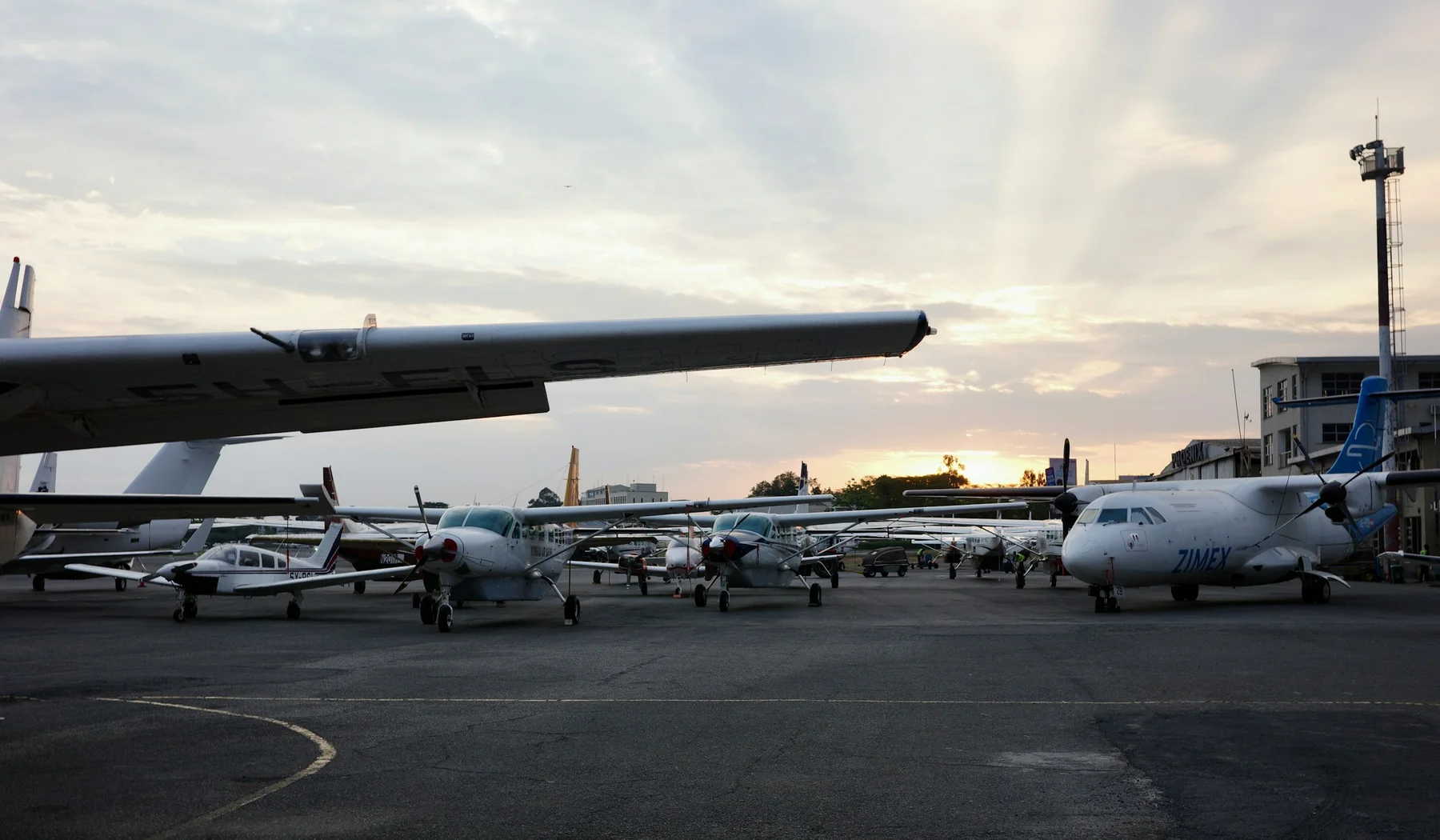
At sunrise, one family is crossing Nairobi toward Wilson Airport while another is already watching the escarpment unfold through a Land Cruiser window. Both can reach the same camp. What changes is everything around the arrival: luggage, guide, vehicle, stops, cost, energy and the amount of day left for wildlife.
A fly-in vs drive-in Kenya safari should never be decided by comparing forty-five minutes in the air with five hours quoted on a road. This guide compares complete journeys and shows where a hybrid can quietly solve the argument.
| Compare first | Fly-in question | Drive-in question |
|---|---|---|
| Time | Door to door, including Wilson and airstrip | Door to door, including stops and gates |
| Vehicle | Shared or private camp drives | Dedicated vehicle or local vehicle switch |
| Luggage | Airline weight and bag shape | Vehicle capacity and passenger space |
| Cost | Tickets, transfers and private-drive upgrades | Vehicle, guide and circuit logistics |
Choose the journey that protects the safari
A forty-five-minute flight and a five-hour drive are not complete journeys. One begins at a hotel, crosses Nairobi, checks in and continues from an airstrip. The other begins at the same hotel and keeps moving with one guide.
Write both options from bedroom door to camp reception before choosing.
Count door-to-door time
Add checkout, transfer, reporting, boarding, possible stops, unloading and the final camp drive. For road travel, add fuel, comfort stops, traffic, gates and the useful arrival drive.
The honest comparison uses the same start and finish.
Separate flying time from travel time
A short sector can sit inside a much longer movement day. Wilson Airport formalities and an airstrip transfer still count even when the aircraft is airborne briefly.
Use the Nairobi arrival and Wilson transfer guide when an international flight is involved.
Separate road distance from driving time
Kilometres do not describe Nairobi traffic, road works, rain, gate queues or the last rough section to a camp. A route that looks modest on a map can use most of the day.
Ask for a realistic range and planned stops rather than a perfect arrival minute.
Protect the first useful game drive
The transport choice matters because arrival time shapes wildlife time. A flight that lands near the camp may protect an afternoon drive, while an early road departure can also enter a park with time to explore.
The itinerary should say when meaningful viewing can begin, not merely when the transfer departs.
Protect the final morning
A late flight may preserve one more drive; a long road return may require leaving before breakfast. The reverse can happen when a flight schedule forces an early airstrip transfer.
Compare the final wildlife window as carefully as the arrival.

Match the airstrip to the camp
The words fly to the Mara are incomplete. Several airstrips serve different sectors, and a poorly matched strip can leave a long transfer after landing.
Name the airstrip and the camp's normal transfer time. Read the Masai Mara safari guide and the future Mara airstrip guide together.
Check whether the aircraft makes stops
A scheduled safari service may collect or drop passengers at more than one airstrip. The route can remain efficient, but the advertised sector time may not describe your particular day.
Confirm the operating pattern and keep onward plans flexible.
Name the airline on the quote
Baggage, check-in, schedule and ticket conditions belong to the carrier actually operating the sector. A generic bush flight line is not enough.
The final documents should show airline, flight, date, route and passenger name.
Read the current timetable
AirKenya's published timetable shows how safari services and Wilson connections fit together. Timetables can change by date and demand.
Use the schedule for the travel date, then build sensible buffers around it.
Check the operating airport
Many safari flights use Wilson Airport rather than JKIA. A traveller landing internationally may need a cross-city transfer before the bush flight.
Never write Nairobi airport when the connection depends on two different airports.
Build a buffer between JKIA and Wilson
Immigration, baggage, traffic and check-in can turn an elegant same-day connection into a race. A night in Nairobi may be the calmer and safer start.
Use actual flight times and the future advance-booking guide before ticketing.
Read the baggage rule on the exact ticket
Safari aircraft often use lower allowances and soft-bag requirements. Safarilink publishes current baggage information, but the booked route and fare still control.
Record weight, whether hand luggage is included, bag shape and excess options.
Weigh camera equipment honestly
A long lens, two bodies, batteries and a laptop can consume much of a light-aircraft allowance before clothes are added. Hiding the problem until check-in does not create aircraft capacity.
Share the equipment list before booking and compare storage, freight, an extra seat or road transport.
Use soft bags when required
Rigid cases may not fit small holds even when their scale weight is acceptable. A soft-sided bag can be shaped around the available space.
Confirm wheels, frames and dimensions rather than relying on the word duffel.
Plan luggage storage in Nairobi
A beach suitcase or international hard case may not belong on a bush flight. Storage can make a fly-in route workable if retrieval is coordinated with the final airport or hotel.
The quote should name the storage location, cost and handover times.
Do not separate essential medication
A stored or delayed bag must not contain medication, documents or an item needed at the next camp. Small-aircraft cabin space is still limited, so pack essential items compactly.
Ask the airline and medical professional how each essential item should travel.
Price excess baggage before arrival
Excess carriage may depend on space and advance arrangements. Paying at the desk is not always a guaranteed solution.
Put the request into the reservation and retain written confirmation.

Compare one dedicated vehicle with camp vehicles
A road safari can keep one guide and vehicle from Nairobi through several parks. A fly-in safari normally transfers the guests into a vehicle operated by each camp.
Compare guide continuity, private use, seating and drive schedules, not only transport between destinations.
Do not assume fly-in means private drives
Many camps include shared game drives with other rooms. Private use may carry a separate charge and be subject to availability.
The room package must state shared or private and the maximum passenger arrangement.
Do not assume driving means private throughout
A road vehicle may deliver guests to a camp that requires local vehicles for conservancy activities, night drives or restricted zones.
Confirm which vehicle operates each activity.
Value guide continuity where it matters
One guide learns the family's pace, photography interests and comfort needs. That continuity can be a major strength of a road circuit.
Balance it against the local knowledge of resident camp guides.
Value local guide knowledge
A camp guide drives the same ecosystem repeatedly and may know current animal movements, roads and conservancy rules intimately.
A fly-in route can introduce a strong new local guide at every stop, which some travellers enjoy.
Compare vehicle design
Closed-sided road Land Cruisers, pop-up roofs and open-sided camp vehicles feel different in weather, on highways and during photography.
Ask for photographs or specifications of the actual vehicle types.
Check seat access and mobility
A small aircraft step, narrow cabin, vehicle bench and high Land Cruiser entry can affect a traveller with limited mobility.
Describe mobility needs before ticketing so both air and ground equipment can be checked.
Consider small-aircraft comfort
Light-aircraft cabins can be warm, noisy and compact. Turbulence, visible cockpit activity and close seating are normal features that some passengers enjoy and others find stressful.
Tell the planner about anxiety, severe motion sickness or a need for assistance.
Consider road motion and fatigue
Rough park roads and long tarmac sectors create a different kind of motion. Flexible stops help, but a full transfer after an overnight flight can still be tiring.
Schedule the first day around actual energy, not ambition.
Plan car seats in advance
A child seat request affects road transfers, the safari vehicle and sometimes storage during a flight. Availability and suitability should be confirmed, not assumed.
Read the child rates and family-room guide beside the transport quote.
Count toilets and rest stops
A private road vehicle can stop at suitable places, while an aircraft sector has fixed reporting and flying periods. Very young children may prefer either option depending on the full day.
Plan the longest interval without a toilet and the quality of available stops.
Plan naps rather than hoping for them
Some children sleep in a moving vehicle and remain wide awake in a noisy small aircraft. Others do the opposite.
Use the family's known patterns and the Kenya safari with children guide.
Let a road circuit follow geography
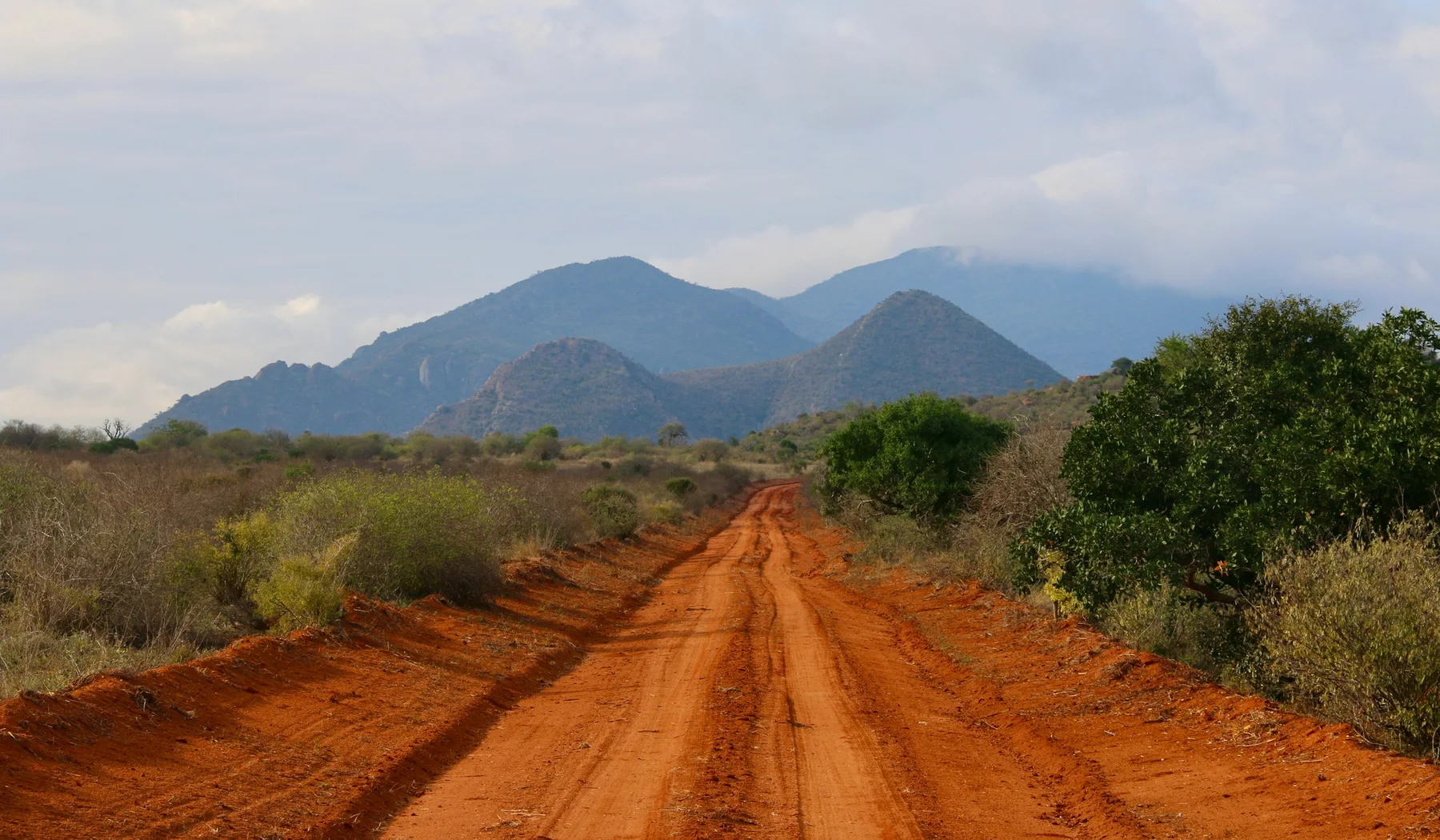
Driving works beautifully when parks form a logical line. Nairobi, Amboseli and Tsavo can create a connected southern journey rather than repeated returns to the city.
Use the Amboseli and Tsavo guides to judge the circuit.
Do not force distant parks into a short road trip
Samburu, the Mara and Amboseli can all be excellent, yet connecting them by road in too few nights produces long transfer days.
Choose fewer areas, add nights or fly the awkward sector.
Use flights for long cross-country jumps
A flight can transform a geographically awkward route, especially when the alternative is a full day on roads already travelled.
Compare Samburu or Laikipia links with the Samburu guide and Ol Pejeta guide.
Use driving for nearby combinations
Ol Pejeta and other central Kenya stops can link naturally by road. Flying every short sector may add airports without saving useful time.
Map the route before assuming air is the luxury answer.
Build a hybrid around the longest weak link
A hybrid safari can drive a scenic circuit, then fly the sector that would repeat roads or consume the final day.
Test drive-in and fly-out as well as fly-in and drive-out.
Drive one way and fly the other
The outward drive can show the Rift Valley and towns; the return flight can protect energy before an international departure. The opposite may work better with flight schedules.
Price both directions and the vehicle repositioning.
Combine a Mara flight with a southern road circuit
A traveller can fly to or from the Mara and drive Nairobi, Amboseli and Tsavo in a logical sequence.
The Mara and Amboseli package can be reshaped around dates and transport.
Do not make Nairobi the centre of every movement
Some routes can connect parks directly, while others require Wilson for practical scheduled services. Repeated Nairobi returns waste time when a through sector or road link exists.
Ask for the route as a line on a map.
Price the whole road vehicle
A road quote can include vehicle, guide, fuel, park vehicle charges, guide accommodation and meals. Group size changes the per-person result.
Compare the total vehicle cost for the exact circuit.
Price every flight ticket
A fly-in quote includes each passenger, and child or infant rules may differ from lodge bands.
List tickets person by person and verify ages at travel.
Add every airport transfer
Hotel to Wilson, JKIA to hotel, airstrip to camp and camp to airstrip may sit in different packages.
A complete fly-in total names who provides each movement.
Add private-drive upgrades
If the traveller expects a private vehicle at camp, that cost belongs in the comparison. Otherwise the fly-in total and dedicated road vehicle do not describe the same experience.
Price exclusivity by property and day.
Add luggage storage and handling
Storage, repacking, excess carriage and returning to collect bags can add money and time.
Include them before calling one option cheaper.
Add empty vehicle movement
A drive-in and fly-out plan may require the road vehicle to return without passengers. The pricing can reflect that distance.
Ask whether the hybrid total includes repositioning.
Add driver and guide logistics
A dedicated guide needs accommodation and meals through the circuit. These may be built into the package rather than shown separately.
Compare inclusions, not invoice formatting.
Compare cost for two travellers
Flights can be competitive when a private road vehicle is divided between only two guests, especially on a short long-distance sector.
Use exact dates and all transfers before deciding.
Compare cost for a family or group
A vehicle cost shared across several travellers can make driving attractive, until the group needs a second vehicle or much more luggage space.
Check usable seats and every passenger's view.
Value time without pretending it is money
A flight may buy an extra afternoon with wildlife. That value matters even though it is not a refund or a guaranteed sighting.
Ask what the saved hours become in the actual itinerary.
Value the road as part of Kenya
Driving shows farms, towns, escarpments and changing vegetation that an aircraft crosses in minutes. For some travellers that context is central, not wasted time.
Choose stops that are safe and meaningful rather than manufacturing a sightseeing list.
Do not romanticise every road hour
Traffic, dust and rough surfaces are also part of road travel. A long return after several safari days may feel different from the exciting outward journey.
Keep the description honest.
Do not call every flight luxurious
A scheduled light aircraft is practical transport, not automatically a private jet. Cabins can be compact, stops possible and luggage controlled.
Luxury may come from time saved, not from the seat itself.
Do not call every drive budget travel
A private customised Land Cruiser with one excellent guide can be a premium way to travel.
Judge the vehicle, space, guide and route rather than the transport label.
Plan photography baggage before buying flights
A photographer may prefer one road vehicle, generous equipment space and predictable mounting positions. A flight can still work with advance baggage planning.
Use the Kenya photography safari page to define needs.
Keep cameras accessible on the road
The first giraffe may appear before the park gate. Equipment buried under suitcases cannot be reached safely while moving.
Agree on a secure cabin layout with clear aisles.
Protect gear at airstrips
Dust, quick loading and multiple bags require labels, covers and a simple count.
Keep batteries and sensitive items within the carrier's rules.
Plan charging across vehicles and camps
Driving can offer vehicle charging, while camp power schedules and aircraft rules affect batteries.
Confirm sockets, adapters and battery carriage before departure.
Read real convenience comments in context
One traveller wrote, “We flew on SafariLink which was very convenient,” then added, “look into baggage weight limits.”
The full independent discussion captures the benefit and the condition in one sentence.
Remember that road tolerance is personal
In a discussion about the road to Naboisho, one response described it as “Not worse than being in a safari vehicle all day.”
Read the thread as one traveller's comparison, not a universal comfort rating.
Question flights that do not solve a route problem
A traveller asked, “Ol Pejeta is less than four hours from Nairobi, why do you need to fly?” The exact time can vary, but the planning instinct is useful.
The discussion reminds readers to test what a flight actually improves.
Value a good driving guide
The same traveller wrote that Kenya was where “we've had a guide drive us, and it was a great experience,” while still preferring self-drive now.
A preference can change without making the earlier choice wrong.
Hear the case for saving time
Another traveller said, “I highly recommend you do a fly-in safari to save time.”
That first-person advice is most relevant to short or geographically stretched trips.
Separate the flight from the shared drive
A traveller recalled, “A manager at one camp convinced me to take a shared drive one time and in the entire time I was in Kenya I was never so miserable as during this 2 hours.”
The full discussion shows that vehicle arrangement after landing can matter more than the flight.
Choose clear communication over the lowest line
The same discussion says, “Booking through a licensed operator with good independent reviews and clear communication is much more important than choosing the absolute lowest price.”
That applies equally to air tickets, road vehicles and hybrid logistics.
Use traveller accounts to discover questions
A review can reveal turbulence, road fatigue, bag limits or a wonderful guide, but it cannot predict the exact date, aircraft, road or child.
Turn each story into a question for the booked route.
Compare weather disruption honestly
Roads can slow in rain and flights can change with weather or operational conditions. Neither mode is immune to disruption.
Keep critical international connections buffered and insurance suitable.
Do not schedule a tight same-day international departure
An airstrip delay, Wilson arrival and Nairobi traffic can threaten a separate JKIA ticket. A long road return can do the same.
Use a conservative buffer or final Nairobi night.
Check cancellation rules by sector
Flight tickets, private vehicles and lodges may use different change and cancellation terms.
The quote should show which transport costs become non-refundable and when.
Check passenger names and documents
Air tickets require accurate names and may require identification details. A road manifest can also need park-entry information.
Use passport names from the start.
Check health and pregnancy guidance
Small-aircraft access, road vibration and remote travel can raise individual medical questions.
Seek qualified advice and tell the planner only the practical restrictions needed for safe arrangements.
Check accessibility at both ends
A flight can remove road hours but still require steps into an aircraft and an open vehicle at the airstrip. Driving can avoid the aircraft but use a high vehicle all day.
Ask about the complete chain, not one segment.
Use one comparison table for the final choice
Put door-to-door time, total cost, luggage, guide, vehicle, privacy, comfort, flexibility and wildlife time side by side.
Anything missing from one column is not yet comparable.
Keep the route flexible until availability is checked
The perfect theoretical flight can be sold out, operate on different days or use an inconvenient airstrip. Family rooms and private camp vehicles can also fill early.
Build a strong first choice and a sensible alternative.
Match the choice to the first safari
First-time visitors may value road context or prefer to reach the wildlife quickly. The first-park guide helps identify the real priority.
Transport should support that reason for travelling.
Put fees beside transport
Park and conservancy fees can apply during transfer or on each wildlife day. The fee guide will clarify the calculation.
Do not assume a flight ticket includes protected-area access.
Compare the complete safari cost
Use the Kenya safari cost guide and include every ticket, transfer, vehicle, guide, baggage arrangement and overnight.
The cheapest visible line is rarely the full difference.
Choose fly-in when it protects a short trip
A two or three-night Mara stay can justify flying when the road would consume too much of both boundary days.
Confirm the correct airstrip and game-drive arrangement.
Choose drive-in when the circuit is the experience
Amboseli and Tsavo, central Kenya routes and other logical sequences can reward overland travel with one guide and changing landscapes.
Give each park enough nights.
Choose hybrid when neither pure option works
The best answer is often one long flight and several sensible road sectors.
A hybrid is not indecision. It is route design.
Make the final booking specific
The confirmed plan should name flight numbers, airports, airstrips, transfers, vehicles, shared or private drives, baggage and responsible suppliers.
Fly-in vs drive-in Kenya safari becomes a confident choice only when the labels turn into real arrangements.
Sources and further reading
| Source | What it supports |
|---|---|
| Safarilink baggage information | Current carrier baggage rules |
| AirKenya 2026 timetable | Current scheduled routes and connections |
| Safarilink passenger information | Check-in and allowance examples |
| Independent lodge-transfer discussion | Convenience and baggage observations |
| Independent Mara-road discussion | Personal road-comfort perspective |
| Independent Kenya itinerary discussion | Route and guide preferences |
| Independent package-planning discussion | Exact fly-in time-saving opinion |
| Independent private-versus-group discussion | Exact shared-drive and communication opinions |
Compare a fly-in, drive-in or hybrid safari
Share the exact dates, international flights, parks, properties, passenger details, luggage and comfort priorities.