
Mara Explorer Camp: Ten Riverfront Tents on the Talek
An outdoor bath is lovely. Hearing hippos below your private deck is what makes Mara Explorer harder to forget. This guide looks past the romantic photographs to the Talek River location, drive rhythm, age policy, park fees and the difference between this camp and its nearby sister Mara Intrepids.
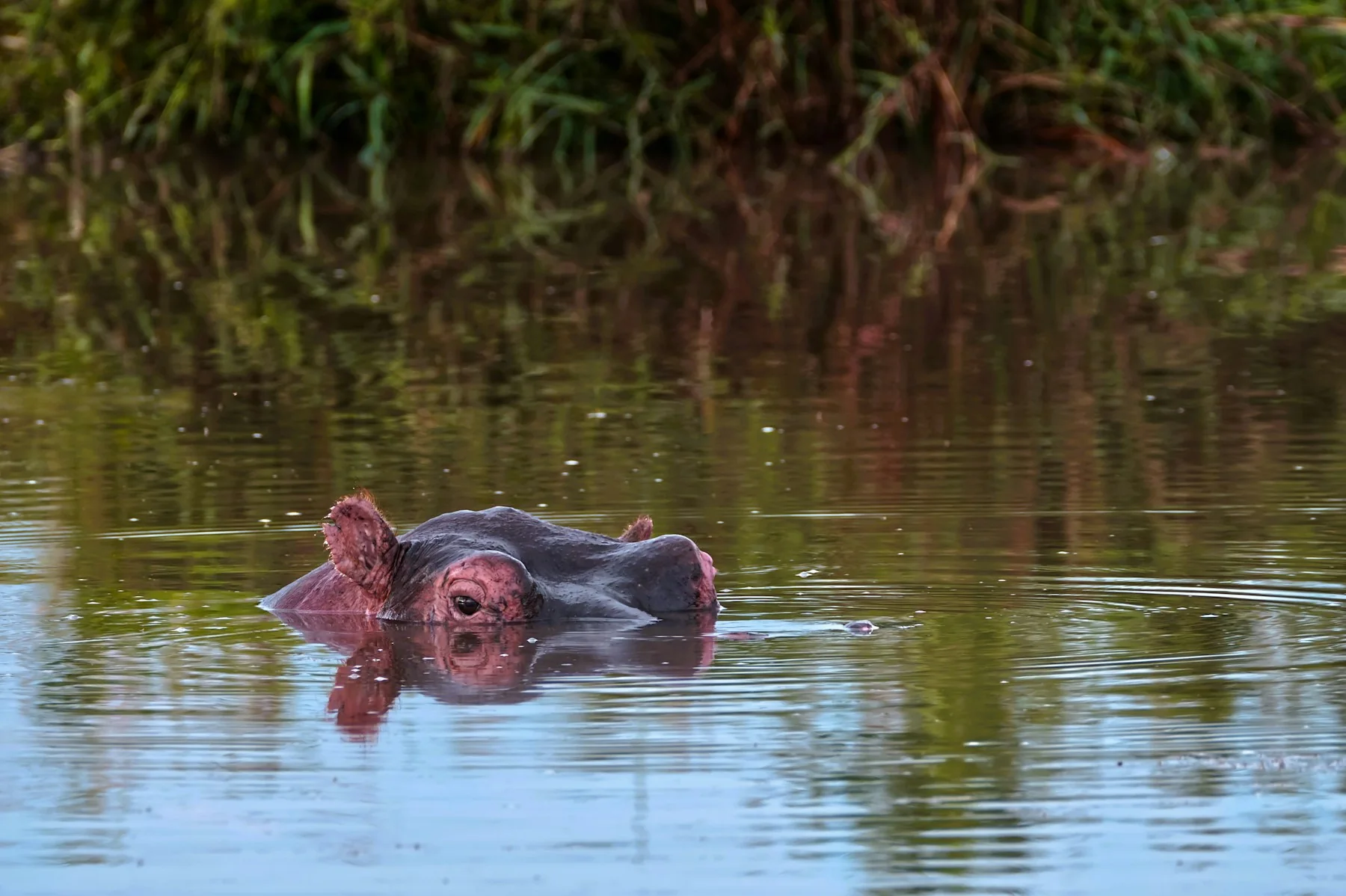
Mara Explorer has only ten tents, all facing the Talek River. The water turns an otherwise lovely safari camp into a place with its own soundtrack. Guests talk about hippos calling after dark, animals moving along the far bank and moments when a cup of tea on the deck is as absorbing as another drive. A river can also be quiet, muddy or swollen. That changing life is the point; the camp is not a wildlife performance with a timetable.
Heritage Hotels runs the camp on a forested river bend inside the Masai Mara National Reserve. It is a separate property from nearby Mara Intrepids, the group’s larger, more family-oriented camp. It is also entirely different from Mara Expedition Camp, run by Great Plains. Those names are close enough to be muddled in search results, but they describe different operators, room layouts and family policies.
Mara Explorer’s combination is clear: ten river-facing tents, private verandas, outdoor claw-foot baths and direct access to reserve game drives. The website describes three guided drives a day within its all-inclusive rate. A real stay need not follow all three every day. The most appealing plan may include an early drive, a slow breakfast and an afternoon spent listening to the river before going out again when the light turns gold.
On the Talek River, inside the reserve
The Talek is a tributary of the Mara River, not the main river crossing corridor itself. Mara Explorer sits on a broad, wooded bend. Some guests see hippos from camp and hear them at night. That is a very different advantage from an escarpment view or a conservancy ridge. The camp is within the reserve, so a game drive begins in reserve country rather than with an outside-gate commute. It remains subject to reserve access charges and driving rules.
Heritage describes the location as near several Mara game-viewing areas. That is useful for a guide who wants to choose a route according to reports and conditions, but no one camp is equally close to every sighting. A Talek-side address does not place you at a specific Mara River crossing point. Our crossings guide explains the geography and the long stretches when herds wait or move elsewhere. Judge this camp for the river life at your door and good reserve access, not a promise that wildebeest will cross in sight of your bath.
Riverfront also comes with responsibility. The camp is unfenced, and hippos are dangerous animals, especially outside water at night. Staff escort between tent and shared space is a protection, not a formality. Never step toward an animal for a better phone photograph. At high water, views and access conditions can change, and a guide or manager may adjust an outing. Our Mara safari guide shows how the reserve, Triangle and conservancies each create a different daily rhythm.
| Location question | Mara Explorer answer | Why it matters |
|---|---|---|
| Which waterway? | Talek River bend. | Riverfront wildlife and sound, not a guaranteed Mara River crossing view. |
| Inside the reserve? | Yes, within the Masai Mara National Reserve. | Direct reserve drives and separate park fees. |
| Private conservancy? | No, this is a reserve camp. | Do not assume conservancy night drives or off-road permissions. |
| Nearby sister camp? | Mara Intrepids. | A different camp with stronger children’s facilities. |
Each of the ten tents faces the water
Heritage lists ten well-spaced tents, each with private river frontage. Seven have queen beds and three have twin beds. They stand on raised wooden decks with a private veranda. Inside are classic hand-carved furniture, a proper en-suite bathroom and twin basins. Outside, a Victorian-style claw-foot bathtub gives an open-air bathing view while retaining privacy. It is a genuinely distinctive feature, not a generic illustration pasted onto every Mara camp.
Room selection still matters even when every tent faces the Talek. One may feel more tucked among trees; another may be closer to the main area. The river’s activity is not evenly distributed along a bend on every day. A guest with mobility concerns should ask about steps, deck access and the path to dining. Someone who values a quiet honeymoon atmosphere may prefer a more secluded position, while a traveller who wants the shortest walk after dark may choose otherwise.
Calling them tents can mislead people who have only seen a camping tent. They are substantial safari rooms under canvas with private bathrooms. Yet canvas still lets you hear the night. Some visitors treasure hippo grunts and distant calls; others need earplugs. A river camp can be humid or cool depending on weather, and an outdoor bath is most enjoyable when you are not rushing to dinner. Give the room time to be part of the trip.
Do not confuse these baths with a plunge pool or the facilities at Mara Intrepids. Explorer’s luxury is small scale and direct river contact. If swimming is a daily necessity, ask specifically what facilities are available rather than assume a five-star label includes a pool. A public listing of amenities can mix camp information and nearby sister-camp information. The operator’s own room page is the stronger reference for the ten tents and baths.
There is more to the day than the drive count
Heritage advertises three guided reserve drives a day. It describes an early outing from around 6 a.m. to breakfast, a mid-morning option and another in late afternoon. That is generous on paper, though most travellers will not want to spend every available hour in a vehicle. At Explorer, the riverfront deck is not an afterthought. An unhurried breakfast may bring a better memory than another hot mid-morning circuit.
A comfortable rhythm might be early coffee in the tent, a drive while predators and plains animals are active, breakfast back by the river and a stretch of quiet time. Later you could drive again or sit out the hottest hours, then follow the guide’s advice about evening light. A keen photographer may prefer a long uninterrupted morning. A couple celebrating a honeymoon may want less time on a timetable. The point is to shape a safari day around people and wildlife, not to “use up” every drive because it is included.
Food and the team matter when a camp has only ten rooms. Guests have described attentive service, plentiful meals and guides who made the wildlife day feel personal. If you have an allergy or a particular meal requirement, tell the camp well ahead; a past guest noted that advance notice helped the kitchen manage a spouse’s allergies. Do not wait until the vehicle is already on its way from the airstrip to raise a serious dietary issue.
Nightfall brings the river into the foreground. Hippos may call; hyenas or other animals may be heard beyond the tent. It is tempting to step onto a path to investigate, but that is exactly when staff escort matters. With a private deck and a proper room, you can hear and watch without wandering. The thrill of a wild camp depends on respecting the boundary between guest comfort and animal space.
Guiding in the Masai Mara National Reserve
The all-inclusive room description lists three guided reserve drives each day and an airstrip transfer. Heritage mentions open-sided safari vehicles and experienced guides. A reserved lodge drive may be shared with other guests; confirm the vehicle arrangement if a private photographer’s pace, mobility need or celebration is important. The reserve’s wildlife can reward patient watching, but the road rules still apply. A camp inside the boundary does not grant off-road freedom or a night-drive exception.
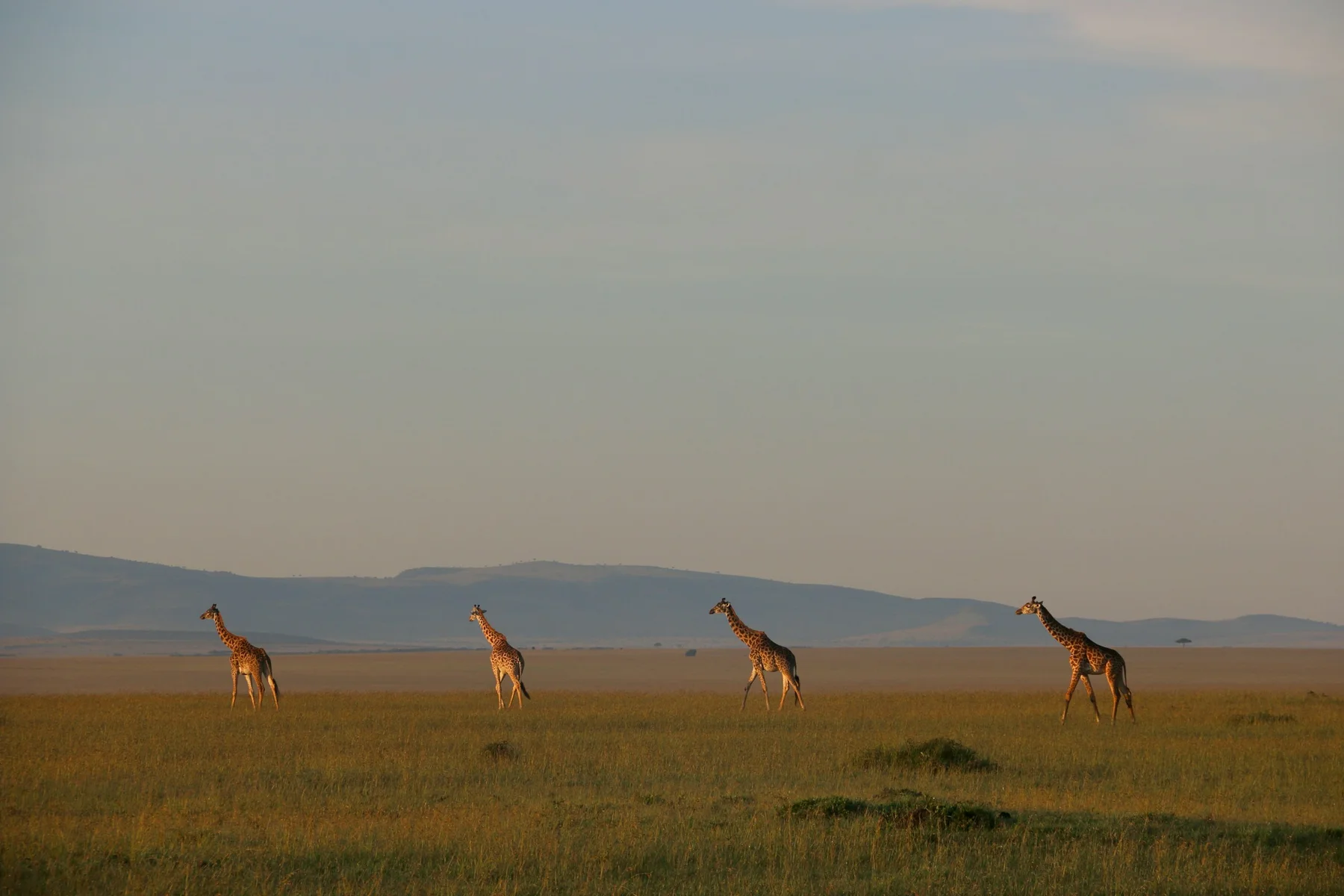
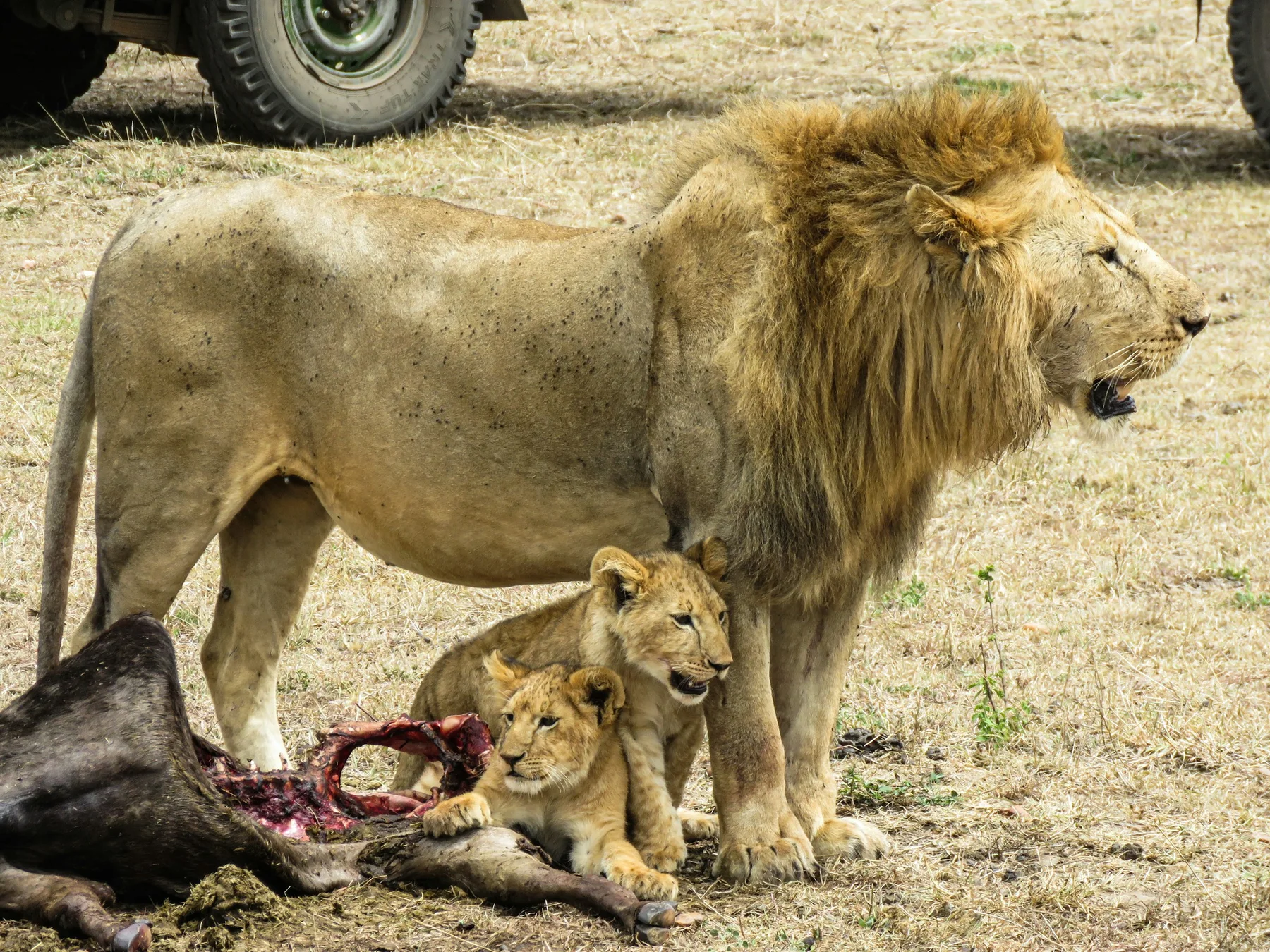
The area supports lions, leopards, cheetahs, elephants, giraffes, buffalo and a remarkable number of birds. A guide may spend an hour reading tracks and alarm calls only to find that a cat has vanished behind a bush. That is not a failed drive. It is how wild animal watching works. A river base can add hippos and waterbirds to the story, while longer outings reach different grassland sectors. Our drive etiquette guide explains how a careful approach leads to better behaviour to watch, not just closer photographs.
The migration is seasonal and not confined to a narrow date range. Heritage promotes July to September views, but a specific crossing or herd at camp is not part of a room contract. If river crossings are your central priority, compare the daily travel time to suitable Mara River sectors and give yourself several full days. If you can enjoy resident wildlife, the Talek River and broader reserve, a stay can be rewarding outside peak migration months. Our season guide makes this choice less dependent on a single calendar image.
| Safari choice | At Mara Explorer | Best question |
|---|---|---|
| Early reserve drive | Included in the described daily programme. | How long will the route be today? |
| Second or third drive | Heritage lists up to three guided drives. | Would a longer outing or time by the river be better? |
| Private vehicle | Not established as a standard inclusion. | Can your party reserve one and at what cost? |
| Guided bush and bird walk | Listed on the room page. | Where is it authorised and what ages or conditions apply? |
| Migration-focused day | Possible as a longer reserve outing. | Which river sector and how much travel time? |
Bush meals, walks and a confusing inclusion
The operator’s room page lists a morning guided bush and bird walk, bush breakfast and bush dinner among all-inclusive features. A separate Heritage dining page says bush dining and sundowners at Mara Explorer carry an extra charge. The pages cannot both describe every rate in the same way. If a private dinner under the stars is part of why you are booking, the chosen room package should name the exact meal and any extra price. The same applies to a special sundowner or balloon flight.
Walking deserves its own question. The room page mentions a guided morning walk, but the camp is inside the National Reserve, where walking rules are different from those in private conservancies. Find out which permitted area and guide arrangement applies rather than assuming you can simply step out from your tent into a free-ranging walk. A bird-focused stroll near camp is not the same as a long armed wilderness walk. Our Mara walking safari guide distinguishes the experiences.
A balloon ride is a separate early-morning excursion. It could be a beautiful way to see the wider landscape, but it replaces a normal dawn drive and depends on weather, operator and launch point. A traveller staying only two nights may value that sunrise more in a vehicle; another may consider the aerial experience the highlight. Choose for your trip rather than treating every optional activity as compulsory safari homework.
A quiet couples’ camp, not the sister children’s club
Mara Explorer is widely listed as adults only, and a Heritage representative has stated that children under thirteen cannot be accommodated because the camp is unfenced and has no kids’ club. The official contact form still has a field for children, which is not itself a child policy. If travelling with a teenager, confirm the current minimum age and room arrangement directly before building the rest of the family route. Do not assume the child rules of Mara Intrepids carry across to Explorer.
The difference between the sister camps is useful. Mara Intrepids has the Heritage Adventurers’ Club and family-oriented infrastructure. Explorer has ten riverfront rooms, the outdoor baths and a more intimate feel. Parents who want to share wildlife with younger children may have a better trip at Intrepids than forcing Explorer to serve a purpose for which it is not designed. A couple or adult group can appreciate the relative quiet at Explorer without calling one camp universally superior.
If there is a mobility need, age is not the only consideration. The riverfront raised decks, outdoor baths and unfenced paths should be described honestly to the traveller concerned. Ask for the shortest route to dining, the bathroom layout and how staff escorts work. A beautiful view is no help if reaching it comfortably is difficult.
What stays with guests after they leave?
Independent reviews repeatedly return to the river’s sound. Beth C, after a March 2024 stay, wrote on Tripadvisor that listening to the hippos at night provided a truly unique experience
. She also named her guide and waiter and praised the meals. Her words describe a personal stay, not a guarantee that hippos will call outside every tent every night.
Another guest, Asad1978, remembered Hyenas calling at dawn across from our tent
as well as warm staff and hot-water bottles. Those small details tell you more about the camp’s mood than a five-star score alone. A couple’s review describes a proposal on their tent’s patio with hippos nearby. That romantic image is possible here because the room faces real river life, but one traveller’s luck should not be sold as a scheduled honeymoon scene.
Most detailed first-hand reviews we found describe stays a few years ago. They illuminate the location and long-standing character, while the operator’s current room and rate pages are more appropriate for the present inclusions. Before committing, it is reasonable to ask about the exact tent and vehicle plan for your travel dates. The general texture of these reports is reassuring, but no review can establish today’s park fees or a special dinner’s charge.
What is in the all-inclusive rate?
The Heritage room page includes accommodation, meals and tea service, a selection of local alcoholic and non-alcoholic drinks, three guided game drives daily, airstrip transfers and laundry. It explicitly excludes park fees. That last line matters because the camp is inside the reserve: an otherwise complete-looking room rate does not cover every mandatory part of the stay. A private vehicle, balloon or special experience may add cost, depending on the package.
Bush dining is the uncertain line. The room page presents bush breakfast and dinner as inclusions, while the operator’s dining page marks bush dining and sundowners at Mara Explorer as extra-cost options. It may be a difference between rates, a marketing page that has not been synchronised or a distinction between standard and private arrangements. The practical outcome is that the selected package must say exactly which experience is included. Do not assume that every photograph of dinner under stars corresponds to the basic rate.
A full safari price should include the Wilson flight if used, park fees, any room category distinction, the actual drive-vehicle plan, special meals or ballooning and onward travel. If the arrival airstrip transfer is included but the flight is not, those are different lines. Our Kenya fee guide explains why being inside a reserve does not mean a hotel absorbs the reserve charge.
| Cost item | Heritage room description | What to settle |
|---|---|---|
| Room and standard meals | Included in all-inclusive rate. | Exact bed type and occupancy. |
| Three guided reserve drives | Listed as included. | Shared or private vehicle for your party? |
| Airstrip road transfer | Included. | Correct Ol Kiombo flight and pickup. |
| Reserve entry | Excluded. | Charge for each visitor and relevant day. |
| Bush meals | Conflicting operator pages. | Which specific meal is included in this rate? |
| Balloon or special arrangement | Extra unless specifically named. | Operator, price and weather plan. |
Ol Kiombo and the first afternoon
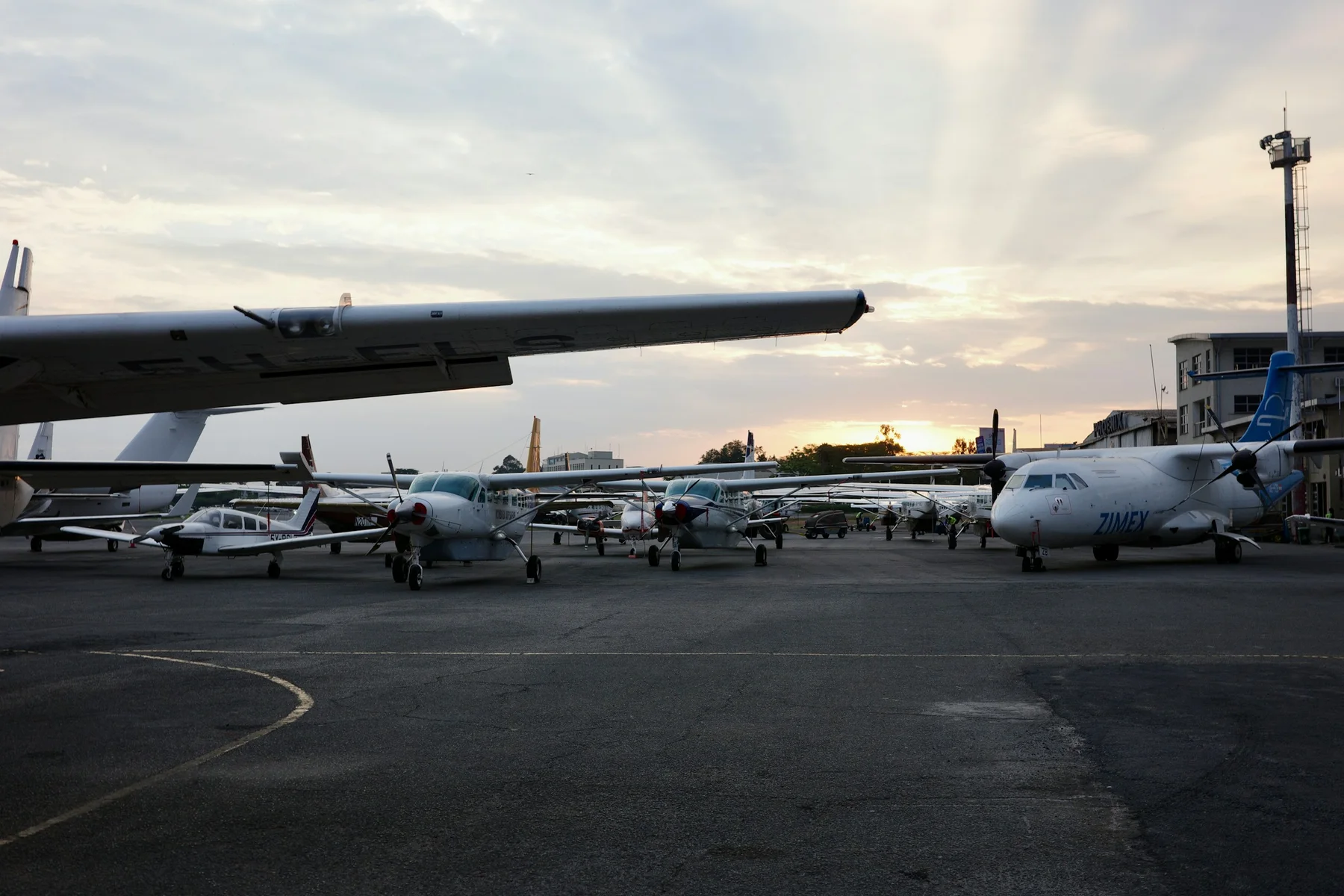
Heritage names Ol Kiombo as the camp’s airstrip and describes a very short final drive. A scheduled bush flight usually departs Nairobi’s Wilson Airport rather than the international airport. You must allow a realistic transfer between the two airports if arriving from overseas the same day. Actual flight duration and stops vary; the useful booking detail is not a headline forty-five minutes but the specific departure, landing and camp pickup that preserves your first afternoon.
Driving from Nairobi is possible, and the operator gives around six hours for roughly 298 kilometres. Traffic and road conditions can stretch that, especially with rain or a slow city exit. A road arrival may make sense as part of a broader Kenya route. A fly-in protects more safari time if the Mara is the main destination. Our fly versus drive guide helps compare not only money but the hours you will actually have at the river.
Light aircraft baggage is limited; check the ticketed airline’s precise weight and soft-bag policy. A large hard suitcase that was fine on an international flight may be unsuitable for a Mara aircraft. Our safari flight baggage guide covers that practical transition.
Mara Explorer or Mara Intrepids?
Choose Explorer for ten riverfront tents, private outdoor baths and a quieter adult-oriented camp. Choose Intrepids for a larger sister property with a children’s programme and a different family setup. Both sit in the reserve area, but do not transfer one camp’s facilities, child policy or room pictures to the other. Their shared operator and similar names make that mistake unusually easy.
Compare Mara Expedition Camp for a different small classic safari under Great Plains, with a different location and cost structure. Compare Rekero if a river-country safari led by a different team is appealing. A Mara North or Naboisho camp may suit a traveller who wants regular authorised night drives and walks instead of the reserve as the daily base. Our Mara accommodation guide puts these landscapes together.
The best reason to book Mara Explorer is not a generic “five-star safari” label. It is the feeling of returning from a drive, sitting on a private Talek-facing deck and discovering that the river kept its own schedule all day. If you value that, allow enough nights to listen.
Mara Explorer questions
Is Mara Explorer inside the Masai Mara National Reserve?
Yes. Heritage places its ten river-facing tents on a forested Talek River bend within the reserve.
Is Mara Explorer the same as Mara Expedition Camp?
No. Mara Explorer is a Heritage Hotels camp on the Talek River; Mara Expedition is a separate six-unit Great Plains camp.
Is Mara Explorer the same as Mara Intrepids?
No. Mara Intrepids is a separate, larger sister camp with more family infrastructure.
How many tents does Mara Explorer have?
Ten, each with a private riverfront position. The operator lists seven queen-bed tents and three twin-bed tents.
Do the tents have outdoor baths?
Yes. The operator describes a private claw-foot bath on a deck as well as an en-suite bathroom.
Are game drives included?
Heritage’s all-inclusive room description lists three guided reserve drives a day. The actual rhythm can be adapted to the day’s conditions and group plan.
Are reserve entry fees included?
No. The operator’s room page excludes park fees from the website rate.
Can young children stay at Mara Explorer?
The property is listed as adults only on Tripadvisor, and a Heritage representative has said children under thirteen cannot be accommodated. Check the current age rule before booking; Mara Intrepids is the nearby sister property with a children’s programme.
Which airstrip serves Mara Explorer?
Heritage names Ol Kiombo and describes a short camp transfer. Match the exact airstrip on the flight ticket with the pickup.
Does a riverfront tent guarantee hippos?
No. Guests regularly report hippo sounds and views, but wild animals move freely and the river level changes.
Are bush meals included?
Heritage’s room-rate page lists bush breakfast and dinner among inclusions, while its separate dining page calls bush dining and sundowners extra cost. The final itinerary should name what is included for the selected rate.
Keep planning the Mara
Plan Mara Explorer
Tell us your dates, travellers’ ages, preferred bed type and whether a private drive or special meal matters.