
Samburu vs Masai Mara: Which Safari Should You Choose?
Compare the Special Five and Ewaso Nyiro with predator-rich grasslands and possible migration drama, then build enough time for the destination you choose.

- Samburu vs Masai Mara at a glance
- The simplest way to choose
- Choose Samburu for a distinctly northern safari
- Choose the Masai Mara for classic savanna abundance
- Wildlife density versus wildlife difference
- Samburu’s Special Five
- The Mara’s resident wildlife matters outside migration
- Big-cat comparison
- Elephant comparison
- Rhino and the Big Five question
- Great Migration reality
- Landscapes: rugged river country versus rolling grassland
- River systems create different safari rhythms
- Birding comparison
- Photography comparison
- Crowding in peak season
- Reserve and conservancy geography
- Where to stay in Samburu
- Where to stay in the Masai Mara
- Best time for Samburu
- Best time for the Masai Mara
- Month-by-month tie-breakers
- Getting there from Nairobi
- Flying between Samburu and the Mara
- Road circuit between Samburu and the Mara
- Safari cost comparison
- Which offers better value
- Family safari comparison
- Honeymoon comparison
- First-time safari recommendation
- Repeat safari recommendation
- How many nights in Samburu
- How many nights in the Masai Mara
- Can you combine Samburu and the Masai Mara
- Sample eight-day fly-in route
- Sample ten-day road and air route
- Cultural experiences in each region
- Hot-air ballooning
- What to ask before booking
- Common planning mistakes
- A practical decision tree
- Who should choose Samburu
- Who should choose the Masai Mara
- When neither is the right next stop
- Final Samburu vs Masai Mara recommendation
The Masai Mara is the Kenya safari many travellers already carry in their imagination: tawny grass, lions on a rise, cheetahs scanning the plains and, in some months, wildebeest gathering at the Mara River. Samburu changes the picture. The grass thins, the land turns drier and rockier, doum palms follow the Ewaso Nyiro, and animals such as Grevy’s zebra, reticulated giraffe and gerenuk begin to appear.
That difference is what makes the Samburu vs Masai Mara decision so interesting. The Mara usually wins on sheer wildlife density, classic savanna scale, predators and migration drama. Samburu wins on northern species, dry-country ecology, rugged scenery and the feeling of entering another Kenya. If you have enough time, they are not rivals at all. They are one of the country’s best contrast pairs.
Samburu vs Masai Mara at a glance
| Decision point | Samburu | Masai Mara |
|---|---|---|
| Signature experience | Northern wildlife in dry riverine country | Dense wildlife across iconic grassland |
| Distinctive draw | Special Five and Ewaso Nyiro | Predators and seasonal Great Migration |
| Landscape | River, palms, scrub, rock and hills | Rolling grassland, rivers and escarpments |
| Recommended first stay | Three nights | Three or four nights |
| Natural route partner | Laikipia, Ol Pejeta and Meru | Lake Nakuru, Naivasha and Serengeti |
| Crowd pattern | Often quieter, with local clusters | Busy in peak migration areas, quieter in conservancies |
The right answer changes with season and lodge position, so compare the experience rather than the destination name alone.
The simplest way to choose
Ask what is missing from the rest of your route. If you already have open plains and migration habitat elsewhere, Samburu adds contrast. If this is your only safari stop, the Mara delivers a broad, recognisable wildlife experience in one ecosystem.
| Your priority | Lean towards |
|---|---|
| Lions, cheetahs and classic savanna | Masai Mara |
| Grevy's zebra, gerenuk and reticulated giraffe | Samburu |
| Great Migration possibility | Masai Mara |
| Northern route with Laikipia | Samburu |
| One first-safari destination | Masai Mara for many travellers |
| A second or third Kenya safari | Samburu for a fresh ecosystem |
Neither result is automatic. Time, guide quality and a well-positioned lodge can matter more than a famous label.
Choose Samburu for a distinctly northern safari
Samburu feels different before the first unusual animal appears. Heat, pale grass, thorn scrub, rocky hills and riverine palms change the pace of the drive. You begin to look into bushes for gerenuk, compare zebra stripes and follow the river for elephant movement.
| Samburu strength | What it adds |
|---|---|
| Special Five | Species rarely central to a southern circuit |
| Ewaso Nyiro | A visible relationship between water and wildlife |
| Dry-country ecology | Adaptations to heat, browse and unreliable water |
| Northern cultures | Community-led Samburu experiences when responsibly arranged |
| Route logic | Natural connection with Laikipia and Ol Pejeta |
Start with the full Samburu safari guide if the north already fits your route.
Choose the Masai Mara for classic savanna abundance
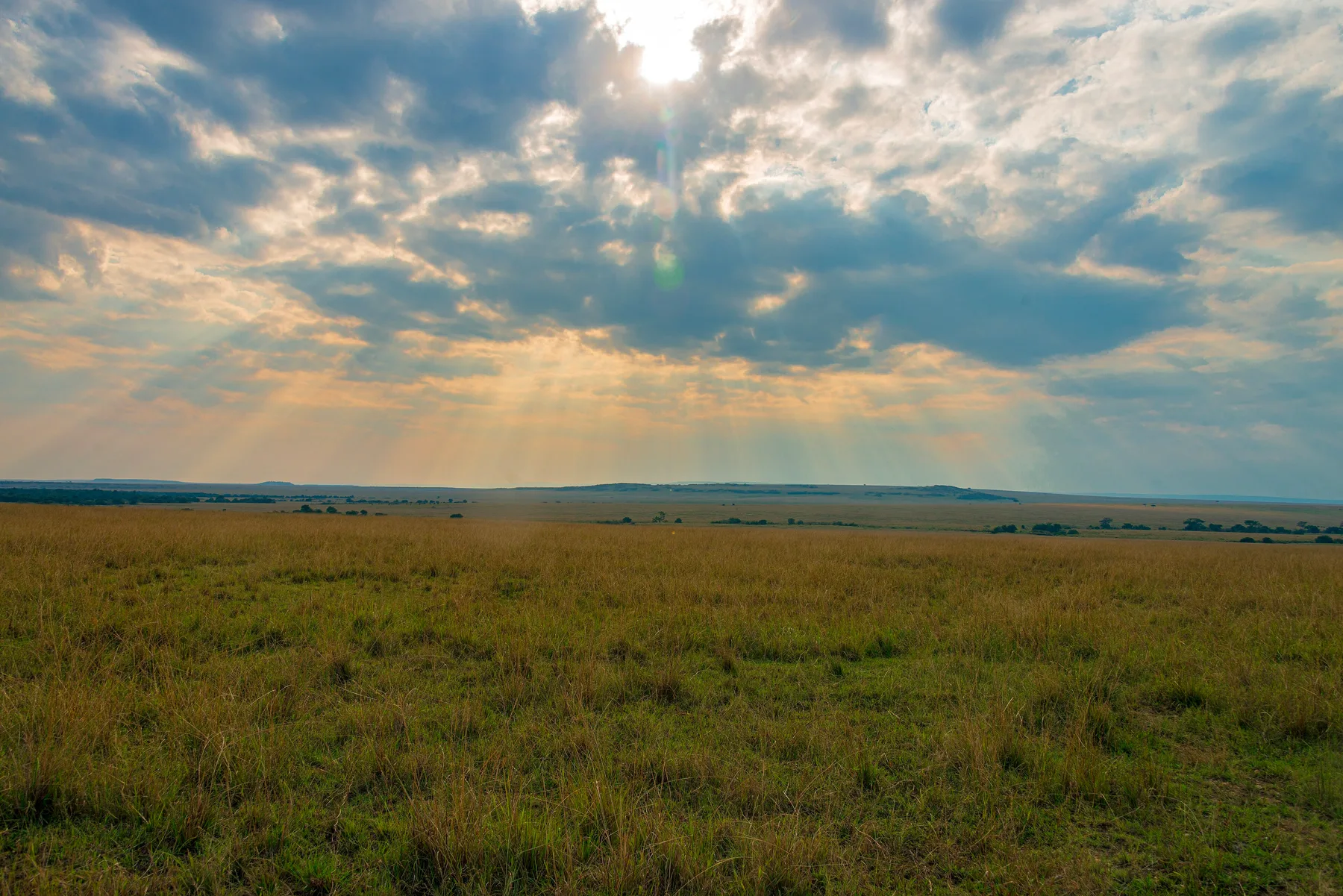
The Mara’s open grasslands make wildlife visible and interactions easier to follow. Resident herbivores support lions, cheetahs, leopards, hyenas and smaller predators throughout the year. Migration months add vast numbers of wildebeest and zebra, but the Mara remains a major safari destination outside the migration.
| Mara strength | What it adds |
|---|---|
| Wildlife density | Frequent encounters across productive grassland |
| Big cats | Strong predator viewing, though never guaranteed |
| Open scenery | Clear sightlines and dramatic weather |
| Migration season | Moving herds and possible river crossings |
| Conservancies | Lower-density stays and activities outside reserve rules |
The Masai Mara safari guide explains the reserve, Triangle and surrounding conservancies as one wider ecosystem.
Wildlife density versus wildlife difference
The Mara usually feels fuller. Herds are spread across the plains and predators can be unusually visible. Samburu may require more searching, but every drive can introduce a species, plant or bird that is absent from the classic southern circuit.
| Wildlife measure | Samburu | Masai Mara |
|---|---|---|
| General herbivore density | Good, often river-influenced | Frequently very high |
| Predator visibility | Rewarding with patient searching | Major strength |
| Northern specialist species | Defining advantage | Not a Mara feature |
| Migration spectacle | No comparable mass event | Seasonal major draw |
| Elephant experience | Excellent riverine viewing | Excellent across plains and woodlands |
Choose density if you want continuous classic wildlife. Choose difference if you want the species list and landscape to change.
Samburu’s Special Five
Grevy’s zebra, reticulated giraffe, Beisa oryx, gerenuk and Somali ostrich are called the Samburu Special Five. They are not confined to the reserve, but Samburu is one of the best-known places to look for all five within one northern ecosystem.
| Species | Fast field clue |
|---|---|
| Grevy's zebra | Narrow stripes, white belly and large ears |
| Reticulated giraffe | Clean polygonal patches with pale lines |
| Beisa oryx | Long straight horns and bold face mask |
| Gerenuk | Long neck and upright browsing |
| Somali ostrich | Blue-grey neck and legs in adult males |
The Samburu Special Five wildlife guide turns the checklist into identification, behaviour and conservation context.
The Mara’s resident wildlife matters outside migration
The Great Migration can overshadow the animals that live in the Mara all year. Lions defend territories, cheetahs hunt on open ground, elephants move between woodland and grassland, and resident wildebeest, zebra, topi, gazelles and buffalo remain after visiting herds have moved on.
| Year-round interest | Why it matters |
|---|---|
| Resident predators | Safari quality is not tied to one migration month |
| Plains herbivores | Support hunting, scavenging and social behaviour |
| Elephants | Family movement and feeding across varied habitat |
| River systems | Hippos, crocodiles, birds and dry-season water |
| Birdlife | Grassland, riverine, woodland and raptor diversity |
The Mara is not empty when the migration is elsewhere.
Big-cat comparison
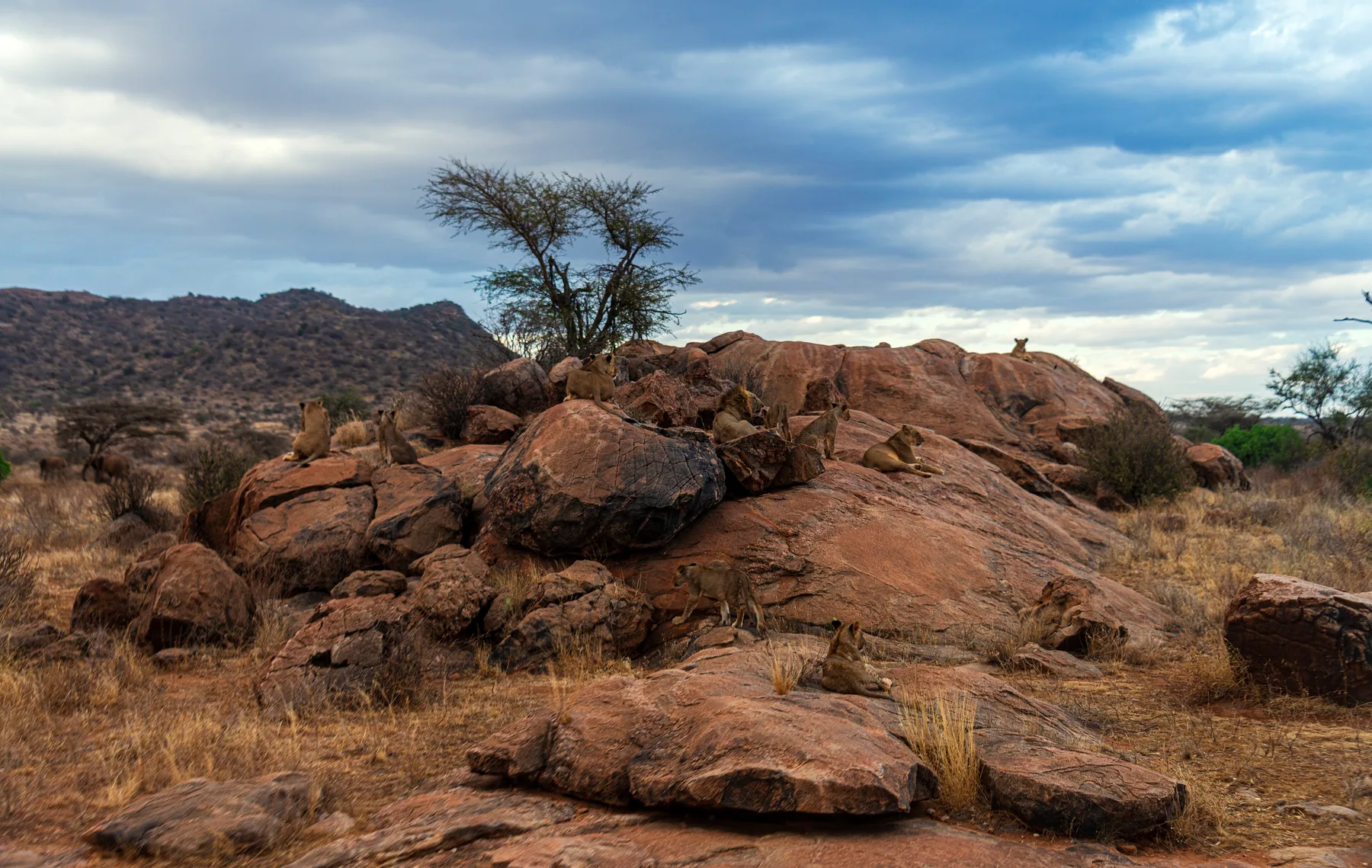
The Mara is usually the stronger choice for travellers whose first question is about lions, cheetahs and leopards. Its open habitats and large prey base support famous predator populations. Samburu also has all three big cats, with riverine cover and rocky country shaping the search.
| Predator | Samburu | Masai Mara |
|---|---|---|
| Lion | Present across plains and river approaches | Major resident presence across territories |
| Leopard | Often searched for in riverine trees and cover | Riverine woodland and drainage lines |
| Cheetah | Open dry areas and conservancies | Open grasslands are a major strength |
| Hyena | Important predator and scavenger | Numerous clans in parts of the ecosystem |
No reserve can guarantee a cat. More nights and a private vehicle improve patience, not certainty.
Elephant comparison
Both destinations can produce memorable elephant viewing. Samburu’s riverbanks and palms create close, layered scenes. The Mara offers broad movement across grassland, woodland and river systems, sometimes with storm clouds or escarpments behind.
| Elephant question | Samburu | Masai Mara |
|---|---|---|
| Water story | Ewaso Nyiro channels, pools and sand | Mara and Talek rivers, marshes and seasonal water |
| Visual style | Intimate, textured and riverine | Expansive, grassy and weather-driven |
| Role in trip | One of several northern signatures | Important part of a broad wildlife mix |
| Best observation | Slow river or crossing watch | Family movement across open habitat |
Elephant lovers should allow unhurried time in either park rather than chasing a bigger number.
Rhino and the Big Five question
The Mara can produce the Big Five, but black rhino sightings remain uncommon and should never be sold as certain. Samburu is not a rhino destination. Travellers who care deeply about rhino usually add Ol Pejeta or Lake Nakuru.
| Goal | Better planning choice |
|---|---|
| Broad Big Five possibility | Masai Mara, with no guarantees |
| Dependable rhino focus | Ol Pejeta or Lake Nakuru |
| Northern specialist list | Samburu |
| Predators plus rhino route | Mara combined with a rhino destination |
| Conservation interpretation | Add a conservancy or dedicated conservation visit |
A safari becomes richer when the itinerary follows ecosystems rather than a five-animal score.

Great Migration reality
The Great Migration is continuous movement through the Serengeti and Mara ecosystem, not a fixed event controlled by a calendar. Herds generally reach the Mara during the middle part of the year, but rainfall determines movement. A river crossing can happen far away, before arrival or after hours of waiting.
| Expectation | More accurate view |
|---|---|
| “Crossings happen every morning” | They are unpredictable wildlife events |
| “July guarantees the Mara River” | Timing shifts with rain and herd movement |
| “The whole migration is at one crossing” | Herds spread across a vast ecosystem |
| “No crossing means a failed trip” | Plains herds, predators and resident wildlife remain extraordinary |
Use the Great Migration river crossings guide before making one crossing the measure of an entire safari.
Landscapes: rugged river country versus rolling grassland
Samburu changes frame frequently. The road may move from open dry plain into thorn scrub, then drop towards palms and the river. The Mara offers wider visual continuity, with rolling grassland broken by rivers, drainage lines, isolated trees and distant escarpments.
| Visual element | Samburu | Masai Mara |
|---|---|---|
| Main colour palette | Rust, gold, green river ribbons and rock | Gold or green grass beneath enormous skies |
| Horizon | Broken by hills and outcrops | Long rolling plains and escarpments |
| Water | Ewaso Nyiro as a central corridor | Mara, Talek and smaller waterways |
| Signature tree | Doum palm and dry acacia | Flat-topped acacia and riverine woodland |
Photographers should choose the background they want as carefully as the animal list.
River systems create different safari rhythms
The Ewaso Nyiro concentrates life through a dry landscape. In the Mara, rivers are part of a much larger grassland system and become internationally famous when migrating herds cross them.
| River experience | Samburu | Masai Mara |
|---|---|---|
| Daily role | Central water and shade corridor | Wildlife habitat, boundary and migration obstacle |
| Best slow watch | Elephants, birds and animals approaching water | Hippos, crocodiles, predators and resident wildlife |
| Seasonal drama | Changing flow and dry sand channels | Possible migration crossings |
| Lodge relevance | River position can shape every drive | River or conservancy position changes access |
A river is not scenery alone. It explains where wildlife moves and why a guide waits.
Birding comparison
Samburu is the stronger contrast for birders who have already travelled in southern Kenya. Vulturine guineafowl, Somali ostrich and dry-country birds join riverine species and raptors. The Mara brings grassland birds, vultures, eagles, cranes, bustards and riverine species.
| Birding interest | Better fit |
|---|---|
| Northern dry-country species | Samburu |
| Grassland and scavenger community | Masai Mara |
| Riverine birding | Both |
| Wet-season migrants | Both, with different assemblages |
| Mammal and bird balance | Both with a bird-interested guide |
Ask for a guide who will stop for small birds instead of treating them as scenery between cats.
Photography comparison
The Mara favours action, predators, herds, storm light and minimal backgrounds. Samburu favours pattern, portrait, unusual species, rock, palms and environmental storytelling.
| Photograph | Samburu advantage | Mara advantage |
|---|---|---|
| Species portrait | Grevy's zebra, gerenuk, oryx and reticulated giraffe | Lions, cheetahs and plains herbivores |
| Environmental frame | River, palms, rock and dry scrub | Grassland scale and dramatic sky |
| Action | River crossings by elephants and predator searches | Hunts and migration movement when conditions align |
| Behaviour | Dry-country feeding and water use | Predator-prey relationships and herd dynamics |
Private vehicle space, low-angle positioning where rules permit and patient guiding matter in both.
Crowding in peak season
The Mara can become busy near famous river-crossing points and major predator sightings in peak migration months. Samburu often feels quieter, though a leopard or lion close to a main road can still draw vehicles.
| Crowd strategy | Samburu | Masai Mara |
|---|---|---|
| Stay longer | Explore more sectors and wait patiently | Avoid following the same headline circuit daily |
| Choose location carefully | Reserve, Buffalo Springs or conservancy changes density | Reserve, Triangle or conservancy changes density |
| Private vehicle | Leave a crowded sighting when ready | Essential for flexible photography |
| Travel outside peak | Heat or rain trade-offs | Excellent resident wildlife remains |
One traveller comparing the two wrote, “They are both fantastic parks.” The full discussion adds a useful reminder that first-time and repeat visitors may choose differently.
Reserve and conservancy geography
Neither destination is one uniform block. Samburu National Reserve sits beside Buffalo Springs and near Shaba, with community conservancies in the wider north. The Greater Mara includes the national reserve, Mara Triangle and multiple community conservancies.
| Geography question | Why it matters |
|---|---|
| Which protected area is the lodge in? | Determines fees, drive rules and first-light access |
| Can the vehicle cross boundaries? | Affects routes and additional entry costs |
| Are night drives or walks allowed? | Often depend on conservancy rules |
| How far is the airstrip? | Changes arrival and departure wildlife time |
| Is reserve access included daily? | Conservancy stays may price reserve visits separately |
Read Samburu, Buffalo Springs and Shaba compared and the Masai Mara conservancies guide before comparing lodge names.
Where to stay in Samburu
Inside-reserve camps offer direct access to Samburu tracks. Buffalo Springs and Shaba properties open different sectors. Conservancy lodges can add privacy, walks, cultural context and striking hilltop settings, but may sit farther from reserve game-drive areas.
| Stay type | Strength | Check |
|---|---|---|
| Samburu Reserve | Fast access to river and reserve roads | Shared-drive policy and room category |
| Buffalo Springs | Southern-bank ecosystem and airstrip access | Crossing and fee arrangements |
| Shaba | Distinct eastern landscape | Transfer time to central wildlife areas |
| Community conservancy | Privacy and wider activities | Included reserve drives |
Use where to stay in Samburu, Buffalo Springs and Shaba for named options and location trade-offs.
Where to stay in the Masai Mara
Reserve camps can put travellers close to central wildlife areas. Mara Triangle lodges suit western-sector and river access. Conservancy camps can limit vehicle density and add walks or night drives, while reserve entry may require a separate drive and fee.
| Stay area | Strength | Check |
|---|---|---|
| Central reserve | Broad wildlife access | Peak-season vehicle density |
| Mara Triangle | Western scenery and river proximity | Exact crossing-point distance |
| Northern conservancy | Lower-density drives and community model | Reserve entry cost and travel time |
| Eastern ecosystem | Access from Sekenani and varied camp levels | Distance to western migration areas |
The where to stay in the Masai Mara guide should be read before choosing a camp from photographs alone.
Best time for Samburu
Samburu is rewarding throughout the year. Drier conditions can simplify scanning and draw wildlife towards water. Greener periods bring fresh browse, bird activity and dramatic skies, while heavy showers can affect some roads.
| Condition | Samburu effect |
|---|---|
| Dry and hot | Water-focused movement and dusty light |
| Early green season | Fresh vegetation and changing birdlife |
| Rainy spell | Beautiful sky with possible access challenges |
| Peak holiday period | Higher lodge demand even if roads feel quiet |
The best time to visit Samburu page covers monthly heat, rain and wildlife context.
Best time for the Masai Mara
The Mara is a year-round wildlife destination. July through October often attracts travellers hoping for migration herds, but exact movement is rainfall-driven. Green months can produce young animals, migrant birds, dramatic skies and lower visitor numbers.
| Period | Mara character |
|---|---|
| January to March | Warm grasslands, resident wildlife and calving among some species |
| April to May | Greener, wetter and often quieter |
| June | Drying conditions and excellent resident game |
| July to October | Possible migration herds and peak demand |
| November to December | Short-rain green-up and changing herd movement |
Use best time to visit the Masai Mara instead of treating migration dates as appointments.
Month-by-month tie-breakers
Weather never follows a perfect chart, but itinerary fit still helps.
| Travel period | Lean Samburu when | Lean Mara when |
|---|---|---|
| January to February | You want warm northern wildlife and Laikipia | You want resident cats and green-to-drying plains |
| March to May | You accept showers for colour and quiet | You choose a well-located camp and flexible roads |
| June | Northern route suits the trip | Resident wildlife and cooler mornings appeal |
| July to October | Special Five matter more than migration | Migration possibility is central |
| November to December | Northern green-up interests you | Resident wildlife and short-rain scenery fit |
Fixed dates are not a problem. They simply change what success looks like.
Getting there from Nairobi
Both destinations involve a substantial road journey from Nairobi, in different directions. Scheduled flights from Wilson Airport protect time and reduce fatigue. Road routes can be rewarding when the itinerary includes logical stops.
| Route choice | Samburu | Masai Mara |
|---|---|---|
| Direct road | Long northbound transfer | Long southwest transfer |
| Scheduled flight | Several northern airstrips | Many reserve and conservancy airstrips |
| Natural road break | Mount Kenya or Ol Pejeta | Naivasha or Lake Nakuru |
| Best onward road route | Laikipia and central Kenya | Rift Valley and western Kenya |
Compare Nairobi to Samburu with Nairobi to Masai Mara using real door-to-door time.
Flying between Samburu and the Mara
Scheduled bush flights can connect northern Kenya with the Mara, sometimes through Nairobi or with stops. Timetables, minimum passenger requirements and seasonal schedules can change, so the route must be checked for travel dates.
| Flight detail | Why it matters |
|---|---|
| Departure airstrip | Some lodges require a long transfer |
| Intermediate stops | A “direct” service may land several times |
| Luggage limit | Soft bags and weight restrictions apply |
| Arrival airstrip | The nearest-looking strip may not serve the camp |
| Midday timing | Can preserve both morning and evening wildlife time |
For a short safari, a flight often turns this excellent pairing from exhausting to sensible.
Road circuit between Samburu and the Mara
A road connection is best broken with Ol Pejeta, Lake Nakuru, Naivasha or another meaningful stop. Driving directly in one day would be long and vulnerable to traffic.
| Road plan | Better use |
|---|---|
| Samburu to Ol Pejeta | Rhino and conservation night |
| Ol Pejeta to Lake Nakuru | Rift Valley bird and rhino stop |
| Lake Nakuru to Mara | Manageable final sector |
| Mara to Nairobi | Finish with rest before international flight |
The intermediate nights should add experiences, not exist only to survive the distance.
Safari cost comparison
The Mara has a wider range of camps, but peak migration demand can raise rates sharply. Samburu flights and remote luxury lodges can also be expensive. Protected-area fees, private vehicle and single supplements need to be compared alongside the room.
| Cost driver | Samburu | Masai Mara |
|---|---|---|
| Peak season | Holiday and dry-season demand | Migration months can be highest |
| Flights | Northern routing and baggage rules | Multiple scheduled services but high demand |
| Fees | Reserve, Buffalo Springs, Shaba or conservancy | Reserve, Triangle and conservancy structures |
| Vehicle | Private road safari or camp-shared drive | Private vehicle often costly in peak season |
| Room | Reserve, river or conservancy category | Location and migration positioning affect price |
Read Samburu safari cost and Masai Mara safari cost using identical dates and inclusions.
Which offers better value
The Mara may deliver more visible wildlife per hour. Samburu may deliver more novelty per species and a stronger sense of contrast. Value depends on what the traveller has already seen and how naturally the destination fits the route.
| Itinerary | Better value tendency |
|---|---|
| One first safari stop | Masai Mara |
| Mara already visited | Samburu |
| Laikipia already included | Samburu |
| Migration is the dream | Masai Mara, with honest uncertainty |
| Short trip requiring an expensive detour | The closer destination |
An extra night in the right ecosystem often creates more value than adding a rushed second park.
Family safari comparison
The Mara’s open plains and frequent sightings can hold younger attention, but long drives and busy sightings need managing. Samburu gives older children an enjoyable identification challenge and can combine well with family-friendly Laikipia conservancies.
| Family factor | Samburu | Masai Mara |
|---|---|---|
| Easy animal visibility | Good, with scrub and river cover | Often excellent on open plains |
| Educational theme | Special Five and dry-country adaptation | Predators, grassland ecology and migration |
| Drive length | Property and route dependent | Property and route dependent |
| Pool and family rooms | Check named lodge | Broad selection, still check exact configuration |
| Child age rules | Activity-specific | Conservancy walks and shared drives vary |
The Kenya family safari guide helps match rooms, meals and drive duration to actual ages.
Honeymoon comparison
Samburu can feel remote, warm and adventurous, especially in a hilltop or conservancy lodge. The Mara offers a vast luxury-camp choice, balloon flights and iconic plains. Privacy comes from the room, vehicle and camp size, not the destination name.
| Honeymoon priority | Better starting point |
|---|---|
| Secluded northern atmosphere | Samburu |
| Balloon flight | Masai Mara |
| Migration-season drama | Masai Mara |
| Unusual species and landscape | Samburu |
| Private dining and plunge pool | Compare exact room categories |
Use the Kenya honeymoon safari page to build romance around privacy and pace rather than generic decoration.
First-time safari recommendation
For one safari stop, the Mara is the more comprehensive first introduction for many travellers. It offers classic scenery, high wildlife density and strong predator opportunities. Samburu becomes an outstanding first choice when the route also includes the Mara or when unusual species matter more than a Big Five possibility.
| First-trip situation | Recommendation |
|---|---|
| One park, three nights | Masai Mara for broadest classic experience |
| Two parks, seven nights | Samburu plus Mara with a flight |
| Strong elephant and Special Five interest | Samburu |
| Strong cat and migration interest | Masai Mara |
| Northern Kenya already planned | Samburu |
There is no requirement that a first safari follow the most common circuit.
Repeat safari recommendation
Samburu often becomes the stronger choice after travellers have experienced the Mara, Serengeti or other grassland parks. The wildlife and landscape feel new. Returning to the Mara still makes sense when a different conservancy, season or specialist photography goal changes the experience.
| Previous trip | Fresh next choice |
|---|---|
| Central Mara in migration season | Samburu or a Mara conservancy in green season |
| Southern African parks | Samburu for northern specialists |
| Samburu only | Mara for predators and grassland density |
| Mara without conservancy | Return for conservancy activities |
| Fast multi-park circuit | Revisit either for four slow nights |
One traveller wrote, “I visited Samburu last October and loved it.” The discussion also makes clear that different trips produce different sightings.
How many nights in Samburu
Three nights provide two full wildlife days and a fair search across river, scrub and open country. Four nights suit photographers, birders and travellers adding conservancy activities.
| Stay | What it permits |
|---|---|
| One night | A transit stop with little margin |
| Two nights | One full day, possible but compressed |
| Three nights | Recommended first stay |
| Four nights | Multiple dawns and wider habitat coverage |
Long travel deserves enough time on the ground.
How many nights in the Masai Mara
Three nights are a practical minimum for a first visit. Four nights give three full days and more room for weather, predator movement and different sectors. Migration-focused photographers may prefer five or more.
| Stay | What it permits |
|---|---|
| Two nights | One full day, often too dependent on luck |
| Three nights | Useful first minimum |
| Four nights | Strong balance for resident wildlife |
| Five nights | Multiple areas or a reserve and conservancy split |
The Mara’s size makes rushed two-night stays feel smaller than the ecosystem really is.
Can you combine Samburu and the Masai Mara
Yes. The pairing creates some of Kenya’s strongest wildlife and landscape contrast. It needs enough time and a flight or staged road route.
| Total safari time | Combination advice |
|---|---|
| Five to six days | Choose one destination |
| Seven to eight days | Three nights Samburu and four Mara, preferably fly |
| Nine to eleven days | Add Laikipia or a Nairobi rest night |
| Twelve days or more | Road circuit becomes more comfortable |
Do not remove full wildlife days simply to say both names appear on the itinerary.
Sample eight-day fly-in route
An eight-day route can keep the focus on wildlife and reduce fatigue.
| Day | Plan |
|---|---|
| 1 | Arrive Nairobi and rest |
| 2 | Fly to Samburu, afternoon drive |
| 3 | Full Samburu day |
| 4 | Second full Samburu day |
| 5 | Fly to Mara, afternoon drive |
| 6 | Full Mara day |
| 7 | Full Mara day |
| 8 | Morning activity and fly Nairobi |
Flight times must be confirmed for the date, and an international departure should retain a sensible buffer.
Sample ten-day road and air route
A hybrid itinerary can preserve the sense of travelling through Kenya without accepting every long road sector.
| Day | Plan |
|---|---|
| 1 | Nairobi arrival |
| 2 | Road to Ol Pejeta |
| 3 | Ol Pejeta conservation and rhino day |
| 4 | Road to Samburu |
| 5 | Full Samburu day |
| 6 | Second Samburu day |
| 7 | Fly to Mara |
| 8 | Full Mara day |
| 9 | Full Mara day |
| 10 | Fly to Nairobi |
This route gives each ecosystem a reason to be there.
Cultural experiences in each region
The Samburu and Maasai are distinct peoples with their own histories, languages and living cultures. A visit should be hosted and benefit the community, with consent for photography and enough time for conversation.
| Respectful practice | Why it matters |
|---|---|
| Name the host community | Avoids treating culture as a generic safari prop |
| Explain fee distribution | Supports transparency |
| Ask before photographing | Respects individual consent |
| Avoid invented “authenticity” claims | Communities are contemporary, not museum displays |
| Choose conversation over performance alone | Creates context and mutual respect |
Use the Samburu cultural village visits guide as a standard for either region.
Hot-air ballooning
The Masai Mara is the clear choice if a hot-air balloon flight is central. Flights normally launch before sunrise and depend on weather and operational rules. Samburu ballooning is not a standard reserve activity in the same way.
| Balloon question | Ask before paying |
|---|---|
| Pick-up time | Some camps require a very early road transfer |
| Launch area | Determines flight landscape and logistics |
| Cancellation | Weather may prevent flight |
| Weight and age limits | Operator rules vary |
| Landing and breakfast | Confirm what is included |
Treat the balloon as an additional experience, not a guarantee of wildlife directly below.
What to ask before booking
A destination comparison only becomes real when exact properties and transport appear.
| Ask | Why |
|---|---|
| Which lodge and room category? | Location and privacy shape the stay |
| Which protected-area fees are included? | Boundaries can create extra costs |
| Private or shared vehicle? | Controls pace and seating |
| Which airstrip and transfer time? | Protects wildlife hours |
| Which activities are included? | Walks, night drives and villages vary |
| What is the cancellation schedule? | Protects a high-value booking |
Clear answers are more useful than a long list of adjectives.
Common planning mistakes
The wrong pace can weaken either park.
| Mistake | Better choice |
|---|---|
| Expecting a river crossing on command | Plan for the whole Mara ecosystem |
| Treating Samburu as five quick ticks | Learn behaviour and habitat |
| Driving directly between both in one day | Fly or break the road route |
| Spending one night in each | Choose fewer places and stay longer |
| Ignoring lodge location | Map gates, airstrips and conservancy boundaries |
| Comparing prices without fees | Compare exact inclusions |
The safari should feel like time in nature, not a transfer schedule with animals between stops.
A practical decision tree
Use the rest of the trip as the tie-breaker.
| Question | If yes | If no |
|---|---|---|
| Is this your only safari stop? | Lean Mara | Continue |
| Have you already visited the Mara? | Lean Samburu | Continue |
| Is migration a central dream? | Lean Mara | Continue |
| Are northern species a priority? | Choose Samburu | Continue |
| Is Laikipia already included? | Add Samburu | Compare access |
| Can you give both at least three nights? | Combine them | Choose one |
When answers remain split, choose the better lodge and the shorter total route.
Who should choose Samburu
Samburu is best for travellers who want new species, northern ecology and a less familiar Kenya.
| Samburu suits | Reason |
|---|---|
| Repeat safari travellers | A genuinely different ecosystem |
| Naturalists | Adaptations and identification reward attention |
| Birders | Northern dry-country species |
| Laikipia itineraries | Logical route connection |
| Photographers seeking texture | River, rock, palms and patterned animals |
Give the destination time to become more than a list.
Who should choose the Masai Mara
The Mara is best for travellers who want a broad, classic safari with strong predator opportunities and open grassland.
| Mara suits | Reason |
|---|---|
| First safari travellers | Broad wildlife in one ecosystem |
| Big-cat enthusiasts | Strong resident predator populations |
| Migration travellers | Seasonal herd movement and possible crossings |
| Balloon enthusiasts | Established balloon operations |
| Families wanting visible wildlife | Open plains simplify viewing |
Outside peak migration, resident wildlife still justifies the journey.
When neither is the right next stop
A short coast holiday may pair better with Tsavo. A rhino-focused trip may need Ol Pejeta. A one-day Nairobi stop may be best spent in Nairobi National Park.
| Priority | Consider |
|---|---|
| Rhino | Ol Pejeta or Lake Nakuru |
| Coast access | Tsavo East or Tsavo West |
| One free day | Nairobi National Park |
| Walking and private landscape | Selected Laikipia conservancy |
| Mountain and elephant backdrop | Amboseli |
Famous parks are not mandatory ingredients.
Final Samburu vs Masai Mara recommendation
Choose the Masai Mara when you want classic savanna, wildlife density, predators and the possibility of migration drama. Choose Samburu when you want northern specialist animals, rugged dry-country scenery, riverine elephants and a route that naturally continues through Laikipia.
| Final tie-breaker | Choice |
|---|---|
| First safari, one park | Masai Mara |
| Repeat safari | Samburu |
| Great Migration | Masai Mara |
| Special Five | Samburu |
| Big cats | Masai Mara |
| Northern road circuit | Samburu |
| Seven or more nights and flight budget | Combine both |
The strongest Samburu vs Masai Mara itinerary is often not a choice at all. It is three slow nights in the north, four slow nights on the grasslands and enough space between them to notice how completely the country changes.
Sources and further reading
Plan your Samburu or Masai Mara safari
Share your dates, travellers, wildlife interests, preferred pace and the rest of your Kenya trip. We will compare exact camps and travel time before recommending the route.