
Nairobi to Samburu: Should You Drive or Fly?
Compare a private road safari, scheduled flight, charter and one-way combination from Nairobi to Samburu, including route value, real transfers, baggage, lodge position, comfort and complete cost.

- Nairobi to Samburu at a glance
- The road and flight comparison must be door to door
- The usual road route through central Kenya
- How long the road journey really takes
- What the road journey adds to the safari
- What the road journey costs in energy
- What vehicle should you use on the road
- A private safari vehicle versus a simple transfer
- Where to stop on the road
- Nanyuki can be more than a rest stop
- Isiolo is the final major town on the main route
- Archer’s Post is not the end of the journey
- What time should the road journey start
- Scheduled flights leave from Wilson Airport
- The JKIA to Wilson transfer needs a real buffer
- How long flying takes door to door
- Which airlines fly to the Samburu area
- Buffalo Springs airstrip
- Kalama airstrip
- Shaba and other airstrip considerations
- Small-aircraft baggage rules
- What the flight feels like
- Private charter from Nairobi to Samburu
- When flying saves the most useful time
- When driving gives better value
- The one-way road and one-way flight compromise
- Connecting Samburu with Ol Pejeta by road
- Connecting Samburu with Lewa or Borana
- Connecting Samburu with Meru
- Connecting Samburu with the Masai Mara
- Connecting Samburu with the Kenya coast
- Families: road or flight
- Older travellers and mobility needs
- Honeymoon and luxury travel
- Photography equipment changes the answer
- Rain changes both road and air plans
- Security and current road information
- Public transport is not the same as a safari transfer
- Self-driving to Samburu
- Cost comparison: what the road quote must include
- Cost comparison: what the flight quote must include
- Why the cheapest transport can waste an expensive safari night
- Sample plan: drive both ways
- Sample plan: fly both ways
- Sample plan: drive north and fly back
- Sample plan: fly north and drive south
- Questions to ask before booking
- Frequently asked questions about Nairobi to Samburu
The journey from Nairobi to Samburu is not a simple contest between six hours in a vehicle and one hour in an aircraft. The real comparison begins at your hotel or international arrival terminal and ends at the exact lodge, after every check-in, traffic delay, airstrip transfer and bag has been accounted for.
Driving carries you from Nairobi's high, busy streets through farms and central Kenya towns, past the Mount Kenya country and into the dry north around Isiolo and Archer's Post. Flying replaces much of that road with a small-aircraft journey from Wilson Airport, but it also changes luggage, vehicle and guide arrangements. One option gives continuity. The other gives time.
This guide compares a private road safari, scheduled flight, charter and a mixed one-way plan. It also explains why the lodge and next destination can matter more than the transport headline.
Nairobi to Samburu at a glance
| Option | Door-to-door shape | Best for | Main tradeoff |
|---|---|---|---|
| Private road safari | Nairobi pickup to lodge in one vehicle | Scenery, families, luggage, central Kenya stops | A long road day |
| Scheduled safari flight | Transfer to Wilson, check-in, flight, airstrip transfer | Time-sensitive travellers and shorter trips | Baggage and schedule rules |
| Private charter | Chosen departure and suitable airstrip | Groups, privacy and complex timing | Highest cost |
| Drive one way, fly one way | Road value in one direction, time saving in the other | Wider Kenya circuits | More coordination |
| Public transport plus transfer | Bus or shuttle to northern town, then local vehicle | Independent budget travel | Not a seamless safari arrival |
Use the Samburu safari guide for the destination overview and the Samburu safari packages page for complete itinerary options.
The road and flight comparison must be door to door
An advertised flight duration begins after boarding and ends at the airstrip. A road estimate may begin in central Nairobi but your pickup could be at JKIA, Karen or a hotel on the other side of morning traffic. Fair comparison includes every stage.
| Road timeline | Flight timeline |
|---|---|
| Hotel pickup | Hotel or JKIA pickup |
| Nairobi traffic | Transfer to Wilson Airport |
| Highway and comfort stop | Check-in and baggage handling |
| Isiolo and Archer's Post | Flight, sometimes with intermediate stops |
| Reserve or conservancy road | Airstrip reception |
| Lodge arrival | Airstrip-to-lodge drive |
A short flight can still consume much of a morning. A long road can become valuable when it includes a real destination rather than only a fuel stop.
The usual road route through central Kenya
The main overland route runs north from Nairobi on the A2 corridor through the Thika and central highlands direction, then towards Nanyuki, Isiolo and Archer's Post. The final road depends on whether you are staying inside Samburu National Reserve, in Buffalo Springs, Shaba or a community conservancy.
| Route section | Character |
|---|---|
| Nairobi to the central highlands | Urban traffic gives way to cultivated country |
| Central Kenya to Nanyuki | Highlands, towns and possible Mount Kenya views |
| Nanyuki to Isiolo | A visible transition towards the drier north |
| Isiolo to Archer's Post | Open northern landscape on the A2 |
| Archer's Post to lodge | Unpaved reserve, conservancy or access roads |
The road is not one surface. The highway and the final wildlife-area tracks need different expectations.
How long the road journey really takes
Allow roughly six to seven hours for a private safari vehicle from many Nairobi locations, including a sensible stop. Traffic, road works, rain, the lodge entrance and wildlife encountered after the gate can lengthen it.
| Start or condition | Likely effect |
|---|---|
| Early central Nairobi pickup | Better chance of clearing traffic efficiently |
| JKIA pickup | Airport formalities and city crossing add time |
| Karen or west Nairobi hotel | Different connection to the northern highway |
| Festive or weekday traffic | Can extend the first part of the day |
| Lodge deep inside a reserve | Adds unpaved driving after the gate |
| Rain | Slows final access roads |
Do not plan a fixed lunch arrival from an international flight that could clear immigration late.
What the road journey adds to the safari
The landscape changes gradually. Green, cultivated central Kenya gives way to the broad north. You see towns, food stalls, farms, Mount Kenya country, Isiolo and the first dry-country horizon. For some travellers, this transition is part of understanding Kenya.
| Road benefit | Why it matters |
|---|---|
| Geographic context | Samburu does not feel detached from the rest of Kenya |
| Private guide continuity | One person learns your wildlife interests and pace |
| Luggage flexibility | Fewer small-aircraft restrictions |
| Stops | Ol Pejeta, Nanyuki or Lewa can become real itinerary pieces |
| Vehicle at lodge | No need to change into a shared camp vehicle |
One traveller described it simply: “The road from Nairobi to Samburu is scenic as well, especially for the 2nd half of the drive.” The full forum discussion gives the context and different views.
What the road journey costs in energy
Six or seven hours on paper can feel longer after an overnight flight, with young children or for a traveller with back pain. The safari vehicle is built for viewing and rough roads, not airline-style reclining.
| Traveller | Road-day concern |
|---|---|
| International arrival that morning | Fatigue, immigration uncertainty and traffic |
| Young children | Restlessness, toilet stops and car seats |
| Older traveller | Joint comfort and frequent breaks |
| Back or neck condition | Seat support and road vibration |
| Photographer | Equipment space is good, but dust and vibration matter |
Choosing to fly is not “missing the real Kenya” if the road would leave everyone exhausted.
What vehicle should you use on the road
A proper safari 4×4 is the sensible choice because the journey does not end on the A2. Reserve, conservancy and lodge roads are unpaved and can become rough or muddy.
| Vehicle feature | Why it matters |
|---|---|
| Four-wheel drive | Wet or loose surfaces |
| High clearance | Ruts and rough access roads |
| Pop-up roof | Wildlife viewing once inside the reserve |
| Individual window position | Comfort and photography |
| Seat belts | Safety on highway and tracks |
| Charging | Phones and camera batteries |
| Recovery equipment | Self-reliance after rain |
The cheapest transfer car can become useless when the lodge road deteriorates.
A private safari vehicle versus a simple transfer
A private safari vehicle can become the game-drive vehicle and continue to the next park. A simple transfer ends at the lodge, where you then use camp vehicles.
| Arrangement | Advantage | Tradeoff |
|---|---|---|
| Private safari vehicle throughout | One guide, luggage continuity and flexible drives | Pay for vehicle and guide across all days |
| Road transfer only | Lower transfer scope | New vehicle and guide at lodge |
| Lodge vehicle after arrival | Local knowledge and open-sided design at some camps | May be shared and schedule-led |
| Private lodge vehicle | Local guide plus flexibility | Supplement can be substantial |
Ask whether “private transport” also means private game drives.
Where to stop on the road
One planned comfort stop is usually more useful than several random delays. Nanyuki and the central Kenya corridor provide fuel, meals and facilities. Isiolo is the last major town before Archer's Post and the wildlife areas.
| Stop type | Good use |
|---|---|
| Breakfast or coffee | Early departure without a rushed hotel meal |
| Restroom | Planned before the more remote final section |
| Fuel | Top up before the reserve circuit |
| Supplies | Water or forgotten essentials |
| Mount Kenya viewpoint | Only when weather and safe stopping allow |
A roadside curio stop should never be presented as compulsory or disguised as a comfort break.
Nanyuki can be more than a rest stop
Nanyuki sits at the edge of Mount Kenya and Laikipia country. It can be a practical lunch point or an overnight bridge, but it deserves an overnight only when it adds something meaningful.
| Nanyuki plan | When it works |
|---|---|
| Short meal stop | Breaks the road without losing a night |
| Overnight after late international arrival | Avoids a punishing same-day run |
| Base for Ol Pejeta | Turns the route into a conservation circuit |
| Scenic pause | Weather may reveal Mount Kenya |
Do not split the drive merely to create another hotel booking.
Isiolo is the final major town on the main route
Isiolo marks the shift into northern Kenya. It is useful for fuel, supplies and current road information. The lodge may still be a significant distance away after leaving town.
| Isiolo task | Why |
|---|---|
| Fuel check | Reserve driving adds kilometres |
| Water and supplies | Fewer options farther north |
| Contact lodge | Confirm gate and final access |
| Road update | Rain can affect the last section |
| Timing check | Avoid reaching the wildlife area too late |
The driver should already know the chosen gate and lodge approach.
Archer’s Post is not the end of the journey
Archer's Post is the key settlement near the reserve, but “Samburu” accommodation can sit on different sides of the river or inside separate conservancies. The final distance can vary sharply.
| Property land position | Final-road implication |
|---|---|
| Inside Samburu National Reserve | Gate entry plus reserve track |
| Buffalo Springs | Different side of the Ewaso Nyiro and separate fee logic |
| Shaba | Longer eastern routing for some properties |
| Kalama Conservancy | Northern conservancy access |
| Westgate or other conservancy | Different road and activity plan |
Use where to stay in Samburu to place the exact lodge on the route.

What time should the road journey start
An early departure protects the afternoon. It reduces city traffic risk, creates time for a calm stop and allows the driver to handle a delay without racing towards the lodge.
| Departure approach | Result |
|---|---|
| Around dawn from a Nairobi hotel | Strongest chance of lunch or early-afternoon arrival |
| After a long breakfast | More traffic and less safari time |
| After same-day international arrival | High uncertainty and fatigue |
| Midday departure | Risk of late or dark final access |
The right time depends on the real pickup location, not the word “Nairobi.”
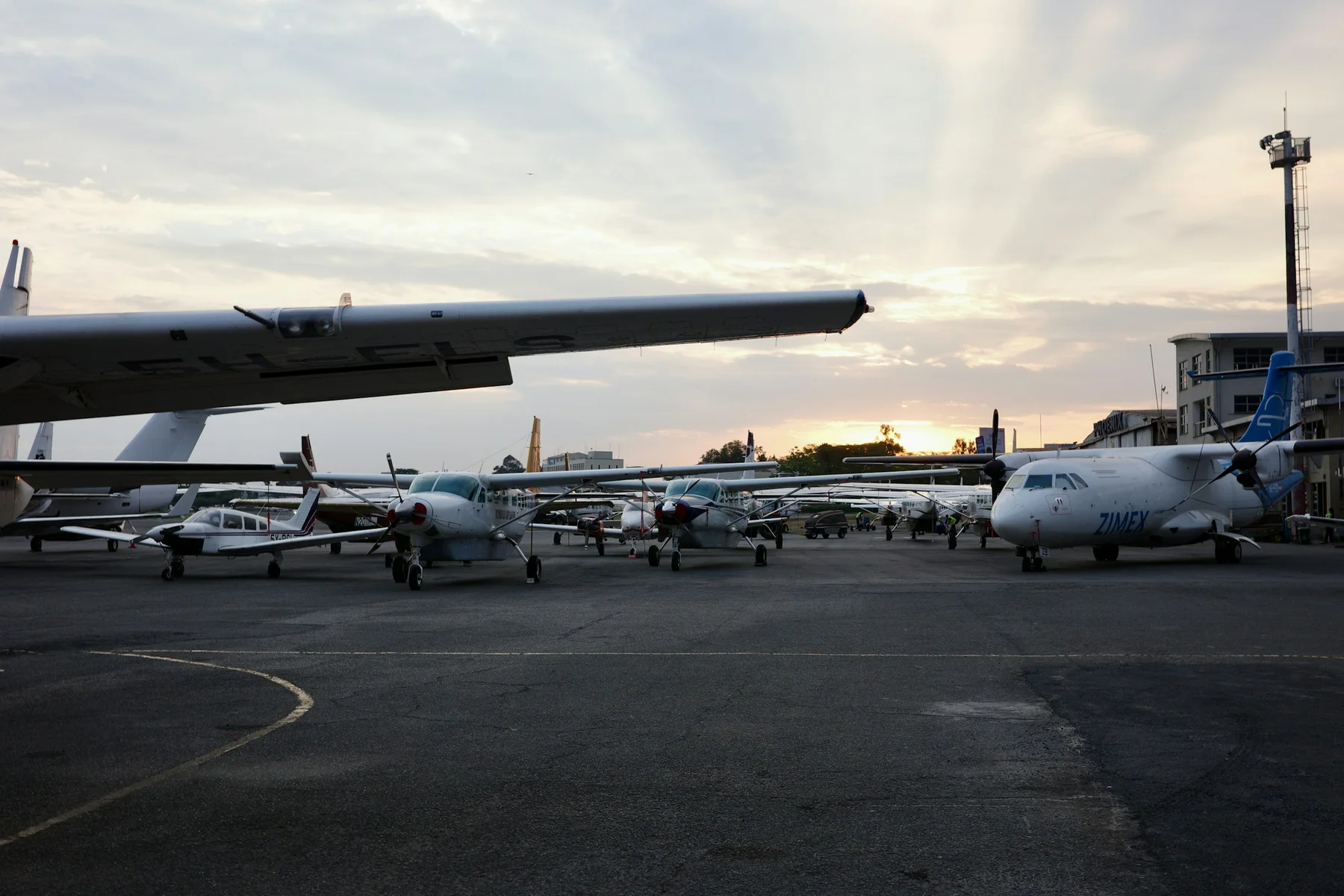
Scheduled flights leave from Wilson Airport
Safari flights commonly depart from Wilson Airport, Nairobi's domestic and light-aircraft hub. Wilson is separate from Jomo Kenyatta International Airport. If you arrive internationally, baggage collection, immigration, traffic and check-in sit between the two flights.
| Airport | Role |
|---|---|
| Jomo Kenyatta International Airport | Most international and major commercial arrivals |
| Wilson Airport | Many scheduled safari and charter flights |
| Samburu-area airstrip | Small bush landing point followed by road transfer |
Never sell a JKIA-to-Samburu connection as though the traveller walks to another gate in the same terminal.
The JKIA to Wilson transfer needs a real buffer
Traffic between the airports varies. So do immigration, visa checks, baggage delivery and international delays. The safe solution may be an overnight near Wilson, especially when the only useful Samburu flight is early.
| Connection factor | Risk |
|---|---|
| Late inbound aircraft | Missed safari flight |
| Checked baggage | Delayed delivery |
| Immigration queue | Unpredictable exit time |
| Nairobi traffic | Variable airport-transfer time |
| Separate tickets | Limited protection after a missed connection |
The cost of a Nairobi night can be lower than replacing a missed flight and losing the first safari night.
How long flying takes door to door
The aircraft time is far shorter than the road journey, but the useful comparison includes Wilson transfer, check-in and the lodge drive.
| Flight stage | Time variable |
|---|---|
| Hotel to Wilson | Nairobi location and traffic |
| Check-in | Airline requirement and baggage |
| Boarding wait | Operational schedule |
| Flight | Direct or intermediate stops |
| Airstrip handling | Bags and lodge reception |
| Lodge transfer | Airstrip, land unit and wildlife encountered |
A lodge close to the correct airstrip may deliver a very efficient arrival. A distant property can return much of the saved time to the road.
Which airlines fly to the Samburu area
Scheduled safari routes change. AirKenya currently describes service to Kalama and Buffalo Springs, and other operators may serve the ecosystem according to season and demand. Verify the actual flight, date and airstrip before building the rest of the itinerary.
| Verify | Why |
|---|---|
| Operating airline | Schedules and terms differ |
| Flight number and date | Routes can be seasonal |
| Stops en route | Aircraft may collect other passengers |
| Airstrip | Determines lodge transfer |
| Minimum operation rules | Low demand can affect some services |
| Reconfirmation | Operational times may change |
This page does not freeze a timetable into a timeless promise.
Buffalo Springs airstrip
Buffalo Springs airstrip can serve lodges around Buffalo Springs and parts of the wider Samburu ecosystem. It is on the southern side of the river in a separate reserve from Samburu National Reserve.
| Buffalo Springs question | Why |
|---|---|
| Is my lodge on the same side? | River and gate routing matter |
| Is the transfer included? | Flight fare may not include it |
| Does the transfer count as a game drive? | Vehicle and fee rules differ |
| Which reserve fees apply? | Samburu and Buffalo Springs are separate land units |
Read Samburu National Reserve versus Buffalo Springs before treating the names interchangeably.
Kalama airstrip
Kalama is useful for properties in or near Kalama Conservancy and northern parts of the ecosystem. It may not be the best airstrip for a lodge deep inside Buffalo Springs or Shaba.
| Kalama question | Check |
|---|---|
| Lodge transfer | Driving time and vehicle type |
| Conservancy fee | Included or separate |
| Reserve visits | Samburu entry days and transfer route |
| Flight schedule | Current service on the date |
| Baggage handling | Same aircraft rules as the chosen airline |
An airstrip name is not a destination until it is matched to the property.
Shaba and other airstrip considerations
Shaba National Reserve sits east of the main Samburu and Buffalo Springs pair. A property there needs its own transport logic. Charter possibilities and current scheduled stops should be checked rather than assumed.
| Shaba decision | Why |
|---|---|
| Exact lodge | Shaba properties are not all equally placed |
| Airstrip status | Surface and operations can change |
| Scheduled versus charter | Availability and price differ |
| Samburu day trip | Adds road and fee time |
The planned Shaba National Reserve guide will explain why it should not be folded into one generic Samburu label.
Small-aircraft baggage rules
Safari aircraft commonly use strict weight limits and prefer soft-sided bags. Exact allowances vary by airline, aircraft and ticket. Camera equipment, medical devices and children's items must be disclosed before purchase.
| Bag issue | Plan |
|---|---|
| Total weight | Include hand luggage and camera gear |
| Soft sides | Bags fit small holds more easily |
| Hard suitcase | Store safely in Nairobi if returning |
| Excess luggage | Prebook if the airline permits it |
| Large lens case | Share dimensions and weight |
| Mobility device | Confirm carriage and handling |
Do not discover at Wilson that a rigid international suitcase cannot travel.
What the flight feels like
Small propeller aircraft offer broad views and a close sense of the landscape. They can also feel noisy, warm, bumpy or tight to travellers used to jets.
| Experience | Prepare |
|---|---|
| Noise | Ear protection if sensitive |
| Turbulence | Discuss motion sickness with a clinician |
| Small cabin | Check comfort if claustrophobic |
| Steps | Ask about boarding assistance |
| Views | Seat allocation may not be chosen |
| Multiple stops | Total journey may be longer than expected |
Flying is an experience, not just a time-saving equation.
Private charter from Nairobi to Samburu
A charter can depart at a tailored time, use a suitable airstrip and carry a private group, subject to aviation, aircraft and daylight constraints. For larger families or groups, the cost gap can narrow when compared with many scheduled tickets.
| Charter advantage | Charter caveat |
|---|---|
| Tailored departure | Highest base cost |
| Private cabin | Aircraft size still limits baggage |
| Direct routing | Weather and airstrip status still apply |
| Group economics | Empty legs affect pricing |
| Complex itinerary | Requires careful ground coordination |
Every charter quote should name the aircraft, baggage, taxes, airstrip and road transfers.
When flying saves the most useful time
Flying earns its price when the saved hours become meaningful safari or rest time. A morning flight followed by lunch and an afternoon drive can transform a short trip. A late flight with a long lodge transfer may save much less.
| Flight value is high when | Flight value is lower when |
|---|---|
| The trip has only two or three nights | The trip includes central Kenya stops |
| The lodge is close to the airstrip | Ground transfer is long |
| Road travel is physically difficult | You enjoy overland travel |
| The next flight connects efficiently | You must backtrack through Wilson |
| Luggage fits the allowance | Equipment creates excess costs |
When driving gives better value
Driving gives better value when the vehicle is also used for game drives and onward travel. It is especially persuasive for a family or group paying one vehicle cost rather than several air tickets.
| Road value is high when | Road value is lower when |
|---|---|
| Four to six travellers share one vehicle | One or two travellers have little time |
| Ol Pejeta or Nanyuki is on the route | The road simply repeats on return |
| Luggage is substantial | Road comfort is a major concern |
| One guide continues | Lodge drives are already included |
| The journey is part of the experience | Same-day international fatigue is high |
Value means total trip design, not only the transport invoice.
The one-way road and one-way flight compromise
Drive north through central Kenya, then fly back to Wilson. Or fly to Samburu and continue south by road through Ol Pejeta. Either can preserve the landscape transition without repeating the highway.
| Mixed route | Good use |
|---|---|
| Drive Nairobi to Ol Pejeta to Samburu, fly back | Strong conservation circuit and efficient return |
| Fly to Samburu, drive to Laikipia and Nairobi | Starts with wildlife quickly, ends through central Kenya |
| Drive to Samburu, fly to Masai Mara | Avoids a very long cross-country road transfer |
| Fly to Samburu, charter onward | Premium complex route |
The vehicle and guide repositioning cost must be included honestly.
Connecting Samburu with Ol Pejeta by road
Ol Pejeta lies naturally on a central Kenya road circuit. It adds rhino conservation and a different habitat, turning the road into part of the holiday.
| Sequence | Why it works |
|---|---|
| Nairobi to Ol Pejeta | Shorter first travel day |
| Two nights Ol Pejeta | Real experience rather than a lunch stop |
| Ol Pejeta to Samburu | Continue north without returning to Nairobi |
| Fly Samburu to Wilson | Avoid repeat road |
Use the planned Ol Pejeta safari guide to choose the right conservation experience and accommodation.
Connecting Samburu with Lewa or Borana
Lewa and Borana sit in Laikipia between central Kenya and the Samburu direction. They can make the road route exceptional, but private conservancy rates and minimum stays need room in the budget.
| Combination issue | Decide |
|---|---|
| Nights | Give each conservancy enough time |
| Vehicle access | Road vehicle or property vehicle model |
| Airstrip | Fly-in and onward options |
| Rhino priority | Distinguish conservancy viewing from Samburu species |
| Route | Avoid needless Nanyuki backtracking |
The stop should add a different safari, not merely shorten a drive.
Connecting Samburu with Meru
Meru lies to the southeast and creates a less-common circuit. The transfer and best road depend on property positions and current conditions.
| Meru link | Consider |
|---|---|
| Road | Seasonal condition and actual lodge gates |
| Air | Scheduled or charter availability |
| Nights | At least two in each park |
| Wildlife | Meru's wetter habitat adds contrast |
Use the planned Meru National Park safari guide for that route.
Connecting Samburu with the Masai Mara
Samburu to the Mara is a long overland transfer. A scheduled or charter flight, sometimes with stops or connections, can protect a safari day. Current routing must be verified for the date.
| Option | Tradeoff |
|---|---|
| Road | Very long day and possible overnight break |
| Scheduled air | Fastest practical choice when route operates |
| Via Wilson | Adds connection but can still save time |
| Private charter | Direct potential at a premium |
Do not place two distant reserves back to back by road because they look close on a small Kenya map.
Connecting Samburu with the Kenya coast
Coast connections depend on the beach destination and current flights. A Wilson connection may be required. A road route towards the coast is a different northern Kenya itinerary, not a simple transfer.
| Coast destination | Planning point |
|---|---|
| Diani | Ukunda flight or Mombasa transfer |
| Mombasa and north coast | Airport and traffic positioning |
| Watamu or Malindi | Local airport routing |
| Lamu | Flight connections shape the day |
The planned Kenya safari and beach holiday guide will compare the combinations.
Families: road or flight
Children can enjoy either. The choice depends on age, car-seat needs, motion sickness, toilet habits, luggage and comfort in a small aircraft.
| Family factor | Road | Flight |
|---|---|---|
| Car seat | Can remain installed | Needed again for ground transfer |
| Toilet | Planned stops | Airport before boarding |
| Movement | Long seated day | Shorter but confined cabin |
| Luggage | More generous | Restricted |
| Cost for group | One vehicle can be efficient | Fare for each seat |
| First safari drive | May begin at gate | Begins after airstrip transfer |
The Kenya family safari guide helps align transport and room configuration.
Older travellers and mobility needs
Road vibration, rest stops, aircraft steps and vehicle transfers all matter. Neither option is automatically accessible.
| Need | Road check | Flight check |
|---|---|---|
| Walking | Vehicle-to-rest-stop paths | Terminal and airstrip distance |
| Steps | High 4×4 entry | Aircraft boarding steps |
| Back comfort | Seat support and breaks | Tight cabin and shorter duration |
| Mobility device | Vehicle storage | Aircraft carriage approval |
| Medical support | Road route facilities | Airport and lodge coordination |
Ask for photos, dimensions and assistance details before booking.
Honeymoon and luxury travel
Flying can make a short luxury trip feel effortless, while a private road journey can become part of a slow, private circuit through Laikipia. The label “luxury” does not decide the method.
| Honeymoon style | Better fit |
|---|---|
| Short, high-comfort Samburu stay | Fly |
| Ol Pejeta or Lewa circuit | Drive one direction |
| Large luggage and beach wardrobe | Road or stored luggage plan |
| Private charter celebration | Charter if budget permits |
| Photography road trip | Private vehicle |
See luxury Kenya safaris for the wider lodge, vehicle and fly-in tradeoffs.
Photography equipment changes the answer
Long lenses, laptops, tripods and backup bodies can exceed standard flight allowances quickly. Road travel is easier for equipment, but dust and vibration need protection.
| Equipment issue | Road | Flight |
|---|---|---|
| Weight | More flexible | Strict allowance |
| Hard cases | Easier | May not fit |
| Access | Keep essentials beside you | Cabin storage is limited |
| Dust | Covers and sealed cases | Airstrip dust still matters |
| Vehicle setup | Same vehicle can keep beanbags in place | New lodge vehicle needs setup |
Disclose the full kit weight before buying a fly-in package.
Rain changes both road and air plans
Heavy rain can slow reserve roads and affect an unpaved airstrip. The main highway may remain open while the final kilometres become difficult.
| Weather risk | Road response | Flight response |
|---|---|---|
| Mud | 4×4 and route change | Airstrip transfer still needs a 4×4 |
| Low cloud or storm | Slower road, more caution | Delay or operational change possible |
| Flooded crossing | Do not force it | Use accessible airstrip and lodge route |
| Wet baggage | Waterproof cases | Protect bags during airstrip handling |
Read the best time to visit Samburu for the month-by-month weather context.
Security and current road information
Northern Kenya conditions can change. A reputable local operator should check official and local guidance before travel, use the established corridor and avoid improvising remote routes.
| Safe practice | Reason |
|---|---|
| Daylight travel | Better visibility and assistance |
| Known driver-guide | Route and current information |
| Established road | Avoid unnecessary remote detours |
| Working communications | Contact lodge and support |
| Fuel and water | Resilience after delay |
| Current official advice | Conditions are time-sensitive |
Do not turn a timeless guide into a false promise that every road is always suitable.
Public transport is not the same as a safari transfer
Buses or matatus may reach Isiolo or Archer's Post, but they do not provide reserve game drives, gate coordination or a reliable lodge transfer. Independent travellers need a prearranged licensed vehicle for the wildlife area.
| Public-transport gap | Solution |
|---|---|
| Town terminus | Confirm pickup point |
| Luggage security | Keep valuables controlled |
| Gate transfer | Prebook a proper safari vehicle |
| Reserve mobility | Arrange game drives before arrival |
| Late arrival | Avoid being stranded after daylight |
For most international safari travellers, public transport adds complexity without delivering the core experience.
Self-driving to Samburu
Self-driving requires confidence in Kenyan traffic, a suitable 4×4, navigation, recovery equipment, reserve rules and current conditions. Rental contracts may restrict certain roads.
| Self-drive check | Why |
|---|---|
| Rental permission | Off-tarmac use may be restricted |
| Spare tyres and tools | Punctures happen |
| Offline navigation | Signal can be unreliable |
| Reserve map | Tracks are not all intuitive |
| Fuel range | Game drives add distance |
| Guide option | Local wildlife knowledge adds value |
A driver-guide removes a large operational burden and usually improves wildlife interpretation.
Cost comparison: what the road quote must include
A road quote should cover the correct vehicle, fuel, driver-guide, allowances, every transfer day and the use of the vehicle on game drives.
| Road cost line | Confirm |
|---|---|
| Vehicle | Private 4×4 and seat layout |
| Driver-guide | Full route and accommodation |
| Fuel | Highway and reserve kilometres |
| Game drives | Included days and hours |
| Empty return | Charged if vehicle does not continue |
| Park fees | Separate from transport |
An unusually low transfer may not include the safari vehicle after lodge arrival.
Cost comparison: what the flight quote must include
A flight quote should not stop at the ticket. Add both Nairobi and Samburu ground transport, baggage and vehicle arrangements during the stay.
| Flight cost line | Confirm |
|---|---|
| Wilson ticket | Taxes and ticket rules |
| JKIA or hotel transfer | Private vehicle and buffer |
| Excess baggage | Prebooked or storage alternative |
| Airstrip transfer | Included by lodge or separate |
| Game drives | Shared or private lodge vehicle |
| Repositioning | Cost of onward ground route |
Why the cheapest transport can waste an expensive safari night
Arriving after the afternoon drive may waste a large part of a full-board lodge day. The cheapest flight time or latest road departure can therefore be poor value.
| Lost element | Why it matters |
|---|---|
| Lunch | Often included in the room plan |
| Afternoon game drive | A major part of the safari day |
| Camp orientation | Rushed after dark |
| Sunset | Cannot be recovered the next day |
| Rest | Fatigue carries into the first full morning |
One forum traveller warned, “try to avoid going to too many places. You will spend the majority of your time in a van.” Read the full discussion for the context. The lesson is not that road safaris are bad. It is that too many distant stops make them bad.
Sample plan: drive both ways
Driving both directions suits a longer road safari that uses different stops or parks on the way.
| Day | Shape |
|---|---|
| 1 | Nairobi to Ol Pejeta or Nanyuki area |
| 2 | Central Kenya experience |
| 3 | Continue to Samburu |
| 4 to 5 | Samburu and Buffalo Springs |
| 6 | Return via a different central Kenya stop or Nairobi |
Repeating the entire road immediately after two Samburu nights is less appealing.
Sample plan: fly both ways
Flying both ways suits a short focused trip, provided the airport connections are safe.
| Day | Shape |
|---|---|
| 1 | Nairobi hotel to Wilson, flight, lodge transfer and afternoon drive |
| 2 to 3 | Full Samburu days |
| 4 | Morning activity, airstrip and Wilson return |
Three nights are much stronger than one or two because the air logistics then serve a real stay.
Sample plan: drive north and fly back
This plan gives the landscape transition once and saves the repetitive southbound road.
| Day | Shape |
|---|---|
| 1 | Nairobi to Ol Pejeta |
| 2 | Ol Pejeta |
| 3 | Road to Samburu |
| 4 to 5 | Samburu |
| 6 | Fly to Wilson and continue the holiday |
It works especially well when the next destination connects by air.
Sample plan: fly north and drive south
This version reaches wildlife quickly, then uses the road to add Laikipia and central Kenya.
| Day | Shape |
|---|---|
| 1 | Wilson to Samburu |
| 2 to 3 | Samburu |
| 4 | Road to Lewa, Borana or Ol Pejeta |
| 5 to 6 | Conservancy stay |
| 7 | Road to Nairobi |
The exact sequence depends on lodge positions and vehicle arrangements.
Questions to ask before booking
| Question | What it prevents |
|---|---|
| Which Nairobi airport and terminal? | Missed connection |
| Which Samburu airstrip? | Long unexpected transfer |
| Is the flight direct or stopping? | Wrong timing expectation |
| What is the total baggage allowance? | Airport repacking |
| Is the game-drive vehicle private? | Lost flexibility |
| What is the exact road pickup point? | Bad duration estimate |
| Does the road route include worthwhile stops? | Wasted hotel nights |
| How does the next destination connect? | Backtracking |
| What happens after weather disruption? | Unclear responsibility |
Put the answers into the itinerary before paying.
Sources and further reading
Route and flight information was checked against current reserve and airline guidance. Specific schedules remain booking-date facts and must be reconfirmed.
| Source | Supports |
|---|---|
| Samburu transport and access guidance | Main road corridor and transport overview |
| AirKenya Samburu destination | Current Kalama and Buffalo Springs service context |
| Kenya National Highways Authority | National road-network context |
| Traveller road discussion | Individual road and scenery observations |
Frequently asked questions about Nairobi to Samburu
How long does it take to drive from Nairobi to Samburu?
Allow roughly six to seven hours in a private safari vehicle, including traffic and a sensible stop. The exact time depends on the Nairobi start point, road conditions, lodge gate and stops.
How long is the flight from Nairobi to Samburu?
The time in the aircraft is much shorter than driving, but door-to-door time also includes the transfer to Wilson Airport, check-in, possible stops and the airstrip-to-lodge transfer.
Which Nairobi airport serves Samburu safari flights?
Scheduled safari flights commonly depart from Wilson Airport, not Jomo Kenyatta International Airport. Travellers arriving internationally need a road transfer and a safe connection buffer.
Which airstrip should I use for Samburu?
The correct airstrip depends on the exact lodge and current airline service. Buffalo Springs and Kalama are common scheduled options, but the shortest useful transfer must be confirmed property by property.
Is the road from Nairobi to Samburu paved?
The main A2 corridor through central Kenya, Nanyuki and Isiolo is largely paved. The final reserve, conservancy and lodge roads are unpaved and can be rough or muddy.
Is it better to drive or fly to Samburu?
Drive when scenery, central Kenya stops, luggage flexibility and one private vehicle add value. Fly when reducing long road hours is more important and the lodge-airstrip transfer is efficient.
Can I drive one way and fly the other?
Yes. This is often the best compromise, especially when the road direction includes Ol Pejeta or another worthwhile stop and the return would simply repeat the highway.
Can children fly to Samburu?
Usually yes, subject to airline rules. Check child fares, infant seating, baggage, car seats for ground transfers and the child's comfort in a small aircraft.
Can I connect directly from an international flight to Samburu?
Sometimes, but the connection is between separate airports. Immigration, baggage, road traffic and safari-flight check-in require a conservative buffer. An overnight near Wilson is often safer after a late or uncertain arrival.
Do I need a 4×4 to drive to Samburu?
A proper safari 4×4 is strongly recommended for the reserve, conservancy and lodge roads, especially after rain. It also provides better comfort, clearance and wildlife viewing than an ordinary car.
Compare your Nairobi to Samburu options
Share your flights, hotel, lodge, travellers and luggage. We will compare road, scheduled air, charter and mixed routes door to door.