
Kenya Safaris for Large Families and Multi-Generational Groups
A grandfather may want the first light in the Mara. A six-year-old may want the first giraffe and then breakfast. A teenager may want to stay out longer. Kenya can hold all of those holidays at once when the rooms, vehicles and daily pace are built around the people who are actually coming.
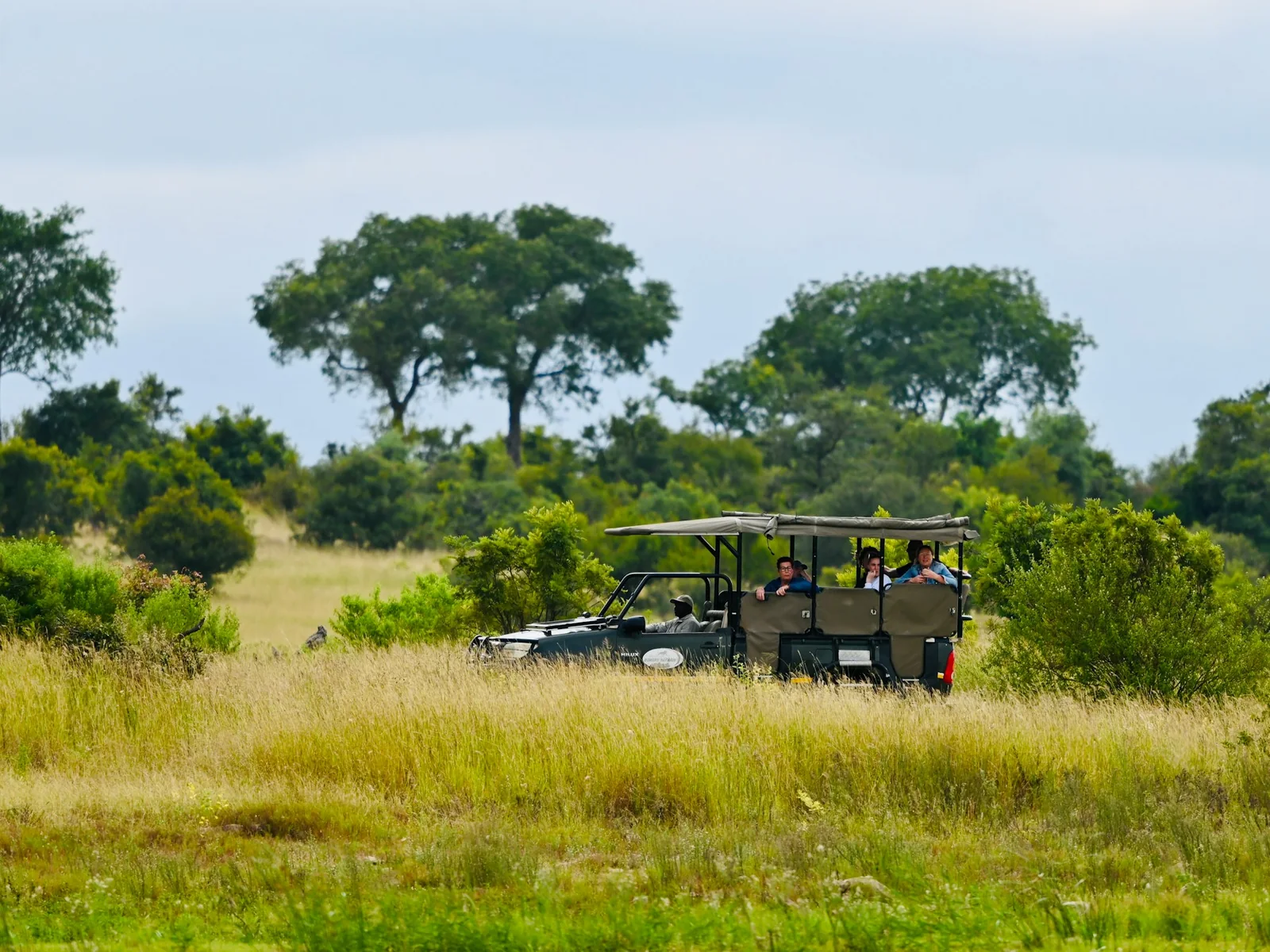
At breakfast, everyone is still together. The children are arguing over whether the animal outside was a dik-dik or a young impala. One parent is ready for another drive. Grandma would rather sit with coffee and watch the plains. That is not a failed safari day. It is what a successful large-family safari looks like when nobody has to pretend they have the same energy.
Large groups are often sold the same Kenya circuit with a larger headcount typed at the top. That misses the interesting part. A family of twelve may include four households, six rooms, a wheelchair user, teenagers who want a longer drive, and a cousin who can join only the coast section. One rooming decision can determine whether the camp works. One vehicle decision can determine whether everyone enjoys the wildlife. Before choosing between the Mara and Amboseli, build a picture of the group.
Our Kenya family safari packages guide covers the broader family experience. This page is specifically for larger parties and three or more generations, where capacity, privacy and fair cost-sharing become as important as the park list.
Start with a family map, not a park map
Write down every traveller and their age on the travel dates. Beside each name, note who shares a room, how much walking they are comfortable with, whether they need a child seat or an accessible bathroom, and the longest game drive they would enjoy. Ask quietly about food, medication storage or other needs that should not be sent to the entire family chat. Invite each household to name one thing it hopes to do together and one thing it would happily miss.
The answers can be surprising. A spry grandparent may want every sunrise, while a teenager wants one slow morning. A child who loves wildlife books may be happy on a long drive if the guide explains tracks and birds. Another child may be finished after an hour. Avoid using age as a shorthand for stamina or curiosity. Let the travellers tell you.
Choose the shared moments deliberately. Maybe everyone eats dinner together and joins one dawn drive in each destination. On other days, a private guide can take a keen wildlife group farther while another vehicle returns to the lodge. The family is still on one holiday. The point is to create stories that can be traded around the table, not to keep the headcount together every minute.
| Group detail | Record before asking for a quote | What it changes |
|---|---|---|
| Households and sleeping relationships | Exact adults, children, couples, siblings and privacy needs. | Number and type of rooms, interconnecting units or house size. |
| Drive preferences | Who wants sunrise, shorter outings or specialist photography. | Vehicle and guide count, start times and optional branches. |
| Mobility and access | Vehicle entry, room path, bathroom and fatigue needs. | Property shortlist and transfer method. |
| Children’s ages | Age on each travel date and childcare expectations. | Park and flight fares, camp rules, beds and activities. |
| Arrival pattern | Flights, time zones and who joins which section. | Nairobi overnight, airport transfers and final room block. |
The vehicle is the family’s moving room
A safari vehicle can have enough legal seats and still feel crowded when everyone wants to stand for a photograph, carry a camera bag or watch through the same side. For game viewing, sight lines and comfort matter more than a brochure’s maximum capacity. A private 4×4 Land Cruiser can suit one household. A larger family may need two or three vehicles with separate guides. Ask how many guests will be in each car, not just how many cars are “included.”
Two vehicles are not merely a logistical compromise. They can make the trip kinder. One car can leave at dawn with the photographers and grandparents who love cool mornings. The other can start after breakfast with younger children. At lunch, everyone compares sightings. On a longer Mara day, one car can return when someone is tired without asking the whole group to leave a good area. A visitor who posted about a nine-day safari with parents described cutting a Mara drive short when their father was tired; that flexibility was what made the private vehicle valuable to them. Read their account.
Keep a group contact plan. The vehicles do not need to chase one another across the park, but guides should know the meeting place and latest return time. If different vehicles enter a park or conservancy on different days, tickets and activity permits should match. If one person needs to return to a lodge for a rest or a medical reason, the second car should not be left without an authorised guide or a practical route home.
Road and air travel require different calculations. A road convoy keeps the group with its luggage and can use one guide team from Nairobi through several destinations. A flight may protect time for a long-distance route, but the group needs enough seats on the same departure, soft-bag allowances and transfers from the correct airstrip. Large parties are sometimes split across flights. Decide whether the shared arrival matters more than the saved road hours. Our Nairobi to Mara fly-or-drive guide helps with one of the most common choices.
A “family room” can mean four different things
One large room may place parents and two small children together. Two interconnecting rooms can give older children their own beds but still provide an internal door. A family tent may have two sleeping areas with a shared living space. A private house may let twelve relatives share meals and an evening fire while sleeping in separate bedrooms. None is automatically right. Sketch the exact layout before paying a deposit.
For named examples, Governors’ Camp in the Masai Mara National Reserve describes five family tents with a double and twin sleeping area, and says an extra bed can be added in its family design. Angama Mara’s published family terms describe interconnected tented suites for families. Lewa Wilderness Homestead has two-bedroom cottages close to its shared areas. These are different solutions at different destinations and price levels. They illustrate what to ask for, not a promise that every unit will be available for your dates.
If the whole family wants one place to itself, exclusive use may be possible at certain camps or private houses. It can simplify mealtimes and make celebration dinners feel personal. It can also carry a minimum-night stay, a fixed house price and a different vehicle arrangement. A house with enough beds may still need extra safari cars and guides. The group should know whether a “buyout” is of one house, one camp section or the entire property.
Ask about night-time movement in an unfenced camp. Are children allowed to walk between tents alone? Is there an escort to dinner? Can a grandparent’s room be close to the dining area without placing a young child far from a parent? Are the bathrooms step-free, or does the attractive brochure photograph conceal three stairs? Ask about actual room numbers and the route between them. A diagram, not a vague “nearby,” settles many worries.

| Stay style | What it can solve | Question before booking |
|---|---|---|
| Family tent or suite | Parents and younger children in one connected unit. | Where are the beds, doors and bathrooms? |
| Interconnecting rooms | Older children get space with an internal link. | Are the actual connecting rooms guaranteed? |
| Several rooms in one lodge | Households keep privacy and use shared facilities. | How close are the rooms and who escorts after dark? |
| Exclusive-use house or camp | Private meals and a group home base. | Does the price include guides, vehicles and all bedrooms? |
Where different generations can find their own Kenya
Masai Mara. This is the classic choice when the family wants plains, predators and long game drives. Three or four nights work better than a single stop after the long journey from Nairobi. The main Reserve, Mara Triangle and surrounding conservancies offer different access rules and styles. A well-placed camp can shorten daily transfer time. A conservancy can offer a quieter rhythm, but not every camp accepts every child age or permits every activity. Start with our Mara guide and choose an actual camp before assuming a family layout exists.
Amboseli. Elephants and a compact-feeling game-viewing circuit can make a strong first safari for children and older guests. Kilimanjaro is often clearest early, yet a clouded summit does not spoil the elephant experience. Two or three nights allow a slower day and more than one chance at dawn. Some properties have pools and larger lodge facilities, while a smaller conservancy camp may give the group privacy. Our Amboseli guide helps compare those settings.
Ol Pejeta and Lewa. Laikipia can bring rhino and conservation learning into the trip, with family cottages or private-house options at some properties. Each conservancy has its own entry, activities and access rules. A child interested in how wildlife is protected may find these days more memorable than a checklist of big cats. A grandparent who prefers shorter outings may value a lodge where time between drives is genuinely pleasant. Read our Ol Pejeta guide for a specific starting point.
Lake Naivasha and Lake Nakuru. Naivasha can break a vehicle-heavy itinerary with water, birds and relaxed resort time, as long as boats and lakeside movement are handled safely. Lake Nakuru adds a separate national-park drive and rhino focus. They work best as different experiences, not as two interchangeable stops. Some families can use Naivasha as a gentler road break before the Mara.
Tsavo and the coast. The big landscapes of Tsavo can naturally lead toward Kenya’s south coast, where a beach stay gives the family several mornings without a 5:30 wake-up. It is a strong choice for a longer holiday, but Tsavo distances inside and between parks are real. Add Diani or another coast base because the group wants the sea, not merely to fill nights. Our Tsavo guide and Diani guide help test that combination.
An eight-night pattern that leaves room for the family
This is a planning example, not a fixed package with a hidden hotel substitution. It gives the group one recovery night, two contrasting safari bases and an unhurried finish. A family whose main goal is the coast could replace the last safari base with beach nights. A family with limited mobility may prefer one longer lodge stay and fewer transfers.
| Nights | Base | Shared moment | Optional branch |
|---|---|---|---|
| 1 | Nairobi | Gather the family and sleep after international arrivals. | Short city outing only for those who want it. |
| 2 to 4 | Amboseli or a suitable neighbouring camp | One dawn elephant drive and one slow family meal. | Second vehicle returns early; another stays out for photography. |
| 5 to 7 | Masai Mara or a suitable conservancy | One long shared wildlife morning and a celebratory dinner. | Shorter drive, age-appropriate activity or rest at camp. |
| 8 | Nairobi or a convenient departure base | Finish together without racing an international flight. | Extra Mara night instead when flight schedule allows. |
Amboseli and the Mara sit on different sides of Nairobi. Joining them can involve a long road transfer or a flight routing that must be checked for the actual travel dates. For a family with small children or fragile stamina, it may be more satisfying to choose the Mara plus Naivasha, or Amboseli plus Tsavo, rather than insisting on both icons. A route is good when the family enjoys the days between the headline parks.
A larger party should not book international connections as though every airstrip transfer will be instantaneous. There are bags to load, children to count, sometimes more than one domestic aircraft, and a person who will want a restroom when the schedule is tight. Nairobi at the beginning and end can be a comfort choice, not wasted holiday.
One day can have two excellent versions
Take a full day in the Mara. The eager vehicle leaves early with packed breakfast. Its guide may spend a long time with tracks, birds and patient predator watching. The second vehicle starts after breakfast, visits a different circuit and returns for lunch. The family meets at camp, perhaps shares a pool or quiet hour, and decides who wants a shorter late drive. In the evening they have twice as many stories.
That freedom needs advance planning. If the camp normally runs shared drives on fixed times, two separate private vehicles may cost extra or require enough rooms to qualify for a group arrangement. A bush breakfast or sundowner also needs the camp’s permission and safe location. A balloon flight often has age, weather and early departure rules; it should be an option for interested family members, not a surprise activity imposed on everyone.
Resist the temptation to turn every afternoon into a programme. Children can be delighted by a dung beetle, a zebra foal or watching staff bake bread. Grandparents may value an hour on a veranda. Teenagers might want a conservation conversation or photography lesson. The guide and property staff can suggest good choices, but the itinerary should always have permission to rest.
Safety and access belong in the first conversation
A safari camp is not a fenced city hotel. Wildlife may move through the grounds. Explain to every child and adult that walking after dark follows the camp’s escort rules, and no one leaves a tent or room to investigate a sound. A pool, waterhole, river edge or hot-water area needs ordinary family supervision as well as camp rules. Inside parks, stay in the vehicle except at designated places and follow the guide’s instructions. The KWS park rules provide a useful baseline.
For a traveller with limited mobility, ask about the exact room rather than a broad label. Measure the vehicle step and door, confirm bathroom access, and ask how far it is from room to dining. A family member using a wheelchair may love game viewing from a suitable vehicle while finding a steep camp path exhausting. Our accessible safari guide gives the detailed questions to settle privately.
Before travel, ask a qualified health professional about the group’s own health needs and destination-specific precautions. Bring essential medication in hand luggage, know how it should be stored, and share only the emergency information the trip team genuinely needs. For a large group, one named organiser should have contact details and insurance assistance numbers. That reduces confusion if a flight changes or a family member needs a quieter day.

How to price a group without making anyone guess
Show the total family cost and a sensible allocation by household. The private vehicles, guides and some transfers are shared costs. Rooms, park entries, flights and child rates vary by traveller. A single grandparent should not silently subsidise a family’s extra bedroom, while the household with toddlers should not assume everyone else will pay for a second vehicle needed only for its shorter drives. There is no one fair split, but there should be an agreed one before deposits.
Check the points where cost jumps. Adding a ninth guest may require a fourth room. Adding a twelfth may require another car. A family house may be better value once several separate rooms are needed, but only if its bedroom layout and included services are right. A flight can have child fares and baggage rules unlike road travel. The child rates and room rules guide explains why one quoted “child discount” is rarely enough detail.
Ask for a named property and room type at every stop, private vehicle count, passengers per car, guide arrangement, all park and conservancy fees, meal basis, optional activities, domestic flights and cancellation terms. If one household joins late or leaves early, the price should show what changes. A family safari is often a once-in-a-generation gathering. Transparent numbers help the relatives enjoy planning it rather than arguing about the bill at the end.
What a large family noticed in Laikipia
An independent traveller writing about El Karama Lodge said, “We just got back as a family of 11.” Their public account describes renting a private house, enjoying the pool between drives and valuing a quieter wildlife experience than the Mara stop that followed. It is one family’s experience, not a guarantee about the same property or sightings on different dates. It does show why a large party may remember its afternoons and shared space as clearly as the game drives.
That is the question worth asking of every proposed itinerary: where will your family be comfortable when it is not inside a safari vehicle? The answer might be a veranda facing a waterhole, adjoining tents, a private dining table, or a coast villa at the end. Choose that place as carefully as the national park.
Large-family Kenya safari questions
How many people count as a large family safari group?
There is no fixed number. The important thresholds are the number of suitable rooms, private vehicles and seats on domestic flights. A group of eight can need two vehicles while a group of twelve may fit one exclusive-use property.
Should grandparents and children ride in one safari vehicle?
They can, but they do not have to. Two vehicles let one party return early while another stays on a longer drive. Decide based on comfort and the experience everyone wants, not maximum seat count alone.
Can young children stay at a Masai Mara camp?
Some camps welcome all ages and have family tents, while others have age limits or require a private vehicle. Ask the exact camp about sleeping configuration, supervision and activity rules.
Is a private house better than several rooms?
A house can give the group shared space, privacy and flexible meals, but capacity, guiding, vehicle arrangements and park access still need checking. Several family suites in a lodge can work better for some groups.
How many destinations should a multi-generational safari include?
For a week, one or two safari bases are often more comfortable than a new lodge every night. Add a third setting only when it brings an experience the group values enough to justify the transfer.
Can the family split activities during the day?
Yes, when vehicles, guides, staffing and the property’s activity rules allow it. Decide which meals or drives everyone wants together and make the rest optional.
What accessibility details should we check?
Ask about the actual room, bathroom, path, distance to dining, vehicle step and assistance available. A general accessibility label is not a substitute for confirming the needs of the person travelling.
Should we fly or drive between parks?
Driving can keep one guide and vehicle with the group and lower the transport cost. Flying may protect time and comfort, but large groups need enough seats, compatible baggage and suitable airstrip transfers.
How are children charged on a Kenya safari?
Park, lodge, flight and activity suppliers can use different age bands and sharing rules. Record each child’s age at travel and ask for every charge to be shown separately.
Can we include a beach stay after the safari?
Yes. A few slower days on the Kenya coast can help a large group rest after early drives, provided transfers, rooming and swimming supervision are planned.
How do we split the cost fairly among families?
Show the shared vehicle and guide cost separately from rooms, park fees, flights and optional activities. Agree who pays for single rooms, upgrades, deposits and cancellations before booking.
Can NLS design a trip outside its displayed packages?
Yes. We can plan around group size, ages, mobility, budget and the moments everyone wants to share, then name the exact rooms, vehicles and inclusions before confirmation.
Keep planning together
Plan a safari together
Tell us the group size, ages, dates, preferred rooms and how the different generations like to travel. We will help turn those details into a Kenya trip that feels like yours.