

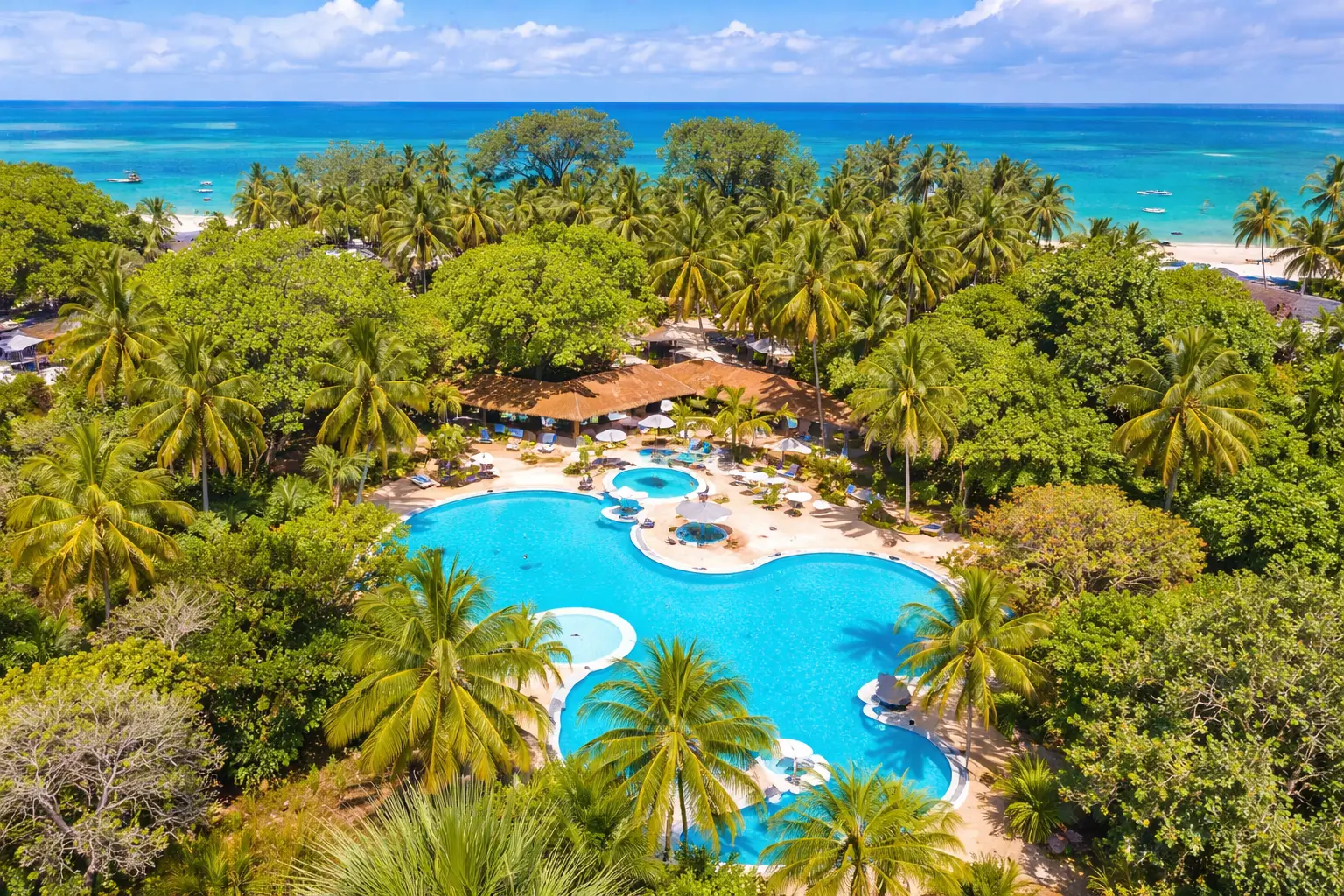
After a week of safari dust, Diani can feel almost unreal. Warm water folds over pale sand, palms move in the trade wind, and no one is knocking on the door before sunrise. Yet Diani is not one uniform resort strip. The central beach, quieter Galu end, Kongo River and Chale direction each create a different holiday.
- Diani hotels, resorts, villas and apartments compared
- Where to stay along Diani Beach
- Diani, Galu, Ukunda and the south coast map
- Nairobi to Diani: flight, train or road
- Best things to do in Diani beyond the beach
- Watch an independent Diani travel guide
- Diani weather, tides and seaweed
- How long to stay and which safari to add
- Getting around, safety, money and family details
- Traveller experiences
- Frequently asked questions
What to decide before booking Diani
Hotel type matters
Large resorts, small hotels, apartments and private villas serve very different holidays.
The beach is not identical
Tides, reef, seaweed, public access and restaurant density vary along the coast.
Fly to Ukunda for speed
Diani’s local airport avoids crossing Mombasa Island and the Likoni channel on many itineraries.
Four nights is a useful minimum
It gives time to recover from safari, enjoy the beach and choose one significant excursion.
Marine days need conditions
Wind, tide and sea state shape snorkelling, diving, fishing and dolphin excursions.
Safari can continue nearby
Shimba Hills and Tsavo offer very different wildlife extensions from the coast.
Diani hotels, resorts, villas and apartments compared
Full-service Diani Beach hotels suit travellers who want meals, pool, spa, kids’ activities and excursions handled in one place. Boutique hotels trade scale for atmosphere and personal service. Villas provide privacy, kitchens and shared living space, but service levels vary and transport may be separate. Apartments can suit longer stays and digital nomads when backup power, Wi-Fi and security are confirmed.
Do not assume “all-inclusive” means every drink, activity or premium restaurant. Ask for the exact meal plan, children’s policy, room location, air-conditioning, mosquito protection, generator provision and beach access.
| Stay type | Best for | Strength | Check carefully |
|---|---|---|---|
| Large beach resort | Families, easy first coast stay | Facilities and meal plans | Room block, inclusions, atmosphere |
| Boutique hotel | Couples, design and quiet | Personal scale | Limited facilities or dining |
| Private villa | Groups and privacy | Space and flexible routine | Staffing, meals, security, transport |
| Apartment | Long stays and independence | Kitchen and value | Power, Wi-Fi and housekeeping |
| Kitesurf/diving base | Activity-focused travellers | Specialist access | Season and equipment standards |
Where to stay along Diani Beach
Central Diani places restaurants, shops and tour desks within easier reach, while quieter southern sections can feel more private. The Kongo River end has a different landscape and local activity. Galu and farther southern areas may appeal to travellers seeking space and kitesurfing conditions. A property marketed as “Diani” can be inland or considerably beyond the best-known beach strip, so check the map.
Ask how long it takes to reach Ukunda Airport, whether taxis or tuk-tuks are reliable after dark, and whether the hotel has direct beach access. Beach sellers and public use are part of the coast; a private hotel does not own the ocean.

Nairobi to Diani: flight, train or road
A direct domestic flight to Ukunda is the simplest option for a short extension. Flights may leave Wilson or connect differently from international services at JKIA, so allow for airport transfer and baggage rules. Flying to Mombasa adds a road transfer and may involve heavy traffic or the Likoni crossing depending on the route.
The SGR to Mombasa is comfortable and scenic for travellers with time. It terminates at Miritini, not on the beach, and the final Diani transfer can be long. Driving from Nairobi is possible but rarely the best use of a short beach holiday.
| Option | Door-to-door character | Best for | Main trade-off |
|---|---|---|---|
| Flight to Ukunda | Fastest direct coast access | Short extensions, honeymoon | Light-aircraft baggage and schedule |
| Flight to Mombasa | More flight choice | North coast or city stop | Longer road transfer to Diani |
| SGR + transfer | Rail experience and value | Unhurried itinerary | Station and south-coast transfer |
| Road from safari | Seamless with Tsavo | East/West Tsavo route | Long driving day from farther parks |
Best things to do in Diani beyond the beach
Kisite-Mpunguti marine excursions, snorkelling, diving, dhow trips, kitesurfing, paddleboarding and fishing are common choices. On land, visitors consider the Colobus Conservation area, Kaya Kinondo, Shimba Hills, cycling, golf, spa days and restaurant trips. Ethical wildlife activities should keep distance, avoid feeding and follow marine codes.
Kisite is a fully protected marine park and Mpunguti is a managed reserve. A “dolphin tour” should never be sold as a guaranteed sighting or permission to chase animals. Choose an operator that limits pressure, provides suitable flotation gear and checks sea conditions.
| Experience | Allow | Best for | Question worth asking |
|---|---|---|---|
| Kisite-Mpunguti and Wasini | A full day | Snorkelling, dhow atmosphere and a longer sea day | How large is the boat group, what safety gear is carried, and what happens if the sea is rough? |
| Kaya Kinondo Sacred Forest | About half a day with transfers | Culture, forest ecology and a quieter pace | Is the visit led by an authorised local guide, and what customs should visitors follow? |
| Colobus Conservation | One to two hours | Families and travellers interested in coastal wildlife | Which visitor activity supports conservation without handling or feeding animals? |
| Kongo River sunset or paddle | Two to three hours | A gentle final afternoon | What are the tide, wind and return arrangements? |
| Shimba Hills | Most of a day | Forest scenery and a short wildlife outing | How much of the day is driving, and is the route suitable after rain? |
| Kitesurfing or diving | Half day or a course | Active travellers | Are the conditions appropriate for your experience level, and is the equipment inspected? |
Kisite is the longest commitment on this list. The boat departure is farther south near Shimoni, so the day begins with a road transfer before you reach the water. Kaya Kinondo and Colobus Conservation are easier to combine with a slow beach day. Shimba Hills brings a change of landscape, but anyone expecting a condensed Masai Mara should choose a proper Tsavo extension instead.

An independent traveller’s look at Diani
Adventure Singh’s Diani guide is useful for seeing the scale of the beach, the water, local excursions and the relaxed rhythm that photographs alone cannot convey. Treat any prices or opening details in an older video as a snapshot, but use the footage to decide whether Diani feels like the coast ending you want.
Diani weather, tides and seaweed
Diani is warm year-round, but rain, wind and humidity change the feel of the holiday. The long-rain period can bring heavy showers; the southeast monsoon affects sea conditions and kitesurfing; calmer periods can suit diving and snorkelling. Seaweed is natural and changes with current, wind, tide and beach section.
Do not judge the entire coast from one social-media photo. Ask recent, location-specific questions shortly before travel and book activities with flexibility. Tide tables matter for reef walking, swimming depth and photography.
| Priority | What to research | Why |
|---|---|---|
| Swimming | Tide range and reef shelf | Water depth changes through the day |
| Diving/snorkelling | Visibility, wind and sea state | Conditions matter more than a calendar promise |
| Kitesurfing | Seasonal wind pattern | Beginners and experts need different conditions |
| Quiet beach | Hotel zone and public access | Central convenience can mean more activity |
| Low price | Rain and closure patterns | A bargain may come with weather trade-offs |
What the seasons actually change
January to March often brings hot, bright beach weather, with stronger kaskazi winds useful for some water sports. April and May are usually the wettest stretch, although rain does not fall in one neat daily block. June through October is often cooler and breezier under the southeast monsoon. November and December can mix warm sunshine with shorter rains.
The tide matters every month. At low tide, broad reef flats can appear and swimming may mean walking farther across sand or wearing reef shoes. At high tide, the lagoon fills and the same beach can feel completely different. Seaweed is part of a living coast, and its presence varies by current, season and hotel section. A truthful hotel answer about today’s conditions is more useful than a polished photograph taken in another month.
How long to stay and which safari to add
Three nights provides only two full beach days and can feel short after a busy safari. Four to five nights is balanced for most travellers. Seven nights suits families, divers, wellness trips and anyone who wants both activity and genuine rest.
From Diani, Tsavo East is the most natural multi-day road safari. Shimba Hills works as a shorter nature excursion but is not a substitute for a major safari. A flight connection through Nairobi can reach the Mara, Amboseli or northern Kenya, subject to current schedules.
Getting around Diani, paying, eating and staying comfortable
Diani Beach Road is long enough that “nearby” can still mean a vehicle ride. Tuk-tuks are useful for short daylight journeys, while an arranged taxi is more comfortable with luggage, after dark or when travelling with children. Agree on the fare and destination before leaving. For an airport arrival, a named driver removes the uncertainty of finding the correct hotel entrance along a long coast.
Money
Hotels and larger restaurants usually accept cards, but small purchases, tuk-tuks and tips may need Kenyan shillings. Keep a modest cash reserve rather than carrying the whole holiday budget.
Food and water
Choose busy, well-run restaurants, drink treated or sealed water, and tell the kitchen about allergies clearly. In a villa, confirm who shops, cooks and stores food safely.
Beach safety
Ask about currents and tide before swimming, watch children closely, and do not leave phones or bags unattended on the sand. A quiet-looking lagoon still changes through the day.
Sun and insects
The breeze can hide how strong the sun feels. Pack shade, a hat, reef-conscious sunscreen and evening insect protection using the Kenya packing guide.
Local courtesy
Beachwear belongs at the beach or pool. Covering shoulders and knees is considerate in Ukunda, villages, markets and cultural sites. Always ask before photographing people.
Mobility
Soft sand, steps and boats can be difficult for travellers with limited mobility. Ask for the exact route from room to restaurant, pool, beach and vehicle, not only whether a property is “accessible.”
Beach sellers are part of daily life in Diani. A polite, clear refusal is usually enough when you do not want to browse. If you do buy an excursion on the beach, verify the operator, insurance, equipment and collection details first. The cheapest conversation on the sand can become expensive when the boat, permit or return transfer was never included.
Diani Beach guide to choosing the coast that fits your pace
Diani is a long coastal destination, not one interchangeable hotel strip. Match the property, transfer and activities to how you want the days to feel after safari.
A Diani extension should feel like a change of pace
After several early safari starts, the best Diani plan is rarely a calendar packed with boat trips and day tours. Choose one marine or cultural experience, one flexible beach day and enough uncommitted time to recover. The hotel should support that rhythm: a family may need reliable meals and a pool, while a couple may value a smaller property, privacy and easy access to a good restaurant.
Diani’s long coastline makes the map important. A southern villa can be ideal for quiet, but expensive or tiring to reach for a short stay. A central resort may be convenient, but more active. Ask about tides, direct beach access, transfer time from Ukunda, backup power, children’s facilities and how the property responds when weather changes an excursion.
A representative Diani accommodation shortlist
Diani’s hotels are spread along a long coast, and the same star label can hide a very different experience. The properties below are examples travellers commonly compare. Confirm current operation, beach access, room plan, meal basis and transfer time before selecting one.
| Property example | Style to compare | Often suits | Check in the quote |
|---|---|---|---|
| Diani Reef Beach Resort & Spa | Large resort format with pools, dining and broad facilities. | Families and guests wanting a full-service base. | Room location, meal plan, renovations and direct beach access. |
| Swahili Beach Resort | Resort with strong architectural character and pool-led relaxation. | Couples and travellers who want facilities without a tiny boutique setting. | Transfer time from Ukunda and which activities are arranged externally. |
| The Sands at Nomad | Boutique beach atmosphere with a more individual feel. | Couples, repeat coast visitors and guests seeking a social boutique base. | Room category, noise level, dining availability and seasonal surf conditions. |
| Baobab Beach Resort & Spa / Neptune Palm Beach | Larger all-inclusive-style resort options on the Diani coast. | Families and travellers who value predictable meals and facilities. | What is included, children’s policy and whether the beach section is swimmable at low tide. |
| Almanara Luxury Resort / Kinondo Kwetu | Higher-end, smaller-scale examples with different levels of privacy and service. | Honeymoons and milestone trips. | Private transfers, minimum stays, dining format and activity inclusions. |
A four-night beach extension after safari
Day 1: arrive at Ukunda or transfer from a safari route, check in and keep the afternoon free. Day 2: choose a reef or dhow activity only after checking tide and sea state. Day 3: leave open for swimming, a spa treatment or a short visit to a local conservation project. Day 4: consider Shimba Hills, Kaya heritage or a carefully selected cultural experience. Day 5: depart with enough margin for the airport or SGR connection.
Avoid turning recovery time into a second safari schedule. A Masai Mara and Diani route gives the two halves of the holiday distinct personalities, while the Tsavo safari guide explains the most natural road connection between the bush and Kenya’s south coast.
Choose Diani by recovery needs, not only by beach photographs
After an early safari start, a guest may value a reliable dinner, shade, a quiet room, laundry turnaround and a comfortable transfer more than a long list of excursions. Families should ask about connecting rooms, shallow pools, children’s meals and how the property handles allergies. Couples may prefer a smaller property with a calm beach section, but should confirm minimum stays, transfer arrangements and whether dining is on site.
Tides change the practical beach experience. A beautiful low-tide photograph can hide a swimming window that is shorter than expected. Ask the activity operator about the tide, wind, sea state, reef rules and safety equipment on the actual date. A responsible plan leaves room to change the marine day without making the whole holiday feel like a failure.
Resort, boutique or villa
Decide whether you want facilities and meals, personal atmosphere, or private space with a tailored service team.
Central or quieter coast
Central Diani improves restaurant access; southern sections may feel more private but need more transport planning.
Ukunda or Mombasa arrival
Ukunda is usually quickest for Diani. Mombasa and SGR transfers require more road time and the island crossing.
Tide and sea conditions
Swimming, reef walks, snorkelling and boat trips depend on tide, wind and local conditions, not only the month.
Marine ethics
Choose operators that do not chase dolphins, touch coral or feed wildlife, and that provide proper safety gear.
Safari after the beach
Tsavo East is the practical road addition; the Mara or northern parks normally need a flight connection.

What travellers say after the trip
These public comments are personal experiences, not guarantees. They are useful because they reveal the details that glossy descriptions often leave out.
“parts of Diani can feel a bit developed, so where you stay really changes your experience.”
A Kenya-raised traveller explaining why they prefer the quieter Galu stretch.
“There’s truly nothing like being on a beach, watching the open sky and hearing the crashing waves… it’s so tranquil.”
A visitor reacting to Diani Beach in June.
“Diani lives more off vibes than THE go-to-attraction, so make sure to get a taste of them.”
A recent visitor advising a group not to overload a two-night stay with excursions.
Diani hotels and holiday FAQs
How many nights should I stay in Diani?
Four to five nights is a balanced safari extension. Three works for a quick finish; seven suits families, divers and slower holidays.
Should I fly to Ukunda or Mombasa?
Ukunda is normally more convenient for Diani. Mombasa may have more flight options but requires a longer ground transfer.
Are all Diani hotels directly on the beach?
No. Confirm the map and whether the property has direct access, is across a road or lies inland.
Is Diani good for children?
Yes, especially at resorts with family rooms and supervised facilities. Check pool safety, meal flexibility, tide conditions and excursion age limits.
Can I add a safari from Diani?
Yes. Tsavo East is the most direct major safari; longer fly-in options can reach the Mara or other parks.
Can a Diani stay be tailored around a safari?
Yes. The coast extension can be built around a wider hotel or villa shortlist, subject to availability and the traveller’s needs.
Which Diani hotels are good for a safari extension?
Choose by transfer convenience, recovery needs, meal flexibility and beach access. Larger resorts suit families; boutique or villa properties can suit couples.
Is Diani beach swimmable all day?
Tide, wind, reef and local sea conditions change the answer. Ask the hotel or responsible operator on the day rather than assuming a brochure photograph applies.
Do I need reef shoes at Diani Beach?
They are useful at low tide when reef flats, shells and coral fragments are exposed. Use them for protection, but never stand on living coral or remove marine life.
Which part of Diani is quietest?
Galu and the southern end of Diani usually feel quieter than the central strip. The right hotel matters as much as the neighbourhood, so balance seclusion with the restaurants and activities you want.