
Mara Bushtops: The Salt Lick, Private Conservancy and Safari Stay
Mara Bushtops has an unusual asset: a natural salt lick in view of its restaurant and spa. The private conservancy makes the safari more flexible, while the large tented suites make returning to camp a pleasure. Here is how to choose it with a clear idea of the rooms, drives and full cost.
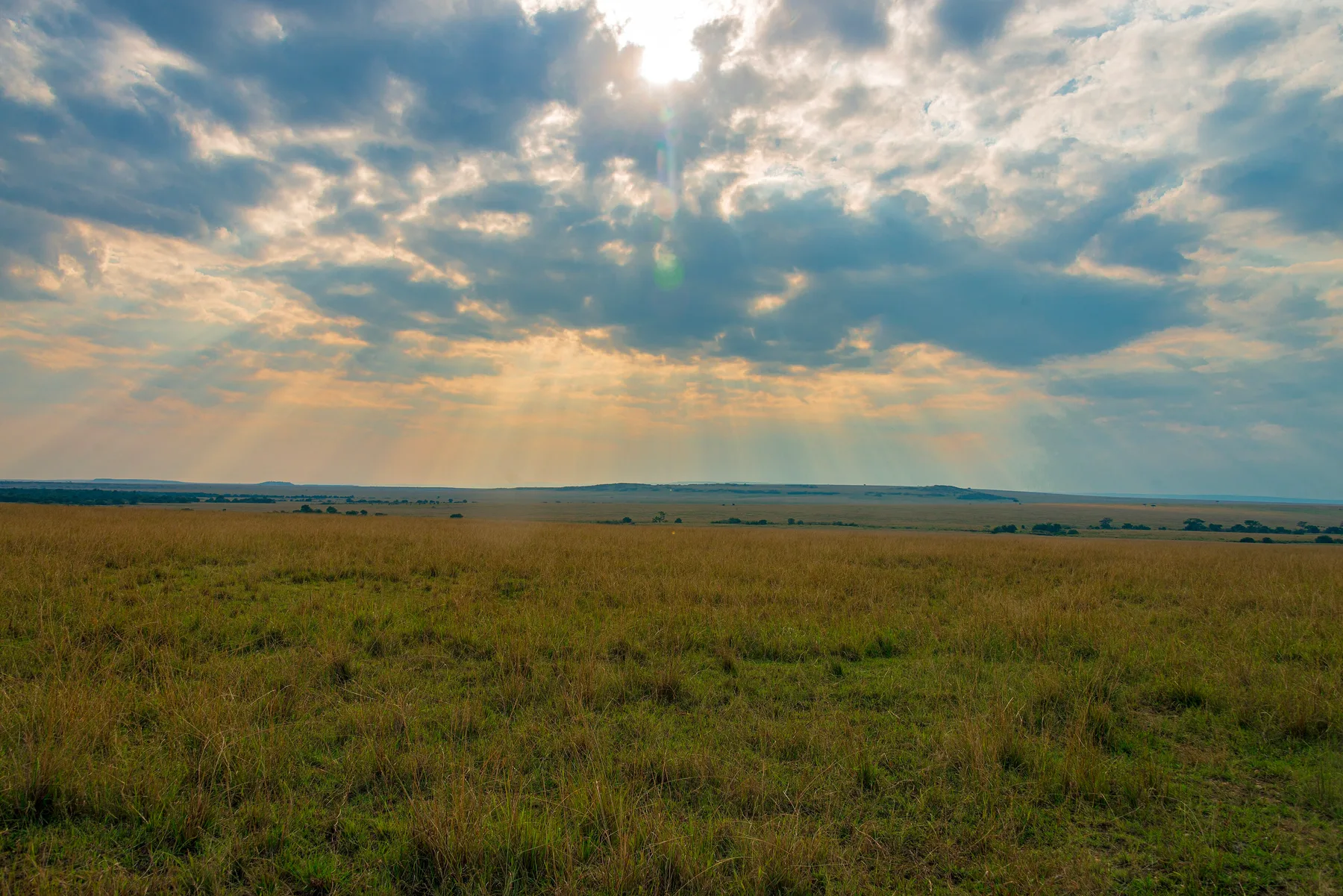
At many safari lodges, lunch is a pause in the wildlife story. Mara Bushtops is one of the places where that is not necessarily true. The natural salt lick below its restaurant and Amani Spa attracts animals for minerals, so a giraffe or elephant may appear while you are eating or swimming. It is a striking reason to linger at camp. It is also wildlife, not theatre: animals may come, move off or ignore the lick entirely.
The camp is in the Bushtops Wildlife Conservancy near the Masai Mara National Reserve, not within the reserve itself. That distinction is the source of its walking and night-drive opportunities and its private game-drive feel. The reserve’s more extensive road network is nearby when a wider outing makes sense. This is a luxury stay with many comforts, but the location and its different rules are what shape the safari. A reader comparing it with Mahali Mzuri or a Triangle camp should start with those geography differences, not simply a spa photograph.
Bushtops also has an unusually complete camp day. The tent decks have private hot tubs; butler service and in-tent dining can make an afternoon feel personal. The Amani Spa Village has a solar-heated infinity pool, cold pool, sauna, steam room, jacuzzi and gym. Yet this is still an unfenced wildlife setting. Guests should respect escort guidance after dark and allow the guide to set the safety boundary on a walk or night drive.
A private conservancy beside, not inside, the reserve
Bushtops describes its wildlife area as the Bushtops Wildlife Conservancy, also called Isaaten. Its community page describes roughly 6,500 acres and explains that land-use agreements, rent to Maasai landowners, scouts and grazing management underpin the project. Another operator sustainability page gives a larger 10,000-acre figure. The differing figures may reflect changing lease extent, so an exact acreage is a poor reason to book. The more consequential fact is that camp guests and local Maasai people use the private area under its rules; outside tourist traffic is limited.
That arrangement is not a claim that every sighting is yours alone. Animal movements and staff decisions still determine the day. It does, however, permit later drives, appropriate off-road routes and guided walking in ways the National Reserve normally does not. A walk from camp can make the landscape legible at ground level: a spoor mark, a bird call, the shape of a plant grazed yesterday. These are not substitutes for the reserve, but they are experiences worth having on their own terms. Our Mara walking safari guide explains the difference.
The operator places the reserve’s main gate around a short drive away. A National Reserve day is useful if you want a different habitat or a longer regional route, but it is not included in the same access charge as the conservancy. River crossings cannot be promised from either side. The migration crossing guide sets out why herd movement is a changing wildlife event, not a camp amenity.
| Area | Why spend time there? | What is separate? |
|---|---|---|
| Bushtops Wildlife Conservancy | Restricted visitor access, salt-lick country, guided walks and night activities. | Daily conservancy fee is listed beyond the room/game package. |
| Masai Mara National Reserve | A wider road network and different wildlife sectors. | Daily reserve access and time travelling to the area. |
| Another Mara conservancy | A distinct camp style, guiding culture or landscape. | Transfer, its own conservation charge and fewer hours at each camp. |
The salt lick changes what an afternoon can be
A mineral lick is not a feeding station supplied to deliver animals on command. The ground contains minerals that wildlife seeks, and different species arrive at their own pace. Bushtops built the restaurant and spa where guests can watch this natural movement. The operator describes giraffe, antelope, buffalo and elephant visiting, with predators sometimes following. A lion may appear; a quiet hour with warthogs and birds may be all that happens. Both can be fascinating when you are close enough to observe behaviour without moving a vehicle.
The pleasure here is cumulative. At breakfast, an impala may be alert to a sound in the trees. At lunch, giraffes may take their time. As dusk approaches, a herd may shift the energy of the scene. Not every visitor will see the sequence pictured on the hotel’s website. The useful expectation is that the camp gives you an additional wildlife viewpoint, not a replacement for drives.
This setting can also change the balance of a trip for a non-driving companion. Someone who wants only one early vehicle outing each day may still have an active, beautiful midday. A child who cannot sit through a six-hour drive may watch animal movements over lunch. A photographer may choose a table with patient sightlines rather than race to another road. Do not photograph other guests without permission, and follow staff instructions if animals approach the paths. Being close to a salt lick does not make camp grounds a petting zoo.

Luxury tents, private decks and two distinctive family suites
The standard luxury tents are spacious hotel-like rooms under canvas, reached along private paths. The camp highlights a deck with its own hot tub, comfortable bedding, a stocked minibar, power and Wi-Fi, and round-the-clock butler service. That is a different proposition from a small expedition tent built only as a base for dawn and dusk drives. At Bushtops, the room is an important part of why you pay the premium. Make time to use it.
Two named family suites, Leopard and Rhino, overlook the salt lick. Each has two bedrooms with their own bathrooms, joined by a living area. Extra beds can bring occupancy to six, while the rate structure covers up to five in the suite price and charges for a sixth person. A family should check the age mix, exact beds and whether the best position is worth the suite premium. Two bedrooms can transform a safari when older children need their own sleeping space but everyone wants to stay together.
There is a small inventory inconsistency in Bushtops’s own material. The FAQ lists thirteen luxury suites plus two family suites, while the main destination page describes twelve standard luxury tents and the older fact sheet has another count. The two named family suites are consistent; the precise total is not. For a couple, this may make little difference. For an exclusive-use group, the current rooming plan and capacity need to be settled before invitations go out. We would not repeat one older number as if it were certain.
The tents’ romance should not conceal practical questions. If a guest needs a short, step-free path, request the exact tent location and bathroom details. At a high-altitude Mara camp, mornings and nights may be cold even after a warm afternoon; take a fleece. A private hot tub is lovely after a drive, but you may need staff to prepare it and should allow enough time before dinner. Ask how the deck and path are lit and how staff escort works at night.
The unusual value of a private vehicle
Bushtops currently lists a private game-drive vehicle for non-solo bookings as part of its game package. That changes the calculation. At many luxury camps, privacy costs a large supplement, and shared drives impose compromises between photographers, birders and families. Here, a couple or family may decide whether to leave at first light, spend longer with a leopard or return early without negotiating with strangers. Confirm the exact rate and dates to which this inclusion applies, particularly if comparing an offer or travelling alone.
A vehicle and an attentive ranger or spotter do not guarantee a Big Five checklist. Their value is flexibility and the ability to follow a promising story responsibly. On a good morning, that might mean staying with lions whose cubs are hidden in grass. On a quiet one, it might mean noticing a jackal, small birds or elephant behaviour most vehicles would pass. Our game-drive etiquette guide is useful even when the vehicle is private: no guest’s exclusivity overrides animal welfare or reserve rules.
The camp’s game package describes either two drives a day or a full-day outing with a picnic. The conservancy permits a night drive, and walking is also offered with an armed ranger. A later drive is best chosen because you want to learn about nocturnal life, not because you expect rare cats on demand. A walk is best when you can enjoy a slower, more alert experience. Your guide will judge weather, safety and suitable routes.
A reserve excursion is different from a conservancy drive. It uses a separate fee and may mean a longer day. The National Reserve has its own vehicle practices and access hours. A plan that spends every day in the reserve would waste some of the exclusive local environment you are paying for at Bushtops. Consider a balance, especially on a three- or four-night stay: local drives, at least one walk if appropriate and a reserve day only if it truly adds to your goals.

| Part of the safari | What Bushtops offers | Why it matters |
|---|---|---|
| Private vehicle | Currently listed for non-solo game-package bookings. | Your party can set a more personal drive rhythm. |
| Conservancy drive | Day and authorised later outings. | Less outside traffic and different activity rules. |
| Guided walk | Available from camp under safety conditions. | Tracks, plants and smaller life become the story. |
| Reserve outing | Possible from a nearby gate. | Different sectors, separate entry charge. |
| Salt-lick watching | From the shared camp area and some suites. | Wildlife may be visible when vehicles are parked. |
Amani Spa and a day that is not all driving
Amani Spa Village gives Mara Bushtops a distinctive second reason to stay. The game package lists use of its solar-heated infinity pool, cold pool, jacuzzi, sauna, steam room and gym, while spa treatments are separately charged. The spa menu places an age restriction of over sixteen for treatments and facility use. A family should not assume that a younger child can join a parent in the hydro area simply because the camp welcomes children elsewhere.
From the spa and restaurant, the salt lick remains in view. A treatment can be a lovely contrast to a dusty morning in a vehicle; sitting by the pool without booking anything can be equally good. If one partner wants a massage and another wants another drive, private guiding makes that division easier. It is a rare camp where the non-driving hours can feel as intentionally designed as the safari hours, provided you do not overfill them with appointments.
Food is part of that unhurried rhythm. The rate describes full-board à la carte meals and private in-tent dining on request, with non-alcoholic drinks, beer, house wine and selected spirits included. Extra cellar choices and special services may be charged. A guest who values an exact dietary arrangement should share it before arrival; a camp with individual service can often respond well, but the kitchen still needs warning. Dining by a wildlife area also means the table can be memorable without staging a separate bush banquet every night.
A family safari with room to be together
The Leopard and Rhino suites make a multigenerational or larger family stay practical. Parents and children can share a central lounge while sleeping in separate bedrooms. One suite can hold up to six with extra beds, but the advertised per-suite rate covers five and adds a sixth-person charge. That distinction belongs in the real family budget, along with child ages and any reserve or conservancy fees. For two families travelling together, decide whether separate suites or adjacent standard tents better preserve privacy.
Bushtops’s family guidance says that a safari is particularly suited to children over seven. That is a useful signal, not an invitation to guess what happens with a younger child. Ask about the child’s age, vehicle setup, walking restrictions, pool access and how long the family actually wants to sit in a jeep. The spa has its own over-sixteen rule. A teenage traveller may enjoy bushcraft, game drives and a hot tub, while a very young child may need much more rest and supervision than the idyllic family photographs suggest.
A private vehicle can make all the difference for a family. If a child tires after two hours, you can come back without ending another guest’s drive. If a group wants to stop for every giraffe, the ranger can indulge that curiosity where safe. The salt lick gives an additional wildlife classroom while everyone is out of the vehicle. Our Mara with children guide helps work out whether this kind of high-comfort camp is a better match than a simpler, more drive-centred one.
What do recent guests actually remember?
Real guest accounts repeatedly mention the wildlife visible from camp, not only the rooms. In a June 2026 Tripadvisor review, Lila R wrote that the wildlife on the property was definitely the highlight
, then described elephants, giraffes and other animals around the water and grounds. That is a specific stay, not a daily species guarantee. It does confirm that the camp’s location can contribute to the visit without a drive.
Another traveller, Shona952, wrote after an April 2026 stay, It is up to you to decide.
She was referring to how the team allowed the party to choose full days, shorter drives, evening activity and time in camp. The flexibility sounds as important to her as any one sighting. In the same review she described a hot tub ready after a drive, which is the kind of small moment that separates this camp from a tent used only for sleeping.
The reviews are enthusiastic, but a reviewer’s “we saw everything” cannot tell you what will be present in another week. Read them for patterns in service, guiding and room comfort. Also separate a review of Mara Bushtops from reviews of Serengeti Bushtops or Roving Bushtops, which are different camps in Tanzania. A high rating across a brand is not a substitute for understanding the exact Kenyan property you plan to book.
The game package is not the full safari total
Mara Bushtops publishes a per-person game-package rate for ordinary tents and a per-suite rate for Leopard and Rhino. The package covers full board, guided drives, drinks in stated categories, laundry, Wi-Fi, spa-facility access and airstrip transfers that may be shared. For non-solo bookings, the current offer includes a private drive vehicle. The operator explicitly lists daily private-conservancy and National Reserve fees outside the package. Those are not tiny administrative details; over several nights and several people they change the comparison with another luxury camp.
A further distinction is that conservancy access and park access are not interchangeable. You may pay for the Bushtops Conservancy while staying and for National Reserve entry on a day you visit the reserve. A family suite covers up to five people under its per-tent price and charges extra for a sixth. A spa massage is not free because spa-facility access is included. A balloon trip or special flight is also separate. The cleanest comparison is a whole itinerary, not a bold nightly headline.
There is a meaningful value argument for the cost: a private vehicle, unusually complete spa, large tent and wildlife at camp. Whether that is the best use of your budget depends on how you travel. If you leave before dawn and return after dark every day, you will barely use the spa, hot tub or salt-lick viewpoint. If you want a balanced journey with wildlife and genuine time at the lodge, those features become part of the holiday rather than expensive decoration. Our Mara safari cost guide helps compare similar total journeys.
| Cost component | Game-package position | What to check |
|---|---|---|
| Room and meals | Included in stated package. | Standard tent or Leopard/Rhino suite? |
| Game drives | Two daily or full day; private vehicle currently for non-solo guests. | Does the selected offer retain that vehicle arrangement? |
| Spa facilities | Use included. | Treatments cost extra; age rules apply. |
| Conservancy fee | Charged separately each day. | Party size and number of nights. |
| National Reserve fee | Separate when entering the reserve. | Which days actually need reserve access? |
| Air travel | Ground pickup listed; flight is separate. | Correct Siana or Keekorok arrival and baggage. |
Fly to Siana or take the road
The operator names Siana as the nearest airstrip and says some arrivals use Keekorok. Scheduled bush flights commonly leave Nairobi’s Wilson Airport, so an international flight into Jomo Kenyatta is only the first part of the journey. The correct airstrip must match the camp pickup. A flight to a different Mara strip may require an unexpected transfer, and a tight international-to-domestic connection is an unnecessary way to begin an expensive safari.
The camp’s general FAQ suggests about forty-five minutes of flight from Nairobi, but actual schedules can include stops. Driving is possible and the operator estimates four to five hours in ordinary conditions. Traffic leaving Nairobi, rain and road state can extend that. The important choice is not simply cost. A fly-in may preserve an afternoon drive and reduce fatigue; a road arrival can show you changing landscapes but may consume much of the first day. Our fly versus drive guide weighs the trade-off.
Small-plane baggage is limited. Bushtops mentions a fifteen-kilogram allowance including hand baggage, but the ticketed airline’s rule is the one to follow. Pack a soft bag, keep medications and cameras within the permitted carry-on plan and use the camp’s laundry rather than bringing a large suitcase. Our Kenya safari-airline baggage guide explains why the aircraft type matters.

Who should choose Mara Bushtops?
Choose it if you want to spend real time in camp as well as on drives. The natural salt lick, private conservancy and substantial spa make that choice unusually rewarding. It can be excellent for a couple who wants both a serious safari and relaxed, intimate evenings, or for a family whose children are old enough to enjoy drives but appreciate time out of the vehicle. A special celebration can feel personal here because the room, hot tub and dining need not be treated as an afterthought.
Compare it with Mahali Mzuri for a smaller ridge camp in Olare Motorogi, or Leopard Hill for a smaller Naboisho tented experience. A reserve or Triangle camp may suit a traveller whose whole priority is an inside-reserve start. Those are not simple better-or-worse rankings: the land rules, vehicle package and use of midday are different. Our Mara places-to-stay guide helps map them.
Be honest with yourself about what you want from a lodge. If a hot tub, spa and wildlife at lunch sound like a joy, Mara Bushtops may be worth the premium. If you prefer a stripped-back tent and almost all your hours in a vehicle, a different camp could be a better fit. The memorable part is not claiming the most luxurious property. It is choosing the one whose ordinary day you will enjoy.
Mara Bushtops questions
Is Mara Bushtops inside the Masai Mara National Reserve?
No. It sits in the Bushtops Wildlife Conservancy near the reserve. A reserve visit is a separate outing with its own access fee.
What is the salt lick?
A natural mineral-rich area in front of the restaurant and spa that attracts wildlife. Animal appearances vary; it is not a guaranteed feeding show.
Does Mara Bushtops have family suites?
Yes. Leopard and Rhino each have two bedrooms, two bathrooms and a shared lounge, with space for up to six subject to the booking terms.
How many tents are there?
The operator’s current FAQ and main accommodation pages use different totals. Two named family suites are clear; ask for the current inventory if an exclusive booking depends on it.
Are game drives private?
The operator’s current game-package description includes a private vehicle for non-solo bookings. Confirm that it applies to the rate and dates you choose.
Are conservancy and park fees included?
No. The operator lists daily private-conservancy and National Reserve fees separately from the game-package price.
Is the spa included?
Use of the Amani spa facilities is listed with the game package, but treatments are charged separately and some facilities have age restrictions.
Can children stay?
The camp has two family suites. Its family guidance particularly recommends the experience for children over seven; confirm suitability and drive arrangements for a younger child.
Which airstrip serves Mara Bushtops?
Siana is the nearest named airstrip, while some routes use Keekorok. The arrival plan should pair the booked flight with the correct pickup.
Can guests take walking or night safaris?
The private conservancy permits guided walks and night drives under its rules and the camp’s arrangements. Weather, safety and suitability still govern each outing.
Will wildlife always be at the salt lick?
No. It can be a wonderful place to watch animals from camp, but wildlife comes and goes freely and sightings are never guaranteed.
Plan the wider Mara
Plan Mara Bushtops
Tell us your dates, the ages in your party and whether Leopard or Rhino might suit you.