
Nairobi to Aberdare National Park: Routes, Gates and Real Travel Time
The park is about 150 kilometres from Nairobi, but the correct route depends on the gate, lodge, waterfall, weather and next stop. This guide turns a map distance into a workable highland journey.

- Nairobi to Aberdare National Park at a glance
- First decide which Aberdare experience you mean
- The eastern route through Thika, Karatina and Nyeri
- The western route through Naivasha, Njabini and Mutubio
- Gate choice changes the whole day
- How long does Nairobi to Aberdare really take?
- Leave Nairobi before the city owns the morning
- Airport arrival days need more breathing room
- A 4×4 is about the park, not the highway
- Private transfer or self-drive?
- What to carry in the vehicle
- Can you fly from Nairobi to the Aberdares?
- Door-to-door flight time is not the time in the air
- One day from Nairobi: possible, but choose one story
- One night: the classic highland pause
- Two nights: enough time for the park beyond the lodge
- The waterfall day needs its own clock
- Wildlife is quieter than the road from Nairobi suggests
- What recent travellers say
- Watch the road and waterfall experience first
- Rain changes the route before it changes the destination
- Road reports should be same-day information
- Nairobi to Aberdare with children
- Older travellers and limited mobility
- Honeymoon travel: make the arrival feel private
- Photographers should protect time and equipment
- Continue from Aberdare to Solio
- Continue to Ol Pejeta or Laikipia
- Continue to Naivasha or Lake Nakuru
- What the complete road cost includes
- Public transport reaches towns, not a complete safari
- Common mistakes on the Nairobi to Aberdare route
- The best Nairobi to Aberdare plan for most travellers
The road north leaves Nairobi in familiar city traffic, follows the plantations and market towns of central Kenya, then climbs into air that feels unexpectedly cool. By the time the first dark wall of Aberdare forest comes into view, the journey has already changed character. This is not a transfer to another open savannah. It is an approach to waterfalls, bamboo, high moorland and wildlife that can disappear into trees with one step.
That change in landscape is part of the appeal, but it also makes the route less simple than a map pin suggests. Nairobi to Aberdare National Park is roughly 150 kilometres by the standard eastern approach, according to Kenya Wildlife Service. The useful travel time depends on your Nairobi starting point, traffic, the gate, weather, internal roads and what you hope to do after entering. A hotel near Nyeri, a night at a forest waterhole lodge and a waterfall day in the high moorlands are three different journeys.
Nairobi to Aberdare National Park at a glance
The numbers below are planning ranges, not promises. Nairobi traffic alone can move an arrival by an hour, while rain can slow the park roads long after the tarmac has been left behind.
| Decision | Practical starting point | Why it matters |
|---|---|---|
| Distance | About 150 km by the standard eastern approach | KWS uses 150 km as the headline distance from Nairobi |
| Road time | Allow roughly 3 to 4 hours to the eastern park area, plus delays | The clock changes with the Nairobi suburb, traffic, stops and gate |
| Most common route | Nairobi, Thika, Karatina, Nyeri, Mweiga | Best all-round approach for many first visits and forest-lodge plans |
| Western option | Nairobi, Limuru or Naivasha, Njabini, Engineer, Mutubio Gate | Useful when the trip is already in the Rift Valley or aims at the western moorlands |
| Vehicle | Proper 4×4 for a real park circuit | Wet gravel, ruts, steep gradients and mist are normal mountain risks |
| Gate hours | 06:00 to 18:00 unless staying overnight | A late arrival can erase the game drive or prevent legal entry |
| Flying | Charter or specially arranged access to Mweiga Airstrip | It is not a simple scheduled-safari-flight substitute for the road |
| Sensible stay | One night minimum, two nights for a fuller visit | The park deserves more than a rushed out-and-back drive |
The best route is the one that reaches the correct gate with enough daylight left for the experience you came for. That sentence matters more than any claimed fastest time.
First decide which Aberdare experience you mean
Aberdare National Park stretches across forest, deep valleys and high moorland. A traveller saying “take me to Aberdare” may mean a night watching a forest waterhole, a waterfall circuit, a hike, a fishing cabin, a traverse toward Naivasha or simply a scenic stop between Nairobi and Laikipia. Those plans use different gates and consume daylight differently.
| Your main reason for going | Route implication | Time implication |
|---|---|---|
| The Ark or another eastern forest base | Approach via Nyeri and Mweiga, then follow the lodge's current arrival arrangement | Protect the transfer and lodge check-in time |
| Karuru, Chania or Magura waterfalls | Use the gate and internal road confirmed for that day's waterfall circuit | Set aside most of a day inside the park |
| Moorland scenery | Confirm the high route, cloud, mud and turnaround point | Slow travel and weather can reshape the day |
| Hiking | Confirm trail, ranger, meeting point and start time | A Nairobi departure may be too late for a serious walk |
| Through-route to Naivasha | Check that the intended east-to-west roads and exit gate are open | Treat it as a full park day, not a shortcut |
| One-night northern-circuit stop | Match the lodge and exit to Solio, Ol Pejeta or Laikipia | Avoid driving back over ground you just covered |
Our Aberdare National Park guide explains the habitats and experiences in more depth. Choose that experience first. The transfer then becomes much easier to design.
The eastern route through Thika, Karatina and Nyeri
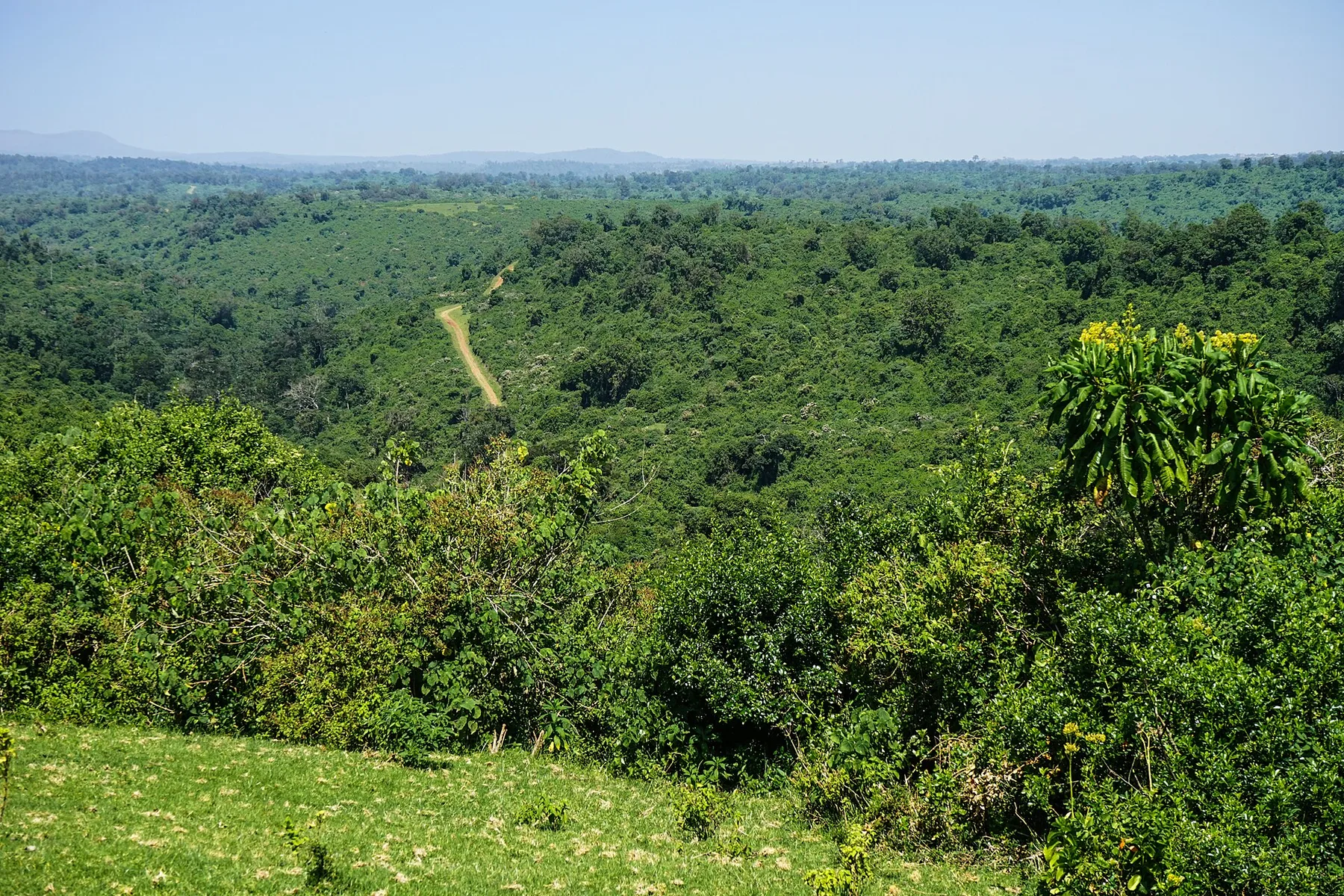
For many journeys, the eastern approach is the calmest answer. From central Nairobi the road runs north on Thika Road, continues through the central highlands toward Karatina and Nyeri, then turns toward Mweiga and the park side. KWS describes the park as readily accessible on tarmac from Nyeri and identifies its headquarters 15 kilometres from Nyeri on the Nyeri to Nyahururu road.
The changing scenery keeps the drive interesting. Nairobi's concrete loosens into pineapple country, trading centres and productive farmland. Mount Kenya may appear in clear weather. Nyeri is the last practical place to handle a forgotten pharmacy item, cash need or proper meal before the park plan becomes more committed.
| Eastern-route segment | What to expect | Planning note |
|---|---|---|
| Nairobi to Thika | Urban motorway, commuter traffic and possible roadworks | An early departure protects the whole day |
| Thika to Karatina | Faster highway sections through agricultural country | Do not turn a coffee stop into a lost hour |
| Karatina to Nyeri | Busier town approaches and local traffic | Keep navigation active through junctions |
| Nyeri to Mweiga or chosen gate | Cooler highland road and final supplies | Confirm the exact lodge or gate pin before leaving Nyeri |
| Inside the park | Gravel, forest, mist, gradients and wildlife | The tarmac time is not the park-drive time |
This route suits travellers arriving from Nairobi, JKIA or a Nairobi hotel who want the eastern forest, waterhole-lodge experience, Nyeri area accommodation, Solio, Mount Kenya or a continued northern circuit.
The western route through Naivasha, Njabini and Mutubio
The west side can look like the shorter answer on a phone because Mutubio Gate sits closer to the Nairobi to Naivasha side of the range. KWS describes Mutubio as the shortest route from Nairobi via Naivasha and gives roughly 50 kilometres between Naivasha and the gate in its park material. That does not make it the automatic best choice.
The western approach is more sensitive to local road condition, rain, fog and the exact internal destination. An old but vivid self-drive account described the final road as taking far longer than expected. Conditions change, so the lesson is not to preserve an old judgement. The lesson is to ask about today's road.
| Western route makes sense when | It is a poor fit when |
|---|---|
| You are already staying at Lake Naivasha | Your lodge check-in is arranged from Mweiga or Nyeri |
| Mutubio Gate and the planned internal road are confirmed open | You are choosing it only because a map labels it shorter |
| The moorlands are the main event | Rain has made the intended road slow or uncertain |
| You plan a checked west-to-east traverse | You have a late Nairobi departure |
| Your vehicle, fuel and recovery preparation suit mountain roads | You are in a low-clearance car with road tyres |
Travellers combining the highlands with the Rift Valley can also read our Lake Naivasha guide. The sequence can be beautiful when the road report supports it.
Gate choice changes the whole day
KWS currently names eight gates: Ark, Treetops, Kiandongoro, Mutubio, Rhino, Ruhuruini, Shamata and Wandare. Their existence does not mean each gate is equally useful every day. A gate may be open while the road beyond it is unsuitable for your intended circuit.
| Gate or gate group | Broad planning use | What to confirm |
|---|---|---|
| Ark and Treetops | Eastern forest and lodge-side access | Lodge instructions, entry procedure and current road |
| Kiandongoro | Eastern access for selected waterfall and moorland plans | First attraction, road status and turnaround time |
| Mutubio | Western entry from the Naivasha and Kinangop side | Approach road, internal route and intended exit |
| Shamata and Rhino | Northern and northwestern highland access | Trail or moorland plan, gate operation and weather |
| Ruhuruini and Wandare | Eastern or southeastern access for specific routes | Whether they serve the day's exact destination |
The dedicated Aberdare entry fees, gates and road conditions guide carries the fuller gate, payment and road checklist. For this journey, remember one rule: name the gate before you name the departure time.
How long does Nairobi to Aberdare really take?
Three hours is possible in favourable conditions to a suitable eastern arrival point. It is not a safe promise for every hotel, gate and weekday. A traveller leaving from Karen or JKIA crosses more of Nairobi than someone starting near Thika Road. A breakfast stop, a slow truck, school traffic in a town or a gate-payment issue can each add time.
| Starting point | Sensible planning allowance to the eastern park area | Main uncertainty |
|---|---|---|
| Hotel near Thika Road | About 3 to 3.5 hours | Town traffic and final gate road |
| Nairobi CBD or Westlands | About 3.5 to 4 hours | City departure and highway flow |
| Karen or Lang'ata | About 4 hours or more | Crossing Nairobi before the northbound road |
| JKIA after an international arrival | Do not chain to a tight park arrival | Immigration, baggage, fatigue and city traffic |
| Naivasha to Mutubio side | Often planned as a shorter regional transfer | Final approach and internal road condition |
These are route-planning allowances, not live navigation estimates. Check traffic shortly before leaving, then preserve another margin for the park.
Leave Nairobi before the city owns the morning
An early departure is not about collecting a heroic start time. It buys options. If traffic is kind, the extra time becomes a scenic stop or a slower first drive. If rain or congestion intervenes, the buffer protects the gate arrival.
| Planned day | Useful departure logic |
|---|---|
| Transfer to a lodge for lunch | Leave early enough to arrive without racing the last approach |
| Afternoon forest drive | Protect lunch, entry and at least several hours of daylight |
| Waterfall circuit on arrival day | Leave near first light or move the waterfalls to the next morning |
| Serious hike | Sleep nearer the park the night before |
| Same-day Nairobi return | Start very early and keep the park plan modest |
| JKIA arrival that morning | Use a Nairobi or highland overnight unless the flight lands very early and the plan has generous slack |
A 06:30 to 07:00 hotel departure often gives a useful foundation, but the correct time belongs to the exact address, gate and activity.
Airport arrival days need more breathing room
It is tempting to land at JKIA and drive straight to the Aberdares because the park appears close to Nairobi. The problem is not only distance. International arrivals can be late, bags can be slow, travellers may be tired, and the vehicle still has to cross or skirt the city before heading north.
| Flight-arrival situation | Better plan |
|---|---|
| Lands before dawn | A same-day road transfer can work with a private vehicle and a flexible first afternoon |
| Lands in the morning | Keep the first park activity light and avoid a fixed waterfall circuit |
| Lands after midday | Sleep in Nairobi or the central highlands rather than chase a gate |
| Travelling with children | Add breakfast, bathroom and recovery time before the road |
| Checked photography gear | Leave space for delayed baggage and repacking |
The first safari day should feel like an arrival, not a rescue from an impossible timetable.
A 4×4 is about the park, not the highway
A saloon car can travel the tarmac to Nyeri. That does not make it the right vehicle for an Aberdare circuit. KWS recommends four-wheel drive throughout the year. The reasons are visible on the ground: steep gravel, mud, deep ruts, wet grass, stream crossings, loose edges and cloud that reduces visibility.
| Vehicle feature | Why it matters in the Aberdares |
|---|---|
| Four-wheel drive | Helps maintain controlled traction on wet or loose surfaces |
| Ground clearance | Reduces damage risk in ruts, rocks and drainage channels |
| All-terrain tyres | Matter more than a polished body and large cabin |
| Low range | Useful on genuinely steep or compromised sections |
| Sound spare tyre | Puncture help may be far away |
| Recovery points and basic gear | Allow a safe response without improvisation |
| Working heater and demister | Cold mist can make the windscreen and cabin difficult |
A safari Land Cruiser also gives higher windows and more useful wildlife viewing than a road transfer vehicle. If the day includes a full park circuit, the same vehicle can carry you from Nairobi through the forest without changing cars.
Private transfer or self-drive?
Both are possible. The question is where you want to spend attention. A private driver-guide handles city traffic, gate discussions, wildlife scanning and a changing road while everyone else watches the highlands arrive. Self-drive gives independence and can suit experienced Kenya travellers who enjoy navigation and have a properly equipped vehicle.
| Factor | Private driver-guide | Self-drive |
|---|---|---|
| Nairobi traffic | Passenger can rest | Driver begins the trip under pressure |
| Gate choice | Local team can check conditions | Traveller must confirm and interpret advice |
| Wildlife spotting | Guide watches tracks, canopy and clearings | Driver must divide attention safely |
| Wet roads | Experienced 4×4 judgement | Depends entirely on driver skill and vehicle |
| Route changes | Easier to reorganise with local contacts | Requires independent decisions and recovery plan |
| Cost | Includes vehicle, guide and operations | Rental can look lower but equipment and risk matter |
Self-driving should feel like a positive travel choice, not a compromise made because the park looked nearby.
What to carry in the vehicle
The Aberdares can be warm at the foot of the range and sharply cold in mist an hour later. Pack the vehicle for the second landscape, not the Nairobi car park.
| Carry | Reason |
|---|---|
| Warm fleece and waterproof shell | Temperature and rain can change quickly |
| Drinking water and lunch | Food is not available along every internal route |
| Offline map and written gate plan | Mobile coverage and live navigation are not enough |
| Charged phone and power bank | Communication matters when the road is slow |
| Full fuel tank | Internal distances and detours consume more than expected |
| Two useful footwear options | Dry lodge shoes and grippy walking shoes serve different moments |
| Binoculars | Forest wildlife is often seen between branches or at distance |
| Vehicle recovery essentials | A 4×4 badge does not pull a vehicle from mud by itself |
KWS also advises warm clothing, drinking water, food, first-aid supplies, maps and reserve fuel in its visitor material.
Can you fly from Nairobi to the Aberdares?
KWS identifies Mweiga Airstrip, near the Nyeri to Nyahururu road, as the nearest airstrip. Flying is possible by private charter or a specifically arranged operation, but it is not equivalent to booking one of the common scheduled safari flights to the Mara or Samburu.
| Flight question | Real answer |
|---|---|
| Is there an airstrip near the park? | Yes, Mweiga is the KWS-named nearest airstrip |
| Are there frequent scheduled tourist flights? | Do not assume so; verify the exact date and operator |
| Is a charter always faster? | It saves highway time but still needs airport reporting and road transfer |
| Does flying remove the need for a safari vehicle? | No, the airstrip is not the waterfall, lodge or moorland |
| When can it make sense? | Time-poor luxury trips, private groups or clean charter connections |
For most visitors, driving from Nairobi is more straightforward and often more satisfying. The route is short enough to become part of the circuit, and the vehicle is already in place for the park.
Door-to-door flight time is not the time in the air
A charter comparison should start at the hotel and end at the lodge. Add the road to the departure airport, reporting time, loading, the flight, unloading and the onward transfer from Mweiga. The airborne section may be brief, but the complete chain still needs coordination.
| Flight component | What can affect it |
|---|---|
| Nairobi hotel to airport | Traffic and departure airport |
| Check-in and loading | Passenger list, baggage, aircraft and weather |
| Flight | Cloud, routing and operating conditions |
| Mweiga arrival | Ground team and baggage handover |
| Airstrip to accommodation | The exact lodge and road condition |
| Vehicle for activities | Whether it is included, private and available at the right time |
Do not compare a quoted flight duration with a full road transfer. Compare the entire travel day.
One day from Nairobi: possible, but choose one story
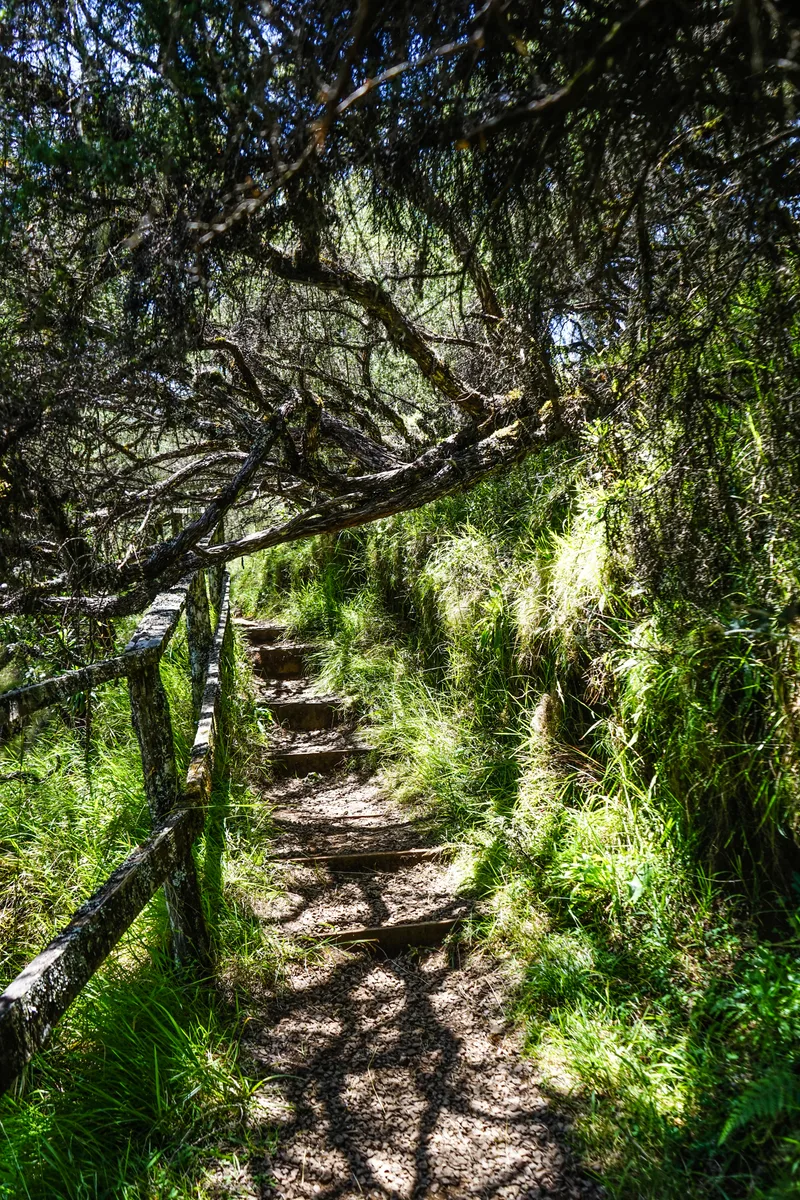
A day trip works best when it has a narrow purpose. Trying to collect waterfalls, forest wildlife, moorland, a long lunch and a waterhole lodge in one return journey usually turns the park into a race.
| Day-trip priority | Sensible shape |
|---|---|
| Waterfalls and scenery | Early departure, confirmed gate, selected waterfall circuit, picnic and return |
| Forest wildlife | Enter on the eastern side, drive slowly through the Salient and accept that sightings are elusive |
| Moorland photography | Build around light, cloud and a firm turnaround time |
| Hiking | Use a pre-arranged trail and ranger, or sleep nearby first |
| Family day | Shorter drive, warm food, bathroom stops and one main attraction |
A night near or inside the park changes the quality of the visit more than adding another rushed attraction.
One night: the classic highland pause
One night is enough to feel the change from Nairobi, especially when the lodge experience is part of the reason for going. Arrive for lunch, take an afternoon drive or settle at a waterhole, then use the next morning before continuing north.
| Day | A balanced one-night plan |
|---|---|
| Day 1 morning | Leave Nairobi early and travel through the central highlands |
| Day 1 midday | Arrive, eat and settle without compressing the check-in |
| Day 1 afternoon | Forest drive, waterhole time or a short scenic circuit |
| Day 1 evening | Watch the forest quieten and keep warm layers close |
| Day 2 morning | Early wildlife viewing or a selected park activity |
| Day 2 late morning | Continue to Solio, Ol Pejeta, Mount Kenya or Laikipia |
The upcoming comparison of The Ark, Treetops and Aberdare Country Club will help travellers distinguish a waterhole lodge, a historic forest stay and a country-club base rather than treating them as one product.
Two nights: enough time for the park beyond the lodge
Two nights give the journey room to breathe. The transfer day can end gently, while the full middle day belongs to waterfalls, forest, moorland or a hike chosen for the weather.
| Two-night advantage | What it changes |
|---|---|
| Full central day | The park is no longer squeezed between two road transfers |
| Weather flexibility | Mist or rain can move an activity by several hours |
| Slow wildlife watching | Forest sightings are given time rather than demanded on cue |
| Lodge enjoyment | The room, deck, waterhole and meals are not merely a sleep stop |
| Better onward departure | Leave after breakfast without sacrificing the only game drive |
For readers deciding where to place those nights, use the planned where to stay in the Aberdares guide.
The waterfall day needs its own clock
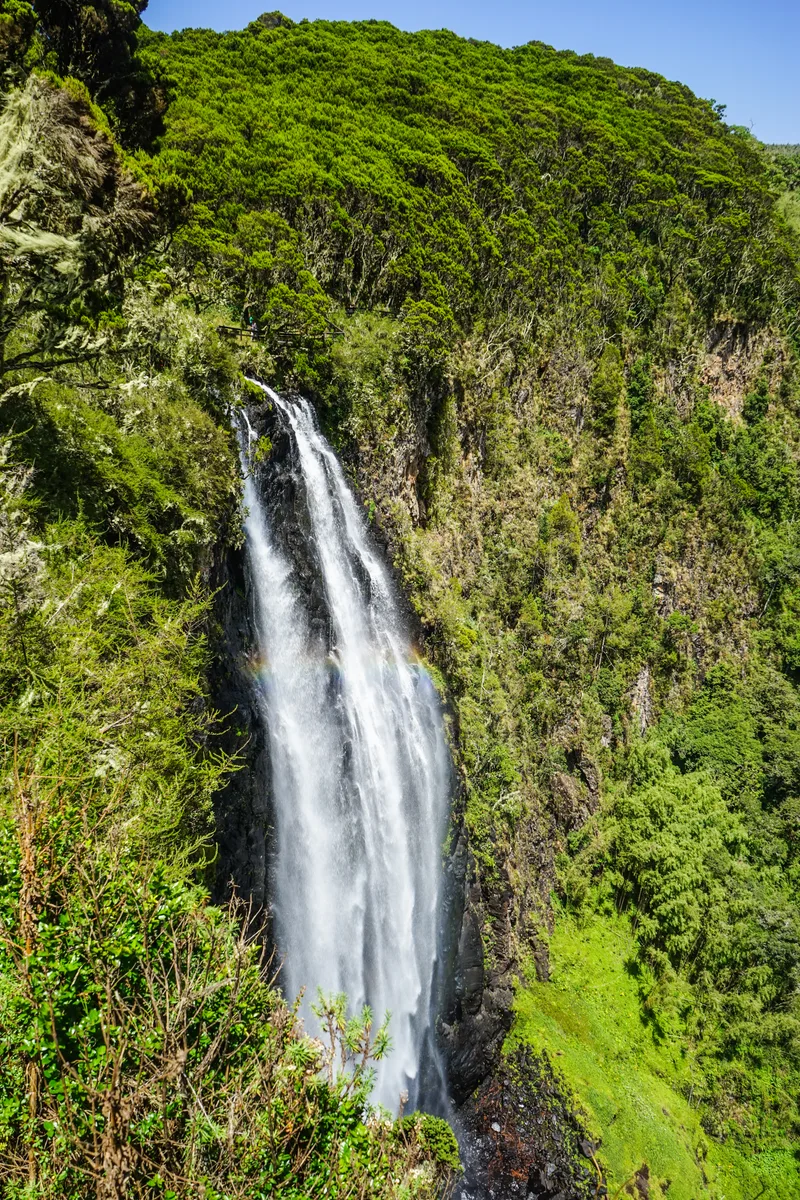
Karuru, Gura, Chania and Magura are not roadside ornaments passed on the way to a lodge. KWS describes Karuru as a three-stage fall of about 300 metres and places these waterfalls among the park's defining attractions. The roads, viewpoints, short walks, photography and weather consume real time.
| Waterfall-day choice | Better approach |
|---|---|
| One major waterfall | Give it unhurried viewing and pair it with nearby forest scenery |
| Several waterfalls | Start early with a checked circuit and packed lunch |
| Waterfalls after Nairobi transfer | Limit the list and keep a strict lodge-arrival margin |
| Waterfalls with children | Choose accessible viewpoints and avoid a long cold day |
| Waterfalls in rain | Confirm roads and trail safety before entry |
| Waterfalls for photography | Carry lens protection, cloths and a stable support |
The full Aberdare waterfalls, moorlands, forests and hiking guide helps turn a list of names into one coherent day.
Wildlife is quieter than the road from Nairobi suggests
The transfer is easy enough to create open-plains expectations. The forest corrects them. Elephants and buffalo may step into a clearing, colobus can move through the canopy, and giant forest hogs sometimes appear in the open. Black rhino, mountain bongo, leopard and melanistic cats belong to the park's natural story, but dense vegetation makes rare wildlife genuinely rare to see.
| If your priority is | Set this expectation |
|---|---|
| Large mammal count | Aberdare may feel slow compared with the Mara or Ol Pejeta |
| Forest behaviour | Patience can reveal memorable, intimate encounters |
| Rare species | Value habitat and possibility without treating a sighting as owed |
| Birding | Stop often, listen and scan forest edges and moorland |
| Waterhole watching | Let wildlife arrive rather than changing location every few minutes |
| Scenery | The park can be rewarding even on a quiet wildlife day |
This is why a good Nairobi to Aberdare plan protects time. A hurried driver sees a road through trees. A patient visitor begins to see the forest.
What recent travellers say
Real accounts make the trade-offs clearer than a promise of easy wildlife. In a recent forum discussion, one visitor described Aberdare as “much wilder and feels more untamed than other parks.” Read the full discussion.
Another park review is useful because it refuses to turn a quiet drive into a wildlife guarantee: “We took a game drive and did not see any game on the side of the park we were at.” Read the review in context.
A self-drive account remembered the destination as “very cold but very unique and beautiful with the rainforest and a stunning waterfall.” Read the route account.
Together, those comments tell an honest story. Expect atmosphere, cold, difficult wildlife and a park unlike the savannah circuit. That is not a warning away. It is the reason to go.
Watch the road and waterfall experience first
An independent travel vlog, Karuru Falls, Kenya's Largest Waterfall, follows a day visiting three falls and shows the rougher, slower feel of the park roads. Use it for visual context, not as a current road report. Conditions and access rules must still be confirmed for your date.
Video is especially helpful here because a still photograph cannot show how much time is spent moving through mist, forest and uneven ground between viewpoints.
Rain changes the route before it changes the destination
The Aberdares are high, wet mountains. A clear Nairobi morning does not predict the park afternoon. Rain may improve the mood and power of the waterfalls while making a planned road, trail or traverse unwise.
| Weather sign | Planning response |
|---|---|
| Heavy overnight rain | Call for a gate and internal-road update before departure |
| Low cloud on the range | Expect slower driving and reduced viewpoints |
| Forecast afternoon storm | Put the most important exposed activity earlier |
| Wet-season travel | Use a capable 4×4 and leave more turnaround time |
| Cold clear morning | Keep waterproofs anyway; mountain weather changes |
| Persistent rain | Replace the ambitious circuit with forest, lodge or lower-altitude time |
Our best time to visit Aberdare National Park guide compares the drier and wetter windows without pretending any month is perfectly dry.
Road reports should be same-day information
An old blog can explain the character of a road, but it cannot tell you whether a culvert failed last night. The most useful report names the gate, exact internal section, vehicle and time.
| Weak question | Useful question |
|---|---|
| Is Aberdare open? | Is Kiandongoro Gate open for entry today? |
| Are the roads fine? | Is the road from Kiandongoro to the planned waterfall passable for our 4×4? |
| Can we cross the park? | Are the named entry, internal junctions and Mutubio exit all open today? |
| Can a car enter? | Is our vehicle's clearance, tyres and recovery setup suitable for the intended section? |
| Will it rain? | What has fallen overnight and what are rangers reporting now? |
The gate officer's advice should beat the itinerary when the two disagree.
Nairobi to Aberdare with children
The distance is manageable for many families, but the experience improves when adults stop treating three hours as one uninterrupted sit. Leave after an early breakfast, plan a clean bathroom stop, carry warm layers where they are reachable and keep the first park activity short enough for the children's energy.
| Family need | Route design |
|---|---|
| Young children | Private vehicle, flexible stops and a lodge with family-suitable rooms |
| Motion sensitivity | Front-facing seats, light breakfast and fewer winding-road distractions |
| Toilet timing | Use a reliable stop before the final park approach |
| Cold sensitivity | Pack hats, fleece and rain shells in the cabin, not buried in luggage |
| Short attention span | Use a wildlife checklist, waterfall story and picnic rather than a long silent drive |
| Early bedtime | Reach the lodge with daylight and avoid a heroic final circuit |
The park's mystery can be wonderful for children. Forest tracks, giant hogs, monkeys and night waterhole sounds give the journey a story beyond counting lions.
Older travellers and limited mobility
The road transfer itself can be comfortable in a well-sprung vehicle, but climbing into a high 4×4, walking to viewpoints and sitting through rough internal roads may be the harder parts. Discuss those details before choosing the lodge or waterfall list.
| Detail to confirm | Why it matters |
|---|---|
| Vehicle step height | A portable step can make repeated entry safer |
| Seat location | Easy access may matter more than the widest view |
| Road duration | A full moorland day can be tiring even without walking |
| Room-to-deck distance | Tree lodges may involve corridors and stairs |
| Viewpoint path | Surface, gradient, railings and distance vary |
| Medical needs | Cold, altitude and a remote road deserve preparation |
Limited walking does not make Aberdare a poor choice. A forest lodge and waterhole can bring the experience to the traveller when the room and public spaces are matched carefully.
Honeymoon travel: make the arrival feel private
The highlands can be deeply romantic: firelight, rain on the forest, cool air and a morning that begins with mist. The mood disappears when the couple spends the day watching the clock after a late departure.
| Honeymoon priority | Useful choice |
|---|---|
| Quiet arrival | Private transfer and no crowded roadside stop schedule |
| A beautiful room | Compare actual room category, view and heating |
| Wildlife at night | Choose a waterhole lodge and understand its wake-up system |
| Waterfalls | Use a private full-day vehicle and packed lunch |
| Seamless onward safari | Continue to Solio, Ol Pejeta or Laikipia without returning to Nairobi |
| Celebration | Arrange it around the stay, not by removing the only game drive |
The planned where to stay in the Aberdares guide will separate romantic atmosphere from room-specific reality.
Photographers should protect time and equipment
Aberdare photography is often about layers: a buffalo half-hidden in bamboo, cloud breaking over moorland, wet bark, a narrow waterfall and soft light at a waterhole. Long lenses still matter, but weather protection and the freedom to wait may matter more.
| Photography concern | Better preparation |
|---|---|
| Rain and spray | Camera cover, dry cloths and sealed bag |
| Low forest light | Fast lens, stable support and sensible ISO expectations |
| Window reflections | Private vehicle positioning and clean glass |
| Waterfall exposure | Tripod or support where permitted and safe |
| Rare wildlife | Quiet guide, patience and no chase behaviour |
| Flight baggage | Confirm charter weight and cabin limits before choosing air |
A private vehicle allows a subject to set the pace. It also prevents a photographer's long stop from frustrating other guests.
Continue from Aberdare to Solio
Solio is one of the cleanest next steps. The landscapes change from forested mountain to open private reserve, and rhino viewing becomes a far stronger focus. The transfer can be shaped through the Nyeri and Mweiga side without returning to Nairobi.
| Aberdare and Solio plan | Why it works |
|---|---|
| One night Aberdare, one or two nights Solio | Adds strong wildlife visibility after a forest stay |
| Two nights Aberdare, Solio day or stay | Gives scenery first, then rhino-focused viewing |
| Family circuit | Breaks the northern road into manageable sections |
| Honeymoon circuit | Contrasts cool forest atmosphere with private open country |
| Photography circuit | Moves from layered forest light to clearer mammal views |
Use the Nairobi to Solio Ranch guide and the Solio Ranch and Game Reserve visitor guide to compare the direct journey with the Aberdare combination.
Continue to Ol Pejeta or Laikipia
Aberdare can also become the first chapter of a northern circuit. After the cool forest, Ol Pejeta adds open plains, rhino conservation and a wider activity list. Other Laikipia conservancies can add walks, night drives, community-owned conservation landscapes and highly individual lodges.
| Next stop | Route logic | Minimum planning thought |
|---|---|---|
| Ol Pejeta | Continue north through the central highlands | Match the conservancy gate and accommodation |
| Nanyuki | Useful service and transfer hub | Do not count a town overnight as a wildlife night |
| Lewa or Borana | Strong conservation and landscape contrast | Confirm private-conservancy access and transfer time |
| Wider Laikipia | Best for a longer, experience-led safari | Airstrip and lodge location change the journey |
| Samburu | Continue farther north after Laikipia | Protect enough nights for the longer circuit |
The Ol Pejeta Conservancy guide and Nairobi to Laikipia guide are already assigned their future URLs, so these links will connect as those pages enter the schedule.
Continue to Naivasha or Lake Nakuru
A confirmed west-side exit can link the park to Naivasha, but it should be treated as a scenic park traverse rather than a fast transfer. If the internal route is uncertain, go around the range on reliable roads.
| Combination | Best logic |
|---|---|
| Aberdare to Naivasha | Use a checked Mutubio exit or a longer all-weather road alternative |
| Aberdare to Lake Nakuru | Allow for Naivasha or Nyahururu routing and a full regional transfer |
| Naivasha to Aberdare | Enter west only when the gate and road fit the actual park plan |
| Nakuru to Aberdare | Choose west or eastern approach from current conditions, not map distance |
Never let a planned traverse become a commitment to a bad road. Turning back early can be the most professional decision of the day.
What the complete road cost includes
A transfer price is not only fuel. The complete figure can include a private vehicle, professional driver-guide, guide accommodation, park vehicle charges, passenger entry, road tolls where applicable, drinking water, meals, airport collection and the vehicle's continued use inside the park.
| Cost line | Question it answers |
|---|---|
| Vehicle and driver-guide | Is this only transport or also the game-drive vehicle? |
| Fuel | Are the internal park kilometres included? |
| Park entry | Which visitor category and date apply? |
| Vehicle entry | Is the park vehicle charge included? |
| Guide meals and room | Does an overnight quote cover the crew? |
| Ranger or activity | Is a required guided walk included? |
| Recovery and support | What happens if weather or a mechanical problem stops the route? |
| Onward transfer | Does the same vehicle continue to the next destination? |
For current entry categories and payment steps, use the Aberdare fees and gates guide rather than an old screenshot.
Public transport reaches towns, not a complete safari
Buses and matatus connect Nairobi with Nyeri and other highland towns. They do not deliver a traveller through a chosen gate, around remote internal roads, to waterfalls and onward to a lodge. A taxi from town also needs park permission, suitable tyres, clearance, navigation and willingness to remain inside.
| Public-transport plan | Hidden gap |
|---|---|
| Bus to Nyeri | Still needs park-capable private transport |
| Matatu toward Mweiga | Luggage, comfort and final lodge access remain unresolved |
| Taxi to a gate | A road taxi may not be a safe game-drive vehicle |
| Lodge transfer | May serve only that lodge, not a full waterfall circuit |
| Return bus same day | Gate, wildlife and activity timing become fragile |
Budget travellers can use public transport to position themselves in Nyeri, then arrange a legitimate 4×4 and guide. That is different from treating the park as accessible by bus.
Common mistakes on the Nairobi to Aberdare route
| Mistake | What it costs |
|---|---|
| Searching only “Aberdare” in navigation | Arrival at the wrong side of a vast park |
| Leaving Nairobi after breakfast traffic begins | Lost wildlife and waterfall time |
| Choosing the shortest map route | A slow or unsuitable final road |
| Driving a low-clearance car into a mountain circuit | Safety, delay and vehicle damage |
| Treating rare wildlife as guaranteed | Disappointment in a forest built for concealment |
| Booking one night with a full arrival-day waterfall list | A stay spent watching the clock |
| Assuming an east-to-west traverse is always open | Late exit or forced turnaround |
| Packing for Nairobi weather | A cold, wet and uncomfortable day |
| Comparing road and air by headline duration | An expensive choice that saves little door-to-door time |
| Returning to Nairobi before heading north again | Repeated kilometres and a wasted safari day |
The route is forgiving when the itinerary has margins and unforgiving when every minute is pre-spent.
The best Nairobi to Aberdare plan for most travellers
Leave Nairobi early in a private 4×4, travel through Thika, Karatina, Nyeri and Mweiga, then enter through the gate confirmed for the first activity or lodge. Spend at least one night. Use the next morning or a full second day for the forest, waterfalls or moorland. Continue north to Solio, Ol Pejeta or Laikipia rather than automatically returning to Nairobi.
| Traveller | Strong starting plan |
|---|---|
| First Kenya safari | One night Aberdare plus two nights in a more open wildlife area |
| Scenery lover | Two nights with a full waterfall and moorland day |
| Birder | Two nights, slow drives and flexible habitat stops |
| Family | One or two nights, private vehicle and short daily targets |
| Honeymoon | Two nights with a beautiful room and private scenic day |
| Photographer | Two nights, private 4×4 and weather-protected equipment |
| Repeat safari traveller | Cross-park or hiking plan confirmed from current conditions |
Aberdare is close enough to reach, but different enough to deserve real time. Let the road climb slowly, arrive while the forest is still awake, and leave room for the mountain to change the plan.
Plan your Aberdare road
Share your starting address, date, first activity, lodge, travellers, vehicle and next stop. We will shape the route around daylight and current access.