
Aberdare National Park Guide: Mist, Waterfalls and Kenya’s Highland Wild
Plan the forest and moorland as two different experiences, then match the right gate, full-day route, lodge and weather backup to your wider Kenya journey.

- Is Aberdare National Park worth visiting?
- Aberdare at a glance
- How many days do you need?
- Forest and moorland are different journeys
- Which gate should you use?
- Waterfalls deserve their own plan
- Hiking in the Aberdares
- Mount Satima, Elephant Hill and Dragon Teeth
- Wildlife in dense habitat
- Waterhole lodges change the wildlife rhythm
- Game drives need patience, not mileage
- Birding across elevation zones
- When should you visit?
- Getting there from Nairobi
- Where to stay
- Camping and self-catering
- Combining Aberdare with the rest of Kenya
- Families and children
- Travellers with limited mobility
- Photography in mist and forest
- Safety in mountain and wildlife country
- Responsible travel
- What independent travellers say
- Watch the landscape before choosing
- What should an Aberdare quote include?
- What to pack
- Booking checklist
- Frequently asked questions
- Let the highlands be different
Cloud slips across the moorland, erasing a ridge that was clear a minute ago. A mountain stream cuts through dark tussock. Far below, forest closes around an elephant path, and a waterfall disappears into a gorge before the sound reaches the viewpoint.
That is the Aberdare difference. This is not a golden savannah where animals can be counted from kilometres away. It is a cool, steep, green national park of montane forest, bamboo, open moorland, deep ravines, trout streams, waterfalls and volcanic formations. Wildlife can be hidden and weather can rewrite the day, yet the landscape gives Kenya safari itineraries something few open-plains parks can.
This Aberdare National Park guide is for travellers deciding whether that difference belongs in their route. It covers the forest and high moorland separately, explains why gates matter, sets honest wildlife expectations and shows how hiking, waterfalls, waterhole viewing and game drives can share a visit.
Is Aberdare National Park worth visiting?
Yes for travellers who enjoy mountains, forest, waterfalls, hiking, birding, history and the uncertainty of wildlife in dense habitat. It can break the visual rhythm of a long savannah circuit and sits naturally between Nairobi, Laikipia, Ol Pejeta, Mount Kenya and the Rift Valley.
It is not the strongest choice for someone with one Kenya wildlife day, a fixed Big Five checklist or no warm and waterproof clothing. Our planned Nairobi National Park guide covers a more practical open-country wildlife day near the capital, while Ol Pejeta or the Mara can anchor a longer safari. The Aberdares reward curiosity about the whole landscape.
| Traveller priority | How well the park fits | Planning response |
|---|---|---|
| Dramatic mountain scenery | Excellent | Protect a clear full day for moorland and viewpoints |
| Waterfalls | Excellent when access and weather cooperate | Confirm road and viewpoint conditions |
| Forest wildlife | Strong but unpredictable | Use patient drives and a waterhole stay |
| Mountain bongo | Possible and very rare | Never build the trip around a promised sighting |
| Hiking | Strong | Pre-arrange the route, guide or ranger and safety plan |
| Easy Big Five photography | Weak | Combine with Ol Pejeta, Nakuru or the Mara |
| Cool-weather escape | Excellent | Pack warm layers and rain protection |
| Travellers with limited mobility | Possible with careful selection | Check roads, steps, room access and viewpoint surfaces |
Aberdare at a glance
Kenya Wildlife Service describes a cool volcanic range on the eastern wall of the Rift Valley, with tropical forest, high peaks, deep ravines, icy streams and cascading waterfalls. The official brochure places the park about 150 kilometres from Nairobi and lists eight gates: Ark, Treetops, Kiandongoro, Mutubio, Rhino, Ruhuruini, Shamata and Wandare.
Day visitors must work within park entry and exit hours. KWS states that gates open at 6:00 am and close at 6:00 pm. Mountains make daylight, mist and road conditions more important than the clock alone. A route that is technically open may still be a poor choice after heavy rain or when fog reduces visibility.
| Essential fact | What it means for a visitor |
|---|---|
| Highland forest and moorland | One park contains two very different experiences |
| Eight named gates | The closest gate is not always the correct gate for your route |
| 6:00 am to 6:00 pm day access | Long cross-park plans need an early start and firm exit margin |
| Rapid weather change | Carry layers, waterproofs and a backup route |
| Dense vegetation | Wildlife may be close and still difficult to see |
| Waterfalls and ravines | Viewpoints and roads require current safety information |
Use the official KWS Aberdare page for current rates, notices and contacts rather than relying on an old screenshot.
How many days do you need?
One night is a taste. It can work when the lodge and road sequence fit a larger route, especially if the purpose is waterhole viewing. Arrival after lunch and departure after breakfast leave little time for the moorland, waterfalls or a proper hike.
Two nights create one full day and are the strongest default. Three nights suit hikers, birders, photographers and travellers who want weather flexibility. Four or more can make sense for specialist trekking, camping or a slower highland retreat, but the route should name each activity.
| Nights | What fits | Main compromise |
|---|---|---|
| 1 | Waterhole lodge, short forest drive or transit stop | The high moorland may be missed entirely |
| 2 | One full moorland, waterfall or hiking day plus forest time | Weather can still affect the only full day |
| 3 | Separate hiking and wildlife days with a backup window | Higher cost and a slower circuit |
| 4+ | Multiple treks, camping, birding or photography | Requires specialist planning rather than a generic safari stop |
Forest and moorland are different journeys
The lower forest is enclosed, green and intimate. Bamboo, montane trees and clearings shape animal movement. Elephants and buffalo can emerge suddenly, while monkeys, forest antelope, giant forest hogs and birds may reward slow driving. Visibility is short, so speed defeats the purpose.
The high moorland opens the sky. Ridges, peat, tussock, giant plants, rock formations, streams and distant falls create the landscape chapter. Wildlife density may feel lower, but views and hiking become central. Wind and mist can change comfort and navigation quickly.
Do not ask a planner simply for “an Aberdare game drive.” Ask which elevation, gate, road, waterfall, trail and lodge the day includes.
Which gate should you use?
Gate choice begins with the previous night, the next destination and the activity. Ark and Treetops gates may suit lodge access. Mutubio, Kiandongoro, Shamata and other gates connect different sides and elevations. A route across the park can be tempting on a map and impractical after weather changes.
Confirm these five points before departure:
- The entry gate and expected arrival time.
- The exit gate and latest safe decision point.
- The road or trail condition that morning.
- Fuel range, food, water and communications.
- The backup route if mist, rain or a closure intervenes.
Offline mapping can help, but it is not a substitute for KWS advice, a knowledgeable driver or a qualified hiking leader. Network coverage should never be assumed in a ravine or forest.

Waterfalls deserve their own plan
KWS highlights Karuru, Gura, Chania and Magura falls. Karuru drops through a dramatic series into a deep gorge, while Gura falls across the valley. Chania and Magura add different forest and rock settings. Water volume, cloud, road conditions and viewpoint access influence what can be seen safely.
The official brochure describes Karuru's total drop as about 300 metres. That scale does not mean every viewpoint reveals the whole fall. Fog can hide the opposite wall, rain can make approaches slippery and a late arrival can turn a scenic circuit into a rushed exit.
| Waterfall interest | Planning question |
|---|---|
| Karuru Falls | Which viewpoint and road are currently open and safe? |
| Gura Falls | Is visibility across the gorge likely, and where is the safe viewpoint? |
| Chania Falls | Does the route fit the chosen gate and lodge without a cross-park rush? |
| Magura Falls and Queen's Cave area | Is access permitted and what guidance is required? |
Stay behind barriers, respect ranger instructions and keep children close. A waterfall photograph is not worth stepping onto wet ground beyond the approved viewpoint.
Hiking in the Aberdares
KWS lists Mount Satima, Elephant Hill and other highland routes and formations as important attractions. The official brochure also names Rurimieria, Table Mountain, Kinangop and Maritini among trekking interests, plus Dragon Teeth and Twin Rocks in the northern moorlands.
Hikes vary greatly. A short scenic walk is not the same undertaking as a high peak day. Elevation, bog, cold rain, wind, mist, river crossings, wildlife and navigation can turn an apparently simple distance into a serious outing.
| Hiking variable | Confirm before booking |
|---|---|
| Route | Trailhead, distance, elevation gain, usual duration and turnaround time |
| Leadership | Named guide, KWS ranger requirement and emergency responsibility |
| Weather | Forecast, recent rain, visibility and alternative route |
| Fitness | Slowest traveller, altitude experience and knee or balance concerns |
| Equipment | Waterproof boots, warm layer, rain shell, food, water, map and first aid |
| Wildlife | Current safety procedure in buffalo and elephant habitat |
| Transport | Vehicle access to the trailhead and pickup contingency |
Never copy a social-media hiking route and enter alone. Ask KWS which trails are open, what ranger or guide arrangements apply and whether the vehicle can reach the trailhead that day.
Mount Satima, Elephant Hill and Dragon Teeth
Mount Satima, also called Ol Donyo Lesatima, is the highest point in the Aberdare Range. The attraction is the broad highland journey as much as a summit marker. Weather can hide views and bog can slow progress, so a fixed return time matters.
Elephant Hill is known as a demanding climb and is often approached as a fitness hike. It should not be added casually between a late breakfast and an afternoon transfer. Dragon Teeth is a distinctive volcanic rock formation in the northern moorland, often paired with landscape photography and a planned hiking route.
These names are not interchangeable products. Request the exact trail, start point, leader, expected pace, food, water, transport and bad-weather alternative.
Wildlife in dense habitat
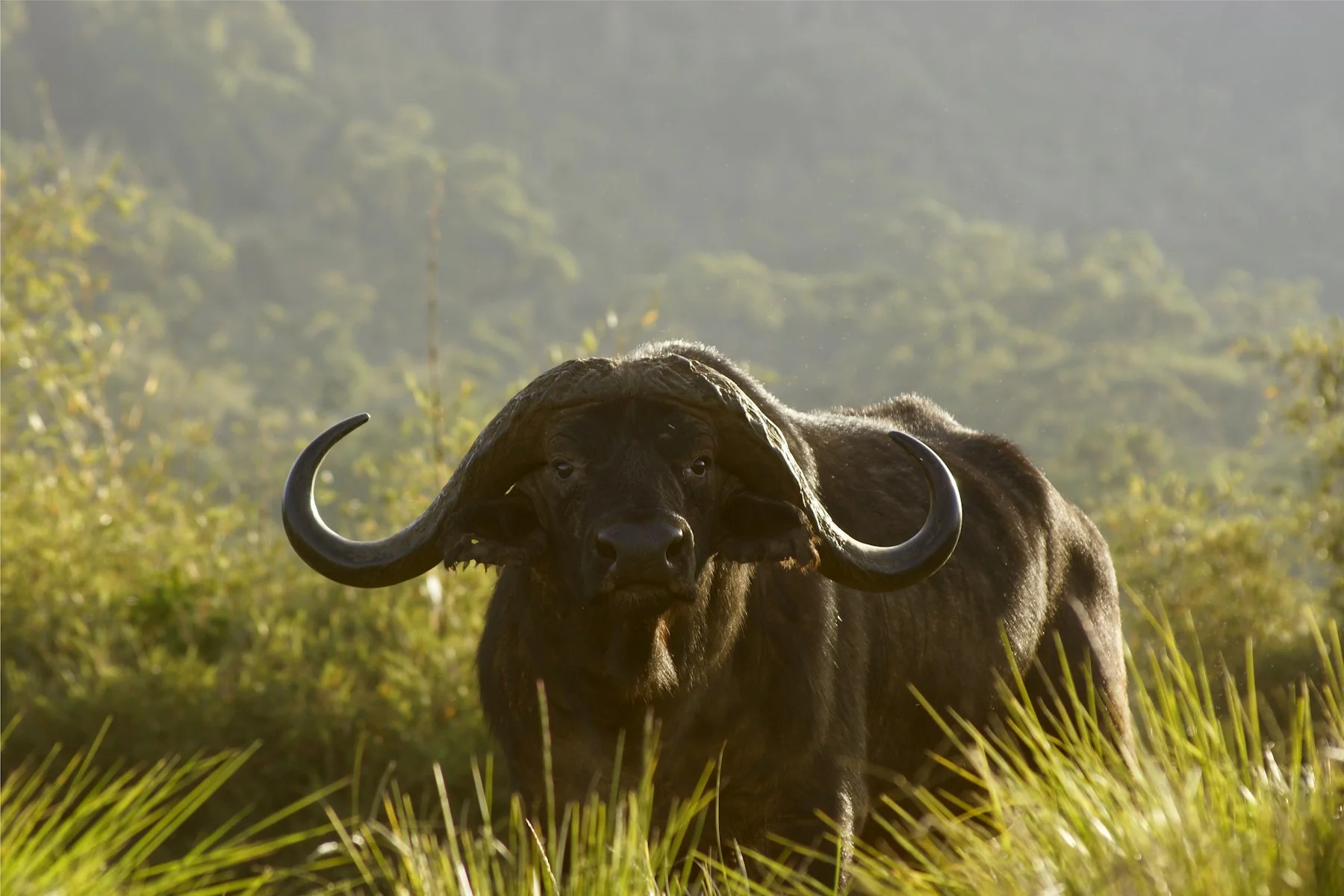
KWS lists elephants, buffalo, black rhino, leopard, serval, giant forest hog, bushbuck, red duiker, suni, reedbuck, eland, warthog and colobus monkeys among the park's wildlife. The mountain bongo is the famous forest specialist, but it is rare and elusive. Black leopards have been recorded in the wider highland region, yet a visitor should never expect one.
Forest wildlife asks for different guiding. Tracks, calls, dung, broken vegetation and recent waterhole activity may matter more than a distant silhouette. An elephant can appear at close range around a bend. Stay in the vehicle unless a ranger or authorised activity leader says otherwise.
| Wildlife | Realistic approach |
|---|---|
| Elephants and buffalo | Drive slowly near forest edges and water, with ample distance |
| Mountain bongo | Treat any sighting as exceptional, not an itinerary promise |
| Leopard and black leopard | Possible, very difficult and never a reason for guarantee language |
| Giant forest hog | Watch clearings and waterholes, especially in quieter periods |
| Colobus and other monkeys | Listen and scan the canopy rather than only the road |
| Forest antelope | Use patient dawn and late-afternoon observation |
The park pairs well with the more open rhino and plains-game viewing described in our planned Ol Pejeta Conservancy guide.
Waterhole lodges change the wildlife rhythm
The Ark and the historic Treetops concept made the Aberdares known for watching animals visit a floodlit waterhole or salt lick from a lodge. This is a patient style of safari. Guests may be called for notable animals, but activity changes nightly and the most interesting encounter may happen while dinner is served or everyone else is asleep.
Ask whether the chosen property is operating on your dates, how access and transfers work, which rooms face the waterhole, whether viewing hides are open, how night notifications operate and what happens when weather affects the road. Do not assume a historic lodge name guarantees a particular animal.
The history of Treetops also appears in the park story because Princess Elizabeth learned there in 1952 that she had become Queen after the death of King George VI. The history is interesting, but current lodging operations and access must be verified separately.
Game drives need patience, not mileage
A good forest drive moves slowly between clearings, water, bamboo and known animal routes. Repeating a promising area may be more productive than crossing the whole park. In the moorland, the drive can become a scenic circuit with short stops at approved viewpoints.
Private vehicle use helps because a group can choose birds, waterfalls or tracking signs without negotiating every stop. Confirm four-wheel drive, recovery equipment, spare tyre, fuel, guide experience and the current KWS road recommendation.
The park speed limit and road rules still apply when no animal is visible. Mist, hidden washouts and wildlife make hurried driving particularly poor here.
Birding across elevation zones
Forest, bamboo, moorland, rivers and open glades create multiple birding habitats. A general safari guide may recognise common species, while a specialist bird guide can work calls, mixed flocks, canopy levels and highland endemics more deliberately.
Plan dawn near the lodge or forest edge, then change elevation as weather allows. Carry binoculars that perform in low light and protect optics from rain. A small notebook or offline checklist helps when phone coverage fails.
Birding can make a misty day rich even when mammals remain hidden. It also rewards a three-night visit because one full day can focus on the high country and another on lower forest.
When should you visit?
The Aberdares are cool by Kenyan safari standards, and rain or mist can appear in any season. Drier periods may make some roads and trails more straightforward, but mountain weather still changes quickly. Wetter periods intensify green landscapes and waterfall flow while increasing mud, cloud and access risk.
Choose dates around the whole Kenya route, then plan Aberdare days with flexibility. A clear morning should be used early rather than saved for an afternoon that may cloud over.
| Conditions | What may improve | What may become harder |
|---|---|---|
| Clear, drier spell | Views, road travel and high-moorland photography | Dust on approach roads and no guarantee of strong waterfall flow |
| Rainy spell | Green forest, streams and dramatic falls | Mud, slippery trails, fog and road closures |
| Cold clear night | Stars and crisp morning light | Waterhole and lodge comfort without warm layers |
| Heavy mist | Atmosphere and intimate forest scenes | Navigation, viewpoints and long cross-park routes |
Do not label any month “dry” in a way that removes the need for waterproof clothing. KWS specifically recommends warm clothing because temperatures can drop rapidly at night.
Getting there from Nairobi
The KWS brochure places the park about 150 kilometres from Nairobi and notes tarmac access via Nyeri and Naro Moru, with the headquarters along the Nyeri to Nyahururu road. The travel day still depends on Nairobi traffic, the chosen gate, stops and the exact lodge.
An early departure can support an afternoon forest drive or lodge transfer. A late international arrival should be followed by a Nairobi night rather than an exhausted mountain journey. When the route continues to Ol Pejeta, Mount Kenya or Nakuru, choose the entry and exit sides together.
Mweiga Airstrip is listed by KWS as the nearest airstrip, but air service, transfers and luggage arrangements must be checked for the actual date. A flight does not remove the lodge road transfer.
Where to stay
The choice is not simply hotel versus camp. It is waterhole lodge, forest base, park banda or campsite, highland hotel outside the gate, or a property positioned for the next destination. Each gives a different start to the day.
| Stay style | Best for | Questions to ask |
|---|---|---|
| Waterhole lodge | Night wildlife viewing and a classic Aberdare rhythm | Transfer system, room view, notification policy and current operations |
| KWS self-catering accommodation | Independent groups and practical park access | Kitchen equipment, bedding, power, water and ranger procedures |
| Campsite | Experienced outdoor travellers | Booking, facilities, fire rules, wildlife safety and weather shelter |
| Hotel outside a gate | Comfort, value or route convenience | Gate travel time, opening-hour delay and full-day transport |
| Nyeri or Nanyuki area stay | Combining the park with wider highlands | Whether the park becomes a genuine day or only a rushed excursion |
Name the exact property and room. Confirm heating, hot water, power, steps, luggage transfer, meal times, dietary needs and the route between vehicle and room. Highland comfort depends more on warmth and dryness than decorative luxury.
Camping and self-catering
Camping can bring the mountain atmosphere close, but it increases the importance of weather, food storage, fire control, wildlife safety and communications. Reserve the correct site, carry suitable shelter and confirm whether a ranger or other arrangement is required.
Self-catering accommodation needs an inventory. Ask what cooking equipment, fuel, refrigeration, bedding, towels, electricity and water are supplied. Shops outside the gate may not be convenient after entry, and leaving for forgotten food can consume the day.
Never feed wildlife or leave food accessible. Carry all litter out, extinguish fires fully and follow current KWS instructions.
Combining Aberdare with the rest of Kenya
The park sits well in a central-highlands route. Ol Pejeta adds open-country rhinos and conservation experiences. Laikipia adds private conservancies, varied activities and wide landscapes. The planned Mount Kenya National Park guide will cover longer trekking and alpine ambition. Lake Nakuru moves the journey toward the Rift Valley and the Mara.
| Combination | Why it works | Minimum planning thought |
|---|---|---|
| Aberdare plus Ol Pejeta | Forest and moorland followed by open rhino country | Use at least two nights in each when both matter |
| Aberdare plus Laikipia | Highland scenery and private-conservancy activities | Name the exact Laikipia property and transfer |
| Aberdare plus Mount Kenya | Waterfalls and forest with a separate mountain trek | Avoid treating both as one casual hiking day |
| Aberdare plus Lake Nakuru | Highland road journey into Rift Valley rhino habitat | Protect the gate and road timing |
| Aberdare plus Masai Mara | Deep landscape contrast | Allow enough total nights that transfers do not consume the trip |
Our planned Laikipia safari guide and Lake Nakuru National Park guide will help place the park in a wider central Kenya itinerary.
Families and children
Children who enjoy waterfalls, maps, birds and short walks may love the park. Those expecting constant lions may find the forest quiet. Explain that hidden wildlife, animal tracks and changing cloud are part of the experience.
Use a private vehicle, warm clothing, waterproof shoes, snacks and short observation goals. Keep children beside an adult at viewpoints and never let them approach buffalo, elephants or monkeys. Confirm minimum ages and safety arrangements for every hike.
Family rooms, heating, meal timing, waterhole railings and night-call arrangements should be checked by exact property. The Kenya safari with children guide covers the wider route, vehicle and health questions.
Travellers with limited mobility
The Aberdares can work for some limited-mobility travellers, but assumptions are risky. Vehicle step height, rough roads, lodge stairs, wet paths, viewing decks and toilet access need exact answers. A scenic drive and waterhole lodge may be more suitable than a trail, while a particular room may still have unavoidable steps.
Ask for measurements, photographs and a route from parking to room, dining area and viewing deck. Confirm whether a wheelchair can remain assembled, whether staff assistance is available and whether rain changes the surface.
Our accessible Kenya safaris guide provides a detailed planning checklist.
Photography in mist and forest
The park rewards wide lenses for ridges and falls, a telephoto for waterhole wildlife, and patience with low light. Mist can simplify the scene instead of ruining it. Expose carefully around white cloud and bright water, protect equipment from rain and carry more batteries than a cold day seems to require.
A polarising filter may help with wet vegetation and glare, but it also reduces light in forest. A beanbag works in the vehicle. A light tripod may suit approved viewpoints or lodge decks when permitted. Drones require explicit current permission and should never be assumed lawful in a national park.
Keep lenses in a dry bag when moving between warm rooms and cold damp air. Condensation and fine rain can damage equipment even when a downpour never arrives.
Safety in mountain and wildlife country
Follow KWS gate times, speed limits, road signs and ranger instructions. Carry drinking water, food, warm clothing, rain protection, first aid, a map or offline navigation, communications and reserve fuel. Tell someone the planned route and expected exit.
Do not leave the vehicle in wildlife areas without authorisation. Buffalo and elephants can be hidden by vegetation. On foot, stay with the approved guide or ranger, keep the group together and turn back before weather or fatigue removes the safety margin.
At a waterfall or ravine, wet ground and fog are hazards even when no wildlife is present. The safest viewpoint is the approved viewpoint.
Responsible travel
Keep the park quiet, carry litter out, use reusable drinking containers and never feed animals. Do not pressure a guide to approach an elephant path or leave the road for a photograph. Forest soils and moorland vegetation can be damaged by careless driving and trampling.
Choose community and cultural experiences whose host, fee and photography rules are clear. Buy crafts by choice, not through a compulsory commission stop. Ask how the lodge manages waste, water, energy and local employment, but judge specific practices rather than a vague “eco” label.
The rare bongo and black leopard should not be turned into clickbait promises. Honest expectation protects both the traveller and the destination.
What independent travellers say
Public trip discussions are valuable when they reveal why a less-common park caught someone's attention. These are short, exact excerpts linked to the original posts.
“I wish I could’ve fit in aberdare national park for some good hiking.”
That traveller had deliberately broken up long safari drives with time on foot. The comment captures the park's strongest role in a varied Kenya route. Read the hiking-focused trip report.
“Go hiking in the aberdares or Mt Kenya, stay at lake naivasha but not at a big lodge.”
The advice came in a discussion about seeing more of Kenya than a chain of similar safari properties. Read the itinerary conversation.
“Heaven ain’t close to a place like this!”
It is an emotional reaction, not a planning fact, but it shows how strongly the open highland scenery can land. See the photographs and discussion.
The same discussion included a practical reminder: “it also means you have to check the best gate to use or have an offline map ready.” That advice belongs beside every beautiful moorland photograph. Read the original comment.
Watch the landscape before choosing
Independent video is useful here because the park can be difficult to imagine from a wildlife list. This solo-travel episode at The Ark and in Aberdare National Park shows the waterhole-lodge rhythm and the reality of forest roads. It is an independent traveller's account, not a substitute for current KWS access advice.
This Kenya travel vlog including Aberdare National Park places the highlands within a broader Nairobi and safari journey. Watch for terrain, clothing and driving pace rather than treating one person's sightings as a promise.
Videos age. Confirm current gates, trails, lodges and regulations directly before travel.
Use this Aberdare National Park guide as the planning framework, then let the park's current conditions decide the final road, trail and viewpoint sequence.
What should an Aberdare quote include?
The price depends on visitor category, accommodation, vehicle, guide or ranger, hikes, meals and the wider route. A simple total is not enough.
| Quote line | Details required |
|---|---|
| Park access | Visitor category, number of entry days, vehicle fee and payment method |
| Gates | Named entry and exit gates with route logic |
| Vehicle | Four-wheel drive, private or shared use, recovery equipment and fuel |
| Accommodation | Property, room category, heating, meals and waterhole-view details |
| Hiking | Exact trail, guide or ranger, transport, food, water and cancellation plan |
| Waterfalls | Named circuit, current access and realistic time |
| Transfers | Nairobi pickup, next destination and all road sectors |
| Exclusions | Tips, drinks, equipment, personal purchases and insurance |
| Terms | Deposit, balance, weather changes, cancellation and refund rules |
Use the Kenya safari cost guide to compare the complete route rather than a room price without transport, park access or activities.
What to pack
Carry a warm mid-layer, waterproof shell, walking shoes with grip, spare socks, hat, gloves for exposed hikes, reusable water bottle, sunscreen, insect repellent, binoculars, camera protection, dry bag, personal medication and a compact first-aid kit. Hikers need route-specific food, water, map, navigation and emergency equipment.
Soft luggage is useful when the journey includes a small aircraft. Keep one dry change of clothes accessible in the vehicle. The Kenya safari packing guide covers a wider multi-park trip.
Booking checklist
- Decide whether the priority is hiking, waterfalls, waterhole wildlife, history or a combination.
- Use two nights for a genuine first visit.
- Name the entry and exit gates.
- Confirm the current road or trail condition with KWS.
- Book the exact lodge, room and meal basis.
- Confirm private or shared vehicle use and four-wheel-drive equipment.
- Name every waterfall and hiking route in the plan.
- Confirm guide or ranger arrangements and emergency responsibility.
- Carry warm and waterproof clothing in every season.
- Set a turnaround time for moorland routes.
- Keep bongo, leopard and wildlife language conditional.
- Check gate, park and activity fees for the actual travel date.
- Protect the next destination from an overambitious cross-park day.
- Put weather-change and cancellation terms in writing.
Frequently asked questions
How many nights should I stay in Aberdare National Park?
Two nights are the strongest first-visit minimum because they create one full day for the moorland, waterfalls or a planned hike plus separate forest or waterhole time.
Is the Aberdare a good wildlife park?
Yes, but dense forest makes sightings less predictable than on open savannah. Elephants, buffalo, forest mammals, monkeys and birds can be rewarding. Mountain bongo and leopard sightings are exceptional.
Can I see the mountain bongo?
It is possible and very rare. Never choose a short visit because someone promised a bongo. Value the habitat, tracks and whole forest community.
Can I hike without a guide?
Do not assume so. Confirm the current trail, guide or KWS ranger requirements, weather, wildlife safety and access directly before the hike.
Which waterfall is the most famous?
Karuru Falls is the best-known and the KWS brochure describes an overall drop of about 300 metres. Gura, Chania and Magura falls add different viewpoints and routes.
Which gate should I use?
The correct gate depends on the previous night, lodge, waterfall or trail, current road conditions and next destination. Ask for both entry and exit gates in the itinerary.
Is one night enough?
One night can suit a waterhole-lodge experience or road break. It is usually too short for both the high moorland and lower forest.
Is the park suitable for children?
Yes for children comfortable with cool weather, patient wildlife viewing and safe viewpoint rules. Confirm minimum ages for hikes and use a private vehicle when possible.
When is the best time to visit?
The park can be visited year-round. Drier spells may improve some roads and trails, while wetter conditions strengthen waterfalls and greenery. Warm and waterproof layers are always sensible.
Can NLS combine the Aberdares with Ol Pejeta or the Masai Mara?
Yes. The park combines naturally with Ol Pejeta, Laikipia, Mount Kenya or Lake Nakuru before a longer route continues to the Mara.
Let the highlands be different
Aberdare National Park does not need to imitate the Mara. Its value lies in a road disappearing into cloud, buffalo tracks beside bamboo, cold air above the tree line and water falling into a ravine you cannot fully see.
Share your dates, hiking experience, wildlife interests, preferred comfort and wider Kenya route. We will choose the gates, lodge, full-day plan, vehicle and backup options around the mountain as it really is.
Tell us what you want from the Aberdares
Share your dates, hiking ability, wildlife interests, preferred comfort and the destinations before and after the park. We will shape the gates, lodge and full-day plan around current conditions.