
Kenya Birding Safaris: Routes, Habitats and Endemic Birds
Build a Kenya journey around savannah, wetland, forest, highland and coast, with enough time to watch rather than race.

- Who should choose a birding safari in Kenya?
- Why Kenya works so well for birders
- Start with habitats, not a long wish list
- Nairobi: more than an arrival night
- The Rift Valley lakes: waterbirds and changing water
- Masai Mara: grassland birding beside the big game
- Amboseli: wetlands beneath Kilimanjaro
- Samburu and the arid north
- Arabuko-Sokoke and the Kenya coast
- Taita Hills: tiny forests with global importance
- Kinangop, Aberdare and Mount Kenya highlands
- Kakamega Forest and western Kenya
- How many days do Kenya birding safaris need?
- Sample route ideas
- Best time for birding in Kenya
- The guide matters more than the checklist
- What a birding day actually looks like
- Target species, realistic expectations and field records
- Birding with comfort, health and access needs
- Bird families beginners are likely to notice
- Vehicle, walking and photography setup
- Ethical birding in Kenya
- Accommodation for a birding itinerary
- What affects the cost?
- Packing list for a Kenya birding safari
- Build the route around the birds you care about
- Frequently asked questions
The first bird of a Kenya safari is often seen before the safari has properly begun. A Marabou Stork circles above Nairobi traffic. A flash of iridescent blue leaves a roadside wire. At the hotel garden, an African Paradise Flycatcher turns breakfast into the first entry on the trip list.
Then the country opens. Flamingos feed in a Rift Valley lake, Secretarybirds stride through Mara grass, hornbills cross the dry northern sky, and a tiny forest bird calls from a dark coastal thicket. Kenya rewards the birder who looks beyond one famous park and follows habitat.
This guide explains where to go, how long to stay, which seasons change the experience and how to build a safari that still feels like a holiday.
Who should choose a birding safari in Kenya?
You do not need a life list, a telescope or the ability to identify a cisticola by one note.
A first-time birder can enjoy large, visible species such as cranes, eagles, bee-eaters, rollers, hornbills, storks and flamingos. A family can make birds part of a wider safari without turning every day into a dawn-to-dusk survey. A photographer may concentrate on clean backgrounds, behaviour and light. An experienced birder may build the route around a small number of endemic or range-restricted targets.
The planning changes with the traveller:
| Traveller | Best trip rhythm | What to tell the planner |
|---|---|---|
| First safari and new birder | Big-game parks with a bird-aware guide | Favourite animals, comfortable pace and interest in learning |
| Dedicated lister | Longer stays across contrasting habitats | Target list, heard-only rules and tolerance for long drives |
| Bird photographer | Private vehicle, slow drives and repeated sessions | Lens setup, preferred subjects and seat requirements |
| Family | Shorter sessions, lodge gardens and obvious species | Children's ages, attention span and non-bird priorities |
| Traveller with limited mobility | Vehicle birding and carefully audited properties | Transfer, seating, room, bathroom and walking limits |
| Mixed-interest couple | Birding mornings and shared wildlife highlights | Which sessions can be specialist and which should stay general |
Design my Kenya birding safari
Share your dates, target species, birding level, preferred pace and wider wildlife interests. We will shape the route around habitat and realistic field time.
Why Kenya works so well for birders
Kenya compresses dramatic habitat changes into a practical safari country. A single journey can move from Nairobi gardens to highland forest, Rift Valley lakes, open savannah, papyrus wetland, semi-arid thorn scrub and Indian Ocean mangrove.
Each change resets the bird community. The open plains favour larks, pipits, bustards, raptors and ground birds. Acacia woodland brings barbets, woodpeckers, shrikes, starlings and sunbirds. Lakes and swamps add pelicans, herons, rails, kingfishers, ducks and waders. Highland and coastal forests hold some of the country's most localised birds.
Kenya also lies on the African-Eurasian flyway. BirdLife describes the coast's Mida Creek as an important passage and wintering ground for Palearctic migrants. Resident species remain the foundation of a trip, while northern migrants can make wetlands and shorelines especially busy during their season.
The practical advantage is choice. A traveller can enjoy excellent birding on a classic Kenya wildlife safari or commission a route where birds decide every overnight stop.
Start with habitats, not a long wish list
A target list is useful, but habitat is the stronger skeleton for the route. Many disappointing birding itineraries try to cover too much ground and leave too little time at the places where difficult birds live.
| Habitat | Strong Kenya regions | Birding character |
|---|---|---|
| Open savannah | Masai Mara, Amboseli, Tsavo | Bustards, larks, raptors, ground birds and mixed wildlife |
| Freshwater lake and marsh | Nakuru, Naivasha, Baringo, Amboseli | Waterbirds, kingfishers, herons, pelicans and migrant waders |
| Semi-arid thorn scrub | Samburu, Buffalo Springs, Tsavo East | Hornbills, coursers, sandgrouse, parrots and dry-country specialists |
| Highland forest | Aberdare, Mount Kenya, Kakamega | Turacos, forest robins, greenbuls, sunbirds and secretive understorey birds |
| Montane grassland | Kinangop, Timau, Mau Narok | Sharpe's Longclaw and highland grassland specialists |
| Coastal forest | Arabuko-Sokoke, Dakatcha, Taita fragments | Range-restricted and threatened forest birds |
| Mangrove and tidal creek | Mida Creek, Sabaki estuary | Migrant waders, terns, reef herons and mangrove-edge species |
| Papyrus wetland | Yala and Lake Victoria margins | Papyrus Gonolek, Papyrus Yellow Warbler and wetland specialists |
A route with four well-chosen habitats usually produces a richer experience than a route with eight rushed parks.
Nairobi: more than an arrival night
Nairobi is a useful first birding chapter. Hotel gardens can introduce common highland species without a long transfer. Nairobi National Park combines open grassland, scattered woodland, dams and a city skyline. It can produce ostriches, bustards, cranes, raptors, lapwings and waterbirds alongside rhino, giraffe and lion.
Karura Forest, the National Museums of Kenya grounds and other green spaces can suit a gentle first or final session. The precise site depends on the day, traffic, opening conditions and whether the group wants forest birds, photography or a relaxed walk.
An arrival-day birding session should remain flexible. Long-haul flight delays and fatigue can turn an ambitious afternoon into a chore. A full morning after a Nairobi night is more reliable.
The Rift Valley lakes: waterbirds and changing water
Lake Nakuru National Park is one of Kenya's best-known birding stops. Kenya Wildlife Service describes it as an ornithological paradise with approximately 450 bird species. The lake, shoreline, woodland and escarpment create more than a flamingo spectacle. Pelicans, cormorants, herons, storks, ducks, waders, raptors and woodland species can all shape the day.
Flamingo numbers move. Water level, salinity, food and wider Rift Valley conditions influence where birds gather. No responsible itinerary should promise a solid pink shoreline on a particular date.
Lake Naivasha offers boat-based viewing of kingfishers, African Fish Eagles, cormorants, pelicans and herons. Boat trips should keep a respectful distance, follow local safety instructions and never crowd feeding or nesting birds.
Lake Baringo adds drier country and lakeshore habitats. Local bird guides can be particularly valuable because they know seasonal sites, current access and where a short walk may produce more than a long vehicle search.

Masai Mara: grassland birding beside the big game
The Masai Mara is not only a mammal destination. Its grasslands, streams, wooded edges and escarpments support a broad safari bird community.
Secretarybirds, Southern Ground Hornbills, Grey Crowned Cranes, bustards, ostriches, lapwings and raptors are conspicuous possibilities. Smaller birds reward a slower vehicle: cisticolas rise from the grass, larks use bare patches, waxbills gather near water and swallows sweep above herds.
The greatest planning risk is allowing the search for cats to consume every hour. A bird-aware guide can use mammal sightings without abandoning the smaller life around them. Conservancies may add guided walks and night activities where permitted, although the exact rules and inclusions vary.
Amboseli: wetlands beneath Kilimanjaro
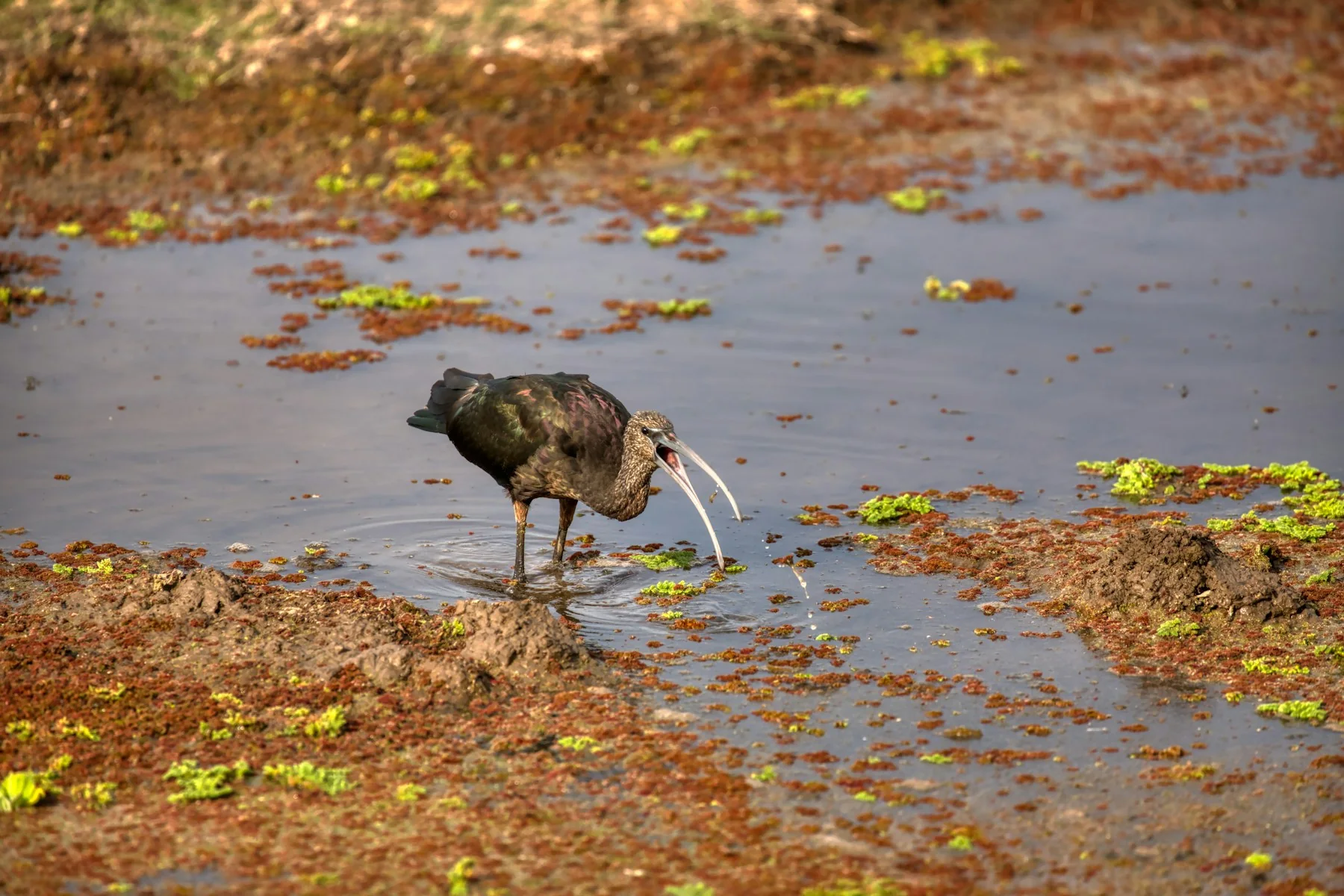
Amboseli National Park combines open plains, acacia woodland and permanent swamp systems. The contrast is the point. A dry foreground can suddenly give way to sedges, channels and feeding waterbirds.
Herons, egrets, ibises, storks, jacanas, rails, kingfishers and birds of prey can share the landscape with elephants. Flamingos may occur, but they should be treated as a possibility rather than a guaranteed feature.
Early drives give cooler conditions and softer light. Midday can still be productive at water, especially when the group is willing to stop, scan and let activity reveal itself. Read the Amboseli weather guide when planning clothing and photography.
Samburu and the arid north
Samburu changes the visual language of the trip. Dry riverbeds, doum palms, rocky country and thorn scrub replace the wetter southern grasslands.
This is excellent country for hornbills, parrots, starlings, coursers, sandgrouse, falcons, eagles and other arid-zone birds. The Ewaso Ng'iro River concentrates activity when surrounding country is dry. Mammals such as Grevy's zebra and reticulated giraffe make the area especially good for mixed-interest groups.
A private vehicle helps a birding group stop for small subjects without pressure from guests focused only on large mammals. It also makes camera positioning easier.
Arabuko-Sokoke and the Kenya coast
Arabuko-Sokoke is a specialist destination, not a quick beach excursion with guaranteed sightings. The forest's different vegetation types matter, and shy species can require patience, listening and a local guide.
Nature Kenya identifies globally threatened birds including Clarke's Weaver, Sokoke Pipit, Amani Sunbird, Spotted Ground Thrush and Sokoke Scops Owl. The official management plan places the forest within the East African coastal forests Endemic Bird Area and documents its exceptional conservation importance.
Mida Creek adds mangrove and tidal birding. BirdLife lists Greater and Lesser Sand Plovers, Grey Plover, Sanderling, Curlew Sandpiper, Whimbrel and Little Stint among important congregating species. Tide changes where birds feed and roost, so a serious session should be timed rather than attached randomly to a beach day.
The coast works beautifully after a Kenya safari and beach holiday, but dedicated birders should give forest and creek separate time.
Add coastal forest birding
Share your dates, target species, birding level, preferred pace and wider wildlife interests. We will shape the route around habitat and realistic field time.
Taita Hills: tiny forests with global importance
The Taita Hills rise above the plains near Voi. Their remaining forest fragments hold birds with extraordinarily small ranges.
BirdLife highlights the Taita White-eye, Taita Thrush and Taita Apalis. These are not casual roadside targets. Habitat fragmentation, access, local conditions and the birds' own behaviour affect the search. A specialist local guide is essential, and the visit should support rather than disrupt community conservation.
Taita can be paired with Tsavo East and Tsavo West, but the itinerary needs separate forest time. A game drive through Tsavo does not substitute for walking slowly in the appropriate highland habitat.
Kinangop, Aberdare and Mount Kenya highlands
The Kinangop Grasslands are a highland mosaic rather than a conventional national park. Nature Kenya describes the area as a stronghold of the Kenya-endemic Sharpe's Longclaw and notes the presence of Aberdare Cisticola and more than 200 recorded bird species.
Much suitable grassland is privately owned. Access should be arranged through legitimate local conservation partners and landholders. The birder is entering a working landscape, not an empty viewing platform.
Aberdare National Park adds montane forest, bamboo, moorland and cold, misty conditions. Jackson's Francolin, sunbirds, raptors and forest species can be part of the search. Warm waterproof layers are useful even when the rest of the safari is hot.
Mount Kenya's forest and high-altitude routes add another set of habitats. The best site depends on target species, walking ability, weather and time.
Kakamega Forest and western Kenya
Kakamega carries an unmistakably western forest character. The experience is slower and more acoustic than savannah birding. Greenbuls, forest robins, turacos, hornbills, barbets and canopy flocks reward a guide who recognises calls and knows where paths meet different forest structures.
Humidity, rain and low light affect clothing and photography. A fast lens can help, but fieldcraft matters more. Walking quietly, watching fruiting trees and staying with a mixed flock often produces better results than covering kilometres.
Further west, Yala Swamp and Lake Victoria papyrus habitats hold specialised birds. BirdLife identifies Yala as an important site for Papyrus Yellow Warbler and Papyrus Gonolek. These wetlands deserve their own conservation-minded extension rather than an unrealistic detour inside a short classic safari.
How many days do Kenya birding safaris need?
Trip length should follow ambition.
| Available time | Sensible scope | Best for |
|---|---|---|
| 5 to 7 days | Nairobi plus two regions such as Nakuru and Mara | First bird-and-mammal safari |
| 8 to 10 days | Rift Valley, a savannah park and one contrasting habitat | Balanced birding with comfortable pace |
| 11 to 14 days | Central highlands, Rift Valley, Mara and Samburu or coast | Keen birders wanting broader habitat coverage |
| 15 to 18 days | Add Kakamega, Taita or Arabuko-Sokoke | Specialist target trip |
| 19 days or more | Western papyrus, coast and multiple endemic areas | Experienced birders with a detailed target list |
Every additional region costs transfer time. The question is not how many pins fit on a map, but how many dawns the itinerary protects in good habitat.
Sample route ideas
Seven-day first birding safari
- Nairobi arrival and garden birding;
- Lake Nakuru for wetland, woodland and rhino;
- Lake Naivasha for a boat session and shore habitats;
- Masai Mara for grassland birds, raptors and big game;
- return to Nairobi.
Ten-day birding and big-game route
- Nairobi National Park;
- Amboseli wetlands and plains;
- Tsavo West or Taita foothills;
- Lake Naivasha and Nakuru;
- Masai Mara;
- Nairobi departure.
Fourteen-day habitat route
- Nairobi and central highlands;
- Kinangop grasslands and Aberdare;
- Lake Baringo and Nakuru;
- Masai Mara;
- Samburu and Buffalo Springs;
- return to Nairobi.
Eighteen-day specialist route
- central highlands;
- Rift Valley lakes;
- Kakamega and western wetland extension;
- Masai Mara;
- Taita Hills;
- Arabuko-Sokoke and Mida Creek;
- coast departure.
These are route shapes, not promises of particular species. A final trip should be checked against access, recent field information, weather, flight schedules and the target list.
Best time for birding in Kenya
Kenya has worthwhile resident birds throughout the year. Timing changes the mix, road conditions, vegetation, light and the presence of migrants.
The northern winter period can bring Palearctic migrants to wetlands, shorelines and open country. Rainy periods can trigger breeding activity, fresh plumage, display and greater insect abundance. Dry periods can concentrate birds around water and make some roads easier.
There is no single month that maximises every target. Forest birds, coastal migrants, flamingo concentrations and grassland breeders respond to different conditions. Start with the priority habitats, then choose the dates.
Our best time to visit Kenya guide gives the broader weather and safari context.
The guide matters more than the checklist
A specialist bird guide hears what most visitors miss. They know whether the distant note is worth leaving the vehicle, how to position without blocking another group, when to wait and when to move.
Before booking, describe the desired level:
- casual birding alongside mammals;
- keen birding with early starts;
- target-led specialist birding;
- bird photography;
- a group with mixed experience;
- a private guide plus local site guides.
Local guides remain valuable even when a national guide travels throughout the safari. They understand current paths, land access, tides, flowering and fruiting trees, and recent activity at difficult sites.
What a birding day actually looks like
Birding days begin early because sound and activity often peak around first light. That does not mean every day needs to be exhausting.
A savannah day may start with a pre-breakfast drive, pause for a late breakfast, continue around a wetland after lunch and finish with an easy sunset session. A forest day may place the longest walk in the cool morning, return to the lodge during midday heat or rain, then visit an edge habitat in the late afternoon. A tidal day at the coast is organised around water, not the hotel clock.
The group should agree on pace before the first drive. Some birders want to identify every bird. Others want to move quickly between target species. Photographers may stay with one cooperative subject while listers prefer the next habitat.
| Time of day | Typical opportunity | Planning note |
|---|---|---|
| Before sunrise | Owls, nightjars, dawn calls and movement to feeding areas | Check park hours and never disturb a roost |
| Early morning | Peak song, active feeding and soft photography light | Protect this time from unnecessary transfers |
| Late morning | Raptors rising, waterbird scans and open-country species | Heat haze can affect distant photography |
| Midday | Lodge garden, waterhole, lunch and checklist review | A useful rest on a long trip |
| Late afternoon | Renewed activity and warm light | Finish close enough to respect gate times |
| After dark | Permitted night drives or listening near the lodge | Rules differ by park, reserve and conservancy |
Packed breakfasts can save the best morning hours, but they should not become automatic. Some travellers need a proper seated meal, medication at a fixed time or a slower start every few days. A sustainable rhythm usually produces more attention and better sightings than fatigue.
Target species, realistic expectations and field records
A birder’s view: After photographing birds in Amboseli and the Mara, one traveller wrote, I really enjoyed the parts of Kenya we went to.
Their Kenyan safari bird gallery and species list includes rollers, cranes, storks, raptors and grassland birds.
A useful target list contains locations and priorities, not just names copied from a national checklist.
Mark each species as high priority, welcome or already seen. Add the expected habitat and region. A coastal forest target should not influence time in Samburu, and a papyrus specialist does not belong in a general Rift Valley lake search.
Use recent field information as guidance rather than a guarantee. A bird recorded yesterday can be silent today. A local guide may recommend a different path because fruiting, fire, rain, grazing or access has changed.
At the end of each day, reconcile the list with the guide while details are fresh. Note whether the identification was visual or heard, the habitat, behaviour and any uncertainty. Photographs and sound recordings can support later identification, but recordings must never justify approaching or stressing a bird.
For sound recording, turn off vehicle engines when safe, reduce conversation and keep microphone handling quiet. Do not play a call back simply because it has been recorded. Playback can draw a territorial bird away from feeding, a mate or a nest.
Birding with comfort, health and access needs
A birding trip can involve longer stationary periods than a general safari. Tell the planner about back, neck, knee, circulation, heat, hearing or vision concerns.
Vehicle seating matters. A traveller may be able to walk well but struggle to twist through a roof hatch. Another may need an end seat and frequent stops. Forest paths can be muddy, root-covered and uneven. High-altitude sites may feel cold and tiring. Boat access can involve steps and unstable footing.
The itinerary can respond with:
- a private vehicle and a consistent seat;
- shorter morning and afternoon sessions;
- a beanbag rather than handholding a heavy lens;
- lodge gardens and waterholes between drives;
- level-path or vehicle-based alternatives;
- porter or equipment assistance arranged in advance;
- slower altitude transitions;
- one rest afternoon after several early starts.
For a mobility-focused route, use the detailed accessible Kenya safari planning guide. Accessibility should be verified as a chain from aircraft and vehicle to the exact room and birding site.
Bird families beginners are likely to notice
One pleasure of Kenya is learning recognisable groups before tackling individual species.
| Group | Where they often catch attention | A useful first clue |
|---|---|---|
| Bee-eaters | Open country, woodland edges and riverbanks | Slender shape, bright colour and aerial insect hunting |
| Rollers | Savannah perches and roadside wires | Stocky profile and vivid wing colour in flight |
| Kingfishers | Lakes, rivers, woodland and even dry country | Large head, direct flight and patient perching |
| Hornbills | Woodland, thorn scrub and forest canopy | Long curved bill and heavy wingbeats |
| Sunbirds | Lodge gardens, forest edge and flowering shrubs | Small size, fine bill and iridescent males |
| Raptors | Plains, escarpments, thermals and tall trees | Start with shape, flight style and habitat before plumage |
| Weavers | Wetlands, grasslands, gardens and acacia | Social behaviour and intricately woven nests |
| Waders | Lake margins, estuaries and mudflats | Leg length, bill shape, feeding action and tide position |
The guide can teach one decision at a time. Is the bird swimming, wading, climbing bark, hovering, soaring or feeding on the ground? Behaviour and habitat often narrow the options before colour does.
Vehicle, walking and photography setup
A private Kenya safari Land Cruiser gives the group control over stops and pace. Window access, roof position and seat rotation should be agreed at the start. Large lenses need safe storage rather than a pile of soft bags on the floor.
Forest birding is often on foot. Tell the planner about walking distance, steep ground, balance, vision, hearing and mobility needs. Some excellent birding can be done from vehicles, lodge grounds, boats and level paths when the route is designed carefully.
For photography, bring enough memory, spare batteries, a rain cover and a cleaning kit. A beanbag can be more practical than a tripod in a vehicle. In forest, a monopod or handheld setup may move more easily on narrow paths.
Never ask a guide to push too close for a photograph. A smaller bird behaving naturally is a better encounter than a distressed bird filling the frame.
Ethical birding in Kenya
The bird's welfare comes first.
- Keep a respectful distance from nests, display sites and roosts.
- Do not clear vegetation for a photograph.
- Avoid repeated playback, especially around breeding birds and sensitive species.
- Keep groups small on narrow forest trails.
- Follow park, reserve, forest and community access rules.
- Use recognised local guides and pay agreed guiding and access fees.
- Do not publish precise locations for vulnerable nests or highly sensitive birds.
- Carry out litter and avoid single-use waste where possible.
Some species in this guide survive in tiny, pressured habitats. A visit should leave money, respect and conservation value behind.
Plan an ethical specialist birding route
Share your dates, target species, birding level, preferred pace and wider wildlife interests. We will shape the route around habitat and realistic field time.
Accommodation for a birding itinerary
Location often matters more than luxury level. A modest property beside the target habitat can outperform a beautiful lodge that adds two hours of driving every morning.
Ask about:
- distance to the birding site;
- early breakfast or packed breakfast;
- secure storage and charging;
- hot water and drying space after forest rain;
- garden and waterhole birding;
- late dinner after an evening session;
- guide accommodation;
- single-room supplements;
- quiet rooms for early sleepers.
At big-game parks, review our growing Kenya safari accommodation directory and match the property to the gate, habitat and daily plan.
What affects the cost?
Kenya birding safaris are shaped by the same major costs as other safaris, plus specialist time.
| Cost driver | Why it changes the price |
|---|---|
| Private vehicle | Gives the group control over every stop and usually prices best when shared |
| Specialist guide | Reflects field skill, preparation and long guiding days |
| Local site guides | Adds current knowledge and supports conservation communities |
| Route length | More distance means more fuel, vehicle days and guide time |
| Domestic flights | Save time but add fares, baggage rules and transfers |
| Single rooms | Dedicated birders often travel alone, so supplements matter |
| Remote habitats | Access, simple accommodation and logistics may cost more than expected |
| Park and forest fees | Differ by protected area and visitor category |
A clear proposal should separate core route costs, optional extensions and personal exclusions. It should also state whether game drives are private and which local guides or access fees are included.
Packing list for a Kenya birding safari
- binoculars comfortable enough to use all day;
- field guide or birding app with offline access;
- notebook or digital checklist;
- camera, batteries, cards and weather protection;
- neutral layers for hot plains and cold highlands;
- waterproof jacket;
- comfortable walking shoes or boots;
- hat, sunscreen and insect repellent;
- reusable water bottle;
- small torch or headlamp;
- dry bag or waterproof pouch for electronics;
- any medication and a compact personal first-aid kit.
A telescope can be valuable at lakes, estuaries and open grasslands. It is less useful on every forest path. For fly-in sectors, confirm the baggage allowance and dimensions before packing heavy optics.
Build the route around the birds you care about
Send a target list if you have one, but mark priorities. Separate dream species from essential targets and species already seen. Explain whether heard-only records count. Note whether the group would spend half a day on one difficult forest bird or would rather keep moving.
If this is a mixed wildlife holiday, say so. Kenya can give a first-time visitor lions at dawn, a new sunbird at breakfast and a wetland full of migrants in the afternoon. The itinerary does not have to choose between birds and mammals unless the traveller wants it to.
Turn my target list into a route
Share your dates, target species, birding level, preferred pace and wider wildlife interests. We will shape the route around habitat and realistic field time.
Frequently asked questions
Is Kenya good for birdwatching?
Yes. Its concentration of savannah, wetland, forest, highland, arid and coastal habitats makes it suitable for both first-time and specialist birders.
Do I need a specialist bird guide?
A general safari guide can handle casual birding. A specialist is strongly recommended for target-led trips, calls, difficult identification and localised species.
Can I combine birds with the Big Five?
Yes. Masai Mara, Lake Nakuru, Amboseli and other major parks provide strong birding alongside large mammals.
Are rare birds guaranteed?
No. Birds move, call irregularly and respond to weather, food, water and breeding conditions. The route can improve the chance, never guarantee the sighting.
Which Kenya destination is best for endemic birds?
There is no single answer. Kinangop, Taita Hills, Arabuko-Sokoke and other specialist habitats hold different range-restricted birds.
When do migrant birds visit Kenya?
Many Palearctic migrants are present during the northern winter, but timing differs by species and site.
Can beginners enjoy a Kenya birding safari?
Absolutely. Large colourful species, raptors and waterbirds make Kenya rewarding before a traveller learns the smaller groups.
Is a private vehicle necessary?
It is not mandatory, but it gives birders control over stops, pace, seating and photography.
Can children join?
Yes. Keep sessions shorter, mix birds with mammals, and use lodge gardens, waterholes and boat trips to hold interest.
What should I send when requesting a quote?
Send dates, traveller count, target list, preferred pace, accommodation level, walking ability, equipment, single-room needs and non-bird priorities.
Start planning my Kenya birding safari
Share your dates, target species, birding level, preferred pace and wider wildlife interests. We will shape the route around habitat and realistic field time.
Share your target list and safari rhythm
Tell us which birds matter, how hard you want to search, your walking and vehicle needs, and the mammals or landscapes you also want to enjoy.