
What to Wear on Morning, Day and Night Game Drives in Kenya
The same vehicle can feel cold before sunrise, warm after breakfast and windy again near dusk. Dress for changing conditions, not for a safari costume.
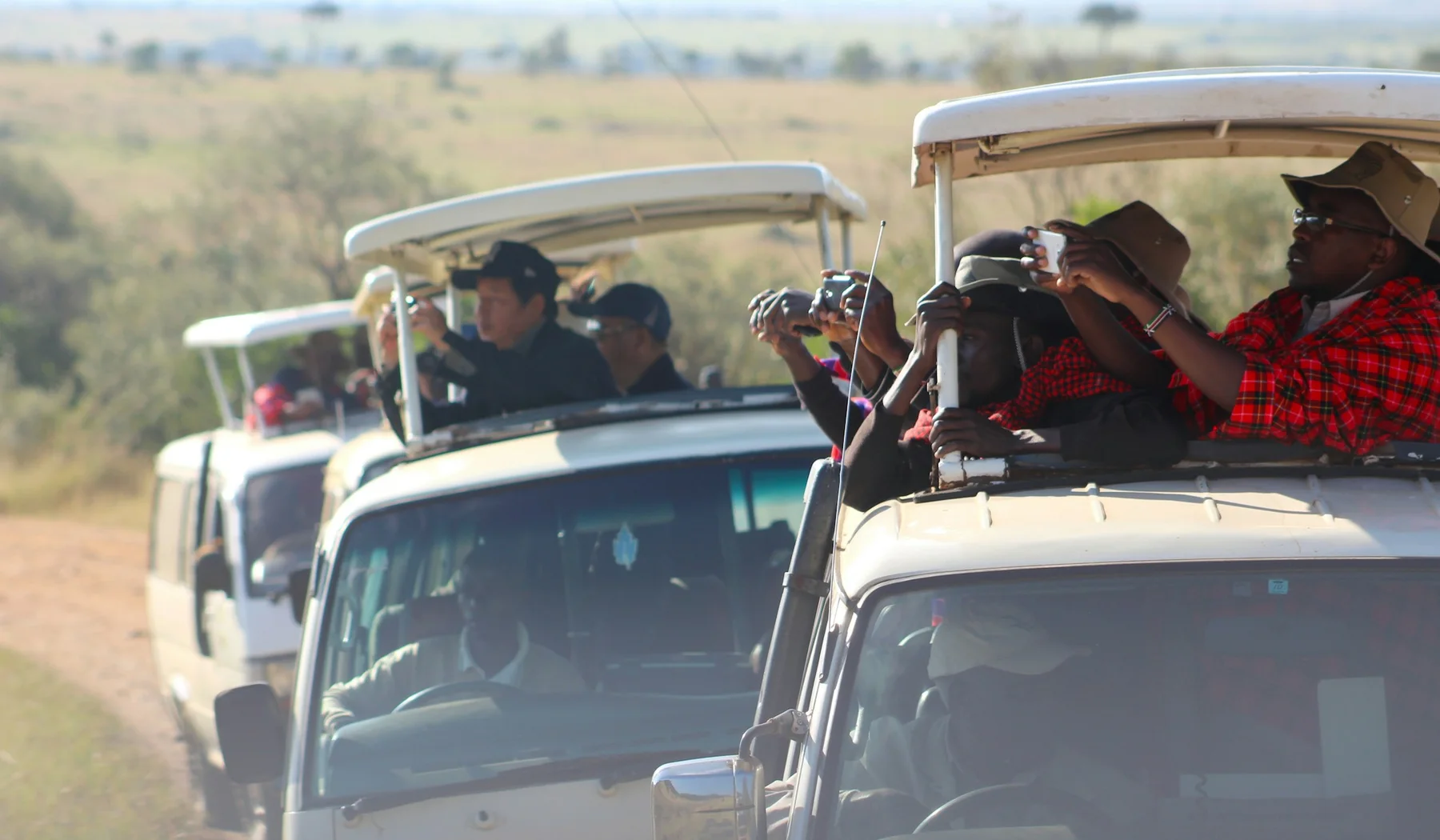
The zipper on your fleece goes up as the vehicle rolls out in the dark. An hour after sunrise, you are pulling it down. At lunch, you want a hat and shade. By the time an evening drive turns home, the wind has found your wrists again. That is why the most useful safari clothing is not a perfect beige outfit. It is a small set of comfortable layers that you can put on and take off without emptying your bag on the vehicle floor.
If you are deciding what to wear on game drives in Kenya, begin with your route and activity, then adjust the clothing. A closed pop-up-roof vehicle on a short drive in warm Samburu is not the same as an open-sided vehicle leaving a Mara camp before sunrise. A guided walk needs different footwear from an afternoon spent entirely in a vehicle. This article focuses on those changing hours. Our full Kenya safari packing guide covers the rest of the suitcase, including documents, chargers and camp wear.
The short answer: wear the day in layers
For most game drives, start with a breathable shirt, comfortable trousers and closed shoes you can walk in. Keep a fleece or light jacket within reach for cold beginnings and late returns. Add a secure hat, sunglasses and sun protection when the day brightens. A light rain shell belongs in the vehicle if rain is plausible on your route. Long sleeves and trousers can reduce sun and insect exposure, but a short-sleeved shirt or shorts can be comfortable on a hot, enclosed-vehicle drive. There is no need to buy an entirely new safari wardrobe.
The layer must be reachable. If your jacket is in the lodge wardrobe, it does not help when the vehicle leaves before dawn. If it is buried under camera gear, you may not bother putting it on when the light fades. A small soft day bag or a seat pocket is enough. The point is to adjust while the drive is underway, without asking everyone to return to camp because the weather changed.
| Drive period | Wear at departure | Keep within reach | Why |
|---|---|---|---|
| Before sunrise and early morning | Breathable base, long trousers, fleece or light jacket, closed shoes | Hat, sunglasses, sun protection and a bag for the removed layer | The first wind can be cold, then the sun can warm the vehicle quickly |
| Late morning or full-day drive | Light breathable clothing with useful sun coverage | Hat, water, scarf or buff for dust, rain shell if forecast | Heat, glare, dust and a picnic stop can replace the dawn chill |
| Late afternoon | Light clothing, hat and sun protection | Fleece, jacket and perhaps a light scarf | The return trip can be cooler and windier than the departure |
| Permitted guided night drive | Long sleeves and trousers, warm layer, closed shoes | Additional light layer and insect protection as advised locally | Still air at camp can become cold moving air in an open vehicle |
These are combinations, not compulsory uniforms. A person who runs cold may keep the fleece on until late morning. Another person may need it only in the highlands. Ask your camp about the actual vehicle and local conditions, and look at the weather for the place you are sleeping rather than a forecast for “Kenya” as a whole. Our typical safari-day guide shows where the clothing changes fit around meals and drives.
Dawn: warm enough to enjoy the first hour
Even close to the equator, an open vehicle before sunrise can be surprisingly cold. The air that felt mild while you stood beside the breakfast table feels different once the vehicle moves. The Governors’ Camp account of a Mara morning notes that jackets and blankets can be needed, particularly in June through August, and that layers make sense as the temperature rises after sunrise. One month does not determine every day, but the pattern is real.
Put a long-sleeved or short-sleeved base layer under a light fleece or sweater. Add a wind-resistant outer layer if your camp or forecast suggests it. A warm hat can be useful for someone who feels the cold strongly, but it may come off before breakfast. Long trousers and socks make the early drive easier than bare legs when the air rushes through an open side. Do not load up with one huge coat that has nowhere to go once the sun rises.
Pack your daytime pieces in the vehicle from the start. The last hour of a long morning drive may be sunny and warm, especially in an exposed roof opening. A brimmed hat that stays on in wind, sunglasses and sunscreen for skin that is not covered can matter more than the jacket by then. If you are planning a hot-air balloon safari, departure is usually even earlier, and the landing or breakfast stop may put you on uneven ground. Dress for both the cold start and the landing, not just the balloon photograph.
Daylight: sun, dust and comfort in the seat
At midday, the central question is less “Do I look like a safari traveller?” than “Can I sit, turn, stand and watch without feeling sticky or sunburnt?” Breathable fabric, an easy waist and a shirt that covers your shoulders can help. A loose long-sleeved shirt may feel cooler and more comfortable than an exposed arm in strong sun. If you prefer short sleeves, be deliberate about sunscreen on the arms and back of the neck. The same sun reaches you through a roof opening even when the vehicle sides provide shade.
Choose a hat by how it works in the vehicle. A wide floppy brim may catch the wind or brush the roof, while a simple cap may leave the ears and neck exposed. A hat with a secure fit and a light scarf or collar for the neck can be more practical. A thin buff is useful when a vehicle ahead raises dust, but it should not become an excuse to ignore water or shade. If you are prone to motion sickness, overheating in a tightly wrapped scarf will not improve the drive. Keep the outfit adjustable.
Full-day drives make the clothing decision more consequential. You may not return to camp to change after breakfast. A shell protects against a sudden shower, a dry spare top can be welcome, and your footwear needs to work for a permitted picnic or toilet stop. Our Mara full-day versus split-drive guide helps decide whether staying out all day is worth it for your route. When it is, the day bag matters more than a larger suitcase left at camp.
Late drives, sundowners and permitted night drives
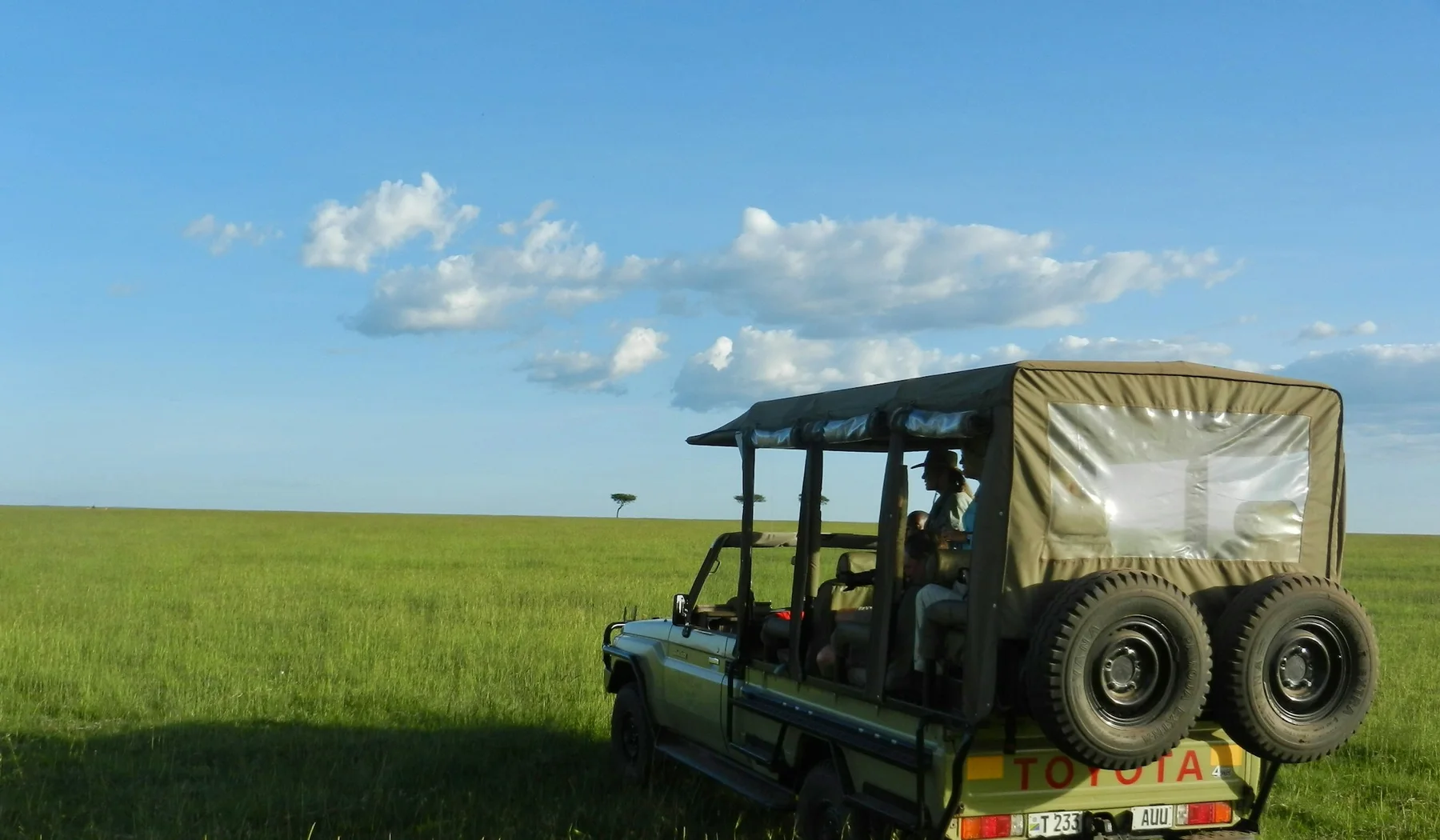
Many afternoon drives begin when you are comfortable in a light shirt. Carry the fleece anyway. Once the sun slips away and the vehicle moves, the exposed parts of your body can cool quickly. If you stop at a permitted sundowner location, shoes that handle uneven earth are useful. A light scarf can cover the neck and ears; a rain shell adds wind protection if the weather changes. A formal dinner outfit is usually not needed just because dinner follows the drive. Most safari camps are relaxed, though a city hotel or special dinner can be different.
A night drive is not simply a late return from a reserve. It is a guided after-dark activity where the land unit permits it, often in a private conservancy or another area with its own rules. Do not assume you can remain in every park or reserve at night. Ask whether the actual itinerary includes a night drive, how late it runs, what vehicle it uses and whether blankets are supplied. Our park and conservancy comparison explains why access varies.
For a real night drive, long sleeves, trousers, socks and closed shoes are a straightforward starting outfit. Add a warm layer or jacket you can wear while seated. Insect activity varies by place and weather; ask the camp what protection it recommends and follow sound travel-health advice for your own itinerary. Avoid using your own bright torch or camera flash on wildlife unless the guide specifically permits it. The clothing should let you watch comfortably without shifting around in the dark to find a missing sweater.
An open-sided vehicle changes the clothing, not just the photograph
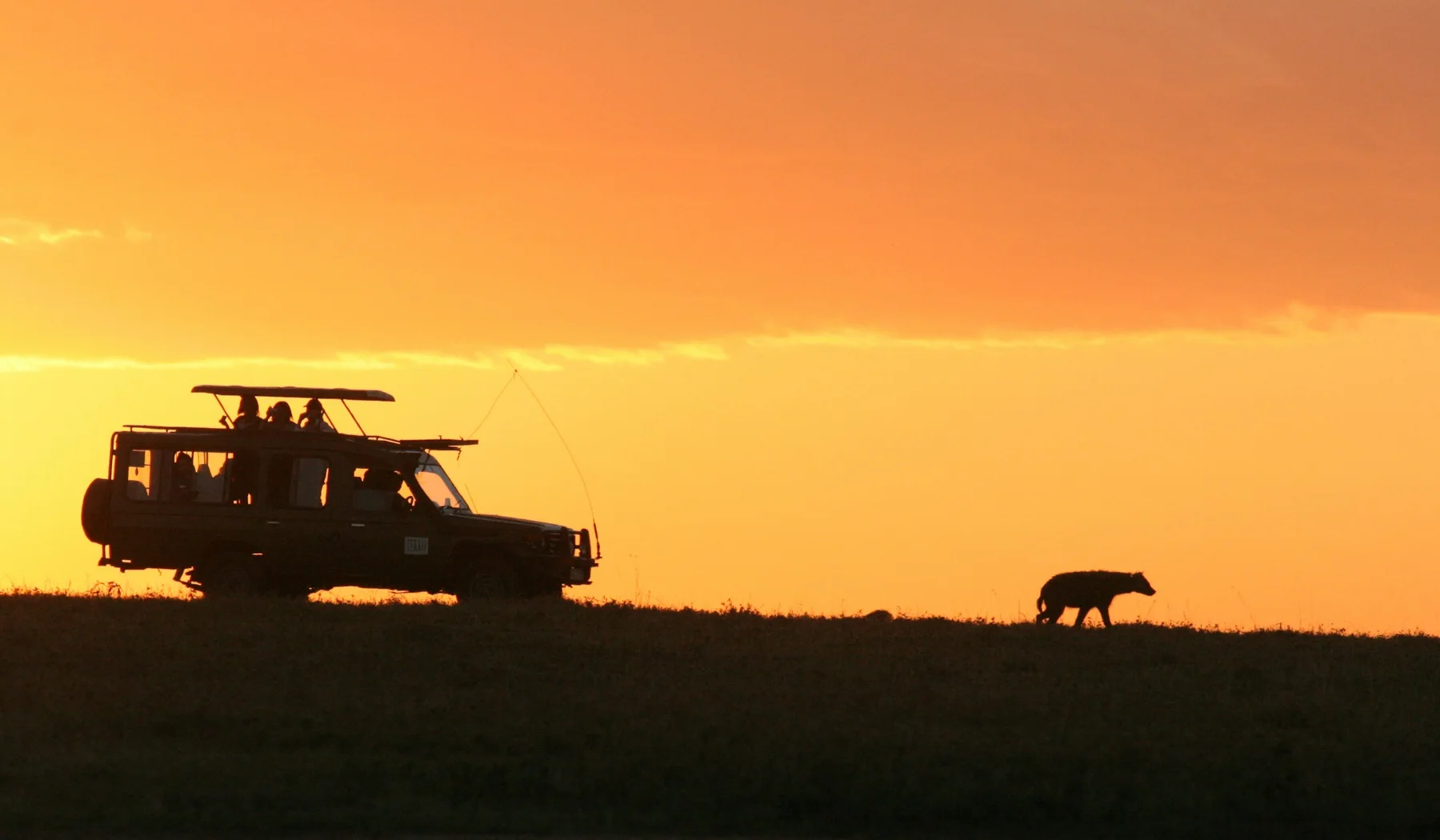
An open-sided camp vehicle exposes shoulders and legs to moving air and sometimes spray or dust. A pop-up-roof Land Cruiser or safari van often gives more protection, but you may stand beneath the roof opening and feel full sun and wind. The difference matters most at dawn and on a wet return. Our safari vehicle guide compares the layouts, seating and visibility. Ask which vehicle your actual booking uses. A beautiful photograph of an open vehicle in a brochure does not guarantee that is what will collect you.
Seat position can matter too. Guests nearest an open edge may need a warmer layer than someone protected behind a windscreen. If the vehicle has roll-down sides, staff may use them in rain, but that can affect the view and airflow. A light waterproof layer is still useful when walking between tent, dining area and vehicle. Do not plan an outfit on the assumption that the camp will provide a blanket. Some do, some do not, and the blanket may be welcome on top of a jacket rather than in place of one.
What changes between the Mara, dry north and highlands?
The Masai Mara and many Laikipia properties sit at elevations where a morning can be cool. Governors’ Camp specifically warns about cold Mara mornings, while a guest weather account recorded a marked rise from morning to daytime in September. Samburu and parts of Tsavo can feel much hotter and drier by day. Amboseli can combine bright, exposed midday sun with a very different feeling before or after it. The Aberdares bring highland rain, cloud and cooler conditions that a dry-plains outfit will not fully address. Our month-by-month Kenya safari guide explains the broader seasonal picture.
That is why a single fixed temperature in an online packing list is rarely helpful. The same traveller might wear a fleece in Mara North, roll it away by breakfast, then need a rain shell during an Aberdare afternoon later in the trip. If you are covering several regions, pack garments that combine, not a separate outfit for each park. If you are staying in one place, your camp can give a much more useful recent account of what guests are wearing on the early drive.
| Route or condition | Clothing emphasis | Reason | Leave room for |
|---|---|---|---|
| Mara or Laikipia early drive | Base layer, fleece, long trousers, socks | Higher ground and moving air can feel cold | Hat and lighter layer as the sun rises |
| Samburu or Tsavo hot afternoon | Breathable sun coverage, secure hat, water | Exposed heat and glare | Warm layer for a cooler return if needed |
| Amboseli open plain | Sun and dust protection, adjustable layers | Little shade on many routes and changing light | Rain or wind shell when conditions warrant |
| Aberdare highlands | Warmer layer, rain shell and shoes with grip | Cooler, wetter and potentially muddy ground | Dry spare socks on a long day |
Khaki is practical, not compulsory
Muted olive, tan, stone, grey and similar colours hide ordinary road dust and look less conspicuous in the bush. That does not mean a blue shirt will frighten every animal or invalidate your safari. Fit, temperature, sun protection and an outfit you already own matter more than performing a costume. White can show dust quickly; black may absorb heat in direct sun. The person in the vehicle is generally much less obvious to wildlife than the vehicle itself. On a guided walk, follow the guide’s more specific advice about colour and movement.
There is one useful insect nuance. The CDC travel-health guidance advises neutral-coloured long sleeves and trousers in places with tsetse flies, because the flies can be attracted to bright or dark colours, particularly blue and black. That is not proof that every Kenyan park on every date has the same exposure, nor is it a reason to replace your entire wardrobe. Discuss insect protection for your route with a qualified travel-health professional and your camp. The practical default remains clothing that covers skin comfortably and can be adjusted to the conditions.
Camouflage prints can have military associations and are unnecessary for a game drive. If you already own neutral everyday clothes, use them. A well-fitting long-sleeved shirt and trousers in muted colours will serve more days than a stiff, unfamiliar “safari suit” that you never wear at home.
The shoe question depends on whether you step out
If you will be seated in a vehicle almost all day, you do not need heavy mountain boots. Comfortable closed trainers or trail shoes with a little grip are a good all-round choice. They work for uneven camp paths, a bush breakfast or a permitted toilet stop and keep your feet covered in a cold vehicle. If your itinerary includes a guided bush walk, horse ride or wetter highland route, ask that activity provider about footwear. A stiff boot bought yesterday can blister; a familiar shoe that fits well is more useful.
Some experienced travellers prefer sandals for easy vehicle days and lodge time. That is a choice, not a universal rule. Think about the day’s ground, weather and whether you might step down from the vehicle at a designated stop. A balloon landing can be on grass or damp earth. A sundowner can be on gravel. Keep one pair of dependable closed shoes even if you enjoy sandals at camp. For light aircraft, shoes and clothing also count towards the same baggage allowance as the rest of the trip, so a second bulky boot pair needs a real purpose. Our safari airline baggage guide helps with that limit.
What Kenya travellers actually say about their clothes
Real trips contradict the idea that there is a single correct uniform. These independent accounts are useful precisely because they disagree on some details.
You don’t need to buy a whole new wardrobe to go on a safari.
A traveller who visited Nairobi, Aberdares, Samburu, Nakuru and the Mara found versatile layers more useful than a specialist costume. Their experience is one itinerary, but the packing lesson is broadly sensible.
it’s fleece chilly in the morning but boiling hot midday in September
A Governors’ Camp guest captured the day-to-day shift in the Mara. Their note also says they regretted not having shorts and sandals for the warmer hours, which is a useful counterweight to rigid “always wear trousers” advice.
I wear long pants and sun shirts day and night.
A traveller advising a Mara guest preferred consistent coverage. Another person on the same discussion found resort meals so casual that smarter clothes stayed in the bag. Together they show why comfort and activity matter more than an imagined dress code.
No single report overrides your own heat tolerance or the conditions during your stay. One traveller may be comfortable in shorts on a hot afternoon while another values leg coverage for insects and sun. Both can be right for their own drive.
Three outfits you can build from ordinary clothes
| Situation | Wear | Carry | Avoid assuming |
|---|---|---|---|
| Mara dawn drive, return after breakfast | Breathable shirt, long trousers, socks, closed shoes, fleece | Hat, sunglasses, water and a soft bag for the fleece | The vehicle blanket will replace your own layer |
| Hot full-day drive with picnic | Light long-sleeved shirt or protected short sleeves, comfortable trousers or shorts, grippy shoes | Hat, water, sun protection, rain layer if forecast | There will be a midday change of clothes or a nearby toilet |
| Conservancy dusk and permitted night drive | Long sleeves, long trousers, socks, closed shoes | Fleece or jacket, scarf, insect protection appropriate to the location | Every camp offers a night drive or returns before it gets cold |
All three use the same base pieces. A few tops that dry reasonably quickly, two or three comfortable bottoms, one dependable fleece, a compact shell and shoes you know can cover many safari days. Camp laundry can help on a longer stay, but ask whether it is offered and how quickly it returns. The camp facilities guide covers that practical detail. Leave space in the bag for the thing you might actually need, rather than a fourth version of the same khaki shirt.
Frequently asked questions
What should I wear on an early morning game drive in Kenya?
Start with a comfortable base layer, long trousers and a removable fleece or light jacket. Bring a hat and sun protection for the return journey. The exact warmth needed depends on the region, season and open or enclosed vehicle.
Do I need a different outfit for afternoon game drives?
Usually not. Remove the warm layer for the hot part of the day, keep sun protection and bring it back for a cooler return near sunset. A small vehicle bag keeps the layer handy.
What should I wear on a night game drive?
Where a guided night drive is permitted, use long sleeves and trousers, a warm layer, closed shoes and insect protection appropriate to the area. Ask the camp whether it supplies blankets and how late the drive runs.
Are shorts allowed on safari game drives?
There is usually no universal dress code for a vehicle game drive. Shorts may feel comfortable in heat, but long trousers offer more sun, dust and insect protection and can feel warmer in a cold open vehicle.
Must safari clothes be khaki?
No. Comfortable muted colours are practical because they hide dust and are less conspicuous, but a wardrobe of matching khaki is not required. Choose fit, layering and sun protection first.
Should I avoid blue and black on a Kenya safari?
In areas with tsetse flies, public-health guidance advises neutral colours rather than bright or dark blue and black. One dark garment will not spoil a trip, and not every itinerary has the same insect exposure.
Are hiking boots necessary for game drives?
Not for sitting in a vehicle. Comfortable closed shoes with grip usually work. A guided bush walk can call for sturdier footwear, so follow that activity provider’s instructions.
Will a safari lodge provide a blanket for a cold drive?
Some camps do, but do not assume it. Ask the property and carry a warm layer you can rely on, especially in an open vehicle at higher elevations.
What should I wear for a bush breakfast or sundowner stop?
Wear shoes suitable for uneven ground and clothing that works in sun, wind or cooler dusk conditions. Leave the vehicle only where your guide says it is safe and permitted.
More practical safari planning
Plan the safari that suits you
Share the dates, places and activities you have in mind. We can help choose a route and vehicle, then explain what each day is likely to feel like.