
Is a Hot-Air Balloon Safari Worth It?
A balloon safari can become the highlight of a Kenya trip, but it should add to a strong itinerary rather than replace the game-drive time the safari still needs.
- What the morning actually feels like
- The view is the reason to go
- Will you see more animals than on a game drive?
- How much does a Maasai Mara balloon safari cost?
- When the price makes sense
- Basket space, heights and landings
- Who should check before booking
- Weather can cancel the flight
- The best season is not only migration season
- What to wear and carry
- How to choose the right operator and launch area
- Is it romantic enough for a honeymoon?
- Frequently asked questions
- Sources and further viewing
The alarm goes off while the Mara is still black. You dress quietly, pull on something warm and climb into a vehicle long before the first game-drive engines begin to move. At the launch field, the balloon lies across the grass like an enormous sleeping animal. Then the burners fire, the fabric rises and the basket slowly stands upright.
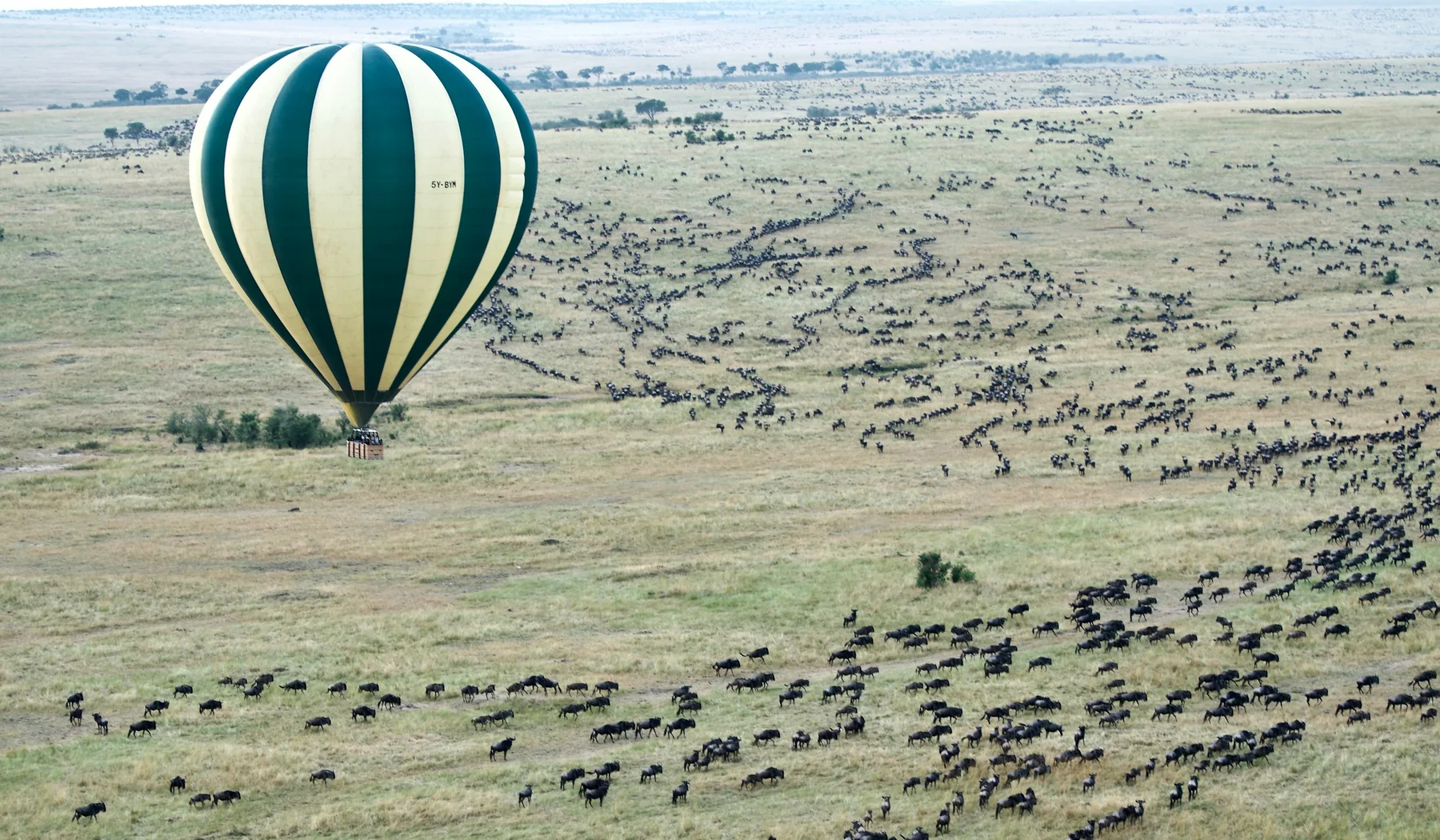
That first hour is part of the answer. A Maasai Mara balloon safari is not simply a higher game drive. It is a dawn journey through scale: river bends, animal paths, scattered herds, forest ribbons and a horizon that feels much larger from the air. It can become the story people tell first when they return home.
So, is a hot-air balloon safari worth it? It usually is for a first-time balloon passenger who enjoys landscapes, can afford the cost without shortening the core safari, and is comfortable with an early start, shared basket and potentially bumpy landing. It is less convincing for someone focused entirely on close wildlife photography, uneasy in confined spaces, travelling on a tight budget or giving up one of only two game-drive mornings to do it.
| The balloon is more likely to feel worth it when | Think twice when |
|---|---|
| You want a once-in-a-trip perspective on the Mara | The cost removes a private vehicle or another safari night |
| You enjoy landscapes as much as close animal sightings | You judge the morning mainly by how many animals are close |
| This is your first balloon flight | You already know ballooning does not excite you |
| You have at least three nights in the Mara | You have only two mornings for wildlife drives |
| Everyone can use the basket and landing position safely | Pregnancy, mobility, height or medical restrictions apply |
| You can book early in the stay in case weather intervenes | The only available slot creates a punishing transfer day |
What the morning actually feels like
Pickup may be around 4:00 or 5:00 am depending on the camp, launch site and season. The drive can be cold and surprisingly long. When the crew begins inflation, passengers listen to the safety briefing and learn the landing position before climbing into the basket.
Takeoff is often gentler than people expect. The ground simply begins to fall away. The pilot changes altitude to find different wind directions, so the route is not driven like a car. One flight may skim above grass before climbing for a wide view. Another may spend more time high. Wind decides where the balloon travels and where it can safely land.
Flights are commonly around an hour, but the exact duration is not a promise. After landing, passengers are collected for breakfast, often served outdoors, and then returned by vehicle. The complete excursion occupies much of the morning.
That means you should compare a balloon morning with the game drive it replaces, not just with an hour in the air.
The view is the reason to go
From a safari vehicle, the Mara arrives as a sequence of close scenes. From a balloon, it becomes one connected landscape. You see how a river curls through trees, how tracks converge at water and how plains stretch beyond the next ridge.
Wildlife can be wonderful from the air, especially when animals are moving through open country. It can also be distant, brief or hidden. The pilot cannot stop above a lion, turn back for an elephant or guarantee a migration herd beneath the basket.
One recent traveller said the balloon was "worth the price." Another, equally honestly, preferred the vehicle and "felt somewhat claustrophobic being stuck on it." Read both views. These reactions make sense because the same shared basket can feel peaceful to one person and restrictive to another.
Will you see more animals than on a game drive?
Possibly, but that is the wrong guarantee to buy. A balloon is excellent for seeing patterns, herds and habitat. A vehicle is better for waiting, repositioning, listening to the guide and photographing a particular animal at eye level.
| Experience | Balloon safari | Game drive |
|---|---|---|
| Perspective | Wide aerial landscape | Close ground-level detail |
| Route control | Follows the wind | Guide chooses roads and sightings |
| Time at one sighting | Usually brief | Can stop when rules and conditions allow |
| Sound | Burner bursts and quiet drifting | Engine, guide and surrounding bush |
| Photography | Strong for patterns and scale | Strong for portraits and behaviour |
| Physical setup | Standing in a shared basket | Seated in a vehicle with more movement |
If wildlife photography is the priority, keep enough ordinary game drives. The fly-in versus drive-in Kenya safari guide can also help protect time in the reserve when the itinerary is short.
How much does a Maasai Mara balloon safari cost?
For 2026, Adventures Aloft publishes USD 499 per person for its Maasai Mara shared flight. A Governors' accommodation rate sheet shows seasonal adult balloon prices from USD 500 to USD 580, plus stated levies and possible excluded charges. Operator, season, launch area, transfers, reserve entry and extra levies can change the final amount.
The useful question is not merely the seat price. Ask what the quoted total includes:
- transfer from the exact camp to the launch field;
- breakfast after landing;
- park, reserve, landing or conservancy charges;
- levies and taxes;
- return transfer or game drive;
- child rules and minimum height;
- cancellation, weather and refund terms;
- private versus shared basket.
The Kenya park and conservancy fees guide explains why a balloon landing or reserve entry can sit outside the advertised flight price.
When the price makes sense
A balloon can be a better use of money than another expensive upgrade when the route already has enough nights, good guiding and a suitable vehicle. It adds a perspective those elements cannot copy.
It is a poorer trade when the same money would rescue the basic safari. If buying the balloon means cutting a Mara night, sharing an overcrowded vehicle, accepting a badly placed camp or skipping travel insurance, strengthen the foundation first.
A traveller whose partner doubted the cost later reported that it became "THE highlight of our trip!" Read the independent discussion. Another reviewer wrote, "It was an experience worth every dollar." Read the full review. Neither opinion guarantees your morning, but both show what people value: the feeling of flight, landscape and occasion.
Basket space, heights and landings
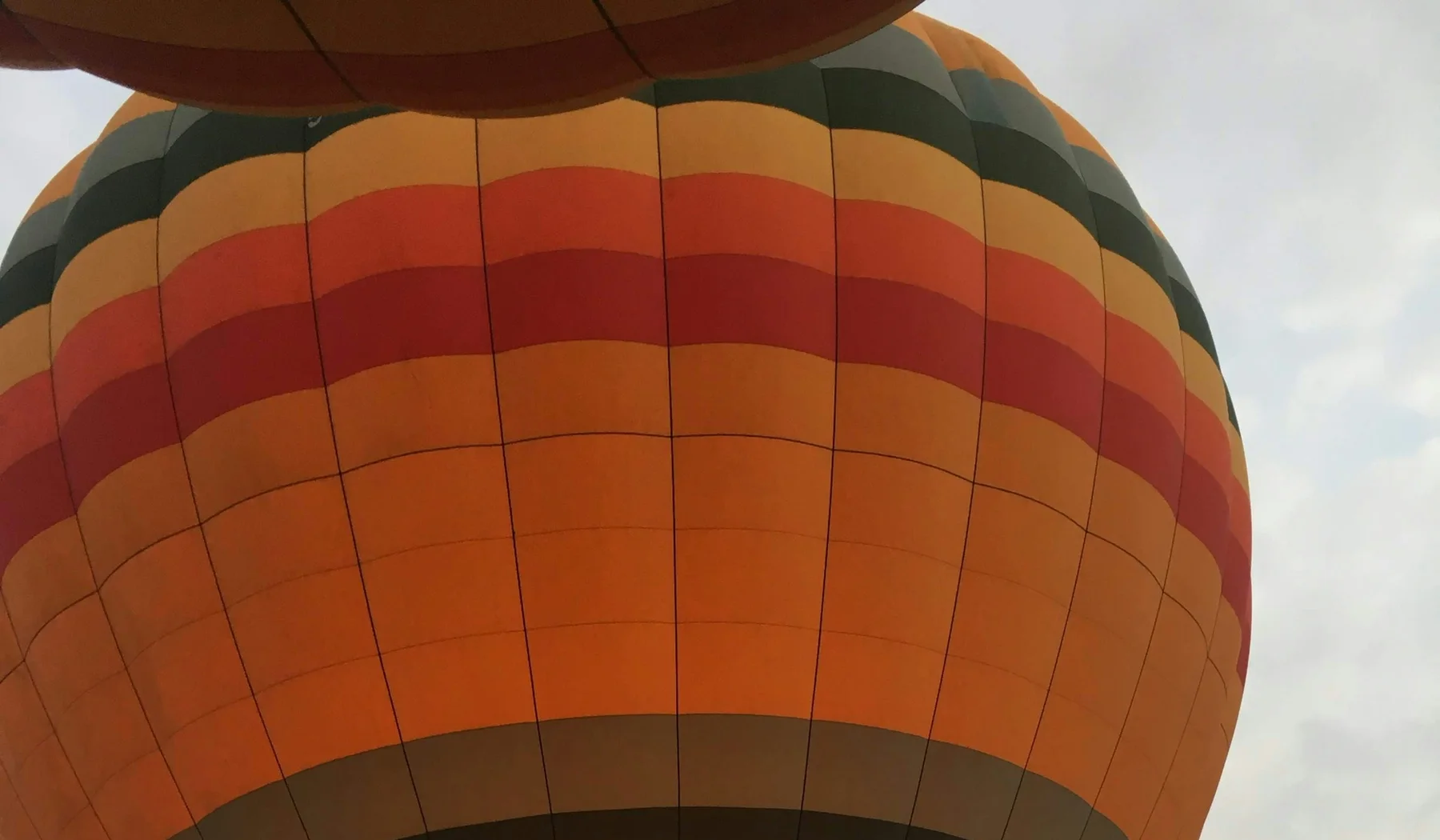
Large baskets are divided into passenger compartments. You stand close to other people and may have limited room to change position. Ask how many passengers the basket carries and how the operator allocates compartments.
People who dislike open heights are sometimes surprised by how calm balloon flight feels. People who dislike confinement may react more strongly to the basket than the altitude. Watching an honest video helps. Independent travel creator Jessica Faye shows the early start, inflation, flight, wildlife and breakfast in her Masai Mara safari vlog.
Landings vary. The basket may touch down upright, bounce, drag or tip onto its side. Passengers must listen to the pilot and hold the instructed landing position until told to move. A tipped basket can be normal, but it is physical.
Who should check before booking
Balloon operators apply health, age, height and mobility conditions. Governors' published information notes a minimum height of 1.2 metres and does not accept expectant mothers. Other operators may use different limits.
Ask before paying if anyone:
- is pregnant or may be pregnant;
- has recent surgery, back, neck, hip or knee problems;
- cannot stand for the expected flight time;
- cannot climb into or out of the basket;
- cannot hold the landing position;
- is below the operator's age or height rule;
- has a condition affected by a remote early-morning excursion.
Do not hide a mobility or medical concern to keep the booking. A safer alternative morning is better than discovering the restriction at the launch field.
Weather can cancel the flight
Ballooning depends on wind, visibility and safe operating conditions. A cancellation can be disappointing, but a safety decision is not a service failure.
Book the balloon on the first suitable morning of a multi-night stay. That may leave another morning available if the operator can rebook and space exists. Do not place the flight immediately before a fixed airstrip departure or long road transfer unless the complete timing works.
Read the cancellation terms. Confirm whether a weather cancellation leads to a refund, a rescheduled flight or another arrangement, and who communicates the launch decision before pickup.
The best season is not only migration season
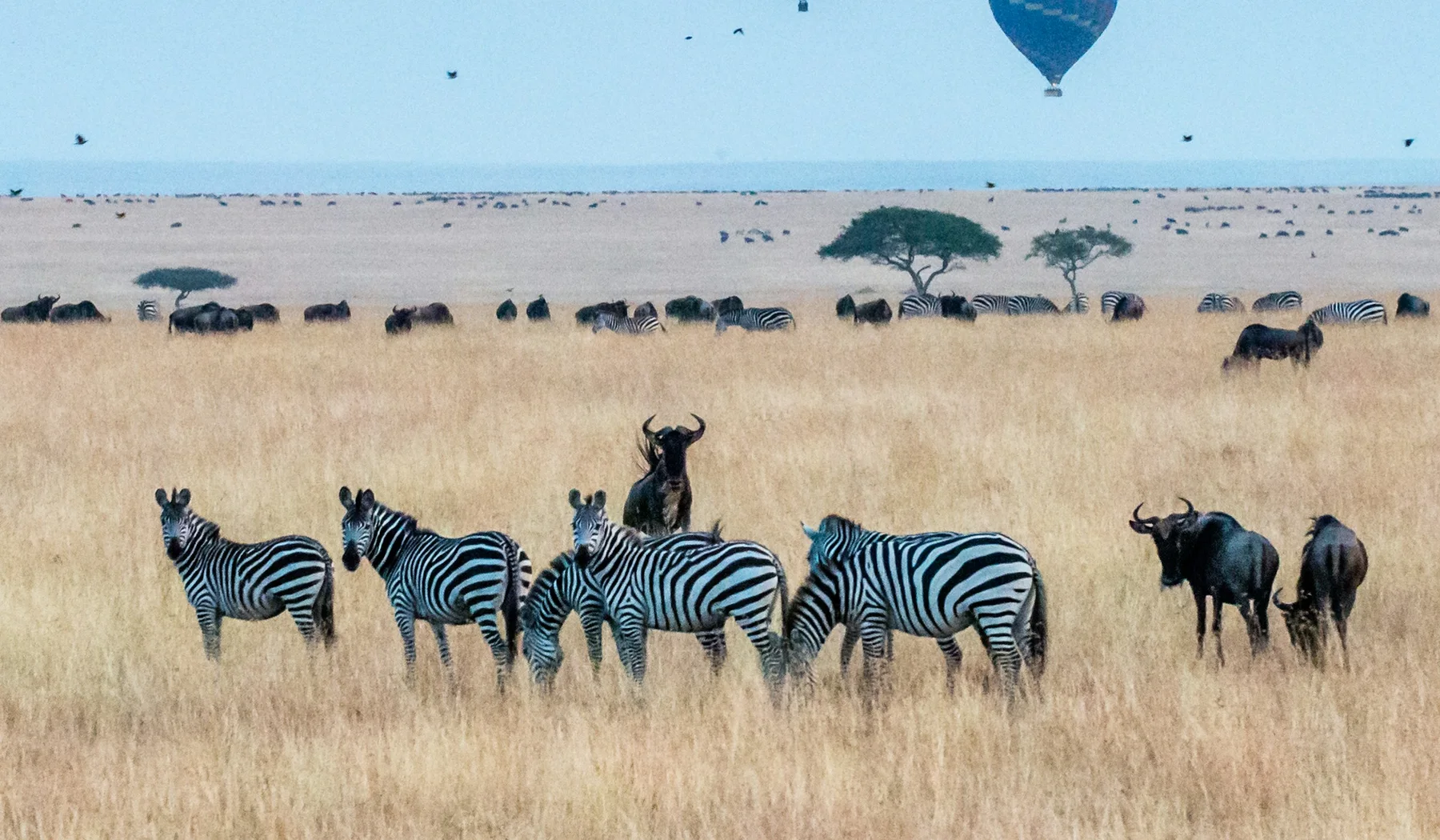
Migration herds can make an aerial view spectacular, but they are not guaranteed to sit beneath the balloon route. Wind controls the flight path, and animal movement changes daily.
Green-season mornings can offer beautiful light, dramatic clouds and fewer visitors, although rain and local conditions can affect operations. Dry-season plains reveal paths and long views. Choose the balloon because you want to see the landscape from the air, then treat any large herd below as a gift.
The best time to visit Kenya guide explains the wider seasonal tradeoffs without promising one perfect month.
What to wear and carry
Dress for a cold open-vehicle pickup and a warmer landing. Layers are more useful than one heavy coat. Wear closed shoes and clothes suitable for climbing into the basket and taking the landing position.
Carry as little as possible. Use a secure camera strap. Avoid a bulky bag that competes for floor space. A phone or camera should be ready before takeoff because wildlife moments pass quickly.
Ask whether the operator restricts large lenses, backpacks, loose items or selfie sticks. Protect equipment from dust at landing. The flame above the basket creates heat, so a hat can be useful, but it must fit securely.
How to choose the right operator and launch area
The nearest operator is not always the best fit, and the famous name is not automatically nearest. A pre-dawn transfer across the Mara can add hours to the morning. Ask the camp which licensed operators serve its area and how long the drive normally takes.
Compare:
| Question | Why it matters |
|---|---|
| Where is the launch site? | It shapes transfer time and likely flight landscape |
| How many passengers share the basket? | It affects space and photography positions |
| What is the complete price? | Reserve, landing, levy or transfer charges may be separate |
| What happens in unsuitable weather? | Rebooking and refund terms differ |
| What health and height rules apply? | Suitability must be settled before payment |
| Is breakfast included? | It affects the complete morning and return time |
| Which camp pickup is included? | A distant property may create an extra transfer |
Is it romantic enough for a honeymoon?
The dawn light and sense of occasion can be wonderful for a honeymoon, but a normal booking is not private. You will share the basket, landing and breakfast with other passengers.
If privacy matters, ask about an exclusive basket and its total cost. More often, the better balance is a shared flight followed by a private afternoon, a special dinner or a quiet camp. The Masai Mara honeymoon safari page shows how the balloon can fit inside a trip centred on the couple rather than becoming its only romantic feature.
Frequently asked questions
How long is a Maasai Mara balloon safari?
The flight is commonly around an hour, while pickup, launch preparation, landing, breakfast and return take much of the morning.
Is a hot-air balloon safari scary?
Takeoff is often gentle, but the open basket, burner, height and landing may feel intense. Read the safety briefing and tell the operator about relevant concerns.
Can children join?
Operators apply minimum age or height rules. Check the specific operator and whether the child can hold the landing position safely.
Can pregnant travellers fly?
Operators commonly exclude pregnancy because landings can be bumpy. Governors' published information says expectant mothers cannot fly.
Will I see the Great Migration from the balloon?
It is possible when herds and the wind-driven route align, but it cannot be guaranteed.
Is breakfast included?
It often is, but confirm the current package. Lower headline prices may exclude breakfast, transfers, levies or reserve charges.
What happens if weather cancels the balloon?
The operator's terms determine refund or rebooking. Scheduling early in the stay creates a better chance of another morning.
Should I choose a balloon or private safari vehicle?
Choose the balloon for aerial scale and occasion. Choose a private vehicle for control, time at sightings and photography flexibility. If the budget permits, they complement rather than replace each other.
Sources and further viewing
- Governors' Balloon Safaris rates and information
- Adventures Aloft Balloon Safaris 2026 rate card
- Independent discussion: Is the hot air balloon worth it?
- Independent balloon experience discussion
- Independent Masai Mara balloon travel vlog
The clearest answer to is a hot-air balloon safari worth it is personal. Buy it for the floating, the horizon and the memory of seeing the Mara as one enormous landscape. Keep the game drives for the lions.
Find the right balloon flight for your Mara stay
Share dates, camp, travellers, health or mobility considerations and the rest of the itinerary so the excursion can be placed intelligently.