
Things to Do at Lake Naivasha
Explore Lake Naivasha by boat, on foot, by bicycle or from a quiet garden, with practical help on safety, timing, children, mobility, costs and the combinations that genuinely work.
- Start with the activity that changes your day
- Use one anchor activity per half day
- Take a Lake Naivasha boat safari for the water-level view
- Let the guide read the lake rather than chase a checklist
- Watch hippos from a boat without asking for closeness
- Listen for fish eagles before trying to photograph them
- Walk Crescent Island for a safari without a vehicle
- Pay Crescent Island directly and separate the boat bill
- Choose a guide on Crescent Island when interpretation matters
- Cycle through Hell’s Gate for landscape rather than a Big Five list
- Inspect the bicycle before entering the park
- Walk or drive Hell’s Gate if cycling is not your pleasure
- Treat gorge access as a same-day safety decision
- Add the Olkaria Geothermal Spa only after confirming operation
- Hike Mount Longonot as the main event, not an add-on
- Know when to skip the full Longonot rim
- Visit Elsamere for conservation history and a slower afternoon
- Make afternoon tea part of the story, not a filler stop
- Ride at Sanctuary Farm if horses are the reason to stop
- Choose a private-sanctuary walk only with current permission
- Go birding without needing a long species target
- Photograph Naivasha as a wetland, not only a wildlife portrait
- Use early light for boats and Longonot, late light for rest
- Give children one story and one movement goal
- Plan mobility activity by activity
- Choose a honeymoon day that leaves time to be together
- Use Naivasha as a recovery day between safari blocks
- Stay near the activity you care about most
- Do not confuse Naivasha town with the lake experience
- Build a strong half-day itinerary
- Build a full lake-and-walking day
- Build a full Hell’s Gate day
- Build a two-day Naivasha stay
- Combine Naivasha with Lake Nakuru only when the route breathes
- Put Naivasha before the Masai Mara for a soft landing
- Put Naivasha after the Mara for movement and recovery
- Price activities as complete bundles
- Compare value by memory, not by attraction count
- Plan for rain without declaring the day ruined
- Respect a lake under pressure
- Refuse wildlife feeding as entertainment
- Pack for the activity you actually booked
- Ask for food and toilet plans before the day begins
- Use traveller reviews to understand trade-offs
- Reject the most common Naivasha planning mistakes
- Choose by traveller type
- Choose by available time
- Choose by physical demand
- Choose by wildlife interest
- Ask the right questions before booking
- Send a complete Lake Naivasha activity brief
- Frequently asked questions
- Choose the Naivasha day you will enjoy living through
Lake Naivasha can be a boat morning, a walking safari, a hard volcanic hike, a bicycle ride between cliffs or simply the first afternoon in Kenya when nobody asks you to move again. That range is exactly why hurried itineraries get it wrong. They treat Naivasha as one attraction and stack everything into a single day.
The best things to do at Lake Naivasha depend on what the rest of your safari already contains. After three days of game drives, choose water, walking or a slow garden. Before the Masai Mara, use Naivasha to settle into wildlife watching without demanding a big-cat checklist. If you came to hike, give Mount Longonot its own morning instead of squeezing it between a boat and a road transfer.
This guide starts with the experiences, then shows how to combine them without turning a beautiful lake into a timetable.
Start with the activity that changes your day
Do not begin with a list. Begin with the feeling you want at sunset. A boat and Crescent Island create a water-and-walking day. Hell's Gate creates an active landscape day. Mount Longonot creates a demanding hiking day. Elsamere, birding and a lakeside lunch create a quiet day with more space for conversation. Use the Lake Naivasha destination guide when you need the wider geography, seasons and route context.
| If you want to feel | Choose first | Add only if time is generous |
|---|---|---|
| Close to the lake | Boat safari | Crescent Island walk |
| Physically active | Hell's Gate cycle | Short guided walk |
| Properly challenged | Mount Longonot hike | Late lunch and rest |
| Close to wildlife on foot | Crescent Island | Boat transfer |
| Rested | Elsamere or lakeside lodge time | Short birding walk |
| Curious about conservation history | Joy Adamson museum | Afternoon tea |
Use one anchor activity per half day
An anchor activity is the experience you protect when traffic, weather or tiredness changes the plan. A morning boat ride can be the anchor, with lunch as the flexible part. A Hell's Gate cycle can be the anchor, with the geothermal spa treated as optional until its operating status and your energy are clear.
| Half day | Strong anchor | Weak way to plan it |
|---|---|---|
| Cool early morning | Boat, birding or Longonot | Long breakfast before a major hike |
| Late morning | Crescent Island walk | Starting every activity at once |
| Afternoon | Elsamere, lodge time or short ride | Beginning Longonot in heat |
| Full active day | Hell's Gate | Adding a distant park drive |
This simple rule keeps the day enjoyable when one experience runs longer because the birds are active, a child needs a break or the weather changes.
Take a Lake Naivasha boat safari for the water-level view
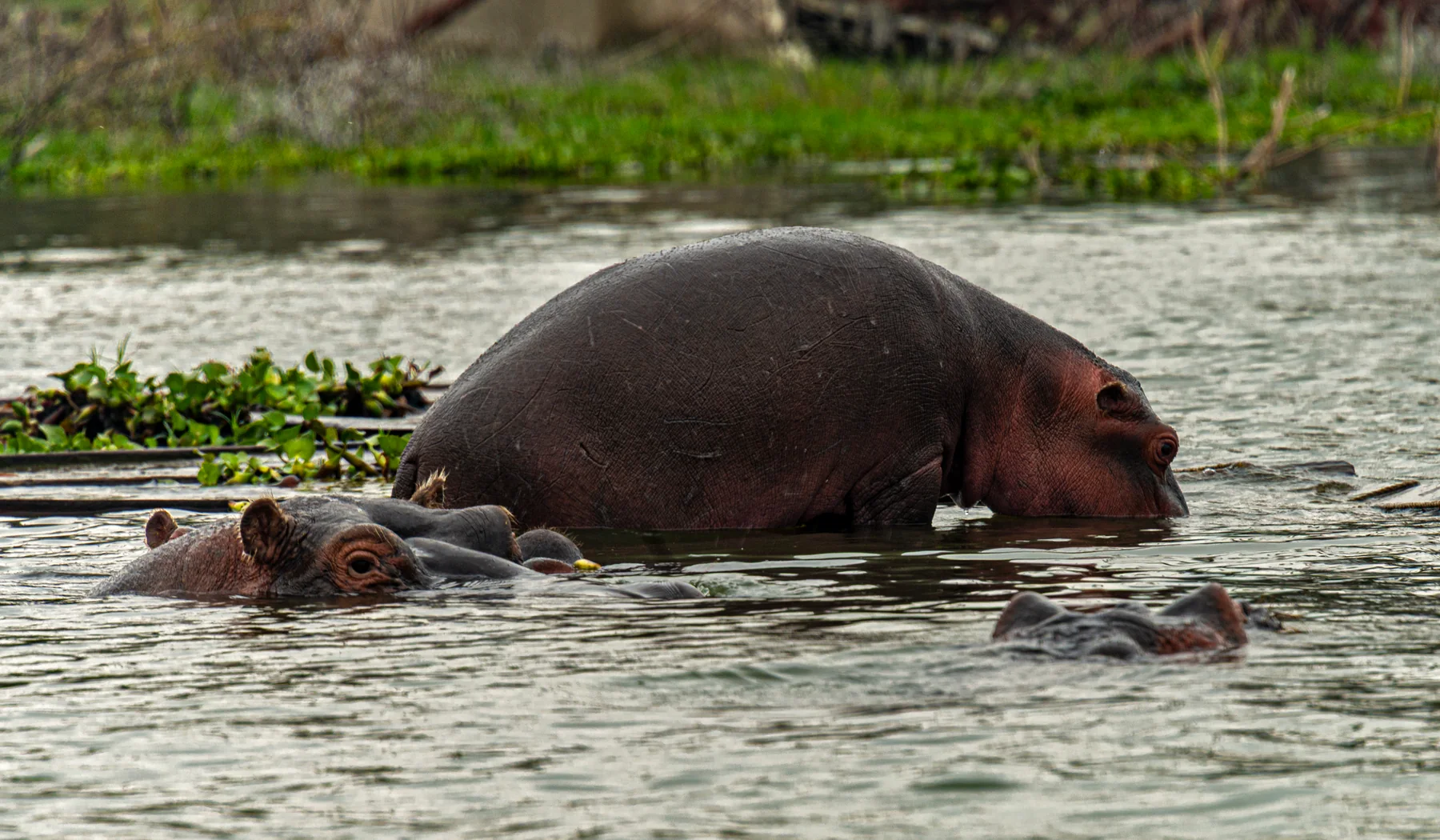
The lake makes more sense from a small boat. Papyrus edges become habitat rather than a green line, fish eagles watch from dead branches, and hippos appear as ears, eyes and breath rather than a distant shape. The boat safari and hippo safety guide explains how to choose a responsible operator.
| Boat decision | What to confirm |
|---|---|
| Duration | Actual time on water, not total excursion time |
| Lifejackets | Correct adult and child sizes, worn throughout |
| Weather | Who cancels or shortens the trip when wind rises |
| Wildlife approach | No chasing, crowding or blocking hippos |
| Route | Open-water circuit, birding edge or Crescent transfer |
| Price basis | Per boat or per person, and what is included |
Let the guide read the lake rather than chase a checklist
Naivasha is a living freshwater wetland, not a display. Wind can move birds to a sheltered shore. Hippos can surface far from the last place you saw them. Water levels can change landing points and vegetation. A strong guide explains why the boat slows, turns or keeps its distance.
| Good interpretation sounds like | Poor pressure sounds like |
|---|---|
| “The eagle is watching this channel” | “We guarantee a close eagle photograph” |
| “The hippos have room to move away” | “We can get closer” |
| “Wind is building, so we will return” | “The schedule says one hour” |
| “This papyrus edge shelters smaller birds” | “There is nothing here” |
The reward is not the number of species announced. It is learning to see how open water, reeds, submerged trees, people and wildlife share the same lake.
Watch hippos from a boat without asking for closeness
Hippos are often the animal people most want to see and the one they most underestimate. They are powerful, territorial around water and active on land after dark. Keep the encounter calm. A useful photograph shows habitat and distance, not proof that the skipper approached too closely.
| Hippo situation | Safer response |
|---|---|
| Animal surfaces ahead | Slow and leave an open escape route |
| Calf is visible | Increase distance and avoid separating the group |
| Hippo is on shore | Do not land or walk nearby |
| Dusk is approaching | Return before shoreline movement increases |
| Guest asks for a closer pass | Guide declines and explains why |
Never walk an unfamiliar lakeshore after dark. Even lodge lawns can become hippo grazing areas, so follow staff instructions and use an escort when offered.
Listen for fish eagles before trying to photograph them
The African fish eagle's call often reaches you before the bird does. Look at exposed branches, dead trees and clear launch lines over the water. If a guide uses bait to trigger a dive, ask about local practice and wildlife welfare before agreeing. Natural hunting is less predictable and far more satisfying to watch.
| Birding approach | What it gives you |
|---|---|
| Quiet drift near papyrus | Kingfishers, herons and smaller wetland birds |
| Scan tall exposed branches | Fish eagle perches and flight paths |
| Early light | Better colour, calmer water and softer reflections |
| Binoculars before camera | Behaviour, direction and a better chance of focus |
| Wider frame | Bird, tree, water and wetland story |
For a broader species strategy, use the Kenya birdwatching safari guide.

Walk Crescent Island for a safari without a vehicle
Crescent Island is a private sanctuary on the eastern side of the lake, sometimes appearing more like a peninsula as water levels change. Its paths pass open grassland, thickets and viewpoints, with giraffe, zebra, antelope and birds forming the core experience. Read the full Crescent Island walking safari guide before deciding whether it fits your party.
| Crescent Island strength | What it is not |
|---|---|
| Managed wildlife walk | An unrestricted wilderness trek |
| Close study of plains animals | A predator-tracking safari |
| Lake and escarpment views | A guaranteed species list |
| Flexible photography pace | Permission to approach animals directly |
| Good movement after road travel | A flat, effortless path for every visitor |
Pay Crescent Island directly and separate the boat bill
The sanctuary's official visitor information makes an important distinction: it does not operate the boats. Pay the island entry at the island, insist on its official receipt and make sure the landing carries the sanctuary's name. Arrange the boat transfer separately and know which part of the quote belongs to which provider.
| Payment line | Who should explain it |
|---|---|
| Boat transfer or lake circuit | Boat operator |
| Crescent Island entry | Crescent Island on arrival |
| Island guide | Confirm availability and tipping approach |
| Food or drinks | Cafe or accommodation provider |
| Road transfer | Driver or safari operator |
This is not paperwork for its own sake. It prevents an apparently convenient package from hiding a missing entry fee or the wrong landing.
Choose a guide on Crescent Island when interpretation matters
The official site says guides are available on a first-come basis and recommends booking if you want to guarantee one. A guide is especially valuable for a first walking safari, families, birders and photographers who want to understand animal comfort rather than simply move closer.
| Traveller | What a guide adds |
|---|---|
| First safari | Tracks, behaviour and safe spacing |
| Family | Short stories and a manageable route |
| Photographer | Light direction and patient positioning |
| Birder | Calls, habitat and species separation |
| Limited walking ability | A shorter loop and honest terrain advice |
One traveller described the combined outing simply: “It’s an hour for the boat ride and one hour for the walking tour on the island.” Treat that as a useful planning example, not a fixed duration for every boat, route or pace.

Cycle through Hell’s Gate for landscape rather than a Big Five list
Hell's Gate is the Naivasha experience for travellers who want to move under their own power. Cliffs, volcanic formations, open valley and geothermal features carry the day. Wildlife can include zebra, giraffe, antelope, baboons and buffalo, but the park should not be sold as a substitute for the Masai Mara.
| Hell's Gate expectation | Better framing |
|---|---|
| “How many animals will I see?” | “How will the landscape feel from a bicycle?” |
| “Can I get close to buffalo?” | “How will we give wildlife space?” |
| “Can everyone cycle?” | “What route suits each rider?” |
| “Is the gorge always open?” | “What is open and safe today?” |
The Hell's Gate cycling and hiking guide covers route choice, bike checks and current access questions.
Inspect the bicycle before entering the park
A bicycle that feels acceptable outside the gate can become miserable on rough ground. Test both brakes, gears, tyre pressure, saddle clamp and wheel alignment. Ask for a helmet that fits. Carry water on your body or bicycle rather than assuming a kiosk will appear at the right moment.
| Bike check | Why it matters |
|---|---|
| Front and rear brakes | Descents and wildlife response |
| Tyre condition | Punctures and loose surfaces |
| Gears | Climbing without exhausting knees |
| Saddle height | Comfort and control |
| Helmet fit | Protection that stays in place |
| Repair plan | Clear response if the bicycle fails |
An independent traveller wrote, “Watching zebras walk right in front of you while you’re on a bike is unbelievable!” The moment is memorable because it is unusual. It still requires distance, calm movement and respect for the animals' path.
Walk or drive Hell’s Gate if cycling is not your pleasure
Cycling is famous, but it is not a compulsory badge. A vehicle can open the scenery to older travellers, families, photographers carrying equipment and anyone who wants energy for a guided walk. Walking options depend on the area, weather, closures and KWS instructions on the day.
| Mode | Strong fit | Main limitation |
|---|---|---|
| Bicycle | Active adults and confident older children | Heat, rough surface and fitness |
| Vehicle | Mixed ability, equipment and shorter visits | Less physical immersion |
| Guided walk | Geology and slower observation | Access and weather must be checked |
| Rock climbing | Experienced or properly guided beginners | Equipment, guide and site conditions |
Treat gorge access as a same-day safety decision
Water-carved gorges are dramatic precisely because water shaped them. Rain can fall beyond your position and change conditions downstream. Do not copy an old itinerary that assumes every trail or gorge section is open. Confirm current KWS access, local weather and guide requirements on the morning of the visit.
| Before any gorge walk | Ask |
|---|---|
| Park status | Which sections are open today? |
| Weather | Has it rained locally or upstream? |
| Guide | Is one required or strongly advised? |
| Footwear | Are surfaces wet, polished or loose? |
| Turnaround | What time must we leave? |
| Alternative | Which safe route replaces a closure? |
A plan that changes because the gorge is unsafe is a plan working properly.
Add the Olkaria Geothermal Spa only after confirming operation
KWS lists the Olkaria Geothermal Spa among Hell's Gate attractions. It can turn an active day into a swim-and-rest afternoon, but operating arrangements, water access and maintenance can change. Confirm directly before building the whole day around it, and ask what swimwear, towel, changing and child-supervision arrangements apply.
| Spa question | Why it belongs in the plan |
|---|---|
| Open on the travel date? | Avoid a long detour to a closed facility |
| Pool areas operating? | Experience may be partial |
| Water temperature | Comfort and health considerations |
| Children allowed where? | Supervision and safe pool choice |
| Towels and lockers | What to carry |
| Return transport | Do not strand cyclists after the soak |
Hike Mount Longonot as the main event, not an add-on
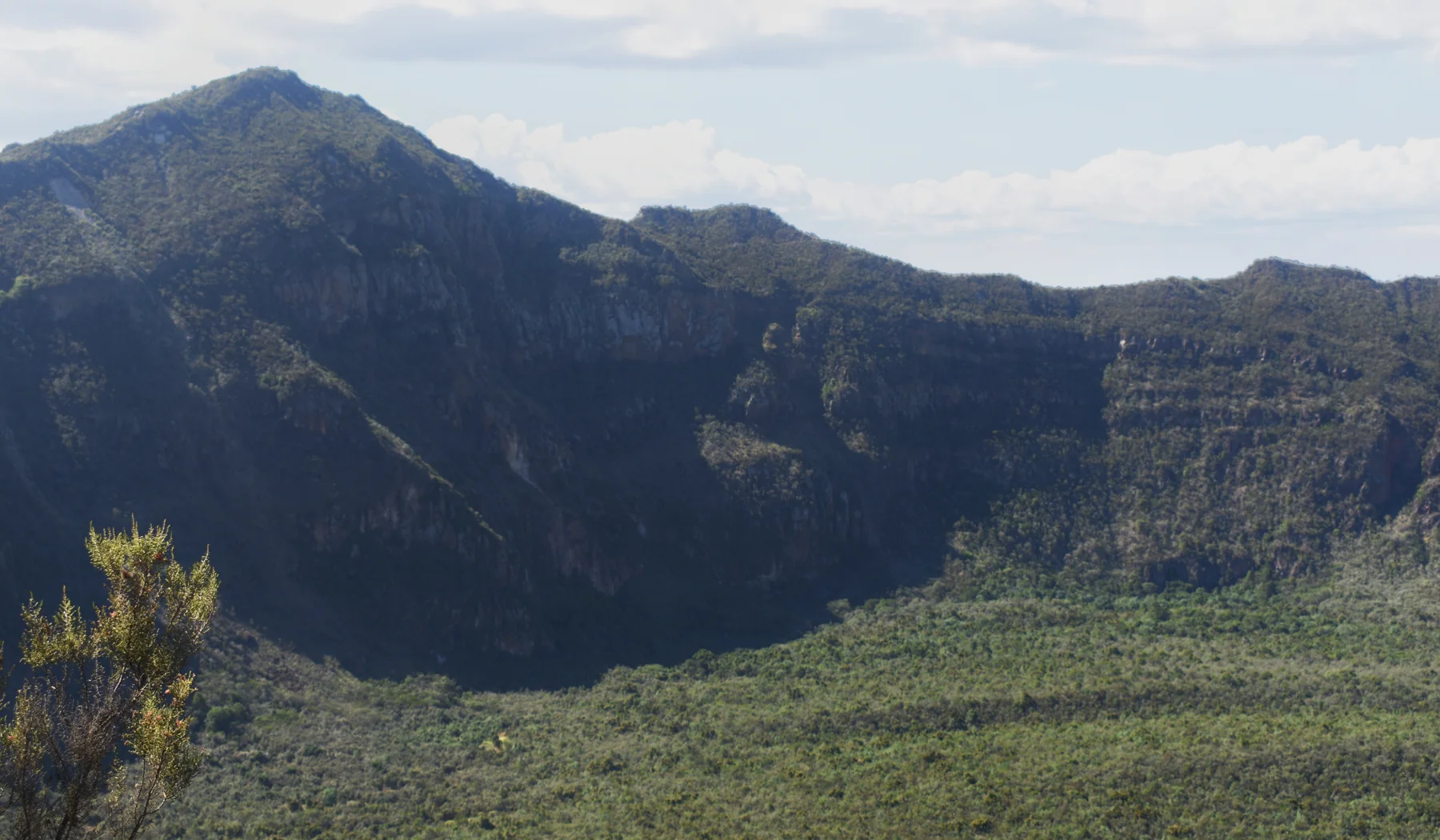
Mount Longonot rises above the Rift Valley with a steep climb to the crater rim and the option of a longer rim circuit. KWS describes a challenging hike through rugged ridges. Start early, carry more water than a casual walk requires and turn around before pride becomes the itinerary.
| Longonot choice | Commitment |
|---|---|
| Gate to crater rim and return | Steep climb, exposed sections and descent |
| Full rim circuit | Longer distance, repeated climbs and more heat |
| View from below | Scenic but not the hiking experience |
| Guided hike | Useful for pacing, route and group management |
The official park page lists gates from 6:00 am to 6:00 pm, but an early start is about heat and safety, not merely beating closing time.
Know when to skip the full Longonot rim
The full rim is not automatically the better version. Wind, heat, cloud, knees, footwear and the slowest person all matter. Reaching the first rim and returning can still be a complete experience. Nobody needs to prove fitness before sitting in a vehicle for several more safari days.
| Warning sign | Sensible choice |
|---|---|
| Water disappearing quickly | Turn back early |
| Knee pain on ascent | Expect descent to be harder |
| Strong wind on exposed rim | Avoid committing to the circuit |
| Slow pace before the crater | Do not add the full rim |
| Afternoon transfer deadline | Choose a different morning |
| Child losing enthusiasm | Return while the experience is still positive |
One local traveller suggested, “You can do hiking at Mt Longonot and have a relaxed boat ride.” That pairing works best across a long day or two days, with the hike first and the boat genuinely relaxed.
Visit Elsamere for conservation history and a slower afternoon
Elsamere was the home of Joy and George Adamson and now supports conservation education through the Elsa Conservation Trust. The museum, gardens, birdlife and high tea offer a different kind of wildlife day, one built around stories, memory and the question of how tourism supports conservation.
| Elsamere element | Best for |
|---|---|
| Joy Adamson museum | Conservation history |
| Garden birding | Quiet observation |
| Afternoon tea | Rest day or multigenerational group |
| Boat ride | Lake perspective from a heritage base |
| Nature walk | Guests wanting gentle movement |
Confirm day-visitor arrangements and timing directly. This is a place to linger, not a ten-minute photograph between two vans.
Make afternoon tea part of the story, not a filler stop
Tea at Elsamere works when the group wants a pause with context. Visit the museum first, talk about the Adamsons' legacy and the Trust's work, then sit by the lake without another urgent departure. It is especially useful after an early boat ride or before a quiet evening.
| Pairing | Why it works |
|---|---|
| Museum plus tea | History followed by reflection |
| Birding plus tea | Observation without a road transfer |
| Boat plus tea | Active morning, calm afternoon |
| Family safari break | Space for children and adults to reset |
| Honeymoon pause | Conversation and lake atmosphere |
Ride at Sanctuary Farm if horses are the reason to stop
Sanctuary Farm offers guided horseback rides through its private wildlife area on the lake shore. Its official information says rides suit different experience levels, require advance booking and welcome children from age three, subject to the provider's assessment and current rules.
| Riding question | Confirm before arrival |
|---|---|
| Rider experience | First time, nervous, intermediate or advanced |
| Child age and size | Provider acceptance and supervision |
| Duration | Half hour, one hour or longer current option |
| Clothing | Closed shoes, long trousers and helmet |
| Wildlife route | How guides manage distance and pace |
| Weather | Alternative time or cancellation approach |
Do not promise cantering, close wildlife or a specific route. Horse welfare and guide judgement come first.
Choose a private-sanctuary walk only with current permission
Much of Lake Naivasha's shore is private land, lodge ground, farm or sanctuary. A path visible on a map is not an invitation. Arrange walking through the property, follow its wildlife rules and learn where hippos move at night. A guided loop on Sanctuary Farm or Crescent Island is very different from wandering along an unknown shore.
| Walking place | Access logic |
|---|---|
| Crescent Island | Pay sanctuary entry and use its routes |
| Sanctuary Farm | Follow farm or accommodation arrangements |
| Lodge garden | Ask staff where and when to walk |
| Public roadside | Not a substitute for a wildlife walk |
| Lakeshore after dark | Avoid without authorised escort |
Go birding without needing a long species target
The Ramsar information identifies Lake Naivasha as important for resident and migratory birds. A satisfying session can focus on one habitat and a few behaviours: kingfishers watching water, herons feeding at the edge, cormorants drying wings or fish eagles calling across the lake.
| Habitat | What to watch |
|---|---|
| Papyrus edge | Small birds, herons and hidden movement |
| Open water | Diving birds and flight lines |
| Fever-tree garden | Woodland species and mixed feeding |
| Submerged trees | Perches, cormorants and eagles |
| Grassland sanctuary | Ground birds and grazing mammals together |
Use a local bird guide if species identification matters. For casual birding, binoculars and twenty quiet minutes can be enough to change how you see the lake.
Photograph Naivasha as a wetland, not only a wildlife portrait
Some of the strongest Naivasha photographs are wide: a fish eagle tree against water, giraffe under fever trees, a bicycle dwarfed by cliffs or Longonot rising above the lake. The Kenya wildlife photography safari guide helps match lenses and field habits to the subject.
| Subject | Useful visual choice |
|---|---|
| Hippos | Show water, distance and group structure |
| Fish eagle | Leave space in the flight direction |
| Crescent Island giraffe | Include lake or escarpment context |
| Hell's Gate cyclist | Use cliffs to show scale |
| Longonot | Layer foreground, crater and sky |
| Elsamere | Details that connect house, garden and history |
Use early light for boats and Longonot, late light for rest
Early mornings usually offer cooler hiking and often calmer water. Late afternoons can bring warm garden light, but they also move the day closer to hippo activity and park closing times. Do not trade safety for a sunset photograph.
| Light window | Strong choice | Caution |
|---|---|---|
| Dawn to early morning | Boat, birding, Longonot start | Confirm exact departure and gate timing |
| Mid-morning | Crescent Island | Heat and exposed walking |
| Midday | Lunch, museum, transfer | Harsh light and lower hiking comfort |
| Late afternoon | Garden, lodge, short ride | Leave shoreline before hippo movement |
| After dark | Dinner at accommodation | Use escorts where required |
Give children one story and one movement goal
Children rarely need every attraction. Give them a simple purpose: spot the fish eagle's white head, count giraffe patterns, ride a bicycle to a rock formation or find three kinds of waterbird. Then stop before tiredness turns the afternoon into negotiation.
| Age or energy | Better Naivasha choice |
|---|---|
| Young child | Short boat, garden birds and flexible lunch |
| Primary-school child | Crescent Island with a guide |
| Confident older child | Carefully chosen Hell's Gate cycle |
| Teen hiker | Longonot with honest fitness assessment |
| Mixed siblings | One shared anchor plus separate optional activity |
The Kenya safari with children guide covers seat needs, pacing, food, health and age-appropriate expectations.
Plan mobility activity by activity
“Naivasha is accessible” is too broad to be useful. Boat boarding, uneven island paths, bicycle balance, Longonot gradients, lodge steps and vehicle transfers create different barriers. Ask each provider about the exact route, not a general accessibility label.
| Activity | Key mobility question |
|---|---|
| Boat | Step height, hand support, seat stability and jetty surface |
| Crescent Island | Distance, gradient, surface, shade and resting points |
| Hell's Gate drive | Vehicle entry and viewpoint access |
| Elsamere | Paths, museum entrance and toilet access |
| Horse ride | Mounting support and provider assessment |
| Longonot | Usually unsuitable for significant mobility limits |
Use the accessible Kenya safaris guide to prepare a precise brief.
Choose a honeymoon day that leaves time to be together
A honeymoon is not improved by collecting six activity receipts. Choose a private or small-group boat, a walk with enough time for photographs, a long lunch, a lakeside room and an evening that does not begin with repacking.
| Honeymoon style | Naivasha plan |
|---|---|
| Wildlife-first | Private boat and guided Crescent walk |
| Active | Hell's Gate morning and quiet spa or lodge afternoon |
| Slow | Elsamere, birding and lakeside lunch |
| Scenic challenge | Longonot followed by a full rest period |
| Celebration | Private meal or sundowner arranged by the lodge |
Privacy must still respect wildlife, lake safety and site rules. “Private” should describe the service, not access to restricted shore.
Use Naivasha as a recovery day between safari blocks
One traveller put it plainly: “Naivasha is more like a relaxing place than an adventurous one.” That is one valid version of the lake. After dusty roads and early game drives, a garden, pool, quiet lunch and one short boat ride may be more valuable than another full programme.
| Recovery-day rule | Practical version |
|---|---|
| Sleep first | No dawn departure unless everyone wants it |
| Choose one experience | Boat, tea or birding, not all three |
| Protect lunch | Sit down instead of eating in transit |
| Delay repacking | Stay two nights if the route allows |
| Keep evening easy | Dinner at the accommodation |
Stay near the activity you care about most
Naivasha town, Moi South Lake Road, the eastern shore, Crescent Island approaches and the western lake area are not interchangeable. A cheap room can cost you the morning if it sits far from the boat jetty or park gate. The where to stay at Lake Naivasha guide compares the areas before you choose a property.
| Priority | Location question |
|---|---|
| Hell's Gate | How long to Elsa Gate at opening time? |
| Crescent Island | Which jetty and landing will be used? |
| Longonot | How quickly can we reach the park gate early? |
| Elsamere | Are day visits or on-site stays available? |
| Rest | Does the property have genuine lake or garden space? |
| Onward Mara route | Does the location create backtracking? |
Do not confuse Naivasha town with the lake experience
The town is useful for transport, shops, fuel and ordinary life. The wildlife and leisure experiences sit around a broad lake system, often on private property reached by specific roads. A traveller asking for “a hotel in Naivasha” can therefore end up far from the water and every planned activity.
| Booking phrase | Better question |
|---|---|
| “In Naivasha” | Which shore or road? |
| “Lake view” | From which room and in which season? |
| “Boat available” | Own jetty, partner transfer or road transfer? |
| “Near Hell's Gate” | Travel time to which gate? |
| “Wildlife on site” | Which animals, where, and what safety rules? |
Build a strong half-day itinerary
A half day works when arrival and departure points are close and the group commits to one main experience. Do not promise a major hike, park cycle and lake circuit between breakfast and a train.
| Available block | Strong plan |
|---|---|
| Early morning to lunch | Boat safari plus relaxed breakfast |
| Mid-morning to mid-afternoon | Crescent Island and lunch |
| Afternoon only | Elsamere or lakeside rest |
| Active early half day | Short Hell's Gate route |
| Transfer stop | One prebooked activity near the route |
In a local discussion, one recommendation was “Camp carnelly’s for lunch then stroll down to the lake.” The useful point is the scale: lunch and one lakeside moment, not an attempt to conquer the whole destination.
Build a full lake-and-walking day
For a first visit, the cleanest full day pairs a morning boat with Crescent Island, then protects lunch and a slow afternoon. It creates three viewpoints without a long road transfer: water, foot and garden.
| Time block | Experience | Keep flexible |
|---|---|---|
| Early morning | Boat safari | Exact route follows wind and wildlife |
| Mid-morning | Crescent Island walk | Route length follows heat and group pace |
| Lunch | Lakeside or nearby | Do not reserve an impossible time |
| Afternoon | Rest, birding or Elsamere | Drop it if the morning runs long |
| Evening | Accommodation | Follow hippo and escort rules |
Build a full Hell’s Gate day
Start early enough to inspect bikes without sacrificing cool riding time. Choose a route that the least confident rider can finish, add a safe guided walk only if current access supports it, and decide on the spa after checking operation and group energy.
| Stage | Decision |
|---|---|
| Gate arrival | Tickets, rules, toilets and route update |
| Bike fitting | Brakes, gears, tyres, helmet and saddle |
| Outbound ride | Comfortable pace and wildlife space |
| Midpoint | Continue, shorten or switch mode |
| Walk or viewpoint | Only current authorised access |
| Return | Leave energy and time for the gate |
| Optional spa | Confirm open status and return transport |
An independent visitor said, “Hell's Gate was our first stop and it was very memorable for its beautiful landscape.” That is the right expectation: scenery, movement and geology lead; wildlife enriches the day.
Build a two-day Naivasha stay
Two days allow contrast. Put the active experience on the cooler, better-rested morning and the lake experience on the other day. If Longonot is the priority, do not make Hell's Gate another endurance test immediately afterward.
| Day one | Day two | Best for |
|---|---|---|
| Boat and Crescent Island | Hell's Gate | Broad first visit |
| Longonot | Boat and Elsamere | Hikers who still want the lake |
| Hell's Gate | Horse ride and rest | Active couples or older families |
| Elsamere and birding | Crescent Island | Slower multigenerational travel |
| Arrival and rest | Boat plus onward transfer | Safari recovery |
Combine Naivasha with Lake Nakuru only when the route breathes
Lake Nakuru adds a concentrated national-park game drive and rhino search. Naivasha adds water, walking and active choices. The Lake Nakuru versus Lake Naivasha comparison helps choose one; the Lake Nakuru safari packages guide shows how both can fit a longer route. Compare the Lake Nakuru fees and safari-cost guide before pricing the two-lake sequence, then use where to stay at Lake Nakuru to put the overnight near the next morning's drive.
| Two-lake mistake | Better plan |
|---|---|
| Boat, island and Nakuru drive in one short day | One defined Naivasha activity, then Nakuru overnight |
| Sleeping far from both priorities | Place each night around next morning's anchor |
| Calling both “lake safaris” | Protect their different experiences |
| Expecting flamingos at a fixed lake | Follow current bird movement |
| Adding both to a short Mara trip | Choose the missing experience |
Put Naivasha before the Masai Mara for a soft landing
After an international arrival, Naivasha can introduce wildlife at a gentler pace. A boat, garden and early night may suit jet lag better than a full-day game drive. The next morning can begin with Crescent Island before the longer route continues.
| Arrival condition | Good first move |
|---|---|
| Morning landing, rested | Transfer and late afternoon garden time |
| Overnight flight, tired | Lunch, room and no fixed activity |
| Children restless | Short outdoor walk with clear boundary |
| Bags delayed | Avoid activity requiring special clothing |
| Road traffic heavy | Drop the optional stop, protect sleep |
Put Naivasha after the Mara for movement and recovery
After several vehicle days, the lake offers a physical and visual reset. Choose a gentle walk if backs are stiff, a boat if legs are tired or a full rest day if the group has stopped enjoying early alarms.
| After-Mara feeling | Naivasha answer |
|---|---|
| Tired of sitting | Crescent Island or easy cycle |
| Physically tired | Boat and garden |
| Still wildlife-hungry | Boat birding and sanctuary walk |
| Ready for a challenge | Longonot after a proper night's sleep |
| Ready for the coast | One calm night before onward travel |
Price activities as complete bundles
Current fees change by visitor category, provider, duration and inclusion. Compare the entire activity rather than a headline price. The KWS fee schedule separates conservation entry from certain activities, while private sites set their own arrangements.
| Activity | Cost lines to request |
|---|---|
| Boat | Boat basis, duration, transfer, guide and waiting time |
| Crescent Island | Entry, guide arrangement, boat and road transfer |
| Hell's Gate | Conservation fee, bicycle, guide, vehicle and optional spa |
| Longonot | Conservation fee, guide, transfer, water and equipment |
| Elsamere | Day visit, museum, tea, meal, boat or accommodation |
| Horse ride | Ride duration, sanctuary entry, helmet and transfer |
Ask for the travel date and visitor category to appear on the quote. Do not copy an old online price into a future budget.
Compare value by memory, not by attraction count
The cheapest day can disappoint if it spends most of its hours in transfers. The most expensive can also disappoint if it bundles experiences nobody asked for. Value is the quality of the chosen experience, the safety around it and the amount of unhurried time it receives.
| Value test | Useful question |
|---|---|
| Time | How many hours are genuinely at the activity? |
| Fit | Does everyone want to do it? |
| Safety | Are guides, gear and weather decisions clear? |
| Depth | Is there time to observe rather than pass through? |
| Route | Does it reduce or create backtracking? |
| Memory | Which one story will we still tell? |
Plan for rain without declaring the day ruined
Rain can change paths, bike surfaces, gorge safety and boat comfort. It can also bring beautiful cloud, rich colour and active birds. Build alternatives that preserve the purpose of the day rather than replacing every outdoor activity with a rushed shopping stop.
| Original plan | Weather alternative |
|---|---|
| Longonot | Elsamere, lunch and later short birding |
| Long Hell's Gate cycle | Vehicle-based scenery if authorised and safe |
| Exposed Crescent walk | Shorter route or reschedule |
| Boat in unsafe wind | Garden birding, museum or rest |
| Photography morning | Covered viewpoint and detail work |
Respect a lake under pressure
Naivasha supports wildlife, tourism, farms, homes and livelihoods. Water levels, shoreline development, invasive plants and human pressure all shape the experience. Responsible travel begins with small choices: legal access, quiet wildlife viewing, no litter, no feeding and honest questions about how a provider operates.
| Traveller choice | Why it helps |
|---|---|
| Use established jetties | Reduces random shoreline disturbance |
| Keep wildlife distance | Protects behaviour and safety |
| Carry refillable water | Reduces single-use waste |
| Follow plastic rules in parks | Supports KWS policy |
| Pay legitimate fees | Supports protected sites and accountability |
| Report unsafe conduct | Gives operators a reason to improve |
Refuse wildlife feeding as entertainment
Feeding changes behaviour, crowds animals around people and can create dangerous expectations. Ask how any fish-eagle demonstration is conducted, never feed monkeys or other mammals, and do not reward a guide for manufacturing a closer encounter.
| Request to refuse | Better alternative |
|---|---|
| “Make the eagle dive again” | Watch natural perches and hunting areas |
| “Bring the giraffe closer” | Wait at a respectful distance |
| “Feed the monkey for a photo” | Photograph natural foraging |
| “Move the boat into the hippo group” | Use a longer lens and wider story |
| “Block the animal's path” | Stop and leave the route open |
Pack for the activity you actually booked
Naivasha packing changes with the day. A boat needs a light layer and secure camera strap. Hell's Gate needs sun protection, water and closed footwear. Longonot needs proper hiking gear, first aid and more water. A high-tea afternoon needs none of the performance clothing people sometimes bring to safaris.
| Activity | Carry |
|---|---|
| Boat | Light layer, hat, binoculars, dry bag and lifejacket check |
| Crescent Island | Closed shoes, water, sun protection and binoculars |
| Hell's Gate | Helmet, water, gloves if preferred, repair plan and sunscreen |
| Longonot | Hiking shoes, food, ample water, first aid and rain layer |
| Elsamere | Camera, notebook and respectful casual clothing |
| Horse riding | Long trousers, closed shoes and provider-approved helmet |
Ask for food and toilet plans before the day begins
Activities become rushed when nobody knows where lunch happens or whether children can use a toilet before a long ride. Confirm facilities at gates, jetties and sites. Carry necessary snacks without feeding wildlife, and manage waste responsibly.
| Practical need | Confirm |
|---|---|
| Breakfast | Before departure or packed? |
| Drinking water | Quantity, refill and carrying method |
| Lunch | Reserved meal, picnic or flexible stop? |
| Toilets | At accommodation, gate and activity base? |
| Dietary needs | Written confirmation, not an assumption |
| Medication | Accessible during the activity |
Use traveller reviews to understand trade-offs
Reviews help when they reveal pace, feeling and friction. They fail when one person's fitness, weather or bargain becomes a promise to everyone. A forum contributor advised that “you would go to Lake Naivasha” for the surrounding activities rather than expecting the town itself to be the attraction. That distinction is useful.
| Review detail | What it can tell you |
|---|---|
| “Too rushed” | Combination or transfer timing failed |
| “Quiet and relaxing” | Property and pace may suit a rest day |
| “Bike was poor” | Inspect equipment and rental source |
| “Guide was excellent” | Interpretation mattered to the experience |
| “Saw few animals” | Expectation may have ignored habitat and season |
| “Price changed” | Get written inclusions and payment basis |
Reject the most common Naivasha planning mistakes
The biggest mistake is not choosing the wrong attraction. It is refusing to choose. A boat, island walk, full Hell's Gate cycle, gorge visit, spa, Longonot hike and museum do not belong in one day.
| Mistake | Repair |
|---|---|
| Six attractions in one day | One anchor per half day |
| Longonot after a late arrival | Sleep, then start early |
| Casual night shore walk | Follow escort and property rules |
| Cheapest unknown boat | Check safety, route and provider |
| Room booked by town name | Match location to activity |
| Fixed wildlife guarantee | Plan for habitat and behaviour |
| Old gorge assumptions | Confirm same-day KWS access |
Choose by traveller type
No activity wins for everybody. The same bicycle route that delights an active couple can make a multigenerational family split unhappily. Use the slowest walker, least confident rider and most tired traveller as real design inputs.
| Traveller | Best starting point |
|---|---|
| First Kenya safari | Boat plus Crescent Island |
| Active couple | Hell's Gate or Longonot |
| Young family | Short boat, guided island walk and flexible lunch |
| Older family | Boat, Elsamere and vehicle-based scenery |
| Birder | Early boat and habitat-specific guide |
| Photographer | Private timing and fewer stops |
| Honeymoon | One private experience and a quiet property |
Choose by available time
Time must include transfers, tickets, equipment fitting, meals and the pace of the slowest person. A two-hour space in the diary is not two hours on the lake.
| Time available | Honest scope |
|---|---|
| Two to three hours | One nearby boat or heritage visit |
| Half day | Boat, Crescent walk or short active park visit |
| Full day | Boat plus island, or Hell's Gate |
| Two days | Lake day plus active day |
| Three days | Add Longonot, deep rest or special-interest guiding |
Choose by physical demand
Fitness labels can be misleading. Cycling includes balance and rough ground. Walking includes uneven surfaces and sun. Longonot includes sustained climbing and a descent that tests knees. Ask about real terrain.
| Demand | Example | Hidden factor |
|---|---|---|
| Low | Garden birding or museum | Steps and standing time |
| Low to moderate | Boat | Boarding and seat stability |
| Moderate | Crescent Island | Heat, gradient and loose ground |
| Moderate to high | Hell's Gate cycling | Bike quality and distance |
| High | Longonot rim | Climb, exposure, water and descent |
Choose by wildlife interest
Naivasha is strongest when the wildlife goal matches the habitat. Hippos and waterbirds belong to the lake. Giraffe and zebra on foot belong to managed sanctuaries. Large-predator expectations belong elsewhere.
| Wildlife interest | Best Naivasha experience |
|---|---|
| Hippos | Responsible boat safari |
| Fish eagles | Boat and shoreline birding |
| Giraffe on foot | Crescent Island or authorised private sanctuary |
| Plains animals from a bicycle | Hell's Gate, subject to sightings |
| Nocturnal sounds | Safe lakeside accommodation with staff rules |
| Rhinos | Choose Lake Nakuru National Park instead |
Ask the right questions before booking
Turn vague interest into a written plan. Ask who provides each activity, how long it really lasts, what can change it and what the alternative will be. For private land, ask how access is authorised. For KWS parks, use current official information.
| Question | Why it matters |
|---|---|
| Which exact jetty, gate or property? | Prevents location surprises |
| Who operates the boat or bicycle? | Clarifies responsibility |
| Which fees are separate? | Prevents missing-cost disputes |
| What is the weather cancellation rule? | Protects safety and budget |
| What is the walking surface? | Matches mobility and footwear |
| What wildlife conduct is expected? | Protects animals and people |
| What is plan B? | Keeps the day useful |
Send a complete Lake Naivasha activity brief
A useful brief includes dates, arrival, departure, accommodation, ages, fitness, mobility, wildlife interests, activity preferences, dietary needs, equipment, budget and onward route. It also says what the group does not want.
| Brief field | Example detail |
|---|---|
| Party | Two adults, children aged seven and eleven |
| Timing | Arrive from Nairobi at 10:30, two nights |
| Priority | Hippos, fish eagles and walking among giraffe |
| Limits | No cycling, one guest has knee pain |
| Accommodation | Quiet lake area, family room |
| Onward route | Lake Nakuru, then Masai Mara |
| Budget | Separate activity and room comfort priorities |
Frequently asked questions
What are the best things to do at Lake Naivasha?
The strongest first-visit choices are a responsible boat safari, Crescent Island walking safari, Hell's Gate cycling or hiking, Mount Longonot, Elsamere and focused birdwatching. Choose according to time, fitness, wildlife interests and the rest of the safari.
Can I do Hell’s Gate and Lake Naivasha in one day?
Yes, if Hell's Gate is a defined morning route and the lake activity is short and nearby. A long cycle, gorge plan, spa, boat and island walk in one day is usually too much.
Is Crescent Island worth visiting?
It is a strong choice for travellers who want a managed wildlife walk, giraffe and plains animals, birding and lake views. It is not a predator safari or an unrestricted wilderness hike.
Are Lake Naivasha boat safaris safe?
They depend on the operator, boat, lifejackets, weather decisions and wildlife distance. Choose a responsible operator and never pressure the skipper to approach hippos closely.
Can children go on a Lake Naivasha boat safari?
Yes, with correct child-size lifejackets, constant supervision, suitable weather and a trip length matched to the child. Confirm the operator's current policy.
Can I walk along Lake Naivasha at night?
Do not walk an unfamiliar shore at night. Hippos leave the water to graze. Follow accommodation rules and use an escort when provided.
Is Mount Longonot suitable for beginners?
Some fit beginners reach the first crater rim, but the climb is steep and the full rim is substantially harder. Start early, carry enough water and be willing to turn back.
Do I need two nights at Lake Naivasha?
Two nights are useful when you want a lake-and-walking day plus Hell's Gate or Longonot. One night can work for one carefully chosen anchor activity.
Is Lake Naivasha good for birdwatching?
Yes. The freshwater Ramsar wetland supports resident and migratory birds across open water, papyrus, submerged trees, gardens and nearby grasslands.
Should I visit Lake Nakuru or Lake Naivasha?
Choose Nakuru for a focused national-park game drive and rhino search. Choose Naivasha for boats, hippos, birds, walking, cycling, hiking and a change of pace.
Choose the Naivasha day you will enjoy living through
The most useful things to do at Lake Naivasha are not the longest list. They are the experiences that fit the people, the route and the day in front of you. A safe boat at first light, one unhurried walk, a bicycle beneath cliffs or tea in a garden can each justify the stop.
Protect the anchor activity. Leave room for weather and wildlife. Put the night close to the next morning's purpose. Then let Naivasha feel like a lake, not a layover.
Plan your Lake Naivasha stay
Share dates, party, route, ages, fitness, mobility, wildlife interests, rooms, diet, luggage and budget.