
Lake Naivasha Boat Safaris and Hippo Safety
Choose the boat, skipper, route and wildlife approach with enough care to make the experience calm, ethical and genuinely memorable.
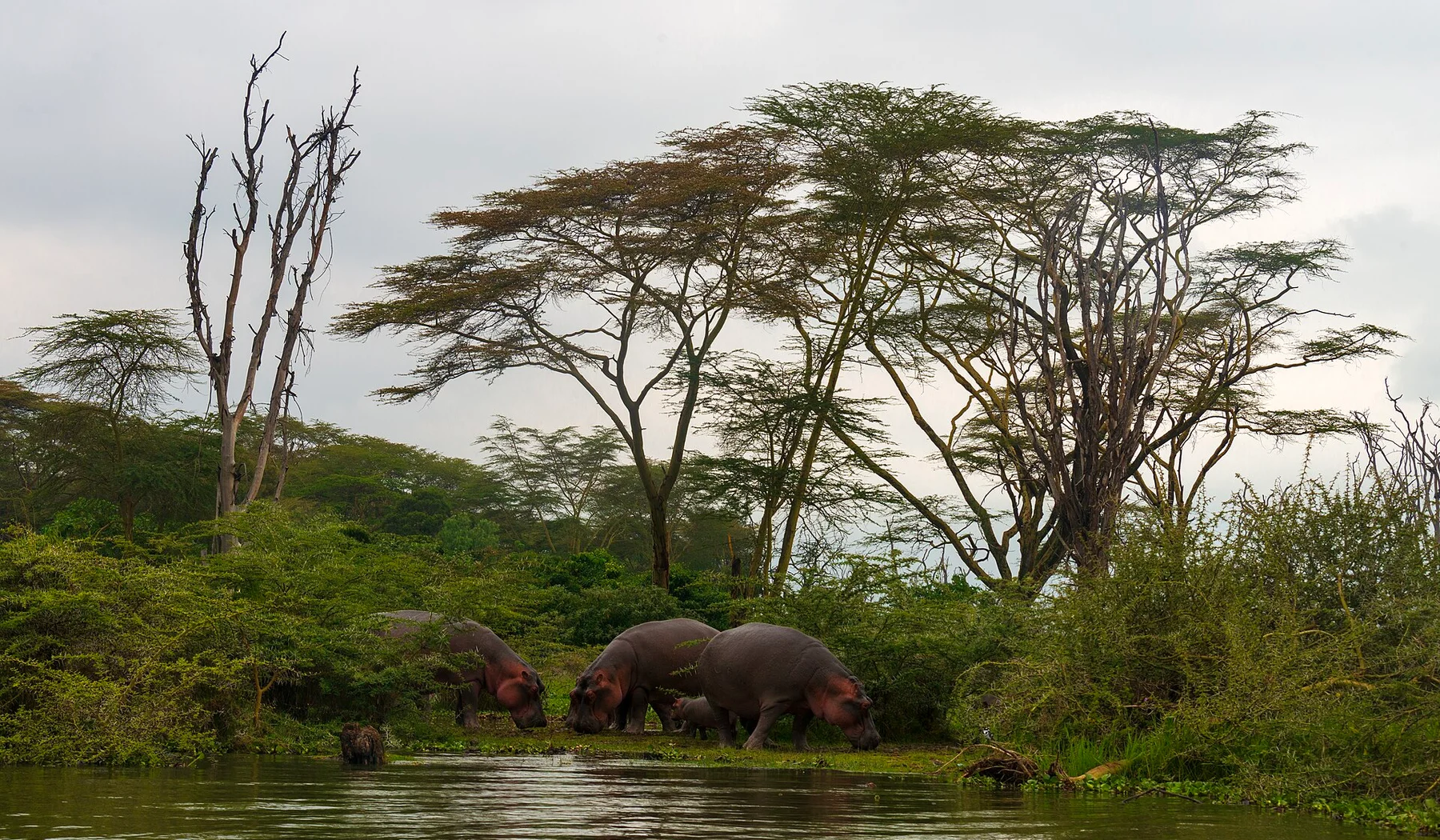
- Decide what you actually want to book
- A safari cruise is not the same as an island transfer
- What a responsible operator looks like
- Life jackets are worn, not stored
- Children need child-size equipment
- Board one person at a time
- Ask about mobility before choosing the jetty
- Capacity is more than the number of seats
- Inspect the boat without pretending to be a marine surveyor
- Listen to the safety briefing
- The skipper is the most important piece of equipment
- Weather can change the route
- Why early morning often works best
- Hippos are the reason to slow down
- There is no trophy for the closest photograph
- Never block a hippo’s path
- Mothers and calves deserve more room
- If a hippo submerges, do not guess its path
- Keep hands, food and voices inside the experience
- Birds are a full safari, not filler between hippos
- Think carefully about fish-eagle feeding
- Photography works better when the boat stays balanced
- Binoculars improve the experience for everyone
- Floating vegetation and dead trees shape the route
- Shared boat versus private boat
- Read the price correctly
- A low price can hide a very short ride
- Hotel jetty or public landing
- What to wear and carry
- Motion sickness can happen on a lake
- Seasickness is not the only comfort issue
- Combine the boat with Crescent Island
- Combine the boat with Hell’s Gate
- Lake Naivasha or Lake Nakuru
- Do not overfill a Nairobi day trip
- Overnight visitors gain flexibility
- What recent travellers can and cannot tell you
- Red flags before departure
- What to do if conditions deteriorate
- If someone falls into the water
- Travel insurance still matters
- A respectful boat safari feels unhurried
- Build the right half-day
- Send a complete booking brief
- Final checklist at the jetty
- Frequently asked questions
- Plan the lake around the people travelling
The engine settles into a low hum, the jetty begins to shrink behind you, and Lake Naivasha opens into a wide sheet of silver. A fish eagle calls from a dead tree. Pelicans drift in loose formation. Then a pair of small ears breaks the surface beside a patch of papyrus. This is the moment many visitors have imagined, but a good skipper does not race towards it. The boat slows, gives the animals room and lets the lake decide what happens next.
This guide to Lake Naivasha boat safaris and hippo safety explains how to choose that kind of experience. It covers the boat, skipper, life jackets, wind, children, mobility, hippo behaviour, birding ethics, Crescent Island transfers and the questions that reveal whether a low quote is genuinely good value.
| Quick decision | Practical answer |
|---|---|
| Best general time | Early morning for calmer conditions, softer light and active birds |
| Life jacket | Wear a correctly sized one for the entire trip |
| Best boat | Maintained, uncluttered and operated within its safe capacity |
| Hippo approach | Slow, quiet and led by the skipper, with a clear escape route |
| Young children | Possible only with a proper child-size life jacket and close adult supervision |
| Crescent Island | Confirm whether your quote is a transfer, a wildlife cruise or both |
| Main weather concern | Wind and fast-changing lake conditions |
| Ethical birding | Watch natural behaviour without demanding baiting or repeated pursuit |
Decide what you actually want to book
“Boat ride” can describe several different products. One may be a direct crossing to Crescent Island. Another may spend most of its time looking for birds and hippos. A third may combine a short wildlife loop with a drop-off for a walking safari. None is automatically better, but they should not be priced or described as if they are identical.
| Experience | What normally matters most | Best for |
|---|---|---|
| Direct island transfer | Reliable jetty, timing and return arrangement | Travellers focused on Crescent Island |
| General wildlife cruise | Skipper knowledge, route flexibility and respectful viewing | First-time visitors |
| Birding boat | Early start, slow pace and guide identification skills | Birders and photographers |
| Private photography boat | Positioning, patience, space and engine control | Serious photographers |
| Sunset-style ride | Weather, return light and hotel proximity | Travellers prioritising atmosphere |
| Combined boat and walk | Coordination between skipper, island entry and onward transport | A half-day Naivasha experience |
The Lake Naivasha destination guide helps place the boat trip within a longer stay. Decide the purpose first, then ask an operator to quote the correct experience.
A safari cruise is not the same as an island transfer
A transfer can be quick and direct. A safari cruise should allow time to read the water, stop for birds and observe wildlife without rushing. When the same words are used for both, travellers can arrive expecting an hour of wildlife viewing and receive little more than transport.
| Ask before paying | The answer should clarify |
|---|---|
| How many minutes are spent on the water? | Actual boat time, not total excursion time |
| Is the route direct or wildlife-focused? | Whether the skipper will search suitable areas |
| Is Crescent Island included? | Boat only, island entry, guide and return |
| Is the boat private? | Whether timing and stops can change |
| Where do we board? | Hotel jetty, public landing or another shore |
| What happens in unsafe weather? | Delay, alternative, refund or reschedule policy |
If walking among giraffe and antelope is the priority, use the Crescent Island walking safari guide to plan the land portion properly.
What a responsible operator looks like
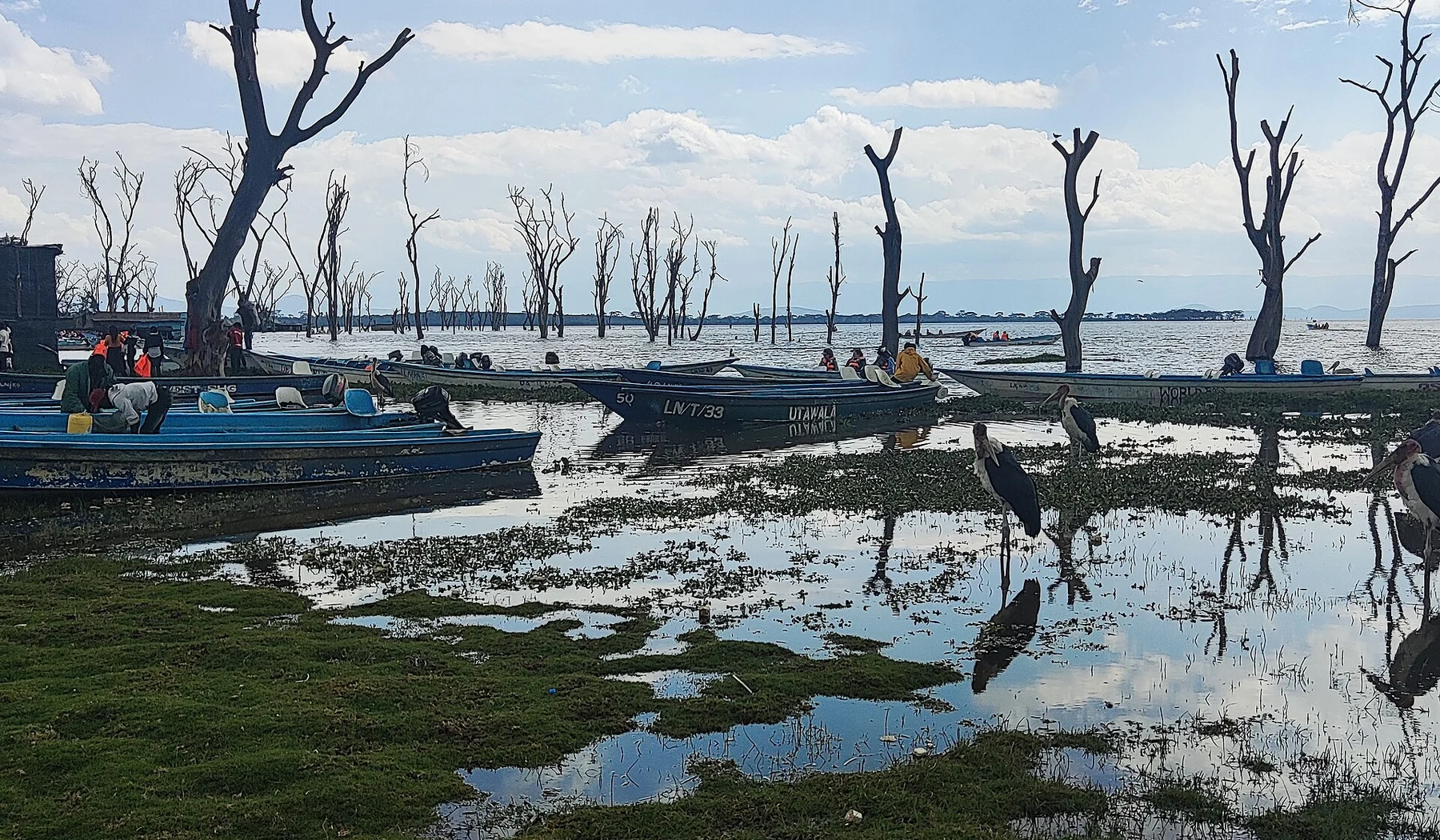
The best sign is not a polished sales desk. It is a skipper who is comfortable saying no. No to an overloaded boat, no to an ill-fitting life jacket, no to a risky approach and no to leaving when the wind makes the route unwise.
| Positive sign | Why it matters |
|---|---|
| Passenger list and clear capacity | Helps prevent casual overloading |
| Life jacket fitted before departure | Confirms equipment exists in the right sizes |
| Short safety briefing | Tells everyone what to do before an emergency |
| Uncluttered floor | Reduces trips and blocked movement |
| Calm engine and steering check | Shows the skipper is assessing the vessel |
| Weather discussion | Proves conditions influence the decision |
| Conservative wildlife approach | Protects passengers and animals |
| Phone or radio communication | Supports a realistic response plan |
A visitor praised an operator for having “very smart life saver jackets”. Appearance alone is not enough, but clean, intact equipment that is actually fitted is a reassuring start.
Life jackets are worn, not stored
Kenya's small-vessel rules require an approved, appropriately sized lifejacket or buoyancy aid for each person. Kenya Maritime Authority safety guidance also tells passengers to wear life jackets. A jacket beneath a seat cannot hold you up after a sudden fall.
| Fit check | What you are looking for |
|---|---|
| Size label | Appropriate adult or child range |
| Buckles and zip | All close securely |
| Straps | Snug without preventing breathing |
| Crotch strap on child jacket | Prevents the jacket riding over the head |
| Buoyant material | No obvious tears, crushing or waterlogging |
| Lift test | Jacket should not slide above ears when shoulders are lifted |
Put it on before stepping into the boat. Keep it fastened until you are safely back on the jetty.
Children need child-size equipment
An adult jacket tightened around a small child is not a proper substitute. Ask for the child's approximate weight and jacket size while booking, then inspect the actual equipment on arrival. One adult should be responsible for each young child during boarding and disembarking.
| Child-safety decision | Better choice |
|---|---|
| No child-size jacket | Do not depart |
| Child cannot sit steadily | Postpone or choose a shore activity |
| Strong wind or choppy water | Wait or reschedule |
| Child is frightened | Do not force the ride |
| Shared adult supervision | Name one responsible adult |
| Long cruise with no shade | Shorten it and start early |
For a wider family itinerary, the Kenya safari with children guide helps balance wildlife, travel time and rest.
Board one person at a time
Many mishaps happen beside the jetty, before the safari begins. Water levels can change the height of the step. Wet timber, mud, floating vegetation and a moving hull add instability.
| Boarding sequence | Good practice |
|---|---|
| 1 | Put on and fasten the life jacket |
| 2 | Hand loose bags to crew or a seated passenger |
| 3 | Wait for the skipper to stabilise the boat |
| 4 | Use a secure handhold, not another passenger's neck or camera strap |
| 5 | Step towards the centre, keeping weight low |
| 6 | Sit where directed and remain seated until told otherwise |
Do not jump from shore or gather several people on one side. The skipper should control the order.
Ask about mobility before choosing the jetty
“Boat accessible” can mean only that the boat reaches the shore. It does not tell you the step height, surface, handholds or whether a wheelchair can approach the boarding point.
| Mobility question | Why it changes the plan |
|---|---|
| How many steps reach the jetty? | Determines effort before boarding |
| Is the surface level and firm? | Mud and loose gravel affect balance |
| What is the step down into the boat? | High gunwales may require more hip and knee movement |
| Are stable handholds available? | Reduces reliance on pulling crew members |
| Can the boat remain steady? | Helps a slower transfer |
| Where can a wheelchair or walker be stored? | Prevents blocked exits and damage |
| Is there a nearby toilet? | Important before and after the cruise |
The accessible Kenya safaris guide covers broader vehicle, room and activity planning. Send recent mobility details rather than a vague label such as “elderly”.
Capacity is more than the number of seats
A boat may physically hold a group and still leave little room for safe movement, camera bags and balanced seating. Ask for the operator's permitted passenger capacity and whether children count as passengers. They do for safety planning.
| Capacity factor | Why it matters |
|---|---|
| Passenger count | Affects freeboard and stability |
| Body-weight distribution | Requires balanced seating |
| Camera and luggage weight | Adds load and clutter |
| Child supervision | Needs adjacent adult seating |
| Mobility support | May need extra space and a stable position |
| Private or shared boat | Controls crowding and route flexibility |
If the boat sits noticeably low, lists to one side or the skipper keeps adding passengers after seats are filled, do not leave the shore.
Inspect the boat without pretending to be a marine surveyor
Travellers are not expected to certify a vessel. You can still notice basic warning signs. Look for a tidy floor, secure seats, a functioning engine, no obvious fuel leak and enough intact life jackets.
| Look at | Reassuring | Warning |
|---|---|---|
| Hull and floor | Dry or managed, with no unexplained water build-up | Water rising or active leakage |
| Seats | Secure and balanced | Loose boards or unstable plastic chairs |
| Fuel | Container secured and no strong leak smell | Open, leaking or rolling container |
| Engine | Starts and idles normally | Repeated failure or visible unsafe repair |
| Lines and gear | Stored without blocking feet | Tangled across passenger area |
| Emergency equipment | Skipper can identify it | Vague answers or none visible |
One traveller wrote, “The boat had good maintenance”. That is useful reassurance when it matches what you see on the day.
Listen to the safety briefing
A briefing need not be theatrical. It should explain where to sit, why life jackets remain fastened, what movement is permitted and what happens if the engine stops or someone enters the water.
| Briefing point | What passengers need to know |
|---|---|
| Seating | Stay in assigned positions unless directed |
| Standing | Whether it is ever permitted |
| Bags | Keep them low and out of the walkway |
| Emergency | Follow the skipper, do not all move at once |
| Wildlife | Never reach, feed or lean towards animals |
| Weather | The skipper may shorten or turn back |
| Disembarking | Remain seated until the boat is secured |
An independent review praised a guide who “briefly gave a safety education session”. A minute of clear preparation can prevent confusion later.
The skipper is the most important piece of equipment
A powerful motor cannot replace judgement. A good skipper reads wind lines, floating plants, submerged trees, other boats and the subtle change in hippo behaviour that tells them an approach has gone far enough.
| Skipper quality | What it looks like on the water |
|---|---|
| Situational awareness | Scans ahead rather than watching passengers continuously |
| Smooth control | Avoids hard turns and abrupt acceleration |
| Wildlife knowledge | Explains behaviour without promising sightings |
| Boundary setting | Refuses passenger pressure for a closer approach |
| Route knowledge | Knows shallow, obstructed or congested areas |
| Communication | Explains route changes and checks passenger comfort |
The best guides make safety feel like part of hospitality, not a lecture.
Weather can change the route
Lake Naivasha may look calm from a sheltered jetty while open water is already choppy. Wind direction, dark cloud, rain, visibility and the boat's loading all influence the decision.
| Condition | Sensible response |
|---|---|
| Light early breeze | Continue only if the skipper considers the route comfortable |
| Whitecaps | Delay, shorten or stay in sheltered water |
| Thunder nearby | Do not depart |
| Heavy rain | Wait for visibility and conditions to improve |
| Strong crosswind | Avoid exposed crossings |
| Rapidly darkening sky | Return before the weather reaches the boat |
Build flexibility into the itinerary. A boat trip is not worth preserving at the expense of safe judgement.
Why early morning often works best
Morning is popular for more than pretty light. Wind is often gentler, the lake can feel quieter and birds may be active. It also leaves time to wait if conditions briefly delay departure.
| Time | Likely advantage | Main caution |
|---|---|---|
| Early morning | Calm atmosphere, active birds, soft light | Cool air and possible mist |
| Late morning | Warmer and easy to combine after breakfast | More traffic and building wind |
| Early afternoon | Fits some arrival schedules | Glare, wind and less schedule margin |
| Late afternoon | Warm light and atmosphere | Return light and weather margin |
Ask your hotel when its jetty receives direct sun and wind. Shore orientation can change comfort.
Hippos are the reason to slow down
Hippos spend much of the day in or close to water, often with little more than eyes, ears and nostrils visible. Their apparent stillness is not an invitation. They are large wild animals capable of rapid movement, and a boat can accidentally restrict their route.
| What you see | What it may mean | Boat response |
|---|---|---|
| Ears and nostrils at surface | Animal resting or watching | Hold distance and observe quietly |
| Repeated surfacing closer | The animal is moving | Give it space and a clear route |
| Head held high | Increased attention | Stop approaching |
| Open-mouth display | Warning or social display | Withdraw calmly |
| Splashing or sudden movement | Disturbance or interaction | Increase distance immediately |
| Hippo on shore | Possible route back to water | Never block the line to the lake |
The Wildlife Research and Training Institute has documented important hippo concentrations in the wider Naivasha system. That makes careful boating essential, not optional.
There is no trophy for the closest photograph
A safe viewing distance is not one universal number that applies to every boat, group and animal. The skipper must consider behaviour, water depth, escape routes, other vessels and whether calves are present.
| Unsafe pressure | Better request |
|---|---|
| “Go closer” | “Please choose the safest viewing position” |
| “Wake it up” | Wait for natural behaviour |
| “Cut in front” | Let the animal choose its direction |
| “Circle the group” | Observe from one non-blocking side |
| “Follow that calf” | Give mother and calf extra room |
Use a longer lens or binoculars. A photograph that required stress is not a successful wildlife encounter.
Never block a hippo’s path
Hippos move between water, grazing areas and resting places. A boat should not sit between an animal and the open water, crowd a narrow channel or join several vessels around one group.
| Positioning risk | Why it is dangerous |
|---|---|
| Boat between hippo and shore | May restrict the animal's chosen route |
| Boat between shore hippo and water | Blocks the animal's refuge |
| Several boats forming a semicircle | Reduces escape options |
| Engine stopped too close | Limits immediate manoeuvring |
| Drifting silently into reeds | Can surprise unseen animals |
The aim is to share space without taking control of it.
Mothers and calves deserve more room
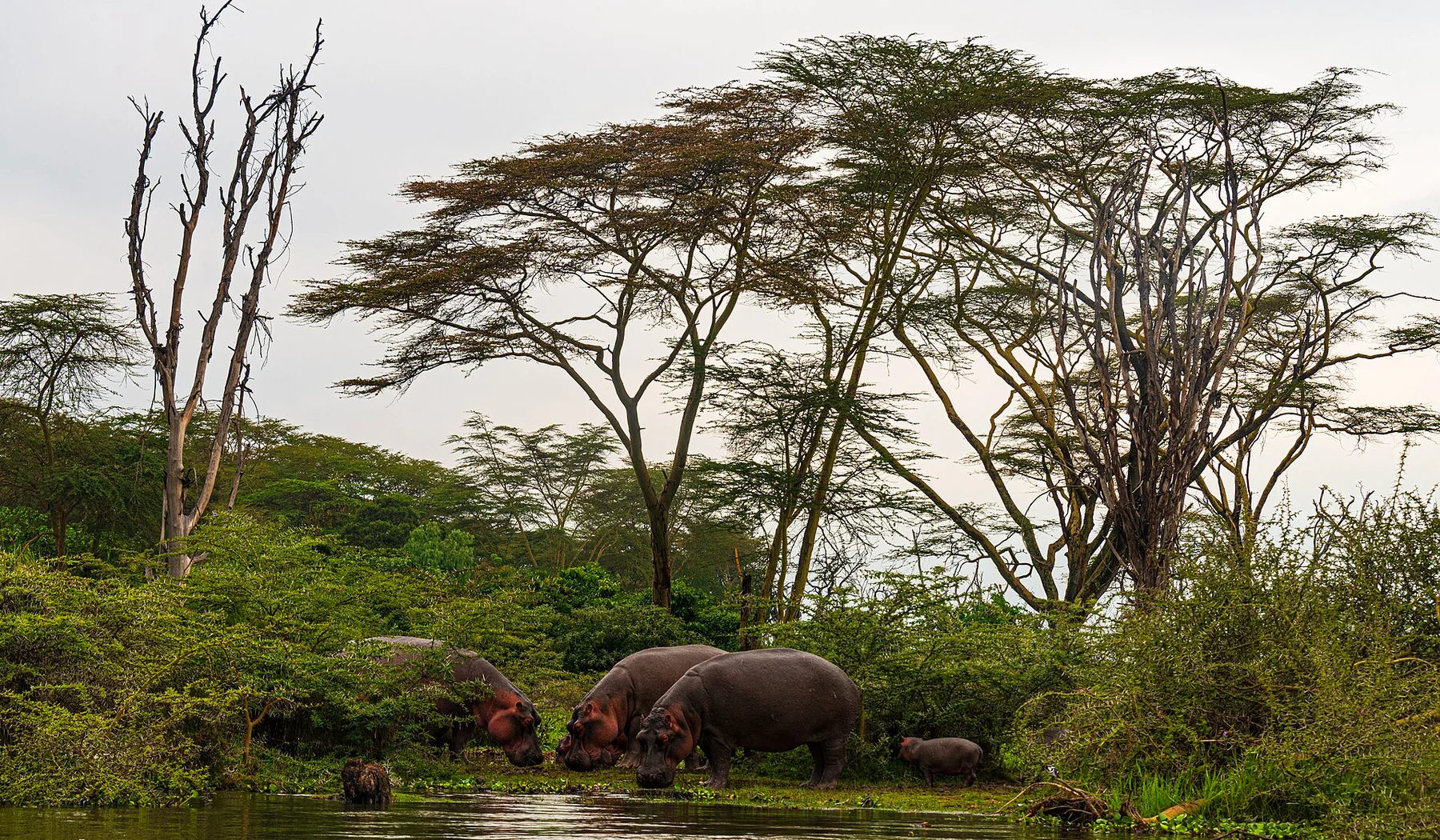
A calf may look curious or playful. The adult beside it is the reason to keep extra distance. Do not ask the skipper to move between family members, follow them through vegetation or wait at the place they appear to be heading.
| Family situation | Responsible response |
|---|---|
| Calf beside mother | Observe from farther away |
| Calf separated briefly | Do not move into the gap |
| Group near narrow vegetation | Avoid entering the channel |
| Young animal approaches | Hold or withdraw as the skipper judges |
| Several boats arrive | Leave rather than adding pressure |
Good wildlife viewing sometimes means being the first boat to move away.
If a hippo submerges, do not guess its path
Once underwater, a hippo can change direction. The boat should not race to the expected surfacing point. The skipper may hold position, turn the bow or move to clearer water.
| Passenger action | Why it helps |
|---|---|
| Stay seated | Keeps the vessel balanced |
| Stop pointing everyone to one side | Prevents sudden weight shift |
| Follow the skipper quietly | Allows concentration |
| Keep hands inside | Avoids injury during manoeuvring |
| Do not demand pursuit | Gives the animal room |
Remain calm. The skipper needs space to make decisions, not a chorus of directions.
Keep hands, food and voices inside the experience
Do not feed hippos or any other wildlife. Keep snacks packed unless the skipper says the setting is suitable, and take all litter back to shore. Loud calls, music and banging on the hull can disturb animals and spoil the lake for everyone.
| Behaviour | Better habit |
|---|---|
| Shouting at wildlife | Speak softly and wait |
| Throwing food | Observe natural feeding |
| Leaning over the side | Stay centred and use binoculars |
| Playing music | Listen to birds and water |
| Dropping wrappers | Carry a sealed waste pouch |
Quiet travellers often see more because the guide can hear calls and movement.
Birds are a full safari, not filler between hippos
Lake Naivasha can reward patient scanning with fish eagles, pelicans, cormorants, kingfishers, herons, egrets and many smaller species. The exact list changes with habitat, season, water level and luck.
| Birding style | Ask the skipper for |
|---|---|
| General appreciation | Slow route past varied habitats |
| Photography | Sun-aware positioning and time to settle |
| Identification | A guide comfortable with local calls and plumage |
| Specialist list | Early start and habitat-specific route |
| Family birding | A short, interactive route without rushing |
Let the guide identify what is present, rather than promising a fixed checklist before departure.
Think carefully about fish-eagle feeding
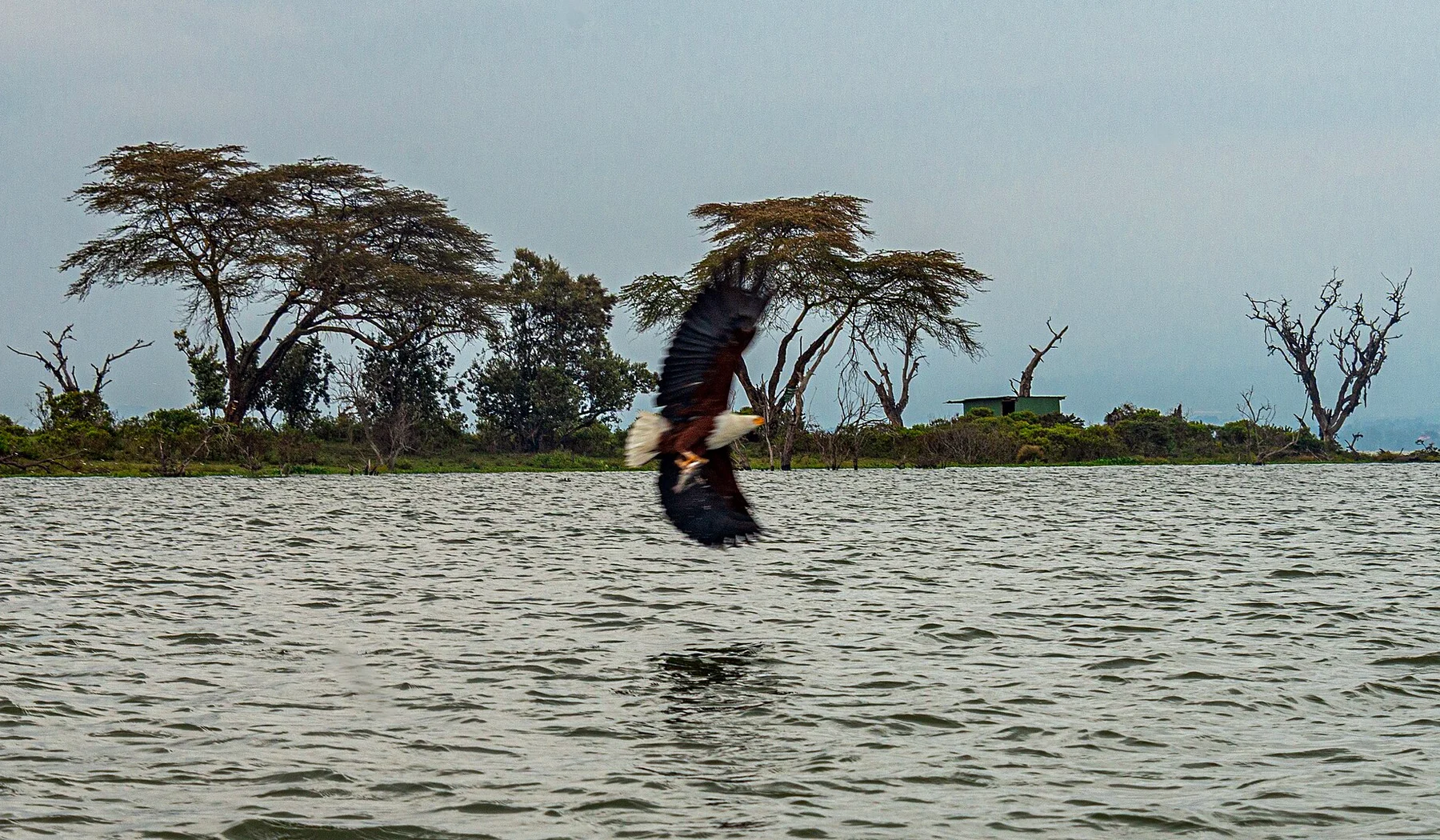
Some boat experiences use a thrown fish to bring an eagle close for a dramatic photograph. Travellers who prefer natural behaviour can ask the skipper not to bait birds and instead spend time near suitable perches at a respectful distance.
| Your preference | Say it clearly |
|---|---|
| Natural observation only | “Please do not feed or bait birds for us” |
| Photography without bait | “Can we wait near a perch and watch natural hunting?” |
| Unsure | Ask before the boat leaves, not after fish is purchased |
| Group with mixed views | Choose the least intrusive approach |
A wild fish eagle flying on its own terms is no less memorable because the moment cannot be staged.
Photography works better when the boat stays balanced
Long lenses magnify movement. A private or lightly loaded boat may give more flexibility, but everyone must still follow the skipper's seating instructions.
| Photography problem | Practical solution |
|---|---|
| Harsh glare | Start early and ask about sun direction |
| Boat vibration | Request engine-off moments only where safe |
| Passengers leaning together | Agree shooting sides and rotate slowly |
| Water spray | Use a cloth and simple rain cover |
| Lens change near water | Carry one versatile lens or change seated |
| Missed close-up | Crop rather than pressure the skipper |
Protect equipment in a dry bag between sightings. The Kenya safari packing guide covers useful waterproof and dust-protection choices.
Binoculars improve the experience for everyone
Binoculars reduce the urge to push closer. An 8x pair is often easier to steady on a moving boat than very high magnification. Use a neck strap and keep them inside the hull when not in use.
| User | Helpful feature |
|---|---|
| Child | Light weight and easy focus |
| Glasses wearer | Adjustable eye relief |
| Birder | Bright image and close focus |
| Photographer | Compact pair separate from camera |
| Shared group | At least two pairs to reduce passing around |
Show children how to find an animal with their eyes first, then lift the binoculars without standing.
Floating vegetation and dead trees shape the route
Lake Naivasha's character includes papyrus, floating plants and drowned or dead trees. These create habitat and striking photographs, but also affect navigation. A skipper may change course because a familiar channel is congested or an obstacle is partly submerged.
| Lake feature | Traveller implication |
|---|---|
| Floating vegetation | Can slow or block a route |
| Submerged branches | Require lower speed and local knowledge |
| Dead standing trees | Bird habitat and navigation obstacle |
| Narrow papyrus channel | Poor place to crowd wildlife |
| Changing water level | Alters jetties, shallows and shoreline access |
Route changes are often evidence of awareness, not a failure to deliver.
Shared boat versus private boat
A shared boat can be sociable and affordable. A private boat gives greater control over pace, seating and photography, but it does not permit unsafe approaches.
| Decision | Shared boat | Private boat |
|---|---|---|
| Price structure | Often lower per person | Often quoted per boat or at a minimum charge |
| Departure time | Less flexible | More flexible |
| Route | Group compromise | Can match interests and safe conditions |
| Photography | Limited rotation and space | Better positioning and equipment room |
| Family pace | Depends on other passengers | Easier to shorten or pause |
| Wildlife rules | Same | Same |
Ask the maximum passenger count even when booking privately. “Private” does not describe the boat size.
Read the price correctly
Lake Naivasha quotes may be per person, per boat, per hour or a bundled excursion. Island entry, guide fees, hotel transfers and waiting time may be separate.
| Cost line | Confirm in writing |
|---|---|
| Boat | Private or shared, duration and passenger limit |
| Crescent Island transfer | One way or return |
| Island entry | Included or paid separately |
| Walking guide | Included, optional or separate |
| Road transfer | Hotel collection and drop-off points |
| Waiting time | Whether the skipper waits during the walk |
| Taxes and payment | Final currency, method and receipt |
| Weather cancellation | Refund, credit or reschedule terms |
The Kenya safari cost guide helps compare larger itineraries. For the boat, insist on a simple line-by-line total.
A low price can hide a very short ride
Compare like with like. Ten minutes of transfer is not equivalent to a slow wildlife cruise, and a shared seat is not equivalent to a private boat.
| Comparison field | Quote A | Quote B |
|---|---|---|
| Actual water time | Write minutes | Write minutes |
| Private or shared | Record | Record |
| Passenger maximum | Record | Record |
| Life jacket sizes confirmed | Yes or no | Yes or no |
| Wildlife cruise included | Yes or no | Yes or no |
| Island entry included | Yes or no | Yes or no |
| Hotel transfer included | Yes or no | Yes or no |
| Weather terms | Record | Record |
The cheaper number may become the more expensive day once missing pieces are added.
Hotel jetty or public landing
Departing from your hotel can be convenient and may avoid a road transfer. A public or specialist landing may offer more boats, but its boarding surface and crowding can differ.
| Departure point | Possible advantage | Question to ask |
|---|---|---|
| Hotel jetty | Easy timing and short walk | Does the quoted boat leave here? |
| Crescent Island access jetty | Efficient boat-and-walk combination | Who handles island entry and return? |
| Public landing | Wider operator choice | What are parking, toilet and boarding conditions? |
| Private camp jetty | Quiet and controlled | Is access limited to guests? |
The planned where to stay at Lake Naivasha guide compares areas partly by access to the lake and nearby activities.
What to wear and carry
The lake can feel cooler than the shore, particularly early. Sun reflected from water is still strong, and spray can reach cameras and clothing.
| Item | Why bring it |
|---|---|
| Light layer | Cool morning air and wind |
| Sun hat with secure strap | Glare without losing it overboard |
| Sunglasses | Water reflection and wind |
| Sunscreen | Exposed face and hands |
| Closed or secure footwear | Boarding grip |
| Small dry bag | Phone, wallet and documents |
| Binoculars | Distant wildlife without closer approach |
| Water | Hydration before and after |
| Camera strap | Prevents dropped equipment |
Avoid loose scarves and dangling straps near the engine or moving parts.
Motion sickness can happen on a lake
Most rides are not ocean crossings, but wind and short chop can still affect a sensitive traveller. Eat lightly, look towards the horizon and tell the skipper early if you feel unwell.
| Before | During |
|---|---|
| Discuss suitable medicine with your clinician | Sit near the boat's more stable central area if directed |
| Avoid heavy alcohol use | Look at the horizon |
| Eat a light meal | Keep fresh air around your face |
| Bring water | Speak up before nausea becomes severe |
Medication can cause drowsiness, so obtain personal medical advice rather than copying another traveller's dose.
Seasickness is not the only comfort issue
Sun, cold, a hard seat, engine noise and a need for a toilet can end enjoyment before motion does. Ask about duration honestly.
| Traveller | Comfort adjustment |
|---|---|
| Young child | Short private ride and early return option |
| Older adult | Stable boarding, back support and moderate duration |
| Photographer | Space for equipment and patient route |
| Bird specialist | Longer slow cruise with water and layers |
| First boat experience | Sheltered route in calm weather |
A visitor described the ride as “smooth and relaxing”. The right conditions, boat and pace help create that feeling.
Combine the boat with Crescent Island
A boat and walking safari make a natural pair. The boat gives water-level birding and wider landscape; the walk brings giraffe, zebra and antelope into a different perspective. Plan enough time for each rather than squeezing both into a vague “two-hour excursion”.
| Sequence | Best when | Watch for |
|---|---|---|
| Boat first, walk second | Calm early water and a relaxed island finish | Midday sun during the walk |
| Walk first, boat second | Early walking weather | Wind building on the lake |
| Direct crossing plus long walk | Land wildlife is the priority | Limited safari cruising |
| Private cruise plus short walk | Birding and photography are the priority | Island time may feel brief |
Confirm the return boat time and meeting point before the skipper leaves.
Combine the boat with Hell’s Gate
Hell's Gate adds cycling, hiking and volcanic scenery. The combination works best when one activity is active and the other deliberately gentle.
| Day shape | Why it works |
|---|---|
| Early cycle, late-morning short boat | Physical effort first, restful finish |
| Early boat, vehicle tour of Hell's Gate | Calm lake plus low-exertion park visit |
| Boat and short nature walk only | Family-friendly pace |
| Full cycle plus long birding cruise | Often too much without an overnight |
Use the Hell's Gate cycling and hiking guide and the Hell's Gate National Park guide to choose the right level of effort.
Lake Naivasha or Lake Nakuru
These are complementary rather than interchangeable. Naivasha offers boating and shore-based activities. Lake Nakuru is a national-park game-drive destination known for its protected wildlife and Rift Valley scenery.
| Priority | Better fit |
|---|---|
| Boat safari | Lake Naivasha |
| Walking near plains game | Naivasha with an appropriate island or sanctuary visit |
| Rhino-focused game drive | Lake Nakuru |
| Forested park and escarpment views | Lake Nakuru |
| Flexible resort stay | Lake Naivasha |
| Conventional safari vehicle day | Lake Nakuru |
The Lake Nakuru versus Lake Naivasha guide will compare time, wildlife, accommodation and route fit in detail.
Do not overfill a Nairobi day trip
Naivasha is reachable from Nairobi, but city traffic and Rift Valley road conditions affect timing. A sensible day leaves margin instead of stacking boat, island, Hell's Gate, lunch and a late city return without breaks.
| Day-trip priority | Keep | Consider dropping |
|---|---|---|
| Hippos and birds | Proper boat cruise | Long cycling route |
| Active adventure | Hell's Gate cycle | Extended island walk |
| Family day | Short boat plus easy walk | Multiple distant attractions |
| Photography | Early private boat | Rigid lunch booking far away |
The Nairobi to Lake Naivasha guide explains transport choices and realistic departure planning.
Overnight visitors gain flexibility
Staying near the lake makes an early departure easier and creates a second weather window if wind interrupts the first. It also reduces the temptation to accept unsafe conditions because the itinerary has no alternative.
| One night | Two nights |
|---|---|
| Early boat or afternoon arrival activity | Two possible boat windows |
| One major land activity | Space for Hell's Gate and Crescent Island |
| Limited weather flexibility | Easier rescheduling |
| Efficient stop on a safari route | More relaxed destination experience |
Accommodation location matters. A lakefront hotel with a useful jetty may save time, while a beautiful property farther inland may require a transfer.
What recent travellers can and cannot tell you
Reviews are valuable for spotting patterns, not for replacing live checks. One person may have calm water and an excellent skipper; another may depart from a different jetty in different weather.
| Review detail | Useful? | Why |
|---|---|---|
| Date and operator named | High | Connects the experience to a service |
| Life-jacket fit described | High | Specific safety evidence |
| “Saw lots of hippos” | Limited | Sightings vary |
| “Closest boat” | Concerning | Proximity is not quality |
| Boat condition described | High | Helps identify maintenance patterns |
| Price without inclusions | Low | Hard to compare |
One traveller called it “The boat safari was a memorable activity”, while another simply wrote “I loved the Naivasha lake boat ride”. Those reactions show the activity's appeal, but they do not remove the need to check the exact boat and conditions.
Red flags before departure
Trust discomfort early. It is easier to decline at the jetty than to solve a problem in open water.
| Red flag | Response |
|---|---|
| No correctly sized jacket | Do not board |
| Passengers exceed stated capacity | Ask for another boat or leave |
| Skipper appears impaired | Refuse the trip |
| Fuel leak or unexplained water in hull | Request inspection or another vessel |
| Thunder, whitecaps or poor visibility | Wait or reschedule |
| Operator promises touching-distance hippos | Choose a wildlife-respectful operator |
| No answer about emergency communication | Do not accept vague reassurance |
| Pressure to pay before seeing equipment | Pause the booking |
Kenya Maritime Authority guidance specifically warns against alcohol and drugs in water-safety contexts. Passenger convenience does not outrank a sober, capable skipper.
What to do if conditions deteriorate
If wind rises or visibility falls, stay seated and follow the skipper. Do not demand the original route or stand to see the shore. A safe return may be slower, more sheltered or at a different landing.
| Situation | Passenger action |
|---|---|
| Sudden chop | Stay low and seated |
| Rain begins | Protect equipment without blocking movement |
| Engine problem | Remain balanced while the skipper communicates |
| Route changes | Listen for the new landing or transfer plan |
| Someone panics | Speak calmly and avoid group movement |
| Return delayed | Contact onward driver when the skipper says it is safe |
The operator should have a communication and assistance plan. Your role is to keep the boat stable and let the crew work.
If someone falls into the water
The skipper's briefing should control the response. Passengers should not all rush to one side or jump in. Keep sight of the person, alert the skipper and follow instructions.
| Do | Do not |
|---|---|
| Shout clearly that someone is overboard | Stand and surge to one side |
| Keep pointing to the person's position | Throw heavy or unsecured objects |
| Follow the skipper's commands | Enter the water unless specifically trained and directed |
| Keep your own life jacket fastened | Remove safety equipment |
| Help only when assigned | Attempt an improvised rescue around the engine |
This is why the life jacket is already worn, not fetched after the emergency.
Travel insurance still matters
Check whether your policy covers the activities in your itinerary, emergency medical care, trip interruption and equipment loss. A boat operator's insurance and your personal travel insurance serve different purposes.
| Policy question | Why ask it |
|---|---|
| Is recreational boating covered? | Confirms activity scope |
| Are pre-existing conditions declared? | Avoids claim disputes |
| Is medical evacuation included? | Important beyond the lake too |
| Is camera equipment covered? | Water damage can be costly |
| What documents are required? | Helps preserve receipts and reports |
Keep insurer contact details in a waterproof phone or pouch.
A respectful boat safari feels unhurried
The strongest experiences are often simple. The skipper cuts the engine at a sensible distance. A jacana picks its way across floating leaves. The boat rocks gently enough for conversation to stop. Nobody needs to manufacture a chase.
| A good trip leaves you with | Not |
|---|---|
| Understanding of the lake | A checklist of pressured sightings |
| Confidence in the skipper | A story about getting dangerously close |
| Space for natural behaviour | Demands for feeding or pursuit |
| Clear inclusions and timing | Surprise fees at the landing |
| Safe, fitted equipment | Jackets used as seat cushions |
That is the standard worth paying for.
Build the right half-day
A half-day is enough when the components are chosen honestly. Start with the one experience that matters most, then add only what fits without rushing.
| Traveller | Strong half-day plan |
|---|---|
| First-time visitor | Early wildlife cruise plus relaxed breakfast |
| Family | Short private boat plus Crescent Island walk |
| Birder | Long early boat with specialist guide |
| Photographer | Private dawn-style cruise and flexible return |
| Active couple | Early Hell's Gate cycle plus short lake cruise |
| Limited mobility | Accessible jetty, private boat and nearby lunch |
The things to do at Lake Naivasha guide will help compare the wider activity menu.
Send a complete booking brief
A useful request prevents ten rounds of messages and helps the operator select the right boat from the beginning.
| Include | Example detail |
|---|---|
| Date and preferred window | Early morning with a second weather option |
| Adults and children | Ages and approximate child weights |
| Mobility | Step tolerance, handhold and seating needs |
| Main interest | Hippos, birds, photography or island transfer |
| Duration | Actual desired time on the water |
| Boat type | Private or shared |
| Boarding point | Hotel or named landing |
| Crescent Island | Transfer, entry, guide and return needs |
| Equipment | Child jackets, dry storage or space for long lenses |
| Onward plan | Lunch, Hell's Gate, Nairobi or safari departure |
Ask for the final inclusions and weather terms in writing.
Final checklist at the jetty
Pause for one minute before boarding. The lake will still be there.
| Check | Ready when |
|---|---|
| Weather | Skipper is satisfied with the route |
| Boat | Stable, uncluttered and within capacity |
| Skipper | Sober, communicative and clearly in charge |
| Life jackets | Correct size, fastened and worn by everyone |
| Child plan | Named adult sits beside each young child |
| Bags | Secured low and away from feet |
| Briefing | Seating, emergency and wildlife rules explained |
| Route | Cruise, island and return arrangement understood |
| Payment | Total and inclusions confirmed |
| Wildlife ethic | No crowding, pursuit or forced proximity |
If one of the safety essentials is missing, solve it before departure or choose another boat.
Frequently asked questions
Are Lake Naivasha boat safaris safe?
They can be enjoyable when a competent skipper uses a maintained vessel within capacity, every passenger wears a correctly sized life jacket, conditions are suitable and wildlife is given space. No outdoor activity is risk-free, so inspect the exact operator and boat.
Will I definitely see hippos?
No wildlife sighting is guaranteed. Hippos live in the Naivasha system, but water level, weather, time, boat traffic and animal movement affect what you see.
How close should a boat go to a hippo?
There is no single distance that replaces professional judgement. The skipper must respond to behaviour, visibility, water depth, escape routes, calves and other boats. Farther is better whenever an animal shows attention or stress.
Must I wear a life jacket?
Yes. Wear a correctly sized, fastened life jacket throughout the trip. Do not accept one stored beneath a seat as equivalent protection.
Can young children take a Lake Naivasha boat ride?
Only when an appropriate child-size life jacket is available, conditions are calm, boarding is manageable and a named adult supervises closely. A short private ride is often easier than a long shared cruise.
Is Crescent Island entry included in the boat price?
Not always. Confirm boat time, transfer, return, island entry, walking guide and road transfers as separate lines.
Is early morning the best time?
It is often the strongest starting choice for gentle conditions, bird activity and light, but live weather and jetty location matter more than a rigid clock rule.
Should I choose a private boat?
A private boat helps with photography, family pacing and route flexibility. It does not allow the skipper to ignore capacity, weather or wildlife distance.
Can I combine a boat safari with Hell’s Gate?
Yes. Put the more active experience first and keep the boat gentle, or stay overnight so the day is not rushed.
What should I carry?
Bring a light layer, secure hat, sunglasses, sunscreen, water, binoculars and a small dry bag. Keep equipment low and follow the skipper's seating instructions.
Plan the lake around the people travelling
Good planning for Lake Naivasha boat safaris and hippo safety begins with the people in the boat. Tell us who is travelling, where you will stay, what you hope to see, whether children or mobility needs affect boarding, and how the boat fits the rest of the route. We can arrange a calm private cruise, a birding-focused morning, a Crescent Island combination or a deliberately simple lake interlude between safari days.
Plan your Lake Naivasha boat safari
Share your date, party, child ages, mobility, hotel, preferred duration, private or shared boat, wildlife interests, Crescent Island plan and onward route.