
Ol Pejeta vs Lewa: Which Laikipia Conservancy Should You Choose?
Ol Pejeta offers flexible public access and singular conservation encounters. Lewa offers a quieter lodge-led relationship with a varied highland landscape.

- Ol Pejeta vs Lewa at a glance
- The real difference is the access model
- What a day at Ol Pejeta feels like
- What a day at Lewa feels like
- Which is better for rhinos?
- Northern white rhinos change the Ol Pejeta decision
- Lewa’s rhino experience is landscape-led
- Wildlife beyond rhinos
- Grevy’s zebra gives Lewa a northern character
- Sweetwaters gives Ol Pejeta a sanctuary dimension
- Landscape: open highland plain versus varied Lewa country
- Which feels wilder?
- What independent travellers noticed
- Game-drive rules and sighting etiquette
- Guiding quality
- Self-drive versus hosted vehicle
- Accommodation at Ol Pejeta
- Accommodation at Lewa
- Budget structure
- Do not compare a day trip with a three-night stay
- Activities at Ol Pejeta
- Activities at Lewa
- Walking and active safaris
- Families with children
- Honeymoons and celebrations
- Photographers
- Birders and slow safari travellers
- Accessibility and comfort
- Road access from Nairobi
- Flying in
- Combining either with Samburu
- Combining either with Meru
- Season and weather
- Two nights or three?
- A fair two-night Ol Pejeta plan
- A fair three-night Lewa plan
- When Ol Pejeta is the stronger choice
- When Lewa is the stronger choice
- When to combine both
- When neither is the right answer
- Common comparison mistakes
- The quote checklist
- The decision brief to send
- Frequently asked questions
- Choose the safari rhythm, not the famous name
The wrong way to choose between Ol Pejeta and Lewa is to count rhinos, circle the word “luxury” and pick the place with the prettier photograph. Both conservancies protect exceptional wildlife. Both can produce close rhino sightings, cold dawns under Mount Kenya and days that change how a traveller understands conservation. What differs is the rhythm.
Ol Pejeta can be approached like a flexible destination. A day visitor can book entry, arrive in a suitable vehicle, add a keeper-led conservation experience and leave that evening. A guest can also stay inside and build a more private safari. Lewa is most naturally experienced as a hosted stay. The lodge, authorised guide, conservancy access and activities form one connected experience.
This Ol Pejeta vs Lewa guide compares the trip a traveller actually experiences: who controls the vehicle, how the day is paced, where money is spent, what wildlife is distinctive and how each place connects with the rest of Kenya.
For a deeper look at the public-access side of the comparison, read the complete Ol Pejeta Conservancy guide.
Ol Pejeta vs Lewa at a glance
| Decision | Ol Pejeta | Lewa |
|---|---|---|
| Access style | Public entry, day visits, self-drive and hosted stays | Primarily lodge-hosted access with authorised guiding |
| Signature conservation story | Najin and Fatu, Sweetwaters chimpanzees, large black rhino sanctuary | Long-running rhino recovery, Grevy's zebra and landscape-scale conservation |
| Safari rhythm | Flexible, activity-rich and potentially busier near visitor sites | Quieter, guided and closely managed |
| Accommodation range | Campsites, houses, tented camps and luxury properties | Intimate, predominantly high-end lodges and private houses |
| Vehicle control | Self-drive or guided safari vehicle | Game drives by authorised people in compliant vehicles |
| Best first-time fit | Families, day visitors, conservation-focused travellers and mixed budgets | Travellers prioritising privacy, guiding, landscape and an immersive stay |
The real difference is the access model
Ol Pejeta publishes public entry rates and a vehicle tariff. That makes a single day possible and gives travellers more control over how they arrive. Lewa's visitor information directs guests toward its lodges. Behind-the-scenes activities are exclusive to guests staying at Lewa or Borana properties and are booked through the host.
| Question | Ol Pejeta | Lewa |
|---|---|---|
| Can I plan a public day visit? | Yes, under the published tariff and gate rules | Do not assume public day access; arrange the stay and access through a lodge |
| Can I self-drive? | Yes, in a suitable vehicle under conservancy rules | Game drives must be conducted by authorised individuals; vehicle restrictions apply |
| Who organises activities? | Visitor, safari planner, accommodation or Ol Pejeta booking channels | Lodge host or manager after accommodation is secured |
| Does the accommodation shape the whole safari? | It can, but it is not the only access route | Yes, the lodge is central to access, vehicle, guide and daily plan |
What a day at Ol Pejeta feels like
The gate opens into a large working conservancy. A self-driver may follow a map toward a rhino area, chimpanzee sanctuary or lunch stop. A guided guest may leave a lodge before breakfast, track lions, return for coffee and visit Najin and Fatu later. Visitor hubs and fixed activity times give parts of the day a clear structure.
This flexibility is a strength, but it can tempt travellers to book too much. The best Ol Pejeta day usually contains one important paid experience, the included public chimpanzee visit if desired, and enough open road for wildlife to interrupt the plan.
What a day at Lewa feels like
At Lewa, the guide and lodge shape the pace. An early drive may climb from open plain into valley, stop for rhinos and continue toward a forest or wetland edge. Breakfast might appear in the bush. A walk, horse ride or conservation visit is arranged around current conditions rather than bolted onto a public ticket.
The sense of privacy comes partly from limited accommodation and partly from rules. Lewa's code permits a maximum of two vehicles at an animal sighting and requires game drives to be conducted by authorised people. That does not guarantee solitude, but it changes the baseline.

Which is better for rhinos?
Both are among Kenya's strongest rhino destinations. Ol Pejeta's official rhino page describes more than 165 eastern black rhinos and its role as a major sanctuary. Lewa's current visitor page says black and white rhinos number more than 215. Raw totals do not predict an individual sighting. Habitat, weather, guide skill and time in the field matter.
| Rhino priority | Better fit |
|---|---|
| Last two northern white rhinos | Ol Pejeta only |
| Keeper-led extinction and assisted-reproduction story | Ol Pejeta |
| Black and white rhino game viewing in a quiet hosted setting | Lewa |
| Public day trip with rhino possibilities | Ol Pejeta |
| Multiple days with a private guide learning individual territories | Lewa |
| Combining science, sanctuary and ordinary sightings | Ol Pejeta |
Northern white rhinos change the Ol Pejeta decision
Najin and Fatu are the final two living northern white rhinos. Their paid keeper-led visit is not comparable to locating a wild black rhino during a drive. It is a focused encounter with two individuals and the BioRescue programme trying to preserve their lineage through assisted reproduction.
If this story is the reason for travelling, Ol Pejeta is the clear choice. Read the northern white rhino and chimpanzee sanctuary guide before reserving a slot.
Lewa’s rhino experience is landscape-led
At Lewa, the rhino story emerges through game drives, guiding and the conservancy's history. A black rhino may appear in thicker cover, while a white rhino grazes on open ground. The pleasure lies in learning how to read the habitat and animal rather than reaching a scheduled enclosure.
A lodge guest may also request conservation experiences, subject to availability. These can include tracker dogs or security operations, but they are arranged through the property and should never be treated as guaranteed entertainment.
Wildlife beyond rhinos
Both conservancies support lions, elephants, buffalo, giraffes, cheetahs, leopards and rich plains game. Lewa places particular emphasis on Grevy's zebra. Ol Pejeta adds a chimpanzee sanctuary, although chimpanzees are rescued residents and not native Kenyan wildlife.
| Wildlife interest | Ol Pejeta | Lewa |
|---|---|---|
| Big Five | Possible across the conservancy | Possible across the conservancy |
| Grevy's zebra | Present | A defining conservation species and major population |
| Reticulated giraffe | Present | Strong northern-species context |
| Chimpanzees | Sweetwaters rescue sanctuary | No chimpanzee sanctuary |
| Predators | Lions, cheetahs, leopards and wild dogs possible | Lions, cheetahs, leopards and wild dogs possible |
| Birding | Highland grassland, woodland, water and camp habitats | More than 494 species cited by Lewa, across varied altitude and habitat |

Grevy’s zebra gives Lewa a northern character
Grevy's zebra has narrower stripes, a white belly and large rounded ears. It is adapted to drier northern landscapes and is endangered. Lewa's visitor page says the conservancy holds the species in greater numbers than anywhere else.
That does not make every zebra sighting dramatic. The reward is seeing a threatened species as part of an ordinary morning: feeding, moving between habitats and sharing the plain with elephants or rhinos.
Sweetwaters gives Ol Pejeta a sanctuary dimension
Sweetwaters Chimpanzee Sanctuary cares for animals rescued from illegal trade and abuse. Chimpanzees are not indigenous to Kenya, so this is not wild primate tracking. The public visit is included in conservancy entry during published windows; a paid Behind the Scenes option goes deeper into care and individual histories.
Choose this because rescue and animal welfare matter to you, not because a chimpanzee photograph is guaranteed.
Landscape: open highland plain versus varied Lewa country
Ol Pejeta lies between the Aberdares and Mount Kenya, with open grassland, river lines, wooded areas and broad high-altitude sky. Lewa spreads across plains, valleys, hills, wetlands and woodland at roughly 1,400 to 2,000 metres above sea level.
| Landscape preference | Lean toward |
|---|---|
| Wide open rhino country and Mount Kenya views | Ol Pejeta |
| More topographic variety during a single drive | Lewa |
| Easy orientation around visitor sites | Ol Pejeta |
| Long hosted drives through changing valleys and plains | Lewa |
Which feels wilder?
Many travellers describe Lewa as more secluded because access is hosted and vehicle numbers are limited. Ol Pejeta can feel busier near the chimpanzee sanctuary, Baraka area or a popular sighting, especially on weekends and holidays. Yet a lodge in Ol Pejeta's quieter sectors can produce long stretches without another tourist vehicle.
“Wilder” is therefore not a property label. It depends on where you stay, when you travel, whether you self-drive and how far the guide ranges from a visitor hub.
What independent travellers noticed
Individual comments help describe atmosphere, but none is a universal verdict.
| Traveller voice | Useful insight |
|---|---|
| One traveller who had visited both wrote, “Lewa really won my heart over.” | Lewa's landscape and solitude can create a strong emotional preference |
| Another contributor said, “Both areas are excellent for rhino viewing.” | The choice is broader than whether rhinos are present |
| An Ol Pejeta visitor reported, “We never really shared sightings with anyone else.” | A quieter Ol Pejeta sector and season can overturn assumptions |
| A Lewa Wilderness guest called the game viewing “everything we hoped it would be.” | Guide quality and time in the field shaped the stay |
| Another described Lewa as “a wonderful property in a gorgeous conservancy.” | Accommodation and landscape are experienced together |
| A family said, “The whole family loved it.” | High-end Lewa does not automatically mean adult-only |
Game-drive rules and sighting etiquette
Lewa's published code limits an animal sighting to two vehicles, discourages off-road driving and requires a minimum distance unless wildlife approaches. Ol Pejeta also sets conduct and speed rules, but its public access and self-drive model produce a different mix of experience levels on the road.
| Concern | Ol Pejeta planning | Lewa planning |
|---|---|---|
| Driver knowledge | Hire a professional guide if identification and positioning matter | Authorised guide is built into the hosted model |
| Crowding | Avoid peak public times and stay deeper inside | Two-vehicle sighting limit sets a clear rule |
| Off-road expectations | Confirm where and when it is permitted | Discouraged, and prohibited in rainy-season conditions |
| Pace | Self-drivers control it, within rules | Discuss priorities with the guide each day |
Guiding quality
A strong guide changes both destinations. At Ol Pejeta, it can turn a flexible day into a coherent story and prevent time being lost between activity meeting points. At Lewa, the guide often stays with the guest across multiple drives, learns their interests and explores the conservancy as a whole.
| Traveller | Why a guide matters |
|---|---|
| First safari | Animal identification, behaviour and safety |
| Photographer | Light, position, patience and ethical distance |
| Birder | Calls, habitats and small-species attention |
| Family | Age-appropriate stories and a flexible pace |
| Repeat visitor | Moving beyond the Big Five checklist |
Self-drive versus hosted vehicle
Self-driving at Ol Pejeta can reduce transport cost and create independence. It also transfers navigation, sighting etiquette, road judgement and timing to the visitor. Lewa's model removes that burden but ties the safari to a hosted accommodation budget.
| Preference | Better fit |
|---|---|
| I enjoy navigating and setting my own stopping time | Ol Pejeta self-drive |
| I want interpretation from the first morning | Either with a professional guide, naturally Lewa |
| I want one private vehicle for my party | Arrange and price it explicitly at either destination |
| I want to avoid deciding routes | Lewa hosted stay |
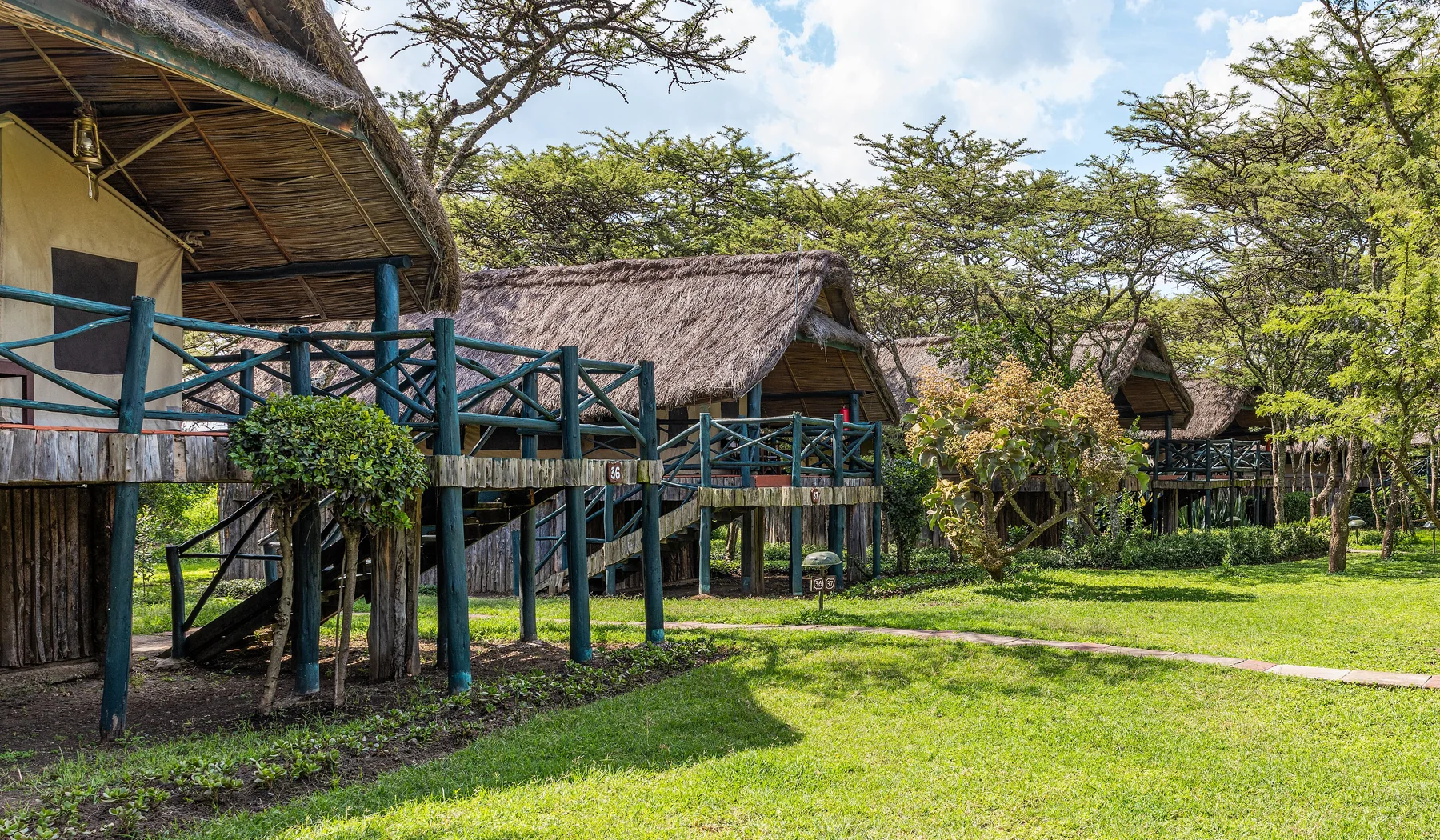
Accommodation at Ol Pejeta
Ol Pejeta includes different styles and price positions: public campsites, self-catering or private houses, tented camps and luxury properties. Location matters because the conservancy is large and outside accommodation can trigger extra gate travel or re-entry costs.
| Stay style | What it changes |
|---|---|
| Campsite | Lowest-frills immersion, with equipment and logistics to organise |
| Self-catering house | Privacy and family flexibility |
| Tented camp | Hosted meals, guiding and safari atmosphere |
| Luxury camp or private cottage | More space, private vehicle options and a quieter base |
| Nanyuki hotel | Broader room choice but daily gate commute |
See where to stay in Ol Pejeta for exact sectors and trade-offs.
Accommodation at Lewa
Lewa's official lodge list includes Elewana Kifaru House, Elewana Lewa Safari Camp, Sirikoi, Lewa House and Lewa Wilderness, with additional Borana properties in the connected landscape. Each has a different scale, hosting style and activity emphasis.
| Property style | Often suits |
|---|---|
| Small lodge with cottages | Couples and families wanting a personal hosted atmosphere |
| Safari camp | Travellers wanting a classic tented stay |
| Private house or cottage | Extended family, privacy and control of daily pace |
| Activity-rich lodge | Horse riders, walkers and guests who want more than drives |
The where to stay in Laikipia guide links these choices with Solio, Borana and the wider region.
Budget structure
Ol Pejeta can be priced in pieces: entry, vehicle fee, activity, transport, room and meals. That makes a day trip or modest stay possible, but it also creates opportunities to miss a cost. Lewa is usually quoted through the chosen lodge with accommodation, meals, conservancy access and standard safari activities grouped according to that property's terms.
| Budget question | Ol Pejeta | Lewa |
|---|---|---|
| Can I see a public entry price? | Yes, a 2026 tariff is published | The lodge quote is the practical starting point |
| Can I visit without overnighting? | Yes | Do not plan on it without confirmed access |
| Are specialist activities separate? | Usually listed separately | Some are arranged through the lodge and may depend on inclusions or availability |
| Is private vehicle use automatic? | No | No, unless the property or quote says so |
Use the Ol Pejeta entry fees and activities guide to build that side accurately.
Do not compare a day trip with a three-night stay
A low-cost Ol Pejeta day and an all-inclusive Lewa lodge are not equivalent products. One buys access and selected experiences for hours. The other buys nights, guiding, meals, vehicle time, hosting and access to a controlled conservancy.
| Fair comparison | Unfair comparison |
|---|---|
| Two hosted nights inside Ol Pejeta versus two hosted nights at Lewa | Ol Pejeta entry ticket versus Lewa lodge rate |
| Same room configuration and travel dates | Peak-season Lewa versus low-season Ol Pejeta |
| Same vehicle-sharing arrangement | Shared drive at one versus private vehicle at the other |
| Same transfer method | Road arrival at one versus flight at the other |
Activities at Ol Pejeta
Ol Pejeta's public activity menu can include the northern white rhinos, lion tracking, dog tracking, night drives, guided walks, rhino monitoring and Behind the Scenes at Sweetwaters. Times, ages, minimum participants and transport differ.
This breadth works for travellers who like choosing specific conservation stories. It can also make a short itinerary feel like a list of appointments.
Activities at Lewa
Lewa lodges may arrange walks, horse riding, bush meals and conservancy experiences. Official behind-the-scenes options include tracker dogs, security operations, the elephant underpass, schools, conservation education, community health, water and sustainable agriculture.
These are exclusive to guests staying at Lewa or Borana lodges, offered on a first-come basis and organised through the host. The right question is not “How many can we fit?” It is “Which one helps us understand this landscape?”
Walking and active safaris
Lewa's code requires an authorised armed guide for walking among dangerous game. Certain lodges are particularly well known for walking and riding. Ol Pejeta also offers structured walks and active experiences, but these are booked as defined activities rather than permission to leave the vehicle independently.
| Active interest | Planning note |
|---|---|
| Guided bush walk | Confirm duration, terrain, age and fitness expectations |
| Horse riding | Match riding experience to the route and lodge |
| Running | Lewa prohibits ordinary exercise running except the authorised marathon context |
| Cycling | Do not assume it is allowed in wildlife areas |
| Limited mobility | Ask about vehicle steps, surfaces and toilets before booking |
Families with children
Ol Pejeta's clear conservation stories can be excellent for school-age children, and the range of accommodation supports different budgets. Fixed activities have individual age rules. Lewa's FAQ describes the conservancy as family-friendly, with lodges adapting activities to children's ages.
| Family need | Ol Pejeta | Lewa |
|---|---|---|
| One educational day | Strong fit | Not the natural format |
| Multi-generational private house | Available options | Strong private-house and cottage possibilities |
| Young child needing flexible meals | Choose the right house or lodge | Discuss with the selected lodge |
| Teen interested in conservation careers | Many bookable experiences | Behind-the-scenes work can be arranged through the lodge |
| Budget-conscious family | Wider range | Predominantly high-end |
Use the Kenya family safaris guide to compare rooms, vehicle privacy and daily pace.
Honeymoons and celebrations
Lewa often suits couples who want privacy, a beautiful hosted lodge and several nights without a public-day-trip rhythm. Ol Pejeta can suit couples who care deeply about specific conservation encounters, especially when they stay at a small camp or private cottage away from visitor hubs.
| Couple's priority | Better fit |
|---|---|
| Quiet all-inclusive conservancy stay | Lewa |
| Northern white rhino story | Ol Pejeta |
| Private house or cottage | Strong options at both |
| Horse riding and varied active days | Lewa, property dependent |
| Mix of luxury stay and public conservation activities | Ol Pejeta |
Photographers
Lewa's vehicle limits and hosted guiding can help with patience and clean sighting conditions. Ol Pejeta offers strong rhino density, Mount Kenya backgrounds and the possibility of a private vehicle at the right camp. The public model does not prevent excellent photography, but a self-driver must understand positioning and etiquette.
| Photography question | Confirm before paying |
|---|---|
| Is the vehicle private? | Sharing affects seat choice and stopping time |
| Does the vehicle have open sides or roof hatches? | Body position and lens support differ |
| Can the guide stay out through the best light? | Meal schedules can cut a drive short |
| Is off-road driving permitted? | Rules vary by zone and conditions |
| Can batteries be charged? | Both highland areas can involve long field days |
Birders and slow safari travellers
Lewa's current visitor page cites more than 494 bird species, while Ol Pejeta's varied highland habitats and camps also reward patient birding. The decisive factor is often whether the guide will stop for larks, raptors and calls when another vehicle reports a lion.
Ask for a bird-capable guide, a private vehicle if possible and at least three nights. A two-night checklist safari rarely reveals the smaller life of either conservancy.
Accessibility and comfort
Lewa's hosted model can make it easier to coordinate assistance through one lodge, but remoteness and vehicle design still matter. Ol Pejeta offers more accommodation formats and public access, yet distances between sites can be long.
| Need | Questions for either destination |
|---|---|
| Limited walking | Can activities be completed from or near the vehicle? |
| Wheelchair | What are the room, bathroom, path and vehicle transfer measurements? |
| Medical support | What is the evacuation plan and nearest suitable facility? |
| Dietary requirement | Who confirms ingredients and cross-contamination controls? |
| Cold sensitivity | Are blankets, hot-water bottles and enclosed vehicles available? |
The accessible Kenya safaris guide provides a detailed pre-booking brief.
Road access from Nairobi
Ol Pejeta is reached through the Nanyuki side of Laikipia. Lewa's official FAQ describes about four hours by road from Nairobi via Thika, Karatina, Naro Moru, Nanyuki and Timau, though traffic, stops and road conditions can extend the journey.
| Route issue | Ol Pejeta | Lewa |
|---|---|---|
| Nairobi departure | Early start avoids some city traffic | Early start still matters |
| Final approach | Gate and accommodation location decide the last segment | Lodge may need to meet a non-compliant vehicle at the gate |
| Combining both | Road transfer is practical | Allow most of a half day with wildlife stops and lodge timing |
The Nairobi to Laikipia guide compares road and air in more detail.
Flying in
Lewa has daily direct flights from Nairobi's Wilson Airport to Lewa Downs according to its official FAQ. Ol Pejeta guests may use Nanyuki or another arranged airstrip connection depending on the property and service. Flight schedules, baggage limits and shared stops must be checked for the exact date.
| Fly-in question | Why it matters |
|---|---|
| Which airstrip? | Road-transfer time can erase the apparent advantage |
| Direct or shared stops? | A short published sector may take longer |
| Soft-bag allowance? | Safari aircraft usually impose stricter baggage rules |
| Lodge transfer included? | The air ticket may not include the final vehicle |
| Connection to Mara or Samburu? | Routing can make one conservancy easier in a larger itinerary |
Combining either with Samburu
Lewa lies naturally on a route toward Samburu and the northern reserves. Ol Pejeta also combines well with Samburu, but Lewa's position and air links can make the transition especially elegant.
| Route | Character |
|---|---|
| Nairobi, Ol Pejeta, Samburu | Conservation experiences followed by arid northern wildlife |
| Nairobi, Lewa, Samburu | Hosted rhino conservancy followed by a stronger dry-country shift |
| Ol Pejeta, Lewa, Samburu | Deep Laikipia sequence for travellers with enough nights |
Read the Samburu safari guide before deciding how many nights the northern section deserves.
Combining either with Meru
Meru offers a national-park contrast: river systems, doum palms, broad lowland country and relatively low visitor density. Lewa connects well geographically through the Mount Kenya and Isiolo side. Ol Pejeta can still be linked, but the route is longer.
Use the Meru National Park guide to decide whether a third rhino landscape adds variety or repeats the theme.
Season and weather
Both sit at elevation, so mornings and evenings can be cold. Rain can make tracks slower and affect off-road access. Dry periods often concentrate wildlife around water, while green months bring dramatic skies, young animals and excellent scenery.
| Conditions | Ol Pejeta effect | Lewa effect |
|---|---|---|
| Dry and clear | Dust, open sightings and strong Mount Kenya views when cloud allows | Comfortable road network and broad visibility |
| Green season | Lush grass, dramatic light and some difficult tracks | Beautiful valleys, fewer visitors and off-road restrictions in wet ground |
| School holiday or weekend | Public visitor sites may be busier | Lodge capacity still limits guest numbers |
| Cold dawn | Layered clothing essential | Layered clothing essential |
Two nights or three?
Two nights give one full day. That is enough for a first impression but leaves little room for weather, a quiet sighting or an active experience. Three nights provide two full days and suit Lewa especially well because the value lies in settling into the hosted rhythm.
| Stay | Ol Pejeta | Lewa |
|---|---|---|
| Day trip | Possible but long from Nairobi | Not the standard way to experience it |
| Two nights | Enough for key conservation visits and game drives | A useful introduction |
| Three nights | Better for activities without rushing | Recommended for landscape, guiding and variety |
| Four nights | Strong for specialist interests or rest | Excellent for riders, families and slow safari travel |
A fair two-night Ol Pejeta plan
| Day | Plan |
|---|---|
| Arrival | Enter once, lunch or settle in, afternoon game drive |
| Full day | Early wildlife, one paid conservation experience, public chimpanzees and sunset drive |
| Departure | Short drive, breakfast and onward transfer |
Do not stack lion tracking, rhino monitoring, northern white rhinos, Behind the Scenes and a night drive into one day simply because they appear on the same tariff.
A fair three-night Lewa plan
| Day | Plan |
|---|---|
| Arrival | Airstrip or road transfer, first hosted drive and sundowner |
| Full day 1 | Long morning drive, bush breakfast, rest and afternoon exploration |
| Full day 2 | Walk, ride or conservation visit plus a drive focused on rhinos and northern species |
| Departure | Final short drive and onward connection |
The point is depth: several habitats, one guide learning your interests and no need to collect every activity.
When Ol Pejeta is the stronger choice
Choose Ol Pejeta when any of these statements feels central:
| Priority | Why it points to Ol Pejeta |
|---|---|
| “Najin and Fatu are the reason I am going.” | The northern white rhino experience exists here |
| “We have one spare day from Nanyuki.” | Public day access makes it workable |
| “We want to self-drive.” | Permitted under Ol Pejeta rules |
| “Our group has mixed budgets.” | Accommodation and access span a wider range |
| “The children need a clear conservation story.” | Rhinos and Sweetwaters provide focused interpretation |
| “We like choosing specialist activities.” | The 2026 tariff lists a broad menu |
When Lewa is the stronger choice
Choose Lewa when these priorities lead:
| Priority | Why it points to Lewa |
|---|---|
| “We want privacy and a hosted rhythm.” | Lodge access and vehicle rules support it |
| “A beautiful landscape matters as much as species.” | Valleys, plains, wetlands and hills change through the day |
| “We want strong rhino viewing without a visitor-centre feel.” | Rhino encounters unfold through guided drives |
| “We want riding, walking or a deeper lodge relationship.” | Several properties are built around those experiences |
| “We are happy to invest in an all-inclusive stay.” | The accommodation-led model is the point |
| “We are continuing to Samburu.” | Geography and flight routing can connect naturally |
When to combine both
Combine them when you have at least five nights for central and northern Kenya before moving on. Two nights at Ol Pejeta can cover the conservation experiences. Three at Lewa can slow the pace and let the landscape become the main event.
| Combination | Why it works |
|---|---|
| Ol Pejeta first, Lewa second | Moves from structured conservation stories into a quieter hosted stay |
| Lewa first, Ol Pejeta second | Ends with Najin, Fatu and Sweetwaters as a strong conservation finale |
| Add Samburu | Creates a complete highland-to-arid progression |
| Add Solio | Only for a true rhino specialist with enough time |
When neither is the right answer
Choose neither if the itinerary already contains several private conservancies and the missing experience is a vast migration landscape, coast, mountain or wetland. A Kenya trip improves through contrast.
If the primary goal is dense big-cat action during a short first safari, the Masai Mara may deserve more nights. If the goal is a quiet national park with rivers and varied habitat, Meru may add more difference than another Laikipia conservancy.
If the question is almost entirely about rhino game viewing, compare Ol Pejeta and Solio before paying for a broader conservancy experience you may not need.
Common comparison mistakes
| Mistake | Better decision |
|---|---|
| Declaring Lewa “better” because it costs more | Match access, guide, room and trip style |
| Declaring Ol Pejeta “crowded” from one visitor hub | Compare sector, season and accommodation location |
| Comparing species lists only | Compare the daily rhythm and reason for travelling |
| Assuming all Lewa activities are included | Check the exact lodge terms and availability |
| Assuming Ol Pejeta activity prices include entry and transport | Build every cost line |
| Choosing two nights everywhere | Give the more important destination three nights |
The quote checklist
| Line to compare | What must be explicit |
|---|---|
| Accommodation | Exact property, room type and board basis |
| Conservancy access | Included dates and any entry or conservation fee |
| Vehicle | Shared or private, seats and guide language |
| Transfers | Road, airstrip and inter-property movement |
| Activities | Included, optional, age-limited and subject to availability |
| Drinks and laundry | Included brands and exclusions |
| Child policy | Age bands, room rules and private-vehicle requirement |
| Cancellation | Deposit, balance and date-based penalties |
The decision brief to send
| Detail | Why it changes the answer |
|---|---|
| Travel dates | Rates, rain, availability and flight schedules vary |
| Adults and children | Rooming, age rules and vehicle privacy change |
| Nights available | Lewa rewards time; Ol Pejeta can work in less |
| Budget per person | Prevents comparing incompatible stay styles |
| Safari history | Repeat visitors often value guiding and landscape over checklists |
| Wildlife priority | Northern white rhinos, Grevy's zebra, predators or birds lead differently |
| Activity priority | Riding, walking, conservation visits or self-drive affect fit |
| Next destination | Samburu, Meru, Mara or coast changes logistics |
Frequently asked questions
Is Lewa better than Ol Pejeta?
Not universally. Lewa is usually better for a private lodge-led stay and varied landscape. Ol Pejeta is better for public access, self-drive flexibility and specific conservation experiences.
Which has more rhinos?
Both hold major black and white rhino populations. Current official pages cite more than 165 eastern black rhinos at Ol Pejeta and more than 215 black and white rhinos at Lewa. Totals do not guarantee a particular sighting.
Can I see the northern white rhinos at Lewa?
No. Najin and Fatu live at Ol Pejeta.
Can I self-drive in Lewa?
Lewa's code says game drives must be conducted by authorised individuals and restricts vehicle type. Plan access and guiding through the accommodation.
Can I self-drive in Ol Pejeta?
Yes, subject to current entry, vehicle and conduct rules. A professional guide still adds substantial value.
Which is more expensive?
Lewa is predominantly a high-end hosted stay. Ol Pejeta spans public day access, camping, houses and luxury camps. Compare equivalent rooms, dates, vehicle arrangements and inclusions.
Which is better for children?
Both can work. Ol Pejeta suits an educational day and mixed budgets. Lewa suits families wanting an immersive lodge stay and activities adapted by the host.
Which is better for photographers?
Lewa offers strict sighting rules and hosted guiding. Ol Pejeta offers excellent rhino density and strong private-vehicle possibilities. The guide and vehicle arrangement matter more than the name alone.
How many nights should I spend?
Use at least two nights at Ol Pejeta and preferably three at Lewa. Add a night for specialist activities, young children or a slower pace.
Can I combine Ol Pejeta and Lewa?
Yes. Two nights at Ol Pejeta and three at Lewa create a strong five-night Laikipia sequence.
Choose the safari rhythm, not the famous name
Ol Pejeta offers access, choice and conservation encounters that exist nowhere else. Lewa offers a quieter hosted relationship with a remarkable landscape and a long rhino story. The useful question is not which conservancy wins. It is which rhythm belongs in this particular trip.
Share the dates, party, budget, number of nights, wildlife interests, activity preferences and next destination. We can compare equivalent stays, protect the experiences that matter and leave out the extras that do not.
Sources and further reading
Compare Ol Pejeta and Lewa
Share the dates, party, budget, available nights, wildlife interests, activity preferences and next destination. We will compare like with like.