
Ol Pejeta Northern White Rhinos and Chimpanzee Sanctuary
Meet Najin and Fatu, understand the science that carries their subspecies’ last chance, then learn why rescued chimpanzees have a permanent sanctuary in Kenya.
- The two conservation visits at a glance
- This is not a conventional wildlife sighting
- Meet Najin and Fatu
- Why they cannot simply breed naturally
- How the BioRescue programme works
- Where the science stood in 2026
- Why Najin is no longer used for egg collection
- What happens during the northern white rhino visit
- What the visit does not promise
- 2026 northern white rhino times and price
- Choosing the best northern white rhino time
- Sweetwaters is a sanctuary, not wild chimp trekking
- Why chimpanzees need a permanent sanctuary
- What visitors see at Sweetwaters
- Public visit versus Behind the Scenes
- The lunch closure matters
- Behind the Scenes is not a handling experience
- Judy’s story puts rescue into human scale
- What independent visitors say
- Is it worth paying for both experiences?
- A workable one-day plan from inside Ol Pejeta
- A workable day from Nanyuki
- A two-day conservation-led itinerary
- Families and children
- Accessibility and limited mobility
- Photography without losing the story
- What to wear and carry
- Weather can change visibility
- Health and animal-welfare etiquette
- Questions worth asking the keeper
- Questions that miss the point
- The cost in a realistic day budget
- Entry is separate from the paid experiences
- Book the scarce time before polishing the itinerary
- Staying inside versus outside
- Ol Pejeta versus Solio for rhino-focused travel
- Ol Pejeta versus Lewa
- Combining Ol Pejeta with Samburu
- The ethics of extinction tourism
- The ethics of sanctuary tourism
- What your visit can support
- A simple decision guide
- Common planning mistakes
- The booking brief to send
- Frequently asked questions
- Plan an Ol Pejeta day that leaves room to feel it
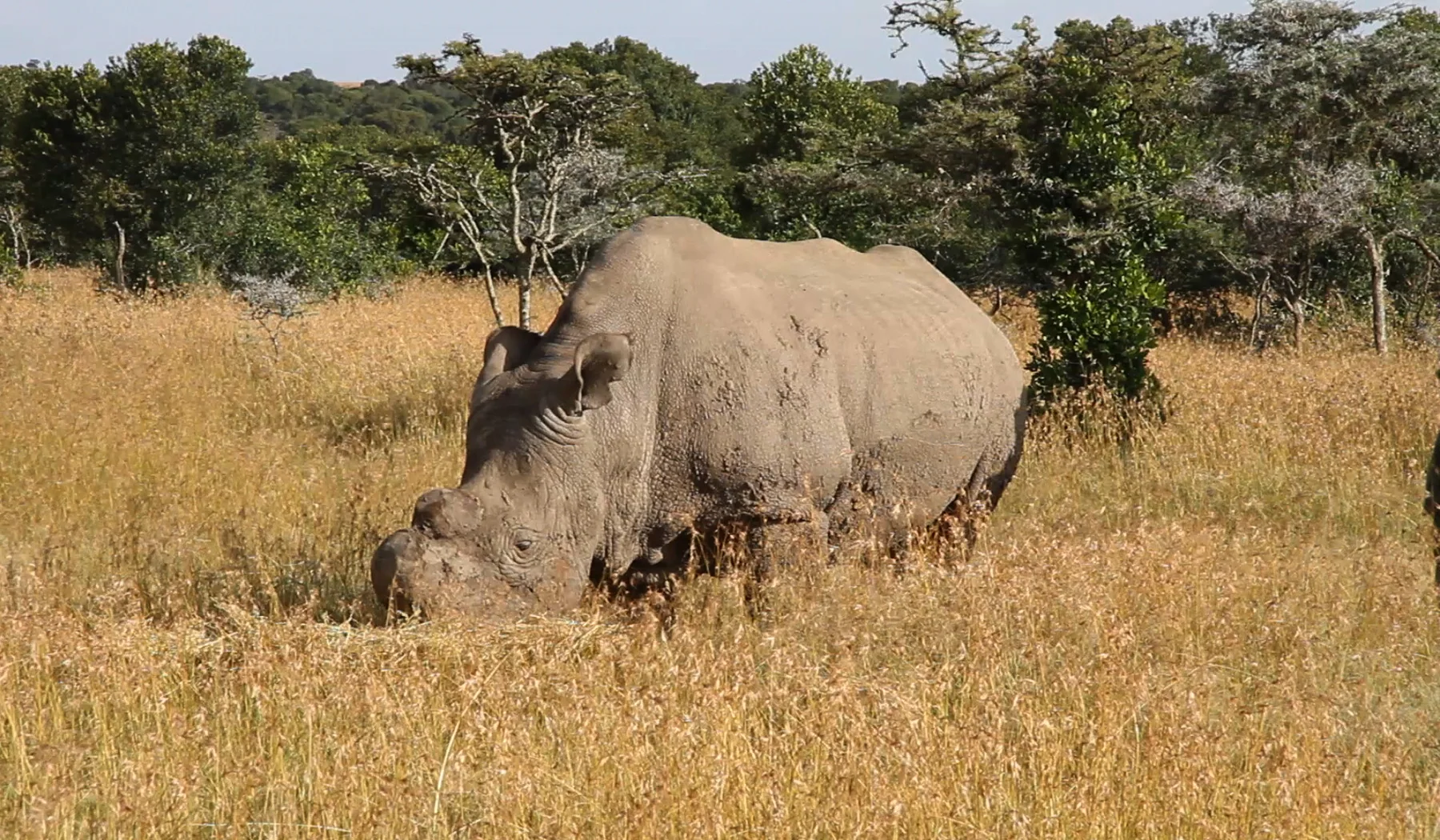
There is a quiet moment inside Ol Pejeta when the scale of the northern white rhino story becomes clear. Najin and Fatu are not two rare animals among a recovering herd. They are the final two living members of their subspecies. Both are female. Neither can carry a pregnancy. The next chapter, if there is one, depends on frozen sperm, laboratory-created embryos, southern white rhino surrogates and years of patient science.
A short drive away, Sweetwaters Chimpanzee Sanctuary tells a different conservation story. Chimpanzees do not occur naturally in Kenya. The animals here were rescued from trafficking, abuse or conditions in which they could no longer live safely. They have been given space, social groups, specialist care and a permanent home.
These encounters belong in the same day only when their differences are respected. One is about the edge of extinction and a reproductive-science programme whose outcome is uncertain. The other is about rescue, welfare and lifelong responsibility. Neither should be reduced to a photograph.
This Ol Pejeta northern white rhinos and chimpanzee sanctuary guide brings those stories together without pretending they are the same experience.
For the wider wildlife, gate and accommodation picture, begin with the complete Ol Pejeta Conservancy guide.
The two conservation visits at a glance
| Experience | What it is | 2026 access | Best reason to go |
|---|---|---|---|
| Northern white rhinos | Keeper-led visit to Najin and Fatu | USD 70 adult, fixed one-hour slots | Understand the last two animals and the science trying to preserve their lineage |
| Public chimpanzee sanctuary visit | Viewing and interpretation from the visitor area | Included in conservancy entry during public windows | Learn why rescued chimpanzees have a permanent sanctuary in Kenya |
| Behind the Scenes chimpanzee visit | Paid guided experience focused on care and sanctuary work | USD 70 adult, 11:45 to 12:45 | Go deeper into welfare, feeding and individual histories |
This is not a conventional wildlife sighting
A leopard appearing beside the road is a wild encounter shaped by luck. These visits are structured around particular animals under intensive protection or sanctuary care. The keepers decide what is safe. Animal welfare decides what is possible. A timetable does not turn a living animal into an appointment that must perform.
| Ordinary game drive | Northern white rhino visit | Chimpanzee sanctuary visit |
|---|---|---|
| Route changes with sightings | Fixed enclosure and booked slot | Managed sanctuary and opening window |
| Animals may be anywhere | Visit centres on Najin and Fatu | Chimpanzees choose where to sit and move |
| Guide interprets an ecosystem | Keeper explains individuals and conservation science | Sanctuary team explains rescue, behaviour and care |
| No sighting is guaranteed | Access remains subject to welfare and operations | Visibility varies with weather, feeding and animal choice |
Meet Najin and Fatu
Najin was born on 11 July 1989. Fatu, her daughter, was born on 29 June 2000. They lived at Dvůr Králové Zoo in the Czech Republic before moving to Ol Pejeta in 2009 with two males, Sudan and Suni. The hope was that Kenya's climate, space and more natural social conditions might encourage breeding.
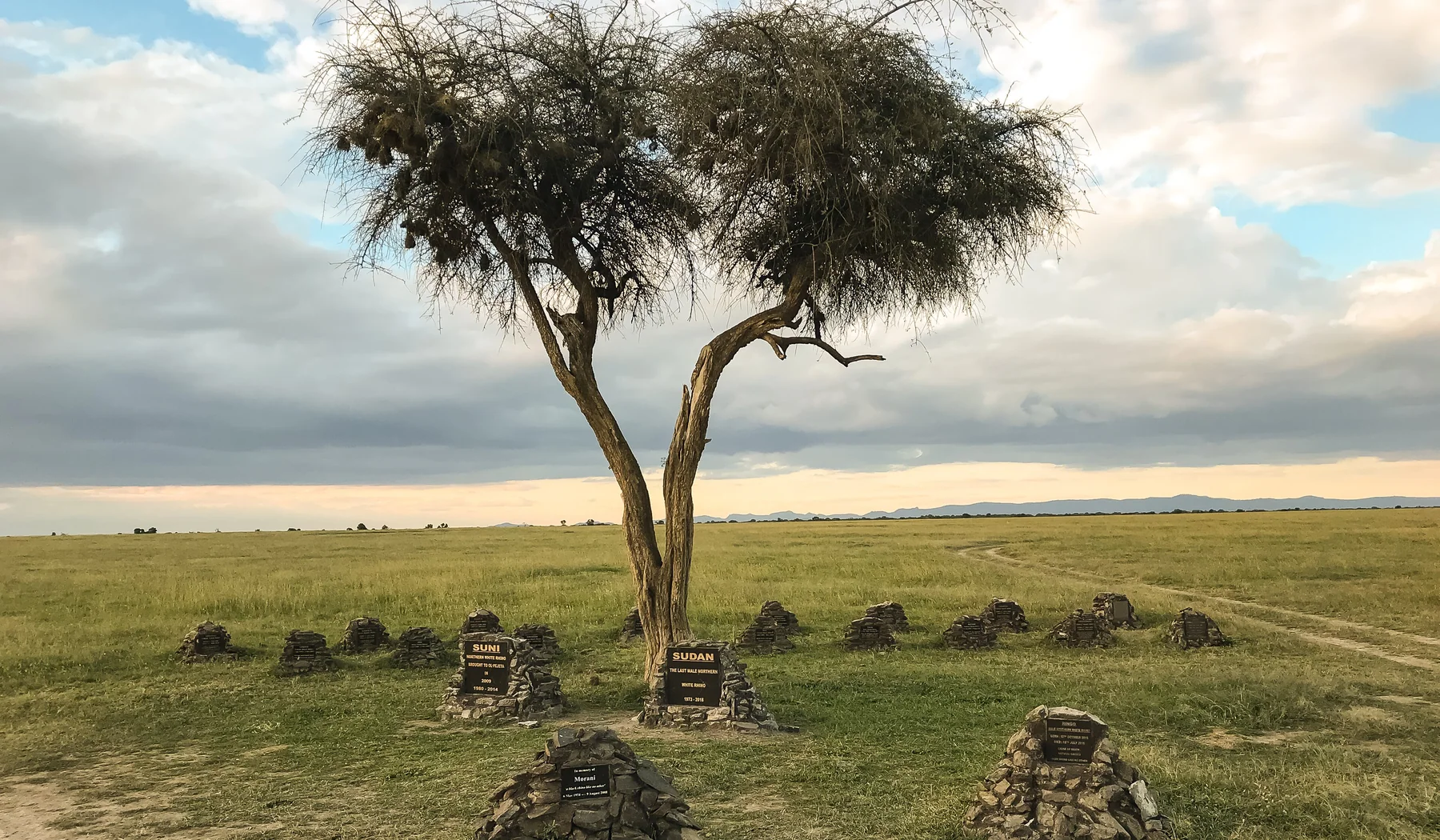
Natural breeding did not produce a calf. Suni died in 2014. Sudan died in 2018. Najin and Fatu remain under round-the-clock protection and veterinary care.
| Rhino | Relationship | Born | Present role in the programme |
|---|---|---|---|
| Najin | Mother of Fatu | 11 July 1989 | Lives at Ol Pejeta; egg collection stopped after an ethical and welfare assessment |
| Fatu | Daughter of Najin | 29 June 2000 | Lives at Ol Pejeta; has supplied eggs used to create northern white rhino embryos |
| Sudan | Najin's father and the last male | 1973, died 2018 | Genetic material and his story remain part of the conservation legacy |
| Suni | Another of the last males | 1980, died 2014 | Frozen sperm has contributed to embryos created by the programme |
Why they cannot simply breed naturally
The phrase “last two” can make the problem sound as simple as finding a male. It is not. No living northern white male remains, and BioRescue explains that neither Najin nor Fatu can carry a pregnancy because of reproductive and health conditions. Natural reproduction is therefore impossible.
| Barrier | What it means |
|---|---|
| No living male | Natural mating cannot occur |
| Najin cannot carry a pregnancy | Her age and reproductive pathology make pregnancy unsafe or impossible |
| Fatu cannot carry a pregnancy | A uterine condition prevents her from carrying a calf |
| Very narrow genetic base | Even a successful birth would be an early step, not a fully restored population |
How the BioRescue programme works
The science begins with eggs collected from Fatu under anaesthesia. In a specialist laboratory, those eggs are matured and fertilised using frozen sperm from deceased northern white rhino males. Embryos that develop successfully are cryopreserved. Because Najin and Fatu cannot carry them, the plan is to transfer northern white rhino embryos into carefully selected southern white rhino surrogates.
| Stage | Plain-language explanation |
|---|---|
| Oocyte collection | Veterinary specialists retrieve unfertilised eggs from Fatu |
| In-vitro maturation | Eggs are prepared in a laboratory |
| Fertilisation | Frozen northern white rhino sperm is used through assisted reproduction |
| Embryo culture | Scientists watch for viable early development |
| Cryopreservation | Suitable embryos are frozen for later transfer |
| Surrogate preparation | Southern white rhino females are monitored and selected |
| Embryo transfer | One embryo is placed in a surrogate at the right reproductive moment |
| Pregnancy monitoring | The team looks for a sustained pregnancy without assuming success |
Where the science stood in 2026
BioRescue reported in August 2025 that 38 pure northern white rhino embryos had been created. By April 2026, six embryo transfers had been conducted in total. Three northern white rhino embryo transfers during the second half of 2025 did not result in long-term pregnancies. Two proven southern white females had joined the surrogate programme.
Those facts are milestones, not a promise. A technically successful transfer can still fail to establish or sustain a pregnancy. A calf, if one is eventually born, would still be the beginning of a much longer effort involving genetics, social learning, animal welfare and future generations.
| Statement | Accurate interpretation |
|---|---|
| Embryos exist | The programme has preserved a chance that did not exist through natural breeding |
| Transfers have taken place | The team has moved from laboratory work to testing the full reproductive process |
| No lasting pregnancy had been achieved in the cited April 2026 update | Visitors should not expect or be told that a calf is on the way |
| Southern white surrogates are used | They are the closest living subspecies and can potentially carry the pregnancy |
Why Najin is no longer used for egg collection
In 2021, scientists and veterinary experts decided to stop collecting eggs from Najin. BioRescue describes this as an ethical decision based on her age and health. Her continued participation is not worth a procedure that could compromise her welfare.
This is an important part of the story. Conservation is not a licence to treat an individual animal as a means to an end. The programme's value depends on care for the two rhinos alive today as well as hope for the subspecies tomorrow.
What happens during the northern white rhino visit
The experience is keeper-led and lasts about one hour. Visitors enter the protected northern white rhino area with the authorised team, hear the histories of Najin and Fatu, learn how they are guarded and discuss the assisted-reproduction work. The setting is more spacious and grounded than a display enclosure, but it remains a closely managed conservation visit.
| Part of the hour | What to expect |
|---|---|
| Arrival and briefing | Safety, behaviour and the significance of the enclosure |
| Keeper introduction | Najin and Fatu's histories and individual characteristics |
| Observation | Time near the rhinos if welfare and conditions allow |
| Conservation explanation | Security, veterinary care, embryos, surrogates and uncertainty |
| Questions | A chance to ask about the programme without turning the encounter into a lecture |
What the visit does not promise
It does not promise touching a rhino, a particular pose, a feeding scene or uninterrupted proximity. It does not include standard conservancy entry. It does not guarantee that every scientific development will be visible or that an embryo transfer will result in a calf.
| Expectation to leave behind | Better expectation |
|---|---|
| A close-up photo session | A keeper-led conservation encounter |
| A guaranteed behaviour | Time shaped by the animals' welfare |
| A simple success story | An honest story of loss, science and uncertain hope |
| A replacement for a game drive | A focused hour within a broader Ol Pejeta safari |
2026 northern white rhino times and price
| Detail | 2026 position |
|---|---|
| Adult price | USD 70 per adult |
| Duration | One hour |
| Morning slots | 8:30 to 9:30 and 11:00 to 12:00 |
| Afternoon slots | 15:00 to 16:00 and 16:30 to 17:30 |
| Conservancy entry | Required separately |
| Booking | Advance booking strongly advised because each slot is finite |
Use the Ol Pejeta entry fees and activities guide to add the correct entry category, vehicle fee and any other booked experience.
Choosing the best northern white rhino time
The earliest slot works well for an overnight guest already inside the conservancy. The 11:00 slot can suit a visitor combining the experience with the public chimpanzee sanctuary in the morning. Afternoon slots leave a morning for game driving, but road time across the conservancy must be allowed.
| Slot | Often suits | Watch for |
|---|---|---|
| 8:30 | Inside guests and early gate arrivals | Do not underestimate the drive from an outside hotel |
| 11:00 | Visitors pairing rhinos with the public chimpanzee window | The sanctuary closes at 12:30, so order matters |
| 15:00 | A relaxed morning drive and lunch | Reach the meeting point early rather than chasing a final sighting |
| 16:30 | Visitors staying inside or leaving through a convenient gate | Evening gate time and onward drive must remain comfortable |
Sweetwaters is a sanctuary, not wild chimp trekking
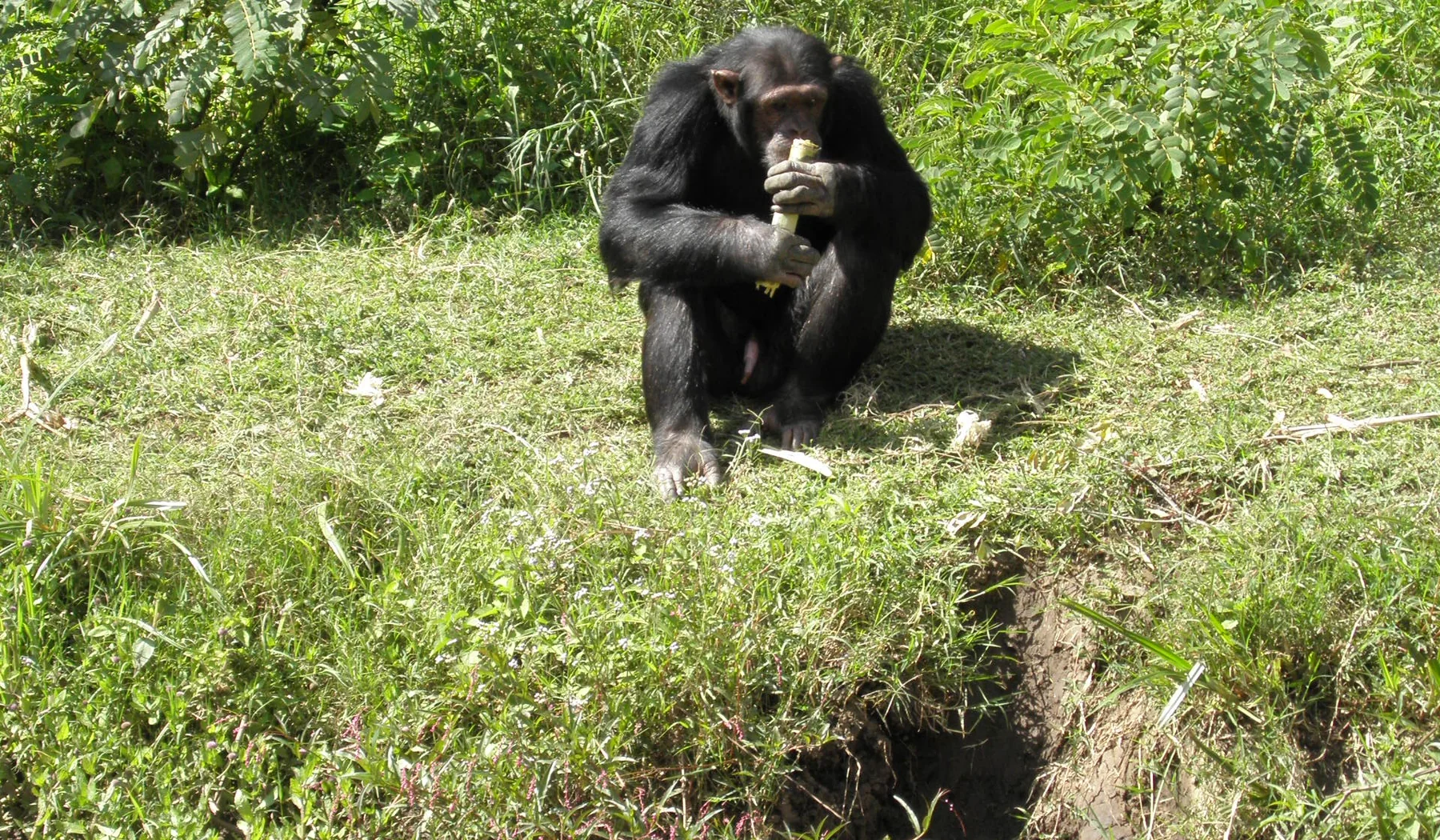
Chimpanzees are native to equatorial Africa, but not to Kenya. Sweetwaters exists because rescued animals needed a secure lifelong home. The sanctuary opened in 1993 through a partnership involving Ol Pejeta, Kenya Wildlife Service and the Jane Goodall Institute after a rescue centre in Burundi had to close.
Many residents arrived after experiences linked to illegal trade, unsuitable captivity or abuse. Releasing them into a wild chimpanzee community is generally neither safe nor realistic. Sanctuary care means food, veterinary support, secure habitat, social management and a commitment that lasts for the animals' lives.
| Wild chimp trek | Sweetwaters visit |
|---|---|
| Takes place in a native chimpanzee range state | Takes place in a Kenyan rescue sanctuary |
| Visitors track a habituated wild community | Visitors observe rescued residents in managed habitat |
| Tourism supports protection of wild forest habitat | Tourism supports sanctuary care, education and anti-trafficking work |
| Encounters depend on locating a mobile wild group | Visibility depends on animals using areas near visitor viewpoints |
Why chimpanzees need a permanent sanctuary
A young chimpanzee taken for trade often represents a much larger loss. Adults may be killed when an infant is captured. The survivor can then spend years isolated, chained or handled as entertainment. Even after rescue, trauma and loss of normal social learning do not disappear.
Sweetwaters gives chimpanzees room to form social relationships and make daily choices within large natural enclosures. The Ewaso Nyiro River separates the two groups. Keepers manage introductions carefully because chimpanzees are intelligent, powerful and socially complex.
What visitors see at Sweetwaters
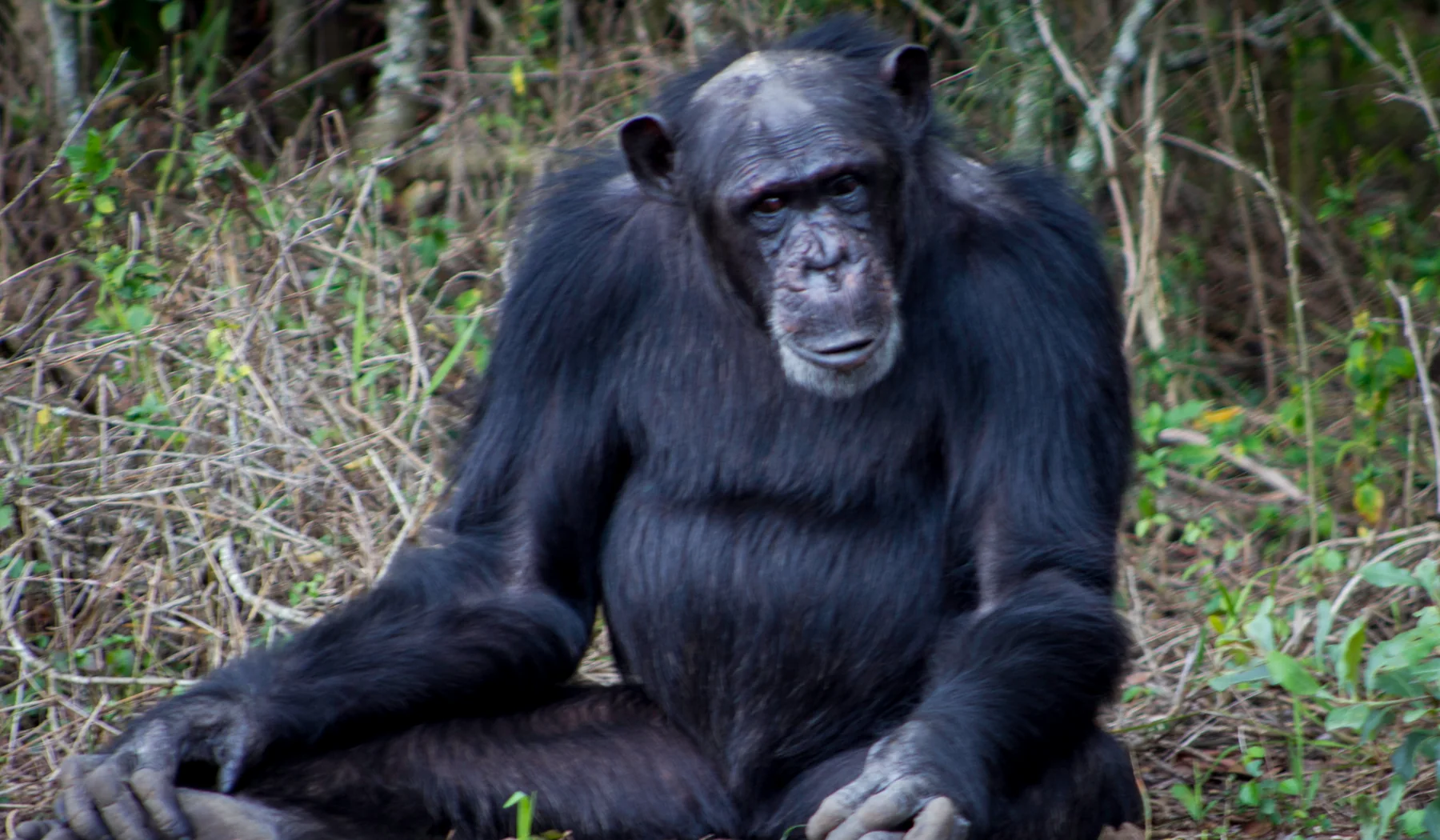
The public experience normally begins at the visitor area, where interpretation explains the sanctuary's origin and individual stories. Chimpanzees may be seen moving through vegetation, resting, interacting, foraging or gathering near a feeding area. Sometimes the most revealing behaviour is subtle: grooming, watching, keeping distance or negotiating a place within the group.
| You may observe | What it can reveal |
|---|---|
| Grooming | Trust, bonding and social position |
| Vocalisation | Contact, excitement, alarm or social negotiation |
| Tool use or object play | Problem solving and curiosity |
| Keeping apart | Choice, personality or group dynamics |
| Moving into cover | The animal's ability to leave the visitor's view |
Public visit versus Behind the Scenes
The ordinary public sanctuary visit is included in conservancy entry. Behind the Scenes is a separate paid experience with a narrower time and deeper emphasis on care, feeding and sanctuary operations.
| Question | Public sanctuary visit | Behind the Scenes |
|---|---|---|
| Price | Included in conservancy entry | USD 70 per adult in 2026 |
| Time | 8:30 to 12:30 and 14:00 to 16:30 | 11:45 to 12:45 |
| Main focus | Orientation, observation and sanctuary story | Keeper insight, care routines and individual histories |
| Best for | Most first-time visitors and families | Travellers with a strong primate, welfare or conservation interest |
| Entry included? | Conservancy entry gives access | Conservancy entry remains separate |
The lunch closure matters
The public visitor area closes between 12:30 and 14:00. That break is easy to overlook when building a day around the 11:00 northern white rhino slot or a distant lunch stop.
| If your rhino slot is | Practical chimpanzee plan |
|---|---|
| 8:30 | Visit chimps after the rhinos and before 12:30 |
| 11:00 | Visit chimps first, then leave enough transfer time for the rhino meeting point |
| 15:00 | Visit chimps in the morning, then have lunch and game drive |
| 16:30 | Use either public window, but protect the late-afternoon transfer |
Behind the Scenes is not a handling experience
The value lies in understanding sanctuary work, not in touching or entertaining a chimpanzee. Chimpanzees are immensely strong, can transmit diseases to and from humans, and deserve control over distance. A responsible experience maintains barriers and follows keeper instructions.
| Responsible expectation | Why it matters |
|---|---|
| Listen to the care team | They know current animal and group conditions |
| Keep required distance | Protects people and chimpanzees |
| Avoid flash and noise | Reduces disturbance |
| Do not imitate calls or gestures | Human mimicry can agitate or confuse animals |
| Accept limited visibility | A sanctuary resident is allowed to move away |
Judy’s story puts rescue into human scale
Statistics about illegal wildlife trade can feel remote. An individual history makes the cost visible. Ol Pejeta's account of Judy describes resilience after a life shaped by human decisions. Her story, like those of other residents, is a reason to read the identification panels and listen before raising a camera.
The sanctuary is not a collection of interchangeable chimpanzees. Each animal arrived with a history, temperament and place within a social group. Care teams must balance the needs of individuals with the stability of the whole community.
What independent visitors say
The strongest reactions are rarely about ticking off two species. They are about standing close to stories that are difficult to absorb.
| Visitor voice | What it helps explain |
|---|---|
| An Expert Africa traveller wrote, “We felt honored to be able to visit Najin and Fatu.” | The rhino encounter can feel more like witness than entertainment |
| A Tripadvisor reviewer said, “The sole reason we went was to see the Northern White Rhinos and we weren't disappointed.” | Some travellers build the entire Ol Pejeta visit around this hour |
| A wildlife photographer called them “the most tragic and beautiful thing I've seen in years.” | Beauty and grief sit together here |
| One family travel account described the chimpanzee sanctuary as “wonderful and utterly heartbreaking.” | Rescue stories can be rewarding and emotionally difficult at once |
| A recent Tripadvisor reviewer noted that “the guides are knowledgeable and want you to have a good experience.” | The quality of interpretation changes what visitors take away |
These are individual experiences, not guarantees. They are useful because they show the emotional range a tariff cannot describe.
Is it worth paying for both experiences?
For most first-time visitors, conservancy entry plus one paid northern white rhino visit and the included public chimpanzee sanctuary is already a rich conservation day. Behind the Scenes becomes worthwhile when the traveller has a strong interest in primates, welfare or keeper practice and is happy to give up an hour of unstructured game driving.
| Traveller | Sensible choice |
|---|---|
| First visit with one day | Northern white rhino paid visit plus public chimpanzee sanctuary |
| Primate enthusiast | Add Behind the Scenes and stay inside or nearby |
| Family with young children | Public chimp visit plus a rhino slot that fits attention spans |
| Photographer | Choose good light for the wider game drive; treat both structured visits as interpretation first |
| Repeat Ol Pejeta visitor | Consider Behind the Scenes for a deeper layer |
A workable one-day plan from inside Ol Pejeta
Staying inside removes a gate commute and makes the earliest slot easier. It also allows the day to breathe.
| Time | Plan |
|---|---|
| 6:30 to 8:00 | Early game drive and breakfast arrangement |
| 8:30 to 9:30 | Northern white rhino visit |
| 10:15 to 11:30 | Public chimpanzee sanctuary visit |
| 12:00 to 14:00 | Lunch and rest |
| 14:00 onward | Game drive with no further fixed appointment |
For rooms, access and re-entry trade-offs, see where to stay in Ol Pejeta.
A workable day from Nanyuki
An outside stay can be excellent value, but the road to the gate and the single-entry policy need respect. Enter once, complete the day and leave after the final activity.
| Time | Plan |
|---|---|
| 6:30 | Depart the hotel with breakfast arranged |
| 7:00 to 8:15 | Enter and game drive toward the first activity |
| 8:30 to 9:30 | Northern white rhino visit |
| 10:30 to 12:00 | Public chimpanzee sanctuary |
| 12:30 onward | Lunch inside, then game drive before one final exit |
The Nairobi to Laikipia guide helps with road, flight and transfer choices before the Ol Pejeta day begins.
A two-day conservation-led itinerary
Two days suit travellers who want Behind the Scenes without sacrificing the wider ecosystem.
| Day | Morning | Afternoon and evening |
|---|---|---|
| Day 1 | Arrive, settle in and take an unhurried game drive | Public chimpanzee sanctuary and sunset wildlife drive |
| Day 2 | Northern white rhino experience and breakfast | Optional Behind the Scenes or wider conservancy exploration |
Families and children
The stories can be powerful for children, but extinction and animal trafficking require age-appropriate framing. Younger visitors may remember the names and personalities better than laboratory detail. Teenagers may engage deeply with ethics, genetics and the choices behind sanctuary care.
| Age or need | Planning approach |
|---|---|
| Preschool child | Keep the day short, carry snacks and avoid stacking fixed activities |
| Primary-school child | Introduce Najin and Fatu by name before arrival |
| Teenager | Discuss why assisted reproduction and sanctuary care raise difficult choices |
| Mixed-age family | Choose one paid experience and leave time for ordinary wildlife |
The Kenya family safaris guide covers vehicle pace, rooms, meals and age-sensitive itinerary design.
Accessibility and limited mobility
Do not assume that a conservation experience is automatically step-free. The vehicle used, transfer point, ground surface, toilet access and ability to remain seated all matter. Ask for current arrangements before paying.
| Question to confirm | Why it matters |
|---|---|
| Can the guest stay in the vehicle? | Transfers in uneven terrain may be difficult |
| What vehicle step height is used? | A high safari vehicle may need a portable step or assistance |
| Is the viewing surface firm and level? | Rain can change soil and paths |
| Is seating available? | Standing through interpretation may be tiring |
| Where is the nearest accessible toilet? | Distances within the conservancy are substantial |
Use the accessible Kenya safaris guide to prepare a practical mobility brief.
Photography without losing the story
A long lens can make an intimate portrait while placing the visitor physically farther away. That is useful. Yet the most important photograph may be the one taken after the keeper has finished explaining why only two animals remain.
| Situation | Better practice |
|---|---|
| Rhino portrait | Use the guide's position and keep pathways clear |
| Chimpanzee behind glass or barrier | Avoid flash and watch reflections |
| Other visitors listening | Ask permission before including faces |
| Sensitive rescue interpretation | Do not turn distressing history into a comic caption |
| Low visibility | Put the camera down and listen rather than pushing for access |
What to wear and carry
Ol Pejeta sits on a high plateau. Mornings can be cold, midday sun can be strong and dust or rain can change the ground quickly.
| Item | Reason |
|---|---|
| Warm layer | Early and late drives can be surprisingly cool |
| Neutral, comfortable clothing | Practical around wildlife and easier for changing temperatures |
| Closed shoes | Better on uneven or damp ground |
| Water | Fixed visits and transfers can extend the time between lodge stops |
| Binoculars | Useful at the sanctuary and across the wider conservancy |
| Camera with spare battery | Charging access may not match the day's route |
| Quiet curiosity | Better questions lead to a better experience |
Weather can change visibility
Chimpanzees may use shade or vegetation differently in heat and rain. Rhinos may rest, graze or move according to temperature and keeper routines. Weather changes the texture of a visit, not its conservation value.
| Conditions | Likely planning effect |
|---|---|
| Cool morning | Comfortable for interpretation and game driving |
| Strong midday sun | Carry water and sun protection |
| Rain | Allow slower roads and ask about current footing |
| Dust | Protect camera equipment and eyes |
Health and animal-welfare etiquette
Great apes are susceptible to human respiratory illness. Follow every current instruction about distance, hygiene and illness. If a visitor is unwell, disclose it. Missing a sanctuary visit is disappointing; exposing an animal group to disease is worse.
| Visitor action | Conservation reason |
|---|---|
| Follow distance rules | Reduces stress and disease risk |
| Keep food packed away | Prevents begging and contamination |
| Speak quietly | Limits disturbance |
| Do not reach through barriers | Protects animals and people |
| Report illness before the visit | Allows staff to apply current health rules |
Questions worth asking the keeper
Good questions move beyond “How many are left?”
| At the rhino enclosure | At the chimpanzee sanctuary |
|---|---|
| How are surrogate females selected and monitored? | How are new residents introduced to a social group? |
| What does everyday veterinary care involve? | How do keepers encourage natural foraging and choice? |
| How does the team balance research with Najin and Fatu's welfare? | What behaviours show friendship, tension or reconciliation? |
| What must happen after a first successful birth? | How does the sanctuary respond to each chimpanzee's history? |
Questions that miss the point
Asking whether a visitor can touch a rhino, feed a chimpanzee or get closer for a photograph puts the human wish above the animal. Asking when the northern white rhino will be “saved” also assumes a certainty the science does not offer.
Replace the demand for a result with curiosity about the work. What has been learned? What remains difficult? How is welfare protected when conservation urgency is so high?
The cost in a realistic day budget
The experience fee is only one line. Conservancy entry, vehicle entry, transport, guide, accommodation and meals may sit around it.
| Budget line | Include it when |
|---|---|
| Conservancy entry | Every visitor must enter Ol Pejeta |
| Vehicle entry | A vehicle enters the conservancy |
| Northern white rhino visit | You reserve one of the four paid slots |
| Behind the Scenes chimp visit | You book the separate keeper-led experience |
| Safari vehicle and driver-guide | You are not self-driving in a suitable vehicle |
| Accommodation | You stay inside or near the conservancy |
| Lunch and drinks | They are not part of the activity booking |
Entry is separate from the paid experiences
Do not read the USD 70 activity price as the full cost of the day. A non-resident adult also needs the applicable conservancy entry, and the vehicle must be covered. A resident or citizen needs accepted proof to receive the corresponding rate.
| Booking component | Separate or included? |
|---|---|
| Public chimpanzee sanctuary | Included in standard entry |
| Northern white rhino visit | Separate paid experience |
| Behind the Scenes chimpanzee | Separate paid experience |
| Transport between sites | Not created by paying the activity fee |
| Conservancy vehicle entry | Separate from individual entry |
Book the scarce time before polishing the itinerary
The four rhino slots and single Behind the Scenes window are the least flexible pieces. Secure those first, then place the game drive, lunch and public sanctuary visit around them.
| Booking order | Action |
|---|---|
| 1 | Confirm travel date and accommodation location |
| 2 | Check northern white rhino and Behind the Scenes availability |
| 3 | Reserve the preferred fixed experience |
| 4 | Add conservancy entry and vehicle arrangements |
| 5 | Build public chimpanzee viewing and game drives around the booking |
| 6 | Confirm meeting points, proof documents and cancellation terms |
Staying inside versus outside
An inside stay buys time and removes the risk of a rushed gate approach. An outside stay can lower the room cost or widen the hotel choice, but the conservancy's single-entry rule discourages leaving for lunch and returning for a late activity.
| Choice | Strength | Trade-off |
|---|---|---|
| Inside Ol Pejeta | Easy early slots and a relaxed conservation-led day | Often a higher room cost and limited availability |
| Nanyuki area | Broader hotel and restaurant choice | Gate commute and re-entry planning |
| Laikipia circuit stay | Connects Ol Pejeta with other conservancies | Transfers must not consume the booked hour |
Ol Pejeta versus Solio for rhino-focused travel
Ol Pejeta is the choice for the northern white rhino story, Sweetwaters and a broad menu of conservation experiences. Solio is renowned for rhino viewing in a different private-ranch landscape. They complement each other better than a single score can suggest.
| Priority | Lean toward |
|---|---|
| Najin, Fatu and assisted-reproduction story | Ol Pejeta |
| Chimpanzee sanctuary | Ol Pejeta |
| Rhino-focused game driving | Solio |
| Two contrasting rhino landscapes | Combine both |
Read Ol Pejeta versus Solio and the complete Solio Ranch guide before deciding.
Ol Pejeta versus Lewa
Lewa offers a strong conservancy model, important rhino conservation and a quieter, accommodation-led experience. Ol Pejeta offers public day access, the northern white rhinos, Sweetwaters and more separately bookable visitor activities.
| Priority | Ol Pejeta | Lewa |
|---|---|---|
| Northern white rhino visit | Yes | No |
| Chimpanzee sanctuary | Yes | No |
| Public day-visitor structure | Clear tariff and activities | More closely tied to hosted stays and arrangements |
| Conservancy atmosphere | Busy conservation campus with many visitor choices | More exclusive accommodation-led access |
The detailed Ol Pejeta versus Lewa comparison will help match the conservancy to the trip style.
Combining Ol Pejeta with Samburu
Ol Pejeta and Samburu create a rewarding highland-to-arid-country route. The first offers rhinos, rescue and conservation science. The second brings a drier landscape and northern species such as Grevy's zebra, reticulated giraffe and gerenuk.
| Sequence | Why it works |
|---|---|
| Nairobi, Ol Pejeta, Samburu | Conservation story first, then a dramatic habitat change |
| Samburu, Ol Pejeta, Nairobi | Wild northern landscape first, then a focused conservation finale |
| Fly one leg, drive one leg | Saves time while keeping a scenic road connection |
Use the Samburu safari guide to plan the next landscape rather than squeezing both places into too few nights.
The ethics of extinction tourism
Paying to see the last two animals of a subspecies can feel uncomfortable. That discomfort is useful if it produces better questions. The ethical test is not whether visitors feel sad. It is whether the encounter protects the animals, supports credible conservation, represents the science honestly and avoids turning rarity into spectacle.
| Ethical question | What to look for |
|---|---|
| Does welfare come first? | Keepers can change or cancel access |
| Is the science described honestly? | Uncertainty and failed transfers are acknowledged |
| Does the visit educate? | Visitors leave understanding causes, not only numbers |
| Is there a conservation contribution? | Fees support protection and programme work |
| Are boundaries respected? | No handling or performance is promised |
The ethics of sanctuary tourism
A rescue sanctuary should not reproduce the exploitation from which animals were rescued. Chimpanzees should not be dressed, handled for photographs or forced into tricks. Sweetwaters is most valuable when visitors see animals living within social groups and learn why lifelong care is necessary.
| Good sanctuary sign | Warning sign in any wildlife venue |
|---|---|
| Animals can move away | Close contact is guaranteed |
| Barriers protect both sides | Visitors are encouraged to touch or feed |
| Individual histories are explained | Babies are constantly displayed without clear rescue context |
| Welfare limits visitor access | Entertainment takes priority over animal choice |
What your visit can support
Entry and activity fees are part of a wider conservation economy that includes rangers, keepers, veterinary work, habitat management and community relationships. A visitor can add value by choosing official experiences, listening carefully, sharing accurate information and refusing wildlife content built on handling or harassment.
You do not need to dramatise the story online. Naming Najin and Fatu, explaining that no lasting pregnancy had yet been achieved in the April 2026 BioRescue update, and describing Sweetwaters as a rescue sanctuary are stronger than a sensational caption.
A simple decision guide
Use this Ol Pejeta northern white rhinos and chimpanzee sanctuary plan to decide how much structure your day can comfortably hold.
| If you have | Choose |
|---|---|
| Half a day | Public chimpanzee sanctuary plus game drive, unless a rhino slot fits comfortably |
| One full day | Paid northern white rhino visit plus public chimpanzee sanctuary |
| Two days | Add Behind the Scenes and leave room for ordinary wildlife |
| Young children | One structured visit, flexible game drive and an early finish |
| Strong conservation interest | Both paid experiences with an inside stay |
| Limited mobility | Confirm vehicle, surfaces, seating and toilets before booking |
Common planning mistakes
| Mistake | Better plan |
|---|---|
| Treating USD 70 as the whole visit cost | Add entry, vehicle, transport and meals |
| Booking the 11:00 rhino visit, then arriving at chimps near lunch closure | Visit chimps early or choose an afternoon rhino slot |
| Leaving for lunch and expecting free re-entry | Stay inside until the final activity |
| Promising children they can touch an animal | Explain observation and keeper boundaries before arrival |
| Calling Sweetwaters a wild chimp trek | Describe it accurately as a rescue sanctuary |
| Saying the rhino programme has succeeded | Explain embryos, transfers and uncertainty separately |
| Scheduling every hour | Leave time for wildlife, road conditions and emotion |
The booking brief to send
| Detail | What to include |
|---|---|
| Date | Exact Ol Pejeta day and flexibility |
| Travellers | Adults, children and their ages |
| Entry category | Citizen, resident or non-resident, with proof available |
| Accommodation | Inside Ol Pejeta, Nanyuki or another Laikipia property |
| Priority experience | Rhino visit, public chimps, Behind the Scenes or all three |
| Mobility | Steps, walking, seating or toilet requirements |
| Transport | Self-drive, safari vehicle, transfer or fly-in connection |
| Wider route | Nairobi, Solio, Lewa, Samburu or another next stop |
Frequently asked questions
Are Najin and Fatu the last northern white rhinos?
Yes. Najin and Fatu are the final two living northern white rhinos. Both are female and live under intensive protection at Ol Pejeta Conservancy.
Is either northern white rhino pregnant?
No. Neither can carry a pregnancy. The BioRescue programme creates embryos from Fatu's eggs and frozen sperm, then works toward transfers into southern white rhino surrogates.
Has a northern white rhino embryo produced a calf?
No. BioRescue's April 2026 update said six embryo transfers had been conducted, but none had produced a long-term pregnancy. That position should not be turned into a promise.
How much is the northern white rhino visit?
The 2026 tariff lists USD 70 per adult for the one-hour visit. Conservancy entry and vehicle costs are separate.
When can I visit Najin and Fatu?
The four published slots are 8:30 to 9:30, 11:00 to 12:00, 15:00 to 16:00 and 16:30 to 17:30, subject to booking, operations and animal welfare.
Are chimpanzees native to Kenya?
No. Sweetwaters is a rescue sanctuary. Its residents have permanent care in Kenya because they could not safely return to the wild.
Is Sweetwaters Chimpanzee Sanctuary included in entry?
The public visit is included during its opening windows. Behind the Scenes is a separate paid experience.
What are the public chimpanzee viewing times?
The published windows are 8:30 to 12:30 and 14:00 to 16:30. The visitor area closes over lunch.
How much is Behind the Scenes?
The 2026 adult price is USD 70, with a published time of 11:45 to 12:45. Conservancy entry remains separate.
Can I touch a rhino or chimpanzee?
Visitors should not expect animal contact. Follow the keeper's distance, hygiene, photography and safety rules.
Can I do both experiences in one day?
Yes, provided the fixed rhino slot, chimpanzee opening window, road transfers, lunch and gate rules are placed in the right order.
Which experience is best for a first visit?
The paid northern white rhino visit plus the included public chimpanzee sanctuary gives most first-time visitors the clearest balance. Add Behind the Scenes when primate care is a central interest.
Plan an Ol Pejeta day that leaves room to feel it
Najin and Fatu's story needs accuracy. The chimpanzees' stories need dignity. A good itinerary gives both enough time, then leaves space for the wider conservancy: a southern white rhino grazing in open grass, a lion track crossing the road or an ordinary quiet hour that was not booked in advance.
Share the date, ages, accommodation, entry category, mobility needs and the experience that matters most. We can connect the fixed slots, gate rules, vehicle and wider Laikipia route without turning the day into a race.
Sources and further reading
Plan your Ol Pejeta conservation day
Share the dates, travellers, accommodation, mobility needs and preferred rhino or chimpanzee experience. We will connect the fixed times with entry, vehicle and wider safari planning.