
Hell’s Gate National Park Guide: Kenya at Bicycle Speed
Choose the right bike, route, guide and pace, understand the gorge restrictions, then connect the volcanic landscape to a relaxed Lake Naivasha stay.
- Is Hell’s Gate National Park worth visiting?
- Where is Hell’s Gate?
- What makes the landscape look this way?
- How long do you need?
- Cycling is the signature experience
- What is the usual cycling distance?
- Inspect the bicycle before paying
- Should you choose an e-bike?
- Can you visit without cycling?
- The gorge requires a live safety check
- Why flash-flood risk is different here
- Fischer’s Tower is more than a photo stop
- What about Central Tower and the cliffs?
- Geothermal energy is part of the view
- Wildlife is present, but not harmless
- Birding deserves its own hour
- When is the best time to visit?
- Start early, especially from Nairobi
- Can children cycle in Hell’s Gate?
- Accessibility and limited mobility
- Do you need a guide?
- What real travellers say about the day
- Two independent videos worth watching
- Hell’s Gate and Lake Naivasha in one day
- Hell’s Gate, Crescent Island and Lake Nakuru are different
- Can you combine Hell’s Gate with Mount Longonot?
- Camping inside the park
- Where should you stay near Hell’s Gate?
- Park fees and activity charges
- A sensible first-time itinerary
- What to pack
- Photography without turning wildlife into obstacles
- How to read a Hell’s Gate proposal
- Questions to settle before the deposit
- Responsible behaviour in the park
- Who should skip the bicycle?
- The booking checklist
- Frequently asked questions
- Plan the day around the people, not the brochure
At Hell's Gate, the first zebra does not appear through a vehicle window. It may lift its head beside the road while your bicycle rattles over volcanic gravel and a cliff throws a long morning shadow across the valley. The distance feels different when you have pedalled every metre of it.
That is the park's gift. Hell's Gate is not the place to chase a list of big cats. It is where Kenya's geology, wildlife and open air come together in a day that can be as gentle as a scenic drive or as active as a long ride and climb. The choice is yours, but it needs more planning than the cheerful phrase “bike safari” suggests.
This Hell's Gate National Park guide explains the park without pretending every old attraction is open or every bicycle is roadworthy. It covers the cycling route, e-bikes, current gorge checks, Fischer's Tower, wildlife, weather, children, accessibility, Lake Naivasha combinations and the questions that turn a vague excursion into a safe, memorable day.
Is Hell’s Gate National Park worth visiting?
Yes, if you want an active day, dramatic Rift Valley scenery or a change from sitting in a safari vehicle. Cycling past zebra, giraffe and antelope beneath volcanic cliffs can become one of the most personal memories of a Kenya trip. Walking, rock climbing and birding add more layers.
It is a weaker fit for someone whose only goal is lions, leopards, elephants or a classic Big Five game drive. Wildlife lives here, but scenery and movement lead the experience. Pair the park with Nairobi National Park, Lake Nakuru or a longer safari when large-mammal viewing matters.
| What you want | Hell's Gate fit | Better planning choice |
|---|---|---|
| Cycle among plains wildlife | Excellent | Start early and inspect the bike |
| Dramatic cliffs and volcanic forms | Excellent | Allow stops at Fischer's Tower and viewpoints |
| A gentle family outing | Good with adjustments | Use e-bikes, a support vehicle or a short route |
| Big-cat sightings | Poor as a primary aim | Add a conventional wildlife park |
| A guaranteed gorge hike | Uncertain | Ask KWS which walking sections are open that morning |
| A Nairobi day trip | Possible but long | Leave early or stay beside Lake Naivasha |
| A quiet weekend ride | Variable | Choose a weekday or enter at opening time |
Where is Hell’s Gate?
The park lies south of Lake Naivasha in Nakuru County, within the Great Rift Valley and the Olkaria volcanic landscape. Nairobi is close enough for a day trip, but traffic through the escarpment and Naivasha can stretch the road time. A night by the lake changes the rhythm completely: you can enter early, ride before the heat and return to your room without a long drive to the city.
Do not confuse Hell's Gate National Park with a Lake Naivasha boat safari, Crescent Island or Mount Longonot. They are separate places, with separate entry arrangements and different safety considerations. Our planned Lake Naivasha guide will help you build the wider stop without blending every activity into one ticket.
What makes the landscape look this way?
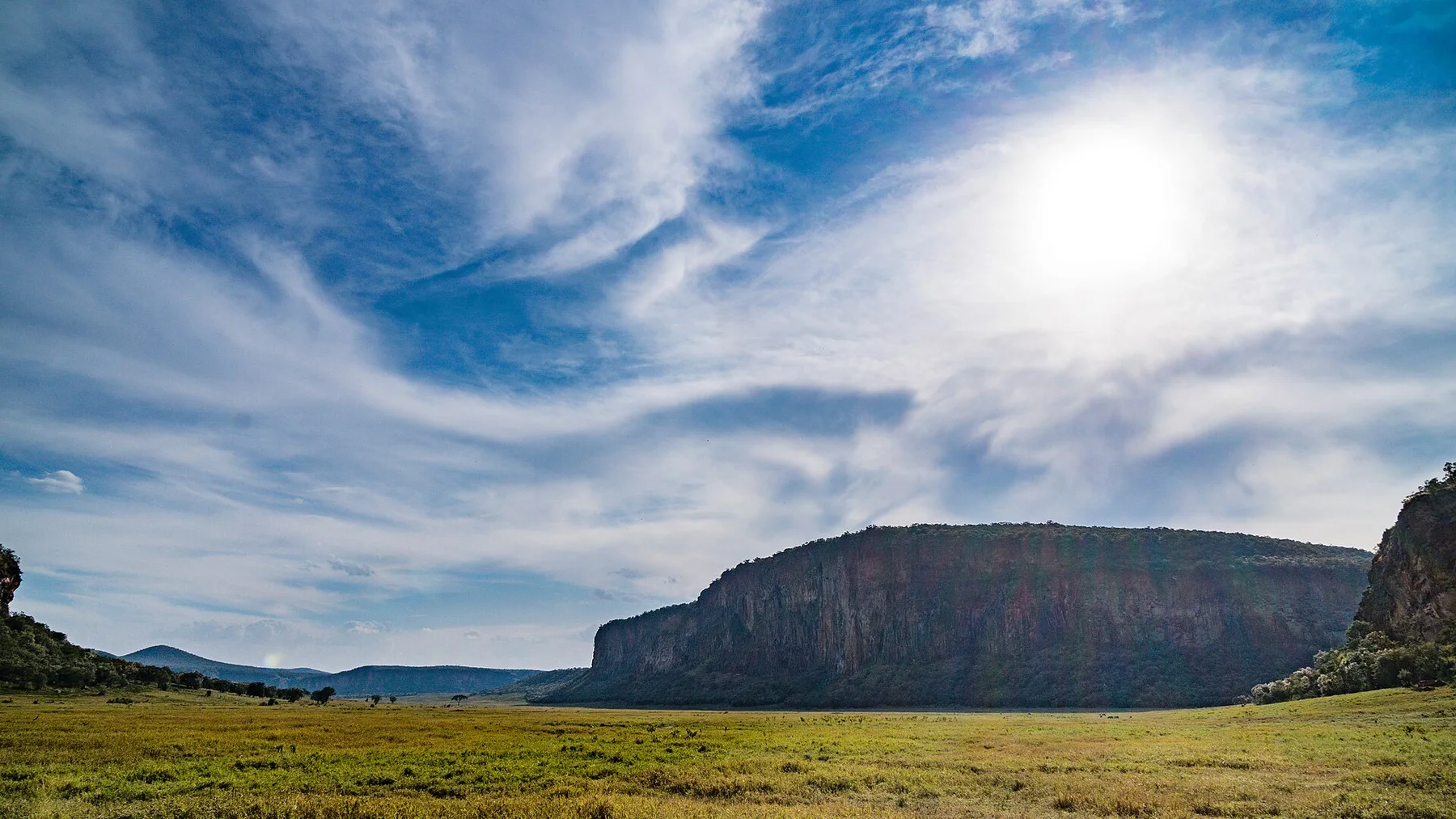
Hell's Gate sits inside a volcanic and tectonic story that is still visible. Tall cliffs, plugs such as Fischer's Tower and Central Tower, obsidian, faults, steam and hot water reveal a landscape shaped by eruptions, pressure, water and erosion. UNESCO's tentative-list description highlights the Ol Jorowa Gorge, towers, caves, geothermal features and fragile soils as central to the park's importance.
You do not need a geology degree to feel it. Ride between the walls in the morning and the scale is immediate. Stop beside a band of dark rock and you can see that the ground beneath the bicycle is not generic safari dust. A good guide turns these features into a story rather than a collection of names.
How long do you need?
Four to six hours inside the park suits most visitors. That allows a measured ride or drive, stops at the main formations, wildlife pauses and one confirmed walking or climbing activity. A quick two-hour visit reaches the scenery but misses the pleasure of moving slowly.
| Time available | What can fit | Honest verdict |
|---|---|---|
| 2 hours | Short drive or partial ride near the entrance | A taste, not a full experience |
| 4 hours | Main cycling corridor and scenic stops | Strong half-day for fit riders |
| 6 hours | Unhurried ride, wildlife, geology and an open guided activity | Best balance |
| Full day | Hell's Gate plus lunch and one Lake Naivasha activity | Excellent when started early |
| One night in Naivasha | Park on one day, lake or rest on the other | Most relaxed arrangement |
Count the time needed to fit bikes, pay entry, meet a guide, pause for wildlife and return. A schedule that allocates three hours but quietly includes a sixteen-kilometre ride, a gorge walk and lunch is not realistic.
Cycling is the signature experience
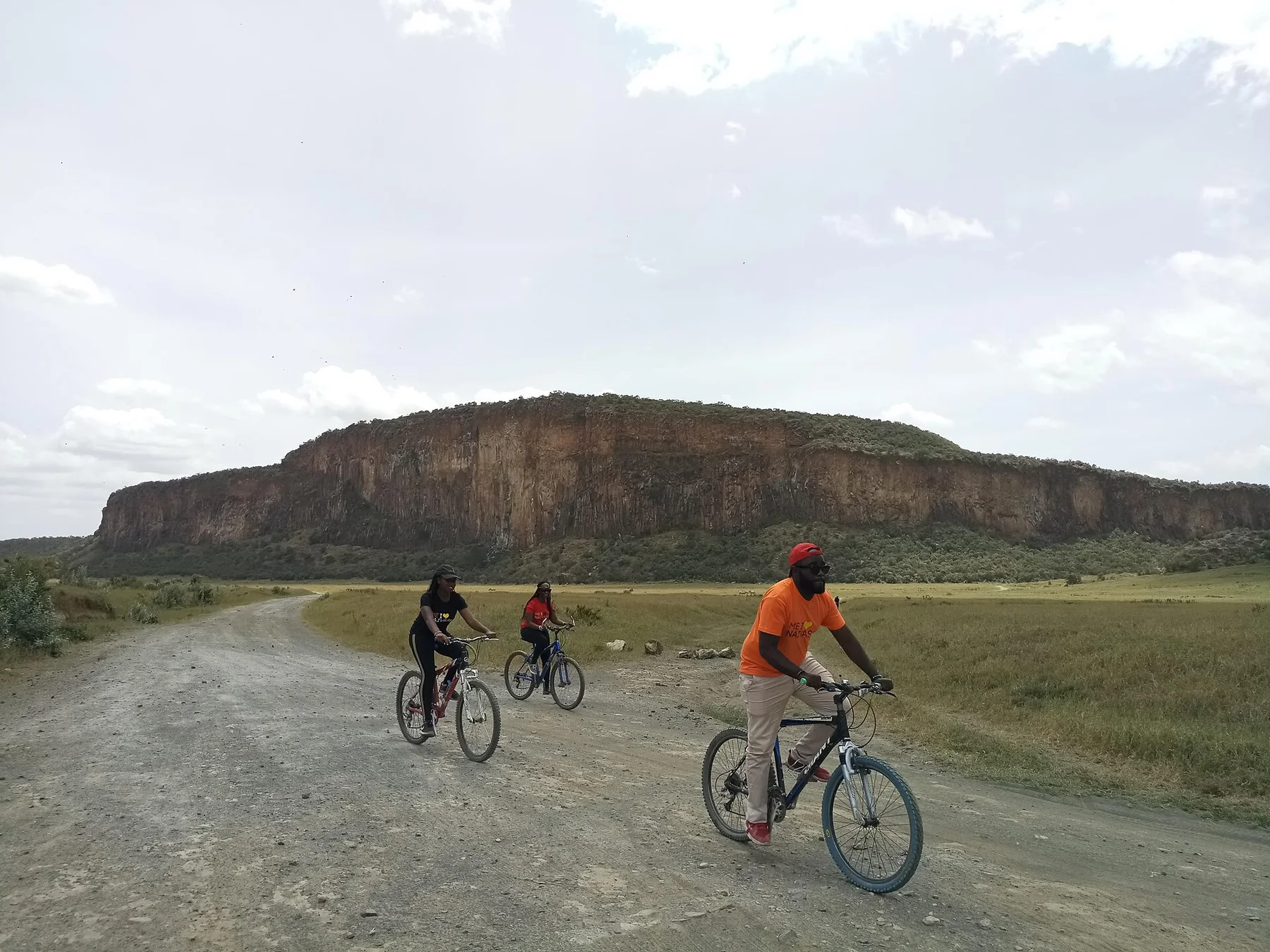
The main pleasure is simple: the park unfolds at human speed. Tyres crunch on gravel, birds become easier to hear and every bend in the road reveals another section of cliff. When animals appear, you stop rather than lean across another passenger.
Cycling is still a physical activity inside a wildlife area. The road can be rough, dusty, sandy, wet or rutted. The return can feel harder after the sun rises. Vehicles share parts of the route. Buffalo, baboons and other animals require space. A guide is valuable for pace, route choice, wildlife distance and current restrictions even when independent entry is allowed.
What is the usual cycling distance?
Many first-time rides use the corridor from Elsa Gate towards the Ol Njorowa area and return, often described by travellers as roughly eight kilometres each way. The exact distance changes with the gate, route, turn-around point and detours. Longer circuits exist, but a line on a map does not show heat, surface, wind or climbing.
| Ride style | Approximate effort | Who it suits | Support to request |
|---|---|---|---|
| Short entrance ride | Low to moderate | Families and cautious beginners | Guide and flexible turn-around |
| Main out-and-back ride | Moderate | Regular recreational cyclists | Water, repair kit and return plan |
| E-bike version | Moderate with assistance | Mixed-fitness groups | Battery range and working brakes |
| Long circuit | High | Confident riders | Route briefing, food, spares and support vehicle |
| Ride out, vehicle return | Flexible | Travellers protecting knees or energy | Pre-arranged vehicle access |
Do not let a fixed itinerary shame someone into finishing on a bicycle. A support vehicle is sensible planning, not failure.
Inspect the bicycle before paying
The most preventable disappointment at Hell's Gate is a poor rental bike. Squeeze both brake levers. Change every gear. Check tyre pressure, saddle height, wheel alignment and the chain. Ride in a small circle and listen for rubbing or slipping. Ask for a helmet that sits level and tightens securely.
A February 2026 traveller wrote that the bikes were “a little run down”, then explained that trying several helped them find workable choices. Another reviewer called the path “very rocky”. Those short observations matter more than a glossy photograph of a bicycle at the gate.
| Check | What good looks like | Reject the bike when |
|---|---|---|
| Brakes | Both levers stop the bike firmly | A lever reaches the handlebar or one wheel barely slows |
| Gears | Shifts hold under light pressure | Chain skips, jams or drops |
| Tyres | Firm, tread visible, no deep cracks | Tyre is soft, split or badly worn |
| Saddle | Adjusts to safe leg extension | Clamp slips or height cannot fit you |
| Wheels | Spin straight without rubbing | Rim wobbles or spokes are loose |
| Helmet | Correct size and secure strap | Cracked shell or poor fit |
Should you choose an e-bike?
An e-bike is useful for mixed-fitness couples, grandparents, teenagers who meet the operator's age rules and anyone who wants to keep energy for a walk or Lake Naivasha. It does not remove the need for balance, braking or surface confidence. Assistance can make a nervous rider faster before their handling improves.
Ask how the motor engages, test the lowest assistance setting and confirm the battery range. Know what happens if the battery fails. A March 2026 family review said their sixteen-kilometre ride and hike were “challenging but enjoyable”, adding that an e-bike was worth considering without reasonable fitness.
Can you visit without cycling?
Absolutely. A vehicle can follow the park roads, stop at viewpoints and carry travellers who do not ride. Walking may be possible only in designated open areas and under current park instructions. A vehicle visit still reveals the cliffs, towers, plains wildlife and geothermal context.
This matters for multi-generation families and groups where one person has limited mobility. Do not split the day into “cyclists have the real experience” and “everyone else waits.” Build a route where the vehicle meets riders at planned points and gives non-riders meaningful scenic stops.
The gorge requires a live safety check
Ol Jorowa Gorge is the source of some of Hell's Gate's most dramatic photographs and some of its most outdated advice. Flash floods can move through a narrow channel faster than weather at the entrance suggests. Past fatalities make this a safety issue, not a minor itinerary change.
Recent visitor reports conflict because different people use “the gorge” for different viewpoints, upper sections and the narrow lower route. Some 2026 travellers describe a guided walk, while a May 2026 forum update says “The narrow Gorge remains closed to the public”. Do not resolve that conflict from a blog. Ask KWS at entry which exact section is open that day and obey the answer.
Why flash-flood risk is different here
Rain does not need to fall on your helmet for water to arrive. A storm elsewhere in the catchment can send runoff into a constricted channel. Steep walls reduce escape choices, and sound or visibility may not provide enough warning.
Never enter a restricted section because a freelance guide, old video or other visitor says it was fine last week. Turn back when staff close an area. Do not shelter in the channel during rain. If a guide cannot name the open route, exit points and weather decision, choose another activity.
Fischer’s Tower is more than a photo stop
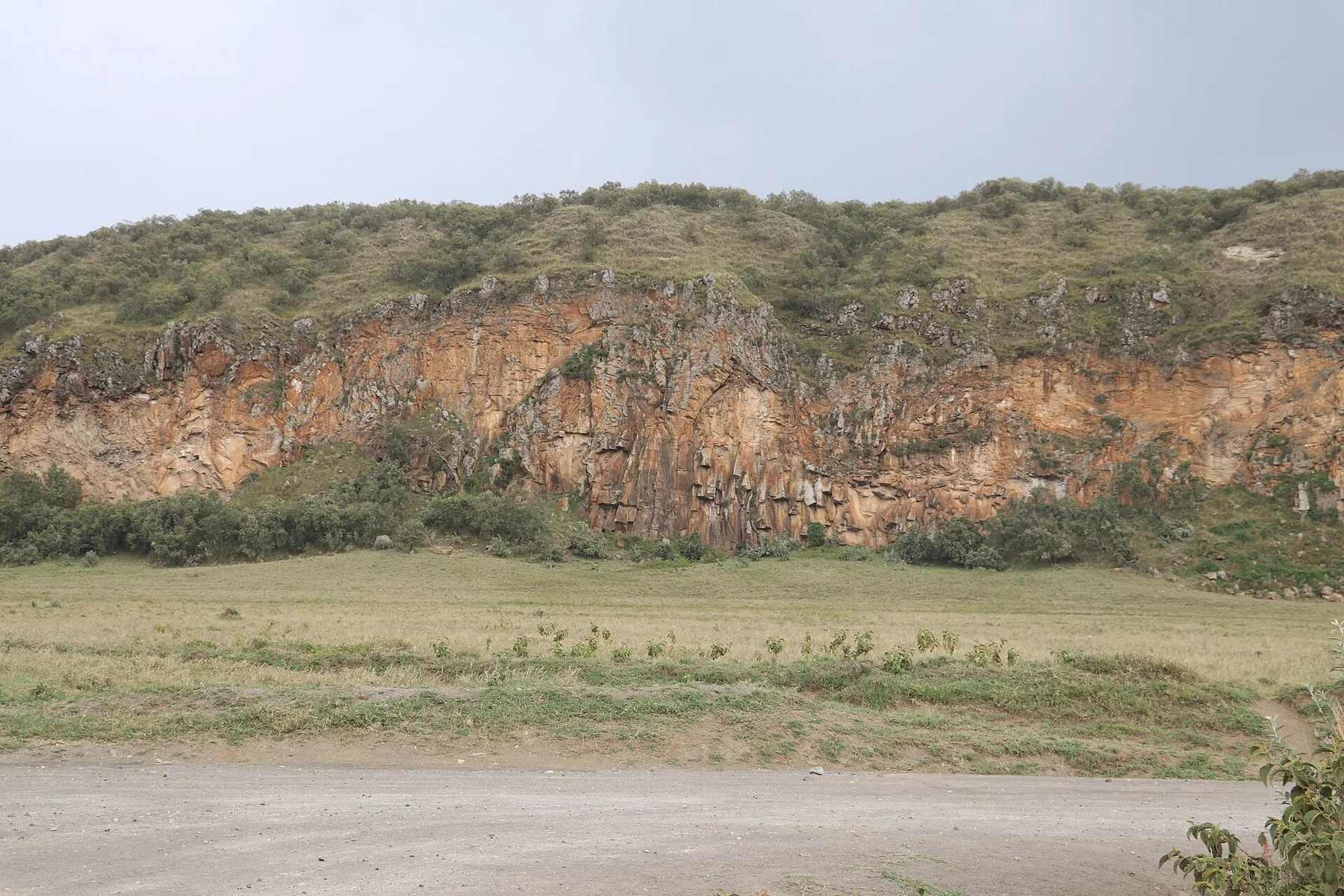
Fischer's Tower rises near the entrance as a volcanic plug and one of the park's clearest landmarks. Climbers use established routes on the rock, while other visitors circle the base and learn the local stories attached to it. The tower also gives cyclists a natural first pause before the longer valley opens.
Rock climbing should be booked as a proper activity with a competent instructor, correctly fitted harness, helmet, rope system and route suited to the participant. A 2026 parent praised an instructor who was “extra patient” when a seven-year-old became frightened during descent. That is the standard to seek: calm judgement, not pressure to perform.
What about Central Tower and the cliffs?
Central Tower stands deeper in the park's gorge landscape, while long cliff faces frame the cycling corridor. These are not interchangeable attractions. Ask the guide to show them on a current map and explain what can be approached under the day's rules.
Cliffs are also habitat. Raptors use ledges and air currents. Keep voices and drones under the applicable rules, avoid disturbing nests and do not treat every rock face as an informal climbing wall.
Geothermal energy is part of the view
Steam, pipelines and the Olkaria installations can surprise travellers expecting untouched wilderness. They are part of the real landscape. Kenya's geothermal industry draws energy from the heat below the Rift Valley, while the park protects wildlife and geological formations above it.
Some visitors find the infrastructure fascinating; others prefer the quieter entrance corridor. Neither response is wrong. What matters is knowing that the far side of the park can feel industrial and that steam or hot water is not a prop. Stay on open routes, follow warning signs and never touch or enter a geothermal feature unless it is an authorised visitor facility.
Wildlife is present, but not harmless
Zebra, giraffe, eland, impala, gazelle, warthog, baboon and buffalo are among the animals visitors may encounter. Sightings change with season, water, grazing and time of day. The park should not be advertised as predator-free or safe to roam anywhere.
Buffalo deserve particular respect. On a bicycle you have no metal body around you. Stop at a generous distance, do not pass between an animal and its escape route and follow the guide's instruction. Kenya Wildlife Service asks visitors to remain on established roads and trails and to view wildlife from at least twenty metres. More distance is sensible when behaviour changes.
| Animal or situation | Safe response |
|---|---|
| Buffalo near the road | Stop, give space and wait or retreat with the guide |
| Zebra or antelope grazing | Slow down, remain on the road and do not pursue |
| Baboon near food | Keep food packed and never feed it |
| Giraffe crossing | Stop and allow the whole group to pass |
| Injured or distressed animal | Move away and tell park staff |
| Wildlife blocking the return route | Wait or use vehicle support rather than forcing a passage |
Birding deserves its own hour
The cliffs and thermals support raptors, while grassland and scrub add a wider dry-country and Rift Valley bird list. UNESCO's tentative-list record identifies Hell's Gate as important for Rüppell's vultures and notes threats facing raptors, including poisoning, disturbance, electrocution and collisions.
Bring binoculars, pause below the cliffs without crowding nest areas and ask the guide to separate a confirmed identification from a quick guess. Birding works best early, before heat shimmer and day-visitor traffic build.
When is the best time to visit?
Hell's Gate can be visited throughout the year. The best day is defined less by a single “safari season” than by riding temperature, rainfall, road condition, visibility and what else you are doing around Naivasha.
Dry periods often make cycling surfaces more predictable, but dust and midday heat increase. Rain greens the valley and can produce beautiful skies, yet mud, slippery rock and gorge closures become more likely. Weather can change quickly in the Rift Valley.
| Condition | What improves | What becomes harder | Planning response |
|---|---|---|---|
| Cool, dry morning | Riding comfort and clear views | Early air can feel cold | Carry a light layer you can remove |
| Hot, dry afternoon | Long daylight | Dehydration, sun and hard return ride | Finish cycling earlier |
| Recent rain | Green scenery and dramatic cloud | Mud, ruts and slippery rock | Use a vehicle or e-bike only if safe |
| Active rain forecast | Cooler temperature | Gorge and trail safety | Follow KWS closures, do not negotiate |
| Busy weekend | Lively atmosphere | More bikes, vehicles and queues | Enter early or choose a weekday |
Start early, especially from Nairobi
Morning gives you cooler air, better bird activity and room for delays. From Nairobi, an early departure also reduces the risk that traffic consumes the active part of the day. If your trip reaches the gate near noon, cycling first and adding every optional activity afterwards can become a hot, hurried test of endurance.
An overnight near Lake Naivasha is worth considering when children, grandparents, hesitant cyclists or a long onward safari are involved. The Masai Mara, Lake Nakuru and Lake Naivasha route can place the active day between vehicle-heavy safari sections rather than attaching it to a punishing Nairobi commute.
Can children cycle in Hell’s Gate?
Some can, but age alone is not the deciding factor. A child needs steady bike control, confident braking, road awareness, enough stamina for the return and the maturity to stop when wildlife appears. The rental provider must have a correctly sized bicycle and helmet.
Young children may enjoy a short ride near the entrance, a vehicle-based scenic circuit or a family climbing session more than a fixed sixteen-kilometre route. Teenagers who cycle at home may handle the main route well but still need heat, wildlife and traffic briefings. Our Kenya safari with children guide helps place this day within a wider family trip.
| Child profile | Strongest version |
|---|---|
| Confident teen cyclist | Guided main ride with planned water stops |
| Child who rides only on smooth paths | Short entrance ride or vehicle circuit |
| Young child without a suitable rental | Vehicle-based park visit |
| Mixed-age siblings | Support vehicle meeting riders at set points |
| Child interested in climbing | Pre-booked beginner session with proper equipment |
| Child sensitive to heat | Early, shorter visit and lake-side rest afterwards |
Accessibility and limited mobility
Hell's Gate can still be meaningful without hiking or cycling. A private vehicle allows flexible stops, rest, shade and storage for mobility equipment. The cliffs and Fischer's Tower can be appreciated from road-accessible positions, subject to current conditions.
Ask for exact answers about transfer steps, vehicle height, toilet access, ground surface, seating and how close the vehicle can approach each planned stop. “Accessible safari” is too vague. Our accessible Kenya safaris guide explains how to document those needs before arrival.
Do you need a guide?
A guide is not merely someone who points down the road. The best guides fit the route to the group, recognise wildlife behaviour, explain the geology, know which walking sections are open and make an early decision when weather or fitness changes.
Travellers repeatedly notice that difference. One cyclist said the guide “allowed us to choose the pace”. Another praised a guide who “kept checking that everyone was cycling ok”. Those are useful signs of competence.
Ask who employs or licenses the guide, what the fee includes, whether the person stays for the full ride and how emergencies are handled. Avoid choosing only from unsolicited phone numbers in reviews.
What real travellers say about the day
Independent reviews reveal a consistent pattern: the scenery and proximity to wildlife delight people, while heat, bike condition and route assumptions cause the avoidable problems.
| Traveller's exact words | What the comment should change in your plan |
|---|---|
| “more intimate than seeing them from a safari vehicle” | Choose the bike for immersion, not a longer species list |
| “The ride is also fairly flat” | Do not confuse modest gradients with an effortless hot return |
| “the place was a bit packed” | Enter early on weekends |
| “bring your own food and supplies” | Carry water, snacks and a proper lunch plan |
| “too hot” | Pre-arrange a vehicle return rather than improvising |
These are individual experiences, not guarantees. Their value lies in the pattern: prepare the bike, protect the morning and keep the route flexible.
Two independent videos worth watching
Travel with Dani Rönneberg's Hell's Gate biking vlog shows the texture of the road, spacing between riders and the scale of the cliffs. It is useful for visual orientation, but the gorge segment reflects the conditions and permission on that filming day. It does not establish current access.
This independent Naivasha cycling video follows a rider from a nearby resort into the park and on to viewpoints. Watch it to understand that the full outing extends beyond a flat photo stop. Neither creator is a competing safari operator.
Use videos to judge surfaces, sun and personal comfort. Use KWS instructions to judge what is open and permitted.
Hell’s Gate and Lake Naivasha in one day
The combination works because the experiences contrast. Hell's Gate provides movement, cliffs and dry-land wildlife. A responsible Lake Naivasha boat trip slows the pace and focuses on waterbirds, shoreline habitat and hippos from a safe distance.
The combination fails when both activities are reduced to rushed checkboxes. A late Nairobi arrival, bike fitting, full ride, gorge discussion, lunch, boat ride and city return can easily overrun daylight. Choose the order around weather and fitness, not marketing convention.
| Day structure | Morning | Afternoon | Best for |
|---|---|---|---|
| Active first | Hell's Gate ride | Lunch and lake boat trip | Most fit first-time visitors |
| Lake first | Boat trip and birding | Short vehicle visit to Hell's Gate | Non-cyclists and photographers |
| Two-day Naivasha | Full Hell's Gate day | Lake, Crescent Island or rest next day | Families and unhurried trips |
| Park only | Ride, climb or guided walk | Return before traffic | Travellers with another lake day |
Boat operators must keep a safe distance from hippos. A promise to “get close” is not a benefit.
Hell’s Gate, Crescent Island and Lake Nakuru are different
Crescent Island offers a separate walking experience on or beside Lake Naivasha, subject to its own access and wildlife rules. Lake Nakuru National Park is a conventional vehicle-based park known for a different lake ecosystem and rhino viewing. Hell's Gate is the active volcanic chapter.
Combining all three in one day leaves too little time for any of them. A stronger Rift Valley sequence uses one Naivasha night, then continues to the Lake Nakuru National Park guide route the next morning.
Can you combine Hell’s Gate with Mount Longonot?
Both are physical experiences, and that is the problem with forcing them into one day. A Mount Longonot hike asks for an early start, climbing fitness and reserve for the descent. A full Hell's Gate cycle asks for another block of sun-exposed effort.
Very fit travellers can design a two-day active stop with one major activity per day. Most visitors enjoy both more when they are separated. A package that puts a summit hike and a full bicycle circuit into the same daylight window should state distances, elevation, transfer time, water and a cut-off plan.
Camping inside the park
Camping puts the cliffs, night sky and early bird activity close, but facilities and wildlife procedures matter more than romance. Book the exact KWS campsite, not simply “camping at Hell's Gate.” Confirm toilets, water, vehicle access, cooking, fires, ranger contact, waste, noise and what happens if weather changes.
Food must be secured from baboons and other animals. Fires must never be left unattended. A campsite is not permission to walk beyond designated areas after dark.
Where should you stay near Hell’s Gate?
Accommodation around Lake Naivasha ranges from simple camps and guesthouses to established lake-side lodges and private houses. The best location depends on the gate, your next day's route and whether the lake or the park is the main event.
Properties commonly considered in the wider Naivasha area include Lake Naivasha Sopa Resort, Enashipai Resort & Spa, Lake Naivasha Country Club, The Great Rift Valley Lodge, Chui Lodge and smaller camps along Moi South Lake Road. Their positions differ greatly. A “Naivasha hotel” can still leave a long morning transfer.
| Stay priority | Area to examine | Question to settle before booking |
|---|---|---|
| Earliest Hell's Gate entry | South Lake Road or gate-side accommodation | Actual driving minutes to the chosen gate |
| Lake views and boat access | Lake-edge property | Boat operator, jetty and hippo safety |
| Resort facilities | Larger Naivasha resort | Transfer cost to the park and early breakfast |
| Quiet luxury | Private conservancy or lodge outside town | Distance from both park and onward route |
| Budget cycling | Camp with bike access | Bike quality, secure storage and guide arrangement |
Park fees and activity charges
Kenya Wildlife Service publishes entry by visitor category and age. Its live Hell's Gate page currently lists separate adult and child categories for East African citizens, residents, African citizens and non-residents. Activity, vehicle, guide, bicycle hire, climbing, camping and Lake Naivasha charges may be separate.
Do not preserve a currency figure in a long-lived guide as though it cannot change. Use the official KWS Hell's Gate page for the live conservation fee, then ask the proposal to name every additional line.
| Cost line | Must the proposal name it? | Common ambiguity |
|---|---|---|
| Park conservation fee | Yes, by traveller category | Included for one entry or excluded entirely |
| Bicycle hire | Yes, with bike type | Basic bike shown as an e-bike |
| Cycling activity fee | Yes, if applicable | Confused with rental charge |
| Community or specialist guide | Yes | Paid separately at the gate |
| Rock climbing | Yes, including equipment | Instructor fee excludes gear |
| Vehicle and driver | Yes | Driver waits outside instead of supporting riders |
| Lake boat trip | Yes, if combined | Private and shared prices mixed |
| Meals and water | Yes | “Lunch stop” means pay on the day |
Our Kenya safari cost guide explains how to compare complete trip totals without losing these smaller but important lines.
A sensible first-time itinerary
Leave a Naivasha hotel after an early breakfast. Reach the chosen gate near opening time, meet the guide and spend fifteen unhurried minutes fitting and testing bicycles. Ride slowly past Fischer's Tower, pausing for geology and wildlife rather than trying to set a speed record.
Continue along the confirmed route, turn around before heat or fatigue erodes confidence and use a support vehicle when needed. Add only a walking or climbing activity that is open, staffed and suitable that day. Eat a proper lunch. If energy remains and the boat conditions are good, finish on Lake Naivasha. Otherwise, return to the hotel and let the park remain the whole story.
What to pack
Wear closed shoes with grip, comfortable trousers or padded cycling shorts and a breathable top. Bring a light layer for the morning, sun hat for stops, sunscreen, sunglasses and a small daypack that does not swing while riding. Gloves improve comfort on rough handlebars.
Carry drinking water for the full ride, electrolytes in hot conditions, snacks, prescribed medication, a compact first-aid kit and rain protection. Binoculars and a dust-protected camera add value, but a heavy shoulder bag does not. See our full Kenya safari packing guide for the wider journey.
Photography without turning wildlife into obstacles
The strongest images place a cyclist or animal against the scale of the cliffs. Stop fully before using a camera. Move the bicycle off the vehicle line only where the guide says it is safe. Never ride one-handed beside wildlife for a video.
A longer lens protects animal distance. Wide angles work for Fischer's Tower and the valley walls. Morning side-light reveals cliff texture. Ask permission before photographing guides, community members or other visitors, and check the park's current drone rules before carrying one.
How to read a Hell’s Gate proposal
The phrase “Hell's Gate bike tour” is not enough. The proposal should identify the gate, route, approximate riding distance, standard bike or e-bike, helmet, guide, support vehicle, entry and activity fees, open walking plan, water, meals and Lake Naivasha inclusions.
| Proposal wording | What is missing | Stronger wording |
|---|---|---|
| Bike safari included | Bike type, distance and helmet | Guided main-route ride with fitted mountain bike and helmet |
| Gorge walk | Exact open section and authority check | KWS-approved walking area confirmed on arrival |
| Lake Naivasha visit | Boat, duration and privacy | Named private or shared boat trip with safety briefing |
| Lunch | Venue and payment | Named meal basis and dietary plan |
| Transfer included | Origin, return and support | Nairobi or Naivasha pickup plus rider support plan |
| Park fees included | Traveller category and activities | Conservation and cycling fees itemised |
Questions to settle before the deposit
Ask these in one message so the answers can be attached to the booking:
- Which gate and cycling route will we use?
- What is the expected riding distance and surface?
- Are the bikes standard mountain bikes or e-bikes?
- Are helmets, repair kit and support vehicle included?
- Which walking areas are currently open under KWS instruction?
- What happens if rain closes the planned route?
- Which park, activity, guide and vehicle fees are included?
- Where will we obtain water and lunch?
- What is the alternative for a non-rider or tired child?
- If Lake Naivasha is included, what boat, duration and safety standard apply?
Responsible behaviour in the park
Stay on established roads and trails. Keep at least the official minimum wildlife distance and increase it when an animal appears alert or blocked. Carry all rubbish out. Do not feed baboons, zebra or any other animal. Keep speed low in a vehicle and on a bicycle.
Respect closures even when they remove the photograph you hoped to take. Buy crafts only when you genuinely want them, ask before taking portraits and avoid cultural stops that reduce people to a rushed performance. A good visit leaves guides and the landscape with more dignity than a checklist allows.
Who should skip the bicycle?
Choose a vehicle if you cannot brake confidently on gravel, have an injury aggravated by vibration, are unwell, have uncontrolled balance problems or feel pressured by the group. Pregnant travellers should discuss the road surface and physical demands with their clinician and choose a conservative plan.
Anyone can become a non-rider on the day because of heat, rain or a poor bike. The itinerary must make that decision easy. Safety should not depend on winning an argument at the gate.
The booking checklist
- Confirm the gate, opening time and live KWS entry method.
- Choose bike, e-bike, vehicle or a mixed plan for each traveller.
- Record approximate distance and the turn-around point.
- Inspect every bike and helmet before departure.
- Carry sufficient water, snacks and sun protection.
- Confirm the day's open walking areas directly with KWS.
- Keep a support vehicle or retreat plan where appropriate.
- Name every conservation, activity, rental and guide fee.
- Protect wildlife distance, especially around buffalo.
- Schedule Lake Naivasha only when time and energy remain.
Frequently asked questions
Is Hell’s Gate safe to cycle?
Cycling is an established park activity, but it is not risk-free. Road surface, vehicles, heat, weather, bike condition and wildlife all matter. Use a suitable bike, helmet, guide and conservative distance from animals.
Is the gorge open?
Access can differ by section and conditions. Do not rely on an old article or video. Ask Kenya Wildlife Service at entry which exact walking areas are open that day.
Are there lions in Hell’s Gate?
Do not plan the day around lions or describe the park as free of dangerous animals. The common experience centres on plains wildlife, cliffs, cycling and birding. Buffalo alone require serious distance.
How far is the bike ride?
Many visitors ride roughly eight kilometres from Elsa Gate towards the gorge area and return, but routes and turn-around points vary. Confirm the actual distance in your proposal.
Can beginners do it?
Confident beginners can enjoy a guided short route on a well-fitted bike. Rough gravel, heat and the return make it harder than a flat urban cycle path. An e-bike or vehicle support can help.
Can I rent a bicycle at the gate?
Rental is commonly arranged near or at the entrance, but availability and quality vary. Pre-arrange the bike type when fit or schedule matters, then inspect it before accepting it.
Can children cycle?
Yes when they have the size, control, stamina and judgement for the chosen route and can wear a correctly fitted helmet. A short ride or support vehicle may be the better family plan.
Is Hell’s Gate a good Nairobi day trip?
Yes, but it is a long day once traffic, bike fitting, the ride, meals and optional lake activities are included. Leaving early or staying in Naivasha produces a better pace.
Can I add Lake Naivasha?
Yes. A boat trip complements the park well, provided the operator follows hippo distance and the schedule leaves enough daylight and energy for both activities.
Does the park replace a classic safari?
No. It offers a different experience built around movement, geology and open scenery. Add a conventional wildlife park when predators, elephants or rhinos are a priority.
Plan the day around the people, not the brochure
Hell's Gate is at its best when nobody is hurried past the landscape that made them come. Let the keen cyclist ride. Give the hesitant rider a tested e-bike. Keep a vehicle for the grandparent who wants the cliffs without the gravel. Stop for the zebra, but give it room. If rain closes the gorge, listen.
Tell us your dates, where you will sleep, who rides regularly, the ages and mobility needs in the group, and whether Lake Naivasha belongs in the same day. Use this Hell's Gate National Park guide as the starting brief, then we will build the active chapter around real people and leave enough space for it to feel like an adventure.
Tell us how your group wants to move
Share the dates, accommodation, regular riders, children, mobility needs, bike preference and Lake Naivasha plans. We will match the pace, support and route.