
Sand River Masai Mara: Inside-Reserve Tents and Migration
Elewana’s Sand River camp sits inside the southern Maasai Mara, close to Tanzania. It has sixteen tents in two adjoining camp areas, one family tent and a river that sometimes carries the first drama of arriving herds. The setting is special, but understanding which river, which room and which package you are buying makes the difference between a good photograph and a good safari.

A river runs below the tents, and beyond it lies a wildlife corridor that connects the Serengeti with Kenya. Some guests at Sand River have watched animals move through that scene while still on their veranda. Others have found their best moments farther out with a guide, or at dinner when the day’s dust has settled. The secret is to let the camp be more than a migration wager.
Elewana places Sand River Masai Mara within the National Reserve near the Tanzanian border, not in a private conservancy. That means normal reserve driving rules apply. The camp’s secluded southern setting can feel very different from the busy central circuit, but it is still shared reserve land. Neither the camp nor its guests have exclusive rights to the surrounding animals.
The operator’s room list is usefully precise: fifteen standard tents of about forty-nine square metres and one family tent of about eighty-seven. Ten units belong to the main Sand River area and six to the adjoining Little Sand River area. Each side has its own dining and public spaces. This is not a single sixteen-room dining room where everyone gathers each night.
The most consequential distinction in the operator’s rate terms is between full board and game package. The latter includes scheduled shared drives and the Keekorok airstrip transfer, while full board is mainly the room, meals, selected drinks and laundry. Both exclude reserve fees. If two offers use different package bases, their headlines are not comparable.
The Sand River is a southern story, not the Mara River
Sand River winds through the southern Mara close to the Serengeti border. It is one of the waterways migrating animals may meet as they enter Kenya. The famous Mara River crossing sites, the Talek and the Sand River are separate places. A photograph of a mass crossing over the Mara River should not be treated as the view from this camp’s deck. The distinction is not academic: it decides how long a game-drive day might be if you want to reach a different sector.
The camp sits on the Kenyan side within the National Reserve. A line on a map does not make a simple day trip into Tanzania. Crossing into the Serengeti requires a proper international route, park arrangements and immigration. If you want both countries, design the trip around sensible flights or road connections rather than assuming the parks share a visitor gate. Our Kenya versus Tanzania guide helps decide whether that extra complexity is worth your time.
The southern reserve can be richly varied. The riverine strip, bushes and open plains create different sightings. One guest wrote that the scrub close to camp produced a different wildlife feel from the broad savannah. That is an observation, not a weakness. A guide can look for birds and smaller movement at the river before opening out onto the plains for cats and herds. The area remains useful outside the migration months because resident wildlife does not follow a tour calendar.
| Geography | What Sand River offers | What it does not mean |
|---|---|---|
| Southern National Reserve | Inside-reserve location near Tanzania. | Not a private conservancy with night drives. |
| Sand River bank | River views and possible herd movement. | Not the Mara River crossing area. |
| Little Sand River | A second adjoining six-tent camp area. | Not a different wildlife concession. |
| Keekorok airstrip | Named flight arrival point. | Not a walk from the camp. |
Main Sand River or Little Sand River?
Elewana divides the property into a ten-tent main area and six-tent Little Sand River. Each has a dining room and main spaces, which softens the feeling of a sixteen-tent property. Ask which side holds the proposed room, where its terrace faces and how far it is from the pool and dining area. “Little” sounds automatically more secluded, but the right room depends on your group, walking preference and actual availability.
The standard tents borrow the polished aesthetic of a 1920s safari camp. Dark wood, period-inspired fittings and canvas deliver an old-world look without asking you to give up a proper bath. The operator’s refurbishment account describes free-standing baths and outdoor rain showers beside some tent bathrooms. Check the current room specification for the tent offered. A historical design theme is not a promise that every tent has identical fittings after later updates.
Four standard tents have daybeds that can become extra beds. That is different from the dedicated family tent. A couple travelling with one child may prefer a standard tent with a daybed, while parents with two children may want two bedrooms and more separation. A single extra bed in a lovely room can still make it feel crowded. Ask for a floor plan or exact bed setup, especially if anyone needs twin beds. The operator lists eleven doubles and four twins among the standard tents.
There is no need to claim the tents are a sealed, air-conditioned hotel. A June 2026 guest found them warm during the day and said they had no air conditioning. Evenings cooled, in that guest’s experience. If you are sensitive to heat, ask about the season, fan or ventilation and where the sun reaches the tent. Equally, a private outdoor shower can be wonderful or less appealing to someone who wants complete enclosure. These are personal preferences worth settling before the deposit.

One family tent, so plan early
The family’s choice is an eighty-seven-square-metre tent with two en-suite bedrooms and a central lounge. Having a bathroom for each sleeping room is a meaningful advantage over one standard tent with an extra daybed. It gives parents and children space to sleep at different times after a long drive. There is only one such tent in the operator’s room inventory. If its layout matters to your trip, book for the room rather than hope it becomes available later.
Elewana’s 2026 rate table uses a family-suite example of two adults and two children, while noting that additional people can sometimes be accommodated at extra cost. That is a rate configuration, not permission to assume any five-person group fits comfortably. Give the ages and relationships of every guest. Two teenagers may need a different solution from two young children. If the family tent is unavailable, consider two standard tents with sensible proximity rather than squeezing everyone into the wrong room.
A family tent does not automatically grant a private game-drive vehicle. The current game package describes scheduled shared drives; exclusive vehicle use has an additional day rate. This is one of the most important questions for parents. Shared drives can be enjoyable, but a child who needs to return early or take a slower morning may change the experience for everyone in the car. The Kenya family safari guide covers vehicle pacing, child ages and room choices across the journey.
Ask about pool supervision, meals and any minimum age rules for specific experiences. A child might love a bush breakfast but find an entire reserve day tiring. A reserve camp gives immediate wildlife context, yet it is still not a playground. Adults should follow camp escorts and the team’s guidance around tents after dark.
A possible Sand River crossing, never a booked performance
Elewana says guests are sometimes fortunate enough to see wildebeest or zebra cross the Sand River from their verandas. The word “sometimes” is doing important work. The camp is on a genuine route of northward movement, but arrival dates change with rain and grazing. Herds can spread across a wide front, pause, shift to another crossing point or pass while you are on a drive. Even during a strong migration season, a specific tent and date cannot be sold as a crossing seat.
The southern setting is particularly interesting for travellers who want to understand how animals enter the Mara from Tanzania. That is not the same objective as waiting at a famous Mara River crossing. If the latter is central to your holiday, consider a second camp in another sector and give the guide several days. Our crossings guide explains how Sand, Talek and Mara River scenes differ. Moving camps only makes sense when it gives a genuinely different wildlife base, not merely another set of luxury photographs.
There is also the simple pleasure of the river when no herd arrives. A guest in June 2026 saw elephants, giraffes and baboons from the private tent view. Another described elephants drinking across the water in April. Those are individual sightings, not a daily programme. But they show why it is worth leaving time between drives to sit quietly. A river can be a place to observe, not only a dramatic crossing stage.
A guest who travelled at the start of the migration said they should have come a week later
to see larger numbers. That is an honest sentence. No planner can move rain or animals to suit fixed leave dates. What we can do is avoid overpromising and choose a camp that will still reward the trip if the headline herd moment does not happen.
How a Sand River game-drive day works
The camp’s activity list names guided drives in customised four-wheel-drive vehicles, bush meals, sundowners, a swimming pool, and optional ballooning. The 2026 game package specifies twice-daily scheduled shared drives. A private vehicle is available for a separate day rate. That choice matters for photographers, families and guests who want to follow one sighting slowly rather than follow a group timetable.
Because Sand River is inside the National Reserve, ordinary game drives follow reserve hours and rules. The camp’s own activity list does not offer a standard night drive. If that is a non-negotiable wish, combine this southern reserve base with an appropriate conservancy camp rather than asking a guide to bend reserve rules. The Mara night-drive guide explains where after-dark activity is possible.
A morning might begin on the riverine edge before crossing into grassland, depending on current sightings. A full-day picnic can make sense when the best wildlife is far from camp, but it means missing pool and tent time. An afternoon return gives a different balance. Ask the guide which sectors you can reach realistically and how much driving a proposed Mara River trip would take. “Inside the reserve” does not mean “beside every famous crossing.”
Ballooning requires an early start and is priced separately. Its take-off point and transfer should be checked for your dates. A Maasai cultural visit appears in the current extras table, not automatically in the standard game-package inclusion. Ask how it is hosted and whether your visit supports local participants. The camp’s school visit is described through a foundation relationship; treat any school visit with sensitivity to pupils rather than as a casual photo stop.
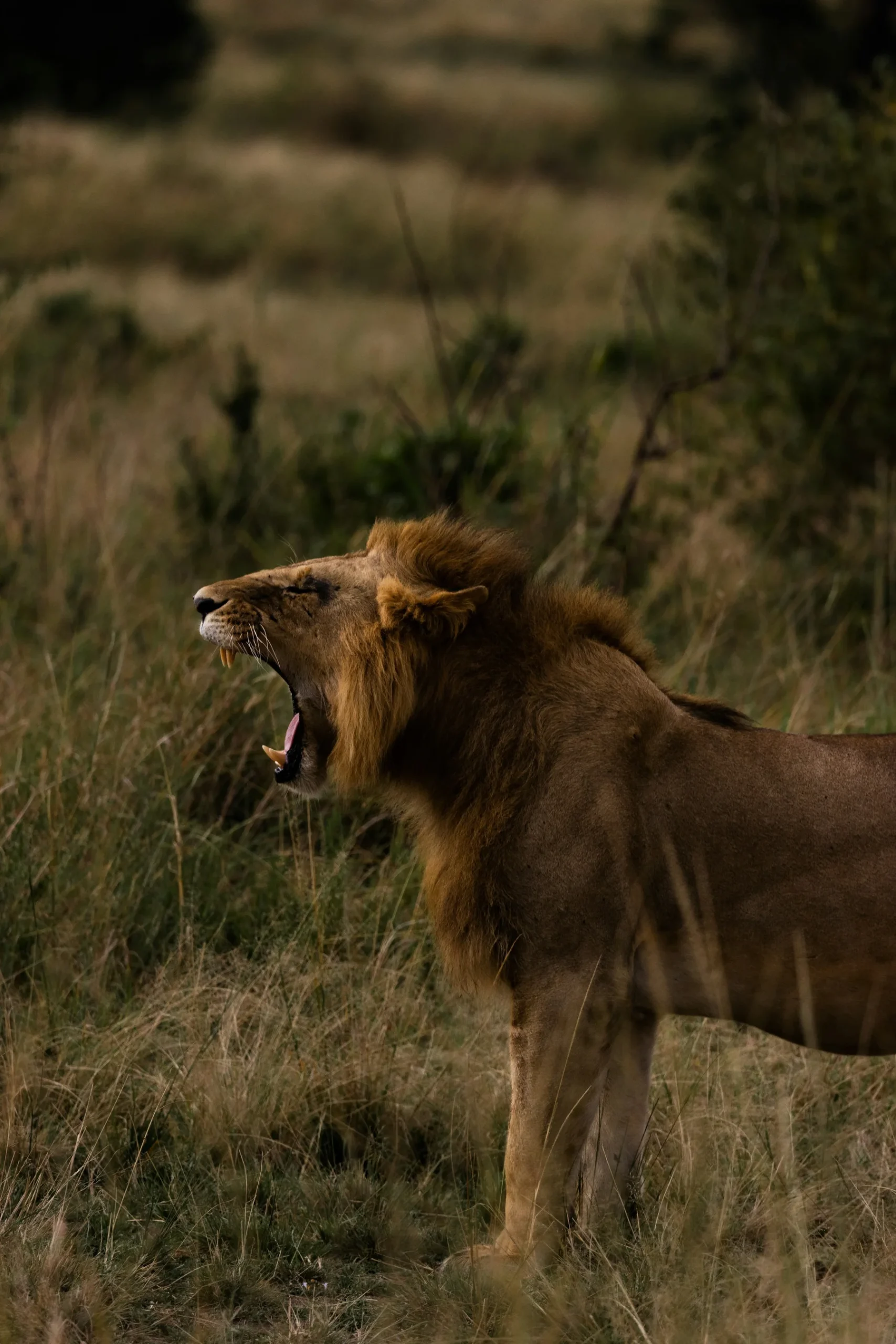
What the hours between drives feel like
The 1920s styling gives Sand River a polished, theatrical look, but the landscape is real and unscripted. There is a pool for the hot part of the day, separate main areas for the two camp sections and meals that guests often remember almost as clearly as the drives. The operator’s refurbishment account describes an infinity pool near the river. Check its current access arrangements if you have mobility concerns or children who need close supervision.
Several recent guests praised the food and staff by name. A June 2026 traveller enjoyed a chef who discussed the evening menu at lunch. Another family said the kitchen helped a picky eater with simpler choices. Neither account guarantees an identical menu next season. Share allergies, preferences and children’s appetites in advance. If a special dinner or bush meal is important, confirm whether it is included in your package or needs separate arrangement.
Little Sand River may feel intimate with six tents, while the ten-tent side can have a slightly livelier communal rhythm. This is an inference from the layout, not a fixed atmosphere rating. Your travel group, the occupancy on your dates and where you eat will shape the feeling. Ask if both sides use the same pool and how far your proposed tent is from it.
Expect outdoor noises, canvas and the small practical quirks of a remote place. A guest missed having a tea or coffee station and fridge in the tent, although they still recommended the stay. For another guest, having drinks served at the main area is no hardship. If you need medication refrigerated or independent tea at sunrise, raise it before arrival. These details are more useful than calling every room “luxury” and stopping there.
What people who stayed there actually noticed
On Tripadvisor’s first-hand guest reviews, a June 2026 couple described the river-view tent, elephants and giraffes nearby, and a guide who taught them about the landscape as well as finding animals. Their account also praised small moments at meals. A different April visitor described a lioness on the transfer from Keekorok and a guide who found cheetahs. These were their wildlife days, not a list of animals the next visitor can purchase.
The early-migration visitor who wished they had come a week later still enjoyed the camp, guide and food, but said the tents lacked air conditioning and grew warm in daytime. An August 2025 family did not see the migration at all yet enjoyed the wildlife, staff and outdoor shower. Their review called that shower amazing
. Those contrasting accounts are a useful antidote to a neat marketing calendar. A stay can succeed without the herd, and a beautiful tent can still feel hot at noon.
Another 2026 guest loved the staff and river view but would have preferred in-room tea-making equipment and a fridge. That is a personal comfort issue, not a verdict on the whole property. Read the date and party type. A solo photographer, a honeymoon couple and parents with children are judging different parts of the same camp.
We do not treat a high review average as proof that every moment will be flawless. The useful questions are more concrete: Did guests feel well guided? Did the food accommodate their needs? Was the tent comfortable at the hour they actually used it? Did they understand the distance to the wildlife they hoped to see? The answer may point you towards Sand River or toward a different Mara sector.
Full board and game package are not the same holiday
Elewana’s 2026 rate terms show two bases. Full board covers the room, three meals, tea, coffee, soft drinks, beer, house wines, selected spirits and laundry. It does not, by itself, include the scheduled drives or the Keekorok transfer. The game package adds scheduled shared drives and activities plus transfers from the designated airstrip. Both exclude premium drinks, flights, airport taxes, gratuities and reserve fees.
The 2026 extras table makes the distinction even clearer: twice-daily shared drives and the Keekorok transfer are included on the game package but cost extra on full board. Bush breakfast or lunch and a sundowner stop are also indicated as included on the game package, while the Maasai cultural visit is priced separately. Exact activity timing depends on availability and weather. A one-night stay may have restrictions, which is another reason not to use this as a rushed stopover.
The reserve fee is not inside either base rate. That is especially easy to miss because the camp itself is already inside the reserve. A room price and an entire safari price are different things. If you are comparing Sand River with another lodge, use the same number of people, nights, vehicles, air connections and fee days. The Mara safari cost guide gives context, while your itinerary should state the actual complete amount and what remains optional.
| Element | Full board | Game package |
|---|---|---|
| Room and meals | Included. | Included. |
| Selected drinks and laundry | Included. | Included. |
| Scheduled shared drives | Extra. | Included. |
| Keekorok airstrip transfer | Extra. | Included. |
| Bush meal or sundowner stop | Extra. | Listed in game-package activity inclusions. |
| Exclusive vehicle | Extra. | Extra. |
| Reserve fee and flights | Extra. | Extra. |
| Balloon or cultural visit | Optional extra. | Optional extra. |
A rate table also changes by season and room configuration. It is tempting to cite a single nightly figure, but it can turn a useful guide into an unreliable promise when dates or occupancy change. A four-person family tent total cannot be compared to a per-person-sharing standard tent rate. Ask for the room category and package basis in the same sentence as the total. That is how you know what the holiday actually includes.
Keekorok is the air arrival, not the camp gate
Elewana’s access guide gives about forty-five minutes for a direct Wilson-to-Keekorok flight and another forty-five minutes by road to camp. Flight routes can have intermediate stops, and a game-drive-style transfer may take longer if the guide pauses for wildlife. That is part of the pleasure, but it should not be built into a tight onward connection.
If your international flight lands at Jomo Kenyatta, Wilson Airport is across Nairobi. Give baggage, immigration and traffic proper time. An overnight in the city can be kinder than a same-day sprint after long-haul travel. Small safari aircraft also have baggage limits and require soft bags; use the booked carrier’s current rule, not an assumed universal allowance. The safari-aircraft baggage guide helps plan the bag.
By road, the camp becomes a longer journey through the reserve and its approaches. A road route may fit a private circuit, but do not promise a quick transfer from Nairobi. Rain and road conditions can change the last hours. Its southern position also means that moving to a camp in the northern Mara takes thought. Two short stays on opposite edges of a big ecosystem can spend more time in transit than watching animals.

| Mara camp | Where it sits | Why choose it instead? |
|---|---|---|
| Sand River Masai Mara | Inside the southern reserve on Sand River. | Classic tented style and two smaller camp areas. |
| Sala’s Camp | Inside the southern reserve by the Sand and Keekorok system. | Seven tents with private plunge pools and two family suites. |
| Rekero Camp | Inside the reserve beside the Talek River. | Different river and central-reserve geography. |
| Olonana Lodge | Outside the western Triangle beside the Mara River. | Large contemporary suites and lodge facilities, with a gate journey for reserve drives. |
Who should choose Elewana Sand River?
Choose it if you like the romance of a polished canvas camp and want to live in the southern reserve rather than drive in from an outside lodge. It is particularly appealing when the Sand River landscape itself interests you, with or without a herd crossing. Couples may like the smaller Little Sand River side; a family may value the one true two-bedroom tent. Both should check the exact room offered and the package basis.
Choose another base if your one goal is a specific Mara River crossing, if night drives are essential, or if air conditioning and a sealed modern room matter more than canvas character. A shared game-package vehicle may suit a sociable guest but frustrate a photographer who wants to control every stop. Adding a private car can solve that, though at a real extra cost.
For many travellers the strongest route gives Sand River enough nights to settle in, then adds another sector only if it reveals a meaningfully different Mara. Nearby Sala’s Camp is another southern luxury option by the Sand River, so moving between those two is not necessarily a geographical gain. Compare styles and inclusions, or pair Sand River with a genuinely different reserve or conservancy landscape. Our where-to-stay guide is a starting map for that decision.
Sand River Masai Mara questions
Is Sand River Masai Mara inside the National Reserve?
Yes. Elewana places the camp on the Sand River inside the southern Maasai Mara National Reserve near the Tanzania border.
How many tents does the camp have?
Elewana lists fifteen standard tents and one two-bedroom family tent, divided into main Sand River and Little Sand River areas of ten and six units.
Is Little Sand River a separate property?
It is one of two adjoining areas within Elewana Sand River Masai Mara, each with its own dining and main spaces. Confirm which side your room is on.
Does Sand River have a family tent?
Yes. One 87-square-metre family tent has two en-suite bedrooms linked by a central lounge. Standard tents are about 49 square metres.
Can I see wildebeest cross from my tent?
It has happened for guests on the Sand River migration route, but crossings and herd arrivals depend on rainfall and movement. No room guarantees a crossing.
Is Sand River the same as the Mara River?
No. Sand River is a southern waterway near the Serengeti border. The famous Mara River crossing sectors are elsewhere.
Are game drives included in full board?
No. Elewana’s 2026 terms separate full board from the game package. Scheduled shared drives and Keekorok airstrip transfers are included in the game package and extra on full board.
Are reserve fees included in the game package?
No. Elewana’s 2026 game-package terms exclude park or reserve fees, which must be added to the complete itinerary.
Are game vehicles private?
The scheduled drives in the game package are shared. Elewana offers exclusive vehicle use at an additional day rate.
Which airstrip serves Sand River?
Elewana names Keekorok Airstrip, around forty-five minutes by road from camp in its planning guidance.
Can you do night drives from Sand River?
The camp is inside the National Reserve and its standard activity page does not list night drives. Choose an appropriate conservancy stay if after-dark driving is essential.
Do the tents have air conditioning?
A recent guest reported that the tent became warm during the day and did not have air conditioning. Discuss heat sensitivity and the exact room facilities before booking.
Keep exploring the Mara
Plan Sand River Masai Mara
Share your dates, party ages, room preference and whether migration movement, resident wildlife or quiet camp time matters most. We will make the package and whole-trip cost clear.