
Sala’s Camp: Southern Mara Luxury by the Sand River
Sala’s Camp looks towards Tanzania from the southern Maasai Mara. Seven glass-fronted tents, each with a plunge pool, make it unusually comfortable under canvas. The Sand River position is especially interesting when wildebeest arrive from the Serengeti, but the camp has a year-round wildlife story. Here is how the rooms, vehicles, costs and real guest experiences fit together.
After a morning in the vehicle, a plunge pool can be more than a luxury photograph. You can cool off, look across the Sand River and still feel inside the landscape you came to see. Sala’s Camp makes room for that kind of pause. It also puts you in the southern reserve, where the approach from Tanzania gives the migration a different geography from the better-known Mara River crossing points.
The Safari Collection describes a seven-tent camp inside the main Maasai Mara National Reserve, near the Sand and Keekorok rivers and the Tanzania border. Its current accommodation page lists two family suites and two secluded honeymoon tents within the seven. Every unit is described with a private plunge pool, bath and running hot shower. The point is not only greater comfort; you can enjoy hours at camp without feeling separated from the safari.
The area is not a private conservancy. Game drives follow National Reserve rules, and standard luxury-tent guests share a vehicle unless they add exclusive use. The family tents include an exclusive vehicle in the operator’s 2026 terms. That is a meaningful distinction for a group with children. There are guided nature activities around camp, but they should not be confused with an unrestricted walking safari across reserve country or a night drive. Our Mara safari guide sets the reserve and conservancy choices in context.
The Sand River is not the Mara River
Sala’s sits in the southern low-use zone of the reserve, with views towards the Serengeti. The Sand River and nearby Keekorok watercourse make a distinct setting from camps farther north or west along the Mara River. Migrating wildebeest may move into this border area on their journey from Tanzania. A traveller who wants the first signs of an arriving herd may find the southern position appealing. A traveller whose entire ambition is a particular Mara River crossing needs to recognise that those sites are elsewhere and require a long drive or another base.
The southern position can feel quieter than busy central circuits, although a low-use zone is not a guarantee of an empty road at every sighting. The reserve still has shared wildlife and access rules. Resident animals give the camp value beyond the migration: the local Maasai guides and spotters can explore big-cat country, birds, giraffes, antelope and smaller details across the open plains. A morning with no large herd can still be a strong safari morning when the guide reads the land well.
Being close to Tanzania on a map does not create a convenient day trip into the Serengeti. There is no simple visitor gate between the parks. If a Kenya and Tanzania combination is part of the holiday, the route needs proper flights, road connections and immigration planning. The Kenya versus Tanzania guide helps decide whether one country or a thoughtful two-country trip fits the time available.
| Location question | What Sala’s offers | What it does not mean |
|---|---|---|
| Southern Mara | Reserve wildlife landscape close to the Tanzania border. | Not immediate access to every central or western circuit. |
| Sand River | Riverside camp views and migration-arrival interest. | Not the same as a Mara River crossing camp. |
| Inside reserve | No daily entrance journey from an outside gate camp. | Normal reserve hours, not conservancy night drives. |
| Keekorok airstrip | Named air arrival for camp transfer. | Airfare is separate from the room rate. |
Five luxury tents, two family suites, seven private pools
The operator’s 2026 room terms list five luxury tents and two family tents. All have a private plunge pool, en-suite bathroom with bath, flush toilet and plumbed-in shower. Its current accommodation page also highlights two secluded honeymoon tents among the seven. A honeymoon label does not change the question that matters: which exact tent is available on your dates, how private its deck feels and how its bed setup suits you. For a couple, a pool and a quiet deck may be worth far more than another list of decorative room features.
Sala’s was once much simpler under canvas, and its room pages describe the later refurbishments that brought the glass fronts and modern bathrooms. It has kept a tented atmosphere but no longer asks guests to adapt to bucket showers. A private pool is for cooling off after a drive, not a large swimming lane. The operator says there is no big shared lodge pool. Children around any plunge pool need supervision, especially when the camp is open to wildlife.
Each tent has its own view and relationship to the river or trees. The Keekorok Family Tent has a large deck, sunken seating and plunge pool. The Forest Family Tent is tucked among trees, with two bedrooms and a pool overlooking the river. Ask for the actual room map and bed configuration if two adults, children or friends are sharing. “Family tent” is not a generic category here: there are two named options, and one may fit your party better.
There is Wi-Fi in guest tents according to the operator, while the main dining tent is kept screen-free. Solar power has a standby generator. This gives more connectivity and comfort than a deliberately simple field camp, but it remains a wildlife location. Weather and network conditions can affect speed. A person who must be online every hour should plan work for Nairobi, not assume the bush is a reliable office.

Why the family tent changes the safari day
Sala’s welcomes children of all ages under its current operator guidance. Its 2026 terms distinguish infants, children and adults for rate purposes and recommend the two family tents. More importantly, guests in those family tents receive exclusive use of a game-drive vehicle as standard. That lets a family return early when a child is tired, spend twenty minutes with a giraffe, or take breakfast at a pace that works for them. Guests in the five standard luxury tents normally share vehicles, so a couple wanting the same privacy should request and price it separately.
A private vehicle is not permission to pressure wildlife or to drive after reserve hours. It gives control over the rhythm within the rules. Older children may want the complete early-morning drive; younger ones may prefer a shorter outing and time back at the pool. Ask about child seats, ages, bed layout, mealtime flexibility and whether the guide has experience engaging children. The room and car must both fit the family. The family safari guide covers these choices across Kenya.
There are also family activities around camp, including games and short nature or bird walks described by the operator. Their exact availability depends on staff, weather and the ages involved. One family reviewer remembered guides who were patient with their children and a private vehicle that made the days work. Another liked the accommodation but said the children were sometimes still hungry after beautiful meals. That small practical point is worth mentioning when arranging portions and meal times in advance.
A guide and spotter matter more than the plunge pool
The Safari Collection describes customised game-drive vehicles and locally rooted Maasai guides and spotters. From Sala’s, morning and afternoon reserve drives can explore the southern plains, river areas and predator habitat. The room may be glamorous, but guests repeatedly say the team in the vehicle made the trip. A good guide knows when to wait, reads movement across a landscape and does not treat animals as props for photographs.
There is a useful difference between a shared drive in a standard tent and the family vehicle. A shared vehicle can be sociable and often works beautifully when guests have similar priorities. It can feel limiting if a serious photographer wants to sit at one animal for an hour while another guest wants to cover more ground. A private vehicle supplement may be worthwhile for a honeymoon, special photographic goal or varied party, but it should be part of the full price from the start. Ask how many people share the standard car and how guiding is assigned.
Because Sala’s lies inside the reserve, ordinary game drives follow reserve hours. The operator’s nature walks are around camp, not a promise of a long bush walk into predator country. If a guided night drive is essential, add a suitable conservancy camp for part of the route. The Mara night-drive guide explains the distinction. Two bases can make a richer safari when each gives a truly different area and activity.
Days out can include bush breakfast and sundowners. The southern reserve can be rewarding in green months as well as migration season. A leopard in a tree, birds over the river or the way a pride settles in shade can hold attention when the wildebeest are elsewhere. The Mara game-drive guide helps decide when to take a full-day outing and when split drives preserve the best rest and light.
First arrivals from Tanzania, without a calendar promise
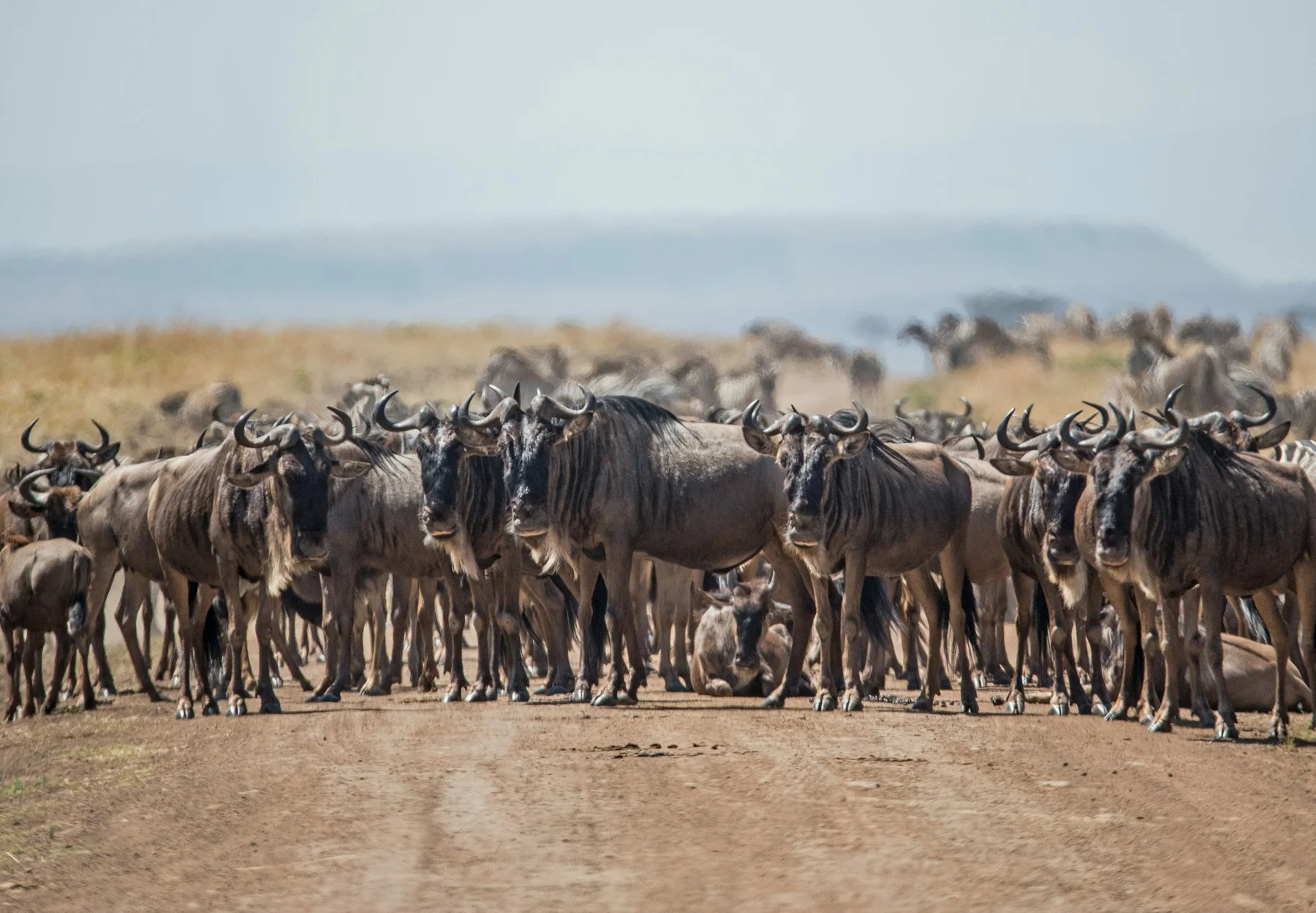
Sala’s southern position is meaningful during the annual wildebeest movement. Herds may enter the Mara from the Serengeti through border-region country and across smaller waterways before moving farther through the ecosystem. The operator often speaks of July to October, with early arrivals around July and August, but animal movement depends on rain and grazing. A stay can coincide with impressive numbers, scattered groups or a quiet stretch. Even an experienced guide cannot make a herd cross a river on your final morning.
Keep the Sand River, Talek River and Mara River distinct. Sala’s is by the Sand and Keekorok system. Rekero Camp overlooks a Talek crossing point, while camps in central or western sectors serve different Mara River areas. These are not interchangeable migration seats. If river crossings are the entire purpose of the holiday, the route may need nights in more than one sector and a guide who can respond to current herd positions. Our crossings guide explains the uncertainty without selling a fixed date.
Migration season also brings higher demand and more visitors. Sala’s position in the southern low-use zone can offer a quieter rhythm than some heavily visited sectors, but no operator can own all wildlife around a river crossing. If you come outside peak herd months, the resident Mara remains compelling. There is value in being here when the land is green, birds are active and a game drive is not judged solely by one event.

| If you hope to see… | Sala’s position helps with… | What remains uncertain |
|---|---|---|
| Arriving wildebeest | Southern border-region routes in broad migration months. | Exact arrival date and local herd direction. |
| Sand River movement | Camp location near this southern waterway. | A crossing on a given day or in front of camp. |
| Mara River crossings | Possible wider reserve safari if planned. | Distance, crossing location and actual event. |
| Resident predators | Year-round southern Mara game drives. | Which cat appears and where. |
| Quiet evenings | Pool, deck and southern setting. | Wildlife visible from a particular tent. |
The hours between game drives deserve attention
Sala’s central guest area faces the river and Tanzania beyond. The operator describes a large dining table made from fallen East African rosewood, a bar and afternoon treats before the evening drive. There are spa treatment rooms, games and opportunities to rest beside a private plunge pool. This is a camp where time out of the vehicle can be a real pleasure, not merely a wait for the next outing. Couples who care about dining and privacy may use these spaces more than an itinerary packed with optional activities.
Food draws strong praise in recent reviews. One family wrote about a chef who adjusted meals to individual preferences; another guest praised varied dishes. Do not make that a promise of a particular chef or menu on future dates. Share allergies, children’s appetites and any celebration before arrival. A thoughtful meal is often the result of a conversation, not mind reading. If you want a private dining arrangement, ask what can be done in the specific room or on the deck.
There is a small but important difference between camp nature walks and conservancy walking safaris. The operator mentions short guided walks around camp for birds and smaller creatures. They must remain within what the property and reserve authorities permit. A traveller should not read “nature walk” as a full wilderness trek away from camp. Similarly, stargazing and a sundowner can be lovely without implying a night game drive.
What guests say when they forget the brochure
A September 2026 Tripadvisor review by Dave and Darci is full of praise for the furnishings, but the guiding team, Jackson and Freddie, is what they said made the stay exceptional. Their account describes patience at sightings and a feeling of not being rushed. That is the kind of detail worth listening for when judging an expensive camp. A plunge pool is visible before you book; the pace and warmth of a guide are harder to see.
Another family reviewer, t m, recalled a booking and billing problem that the manager resolved well. The phrase a fairly significant issue concerning our booking and billing
is a reminder that excellent hospitality sometimes shows itself when something goes wrong. The same reviewer praised guides, flexible food and spa staff. We should not turn a resolved issue into proof that every future booking is flawless, but it is useful to know how one guest experienced the response.
In a July 2025 family review, Sunseeker1121 loved the migration and their guiding team, but added that the family was still hungry at times and wanted more
despite beautiful meals. It is a modest criticism with a practical answer: tell the kitchen about children’s portions and snacks. Another family described the private vehicle as central to how well the trip worked. Those details can be more useful to a new parent than another five-star adjective.
Many public reviews are enthusiastic, and some were collected through a hotel review partnership. Read the dated first-hand words and consider the party type. A honeymooner and a family of five will use the same camp very differently. A past migration sighting is evidence of a wonderful stay, not an event the next guest can buy.
What “fully inclusive” leaves outside
The operator’s 2026 room terms include meals, house wines, beers, spirits and soft drinks, game drives, bush meals, sundowners, Keekorok Airstrip transfers, laundry and camp activities. They exclude champagne and selected premium drinks, tips, travel and evacuation insurance, ballooning, massages, road transfers and daily park and conservation fees. A headline room rate is therefore not the whole safari price, especially when several reserve days and flights are involved.
The same terms distinguish vehicle use sharply: the family tents include exclusive use; standard luxury tents share unless private use is purchased. That affects both experience and cost. The room is also charged according to party configuration and season. For a couple, the privacy of a standard tent and plunge pool does not imply a private car. For a family, the higher room total may already contain the vehicle flexibility that would otherwise be a supplement.
The camp rate is only one part of the route. You may fly from Wilson Airport, enter through Keekorok airstrip, pay reserve and conservation charges for each applicable day, and possibly add another Kenya stop. The Mara safari cost guide shows why two offers cannot be compared by nightly room figure alone. We can give you one complete itinerary total for the actual dates and people travelling, with optional extras clearly separate.
| Part of the holiday | 2026 room terms | Decision to make |
|---|---|---|
| Meals and house drinks | Included. | Dietary needs, children’s portions, premium drinks. |
| Game vehicle | Exclusive for family tents, shared for standard tents. | Private supplement for a standard tent if wanted. |
| Park and conservation fees | Excluded from displayed room rate. | Add actual reserve days and nights. |
| Keekorok transfer | Included from airstrip. | Domestic airfare and baggage are separate. |
| Balloon and spa | Not in the standard rate. | Add only if they genuinely improve your stay. |
| Road transfer | Outside standard room inclusion. | Plan the approach and travel time carefully. |
Keekorok by air, or a long road approach
The operator’s 2026 guidance places the scheduled flight from Nairobi Wilson to Keekorok at about forty-five minutes in simple routing, with flight stops depending on the airline’s daily schedule. Airstrip transfer to camp is included. The bags should be soft and within the carrier’s actual weight rules; the operator mentions a fifteen-kilogram total including hand luggage in its guidance. If your international flight lands at Jomo Kenyatta, allow real time to cross Nairobi to Wilson, or spend a night in the city first.
By road, the operator suggests around six hours from Nairobi and recommends the Sekenani Gate approach. Rain, traffic and rough sections can make that longer. A road journey can work well as part of a private safari route, but it should not be squeezed into a half-day promise. A child or a couple arriving off a long-haul flight may get more from the camp by flying in and using that saved time for a proper first game drive.
The 2026 terms listed a seasonal closure from mid-April to late May, with flexibility in exact dates. The wider Mara is open to travel in the rains, but Sala’s room inventory must be checked for that period. The operator also listed a two-night minimum. If you have only one night between flights, this is not a sensible property to force into the itinerary. Give the southern Mara at least two nights, and preferably more if the migration or a celebration is central.

Who will enjoy Sala’s Camp most?
Choose Sala’s if a beautifully appointed tent, private plunge pool and strong guiding are all part of your ideal safari. It is particularly attractive for families who will use one of the two family tents and included vehicle, or couples who want a private deck after long drives. Its southern position can serve people interested in the first migration movements from Tanzania, as long as they understand that no camp can schedule a crossing.
Choose another base if night drives and extended bush walks are non-negotiable, or if your dream is a particular Mara River sector in the west or centre. The room rate is high and the park and conservation fees sit outside it, so the whole trip must make financial sense, not just the photographs. A traveller who cares far more about a simple canvas camp and a guide than about a pool may find better value elsewhere.
Sala’s best combination is time in the southern landscape and time to enjoy the camp itself. Leave a morning open for the unexpected and an afternoon to cool off, look at the river and talk about what the guide noticed. Luxury is worthwhile when it gives the day room to breathe.
Sala’s Camp questions
Where is Sala’s Camp?
It is inside the southern Maasai Mara National Reserve near the Sand and Keekorok river confluence, looking towards the Tanzania border.
How many tents are there?
The current accommodation page lists seven tents in total, including two family suites and two secluded honeymoon tents.
Does every tent have a plunge pool?
The operator’s current accommodation and 2026 room terms say each tent has a private plunge pool, en-suite bath and plumbed-in shower.
Are game-drive vehicles private?
The 2026 room terms include exclusive vehicle use for guests in the two family tents. Guests in the standard luxury tents share vehicles unless a private vehicle is booked at extra cost.
Can young children stay?
The operator welcomes children of all ages. Infant and child-rate rules depend on room and age, while adults must supervise children around pools and wildlife.
Is Sala’s Camp at the Mara River?
No. It sits near the Sand and Keekorok rivers in the southern reserve. The Mara River crossing sectors are farther away.
Can you see the Great Migration from Sala’s?
Herds may move through the southern border area, often between July and October, but exact arrival and river-crossing events depend on rain and animal movement.
Are park fees included in the room rate?
The operator’s 2026 terms exclude daily park and conservation fees, so a complete safari price should add them for the actual dates and nights.
Which airstrip is used?
The 2026 room terms include transfers from Keekorok Airstrip. The scheduled flight from Nairobi Wilson is separate and its routing can vary.
How long is the drive from Nairobi?
The operator’s 2026 guidance gives around six hours, with bumpy sections and weather-dependent conditions. It recommends the Sekenani Gate approach.
Does the camp offer night drives?
Sala’s lies inside the National Reserve, where normal game drives operate under reserve hours. Its short nature walks are around camp, not unrestricted conservancy walks or night drives.
Is Sala’s open year-round?
The operator describes the Mara as a year-round destination but its 2026 room terms listed a camp closure from April 10 to May 29. Exact closure dates need checking for future years.
Compare the Mara’s different river stories
Plan Sala’s Camp
Share your dates, party ages, room choice and whether migration, guiding or time by the pool is your first priority. We will build the full route and fee picture.