
Best Time to Visit Lake Nakuru
Plan Lake Nakuru month by month, with honest flamingo expectations, current lake-level context, road advice and the right season for your priorities.
- Best time to visit Lake Nakuru at a glance
- Lake Nakuru is a year-round rhino park
- Flamingos do not have a guaranteed month
- Flamingo disappointment usually begins before the trip
- Pelicans and mixed waterbirds can carry the lake day
- January is dry-season clarity with holiday demand
- February is an excellent all-round month
- March is a transition, not a fixed weather label
- April is for green-season travellers
- May can be beautiful after the main downpours
- June is the quiet transition into the cooler dry season
- July brings dry-season reliability and cooler mornings
- August is popular because it is practical
- September keeps many dry-season strengths
- October is a weather-change month
- November is green, bird-rich and variable
- December combines green landscapes with festive demand
- The dry season improves access more than it guarantees wildlife
- The rainy season changes the park rather than closing it
- Rising water has rewritten the shoreline
- The lake level matters in every month
- Makalia Falls is most dramatic after rain
- Baboon Cliff changes with cloud, haze and water
- Morning is the strongest general wildlife window
- Late afternoon gives better light but less margin
- Photographers should choose a season by subject
- Rain protection is part of the camera kit
- Birders should consider October to April, but verify locally
- Families often prefer a dry month or a two-night stay
- Travellers with limited mobility need the route, not a season label
- Crowds follow Kenya’s wider safari calendar
- Lower season prices need a road and cancellation check
- Inside-park accommodation protects dawn and dusk
- Inside the park does not mean beside every sighting
- The best base depends on the next destination
- A day trip from Nairobi is possible but compressed
- A Naivasha day trip can work with discipline
- One night is enough for many multi-park routes
- Two nights reward birders and unhurried families
- Nakuru is a natural bridge between Samburu and the Mara
- A 4×4 is the sensible year-round choice
- Self-drivers should plan the gate before sunrise
- Gate hours should shape the game drive
- Pack for cool dawn, warm sun and sudden rain
- The current forecast matters more than an average table
- Weather can change without ruining the day
- Lake Nakuru and Lake Bogoria are not interchangeable
- Lake Nakuru and Lake Naivasha offer different activities
- Responsible viewing matters in every season
- A month-by-month answer should end with your priorities
- The best month changes with the traveller
- Mist and cool mornings deserve their own plan
- Check these seven things in the week before travel
- A complete booking brief prevents seasonal surprises
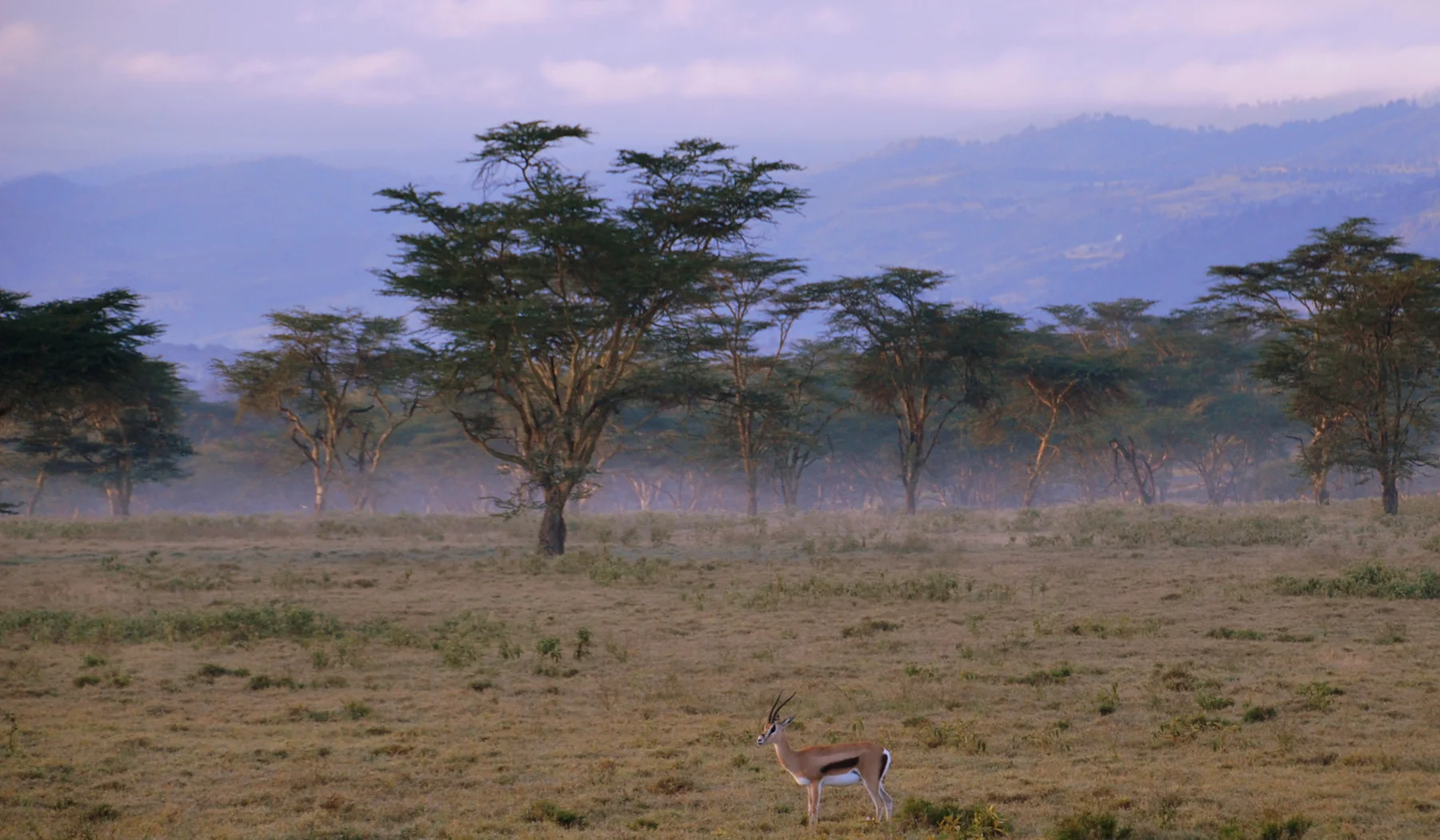
Lake Nakuru can look like three different parks in the same year. One morning begins with pale mist hanging between fever trees. Another brings a hard blue sky, dry tracks and white rhinos visible far across shorter grass. After rain, the woodland turns deep green, Makalia Falls gathers force and the road may become the most important part of the day's plan.
That is why the best time to visit Lake Nakuru depends on what you want to see and how you like to travel. Dry months usually make roads simpler and large mammals easier to find in open areas. Rainy months bring colour, dramatic cloud, active waterfalls, fresh grazing and fewer vehicles, but also taller vegetation, mud and occasional route changes. Flamingos do not follow a dependable tourist calendar. Their presence depends on lake chemistry, water level and food across several Rift Valley lakes.
This month-by-month guide explains weather, road conditions, wildlife visibility, birding, photography, crowds, prices and route design. It also shows how rising water has changed the lake and why a current update matters more than a fixed “best season” slogan.
Best time to visit Lake Nakuru at a glance
The table is a planning shortcut, not a weather guarantee. Kenya's seasons can start early, arrive late or behave differently from one part of the county to another.
| Period | Usual character | Strongest reason to go | Main compromise |
|---|---|---|---|
| January to February | Generally drier, bright intervals, warm days | Easier roads, open viewing, photography | Holiday demand and dry dust |
| March to May | Main long-rain period, green and changeable | Waterfalls, fresh landscapes, fewer vehicles | Mud, tall grass and disrupted roads |
| June | Transition toward drier conditions | Green scenery with improving access | Cold mornings and lingering showers |
| July to September | Drier, cooler mornings, popular safari season | Reliable road comfort and large-mammal viewing | Higher demand and busier circuits |
| October to December | Variable short rains and green-up | Migrant birds, dramatic skies, fresh grazing | Unpredictable showers and road condition |
Lake Nakuru is a year-round rhino park
KWS identifies Lake Nakuru as Kenya's first government-managed rhino sanctuary and protects both black and white rhinos. They live in the park throughout the year. Season changes how easily they are seen, not whether they belong there.
| Rhino | Typical habitat clue | Seasonal effect |
|---|---|---|
| White rhino | Open grass and grazing areas | Shorter dry-season grass can improve long views |
| Black rhino | Thicker browsing habitat | Green vegetation can hide an animal surprisingly well |
| Either species | Roads, shade and water influence movement | Early and late drives often feel more comfortable |
The Lake Nakuru National Park guide explains the sanctuary, gates and habitats in more detail.
Flamingos do not have a guaranteed month
For decades, Lake Nakuru was promoted through photographs of enormous pink flocks. The ecosystem has changed. KWS reports that rising water has diluted the salinity and alkalinity that support the lesser flamingo's specialised food. Birds move among Rift Valley lakes when the food base changes.
| What moves flamingos | Why a calendar cannot guarantee them |
|---|---|
| Water level | Shoreline and feeding depth change |
| Salinity and alkalinity | The food web responds to lake chemistry |
| Algal abundance | Lesser flamingos follow suitable food |
| Conditions at other lakes | A better feeding lake can draw birds away |
| Short-term weather | Wind and local water conditions alter distribution |
KWS's latest national census story is stark: Lake Nakuru once held flocks exceeding one million, but the January 2025 count was about 500. That does not make the park empty. It makes any promise of a huge flock dishonest.
Flamingo disappointment usually begins before the trip
If the itinerary says “see millions of flamingos” as though a ticket includes them, the expectation is already broken. A better promise is a rhino sanctuary and lake ecosystem with whatever waterbirds are present on the date.
| Weak expectation | Better expectation |
|---|---|
| Guaranteed pink shoreline | Check current bird reports and remain flexible |
| Flamingos are the only reason to visit | Rhinos, pelicans, giraffes, buffalo, woodland and viewpoints matter too |
| Dry season always means more flamingos | Chemistry and food, not the holiday calendar, drive movement |
| One old photograph proves current conditions | Use recent KWS counts and guide reports |
The Lake Nakuru flamingos guide will track the ecological story without turning it into a sighting promise.
Pelicans and mixed waterbirds can carry the lake day
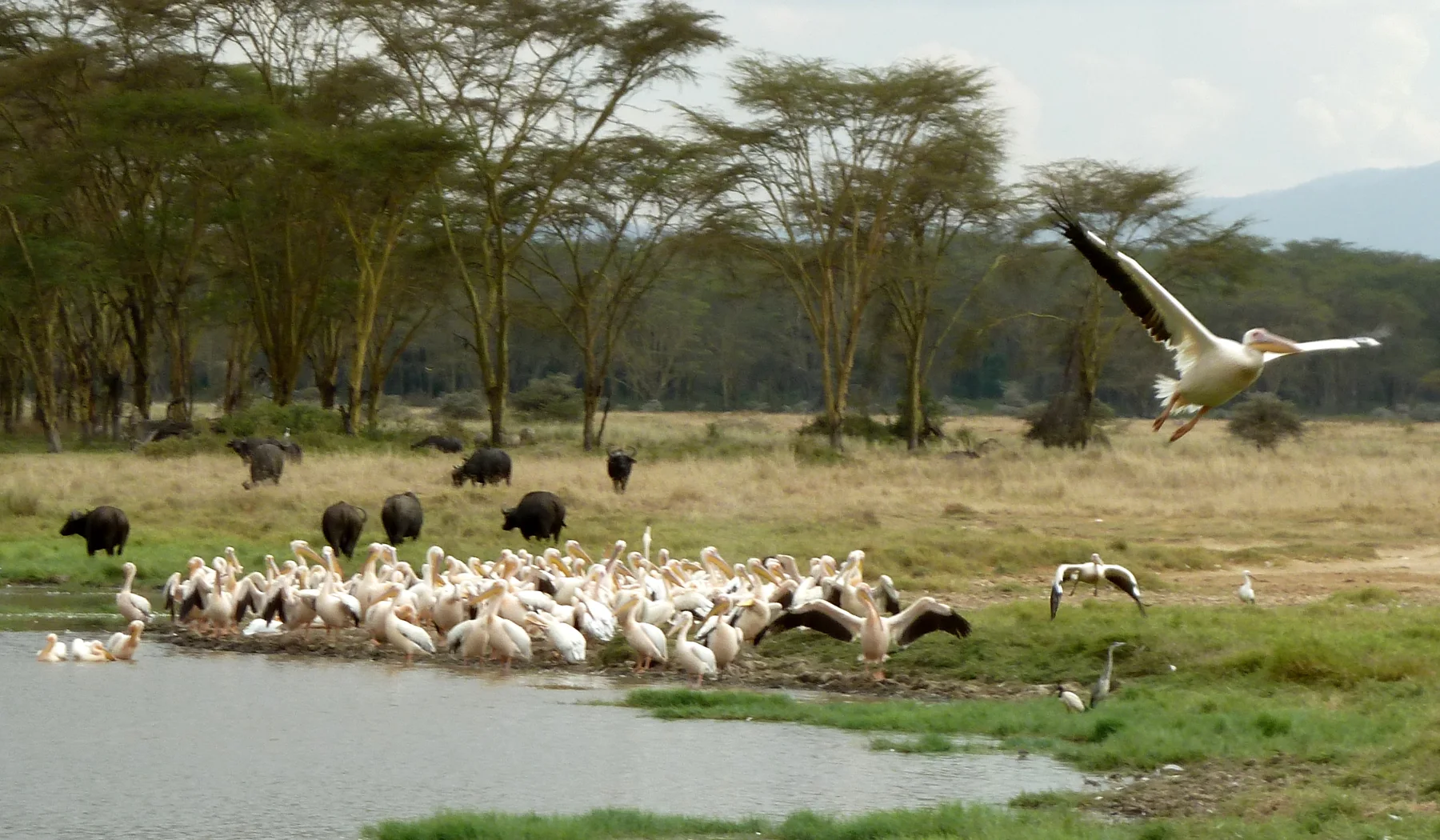
Even when flamingos are few, pelicans, fish eagles, herons, storks, ducks and other waterbirds can make the shoreline busy. KWS describes the park as hosting about 450 bird species, though a single visit will record only a fraction.
| Birding interest | Best planning response |
|---|---|
| Pelicans and waterbirds | Give the shoreline time at more than one point |
| Raptors | Scan trees and thermals, not only the water |
| Woodland birds | Slow down in forest and fever-tree habitat |
| Migrants | Consider the northern-winter migration period, while checking current records |
| Photography | Use morning or late light and a private vehicle if possible |
One recent visitor called the park “verdant and full of life, especially bird life.” That traveller saw fewer flamingos than expected but found pelicans and many other birds rewarding.
January is dry-season clarity with holiday demand
January often gives a practical combination of drier tracks, warm daytime conditions and good visibility. The first week may still carry festive-season demand, while later dates can feel calmer.
| January factor | Planning effect |
|---|---|
| Roads | Usually easier than in peak long rains |
| Grass | Can be shorter in open areas |
| Dust | Protect cameras and eyes |
| Demand | Early January can be busy |
| Birding | Resident birdlife remains broad; migrants may add variety |
A January visit works well for a first-time family or road safari that needs predictable movement more than a green landscape.
February is an excellent all-round month
February is often warm and relatively dry before the main rains. It can deliver clean early light, comfortable park circuits and strong rhino-search conditions. Heat haze can soften long-lens photographs later in the day.
| February choice | Better approach |
|---|---|
| Rhino photography | Start at gate opening or sleep inside the park |
| Viewpoints | Use morning before haze builds |
| Full-day visit | Carry water and plan shade breaks |
| Family drive | Use an early session, lunch break and shorter afternoon |
March is a transition, not a fixed weather label
March may begin relatively dry and turn wetter as the month develops, but annual timing varies. The useful decision is how much flexibility the itinerary has if showers begin.
| March timing | What to expect |
|---|---|
| Early month | Possible dry-season feel with building cloud |
| Middle month | Greater chance of mixed conditions |
| Late month | Long-rain pattern may be more established |
| Any date | Check the current county forecast and park roads |
March can offer better value and freshening vegetation without the full intensity of a wet April, but it is not a guaranteed shoulder-season bargain.
April is for green-season travellers
April commonly sits near the heart of the long rains. Kenya Meteorological Department seasonal forecasts describe March to May as a major rainfall season for Nakuru County, with April often an important month within it. The exact rainfall still changes by year.
| April reward | April challenge |
|---|---|
| Rich green colour | Mud and standing water |
| Dramatic cloud | Lower light and heavy showers |
| Fewer vehicles | Some routes may be slow or closed |
| Active falls | Spray, slippery ground and brown floodwater |
| Fresh grazing | Taller vegetation can hide small animals |
Choose April because you enjoy weather and living landscapes, not because a cheap room rate alone persuaded you.
May can be beautiful after the main downpours
May remains part of the long-rain period, though conditions may begin easing toward the end. The park can be intensely green, and cloudy mornings produce gentle light for woodland photography.
| May traveller | Fit |
|---|---|
| Photographer who likes cloud and colour | Strong |
| Visitor with rigid sedan-only route | Weak |
| Birder with patient guide | Strong |
| Traveller connecting through flood-sensitive roads | Needs backup |
| Family needing pool weather every afternoon | Uncertain |
A May itinerary should contain time margin. It should not depend on reaching every viewpoint by one exact road.
June is the quiet transition into the cooler dry season
June often brings improving road conditions while the park remains greener than it will later. Mornings can feel cool, especially in an open safari vehicle, and a shower can still arrive.
| June advantage | How to use it |
|---|---|
| Green background | Photograph giraffes and rhinos against fresh vegetation |
| Lower peak demand | Seek better room choice before July holidays |
| Cooler drives | Pack a windproof morning layer |
| Transitional weather | Keep waterproofs in the vehicle |
June suits travellers who want balance rather than a single extreme.
July brings dry-season reliability and cooler mornings
July is a popular safari month across Kenya. Lake Nakuru fits naturally between Naivasha and the Mara, so vehicles may cluster around the best-known viewpoints or rhino sightings.
| July factor | Planning response |
|---|---|
| Cooler dawn | Warm layer and closed footwear |
| Drier tracks | Broader route options, subject to current lake level |
| High demand | Reserve lodge and private vehicle early |
| School holidays | Choose family room before it disappears |
| Busy sightings | Keep distance and leave space for animals |
The park is compact, but compact does not mean every car needs to sit beside the same rhino.
August is popular because it is practical
August usually offers dry roads, comfortable touring and easy connection with the Mara high season. Those same advantages bring stronger demand and less room for last-minute accommodation changes.
| August priority | Advice |
|---|---|
| One-night circuit stop | Stay inside or near the correct gate |
| Rhino time | Protect morning and afternoon windows from transfers |
| Family travel | Book private vehicle and suitable viewing height |
| Value | Compare complete route cost, not only lodge discount |
If migration timing is the main reason for Kenya, do not borrow so much time for Nakuru that the Mara becomes rushed.
September keeps many dry-season strengths
September can remain dry and accessible while some peak-season pressure begins to ease. Daytime warmth may increase, and the landscape can look browner before short rains refresh it.
| September characteristic | What it means |
|---|---|
| Open dry grass | Easier scanning for large mammals |
| Dust | Lens cloths and sealed bags help |
| Fewer holiday families later in month | Potentially calmer lodges |
| Warm afternoons | Early drives are more productive and comfortable |
September is one of the most straightforward answers for a traveller asking for good roads and classic safari conditions.
October is a weather-change month
October may feel dry at first or turn green with early short rains. Forecasts matter because the short-rain onset varies. The reward is atmosphere: building cloud, fresh scent after rain and wildlife using new growth.
| October plan | Why |
|---|---|
| Keep one flexible game-drive route | Rain may change road choices |
| Photograph mornings and storm edges | Light can be dramatic |
| Pack both dust and rain protection | Conditions can switch quickly |
| Check bird reports | Migratory movement may be developing |
November is green, bird-rich and variable
November commonly sits within the short-rain period. Showers may be intense and brief or spread across the day. Woodland colour and cloud can be beautiful, while rough sections of road demand patience.
| November strength | November caution |
|---|---|
| Fresh vegetation | Taller grass affects sight lines |
| Migrant bird potential | Species and arrival dates vary |
| Lower vehicle pressure than August | Some routes may concentrate cars |
| Soft photographic light | Rain can reduce visibility |
A family who self-drove in November found “The roads are pretty rugged at times.” They still described the park as easy to self-drive, but valued 4×4 clearance and extra viewing height.
December combines green landscapes with festive demand
December can be lush after short rains. The second half of the month brings holiday travel, while road conditions still depend on recent storms.
| December timing | Plan |
|---|---|
| Early December | Good for green scenery and possible lower demand |
| Mid to late December | Book rooms, vehicles and meals early |
| Rainy spell | Confirm gates and lodge access before arrival |
| Clear interval | Use viewpoints quickly while visibility is open |
One December visitor saw giraffes, lioness, flamingos, pelicans and fish eagles. That rich personal list is evidence of a good day, not a December guarantee.
The dry season improves access more than it guarantees wildlife
Dry conditions usually reduce mud and help vehicles cover more of the park. Shorter grass can improve views of rhinos, buffalo and giraffes. Animals still move, and the lake level can keep some old shoreline roads underwater regardless of a dry week.
| Dry-season benefit | Limit |
|---|---|
| Firmer roads | Flooded or damaged sections may remain unavailable |
| Open vegetation | Forest species can still stay hidden |
| Clearer skies | Dust and heat haze affect photographs |
| Easy touring | Peak demand can create vehicle pressure |
Choose the dry season for operational simplicity, not for a wildlife checklist with guaranteed delivery.
The rainy season changes the park rather than closing it
Lake Nakuru remains open through rainy periods unless a specific safety issue affects access. The gate hours remain 6:00 am to 6:00 pm for day visitors, and KWS requires visitors to stay on established roads.
| Rainy-season change | Practical response |
|---|---|
| Mud | Use a capable vehicle and driver |
| Standing water | Follow current KWS route advice |
| Tall grass | Slow down and scan edges |
| Strong falls | Keep distance from slippery areas |
| Fewer vehicles | Carry recovery and communication backup |
The green season is rewarding when the plan accepts that not every loop will be open.
Rising water has rewritten the shoreline
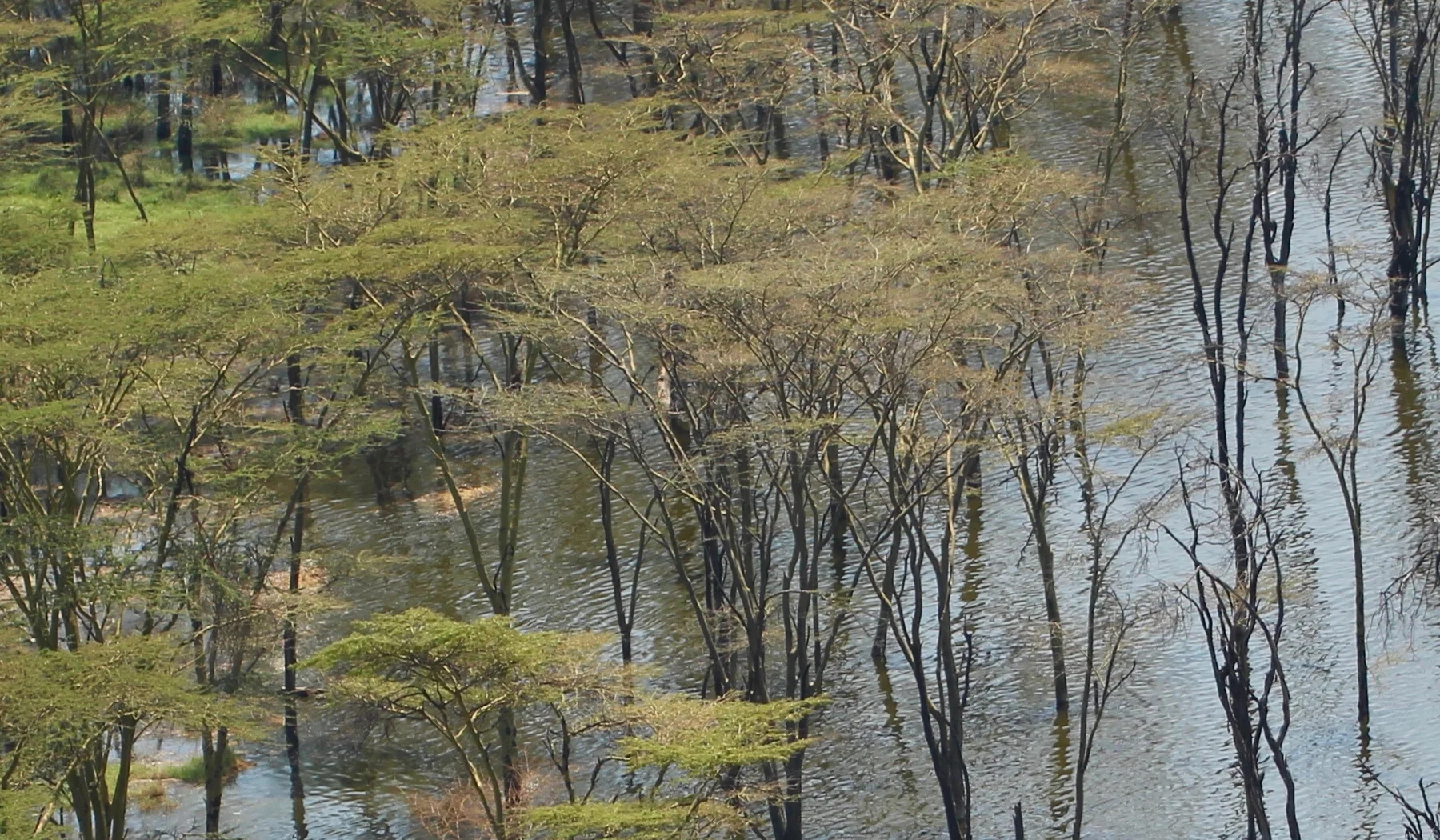
Lake Nakuru has expanded markedly since around 2010. KWS reports an estimated 70 percent increase in surface area relative to the 1984 to 2009 average. Kenya's State of the Climate report noted that 2024 levels surpassed the previous 2020 record.
| Water-level consequence | Visitor effect |
|---|---|
| Former road underwater | Routes shift inland |
| Trees standing in water | Striking evidence of shoreline change |
| Diluted salinity | Lesser-flamingo food base changes |
| Wetland edge moves | Bird distribution and viewpoints change |
| Infrastructure pressure | Current gate and lodge access matters |
This is not a temporary puddle explained by one rainy afternoon. It is a long-running ecological and planning change.
The lake level matters in every month
A dry-season article can still be wrong if it assumes the old shoreline road exists. Ask the park or driver what is open now and which gate best serves the intended circuit.
| Current check | Why |
|---|---|
| Road map in use | Old online maps may show submerged sections |
| Gate status | Flooding or maintenance can alter entry |
| Viewpoint access | Road damage can lengthen the approach |
| Lodge transfer | A hill or southern property may add time |
| Shorebird location | Birds follow today's edge, not an old pin |
Makalia Falls is most dramatic after rain
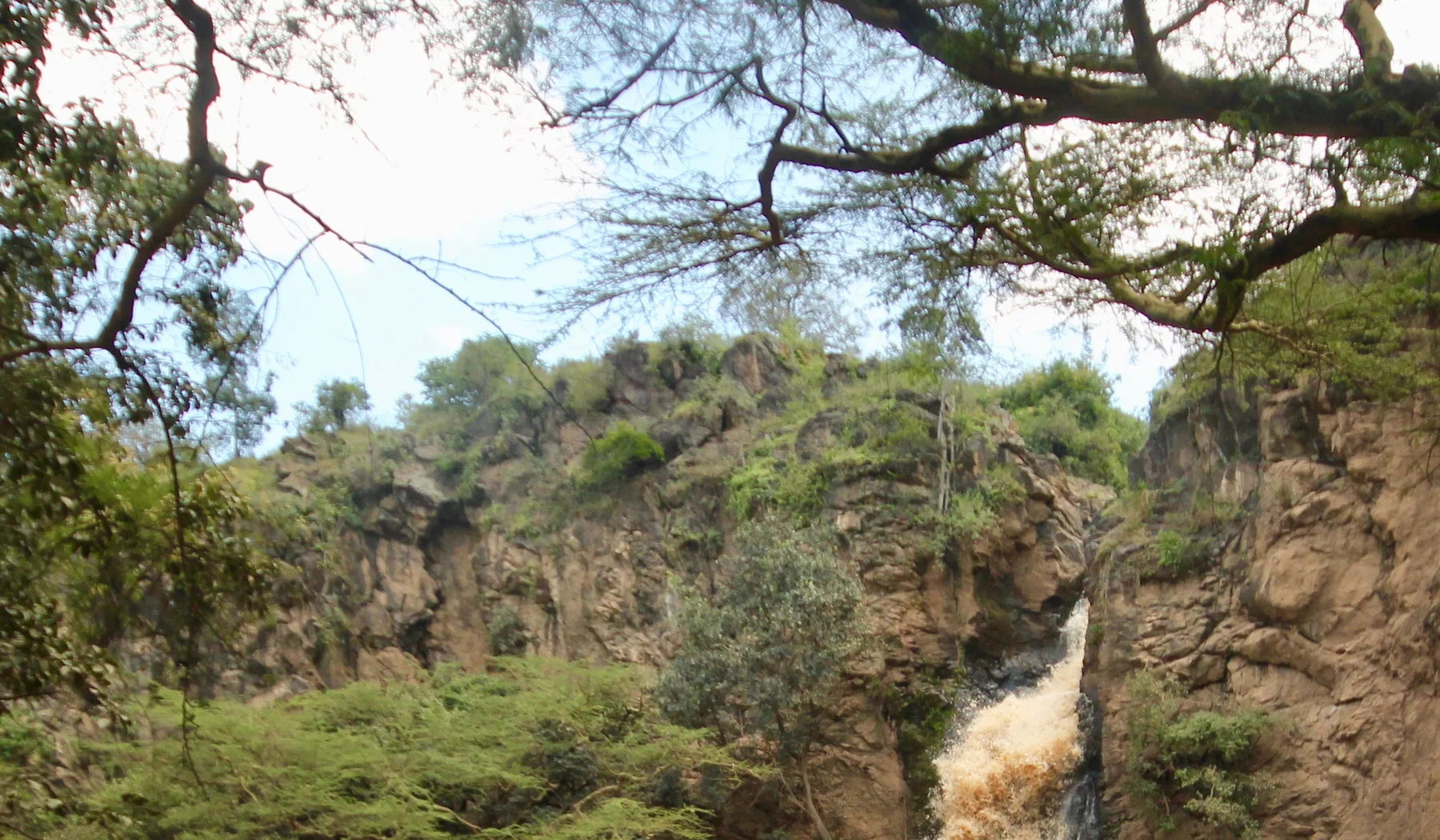
Makalia Falls can shrink during dry periods and surge after rainfall. Brown water is not necessarily unattractive. It can reveal the energy of a catchment carrying sediment through a rocky gorge.
| Falls condition | Experience |
|---|---|
| Dry spell | Lower flow and easier general access |
| Recent rain | Stronger flow, spray and dramatic sound |
| Heavy storm | Mud, slippery ground and possible access caution |
| Cloudy day | Softer light but less blue sky |
Do not stand close to unstable edges or ignore ranger guidance for a photograph.
Baboon Cliff changes with cloud, haze and water
The famous viewpoint is not a static postcard. Morning mist can hide the far shore, midday haze can flatten the Rift Valley and a clear evening can reveal the full shape of the lake.
| Light condition | Photographic effect |
|---|---|
| Early clear morning | Layered landscape and soft shadows |
| Mist | Mood and reduced distance visibility |
| Midday sun | Hard contrast and haze |
| Storm light | Dramatic cloud and quick exposure changes |
| Late afternoon | Warm colour, limited by gate or lodge timing |
Use the viewpoint when visibility opens rather than saving it for a rigid final stop.
Morning is the strongest general wildlife window
KWS gates open at 6:00 am. Early hours often bring cooler temperatures, softer light and active mammals. A guest staying outside must account for the drive to the gate and payment process.
| Morning choice | Effect |
|---|---|
| Inside-park lodge | Earlier start with less gate travel |
| City hotel | Easy room choice but longer pre-drive logistics |
| Naivasha day trip | Very early departure and long day |
| Private vehicle | Ability to wait with a rhino or bird activity |
The Nairobi to Lake Nakuru guide will compare a same-day visit with an overnight route.
Late afternoon gives better light but less margin
The final hours can be beautiful, yet a day visitor must be out by 6:00 pm. A sighting on the far side of the lake is not permission to race toward the gate.
| Afternoon risk | Better habit |
|---|---|
| Strong sighting near closing | Set a turn-back time in advance |
| Slow rough road | Add a generous gate margin |
| Storm building | Leave exposed viewpoints early |
| Low sun in driver's eyes | Reduce speed and expect hidden wildlife |
The 40 km/h maximum is a ceiling, not a target on a wet or crowded road.
Photographers should choose a season by subject
There is no universal photography month. Dry grass helps isolate a white rhino. Green woodland suits giraffes and black rhinos. Rain creates reflections and texture. Mist simplifies the scene and hides clutter.
| Subject | Useful condition |
|---|---|
| White rhino | Open dry grass, early light and long lens |
| Black rhino | Patient scanning in green browse and woodland edge |
| Birds | Calm morning, active shoreline and current food conditions |
| Rift Valley landscape | Clear air after rain or cool morning |
| Makalia Falls | Recent rain with safe access |
| Fever trees | Mist, cloud or gentle side light |
Book a private vehicle if the photograph matters more than completing a circuit. Shared passengers may not want to wait through long quiet behaviour.
Rain protection is part of the camera kit
A light shower can become driving rain before the pop-up roof is closed. Dust also enters lenses and zips during dry months.
| Camera risk | Pack |
|---|---|
| Rain | Fitted cover, dry bag and absorbent cloth |
| Dust | Blower, sealed pouch and minimal lens changes |
| Condensation | Time for equipment to acclimatise |
| Low light | Stable support and high-ISO plan |
| Long distance | Binoculars before lifting the heaviest lens |
Do not rest equipment on an open window where a sudden vehicle movement can send it outside.
Birders should consider October to April, but verify locally
Northern migrant birds can add diversity during their broad African season, often from the last quarter of the year into the first. Arrival, departure and species vary. Resident birdlife makes the park worthwhile at any time.
| Birding period | Likely emphasis |
|---|---|
| October to December | Arrivals, breeding activity after rain and green habitat |
| January to March | Mix of residents and migrants, often easier roads |
| April | Departing migrants and rainy-season habitat |
| May to September | Resident birds, raptors and waterbird dynamics |
Use recent eBird-style observations or a local bird guide for the exact week. A generic annual list cannot tell you where a species is feeding today.
Families often prefer a dry month or a two-night stay
Children benefit from reliable roads, high viewing positions, private toilet stops at designated places and room to recover between drives. A single rushed overnight can turn Nakuru into another packing exercise.
| Family choice | Why it helps |
|---|---|
| January, February or July to September | Generally easier road conditions |
| Private 4×4 | Naps, snacks and shorter drives become possible |
| Two nights | One full park day without transfer pressure |
| Inside or near-gate lodge | Protects early wildlife hours |
| Pool break | Helps on warm afternoons, weather permitting |
The Kenya safari with children guide covers child seats, meal timing and vehicle layout.
Travellers with limited mobility need the route, not a season label
Dry weather can make roads and walkways easier, but the lodge's room position, steps, shower and distance to dining matter every day. Viewpoints may have uneven surfaces.
| Mobility detail | Confirm |
|---|---|
| Vehicle entry | Step height, grab point and transfer assistance |
| Seat | Door access and room to stretch |
| Lodge | Exact gradient from room to restaurant |
| Bathroom | Shower threshold, rails and turning space |
| Picnic site | Surface and toilet access |
| Viewpoint | How much can be seen without a long walk |
Use the accessible Kenya safaris guide to convert broad promises into measurements.
Crowds follow Kenya’s wider safari calendar
Lake Nakuru is not usually as vehicle-heavy as the busiest Mara crossing areas, but July, August, festive weeks and public holidays can increase demand. Its compact road system concentrates vehicles when a rhino appears close to the track.
| Busy period | Reduce pressure by |
|---|---|
| July and August | Starting at opening and avoiding rushed day-trip convoys |
| Christmas and New Year | Booking early and staying inside or nearby |
| Public holidays | Checking local calendar and arriving before city traffic builds |
| Strong sighting | Keeping a respectful distance and leaving an exit path |
A quieter month does not excuse blocking the road. Ethical behaviour matters when only one vehicle is present too.
Lower season prices need a road and cancellation check
Rainy-season discounts can be useful, but a non-refundable lodge on a fragile route is not automatically good value. Compare the complete trip, including vehicle, extra night, private transfer and cancellation terms.
| Price question | Why |
|---|---|
| Is the rate resident or non-resident? | Categories can differ greatly |
| Does it include park entry? | Lodge and park charges are separate unless stated |
| Is the vehicle private? | Road condition and flexibility make this important |
| What happens if a road closes? | Alternative gate or date may carry a cost |
| Is festive supplement included? | December and Easter periods may differ |
The Kenya safari cost guide helps compare a low room rate with a full land itinerary.
Inside-park accommodation protects dawn and dusk
Lake Nakuru Lodge, Sarova Lion Hill and other inside-park choices reduce gate commuting. Sopa sits high with a broad lake view but can add internal drive time to wildlife areas. Naishi Guest House is the KWS self-catering option.
| Stay position | Seasonal advantage |
|---|---|
| Close to central game circuit | Less time on rough roads after rain |
| High hillside | Views and drainage, but a longer internal drive |
| City hotel | Easy late arrival, but gate and traffic delay |
| Naivasha base | One less hotel change, but a long day trip |
One Sopa guest called the distance the principal drawback: “The only real negative point is the location.” Another guest, using a different booking platform, put the reward simply: “View from hotel over lake amazing.”
Inside the park does not mean beside every sighting
Lake level and road condition can move the useful wildlife circuit away from a lodge. Ask for the drive time to the current rhino areas, not an old distance to the lake shore.
| Lodge-location question | Useful answer |
|---|---|
| Which gate serves arrival? | Named gate and expected time |
| How far to current game-viewing area? | Current drive estimate, not straight-line distance |
| Does rain affect the access road? | Alternative route or vehicle plan |
| Can we leave at 6:00 am? | Breakfast and departure arrangement |
A Lake Nakuru Lodge visitor appreciated that “we were very quickly in the middle of the action.” That was one stay, but it shows why exact position matters on a short visit.
The best base depends on the next destination
Nakuru often sits between Nairobi, Naivasha, the Mara, the Aberdares or northern Kenya. A lodge on the wrong side of the park can add a slow internal crossing before the real transfer begins.
| Next stop | Planning priority |
|---|---|
| Masai Mara | Protect departure time and Narok road day |
| Lake Naivasha | Avoid duplicating lake experiences |
| Aberdares | Confirm east or west routing and current roads |
| Samburu or Ol Pejeta | Expect a substantial northbound transfer |
| Nairobi | Allow city traffic and flight buffer |
The where to stay in Lake Nakuru guide will compare room categories and gate logic in full.
A day trip from Nairobi is possible but compressed
KWS places the park about 156 kilometres northwest of Nairobi. Road time changes with traffic, stops and the exact gate. A same-day return creates a long day before any wildlife delay is counted.
| Day-trip component | Honest expectation |
|---|---|
| Departure | Very early |
| Park time | One focused circuit, not every attraction |
| Lunch | Packed or efficient lodge stop |
| Return | Nairobi traffic can stretch the evening |
| Family fit | Hard for young children who dislike long road days |
One night usually gives better wildlife light and less fatigue.
A Naivasha day trip can work with discipline
Naivasha is closer than Nairobi and allows a traveller to keep one hotel, but the day still includes an outward drive, park entry and return. Do not add a boat ride and Hell's Gate to the same Nakuru day.
| Naivasha plus Nakuru | Better division |
|---|---|
| Day 1 | Boat, Crescent Island or Hell's Gate |
| Day 2 | Early Lake Nakuru drive and return |
| Evening | Rest, not another distant activity |
The Lake Naivasha guide and Hell's Gate National Park guide explain why each place deserves a different job.
One night is enough for many multi-park routes
One night can produce an afternoon and morning drive when arrival and departure are designed around the park. It fails when both days are dominated by long transfers.
| One-night pattern | Quality |
|---|---|
| Arrive by lunch, afternoon drive, dawn drive | Strong |
| Arrive after 4:00 pm, leave after breakfast | Weak |
| Stay inside and depart through correct gate | Efficient |
| Stay far outside with city traffic | Less park time |
The Masai Mara, Lake Nakuru and Lake Naivasha safari works best when the Nakuru night protects two real drive windows.
Two nights reward birders and unhurried families
Two nights create a full day between travel days. That allows a patient rhino search, several bird habitats, a viewpoint and a midday break without racing the gate.
| Two-night traveller | Benefit |
|---|---|
| Birder | Shoreline and woodland sessions |
| Photographer | More than one light and weather condition |
| Family | Pool or lodge rest between drives |
| Mobility-sensitive guest | Less pressure around transfers |
| Green-season visitor | Route can adapt after rain |
Do not add a second night if it steals a necessary full day from the Mara or Samburu. The whole route still decides value.
Nakuru is a natural bridge between Samburu and the Mara
A north-to-south road safari can use Nakuru as a habitat change and transfer break. The danger is treating the park as a late arrival followed by an immediate departure.
| Route | Protect |
|---|---|
| Samburu to Nakuru | Long road day and afternoon light |
| Nakuru to Mara | Early game drive only if departure remains sensible |
| Two Nakuru nights | One complete park day |
| Peak migration season | Enough Mara nights after the transfer |
The Samburu, Lake Nakuru and Masai Mara safari explains how to preserve each ecosystem's purpose.
A 4×4 is the sensible year-round choice
Some visitors drive small cars in dry conditions, but high clearance improves sight lines and resilience on rough sections. After rain, real four-wheel drive and suitable tyres matter more.
| Vehicle feature | Reason |
|---|---|
| High clearance | Ruts, rough road and better viewing height |
| 4×4 | Mud and wet gradients |
| Good tyres | Braking and traction |
| Full spare | Sharp stones and punctures |
| Open roof | Viewing, with fast rain closure |
| Seat belts | Non-negotiable on rough tracks |
Stay on established roads. Off-road driving is prohibited even when a rhino stands beyond the perfect camera angle.
Self-drivers should plan the gate before sunrise
The park has Main Gate, Lanet Gate and Nderit Gate. The best gate depends on origin, lodge and current roads. KWS lists Naishi airstrip near Naishi Guest House for air access.
| Self-drive check | Complete answer |
|---|---|
| Gate | Name, opening status and route from hotel |
| Ticket | Current payment method and visitor category |
| Map | Current road closures and water level |
| Fuel | Full tank before entry |
| Recovery | Spare tyre, jack and emergency contacts |
| Exit | Gate and latest safe turn-back time |
A 6:00 am opening does not mean every payment desk or external hotel transfer begins at precisely that minute. Allow for the real process without building public text around one visitor's delay.
Gate hours should shape the game drive
KWS states that day visitors may enter from 6:00 am and must exit by 6:00 pm. Overnight guests still follow lodge and ranger movement rules.
| Time block | Best use |
|---|---|
| 6:00 to 9:00 | Cool wildlife search and soft light |
| 9:00 to noon | Birding, rhino circuits and viewpoint if clear |
| Noon to 3:00 | Lunch, shade, lodge break or patient waterbird time |
| 3:00 to 5:15 | Afternoon drive toward the correct exit |
| Final margin | Slow road, sighting delay and gate arrival |
The schedule is a framework. A lion beside the road may rearrange it, but it should not erase the exit margin.
Pack for cool dawn, warm sun and sudden rain
Nakuru's elevation makes mornings cooler than many travellers expect. Strong sun can follow quickly, and showers can arrive in either recognised rainy season.
| Item | Reason |
|---|---|
| Light warm layer | Open-roof dawn drive |
| Waterproof shell | Sudden rain and spray at Makalia |
| Sun hat and sunscreen | High-altitude sun |
| Binoculars | Rhinos and birds may be distant |
| Refillable water bottle | KWS plastic-free rules and hydration |
| Closed shoes | Mud, uneven picnic areas and viewpoints |
| Dry camera bag | Rain and dust protection |
The Kenya safari packing guide covers luggage, colours, medication and camera power in more detail.
The current forecast matters more than an average table
Long-term climate describes probability. It does not tell you whether the road will be wet on a particular Tuesday. Kenya Meteorological Department publishes national and county seasonal information, and short-range forecasts should be checked near travel.
| Forecast horizon | Use |
|---|---|
| Seasonal outlook | Understand broad wet or dry tendency |
| Ten-day or weekly forecast | Plan clothing and route flexibility |
| Previous 48 hours | Anticipate mud, falls and road condition |
| Same-day park report | Choose gate and drive circuit |
Avoid date-stamping the article as though it expires. The method remains useful every year: consult the current official forecast for the actual journey.
Weather can change without ruining the day
A shower may send vehicles home while the park becomes quiet. It can also hide a viewpoint, flood a track or end an outdoor picnic. The difference is preparation.
| Weather event | Adaptation |
|---|---|
| Morning mist | Start with woodland and wait for the viewpoint |
| Short shower | Close roof, protect gear and continue slowly |
| Heavy rain | Move to firm roads and follow ranger advice |
| Strong sun | Use shade and reduce midday activity |
| Wind at lake edge | Seek sheltered birding position |
Good guiding turns weather into route design rather than drama.
Lake Nakuru and Lake Bogoria are not interchangeable
Bogoria is often the stronger current flamingo destination because lake conditions can support larger flocks. Nakuru is the more complete big-mammal national park, with both rhino species, giraffes, buffalo and wooded habitat.
| Priority | Better starting point |
|---|---|
| Current large flamingo flock | Check latest counts across Bogoria, Nakuru and other lakes |
| Rhinos and mixed safari | Lake Nakuru |
| Geothermal landscape | Lake Bogoria |
| One compact wildlife day | Lake Nakuru |
| Bird-science interest | Consider both, with current conditions |
Do not drive to Bogoria on an old flamingo promise either. The birds move across the regional system.
Lake Nakuru and Lake Naivasha offer different activities
Nakuru is a fenced national-park game drive. Naivasha is an open freshwater-lake destination with boat trips, lakeside hotels and access to walking or cycling activities nearby.
| Experience | Nakuru | Naivasha |
|---|---|---|
| Rhino game drive | Strong | Not the main experience |
| Boat trip | Not a normal park activity | Core option with safety checks |
| Walking among wildlife | Restricted to designated areas | Crescent Island and selected sanctuaries |
| Flamingo expectation | Variable | Not the primary reason |
| Multi-activity stay | Focused safari | Boat, walking, cycling and hiking |
Two lakes do not equal duplicate stops when each has a clear purpose.
Responsible viewing matters in every season
Dry months can concentrate animals and vehicles. Wet months can make off-road shortcuts tempting. KWS prohibits off-road driving, requires a minimum viewing distance of 20 metres and sets a 40 km/h maximum speed.
| Rule | Wildlife reason |
|---|---|
| Stay on roads | Protect soil, vegetation and nesting habitat |
| Keep 20 metres | Reduce stress and danger |
| Do not feed wildlife | Prevent dependency and aggression |
| Keep noise low | Avoid disrupting behaviour |
| Give right of way | Animals choose the route |
| Carry out waste | Protect the closed lake basin |
The best sighting is one that leaves the animal able to continue normally.
A month-by-month answer should end with your priorities
If easy roads matter most, choose a drier period. If green colour and waterfalls matter, accept rain. If birding matters, give the park enough time and use a specialist. If flamingos are non-negotiable, check the latest regional counts before fixing the lake.
| Your priority | Strong planning window |
|---|---|
| First safari and simple roads | January to February or July to September |
| Green scenery | March to May or after short-rain onset |
| Makalia Falls flow | During or soon after meaningful rain, with safe access |
| Migrant birds | Broadly October to April, verified locally |
| Lower vehicle pressure | Green or shoulder periods outside holidays |
| Family ease | Drier months or two-night flexible stay |
| Flamingos | No guaranteed month; use current counts |
The best month changes with the traveller
A couple on a first safari, a birder returning to Kenya and a family driving themselves should not receive the same recommendation. The park is compact enough to reward a focused day, but only when the season, vehicle and base support the person travelling.
| Traveller | Strong starting choice | Why |
|---|---|---|
| First-time couple | February or September | Drier roads, good light and easy route design |
| Family with young children | January, February or July to September | Lower mud risk and simpler drive breaks |
| Birder | November to March | Resident birds plus migrant potential |
| Landscape photographer | Green-season transition | Mist, cloud, reflections and fresh colour |
| Waterfall enthusiast | During or soon after useful rain | Makalia can carry stronger flow |
| Self-driver | Drier months | Better access and lower recovery risk |
| Repeat safari traveller | April, May or November | Quieter, greener and less predictable |
These are starting points. A current week-long forecast can overturn an average-month assumption, especially near the beginning or end of a rainy season.
Mist and cool mornings deserve their own plan
The Rift Valley floor can wake under mist even outside the main rains. It softens woodland scenes and creates beautiful silhouettes, but it also hides distant rhinos and makes an exposed viewpoint feel cold.
| Mist condition | Use it well |
|---|---|
| Thin ground mist | Photograph trees and antelope at close range |
| Viewpoint hidden | Work the lower woodland first |
| Cool open vehicle | Add a windproof layer and hat |
| Wet lens surface | Wipe gently and avoid repeated lens changes |
| Mist lifting | Move to the cliff when the far shore appears |
A good guide does not wait idly for the view to clear. The route begins where visibility is useful and returns when the landscape opens.
Check these seven things in the week before travel
The article gives the durable framework. The final week provides the operational detail that no evergreen guide can freeze forever.
| Final check | Source |
|---|---|
| Rain forecast | Kenya Meteorological Department |
| Park road and gate status | KWS or the assigned driver-guide |
| Flamingo and waterbird report | Recent guide, lodge or KWS information |
| Lodge access | Property and transfer team |
| Vehicle | Written confirmation of 4×4 and seating |
| Sunrise departure | Lodge breakfast and gate plan |
| Next transfer | Current road time plus a safety margin |
If one answer changes, adjust the route rather than pretending the old itinerary still works. Flexibility is not a sign of poor planning in a living wetland. It is what good planning looks like.
A complete booking brief prevents seasonal surprises
Send the planner dates, travellers, room needs, route, priorities, vehicle and tolerance for rain. That creates a useful recommendation instead of a generic “June to October” answer.
| Brief field | Useful detail |
|---|---|
| Dates | Exact dates and flexibility |
| Party | Ages, mobility and room map |
| Priority | Rhinos, birds, photography, waterfalls or transit |
| Stay | Inside park, city, Naivasha or no preference |
| Vehicle | Private 4×4, self-drive or shared |
| Weather tolerance | Comfortable with rain or needs simplest roads |
| Wider route | Previous and next destination |
| Budget | Complete land cost, not room only |
Sources and further reading
Park size, gates, opening hours, speed limit, rhino status, accommodation and visitor rules were checked against the current Kenya Wildlife Service Lake Nakuru page. Rainfall planning follows the Kenya Meteorological Department seasonal forecast service and its Nakuru county outlooks.
The flamingo explanation and recent counts come from KWS's national flamingo census report. Lake-level context is supported by Kenya's State of the Climate report and current hydrological research. Traveller quotations link directly to the original park and lodge review pages and describe individual visits, not guaranteed results.
Plan your Lake Nakuru visit
Share your dates, party, room needs, wildlife and bird interests, photography priorities, rain tolerance, vehicle, starting point, next destination and budget basis. We will choose the timing, gate, base and drive plan together.