
Samburu vs Amboseli: Which Kenya Safari Is Right for You?
Compare northern species and riverine scenery with elephants, wetlands and possible Kilimanjaro views, then choose the destination that strengthens the rest of your trip.
- Samburu vs Amboseli at a glance
- The core difference between Samburu and Amboseli
- Choose Samburu if you want northern Kenya to feel different
- Choose Amboseli if elephants and Kilimanjaro lead your wish list
- Wildlife comparison beyond the headline animals
- Samburu’s Special Five change the species list
- Amboseli’s elephants are about behaviour, not just numbers
- Elephants are also a major Samburu experience
- Big cats in Samburu and Amboseli
- Do not choose either park for a guaranteed Big Five list
- Landscape comparison: river and rock versus plain and mountain
- Kilimanjaro is a possibility, not a promise
- Samburu’s river is the centre of the story
- Amboseli’s wetlands make a green surprise
- Birding differences
- Photography comparison
- Which park feels more crowded
- National park, county reserve and conservancy differences
- Where to stay changes the Samburu experience
- Where to stay changes the Amboseli experience
- Best time to visit Samburu
- Best time to visit Amboseli
- Month-by-month choice
- Heat, dust and physical comfort
- Getting from Nairobi to Samburu
- Getting from Nairobi to Amboseli
- Road safari versus fly-in safari
- Safari cost comparison
- Which offers better value
- Family safari comparison
- Honeymoon comparison
- First-time safari comparison
- Repeat safari comparison
- Accessibility and older travellers
- Two nights or three nights
- Sample seven-day route with Samburu
- Sample seven-day route with Amboseli
- Can you combine Samburu and Amboseli
- Samburu with Masai Mara
- Amboseli with Tsavo and the coast
- Samburu with Laikipia and Ol Pejeta
- Cultural experiences must be community-led
- What to ask before booking either destination
- Common planning mistakes
- A decision tree you can actually use
- Who should choose Samburu
- Who should choose Amboseli
- When neither is the right next stop
- Final Samburu vs Amboseli recommendation
Samburu and Amboseli can both deliver the kind of Kenya safari that stays vivid long after the dust has left your shoes, but they do it in completely different ways. Samburu feels northern, rugged and full of small surprises. The Ewaso Nyiro River draws elephants beneath doum palms, reticulated giraffes move through acacia country, and a gerenuk may rise onto its hind legs to feed. Amboseli opens out beneath a huge sky. Elephants cross pale plains, permanent swamps turn unexpectedly green, and Mount Kilimanjaro may appear above the horizon when the cloud lifts.
The useful Samburu vs Amboseli question is not “Which park is best?” It is “Which experience adds the most to the rest of my trip?” Your answer depends on the wildlife you most want to see, how much time you have, where you travel before and after, your tolerance for road transfers, and whether a Kilimanjaro view or northern Kenya’s unusual species matters more.
Samburu vs Amboseli at a glance
| Decision point | Samburu | Amboseli |
|---|---|---|
| Signature experience | Northern dry-country wildlife beside the Ewaso Nyiro | Elephants, wetlands and possible Kilimanjaro views |
| Distinctive animals | Grevy's zebra, reticulated giraffe, Beisa oryx, gerenuk, Somali ostrich | Large elephant herds, plains game and wetland birds |
| Landscape | Riverine woodland, acacia scrub, rocky hills and dry plains | Open plains, marshes, swamps, woodland and mountain backdrop |
| Recommended first stay | Three nights | Two or three nights |
| Natural route partner | Laikipia, Ol Pejeta, Meru or the Mara by flight | Tsavo, Nairobi, the coast or the Mara by flight |
| Best for | Repeat visitors, naturalists, varied species and northern routes | First safaris, elephant lovers, families and photographers |
This table is only the beginning. Season, lodge position and the rest of the itinerary can reverse an apparently obvious choice.
The core difference between Samburu and Amboseli
Samburu rewards curiosity. Much of its appeal lies in animals and habitats that feel unfamiliar even after a first safari elsewhere in Kenya. Amboseli delivers a grander visual idea: elephants moving through a landscape shaped by water from Kilimanjaro, with the mountain sometimes completing the scene.
| If this sounds like you | Lean towards |
|---|---|
| “I want species I will not commonly see in the Mara” | Samburu |
| “Elephants are the main reason I am coming” | Amboseli |
| “I enjoy rocky, riverine and dry landscapes in one stay” | Samburu |
| “I want wide views and strong family-friendly game viewing” | Amboseli |
| “I am continuing north through Laikipia” | Samburu |
| “I am continuing southeast to Tsavo or the coast” | Amboseli |
Neither choice is a consolation prize. The better fit is the one that gives your itinerary contrast without turning it into a race between airports and parks.
Choose Samburu if you want northern Kenya to feel different
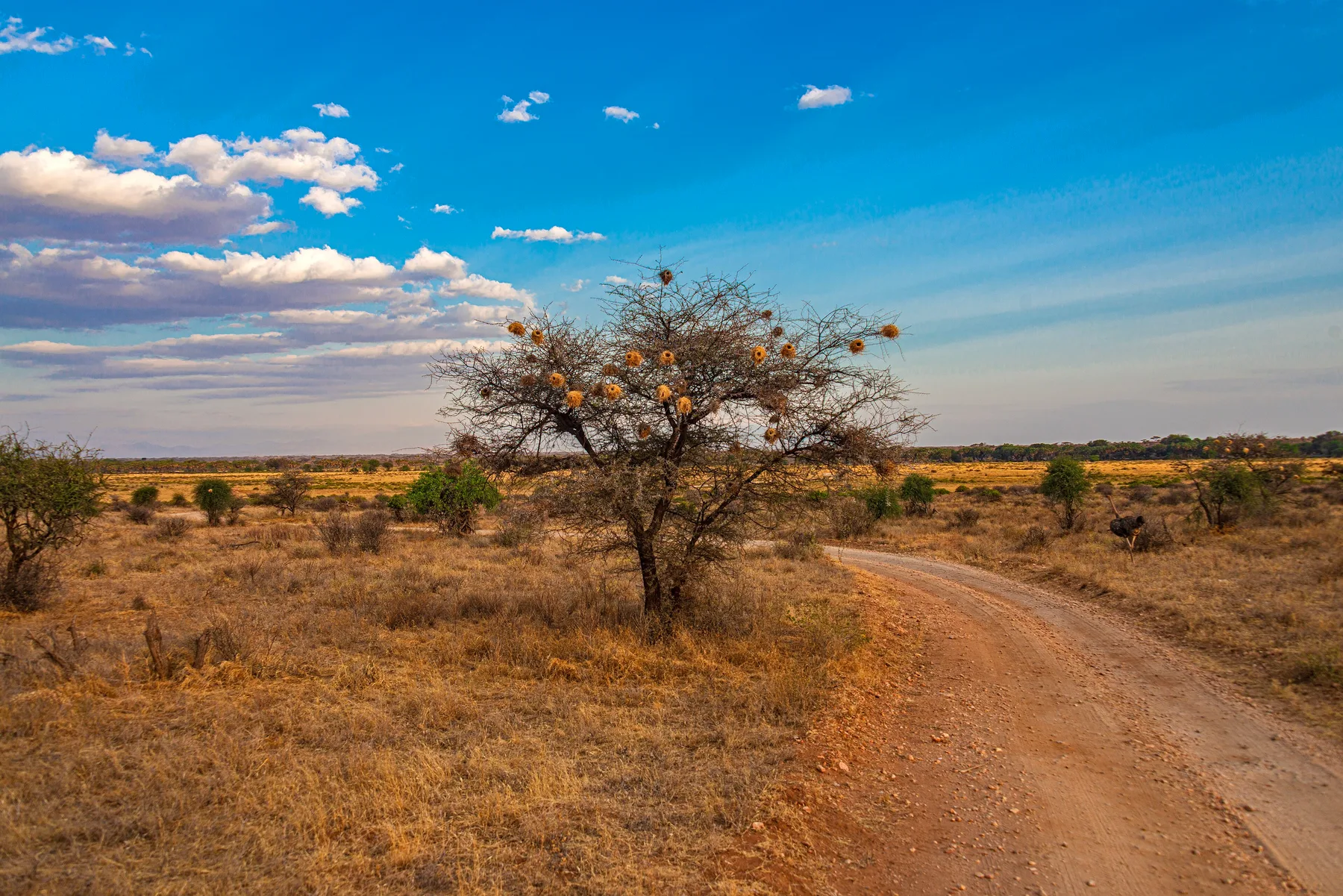
Samburu’s landscape announces that you have left the classic southern circuit. Red earth, pale grass, thorn scrub, palms and rocky outcrops surround the Ewaso Nyiro. The wildlife list changes with the vegetation. Even familiar animals look different against this setting.
| Samburu strength | What it adds to a Kenya trip |
|---|---|
| Special Five | A new identification list beyond the usual headline species |
| River corridor | Close connections between water, shade, predators and prey |
| Northern route | Easy thematic pairing with Laikipia and Ol Pejeta |
| Varied terrain | More visual changes during a game drive |
| Cultural setting | Opportunities for respectful, community-led Samburu encounters |
Read the complete Samburu safari guide if the northern route already has your attention.
Choose Amboseli if elephants and Kilimanjaro lead your wish list
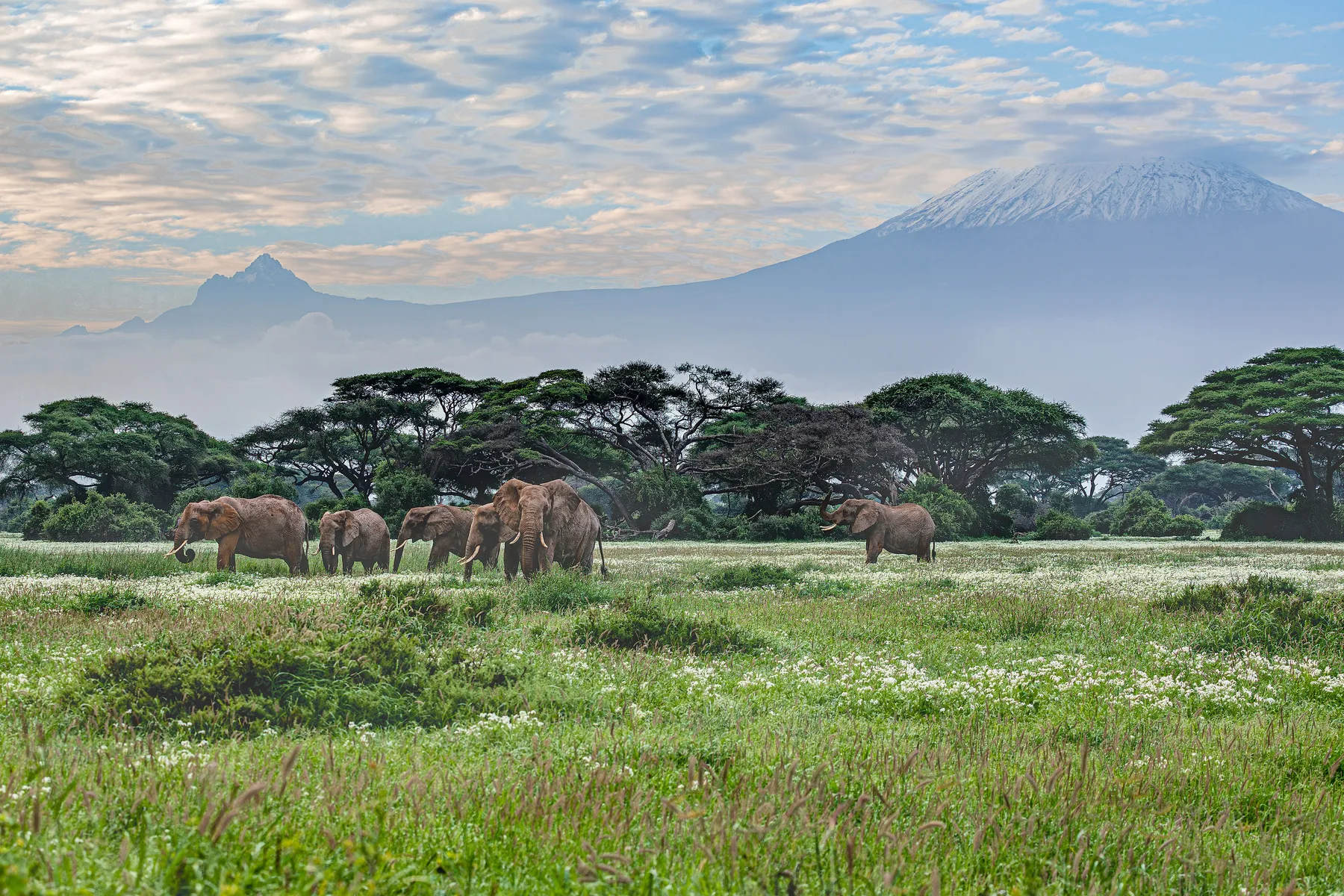
Amboseli is rightly associated with elephants, but the story is richer than a single photograph. Open plains make animals easier to watch at a distance, while the swamps support hippos, waterbirds and herbivores through dry periods. Kilimanjaro sits across the border in Tanzania and may be visible from Kenya when the weather cooperates.
| Amboseli strength | What it adds to a Kenya trip |
|---|---|
| Elephant viewing | Time to watch herds, calves and social behaviour |
| Open plains | Clear sightlines for wildlife and landscape photography |
| Wetlands | A striking contrast with the surrounding dry country |
| Kilimanjaro | A possible mountain backdrop, especially in clearer light |
| Southern route | Logical pairing with Tsavo and the coast |
The Amboseli safari guide explains the park, ecosystem and practical route choices in more detail.
Wildlife comparison beyond the headline animals
Both destinations support elephants, lions, leopards, cheetahs, hyenas, giraffes, zebras, antelopes and rewarding birdlife. The difference is not that one has wildlife and the other does not. It is the mix, the visibility and the habitats in which you watch it.
| Wildlife interest | Samburu | Amboseli |
|---|---|---|
| Elephants | Excellent, often near the river | Signature attraction, often on open plains or near swamps |
| Big cats | Present, with patient searching | Present, often visible across open ground |
| Unusual northern species | Major strength | Not the reason to choose the park |
| Wetland species | River-focused | Strong swamp and marsh component |
| Birding | Dry-country, riverine and raptor variety | Wetland, grassland and woodland variety |
| Rhino | Not a normal reserve expectation | Not a dependable core sighting |
Build a route around realistic habitat strengths rather than a promise to complete a checklist.
Samburu’s Special Five change the species list
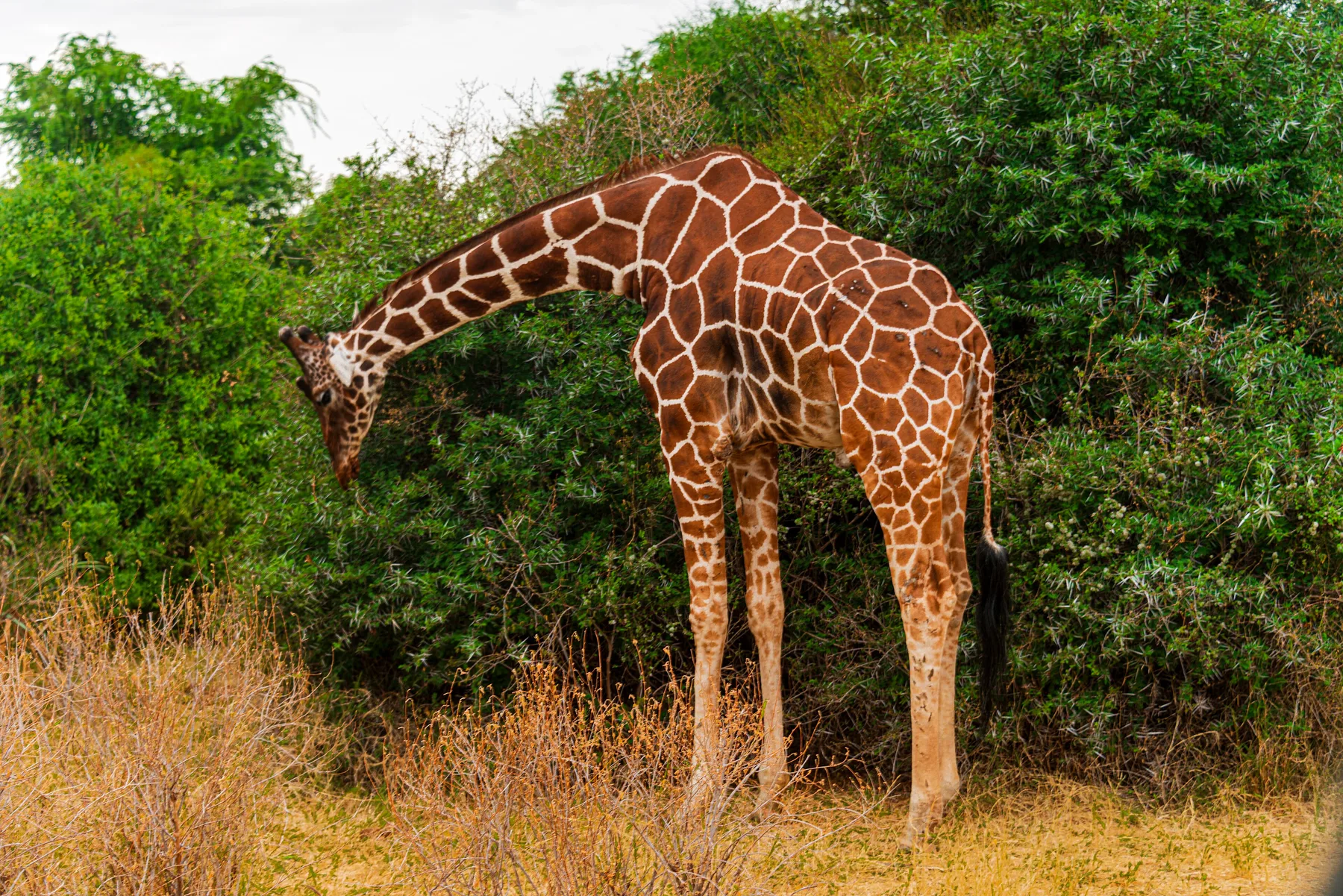
The Samburu Special Five are Grevy’s zebra, reticulated giraffe, Beisa oryx, gerenuk and Somali ostrich. They are associated with northern Kenya’s dry country, although their ranges extend beyond the reserve. Finding them is most satisfying when a guide explains the adaptations and identification details.
| Species | What to notice |
|---|---|
| Grevy's zebra | Narrow stripes, white belly and large rounded ears |
| Reticulated giraffe | Large polygonal patches divided by pale lines |
| Beisa oryx | Long straight horns, pale body and bold face markings |
| Gerenuk | Long neck, delicate head and upright browsing |
| Somali ostrich | Blue-grey neck and legs in adult males |
Use the Samburu Special Five wildlife guide to identify the five rather than merely count them.
Amboseli’s elephants are about behaviour, not just numbers
Amboseli’s open terrain and long-running elephant research have made the ecosystem one of the best-known places to observe elephant society. A good drive slows down. You begin to see who leads, how calves stay protected, how trunks are used in greeting and feeding, and how a family approaches water.
| What to watch | Why it matters |
|---|---|
| Herd spacing | Shows how adults protect calves and move together |
| Trunk contact | Can be greeting, reassurance or investigation |
| Ear and head position | Helps a guide interpret attention and comfort |
| Dust bathing | Skin care, cooling and social activity |
| Swamp feeding | Reveals how water shapes dry-season movement |
One traveller wrote, “I found Amboseli to be the best elephant sightings I’ve had anywhere, I really enjoyed it for that.” The original discussion is a personal opinion, not a guarantee, but it captures why elephant lovers make room for Amboseli.
Elephants are also a major Samburu experience
It would be a mistake to treat Samburu as the unusual-species park and forget its elephants. Herds use the river corridor for water, shade and movement. Watching elephants descend a bank, dig in sand or move between palms creates a more enclosed, textured scene than Amboseli’s broad plains.
| Elephant scene | Samburu character | Amboseli character |
|---|---|---|
| Water | River channels and pools | Swamps, marsh edges and seasonal water |
| Background | Doum palms, scrub and hills | Plains, wetlands and possible Kilimanjaro |
| Viewing feel | Layered and intimate | Open and panoramic |
| Main reason to visit | One highlight among varied northern wildlife | A defining reason for many travellers |
Choose the setting you want to spend time in, not simply the destination with the strongest elephant reputation.
Big cats in Samburu and Amboseli
Lions, leopards and cheetahs occur in both ecosystems. Samburu’s riverine cover can reward patient leopard searches, while Amboseli’s open country can make distant predators easier to scan. Sightings depend on movement, weather, prey and luck.
| Predator | Samburu search pattern | Amboseli search pattern |
|---|---|---|
| Lion | Plains, river approaches and shade | Open plains, shade and prey concentrations |
| Leopard | Riverine trees, rocky cover and dense vegetation | Woodland and quieter cover, often less straightforward |
| Cheetah | Open plains and conservancy landscapes | Open grassland and ecosystem edges |
| Hyena | Broadly distributed, often heard at night | Broadly distributed across open country |
If cats are your only priority, keep enough nights and a private vehicle before assuming the destination name will do the work.
Do not choose either park for a guaranteed Big Five list
The phrase Big Five can distort itinerary planning. Samburu is not a rhino destination, and buffalo are not its defining sighting. Amboseli has buffalo, lions, leopards and elephants, but rhino should not be treated as dependable. Ol Pejeta or Lake Nakuru usually makes more sense when rhino is a firm priority.
| Goal | Better planning response |
|---|---|
| See rhino | Add Ol Pejeta or Lake Nakuru |
| See elephants | Allow time in either park, with Amboseli the classic choice |
| See northern specialists | Choose Samburu |
| Complete the Big Five | Combine ecosystems and accept uncertainty |
| Photograph predators | Prioritise time, guide quality and vehicle position |
The most rewarding safari often grows wider than a five-animal scorecard.
Landscape comparison: river and rock versus plain and mountain
Samburu folds several landscapes into a relatively compact wildlife circuit. The river is a green line through dry country, while hills and outcrops break the horizon. Amboseli feels flatter and larger to the eye. Its drama comes from the contrast between dry plains, bright wetlands and a mountain that may suddenly emerge.
| Landscape feature | Samburu | Amboseli |
|---|---|---|
| Dominant water story | Ewaso Nyiro River | Groundwater-fed swamps and marshes |
| Horizon | Hills, rocky outcrops and broken country | Broad plains and distant Kilimanjaro |
| Vegetation | Acacia scrub, riverine woodland and doum palms | Grassland, woodland, bush, swamp and marsh |
| Visual mood | Rugged, warm and textured | Spacious, graphic and monumental |
Photographers should think in backgrounds as carefully as subjects.
Kilimanjaro is a possibility, not a promise
Kilimanjaro is in Tanzania, but Amboseli offers famous views of its northern face. Cloud can cover the summit for hours or all day. Clearer windows often occur around dawn or after weather changes, yet no itinerary can guarantee the mountain will appear.
| Better approach | Risky expectation |
|---|---|
| Stay at least two nights | Arrive for one afternoon and expect a clear summit |
| Be ready before sunrise | Wait until breakfast to look outside |
| Compose wildlife photographs without the mountain too | Treat every image without Kilimanjaro as a failure |
| Ask about room and public-area orientation | Assume every lodge has an unobstructed view |
If the mountain is the single non-negotiable dream, add time rather than adding pressure.
Samburu’s river is the centre of the story
The Ewaso Nyiro shapes where animals drink, rest and cross. Its level and flow vary, and dry conditions can leave channels, sand and isolated pools. The river still organises the landscape, drawing life into a narrow corridor where palms and larger trees create shade.
| River moment | What it may reveal |
|---|---|
| Elephant crossing | Family coordination and changing depth |
| Leopard search | Trees, shade and prey near cover |
| Dry sand digging | Animals seeking water below the surface |
| Birding stop | Kingfishers, herons, raptors and riverine species |
| Lodge view | Wildlife moving between water and feeding areas |
The river makes lodge location important because two camps within the same region may offer very different daily drives.
Amboseli’s wetlands make a green surprise
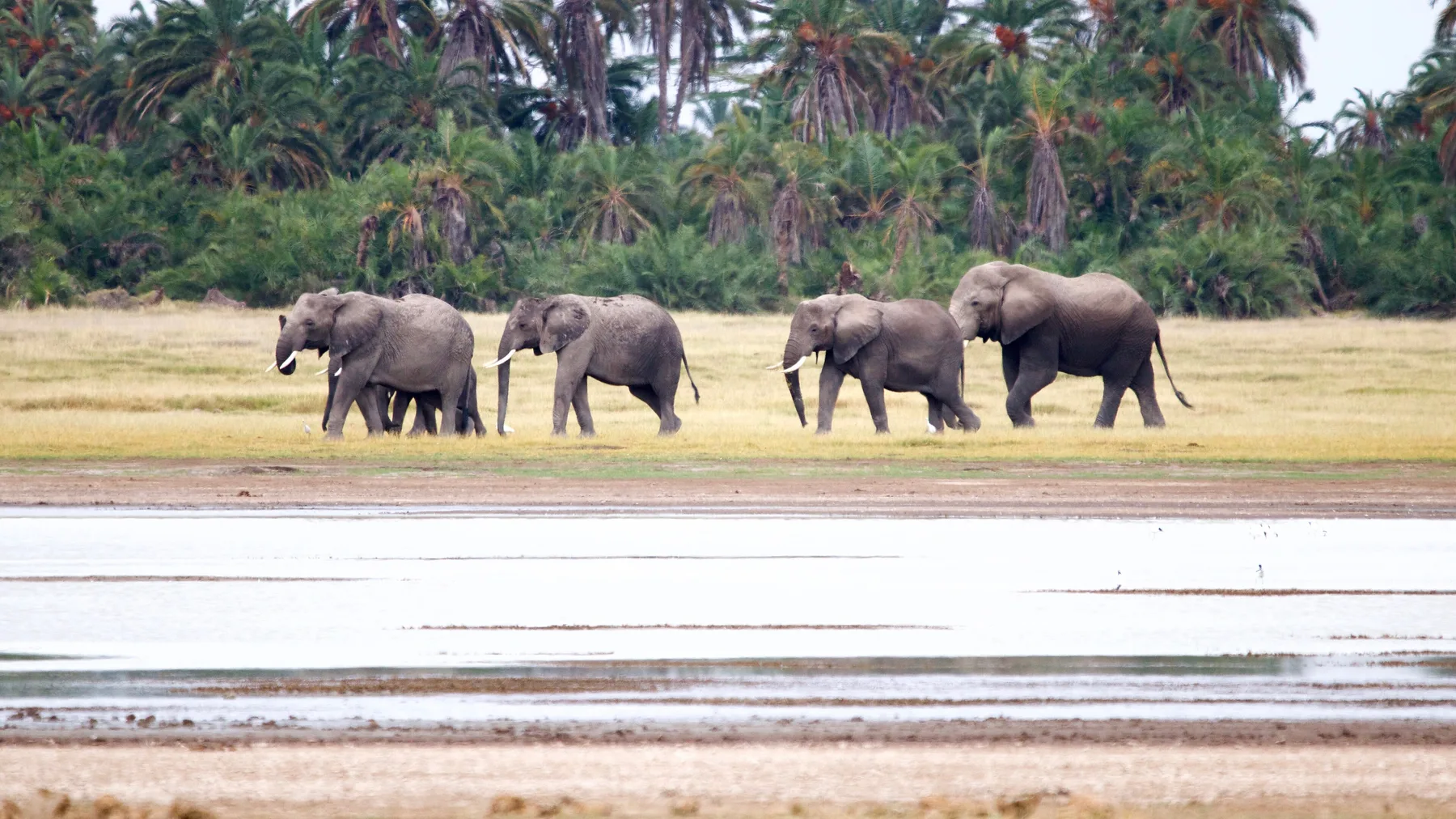
Amboseli can appear dusty and almost lunar in one direction, then lush around Enkongo Narok and other wet areas. Water filtered through the Kilimanjaro ecosystem supports marsh habitat even when surrounding plains are dry.
| Wetland value | Safari result |
|---|---|
| Reliable water | Concentrations of elephants and herbivores |
| Aquatic vegetation | Feeding opportunities for elephants and hippos |
| Shallow edges | Waders and waterbirds |
| Green foreground | Strong visual contrast with dry plains |
| Restricted driving | Wildlife viewed from designated tracks, sometimes at distance |
Bring binoculars. The wetland scene can unfold well beyond the nearest road.
Birding differences
Both parks deserve more than a hurried bird list. Samburu adds northern dry-country species, riverine birds, raptors and striking birds such as vulturine guineafowl. Amboseli’s wetlands broaden the day with pelicans, herons, storks, waders and grassland species.
| Birder's priority | Better fit |
|---|---|
| Northern arid specialists | Samburu |
| Wetland concentrations | Amboseli |
| Riverine birding | Samburu |
| Open-plains scanning | Amboseli |
| Mixed wildlife and bird photography | Both, with different lens opportunities |
Ask for a guide who genuinely enjoys birds. A famous mammal destination can still produce an exceptional birding day.
Photography comparison
Samburu offers layered compositions, patterned animals and warm, rugged scenery. Amboseli offers cleaner horizons, dust, reflections, elephant silhouettes and the possibility of Kilimanjaro. Both can be harsh at midday and beautiful at the edges of the day.
| Photograph | Samburu advantage | Amboseli advantage |
|---|---|---|
| Environmental portrait | River, palms, scrub and rock | Plains, wetlands and mountain scale |
| Species detail | Special Five patterns and adaptations | Elephant families and wetland behaviour |
| Silhouette | Hills and riverbank openings | Wide sunrise and sunset horizons |
| Dust and movement | Dry tracks and herd crossings | Open plains with long sightlines |
| Bird photography | Riverine and dry-country subjects | Waterbirds and open-ground subjects |
A private vehicle and patient driver-guide usually matter more than an extra decorative lodge upgrade.
Which park feels more crowded
Crowding changes by month, lodge position, gate, wildlife event and time of day. Amboseli’s compact road network around productive wetlands can bring vehicles together. Samburu may feel quieter in some sectors, but a leopard or lion sighting can still attract a cluster.
| Reduce crowd pressure by | Why it helps |
|---|---|
| Staying more than one night | You are not forced into the same hurried circuit |
| Leaving early | You reach productive areas before day traffic builds |
| Using a private vehicle | You can leave a crowded sighting without a group vote |
| Exploring beyond famous loops | Guides can search quieter habitat |
| Adding a conservancy stay | Some properties offer lower-density activities outside the main reserve |
An independent Samburu reviewer wrote, “Worth the cost for the rare wildlife and peaceful environment.” Read the full review context, then remember that one traveller’s quiet day cannot predict every season.
National park, county reserve and conservancy differences
Amboseli is a national park managed by Kenya Wildlife Service. Samburu is a county reserve, paired ecologically with Buffalo Springs and Shaba across a wider landscape. Around both destinations, community and private conservation areas can add walks, night drives, cultural experiences or lower vehicle density, depending on the property and rules.
| Planning question | Why to ask it |
|---|---|
| Is the lodge inside the protected area? | Affects gate time, fees and first-light access |
| Does the property sit in a conservancy? | Changes activities and exclusivity |
| Which reserve fees are included? | Samburu, Buffalo Springs and Shaba are not one interchangeable ticket |
| Are off-road drives allowed? | Rules vary by protected area and conservancy |
| Is a private vehicle included? | Shared-drive policy affects pace and photography |
The Samburu, Buffalo Springs and Shaba comparison explains the northern geography before you choose a camp.
Where to stay changes the Samburu experience
The phrase “Samburu lodge” may describe a property inside Samburu National Reserve, across the river in Buffalo Springs, farther east around Shaba, or in a community conservancy. These positions are not equivalent. Some favour easy reserve access. Others trade longer transfers for privacy, views or activities beyond game drives.
| Stay position | Likely strength | Check before booking |
|---|---|---|
| Inside Samburu Reserve | Early access to reserve tracks | Room condition and shared-drive policy |
| Buffalo Springs side | Different road network and southern-bank access | Crossing and fee arrangements |
| Shaba area | Distinct eastern landscape | Transfer time to desired wildlife areas |
| Community conservancy | Privacy, walks and cultural connection | Included reserve drives and exact activity rules |
Compare named properties in where to stay in Samburu, Buffalo Springs and Shaba.
Where to stay changes the Amboseli experience
Amboseli accommodation falls inside the park, close to a gate, in the surrounding ecosystem or in conservancies farther from the busiest central roads. An inside-park lodge can reduce morning gate delay. An ecosystem or conservancy stay may offer space and activities unavailable in the park.
| Stay position | Likely strength | Check before booking |
|---|---|---|
| Inside the park | Immediate access and shorter game-drive transfers | Overall atmosphere and meal-plan inclusions |
| Near Kimana or another gate | More lodge choice and easier road access | Queue, gate hours and transfer time |
| Private conservancy | Space, walks or night activities where permitted | Distance to central Amboseli wetlands |
| Kilimanjaro-facing property | Landscape appeal | Whether views are from rooms, public areas or only certain categories |
The right choice depends on whether your priority is park access, privacy, mountain orientation or a broader activity menu.
Best time to visit Samburu
Samburu works year-round, but the experience changes with rain. Drier periods can concentrate wildlife near water and reduce vegetation, while greener months soften the landscape, bring fresh browse and create dramatic skies. Road conditions may be more demanding after heavy rain.
| Seasonal condition | Samburu experience |
|---|---|
| Dry and dusty | Easier scanning, more water-focused movement |
| Early green-up | Fresh colour, active browsers and changing birdlife |
| Heavy showers | Beautiful skies, possible road disruption |
| Very hot days | Early starts and midday rest become more important |
Use the best time to visit Samburu guide for a month-by-month view before locking dates.
Best time to visit Amboseli
Amboseli’s dry periods can bring wildlife towards permanent wetlands and expose pale lakebed landscapes. Rain can transform the plains, spread animals across the ecosystem and make Kilimanjaro visibility less predictable from hour to hour. Green conditions are not a bad safari, only a different one.
| Seasonal condition | Amboseli experience |
|---|---|
| Dry plains | Dust, strong wildlife concentrations and graphic scenery |
| Green season | Colour, calves, birds and dramatic weather |
| Clear dawn | Best chance of a complete mountain view |
| Wet roads | Slower drives and local route changes |
Read best time to visit Amboseli for monthly weather, visibility and crowd considerations.
Month-by-month choice
Rainfall dates vary, so no calendar can promise exact conditions. Use the months as a planning tendency and confirm current access nearer travel.
| Period | Samburu tendency | Amboseli tendency |
|---|---|---|
| January to February | Warm, often dry, good northern route option | Warm, often clear spells and active wetlands |
| March to May | Greener, showers and possible road challenges | Greener plains, cloud and lower-season atmosphere |
| June | Transition to drier conditions | Cooler mornings and drying plains |
| July to October | Popular dry-season viewing | Dry-season elephant and wetland focus |
| November to December | Short-rain variability and fresh growth | Green-up, storms and changing mountain visibility |
If your dates are fixed, choose the destination whose habitats and route still make sense rather than chasing an imagined perfect month.
Heat, dust and physical comfort
Both destinations can be hot and dusty. Samburu often feels hotter because of its lower, arid northern setting. Amboseli mornings can be cool, especially in open vehicles, before the day warms sharply.
| Comfort issue | Samburu response | Amboseli response |
|---|---|---|
| Midday heat | Plan dawn and late-afternoon drives | Rest through brightest hours |
| Dust | Use lens covers and a light scarf | Protect camera equipment on dry plains |
| Cool dawn | Light layer may still help | Warm layer is often welcome |
| Rough roads | Confirm vehicle condition and seat access | Confirm road route after rains |
| Dehydration | Carry water and drink before feeling thirsty | Same, even near visible wetlands |
Travellers with mobility or back concerns should discuss vehicle step height, seat position and drive length before choosing a lodge.
Getting from Nairobi to Samburu
Samburu lies north of Nairobi. A road safari typically becomes a substantial travel day, often broken by scenery, stops and traffic. Scheduled light aircraft can save time but introduce luggage limits and fixed timetables.
| Access choice | Main advantage | Main trade-off |
|---|---|---|
| Private road transfer | See central Kenya and keep one vehicle | Long day and variable traffic |
| Scheduled flight | More wildlife time and less fatigue | Higher cost and soft-bag limits |
| Road via Mount Kenya | Natural circuit with an overnight stop | Requires an extra night |
| Fly in, road out | Balances time and landscape | More logistical coordination |
The detailed Nairobi to Samburu guide covers route logic, flight planning and rest stops.
Getting from Nairobi to Amboseli
Amboseli is south of Nairobi near the Tanzania border. It is often reached by road in a half-day transfer, though traffic and road conditions can change the timing. Flights serve the ecosystem for travellers who prioritise time.
| Access choice | Main advantage | Main trade-off |
|---|---|---|
| Private road transfer | Straightforward start to a southern circuit | Traffic and a long seated period |
| Scheduled flight | Fast arrival and aerial perspective | Fixed timetable and luggage limit |
| Road onward to Tsavo | Efficient southern safari circuit | Several driving days if the trip is short |
| Fly onward to Mara | Avoids major backtracking | Flight routing and cost need careful planning |
Use Nairobi to Amboseli when deciding whether the saved hours justify a flight.
Road safari versus fly-in safari
Road and air are not quality categories. A good road safari can be immersive and flexible. A good fly-in itinerary can protect energy and maximise time. The right answer depends on trip length, comfort and route geometry.
| Traveller | Better starting point |
|---|---|
| Seven days with three distant parks | Fly between at least one long sector |
| Ten to fourteen days | Road circuit becomes more comfortable |
| Family with young children | Reduce longest transfer days |
| Photographer with heavy equipment | Check aircraft baggage before choosing flights |
| Traveller who enjoys landscapes and towns | Road may be part of the experience |
Do not add both Samburu and Amboseli to a short trip just because flights make it technically possible.
Safari cost comparison
There is no honest single price for either destination. Cost changes with season, park or reserve fees, lodge category, room type, private vehicle, number of travellers, flights and conservancy activities. Samburu may carry higher air costs from some routes, while Amboseli can become expensive at premium view-oriented lodges.
| Cost component | Samburu question | Amboseli question |
|---|---|---|
| Protected-area fees | Which reserve or conservancy entries apply? | Are park and conservancy fees both included? |
| Transport | Road, scheduled flight or charter? | Road, scheduled flight or onward southern route? |
| Vehicle | Private throughout or shared at camp? | Private throughout or shared at camp? |
| Accommodation | Reserve, Shaba, Buffalo Springs or conservancy? | Inside park, gate area or private conservancy? |
| Activities | Which walks or cultural visits are included? | Which conservancy activities sit outside park drives? |
Compare the Samburu safari cost and Amboseli safari cost guides using the same dates and inclusions.
Which offers better value
Value is the quality of the experience you care about divided by the time, cost and fatigue required to reach it. Samburu can be exceptional value in a northern circuit because it adds species and scenery. Amboseli can be exceptional value in a southern circuit because it adds elephants and wetlands without forcing a detour north.
| Itinerary | Likely value winner |
|---|---|
| Mara plus Ol Pejeta or Laikipia | Samburu |
| Nairobi plus Tsavo and coast | Amboseli |
| First safari focused on elephants | Amboseli |
| Repeat Kenya safari seeking contrast | Samburu |
| Short trip with no flights | Whichever avoids backtracking |
The cheapest destination can become poor value if it creates two exhausting transfer days.
Family safari comparison
Amboseli is often easier to explain to children: elephants, open views and shorter road access from Nairobi. Samburu can be equally rewarding for older children who enjoy identifying unusual species and learning about dry-country ecology.
| Family need | Samburu | Amboseli |
|---|---|---|
| Shorter transfer from Nairobi | Less favourable by road | Usually more favourable |
| Easy animal visibility | Good, habitat can be layered | Often strong on open plains |
| Educational species list | Excellent | Excellent for elephants and wetlands |
| Pool and family rooms | Property-specific | Property-specific |
| Cultural learning | Samburu community context | Maasai community context |
Use the Kenya family safari guide to match drive length, room configuration and mealtimes to real ages rather than a generic family label.
Honeymoon comparison
Samburu can feel private and adventurous, especially in a conservancy lodge among rocky hills. Amboseli can feel cinematic when a private veranda faces open plains or Kilimanjaro. Romance comes from privacy, service and pace more than the park name.
| Honeymoon wish | Better starting point |
|---|---|
| Dramatic mountain backdrop | Amboseli |
| Remote northern atmosphere | Samburu |
| Private plunge pool with landscape | Compare exact room categories in both |
| Fewer long road days | Fly or choose the park closest to the route |
| Bush dining and private drives | Confirm with the named property |
The Kenya honeymoon safari guide helps separate meaningful private experiences from decorative package wording.
First-time safari comparison
First-time travellers often enjoy Amboseli because elephant viewing and open plains are immediately legible. Samburu is also a strong first stop, especially when the itinerary later reaches the Mara. Its unusual species and dry-country scenery make the later grasslands feel even more distinct.
| First trip plan | Recommendation |
|---|---|
| Amboseli plus Mara | Classic contrast, good for elephants and big plains |
| Samburu plus Mara | Strongest species and landscape contrast |
| One park only, elephant dream | Amboseli |
| One park only, natural-history curiosity | Samburu |
| Six nights total | Choose one, do not force both |
Your first safari does not need to contain every famous name in Kenya.
Repeat safari comparison
Travellers who have already seen the Mara, Serengeti or Kruger often find Samburu especially fresh. The animals, plants and cultural geography feel different. Amboseli remains compelling for anyone who has not spent unhurried time with elephants or who wants its particular landscape.
| Previous experience | Add next |
|---|---|
| Many southern African safaris | Samburu for northern species |
| Mara only | Either, based on elephants versus Special Five |
| Tsavo and coast | Amboseli for a connected southern story |
| Laikipia | Samburu extends the northern ecology |
| Elephant-focused safaris elsewhere | Amboseli for comparison, not guaranteed superiority |
Repeat visitors can also slow the pace and choose specialist guiding rather than adding more destinations.
Accessibility and older travellers
The park decision matters less than the door-to-door plan. Aircraft steps, game-vehicle height, toilet access, room paths and the duration of drives all need to be discussed. A lodge advertised as accessible may still have gravel, slopes or widely separated rooms.
| Question | Why it matters |
|---|---|
| Can the vehicle provide a step or front seat? | Reduces strain at every drive |
| Is the room close to dining? | Limits long walks in heat or darkness |
| Is there a level-access shower? | “Walk-in” can still include a lip |
| Can drives be shortened privately? | Shared vehicles may not return early |
| Is a flight easier than a road transfer? | Depends on aircraft access as well as time |
Choose the lodge and transport combination first, then decide whether Samburu or Amboseli fits it better.
Two nights or three nights
Two nights usually create one full wildlife day. Three nights create two full days and reduce the pressure on every sighting. Samburu benefits particularly from three nights because habitats and Special Five searches take time. Amboseli can work in two nights on a compact route, but three is better for mountain chances and elephant behaviour.
| Stay | Samburu | Amboseli |
|---|---|---|
| One night | Too rushed for the journey | Only sensible as a transit compromise |
| Two nights | Possible, but one full day | Useful minimum for many circuits |
| Three nights | Recommended first stay | Recommended for relaxed viewing |
| Four nights | Excellent for specialists | Excellent for photography and conservancy mix |
If the budget is fixed, one well-positioned extra night may add more than a room-category upgrade.
Sample seven-day route with Samburu
A northern seven-day safari works best when road distances are controlled. Samburu pairs naturally with Ol Pejeta or another Laikipia conservancy, then Nairobi. The Mara can be added by flight if wildlife time matters more than budget.
| Day | Route idea |
|---|---|
| 1 | Nairobi arrival and rest |
| 2 | Road or fly to Samburu |
| 3 | Full Samburu wildlife day |
| 4 | Second Samburu day or conservancy activity |
| 5 | Transfer to Ol Pejeta or Laikipia |
| 6 | Rhino, conservation and conservancy activities |
| 7 | Return to Nairobi |
With only seven days, this route has coherence. Adding Amboseli too would replace depth with transit.
Sample seven-day route with Amboseli
Amboseli fits a southern route with Nairobi and Tsavo, or it can stand beside the Mara when a flight prevents backtracking. The exact sequence should follow flight days and international arrival time.
| Day | Route idea |
|---|---|
| 1 | Nairobi arrival and rest |
| 2 | Road or fly to Amboseli |
| 3 | Full Amboseli wildlife day |
| 4 | Second Amboseli day or conservancy experience |
| 5 | Continue to Tsavo West or fly to Mara |
| 6 | Full wildlife day in second ecosystem |
| 7 | Continue to coast or return to Nairobi |
Do not schedule a long park transfer immediately after an overnight international flight.
Can you combine Samburu and Amboseli
Yes, but the combination needs enough time. They sit on opposite sides of Nairobi and do not form a simple road pair. A flight, Nairobi reset or longer circuit prevents the trip becoming a succession of long seated days.
| Total safari time | Combine both? |
|---|---|
| Five to seven days | Usually choose one |
| Eight to nine days | Possible with flights and only one other stop |
| Ten to twelve days | Comfortable with careful routing |
| Thirteen days or more | Strong opportunity for north and south contrast |
Combining both makes sense for elephants, Special Five, river, wetland and mountain variety. It does not make sense simply to collect destination names.
Samburu with Masai Mara
Samburu and the Mara are one of Kenya’s strongest contrast pairs. The north brings dry-country specialists and riverine scenery. The Mara brings broad grasslands, large predator populations and, seasonally, migration drama. Flying between them preserves time.
| Strength | Samburu | Mara |
|---|---|---|
| Distinctive species | Northern specialists | Grassland megafauna and migration species |
| Landscape | River, scrub and rock | Rolling grassland and river systems |
| Route | Northern Kenya | Southwestern Kenya |
| Best connection | Flight or staged road itinerary | Flight or staged road itinerary |
If the Mara is already fixed, the Samburu vs Masai Mara page helps decide whether the north deserves its own nights.
Amboseli with Tsavo and the coast
Amboseli, Tsavo West, Tsavo East and the coast form a logical southern and southeastern journey. The landscape changes from wetlands and Kilimanjaro views to lava country, red-soil plains and finally the Indian Ocean.
| Route leg | Travel logic |
|---|---|
| Nairobi to Amboseli | Direct southern start |
| Amboseli to Tsavo West | Connected park route |
| Tsavo West to Tsavo East | Continued overland circuit |
| Tsavo East to coast | Natural safari-to-beach finish |
This route can offer more value than flying between distant northern and southern parks in a short holiday.
Samburu with Laikipia and Ol Pejeta
The northern circuit links wildlife with different conservation models. Samburu introduces the river and Special Five. Laikipia can add private conservancies, rhino, walking, hides, camel experiences or community conservation, depending on the property.
| Stop | Main contribution |
|---|---|
| Samburu | Northern species and Ewaso Nyiro ecosystem |
| Ol Pejeta | Rhino and conservation interpretation |
| Lewa or Borana | Conservancy model, rhino and landscape |
| Loisaba or other Laikipia areas | Activities and wide private landscapes |
The route is especially strong for travellers who want to understand conservation rather than only photograph wildlife.
Cultural experiences must be community-led
Samburu and Amboseli both sit within living pastoral landscapes. A cultural visit should not be treated as a staged interruption between game drives. Ask who hosts it, how fees are shared, whether photography is discussed and whether the timing allows real conversation.
| Respectful question | Good sign |
|---|---|
| Who invited and hosts visitors? | Named community group or conservancy |
| Where does the fee go? | Transparent local benefit |
| May I photograph? | Consent is requested, not assumed |
| What will we do? | Conversation, learning or guided activity rather than a vague “village stop” |
| How long is the visit? | Enough time for context without disrupting daily life |
The Samburu cultural village visits guide gives a fuller framework for community-led experiences.
What to ask before booking either destination
The best comparison happens at property and itinerary level. Two Samburu proposals can differ more from each other than one Samburu and one Amboseli proposal.
| Ask | Why |
|---|---|
| Name the exact lodge and room | Location and room category shape the stay |
| State every protected-area fee | Prevents misleading base prices |
| Confirm private or shared vehicle | Controls pace, seating and photography |
| Show transfer duration and method | Exposes hidden fatigue |
| Explain cancellation and payment terms | Protects the booking decision |
| List included activities | Avoids assumptions about walks, villages or night drives |
Clear detail creates confidence because you know what the safari contains, not because someone used more superlatives.
Common planning mistakes
Most disappointing itineraries are not ruined by the park. They are weakened by pace, assumptions and vague inclusions.
| Mistake | Better decision |
|---|---|
| One night in each famous park | Stay two or three nights in fewer places |
| Treat Kilimanjaro as guaranteed | Plan several dawns and enjoy the park without it too |
| Expect Special Five in one drive | Allow varied habitats and patient guiding |
| Compare total prices without inclusions | Compare fees, vehicle, room, meals and transfers line by line |
| Ignore lodge position | Map the property against gates and desired areas |
| Add both parks to a short trip | Choose the one that fits the route |
Good safari planning is mostly the art of leaving enough time for wild things to happen.
A decision tree you can actually use
Start with the trip you already have. Then choose the missing experience.
| Question | If yes | If no |
|---|---|---|
| Are elephants your main dream? | Lean Amboseli | Continue |
| Is the Mara already included? | Samburu creates stronger species contrast | Continue |
| Are you heading to Tsavo or the coast? | Lean Amboseli | Continue |
| Are you heading to Laikipia? | Lean Samburu | Continue |
| Do you need the shortest road transfer from Nairobi? | Lean Amboseli | Compare flights |
| Are northern specialist animals a priority? | Choose Samburu | Decide by landscape and route |
If answers split evenly, compare exact lodges and the total door-to-door journey.
Who should choose Samburu
Samburu is the stronger fit for naturalists, repeat safari travellers, birders who want northern species, photographers who enjoy textured landscapes and anyone building a northern circuit.
| Samburu may suit you if | Why |
|---|---|
| You know the Big Five already | The Special Five widens the story |
| You enjoy identification | Similar-looking zebras, giraffes and ostriches reward attention |
| You want varied scenery | River, palms, rock and scrub change the frame |
| You are visiting Laikipia | The route has geographic logic |
| You value quieter sectors | Conservancy and lodge choices can create space |
Choose at least three nights when the journey is long and the wildlife interests are broad.
Who should choose Amboseli
Amboseli is the stronger fit for elephant lovers, first-time families, photographers dreaming of open landscapes and travellers continuing through Tsavo or to the coast.
| Amboseli may suit you if | Why |
|---|---|
| Elephants lead the wish list | Herd behaviour is central to the experience |
| Kilimanjaro matters | The park offers the famous northern view |
| You prefer open sightlines | Plains make scanning intuitive |
| You have a southern route | Tsavo and coast connections reduce backtracking |
| You have limited road time | It is generally the shorter road journey from Nairobi |
Stay three nights if the mountain view or unhurried elephant watching matters deeply.
When neither is the right next stop
Sometimes the honest answer is to choose neither. A six-night trip with four nights already committed to the Mara may be better with Nairobi or Naivasha than another distant park. A rhino-focused trip may need Ol Pejeta. A beach-first holiday may suit Tsavo better.
| Main priority | Consider instead |
|---|---|
| Rhino | Ol Pejeta or Lake Nakuru |
| Great Migration | Masai Mara in the relevant season |
| Walking and private conservancy activities | Laikipia property selected for those activities |
| Short beach safari | Tsavo East or a nearby conservancy |
| One free day in Nairobi | Nairobi National Park |
The best itinerary is not the one with the longest list. It is the one whose days feel complete.
Final Samburu vs Amboseli recommendation
Choose Samburu when you want a northern safari with distinctive wildlife, varied dry-country scenery and a route that connects naturally with Laikipia. Choose Amboseli when elephants, wetlands, open horizons and the possibility of Kilimanjaro define the dream, especially if Tsavo or the coast comes next.
| Final tie-breaker | Choice |
|---|---|
| Special Five | Samburu |
| Elephant behaviour | Amboseli |
| Riverine, rocky scenery | Samburu |
| Mountain and plains composition | Amboseli |
| Northern circuit | Samburu |
| Southern circuit | Amboseli |
| Enough time for both | Combine them slowly |
There is no universal winner in Samburu vs Amboseli. There is only the destination that gives your particular journey more meaning.
Sources and further reading
Plan your Samburu or Amboseli safari
Share your dates, travellers, wildlife priorities, preferred pace and the rest of your Kenya trip. We will compare the exact route and accommodation rather than force a generic circuit.