
Ol Pejeta Conservancy Guide: Rhinos, Chimpanzees, Lodges and Activities
Compare Ol Pejeta’s rhinos, chimpanzee sanctuary, real accommodation positions, conservation activities, access and routes through Laikipia.
- Is Ol Pejeta worth visiting?
- What kind of protected area is Ol Pejeta?
- How large is the conservancy?
- The landscape
- How many nights do you need?
- Wildlife in one view
- Black rhinos
- Southern white rhinos
- Black and white rhinos compared
- Najin and Fatu
- Meeting the northern white rhinos
- The northern and southern white rhino difference
- Baraka the blind black rhino
- Rhino monitoring and identification
- Rhino security and privacy
- Lions
- Lion tracking
- Leopards and cheetahs
- Elephants and buffalo
- Grevy’s zebra and reticulated giraffe
- Birds and smaller wildlife
- Sweetwaters Chimpanzee Sanctuary
- What the chimpanzee visit feels like
- Behind the scenes with chimpanzees
- Why chimpanzees cannot be released in Kenya
- The Ewaso Nyiro River at the sanctuary
- A working cattle and wildlife landscape
- Livestock-wildlife integration experience
- The K9 anti-poaching unit
- Night game drives
- Guided bush and bird walks
- Run the Wild and active experiences
- Conservation talks
- Choose activities without overloading the day
- Day visit or overnight stay?
- Getting there from Nairobi
- Flying to Ol Pejeta
- Gates and entry
- Cashless entry and advance booking
- Roads inside the conservancy
- Best time to visit
- Daily rhythm
- Where to stay
- Sweetwaters Serena Camp
- Kicheche Laikipia Camp
- Ol Pejeta Bush Camp
- Porini Rhino Camp
- Sanctuary Tambarare
- River Camp
- Ol Pejeta Safari Cottages
- Pelican House
- The Stables
- Mutara Camp
- Campsites
- Compare accommodation styles
- Ol Pejeta with children
- Accessibility and limited mobility
- Ol Pejeta for a honeymoon
- Photography
- Responsible conservation tourism
- What does an Ol Pejeta safari cost?
- What to pack
- Ol Pejeta and Lewa
- Ol Pejeta and Solio
- Ol Pejeta and the Aberdares
- Ol Pejeta and Samburu
- Ol Pejeta and Meru
- Ol Pejeta and the Masai Mara
- Ol Pejeta within a Laikipia safari
- A strong three-night itinerary
- A four-night conservation itinerary
- What travellers notice
- Common planning mistakes
- Frequently asked questions
- Choose depth over a timetable
The first rhino may appear before breakfast. A dark back moves through the grass near a waterhole, a calf trots to keep pace, and Mount Kenya is only a pale triangle behind the cloud. Later, the day may lead to rescued chimpanzees beside the Ewaso Nyiro River, a cattle herd moving under armed watch, or the quiet enclosure where Najin and Fatu carry the final living chapter of the northern white rhino.
Ol Pejeta is not a national park with one standard game-drive circuit. It is a not-for-profit conservancy, a working livestock landscape, a major rhino sanctuary, a Big Five destination and a home for rescued chimpanzees. Several activities operate at fixed times or require separate booking. Accommodation ranges from a large tented camp near a waterhole to intimate wilderness camps, private cottages and self-catering houses.
This Ol Pejeta Conservancy guide explains those differences. It compares rhino experiences, the Sweetwaters Chimpanzee Sanctuary, lodges, gates, roads, seasons, fees and northern Kenya routes without turning conservation into a collection of staged encounters.
Is Ol Pejeta worth visiting?
Yes, especially for rhinos, conservation learning, families and travellers who want more than conventional game drives. Black and southern white rhinos range through the conservancy. Lions, leopards, cheetahs, elephants, buffalo, giraffes, zebras, hartebeest, eland, hyenas and many birds share a varied Laikipia landscape.
Ol Pejeta also offers experiences unavailable elsewhere in Kenya. Najin and Fatu are the last two living northern white rhinos. Sweetwaters is Kenya's only chimpanzee sanctuary. Visitors can book selected monitoring, tracking, walking and livestock-integration activities with the conservancy.
The trade-off is structure. A traveller who schedules chimpanzees, Baraka, northern white rhinos, dog tracking and lion tracking in one day may spend more time moving between appointments than watching wild animals.
| Choose Ol Pejeta when you want | Think carefully when you need |
|---|---|
| Strong black and white rhino viewing | A safari with no timed stops |
| Big Five possibilities in Laikipia | Guaranteed leopards or cheetahs |
| Conservation activities with specialist teams | Every experience included in one entry fee |
| A family-friendly educational safari | A completely unmanaged wilderness feeling |
| Chimpanzee rescue and welfare context | Native wild chimpanzees in Kenya |
| A route linking Mount Kenya and the north | A one-night stop that covers everything |
What kind of protected area is Ol Pejeta?
Ol Pejeta is a nationally recognised not-for-profit wildlife conservancy in Laikipia County. The present organisation was established in 2004 from a working cattle ranch. It combines protected habitat, tourism, community programmes, research and commercial livestock management.
That model differs from a KWS national park and from a small private game ranch. Ol Pejeta manages access, activities, accommodation partnerships and conservation programmes while continuing to use cattle as part of its ecological and financial system.
How large is the conservancy?
Ol Pejeta covers about 90,000 acres, or roughly 360 square kilometres. It is large enough for varied habitats and substantial wildlife movement, yet compact enough to combine a game drive with a timed conservation visit.
Distance still matters. A lodge in the wilderness zone, a house near Pelican Dam and a camp close to the eastern visitor attractions create different daily routes. Ask where the room sits before building the schedule.
The landscape
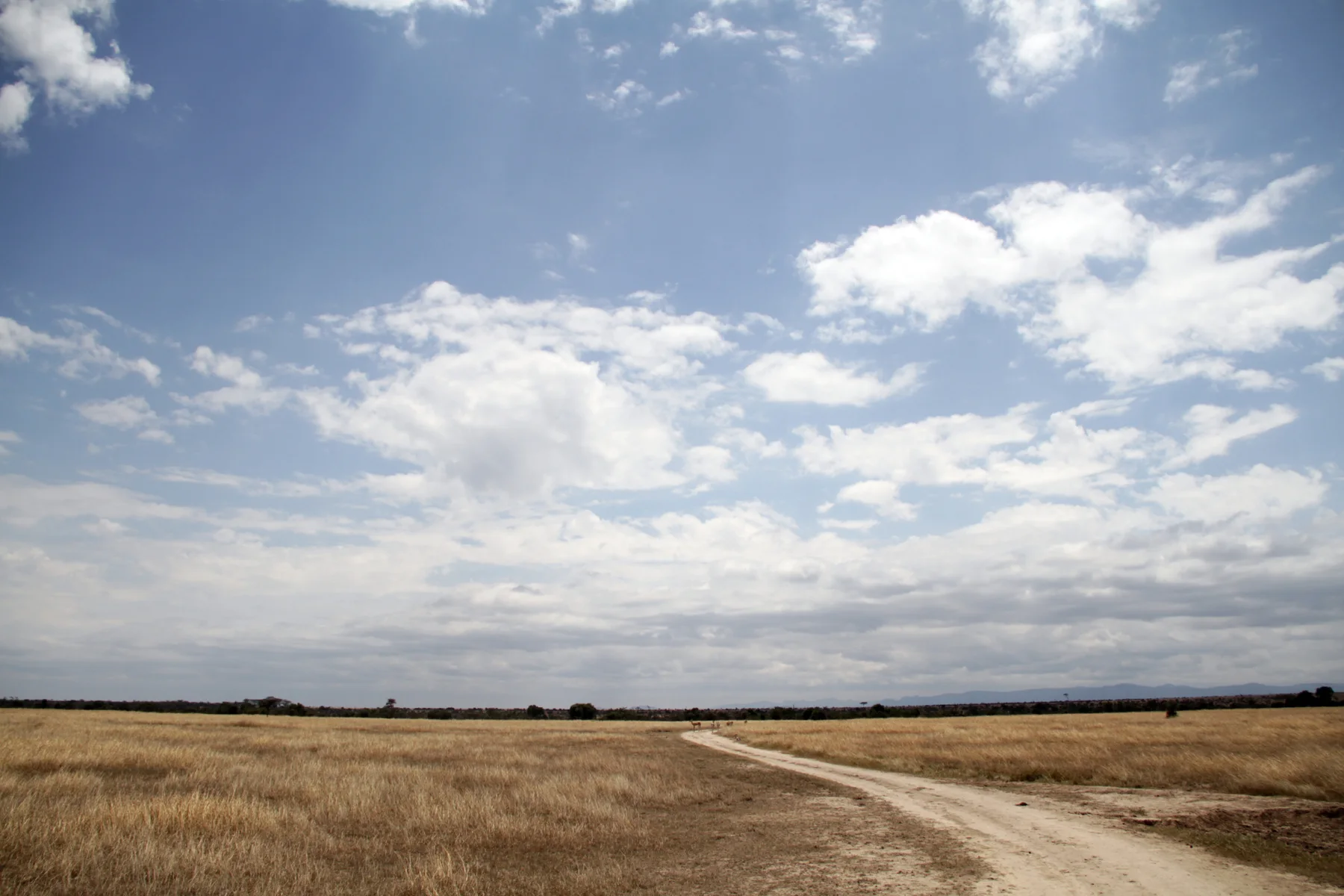
Open grassland meets wooded grassland, acacia woodland, riverine vegetation and evergreen thicket. Black-cotton soils can become difficult after rain. Mount Kenya appears when cloud clears, while the Aberdare Range frames the wider western horizon.
The Ewaso Nyiro River and smaller water systems support wildlife and divide parts of the conservancy. Grazing history, rainfall and managed cattle movement create a patchwork rather than a single uniform plain.
How many nights do you need?
Three nights create two full days and suit most first visits. Four nights are better for photographers, families, walkers and travellers booking several conservation experiences. Two nights work only when priorities are narrow and arrival is early.
| Stay | What fits comfortably | Verdict |
|---|---|---|
| 1 night | Arrival, sleep and a short drive | Transit, not Ol Pejeta |
| 2 nights | One full day with wildlife and one or two stops | Possible but tightly structured |
| 3 nights | Two complete days, rhinos, chimps and one specialist activity | Strong minimum |
| 4 nights | Flexible game drives, activities and lodge time | Best all-round stay |
| 5 or more | Research interests, photography and slow family travel | Excellent for depth |
One couple spent four days and were “blown away by the wildlife”. Their stay also made room for the chimpanzees, Baraka and northern white rhinos. That is the advantage of time: the conservation programme supports the safari instead of replacing it.
Wildlife in one view
Ol Pejeta holds the Big Five, but the experience should not be reduced to five ticks. Rhinos are the signature. Elephants move through, lions use several prides or territories, buffalo gather in herds, and plains game supports a productive predator community.
Reticulated giraffes and Grevy's zebras connect the conservancy with northern Kenya. Bat-eared foxes, jackals, spotted and striped hyenas, warthogs, baboons and smaller carnivores reward slower drives.
Black rhinos
Ol Pejeta protects an internationally important population of eastern black rhinos and describes itself as East Africa's largest black rhino sanctuary. Black rhinos browse with a hooked lip and often use thicker bush. Individuals are monitored through ear notches, range knowledge and field records.
Security does not make them predictable. A rhino can stand close behind acacia and remain hidden. Give the guide time to search rather than racing between remembered locations.
Southern white rhinos
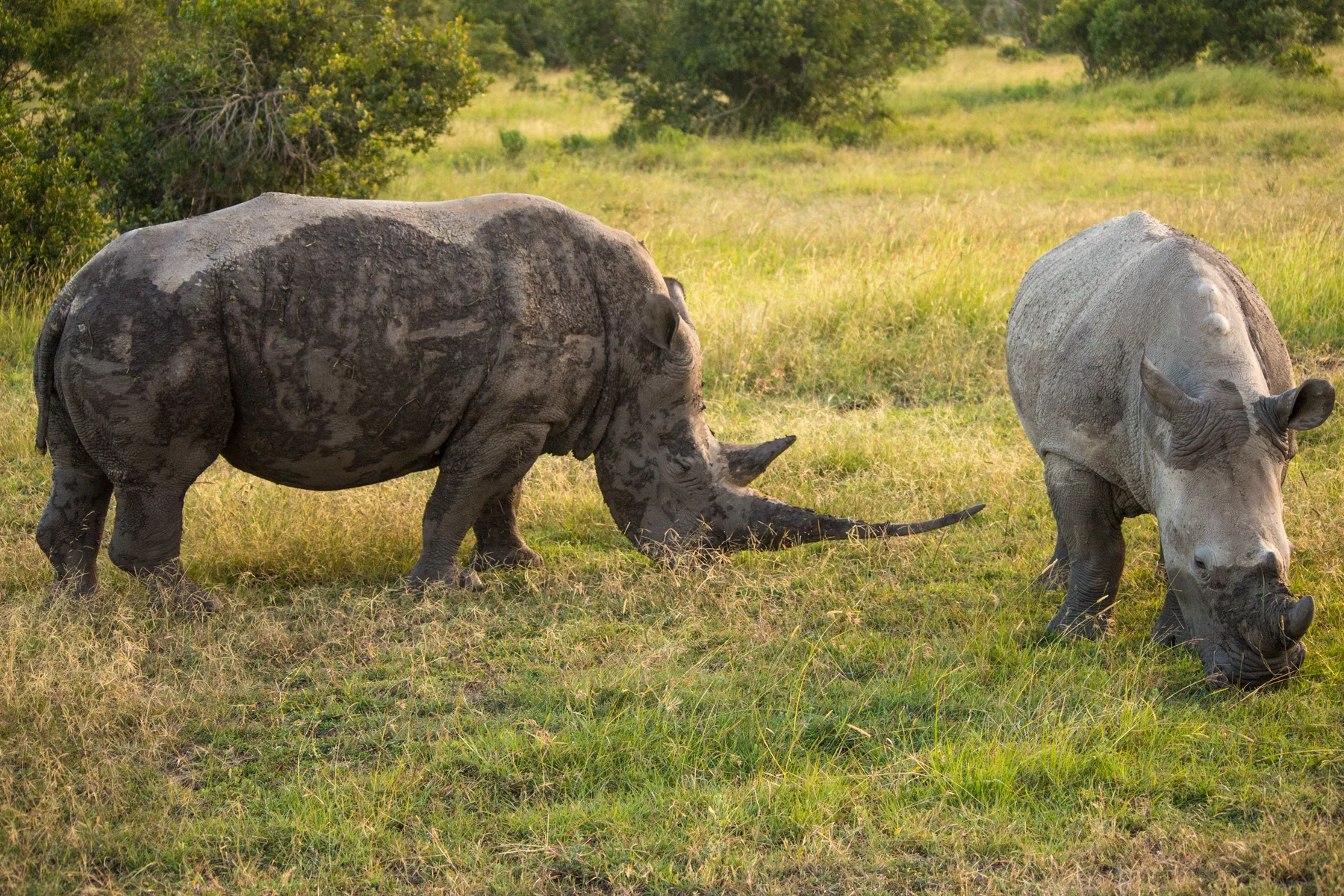
Southern white rhinos graze with a broad square mouth and often use more open grassland. They may form loose associations and can remain visible for long periods while feeding.
The words black and white do not describe colour. Body shape, mouth and feeding behaviour are more useful. Both species need space, especially mothers with calves.
Black and white rhinos compared
| Feature | Black rhino | Southern white rhino |
|---|---|---|
| Main feeding style | Browser | Grazer |
| Mouth | Hooked upper lip | Broad square lip |
| Habitat tendency | Shrub and thicket | Open grassland |
| Head position | Often higher | Usually low while feeding |
| Social pattern | More often solitary | Small associations more common |
| Typical sighting | Can be brief or partly hidden | Often longer in open country |
One visitor reported “so many black and white rhino”. That reflects Ol Pejeta's strength, but no ethical itinerary promises a number.
Najin and Fatu
Najin and Fatu are the last two living northern white rhinos. They were moved from Dvůr Králové Zoo in the Czech Republic to Ol Pejeta in 2009. Both are female, so natural recovery of the subspecies is no longer possible through ordinary breeding.
Their story involves assisted reproductive science using preserved genetic material and southern white rhino surrogates. Progress is complex and should never be described as a guaranteed rescue. The animals' welfare and the accuracy of the science matter more than a hopeful headline.
Meeting the northern white rhinos
The close interpretive visit is a separately bookable experience in a secure managed area. A keeper explains Najin and Fatu, their care, history and the scientific programme. General entry to Ol Pejeta does not automatically mean that every visitor receives this encounter.
Confirm the time, age policy, vehicle, cost and meeting point. Follow every instruction and do not treat the animals as props for touching or selfies.
The northern and southern white rhino difference
Northern and southern white rhinos are subspecies of white rhinoceros. They share the broad grazing mouth but have different evolutionary and geographic histories. Visitors sometimes call every white rhino at Ol Pejeta “one of the last two.” That is incorrect.
Najin and Fatu live in a managed northern white rhino enclosure. Free-ranging or other managed white rhinos elsewhere in the conservancy are southern white rhinos.
Baraka the blind black rhino
Baraka is a black rhino who lost vision and lives under managed care near Morani Information Centre. Visitors may have a close educational interaction under staff supervision. He is an ambassador animal, not evidence that wild black rhinos can be approached or fed.
Families often find the experience memorable. One reviewer called meeting Baraka a “highlight for our preschooler”. Explain the distinction to children before returning to the game-drive roads.
Rhino monitoring and identification
The bookable monitoring experience joins a specialist team to learn ear-notch identification, body-condition assessment, habitat recording and behaviour observation. It should be treated as structured conservation education, not permission to direct rangers towards a closer photograph.
Confirm whether the activity leaves from the lodge or a conservancy meeting point, minimum numbers, age, duration and what data guests actually help collect.
Rhino security and privacy
Do not post live locations, ranger routines or security infrastructure. Avoid geotagging sensitive images. Conservation teams decide what operational detail can be shared.
Visitors contribute most by following the guide, paying legitimate fees and leaving protection work to trained staff.
Lions
Lions live across the conservancy and are monitored as part of Ol Pejeta's predator work. A normal game drive may find a pride resting, hunting or moving between grass and thicket. Sightings depend on weather, prey and recent movements.
One family saw “lions on a hunt”. It was a rare behavioural encounter, not an activity that can be scheduled.
Lion tracking
Selected lions carry research collars. The separate tracking activity uses telemetry and field observation to help locate collared animals and collect information. The data supports ecological monitoring.
Tracking improves the chance of finding a particular collared lion, but signal, terrain and movement still matter. Guests remain in the vehicle. Confirm current sessions, minimum participants and age restrictions.
Leopards and cheetahs
Leopards use riverine cover, thickets and woodland and remain elusive. Cheetahs favour more open ground and can range widely. Both occur, neither is guaranteed.
A standard drive that finds rhinos, elephants and a hyena is not a failure because a cheetah stayed out of sight. Add nights rather than promises when predators dominate the wish list.
Elephants and buffalo
Elephants move through Ol Pejeta and may gather near water or cross between feeding areas. Buffalo occur in herds and as older bulls. The working landscape adds encounters with cattle, herders and predator-proof night bomas.
Give elephants a clear path and do not position between a herd and water. Buffalo in thick cover require quiet and distance.
Grevy’s zebra and reticulated giraffe
Grevy's zebras have narrow stripes, large round ears and a white belly. Reticulated giraffes carry clean polygonal coat patterns. Both connect Ol Pejeta with the species community of northern Kenya.
Plains zebras and other giraffe forms can create confusion on wider itineraries, so ask the guide to explain identification rather than labelling from a moving vehicle.
Birds and smaller wildlife
Grasslands, waterholes, riverine habitat and woodland support raptors, bustards, cranes, storks, kingfishers, sunbirds and many other birds. Bat-eared foxes, jackals, mongooses and hyenas become highlights when the drive slows down.
Request a birding guide in advance. A general guide who loves big mammals may not be the right match for calls and difficult small species.
Sweetwaters Chimpanzee Sanctuary
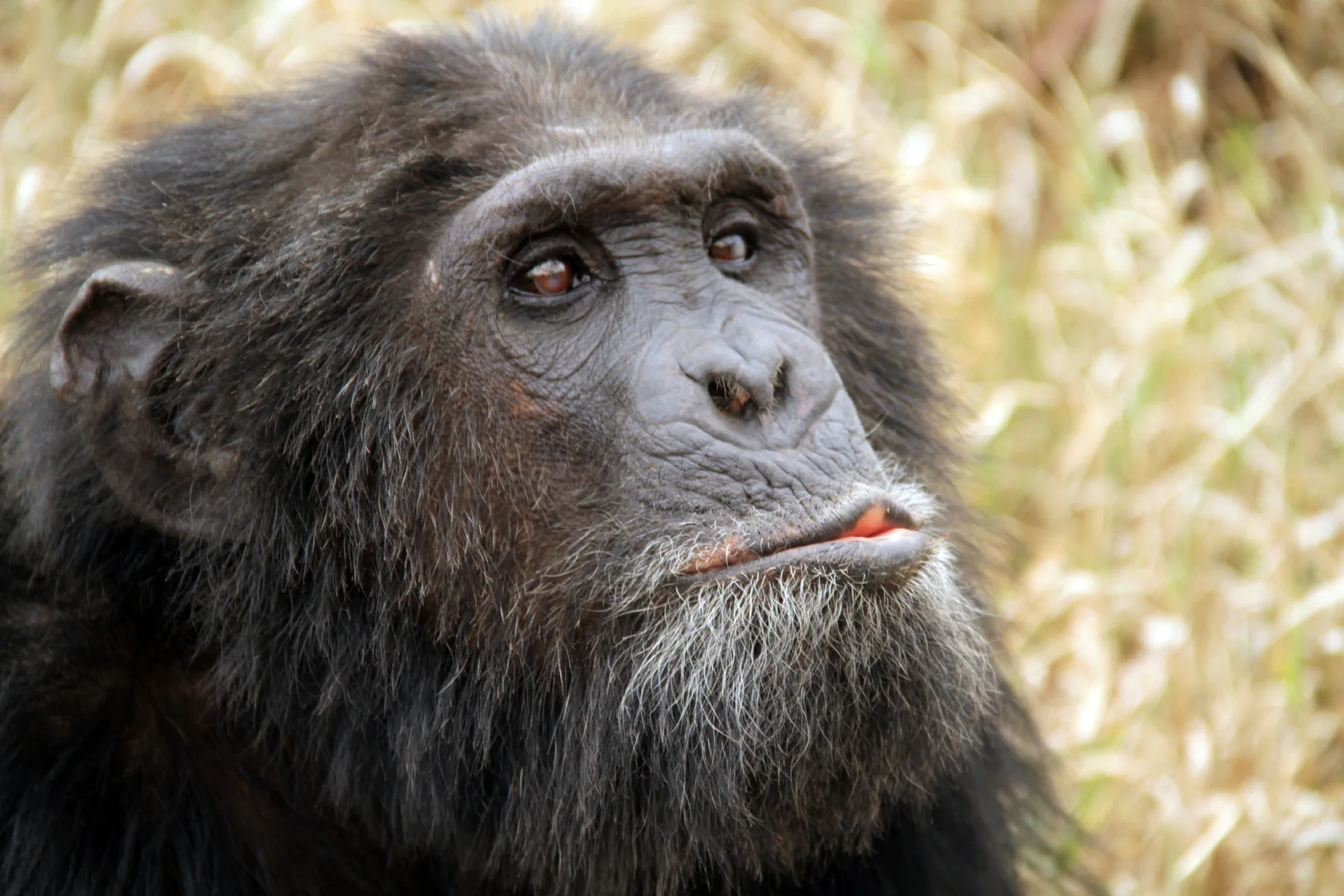
Sweetwaters was established in 1993 through cooperation between Ol Pejeta, KWS and the Jane Goodall Institute. It provides lifelong refuge for chimpanzees rescued from illegal trade, abuse and unsuitable captive conditions.
Chimpanzees are not indigenous to Kenya. Visitors see animals in large managed sanctuary enclosures, not a native wild population. That distinction is central to an honest visit.
What the chimpanzee visit feels like
The standard visit follows a viewing and interpretation format during published opening sessions. Chimpanzees choose where to spend time within their habitat, so not every individual is close to the viewing area.
The stories can be upsetting. One traveller described the sanctuary as “a little emotional when you hear the stories”. Families should prepare children for rescue, loss and lifelong care rather than promising a playful animal show.
Behind the scenes with chimpanzees
A separately booked behind-the-scenes experience explains daily care, veterinary work and sanctuary operations in greater depth. Access depends on current welfare and operational priorities.
Ask what the session includes, how it differs from general entry and whether photography is permitted. The chimpanzees' routine comes first.
Why chimpanzees cannot be released in Kenya
Kenya is outside the species' natural range. Many sanctuary residents also have individual health, behavioural and social histories that make release impossible. Sweetwaters therefore offers refuge, social groups and long-term professional care.
Do not describe the sanctuary as a breeding attraction or promise eventual release. Its work belongs to rescue and welfare as well as public education.
The Ewaso Nyiro River at the sanctuary
The river separates the sanctuary's large forested areas and contributes to a naturalistic living environment. Viewing remains from designated visitor spaces. Water level and vegetation affect what is visible.
Allow enough time for interpretation instead of arriving just before a session closes.
A working cattle and wildlife landscape
Ol Pejeta continues to manage Boran and Ankole cattle alongside wildlife. Planned bunched grazing can break hard soil, fertilise selected areas and create fresh pasture that attracts wild herbivores. Cattle are moved to predator-resistant bomas at night.
This is not a claim that livestock and predators never conflict. Disease, predation, labour and grazing decisions require constant management. The value lies in showing one tested model, not declaring a universal answer for every conservancy.
Livestock-wildlife integration experience
The bookable experience introduces grazing, herd management and the relationship between commercial cattle and conservation finance. It is one of Ol Pejeta's most distinctive activities for travellers interested in land use rather than only animal sightings.
Ask whether the visit includes herders, bomas, cattle movement or a talk, and respect staff as skilled professionals rather than scenery.
The K9 anti-poaching unit
Ol Pejeta uses trained dogs in security and tracking work. The visitor dog-tracking activity demonstrates scent ability through an organised exercise, often involving participants hiding for the dogs to locate.
The public experience is educational and playful, but the unit's real work is serious. Operational security details and deployment remain private.
Night game drives
Authorised night drives reveal nocturnal animals, spotlight behaviour and a different soundscape. They are available through booked conservancy arrangements, not as independent self-driving after dark.
Confirm vehicle, guide, duration, child age, pickup and return. Keep light use controlled and never pressure the guide to hold an animal in the beam.
Guided bush and bird walks
Guided walks introduce tracks, plants, dung, insects and birds at a human pace. Dangerous wildlife remains present, so the route, armed guide, age and fitness policy matter.
A walk is not simply a game drive without the vehicle. Ask about terrain, distance, heat and the plan if elephants or buffalo are nearby.
Run the Wild and active experiences
Ol Pejeta sometimes offers running and other active experiences under controlled conditions. Availability, route and safety support change. Never run independently through wildlife habitat.
Active travellers should provide honest pace, medical needs and previous experience before booking.
Conservation talks
Bookable talks connect guests with specialists in wildlife, technology, research or community development. They suit students, repeat visitors and families with older children who want evidence behind the safari story.
Request a topic rather than “a conservation talk.” Rhino genetics, predator coexistence and livestock integration require different expertise.
Choose activities without overloading the day
| Activity | Main value | What to confirm |
|---|---|---|
| Northern white rhino visit | Keeper-led subspecies history | Time, price, age and meeting point |
| Chimpanzee sanctuary | Rescue, welfare and primate behaviour | Open session and travel time |
| Rhino monitoring | Field identification and data | Minimum number, duration and vehicle |
| Lion tracking | Telemetry and predator monitoring | Current collared animals and session |
| K9 tracking | Security-dog demonstration | Fitness, clothing and meeting point |
| Night drive | Nocturnal wildlife | Vehicle, child policy and return time |
| Bush or bird walk | Tracks and smaller ecology | Age, fitness, guide and terrain |
| Livestock integration | Working-landscape model | Exact programme and staff availability |
Day visit or overnight stay?
A day visit can cover a game drive, chimpanzees and Baraka when times align. It cannot honestly cover the full conservancy, several specialist experiences and relaxed wildlife viewing. Driving from Nairobi and back makes the day especially long.
An overnight stay unlocks dawn, dusk, night drives and a calmer programme. Three nights are much stronger than using Ol Pejeta as a crowded stop between Nairobi and Samburu.
| Plan | Wildlife time | Conservation depth | Main trade-off |
|---|---|---|---|
| Nanyuki day visit | Half to full day | Chimpanzees, Baraka and one main activity | Fixed exit and no dawn or night drive |
| Nairobi day trip | Reduced by a long return road | Usually only core visitor centres | Very early start and tiring evening |
| Two-night stay | One complete day | One or two specialist experiences | Little weather flexibility |
| Three-night stay | Two complete days | Strong balance of drives and activities | Higher entry and accommodation total |
| Four-night stay | Three complete days | Excellent for monitoring, family or photography | Requires careful activity selection |
Getting there from Nairobi
The road runs north through the central highlands towards Nanyuki, then continues to the chosen gate. Traffic, market towns and the final conservancy road affect time. Treat it as a substantial transfer rather than a short drive.
Stop near the equator or Nanyuki only when it improves the journey. Do not sacrifice an afternoon activity by adding unscheduled shopping.
Flying to Ol Pejeta
Flights use Nanyuki or an arranged conservancy airstrip depending on service and accommodation. The booking must name the airline, airstrip, baggage allowance, intermediate stops and transfer time.
“Fly to Nanyuki” may still leave a road transfer. Match the landing point to the camp before comparing air and road costs.
Gates and entry
Rongai is a principal visitor gate from the Nanyuki side, while other gates serve different directions and properties. Gate status and route should be confirmed for the date.
The quote must name the intended entrance, especially for a day trip, Mutara-side stay or arrival after heavy rain.
Cashless entry and advance booking
Ol Pejeta operates cashless entry and promotes online booking. Fee categories and ticket policies can change. Overnight entry has historically followed a 24-hour basis, while day entry follows its stated date or single-entry conditions.
Verify the current tariff, vehicle charge, child definition and re-entry policy before travel. Do not rely on an old screenshot.
Roads inside the conservancy
Ol Pejeta is often praised for its road network. One experienced traveller called the roads “excellent” by safari-park standards.
Rain still changes black-cotton tracks quickly. Use a 4×4 in wet conditions, respect closures and never leave a designated road for a sighting.
Best time to visit
Ol Pejeta is a year-round destination. Drier periods often improve roads and concentrate wildlife near water. Green periods bring clear air, fresh grass, young animals and strong birding, while also increasing mud and cover.
| Priority | Helpful conditions | Trade-off |
|---|---|---|
| Easier driving | Drier months | Dust and pale grass |
| Green landscapes | Wet and shoulder periods | Mud and taller cover |
| Birding | Green season and migrants | Rain interruptions |
| Rhino viewing | Year-round with time | Individuals still move and hide |
| Mount Kenya views | Clear mornings after weather changes | Cloud can form quickly |
| Low visitor pressure | Quieter dates outside holidays | Some activities need minimum numbers |
Daily rhythm
Begin with a dawn game drive or tracking session, return for breakfast, then visit chimpanzees or a conservation centre during the middle of the day. Rest before an afternoon drive or specialist activity. Add a night drive only when the next morning remains sensible.
Avoid booking timed activities back to back across the conservancy. Vehicle travel is part of the clock.
Where to stay
Ol Pejeta's official tourism-partner list includes Kicheche Laikipia Camp, Ol Pejeta Bush Camp, Ol Pejeta Safari Cottages, Porini Rhino Camp, Sanctuary Tambarare, Sweetwaters Serena Camp and River Camp. Pelican House and The Stables add house or value-oriented options. Mutara Camp is in neighbouring Mutara Conservancy and borders Ol Pejeta rather than sitting within its main visitor landscape.
Position, size, waterhole, vehicle and activity access should drive the choice.
Sweetwaters Serena Camp
Sweetwaters Serena is the largest and most resort-like option, with many tents, a prominent waterhole, Mount Kenya views, restaurant, pool and broad facilities. It suits families, first safari visitors and groups that want predictable services.
Its size creates a different atmosphere from a six-tent wilderness camp. Ask for the tent category, waterhole position, walking distance, meal plan and private vehicle supplement.
Kicheche Laikipia Camp
Kicheche has six tents including a family suite and sits in the wilderness zone near indigenous forest and a wildlife waterhole. Its small scale suits personalised guiding, photographers and guests who want an intimate camp rhythm.
Confirm private or shared vehicle use, family-suite layout, walking options and transfer time to eastern attractions such as the chimpanzee sanctuary.
Ol Pejeta Bush Camp
Ol Pejeta Bush Camp offers an intimate tented stay within the conservancy with strong guiding and conservation access. It works for travellers who prefer a small camp over resort facilities.
Ask where the booked tent sits, whether the vehicle is shared and how specialist activities connect with the normal game-drive plan.
Porini Rhino Camp
Porini Rhino Camp has eight tents in a secluded seasonal-river valley beneath acacias. A viewing hide adds close but controlled observation near camp. The camp suits a traditional small-tent experience and guests who value quiet.
Confirm seasonal water, power, bathroom design, vehicle sharing and whether transfers use the same guide throughout the stay.
Sanctuary Tambarare
Sanctuary Tambarare has ten luxury tents and a polished, service-led atmosphere. It suits honeymooners and travellers who want contemporary comfort while remaining inside the conservancy.
Compare the actual tent, deck, dining style, vehicle arrangement and activity inclusions rather than assuming a luxury rate includes every conservation experience.
River Camp
River Camp combines a modern camp design with Mount Kenya views and a riverine setting. It adds another upscale choice for travellers comparing intimate camps by atmosphere.
Ask about family configuration, water level, walking paths, private dining, vehicle use and the drive to scheduled experiences.
Ol Pejeta Safari Cottages
The Safari Cottages sit along an acacia-lined river area in the wilderness zone and focus on private-house comfort, food and guiding. They suit families, small groups and travellers who want exclusive space.
Name the cottage, number of rooms, private vehicle, chef or meal basis and night security. “Exclusive use” should cover the services as well as the building.
Pelican House
Pelican House overlooks Pelican Dam in the eastern conservancy and can be booked self-catering or with additional catering. Its multi-room layout suits families and groups, while the dam draws wildlife in dry periods.
Confirm the final occupancy, separate garden suite, chef, food supplies, drinks, housekeeping and vehicle. Self-catering guests should shop before entering.
The Stables
The Stables offers simpler accommodation and can suit budget-conscious visitors, students or travellers prioritising activities over luxury. Facilities and room types should be checked directly for the dates.
Do not compare it with a full-board luxury camp on room rate alone. Add meals, vehicle, entry and transport.
Mutara Camp
Mutara Camp is the sole accommodation in neighbouring Mutara Conservancy and overlooks a wider wilderness beside Ol Pejeta. It can provide luxury and landscape access, but it should not be listed casually as another camp deep inside Ol Pejeta.
Ask exactly how guests enter Ol Pejeta, which fees apply, transfer time and whether game drives focus on Mutara, Ol Pejeta or both.
Campsites
Ol Pejeta offers camping under current booking arrangements. Camping requires water, food, fuel, lighting, waste management and a capable vehicle. Wildlife moves through the landscape, so tents and food storage need disciplined routines.
Confirm the named site, toilets, ranger support, fire rules and road condition. Remote camping should be fully supported when visitors lack local experience.
Compare accommodation styles
| Property or style | Character | Best for | Key question |
|---|---|---|---|
| Sweetwaters Serena | Large camp and waterhole | Families, groups and broad facilities | Tent position and private vehicle |
| Kicheche Laikipia | Six-tent wilderness camp | Photographers and intimate guiding | Travel time to eastern attractions |
| Ol Pejeta Bush Camp | Small conservation-focused camp | Couples and guided depth | Activity and vehicle inclusions |
| Porini Rhino Camp | Eight tents and hide | Quiet traditional camp lovers | Seasonal setting and shared drives |
| Sanctuary Tambarare | Polished luxury tents | Honeymoon and comfort | Which experiences cost extra |
| Safari Cottages or Pelican House | Private house | Families and groups | Chef, food, vehicle and occupancy |
| The Stables | Simpler value stay | Students and budget travellers | Meals and transport |
| Mutara Camp | Luxury in neighbouring conservancy | Wider landscape and seclusion | Ol Pejeta access and fees |
Ol Pejeta with children
Rhinos, Baraka, chimpanzees and the K9 unit make conservation tangible for children. A private vehicle protects nap times and attention spans. A house or family suite can simplify meals and room proximity.
Explain managed and wild encounters clearly. Confirm minimum ages for tracking, walking and night drives. Our Kenya safari with children guide covers vehicle, room and health planning.
Accessibility and limited mobility
Vehicle-based wildlife viewing can work well, but tent paths, steps, loose ground and safari-vehicle entry vary. Sanctuary viewpoints and activity meeting points may have different surfaces.
Request measurements and photographs for the exact room, shower, toilet, paths and vehicle. Our accessible Kenya safari guide provides a detailed booking framework.
Ol Pejeta for a honeymoon
Choose a small wilderness camp, polished luxury tent or private cottage with a private vehicle. Protect unstructured time for sunrise, a waterhole lunch or a slow afternoon instead of filling every hour with conservation appointments.
Confirm the exact tent, privacy, private dining, vehicle, drinks and transfer. The northern white rhino story can be moving, but it should not consume the entire honeymoon day.
Photography
Rhinos, Mount Kenya, waterholes and conservation activities create varied subjects. A private vehicle and beanbag improve wildlife work. Ask guides to position for light without blocking an animal's route.
Some specialist areas restrict photography for welfare or security. Confirm before raising the camera. Bring rain and dust protection in every season.
Responsible conservation tourism
Pay for authorised activities, respect staff time and avoid demanding sensitive information. Do not geotag live rhino locations. Never imply that touching a managed ambassador rhino makes wild rhinos approachable.
Chimpanzee welfare, northern white rhino care and K9 security come before visitor entertainment. A responsible guide says no when an operation or animal needs space.
What does an Ol Pejeta safari cost?
The total includes conservancy entry, vehicle entry, accommodation, guide, road or air transfer, meals, drinks and separately priced experiences. Rates differ by citizenship or residency, age, season, occupancy and property.
| Cost line | What must be named |
|---|---|
| Conservancy entry | Category, date and overnight policy |
| Vehicle entry | Vehicle class and each entry period |
| Accommodation | Property, room or tent, occupancy and meal basis |
| Game-drive vehicle | Private or shared and daily hours |
| Specialist activity | Exact experience, participant and time |
| Road transfer | Start point, gate and vehicle |
| Flight | Airline, airstrip, baggage and camp transfer |
| House stay | Chef, food, drinks, staff and vehicle |
Use our Kenya safari cost guide before comparing a simple day visit with a fully inclusive camp stay.
What to pack
Bring neutral layers, a warm dawn layer, closed shoes, sun protection, reusable bottle, binoculars, camera protection and personal medication. Add a waterproof shell and dry bags in greener months.
Soft bags and strict weights apply to small aircraft. Our Kenya safari packing guide covers clothing, medication, cameras and flight limits.
Ol Pejeta and Lewa
Lewa Wildlife Conservancy offers five resident lodges, controlled vehicle access, rhinos, Grevy's zebras and strong private-conservancy activities. Ol Pejeta has a wider accommodation range, chimpanzees and more structured bookable conservation experiences.
Both deserve at least three nights. Choose one when time is short or use a road transfer to compare two conservation models.
Ol Pejeta and Solio
Solio Game Reserve is a private rhino sanctuary between Mount Kenya and the Aberdares with concentrated open-country viewing. Ol Pejeta adds a larger visitor programme, Big Five possibilities and chimpanzees.
The combination suits committed rhino travellers, but it needs a purpose beyond collecting sightings.
Ol Pejeta and the Aberdares
The Aberdare National Park guide covers forest, waterfalls and high moorland. Ol Pejeta adds open Laikipia plains and rhinos. The drive is manageable when gates and accommodation are chosen sensibly.
An overnight forest lodge and three Ol Pejeta nights create a stronger contrast than a rushed same-day tour.
Ol Pejeta and Samburu
Samburu National Reserve brings the Ewaso Nyiro river, hotter dry country and northern species. Ol Pejeta introduces rhino conservation and the highland edge.
Allow a real transfer day. Do not count arrival at Samburu as a full afternoon drive when the road takes longer than expected.
Ol Pejeta and Meru
Meru National Park is larger, quieter and more riverine, with a separate rhino sanctuary and Adamson history. Ol Pejeta is more structured and activity-rich.
The pairing suits repeat safari travellers who want both organised conservation learning and empty national-park roads.
Ol Pejeta and the Masai Mara
Ol Pejeta is strong for rhinos and conservation context. The Masai Mara adds open predator country, large herbivore concentrations and a broad conservancy network.
Fly through Nanyuki and Wilson when schedules work, or build an overland route with a Nairobi night. Protect at least three nights in each.
Ol Pejeta within a Laikipia safari
Our broader Laikipia safari guide explains why Ol Pejeta should not be used as a label for every ranch or conservancy north of Mount Kenya. Each property has its own access, accommodation and conservation model.
| Laikipia choice | Strongest distinction | How it differs from Ol Pejeta |
|---|---|---|
| Lewa | Five resident lodges and controlled access | Fewer public-style visitor centres |
| Solio | Concentrated private rhino sanctuary | Narrower activity and accommodation range |
| Borana | Riding, walking and connected Lewa landscape | Different gate and lodge system |
| Loisaba | Large western Laikipia wilderness and Star Beds | No chimpanzee or northern white rhino programme |
| Ol Pejeta | Rhinos, chimps and structured conservation activities | More timed visitor experiences |
A strong three-night itinerary
Arrive for lunch and an afternoon wildlife drive. Use the first full day for an early rhino-focused drive, chimpanzee sanctuary and Baraka, leaving the late afternoon open. Book one specialist experience on the second full day and let the rest follow wildlife. Depart after breakfast or a short final drive.
This plan covers the defining stories without turning the stay into appointments.
A four-night conservation itinerary
Add a complete day for rhino monitoring, lion tracking, K9 work or livestock integration. Keep another morning free for predators, birds and weather. Use a night drive only when it does not undermine the next dawn.
Four nights suit families because an activity can be cancelled or shortened without collapsing the entire visit.
What travellers notice
Visitors praise the density and variety of wildlife, rhino encounters and accessible conservation learning. One family described the conservancy as a “shining example of conservation and local engagement”. Another called it an “Awesome place to see wildlife, nature, and conservation at work”.
The strongest reviews often come from three or four days, not a hurried stop. They also mention that the northern white rhino and chimpanzee stories can be emotionally heavy. A good itinerary leaves time to absorb them.
Common planning mistakes
| Mistake | Why it weakens the stay | Better choice |
|---|---|---|
| Staying one night | Arrival and departure consume the visit | Book three nights |
| Calling all white rhinos Najin or Fatu | Subspecies and management are confused | Learn northern and southern distinctions |
| Describing chimpanzees as Kenyan wildlife | The rescue sanctuary is misrepresented | Explain that chimps are not indigenous |
| Treating Baraka like a wild encounter | Unsafe expectations are created | Name him as an ambassador under care |
| Booking five activities in one day | Vehicle time replaces game viewing | Choose one major specialist activity daily |
| Listing Mutara as deep inside Ol Pejeta | Gate and fee logic disappears | State that it borders from Mutara Conservancy |
| Comparing rooms without vehicles and fees | Total cost becomes misleading | Itemise the same inclusions |
| Posting rhino locations | Security is weakened | Remove live geotags and sensitive details |
Frequently asked questions
Is Ol Pejeta a national park?
No. It is a not-for-profit wildlife conservancy and working livestock landscape with managed visitor access.
How many nights should I stay?
Three nights are a strong minimum. Four suit several conservation activities, families and photographers.
Can I see black rhinos?
Yes. Ol Pejeta protects an internationally important population, but every sighting remains wild and requires time.
Can I meet the northern white rhinos?
Yes through a separately booked keeper-led experience, subject to current availability and welfare priorities.
Are Najin and Fatu the only white rhinos there?
No. They are the last northern white rhinos. Ol Pejeta also has southern white rhinos.
Are the chimpanzees wild in Kenya?
No. Chimpanzees are not indigenous to Kenya. Sweetwaters provides lifelong sanctuary for rescued animals.
Is Baraka a wild rhino?
He is a blind black rhino living under managed care as an ambassador animal. His interaction does not represent wild rhino behaviour.
Does Ol Pejeta have the Big Five?
Yes, but no short stay guarantees all five. Rhinos are the strongest signature.
Can I take a night drive?
Yes through an authorised booked experience. Independent night driving is not permitted.
Can children do conservation activities?
Some activities allow children and others have age or fitness limits. Confirm the exact experience before booking.
Can I self-drive?
Yes with advance entry preparation, current road advice and a suitable vehicle. Specialist activities still require booking.
Is one day enough?
One day can include a game drive and selected visitor centres. It cannot cover the full wildlife and conservation programme well.
Choose depth over a timetable
Ol Pejeta can be the place where a child first understands that black and white rhinos eat differently, where a chimpanzee's rescue story changes the meaning of wildlife tourism, or where cattle and zebras graze the same managed landscape. Those lessons lose power when the day becomes a race from one booked encounter to another.
Use this Ol Pejeta Conservancy guide to choose the right base, enough nights and one or two experiences that genuinely deepen the safari. Leave the remaining hours for wild rhinos, changing light and whatever the road reveals.
Tell us what Ol Pejeta should teach and reveal
Share the dates, travellers, wildlife priorities, conservation interests, room style, vehicle preference and next destination. We will leave enough space for wild game drives.