
Solio Game Reserve and Solio Ranch Guide: Rhinos, Forest and Safari Planning
Plan Solio around black and white rhino behaviour, current private-reserve rules, an appointment-only orphanage, confirmed accommodation and quiet central Kenya scenery.
- Is Solio worth visiting?
- Solio Game Reserve, Solio Ranch and Solio Conservancy
- Solio is not a national park
- Where is Solio?
- Why Solio matters to rhino conservation
- The 1970s beginning
- A national recovery story
- Black and white rhinos both live here
- White rhinos
- Black rhinos
- Rhino calves
- Rhino behaviour worth watching
- Rhino horn and ethical language
- Why exact rhino numbers need care
- The wider wildlife story
- Lions
- Leopards
- Cheetahs
- Buffalo
- Giraffes and zebras
- Antelope
- Birds
- Yellow fever tree forest
- Marshes, river and open grass
- Mount Kenya and Aberdare views
- How many nights do you need?
- Can day visitors enter?
- Main Gate and Rhino Gate
- Current opening hours
- Card-only payment
- Passport and indemnity
- Current fees
- Road access from Nairobi
- Flying via Nanyuki
- Self-driving
- Private guided day trips
- The Solio Rhino Orphanage
- Booking the orphanage
- Feeding and touching animals
- Questions to ask at the orphanage
- Where to stay inside Solio now
- JW Marriott Mount Kenya Rhino Reserve Safari Camp
- The camp’s Nanyuki transfer
- Legacy Solio Lodge status
- Staying outside the reserve
- Accommodation comparison
- A realistic full-day visit
- Morning game drives
- Midday
- Afternoon
- Best time to visit
- Wet-season driving
- Dry-season conditions
- Solio for families
- Solio for honeymooners
- Solio for photographers
- Accessibility and limited mobility
- Clothing and packing
- Wildlife etiquette
- What visitors say
- What a 2026 day visitor learned
- Older lodge reviews and current reality
- Solio versus Ol Pejeta
- Solio versus Lewa
- Solio versus Lake Nakuru
- Solio with the Aberdares
- Solio with Laikipia
- What Solio costs
- Quote comparison
- Questions before paying
- Black rhino and white rhino viewing plan
- Choosing between a day visit and an inside stay
- A two-night Solio plan
- A three-night Solio plan
- Food, medication and cold mornings
- Data, phones and quiet
- Frequently asked questions
- The Solio decision
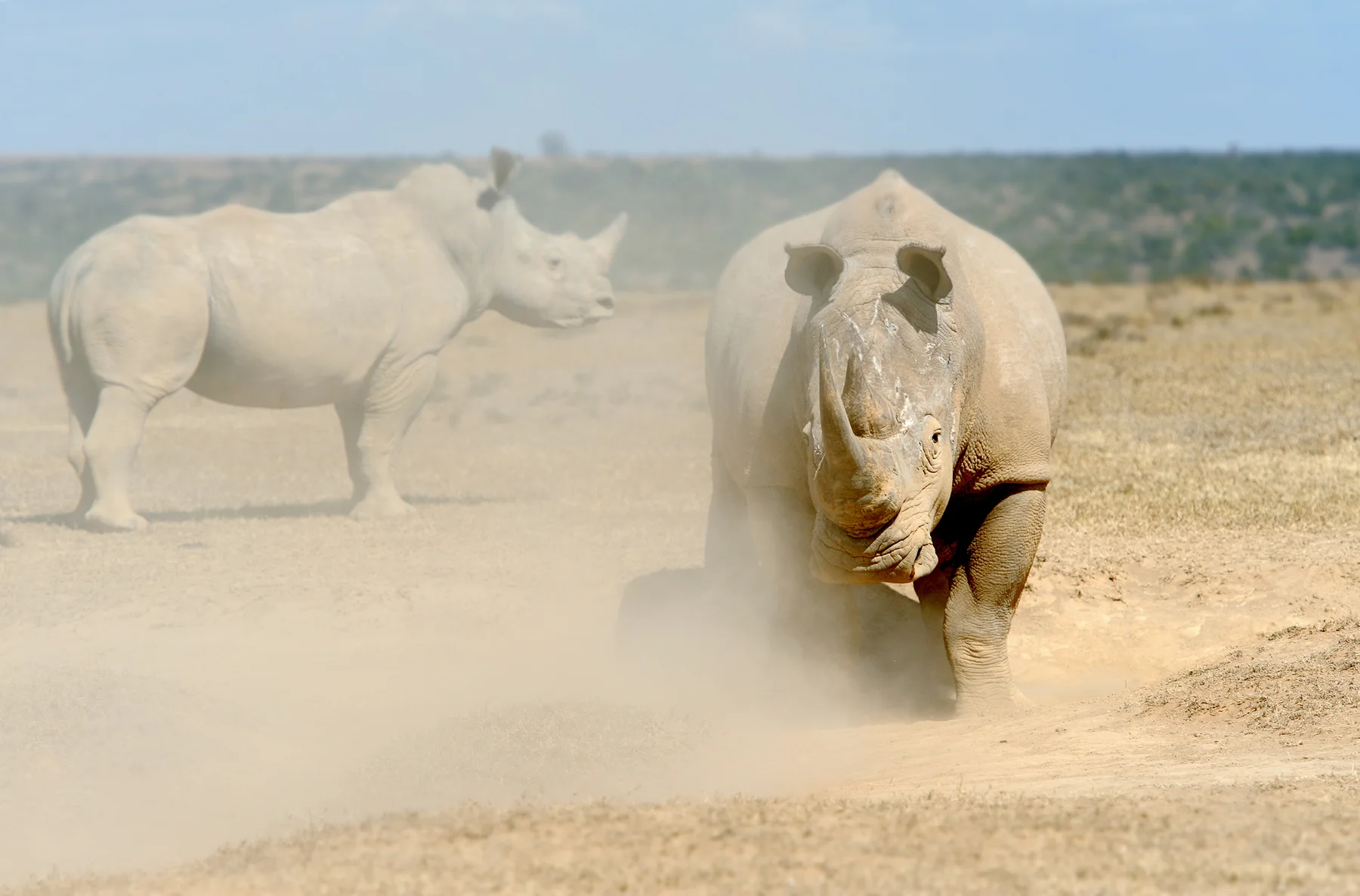
The first rhino may appear before the drive has properly begun. A pale back moves through the grass, then a second animal steps out behind it. Beyond them, Mount Kenya rises through cloud while yellow-barked acacias catch the morning light. Solio is one of the few places where seeing a rhino can be the beginning of the story rather than its rare final reward.
This Solio Game Reserve and Solio Ranch guide explains the private reserve, the wider ranch, black and white rhinos, day-entry rules, the orphanage, current accommodation, wildlife, seasons and route planning. It also addresses a major 2026 change: the new JW Marriott camp is confirmed open, while older Solio Lodge pages should not be treated as proof of current availability.
Is Solio worth visiting?
Yes, especially if rhinos, quiet game drives and central Kenya scenery matter. Solio protects both black and southern white rhinos and has helped rebuild populations elsewhere. It also holds lions, leopards, buffalo, giraffes, zebras, antelope, jackals and birds.
The reserve is private, fenced and conservation-led. It is not a substitute for a vast open ecosystem, but it offers a depth of rhino observation that few places can match.
| Solio is a strong choice when you want | Think carefully when you expect |
|---|---|
| Extended rhino behaviour | A national park experience |
| Low vehicle pressure | Elephants and every Big Five species |
| Yellow fever forest and mountain views | A guaranteed Mount Kenya view |
| A day visit or luxury stay | Cash payment at the gate |
| Orphanage learning by appointment | An unplanned animal interaction |
| Easy links with the Aberdares and Laikipia | A direct comparison with the Masai Mara |
Solio Game Reserve, Solio Ranch and Solio Conservancy
These names are used loosely online. Solio Ranch is the wider private landholding. Solio Game Reserve is the protected wildlife area and rhino sanctuary within it. “Solio Conservancy” is also used, including by the new JW Marriott camp.
For a booking, the important questions are simple: Are you entering the game reserve, visiting the orphanage, staying inside, or sleeping outside and driving in?
Solio is not a national park
Solio is privately managed. It does not use the same fee system, gate rules or booking platform as a Kenya Wildlife Service national park. The official reserve website provides its own entry information, contacts and rates.
That distinction explains why an old KWS fee table or a general park pass cannot be assumed to cover Solio.
Where is Solio?
Solio lies in central Kenya between Mount Kenya and the Aberdare Range, near Nyeri and Nanyuki. The landscape sits high enough for cool mornings, mist and greener woodland than the northern drylands.
Road access from Nairobi makes it a natural first or final safari stop. It also connects well with the Aberdare National Park guide, Ol Pejeta Conservancy guide and Lewa Wildlife Conservancy guide.
Why Solio matters to rhino conservation
Kenya's 2025 National Wildlife Census report identifies Solio as the first private ranch established as a rhino conservancy in Kenya during the 1970s. It began with black rhinos and later added southern white rhinos.
With protection and breeding success, Solio supplied animals to other protected areas. A rhino seen here is therefore part of a wider national recovery story.
The 1970s beginning
Rhino numbers across Kenya collapsed under intense poaching pressure during the 1970s and 1980s. Solio created a protected breeding population when the crisis was becoming severe.
The work was not simply fencing land. It required security, habitat, water, veterinary support, monitoring and careful decisions about moving animals to rebuild populations elsewhere.
A national recovery story
Kenya's census report recorded 2,102 rhinos nationally at the end of 2024, including black rhinos, southern white rhinos and the last two northern white rhinos at Ol Pejeta. Solio is one contributor to that recovery, not the whole story.
Avoid turning conservation into a single-property marketing claim. Rhino survival depends on many reserves, rangers, scientists, communities and international efforts.

Black and white rhinos both live here
Solio protects black rhinos and southern white rhinos. The names do not describe colour. Both are grey. The most useful differences involve mouth shape, feeding, posture and behaviour.
| Feature | Black rhino | Southern white rhino |
|---|---|---|
| Mouth | Pointed, prehensile upper lip | Broad, square grazing mouth |
| Main food | Leaves and twigs | Grass |
| Head position | Often carried higher | Often lowered while grazing |
| Social pattern | Frequently solitary | Often seen in small groups |
| Temperament | More alert and reactive | Often calmer, still fully wild |
White rhinos
White rhinos graze open grass and may be seen in groups. A mother and calf often remain together, while other associations can form around food and water. Their broad mouths sweep grass close to the ground.
Do not ask a guide to drive between animals for a photograph. A group needs room to feed and choose its direction.
Black rhinos
Black rhinos browse shrubs and can be harder to find in woodland. Their pointed lip pulls leaves and small branches. They are often more solitary and may turn toward a sound before the vehicle sees the whole body.
Extra time and a guide who reads browse lines, tracks and dung improve the chance. Nothing guarantees a sighting.
Rhino calves
Calves stay close to their mothers and learn routes, water and feeding choices. A very young calf may rest while the mother feeds nearby. The pair can look relaxed but still needs a generous buffer.
Never position a vehicle between mother and calf. Leave the road ahead open.
Rhino behaviour worth watching
A slow hour can reveal scent marking, dung-midden visits, horn rubbing, grazing choices, ear movements and social distance. These behaviours say more than a quick count.
Solio is valuable because time with rhinos is possible. Use that privilege to observe rather than collect portraits.
Rhino horn and ethical language
Rhino horn is keratin, but that fact alone does not explain the poaching crisis. Illegal demand, organised crime and insecurity have driven catastrophic losses.
Avoid jokes about horns or language that turns an animal into a commodity. Conservation interpretation should connect security with habitat, genetics and long-term population management.
Why exact rhino numbers need care
Online articles often repeat dramatic counts without dates or methodology. Populations change through births, deaths and translocations. Detailed current locations can also be sensitive.
Use national census reports for context and let the reserve decide what operational data is safe to share. The experience does not need an inflated number.
The wider wildlife story
Solio's official gallery shows giraffes, waterbuck, zebra, buffalo, leopard, jackal, monkeys and rich birdlife. Lions also occur, and visitors sometimes see hartebeest, impala, Thomson's gazelles, warthogs and other plains game.
Rhinos are the focus, not the only life. A guide who stops for a Bateleur or waterbuck gives a fuller reserve story.
Lions
Lions occur but should not be promised. They may rest in grass, use forest edges or follow prey across open ground. Morning tracks can be more common than a daylight sighting.
One 2026 visitor saw no big cats and still called Solio a rhino haven. That is the correct expectation.
Leopards
Leopards use woodland, river lines and mature trees. Solio's official gallery includes leopard images, but a photograph proves presence, not daily visibility.
Alarm calls, fresh tracks and patient scanning matter. Low vehicle pressure can make a sighting intimate when it happens.
Cheetahs
The new JW Marriott page lists cheetahs among reserve wildlife. Open grass can support hunting opportunities, but sightings remain variable.
Do not build a Solio trip around a guaranteed cheetah. The reserve's dependable distinction is rhino conservation.
Buffalo
Buffalo may graze open areas or disappear into woodland. Bulls can rest alone near water and are dangerous on foot.
Walking and cycling should only occur through authorised programmes with trained guides and current route assessment.
Giraffes and zebras
Reticulated giraffes and common zebras create memorable scenes beneath Mount Kenya. Calves and foals draw attention, but adults need the same distance as predators.
Morning mist can simplify photographs, while clear evenings bring strong mountain backdrops.
Antelope
Waterbuck, eland, hartebeest, impala, Thomson's gazelles and other antelope use different habitats. Their alarm posture can reveal a predator before a guide sees it.
Learn two or three species properly instead of calling them all deer.

Birds
Bateleurs, guineafowl, raptors, waterbirds and woodland species reward an early start. Ask for a birding guide if identification matters, because general game drives may pass small species quickly.
Carry binoculars even when rhinos are the priority.
Yellow fever tree forest
Solio's stands of yellow-barked acacia create one of its most beautiful settings. Mist, filtered light and pale trunks give the forest a different mood from open grassland.
A February 2026 traveller called the forests “magically beautiful”. The phrase explains why Solio is more than a rhino count.
Marshes, river and open grass
Wet areas attract birds and herbivores but can become slippery after rain. One recent visitor avoided the river sector because they were unfamiliar with the reserve and did not want to get stuck.
That was sound judgement. A sighting never justifies a risky road.
Mount Kenya and Aberdare views
Clear weather can reveal Mount Kenya and the Aberdare Range. Cloud often hides both, especially later in the day. The mountain is a bonus, not a guaranteed backdrop.
Start early for the best chance and keep a wide lens ready.
How many nights do you need?
Two nights provide one complete day and work well within a central Kenya circuit. Three nights suit photographers, families and guests adding the orphanage, walks or cycling. Day visitors need an early gate arrival and enough time to drive slowly.
| Time | Realistic experience | Verdict |
|---|---|---|
| Half day | Selected sectors and rhino focus | Useful but narrow |
| Full day visit | Broad reserve drive and picnic | Strong for outside guests |
| 2 nights | One full day plus arrival and departure drives | Good minimum |
| 3 nights | Rhinos, predators, orphanage and lodge time | Best first stay |
| 4 nights | Specialist photography and slow activities | Excellent for enthusiasts |
Can day visitors enter?
Yes. The official reserve site says tickets are sold at the Main Gate and Rhino Gate. This corrects older forum claims that only lodge guests could visit.
Book a capable vehicle and guide, arrive early and confirm whether a picnic site, orphanage appointment or special activity is included.
Main Gate and Rhino Gate
Both gate offices sell entry tickets according to the current official page. Ask which gate best matches the accommodation, road approach and planned exit.
Save the current map pin and phone number offline. Similar local place names can confuse a driver using an old route.
Current opening hours
The official reserve site states that Solio is open daily from 06:30 to 17:00. Third-party listings may show a later closing time, but the reserve's own information should control planning.
Aim to finish well before 17:00 so wildlife, weather or a slow tyre does not create a late exit.
Card-only payment
The official entry page says cash is not accepted and only card payments are allowed. Bring more than one working card where possible and confirm any international transaction settings.
This is an important reversal of old reviews. Current first-party information takes priority.
Passport and indemnity
Every visitor must bring a passport and sign the indemnity form before entry. Keep the document accessible rather than buried in luggage.
Ask in advance what identification Kenyan citizens and residents should present for any applicable category.
Current fees
The reserve publishes its own rate sheet. Fees can change, so confirm adult, child, resident, non-resident, vehicle, guide and orphanage charges for the travel date.
| Cost line | Confirm | Why it matters |
|---|---|---|
| Reserve entry | Person and category | Private reserve rates differ from KWS |
| Vehicle | Included or separate | Day-visit quotes vary |
| Guide | Reserve guide or private driver-guide | Changes interpretation |
| Orphanage | Appointment and charge | Separate experience |
| Picnic | Site and food | Not every stop is authorised |
| Accommodation | Exact room and inclusions | Current property landscape changed in 2026 |
Road access from Nairobi
Solio can be reached by road through central Kenya. Traffic leaving Nairobi, stops and the exact gate affect timing. An overnight near Nyeri or Nanyuki can protect an early entry.
Do not plan an international arrival followed by a rushed afternoon gate visit.
Flying via Nanyuki
The current JW Marriott page offers complimentary transfers from Nanyuki Airstrip aligned with flight schedules and describes the transfer as about one hour. Other properties outside the reserve need their own transfer plan.
Confirm baggage limits, meeting point and whether reserve entry occurs during the transfer.
Self-driving
Experienced self-drivers can enter, but a four-wheel-drive vehicle is wise during wet conditions. Carry a full-size spare, recovery equipment, water and offline maps. Photograph the gate map before driving.
One 2026 visitor did exactly that and found the staff helpful.
Private guided day trips
A private vehicle gives control over time with black rhinos, bird stops and road decisions. The guide should know Solio rather than relying only on a general Kenya licence.
Ask which gate, what entry payment, how many hours inside and what happens if rain closes a sector.
The Solio Rhino Orphanage
The orphanage cares for animals that need rehabilitation. It is a separate destination with its own booking contact. Visits are by appointment, not an automatic add-on to every game drive.
The goal is rescue, recovery and rewilding. Visitor interaction must serve animal welfare, not social media.
Booking the orphanage
Contact the orphanage before travel, confirm the appointment time, fee, meeting point, age policy and what interaction is currently permitted. Animals in care change, so no species or feeding experience can be promised.
A traveller noted that the visit was “by appointment only”. Build the day around that time rather than arriving unannounced.
Feeding and touching animals
If keepers invite a visitor to feed or brush an orphan, follow their exact hygiene and distance rules. Do not request contact, bring food or touch an animal without instruction.
Responsible care sometimes means observing from farther away.
Questions to ask at the orphanage
Ask why an animal came into care, how veterinary decisions are made, what rewilding requires, how human habituation is limited and how the programme is funded.
Avoid asking for sensitive release locations or operational security details.
Where to stay inside Solio now
The confirmed current inside-reserve option is JW Marriott Mount Kenya Rhino Reserve Safari Camp, opened in July 2026. Its official booking page is live.
Older accommodation pages remain visible online. A guide should use present operating evidence, not cached descriptions.
JW Marriott Mount Kenya Rhino Reserve Safari Camp
The new camp has 19 tented suites according to Marriott's opening announcement. The official property page describes private plunge pools, Spa by JW, dining, family access, day and night drives, walks, cycling, birding and orphanage visits.
It is a high-end, full-service option. Confirm which activities are included in the selected rate and whether the safari vehicle is private or shared.
The camp’s Nanyuki transfer
Marriott states that airstrip transfers from Nanyuki are complimentary and take about one hour. “Complimentary” should still be tied to the booked flight and arrival time in writing.
Ask about late arrivals, child seats, luggage and private transfer supplements.
Legacy Solio Lodge status
The Safari Collection still has Solio Lodge material and 2026 rates online, while a recent traveller forum reports that operations ceased in July. Those signals conflict.
We will not present legacy Solio Lodge as bookable unless the operator gives written confirmation for the exact dates. This protects the traveller from paying against an outdated page.
Staying outside the reserve
Rhino Watch Safari Lodge and other Nyeri or Nanyuki properties can support day visits, depending on current access and drive time. An outside stay may reduce cost and expand room choice.
It also means an earlier departure, gate payment, picnic planning and no automatic night drive inside Solio.
Accommodation comparison
| Base | Strength | Trade-off | Best for |
|---|---|---|---|
| JW Marriott inside Solio | New luxury suites and broad activities | High price and new-operation learning curve | Luxury, families, honeymoon |
| Confirmed outside lodge near Rhino Gate | Lower cost and day access | Drive and gate process each visit | Value-focused rhino trip |
| Nanyuki hotel | Airstrip and town convenience | Longer daily transfer | Transit or mixed itinerary |
| Nyeri hotel | Aberdare and central Kenya links | Less immersive | Road circuit |
| Legacy Solio Lodge | Historic reputation | Current status must be verified | Do not book without written confirmation |
A realistic full-day visit
Enter at 06:30, photograph the map and begin with open grass before light hardens. Move toward woodland for black rhino habitat, birds and predators. Take a picnic only at an authorised site. Use the afternoon for a second habitat, then exit before 17:00.
Do not spend the whole day counting white rhinos.
Morning game drives
Cool air supports movement, clear tracks and better mountain views. Mist in the acacia forest can be beautiful. Rhinos may feed actively before heat builds.
Keep a layer in the vehicle. Central Kenya mornings can be cold.
Midday
White rhinos may rest, while woodland birds and water areas remain productive. Heat shimmer can reduce long-lens sharpness on open plains.
Use midday for lunch, the orphanage appointment or a slow forest circuit rather than racing across the reserve.
Afternoon
Return to water and open grass as temperatures ease. Backlighting can outline dust and horns, but never position so close that an animal changes direction.
Leave enough time for the correct gate.
Best time to visit
Solio is year-round. Dry periods make many tracks easier and can gather wildlife near water. Rain greens the plains, fills marshes and softens roads. Mountain visibility depends on daily cloud as much as season.
| Priority | Helpful conditions | Trade-off |
|---|---|---|
| Rhino photography | Cool dry mornings | Dust and brown grass |
| Forest atmosphere | Mist or light rain | Lower visibility |
| Green landscapes | After rain | Mud and dispersed wildlife |
| Birds | Seasonal movement and breeding | Weather changes |
| Quiet day visit | Weekdays outside holidays | Some services need advance booking |
Wet-season driving
Recent rain can make the river sector and low tracks slippery. Do not follow another tyre line into mud without understanding depth and exit angle.
A visitor who avoided a risky area still saw many birds and other game and wanted to return.
Dry-season conditions
Dry roads simplify access, but dust affects cameras, eyes and airways. Carry a lens cloth, seal electronics and avoid changing lenses in the open.
Wildlife may concentrate, increasing the need to leave water access clear.
Solio for families
Rhino identification gives children a clear learning theme. The orphanage can deepen it when booked responsibly. The new JW Marriott is officially family-friendly and accepts all ages, but drive length and suite layout still need confirmation.
Use the Kenya safari with children guide to plan seats, naps and food.
Solio for honeymooners
Low traffic, mountain views and private plunge-pool suites can create a strong honeymoon stay. A private vehicle protects the pace.
Balance it with a more open landscape or beach. The Kenya honeymoon safari guide helps reduce transfer fatigue.
Solio for photographers
Carry a long lens for black rhinos in woodland, a mid-range zoom for groups and a wide lens for mountain context. A beanbag works well in a vehicle. Mist requires careful exposure.
Never geotag a sensitive rhino sighting in real time.
Accessibility and limited mobility
Ask for vehicle step height, transfer support, suite path surface, ramp gradient, bathroom dimensions and distance to dining. Marriott publishes general accessibility contacts, but room-level details still need direct confirmation.
Use the accessible Kenya safaris guide as a measurement checklist.
Clothing and packing
Pack warm layers for dawn, sun protection, closed shoes, binoculars and rain protection. Central Kenya can move from cold mist to strong sun in hours.
The Kenya safari packing guide covers camera dust care, medication and soft luggage.
Wildlife etiquette
Drive slowly, stay on authorised roads and obey reserve staff. Do not surround rhinos, block calves or approach a black rhino in thick vegetation. Never reveal ranger routines.
One quiet vehicle is better than three vehicles competing for the same angle.
What visitors say
A 2023 visitor wrote that they spent six hours inside and “only passed 2 cars”. Another called Solio “definitely a highlight” after visiting four other parks.
Those are personal experiences, not guarantees, but quiet roads are a consistent strength.
What a 2026 day visitor learned
The traveller who entered at 06:30 called it “A Rhino Haven”, praised helpful gate staff and photographed the map. They also declined a slippery river road.
That combination of enthusiasm and judgement is a useful model.
Older lodge reviews and current reality
Historical guests described “Breakfast with rhinos” and “very few vehicles”. These quotes illuminate the reserve, not the current status of that lodge.
Accommodation facts must come from a live, confirmed booking.
Solio versus Ol Pejeta
Ol Pejeta adds a chimpanzee sanctuary, the last two northern white rhinos, broad accommodation and many structured activities. Solio offers intense black and southern white rhino viewing, quieter roads and yellow fever forest.
| Priority | Solio | Ol Pejeta |
|---|---|---|
| Rhino focus | Black and southern white rhino sanctuary | Black, southern white and northern white context |
| Day visit | Yes, private reserve rules | Yes, conservancy rules |
| Other signature | Yellow fever forest | Chimpanzee sanctuary |
| Accommodation | New inside luxury camp plus outside bases | Wider range |
| Best stay | 2 to 3 nights | 2 to 3 nights |
Solio versus Lewa
Lewa combines rhino conservation with Grevy's zebras, broad conservancy landscapes and a larger collection of small luxury lodges. Solio gives a more concentrated rhino experience and simpler day entry.
Combine both only if the itinerary has enough time to avoid repeating the same style of drive.
Solio versus Lake Nakuru
Lake Nakuru offers a national park, lake ecology, birds, cliffs and both rhino species. Solio is private, quieter and more focused on rhino breeding and translocation history.
The Lake Nakuru National Park guide helps decide which habitat story matters more.
Solio with the Aberdares
Pairing Solio with the Aberdares creates a strong contrast between open rhino country and high forest, waterfalls and moorland. Spend at least two nights in each area.
Road conditions and lodge access determine whether a same-day transfer includes a useful activity.
Solio with Laikipia
The wider Laikipia safari guide covers conservancies, community land, ranch history and varied lodge models. Solio can anchor a specialist rhino chapter within that broader landscape.
What Solio costs
Total cost includes reserve entry, vehicle, guide, accommodation, transfers, activities, orphanage appointment and meals. A day visit from an outside lodge can be much less than a new all-inclusive inside-reserve stay.
Use the Kenya safari cost guide to compare the exact inclusions.
Quote comparison
| Item | Proposal A | Proposal B | Why it matters |
|---|---|---|---|
| Confirmed property | Avoids legacy accommodation confusion | ||
| Gate and entry fee | Solio has private rules | ||
| Private or shared vehicle | Controls pace and photography | ||
| Orphanage appointment | Separate booking | ||
| Nanyuki transfer | Can add an hour each way | ||
| Activities included | Night drives, walking and cycling vary | ||
| Child policy | Affects rooms and vehicles |
Questions before paying
- Is the property currently operating for our dates?
- Which gate and payment card will we use?
- Is the reserve vehicle private or shared?
- Is the orphanage confirmed by appointment?
- Which activities and conservation fees are included?
Black rhino and white rhino viewing plan
Do not use the same driving method for both species. White rhinos spend long periods grazing on open ground, where a vehicle can stop at a distance and let the animals feed through the scene. Black rhinos browse in thicker cover and may notice sound before the travellers see them. Their shorter sight lines make calm positioning more important.
| Situation | Best response | Avoid |
|---|---|---|
| White rhino group grazing | Stop ahead at a respectful distance and wait | Driving through the group |
| Mother and calf resting | Leave a wide buffer and an open exit | Positioning between the pair |
| Black rhino in woodland | Reduce noise, hold position and follow guide instructions | Advancing into thick cover |
| Rhino approaching the road | Stop and allow it to choose the crossing | Reversing repeatedly for photographs |
| Several vehicles arrive | Take one clear position or leave | Forming a ring around the animal |
The goal is not to make the rhino look at the camera. Relaxed feeding, scent investigation and social behaviour are more revealing than a defensive head turn.
Choosing between a day visit and an inside stay
A day visit works when the itinerary already includes Nyeri, Nanyuki or the Aberdares and the budget is better spent on a private vehicle than an expensive suite. Enter at opening and keep the full day free. An inside stay suits travellers who want dawn and evening access, night activities, spa time and a room surrounded by reserve atmosphere.
| Decision | Day visit from outside | Inside-reserve stay |
|---|---|---|
| Earliest practical drive | Depends on gate travel | Easier access from camp |
| Entry process | Passport, card and indemnity at gate | Usually coordinated, still confirm fees |
| Vehicle | Arrange privately | Often shared unless upgraded |
| Orphanage | Separate appointment | May be offered, still confirm timing |
| Night drive | Usually unavailable | Offered by the new camp subject to programme |
| Cost | Lower accommodation range | Premium all-inclusive level |
Neither choice is automatically better. The useful comparison is time inside the reserve, private vehicle access and confirmed inclusions.
A two-night Solio plan
Arrive before lunch, rest and take a late-afternoon drive focused on open grass and orientation. On the full day, begin at first light, move into woodland for black rhino habitat, return for breakfast, and use midday for an orphanage appointment or quiet lodge time. Finish with another drive shaped by current tracks and water.
On departure morning, revisit one habitat rather than racing through the reserve. This schedule works because it contains one complete day, not because it fills every hour.
A three-night Solio plan
The extra night allows a slower black rhino search, birding, a guided walk or cycling where authorised, and recovery time for children or long-haul travellers. Photographers can repeat the yellow fever forest in different light instead of accepting the first pass.
Use the third night when Solio is a main conservation interest. If it is only a route break, move that time to a contrasting ecosystem.
Food, medication and cold mornings
Tell the property about allergies, diabetes, medication storage and child meals before arrival. Dawn can be cold enough for a fleece and windproof layer, even when the afternoon becomes warm. Keep essential medicine in hand luggage during flights and road transfers.
Ask how far the nearest suitable clinic is, what communication works at night and which evacuation cover the proposal includes. These details matter more than a long amenity list.
Data, phones and quiet
Mobile coverage and Wi-Fi can vary by sector and accommodation. Download maps, insurance documents, flight confirmations and gate contacts before leaving town. Keep one charged power bank in the vehicle.
Limited connection can be part of Solio's appeal. It should not prevent the driver from carrying reliable emergency communication.
Frequently asked questions
Is Solio open to day visitors?
Yes. The official reserve site sells tickets at Main Gate and Rhino Gate.
Can I pay cash?
No. The current official entry page states that only card payments are accepted.
Do I need my passport?
Yes. The reserve requires a passport and signed indemnity form.
What time does Solio close?
The official reserve site states 17:00.
How many nights do I need?
Two nights are a good minimum. Three suit the orphanage, photography and activities.
Are both black and white rhinos present?
Yes, black rhinos and southern white rhinos.
Are northern white rhinos at Solio?
No. The last two northern white rhinos live at Ol Pejeta.
Can I visit the orphanage without booking?
No. Arrange the visit in advance with the orphanage.
Is the JW Marriott camp open?
Yes. Its official site has live availability and describes the camp as new.
Is the old Solio Lodge open?
Current online signals conflict. Do not book it without written confirmation directly from the operator.
Can I self-drive?
Yes, with current gate directions, a suitable vehicle, offline maps and wet-road judgement.
Will I see lions or leopards?
Both occur, but neither is guaranteed. Rhinos are the reserve's strongest focus.
The Solio decision
Solio is for travellers who want time with rhinos, not merely proof that they saw one. Come early, learn the difference between black and white rhinos, watch how each uses habitat and leave space for forest, birds and mountain light.
This Solio Game Reserve and Solio Ranch guide keeps the practical side equally clear: current gates, card payment, passport, 17:00 closing, orphanage appointment and accommodation that is genuinely operating now.
Tell us how you want Solio to unfold
Share the dates, travellers, mobility, rhino priorities, accommodation level, vehicle preference and next destination. We will use current private-reserve rules and live property status.