Lewa Wildlife Conservancy Guide: Rhinos, Lodges, Activities and Access
Compare Lewa’s five resident lodges, vehicle access, rhino and Grevy’s zebra viewing, active days and northern Kenya connections.
- Is Lewa worth adding to a Kenya safari?
- Lewa is a conservancy, not a national park
- Lewa’s World Heritage connection
- The elephant corridor matters
- How many nights should you stay?
- The wildlife experience in one view
- Black and white rhinos
- Why rhino sightings still need patience
- Grevy’s zebra
- Reticulated giraffes and northern species
- Elephants, buffalo and the larger landscape
- Lions, leopards and cheetahs
- African wild dogs
- Birding in Lewa
- Game drives and vehicle rules
- Guided walking
- Horse riding
- Conservation experiences
- Match activities to the lodge
- Bush breakfasts and sundowners
- The five Lewa lodges
- Lewa Wilderness
- Lewa House
- Sirikoi Lodge
- Elewana Lewa Safari Camp
- Elewana Kifaru House
- Compare the Lewa lodges
- How to get to Lewa by air
- How to reach Lewa by road
- Fly or drive?
- Lewa with children
- Accessibility and limited mobility
- Lewa for a honeymoon
- Seasons and landscape changes
- Photography
- Responsible tourism and community benefit
- What does a Lewa safari cost?
- What to pack
- Lewa, Borana and the connected landscape
- Lewa compared with Ol Pejeta
- Lewa, Ol Pejeta, Solio and Samburu compared
- Lewa and Solio
- Lewa and Samburu
- Lewa and Meru
- A strong three-night itinerary
- A four-night active itinerary
- Common planning mistakes
- What travellers notice
- Frequently asked questions
- Choose the conservation story you want to enter
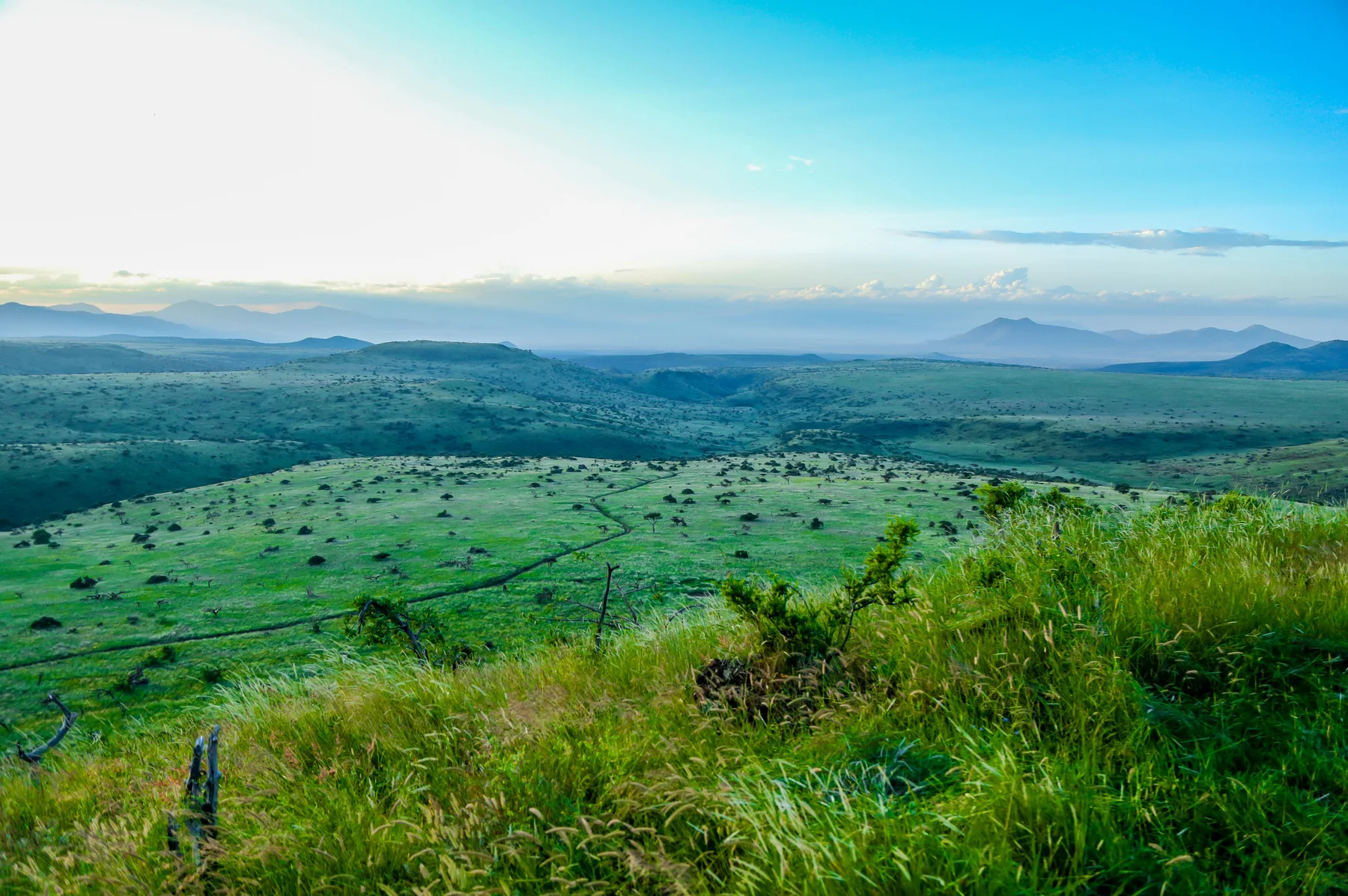
Lewa opens beneath the northern slopes of Mount Kenya in a sweep of grass, wooded valleys and volcanic hills. A black rhino can browse across one ridge while Grevy's zebras gather below it, their narrow stripes and round ears marking the transition from Kenya's highlands into the drier north. The landscape feels private, but not sealed away from a bigger story. Elephants move through a corridor linking the conservancy and Ngare Ndare Forest with Mount Kenya.
This is not a national park with a public gate and a row of unrelated hotels outside. Lewa is a nonprofit wildlife conservancy where tourism supports conservation and community programmes. Most leisure visitors stay at one of five resident lodges, use an authorised vehicle and explore with the property's guide. The choice of lodge shapes the room, activities, vehicle arrangement and rhythm of the safari.
This Lewa Wildlife Conservancy guide compares those five bases, explains the rhino and Grevy's zebra experience, separates Lewa from neighbouring Borana and shows how to connect the conservancy with Samburu, Meru, Laikipia and the Masai Mara.
Is Lewa worth adding to a Kenya safari?
Yes, particularly when rhinos, low vehicle pressure and a conservation-focused stay matter. Lewa combines the wildlife reliability of a well-protected sanctuary with activities more often associated with private ranches. Depending on the lodge, a day may include a game drive, guided walk, horse ride, conservation visit, bush breakfast or quiet time watching animals near camp.
It is not automatically the best northern stop for every traveller. Samburu offers a hotter river ecosystem and a wider feeling of public-reserve exploration. Ol Pejeta has a broader accommodation range and several scheduled conservation attractions. Solio can deliver concentrated rhino viewing in a different private sanctuary. Lewa's strength is the whole package of landscape, guiding, resident lodges and conservation access.
| Your priority | Why Lewa fits | Confirm before booking |
|---|---|---|
| Black and white rhinos | Strong sanctuary and long conservation history | Driving areas and latest wildlife picture |
| Grevy's zebra | Important resident population in suitable northern habitat | Time spent in productive plains |
| Low vehicle pressure | Visitor access is controlled | Private or shared lodge vehicle |
| Active safari | Walking, riding and other options through selected lodges | Age, fitness, duration and inclusion |
| Conservation learning | Ranger and programme visits may be available | Exact visit and operational approval |
| Luxury and privacy | Five small resident properties | Room style, exclusivity and total inclusion |
Lewa is a conservancy, not a national park
A national park is a state-protected area managed under public park rules. Lewa is a nonprofit private conservancy managed through its own governance, conservation plans and visitor code. It can control which vehicles enter, where guests walk and how tourism operates.
The distinction affects the booking. There is no useful generic “Lewa park package” without a named lodge and access plan. Visitors cannot assume that any Nairobi safari vehicle may enter and conduct game drives. Lewa's official arrival guidance says not all vehicles are permitted and some guests need to meet the accommodation vehicle at a gate.
Lewa’s World Heritage connection
In 2013, UNESCO extended the Mount Kenya National Park and Natural Forest World Heritage property to include Lewa Wildlife Conservancy and Ngare Ndare Forest Reserve. The addition recognised a transition from Mount Kenya's forested foothills to the drier grassland and open woodland of the Laikipia plain.
The conservancy is not simply “near a World Heritage Site.” It forms part of the serial property. The link is ecological as well as formal: a wildlife corridor connects the Lewa and Ngare Ndare component with Mount Kenya, allowing elephants and other animals to move between ecosystems.
The elephant corridor matters
The corridor protects movement between Lewa, Ngare Ndare and Mount Kenya. It is a response to a wider problem across Kenya: wildlife needs routes through landscapes where farms, roads and settlements continue to grow.
Do not treat the corridor as a guaranteed visitor attraction or ask to block an elephant moving through it. Its value lies in connectivity. A guide can explain how underpasses, fencing and community cooperation help animals move while reducing conflict with neighbouring farms.
How many nights should you stay?
Three nights create two complete days and suit a first visit. Four allow active experiences, a conservation visit and slower wildlife viewing without sacrificing game drives. Five work for riders, photographers, families using a private house or travellers who want the lodge itself to become part of the journey.
| Nights | What fits | Verdict |
|---|---|---|
| 1 | Arrival, sleep and short drive | Transit, not Lewa |
| 2 | One full day | Good only for a narrow rhino focus |
| 3 | Wildlife plus one specialist activity | Strong minimum |
| 4 | Two wildlife days, activity and flexibility | Best all-round stay |
| 5+ | Riding, photography, conservation and slow lodge time | Excellent for deeper travel |
One recent visitor stayed two nights and wrote, “We loved every minute of it”. That does not make two nights ideal for everyone. It shows what good guiding and a well-matched lodge can do with limited time.
The wildlife experience in one view
Lewa sits at an ecological transition. Highland influence, open grassland, acacia country, seasonal water and rocky hills create habitat for rhinos, elephants, buffalo, Grevy's zebra, reticulated giraffe, lions, leopards, cheetahs, wild dogs, jackals, hyenas and many birds.
Wildlife density varies across the conservancy and through the season. The resident guide's understanding of water, grass and recent movements matters more than a generic species list.

Black and white rhinos
Rhino conservation is central to Lewa. Both black and white rhinos live within the wider Lewa-Borana landscape and are intensively monitored. White rhinos usually graze in open ground, while black rhinos browse and can disappear into thicker vegetation.
The names do not describe colour. Look at mouth shape, posture and feeding. Keep distance, do not block the animal's path and never ask the guide to force a mother and calf into an open view.
Why rhino sightings still need patience
Security and monitoring improve protection, not the predictability of an individual animal. A black rhino can remain behind shrubs at close range. White rhinos may lie in open grass and become surprisingly hard to see in flat light.
Give one sighting time instead of collecting several. The guide can explain ear notches, monitoring and behaviour when it is appropriate to do so without revealing sensitive security information.

Grevy’s zebra
Grevy's zebras are taller and more narrowly striped than plains zebras, with large round ears and a white belly. Lewa protects one of the world's most important resident populations, and UNESCO highlights the species as a major part of the conservancy's added biodiversity.
Do not treat every striped animal as Grevy's. Plains zebras also occur, and seeing both creates a useful comparison. Look at the belly, stripe width, ears and social grouping.
| Feature | Grevy's zebra | Plains zebra |
|---|---|---|
| Stripes | Narrow and closely spaced | Broader |
| Belly | Largely white | Stripes continue beneath |
| Ears | Large and rounded | Smaller |
| Build | Tall, mule-like body | More compact |
| Social pattern | Looser associations, territorial males | Stable family groups are common |
Reticulated giraffes and northern species
Reticulated giraffes bring clean polygonal coat patterns and pale lines into the plains. Beisa oryx, gerenuk and Somali ostrich may also appear in the wider northern transition, although distribution varies and no one drive guarantees a full northern species set.
This is one reason Lewa pairs well with the Mara. The wildlife community and scenery change rather than repeat the same safari farther north.
Elephants, buffalo and the larger landscape
Elephants use Lewa as habitat and as part of a connected regional route. Herds may cross open country, gather near water or move towards neighbouring landscapes. Buffalo can appear in substantial groups and require respectful vehicle positioning.
Leave a corridor between animals and water. When a herd is moving, stop well outside its line instead of racing to the next junction.
Lions, leopards and cheetahs
All three large cats occur, but Lewa should not be chosen for a guaranteed predator checklist. Lions may be located by tracks, calls and recent knowledge. Cheetahs use open ground and can range widely. Leopards remain secretive around woodland, riverine habitat and rocks.
If predators are the single priority, compare Lewa's complete value with a Mara conservancy. A quiet rhino morning and rare Grevy's zebra view may be the better expression of Lewa.
African wild dogs
Wild dogs move across large areas and can cross boundaries. Packs may appear repeatedly for a period and then vanish from normal driving sectors. No ethical planner can promise them.
Book Lewa only when the trip remains worthwhile without a wild dog sighting. Extra nights, skilled guiding and current pack knowledge improve opportunity, not certainty.
Birding in Lewa
The official visitor information records hundreds of bird species across the conservancy. Open plains, wetlands, woodland, bush and the Mount Kenya transition create the variety. Raptors, bustards, hornbills, sunbirds, waterbirds and northern dry-country species can all feature.
A specialist birding drive should start early and move slowly. Ask for the engine to be switched off when safe, carry binoculars and avoid turning every bird stop into a race for a photograph.
Game drives and vehicle rules
Game drives are the core experience, usually arranged by the resident lodge. Controlled access can mean few other vehicles at sightings. One traveller said they could “barely see another jeep” during the day.
Confirm whether the vehicle is private or shared, how many guests sit in each row and whether arrival transport can enter Lewa. A road itinerary with the same driver throughout Kenya may still transfer to a Lewa-authorised guide and vehicle.
Guided walking
Walking is possible through authorised arrangements, not as independent roaming. Lewa's visitor code requires guests walking away from a lodge, camp, house or vehicle to be accompanied by an authorised armed guide competent around dangerous game.
Ask about distance, terrain, guide, pace, minimum age and whether the walk focuses on tracks, birds, plants or fitness. A short nature walk and a long bush walk are different products.
Horse riding
Lewa Wilderness is particularly associated with horse riding, while exact availability elsewhere must be confirmed. Riding can reveal wildlife without an engine, but it requires honest ability matching. A beginner's controlled ride should not join a fast route for experienced riders.
Request helmets, guide qualifications, horse matching, group size, terrain, wildlife protocol and the plan for a non-riding companion.
Conservation experiences
Lewa's visitor information lists behind-the-scenes possibilities connected with anti-poaching work, clinics and schools. Operational demands, privacy and security determine what is available. These visits should support the programme, not turn rangers, patients or pupils into exhibits.
Name the visit in advance, learn its purpose and respect photography restrictions. Never expect access to sensitive rhino security information.
Match activities to the lodge
An activity described somewhere in Lewa is not automatically offered from every room. Equipment, authorised guides, distance and minimum ages differ. Build the programme from the booked property outward.
| Activity | Best question | Detail that changes the experience |
|---|---|---|
| Game drive | Is the vehicle private or shared? | Seat count, guide and driving sector |
| Guided walk | How far and over what terrain? | Age, armed guide, heat and fitness |
| Horse ride | What ability does this route require? | Horse matching, pace, helmets and wildlife protocol |
| Conservation visit | Which programme receives visitors that day? | Operational approval, privacy and photography |
| Bush meal | Is it private and weather dependent? | Timing, dietary needs and cleanup |
| Ngare Ndare visit | Who arranges transport and forest access? | Drive time, guide, canopy or swimming conditions |
Bush breakfasts and sundowners
A meal outside camp can be memorable when it grows from the day's route. A recent visitor loved two bush breakfasts with their guide. The attraction was not a table for social media. It was the way the meal extended the morning drive.
Ask whether the experience is private, included, weather dependent and suitable for dietary needs. Food waste must be removed and wildlife must not be lured towards the site.
The five Lewa lodges
Lewa's official visitor page names Elewana Kifaru House, Elewana Lewa Safari Camp, Lewa House, Lewa Wilderness and Sirikoi Lodge. They share conservancy access but differ in position, ownership style, room mix, family use and activity emphasis.
Borana lodges belong to neighbouring Borana Conservancy. They may access a connected landscape under particular arrangements, but they are not Lewa's sixth, seventh or eighth lodge.
Lewa Wilderness
Lewa Wilderness is an owner-run lodge associated with a broad activity menu, including game drives, walking, riding and flights when arranged. Cottages are spread around mature grounds and may have different outlooks and family suitability.
Choose it when activities and household character matter as much as formal polish. Confirm the exact cottage, steps, distance from central areas, riding programme and whether the vehicle is private.
Lewa House
Lewa House is an intimate owner-run property in the heart of the conservancy. It suits travellers who value hosts, guiding and a small-lodge rhythm. Cottages and family accommodation need to be matched to the group rather than assumed from one photograph.
One reviewer described Lewa House as “perfect in every way”. That is a personal reaction, not a substitute for checking room privacy, stairs, pool use and vehicle sharing.
Sirikoi Lodge
Sirikoi is a small family-owned luxury lodge beside a spring-fed wetland, with tented rooms, a cottage and a private house. The water and lawns can bring wildlife close to the lodge, making time between drives part of the experience.
It can suit honeymoons, multi-generational groups and travellers seeking refined service. Confirm which unit is booked, private dining, vehicle use, child arrangements and the difference between a tent, cottage and exclusive house.
Elewana Lewa Safari Camp
Lewa Safari Camp offers a tented safari style with conservancy access and views across the landscape. It can work for couples, families and travellers who want a recognisable camp atmosphere without losing the conservation focus.
Ask for the tent category, family layout, walking distance, pool, meal plan and vehicle policy. Brand standards do not make every tent position identical.
Elewana Kifaru House
Kifaru House is a small luxury property whose name uses the Swahili word for rhino. It suits travellers looking for an intimate house-like stay and easy attention to rhino country.
Confirm room count, exclusive-use possibilities, child policy and how game drives integrate with neighbouring Lewa Safari Camp operations. Small does not always mean private.
Compare the Lewa lodges
| Lodge | Character | Often suits | Important question |
|---|---|---|---|
| Lewa Wilderness | Owner-run, activity-rich cottages | Riders, active families and repeat visitors | Which activities and cottage are confirmed? |
| Lewa House | Intimate owner-run lodge | Couples and travellers who value hosting | What is the room layout and vehicle plan? |
| Sirikoi | Refined small lodge with private-house options | Honeymoons and multi-generational groups | Which unit and exclusivity level are included? |
| Lewa Safari Camp | Tented camp style | First safaris, couples and families | Which tent category and shared vehicle? |
| Kifaru House | Small house-style luxury property | Quiet luxury and rhino-focused stays | Is the booking room-by-room or exclusive? |
How to get to Lewa by air
Lewa Downs airstrip receives scheduled and private flights. The official conservancy guidance lists connections from Nairobi's Wilson Airport, but airlines, stops, baggage limits and times can change. Confirm the exact flight for the travel date and use the airstrip requested by the lodge.
A fly-in route saves road time and can connect Lewa with the Mara, subject to schedules and intermediate stops. “Direct” may still include brief landings.
How to reach Lewa by road
The road route from Nairobi passes through Kenya's central highlands towards Nanyuki, Timau and the Isiolo road. Traffic, stops and road works affect duration. Lewa's own broad guidance places it around four hours from Nairobi, but a travel itinerary should allow more when the pickup is across the city or the group stops for lunch.
The most important detail is vehicle permission. Confirm whether the trip vehicle enters, transfers at the gate or follows another arrangement.
Fly or drive?
| Choice | Strong reason | Main tradeoff | Confirm |
|---|---|---|---|
| Scheduled flight | Saves road time and can connect safari regions | Baggage limits and possible intermediate stops | Airline, date, Lewa Downs and lodge pickup |
| Private charter | Flexible timing for a group | Higher price and aircraft availability | Landing permission, luggage and total cost |
| Road from Nairobi | Highland scenery and continuous private vehicle | Traffic and longer travel day | Pickup point, stops and gate handover |
| Road from Samburu or Meru | Natural northern route | Exact lodge-to-lodge time varies | Gate, road condition and vehicle permission |
Lewa with children
Lewa can be excellent for families because drives are private or low-density, lodges are small and activities vary. The right property depends on room proximity, pool safety, walking ages, riding ability, meal flexibility and whether the family needs exclusive use.
Never let children walk between rooms after dark without the property's escort guidance. Our Kenya safari with children guide covers vehicle pacing, rooms and age-specific planning across the whole route.
Accessibility and limited mobility
Terrain, cottage steps and high safari vehicles can create barriers. Ask for actual step counts, bathroom layout, path surface, distance from the main area and vehicle transfer method. A lodge described as accessible may still have a steep path from one specific room.
Game drives can be adapted more easily than riding or long walks. Conservation visits may involve steps or standing. Our accessible Kenya safari guide helps turn goodwill into precise arrangements.
Lewa for a honeymoon
Lewa works well for honeymoons that value privacy, wildlife and small-lodge hospitality. Sirikoi, Kifaru House, Lewa House, Lewa Wilderness and Lewa Safari Camp create different moods, so “Lewa honeymoon” is not one package.
Ask about the most private room, vehicle sharing, private meals, activity timing and whether a special setup costs extra. The best romantic moment may be an unhurried hilltop drink, not a crowded list of decorations.
Seasons and landscape changes
Lewa sits at elevation, so mornings and evenings can be cool. Rain greens the plains, fills seasonal water and can make roads muddy. Drier periods open sightlines and concentrate some wildlife near dependable water, while dust increases.
The exact rainfall pattern varies. Do not promise a fixed green or dry month. Pack layers and allow the guide to choose roads around conditions.
| Condition | Safari effect | Planning response |
|---|---|---|
| Recent rain | Green hills, flowers and muddy tracks | Use flexible drive routes |
| Dry spell | Open sightlines and dust | Protect cameras and eyes |
| Cool morning | Excellent activity conditions | Carry a warm layer |
| Thick vegetation | Black rhinos and leopards harder to see | Slow the drive and read tracks |
| Clear mountain air | Strong Mount Kenya views | Use early light without guaranteeing cloud-free peaks |
Photography
Bring a long lens for rhinos, Grevy's zebra and birds, plus a wide lens for Mount Kenya and the plains. Vehicle positions and low traffic can create patient sightings, but the conservancy's access is not permission to crowd animals.
Ask whether a private vehicle or photographic setup is worth the cost. Riders and walkers need smaller, secured equipment rather than loose camera bags.
Responsible tourism and community benefit
Lewa states that tourism contributes to its annual revenue and supports wildlife protection and community programmes. A conservancy fee is therefore part of the conservation model, not simply another gate charge.
Responsible participation includes respecting staff privacy, photography rules and programme schedules. Community benefit should be explained through governance, jobs, education, health or partnerships, not reduced to a staged village visit.
What does a Lewa safari cost?
There is no reliable single Lewa price. The total depends on the lodge, season, room, conservancy fees, full-board or all-inclusive basis, private vehicle, flights, transfers, activities and special conservation visits.
| Cost line | What changes it | What must be named |
|---|---|---|
| Accommodation | Lodge, room, season and party | Exact room and meal basis |
| Conservancy fee | Age, date and package basis | Included or separate |
| Vehicle | Private or shared, arrival arrangement | Vehicle days and seat layout |
| Flight | Route, airline, date and stops | Airstrip, baggage and transfer |
| Road transfer | Vehicle permission and origin | Gate handover and luggage |
| Activity | Lodge, guide, equipment and duration | Riding, walking or conservation inclusion |
| Exclusive use | House, cottage or vehicle | Minimum stay and staffing |
Use our Kenya safari cost guide to compare Lewa with the complete trip rather than an incomplete nightly rate.
What to pack
Pack neutral layers, a warm jacket, sun protection, closed shoes and binoculars. Riding requires the clothing and ability guidance provided by the lodge. A soft-sided bag is important for small aircraft, with the exact allowance confirmed for the booked flight.
Bring medication in hand luggage and protect cameras from dust and sudden rain. Our Kenya safari packing guide covers the wider journey.
Lewa, Borana and the connected landscape
Lewa and Borana form a connected conservation landscape, but they remain distinct conservancies with their own lodges and operating rules. A Borana lodge should not be sold as though it sits inside Lewa. Cross-boundary drives must be confirmed for the chosen property and date.
Choose Lewa for its five resident lodges and established conservation visitor programme. Choose Borana when a particular lodge, hill landscape, riding programme or privacy model fits better.
Lewa compared with Ol Pejeta
Ol Pejeta is larger, nearer Nanyuki and offers a broad range of accommodation, day access and scheduled conservation experiences. Lewa feels more exclusively tied to its resident lodges and controlled vehicle model. Both protect rhinos.
Our planned Ol Pejeta Conservancy guide will compare sectors, chimpanzee sanctuary access, activity timing and lodging. The Laikipia safari guide places both within the wider region.
Lewa, Ol Pejeta, Solio and Samburu compared
| Area | Strongest identity | Accommodation pattern | Choose it when |
|---|---|---|---|
| Lewa | Rhino, Grevy's zebra and resident-lodge conservancy | Five small properties inside | Controlled access and a complete lodge-conservation stay matter |
| Ol Pejeta | Rhino and varied conservation attractions | Broad range inside and near gates | Activities, budgets and day access need flexibility |
| Solio | Private rhino sanctuary and open grassland | Limited, highly specific access | Concentrated rhino time is central |
| Samburu | River, dry north and public-reserve exploration | Camps across three connected reserves | Northern scenery and river wildlife matter more than rhino focus |
The table is a decision aid, not a ranking. A well-matched three-night stay is better than one night in two famous places.
Lewa and Solio
Solio is a private rhino sanctuary west of Mount Kenya with strong open-country rhino viewing and a different accommodation structure. It can pair with the Aberdares or replace Lewa when concentrated rhino time matters more than a broad activity and lodge choice.
Use our planned Solio Game Reserve and Solio Ranch guide to separate sanctuary access, ranch geography and lodge arrangements.
Lewa and Samburu
Samburu adds the Ewaso Ng'iro River, dry-country scenery and a public-reserve system adjoining Buffalo Springs and Shaba. Lewa adds rhinos, controlled access and highland-to-northern transition. Three nights in each create a strong northern Kenya route.
Our planned Samburu National Reserve guide will compare the three reserves and river crossings. The Masai Mara, Samburu and Ol Pejeta safari shows the logic of a northern conservancy and southern plains combination, even when Lewa replaces Ol Pejeta.
Lewa and Meru
Meru National Park offers a larger, less manicured public-park landscape with rivers, doum palms and wide game-drive sectors. Lewa can provide a polished first northern chapter before Meru's spacious exploration.
Read the planned Meru National Park guide before deciding whether road time and contrasting styles earn both.
A strong three-night itinerary
Arrive for lunch or mid-afternoon, settle in and use the first drive near the lodge. On day two, begin early in rhino and Grevy's zebra habitat, add a bush breakfast if it fits naturally and rest at midday. Use the afternoon for a different sector.
Day three holds the specialist choice: walking, riding or a conservation visit, followed by a game drive. Depart after breakfast on day four. This gives every day a purpose without turning activities into trophies.
A four-night active itinerary
The first three days follow the wildlife rhythm above. The extra day adds a longer ride, deeper birding, Ngare Ndare arrangement through the lodge or a photography session. Families can split activities without forcing every person into the same programme.
Four nights also create weather flexibility. A walk postponed by rain no longer replaces the only rhino morning.
Common planning mistakes
| Mistake | Why it fails | Better choice |
|---|---|---|
| Calling Lewa a national park | It hides access and vehicle rules | Book a named conservancy lodge |
| Choosing only by room photograph | Activities and position differ | Compare all five properties |
| Assuming any safari vehicle enters | Permission is controlled | Confirm gate handover in writing |
| Promising wild dogs or cats | Wide-ranging wildlife is unpredictable | Sell the rhinos, Grevy's zebra and whole landscape |
| Describing Borana lodges as Lewa lodges | It confuses location and access | Name the conservancy first |
| Staying one night | The transfer consumes the experience | Use at least three nights |
| Assuming every lodge offers riding | Activities are property-specific | Name the lodge, guide and exact ride |
| Treating a community visit as theatre | It disrespects people and programme work | Use an agreed, purposeful visit |
What travellers notice
One repeat East Africa traveller described a “landscape was dry and spread far and wide” while calling the “variety of wildlife excellent”. They finished with “a truly special and outstanding experience”.
Those details are more useful than a perfect-score summary. Lewa can be dry, open and quiet. The value comes from how wildlife, guiding and controlled access work together.
Frequently asked questions
Is Lewa a national park?
No. It is a nonprofit private wildlife conservancy with controlled visitor and vehicle access.
How many nights do I need?
Three nights are a strong minimum. Four suit riding, walking, conservation visits, families and photographers.
Can I see rhinos?
Black and white rhinos live in Lewa, but every sighting remains wild. Skilled guides and enough time improve the experience.
Can I see Grevy’s zebras?
Lewa protects an internationally important resident population. Sightings are likely in suitable areas but never guaranteed.
Which lodges are inside Lewa?
Lewa Wilderness, Lewa House, Sirikoi Lodge, Elewana Lewa Safari Camp and Elewana Kifaru House are the five properties listed by the conservancy.
Can my Nairobi safari vehicle enter?
Not automatically. Lewa says not all vehicles are permitted. The lodge may meet guests and luggage at a gate.
Can I fly to Lewa?
Yes. Scheduled and private flights use Lewa Downs airstrip. Confirm the operating schedule, stops and baggage allowance.
Can children stay?
Yes at suitable properties. Match room proximity, vehicle use, activity ages and pool safety to the family.
Is Lewa good for a honeymoon?
Yes. The small lodges, scenery and controlled visitor numbers suit couples, but privacy depends on the exact room and vehicle plan.
Can I visit Ngare Ndare Forest?
It may be arranged through selected stays, subject to access, safety and current operations. Confirm transport, guide and activity details.
Choose the conservation story you want to enter
Lewa is at its best when the guest understands the land before choosing the room. The rhino sanctuary, Grevy's zebras, elephant corridor and resident lodges are parts of one model, not separate attractions placed on a package list.
Use this Lewa Wildlife Conservancy guide to match the right lodge, vehicle and activity pace. Tell us your dates, travellers, interests and next destination, and we will build a Lewa stay that earns its nights.
Tell us what Lewa should feel like
Share the dates, travellers, wildlife priorities, activity interests, room style, vehicle preference and next destination. We will compare all five resident lodges.