Kenya Conservation Safaris: Travel That Supports Wildlife and Communities
Trace safari fees to named parks, conservancies, community hosts and wildlife programmes, then travel with clear welfare boundaries.
- What makes a safari a conservation safari?
- Follow the safari money
- Kenya’s national parks and reserves
- The Mara conservancy model
- Laikipia: conservation across working landscapes
- Rhino conservation experiences
- Elephant orphan care and Nairobi conservation visits
- Community-led tourism and cultural visits
- Conservation activities travellers may be able to book
- Wildlife corridors and why one protected island is not enough
- How to choose a lodge with credible conservation work
- Conservation levies, donations and philanthropy
- Research visits and citizen science
- Photography on a conservation safari
- What a conservation safari is not
- Compare two conservation-focused proposals
- Animal welfare: questions to ask before any close encounter
- How to check an eco or conservation claim
- Carbon, flights and honest impact
- Conservation safari route ideas
- A booking brief for a conservation safari
- Responsible behaviour in the field
- Frequently asked questions
A lion sighting lasts ten minutes. The land that made the sighting possible needs protection every day of the year.
That is the real starting point for a conservation safari in Kenya. Rangers need equipment and salaries. Wildlife corridors must remain open. Families living beside elephants need reasons and practical support to keep land available for wildlife. Schools, clinics, grazing plans and local livelihoods are not side stories. They are part of whether the ecosystem survives.
This guide shows what responsible impact can look like, where travellers can learn from conservation work and how to recognise claims that need better evidence.
What makes a safari a conservation safari?
Every legal park visit contributes in some way through entry fees, employment and the tourism economy. A conservation-focused trip goes further by making that connection visible and intentional.
It may include:
- nights in a well-governed wildlife conservancy;
- conservation fees paid directly to the protected area;
- locally owned accommodation or guiding;
- a visit to a recognised research, rehabilitation or education programme;
- time with rangers or conservation staff through an authorised activity;
- community experiences designed and led by the host community;
- a donation to a verified project, kept separate from the safari price;
- a route that supports less-visited landscapes as well as famous parks.
The word “conservation” does not mean travellers are joining anti-poaching patrols or handling wildlife. Serious field operations protect sensitive information and require training. A responsible visit offers education without turning security work, veterinary intervention or animal stress into entertainment.
Follow the safari money
The simplest responsible-travel question is: who receives the money?
| Payment | Likely recipient | What it can support |
|---|---|---|
| National park fee | Government protected-area authority | Park management, infrastructure and wildlife protection |
| County reserve fee | County or reserve authority | Reserve operations and local public revenue |
| Conservancy fee | Conservancy organisation | Land leases, rangers, habitat management and local programmes |
| Lodge rate | Property or tourism partner | Employment, operations and any declared conservation commitments |
| Local guide fee | Individual guide or guide association | Skilled local livelihoods and field knowledge |
| Community experience fee | Community group or host enterprise | Income controlled under the agreed local model |
| Direct donation | Named registered organisation or project | Restricted or general programme support |
These streams should not be blurred. A park fee is not a donation to a lodge. A nursery entry donation may be separate from the national park fee required to reach it. A conservation levy should name the beneficiary and purpose.
Build a conservation-focused Kenya safari
Tell us which wildlife landscapes, community partnerships and conservation programmes matter to you. We will name the fees, hosts and confirmed experiences in the route.
Kenya’s national parks and reserves
Kenya's national parks protect public wildlife landscapes under Kenya Wildlife Service. County reserves, including the Masai Mara National Reserve, have their own management and fee structures.
Entry fees are part of the cost of keeping these places open, but a traveller should still ask which fees the package includes. The itinerary should name each park or reserve and the number of entry periods rather than hiding everything inside one line.
Classic protected areas can form the backbone of the trip:
- Amboseli for elephants, wetlands and the wider Kilimanjaro ecosystem;
- Tsavo East and Tsavo West for immense connected landscapes and elephant range;
- Lake Nakuru for rhino protection, wetland birds and Rift Valley ecology;
- Meru for a quieter, ecologically varied national park;
- Aberdare for montane forest, moorland and water catchments;
- Nairobi National Park for a protected savannah beside a capital city.
A conservation route need not avoid popular parks. It should understand why those parks matter and behave responsibly inside them.
The Mara conservancy model
The Greater Mara includes the national reserve and a network of conservancies on community land. They are not one product and should not be described as if their governance, rules and benefits are identical.
The Maasai Mara Wildlife Conservancies Association explains the broad model as a partnership between landowners and tourism partners. A distinctive feature is the direct lease fee paid to participating landowners under signed agreements. Other benefits can include bursaries, grazing access arrangements, compensation schemes and access to credit, depending on the conservancy.
For travellers, a conservancy stay may also offer lower vehicle density, guided walks, night drives and off-road viewing under local rules. Those tourism privileges are not the conservation outcome by themselves. The important question is whether the system secures habitat and produces fair, dependable benefits for the people whose land supports wildlife.
Before choosing a camp, ask:
- which conservancy it operates in;
- whether it is an official tourism partner;
- which conservation or bed-night fee applies;
- how landowners participate in governance and benefit;
- whether cattle grazing and wildlife use are managed together;
- which activities are permitted;
- whether the itinerary also enters the national reserve;
- how the camp reports environmental and community work.
Read our Mara conservancies guide for the practical differences between areas.

Laikipia: conservation across working landscapes
Laikipia brings wildlife, ranching, community conservancies and private protected areas into the same wider landscape. This is one of the best regions for travellers who want to understand that conservation happens beyond national park boundaries.
The experience can combine rhinos, elephants, Grevy's zebra, wild dogs, walking, hides, research interpretation and community-led activities. The precise programme differs by conservancy and property.
Ol Pejeta Conservancy
Ol Pejeta is known for black rhino conservation, Najin and Fatu, the last two northern white rhinos, and Kenya's only chimpanzee sanctuary. Its visitor programme can include educational conservation activities, while the Morani Information Centre explains wildlife management and rhino conservation.
This is not a petting-zoo promise. Activities must follow the conservancy's booking, safety and animal-welfare rules. The value lies in meeting informed staff, understanding the work and seeing protected animals in context.
Lewa Wildlife Conservancy
Lewa describes community-based conservation as collaboration with people living near wildlife and the reinvestment of benefits from wildlife protection and tourism into communities. Its approach connects wildlife management with education, health, livelihoods and coexistence.
For the traveller, a Lewa stay can provide rhino viewing, strong guiding and a high-quality safari. The conservation meaning comes from the institution and its relationships, not simply from exclusivity or price.
Community conservancies in northern Kenya
Northern community conservancies vary greatly. Some have established tourism partnerships and accommodation. Others are building governance, ranger capacity and livelihoods without a conventional luxury camp.
A route should use named, legitimate partners and avoid treating “the local community” as a single anonymous attraction. Ask who owns the experience, who sets the price and how visitor revenue is managed.
Rhino conservation experiences
Rhinos are among the strongest reasons travellers seek conservation-focused safaris, but the language around them must remain careful.
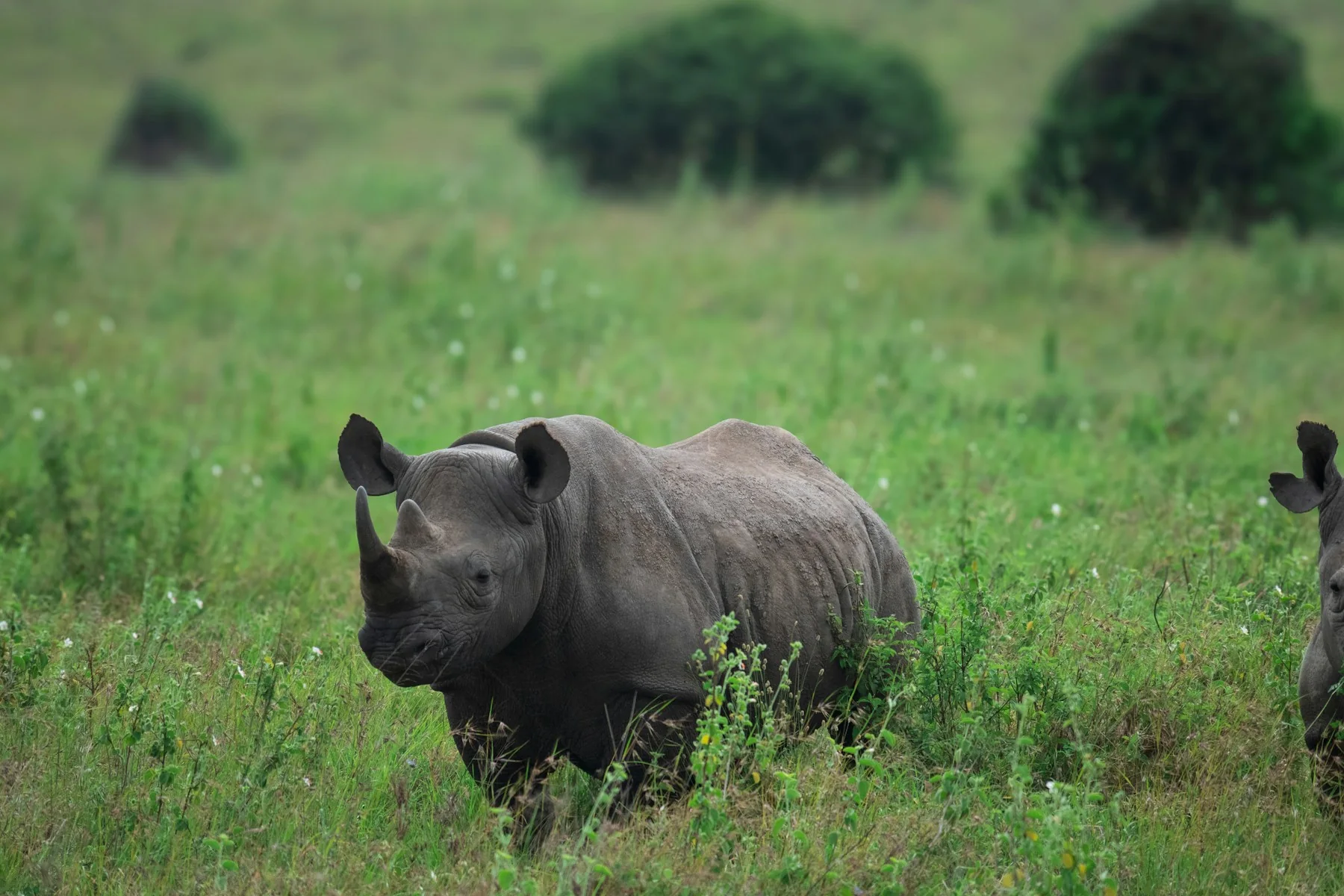
Kenya protects both black and white rhinos in selected parks and conservancies. Security methods, locations and individual animal information can be sensitive. A public visitor activity should never disclose patrol details or encourage close contact for a photograph.
A good rhino conservation component may include:
- time in a recognised rhino sanctuary;
- an authorised interpretation session;
- a visit to an information centre;
- a ranger-led experience offered by the protected area;
- a direct donation through the organisation's official channel;
- learning how habitat, genetics, veterinary care and security fit together.
It should not promise touching, feeding or unrestricted access to wild rhinos.
Elephant orphan care and Nairobi conservation visits
The Sheldrick Wildlife Trust Nairobi Nursery offers a structured public visit focused on rescued orphaned elephants and the wider conservation programme. Advance booking is required. The public session operates at a fixed time, and visitors also need to account for the separate Kenya Wildlife Service entry requirement for Nairobi National Park.
The Trust states that only keepers feed and directly interact with the orphans. That boundary matters. Rehabilitation aims towards life in the wild, not habituation for visitor entertainment.
A Nairobi conservation day can combine the Nursery with Nairobi National Park when timing, booking and park entry are arranged correctly. The visit should be secured through the organisation's official process, not an unofficial reseller promising special access.
Other sanctuaries and rescue centres need the same scrutiny. Ask about legal status, release or lifetime-care policy, veterinary oversight, breeding, visitor contact and how funds are used.
Add a credible conservation visit
Tell us which wildlife landscapes, community partnerships and conservation programmes matter to you. We will name the fees, hosts and confirmed experiences in the route.

Community-led tourism and cultural visits
A village visit is not automatically conservation, and a performance is not automatically cultural exchange.
The best experiences are hosted on terms that the community controls. The price, duration, photography rules, group size and activities should be clear. Hosts should be able to say no. Travellers should know where the fee goes and whether crafts are sold directly by makers.
Meaningful possibilities include guided walks, beadwork, livestock and grazing discussions, storytelling, food, school or health projects that actively welcome visitors, and conversations about living beside wildlife. No visit should pressure children into performing or turn private homes into unannounced viewing stops.
Our guide to respectful Maasai village visits explains how to plan time with hosts without reducing people to scenery.
Conservation activities travellers may be able to book
Availability changes by protected area, season, staffing and research need. A named activity should be confirmed before it appears as a trip highlight.
| Activity | What it may involve | Boundary to respect |
|---|---|---|
| Ranger or conservation briefing | Current work, habitat and threats | No disclosure of sensitive operations |
| Rhino or predator monitoring experience | Learning about identification and data | Only through an authorised programme |
| Camera-trap or research interpretation | How evidence guides management | Research is not staged for a visitor |
| Conservancy walk | Ecology, tracks, plants and land use | Follow local safety and access rules |
| Community-hosted experience | Livelihood, culture and coexistence | Hosts control content and photography |
| Tree or habitat restoration | Approved practical work | Avoid one-off planting without aftercare |
| Citizen-science record | Bird or wildlife observation | Use the programme's method and protect locations |
| Direct project visit | Meeting staff and seeing the programme | Confirm that visitors are welcome and useful |
Not every safari needs an activity in this table. Paying legitimate fees, choosing responsible partners and staying longer can have more value than a staged hour labelled “conservation.”
Wildlife corridors and why one protected island is not enough
Wildlife does not recognise the line on a visitor map. Elephants move between wet- and dry-season range. Predators follow prey. Young animals disperse. Rivers, grass, salt, shade and safety change across the year.
This is why conservation beyond park borders matters. A national park can protect a core landscape, while community and private land around it holds a migration route, dispersal area or drought refuge. A fence, settlement or poorly placed development can interrupt the connection even when the park itself remains protected.
Travellers see this most clearly in the Greater Mara, the Amboseli ecosystem, Laikipia and northern Kenya. The overnight choice can contribute to land that links, buffers or expands better-known protected areas.
The itinerary should still avoid exaggerated claims. One lodge does not “save the corridor” on its own. Ask for the named landscape, partnership and mechanism. Is tourism paying land leases? Is a conservancy maintaining grazing agreements? Is a land trust securing habitat? Is a community enterprise making wildlife-compatible income possible?
Kenya conservation safaris become more meaningful when the traveller understands the connection between the animal in the photograph and the land beyond the frame.
How to choose a lodge with credible conservation work
A traveller’s view: One conservancy guest wrote, Ol Pejeta was a pleasant surprise. We loved the landscape and mt kenya in the background.
The independent conservancy discussion also compares wildlife, privacy, activities and community connections across several Kenya stays.
A beautiful room and low-density wildlife viewing can be excellent parts of a responsible safari. They are not proof of conservation performance.
Read the property's conservation page, then look for evidence beyond it:
- the name of the conservancy, trust or community partner;
- an explanation of land tenure or tourism partnership;
- recent reports or figures with a clear reporting period;
- local employment and management information;
- water, energy and waste practices suited to the location;
- procurement from identifiable local producers;
- a wildlife-viewing code enforced by guides;
- transparent community fees and guest levies;
- a way to raise grievances or welfare concerns;
- long-term relationships rather than one-off gift photographs.
Ask how many vehicles may join a sighting and whether guides are expected to follow a code. A property cannot claim wildlife leadership while its vehicles crowd cheetahs, surround elephants or block crossings.
Location also affects impact. A lodge deep inside a sensitive habitat needs a stronger operational case than a lodge on already disturbed ground. Solar power is useful, but it does not erase poor siting, excessive water use or disruptive traffic.
Conservation levies, donations and philanthropy
A mandatory conservation levy should appear in the price or exclusions before booking. The traveller should know the amount or basis, the beneficiary, whether tax applies and whether the levy can change.
A donation is different. It should remain voluntary unless the product explicitly states otherwise. For substantial gifts, contact the organisation directly, ask whether funds can be restricted to a programme and request an official receipt. Avoid handing cash to an individual who cannot show authority to collect it.
Travellers can also support work without creating a special visit. Options include:
- donating to a named conservancy or wildlife trust;
- buying from a genuine community-owned shop or cooperative;
- paying a qualified local guide;
- funding a school, clinic or bursary through its formal programme;
- joining a legitimate membership or adoption scheme;
- returning to the same well-governed landscape;
- sharing accurate information without revealing sensitive locations.
The most photogenic project is not automatically the highest priority. Organisations may need unrestricted funds for ranger uniforms, fuel, veterinary supplies, governance, monitoring or administration. Responsible administration is part of delivering conservation, not money lost to the mission.
Research visits and citizen science
Wildlife research is careful, repetitive work. A researcher may spend days checking cameras, entering data or failing to locate an animal. A visitor activity should not manufacture drama or interfere with protocols.
When a conservancy offers a research experience, ask what guests actually do. They may learn to identify individuals, understand radio tracking, see how camera traps work or discuss how records shape management. Direct participation should be limited to tasks the programme has approved and can supervise.
Citizen science can add value when observations follow a recognised method. Bird records, wildlife sightings or invasive-plant observations may be useful, but sensitive species require location protection. The project, not the traveller, should decide what data is collected and published.
Never fly a drone, place a camera trap, collect a feather or approach a carcass without explicit legal permission. Biological samples and wildlife parts are regulated even when they appear harmless.
Photography on a conservation safari
Photography can tell a strong story when captions are accurate and consent is real.
For wildlife, photograph natural behaviour and maintain distance. Do not ask for off-road access where it is prohibited. Avoid posting a rhino location in real time. Remove GPS metadata when a sensitive record could reveal a den, nest or individual animal.
For people, ask before lifting the camera. Group consent is not automatically individual consent. A guide or host can explain whether photography is welcome, restricted or carries an agreed fee. Children require particular care and should not become fundraising props.
Caption the institution and work precisely. “A community conservancy where tourism partners lease land from participating landowners” is more useful than “saving Africa.” Name the people and organisations only with permission, and link to their official information when encouraging support.
Plan a conservation and photography journey
Tell us which wildlife landscapes, community partnerships and conservation programmes matter to you. We will name the fees, hosts and confirmed experiences in the route.
What a conservation safari is not
It is not a competition to collect the most emotional animal encounters.
It is not an excuse to enter staff areas, follow rangers on sensitive operations or request veterinary intervention for entertainment. It is not a short volunteer placement that replaces trained Kenyan employment. It is not an orphanage crawl. It is not a promise that every lodge employee, landowner or community member agrees with every project decision.
Conservation contains trade-offs. Livestock needs water and grass. Elephants damage crops. Predators take stock. Lease models affect land use. Tourism can bring income and also pressure. A good host explains complexity without turning local people into villains or wildlife into a simple success story.
The traveller's role is modest but useful: pay fairly, choose credible institutions, listen, follow rules and support work that continues after departure.
Compare two conservation-focused proposals
Put claims beside mechanisms.
| Question | Proposal A | Proposal B |
|---|---|---|
| Which protected areas and conservancies are included? | ||
| Which fees go directly to each area? | ||
| Which property is an official tourism partner? | ||
| Who owns and leads each community experience? | ||
| Which conservation visits are confirmed? | ||
| What animal-contact rules apply? | ||
| Which recent reports support the claims? | ||
| Are donations optional and paid directly? | ||
| How are vehicle numbers and wildlife conduct managed? | ||
| What is excluded from the package? |
A proposal with fewer conservation labels may be stronger if its fees, partners and access are clear. A long list of projects is not helpful when no visit is confirmed and no beneficiary is named.
Animal welfare: questions to ask before any close encounter
Wild animals do not exist for selfies. Close-contact experiences deserve serious scrutiny.
Ask:
- Why is the animal in care?
- Is release the goal, and if not, why not?
- Who licenses and inspects the facility?
- Is there independent veterinary oversight?
- Are animals bred for visitor demand?
- Can visitors touch, feed, hold, ride or walk with them?
- Does visitor contact interfere with natural behaviour or rehabilitation?
- Are donations paid through an official channel?
Red flags include cub petting, sedated animals, guaranteed handling, constant breeding of young animals, unclear ownership and claims that every interaction “raises awareness” without evidence.
How to check an eco or conservation claim
Look for specific nouns and verifiable documents.
“We support communities” is a slogan. “A stated bed-night levy is paid to a named conservancy under a published tourism partnership” is a claim that can be checked.
| Evidence | Strong signal | Weak signal |
|---|---|---|
| Beneficiary | Named conservancy, trust, association or project | “Local causes” |
| Money flow | Fee or levy and who receives it | An unspecified percentage |
| Governance | Board, landowner or community representation explained | No decision-making information |
| Reporting | Recent annual or impact report | Old award badge only |
| Wildlife work | Named programme, partners and methods | Stock photos and broad promises |
| Community work | Hosts, location, ownership and results | Children used as marketing imagery |
| Environmental operations | Energy, water, waste and purchasing described | Towels reused but no wider plan |
| Carbon claim | Boundary, calculation, reduction and verified offset named | “Carbon neutral” with no method |
Certifications can help, but no badge replaces reading what the organisation actually does.
Carbon, flights and honest impact
A Kenya safari creates emissions, especially through international flights, domestic aviation, vehicle travel, energy and supply chains. Responsible planning should not pretend otherwise.
The first steps are practical:
- stay longer rather than taking several short long-haul trips;
- design a coherent route without unnecessary backtracking;
- choose road or flight sectors for a clear reason;
- use properties that publish credible operational practices;
- reduce disposable packaging;
- support habitat protection with long-term value;
- treat any offset as additional, not as permission to ignore emissions.
If a company claims a trip is carbon neutral, ask what is measured, which reduction actions happened first, which standard applies and whether the credits are independently verified.
Conservation safari route ideas
The best Kenya conservation safaris connect credible institutions without making every day feel like a seminar.
Six days: Nairobi and Laikipia
- Nairobi National Park;
- pre-booked Sheldrick Wildlife Trust Nursery visit;
- Ol Pejeta Conservancy;
- optional central highlands or Solio Ranch extension;
- Nairobi departure.
Nine days: Amboseli, Tsavo and Nairobi
- Nairobi conservation day;
- Amboseli for elephants, wetlands and coexistence context;
- Tsavo West and Tsavo East;
- property or programme visit only where officially offered;
- coast or Nairobi finish.
Ten days: Mara reserve and conservancy
- Masai Mara National Reserve;
- a recognised Greater Mara conservancy stay;
- community-hosted activity;
- guided walk or conservation interpretation under conservancy rules;
- Nairobi return.
Fourteen days: northern conservation landscapes
- Ol Pejeta or Lewa;
- Samburu and a named community conservancy;
- Meru National Park;
- optional Nairobi conservation visit;
- one or two rest days to avoid turning the trip into a study tour.
The route should still include excellent guiding, comfortable accommodation and unstructured wildlife time. Conservation knowledge deepens the safari. It does not have to remove its joy.
A booking brief for a conservation safari
Share:
- dates and group size;
- accommodation level;
- wildlife priorities;
- community, rhino, elephant, bird or research interests;
- preferred level of discussion and activity;
- walking and mobility needs;
- whether children are travelling;
- photography interests;
- budget for direct donations;
- organisations already supported;
- experiences the group does not want.
Ask the planner to identify every conservation or community fee separately, provide direct links to named organisations and distinguish a confirmed visit from a request.
Turn my values into a Kenya route
Tell us which wildlife landscapes, community partnerships and conservation programmes matter to you. We will name the fees, hosts and confirmed experiences in the route.
Responsible behaviour in the field
- Follow guide and ranger instructions.
- Keep vehicle distance and never pressure a driver to crowd wildlife.
- Do not block an animal's path or separate mothers and young.
- Keep noise low at sightings.
- Never share sensitive locations for rhinos, nests or den sites.
- Ask permission before photographing people.
- Buy crafts directly when possible and agree prices respectfully.
- Do not bring sweets, pens or cash to hand to children.
- Use official donation channels.
- Report serious welfare concerns to the relevant authority or organisation.
The strongest conservation behaviour is often quiet: one vehicle giving an animal space, one traveller listening to a host, one itinerary paying the right fee to the right institution.
Frequently asked questions
Do all Kenya safaris support conservation?
Legal park and reserve visits contribute through fees and the tourism economy, but the transparency and depth of conservation impact vary.
What is a wildlife conservancy in Kenya?
A conservancy is land managed for wildlife and wider benefits under a particular governance model. Ownership and management can be community, private or partnership-based.
Are Mara conservancies part of the national reserve?
No. They are separate protected areas in the Greater Mara ecosystem, with their own partners, rules and fees.
Can I meet wildlife rangers?
Some protected areas offer authorised ranger or conservation experiences. Operational patrols and sensitive security information remain restricted.
Can I volunteer with animals during a holiday?
Short visits rarely qualify a traveller for animal-care work. Choose established educational visits and do not expect physical contact.
Is visiting an elephant orphanage ethical?
It can be when the organisation is legitimate, rehabilitation and welfare guide the programme, interaction is restricted and visitor funds support the work.
Does a luxury lodge harm conservation credibility?
Not automatically. High-value tourism can fund land protection and livelihoods. The test is governance, money flow, operations and evidence.
Should I donate through the tour operator?
Direct official channels often make the beneficiary and receipt clearer. A planner can link the organisation without collecting the donation.
Can families take a conservation safari?
Yes. Choose age-appropriate interpretation, reasonable driving hours and activities that do not depend on children staying silent for long periods.
How can I avoid greenwashing?
Ask for the named beneficiary, fee, governance model, recent report, measurable work and animal-welfare policy.
Plan my Kenya conservation safari
Tell us which wildlife landscapes, community partnerships and conservation programmes matter to you. We will name the fees, hosts and confirmed experiences in the route.
Tell us what responsible travel means to you
Share the wildlife, places and community or conservation interests that matter. We will identify named partners, fees, confirmed access and clear animal-welfare limits.