
Where to See Wild Dogs in Kenya: The Honest Laikipia Guide
If African wild dogs are the animal you most hope to see, head north rather than simply adding another Mara drive. But a pack is never an appointment on a safari calendar.
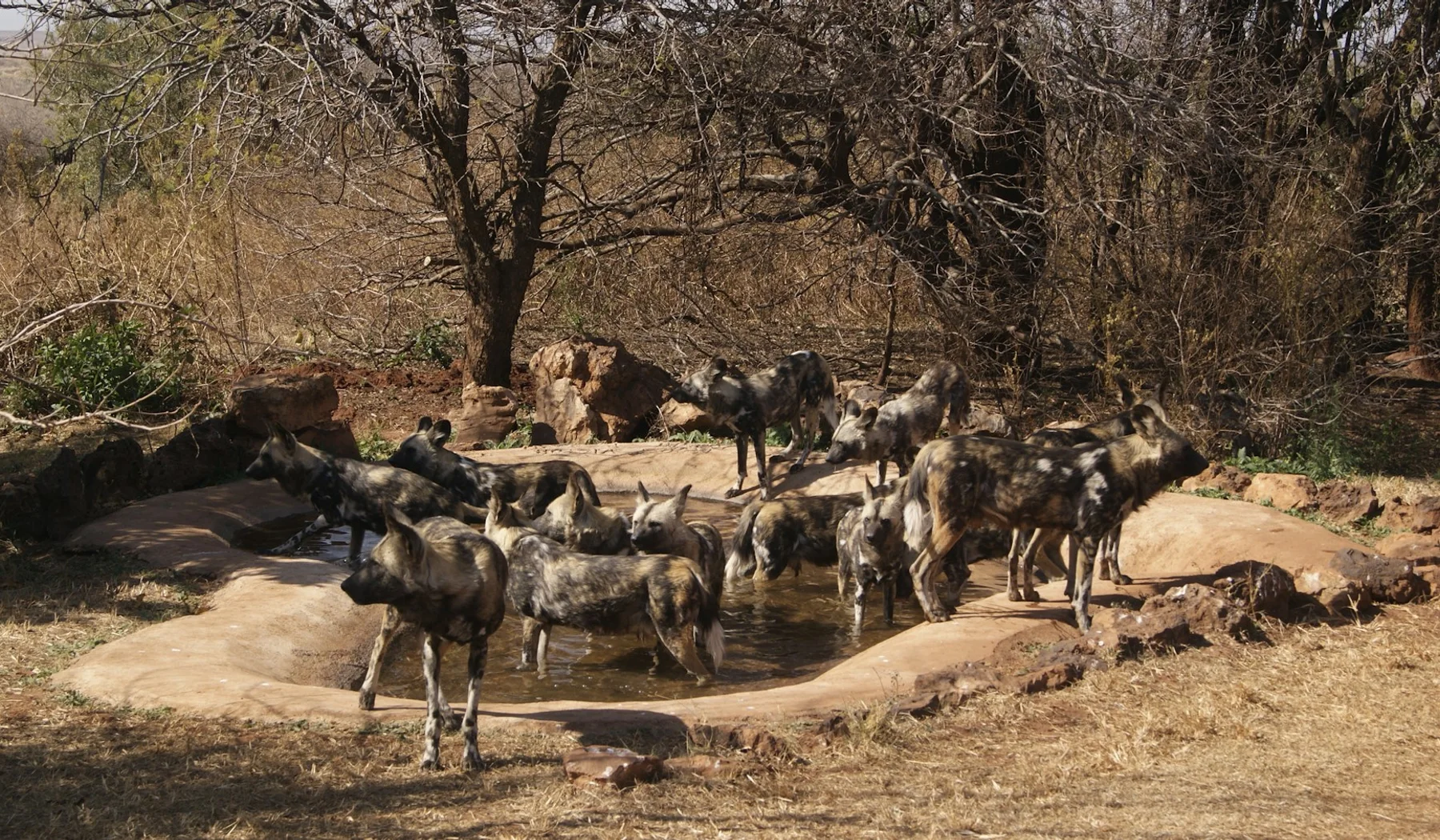
The guide hears something on the radio. A pack was seen across the ridge earlier, but it could be kilometres away now. You turn towards the open country anyway. Perhaps you find painted coats moving through the grass. Perhaps you find fresh tracks and spend the morning with elephant, Grevy’s zebra and the very real suspense of looking. That uncertainty is part of a wild dog safari.
African wild dogs, also called painted dogs, are not stray domestic dogs. They are highly social wild predators with large territories. The useful question is not only which park has them? It is whether the place you can actually visit lies within a pack’s present range, whether a local guide can operate there, and whether you would enjoy the destination even on a dog-free day. Kenya’s strongest answer is the wider Laikipia landscape, particularly the connected country reaching into Samburu and Isiolo. The Samburu-Laikipia Wild Dog Project works across all three counties. Its recovery story is encouraging, but it does not turn a particular camp into a guaranteed sighting.
Where to see wild dogs in Kenya: the short answer
Start with a multi-night Laikipia stay at a property that has credible local records and a good general wildlife programme. Laikipia Wilderness describes wild dogs in its operating area, Sosian lists them in its southern woodland, Ol Jogi has documented conservation work with a pack, and Ol Pejeta’s own reporting records them in its wider predator community. These are different access models and different pieces of a large, unfenced ecosystem. A report from one property is not a promise for the property next door.
| Area | Evidence for wild dogs | How to treat it as a traveller | What else makes the stay worthwhile |
|---|---|---|---|
| Laikipia conservancies and ranches | Active regional research and property-level records | Best starting landscape, not a guarantee at every property | Varied private-conservancy experiences, elephants, Grevy’s zebra and other northern wildlife |
| Ol Pejeta within Laikipia | Official conservancy reporting and wildlife corridors | A worthwhile rhino-focused visit where dogs are an additional possibility | Rhino conservation and a broad predator landscape |
| Samburu and Isiolo community lands | Included in the active research landscape | Plan access through the exact conservancy or lodge, not a vague regional label | Community conservation and dry-country species |
| Mara, Tsavo and Meru | Historic range and scattered records, including the KWS wild dog range map | Visit for their own strengths; regard dogs as a bonus unless a credible current local report changes the picture | Migration, vast Tsavo landscapes or Meru’s rivers and wilderness |
Notice the difference between range and visitor access. Mpala’s researchers say most of the recovering animals live on community land alongside herders. That is essential to conservation, but it does not mean a safari vehicle may roam anywhere a GPS collar has registered a dog. A genuine itinerary names the property, the permitted drive area, the guide and the conditions under which a neighbouring area can be entered.
Why Laikipia matters more than a famous park name
The northern landscape is a patchwork: private conservancies, ranches, community grazing land, villages, roads and protected areas. Wild dogs cross those boundaries. They may cover a lot of ground between yesterday’s report and this morning’s drive. A camp on a map close to a pack is not necessarily allowed to follow it. That is why two guests staying in the same broad region can have utterly different experiences.
There is a deeper reason to take the research seriously. Mpala describes a devastating canine distemper collapse in Laikipia in 2017, followed by recovery through domestic-dog vaccination and work with herding communities. Its account records nine packs and roughly 80 to 90 individuals by 2024, with most on community lands. Those are project figures for that period, not a live count for your travel week. It is precisely because numbers and territories can change that a glossy claim of a permanent pack at a named lodge should be questioned.
For a first visit, do not let the rarest predator erase the rest of Laikipia. A long drive looking for one pack can still reveal elephant movement, a reticulated giraffe in the acacia, or Grevy’s zebra in the dry grass. Our Laikipia safari guide looks at the wider region, while the Ol Pejeta guide explains a very different conservancy experience.
Which Laikipia property makes sense?
Laikipia Wilderness explicitly describes wild dogs among its wildlife and says its guides use a radio collar to locate a pack within their operating area. Its own wildlife page gives a sighting percentage, but do not read a marketing percentage as the probability for your specific dates. Ask what the guides have been seeing recently, how often the pack is outside their permitted area and what the camp does when the dogs cannot be reached. The camp also has other predators and walking or wilderness experiences, so it need not be a single-species gamble.
Sosian names wild dog among the species of its southern acacia woodland, alongside lion, leopard, elephant and buffalo. Its own wildlife description makes the property’s north-south habitat contrast clear. A mention on a wildlife list is not the same as a recent pack report. Ask Sosian directly whether wild dogs have been encountered within the dates and areas relevant to a guest drive. Our Sosian guide places that question alongside riding and river activities.
Ol Jogi has a particularly concrete conservation link: it describes work with African wild dogs on the conservancy, including tracking. Ol Jogi is a distinctive private-stay choice, not an ordinary public park ticket. Its visitor arrangements and exclusivity need to be checked for the exact party. The Ol Jogi guide explains the property in more detail. A conservation update is strong evidence of wild dog presence, not a daily safari promise.
Ol Pejeta is often easier to fit into a first Laikipia route, especially if rhinos matter to you. Its official wildlife account notes that wide-ranging animals including wild dogs use corridors into neighbouring land. A conservancy annual report also names wild dogs in its predator monitoring context. Ol Pejeta is not a dog-only destination. If the pack is somewhere else, you still have a substantive conservation safari.
| Property or area | Type of evidence | Access character | Question to ask before booking |
|---|---|---|---|
| Laikipia Wilderness | Property describes tracking and wild dog encounters | Camp-based drives on permitted land | Where have guest-accessible sightings occurred recently? |
| Sosian | Wild dog listed in its woodland wildlife | Conservancy stay with multiple activity choices | Is a pack currently using the drive area, or is this a historic species record? |
| Ol Jogi | Conservancy documents direct wild dog conservation work | Private-property stay requiring tailored arrangements | What visitor access and guiding would our booking include? |
| Ol Pejeta | Official corridor and predator-monitoring records | Established conservancy visitor options | Should we treat dogs as a bonus to the rhino and predator programme? |
These names are examples of where the evidence is clearer, not a list of everything NLS sells and not a claim that every camp can accept a booking through us. We can design a route around the traveller’s priorities and confirm the available property and drive rights before a quote is final.
What about Samburu, the Mara, Tsavo and Meru?
Samburu and Isiolo: The research project’s name is not accidental. Its fieldwork spans Laikipia, Samburu and Isiolo. Yet a tourist booking labelled “Samburu safari” may mean drives only in Samburu National Reserve. A pack living on neighbouring community land does not automatically make the reserve gate a good wild dog viewing plan. If this northern ecosystem attracts you, compare a reserve stay with a community-conservancy stay and clarify where the vehicle is allowed to travel. The Samburu National Reserve guide and Westgate guide help separate those geographies.
Masai Mara: Wild dogs have been recorded in the wider ecosystem. That does not make a standard migration-focused Mara route the strongest way to pursue them. Research on the Mara’s predator landscape has followed packs around conservancy land, but a historic report should not be sold as a current sighting opportunity. Choose the Mara for its own extraordinary wildlife and add Laikipia if painted dogs are a central aim. Our Mara guide covers that destination without pretending it is interchangeable with the north.
Tsavo and Meru: The Kenya Wildlife Service range map places wild dogs in several Kenyan landscapes, including the Tsavo ecosystem. A range map tells you where conservation planners recognise occurrence, not where tomorrow’s tourist drive should go. Large parks and low-density animals make a casual dog search difficult. We would build a Tsavo safari or Meru trip for its overall experience and welcome a wild dog encounter as a remarkable extra.
When to go and how long to stay
There is no month in which a free-ranging pack becomes guaranteed. A drier period may make some tracks easier to read and some roads more usable, while vegetation and water distribution change the look of a drive. Rain can make travel slower but can also bring beautiful light and active wildlife. The pack’s current territory, the availability of an experienced guide and the property’s access rights matter more than a one-line “best month” claim.
Wild dogs sometimes spend more time near a den while pups are young. That can make an area more predictable, but it is not an invitation for vehicles to crowd a den. Dates vary, and a camp may quite properly limit access. Avoid articles that promise a den sighting in a particular season as if breeding and tourism happen on a fixed schedule. Ask the operator whether any viewing restrictions are in place and whether the guides prioritise the animals’ behaviour over a photo.
A one-night stop gives you little margin if a pack spends the day outside the accessible area. Three or four nights in one well-chosen Laikipia base make more sense for someone with a serious interest. That is a planning judgement, not a probability formula. If your budget permits only two nights, choose a place with a varied safari experience instead of paying purely for a dog claim. A longer stay also reduces the temptation to spend every drive racing between last-known locations.
| Stay length | What it allows | Limitation | Best approach |
|---|---|---|---|
| One night | Perhaps one or two drives after transfers | Little time if the pack is out of range | Choose for the landscape, not a target species |
| Two nights | A fuller day and multiple drives | Still exposed to a temporary absence | Ask for a balanced wildlife plan |
| Three to four nights | Several dawns and afternoons with one guide and local context | Still no guaranteed encounter | Strong choice when wild dogs are a leading interest |
| Longer Laikipia circuit | Different habitats and access arrangements | Moving properties costs time and does not mean packs will be in either area | Combine places for contrasting experiences, not duplicate promises |
What a wild dog tracking day actually feels like
You usually start early because the cooler hours offer better chances of seeing predators moving, but the exact departure depends on the property and guide. There may be fresh tracks on a road, calls between guides, a distant report from a conservation team, or no clue at all. A responsible guide should explain what is known and what is speculation. A collar used by researchers is a conservation tool, not a right for every vehicle to chase an animal across a boundary.
When a pack is found, the experience is often less like a static lion photograph and more like trying to follow a conversation. Dogs greet one another, shift position and head off through cover. You may see them for ten minutes or for much longer. Keep a respectful distance, let the guide manage the vehicle, and do not ask to block the direction of travel. When you are photographing, a moderate shutter speed may catch interactions better than waiting for a portrait of one still animal.
The drive can also end without a dog. That is not automatically a failure of guiding. If the guide has honestly interpreted signs, respected access and shown you the rest of the habitat, you have had a real safari. This is why we favour a lodge with a broader wildlife and landscape appeal rather than an itinerary whose entire value depends on one pack turning left at the right moment.
What independent travellers experienced
Two real accounts capture both sides of the uncertainty. They are personal experiences, not evidence that either outcome is typical for your trip.
then abandoned that to go see a pack of wild dogs
A traveller in a first-person Laikipia account describes leaving a leopard sighting when a pack was found elsewhere, then returning to the cats. The same person calls the sequence rare. It shows how a guide’s local communication can shape a drive, but it is an exceptional day, not a model itinerary.
We originally went for the Wild Dogs…no luck.
Another guest’s Laikipia Wilderness review reports the opposite outcome. Even a stay chosen specifically for the species can miss it. The honest way to plan is to make sure the remaining days still feel worthwhile.
The kind of sighting worth having
Wild dog conservation in Laikipia is not only about keeping tourists happy. Mpala’s team describes domestic-dog vaccination, better herding practice and alerts that help people move livestock away from packs. Those relationships make it possible for predators to persist in a landscape shared with families and cattle. A safari that respects community land, guides and grazing activity is part of a more realistic conservation story than one that treats the whole region as a private viewing stage.
Do not ask a guide to reveal a den’s precise location on social media, follow a pack onto land without permission or drive into young pups for a closer photograph. If someone advertises “guaranteed wild dogs” or a guaranteed den, ask how they can make that promise for a free-ranging, endangered animal. A good guide should be comfortable saying no to a drive that would cause disturbance.
For photographers, the most useful kit is often patience: a lens that lets you stay back, enough battery for a long morning and a willingness to put the camera down when the dogs interact. Avoid flash near a den or animals at night unless your qualified guide explicitly confirms it is permitted and harmless. The trip should leave the pack no worse off for having been seen.
Put Laikipia into a good Kenya route
A first-time visitor might pair three or four Laikipia nights with the Mara. The north offers different terrain, conservancy arrangements and the wild dog possibility; the Mara offers its own big-game theatre. A traveller who has already seen the Mara may prefer a northern circuit linking Laikipia with Samburu, provided each stop brings a distinct landscape rather than another lodge brochure with the same species list. Ol Pejeta can be part of a Laikipia route, but changing camps within the region takes time, so count actual safari hours.
Road and air access differ by property. Ol Pejeta’s official visitor page describes access via Nanyuki by road or scheduled air service to Nanyuki with onward transfer. A more remote Laikipia lodge may have different airstrip, transfer and luggage arrangements. Do not book a flight to the word “Laikipia” and assume the lodge is nearby. The fly-in safari guide explains how to compare door-to-door travel rather than flight time alone.
Ask for the exact property, room, number of nights, game-drive area, guiding arrangement and any conservancy or park fees in the quotation. If wild dogs are your leading interest, ask what has been seen by guests recently and what the guide will do if a pack is beyond accessible land. A useful answer names the limits. An unhelpful one merely repeats that Laikipia is “the best place” and moves straight to a deposit.
| Booking question | Why it matters for this safari |
|---|---|
| Which land may the guide drive? | A regional sighting can be outside the property’s rights |
| What were the latest guest-accessible reports? | A historic species list cannot describe this week’s pack movement |
| Is the vehicle private or shared? | It affects how long you may wait or change direction for a report |
| What happens if no dogs appear? | The alternative drives and experiences should still justify the stay |
| Are there den or tracking restrictions? | Responsible access may deliberately limit a potentially close sighting |
| Which airstrip and transfer? | Distances within Laikipia are easy to underestimate |
Frequently asked questions
Where is the best place to see wild dogs in Kenya?
The Laikipia-Samburu landscape is the strongest starting point because active research documents packs across Laikipia, Samburu and Isiolo. Choose a specific property with credible recent guest-accessible records and a good overall wildlife experience.
Are wild dogs guaranteed in Laikipia?
No. They are free-ranging animals whose territories and daily movements cross property boundaries. A guide may know of a pack but be unable to reach it on permitted land.
How many nights should I stay in Laikipia for wild dogs?
Three or four nights at one well-chosen base give you several drives and more room for the pack to move back into accessible country. That improves the opportunity but does not create a guarantee.
Can I see wild dogs in Samburu National Reserve?
Wild dogs occur in the wider Samburu-Laikipia-Isiolo research landscape, but a pack on adjacent community land may not be in the national reserve. Confirm the exact conservancy or reserve drive rights.
Are African wild dogs found in the Masai Mara?
There are records in the wider Mara ecosystem, but a normal Mara safari should not be sold primarily as a wild dog trip without credible current local evidence. The Mara has many other wildlife strengths.
Are there wild dogs in Tsavo or Meru?
Kenya Wildlife Service range information includes several landscapes beyond Laikipia. Occurrence over a huge area does not imply a reliable visitor sighting on a short park drive.
Is Ol Pejeta a good place to see wild dogs?
Ol Pejeta documents wild dog movement through its connected ecosystem. It is an excellent conservation destination for many reasons, especially rhinos, with dogs best treated as an additional possibility.
Does Sosian have wild dogs?
Sosian lists wild dogs among wildlife in its southern woodland. Ask whether guest-accessible sightings have occurred recently because a species list does not describe a pack’s current movements.
Does Ol Jogi have wild dogs?
Ol Jogi has documented conservation work involving wild dogs on the property. Visitor arrangements are private and should be confirmed alongside any recent sighting information.
What time of day are wild dogs active?
Early morning and cooler late-afternoon hours can be useful for looking for moving predators, but there is no fixed appointment. Your guide should adapt to local reports, weather and access rules.
Is denning season a guaranteed time to see pups?
No. Breeding timing and pack location vary, and ethical restrictions may limit access to a den. Do not choose a trip based on a promise of close den viewing.
Can a safari guide use a tracking collar to find a pack?
Some research and conservation programmes use collars, and a property may work with local monitoring teams. The equipment does not override land access rights or animal welfare. Ask how tracking is managed.
What if we do not see wild dogs?
A good Laikipia stay still offers landscapes, other predators, elephant, northern species and conservation experiences. Choose a property whose overall programme appeals to you.
Should I choose a private safari vehicle?
A private vehicle gives more control over how long to wait and whether to change direction for a report. A shared drive can still be excellent, but make sure the group’s priorities align with yours.
Are the photos in this guide from Kenya?
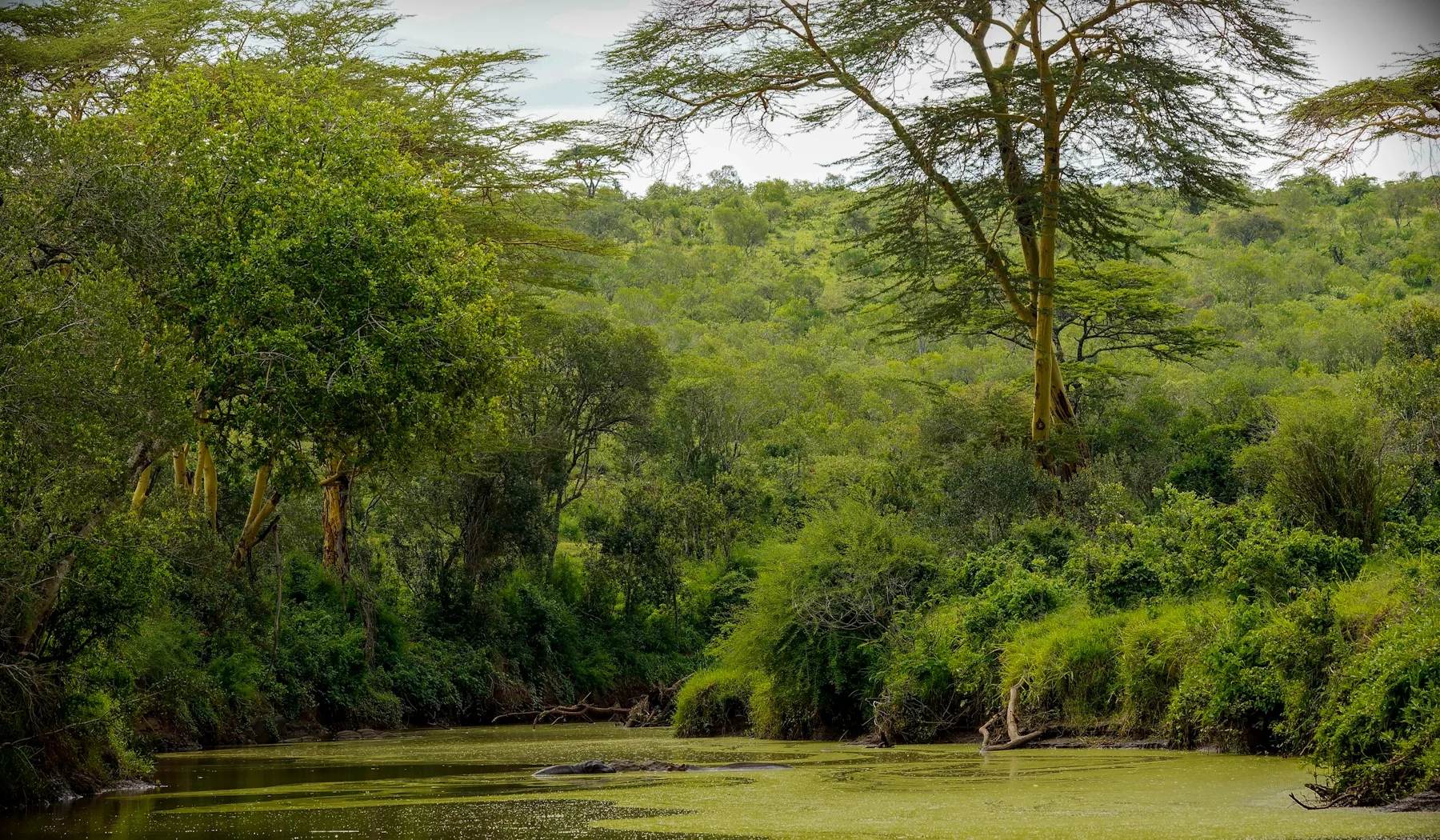
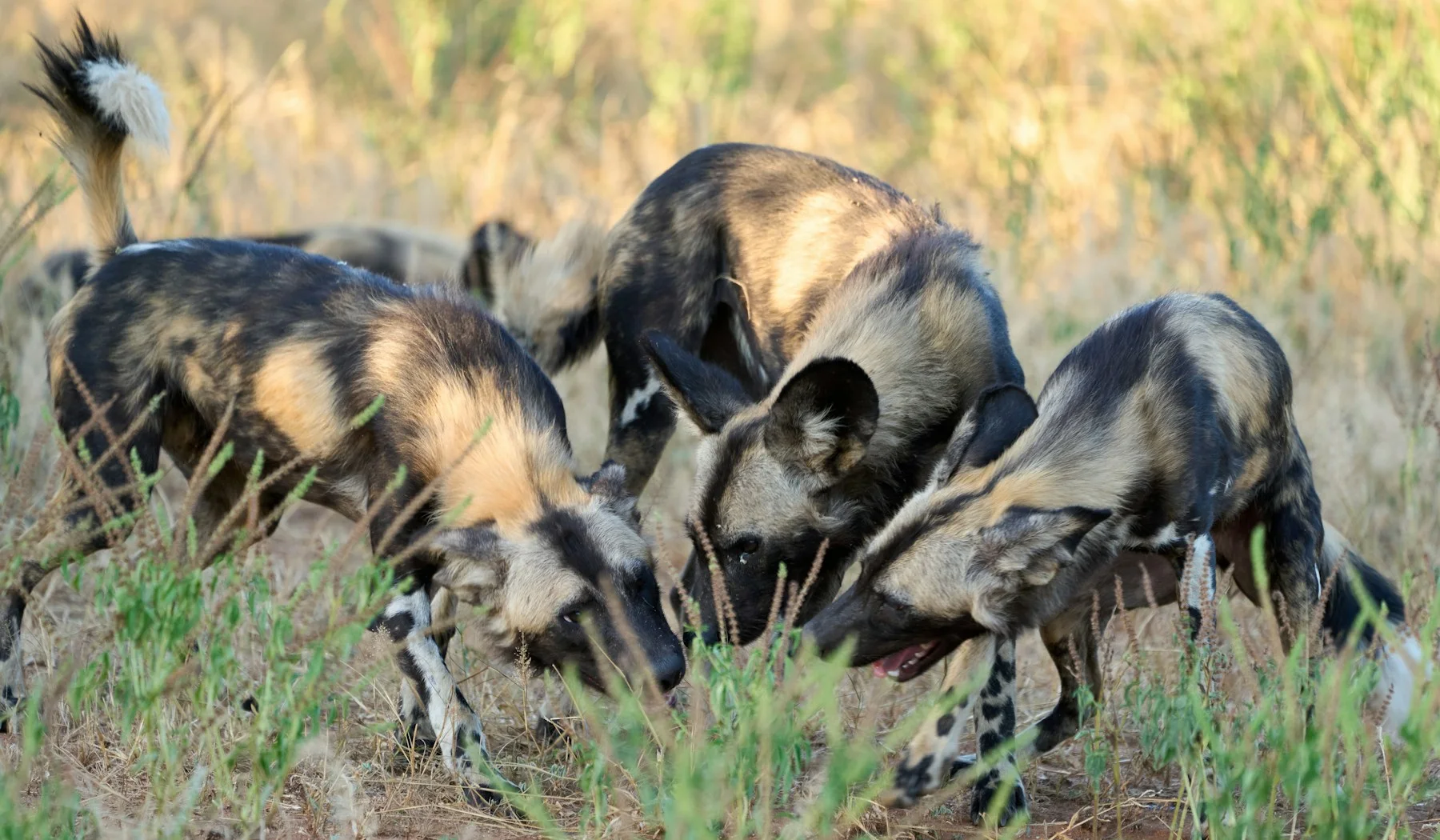
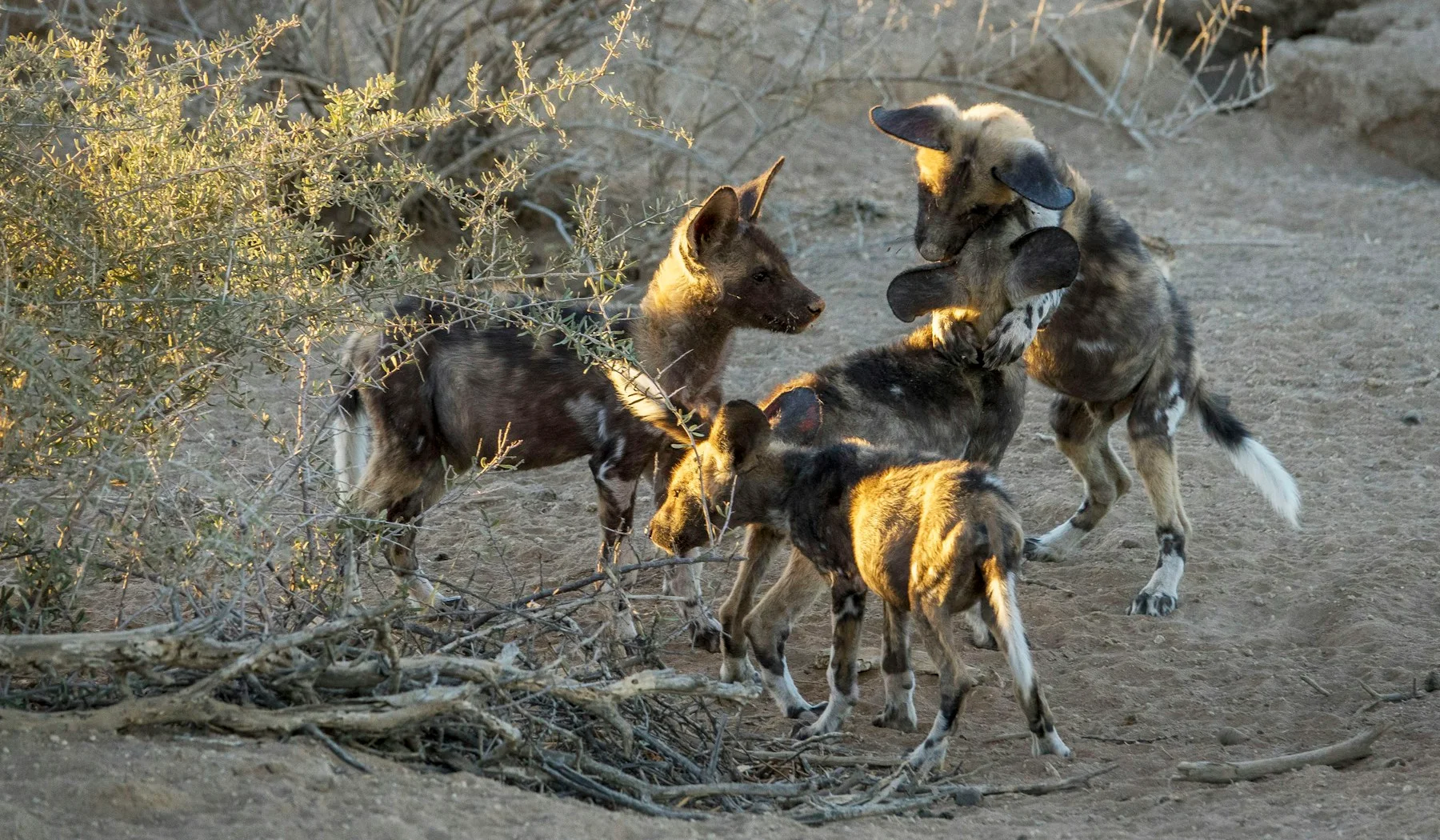
The river photograph is from Laikipia. The wild dog species photographs were taken in South Africa, Zambia and Namibia; each caption says where it was made. They do not depict a Kenyan sighting.
Keep planning
Wildlife records describe real landscapes and past observations, not a guarantee for any visit. The two traveller comments above belong to their authors. Photographs made outside Kenya are identified in their captions.
Plan your Laikipia trip
Tell us your travel dates, nights available, preferred comfort level and whether painted dogs are your main aim or one of several interests.