
Tsavo Red Elephants: Why They Look Red and How to Plan the Sighting
Learn why Tsavo’s elephants carry a red coat, how water and weather shape the sighting, where patience helps, and how to watch and photograph a herd without crowding it.
- Tsavo red elephants at a glance
- The red colour comes from the ground, not the elephant
- What iron oxide and lateritic soil actually mean
- Dust bathing is practical elephant skin care
- Dust bathing and geophagy are not the same thing
- Tsavo East gives the classic red-earth picture
- Tsavo West has elephants too, but a different stage
- Water shapes the search
- Aruba Dam can reward an unhurried drive
- Mudanda Rock rewards patience and a wide view
- The Galana River tells a greener version of Tsavo
- Early morning gives behaviour, texture and cooler air
- Late afternoon can make the red colour glow
- Midday is not wasted, but expectations should change
- Dry conditions can concentrate elephants, not guarantee them
- Rain turns the same park into another world
- A red-elephant sighting is never guaranteed
- Red elephants and super tuskers are different stories
- Elephant families are matriarchal societies, not a photo arrangement
- Bulls need space too
- Never crowd a crossing
- What real travellers notice
- Photograph the elephant and the land together
- Work with dust instead of fighting it
- A private vehicle changes the photography experience
- Where you stay changes the first and last hour
- Two nights are possible, three nights are kinder
- A three-night red-elephant itinerary
- Nairobi, the coast and Tsavo create different arrival days
- Tsavo red elephants with children
- A honeymoon needs privacy, not a generic safari label
- Accessibility needs a vehicle and room audit
- Conservation is bigger than the colour
- Compare the complete Tsavo cost
- The Tsavo red-elephant booking brief
- Frequently asked questions about Tsavo red elephants
- The Tsavo red elephants conclusion
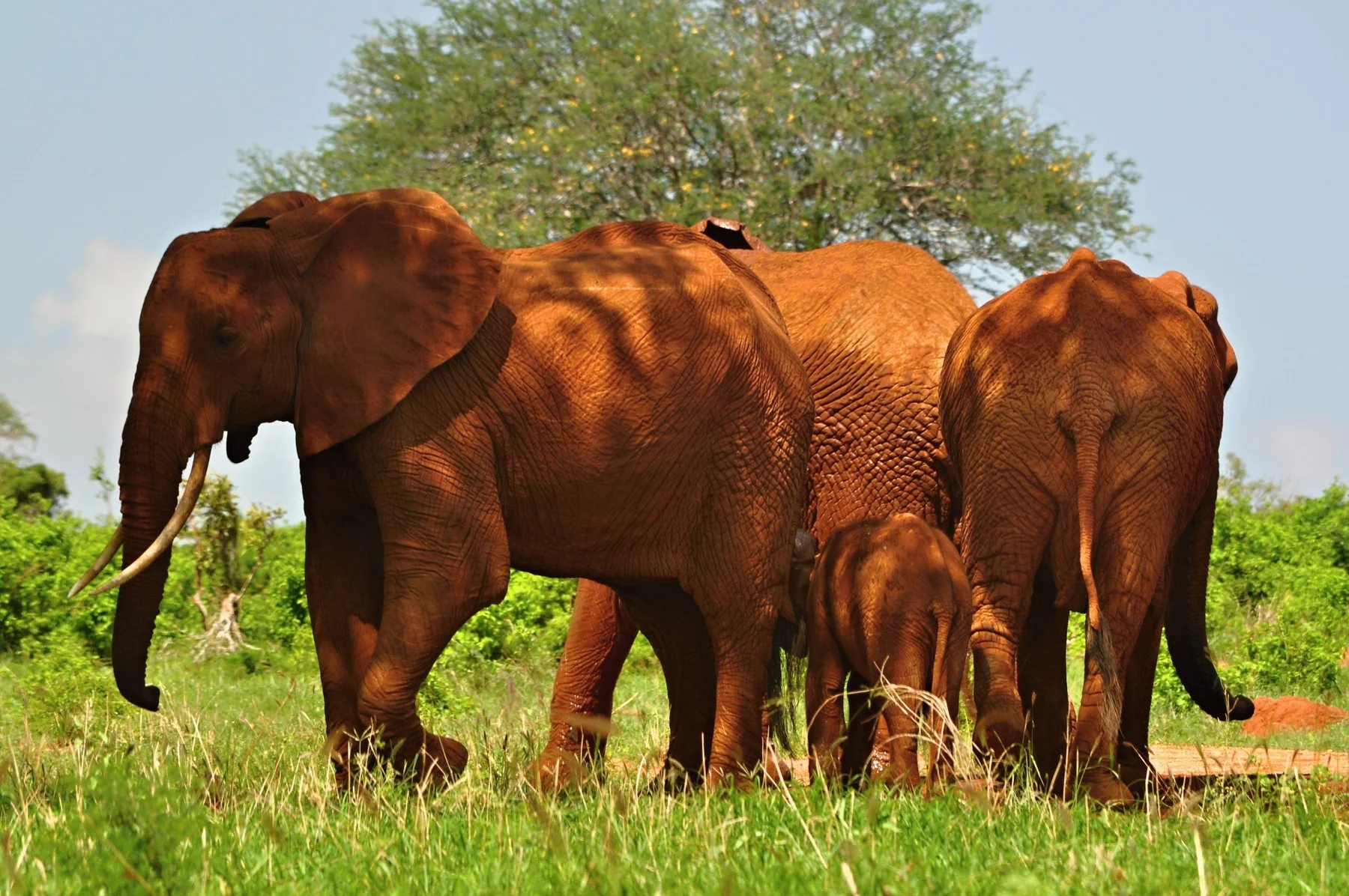
The first surprise is the colour. An elephant steps out of the bush and its skin is not the cool grey you expected. It is copper, ochre or deep brick red, as though the animal has been painted to match the road. Then a calf appears under the adults, carrying the same rusty coat, and the whole family seems to belong to the earth around it.
Tsavo's elephants are not born red. They are African savanna elephants wearing the landscape. Their colour comes from bathing, wallowing and throwing Tsavo's iron-rich soil over their bodies. The result can be dramatic, especially in Tsavo East, but the shade changes with the soil, weather and time since the last dust bath.
This guide explains the science without draining the wonder from it. It also shows you how to build a safari around good habitat, patient guiding and responsible viewing rather than a promise that nature may not keep.
Tsavo red elephants at a glance
| Question | Useful answer |
|---|---|
| Are they a separate species or subspecies? | No |
| Why do they look red? | Iron-rich dust and mud coat their skin |
| Where is the classic setting? | Tsavo East National Park |
| Can they also appear in Tsavo West? | Yes, although soil and vegetation can create a different visual setting |
| Is the colour permanent? | No, it changes after bathing, rain and movement through different soils |
| Best light for photographs | Early morning and late afternoon |
| Best planning approach | Allow several drives and follow fresh conditions rather than one fixed pin |
| Guaranteed? | Never |
Start with the complete Tsavo safari guide if this is your first visit. This page goes much deeper into the elephants themselves.
The red colour comes from the ground, not the elephant
Elephant skin is grey. In Tsavo, that grey surface becomes a canvas for the soil. The Tsavo Trust explanation of the park's red earth traces the colour to iron oxides left in old, heavily weathered tropical soils. These compounds are cousins of the material that makes rust red.
An elephant may emerge from water dark and wet, throw soil over its body, then dry into a strong terracotta colour. Another animal that has walked through pale dust or washed recently can look much greyer. Even members of the same family may carry different shades.
| What you see | Likely explanation |
|---|---|
| Deep red adult | A recent coating of rich red mud or fine dust |
| Grey patches behind the ears | Less dust reached the folded or moving skin |
| Dark body after rain | Wet skin and mud have changed the surface colour |
| Pale orange calf | Fine dry dust on younger skin |
| Mixed red and grey herd | Individuals bathed or travelled in different places or at different times |
The colour is real, but it is temporary. That is part of the fascination. You are seeing an animal's recent relationship with the landscape.
What iron oxide and lateritic soil actually mean
Travel descriptions often stop at “red soil.” The more useful story is how that soil formed. Heat, rainfall and long weathering removed many soluble materials while iron and aluminium became concentrated. The iron oxidised, creating the familiar red and orange tones.
Tsavo Trust uses the terms laterite and ferralsol when explaining this ground. Soil classifications can become technical, but a traveller only needs three practical ideas.
| Soil fact | Why it matters on safari |
|---|---|
| Iron oxides create the colour | Dust baths can tint an elephant red |
| Fine dry material lifts easily | A trunk can throw it across the back and sides |
| Rain changes dust into mud | Wet-season colour and texture look different from dry-season powder |
| Soil varies across the ecosystem | Not every elephant will carry the same shade |
| Dust settles on roads and plants | The whole scene can share one warm palette |
The soil is not decorative scenery. It affects vegetation, water, roads and the visual character of the park.
Dust bathing is practical elephant skin care
Watch an elephant dust bathe and the movement looks wonderfully casual. The trunk curls into loose soil, lifts, then blows a cloud over the shoulders, back and flanks. Yet the behaviour has practical value. Dust and mud can help shield skin from strong sun and troublesome insects. Mud can also cool the body before it dries.
The Tsavo Trust geology account connects the famous colour with deliberate dust bathing and general skin care. The red appearance is therefore a visible record of useful behaviour, not an ornamental quirk.
| Behaviour | What to notice quietly |
|---|---|
| Trunk scoops loose earth | The elephant selects and throws dust |
| Dust lands behind the head | Fine particles spread across warm skin |
| Body rubs against soil | Mud or dust reaches the sides and belly |
| Calf copies an adult | Young elephants learn within the family |
| Herd leaves a wallow | Tracks, wet edges and red bodies tell the sequence |
Give the process room. A vehicle that presses too close can interrupt the very behaviour everyone came to see.
Dust bathing and geophagy are not the same thing
Elephants also eat soil in some places, a behaviour called geophagy. The aim may include obtaining minerals or changing how plant compounds behave in the digestive system. That is different from spraying dust over the skin.
The Tsavo Trust guide to geophagy discusses mineral-dependent behaviour and the importance of access to particular deposits. On a game drive, the distinction helps you read the animal more carefully.
| If the elephant is | You may be watching |
|---|---|
| Throwing soil across its body | Dust bathing |
| Rolling or kneeling in wet mud | Wallowing and skin coating |
| Scraping and putting earth into its mouth | Possible geophagy |
| Drinking, then dusting | A common cooling and skin-care sequence |
| Digging near a riverbank | Water, roots, minerals or another resource, so watch before deciding |
Do not force a confident label from a few seconds of movement. A good guide watches the trunk, mouth, feet and surrounding ground before explaining what may be happening.
Tsavo East gives the classic red-earth picture
The official Kenya Wildlife Service page for Tsavo East describes dust-red elephants moving through open plains, acacia scrub and volcanic landscapes. The park's broad horizons and vivid earth make the colour easy to read, especially when an elephant crosses an open road or steps into warm light.
Tsavo East is also vast. That scale creates a safari that can feel open and unhurried, but it means sightings are not arranged around a small circuit. A guide must read water, tracks, recent reports, shade and travel time.
| Tsavo East quality | Effect on the experience |
|---|---|
| Red roads and exposed soil | Strong colour contrast |
| Broad views in some sectors | Herds can be visible across distance |
| Galana River and seasonal water | Elephant movement responds to water availability |
| Large road network | Route choice matters |
| Lower vehicle density in many areas | Sightings can feel quiet, but finding animals can take longer |
The Tsavo East versus Tsavo West guide helps if you are deciding whether to visit one side or both.
Tsavo West has elephants too, but a different stage
Tsavo West is not the wrong park for elephants. It simply tells the story through a different landscape. Volcanic ground, wooded sections, hills, lava and spring-fed habitats can create a more enclosed or varied frame. Elephants may carry red or brown dust, but the textbook open red-earth photograph is more strongly associated with Tsavo East.
| Choose more Tsavo East time when | Add Tsavo West when |
|---|---|
| Red-elephant photography is the main priority | You want Mzima Springs and volcanic scenery too |
| Open scale matters | Habitat variety matters |
| You are combining with the Kenya coast | Your route crosses the western side naturally |
| You want several water-linked East circuits | You want a broader two-park story |
The right answer is often not East or West. It is enough time on each side to avoid spending the whole trip transferring.
Water shapes the search
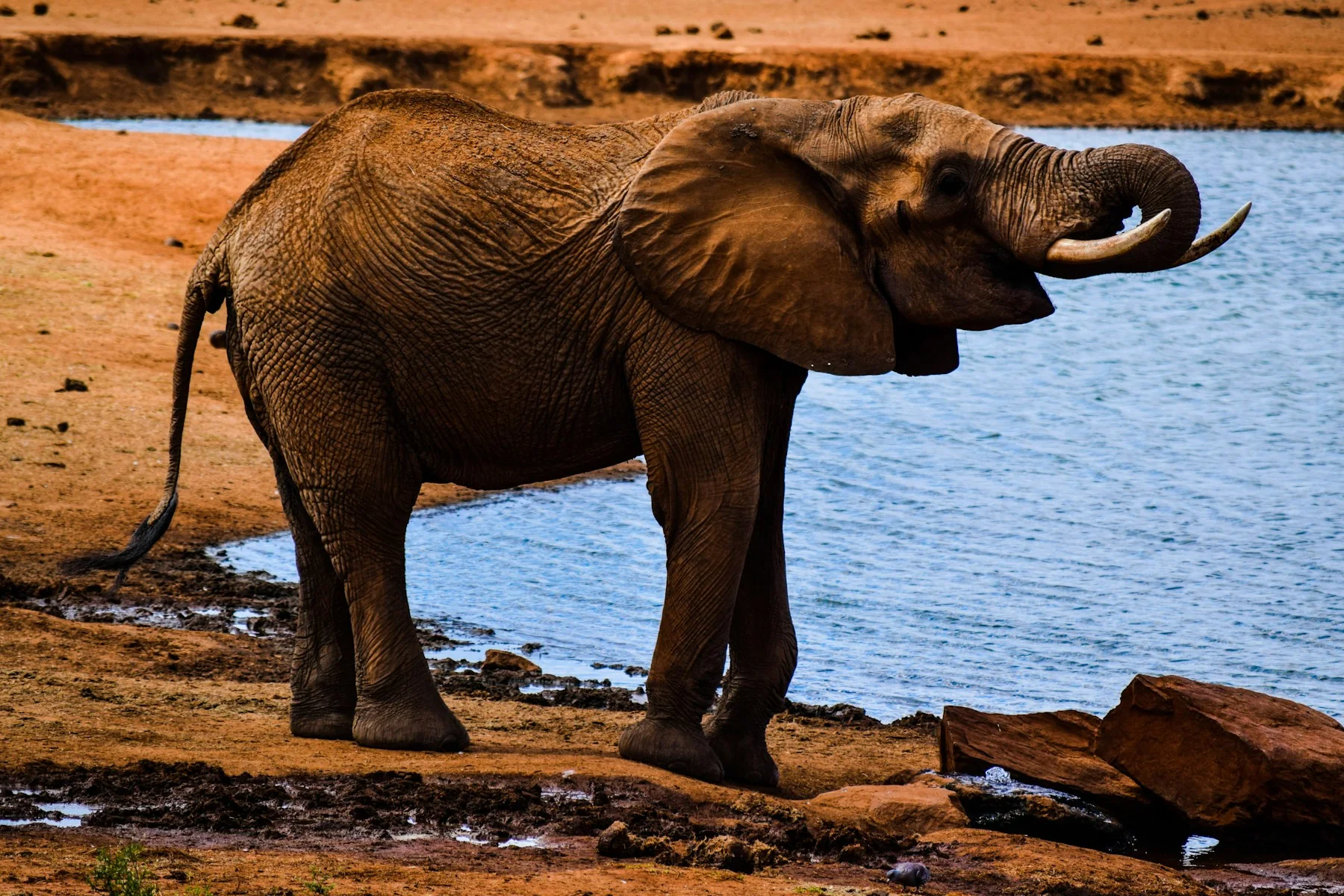
Elephants drink regularly, but they do not stand beside the same water all day. They move between feeding, shade, social contact, bathing and drinking. In dry conditions, dependable water can concentrate activity. After rain, temporary water and fresh vegetation may spread animals across a much wider area.
A useful morning question is not “Where are the elephants?” It is “What happened overnight?” Fresh tracks, dung, broken vegetation, wind, water and reports from other guides create a living map.
| Sign | What it may suggest |
|---|---|
| Fresh tracks crossing the road | Direction and approximate group size |
| Wet mud on the verge | Recent movement from water |
| Very fresh dung | Elephants passed recently |
| Broken green branches | Feeding activity, not proof that the herd is still close |
| Dust hanging over bush | Vehicle movement, wind or animals, so confirm before rushing |
Good guiding turns the search into part of the experience. You begin to understand the park rather than merely collecting sightings.
Aruba Dam can reward an unhurried drive
Aruba Dam is one of Tsavo East's best-known water-linked areas. Depending on recent rain and water levels, its surroundings can draw elephants and other wildlife. It can also be quiet. A dam is habitat, not a theatre with a published show time.
| Aruba planning detail | Ask or consider |
|---|---|
| Lodge location | How much of the best morning light is spent reaching the circuit? |
| Water level | What has the guide observed in recent days? |
| Wind | Will dust carry across or away from the vehicle? |
| Light direction | Which side gives a better angle without crowding the herd? |
| Exit timing | Leave space for the elephant's path rather than blocking it |
Properties around Aruba can reduce transit for travellers who want repeated time in the area. The where to stay in Tsavo East guide compares location rather than treating every bed as interchangeable.

Mudanda Rock rewards patience and a wide view
Mudanda Rock rises above a natural water catchment and surrounding plain. The viewpoint changes the scale of observation. Instead of following an elephant through bush, you may watch a group approach water across the landscape. The experience depends on season, water and wildlife movement, but the waiting itself can be valuable.
| What to bring | Why |
|---|---|
| Binoculars | Animals may appear far across the plain |
| Medium telephoto lens | A herd in its habitat can be stronger than one tight portrait |
| Water and hat | The exposed rock can feel hot |
| Patience | Movement may unfold slowly |
| Quiet voices | Sound carries and other visitors are sharing the lookout |
Mudanda also reminds photographers not to crop every story down to an ear and a tusk. Red elephants make sense because the red land is visible around them.
The Galana River tells a greener version of Tsavo
The Galana River cuts a strong line through Tsavo East. Riverine vegetation, sandbanks, rock and water add contrast to the red-road image. Elephants may feed in thicker vegetation, cross open ground or approach water, but visibility changes quickly along bushier sections.
| River-route advantage | River-route limitation |
|---|---|
| Habitat contrast | Dense vegetation can hide a herd |
| Water-linked movement | Long route distances require time |
| Birds, crocodiles and other wildlife | Elephant presence varies |
| Landscape photography | Midday light can be hard |
Build the route for the river landscape as well as elephants. That way a quiet elephant morning is still a rewarding Tsavo morning.
Early morning gives behaviour, texture and cooler air
At first light, the park feels newly made. Tracks are sharp, air is cooler and low sun moves across the folds of an elephant's skin. Activity is never guaranteed, but morning often gives more comfortable conditions for both animals and people.
| Morning choice | Practical effect |
|---|---|
| Depart at the permitted start | Reach useful habitat before heat builds |
| Carry breakfast if the lodge allows | Stay out through the best light |
| Use layers | Open vehicles can feel cool before sunrise |
| Keep the first route flexible | Overnight tracks may change the plan |
| Turn off the engine at a settled sighting | Listen and reduce vibration |
If photography matters, tell the guide before departure. A seat plan, beanbag and clean window line cannot be solved after the herd has appeared.
Late afternoon can make the red colour glow
Warm side light deepens orange and rust tones. Dust kicked up by a walking herd can catch the sun, while long shadows reveal skin texture. The same dust can also flatten detail if it sits between camera and subject.
| Late-light decision | Better result |
|---|---|
| Keep the sun across the elephant | Texture and colour without a flat front-lit look |
| Expose for bright dust | Protect highlights |
| Leave room in the frame | Show movement and landscape |
| Watch the return time | Avoid rushing or breaking park rules |
| Let a herd cross without repositioning repeatedly | Calmer behaviour and a more natural sequence |
The most memorable frame may arrive after several quiet minutes. Do not make every sighting a race between vehicles.
Midday is not wasted, but expectations should change
Elephants may rest in shade, stand close together or move toward water during the hotter hours. Light becomes stronger, heat shimmer can soften distant photographs, and people tire. Midday can still produce excellent observation when a lodge overlooks water or a guide finds a settled group at a respectful distance.
| Midday option | Best use |
|---|---|
| Lodge waterhole | Watch without adding another vehicle |
| Shaded lunch break | Reset before the afternoon drive |
| Short observation near water | Study social behaviour rather than chasing portraits |
| Landscape stop | Understand the heat, distance and scale of Tsavo |
| Equipment check | Clean dust from lenses and charge batteries |
Full-day drives make sense when geography demands them, but “all day in the vehicle” is not automatically a better safari.
Dry conditions can concentrate elephants, not guarantee them
When surface water becomes limited, animals may use dependable sources more predictably. Vegetation is often thinner, tracks are dusty and red colour can appear strong. The trade-off is heat, long dry stretches and pressure around water.
| Dry-period advantage | Dry-period reality |
|---|---|
| More activity near known water | Several species share limited space |
| Clearer views through sparse vegetation | Dust and heat shimmer affect photographs |
| Strong red palette | Harsh midday light |
| Roads may be easier in many sectors | Corrugation and dust make long drives tiring |
Use the best time to visit Tsavo guide to match weather with your whole trip, not just one photograph.
Rain turns the same park into another world
After rain, grass can green, temporary water appears and elephants may spread away from familiar dry-season points. Red dust becomes darker mud. Skies can be dramatic, calves may play in soft ground, and the visual contrast between green vegetation and red-coated skin can be beautiful.
| Rain-season reward | Planning response |
|---|---|
| Fresh colour | Pack camera protection |
| Dramatic clouds | Keep schedule flexible |
| Fewer vehicles in some periods | Accept that roads or routes may change |
| Dispersed wildlife | Allow more search time |
| Mud-coating behaviour | Watch from firm legal tracks without pushing closer |
Rain does not ruin Tsavo. It changes the search.
A red-elephant sighting is never guaranteed
The phrase “home of the red elephants” is accurate as a description of place, not a contract for a particular drive. An elephant can be present but grey after rain. A family can use another sector. A waterhole can be quiet. Thick bush can conceal animals metres from the road.
| Weak promise | Honest plan |
|---|---|
| “You will see red elephants at Aruba” | “We will use recent conditions to choose water-linked routes” |
| “The herd arrives every evening” | “Wildlife may visit, so we will allow patient observation” |
| “You will see a super tusker” | “Tsavo holds remarkable tuskers, but individual sightings are rare” |
| “Two hours is enough” | “Several drives improve the opportunity and the quality of the safari” |
Confidence comes from a well-built route, not certainty invented before arrival.
Red elephants and super tuskers are different stories
Most elephants in Tsavo can carry red dust. Only a tiny number are exceptional large-tusked individuals, and the term super tusker is reserved for elephants with extraordinary ivory. Do not use the labels interchangeably.
The Tsavo Trust Big Tusker Project works with Kenya Wildlife Service and conservation partners to monitor important individuals across the vast landscape. Monitoring is about protection and knowledge, not publishing a daily tourist pin.
| Term | Meaning |
|---|---|
| Red elephant | An elephant coated in Tsavo's red soil |
| Tusker | An elephant with notably large tusks, used somewhat broadly in conversation |
| Super tusker | A rare elephant with exceptionally large ivory |
| Big Tusker Project | A conservation and monitoring programme |
Read the Tsavo super tuskers guide before making them a trip priority. It explains why locations and expectations need care.
Elephant families are matriarchal societies, not a photo arrangement
A family group is usually led by an experienced matriarch and may include adult females, adolescents and calves. Their spacing, ear position, pace and attention tell you whether they are relaxed, alert or uncomfortable. A calf in the middle is protected, not conveniently framed.
| Calm observation | Pressure to avoid |
|---|---|
| Herd continues feeding or walking naturally | Adults bunch tightly around calves after vehicles move in |
| Vehicle waits off the movement line | Vehicle blocks the intended crossing |
| Engine is off when safe | Repeated starting and repositioning |
| Guide leaves an exit | Vehicles form a wall |
| Guests stay seated and quiet | Shouting, leaning out or demanding a closer angle |
The ethical elephant viewing in Tsavo guide turns these principles into a practical vehicle checklist.
Bulls need space too
Adult males may travel alone or in loose association with other bulls. A large bull can look composed while still monitoring every vehicle. Musth, a natural reproductive state in mature males, can bring physical signs and behavioural changes that a trained guide should recognise.
| Guide watches | Visitor should do |
|---|---|
| Direction of movement | Keep the route open |
| Ear, head and trunk posture | Stay quiet and follow instructions |
| Musth signs | Accept more distance |
| Vehicle escape space | Do not ask to box the animal in |
| Other elephants nearby | Avoid focusing on one bull while missing the herd behind |
A dramatic close encounter is not the goal. A calm encounter in which the elephant controls its own movement is better.
Never crowd a crossing
Road crossings create strong photographs because the elephant enters open space. They also create temptation. Vehicles stop on both sides, a guide inches forward, and the open route narrows. Calves or hesitant animals can become separated or stressed.
| At a crossing | Responsible response |
|---|---|
| Herd approaches the road | Stop before its line and wait |
| Matriarch pauses | Give more room, not more pressure |
| Calves are present | Expect the group to protect them |
| Another vehicle blocks the far side | Do not close the remaining gap |
| Herd has crossed | Wait for stragglers before moving |
One traveller described seeing another vehicle frighten a herd after leaving the road. The warning matters more than the photograph. Stay on authorised tracks and let the elephants decide when to cross.
What real travellers notice
The best reviews describe atmosphere as much as a species list. A Tripadvisor reviewer wrote that Tsavo East “feels wild and raw, not polished like some other parks.” That line captures the scale, silence and unpredictability that make the park special. Read the original Tripadvisor review page.
An independent travel writer remembered “a family of elephants, red from the dust,” drinking at a waterhole. The parenthetical detail matters because people become dust-coloured too. Read the original Tsavo East travel story.
| Praise travellers repeat | Reality behind it |
|---|---|
| Vast landscape | Drives can be long |
| Fewer vehicles | Finding predators or a particular herd can take time |
| Red dust atmosphere | Clothes and equipment get dusty |
| Elephants near water | Timing and season change every visit |
| Wild feeling | Comfort depends strongly on lodge location and vehicle planning |
The Tsavo safari reviews guide separates recurring patterns from one spectacular day.
Photograph the elephant and the land together
A tight portrait shows wrinkles, lashes and dust. A wider frame explains why the animal is red. Include the road, baobab, open sky, water or a line of vegetation. The landscape turns colour into story.
| Lens range | Useful purpose |
|---|---|
| Wide to normal | Elephant in the full Tsavo setting when distance is safe |
| Medium telephoto | Family group and environmental portrait |
| Long telephoto | Details and distant behaviour without asking the guide to move closer |
| Phone | Wide scene, video and sound when the elephant is already close enough |
The Kenya photography safari guide covers vehicle seats, beanbags, dust control and backup strategy across the whole route.
Work with dust instead of fighting it
Dust is the subject and the challenge. It creates glowing backlight but settles on equipment. Changing lenses in an open vehicle invites it onto the sensor. A clear protective filter may help in rough conditions, but careful handling matters more than gadgets.
| Dust problem | Practical response |
|---|---|
| Fine particles on front element | Use a blower before a cloth |
| Dust entering camera | Change lenses only when protected and necessary |
| Flat haze | Shift angle or wait for the dust cloud to pass |
| Bright backlit cloud | Reduce exposure and review highlights |
| Dusty equipment at lodge | Clean outside the sleeping area and reseal bags |
Carry one ready body and lens combination for the drive. The photograph lost during a lens change cannot be reconstructed later.
A private vehicle changes the photography experience
A shared vehicle can be friendly and good value. A private vehicle buys control over departure time, seat position, stopping duration and photographic priorities. It does not buy permission to leave roads or pressure wildlife.
| Shared vehicle works when | Private vehicle helps when |
|---|---|
| Travellers have similar interests | Photography is a primary purpose |
| Budget matters more than perfect angles | Children need flexible breaks |
| Everyone accepts the lodge schedule | Mobility requires careful boarding and stops |
| Short drives are enough | You want patient waterhole observation |
Ask about roof style, maximum guests, window access, charging and whether every photographer gets a clear side. “Safari vehicle included” is not enough detail.
Where you stay changes the first and last hour
Tsavo East is too large to treat every lodge as the same base. Ashnil Aruba Lodge and camps around the Aruba area suit one set of circuits. Voi Safari Lodge and properties near Voi shape another. Satao Camp has its own waterhole setting and route logic. Sentrim Tsavo East and other bases should be compared by map, drive area, room, vehicle arrangement and actual transfer path.
| Accommodation question | Why it matters |
|---|---|
| Inside the park or outside a gate? | Gate timing can affect the best light |
| Which water and circuits are closest? | Less empty transfer time |
| Does the property overlook water? | Midday observation may be possible |
| Shared or private drives? | Controls patience and route choice |
| Airstrip or road transfer? | Determines the first and last day's usable time |
Use the where to stay in Tsavo East guide to compare named properties, not just labels such as mid-range or luxury.
Two nights are possible, three nights are kinder
One night gives an arrival drive and a departure drive if transfers cooperate. It can work as a coast add-on, but it leaves little protection against rain, a quiet waterhole or a late arrival. Two nights give more shape. Three nights let the park breathe.
| Stay | What it can realistically hold |
|---|---|
| One night | A short introduction with heavy dependence on timing |
| Two nights | Several drives and one fuller day |
| Three nights | Repeated habitats, slower waterhole time and weather flexibility |
| Four nights | Deeper photography, multiple sectors or a relaxed family pace |
If red elephants are a serious priority, buy time rather than an exaggerated guarantee.
A three-night red-elephant itinerary
| Day | Morning | Afternoon and evening |
|---|---|---|
| Arrival | Travel to Tsavo East with a realistic gate and lunch plan | Settle in, then use a nearby circuit for the first drive |
| Full day one | Early water-linked route chosen from recent conditions | Rest or watch a lodge waterhole, then a late drive |
| Full day two | Explore a different habitat such as Mudanda, Aruba or a Galana-linked route | Return slowly through productive elephant country |
| Departure | Short final drive only if transfer timing allows | Continue to the coast, Nairobi or the next park |
Do not force every named landmark into one day. Tsavo distances are real, and a long checklist can turn the park into a commute.
Nairobi, the coast and Tsavo create different arrival days
Road travel from Nairobi, Mombasa, Diani, Watamu or Malindi creates different gate choices and usable hours. Rail can reduce road distance on some itineraries, but it still needs a timed station transfer and safari vehicle. Flying can protect time but baggage rules, airstrip and minimum passenger arrangements matter.
| Starting point | Main planning issue |
|---|---|
| Nairobi by road | Long travel day and traffic contingency |
| Nairobi by rail | Station, train time, luggage and park transfer must connect |
| Mombasa or Diani | Coastal traffic and gate choice shape the day |
| Watamu or Malindi | Northern coast route needs honest driving time |
| Fly-in | Airstrip, baggage and vehicle waiting arrangement |
The Nairobi to Tsavo guide explains the trade-offs. For a coast combination, see the Kenya safari and beach holiday guide.
Tsavo red elephants with children
Children often understand the red-elephant story immediately because it begins with a simple question: why are they that colour? Turn the drive into observation. Look for dusty footprints, compare shades, watch a calf copy an adult and sketch the herd later at the lodge.
| Family need | Confirm before booking |
|---|---|
| Vehicle seats | One clear seat per child and safe seating rules |
| Drive length | Shorter loops and toilet planning |
| Heat | Water, hats, sunscreen and midday rest |
| Food | Early meals and packed breakfast options |
| Pool and waterhole | Supervision and wildlife barriers |
| Medical plan | Communication, evacuation cover and nearest appropriate care |
The Kenya family safari guide helps balance Tsavo with shorter transfers and recovery time.
A honeymoon needs privacy, not a generic safari label
For couples, the strongest Tsavo moments are often quiet ones: morning coffee before a drive, a family of elephants crossing in warm light, or an hour watching water without conversation. A honeymoon plan should protect those moments through room choice, private vehicle time and sensible pacing.
| Honeymoon choice | Ask for |
|---|---|
| Room | Exact category, privacy and view |
| Vehicle | Private drives on the most important days |
| Dining | What is genuinely available and weather dependent |
| Route | Fewer rushed one-night stops |
| Coast extension | A smooth transfer and enough beach nights to rest |
The Kenya honeymoon safari guide covers the full trip rather than adding petals to a standard itinerary.
Accessibility needs a vehicle and room audit
“Accessible” can hide the details that decide whether a safari works. Ask about steps into the vehicle, transfer assistance, toilet stops, room distance, pathways, shower design, emergency support and whether a companion can stay nearby.
| Detail | Specific question |
|---|---|
| Vehicle entry | Step height and available assistance |
| Seating | Can the traveller use a front or lower-access seat? |
| Room path | Surface, slope, lighting and distance from public areas |
| Bathroom | Step-free shower, rails and turning space |
| Drive duration | Can the route return early without affecting other guests? |
| Medical needs | Refrigeration, power, communication and evacuation plan |
A private vehicle may solve schedule flexibility, but it does not solve an unsuitable room. Verify both.
Conservation is bigger than the colour
The red coat draws attention, but the deeper story is space. Elephants move across a large conservation landscape and beyond park boundaries. Water, farms, roads, rail, settlement and drought can bring animals and people into difficult contact.
Save the Elephants' Red Giants of Tsavo describes monitoring, aerial surveillance and coexistence work in a landscape that contains Kenya's largest elephant population. Tsavo Elephant Research has followed individually recognised elephants through a non-interference field study, using ears, tusks, tails and other features to maintain long-term histories.
| Conservation question | Why it belongs in trip planning |
|---|---|
| Does the itinerary respect park roads and rules? | Visitor behaviour affects animals now |
| Are protected locations handled carefully? | Exceptional tuskers face real risk |
| Does the operator explain community coexistence? | Elephant movement continues beyond park boundaries |
| Are park fees and conservation payments clear? | Transparency builds trust |
| Is the guide trained to read behaviour? | Good viewing protects welfare and improves the experience |
Seeing a red elephant should make the landscape feel more connected, not reduce the animal to a colour label.
Compare the complete Tsavo cost
The room rate is only one line. Park entry, vehicle, guide, fuel, transfers, station or airstrip collection, meals, drinks, child policy and private vehicle supplement can change the total.
| Cost line | Put in writing |
|---|---|
| Accommodation | Exact property, room, board and nights |
| Park entry | Adults, children, residency category and entry days |
| Vehicle | Private or shared, seats and drive schedule |
| Transfer | Origin, destination, stops and vehicle |
| Rail or air | Fare, baggage, station or airstrip transfer |
| Activities | Included drives and any extras |
| Taxes and payment | Currency, due dates and beneficiary |
| Changes | Cancellation, amendment and weather policy |
The Tsavo safari packages page is designed for route comparison and custom planning, not to force every traveller into the same template.
The Tsavo red-elephant booking brief
| Decision | Your answer |
|---|---|
| Travel dates | |
| Adults and children with ages | |
| Starting and ending location | |
| Nights in Tsavo East | |
| Add Tsavo West? | |
| Room style and board | |
| Shared or private vehicle | |
| Photography equipment | |
| Mobility or dietary needs | |
| Coast or another park next | |
| Approximate budget | |
| Top three priorities |
The most useful final sentence is simple: “Please name the lodge, gate, vehicle arrangement, drive schedule, park-entry days and all fees.” That request turns a beautiful idea into a route you can compare.
Frequently asked questions about Tsavo red elephants
Why are Tsavo elephants red?
They coat themselves with local dust and mud rich in iron oxides. The particles sit on their naturally grey skin and create red, orange or brown tones.
Are Tsavo red elephants a different species?
No. They are African savanna elephants. The colour comes from the landscape, not a separate species or subspecies.
Are red elephants only found in Tsavo East?
No. Elephants can carry red soil elsewhere in the Tsavo ecosystem and in other red-soil landscapes. Tsavo East is the place most strongly associated with the classic red-elephant image.
Where can I see red elephants in Tsavo East?
Water-linked areas around Aruba, Mudanda and the Galana system can be productive, but conditions change. A guide should choose the route from recent water, tracks and wildlife movement.
What is the best time of day?
Early morning and late afternoon usually provide cooler conditions and better light. Elephants can be active at any time, especially around water.
What is the best season?
Dry conditions can concentrate animals near dependable water and strengthen the dusty red palette. Rain creates green contrast and red mud but may disperse herds. Neither season guarantees a particular sighting.
How many nights do I need?
Three nights give most first-time visitors a good balance of repeated drives, different habitats and weather flexibility. Two can work. One is highly dependent on arrival and departure timing.
Will I see a super tusker?
Possibly, but the probability is low and no ethical operator should guarantee an individual. Red elephants are common as a visual phenomenon; super tuskers are exceptionally rare animals.
Can children enjoy this safari?
Yes. The colour story, tracks and family behaviour make an engaging natural-history theme. Plan shorter drives, heat protection, clear seating and a suitable lodge.
How close can a vehicle go?
Distance should be led by park rules, guide judgement and elephant behaviour. Never block a crossing, crowd calves, leave authorised tracks or pressure the guide for a close photograph.
The Tsavo red elephants conclusion
The colour is the invitation. It draws your eye to a herd and makes the first photograph unforgettable. The richer experience comes a few minutes later, when you notice how the adults surround a calf, how the matriarch tests the road, how dust lifts from each footstep and how the whole family carries the geology of Tsavo on its skin.
Plan enough time. Choose a lodge by geography. Give the guide room to read the day. Keep the vehicle out of the elephant's path. If the perfect red herd appears, you will be ready. If it does not, you will still have explored one of Kenya's great elephant landscapes honestly and well.
Sources and further reading
- Kenya Wildlife Service: Tsavo East National Park
- Tsavo Trust: Why is Tsavo's soil red?
- Tsavo Trust: How Tsavo's geology saved its animals
- Tsavo Trust: Big Tusker Project
- Save the Elephants: Red Giants of Tsavo
- Tsavo Elephant Research
- Tripadvisor: Tsavo East National Park reviews
- Independent Tsavo East travel story
Plan your Tsavo elephant safari
Share your dates, route, travellers, room needs and wildlife priorities. We will compare park sectors, lodge locations, transfers, vehicle choices and complete costs.