
Best Time to Visit Tsavo: Weather, Wildlife and Month-by-Month Planning
One month gathers elephants around water. Another turns the same plain green and fills it with migrant birds. The best season is the one that supports the sighting, landscape and onward journey you actually want.

The best time to visit Tsavo for easier wildlife searching is usually during the drier periods from roughly June to October and January to February. Green-season travel can be beautiful, less busy and rewarding for birds and young animals, but rain may spread wildlife and slow some roads. Tsavo East and West are enormous, so recent local conditions matter more than a perfect calendar square.
- Best time to visit Tsavo by travel priority
- How Tsavo’s weather works
- Tsavo month-by-month planner
- Tsavo in January and February
- Tsavo in March
- Tsavo in April and May
- Tsavo in June
- Tsavo in July and August
- Tsavo in September and October
- Tsavo in November and December
- Does timing differ between Tsavo East and West?
- Elephants, predators and smaller wildlife by season
- The best season for Tsavo photography
- Combining Tsavo with Diani, Mombasa, Kilifi, Watamu or Malindi
- What to bring in every month
- How to choose your Tsavo dates
- Traveller opinions
- FAQs
Best time to visit Tsavo by travel priority
The dry months make water more important and vegetation less concealing in many sectors. That can help a guide search for elephants, buffalo, antelope and predators. It does not place every animal beside the road, and Tsavo’s scale always leaves room for quiet drives.
The rainy and shoulder months trade some predictability for colour. New grass, cloud, flowers, insects and birds animate the landscape. Roads need more care and wildlife can spread away from permanent water, but photographers may prefer the softer light and clean air.
| Priority | Strong period | Trade-off |
|---|---|---|
| Easier wildlife search | July to October | Dust, heat and higher demand |
| Warm short dry spell | January to February | Hot afternoons |
| Green scenery | November to May | Rain and variable roads |
| Bird interest | Green and migrant periods | Species timing varies |
| Lower demand | Rainy shoulder months | Some lodge or road constraints |
| Safari plus coast | Often July to October or January to February | Coast conditions vary by location |
How Tsavo’s weather works
Tsavo sits in southeastern Kenya and spans a huge range of low, dry country, hills, springs and river corridors. Rain commonly clusters around the short-rain period late in the year and the longer rains around March to May, but onset, intensity and local distribution vary.
A sunny Nairobi forecast does not describe a track near the Galana or a slope in Tsavo West. Use the calendar to choose a travel style, then ask about current access close to arrival. Weather cannot be verified months ahead like a train seat.
Tsavo month-by-month planner
Tsavo follows a broad rhythm of two drier periods and two rain seasons, but the borders between them move. The chart is a planning pattern rather than a forecast. A storm can fall on one side of the ecosystem while another road stays dry.
| Month | Likely character | What may suit the traveller | What needs flexibility |
|---|---|---|---|
| January | Warm, often dry after the short rains | Wildlife plus coast, green traces, bright mornings | Afternoon heat |
| February | Hot and generally dry | Water-focused game drives and winter sun | Heat shimmer and hydration |
| March | Transition toward long rains | Mixed colour and fewer rigid peak-season expectations | Storm timing and humidity |
| April | Often one of the wettest months | Green landscapes, dramatic skies and quiet | Muddy roads and remote circuits |
| May | Wet pattern may continue | Birds, colour and lower demand | Lodge operations and road access |
| June | Drying transition | A balance of remaining green and improving roads | Late-rain effects |
| July | Main dry season | Comfortable mornings and easier wildlife searching | School-holiday demand |
| August | Dry, increasingly dusty | Classic game viewing and family travel | Popular lodges and dust |
| September | Dry with important water points | Elephants, open views and photography | Hotter afternoons |
| October | Hot, dry or turning toward rain | Dramatic dry-country scenes | Uncertain first storms |
| November | Short rains often refresh the parks | Green backgrounds, birds and clearer air | Local showers and changing tracks |
| December | Variable short rains with holiday demand | Family travel and a green safari-coast pairing | Christmas availability and transfer buffers |
Tsavo in January and February
After the short rains, the land may retain green while hotter, drier conditions return. Wildlife viewing can be productive, mornings are valuable and midday heat can feel intense. A lodge pool and shaded lunch break earn their place.
This period works well for winter sun and a coast extension. Carry water, sun protection and breathable layers. Photography benefits from early and late light, while midday shimmer can flatten distant animals.
Tsavo in March
March can begin dry and turn unsettled as the long rains approach. The exact shift differs by year. A traveller using one night and a hard same-day connection has less resilience than someone staying two nights.
Expect mixed landscapes, rising humidity and possible storms. Keep essential medicine and electronics protected, and let the guide change a circuit when a road is deteriorating.
Tsavo in April and May
These are commonly the wettest months. Rain may be heavy, roads can become muddy and some remote circuits may be unsuitable. Wildlife is not absent, but water is more widely available and vegetation may reduce visibility.
The rewards are saturated colour, dramatic skies, birds and fewer vehicles. This is not the period for a rigid species checklist or a short connection through a marginal road. Ask whether the preferred lodge operates normally and what route remains reliable.
Tsavo in June
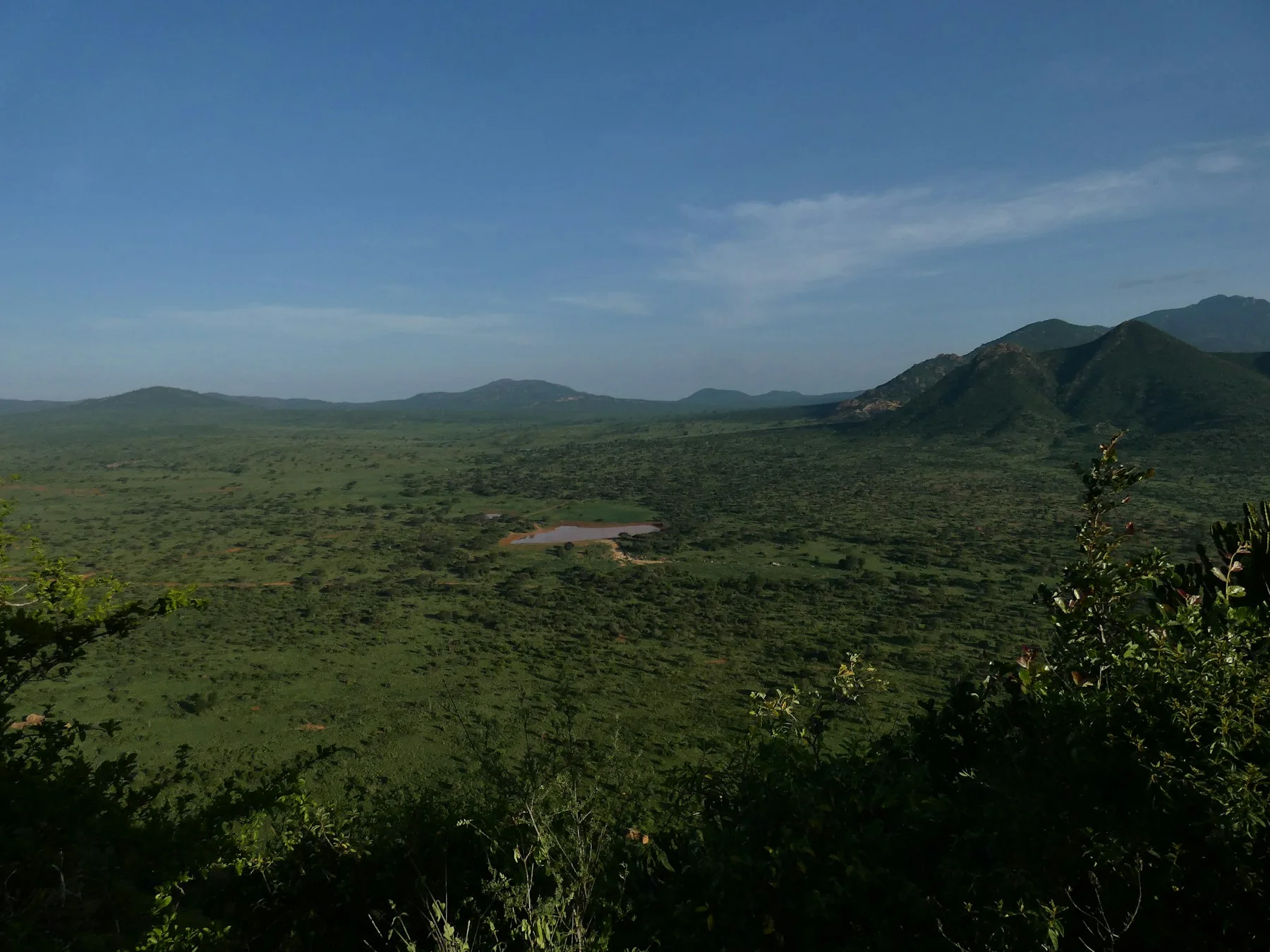
June often marks a transition toward drier conditions. Vegetation may still hold colour, temperatures can be comfortable in the mornings and demand begins to rise. It can be a strong compromise between green scenery and easier road travel.
Recent rainfall still matters. A late wet season may leave tracks soft, while an early dry turn may already gather wildlife around water. Pack warm layers for dawn as well as sun protection.
Tsavo in July and August
Drying vegetation and dependable water can support productive game drives. School holidays increase demand, particularly for family rooms and familiar lodges, although Tsavo remains enormous. Book preferred accommodation and private vehicles early.
August can bring dust and warm afternoons. A repeat visitor’s experience of eleven lions on one August trip and none on another is exactly the right warning. Better probability is not certainty. Give the guide time rather than racing between reports.
Tsavo in September and October
September often continues dry-season conditions, with water points playing a strong role. October can remain hot and dry or begin turning toward the short rains. Elephant activity, dust and stark landscapes can be memorable.
Heat planning becomes important. Start early, rest through the hardest part of the afternoon and carry more water than a city day would require. If the first storms arrive, road and wildlife patterns can change quickly.

Tsavo in November and December
Short rains can refresh grazing and wash dust from the air. Showers may be local and intermittent rather than continuous. Green backgrounds and newborn animals may reward photographers, while insects and road variability return.
December holiday demand can still be high despite rain. Christmas space should be booked early. Build connection buffers because a storm, traffic and busy coast transfer can combine on the same day.
Does timing differ between Tsavo East and West?
East’s more open sectors can retain longer sightlines, while West’s denser vegetation may conceal wildlife after rain. East’s rivers and dams and West’s springs, hills and lava landscapes respond differently to the same regional weather.
Choose the park using both season and interest. The East versus West comparison explains why red elephants and open views point one way while Mzima Springs and scenic variety point another.
Elephants, predators and smaller wildlife by season
Dry periods can concentrate activity near water, making elephant and buffalo movement easier to interpret. Predators may use the same concentrations, but lions and leopards can sleep unseen a few metres from the road.
Green periods reward slower looking. Birds, insects, tortoises, flowers, tracks and young herbivores expand the story. The red-elephant guide explains why colour depends on soil bathing rather than a special subspecies or month.
The best season for Tsavo photography
Dry months offer dust, silhouettes, uncluttered backgrounds and congregations near water. Protect gear and avoid changing lenses in moving dust. Green months offer colour, cloud detail and fewer heat waves, but rain covers and quick exposure changes matter.
Stay at least two nights so one flat sky or storm does not define the portfolio. A private vehicle lets the photographer work one sighting without holding other guests to the same patience.
Combining Tsavo with Diani, Mombasa, Kilifi, Watamu or Malindi
Do not assume the driest safari month creates identical sea conditions everywhere. Rain, humidity, wind, tides and seasonal seaweed can vary along the coast. The Kenyan coast timing guide should be read beside this one.
A coast-first itinerary can place Tsavo East before West and Amboseli. A Nairobi-first trip may reverse it. Avoid scheduling the longest road transfer immediately before an international flight.
| Travel window | Tsavo character | Coast planning question |
|---|---|---|
| January to February | Hotter, often drier | How much humidity suits you? |
| March to May | Green with higher rain risk | Can the route flex after storms? |
| June | Transition toward dry | Which beach and water activity? |
| July to October | Dry safari demand | Are rooms and vehicles reserved early? |
| November to December | Short-rain variability | Is there a holiday-demand premium? |
What to bring in every month
Bring neutral layers, a warm dawn layer, sun hat, sunscreen, repellent, closed shoes, reusable water bottle and rain shell. Protect documents, medicine and cameras from both dust and water.
Health preparation does not change because the forecast is dry. CDC malaria guidance applies to Kenyan game parks below 2,500 metres. Discuss medication, vaccines and personal risk with a travel-health clinician.
How to choose your Tsavo dates
Choose July to October when easier wildlife searching and a classic dry landscape lead. Choose January or February for a hot, often drier safari and coast escape. Choose green months when colour, birds, lower demand and flexible expectations matter more than perfect roads.
If dates are fixed, do not abandon Tsavo because a generic chart colours the month blue. Adjust lodge position, length and route. The best safari is not the driest one. It is the one designed honestly for the conditions likely to meet you.
Start with the immovable dates, then rank three wishes: a particular animal, landscape colour, quiet, beach weather, price range or family convenience. Give the top two more weight than a generic best-month label. A couple who loves storm light may prefer a period a first-time family with a tight flight connection should avoid. A birder and a dry-season wildlife photographer can travel to the same park for different reasons.
Finally, protect two mornings in the chosen sector. One rushed drive magnifies luck, while a second dawn gives the guide a new route, different light and another chance to read overnight movement. That small scheduling decision often matters more than shifting the trip by a week.
What travellers say after the trip
These are exact words from public reviews and discussions. Each person had their own route, budget and expectations, so the value is in the detail rather than treating one experience as a promise.
On my first visit (August) we saw about 11 lions, but unfortunately none this time.
A repeat Tsavo East visitor capturing the essential truth that season can improve odds but never guarantee a sighting.
We spent 5 days in the Tsavos in September. We saw plenty of animals.
A traveller recalling a dry-season trip across the two parks.
Four hours in a comfy train car is so much better than five or six hours driving!
A repeat visitor explaining why the SGR can influence the best itinerary, not merely the best month.
Tsavo weather and timing questions
What is the best month to visit Tsavo?
August and September are strong dry-season choices, but January, February and the greener shoulder periods can also be excellent depending on priorities.
When is Tsavo driest?
The broad dry periods are usually January to February and June to October, although local rain varies.
Does Tsavo close in the rainy season?
The parks remain destinations year-round, but individual roads can become difficult and plans may change after heavy rain.
When can I see red elephants?
Elephants live in the ecosystem year-round. Their red colour comes from Tsavo soil and dust, not a migration month.
Which season is best for birds?
Green periods and the months when migratory species are present can be rewarding, with local timing varying by species and rainfall.
Is August crowded?
It is a popular holiday month, but Tsavo’s scale often disperses vehicles more than smaller parks. Famous water points can still attract cars.
Is April a bad month?
April can be wet and some roads may be difficult, but the landscape can be lush and quiet. It suits flexible travellers more than tight transfer schedules.
When is the Kenyan coast best with Tsavo?
Many travellers combine dry-season Tsavo with coast stays, but wind, seaweed, humidity and rain differ along Diani, Mombasa, Kilifi, Watamu and Malindi.
How far ahead should I book?
Book earlier for Christmas, Easter and July to October, especially when a specific lodge or family room is important.
Can NLS plan around current conditions?
Yes. NLS can adjust lodge sector, drive timing and transfers while preserving the core route.
Sources and further reading
These sources provide the park, weather and travel-health context behind the seasonal advice.
Pick the month, then build the right version of Tsavo
Share your dates, wildlife interests, comfort level and beach plans. We will turn the season into a practical route.
Plan Tsavo for your dates
Tell us when you travel, where you start and finish, and whether elephants, birds, scenery, photography or quiet matters most.