
Tsavo East National Park Guide: Red Elephants, Wild Space and Honest Planning
Plan Tsavo East around red elephants, real gate and transfer logic, named camps by position, Galana River landmarks and the slower rhythm a vast park demands.
- Is Tsavo East worth visiting?
- Tsavo East in one sentence
- Tsavo East, Tsavo West and the Tsavo Conservation Area
- How large is Tsavo East?
- Where is Tsavo East?
- Why the park looks red
- The red elephants are not a subspecies
- Elephant families
- Bulls and tuskers
- Lions in Tsavo East
- The man-eaters story needs context
- Leopards
- Cheetahs
- Buffalo
- Giraffes, zebras and antelope
- Hippos and crocodiles
- Rhinos in Tsavo East
- Wild dogs and other rare sightings
- Birds
- The Galana River
- Lugard Falls
- Mudanda Rock
- What travellers notice at Mudanda Rock
- Aruba Dam
- Yatta Plateau
- Voi River and seasonal water
- The southern visitor circuit
- The northern sector
- Gates at a glance
- Gate hours
- Park rules that protect the experience
- How many nights do you need?
- Why one day feels too short
- A thoughtful three-night rhythm
- Best time to visit
- Dry-season Tsavo East
- Green-season Tsavo East
- Heat
- Dust
- Getting there from Nairobi by road
- Getting there from Mombasa
- Getting there from Diani
- Getting there from Watamu or Malindi
- Arriving by SGR train
- Flying into Tsavo East
- Choosing a safari vehicle
- Self-drive
- Fuel and breakdown planning
- Where to stay in Tsavo East
- Ashnil Aruba Lodge
- Satao Camp
- Sentrim Tsavo East
- Voi Safari Lodge
- Voi Wildlife Lodge
- Galdessa and the Galana sector
- Camping
- Inside versus outside the park
- Tsavo East for families
- Tsavo East for a honeymoon
- Accessible Tsavo East planning
- Photography
- Light and exposure
- What real travellers say
- Silence is part of the safari
- Patience is not optional
- The atmosphere travellers remember
- Tsavo East versus Tsavo West
- Tsavo East versus Amboseli
- Tsavo East versus the Masai Mara
- Tsavo East and the coast
- Tsavo East, Tsavo West and Amboseli route
- A sensible two-night plan
- A strong three-night plan
- A four-night photography plan
- Park fees
- What a clear quote should name
- What to pack
- Health and insects
- Food and water
- Mobile signal and charging
- Safety around wildlife
- Responsible elephant viewing
- Responsible predator viewing
- Common planning mistakes
- Questions to ask before booking
- Who should choose Tsavo East?
- Who should stay longer?
- A final honest verdict
- Frequently asked questions
- Is Tsavo East Kenya’s largest national park?
- Are the elephants really red?
- Can I see rhinos?
- Can I visit from Mombasa in one day?
- Is Voi SGR station inside the park?
- What time do gates open?
- Can I self-drive?
- Is Tsavo East good for children?
- Is Tsavo East good for honeymooners?
- Which is better, Tsavo East or West?
- How many nights are best?
- What should I wear?
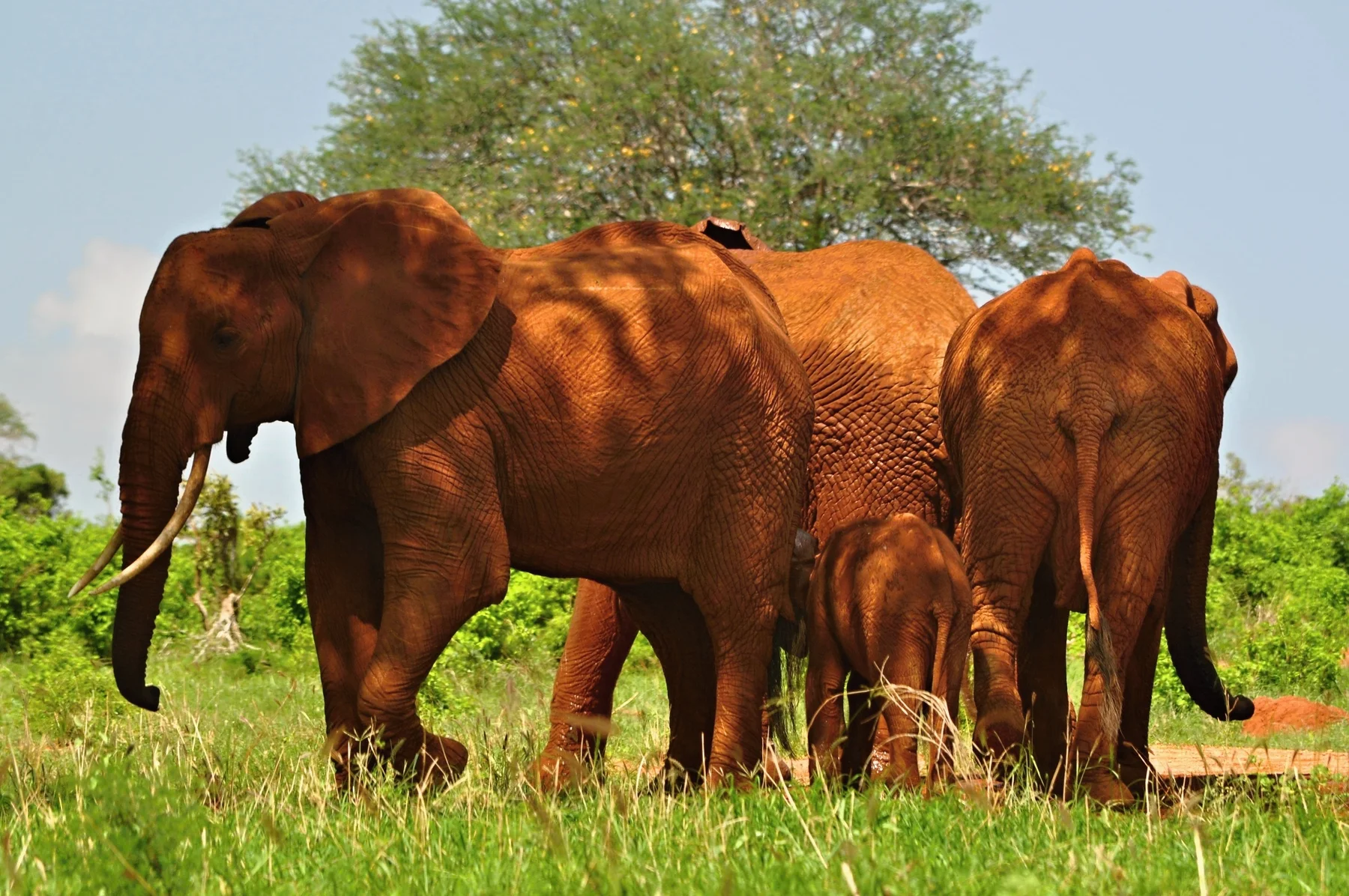
The first thing Tsavo East does is change your sense of distance. The road runs ahead through red earth and thorn scrub, an elephant track disappears into the bush, and the sky seems to have no edge. Then a family of elephants steps into the open, their grey skin burnished red by dust. They are not a special red subspecies. They are Tsavo elephants wearing the landscape.
This Tsavo East National Park guide is for travellers who want more than a rushed photograph beside the gate. It explains the park's real scale, the best-known wildlife areas, gates, rail and road access, camps and lodges, seasons, family and honeymoon choices, self-drive realities, fees and the routes that work from Nairobi or the coast.
Is Tsavo East worth visiting?
Yes. Tsavo East feels wilder and less compressed than Kenya's smaller parks. It is especially rewarding for elephants, lions, dry-country species, birds and the changing scenes around rivers, dams and seasonal water. The pleasure comes from reading a huge landscape rather than racing between radio calls.
It is less suitable for anyone expecting the dense, quick succession of sightings associated with the Masai Mara. Long quiet stretches are normal here. They are part of the experience, not evidence that the drive has failed.
| Tsavo East is a strong fit when you want | Think carefully when you expect |
|---|---|
| Red-dusted elephant herds | A guaranteed Big Five checklist |
| Vast, low-traffic landscapes | Short drives between every sighting |
| Easy links with Kenya's coast | To see the whole park in one day |
| Dry-country wildlife and birds | Cool midday temperatures |
| A slower, more private safari rhythm | Rhino as a dependable sighting |
| Three or more nights in one ecosystem | A lodge name to matter more than location |
Tsavo East in one sentence
Tsavo East is Kenya's largest national park, a vast eastern wilderness of red soil, open plains, thorn bush, rivers and volcanic history where elephants are the signature but patience shapes the safari.
Tsavo East, Tsavo West and the Tsavo Conservation Area
The names are related but not interchangeable. Tsavo East National Park lies east of the Nairobi to Mombasa road and railway corridor. Tsavo West National Park lies to the west. The wider Tsavo Conservation Area includes both parks and surrounding ranches, sanctuaries and dispersal land.
That distinction matters when a quote says “Tsavo”. Ask which park, which gate and which nights. A route that crosses from East to West uses public roads and separate entries. It is not one continuous game drive.
| Area | Landscape character | Strongest reason to include it | Planning reality |
|---|---|---|---|
| Tsavo East | Open, red, dry and immense | Elephants, space, Galana River and broad plains | Long distances between sectors |
| Tsavo West | Hillier, greener and more volcanic | Mzima Springs, lava, viewpoints and varied terrain | Dense cover can make wildlife harder to spot |
| Taita Hills and Lumo | Community and private conservancy landscapes | Waterholes, night drives where permitted and compact viewing | Different fees and rules from KWS parks |
| Wider Tsavo ecosystem | Ranches and wildlife corridors | Conservation scale and migration routes | Not all land is open to visitors |
How large is Tsavo East?
Kenya Wildlife Service currently describes Tsavo East as approximately 13,747 square kilometres. Published figures vary across older sources, which is one reason to use the current KWS park page rather than copying a decades-old number.
The useful lesson is not the exact digit. The park is larger than many travellers imagine. A map can show a road as one line while the actual drive takes hours through heat, washouts, wildlife stops and gate formalities.
Where is Tsavo East?
Tsavo East stretches from the Voi and Manyani side of the Nairobi to Mombasa corridor eastward toward the Galana River and the Sala approach from the coast. The southern visitor circuit is the most accessible and contains the best-known lodges, dams and viewpoints.
The remote northern sector is a different expedition. It should not be added casually to a standard two or three-night itinerary.
Why the park looks red
Tsavo's soil is rich in iron oxides, which give many roads and open areas their deep red colour. Elephants dust and mud-bathe to protect their skin, cool themselves and deal with insects. The fine soil coats them in rust-coloured powder.
The “red elephants of Tsavo” are therefore African savanna elephants transformed visually by place. Their colour can become brighter after a dust bath and fade after rain or water.
The red elephants are not a subspecies
Calling them a red species may sound romantic, but it is biologically wrong. The animals are the same species found across Kenya. The difference is the earth on their skin.
This simple correction makes the story more interesting. The elephants reveal how closely behaviour, weather and geology are connected.
Elephant families
Family groups are led by experienced females. Calves remain close to mothers, aunts and older siblings, especially near water or when crossing a road. A relaxed group may feed around a vehicle, but the driver should never split the herd or block the path.
If an elephant raises its head, spreads its ears or repeatedly tests the air, give it more room. The best encounter is one the animals choose.
Bulls and tuskers
Adult bulls may travel alone or in loose associations. Tsavo is famous for large elephants and long tusks, yet a giant tusker is never guaranteed. Do not encourage a guide to chase or surround one for a close photograph.
Time spent with an ordinary bull feeding quietly can reveal trunk control, ear cooling, foot placement and social signals that a rushed tusker hunt misses.

Lions in Tsavo East
Lions live across the park, but vegetation, heat and distance affect visibility. Early morning is often productive because lions may still be active or resting near a recent hunt. By midday they can vanish beneath low shade.
Tsavo lions are often discussed as maneless. Some males have reduced manes, but not every male lacks one. Climate, genetics, age and condition all influence appearance.
The man-eaters story needs context
The famous man-eating lions attacked railway workers in 1898 during construction of the Uganda Railway around the Tsavo River corridor. Their story belongs to colonial railway history, labour conditions, ecology and the museum specimens now held in Chicago.
It does not mean modern Tsavo lions routinely hunt people. Visitors remain inside vehicles and follow park rules because all lions are wild predators, not because they inherit a legend.
Leopards
Leopards occur, especially around riverine cover, rocky ground and mature trees. They are secretive and should never be promised. A fresh track, baboon alarm or impala stare can be the only clue.
Choose a guide who enjoys reading signs instead of treating every leopard-free drive as a disappointment.
Cheetahs
Cheetahs use open country where they can see prey and accelerate. Their distribution changes with grass height, water and prey movement. The park's scale means a cheetah may be present without being anywhere near the visitor circuit that day.
A private vehicle helps because the group can wait with a distant cat rather than leaving for a schedule.
Buffalo
Buffalo may gather near reliable water or rest in thick cover. Herds can appear dark against the red land, while older bulls sometimes remain apart. They deserve distance, particularly when a vehicle is close to water or a narrow track.
Never leave the vehicle at an informal stop. A quiet bush can still hold buffalo.
Giraffes, zebras and antelope
Masai giraffes, plains zebras, impalas, Grant's gazelles and waterbuck occur across suitable habitat. Beisa oryx, gerenuk and lesser kudu add a dry-country character that feels different from the Mara.
Ask the guide to explain how each animal feeds. Gerenuk stand to browse, oryx conserve water, and lesser kudu disappear into cover with remarkable ease.
Hippos and crocodiles
The Galana River supports hippos and Nile crocodiles. Their presence makes the river a wildlife corridor but also a dangerous place to approach casually. View only from authorised areas with a guide.
Never stand between a hippo and water, and do not walk along a riverbank because it looks empty.
Rhinos in Tsavo East
Do not choose Tsavo East primarily for rhino. Rare reports exist, but the park's visitor experience is not built around dependable rhino viewing. Tsavo West's fenced rhino sanctuary and specialist central Kenya reserves offer clearer rhino planning.
For a rhino-focused route, read the Ol Pejeta Conservancy guide or Solio Game Reserve guide.
Wild dogs and other rare sightings
African wild dogs can move through the Tsavo ecosystem, but they cover enormous distances. A sighting is exceptional, never an itinerary inclusion. The same caution applies to aardwolf, caracal and other elusive mammals.
Celebrate the common species. Their behaviour makes a safari rich even when rarity stays hidden.
Birds
Tsavo East is excellent for birds, with raptors, hornbills, rollers, bee-eaters, bustards, ostriches, weavers and water-associated species. The Galana River, dams, open plains and thorn woodland each hold a different community.
Bring binoculars and ask for a guide who is comfortable with calls, female plumage and seasonal migrants. A general wildlife drive can otherwise pass small birds too quickly.
The Galana River
The Athi and Tsavo rivers combine to form the Galana, which flows eastward through the park before continuing toward the Indian Ocean as the Sabaki. Riverine vegetation creates a green line through dry country and concentrates wildlife in difficult seasons.
The river is not a swimming or casual picnic place. Crocodiles, hippos, steep banks and changing water levels demand authorised viewpoints.
Lugard Falls
At Lugard Falls, the Galana River pushes through sculpted rock channels and rapids. The attraction is geological drama rather than a single vertical waterfall. Water speed and colour change with rain upstream.
The drive is long from the Voi side, so add it only when the itinerary has enough time. A guide should confirm current road and access conditions before setting out.

Mudanda Rock
Mudanda Rock is a long rock outcrop overlooking a natural water catchment. From the top, the park opens into a wide horizon and animals may gather below when water is scarce.
Heat and exposed rock matter. Wear secure shoes, carry water and follow the ranger's direction about where walking is allowed.
What travellers notice at Mudanda Rock
Visitors often remember the change of perspective more than a particular animal. A short independent review calls it a “beautiful viewpoint”.
Treat the view as worthwhile even when the waterhole is quiet. Wildlife use depends on season, recent rain and time of day.
Aruba Dam
Aruba Dam was created across the Voi River and remains an important southern-circuit landmark. Water can attract elephants, buffalo, plains game and birds, particularly in dry conditions.
Ashnil Aruba overlooks the dam, which gives guests a strong sense of place between drives. Water level and wildlife concentration are never fixed.
Yatta Plateau
The Yatta Plateau is a vast ancient lava flow running along the park's western side. It is often described as one of the world's longest lava flows. Much of its meaning is geographical rather than a single roadside stop.
Ask the guide to point it out on the map and explain how volcanic history shaped drainage and habitat.
Voi River and seasonal water
The Voi River system and waterholes influence the southern wildlife circuit. Some channels are seasonal, and a place that held elephants last month may be quiet after rain spreads water across the landscape.
That movement is why a current guide matters more than a fixed list of “best” waterholes.
The southern visitor circuit
Most first-time itineraries use Voi, Bachuma or Sala access and stay within the southern and central road network. This is where accommodation choice, reliable roads and major attractions align most easily.
Even here, trying to combine Mudanda Rock, Aruba Dam and Lugard Falls in one hurried drive can turn wildlife watching into transit.
The northern sector
Northern Tsavo East is remote, lightly visited and logistically demanding. Roads, fuel, communication, camping and ranger arrangements require current confirmation. It is not a simple extension of a Voi lodge stay.
Plan it as an expedition with KWS guidance and an experienced operator. Do not rely on an old online map or assume Ithumba access works like a main tourist gate.
Gates at a glance
Voi Gate serves the Voi side and rail arrivals. Bachuma Gate is useful from Mombasa and the southern coast road. Sala Gate serves approaches from Malindi and Watamu. Manyani sits on the Nairobi to Mombasa corridor. Other named access points may be operational for specific routes, but current KWS confirmation should decide the plan.
| Gate or approach | Usually useful for | Important question |
|---|---|---|
| Voi Gate | Voi town, Voi SGR, southern lodges | Is the station transfer and first game drive timed before closing? |
| Bachuma Gate | Mombasa and some Diani routes | How much of the day remains after coast traffic? |
| Sala Gate | Malindi and Watamu | Is the park road passable for the planned vehicle? |
| Manyani Gate | Nairobi road routes and western access | Does it fit the booked camp's sector? |
| Northern access | Specialist expeditions | Has KWS confirmed gate, road, ranger and camping arrangements? |
Gate hours
Kenya Wildlife Service currently states that gates open at 06:00 and close at 18:00 unless the visitor is staying overnight. This does not authorise night game driving. It means an overnight guest follows the lodge and KWS transfer arrangements.
Arrive with time for entry, payment and luggage checks. A 17:58 arrival is not a workable plan.
Park rules that protect the experience
Remain on authorised roads, obey speed limits, give wildlife right of way and do not hoot. Kenya's national parks prohibit single-use plastic. Carry reusable water bottles and secure all waste.
Off-road driving damages vegetation, creates duplicate tracks and pressures animals. A close photograph is not worth turning a wild place into a parking area.
How many nights do you need?
Three nights are the best first choice. They allow two full days without making every distant landmark compulsory. Four nights suit photographers, families and travellers adding Lugard Falls. Two nights can work when the camp is well positioned and the route continues to the coast or Tsavo West.
| Time in Tsavo East | What it can realistically deliver | Verdict |
|---|---|---|
| Coast day trip | Gate-area drive with heavy transfer time | Only for severe time limits |
| 1 night | Arrival and departure drives | A glimpse, often rushed |
| 2 nights | One full day plus shorter drives | Useful minimum |
| 3 nights | Two full days and flexible sectors | Best first visit |
| 4 nights | Slower drives, remote landmarks and rest | Excellent |
| 5 nights or more | Specialist photography or northern planning | For enthusiasts |
Why one day feels too short
An independent visitor concluded that “only one day safari is not enough”. The issue is not that a day trip sees nothing. It is that road transfers and gate times leave little room for the park's true rhythm.
If one day is all you have, choose one sector and resist a checklist.
A thoughtful three-night rhythm
Arrive for an afternoon drive near the lodge. Use the first full day for elephants, plains and a nearby water system. Use the second for one distant landmark or a full slow wildlife circuit. Depart after an early final drive if the route permits.
This pattern leaves room for a lion that sleeps for an hour, elephants that approach water slowly, or a road changed by rain.
Best time to visit
Tsavo East is open throughout the year. Dry periods often concentrate animals around reliable water and make roads easier, while green seasons bring colour, young animals, dramatic skies and strong birding. Heat can be intense in any month.
The best time depends on whether you value concentrated wildlife, quieter travel, greener photography or a coast combination.
| Period | Landscape and wildlife | Trade-off |
|---|---|---|
| January to February | Warm, often dry, water becomes important | Hot afternoons and dust |
| March to May | Long-rain potential, green growth and dramatic skies | Some roads may become difficult |
| June to October | Drier viewing, cooler mornings and popular travel months | Dust and stronger demand |
| November to December | Short rains, fresh vegetation and migrant birds | Local road disruption can occur |
Dry-season Tsavo East
Dry weather can pull wildlife toward dams and rivers. Visibility may improve as vegetation thins, but animals still move across a huge area. Dust enters vehicles, camera bags and pale clothes.
Carry a scarf or buff, lens brush, sealed storage and more drinking water than you expect to need.
Green-season Tsavo East
Rain changes the mood quickly. Red earth darkens, grass brightens and storm light makes strong photographs. Water spreads wildlife away from permanent sources, so sightings can require more searching.
Road judgement becomes important. A driver should turn back before a black-cotton or flooded section becomes a recovery job.
Heat
Midday heat can be severe, particularly in the warmer dry months. Wildlife often rests, and people lose concentration when dehydrated. Early and late drives are productive partly because temperatures are kinder.
Choose a lodge with shade, reliable drinking water and a room setup that suits your tolerance for heat.
Dust
One traveller's practical warning was “dusty and bumpy”. That is not a criticism so much as honest preparation.
Avoid white clothing, close camera bodies before changing lenses and keep medication in sealed bags.
Getting there from Nairobi by road
The Nairobi to Mombasa highway reaches Manyani and Voi, but travel time depends on traffic, roadworks, stops and the chosen gate. A same-day road transfer followed by a long game drive can be tiring.
Break the route when travelling with young children or anyone who struggles with long sitting. The accessible Kenya safari guide explains vehicle and room questions to settle before payment.
Getting there from Mombasa
Bachuma and Voi approaches make Tsavo East one of the most natural safari additions to Mombasa. An early departure protects game-drive time and avoids wasting the cool morning on the highway.
Ask whether the quote includes the same private vehicle from hotel pickup through every drive, or whether guests transfer into another vehicle at the gate.
Getting there from Diani
Diani adds the Likoni and Mombasa traffic question unless the route uses an alternative confirmed arrangement. A map estimate can be misleading. Leave early and avoid promising a full park day after a late beach breakfast.
Two or three nights are more satisfying than a single overnight when the coast transfer is long.
Getting there from Watamu or Malindi
Sala Gate can create a logical link from Watamu and Malindi. The approach and internal road condition should be confirmed for the season. It is not automatically faster simply because the map looks direct.
Pair the right gate with the right camp. Crossing the park to reach a poorly matched lodge wastes time and fuel.
Arriving by SGR train
The Standard Gauge Railway connects Nairobi and Mombasa with Voi station. The station is outside the park. A vehicle must meet the train, collect luggage and enter through the planned gate.
Confirm the train, carriage, luggage allowance, transfer vehicle, gate fees and what happens if the service arrives late. Ashnil Aruba currently describes a roughly 60-minute transfer from Voi station, but other properties will differ.
Flying into Tsavo East
KWS lists airstrips including Aruba, Satao, Sala, Sangayaya, Thabagunji, Lugard and Bachuma. A named strip does not guarantee a daily scheduled service. Charter availability, runway condition, baggage limit and lodge transfer must all align.
Flying saves road time but can increase cost and reduce baggage allowance. Use soft bags and confirm the exact aircraft before packing.
Choosing a safari vehicle
A private 4×4 Land Cruiser offers high clearance, shade, charging, window access and the freedom to wait. A safari van may handle standard dry roads at lower cost, but clearance and ride quality differ.
| Vehicle question | Why it matters in Tsavo East |
|---|---|
| Private or shared? | Distance and personal pace matter across a huge park |
| Roof type? | Shade, standing height and photography change comfort |
| Seat guarantee? | Every traveller needs a proper window position |
| Cooler and water? | Heat makes hydration essential |
| Charging points? | Full-day drives drain phones and cameras |
| Recovery equipment? | Rain and remote roads expose weak preparation |
Self-drive
Self-drive is possible on authorised routes for prepared travellers. It requires a suitable vehicle, offline map, spare tyre, tools, water, fuel planning and the discipline to turn around. Mobile signal cannot be assumed.
First-time safari drivers often underestimate how hard animals are to spot and how tiring corrugated roads become. A good guide adds interpretation, safety and current road knowledge.
Fuel and breakdown planning
Do not assume fuel is available inside the park. Fill before entry and understand the vehicle's range. Carry the operator's emergency contacts and know where the spare wheel, jack and wheel tools are.
A mechanical delay can consume a short safari. This is one more reason not to build a one-night itinerary with no slack.
Where to stay in Tsavo East
The meaningful distinction is not luxury versus budget. It is inside the park, beside a useful wildlife area, just outside a gate, or in Voi town. Each position changes the first and last game-drive hours.
Ask for the exact map pin and gate, not only the property name.
| Property or base | Position and character | Best for | Question to settle |
|---|---|---|---|
| Ashnil Aruba Lodge | Inside the park overlooking Aruba Dam | Water views, rail links and central drives | Which vehicle and activities are included? |
| Satao Camp | Inside the park at a waterhole | Tented atmosphere and wildlife from camp | Is private vehicle use included? |
| Sentrim Tsavo East | Inside the park in the southern circuit | Practical tented stay | Exact room, meal and transfer basis |
| Voi Safari Lodge | Park-side or inside southern setting with waterhole views | Families and lodge facilities | Which gate formalities apply to each drive? |
| Voi Wildlife Lodge | Outside or immediately adjoining the boundary near Voi | Pools, family facilities and road access | How long from room to productive game viewing? |
| Voi town base | Outside the park | Lower room cost and transit | Are repeated entry and vehicle costs included? |
Ashnil Aruba Lodge
Ashnil Aruba is confirmed inside Tsavo East on the bank of Aruba Dam. Its greatest advantage is not a brand label. It is waking near an important water source and beginning drives without a long gate transfer.
The property currently offers game drives and can arrange bush dining and special occasions. Ask which experiences are private, which attract extra fees and whether a Voi station transfer is included.
Satao Camp
Satao Camp describes itself as a tented camp in the heart of Tsavo East overlooking a waterhole. Wildlife may appear while guests are resting, which gives the stay a strong sense of place.
Confirm the tent category, power schedule, child policy, meal basis, vehicle arrangement and the distance to the sectors you want to explore.
Sentrim Tsavo East
Sentrim offers an inside-park tented option in the southern circuit. It can suit travellers who want a practical base without moving outside the gate each day.
Property standards and inclusions change, so judge the named room, recent maintenance, cooling, power and vehicle terms rather than relying on an old star rating.
Voi Safari Lodge
Voi Safari Lodge is known for elevated views and a waterhole setting on the Voi side. Its location can work well for families and shorter southern circuits.
Clarify whether the booking is treated as inside-park accommodation for entry timing, the exact room view, and how long drives take to Aruba, Mudanda or other planned areas.
Voi Wildlife Lodge
Voi Wildlife Lodge sits outside or immediately adjoining the park boundary near Voi, not deep inside Tsavo East. It offers broad lodge facilities and waterhole views, but game drives still need gate and transfer planning.
A recent family reviewer loved watching animals at the waterhole, yet location descriptions online are often loose. Use the exact map position rather than repeating “in the heart of the park”.
Galdessa and the Galana sector
Galdessa has historically offered a more remote river-based experience in the Galana area. Operating status, access and seasonal opening should be confirmed directly before it appears in a final itinerary.
Remote character is valuable only when transfers, vehicles, food, communication and emergency arrangements are clear.
Camping
KWS has listed Ndololo as a public campsite and Kanderi as a special campsite in past park information. Current availability, booking, facilities, water and ranger requirements must be reconfirmed.
Camping is not a cheaper lodge room. Travellers need food, drinking water, shelter, lighting, secure procedures and a responsible waste plan.
Inside versus outside the park
Inside accommodation usually protects early and late wildlife time. Outside accommodation may offer more facilities or a lower rate, but repeated gate travel changes the day.
| Decision | Inside the park | Outside the park |
|---|---|---|
| First drive | Begins close to wildlife sectors | Starts after transfer and entry |
| Midday rest | Easy when the lodge is well placed | May require staying out all day |
| Cost | Often higher | Room can be lower, transfers may add up |
| Atmosphere | Strong bush immersion | More town or resort convenience |
| Best for | Short stays and photographers | Transit, facilities and tighter budgets |
Tsavo East for families
Children often love elephants, tracks, waterholes and the railway story. They struggle with heat, dust and six silent hours in a vehicle. Build shorter drives around one full day rather than repeating exhausting all-day circuits.
Check interconnecting rooms, pool supervision, meal flexibility, child seats, toilet stops and whether the camp is fenced. Our Kenya safari with children guide covers age-specific planning.
Tsavo East for a honeymoon
Privacy comes from a private vehicle, a well-positioned room and enough nights to slow down. A rushed shared day trip from the beach is not automatically romantic because it includes elephants.
Choose a camp that can arrange a private dinner or sundowner legally, then leave time to enjoy it. If the trip includes several parks, compare the Masai Mara honeymoon safari for a different landscape and predator density.
Accessible Tsavo East planning
Long transfers and high vehicle steps are the first issues. Ask for measured step heights, a portable step with handle, door width, seat support and realistic toilet access on full-day drives.
The lodge needs a step-free route from room to dining area, not merely a room labelled accessible. Request photographs and written confirmation.
Photography
Tsavo's strongest photographs often use context: red elephants under a large sky, dust behind a herd, a lion family in dry bush, or a tiny vehicle beneath Mudanda Rock. A long lens is useful, but a wide lens tells the scale.
Carry two camera bodies if possible to avoid changing lenses in dust. Use a beanbag, lens cloth, blower and sealed dry bag.
Light and exposure
Red soil can dominate a camera's colour balance. Shoot RAW if you edit, protect bright sky and avoid over-saturating elephants until they look artificial.
Morning and late afternoon bring texture. Midday can create harsh shadows but also works for graphic scenes around water.
What real travellers say
Independent reviews repeatedly return to scale and mood. One traveller called the park “wild and raw”. Another described a “proper African wilderness feeling”.
Those phrases are useful because they do not promise a particular animal. They describe the quality Tsavo East can reliably offer.
Silence is part of the safari
During one elephant encounter, a reviewer wrote “we just sat there in silence”. That is a better goal than shouting across vehicles or demanding a closer angle.
Ask the guide to switch off the engine when safe. Listen for low elephant rumbles, oxpeckers, wind and alarm calls.
Patience is not optional
Another visitor observed that “you may need patience and some driving”. This is the honest price of space.
The reward is an encounter that does not feel staged. A lion found after reading tracks means more than one reached through a queue of vehicles.
The atmosphere travellers remember
Reviews mention a “peaceful atmosphere” and a “real feeling of being close to nature”. Both depend on responsible vehicle behaviour.
Crowding, hooting and off-road shortcuts destroy the very quality people travelled to find.
Tsavo East versus Tsavo West
East is generally more open, red and expansive. West is hillier, greener and shaped by volcanic features, springs and denser vegetation. East often makes large animals easier to see at distance, while West rewards landscape exploration and patient searching.
| Question | Tsavo East | Tsavo West |
|---|---|---|
| Signature | Red elephants and scale | Mzima Springs and volcanic scenery |
| Terrain | Open plains and thorn scrub | Hills, lava and thicker vegetation |
| Wildlife visibility | Often broader sight lines | Animals can disappear into cover |
| Coast link | Excellent | Excellent via different gates |
| Minimum stay | 2 nights, ideally 3 | 2 nights |
| Best combined? | Yes, with proper transfer time | Yes, not as one rushed park |
Tsavo East versus Amboseli
Amboseli is smaller, wetter around its swamps and famous for Kilimanjaro views. Tsavo East is far larger, drier and more solitary. Both are excellent for elephants, but the experience is different.
Choose Amboseli for mountain-and-swamp scenes. Choose Tsavo East for red earth and immense space. Combine them when you have at least five or six safari nights.
Tsavo East versus the Masai Mara
The Masai Mara usually offers denser predator viewing and, seasonally, migration drama. Tsavo East offers lower traffic, dry-country species and a landscape that feels less bounded.
Neither is “better”. A first safari can include both when the route and budget support the transfer.
Tsavo East and the coast
Tsavo East is the most natural wildlife extension to Mombasa, Diani, Watamu or Malindi. The combination works because a beach stay supplies rest after dusty drives, while the safari gives the coast holiday a completely different rhythm.
Do the safari first when possible. Dust and early starts feel easier before the beach than after several days of sleeping late.
Tsavo East, Tsavo West and Amboseli route
A six to eight-night route can link East, West and Amboseli without turning every day into transfer. Begin on the coast or in Nairobi, move in one direction and avoid backtracking.
The Masai Mara, Amboseli and Tsavo safari is useful when you want the broader southern circuit, but the itinerary needs more nights than the park names alone suggest.
A sensible two-night plan
Use a well-positioned southern camp. Arrive for an afternoon drive, spend the next day around one major water system and nearby plains, then take an early drive before continuing.
Do not force Lugard Falls into this stay unless the camp and road conditions make it genuinely practical.
A strong three-night plan
Use the arrival drive to learn the local sector. Devote one full day to wildlife around Aruba, Voi or Satao, and another to Mudanda Rock or a longer Galana direction. Keep the final morning flexible.
This is the best balance for most first-time visitors.
A four-night photography plan
Choose a private vehicle and inside-park camp. Repeat the same water area in different light, spend time with one elephant family, and use one longer day for a landscape landmark.
Build a midday editing and equipment-cleaning break instead of driving through poor light every day.
Park fees
KWS conservation fees depend on citizenship or residency category, age, vehicle and date. Fee schedules can change. Use the current KWS payment information for the exact travel date rather than placing a permanent old price in the itinerary.
The quote should show park entry days separately so a change can be traced without hiding it inside “package cost”.
What a clear quote should name
| Cost line | What must be visible |
|---|---|
| Accommodation | Property, room, meal basis and nights |
| Vehicle | Type, private or shared, start and end point |
| Park fees | Category, adults, children and entry days |
| Transfers | Airport, SGR, coast hotel and gate |
| Activities | Included drive, walk, sundowner or meal |
| Exclusions | Drinks, tips, insurance and optional experiences |
| Payment | Deposit, balance date and cancellation terms |
For wider budgeting, use the Kenya safari cost guide.
What to pack
Choose light neutral clothing, a warm layer for early drives, sun protection, closed shoes and a dust scarf. Bring binoculars, camera protection, reusable water bottle, personal medication and copies of travel documents.
The Kenya safari packing guide covers luggage in more detail. Soft bags matter when a small aircraft is included.
Health and insects
Discuss malaria prevention and routine travel health with a qualified clinician. Use repellent, long sleeves in the evening and the room's mosquito protection. Heat illness is an immediate risk, so drink water before thirst becomes strong.
Never leave medication in a hot vehicle or checked bag.
Food and water
Inside-park stays usually include meals, but drinks and picnic lunches may vary. Confirm dietary needs before arrival because a remote camp cannot replace every ingredient at short notice.
Carry safe drinking water on every drive and avoid feeding wildlife at picnic sites.
Mobile signal and charging
Signal varies by sector and provider. Download tickets, maps, emergency contacts and insurance details before entry. Tell family that a slow reply can simply mean the vehicle is out of coverage.
Confirm charging hours and plug type at tented camps. A power bank is useful but must comply with airline rules.
Safety around wildlife
Stay seated when a guide asks, keep limbs inside near animals and never stand through the roof while the vehicle is moving. Do not imitate calls, play recordings at predators or pressure a resting animal.
Children need an adult beside them, not alone near an open door.
Responsible elephant viewing
Do not block a herd's route to water. Avoid crowding calves and never ask the driver to provoke an ear-spread photograph. If elephants change direction because of vehicles, the vehicles are too close.
Switch off sound, give them time and let the herd pass as one group.
Responsible predator viewing
Keep noise low, leave an escape route and do not surround a cat. Cubs are especially vulnerable to pressure. A feeding animal needs more room than a resting one.
Report deliberate off-road harassment through the appropriate KWS channel with time and vehicle details.
Common planning mistakes
The biggest mistakes are booking one night, choosing a lodge without checking its gate, calling Voi station “inside the park”, promising rhinos, treating East and West as one park, and scheduling a distant landmark on departure morning.
Another mistake is using a cheap outside room while ignoring repeated gate, fuel and time costs.
Questions to ask before booking
| Question | Why it matters |
|---|---|
| Which exact gate will we use? | It reveals route logic |
| Is the vehicle private throughout? | It controls pace and seating |
| Where is the lodge relative to the gate? | It protects game-drive time |
| How many KWS entry days are included? | It makes fees auditable |
| Is the SGR transfer private? | Train arrival needs coordination |
| Which distant landmarks are realistic? | It prevents exhausting days |
| What happens after heavy rain? | Roads and access can change |
| Are activities legal inside the park? | Night drives and walks need permission |
Who should choose Tsavo East?
Choose it if you want elephants, space, dry-country ecology, a coast link and a safari that rewards stillness. It also suits return visitors who already know the Mara and want a different Kenya.
It may not suit a traveller with only one safari day who will be unhappy without multiple cat sightings.
Who should stay longer?
Photographers, birders, families, honeymooners and anyone travelling from Diani should lean toward three or four nights. Extra time reduces pressure and makes weather less important.
Guests adding Lugard Falls or a specialist northern sector need a route designed around those places, not an ordinary lodge stay with extra kilometres appended.
A final honest verdict
Tsavo East does not perform on demand. It can be hot, dusty and quiet. That honesty is exactly why it remains powerful. The road keeps going, the horizon stays open, and the animals decide when the story begins.
A traveller called it a “wilder, slower, and deeply immersive safari”. Use this Tsavo East National Park guide to give the park enough nights, and that is the experience you are planning for.
Frequently asked questions
These answers cover the practical decisions that most often affect a Tsavo East itinerary.
Is Tsavo East Kenya’s largest national park?
Yes. Kenya Wildlife Service currently describes it as the country's largest national park at approximately 13,747 square kilometres.
Are the elephants really red?
Their skin is grey. Red Tsavo soil coats them after dusting and mud bathing.
Can I see rhinos?
Do not plan on it. Rare reports are not the same as dependable visitor viewing.
Can I visit from Mombasa in one day?
Yes, but transfer time leaves a narrow experience. Two or three nights are far better.
Is Voi SGR station inside the park?
No. A vehicle transfer from the station to the selected gate and lodge is required.
What time do gates open?
KWS currently states 06:00, with closing at 18:00 unless the visitor is staying overnight.
Can I self-drive?
Yes on authorised roads, provided the vehicle, navigation, water, fuel and recovery preparation are suitable.
Is Tsavo East good for children?
Yes when drives are age-appropriate and the lodge has suitable rooms, shade, food and supervision arrangements.
Is Tsavo East good for honeymooners?
Yes. A private vehicle, inside-park camp and three nights create a more intimate stay than a rushed shared day trip.
Which is better, Tsavo East or West?
Choose East for open red landscapes and elephants. Choose West for springs, hills and volcanic scenery. Combine them when time allows.
How many nights are best?
Three nights suit most first visits. Two are a workable minimum, and four are excellent for photography or slower travel.
What should I wear?
Wear light neutral layers, closed shoes, a hat and a dust scarf. Avoid white if red dust will bother you.
Tell us how you want Tsavo East to feel
Share the dates, travellers, mobility, wildlife priorities, coast or Nairobi connection, accommodation level and vehicle preference. We will build around current KWS rules and real drive times.