
Kenya Safaris with Young Children
Babies, toddlers and early-primary children can enjoy Kenya’s wildlife, but their safari is not an adult itinerary with a smaller hat. Choose a camp that accepts their age, a vehicle that fits their seat, shorter drives, safe downtime and a route that leaves room for sleep.

The elephant calf is still wobbling through the grass when a toddler decides the safari is over. She has seen enough, is hungry and wants her familiar cup. The adults have waited months for this moment. A good guide can give them a few quiet minutes, then turn toward camp before anyone has to choose between a child’s comfort and everyone else’s joy. That flexibility is the centre of a safari with young children.
Some families will be happier waiting until their children are older. That is a perfectly good decision. Others want a first shared wildlife memory now, perhaps because grandparents are joining or the family already lives in Kenya. There is no one correct starting age. There is, however, a clear difference between choosing a property that truly welcomes a three-year-old and hoping an adult-focused camp will adjust after arrival.
This guide concentrates on babies, toddlers and children in their first school years. For older siblings and larger parties, the family safari packages guide and our large-family safari guide cover rooming, vehicles and group rhythm.
Should your family go now or wait?
Ask how your child handles an hour in a car, new food, early mornings and an unfamiliar bedroom. If those are difficult at home, the bush will not make them disappear. A toddler may be delighted by a zebra beside the road and still reject a two-hour search for lions. A baby may travel calmly when parents can feed and rest on their own schedule, but a long transfer and an unfenced tent can make every nap feel complicated. The adults’ expectations matter too. If someone will be heartbroken to miss long sunrise drives, arrange a second adult, a second vehicle or a later trip.
The “wait” option is not an admission that Kenya lacks child-friendly safaris. It is a choice about this particular child and these particular adults. A first wildlife outing in Nairobi National Park can be a trial without committing a family to a long road journey. A two- or three-night stay at one suitable base can show whether the child loves the routine before a future ten-day circuit. Families living in Kenya may prefer several short safaris over one exhausting holiday.
Choose the child’s experience, not the number of species. Bird colours, animal tracks, termite mounds, elephant family behaviour and the guide’s stories can hold a young child’s attention even when the famous predator is asleep in the shade. Make space to stop watching when the child has had enough. The park will still be there on another morning.
| Child’s stage | What can work | Decide before booking |
|---|---|---|
| Baby | One base, predictable feeding and sleep, very short optional drives. | Camp age rule, safe cot, temperature control, vehicle seat and medical access. |
| Toddler | Short private drives, pool or play time with supervision, familiar meals. | Return-to-camp option, toilet or nappy plan, unfenced-camp supervision. |
| Preschool child | Animal stories, tracks, simple binoculars and one morning goal. | Whether the property offers suitable activities and a flexible guide. |
| Early primary | Longer observation, field notebook and conservation activities. | Activity-specific age rules and the child’s own interest in longer drives. |
A camp can welcome a child and still limit an activity
There is no single age policy for all Kenya safari camps. Each lodge or camp decides who may stay, whether a child may join a shared drive, when a private vehicle is required and who may join a walk, night drive or balloon. Those are different questions. A family tent in the brochure proves only that a family unit exists. Ask for the child’s exact age to be accepted in writing for the stay and for each planned activity.
For example, Governors’ Camp’s family information says it welcomes guests of all ages, offers family tents sleeping up to five, can provide cots on request and allows families to book an exclusive-use game-drive vehicle. That is a concrete child-friendly arrangement. It does not mean every camp in the Mara follows the same rule. Nor does it mean a small child can go on every specialist excursion.
Age thresholds can also apply to flights and room rates, independent of the camp. Give the exact birth date of each child when asking for a quote. The child-rate and family-room guide explains why one blanket “children half price” claim can be misleading. An infant with no park fee may still need a safe bed and a suitable car seat; an older child may have a flight seat but a discounted camp rate.
The vehicle must fit the child, not just the luggage
Ask which exact vehicle will handle the airport transfer, the road journey and each game drive. A suitable child restraint needs a compatible seat, belt or attachment point and an agreed place in the vehicle. Do not assume a safari 4×4 has the same fittings as the family car. If bringing your own seat, confirm the fit before departure; if a seat is supplied, confirm its type and suitability for the child’s size. A photo of the actual seat and belt arrangement can prevent an unpleasant surprise at the airport.
Young children should remain properly seated while the vehicle is moving. A pop-up roof is wonderful for viewing when the vehicle is stationary, not a place for a child to stand through a rough road. Shade, dust, wind and temperature matter as well as the view. A guide who is good with children can turn a slow sighting into a story, but even an excellent guide cannot fix a trip that requires a toddler to be still for six continuous hours.
A private vehicle is often the most valuable family upgrade. It allows a short drive, an earlier return, a sensible toilet stop and a quieter pace without affecting strangers on a shared drive. Some camps require it for younger guests. If two parents hope to take turns on longer drives, clarify whether one adult can stay safely with the child at camp while the other travels, and who is responsible for supervision. Never assume a camp has childcare merely because it advertises family rooms.
For a fly-in safari, compare the whole journey. A small aircraft can shorten a long road day, but there is still travel to Wilson Airport or another departure point, check-in, boarding, airstrip transfer and luggage limits. Bottles, nappies, medication and a child seat may use more allowance than two adults expect. A private road vehicle may be slower but lets the family stop and carry more. Choose the better door-to-room day, not the shorter number on the flight timetable.

Make one good game drive, then give the day back
A young child does not need two formal drives every day to have been on safari. One early outing can deliver the cooler light, a few memorable animals and a return in time for a proper breakfast. On another day, an afternoon drive may suit the family’s sleep. The guide can adapt to the weather and wildlife without making the child a hostage to a rigid programme.
Before leaving camp, pack water, familiar snacks, wipes, a change of clothes, sun protection and any feeding supplies. Decide where a safe designated stop exists, if any. Parks are not playgrounds: it is not safe to step out for a toilet break wherever the vehicle happens to be. A nappy or toilet plan is a small detail with enormous effect on how relaxed the adults feel.
Leave the middle of the day open. Lunch, a nap, a pool with active adult supervision or sitting where the child can watch birds may be plenty. A parent who wants an extended wildlife drive can sometimes take a separate vehicle while another adult stays behind. If the family is travelling with grandparents or friends, decide that split voluntarily rather than assigning someone permanent childcare on holiday.
| Part of day | Child-led version | Adult wildlife option |
|---|---|---|
| Early morning | Short private drive with one or two clear wildlife goals. | Second adult or vehicle continues only if arranged. |
| Late morning | Breakfast, wash-up and free time. | Review photographs or a gentle guided camp activity. |
| Midday | Nap or quiet rest, food and shade. | Rest as well; not every hour needs a schedule. |
| Late afternoon | Optional shorter drive if the child is happy. | Longer outing for keen adults in a separate vehicle. |
| Evening | Early dinner and the camp’s escort rules. | Shared family stories without another compulsory activity. |
Choose the easiest route for this family
Nairobi National Park. A short first outing can reveal how the child feels in a safari car without a remote overnight. The park has its own wildlife character, including rhino habitat and city views. It is not a promise of elephants. A private half-day can end before a young child’s patience disappears. See the Nairobi day safari guide.
Amboseli. Elephants are visually engaging, and a two- or three-night stay gives several chances to see family behaviour without forcing one marathon drive. The road from Nairobi is still a real journey. Consider a recovery night, comfortable vehicle and lodge location before making it the child’s first long-distance safari. The mountain may be cloudy, so let the elephants and wetlands carry the trip. Our Amboseli with kids guide covers the destination in detail.
Ol Pejeta and Laikipia. Rhino-focused viewing and specific conservation activities can interest older young children, while a suitable family cottage or house gives the group room between drives. Activity ages vary. Verify the actual property and what is included in the conservancy entry. The Ol Pejeta guide is a good starting point.
Lake Naivasha. For a child who needs time outside the car, a suitable lakeside stay can break up the safari. Boats, hippo country and water demand close supervision and a properly equipped operator. A resort pool is not a substitute for an adult at the child’s side. Naivasha may pair naturally with Lake Nakuru or act as a slower road break before the Mara. Read our Naivasha guide for the distinct options.
Masai Mara. The wildlife is extraordinary, but the road or bush-flight day and the camp’s age policy deserve care. Choose at least enough nights to avoid arriving tired and leaving immediately. A family tent and a private vehicle can make the Mara work beautifully; an adult-oriented remote camp and a one-night stay can do the opposite. The Mara guide explains the Reserve, Triangle and conservancy differences.
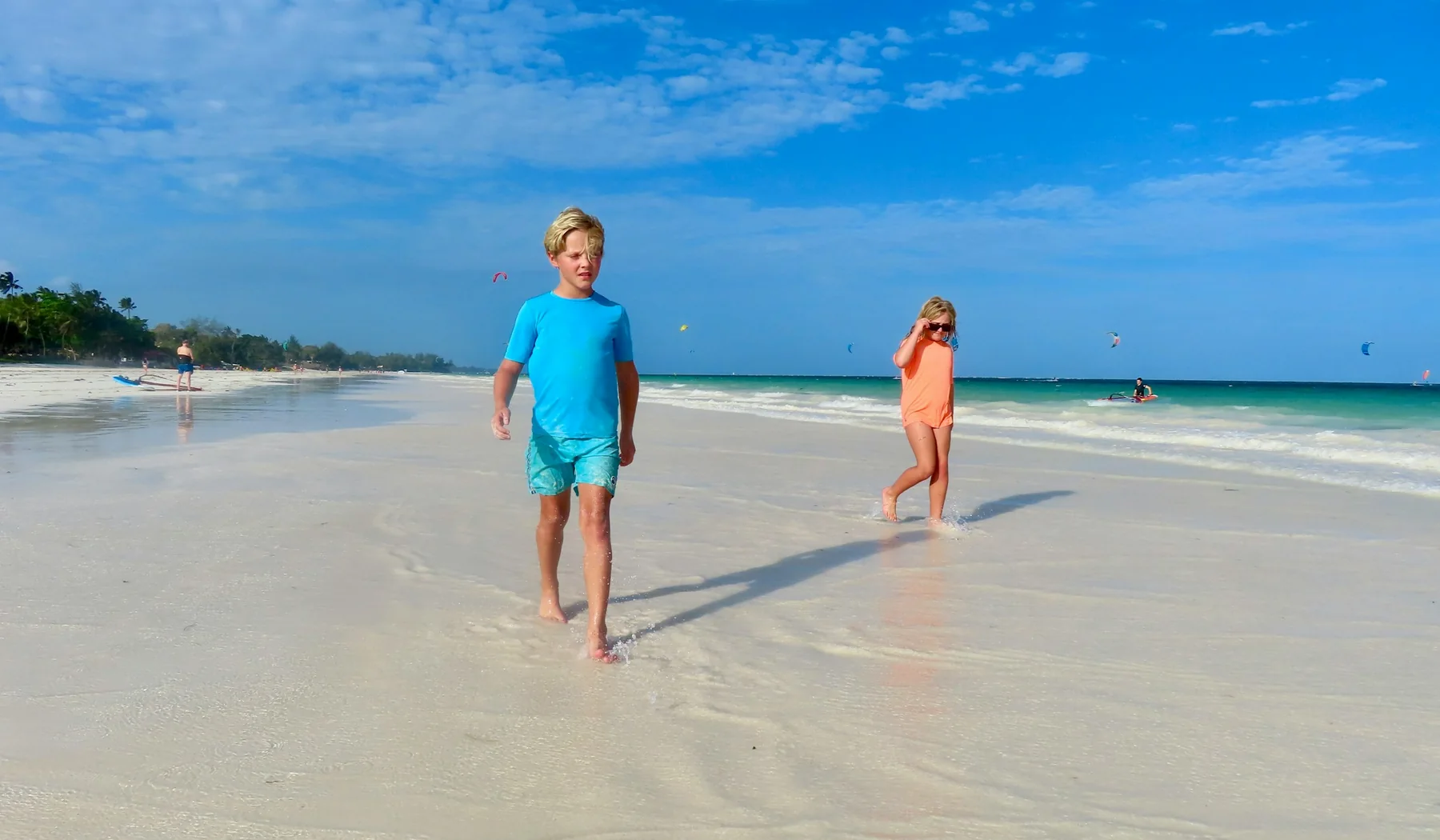
For a longer holiday, consider ending with the coast. The decision is not simply beach versus bush. Children who have enjoyed three safari nights may love several slower days in Diani, while others would happily take one more early drive. Stay at fewer bases and protect the transfer days. A family should not spend half its holiday checking out.
Inspect the actual room and camp routine
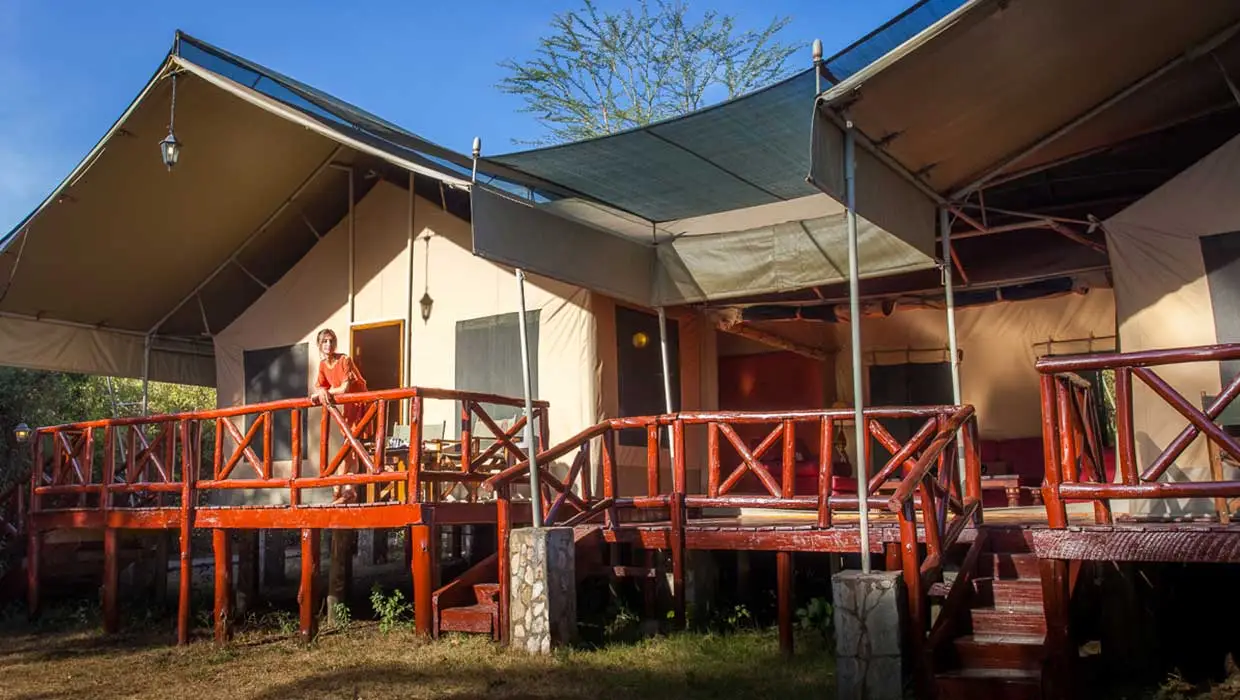
A camp that welcomes children still needs to fit yours. Ask for the actual family unit: where is the cot, which beds are in the same enclosed space, how many doors open to the outdoors, and how far is it to dining? At an unfenced camp, can a small child reach a deck or path without an adult? What is the escort arrangement after dark? Are there open pools, waterholes or steep drops near the room? A room photo and simple plan can answer more than a long marketing paragraph.
Food and sleep are equally practical. Can the kitchen serve an early dinner or simple familiar food? Is safe drinking water readily available? Can bottles or expressed milk be handled according to the family’s needs, and is there reliable power when required? Is a cot confirmed rather than merely “subject to availability”? If the child naps in the room, can the adults sit nearby without leaving the child alone? Answers differ by property.
At a lodge with many rooms, the family may find a pool, flexible dining and an easier return to its room. A smaller camp can be warm and personal but may have fewer facilities and more strict movement rules. Neither category is inherently safer. The exact room, team, grounds and vehicle arrangements are what matter. Do not infer them from a star rating.
| Accommodation choice | What may help a young family | What to verify |
|---|---|---|
| Large safari lodge | Shorter paths, predictable meals and more space between drives. | Actual family room, pool supervision and gate transfer. |
| Small tented camp | Personal guiding and a calm setting. | Minimum age, escort rules and how a child reaches dining. |
| Private family house | Flexible meals and room for naps or separate adult activities. | Number of secure bedrooms, vehicle and guide inclusions. |
| Coast resort after safari | Rest days and fewer early starts. | Transfer length, child-safe room and beach or pool access. |
Health decisions belong with a clinician, safety decisions with the family
Kenya’s destinations differ in altitude, mosquito exposure, distance to medical care and season. The CDC Kenya traveller guidance notes malaria risk in parts of the country and recommends a conversation about suitable prevention. Ask a qualified travel-health clinician about your child’s exact age, weight, health and route. A safari website cannot choose medicine or vaccines for a baby. Pack any prescribed medication so that the family can reach it during the journey, not in a distant checked bag.
Heat, dust, sun and unfamiliar food can make an ordinary childhood day harder. Carry water and snacks the child reliably accepts. Know where the next safe bathroom or nappy stop is, and do not keep a miserable child in a hot vehicle for the sake of a sighting. Talk to the child’s clinician about what to bring for common travel illnesses and when to seek help. A clear medical and evacuation contact plan is especially valuable on a remote route.
Wild animals do not become safer because a child is excited. Inside a park, follow the guide and posted rules, keep children seated while moving, and leave the vehicle only where it is permitted. At camp, use escorts after dark and supervise every moment near pools, water and open ground. The KWS park rules are worth reading together in simple language before arrival.
The price of flexibility should be visible
A child may have a discounted park ticket, but that is only one part of the trip. A private vehicle, a larger room, a cot, flights with a separate seat, special meals or childcare may change the total. Some of those are worthwhile because they turn a fragile plan into a holiday. They should be named and priced, not hidden inside a vague family supplement.
Ask for adult and child costs by supplier: property, park or conservancy, flight, vehicle and optional activities. Check the child’s age at travel, not just at the date of booking. If two children are different ages, do not assume they share one rate. If one adult may stay at camp during a drive, confirm whether the quoted vehicle and guide arrangements still work. Compare the total experience, not just the room price.
Families are often tempted to add a second park because they have paid for the flight to Kenya. With young children, the better value may be one well-chosen base, private guiding and more time to enjoy it. A short safari can be a complete safari. You can return to discover the next landscape when the children are ready.
What other travellers worry about
In a public discussion about travelling with a three- and six-year-old, one commenter who had just completed a safari cautioned that “You are sitting in a car for hours”. Another preferred more beach time and less vehicle time for those ages. These are personal opinions, not universal rules. They are useful because they reveal what glossy safari photos omit: a child experiences the waiting, the bumps and the lack of immediate bathroom access as well as the animals.
That is why we ask about the child’s routine before choosing the camp. A guide can shorten a drive. A private vehicle can return. A well-sited room can make a nap possible. A parent can decide that this year’s holiday should be mostly beach and one short park experience. The best safari for a young child is not the longest one the adults can buy, but the one everyone wants to remember.
Kenya safari with young children questions
Can you take a toddler on a Kenya safari?
Yes, at properties that accept the child’s age and with a suitable private vehicle and daily rhythm. Some camps or activities have their own minimum ages, so each booking needs checking.
Is there one minimum age for every Kenya safari camp?
No. Properties, conservancies, shared drives and activities set different rules. A camp welcoming a baby to stay may still restrict the baby from a shared game drive.
Do we need a private safari vehicle with a young child?
A private vehicle is strongly useful because the family can shorten a drive, stop for a suitable break and avoid imposing a toddler’s routine on other guests. Some camps require it below certain ages.
Can a child use a car seat in a safari 4×4?
The exact vehicle, belt, seat position and child seat must be checked in advance. Ask the operator to confirm compatibility for each road transfer and game drive.
How long should a game drive be with a toddler?
There is no universal number. Begin with a short, private drive and keep the option to return. Build in food, toilet or nappy needs and rest rather than committing to a full-day outing.
Can young children join a walking safari or balloon flight?
Many activities have minimum-age, height, safety or fitness rules. Check the actual operator’s written policy; a child allowed at camp is not automatically allowed on every activity.
Which Kenya areas are easiest with young children?
Nairobi National Park suits a short first outing. Amboseli, Ol Pejeta, Naivasha and selected Mara camps can work with suitable room, vehicle and drive plans. Ease depends on the actual property and transfer.
Should we fly or drive with a toddler?
Compare the whole door-to-lodge day. A bush flight shortens some roads but adds airport handling, baggage limits and airstrip transfers. A private road vehicle can carry more child gear and stop when needed.
How do we plan malaria precautions for a child?
Ask a qualified travel-health clinician about the exact route, child’s age and medical history. Use the current destination guidance; do not choose medicine from an online article.
Do children get a discounted safari price?
Park, camp, flight and activity suppliers have different age bands and sharing rules. Provide every child’s age at travel and request a line-by-line quote.
Can the parents still enjoy longer wildlife drives?
Yes, if the adults can divide safely with a second vehicle or suitable care arrangement. Never assume a camp offers childcare without written confirmation of staffing and terms.
Can NLS make a shorter family safari instead of a standard package?
Yes. We can build a route around the child’s sleep and meal routine, the adults’ wildlife goals and the transfer time the family is comfortable with.
More family planning
Plan a safari with young children
Tell us your children’s ages, dates, preferred wildlife, sleep routine and longest comfortable drive. We will help you choose an age-appropriate stay and route.