
Kenya Safari for Solo Travellers: What the Days Actually Feel Like
Will you feel lonely, have to share a vehicle, or spend the whole trip paying for an empty second seat? The answer depends on the kind of safari you choose.

The first lion does not know you arrived alone. It lifts its head, looks past the vehicle and settles back into the grass. For a few seconds nobody says anything. Then your guide points out the cubs you nearly missed. That moment belongs to you whether the other seats hold new friends or nobody at all.
The worry before a solo safari is often less about wildlife than the hours around it. Who meets you at the airport? Will dinner feel awkward? Do you have to make conversation in a vehicle all day? Will the price double because you are one person? Those questions deserve more than a cheerful assurance that solo travel is empowering. This guide deals with the lived rhythm of a Kenya safari. For the booking formats and custom route options, see our solo Kenya safaris planning page.
The first morning: you are alone, but not on your own
A guided safari is not a self-drive trip into the bush. Your guide knows the roads, interprets tracks and bird calls, and handles the vehicle. At a camp, staff explain where you may walk, who accompanies guests after dark and when drives leave. That structure is useful if you enjoy travelling independently but do not want to solve transport every morning.
It does not mean you must be sociable at all times. In a private vehicle you can talk with your guide, photograph quietly or simply watch. On a shared departure, conversation comes and goes as the sightings do. The real distinction is who controls the schedule and who shares the fixed costs. Neither arrangement is inherently more authentic.
One choice affects the mood more than the brochure photograph: whether your vehicle is private for the whole route, a scheduled group departure from Nairobi, or a camp vehicle shared only for drives after a separate transfer. A traveller may also combine them. You could take a private transfer to a camp with shared game drives, then add a private day for photography. Ask exactly which parts are shared.
Three ways to do a solo safari
| Arrangement | How the day feels | Best fit | Check before paying |
|---|---|---|---|
| Joining departure from Nairobi | You travel and game-view with the same small group | Travellers who want company and a lower vehicle cost | Departure guarantee, group size, vehicle seats, rooming and pickup point |
| Private guide and vehicle | You set the pace and have more quiet time at sightings | Photography, flexible days or a particular route | Whether the vehicle is exclusive every day and what a single room costs |
| Independent camp stay with shared drives | Private room and free time, with other guests on game drives | Solo travellers who want both space and casual company | Airstrip transfer, drive allocation, number of guests and dining style |
| Hybrid route | Group or shared drives in one area, private travel elsewhere | Someone who wants to spend selectively | Who manages the handover between each segment |
A joining departure is a social commitment as well as a price decision. You might share a vehicle with people you enjoy, but you cannot choose every sighting or return time. On a private trip, you can follow your interests closely, although you are paying for a vehicle and guide that a couple could have split. At a lodge, a shared game drive can give you companionship without tying the whole holiday to one group.
One useful question is: When I arrive at the camp, who will I be driving with tomorrow? A package described as private may include shared lodge drives. Another described as group travel may put you in a private room. Our private safari guide explains where exclusivity begins and ends, while the group safari packages page covers shared options.

Will I feel lonely at camp?
It can happen, particularly at a large property where couples keep their own tables, or after several nights with little conversation. It is just as possible to enjoy a good book between drives and swap stories with guests around a fire. The important point is that camps have different social habits. Ask whether meals are at private tables or a communal table, whether the same guests share a vehicle, and whether there is a lounge or fire where people naturally gather.
A small conservancy camp can feel welcoming, but small does not automatically mean sociable. Some properties specialise in private, romantic meals. A bigger lodge may have a livelier bar and still leave you to dine alone. If company matters, ask the property how solo guests usually dine and whether shared drives are normal. If solitude is the reason you came, ask for a room away from the main gathering space and a private vehicle or carefully timed shared drive.
The middle of the day is often unstructured. You may return from a morning drive, eat, rest and go out again later. Bring a book, a journal or a camera project rather than assuming the camp provides constant entertainment. A three-night stay gives you time to recognise people and settle into a rhythm; changing camps daily resets that social connection. Our Mara accommodation guide helps distinguish location and camp character.
Why the price changes when one person travels
There are two different costs that are often lumped together. The first is room occupancy: many safari rates assume two people sharing a room, and a single guest may pay a supplement for having it alone. The second is the vehicle: fuel, guide time and often the vehicle itself cost roughly the same whether one person or two sit inside. A private safari can therefore rise sharply per person without any mysterious solo penalty.
Ask for the full per-person total rather than a headline “from” price based on two people. Then ask the operator to show what changes if you join a departure, use shared camp drives, travel outside peak migration weeks or stay longer in one place. A room supplement may vary by property and season, and a shared departure may still charge it if you want your own room. There is no universal promise that a solo traveller can avoid every supplement.
| Line in the quote | What to clarify | Why it changes a solo quote |
|---|---|---|
| Room occupancy | Private room or room share, named property and room type | A room priced for two may cost more for one occupant |
| Vehicle | Private, group departure or camp-shared; maximum passengers | Fixed guide and vehicle costs may be divided |
| Park and conservancy fees | Which areas and number of chargeable days | Usually charged per traveller, not per vehicle |
| Transfers | Airport, airstrip and inter-park segments | A private transfer can cost much more than a shared one |
| Meals and activities | Board basis, drinks, night drives or walks | A low room rate may omit the experiences you expect |
If a quote seems implausibly cheap, inspect the number of actual game-drive hours, the accommodation location and whether fees are included. If it seems too expensive, separate room and vehicle costs before abandoning the trip. The deposit and payment guide is useful once you have a route and need to compare terms.
Make the arrival boring in the best possible way
After an overnight flight, the most reassuring part of a solo itinerary is not a grand welcome. It is knowing the name of the person collecting you, the meeting point, the vehicle and the hotel. Get those details before departure, along with an emergency contact and a plan if the flight is delayed. If you are continuing to a domestic airstrip, allow a sensible connection rather than gambling the first safari night on a tight transfer.
Use Kenya’s official eTA portal for entry information relevant to your passport. Travel advice is not a blanket verdict on a country, but it can help you make specific choices. The US State Department’s Kenya advice recommends checking operator credentials and using trusted transport rather than off-the-street taxis. The UK government’s Kenya safety advice discusses city transport, belongings and regional risks. Read the advice for your nationality and actual route.
A useful operator check is the Kenya Tourism Regulatory Authority’s licensed-entities portal. Confirm the company, its contact details, the named accommodation and what is included in writing. At camp, follow staff directions about walking after dark. Your safety plan should have ordinary details, not dramatic claims that every part of a country is safe or unsafe.
For women travelling alone, the decisions around airport pickup, guide identity, room location, transfers and how to raise a concern deserve particular attention. A good plan should answer them clearly without pretending that every woman’s experience is the same.
Choose a camp by its day, not only its bedroom
A spectacular tent may be far from the departure point and the area you most want to explore. If you are joining shared drives, ask when they leave, how many people normally ride, whether a seat is guaranteed and what happens if other guests want different activities. A camp beside a river may offer a wonderful quiet afternoon; a property outside the reserve may mean a longer approach to the wildlife. Compare those realities before falling in love with a photograph.
Look at the meals too. Solo guests vary: one enjoys a shared table, another wants a book and an early night. Ask for the dining arrangement, not an assurance that “everyone is friendly.” If you would like to meet people, a camp with a common fire or lounge helps, but no camp can promise that a particular group of strangers will be there on your dates. If you prefer privacy, say so. Both are legitimate ways to travel.
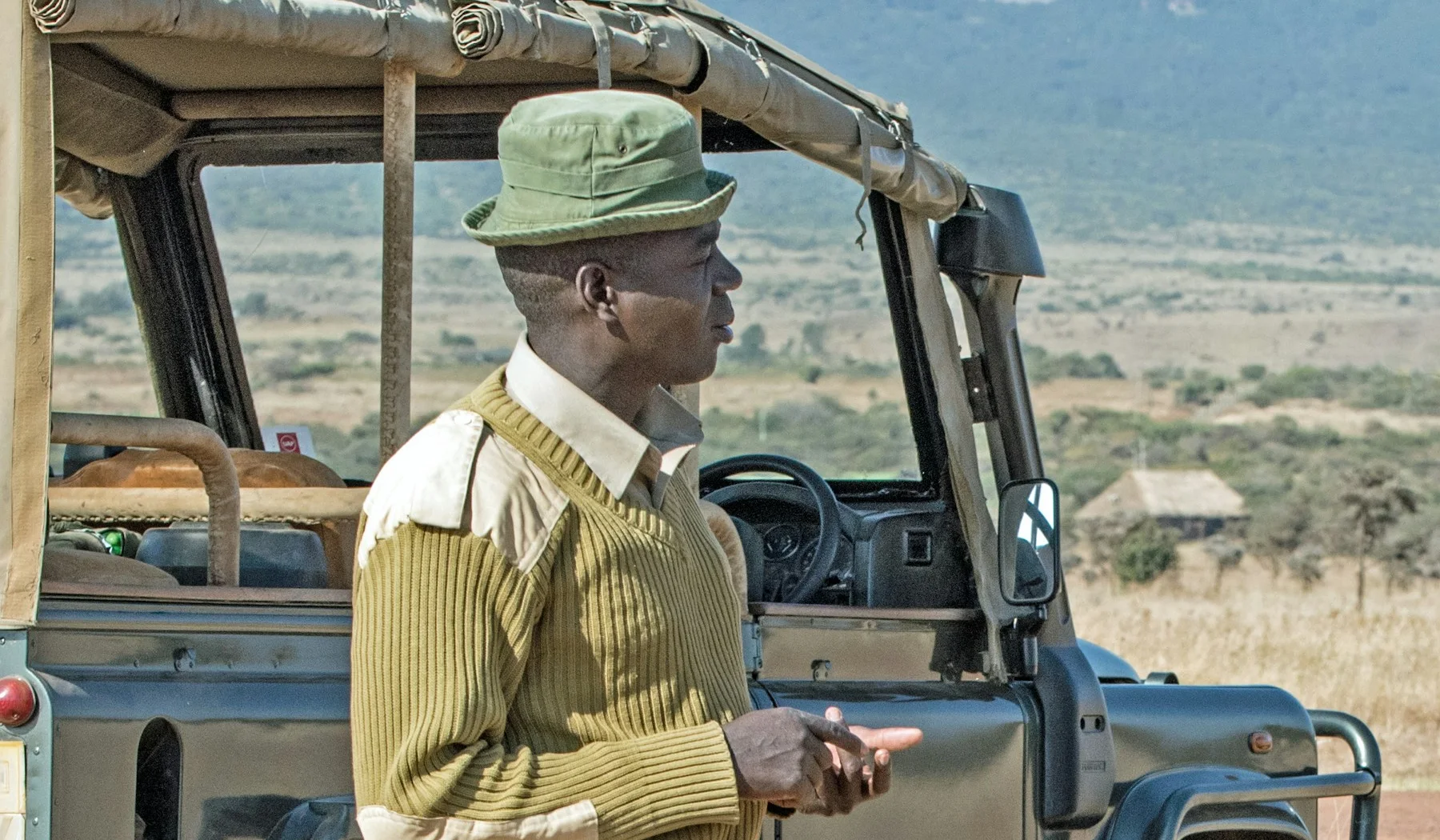
An itinerary with room for your own company
For a short first safari, three nights in the Mara after an arrival night in Nairobi gives you more than one full day to settle in. You may prefer a group road departure if shared travel is part of the fun, or a fly-in camp if you want less time on the road. A road journey and a bush flight are not interchangeable experiences, so compare the door-to-door hours as well as the price. Our fly-in guide and private road safari guide explain the trade-off.
With a week, choose a second area because it adds a genuinely different experience, not simply because a map has space. Ol Pejeta or Laikipia can offer different wildlife and camp rhythms from the Mara. Amboseli brings elephant country and an open landscape. If you want beach time, include enough nights on the coast to enjoy it rather than spending another day in transit. The best solo route is not the one with the most pins.
Photographers sometimes enjoy a private vehicle so they can wait for a behaviour rather than racing to the next species. Others prefer the company of a small group and are happy to share the decisions. If your interests are unusually specific, say so before a shared departure is booked. The same applies if you would be unhappy with long picnic drives, late returns or frequent camp moves.
What solo travellers actually say
Independent accounts do not point to one perfect format. They show why the social question and the price question should be answered separately.
It really made me happy to be solo just with my driver.
This traveller described a private Kenya and Tanzania safari and valued both conversation with the guide and quiet at a sighting. It is a useful counterpoint to the assumption that solitude is always a problem.
I made new Spanish and Chinese friends on the trip.
A traveller who joined a Kenya group safari described the other side: sharing the vehicle made a solo booking sociable. The same account notes that a whole vehicle to yourself costs considerably more.
You will probably eat dinner alone each day, so if that’s bothersome, then maybe find a tour group to join.
This is a traveller’s caution, not a rule for every camp. It captures the part that vehicle comparisons miss: some guests welcome an unhurried dinner alone, while others want a shared table.
Notice that none of them says a solo traveller must choose one format forever. The right mix depends on how much quiet you like, how much flexibility you will pay for and whether a camp or a vehicle is where you hope to meet people.
The questions that make a solo booking clear
Before paying, get an itinerary that names the camps and spells out every handover. Who collects you at the international airport? Is the next transfer private? On each game drive, whose vehicle is it, how many guests may ride and who decides when to return? If you are joining a departure, is the date guaranteed and what happens if the group does not form? If a single room is important, ask whether it is confirmed for every night, not only the first.
Ask about the property atmosphere in plain language. Do people eat together? Can you request a private table? Are there staff-led activities or a shared fire? Then ask the less romantic question: what if you do not get along with the group? A professional operator should explain how concerns are handled rather than promising that everyone will instantly become friends.
Finally, read the cancellation, insurance and payment terms for the exact route. A solo traveller does not have a companion to share a missed transfer or unexpected room charge. Keep the local contact details offline on your phone and on paper. Once those practical pieces are settled, there is room to enjoy the extraordinary bit: a whole morning that belongs to you.
Frequently asked questions
Can I go on a Kenya safari alone?
Yes. You can book a joining departure, a private guided vehicle or a camp stay with shared game drives. Confirm which transport and drives are shared.
Will a solo safari be lonely?
Not necessarily. Group departures and shared drives offer company, while a private trip gives quiet time. Ask the camp about dining and lounge arrangements if meeting other guests matters to you.
Is a private safari worth it for one person?
It can be if flexible timing, photography or a specialised route matters to you. The fixed guide and vehicle cost falls on one traveller, so compare a shared or hybrid plan too.
What is a single supplement?
It is an additional charge for occupying a room alone when the quoted rate assumes two people sharing. It is separate from the cost of a private vehicle.
Will I have to share a room on a group safari?
Not automatically. Some departures offer private rooms for a supplement; others offer a room share. Confirm the arrangement and the exact properties before booking.
Can I join a safari group after arriving in Nairobi?
Some operators offer scheduled departures, but availability, departure guarantees and pickup points vary. Confirm the date and your place before arranging international travel around it.
How should I arrange my airport arrival alone?
Get the pickup name, meeting point, vehicle details, hotel and emergency contact before departure. Agree what happens if the flight is delayed.
How many nights should a first solo safari include?
Three nights in one wildlife area gives time to settle in and at least two full safari days. Add a second area only when the contrast is worth the transfer.
Can I combine private and shared game drives?
Often, yes, depending on the camp and route. Ask which days are private, which are camp-shared and how transfers between them work.
Keep planning
Traveller comments reflect individual experiences, not guarantees. Check official travel advice for your nationality and the current entry rules for your passport before departure.
Plan your solo safari
Share your dates, the wildlife areas you want to see, your budget range and whether you prefer a private vehicle, shared drives or a mix.