
Kenya Road Safaris in a Private 4×4 Land Cruiser
Choose a route that follows Kenya naturally, understand the vehicle details that shape comfort and know when one well-placed flight creates a better journey.

The city falls away slowly. Nairobi's buildings give way to market towns, cultivated slopes and, if your route turns west, the great drop of the Rift Valley. Your guide points out Mount Longonot in the distance. There is time for coffee, time to watch the country change and time for the conversation in the front of the vehicle to become part of the holiday.
That is the pleasure at the heart of Kenya road safaris in a private 4×4 Land Cruiser. You do not simply arrive in a wildlife area. You see how one landscape becomes another, and the same driver-guide stays with you long enough to learn that you will happily wait for elephants but would rather leave a crowded cat sighting behind.
Road travel also has a physical reality. The final approach to a reserve can be corrugated, dusty or muddy. A transfer that looks modest on a map may include Nairobi traffic, comfort stops, a park gate and slow kilometres on an unsealed road. A good road safari respects those miles. It links places that sit naturally together, gives important parks enough nights and uses a flight when driving would turn a holiday into a test of endurance.
How Kenya road safaris in a private 4×4 Land Cruiser work
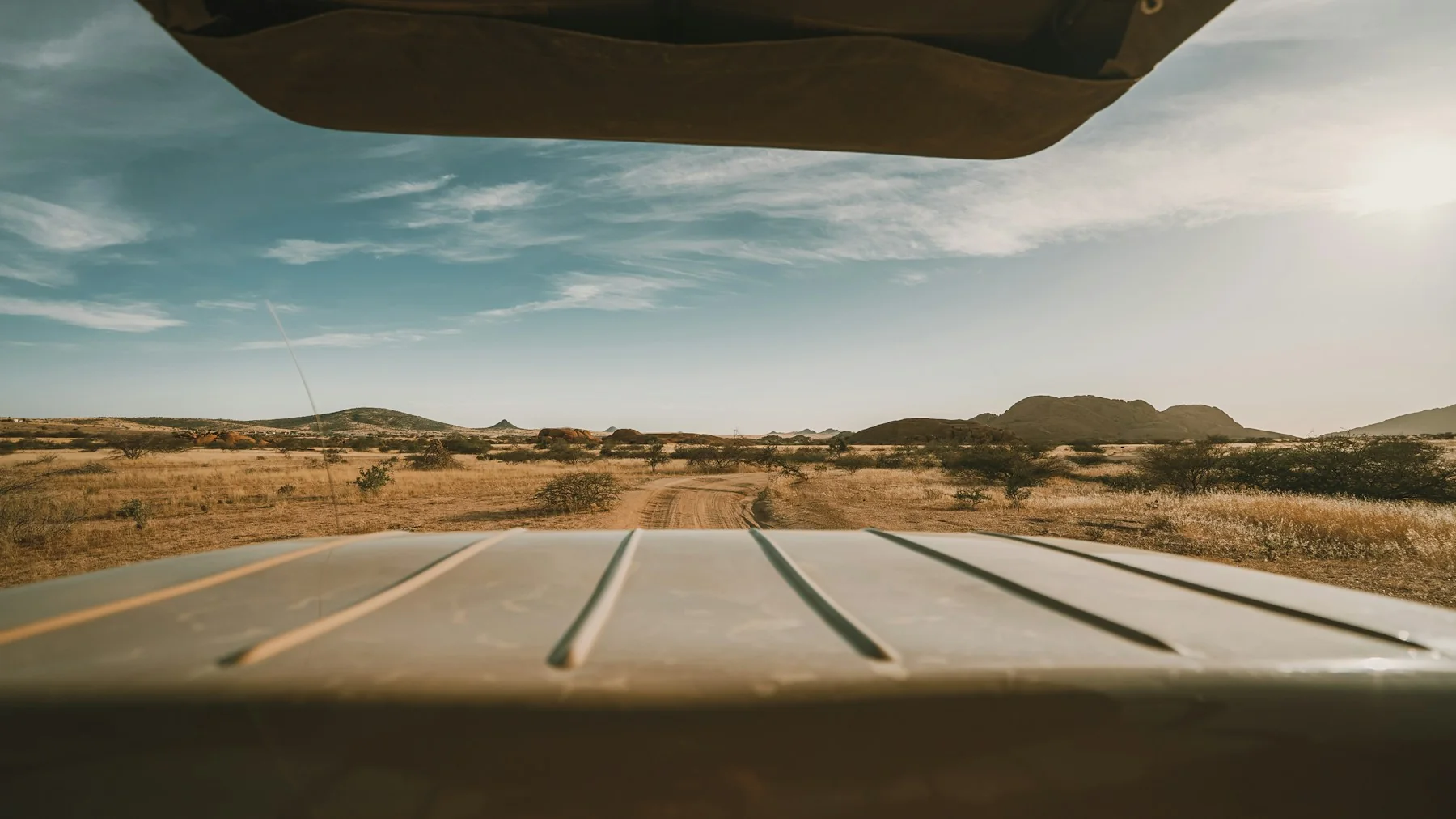
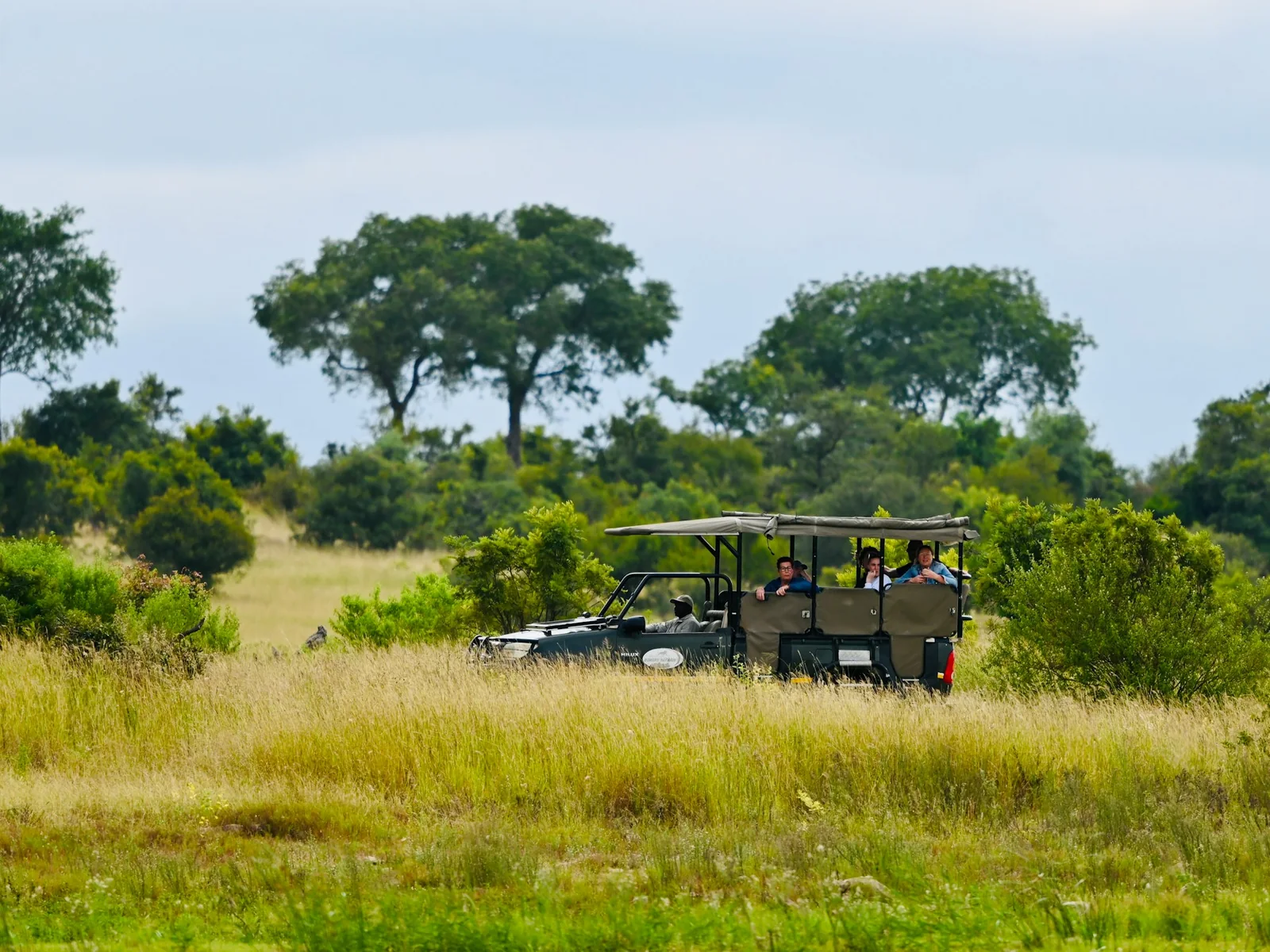
A road-safari Land Cruiser is both transfer vehicle and wildlife hide. On the highway, everyone sits down with seat belts fastened. Inside a park, the roof can be raised at suitable viewing points so passengers can stand and look across the grassland. Cameras rest on the roof edge, binoculars pass from one side to the other and the guide can move the vehicle a few metres to improve the angle without waiting for another party to agree.
Private means the vehicle is reserved for your booking. It does not mean every camp activity will automatically be private. If your itinerary includes a fly-in camp or conservancy lodge, that property may use its own shared vehicles. The wording should be clear for every part of the journey.
It also does not mean every moment is silent or smooth. A Land Cruiser is a working safari vehicle. You will hear its engine, feel rough sections of road and collect a little dust when the roof is open. What you gain is control. You can pause at a Rift Valley viewpoint, take a comfort break when the children need one, spend another ten minutes with a lilac-breasted roller or return to camp when an older parent has had enough for the afternoon.
That freedom is especially valuable on a multi-park trip. The vehicle becomes familiar. Water bottles have their place. Camera batteries charge in the same socket. The guide knows who prefers the front seat, who gets cold before sunrise and which child is patiently waiting to see a giraffe.
Plan my private road safari
Share your dates, party size, preferred parks, comfort needs and the pace you enjoy. We will shape the road route around the people travelling.
The Land Cruiser details that genuinely change the day
The words “4×4 Land Cruiser” are not a complete description. Safari vehicles differ in age, body length, seating layout, windows, suspension, roof design and storage. The right questions are practical rather than glamorous.
A window and a sight line for each traveller
Ask how many guest seats will be used, not only how many the vehicle can legally carry. A couple may want abundant room for cameras. A family may prefer the children within reach rather than spread over several rows. A group of six can fit in many extended vehicles, but six adults with long lenses, day bags and jackets need more usable space than six passengers on a short transfer.
Window access matters on the road. The pop-up roof improves standing views during a game drive, but wildlife does not wait until everyone is upright. A lion can appear beside the vehicle, an elephant can cross behind it and a bird may be visible only through one side window.
Pop-up roof and roof-edge support
A raised roof gives shade and a wide field of view. It is also useful for photography because a beanbag can rest on the roof edge. Passengers need to sit down and keep limbs inside when the vehicle is moving quickly, approaching branches or travelling outside the wildlife-viewing area. The guide's instruction takes priority over the photograph.
Seat belts, steps and handholds
Every road seat should have a working belt. A high step can be awkward for a traveller with limited knee or hip mobility, so discuss a portable step and preferred seat before arrival. Handholds make a noticeable difference on rough park tracks.
Charging and cool storage
Charging points are useful, but they should not be the only plan for a full day of photography. Carry charged spare batteries and a power bank in your day bag. A cooler is welcome for drinking water and soft drinks. If medicine must remain within a specific temperature range, it needs a medical travel plan rather than an assumption that the safari cooler is suitable.
Luggage space
Road travel is more forgiving than a light-aircraft safari, but the rear of a Land Cruiser is not an unlimited cupboard. Hard suitcases, several camera cases, children's equipment and a wheelchair can fill it quickly. Share the real luggage list when the route is designed. If the safari ends with a flight, the airline's lower allowance still governs that sector.
| Vehicle detail | Why it matters | What to settle before travel |
|---|---|---|
| Guest-seat layout | Changes window access, legroom and camera space | Number of occupied guest seats and preferred configuration |
| Pop-up roof | Gives standing views and a camera-resting edge | When it may be raised and when passengers must sit |
| Seat belts | Essential on public roads and transfer sectors | A working belt for every occupied seat |
| Steps and handholds | Affect comfort for children and less mobile guests | Lowest practical seat and a portable step if needed |
| Charging | Helps with phones and cameras | Socket type, spare batteries and power-bank plan |
| Rear storage | Determines whether everyone travels comfortably | Actual bag count, hard cases and specialist equipment |
| Cooler | Keeps ordinary drinks cool | Separate arrangements for temperature-sensitive medicine |
One guide, one unfolding story
The strongest reason to travel by private road vehicle is not four-wheel drive. It is continuity.
On the first morning, your guide may need to ask whether you enjoy birds, how long the children can sit and whether photography is a serious part of the trip. By the third park, those questions no longer need to be asked. The guide knows that a distant leopard is worth waiting for, that one passenger becomes uncomfortable on a particular side of the vehicle and that the family would rather eat breakfast in the bush than return to the lodge early.
The same continuity improves the route between parks. A driver-guide can choose a sensible rest stop, read changing road conditions and explain the farms, towns and languages along the way. Kenya stops being a sequence of lodge rooms connected by transport. It becomes a country you are travelling through with someone who understands it.
There is a limit to that benefit. Driver-guides also need legal rest and humane working hours. A route that repeatedly demands dawn game drives, full transfer days and evening drives is not thoughtful travel. It is exhausting for guests and unfair to the person responsible for their safety.
Kenya road-safari routes that flow naturally
The map should lead the itinerary. Parks that look famous in a list do not always belong in the same road trip.
Nairobi, Naivasha, Nakuru and the Masai Mara
This is the classic western arc. The Rift Valley becomes part of the story, Naivasha offers boat trips and Hell's Gate, Nakuru adds a compact wildlife stop, and the route continues toward the Mara. It works best when each stop earns its place. A one-night pause everywhere can leave the traveller packing more often than watching wildlife.
If the Mara is the main reason for travelling, protect at least two full viewing days there. The final road toward a particular gate or conservancy can be the slowest portion, so the lodge location matters as much as the words “Masai Mara” in the itinerary. Continue with our Masai Mara guide when choosing the right part of the ecosystem.
Nairobi, Amboseli, Tsavo and the coast
This southeastern corridor has a satisfying sense of movement. Amboseli brings wetlands, elephant country and the possibility of Kilimanjaro views. Tsavo West adds volcanic scenery and a more enclosed landscape. Tsavo East opens into red-earth country before the journey continues toward the Indian Ocean.
The order can change with the chosen lodge, coastal destination and railway or flight plans. Amboseli and Tsavo are large enough to deserve more than a rushed arrival and departure. Read the Amboseli safari guide and Tsavo safari guide before deciding where the nights belong.
Nairobi, Ol Pejeta, Solio, Samburu and Meru
Northern and central Kenya reward travellers who enjoy changing landscapes. Mount Kenya country, Laikipia conservancies and Samburu's dry river systems feel very different from the southern parks. Solio can be a focused rhinoceros stop, while Ol Pejeta offers a broader conservancy programme. Samburu and Meru should not be treated as interchangeable names. Each adds a different ecosystem and a different route shape.
This circuit needs careful pacing because road quality and property location change the feel of a transfer. It is often better to choose three strong areas than squeeze five names into the same number of nights.
| Route family | Why it works | Where travellers often overreach |
|---|---|---|
| Rift Valley and Mara | The landscape unfolds in one direction and stops can be meaningful | Too many single-night stays before the Mara |
| Amboseli, Tsavo and coast | The parks form a logical southeastern corridor | Rushing both Tsavo sectors or underestimating the final approach |
| Laikipia and northern Kenya | Strong contrast in scenery, species and conservancy experiences | Adding every reserve without enough nights to enjoy any of them |
| Nairobi and one wildlife area | Simple, calm and well suited to a short visit | Treating a short safari as a reason to add a second distant park |
Find the right road route for my days
Share your dates, party size, preferred parks, comfort needs and the pace you enjoy. We will shape the road route around the people travelling.
Routes that need another night, a break or a flight
Amboseli and the Masai Mara can appear close on a map of East Africa. On the ground, they sit on different sides of Nairobi and the journey between them is not a light transfer. It can work in a longer safari, particularly with a well-placed night, but it should not consume the only full day available in either park.
Tsavo and the Mara create an even more awkward cross-country jump. A traveller who wants both may need Nairobi as a bridge, a longer journey with intermediate stops, or a flight connection that removes the least rewarding road sector.
The coast changes the equation again. Driving from a park into a beach stay can feel wonderful when the final sector follows the route naturally. Returning from the Mara to Nairobi and then continuing to the coast by road can spend too much of a holiday looking through a windscreen. A bush flight, domestic flight or railway sector can give that time back.
This is where a Kenya fly-in safari and a road safari stop being opposites. They become tools. Drive the sections that reveal Kenya. Fly the section that repeats ground already covered or asks too much of the available days.
How long will the transfer take?
An honest road itinerary separates map distance from lived time. Nairobi traffic can change quickly. A comfort stop adds time. Park entry can be smooth or busy. Rain can turn a black-cotton track into a slow, slippery approach. A wildlife sighting near the gate can also transform the final hour into an unexpected game drive.
For that reason, this page does not promise a precise arrival minute. Your itinerary should show a realistic travel window and explain what is included in it. The more important question is whether the day still feels worthwhile if conditions are slower than hoped.
A good transfer day might include breakfast, a scenic stop, lunch and an afternoon arrival with time to settle in. A poor one leaves before sunrise, arrives after dark and is followed by another early departure. One long day can be a fair trade. Several in a row change the character of the holiday.
Questions that reveal the real day
| Ask about | Why the answer matters |
|---|---|
| Door-to-door route | The lodge may be far from the park name shown on the map |
| Sealed and unsealed sections | Rough final kilometres can take more energy than a longer highway stretch |
| Planned stops | Meals, viewpoints and comfort breaks shape the day |
| Park entry on arrival | Entering a park can turn the transfer into a game drive, but also adds gate time |
| Seasonal road risk | Rain, roadworks and river conditions can change the best approach |
| Driver-guide rest | Safe pacing is part of a well-built itinerary |
Private Land Cruiser, safari van or lodge vehicle?
A Land Cruiser is not automatically more comfortable in every possible situation, and a safari van is not automatically unsuitable. The right choice depends on route, season, party size and where the game drives take place.
| Option | Best qualities | Trade-offs | Usually suits |
|---|---|---|---|
| Private pop-up-roof Land Cruiser | Four-wheel drive, high clearance, private schedule, one guide and flexible luggage | Higher cost, high step, firm ride and enclosed road body | Multi-park routes, families, photographers and wet-season travel |
| Private pop-up-roof safari van | Lower cost and comfortable paved-road travel | Lower clearance and less confidence on difficult tracks | Shorter routes in generally dry conditions when budget matters |
| Lodge or camp vehicle | Guide knows the immediate area; open sides can give superb visibility | Often shared, fixed departure times and luggage handled separately | Fly-in stays and travellers happy with the camp's daily rhythm |
In national parks and reserves, vehicles must follow the applicable rules. Four-wheel drive does not grant permission to leave designated roads. Kenya Wildlife Service rules prohibit off-road driving in parks where it is not allowed and require visitors to respect speed, wildlife and opening-time controls. Private conservancies can operate different activities under their own management plans, so night drives or controlled off-road viewing should never be assumed from the vehicle alone.
The best promise is specific: which vehicle is used on road sectors, how many guest seats are occupied, whether game drives are private and when a lodge vehicle replaces the touring vehicle.
Photography from a private 4×4
Photography becomes easier when the vehicle is not being shared with strangers who have different priorities. The guide can position for light, wait for behaviour and move when a sighting becomes crowded. A beanbag is often more useful than a full tripod. Long lenses should remain within reach rather than buried under luggage.
Tell the guide what you are trying to make. A first-time visitor may want a clean portrait of a lion. A returning photographer may prefer an hour with elephant families in the wider landscape. The private vehicle makes both possible, but only if the pace is discussed.
Dust protection matters. Keep one camera ready and the rest covered. Change lenses inside the closed vehicle where possible. Bring spare batteries because charging in a moving vehicle is helpful but not infallible. Our safari vehicle guide goes deeper into seating, roof styles and photographic setup.
Ask about our Land Cruiser setup
Share your dates, party size, preferred parks, comfort needs and the pace you enjoy. We will shape the road route around the people travelling.
Children, older travellers and motion sickness
The private format is excellent for families because the day can flex around the people in the vehicle. That does not make a long, rough transfer easy for every child. Build in snacks, water, comfort stops and at least one lighter day after a demanding sector. The most memorable safari for a child is rarely the one with the longest species checklist.
Older travellers benefit from a stable seat, an easy step, a handhold and enough time to enter and leave without feeling hurried. A front passenger seat can feel smoother, but it changes wildlife-viewing access, so discuss the compromise. Anyone with back, hip or knee concerns should describe the limitation plainly when planning.
Motion sickness deserves the same honesty. Corrugations, winding escarpment roads and reading a phone in the vehicle can all make it worse. Speak with a qualified medical professional about suitable medication before travel, sit where the horizon is visible and avoid packing each day so tightly that a comfort pause feels like a problem.
An independent traveller describing the Nairobi to Mara road called it “some hard traveling,” then captured the reward beautifully: “The further you go into the countryside, the further your heart and eyes open.” Read the original traveller account. Both parts matter. The road can deepen the experience, but it is not the right choice for every body or every holiday.
Luggage freedom, with sensible limits
Road safaris allow more luggage flexibility than scheduled bush flights. A standard suitcase may be possible, camera equipment can be easier to carry and families have more room for the small things that multiply around children.
The limit is still the physical vehicle. Soft bags remain easier to stack, and one manageable case per traveller keeps the rear storage useful rather than chaotic. Day bags should contain only what is needed between stops: documents, medicine, camera gear, sun protection, a layer for the morning and water.
If one sector is flown, pack for the flight from the beginning. Do not build a road itinerary around large hard cases and discover later that they do not fit the aircraft allowance. A Nairobi hotel may store an extra case, but that arrangement needs to be confirmed. Use our Kenya safari packing guide to separate true essentials from items that simply fill space.
Wet-season roads and responsible driving
Rain changes Kenya beautifully. Dust settles, grass greens and skies become dramatic. It can also expose the difference between a sensible four-wheel-drive route and an itinerary that relies on everything going perfectly.
Black-cotton soil becomes slick. A stream can rise. A park road may be temporarily closed or redirected. Four-wheel drive improves traction, but it does not make a vehicle invincible. A responsible guide protects the track, the vehicle and the guests rather than driving into a damaged area for the sake of a promised timetable.
Kenya Wildlife Service advises checking current park conditions and following rangers' directions. It also asks visitors not to disturb wildlife, not to leave litter and not to exceed park speed limits. These are not small formalities. Speed changes the quality of viewing, damages roads and can endanger animals.
During wetter months, keep one layer and essential medicine inside the passenger area, not only in the rear luggage compartment. Expect the route to remain flexible. A change of gate or a later arrival can be the safer, kinder decision.
Three road-safari shapes that leave room to breathe
These are planning shapes, not fixed packages. The right lodge, gate and number of nights depend on season, budget and the experience you want.
Five nights: Amboseli and Tsavo
Begin with two or three nights in Amboseli, then continue into the Tsavo ecosystem for the remaining nights. The pairing gives a strong change in scenery without sending the vehicle back and forth across Kenya. From Tsavo, continue to Nairobi, the railway or the coast according to the wider trip.
Seven nights: Rift Valley and the Mara
Travel from Nairobi to Naivasha for a slower first night and a lake or Hell's Gate experience. Continue toward the Mara for four nights in one carefully chosen reserve or conservancy location. A final flight back to Nairobi is possible if you want the landscape on the outward journey without repeating the same long return.
Ten nights: Laikipia, Samburu and the Mara
Use central Kenya as the bridge into the drier north, with meaningful stays rather than single-night stops. Then connect to the Mara by the most sensible combination for the season. In some itineraries that means road travel back through the highlands. In others, the northern sector is driven and the long cross-country leg is flown.
| Nights | Route idea | Why it works | Useful adjustment |
|---|---|---|---|
| 5 | Amboseli and one Tsavo sector | Two contrasting parks in one broad corridor | Continue to the coast rather than retracing every kilometre |
| 7 | Naivasha and the Mara | A gentle Rift Valley opening and a substantial Mara stay | Fly out of the Mara if the return road adds little |
| 10 | Laikipia, Samburu and the Mara | Strong ecological contrast with enough time to settle | Use one flight to remove the awkward north-to-south jump |
When a road and air combination is better
There is no prize for completing the whole country by road. A mixed itinerary is often the most satisfying answer.
Drive from Nairobi through the Rift Valley, stay at Naivasha and continue to the Mara. Then fly from a Mara airstrip to Wilson or onward toward the coast. Drive Amboseli and Tsavo, then take the train or a domestic flight for the return. Travel by road through Laikipia and Samburu, then fly south rather than repeat the highland route.
The point is not to make the itinerary complicated. It is to keep the beautiful road sections and remove the ones that add fatigue without adding much understanding. Our tailor-made Kenya safaris are built around that kind of choice.
Build a road and air combination
Share your dates, party size, preferred parks, comfort needs and the pace you enjoy. We will shape the road route around the people travelling.
A booking checklist for a private Kenya road safari
Before paying, make sure the itinerary answers these questions in ordinary language:
- Is the Land Cruiser private for your party on every road transfer and game drive?
- How many guest seats will be occupied, and does everyone have useful window access?
- Will the same driver-guide travel through the complete road sector?
- Which exact lodge, camp, park gate or conservancy is used each night?
- Which transfer days are expected to be long or rough?
- Where are meals, viewpoints and comfort stops planned?
- What luggage and specialist equipment need space?
- Are children, mobility needs, back concerns or motion sickness accounted for?
- Which park activities use the touring vehicle and which use a lodge vehicle?
- Could one flight remove a tiring backtrack without losing the best road experience?
The private vehicle should serve the journey, not dominate it. When route, guide, seating and pace fit the travellers, the road becomes more than the distance between parks. It becomes the thread that holds the safari together.
Talk to a Kenya safari planner
Share your dates, party size, preferred parks, comfort needs and the pace you enjoy. We will shape the road route around the people travelling.
Frequently asked questions
Is a private Land Cruiser reserved only for my group?
Yes, on the road sectors and game drives described as private in your itinerary. A lodge or camp may use a separate shared vehicle for its own activities, so each sector should state the arrangement clearly.
Is a Land Cruiser more comfortable than a safari van?
It depends on the road and the individual vehicle. A van can feel comfortable on sealed roads, while a four-wheel-drive Land Cruiser is better suited to difficult park tracks and wet conditions. Seat layout, space per guest and suspension condition matter as much as the badge.
Can every passenger stand under the pop-up roof?
Extended safari vehicles are designed to give guests roof access, but comfort depends on the occupied-seat layout. Passengers must sit and use seat belts on public roads and whenever the guide instructs them to do so.
Can we drive from Amboseli to the Masai Mara in one day?
It is possible in some itineraries, but it is a demanding cross-country sector and should not be presented as a light transfer. A longer route, an intermediate night or a flight may protect the time you actually spend in each park.
Is road travel suitable for children?
It can be excellent because a private vehicle allows flexible stops and a family-led pace. The route still needs manageable transfer days, snacks, water, toilet breaks and recovery time after rough or lengthy sectors.
How much luggage can we carry?
Road travel is more flexible than a scheduled safari flight, but capacity depends on the number of guests and the actual vehicle. Soft bags are easier to store, and any later flight sector must follow the airline allowance.
Does four-wheel drive allow off-road wildlife viewing?
No. Vehicle capability does not replace park or reserve rules. National parks and reserves restrict where vehicles may drive. Some private conservancies allow controlled off-road viewing under their own rules.
Can a road safari include a flight?
Yes. Driving the scenic, logical sectors and flying an awkward backtrack often creates the best balance of continuity, landscape and useful time.
Plan a private Kenya road safari
Tell us your dates, party size, parks, luggage and comfort needs. We will suggest a route that spends time well.